
Original Article
An analytical study of derivatives and their role in the stock market
|
Dr. Mohd
Tarique Khan 1 1 Assistant Professor at
Osmania University (Affiliated College), Hyderabad, India |
|
|
|
ABSTRACT |
||
|
The markets are now transforming as a result of the information age, which makes information accessible to everyone involved in the market. Advanced mathematical models that analyse patterns and trends have become commonplace in most financial institutions. The proliferation of derivatives, financial instruments whose value depends on the performance of an underlying entity, such as an asset, a rate, or an index, has grown and is gaining momentum. The volume has grown, and so, too, has the variety of instruments, the number of stock index options, for example, and the number of types of interest rate swaps. Within the last 10 to 15 years, the number and variety of these have grown significantly. The use of derivatives has led to increased attention and interest from government bodies, regulators, and academic researchers. Derivatives are currently the most widely traded financial instruments worldwide, with swaps the most widely used. Even though the market for commodity derivatives has grown rapidly, equity-index derivatives are still the most actively traded, especially in the over-the-counter (OTC) market. Warrants, options, and total return swaps are other types of equity derivatives noted. The mushrooming of the secondary market for credit derivatives has prompted banks to establish separate credit departments, often headed by designated officials regarded as experts in credit risk management. In the case of credit derivatives, in particular, it has become commonplace to focus transactions in certain departments. Credit derivatives constitute contracts with a predefined agreement concerning the credit risk of a specified reference obligation: usually, the consequence of a default (failed payment or bankruptcy) involving the reference creditor or reference entity. Using credit derivatives, credit risk can be transferred from one institution to another without the sale or purchase of the underlying credit. (Agrawal, 2021). Keywords: Derivatives, Hedging, Risk Management,
Price Discovery, Liquidity, Futures, Options |
||
INTRODUCTION
Derivatives have
become an important aspect of international finance; they are contracts based
on underlying assets, with parameters tied to those assets, and their
speculative trading has contributed to the growth of the stock market. A large
body of literature documents the benefits of stock-index derivatives in
improving stock price discovery, particularly in emerging markets, which have
relatively weak regulatory structures and market participants with limited
experience Filis
(1970). India faced a serious crisis in the late
1990s and has come a long way from an isolated economy to a fully integrated
one, with rapid economic growth. Consequently, the stock market has become
attractive, and the conditions and requirements that enable equity-index
derivatives to facilitate price discovery have been established. Similarly,
traded interest-rate derivatives facilitate the transmission of monetary policy
signals to the debt and money markets and enhance price discovery efficiency
under a stability programme Agrawal
(2021). Thus, the debt and money-market price
mechanisms are important in the formation of interest-rate derivatives.
The derivatives
market has grown significantly since then, allowing the management of market,
credit and operational risks. Derivatives can dramatically mitigate risks in
one asset class but expose risks in another, and when they are tied to a
zero-sum game, they can create systemic risk. Risk-sharing thus remains a major
challenge. Furthermore, derivatives help to be efficient in one asset class and
less efficient in another. Two such asset classes in less-developed economies
are the stock market and interest rates. To manage inevitable price spirals and
to achieve balanced development in the stock market and interest rates, the
introduction of stock-index and interest-rate derivatives provides important
information and has positive effects. Structuring derivatives to address
systemic risk is possible. However, it is essential that any benefits outweigh
the costs and that such arrangements do not hinder further development of the
financial sector.
Conceptual Foundations of Derivatives
Derivatives are
financial structures whose value depends on the value of an underlying asset,
rate, or index Singher
and T (1994). They imply potential monetary gains but
carry a higher risk than the reference obligations they are based on. The most
common types of derivatives are options (which grant rights but impose no
obligation to buy or sell the reference asset) and forward and futures
contracts (which obligate the parties to buy or sell the reference asset).
Options and forwards may refer to currencies, interest rates, commodities,
stocks, other indices, and credit; hybrid instruments are a mix of different
derivatives within a single contract (e.g., a swaption). There are many forms
of each of these derivative types. There are several derivatives traded on
organised exchanges, which allow trading via designated brokers, with values
linked to the price variation of the underlying obligations, which can be the
same reference assets.
The concept of
risk transfer led to the creation of derivatives. Perhaps it is a business
practice from yesteryear destined to be replaced by more sophisticated
financing methods, but conventional leasing is still thriving in today's
business world. The leasing of automobiles by individuals under relatively
short-term leases became widespread after the introduction of the leasing
concept several decades ago – a development that vastly motivated the
overdriving of production of automobiles by the assembly industry in favour of
quality vehicles that were needed to secure long-term contracts with customers Boyd (2015).
Definitions and Types
A derivative is a
financial product whose value derives from an underlying asset, interest rates,
foreign exchange rates, or indices Singher
and T (1994). They can be a fully standardised,
exchange-traded product or highly tailored and negotiated between the parties.
Consequently, they provide the capacity to convey specific forward-looking
financial risk exposures but also entail complicated risks of their own. The
definition of “derivative” covers a broad range of products and activities,
including some that are not typically considered derivatives, such as
asset-backed securities, collateralised mortgage obligations, and risk-linked
notes.
The starting point
for discussing standard derivatives traded on organised exchanges via brokers
is to describe the different types of such derivatives. The parties agree,
depending on the performance of a specified asset or index, that the “seller”
will have to pay one payment to the “buyer”, and that the “buyer” will, in
turn, pay an offsetting payment to the “seller” in the future, which is a
normal practice in the market to take a “short” position. These are the
specified assets, such as stock price indexes and price indexes for bonds,
currencies, commodities, and commercial products. The long position party would
like to see the asset or index price rise in the future, whereas the short
position party would like the opposite, an asset or index price drop Agrawal
(2021).
Theoretical Background: Risk Transfer and Price Discovery
Financial markets
include financial assets that are bought and sold for ownership and carry
varying degrees of risk. Time is a common factor across all assets, so they
must be discounted jointly, even for liabilities with different maturities.
Also, economic incentives are affected by the change in the price of an
underlying asset that is owned or traded. Other things being equal, the higher
the price today, the higher the supply and the lower the demand. Due to this
conversion, the price of the underlying asset, agent in units deposited at time
t, reflects the market's intertemporal, intra-asset, or liquidity structure.
Within the set absolute temperature of the economy, an atom from the financial
network becomes a single security traded at a single location and at a single
time, connecting dissimilar and overlapping assets at dissimilar locations
and/or events. Derivatives are generally contracts between two or more parties
in which the rights or obligations of the parties under the contract are
derived from the price of an underlying asset, which can be an asset, an index
or another derivative asset, either financially settled or not, and the
transfer of the ownership of underlying securities may not occur at any time in
the transaction. Usually, these contracts are without significant structural
modifications.
They are typically
"mixed" with straight debt/opt option/forwards indices to form new
financial contracts that serve as the basis for covering cumulative market
movements or for other types of risk transfers that are deferred or mitigated
in terms of price, quantity and volume. In the simplest terms, modern Financial
Engineering is based on the extracted forward risk of a real
produced/unproduced cash flow per period, without removing volatility. As
maturing conditions of the underlying, the collateral, or both, suggest changes
to underlying price theories, borrow/lend and borrow/price points are known
& used to productise cash flows, with the movement forwards/matured and the
extraction change. However, such changes are separate and alter Forward Cover
contracts from any of the more straightforward Hybridised long/short Leveraged
contracts – and therefore are not contract-theory changes or centralised in any
rigid manner. Normally, there is no change in the ownership of the underlying
or any equity exercised, among ‘real’ traded assets, which are securities and
partially securities traded on Security Exchanges. That is not the case with
non-existent and/or fake Broker Contracts that specify changes at each
Financial Centre, all the way to Cash Settlement. Contracts in Money Markets,
Futures/Hedging and other Instrument Deployments are still of a Cortical type
and are utilised precisely for this simplistic depositary change screening.
This can go on continuously, and prices can literally never change. Handel
(2005)
Derivatives in Financial Markets
Financial
instruments whose value depends on the performance of a reference rate, an
index, or an underlying asset are derivatives. The underlying can be explicit
(such as currencies, interest rates, equity prices) or implicit (such as
climate, oil supply) and can also be the performance of other derivatives Singher
and T (1994). Derivatives include a variety of contract
types, such as standardised exchange-traded contracts and privately negotiated
contracts. Importantly, derivatives can confer significant financial benefits
and also inherently carry risks. Derivatives are therefore used for a variety
of purposes, depending on the interests of the parties to the transaction
(e.g., buyers versus sellers). Thus, regulators recognise a variety of
derivatives, including currency, interest rate, commodity, and equity swaps, as
well as options and futures contracts on a broad spectrum of world currencies
and commodities. Some derivatives, such as the option on a swap, or “swaption”,
are composed of a combination of several of the basic derivatives. Numerous
derivatives are traded on organised exchanges. In these cases, interested
buyers reach out to brokers to perform the contacts.
There are many
instruments considered derivatives Jameel
(2018). These range from basic risk-mitigation
products to highly complex financial products that require an advanced
understanding of mathematics and stochastic processes Agrawal
(2021). To understand the various aspects and
complexities of the financial derivatives market, it is important to have a
fundamental grasp of the concepts and characteristics of financial derivatives.
While some financial derivative equations are complex, and it can be difficult
to gain a deeper understanding of derivatives themselves, the market might
evolve quickly, necessitating timely choices. Some derivatives are traded in
the Over-the-Counter (OTC) market, in addition to regulated exchanges.
The use of
derivatives for hedging, speculation, and risk management makes them essential
tools in financial markets. The increasing recognition of such contracts as
being a key part of complex and sophisticated risk management systems.
Derivatives are agreements whose cash flows depend on the performance of
underlying variables and market prices. Cash flows, expectations, valuation,
and embedded optionality should be analysed carefully to determine the
contract's value. Derivatives play an increasingly essential role in the
modernisation and stimulation of financial-market development, and they need to
be understood and assessed carefully at the individual level, in relation to
all other markets, across various organisational dimensions, and in detail.
Mechanisms used by market participants to deploy.
In the standard
transaction, only the known is traded up and down in the secondary market.
However, with derivative contracts, there are known events whose consequences
are contingent on currently unknown states of the world. These trades, in which
the odds of future events are anticipated, are perfectly valid. Parties remain
free to engage in derivative trades before future states of nature are known,
in the face of uncertainties. The central bank's prompt and flexible reaction
to the expectations about future states of the economy does not give rise to
market-wide contagion. Hence, empirical studies of derivatives are more closely
related to information about expectations of endogenous shocks Perveen
et al. (2018).
Many derivatives
include contractual terms, such as maturity and premium, that give participants
in the equilibrium the freedom to choose when to act in the face of future
uncertainties. Prime brokers, in between some of the largest shadow finance
entities called dealers, tunnel expectations of the state of the economy to
market participants beyond their immediate counter-parties. Dealer leverage
grows, creating new edges for which prime brokers mint new derivative
contracts, in addition to the collateral asset trades that the counterparty
faces under the contracted derivatives. Newly minted contracts extend their
margins to a wide range of market participants by bidding on and trading long
options contracts on publicly listed Eurodollar futures and forward rate
agreements, alongside deposits and repos, with public institutions like the
Treasury and municipalities. The additional premium on counterparty-hedger
trades mirrors the overall equilibrium response of participants.
Impacts on Liquidity and Market Efficiency
The two main roles
derivatives play in financial markets are risk transfer and price discovery. A
deeper analysis of how market participants use derivatives sheds light on these
two roles. The four perspectives on the role of derivatives in market activity
are distinguished as follows: conceptually – why derivatives are used;
economically – the net effect on demand; behaviorally – the motives for market
activity; and operationally – how derivatives are used. Each perspective
enhances the understanding of derivatives.
Exchange traders
may think of contracts on equity index futures, stock index options, and stock
options as essentially synonymous and interchangeable in many situations.
Government, institutional and structural obstacles can limit the scope of
cross-market arbitrage activity, and actually cause substantial price
differentials. The multivariate dependence among these contracts is
sufficiently high at the general level that multivariate equations can
effectively represent the relationships. Such a structure enables the analysis
of equity trades and equity hedging (which can be considered as a
“stock-market” trade). The patterns of options on securities at equity
exchanges and of futures on the same securities at derivatives exchanges are
similar overall.
Derivatives make a
big impact on the stock market. They influence liquidity, volatility, and price
stability and are needed for an efficient market Naik
et al., (2020). In modern finance, liquidity is a key factor. Order
flows to stock and derivatives markets are a driver of asset prices. The lack
of liquidity in either market reduces price discovery and the efficient
allocation of capital. Liquidity in the stock market depends on the size of the
derivatives market, and vice versa. The stock market and the derivatives market
are liquidity-dependent, meaning that when times are tough or uncertain, stock
market liquidity affects the derivatives market. Liquidity in the stock or
derivatives market changes, causing shifts in order flow allocation between the
two markets and, in turn, changes in the liquidity of the asset classes traded
on them.
Behavioural and Economic implications of hedging versus speculation
Derivatives are
also an important tool for risk management, both for corporations and
individuals, and can be used to trade in an underlying asset more precisely
than outright purchase or sale. Derivatives can be used to transfer risk
exposures to others who can absorb them. In fact, although there is a long
history of people hedging risk with derivatives, substantial research indicates
that speculation on risk was responsible for a significant share of corporate
derivative activity. In finance, speculation is generally understood to be the
practice of holding risky positions intended to profit from price movements in
an economic variable. In contrast, hedging is the taking of a position intended
to minimise the risk of price fluctuations in an economic variable.
Observations of
non-commercial trading behaviour in futures and options markets indicate a
close relationship between speculator-chasing and risk-seeking elements of
trader psychology. Speculation is correlated with occasional large single-trade
profit/loss spikes and with smaller losses occurring more frequently than
smaller gains, and trader data analyses show that such behaviour has an
important but underappreciated destabilising impact on markets, making hedging
less effective. Taking into account the hedge for mandatory benefits,
underfunded liabilities, and other backwards-looking exposures with longer
commitment terms adds complexity to corporate risk management approaches Bartram
(2019). Furthermore, it has been recognised that
the behaviour of traders and corporations is interwoven, as active trading in
derivatives influences firms' end-state exposure profiles, stock-price crashes,
and many other market and economic phenomena Wang (2001).
The pricing and valuation frameworks
A derivative is a
financial instrument whose value is based on another asset. Derivatives pricing
and valuation frameworks are mathematical and statistical models that enable
the fair value of a derivative to be calculated and represent the market price Li (2006). The four criteria for the derivatives
pricing are: arbitrage-free pricing; equivalence of pricing and valuation
(value of an asset, claim or its derivative can be derived using a valuation
operator); unique and convex valuation operator (the valuation operator is
unique and produces convex valuation – wealth of the broker increases when
selling zero-cost claims); and having an economic model at the valuation stage
(only if the derivatives pricing is done by using an economic model of the
underlying asset, the claim or its derivative, the value can be derived in
theory) Ilya (2006).
·
Forward
and Futures Pricing
Standard
discrete-time forward/futures pricing can be expressed as:
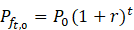
or using an
equivalent compounded rate r^*:
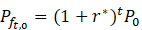
In a multi-period
decomposition:

Here r_iare
period-specific interest rates and x_imay represent other adjustments (e.g.,
storage costs, dividends).
·
Ordinary
Futures vs. Forward
Ordinary futures
(daily-settled) and forwards (settled at maturity) differ in the treatment of
interest rate compounding. Maximum pricing tables for short and forward
positions are used to benchmark the highest plausible price of a future claim.
·
Contingent
Claims
For claims whose
payoff depends on a stochastic underlying, the simple linear compounding of
forwards/futures does not apply. The pricing involves an exponential of a
stochastic integral:

where δ(s)is
the instantaneous risk-free rate or dividend yield.
Forward, Futures, and Options Pricing Models
The two key
similarities between forward and futures contracts are that both impose
obligations on the buyer and the seller. The person who holds a forward
contract has the duty to sell (buy) the asset at the end of the contract. So,
the existence of such contracts (or option contracts with a zero exercise
price) forces option pricing to equal the forward price Li (2006).
Forward prices are
determined by discount factors, risk premia, and other fundamental factors that
affect the spot price process Kolmogorov (1981).
To price the European call and put options written on forwards, non-arbitrage
arguments and the concept of liquidity-adjusted forwards are used, and the
corresponding arbitrage-free option-pricing equations are derived.
Foreign exchange
(FX) derivatives include foreign exchange options and foreign exchange (FX)
swaps, which are valued based on a currency forward contract.
Three-dimensional, three-factor, and multi-currency term-structure models for
pricing currency derivatives are introduced and fit into a general-maturity
framework, as per the currency-derivative pricing literature. The restrictions
imposed on eurodollar futures help to limit the specification of the domestic
short-rate process.
This covers the role of volatility and the Greeks.
The Black-Scholes
formula is essential in financial theory. It can be used to calculate the value
of a European option, which is determined by the underlying asset's price, the
exercise price, the time to expiration, and the underlying asset's volatility Shen (2009). The formula has a trade-off between
volatility and time to maturity: Higher volatility allows less restriction on
the latter, and vice versa Voukelatos
(2009). However, major market deviations from
theory do exist, and traders use these parameters for risk management, denoted
by Greek letters. With declining market confidence, the willingness to pay a
premium for options is increasing, as traders prefer the underlying asset. So,
derivative instruments are those that provide liquidity in the least-distorting
manner.
The call price
depends on the price of the underlying stock. The delta is the change in the
call price that follows a small change in the stock price. The call price also
reacts to changes in volatility, and vega measures its sensitivity to
volatility changes. Additionally, the time to maturity and the option price are
non-linearly related.
Model risk and empirical considerations
Derivatives are
financial instruments that offer greater flexibility in financial risk
management for economic agents. In the last 40 years, their transaction volume
has grown by an order of magnitude, resulting in significant expansions of
their application, pricing, and valuation models. However, the underlying
theoretical principles of their role in risk transfer and price discovery
remain strong today, even as economic and financial theory has evolved.
Derivatives can
have a positive or negative impact on market liquidity and efficiency, either
directly or indirectly. The offsetting interest in derivatives based on cash
stocks offers the potential for wider use—thus better fulfilling
market-clearing functions—so that cash-stock economic and balance-sheet
adjustments are subsequently avoided altogether. Hedging can increase the
financing spread for some firms and create an incentive to manipulate cash
flows, perhaps due to asymmetric information. There is also a position that the
more complex an instrument is, the more likely it is to be misused or
misinterpreted, and the greater the risks it entails Kerkhof
(1970).
Regulatory and Systemic Considerations
The derivatives
market has expanded exponentially, and the need for regulation and control of
systemic risk has become a pressing issue. To improve structural protections,
regulators can become directly involved in reducing regulatory and legal
impediments to derivatives design and execution, including the design of
regulated derivatives, without creating them Libbey
(2010). Among the key concerns are market
integrity, the facilitation of the execution of market-completing contracts,
price formation, fair competition among trading places, and the minimisation of
counterparty risk. For example, the design of the instrument's contracts and
the firms' portfolios may drive the need for clearing, as well as the time
frame within which the bank hedges its position or engages in a speculative
trade. Transparency to market participants is not limited to disclosing the
trading venue; this point is also important to underscore. Hedge clearing and
venues with organised public auctions and other trading mechanisms are
beneficial for increasing the concentration of a given firm's trading volume
over a particular time period Agrawal
(2021).
The regulatory
changes that were a direct result of the crisis in 2008 - counterparty clearing
requirements and enhanced transaction data reporting - have been crucial for
the correct functioning of OTC and exchange-listed derivatives activity at an
international level. However, the governance architecture of the global
financial marketplace works only if general attention is paid to implementing
the new requirements across most systemic and cross-border outlets Singher
and T (1994). There is continued debate on the regulatory
perimeter, including the implementation of additional risk-weight
classifications for swap-end-user activities, the formalisation of additional
risk weights for external derivatives reporting liability, and two-tiered
thresholds for such liability. There is a need for periodic consolidation of
progress made by the international standard-setting community, widespread
dissemination and communication of progress and intentions, peer-review and
monitoring mechanisms, and increased ability to recognise work that still needs
to be done. There are numerous types of derivative contracts already recognised
in various financial systems.
Ensuring Market Integrity, Transparency and Risk Management
Derivatives
transactions generate positive and significant spill-over effects on market
transparency and risk management. Information is not equally distributed among
participants, but derivatives provide higher-quality information and can
increase information availability, resulting in better price discovery.
Furthermore, the global financial crisis has highlighted the need for timely,
accurate information to evaluate counterparty risk. Uncertainty about
counterparties spread throughout the system during the crisis, leading to a
lessening of interbank funding and a general scarcity of credit to the real
economy Agrawal
(2021). However, the derivatives framework can not
only convey information about deteriorating credit quality of counterparties,
but also limit the development of system-wide risk through selective hedging
using exposure netting, disclosure, and portfolio compression. Therefore, new
or additional requirements are unnecessary, and the current body of work on
derivatives is more than adequate to highlight their contribution to the
development of a suitable pricing mechanism for counterparty credit
deterioration and other systemic risks. In addition, the systemic staging of
the analysis provides insights into counterintuitive findings, such as the
increase in liquidity during the crisis and the relationship between increased
fragility and the contraction of spreads.
Post-Crisis Reforms and Continuous Monitoring
Some initiatives
in the years since 2008 have aimed to fix derivatives laws, marking a move to
shield banks from the dangers of derivatives. There are no regulations that
limit the size of derivatives trading. The purpose of disclosure rules is to
enhance the disclosure of derivatives' future cash flows Valiante
(2010). Prudential regulation of financial
instruments, including derivatives, should be applied to ensure that all such
instruments are subject to systemic risk. The cash flows of derivatives are
opaque, and policymakers have decided they need to be made more transparent Sarra
(2011). Adding further restrictions to a derivative
will encourage people to remove it from the books. Systemic risks and a lack of
market transparency beyond derivatives are holding back post-crisis reform
efforts.
Evidence of outcomes from derivatives
A derivative is a
formal expression of the right to buy or sell an underlying asset, in this
instance, treasury bills. Casey (1973) writes
that “A derivative is long when the payoff is made from an underlying asset in
a way that makes the payoff positive” and that the underlying assets can be
equity, currencies or commodities. For instance, in the market, stock options
began to mature and consequently gained more attention from academia. However,
many stock index options, stock index futures, interest rate swaps, currency
swaps, currency options, and commodity options had been active much earlier.
Derivatives are important financial instruments for pricing, optimising the
timing of buying and selling the underlying asset, structuring financial
instruments (e.g., swaps), and hedging.
Empirical Research on Hedging Effectiveness:
A large number of
empirical studies have examined the hedging power of financial derivatives. The
results of a meta-analysis of 38 primary studies on the effect of corporate
hedging on firm value are also inconclusive. Hedging is a popular form of
corporate risk management, especially for airlines. The primary reason for a
company to hedge is to mitigate the negative consequences of earnings
fluctuations for investment and financing decisions. Derivatives are the most
common hedging instruments and have very low transaction costs; thus, studies
on the role of derivatives in corporate risk management are vital for
understanding their impact on firm value Bessler
et al. (2019).
The basic asset
pricing model indicates that reducing discount rates or relaxing borrowing
restrictions, improving access to external financing, or reducing cash-flow
risk can generate value for shareholders. These lower betas also imply that
hedge activity can affect a firm's cost of capital, investment policy, and
economic profitability. Empirical studies suggest that corporate hedging
positively affects a firm's market value Bartram
et al. (2006). Studies in the airline industry provide
direct evidence of the impact of hedging on firm value and cash-flow risk.
Delving deeper into the effects of certain contracts on market value also
provides insights into derivatives analysis and companies' holding patterns.
Some studies have
found negative effects of corporate hedging on firm value, while others have
found either positive or neutral effects. A firm's market value is not affected
by the recorded benefit of commodity price protection, but common corporate risk-hedging
strategies offset commodity price exposure Aretz
and Bartram (2009). Hedging reduces the sensitivity of stock
prices to commodity price fluctuations but does not affect the risk of the
stock's market value. These observations imply that a key aspect in subsequent
hedging decisions is the firm value. Other factors affecting firms' use of
derivative instruments include overall debt level, debt-maturity policy,
dividend policy, liquidity policy, and operational hedging. Derivatives
decisions are strongly affected by industry practices; the more firms in an
industry hedge, the higher the exposure of the remaining firms that do not.
Held derivatives,
cash and equivalents, and overall liquidity are interrelated in determining the
firm's market value. Theories that view derivatives as a catalyst for value
creation are less straightforward than theories that view the relationship
between value and derivatives. The choice of instrument is determined by the
properties of the valuation model underlying it, and can be related to
operating decisions or to classes of fundamentally different goals. However,
there are still opportunities for cross-sectional or time-series analysis of
selected options, with the possibility that the types of derivatives a firm
has, and the impact of cash liquidity on market value, may differ across firms
and over time.
Changes in Market Stability and Liquidity
Some derivative
contracts, such as options and futures, have long been promoted as instruments
to improve liquidity and market efficiency. However, there has been mixed
evidence supporting this claim. The use of futures contracts, particularly
equity index, interest rate, and foreign exchange futures, may amplify return
volatility in the cash market for the underlying asset. Likewise, the addition
of options trading may cause price volatility and increased observed
volatility, especially for low-cap stocks. However, the price-formation
function of derivative markets has not been studied as extensively as their
role in enhancing liquidity and efficiency. Liquidity conditions can be tight
in spreads, but there can be significant differences in the volatility of
cash-market returns to these spreads.
Wang (2015) examines the effect of derivative trading on
stock price discovery, highlighting the important relationship between
liquidity and stock price volatility. The impact of cash-market shocks on
equity index futures returns appears to be dampened by higher trading volume on
the futures side. Okur, Tan, and Aydin (2019)
discuss the relationship between price volatility in the spot and futures
markets and examine how the futures market affects the stability of the
underlying commodity market. In Pakistan, newly established derivative markets
and their impact on the overall economic efficiency and stability of the system
are discussed by Perveen
et al. (2018).
Case Studies: Derivatives in Practice
Any financial
instrument whose price depends upon the price of another one, called an
underlying asset, is a derivative. Derivatives are financial instruments whose
prices are based on the price of another instrument, called the underlying
asset, such as options, futures, forwards, and swaps. The role of derivatives
in risk transfer and price discovery mechanisms is important in economic terms Cummins
et al. (1970).
From an empirical
perspective, analysis of price movements indicates that derivatives are linked
to information aggregation, thereby supporting price discovery. Informative
transactions lead to predictable price changes related to expected returns.
Price incentives between futures and underlying assets link the two markets,
and an increased flow of price-relevant information reaches equity prices
through the derivatives market Wang (2015).
Derivatives also
allow for the far-reaching dispersion of common shocks across markets,
resulting in a reduced effect in any particular market. After an action in the
underlying market occurs in the distant past, the market price fluctuates but
soon returns to its normal level. This distortion in price information flows is
transmitted to fewer markets that were affected by the initial market Nguyen
(2016).
Equity Index Derivatives
Equity Index
Derivatives are sold by investors who take on risk to hedge using index-linked
instruments. Abnormal returns on stocks are positive for an index buyer and
negative for a stock index futures buyer Wang (2015). S&P 500 futures will generally be more
favourable when they open on Sunday evening, and low relative-value stocks will
gain quickly. Spot-future price differentials tend to narrow as index
arbitrageurs exploit the phenomenon. In June 2001, indices and derivatives on
the Indian stock exchanges were introduced, and this study assesses over 10
years of transactions, using daily spot and futures prices in a simple
bivariate framework with a global player S and Suresh (2022).
Explain the concept of commodity and interest rate derivatives
Commodity
derivatives are risk management instruments that shield producers and consumers
from adverse price fluctuations. They help reduce disruptions to production,
excessive price volatility, and volatility associated with supply shocks, and
support inventory management. Commodity derivatives are traded on safety,
price, and delivery risks. Farmers, companies, and individuals rely on
commodity goods that require price protection, and commodity-specific hedging
remains important. Companies are accelerating derivative transactions globally
as part of their risk management strategies. The importance of commodity price
forecasting for prudent policymaking was highlighted by inflation outpacing the
real economy, rising commodity price volatility, and the 2008-2009 financial
crisis Singhal
(2015). Pricing options and interest rate
derivatives, which act as hedges against variations in borrowing rates, have
become popular in India and globally Wang (2015).
The effects of a crisis on other markets and spread
Given the
prevalence of derivative trading on equity indexes across many financial
markets, there is an opportunity to explore the sector's implications beyond
the underlying assets. Stock-index futures offer a helpful way to gauge market
risk and can facilitate cross-market comparisons. Derivatives can transmit risk
between related yet distinct asset classes, suggesting their impact transcends
the market for the underlying asset. The relationship between commodity and
interest-rate derivatives and the stock market can be further explored by
examining the marginal impact of these derivatives (which are not traded
directly in stocks).
Derivatives also
offer information on contagion, the spread of shocks between markets, assets or
sectors. This mechanism is extremely important for magnifying the impact of
unforeseen events. Tremors in one stock exchange market can trigger a chain
reaction, causing shocks in other markets. A large body of research on
financial markets worldwide documents the prevalence of financial contagion.
The participants argue that the crisis results from the interplay among limited
information, limited arbitrage opportunities, and forced liquidation and
rebalancing.
A post-Millennium
and post-Lehman endogenous break study identified several such break dates in
the equity markets of the BRICS and the G7. Spillovers that triggered systemic
events occurred across BRICS countries before, during, or after the Lehman shock.
In the absence of a crisis, one of the BRIC countries began spilling over to
the rest, indicating a complete segmentation of regions, albeit on top of the
institutional background of the international initiative on stock indexes and
funds.
Methodological Considerations for Analysis
Derivatives
trading activity, its effect on underlying asset price movements, volatility
spillover between derivatives and cash markets, and the regulation of these
markets have all been studied and have received special attention in this
research, particularly with respect to their impact on firms' equity value. A
few of these studies focus on the impact of increased derivative use on firms'
earnings volatility and related pricing. Another area of research explores the
factors driving firms to use derivatives, the impact of derivatives on
financial reporting, and the systemic risk embedded in OTC derivatives. Other
methodological issues concern the role of derivatives in tax avoidance, the
risk-hedging of executive compensation through derivatives, and the
consequences of implementing trade agreements Mahardika
(2018). The analysis has included cross-sectional
regressions to interpret the price impact of hedging trades on various SWAP
brands and to estimate this impact Wang (2015). Empirical evidence indicates that the
magnitude of such effects on prices is significant, and that an understanding
of those instruments and the use of the cross-sectional methodology followed is
essential in the assessment of the incentive instruments under consideration in
the context of the banking industry, as well as in the development of relevant
regulatory provisions aimed at promoting improved market efficiency.
Data, Measurement and Econometric Approaches
The analysis uses the functions “Data Envelopment Analysis_Composite Financial Indices. m and Data Envelopment Analysis_Main.m” from the British Columbia Institute of Technology (BCIT) School of Business to calculate Data Envelopment Analysis (DEA) scores for the 241 companies in the Toronto Stock Exchange (TSX) Composite Index. Consistent with BCIT methodology, the original DEA scores have been inverted so they are less than or equal to unity. In the best-case scenario, DEA scores approach 1, while scores of 0 indicate the lowest possible efficiency.
Raw, inverted DEA
scores of Companies on the TSX Composite Index and two Bloomberg-derived
datasets are used for statistical analyses. The first is a time series of the
number of Canadian financial derivatives contracts - total, equity, and other -
traded on a selection of exchanges (Toronto, Montreal, TSE). The following are
created using the Financial Derivatives Statistics and an excerpt of a
Financial Stability Review prepared by the Bank of
Canada (2001), together with proprietary statistics:
The second dataset
consists of monthly securities transactions for very large (non-derivative)
securities, denominated in Canadian dollars and various currencies. The data
used for Extended Hamiltonian filtering comes from the Bank of Canada's
“Transactions Between Banks and the Non-Bank Public” series, B2A6P_041_N-SIPF.
The top-level data are the sum of the currency converted amounts. If an
inverted DEA model is used, there is room for future research on netting
analysis. Shen (2009)

Create a scope of limitations and future research.
Derivatives, in
general, are a way of coping with uncertainty, but when used inappropriately as
an investment product, they can contribute to instability. Elasticity of this
sophisticated market fuelled research for pricing contracts and other
beneficial uses. More work is needed to create suitable benchmarks and to
constrain futures.
The Indian market
grew rapidly, and trading in derivatives began in 1996. Although overall
volumes were higher on stock futures, turnover decreased in 2009, with limited
developments in other segments. There is scope to study the growth of
individual options, currency derivatives, interest rate derivatives, and credit
derivatives in relation to global trends, as these are in their nascent stages
in the Indian derivatives market” S and Suresh (2022). It should also be taken into account the
interaction between derivatives and underlying assets, as well as the
analytical work of various authors.
Conclusion
Derivatives are
now a key part of the 21st century's global financial system for managing
financial risk. Central to financial systems, stock markets have witnessed the
development of derivative securities such as stock futures, stock options,
index futures, and other securities based on the cash equity market. It is
therefore important to understand the function these derivatives serve in stock
markets and the implications thereof for market efficiency.
Derivatives are
generally believed to play an integral role in ensuring liquidity and
efficiency, and in facilitating price discovery and risk transfer in equity
markets S and Suresh (2022). These functions have led to speculation
that derivatives markets are simply a reflection of the underlying cash
markets' supply-demand schedule, or perhaps that there are cross-market
effects, both ways. This is especially true for the relationship between stock
returns and stock index futures prices, and, from the perspective of regulatory
authorities, equity index derivatives are well developed in developed markets.
ACKNOWLEDGMENTS
None.
REFERENCES
Agrawal, A. (2021). The Extent of Mitigation of Risks Through the Regulation of Over-the-Counter (OTC) Derivative Markets in Different Jurisdictions.
Aretz, K., and Bartram, S. M. (2009). Corporate Hedging and Shareholder Value. Journal of Financial Research, 33(4), 317–371. https://doi.org/10.1111/j.1475-6803.2010.01278.x
Bartram, S. M. (2019). Corporate Hedging and Speculation with Derivatives. Journal of Corporate Finance, 57, 9–34. https://doi.org/10.1016/j.jcorpfin.2017.09.023
Bartram, S. M., Brown, G., and Conrad, J. (2006). The Effects of Derivatives on Firm Risk and Value. Journal of Financial and Quantitative Analysis, 46(4), 967–999.
Bessler, W., Conlon, T., and Huan, X. (2019). Does Corporate Hedging Enhance Shareholder Value? A Meta-Analysis. SSRN Electronic Journal. https://doi.org/10.2139/ssrn.3293602
Boyd,
C. A., II. (2015).
The Historical Role of the Use of Derivatives for Speculation.
Cummins, J. D., Phillips, R. D., and Smith, S. D. (1970). Derivatives and Corporate Risk Management: Participation and Volume Decisions in the Insurance Industry.
Figlewski, S. (2002). Assessing the Incremental Value of Option Pricing Theory Relative to an “Informationally Passive” Benchmark. SSRN Electronic Journal. https://doi.org/10.2139/ssrn.347481
Filis,
G. (1970).
Options in Emerging Markets.
Handel,
M. (2005). The
Dynamics of Pricing Kernels and Relative Risk Aversion.
Ilya,
G. (2006).
Fixed-Income Instrument Pricing.
Jameel,
K. (2018).
Financial Environment for Derivatives: Growth and New Dimensions for the
Financial Derivative Market in Pakistan: A Case Study.
Kerkhof,
F. L. J. (1970).
Model Risk Analysis for Risk Management and Option Pricing.
Li,
W. H. (2006).
Index Future Pricing Under an Imperfect Market and Stochastic Volatility
(Master’s thesis).
Libbey,
R. A. (2010).
Getting our Act Together: A Review of the Canadian Derivatives Regulatory
Landscape and an Argument for a Dedicated Derivatives Regime.
Mahardika, D. (2018). Berbahayakah Instrumen Derivatif Dalam Konteks Akuntansi?
Nguyen, K. (2016). Derivatives: Benefits, Risks, and Regulations.
Perveen, S., Ahmed, M., and Begum, R. (2018). A Review of the Economic Instability and the Derivative Market of Pakistan. European Scientific Journal, 14(22), 13–24. https://doi.org/10.19044/esj.2018.v14n22p13
S.
B. C., and Suresh, N. (2022). Indian Derivatives Market Evolution and Challenge.
Sarra,
J. P. (2011).
Risk Management, Responsive Regulation, and Oversight of Structured Financial
Product Markets.
Shen,
K. (2009). A
Preliminary View of Calculating Call Option Prices Utilising Stochastic
Volatility Models.
Singhal,
K. (2015).
Commodity Futures and Spot Volatility: A Literature Review.
Singher, C., and T., C. (1994). Regulating Derivatives: Does Transnational Regulatory Cooperation Offer a Viable Alternative to Congressional Action?
Valiante, D. (2010). Shaping Reforms and Business Models for the OTC Derivatives Market: Quo Vadis? (ECMI Research Report No. 5). https://doi.org/10.2139/ssrn.1593131
Voukelatos, N. (2009). Empirical Essays on Historical Volatility Models, Option Implied
Volatility and the Efficiency of Options Markets.
Wang,
C. (2001). The
Behaviour and Performance of Major Types of Futures Traders.
Wang,
L. (2015). Essays
on the Relationships Between Derivatives and Underlying Asset or Commodity
Markets.
 This work is licensed under a: Creative Commons Attribution 4.0 International License
© Granthaalayah 2014-2026. All Rights Reserved.

