
Original Article
HUMAN–AI INTEGRATION IN STRATEGIC HRM AND ITS IMPACT ON ORGANIZATIONAL PERFORMANCE
|
Chalumuri L.
N. Prasad 1*, Dr. Sunil Ganpatrao Losarwar 2 1 Research Scholar
(Management) Sunrise University, Alwar, Rajasthan, India 2 Research
Supervisor, School of Commerce and Management Studies, Sunrise University,
Alwar, Rajasthan,
India |
|
|
|
ABSTRACT |
||
|
Applicability of Artificial Intelligence (AI) into the Human Resource Management (HRM) has significantly transformed the approach of companies in terms of strategy and management of the workforce. This research paper examines the importance of Human-AI fusion in Strategic HRM and its implications on the performance of organizations. The research aims to explore how AI-based HR solutions can support decision-making, improve productivity, and improve the overall performance of the organization. The research design was descriptive and analytical, and the primary data were collected among 120 respondents, including HR professionals, managers, and employees in the organizations which use AI-based HR solutions. To analyze the results of our work we applied frequency and percentage as the methods of analyzing the data that we have received in order to find out how many individuals were utilizing AI, and how they believed it influenced the outcomes of their work. The findings indicate that the majority of companies are currently implementing AI technologies when conducting HR activities such as recruitment, performance appraisal, and workforce analysis. The results also demonstrate that collaboration with AI can assist organizations to do better, make better decisions and work more efficiently. However, to succeed in the HRM area, AI requires the business to be prepared, employees to be educated, and technology to be handled in an ethical manner. The paper concludes that humans and AI may work together to enhance strategic HR activities and make a workplace more efficient, data-driven, and competitive. Keywords: Artificial
Intelligence, Strategic Human Resource Management, Human–AI Integration,
Organizational Performance, HR Analytics, Digital Transformation |
||
INTRODUCTION
In the dynamic digital world, companies are
applying more advanced technology in enhancing their efficiency, productivity
and competitiveness. One of such technologies is artificial intelligence (AI)
which is transforming numerous aspects of organizations such as Human Resource
Management (HRM). HRM has been largely concerned with administration, such as
recruitment, training, performance appraisal and employees. However, with the
advent of the use of AI technologies, HR practices are shifting towards more data-driven
and strategic approaches. Human-AI integration in Strategic HRM implies
collaborating with AI-based technologies and human skills in order to make
superior decisions, accelerate the HR processes, and assist the company in
achieving its objectives.
The Strategic Human Resource Management is highly
critical in ensuring that individuals strive towards the same direction as the
business. With the integration of AI tools with the HR systems, a business can
analyse a vast amount of data about workers, identify trends, and make
intelligent decisions about hiring and training, as well as future preparation.
Increasingly, the HR departments are turning to AI-based applications such as
predictive analytics, automated recruitment systems, employee support chatbots,
and performance management software to streamline their work. These tools
assist the HR professionals in accomplishing the complex analytical tasks that
leave them with more time to concentrate on the strategic goals of their
organization as creating leaders, creating a healthy corporate culture, and
engaging employees.
The fusion process by humans and AI does not
require human beings to be substituted by robots. Rather, it emphasizes the
possibility of human mind and artificial intelligence to work in tandem. Just
because of the volume of data, AI systems can quickly ingest a substantial
amount of data and generate novel ideas. But,
individuals come with critical thinking, emotional intelligence, and moral
judgment. Such a collaboration assists companies to make more balanced and
effective decisions. The integration of technology and human knowledge is
likely to enhance HR processes and increase worker productivity in
organizations.
The inclusion of AI to HRM is also a significant
element of working better organizations. The HR analytics based on AI can
assist companies in identifying talent shortages, making predictions about
staff turnover, and designing effective training and development strategies.
Recruitment tools that are automated are able to search through a large number
of applications within a short time and ensure that companies settle on the
most qualified applicants to the position. AI-based performance management tools
also allow managers to monitor the performance of their employees at any given
time and provide them with up to date data to enable
them make strategic decisions. This is enhanced to increase efficiency,
employee happiness and company outcomes.
LITERATURE REVIEW
Zehir et al. (2019) examined the ways in which big data
analytics and artificial intelligence are transforming the human resource
management through strategic HRM. According to the report, digital technologies
are altering the HR functions, as it becomes possible to make choices on the
basis of the data as well as enhance strategic planning of the workforce. The
authors found that businesses that implement AI and big data in their HR
functions achieve improved business performance, improved employee management
as well as efficient operation. The paper highlights that AI-based HR practices
provide companies with competitive advantages in the digital business
environment.
George and Thomas (2019) researched on the use of AI in human
resource management systems. The authors emphasize that AI is increasingly
applied towards such tasks as recruitment, staff analytics, and performance.
According to their research, AI makes the HR operate more productively, by
automating regular jobs and allowing predictive analytics to aid in better
workforce planning. The research also emphasizes the importance of having human
supervision to ensure that the decisions that AI systems deployed in HR
practices are just and ethical.
Matsa and Gullamajji (2019) conducted an investigation into the impacts
of the Artificial Intelligence on the functioning of Human Resource Management.
This paper demonstrates that AI technologies are better in HR activities such
as recruiting, educating, assessing performance, and workforce planning. The
authors argue that AI-based HR systems help in the effective management of vast
amounts of personnel information and give more effective decision making. The
survey however also indicates that the HR professionals must learn how to operate
new technology and become more tech-savvy.
Stanton
and Nankervis (2011) examined the relationship between strategic HRM, performance management
systems and organizational effectiveness in Singapore business. They have found
that performance management systems that are aligned with the HR strategy
increase employee productivity and success of the firm in general. The paper
highlights the importance of managerial support and effective HR practices in
achieving high organizational performance.
Halid et al. (2020) inquired on the impact of digital human
resource management on the performance of an organization. The paper reveals
that digital technologies, including AI-based HR solutions, improve the work of
the HR department, aid in decision-making, and involve employees more. The
authors claim that companies that adopt digital HRM approaches have higher
chances of achieving organizational performance in the rapidly dynamic digital
business environment.
RESEARCH METHODOLOGY
The proposed
research will focus on the effects of the implementation of AI technology in
strategic HR activities on organizational performance. The research methodology
should be well structured to ensure that the outcomes of the research are
accurate, reliable and valid. In this section, the research strategy, approach,
sample method, data collection procedures, and tools to be used in the analysis
are described to examine the impact of Human-AI integration on the
organizational outcomes.
Research
Design
The research design was based on descriptive and
analytical research to explore the impact of Human-AI integration in strategic
HRM on the organization performance. The descriptive section examines the
extent to which AI is currently applied in HR activities such as hiring,
employee assessment, talent examination, and workforce planning. The analytical
part evaluates the level of association between the extent of AI integration
and essential performance indicators of an organization, e.g., productivity,
operational effectiveness, and the happiness of employees.
The research strategy is appropriate because it allows the researcher to
analyse the existing HR practices and appraise their findings without modifying
the research environment. It also makes individuals understand what adoption of
AI in HR projects would entail in reality.
Research
Approach
The research
methodology used in the study is a quantitative research,
which uses a little qualitative analysis. The variables that can be measured
using quantitative data include the degree of AI adoption, frequency of AI use
in HR decision making and improvement of organizational performance that is
seen.
A structured
questionnaire would enable the researcher to obtain measurements of the
responses that can be measured by the participants. The figures, which are the
result of this approach, simplify the process of a statistical analysis, which
subsequently simplifies the visibility of the patterns and links between
Human-AI integration and the performance of an organization.
Population
of the Study
The participants
of the study will be HR professionals, organizational managers, and employees
working in those firms that implement AI-driven HR tools. These individuals are
directly or indirectly engaged in HR activities that make decisions with the help
of AI tools, analyze data, automate hiring, and monitor the performance of
employees.
The research
concentrates on information technology, banking, manufacturing, and consulting
organizations since these areas have proved to use AI-based HR solutions
significantly.
Sample
Size and Sampling Technique
The sample, used
in this study, includes 120 respondents who work in different companies that
use AI-based HR solutions. The respondents are HR managers, HR analysts, team
leaders, and employees who use AI-based HR technologies.
The research
employed a purposive sampling method, under which respondents were identified
according to their knowledge and experience as well as interest in AI-based HR
processes. This will ensure that only the respondents who respond possess
valuable information and experience related to the functionality of AI and
humans in their respective organizations.
Sources
of Data
The research
relies on both primary and secondary sources of data to ensure comprehensive
analysis.
Primary data are
obtained in the form of structured surveys and brief interviews with
respondents. The questionnaire will include questions related to the use of AI
technologies to hire employees, handle performance, support decision systems,
and workforce analytics. Such responses help us to gain insight into the
attitude and perception of employees regarding using AI in HR activities.
The secondary data
will be acquired through scholarly journals, books, industry report, conference
papers, and online publications pertaining to Artificial Intelligence,
strategic HRM, and organizational performance. These materials will provide the
research with theoretical foundation and grounding.
Data
Collection Instrument
A structured
questionnaire will be used as the primary data gathering device. The
questionnaire consists of closed-ended questions, which are to elicit the
thoughts and experiences of people about AI-based HR technologies and their
impact on the outcomes of the business.
The questionnaire
has various sections. The former section requests demographic data such as job
position and experience. The second section discusses the extent to which AI is
applied in HR practices. The last section is examining the perception of the respondents
who replied to the questionnaire regarding their perception of Human-AI
collaboration in strategic HR decision making. The final section examines the
way individuals believe AI adoption will influence critical performance aspects
to businesses.
Data
Analysis Techniques
The data that we
collected are looked at using simple statistical tools such as frequency
distribution and percentage analysis. These tools are useful to summarize the
words the participants utter and identify the trends in the use of AI in HR
practices.
Its findings are
presented in tables and descriptive interpretations which make it easier to
observe the influence of Human -AI integration on productivity, efficiency, and
decision making in companies.
Variables
of the Study
1)
The
study focuses on two major variables: the independent variable and the
dependent variable.
2) The independent one is the human-AI integration in strategic HRM. This
includes AI-based hiring, predictive workforce analytics, AI-assisted
performance evaluation applications, and automated HR decision-support
applications.
3) The dependent variable is Organization Performance. It considers such
things as productivity of the employees, efficiency in the operations,
innovativeness of the company and the overall efficiency of the business.
4)
The study seeks to investigate
the impact of greater Human–AI collaboration in HR practices on organizational
performance.
RESULTS AND DISCUSSION
This section
demonstrates how the information given by the respondents regarding the
utilization of Artificial Intelligence (AI) in strategic Human Resource
Management (HRM) and the impact of the same on organizational performance was
clarified and understood. The findings are obtained on the basis of the
responses given by 120 participants, including HR professionals, managers, and
employees of the companies that have adopted AI-driven HR practices.
Our frequency and
percentage analysis were aimed at examining the data that we received to be
able to know how people perceived AI-driven HR processes and how they
influenced productivity, efficiency, and decision-making. The conclusions are
provided in tables and this is followed by a long section of explaining the
meaning of the result and how significant Human-AI partnership is in recent HR
administration.
Level of AI Adoption in HR Functions
Increasingly, AI
technologies are being applied by businesses to HR activities such as
recruiting employees, assessing their performance, and studying the workforce.
The respondents were asked whether their companies actively use AI-based tools
in HR processes.
Table 1
|
Table 1 Adoption of AI-Based
Systems in HR Functions |
||
|
Response Category |
Frequency |
Percentage (%) |
|
Yes |
82 |
68.3% |
|
No |
38 |
31.7% |
|
Total |
120 |
100% |
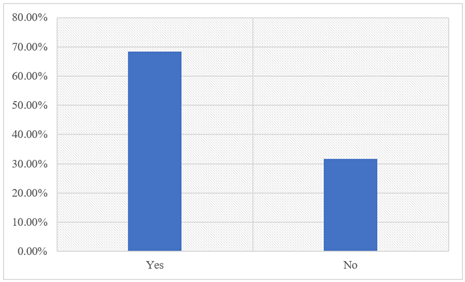
Table 1 showed that 68.3% of respondents responded
that their companies use systems that are based on AI to perform HR activities.
Conversely, 31.7% respondents indicated that AI technologies do not belong to
their HR activities yet. According to this research, many companies are
adopting AI-based HR solutions to increase their operational and strategic
decision-making.
AI technologies
can be quite handy in automated screening of recruitment, predictive analytics
on the workforce, and monitoring of performance. The rate of adoption is high,
which means that an increasing number of companies are understanding that AI
makes HR work a bit simpler and less demanding of HR professionals so that
these specialists could concentrate on other significant tasks. However, they
have not yet implemented AI, and this aspect implies that such issues as cost,
the complexity of technology, and resistance of employees can persist.
Impact of Human–AI Integration on Organizational Performance
To understand the
perceived impact of Human–AI collaboration on organizational outcomes,
respondents were asked whether the integration of AI in HRM has improved
organizational performance.
Table 2
|
Table 2 Perceived Impact of
Human–AI Integration on Organizational Performance |
||
|
Response Category |
Frequency |
Percentage (%) |
|
Improved |
87 |
72.5% |
|
Not Improved |
33 |
27.5% |
|
Total |
120 |
100% |
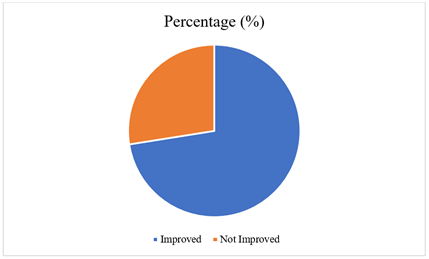
Table 2 confirms the views of
72.5% of the respondents who believe that the integration of AI into the HR
operations has made the company work better and 27.5% who believe that there is
no significant impact on performance. Majority believe that collaboration with
AI is a crucial part of making companies more efficient.
The use of AI technology gives the HR departments
access to a vast amount of data about their employees, discern trends in their
behavior, and make decisions using facts. This will allow the companies to
optimize their hiring processes, engage employees, and increase productivity.
The AI-assisted analytics may also be used in strategic person planning and
assist the business adapting to the changes in the business world.
Nevertheless, the
few who claimed they did not see any change might also be concerned with the
lack of sufficient training or the insufficiency of applying AI technologies or
be unprepared to transform their firm as a digital one. These issues demonstrate
the need to balance the new technology and human skills to take the most out of
AI integration.
Overall Interpretation of Finding
The findings of the study demonstrate that the fusion
between human beings and AI is gradually transforming the way strategic HRM is
carried out. Firms that are able to combine human judgment and AI-based
insights are more poised to enjoy the fruits of efficiency, quality of making
decisions, and performance.
The results highlight the fact that AI should not be used
to replace human HR professionals but rather complement their skills. The
potential use of AI solutions to assist the HR strategy is providing precise
data analysis and forecasts. This will enable the HR managers to concentrate on
employee development, leadership and firm culture.
CONCLUSION
The study about
the Human-AI integration of Strategic Human Resource Management (HRM)
emphasizes the increasing use of the Artificial Intelligence technologies in
the HR activities in modern organizations. The findings indicate that the
majority of the respondents who responded affirm that they used AI-based
solutions in such areas as recruitment, performance management, and workforce
analysis. This indicates that the HR practices are shifting towards data-based
practices. The findings also indicate that majority of the individuals who
responded to the questionnaire believe that AI work can enable organizations to
perform better due to the ability to make a better decision, increase
productivity and make operations more efficient. The AI technologies allow the
HR personnel to consider a significant amount of information about the
workforce and generate ideas that are useful in strategic planning and people
management. Another important point mentioned in the report is that in order to
be successful, the business must be prepared, the workforce must be trained and
that ethical considerations must be brought on the table so that technology can
reinforce the human knowledge rather than take it away. The evolving digital
business context suggests that the companies that are able to balance AI
technologies and human skills at the same time have higher chances of
experiencing long-term growth, improved HR efficacy, and higher overall
performance.
REFERENCES
Baldegger, R., Caon, M., and Sadiku, K. (2020). Correlation Between Entrepreneurial Orientation and Implementation of AI in Human Resources Management (HRM). Technology Innovation Management Review. https://doi.org/10.22215/timreview/1348
Birdi, K., Clegg, C., Patterson, M., Robinson, A., Stride, C. B., Wall, T. D., and Wood, S. J. (2008). The Impact of Human Resource and Operational Management Practices on Company Productivity: A Longitudinal Study. Personnel Psychology, 61(3), 467–501. https://doi.org/10.1111/j.1744-6570.2008.00136.x
Boon, C., Eckardt, R., Lepak, D. P., and Boselie, P. (2018). Integrating Strategic Human Capital and Strategic Human Resource Management. The International Journal of Human Resource Management, 29(1), 34–67. https://doi.org/10.1080/09585192.2017.1380063
Chuang, C. H., and Liao, H. (2010). Strategic Human Resource Management in Service Context: Taking Care of Business by Taking Care of Employees and Customers. Personnel Psychology, 63(1), 153–196. https://doi.org/10.1111/j.1744-6570.2009.01165.x
Ericksen, J., and Dyer, L. (2005). Toward a Strategic Human Resource Management Model of High Reliability Organization Performance. The International Journal of Human Resource Management, 16(6), 907–928. https://doi.org/10.1080/09585190500120731
George, G., and Thomas, M. R. (2019). Integration of Artificial Intelligence in Human Resource.
Green, K. W., Wu, C., Whitten, D., and Medlin, B. (2006). The Impact of Strategic Human Resource Management on Firm Performance and HR Professionals' Work Attitude and Work Performance. The International Journal of Human Resource Management, 17(4), 559–579. https://doi.org/10.1080/09585190600581279
Halid, H., Yusoff, Y. M., and Somu, H. (2020, May). The Relationship Between Digital Human Resource Management and Organizational Performance. In First ASEAN Business, Environment, and Technology Symposium (ABEATS 2019) (96–99). Atlantis Press. https://doi.org/10.2991/aebmr.k.200514.022
Han, J. H., Kang, S., Oh, I. S., Kehoe, R. R., and Lepak, D. P. (2019). The Goldilocks Effect of Strategic Human Resource Management? Optimizing the Benefits of a High-Performance Work System Through the Dual Alignment of Vertical and Horizontal Fit. Academy of Management Journal, 62(5), 1388–1412. https://doi.org/10.5465/amj.2016.1187
Katou, A. A. (2017). How does Human Resource Management Influence Organisational Performance? An Integrative Approach-Based Analysis. International Journal of Productivity and Performance Management, 66(6), 797–821. https://doi.org/10.1108/IJPPM-01-2016-0004
Kramar, R. (2014). Beyond Strategic Human Resource Management: Is Sustainable Human Resource Management the Next Approach? The International Journal of Human Resource Management, 25(8), 1069–1089. https://doi.org/10.1080/09585192.2013.816863
Matsa, P., and Gullamajji, K. (2019). To Study Impact of Artificial Intelligence on Human Resource Management.
Nikandrou, I., and Papalexandris, N. (2007). The Impact of Manda Experience on Strategic HRM Practices and Organisational Effectiveness: Evidence from Greek Firms. Human Resource Management Journal, 17(2), 155–177. https://doi.org/10.1111/j.1748-8583.2007.00031.x
Stanton, P., and Nankervis, A. (2011). Linking Strategic HRM, Performance Management and Organizational Effectiveness: Perceptions of Managers in Singapore. Asia Pacific Business Review, 17(1), 67–84. https://doi.org/10.1080/13602381003790382
Zehir, C., Karaboğa, T., and Başar, D. (2019). The Transformation of Human Resource Management and Its Impact on Overall Business Performance: Big Data Analytics and AI Technologies in Strategic HRM. In Digital Business Strategies in Blockchain Ecosystems: Transformational Design and Future of Global Business (265–279). Springer International Publishing. https://doi.org/10.1007/978-3-030-29739-8_12
 This work is licensed under a: Creative Commons Attribution 4.0 International License
© Granthaalayah 2014-2026. All Rights Reserved.

