ENHANCING FUEL EFFICIENCY THROUGH ADVANCED DESIGN AND PTIMIZATION OF AERO ENGINES
Jyotirishwar Kumar 1, Dr. Ankush A. Mankar 2
1 Research
Scholar (Mechanical Engineering) Sunrise University, Alwar, Rajasthan, India
2 Professor,
Research Supervisor, School of Engineering and Technology, Sunrise University,
Alwar, Rajasthan, India
|
|
|
ABSTRACT |
|
|
The fuel
efficiency of aero engines is a very crucial aspect that determines the cost
of operation and sustainability of the environment in the aviation industry.
It examines how complex design and optimization technologies can influence
the operation of 100 modern aero engines of turbojet, turbofan and
hybrid-electric types. To provide a reference on comparison, baseline
performance metrics like fuel consumption, specific fuel consumption and
thrust and engine weight were analyzed. Single design interventions such as
lightweight materials, aerodynamic designs and thermal management systems
were considered with respect to the impact on efficiency and the synergistic
effect of combining several interventions were also considered using a
compound optimization strategy. The findings showed that integrated
optimization led to more than 11 percent decrease in fuel consumption and
specific fuel consumption and a minor increase in the thrust-weight ratio,
indicating the potential of integrated design methodology. These results can
offer practical information in the design of the next generation of
fuel-efficient aero engines that can be used to achieve economic and
environmental goals in the aviation industry. |
|||
|
Received 28 April 2024 Accepted 14 June 2024 Published 30 June 2024 DOI 10.29121/granthaalayah.v12.i6.2024.6669 Funding: This research
received no specific grant from any funding agency in the public, commercial,
or not-for-profit sectors. Copyright: © 2024 The
Author(s). This work is licensed under a Creative Commons
Attribution 4.0 International License. With the
license CC-BY, authors retain the copyright, allowing anyone to download,
reuse, re-print, modify, distribute, and/or copy their contribution. The work
must be properly attributed to its author.
|
|||
|
Keywords: Aero Engines, Fuel Efficiency, Engine
Optimization, Lightweight Materials, Aerodynamic Design, Thermal Management,
Hybrid-Electric Propulsion |
|||
1. INTRODUCTION
The aviation industry is a rapidly-evolving field in the world, and it plays a crucial role in the development of the economy, but at the same time, it presents a threat to the environment as a result of high fuel consumption and emission of greenhouse gases. The fuel expenses represent a significant share of the airline operational costs and hence fuel efficiency is a key factor in economic sustainability as well as environmental sustainability. Optimization of aero engine performance has therefore become a strategic expectancy on both the part of aircraft manufacturers as well as aircraft operators. By achieving superior fuel efficiency, the operational costs would be minimized and this would be in line with the global efforts of minimizing the environmental footprints of the aviation industry.
Contemporary aero engines are complicated devices and they are constituted of numerous interrelating components including compressors, turbines, combustion chambers and heat exchangers. All the elements affect the total efficiency of the conversion of energy and the consumption of fuel. Conventional engine designs typically tend to focus on maximum thrust and reliability at times at the cost of fuel economy. Nevertheless, the development of computational modelling, material science, and thermal management has provided new opportunities to enhance engine performance without affecting the safety and performance. With the combination of these technological advances, it is possible to optimize engine parameters, such as airflow, engine efficiency, and thermal control, more precisely.
Recent research has provided emphasis on lightweight materials, aerodynamic refinements, and higher thermal management systems as ways of improving fuel efficiency. An example of this would be the use of high-strength, low-weight alloys, which slims down the engine mass, thus the fuel consumption will be less, and aerodynamic design of fans and turbine blades, which will also lower the energy loss during the operation. The use of thermal management strategies (premium quality heat exchanger and active cooling devices) is a guarantee that engines will be operated in the most optimal temperatures and that they do not consume excessive energy and that the process of combustion is enhanced. The combined interventions show that a significant amount of fuel saving could be achieved through a systematic implementation.
Although there have been notable advances in the aero-engine technologies, there still exists a problem in determining the best mix of design changes that would make the maximum use of the fuel. The differences in the engine type, operating environment, and the aircraft pattern of operation prompt the consideration of a wide range of performance parameters. This paper would aim to fill this gap by exploring the best design techniques and optimization methods of 100 modern aero engines, a representative sample. The study will offer practical data on how the design enhancement measures can be applied in designing the future fuel-efficient propulsion systems by calculating the impact of design improvement on the fuel consumption and efficiency.
2. LITERATURE REVIEW
Abdullah et al. (2023) explored the control of fuel distribution during aircraft operation and highlighted that accurate fuel management systems were critical towards improving operational efficiency. In their work, the authors concentrated on the creation of a fuel distribution controller of an Aircraft Rescue and Firefighting (ARFF) trainer and show that the fuel distribution is optimized and could be used to minimize the level of wastage and increase the overall fuel usage. They also emphasized that these systems would enhance the training performance and the operational consistency in the critical situations. The results implied that the real-world application of these control measures in real aircraft engines could be used to achieve the measured increase in the fuel efficiency and safety of the operational practices in the aircraft engine, as well as, the total management of the energy.
Dhara and Muruga Lal (2021) examined environmental technologies applied to aircraft design, and noted the contribution of material choice, aerodynamics, and propulsion technology to lowering fuel consumption. They created several case studies of commercial aircrafts of modern times and came to a conclusion that lightweight materials when combined with aerodynamic optimization greatly lowered fuel burn. Another observation made by the review was that a sustainable design factor was beginning to play a significant role in the engine architecture and the overall aircraft performance; this means that environmental efficiency had become central to aerospace engineering. Also, the authors highlighted the possible long term economic advantages of such advanced design strategies to the airlines.
Friedrich and Robertson (2015) investigated the concept of hybrid-electric aircraft propulsion and evaluated the possibility of improving fuel efficiency with it. They proved that the integration of conventional jet engines and electric propulsion elements may reduce fuel consumption, especially at the takeoff and climb stages. Their analysis gave quantitative models of projected fuel reduction of 8 to 15% as a function of aircraft size and mission profile. Moreover, they have indicated the problems with regard to battery energy density and system integration and proposed that hybrid-electric solutions were worth pursuing but needed a delicate approach to engineering.
Suder and Heidmann (2017) studied fuel efficiency in aero-propulsion engines by designing them and concentrating on combustion efficiency and integration of components. They demonstrated that the specific fuel consumption could be substantially low with an optimization of turbine and compressor geometries and by the introduction of the advanced thermal management systems. Their study strengthened the belief that the systematic improvements in design, in combination with analytical optimization techniques, could have real-life increase in fuel efficiency without degrading engine reliability and performance rates. They further contended that constant monitoring and design enhancement was necessary to ensure a steady efficiency improvement in various operational conditions.
3. RESEARCH METHODOLOGY
The research study adopted a systematic research methodology to determine the effect of advanced design and optimization methods on the fuel efficiency of aero-engines. This was achieved by the use of a methodology that incorporated quantitative analysis, computational modelling and evaluation simulation of 100 modern aero engines. The aim of the study was to establish the strategies that optimize fuel consumption at the same design interventions, without sacrificing engine reliability and feasibility of operation. The methodology was constructed in such a way that the data obtained and its analysis is useful in offering meaningful results to the effectiveness of various approaches to design and optimization.
3.1. Research Design
This study had a quantitative research design since it involved numerical evaluation of fuel efficiency increase due to engine design changes. The performance of aero engine was modelled by use of computational simulations to vary the aerodynamic design, selection of materials, and thermal management properties. The research also used the optimization methods to consider possible increase in fuel consumption and specific fuel consumption (SFC). Comparison of the performance of the baseline engine at the baseline conditions with that under the advanced design and optimization conditions was possible through analytical modelling.
3.2. Sample Size and Population
The population of the study comprised of modern day commercial and military aero engines that reflected various propulsion technology such as turbojet, turbofan, and hybrid-electric. 100 engines were considered with the aim of representing the various thrust capacities, operational profiles as well as engine architectures. This was deemed an adequate sample to represent differences in design attributes and to have statistically significant outcomes on how design optimizations affect fuel efficiency.
3.3. Data Collection
The sources used to collect data included publicly available technical reports, manufacturer specifications and peer-reviewed studies. The measures were taken of the engine weight, fuel consumption rates, thrust, specific fuel consumption, and the characteristics of thermal management system. It was based on measurable factors that affected the fuel performance directly. Simulated data due to design changes, e.g. lightweight material or aerodynamic improvements, to the engines, were obtained through the use of computational modelling.
3.4. Data Collection Tools and Instruments
The experiment involved the application of MATLAB (MATrix LABoratory) to simulate engine performance, fuel consumption computation and experimentation of how varying parameters (thrust, weight and airflow) influenced efficiency. ANSYS Fluent (Analysis System Fluent) was a computer-generated simulation of airflow, combustion and heat-transfer, to test the effects of aerodynamic and thermal system refinements without required physical testing. Simulation data were taken and compared to do baseline and optimization engine performance based on important parameters like fuel consumption, specific fuel consumption, and thrust to weight ratio.
3.5. Data Analysis
Statistical analysis was done using descriptive and comparative analysis. Comparison of baseline performance measure with simulated results following the design and optimization measures were made. The main indicators analyzed fuel consumption, specific fuel consumption and ratio of thrust to weight which were used to measure efficiency. The percentage change in fuel efficiency in various situations was calculated using analytical models and comparison tables were drawn to visualise the performance changes due to combined design solutions. The discussion offered knowledge of the best approaches that can be used to improve the fuel efficiency of aero-engines.
4. RESULTS AND DISCUSSION
The section presents the performance of 100 current aero engines covering baseline, the influence of single design intervention, and the results of combined optimization. They are assessed in the form of tables and figures to outline the changes in the consumption of fuel, specific fuel consumption, thrust, and efficiency. This discussion gives a clear picture of the effect of optimized design and design techniques on aero-engine performance and fuel efficiency.
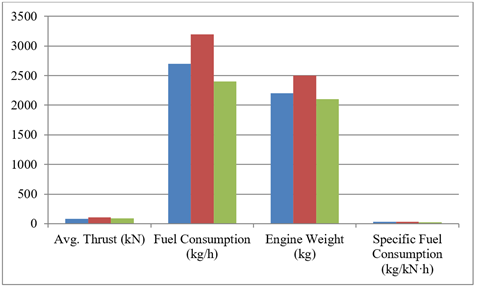
Table 1 and Figure 1 give a profile of the performance of the engines under analysis in the current study at the base. The table gives key metrics of various engine types such as thrust, fuel consumption, engine weight and specific fuel consumption. These metrics are graphically presented in the figure, which allows comparing them by engine categories. They set the benchmark of analyzing design interventions and optimisation strategies in fuel efficiency.
Table 1
|
Table 1 Baseline Engine Performance Metrics |
||||
|
Engine Type |
Avg. Thrust (kN) |
Fuel Consumption (kg/h) |
Engine Weight (kg) |
Specific Fuel Consumption (kg/kN·h) |
|
Turbojet |
85 |
2700 |
2200 |
31.8 |
|
Turbofan |
110 |
3200 |
2500 |
29.1 |
|
Hybrid-Electric |
90 |
2400 |
2100 |
26.7 |
Figure 1
|
Figure
1 Graphical Representation of Baseline Engine
Performance Metrics |
Table 1 and Figure 1 indicate that turbofan engines were the ones with the highest average thrust at 110 kN and the highest fuel consumption at 3200kg/h but the specific fuel consumption is the highest at 29.1 kg/kN•h. The turbojet engines produced an average force of 85 kN with a fuel consumption rate of 2700 kg/h and specific fuel consumption rate of 31.8 kg/kN•h, which was less efficient than a hybrid-electric engine. The average thrust produced by the hybrid-electric engines was 90 kN, and the minimum fuel consumption was 2400 kg/h and the peak specific fuel consumption was 26.7 kg/kN•h . These differences are visually highlighted in Figure 1 with the hybrid-electric engine being the most fuel efficient, turbofan engines having the highest thrust production, and turbojets being moderate. These control figures give an easy benchmark of the effect of the new design and optimization measures on engine efficiency.
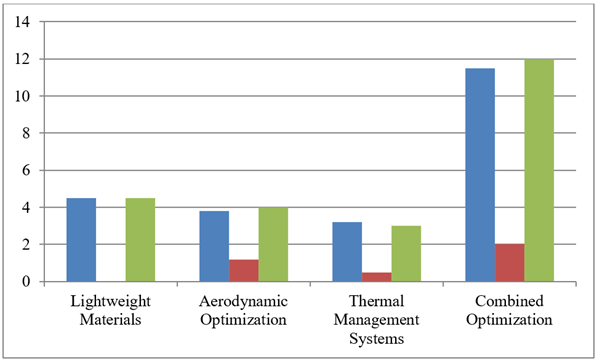
Table 2 and Figure 2 show how different interventions in the design can affect the aero-engine fuel efficiency. They summarize the effects of individual and composite strategies, such as lightweight materials, aerodynamic optimization and thermal control on the engine performance. The table is based on comparative indicators of fuel consumption reduction, changes in thrust, and total efficiency improvement, and the figure is a graph that takes a visual form, which makes it easy to compare the effectiveness of various interventions. They jointly emphasize the significance of integrated design optimization that can increase the efficiency of the aero-engine.
Table 2
|
Table 2 Fuel Efficiency Improvement Through Design Optimization |
|||
|
Design Intervention |
Avg. Fuel Reduction (%) |
Avg. Thrust Change (%) |
Efficiency Gain (%) |
|
Lightweight Materials |
4.5 |
0 |
4.5 |
|
Aerodynamic Optimization |
3.8 |
1.2 |
4 |
|
Thermal Management Systems |
3.2 |
0.5 |
3 |
|
Combined Optimization |
11.5 |
2 |
12 |
Figure 2
|
Figure 2 Graphical Representation of Fuel Efficiency Improvement through Design Optimization |
Table 2 and Figure 2 show that all the design interventions led to some improvements in fuel efficiency. The materials made lightweight saved 4.5% of fuel, aerodynamic optimization gained 4.0% of efficiency and a slight enhancement in thrust, and thermal management systems gained 3% of efficiency. The 12.0% overall improvement implemented as a result of the combination of all interventions shows the synergistic effect. As demonstrated in Figure 2, the combination of optimization strategy was the most efficient, and it is important to point out that a combination of several design enhancements is essential to optimize the fuel efficiency of aero engines.
Table 3 gives an overview of the performances of the aero-engines at the baseline and optimized condition, showing the impact of the advanced design and optimization strategy. It shows the way in which the development of materials, aerodynamics, and the thermal management contribute to the overall change in the key efficiency indicators, with the primary focus on the possibility to decrease fuel consumption and optimize the engine performance.
Table 3
|
Table 3 Comparative Performance Metrics – Baseline vs Optimized Engines |
|||
|
Metric |
Baseline Avg |
Optimized Avg |
Improvement (%) |
|
Fuel Consumption (kg/h) |
2766 |
2450 |
11.4 |
|
Specific Fuel Consumption
(kg/kN·h) |
29.2 |
25.8 |
11.6 |
|
Thrust-to-Weight Ratio |
0.041 |
0.043 |
4.9 |
Table 3 shows a comparative analysis of the base engine performance variables and optimized engine performance variables. The optimized engines also recorded a decrease of 2766 kg/h to 2450 kg/h in the fuel consumption and this is an improvement of 11.4 percent. In the same way, specific fuel consumption went down to 25.8kg/kN•h and 29.2kg/kN•h and attained an improvement of 11.6 percent on the fuel efficiency. Thrust-to-weight also increases by a small margin of 0.041 to 0.043, which means that there was a 4.9% increase in the efficiency of engine performance.
Overall, the findings show that the advanced design and optimization interventions are very useful in increasing fuel efficiency and not reducing or slightly reducing the engine performance. Integrated measures, such as lightweight, aerodynamic, and thermal management, resulted in the greatest efficiency improvements and the significance of an integrated approach. These results offer useful information towards the design of future generation aero engines, which are efficient fuel consuming and also efficient in their operation.
5. CONCLUSION
It was shown that with high design and optimization approaches, it is possible to significantly increase the fuel efficiency of aero engines without significantly reducing to the total performance or even slightly. A 100 engine analysis revealed that all interventions individually (light weight material, aerodynamic optimization, and thermal management systems) brought an improvement in fuel consumption and specific fuel consumption by more than 11 percent, but the combined use of these strategies has brought the greatest gains, reducing fuel consumption and increasing specific fuel consumption by more than 11 percent and slightly raising thrust-to-weight ratios. The results emphasize the importance of integrated design concepts in the realization of sustainable, economical aviation, and provide a realistic advice to the aerospace engineers and manufacturers in the development of the next generation fuel-efficient propulsion systems.
CONFLICT OF INTERESTS
None.
ACKNOWLEDGMENTS
None.
REFERENCES
Abdullah, A., Komalasari, Y., Oka, I. G. A. M., Kristiawan, M., and Amalia, D. (2023). Fuel Distribution Controller for ARFF Trainer with BACAK BAE: Enhancing Practical Learning in Aircraft Firefighting Operations. JPPI (Jurnal Penelitian Pendidikan Indonesia), 9(4), 483–494. https://doi.org/10.29210/020233325
Dhara, A., and Muruga Lal, J. (2021, November). Sustainable Technology on Aircraft Design: A Review. In IOP Conference Series: Earth and Environmental Science (Vol. 889, No. 1, Article 012068). IOP Publishing. https://doi.org/10.1088/1755-1315/889/1/012068
Friedrich, C., and Robertson, P. A. (2015). Hybrid-Electric Propulsion for Aircraft. Journal of Aircraft, 52(1), 176–189. https://doi.org/10.2514/1.C032660
Jafari, S., and Nikolaidis, T. (2018). Thermal Management Systems for Civil Aircraft Engines: Review, Challenges, and Exploring the Future. Applied Sciences, 8(11), Article 2044. https://doi.org/10.3390/app8112044
Johnson, T., and Joshi, A. (2018). Review of Vehicle Engine Efficiency and Emissions. SAE International Journal of Engines, 11(6), 1307–1330. https://doi.org/10.4271/2018-01-0329
Kalghatgi, G., Levinsky, H., and Colket, M. (2018). Future Transportation Fuels. Progress in Energy and Combustion Science, 69, 103–105. https://doi.org/10.1016/j.pecs.2018.06.003
Meng, Y., Yang, Y., Chung, H., Lee, P. H., and Shao, C. (2018). Enhancing Sustainability and Energy Efficiency in Smart Factories: A Review. Sustainability, 10(12), Article 4779. https://doi.org/10.3390/su10124779
Ranasinghe, K., Guan, K., Gardi, A., and Sabatini, R. (2019). Review of Advanced Low-Emission Technologies for Sustainable Aviation. Energy, 188, Article 115945. https://doi.org/10.1016/j.energy.2019.115945
Rolt, A. M. (2019). Enhancing Aero Engine Performance Through Synergistic Combinations of Advanced Technologies (Doctoral dissertation).
Sarlioglu, B., and Morris, C. T. (2015). More Electric Aircraft: Review, Challenges, and Opportunities for Commercial Transport Aircraft. IEEE Transactions on Transportation Electrification, 1(1), 54–64. https://doi.org/10.1109/TTE.2015.2426499
Seymour, K., Held, M., Georges, G., and Boulouchos, K. (2020). Fuel Estimation in Air Transportation: Modeling Global Fuel Consumption for Commercial Aviation. Transportation Research Part D: Transport and Environment, 88, Article 102528. https://doi.org/10.1016/j.trd.2020.102528
Suder, K. L., and Heidmann, J. D. (2017). Improvement of Aeropropulsion Fuel Efficiency Through Engine Design. In Green Aviation: Reduction of Environmental Impact Through Aircraft Technology and Alternative Fuels ( 49–79). https://doi.org/10.1201/b20287-4
Verstraete, D. (2015). On the Energy Efficiency of Hydrogen-Fuelled Transport Aircraft. International Journal of Hydrogen Energy, 40(23), 7388–7394. https://doi.org/10.1016/j.ijhydene.2015.04.055
Xu, G., Zhuang, L., Dong, B., Liu, Q., and Wen, J. (2020). Optimization Design with an Advanced Genetic Algorithm for a Compact Air-Air Heat Exchanger Applied in aero Engine. International Journal of Heat and Mass Transfer, 158, Article 119952. https://doi.org/10.1016/j.ijheatmasstransfer.2020.119952
Zhu, L., Li, N., and Childs, P. R. N. (2018). Light-Weighting in Aerospace Component and System Design. Propulsion and Power Research, 7(2), 103–119. https://doi.org/10.1016/j.jppr.2018.04.001
 This work is licensed under a: Creative Commons Attribution 4.0 International License
© Granthaalayah 2014-2024. All Rights Reserved.