Original Article
SOCIO-ECONOMIC STATUS OF THE KARBIS IN ARUNACHAL PRADESH: ISSUES AND INSIGHTS
|
Jiten Narzari 1* 1 Research scholar, School
of Social Sciences, The Assam Kaziranga University, Jorhat, Assam, India 2 Associate Professor, School of Social
Sciences, The Assam Kaziranga University, Jorhat, Assam, India |
|
|
|
ABSTRACT |
||
|
Tribal communities are facing multiple challenges including economic marginalization, poverty, alienation from resources, unemployment, lack of access to education and healthcare services, infrastructural constraints and cultural identity crisis. Understanding the socio-economic condition of these aboriginal communities is crucial to ensure their overall well-being. This study assesses the socio-economic hurdles faced by the Karbi people in the Indian state of Arunachal Pradesh, with specific focus on the occupational pattern, income, livelihood strategies and cultural identity issues. The study employs mixed methods approach to identify the key socio-economic indicators and stresses the need for targeted interventions to address these issues. The study contributes to the broader academic discourse on the protection of indigenous rights, preservation of cultural heritage and inclusive approach towards development. The findings of the study also hold significance as it will aid in shaping future polices and programmes targeted towards uplifting the marginalized indigenous communities. Keywords: Arunachal Pradesh, Challenges,
Development, Karbis, Socio-Economic, Tribe |
||
INTRODUCTION
Tribal communities
across the world including the Northeastern region of India are facing various
socio-economic challenges. These challenges have affected their quality of
life, efforts to preserve their distinctive culture and overall economic
well-being. The ongoing process of modernization and globalization has only
compounded their difficulties. Once, these indigenous communities depended on
available forest resources, preferred to stay isolated from others and
patterned their community life around their natural surroundings. The Karbis (formerly known as Mikirs),
spread out in different parts of Northeastern India, are also facing
multi-faceted social and economic challenges. The Karbis,
settled in the state of Arunachal Pradesh, have also been facing
marginalization despite several development programmes initiated by the
government. Shrinking forest resources, fragmentation of agricultural land,
land alienation, high level of poverty, unemployment, low income, lack of
employment opportunities, inadequate infrastructure and connectivity, lack of
political influence are among diverse issues confronting the community.
Hence, a fair
picture of the current socio-economic condition of the Karbi community is
crucial in addressing the challenges and pave pathway for sustainable
development. This study will examine the current socio-economic issues,
particularly the income, employment, livelihood strategies and identity issues
of the Karbi people. It will provide valuable insights to the policy makers and
administrators about the community’s current predicament. The quantitative and
qualitative data collected in the course of the research work is a
first-of-its-kind related to the community, considering very limited research
being conducted on the subject. The findings of the study also hold
significance as it will aid in shaping future polices targeted to uplift the
marginalized indigenous communities.
REVIEW OF LITERATURE
The Karbis, who prefer to call themselves ‘Arleng’,
are a major hill tribe of Assam. According to Edward Stack (1908), the Karbis formerly known as ‘Mikir’ belong to the
Tibeto-Burman linguistic group, and racially are
believed to be part of Mongoloid group. Over the years, due to different
reasons, the Karbi people who were largely concentrated in Karbi Anglong district of Assam scattered to different parts of
Assam. Currently, a small group of Karbi people are also found in the states of
Meghalaya, Nagaland and Arunachal Pradesh.
Like all other
indigenous communities in the region, the Karbis have
also witnessed tremendous socio-cultural changes due to globalization and
modernization. Several studies have highlighted this cultural transition and
resistance of the community, focusing on their unique traditions, rituals,
religious beliefs, arts & crafts, kinship system, gender roles, livelihood
patterns and economic practices. However, most of the works highlighting the
changing socio-cultural dimensions of the Karbi society have been largely
centred on the Karbis in Assam. Bhattacharjee (2021) gives detailed account of social structure,
organization and other traditional aspects including religious beliefs,
practices and rituals. Saikia
(1968) too documented the social institutions of
the Karbi society, while also bringing to the fore the community’s
socio-economic conditions. These findings, particularly those depicting the
economic condition of the community in general, have become outdated. Moreover,
the forces of change have also become diversified, with the passage of time.
Teron
(2008) and Sharma
(2014) also highlighted various aspects of Karbi society while analyzing the factors that brought about social changes.
The studies conducted by Sarma
(2021) focused on alterations seen in the dress,
food habits, village structure and other community roles and responsibilities. Chonzik and Killingpi (2014) studied the changes that pervaded into the Karbi society and
persistence of certain socio-cultural traits in the face of the forces of
change. Ronghangpi
(2023) highlighted the economic activities of the
Karbi community such as agriculture, traditional craft, weaving, while
emphasizing the principles of sustainability and sustenance. Pereira
et al. (2017) explores the changes that have occurred in
the Karbi community because of modernisation in social, economic, religious,
educational, administrative and other fields. Dowarah (2017) also documented the socio-cultural life of the Karbis
in Assam, focusing on their traditional practices, economy and other
socio-political organization.
Therefore, it can
be inferred that a proper study assessing the current socio-economic challenges
and opportunities have not been conducted on the small Karbi population in
Arunachal Pradesh. With number of development programmes being implemented for
the development of tribal communities across the country, it is also crucial to
understand the current social and economic challenges, so that the growth is
inclusive and sustainable.
OBJECTIVES
1)
To
examine the socio-economic status of the Karbis in
Arunachal Pradesh with specific focus on income levels, occupational patterns
and living standards.
2)
To
identify challenges and barriers to socio-economic development of the Karbi
people in the state.
METHODOLOGY
This study employs
mixed method approach to examine key indicators that reflect the community’s
living standards, occupation, livelihood strategies and cultural identity
issues. The entire population was selected for the study, and hence household
census was employed to get comprehensive and accurate data regarding the
socio-economic indicators of the community. Census method was preferred over
representative sampling of the population for two main reasons:
1)
To
collect specific information from among wide-range of
indicators for an accurate and reliable data on income, occupation and basic
living standards.
2)
Small
and manageable population to gather information from all households, assuming
the survey conducted on a representative sample would have missed out specific
issues of the community.
The primary
quantitative data acquired through structured questionnaires has been analysed
through descriptive statistics tools. Interview and observation techniques have
also been used to gather comprehensive and reliable data on the community’s
socio-economic condition. The field work was conducted over a 5-month period
from January to May 2023. Secondary sources used include books, journals,
newspapers and census reports.
STUDY AREA
The Karbi people
permanently residing in Arunachal Pradesh are found only in five villages along
the border areas with the neighbouring state of Assam. These five villages
are: Kokila, Hollongi
Karbi, Balijan Karbi and Lower Tarasso
in Balijan circle and Chessa under Banderdewa circle of Papum Pare
district.
RESULTS
The demographic
data revealing the population structure, traits and composition is crucial to
get an insight into socio-economic status, challenges and opportunities of a
community. In this section, the population characteristics of the Karbi people
in Arunachal Pradesh will be highlighted in detail to understand the income
levels, occupational patterns and living standards of the community.
The demographic
data revealing the population structure, traits and composition is crucial to
get an insight into socio-economic status, challenges and opportunities of a
community. In this section, the population characteristics of the Karbi people
in Arunachal Pradesh will be highlighted in detail to understand the income
levels, occupational patterns and living standards of the community.
Table 1
|
Table 1 Number of Households in Villages |
||
|
Sl. No. |
Name of village |
No. of households |
|
1. |
Kokila |
85 |
|
2. |
Hollongi Karbi |
46 |
|
3. |
Balijan Karbi |
24 |
|
4. |
Lower Tarasso |
19 |
|
5. |
Chessa |
10 |
|
|
Total |
184 |
|
Source: Field work |
||
In order to
understand the socio-economic dynamics of a community, knowing the total size
of the population and household size is very important. It is from this data set, other social and economic parameters can be
assessed. The Table 1 shows that total household size of the Karbis in Arunachal Pradesh is 184. The largest Karbi
settlement is Kokila village, with 85 households, followed by Hollongi Karbi and Balijan Karbi
with 46 and 24 households respectively. According to the Census of India 2011,
84 households resided in Kokila village, while 33 families resided in Hollongi Karbi village. The village witnessed an increase
of 13 households in the last decade. Hence, it can be inferred that the data of
the last census would have become outdated as the prime objective of the study
is to gauge the current socio-economic condition of the community.
Table 2
|
Table 2 Population Profile Village-Wise |
|||||
|
Village |
Male |
Female |
Children (0-18 years) |
Senior citizens (60+ years) |
Total |
|
Kokila |
254 |
242 |
138 |
35 |
496 |
|
Hollongi Karbi |
162 |
141 |
94 |
25 |
303 |
|
Balijan Karbi |
75 |
65 |
38 |
6 |
140 |
|
Lower Tarasso |
50 |
62 |
36 |
7 |
112 |
|
Chessa |
30 |
25 |
14 |
2 |
55 |
|
Total |
571 |
535 |
320 |
75 |
1106 |
The Table 2 depicts the total number of persons per
village, gender distribution, children and senior citizens. According to the
household census conducted by the researchers, the total Karbi population in
the state is 1106 persons. The gender ratio is also healthy as 571 are males
while 535 are females. The proportion of younger population is also good as 320
persons are within 0-18 age category indicating potential for economic growth
in future.
|
Figure 1
|
|
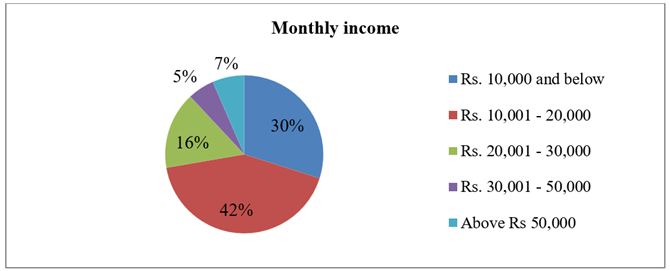
Figure 1 Monthly Household Income from All Sources Source:
Field Work |
Monthly household
income is a key indicator of the socio-economic status of a population. It
sheds light on the basic living standards, access to essential goods and
services, financial potential or distress. The Figure 1 indicates that 30 percent of the Karbi
people earn less Rs, 10,000 per month. According to the recent All India
Financial Inclusion Survey (NAFIS) 2021-22, the average monthly household
income in India is Rs. 12,698. The figure also shows that 12 percent of the
households have a monthly income of Rs. 30,000 per month indicating economic
disparity between different groups of people in the community.
Table 3
|
Table 3 Type of House |
||
|
House type |
Frequency |
Percentage |
|
Kutcha (Thatch/Bamboo) |
57 |
31.0 |
|
Semi-pucca |
56 |
30.4 |
|
Pucca (Concrete) |
71 |
38.6 |
|
Total |
184 |
100.0 |
|
Source: Field Work |
||
The type of
housing also gives critical insight into the population’s socio-economic
status. Housing, being a basic need of life, reflects the financial capacity of
a family. It also reveals the family’s ability to access essential services
such as education and healthcare. The Table 3 shows that 31 percent of the Karbi
population resides in Kutcha or bamboo-made houses, while 30.4 percent families
have semi-pucca houses. Nearly 39 percent of the families living in pucca
(concrete) houses suggest that if financial stability exists, people prefer
concrete houses over traditional bamboo-made structures.
Table 4
|
Table 4 Land holding per family (Residential +
Agricultural land) |
||
|
Land holding (in acres) |
Frequency |
Percent (%) |
|
Below 1 acre |
55 |
29.9 |
|
1-3 acre |
74 |
40.2 |
|
4-5 acre |
31 |
16.8 |
|
More than 5 acres |
24 |
13.0 |
|
Total |
184 |
100.0 |
|
Source:
Field Work |
|
|
Land holding is
another key indicator of the socio-economic status of a community. The
ownership and size of land holding becomes all the
more important in rural areas, where agriculture is the main source of income.
Land is an economic asset and it directly influences
the living standards of the people. The Table 4 shows that 29.9 percent of the Karbi
households in Arunachal Pradesh own less than 1 acre, while only 13 percent
households own more than 5 acres of land. This suggests unequal distribution of
land, thereby leading to economic inequality.
The source of
income is another important indicator to know socio-economic status in a
community. The type of income – whether earned from agricultural or
non-agricultural sources – provides crucial insights into the economic
stability and diversity. The census conducted by the researcher found that as
many as 115 households earned their income primarily from agriculture related
activities. The field work also found that people who were formally employed,
both government and private sectors, also supplemented their family income from
agriculture. Non-agricultural income sources among the Karbi people include
unskilled manual labour, small-scale vending, petty businesses, weaving,
carpentry, masonry etc. Shrinking forest resources, decreasing soil fertility,
fragmentation of land, limited use of modern agricultural equipments
and lack of diversification of crops are forcing people to look for alternative
livelihood strategies other than farming.
Further,
non-inclusion of the Karbi people as one of the Scheduled Tribes (ST) in the
state of Arunachal Pradesh, has led to significant problems for the community.
Due to lack of ST rights, the community now faces trouble in availing loans,
scholarships and other government schemes. Loss of land rights due to issues
related to ST rights have further alienated the community. These changes in the
socio-political landscape have impacted the younger generations significantly
leading to cultural identity crisis.
DISCUSSION
The Karbi people
in Arunachal Pradesh have witnessed complex socio-economic transformation due
to several external factors like globalization, spread of education,
technological advancements and changing political landscapes. The study found
that the community’s overall growth has been hindered by various factors such
as lack of employment opportunities, non-recognition of tribal rights, lack of
diversification in income, lack of employment opportunities, shrinking forest
resources and absence of development initiatives.
The study found
significant income disparity among different households of the community.
Without efforts to enhance economic opportunities for all, the families
particularly those with lesser income could be caught in the web of poverty and
economic stagnation. The study also found unequal distribution of land among
families, thereby contributing to economic inequality. Further, the study
reemphasized the importance of agriculture as the primary source of income
among all tribal communities including the Karbis.
There is a need to encourage the people to take up alternative livelihood
strategies for an equitable and sustainable growth. Political dialogue should
also be initiated to resolve the issue of ST and land rights for the community.
Moreover, the study emphasizes the need for immediate intervention by policy
makers and administrators to address the socio-economic issues of the
community.
CONCLUSION
Tribal communities
are facing multitude of socio-economic challenges. The barriers to the overall
development of these communities need to be identified and addressed, without
destroying their distinct traditions, culture and heritage. The Karbi people in
Arunachal Pradesh are battling economic marginalization, poverty, unemployment,
alienation from resources, infrastructural constraints and cultural identity
crisis. This study underscored the need for targeted interventions taking into account the principles of inclusivity and
sustainability in economic upliftment of the community.
ACKNOWLEDGMENTS
None.
REFERENCES
Bhattacharjee, S. (2021). Society and Culture of the Karbis of Assam.
Abhijeet Publications.
Bhattacharjee, T. (1986). Sociology of the Karbis.
BR Publishing Corporation.
Chonzik,
P. B., and Killingpi, M. (2014). Transition, Continuity
and Change in the Hill Karbi Society of Assam.
Journal of International Academic Research for Multidisciplinary, 2(7), 576–585.
Dowarah,
J. (2017).
Socio-Cultural Life of the Karbis of Assam: A Sociological Note. Educreator Research Journal
(ERJ), 4(2), 53–58.
Lyall,
C. J. (1908). The
Mikirs. Spectrum Publications.
Pereira,
M., Teron, D., Chetia, J., and Katharpi, M. (2017). Exploring
Differences, Recording
Change - The Karbis of Assam. NESRC.
Phangcho,
P. (2003). The Karbis of North-East India. Angkik
Prakashan.
Ronghangpi, K. (2023).
Sustenance and Sustainability: Economic Life of the Karbi Ancestors. North East India
History Association.
Saikia,
P. D. (1968).
Changes in Mikir Society. Agro-Economic
Research Centre for N.E. India.
Sarma,
H. (2021). Karbis:
Changes in the Socio-Cultural Life. Journal of Emerging
Technologies and Innovative Research, 8(12), 674–682.
Teron,
D. (2008). Karbi Studies (1st ed.). Angik Prakashan.
Teron, D. (2011). Karbi Studies (Vol. 2). Assam Book Hive.
 This work is licensed under a: Creative Commons Attribution 4.0 International License
© Granthaalayah 2014-2026. All Rights Reserved.