Original Article
IMPACT OF CIRCULAR ECONOMY PRACTICES ON EXPORT PERFORMANCE
|
Sahar Hassan
Khayat 1* 1 Associate Professor, Department
of Economics, Faculty of Economics and Administration, King Abdulaziz
University, P.O. Box 3024, Jeddah 21471, Kingdom of Saudi Arabia |
|
|
|
ABSTRACT |
||
|
This study aims to explore the impact of circular economy practices on export performance and environmental performance within the framework of a developing economy such as Jordan. Moreover, the mediating role of environmental performance on the nexus between circular economy practices and export performance. This study used a cross-sectional survey questionnaire from 279 managers of manufacturing firms in Jordan. To ensure diversity in the sample, this study included firms from different industry types. The structural equation modeling approach was performed with reliability and validity analysis to test the study hypothesis. The findings showed that circular economy practices significantly and positively influence environmental and export performance. Environmental performance also significantly and positively affects export performance. Moreover, it is also observed that environmental performance mediates the association between export performance and circular economy practices. This finding are intended to encourage the adoption of circular economy practices across the manufacturing firms of Jordan to reap economic gains by stimulating their exports through enhancement in environmental performance. Keywords: Circular Economy Practices,
Environment Performance, Export Performance |
||
INTRODUCTION
The linear
economic model centered on a growth-oriented approach of excessive consumption
of natural resources is driving Earth's life-supporting systems beyond the safe
threshold. Climatic instability, biodiversity crisis, and changes in land use
patterns are all primary consequences of this system Barrie
and Schröder (2022). Extraction, processing, and use of natural
resources are among the driving catalysts of these effects, responsible for
over 50% of global emissions and 90% of biodiversity loss on land Oberle
et al. (2019). The circular economic model provides a
solution, integrating economic advantages with the ecological conservation of
natural resources, minimizing waste, and harnessing renewable energy sources Kirchherr
et al. (2023). Different from the liner model, it produces
a recirculating system where products and materials are reused, and waste is
recycled into resources for future use. Deploying a circular economy in
manufacturing sectors can minimize ecological consequences, and accelerate
economic productivity and progress toward achieving sustainable development Shebanin
et al. (2024). The manufacturing sector is fundamentally
important for economic growth as it substantially contributes towards gross
domestic product, generating employment opportunities, earning foreign
exchange, and improving trade balances. Thus, the circular economy's potential
in the manufacturing sector is enormous and could be dynamic for the
sustainable development of a country.
The transition
towards a closed-loop or circular economy is growingly identified as a model
capturing the attention in global forums. Consequently, sustainable development
goals aim to target the global optimization of resources in production and
consumption and pursue the decoupling of economic progress from ecological
destruction. European Commission introduced a circular economy as a primary
component in its economic strategy through launching a circular economy action
plan (CEAP). During the last several years, myriad multinational coalitions
have been made to stimulate the circular economy at regional and international
levels such as the Platform for Accelerating the Circular Economy (PACE),
Global Alliance for Resource Efficiency and Circular Economy (GARECE), and the
African alliance of circular economy. At the national level, embracing a
circular economy is also considered a strategy for accelerating economic
competitiveness and minimizing reliance on unstable global supply chains.
The fundamental
idea behind the adoption of a circular economy is to address the issue of
scarcity of natural resources Pizzi et
al. (2022).
Thereby, circular economy practices have gained importance as an
economic and business framework that offers firms an innovative approach to
resource utilization. It emphasizes on significance of regenerating and recovering
resources when products are no longer in use Cavicchi
et al. (2022). Manufacturing firms prioritizing circular
economy practices seek to employ reprocessed materials and closed-loop systems
for their raw materials. They endeavor to reduce the utilization of natural
resources, mitigate energy waste, and minimize emissions, and pollution. The
studies of Shevchenko
et al. (2023) and Le et al. (2024) have mentioned the above-stated objectives
of circular economy practices. Companies have incorporated business models
integrating circular economy practices such as recycling, resilience,
maintenance, reuse, renovation, reshaping, decomposition, and capacity sharing.
Chembessi
et al. (2022) advocated that the target of circular
economy practices is to maximize the usage of resources, promote efficiency and
reduce waste. These circular economy
activities exhibit the evolution of the 3R concept i.e., reduce, reuse, and
recycle. Shevchenko
et al. (2023) described the word “reduce” as evaluating
strategies to modify the raw material composition, improve consumption and
production processes, are modeling procedures. Similarly, the word “reuse” is
defined by Schöggl
et al. (2024) as the approach of utilizing products that
have achieved their life cycle to reduce the reliance on raw materials and
other resources in the production, development, and consumption of new
products. Recycling becomes a favorable option when it’s not feasible to reduce
and reuse waste. The "recycling" term demonstrates an efficient usage
of scarce resources by transforming waste items into useful products Blinova
et al. (2022).
It is important to
mention that several empirical research has been carried out on the notion of
circular economy practices in the field of general activities and operations of
firms Mazzucchelli et al. (2022), Velasco-Muñoz
et al. (2022). while, it is essential to recognize that
above-mentioned studies predominantly follow the linear economic model and the
conceptualization rooted in the principles of circular economy. Some studies
have concentrated on the circular economy and its effects on the factors of
corporate performance, particularly in the context of developed nations.
However, the association between the circular economy practices and export
performance still needs to be explored. Therefore, this study contributes to
the literature by investigating the relationship between the circular economy
practices and the environmental and export performance of the manufacturing
firms of Jordan. Explicitly, this research also explores the mediating role of
environmental performance in shaping the relationship between circular economy
practices and export performance.
Literature Review
Circular Economy Practices
The circular
economy is considered a constructive system in which emissions, resource waste,
and the process of energy transmission are depleted through substances loops
and closing energy Geissdoerfer et al. (2018). The circular economy is a sustainable
development initiative that reduces the linear flow of energy and material in
the societal consumption-production system by integrating renewable energy
sources Korhonen
et al. (2018). The concept of circular economy and its
implementation in economic systems has developed to incorporate a wide range of
ideas such as the cradle-to-cradle approach McDonough
and Braungart (2010), Looped economy Stahel
(2016), and ecology laws Commoner
(2020), that are fundamentally important to form
closed-loop framework. The circular economy is an economic model that
organizations should implement by integrating activities that increase/diminish
the use/reuse of resources while confirming they are recyclable Ahmadi
et al. (2017). In a similar vein, Desing
et al. (2020) stated that this concept has evolved to
satisfy the growing needs while avoiding ecological degradation.
Geng et al. (2019) advocated that incentives and policies
should be upgraded to propagate and deploy circular economy practices. Bag et al. (2021) presented a theoretical model to demonstrate
the significance of technological advancement to facilitate circular economy
practices. Primc et
al. (2020) proposed measures of circular economy
configuration and examined the impact of circular economy practices at
different levels of firms’ growth. Nadeem
et al. (2018) highlighted that circular economy practices
reduce waste generation and use of recycled products thus, can minimize
environmental pollution. Therefore, circular economy practices are required to
conserve the environment and to promote sustainable manufacturing procedures Sfez et al. (2019).
EXPORT PERFORMANCE
Scholars have
recognized the significance of exporting in the international economy as a
critical measure of an organization’s capacity to optimize its materials and
resources worldwide Azar and Ciabuschi (2017), Boehe
and Jiménez (2016), Cadogan
et al. (2016). Export performance is explained by Cavusgil
and Zou (1994) as the level at which an organization
accomplishes its strategic and economic targets related to exporting a
commodity into the international market through effective formulation and
implementation of an export marketing strategy. It is considered a crucial
performance that can contribute a role in supporting Jordan's economy. Jordan
stands 94th internationally based on its export-reliant economy while its
economic complexity ranks it 67th on the global scale (JIC, 2018). Brouthers
et al. (2009) defined several indicators of export
performance. Azar and Ciabuschi (2017) measured export performance by employing two
dimensions such as strategic effectiveness and financial performance. Export
performance may include exporting decisions, the range of accessible markets,
the quantity of sold products, and the value of exported products Spanos
(2016). However, Carneiro
et al. (2016) and Katsikeas
et al. (2000) have categorized the above measures into two
major categories, including non-economic/non-financial and economic/financial
(sales/profitability) measures. This research used export sales, international
market access, growth of export market share, export targets, and profitability
of exported goods as indicators of export performance as these indicators are
extensively employed in literature and incorporate the two primary measures of
export performance I.e., non-financial and financial measures.
ENVIRONMENTAL PERFORMANCE
In a period of
awareness related to environmental issues, firms need to explore avenues to
mitigate the ecological influences by incorporating organizations’
environmental performance with activities, strategies, employee relationships,
and the company's reputation to address environmental issues and
regulations. Walls et
al. (2012) described environmental performance as the
consequences of an organization's strategic decisions in mitigating (or
neglecting) its environmental influences.
The Environmental
Performance Index Environmental Performance Index (2018) ranks 180 nations on 24 performance measures
among 10 issues classification encompassing ecosystem validity and
environmental health Environmental Performance Index (2018). Based on the country rank of Environmental Performance Index (2018), Jordan scores 62nd out of 180 and stands
6th in the Middle East and North Africa region. Concerning the issue
classification, Jordan scores 26th in environmental health and 132th in
ecosystem validity, especially scores 20th in air pollution and 107th in
climate and energy Environmental Performance Index (2018).
Since no
standardized measure of environmental performance exists, there are a variety
of environmental performance indicators as environmental issues are often hard
to quantify due to their intangible nature Banerjee
(2002). However, variations in environmental
performances persist within firms, among firms in the same industry, and across
firms in different industries even different performance metrics are adopted Bocken
et al. (2013). This
research commonly used indicators of environmental performance, adopted from
literature such as reduced liquid and solid waste, decreased atmospheric
emission, minimal usage of resources, toxic and hazardous products, and
environmental reputation of a firm Diab et al. (2015), Hasan
(2013).
Theoretical Framework and Hypothesis Development
CIRCULAR ECONOMY PRACTICES AND ENVIRONMENTAL PERFORMANCE
Existing
literature provided evidence of the relationship between circular economy
practices and environmental performance. The studies of Marrucci
et al. (2022) and Małys,
(2022) have investigated the overall performance of an
organization. The study conducted by Ncube et
al. (2024) stated a positive association between
drastic progress in the environmental performance of an organization and the
adoption of a circular economy-based model. The stakeholders of firms took
advantage of association between the ecological performance and circular
economy practices Dvorský
et al. (2023), Rahaman
et al. (2023). However, Nishitani
et al. (2022) argued that correlation between the
environmental performance and the circular economy ultimately led to benefits
for the organization. Moreover, the authors also mentioned that the adoption of
technology and the promotion of innovative solutions can advance circular
economy practices, eventually leading to a healthier ecosystem.
The earlier
discussion has highlighted the influence of environmental performance, giving
their relevance to sustainable practices and ecological practices Ogutu et
al. (2023). There are increasing concerns among the
stakeholders that organizations might focus on prioritizing ecological
challenges, adjusting to the changing business landscape, and preserving
resources, instead of solely focusing on profit-making because of strong market
competition Tang et al. (2022). Meanwhile, circular economy practices can
improve the efficiency of resource utilization, allowing the organization to
fully recognize the benefits of adopting more sustainable approaches Jagoda
et al. (2023). Thus, this study formulates the hypothesis
as;
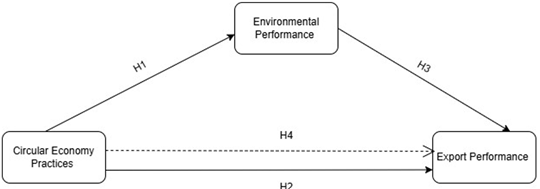
H1: There is a
positive and significant association between environmental performance and
circular economy practices.
CIRCULAR ECONOMY PRACTICES AND EXPORT PERFORMANCE
The direct
influence of circular economy practices on export performance has not been
explored in past research. Whereas, several studies have indirectly addressed
this impact and shown a strong positive association Henrique
et al. (2014), Villena
and Souto (2016). Mitrović and Veselinov (2018) asserted that there is a nexus between
global competitiveness and the level of circular economy development in the
European Union. Furthermore, Rehman
et al. (2023) showed that circular economy innovations
have a significant and positive influence on market competitiveness. Đorđević et al. (2021) also argued that the notion of a circular
economy has a substantial contribution to improving competitiveness. Research
by Nishitani
(2011) found that the implementation of an
environmental management system led to enhanced export performance in Japanese
export-oriented companies.
The above
discussion argued that implementing circular economy practices will support
exporting products to various developing and developed countries that enforce
rigid environmental legislations for imported products. Based on the above
arguments, the hypothesis has been formulated as follows;
H2: There is a
positive and significant association between export performance and circular
economy practices.
ENVIRONMENTAL PERFORMANCE AND EXPORT PERFORMANCE
Limited studies
focus on export performance and environmental performance, particularly in the
context of developing nations. Firms that mitigate the adverse environmental
impacts of their materials and practices and reusable materials from consumer
waste are about to grow their markets Demirci
(2014). Chen et al. (2006) highlighted that strengthening environmental
performances throughout all stages of manufacturing processes including
minimizing hazardous material and energy consumption, enhancing ecological
reputation, optimizing waste processing, and reducing emissions. Consequently,
these environmental upgrades contribute to increased marketing opportunities,
improve the firm's reputation, and boost market share Zhu et al. (2013). Whereas, Ural (2009) believed that exporting is a component of an
organization's marketing strategy. There might be additional costs involved
such as the implementation of an environment management system, expenses of
polluting air, and higher operational costs. These adverse impacts might be
observed in the short-run, as in the long-run benefits including, reduced
waste, energy savings, and improved operational efficiency can offset the cost.
These improvements can boost the firm's reputation, and increase profits,
leading to better performance in the market while meeting environmental
standards. Concerning the above argument, the hypothesis is postulated as
follows;
H3: There is a
positive and significant association between export performance and
environmental performance.
THE MEDIATING ROLE OF ENVIRONMENTAL PERFORMANCE ON THE NEXUS BETWEEN CIRCULAR ECONOMY PRACTICES AND EXPORT PERFORMANCE
Recovery,
recycling, and reuse of activities that are used at the eco-design phase can
reduce toxic materials and emissions, decrease energy consumption, and enhance
waste management across the life cycle of a product. Thus, environmental performance can be
achieved by eradicating waste and reducing resource usage Zhu et al. (2013). Implementing circular economy practices is
prone to involve organizations in evaluating their environmental performance
and enhancing it, thus integration of internal environmental strategies allows
companies to reduce resource consumption and minimize waste. Conversely, the
Arab Spring has driven Jordanian companies in the manufacturing sector to
explore new markets, including those that impose ecological restrictions on
exporting products. Thus, enhanced environmental performance could result in
improved brand reputation and status, and fulfilling international
environmental standards, which might be viewed as an opportunity to grow
exports in existing markets and explore new foreign markets that would
ultimately improve export performance.
Based on the above discussion, the hypothesis is formulated as follows;
H4: The effect of
circular economy practices on export performance is positively mediated by
environmental performance.
The conceptual
model of observed variables is presented in Figure 1.
|
Figure 1
|
|
Figure
1 Conceptual Model of Research |
Materials and Methods
Research Design and Sample
This study adopted
a quantitative research design employing a cross-sectional survey questionnaire
to gather data from the respondents. This research focused on the population of
manufacturing firms in Jordan, which comprised 1,793. Sekaran
and Bougie (2016) mentioned that the adequate size of the
sample for this population is 317. The researcher distributed 467
questionnaires online by utilizing e-mail addresses from the websites of
selected manufacturing firms and also requested the respondents to participate
in this research. A random sampling approach was used to select the study
sample. Whereas, to ensure the diversity in the sample, different types of
study such as, textile/garments, fertilizers/chemicals, pharmaceuticals,
food/beverages, and plastic/rubber were involved in the study sample. This
study targets the top, middle, and lower levels of management as they have the
required information concerning the study questions. A cover letter was
attached with the questionnaire highlighting the objective of the research,
guiding completion, and ensuring that the collected data would be strictly used
for research purposes. A total of 334 questionnaires were received with 55
having missing information. This may be
happened because managers were hesitant to share internal policies as several
firms have strict restrictions in sharing data related to their environmental
practices. Thus, the final number of valid questionnaires was 279, reflecting a
response rate of 59.7%. This response rate is close to other empirical research
performed in Jordan employing the same methodology Al-Sa et al. (2017), Abdallah
et al. (2017).
Questionnaire Design and Measures
In pursuit of the
research objective, this study used a questionnaire survey. The survey
questions were adopted from past studies Kristoffersen et al. (2021), Amin et al. (2024), Chien
(2014), Carneiro
et al. (2016). Originally, the questionnaire was created
in English and to convert it to Arabic, translation was required. This study
used a back-translation approach which involves the translation of a
questionnaire from one language to another and then translating back it into
the original language to ensure the reliability of a questionnaire.
Furthermore, the questionnaire was assessed by three professionals in
operations to ensure that each construct was assessing what it was anticipated
to assess. Additionally, this revision confirms the appropriateness and clarity
of study constructs and translation accuracy. Adjustments were implemented as
required such as filtering, revising removing some constructs. Moreover, five
managers from manufacturing firms pre-tested the questionnaire, and adjustments
were made in response to their feedback. The constructs of circular economy
practices were evaluated on a 5-point Likert scale, ranging from strongly
disagree to strongly agree. For the constructs of export and environmental
performance, participants were requested to assess their firms’ performance to
that of their competitors over the three past years, also employing a
five-point Likert scale (i.e., 1= strongly disagree to 5= strongly agree). The
details of survey constructs with references were presented in the Appendix A.
Reliability and Validity
Internal
reliability was examined by employing composite reliability (CR) and Cronbach’s
alpha, following the suggestion of Hair et al. (2017). The minimum acceptance range of Cronbach
alpha is 0.70 or above while the cutoff value for CR is 0.70. Discriminant and
convergent validity were both evaluated Hair et al. (2014), Schijven
and Jakimowicz (2003). Discriminant validity was assessed to
confirm that each variable is distinct and captures a phenomenon not explained
by other variables in the same measurement model Hair et al. (2014). The Fornell-Larcker criterion was used to
test discriminant validity. The accepted criteria are values below 0.80 for
discriminant Kline
(2011). Moreover, Convergent validity was tested
using Average Variance Extracted (AVE) and factor loadings Cheah et
al. (2018), Hair et al. (2014). According to the criteria, AVE values
should exceed 0.50, and factor loadings should be greater than 0.70.
Data Analysis
This study adopted
the structural equation modeling (SEM) approach to evaluate the structural and
measurement model. This analysis was conducted on STATA version 18. It is
important to mention that there are two widely employed procedures to estimate
the parameters of structural equation modeling (SEM); the variance-based
approach (VB-SEM) and the covariance-based approach (CB-SEM). CB-SEM uses the
maximum likelihood procedure to reduce the difference between the expected and
observed covariance anticipated by the theoretical framework. Further, it
requires a large sample size like 200 to 800 cases. However, this study used
VB-SEM to examine the variables of the model via loading analysis and path
values. In addition, this procedure reduces the overall adequacy of the
covariance matrix of the observed measurements. The SEM approach is generally
used when the researchers’ objective is to explain and anticipate variation in
significant target components by using multiple explanatory constructs Hair et al. (2014). Instead of focusing exclusively on the
covariance that explains the link between items, the SEM approach prioritizes
maximizing the variation explained in the dependent variable by the independent
variable.
Results
Table 1 summarizes the respondents and surveyed
firms' profiles. It is observed that in the study sample males were predominant
(75.98%) and a larger proportion of the sample were in middle-management roles
(66.66%). Regarding industry type, the fertilizers and chemicals sector has the
leading share (37.27%), followed by textiles and garments (26.88%), while the
pharmaceuticals sector has the smallest group (10.39%). The majority of the
participants work in small to medium-sized firms, with 40% of participants from
firms with less than 50 employees and 24% from firms with 50-150 employees.
Table 1
|
Table 1 Demographic Profile of
Participants and Surveyed Firms |
||
|
Demographic
Profile |
Category |
n
(%) |
|
Gender |
Male |
212
(75.98%) |
|
Female |
67
(24.01%) |
|
|
Designation |
Top
management |
59
(21.14%) |
|
Middle
management |
186
(66.66%) |
|
|
Lower
management |
34
(12.18%) |
|
|
Industry
Type |
Textile
and garments |
75
(26.88%) |
|
Food
and beverages |
40
(14.33%) |
|
|
Pharmaceuticals |
29
(10.39%) |
|
|
Fertilizers
and chemicals |
104
(37.27%) |
|
|
Rubber/plastics |
31
(11.11%) |
|
|
Number
of Employees |
Less
than 50 |
112
(40.14%) |
|
50-150 |
67
(24.01%) |
|
|
151-250 |
56
(20.07%) |
|
|
More
than 250 |
44
(15.77%) |
|
Table 2 demonstrates the reliability and validity
measures of the study instruments. It is observed that the factor loadings for
most items exceed 0.60, showing adequate reliability of items. Similarly, the
Cronbach's Alpha values vary between 0.78 to 0.88, indicating good internal
consistency. Furthermore, composite reliability (CR) ranges from 0.75–0.90,
further supporting construct reliability. In addition, the average variance
extracted (AVE) values (0.52–0.55) also satisfy the minimum threshold of 0.50,
implying appropriate convergent validity. Overall, the study instruments
indicate adequate reliability and validity of the questionnaire.
Table 2
|
Table 2 Reliability and
Validity of Constructs |
|||||
|
Constructs |
Statements |
Factor
Loadings |
Cronbach
Alpha |
CR |
AVE |
|
Circular
economy practices |
CEP1 |
0.69 |
0.87 |
0.80 |
0.55 |
|
CEP2 |
0.80 |
||||
|
CEP3 |
0.73 |
||||
|
CEP4 |
0.66 |
||||
|
CEP5 |
0.88 |
||||
|
CEP6 |
0.65 |
||||
|
Environmental
performance |
ENPRF1 |
0.91 |
0.78 |
0.75 |
0.52 |
|
ENPRF
2 |
0.84 |
||||
|
ENPRF
3 |
0.77 |
||||
|
ENPRF
4 |
0.71 |
||||
|
ENPRF
5* |
0.40 |
||||
|
ENPRF
6* |
0.44 |
||||
|
Export
performance |
EXP1 |
0.85 |
0.88 |
0.90 |
0.54 |
|
EXP2 |
0.80 |
||||
|
EXP3 |
0.67 |
||||
|
EXP4 |
0.59 |
||||
|
EXP5 |
0.74 |
||||
|
Note: * Deleted Items Due to
Value Less than 0.50 |
|||||
Table 3 reports the assessment of discriminant
validity using Fornell–Larcker criteria. The diagonal values indicate the
square root of the AVE, exceeding the corresponding correlation coefficients,
indicating acceptable discriminant validity. The VIF values less than 5,
suggesting no severe multicollinearity problem across the constructs.
Table 3
|
Table 3 Discriminant Validity
Assessment |
||||
|
Constructs |
CEP |
ENPRF |
EXP |
VIF |
|
CEP |
0.741 |
0.523 |
0.309 |
1.670 |
|
ENPRF |
0.461 |
0.721 |
0.684 |
2.894 |
|
EXP |
0.664 |
0.357 |
0.734 |
2.312 |
|
Note:
Bolded Diagonal Terms Represent the Square Root of AVE. |
||||
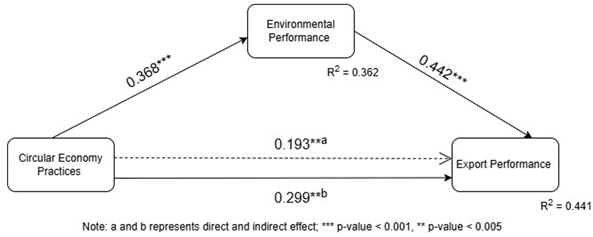
Table 4 presents the results of hypothesis testing
employing the SEM approach. It is observed that our results support the H1,
highlighting a significant and positive impact of circular economy practices on
environmental performance ( 0.368,
p-value = 0.000). In addition, circular economy practices have a significant
and direct impact on export performance (
0.368,
p-value = 0.000). In addition, circular economy practices have a significant
and direct impact on export performance ( =0.299, p-value = 0.003), thus supporting H2.
The effect of environment performance on export performance also showed
positive and significant ( =
0.442, p-value = 0.000), consequently, H3 was also supported. The findings of
the mediating effect of environment performance demonstrated that the impact of
circular economy practices on export performance was also significant and
positive ( =
0.193, p-value = 0.010) but it is less than as compared to the direct effect,
thus H4 is also supported. Figure 2 also displays the direct and indirect
effects of studied variables.
=0.299, p-value = 0.003), thus supporting H2.
The effect of environment performance on export performance also showed
positive and significant ( =
0.442, p-value = 0.000), consequently, H3 was also supported. The findings of
the mediating effect of environment performance demonstrated that the impact of
circular economy practices on export performance was also significant and
positive ( =
0.193, p-value = 0.010) but it is less than as compared to the direct effect,
thus H4 is also supported. Figure 2 also displays the direct and indirect
effects of studied variables.
Table 4
|
Table 4 Results of Hypothesis
Testing |
|||||
|
Paths |
Coefficient |
t-value |
p-value |
95%
Confidence Interval |
Decision |
|
CEP |
0.368 |
6.238 |
0.000 |
[0.212;0.460] |
Supported |
|
CEP |
0.299 |
4.855 |
0.003 |
[0.145;0.267] |
Supported |
|
ENPRF
|
0.442 |
6.019 |
0.000 |
[0.208;
0.522] |
Supported |
|
CEP |
0.193 |
4.652 |
0.010 |
[0.013;
0.167] |
Supported |
|
Figure 2
|
|
Figure 2 Path
Analysis of Circular Economy Practices, Environmental Performance, and Export
Performance |
|
|
Discussion
Based on empirical
findings, it is revealed that circular economy practices have a direct positive
impact on export performance. This suggests that effective implementation and
integration of circular economy practices would improve the potential of manufacturing
companies to boost their exports. Jordanian manufacturers that implement
circular economy practices comply with global ecological standards, which
enhance their export performance. This highlights that several foreign
importers prioritize the performance of environmental-friendly products as
acritical parameter when opting for possible exporters from developing nations.
This finding is consistent with Đorđević et al. (2021), who argued that a circular economy has the
potential to enhance competitiveness in the international market. Moreover, Rehman
et al. (2023) also found a significantly positive impact
of circular economy innovations on market competitiveness.
This study also
found that circular economy practices have a highly significant and positive
influence on environmental performance. These results aligned with the findings
of Nishitani
et al. (2022), Jagoda
et al. (2023), and Ncube et
al. (2024). This shows that when the manufacturers of
Jordan's economy adopt and integrate circular economy practices, the adverse
impacts of their production operations and procedures on the environment will
be reduced, therefore enhancing their environmental performance. These results
highlight that manufacturing companies in Jordan appear to be increasingly
aware of environmental issues and are supporting related legislation.
Furthermore, the
impact of environmental performance on export performance is found to be
significant and positive, demonstrating that by enhancing environmental
performance, manufacturing firms of Jordan can improve their export
performance. These results are supported by the research of Mitra
and Datta (2014), asserting that most domestic Indian firms
supply products to external firms, necessitating them to increase their
environmental performance to secure their position as reliable suppliers in the
long term. This finding may suggest that the majority of Jordanian
manufacturing firms export their products to economies that place pronounced
importance on ecological issues. In addition, by increasing environmental
performance, firms can eliminate the costs associated with environmental
performance like fines, sanctions, and penalties, ultimately favorably
improving their environmental reputation lead to better export performance.
The significant
and positive mediating influence of environmental performance demonstrates that
circular economy practices significantly affect environmental performance which
ultimately boosts export performance. These results highlight environmental performance
as an efficient instrument for driving export performance. This might arise
from viewing environmental performance as a vital factor in choosing suppliers.
In contrast, Rao (2002) argued that the enhancement of environmental
performance may not be reflected in better economic results.
Theoretical Implications
This research
provides several theoretical contributions. First, it expands the existing
literature by exploring how circular economy practices affect export and
environmental performance. In addition, this research enriches the current body
of knowledge by examining the mediating effects of environmental performance on
the association between circular economy practices and export performance. This
study strengthens the literature by attempting to establish a comprehensive
understanding of circular economy practices and their effects on the
performance of firms in a developing nation like Jordan.
Managerial Implications
This study found a
clear influence of circular economy practices on export and environmental
performance in Jordan. This study is intended to help managers in making
decisions related to the adoption, adjustment, and enhancement of their present
practices of circular economy. However, Jordanian manufacturing firms consider
that circular economy practices facilitate generating new opportunities to
vigorously enhance their foreign business performance through environmental
performance. This requires investing more in the adoption of circular economy
practices to retain their competitive status in a fast-evolving environment.
Top management of Jordanian manufacturing firms must focus on meeting
environmental standards to improve their environmental performance in promote
their export performance. However, initiating circular economy practices and
pursuing global environmental standards demands investment in the short-term
and potentially in the medium-term but the long-term advantages will exceed
these costs, leading to sustainable business outcomes in both domestic and
international markets. In addition, based on the findings, managers should
emphasize that integrating circular economy practices will not solely address
the external pressure but also boost their firms’ performance. Managers of
manufacturing firms in other developing nations may reap advantages from the
results of this research. Circular economy practices should be considered as a
strategic competitive instrument that improves the appropriateness of export
products to international markets through enhanced environmental performance.
Limitations and Future Directions
This research has
some limitations that must be acknowledged. First, this research used
cross-sectional data at a single point. In the future, researchers adopt a
longitudinal research design to explore the changes in firms' performance
across time to gain a better understanding. In addition, mixed-method analysis
can also be useful in integrating quantitative data with qualitative insights,
resulting in a deeper understanding of the nexus between variables. Second,
different industry types were used to collect data because limited number of
firms associated with one industrial sector.
Future studies can emphasize one industry type to deliver more precise
outcomes and inferences Despite the outlined limitations, the study offers
valuable support for the proposed framework and provides empirical evidence for
future evaluations.
Conclusion
In conclusion,
circular economy practices are a crucial driver of environmental performance in
Jordanian manufacturing firms. In addition, findings indicate a substantial
influence of circular economy practices on export performance. This study
provides valuable insights related to the significance of improving
environmental performance in facilitating Jordanian manufacturing firms to
boost their export performance. Moreover, results revealed that environmental
performance mediates the nexus between export performance and circular economy
practices in a significant and positive manner. This study offers a deeper
understanding of the effect of circular economy practices on two important
performance factors (export and environmental performance) and offers meaningful
practical and theoretical insights into circular economy practices in the
manufacturing sector.
APPENDICES
Appendix A provides a structured questionnaire
to gather demographic profiles and evaluate the implementation of circular
economy practices like remanufacturing and waste reuse. It utilizes a
five-point Likert scale to measure the impact of these practices on
environmental performance and export success relative to competitors over a
three-year period.
ACKNOWLEDGMENTS
The author is
thankful to all the associated personnel who contributed to this study by any
means.
REFERENCES
Abdallah, A. B., Abdullah, M. I., and Saleh, F. I. M. (2017). The Effect of Trust With Suppliers on Hospital Supply Chain Performance: The Mediating Role of Supplier Integration. Benchmarking: An International Journal, 24(3), 694–715. https://doi.org/10.1108/BIJ-05-2016-0062
Ahmadi, H. B., Kusi-Sarpong, S., and Rezaei, J. (2017). Assessing the Social Sustainability of Supply Chains Using Best Worst Method. Resources, Conservation and Recycling, 126, 99–106. https://doi.org/10.1016/j.resconrec.2017.07.020
Al-Sa'di, A. F., Abdallah, A. B., and Dahiyat, S. E. (2017). The Mediating Role of Product and Process Innovations on the Relationship Between Knowledge Management and Operational Performance in Manufacturing Companies in Jordan. Business Process Management Journal, 23(2), 349–376. https://doi.org/10.1108/BPMJ-03-2016-0047
Amin, M. B., Asaduzzaman, M., Debnath, G. C., Rahaman, M. A., and Oláh, J. (2024). Effects of Circular Economy Practices on Sustainable Firm Performance of Green Garments. Oeconomia Copernicana, 15(2), 637–682. https://doi.org/10.24136/oc.2795
Azar, G., and Ciabuschi, F. (2017). Organizational Innovation, Technological Innovation, and Export Performance: The Effects of Innovation Radicalness and Extensiveness. International Business Review, 26(2), 324–336. https://doi.org/10.1016/j.ibusrev.2016.09.002
Bag, S., Yadav, G., Dhamija, P., and Kataria, K. K. (2021). Key Resources for Industry 4.0 Adoption and Its Effect on Sustainable Production and Circular Economy: An Empirical Study. Journal of Cleaner Production, 281, 125233. https://doi.org/10.1016/j.jclepro.2020.125233
Banerjee, S. B. (2002). Corporate Environmentalism: The Construct and Its Measurement. Journal of Business Research, 55(3), 177–191. https://doi.org/10.1016/S0148-2963(00)00135-1
Barrie, J., and Schröder, P. (2022). Circular Economy and International Trade: A Systematic Literature Review. Circular Economy and Sustainability, 2(2), 447–471. https://doi.org/10.1007/s43615-021-00126-w
Blinova, E., Ponomarenko, T., and Knysh, V. (2022). Analyzing the Concept of Corporate Sustainability in the Context of Sustainable Business Development in the Mining Sector with Elements of Circular Economy. Sustainability, 14(13), 8163. https://doi.org/10.3390/su14138163
Bocken, N., Morgan, D., and Evans, S. (2013). Understanding Environmental Performance Variation in Manufacturing Companies. International Journal of Productivity and Performance Management, 62(8), 856–870. https://doi.org/10.1108/IJPPM-03-2013-0042
Boehe, D. M., and Jiménez, A. (2016). How Does the Geographic Export Diversification-Performance Relationship Vary at Different Levels of Export Intensity? International Business Review, 25(6), 1262–1272. https://doi.org/10.1016/j.ibusrev.2016.03.011
Brouthers, L. E., Nakos, G., Hadjimarcou, J., and Brouthers, K. D. (2009). Key Factors for Successful Export Performance for Small Firms. Journal of International Marketing, 17(3), 21–38. https://doi.org/10.1509/jimk.17.3.21
Cadogan, J. W., Boso, N., Story, V. M., and Adeola, O. (2016). Export Strategic Orientation-Performance Relationship: Examination of its Enabling and Disenabling Boundary Conditions. Journal of Business Research, 69(11), 5046–5052. https://doi.org/10.1016/j.jbusres.2016.04.078
Carneiro, J., Farias, I., da Rocha, A., and da Silva, J. F. (2016). How to Measure Export Performance? Scholars' vs. Practitioners' Answers. Journal of Business Research, 69(2), 410–417. https://doi.org/10.1016/j.jbusres.2015.06.046
Cavicchi, C., Oppi, C., and Vagnoni, E. (2022). Energy Management to Foster Circular Economy Business Model for Sustainable Development in an Agricultural SME. Journal of Cleaner Production, 368, 133188. https://doi.org/10.1016/j.jclepro.2022.133188
Cavusgil, S. T., and Zou, S. (1994). Marketing Strategy-Performance Relationship: An Investigation of the Empirical Link in Export Market Ventures. Journal of Marketing, 58(1), 1–21. https://doi.org/10.1177/002224299405800101
Cheah, J. H., Sarstedt, M., Ringle, C. M., Ramayah, T., and Ting, H. (2018). Convergent Validity Assessment of Formatively Measured Constructs in PLS-SEM: On Using Single-Item Versus Multi-Item Measures in Redundancy Analyses. International Journal of Contemporary Hospitality Management, 30(11), 3192–3210. https://doi.org/10.1108/IJCHM-10-2017-0649
Chembessi, C., Beaurain, C., and Cloutier, G. (2022). Analyzing Technical and Organizational Changes in the Circular Economy (CE) Implementation with a TOE Framework: Insights from a CE Project of Kamouraska (Quebec). Circular Economy and Sustainability, 2(3), 915–936. https://doi.org/10.1007/s43615-021-00140-y
Chen, Y. S., Lai, S. B., and Wen, C. T. (2006). The Influence of Green Innovation Performance on Corporate Advantage in Taiwan. Journal of Business Ethics, 67, 331–339. https://doi.org/10.1007/s10551-006-9025-5
Chien, M. K. (2014). Influences of Green Supply Chain Management Practices on Organizational Sustainable Performance. International Journal of Environmental Monitoring and Protection, 1(1), 12–23. https://doi.org/10.1115/1.860281_ch4
Commoner,
B. (2020). The
Closing Circle: Nature, Man, and Technology. Courier Dover Publications.
Demirci, U. (2014). Green Supply Chain Management Case: Turkish Automotive Industry by Practices, Pressures and Performance [Doctoral Dissertation].
Desing, H., Brunner, D., Takacs, F., Nahrath, S., Frankenberger, K., and Hischier, R. (2020). A Circular Economy Within the Planetary Boundaries: Towards a Resource-Based, Systemic Approach. Resources, Conservation and Recycling, 155, 104673. https://doi.org/10.1016/j.resconrec.2019.104673
Diab, S. M., Al-Bourini, F. A., and Abu-Rumman, A. H. (2015). The Impact of Green Supply Chain Management Practices on Organizational Performance: A Study of Jordanian Food Industries. Journal of Management and Sustainability, 5, 149. https://doi.org/10.5539/jms.v5n1p149
Đorđević, D., Bakator, M., Ćoćkalo, D., Đorđević, L., and Bogetić, S. (2021). Improving Competitiveness Through the Circular Economy Model. Engineering Management and Competitiveness (EMC 2021), 207.
Dvorský, J., Bednarz, J., and Blajer-Gołębiewska, A. (2023). The Impact of Corporate Reputation and Social Media Engagement on the Sustainability of SMEs: Perceptions of Top Managers and the Owners. Equilibrium. Quarterly Journal of Economics and Economic Policy, 18(3), 779–811. https://doi.org/10.24136/eq.2023.025
Environmental Performance Index. (2018). Environmental Performance Index. Yale University.
Geissdoerfer, M., Morioka, S. N., de Carvalho, M. M., and Evans, S. (2018). Business Models and Supply Chains for the Circular Economy. Journal of Cleaner Production, 190, 712–721. https://doi.org/10.1016/j.jclepro.2018.04.159
Geng, Y., Sarkis, J., and Bleischwitz, R. (2019). How to Globalize the Circular Economy. Nature, 565(7738), 153–155. https://doi.org/10.1038/d41586-019-00017-z
Hair, J. F., Black, W. C., Babin, B. J., and Anderson, R. E. (2014). Multivariate Data Analysis (7th ed.). Pearson Education Limited.
Hair, J., Hollingsworth, C. L., Randolph, A. B., and Chong, A. Y. L. (2017). An Updated and Expanded Assessment of PLS-SEM in Information Systems Research. Industrial Management and Data Systems, 117(3), 442–458. https://doi.org/10.1108/IMDS-04-2016-0130
Hasan, M. (2013). Sustainable Supply Chain Management Practices and Operational Performance [Master’s thesis]. https://doi.org/10.4236/ajibm.2013.31006
Henrique da Rocha Vencato, C., Maffini Gomes, C., Luciane Scherer, F., Marques Kneipp, J., and Schoproni Bichueti, R. (2014). Strategic Sustainability Management and Export Performance. Management of Environmental Quality: An International Journal, 25(4), 431–445. https://doi.org/10.1108/MEQ-02-2013-0014
Jagoda, A., Kolakowski, T., Marcinkowski, J., Cheba, K., and Hajdas, M. (2023). E-Customer Preferences on Sustainable Last Mile Deliveries in the E-Commerce Market: A Cross-Generational Perspective. Equilibrium. Quarterly Journal of Economics and Economic Policy, 18(3), 853–882. https://doi.org/10.24136/eq.2023.027
Jordan Chamber of Industry. (2014). JoEconomy 2014.
Jordan Investment Commission. (2018). Jordan Investment Commission Portal.
Katsikeas, C. S., Leonidou, L. C., and Morgan, N. A. (2000). Firm-Level Export Performance Assessment: Review, Evaluation, and Development. Journal of the Academy of Marketing Science, 28(4), 493–511. https://doi.org/10.1177/0092070300284003
Kirchherr, J., Yang, N. H. N., Schulze-Spüntrup, F., Heerink, M. J., and Hartley, K. (2023). Conceptualizing the Circular Economy (Revisited): An Analysis of 221 Definitions. Resources, Conservation and Recycling, 194, 107001. https://doi.org/10.1016/j.resconrec.2023.107001
Kline, R. B. (2011). Convergence of Structural Equation Modeling and Multilevel Modeling. In The SAGE Handbook of Innovation in Social Research Methods (pp. 562–589). SAGE Publications. https://doi.org/10.4135/9781446268261.n31
Korhonen, J., Honkasalo, A., and Seppälä, J. (2018). Circular Economy: The Concept and Its Limitations. Ecological Economics, 143, 37–46. https://doi.org/10.1016/j.ecolecon.2017.06.041
Kristoffersen, E., Mikalef, P., Blomsma, F., and Li, J. (2021). The Effects of Business Analytics Capability on Circular Economy Implementation, Resource Orchestration Capability, and Firm Performance. International Journal of Production Economics, 239, 108205. https://doi.org/10.1016/j.ijpe.2021.108205
Kung, F. H., Huang, C. L., and Cheng, C. L. (2012). Assessing the Green Value Chain to Improve Environmental Performance: Evidence from Taiwan’s Manufacturing Industry. International Journal of Development Issues, 11(2), 111–128. Https://Doi.Org/10.1108/14468951211241119
Le, T. T., Behl, A., and Pereira, V. (2024). Establishing Linkages Between Circular Economy Practices and Sustainable Performance: The Moderating Role of Circular Economy Entrepreneurship. Management Decision, 62(8), 2340–2363. https://doi.org/10.1108/MD-02-2022-0150
Marrucci, L., Daddi, T., and Iraldo, F. (2022). The Circular Economy, Environmental Performance, and Environmental Management Systems: The Role of Absorptive Capacity. Journal of Knowledge Management, 26(8), 2107–2132. https://doi.org/10.1108/JKM-06-2021-0437
Mazzucchelli, A., Chierici, R., Del Giudice, M., and Bua, I. (2022). Do Circular Economy Practices Affect Corporate Performance? Evidence from Italian Large-Sized Manufacturing Firms. Corporate Social Responsibility and Environmental Management, 29(6), 2016–2029. https://doi.org/10.1002/csr.2298
Małys, Ł. (2023). The Approach to Supply Chain Cooperation in the Implementation of Sustainable Development Initiatives and The Company’s Economic Performance. Equilibrium. Quarterly Journal of Economics and Economic Policy, 18(1), 255–286. https://doi.org/10.24136/eq.2023.008
McDonough, W., and Braungart, M. (2010). Cradle to Cradle: Remaking the Way We Make Things. North Point Press.
Mitra, S., and Datta, P. P. (2014). Adoption of Green Supply Chain Management Practices and Their Impact on Performance: An Exploratory Study of Indian Manufacturing Firms. International Journal of Production Research, 52(7), 2085–2107. https://doi.org/10.1080/00207543.2013.849014
Mitrović, Đ., and Veselinov, M. (2018). Measuring a Country’s Competitiveness in Circular Economy—Composite Index Approach. Quantitative Models in Economics, 417–436.
Nadeem, S. P., Garza-Reyes, J. A., and Glanville, D. (2018). The Challenges of the Circular Economy. In Contemporary Issues in Accounting: The Current Developments in Accounting Beyond the Numbers (pp. 37–60). Springer. https://doi.org/10.1007/978-3-319-91113-7_3
Ncube, A., Fiorentino, G., Panfilo, C., De Falco, M., and Ulgiati, S. (2024). Circular Economy Paths in The Olive Oil Industry: A Life Cycle Assessment Look Into Environmental Performance and Benefits. The International Journal of Life Cycle Assessment, 29(8), 1541–1561. https://doi.org/10.1007/s11367-022-02031-2
Nishitani, K. (2011). An Empirical Analysis of the Effects on Firms’ Economic Performance of Implementing Environmental Management Systems. Environmental and Resource Economics, 48, 569–586. https://doi.org/10.1007/s10640-010-9404-3
Nishitani, K., Kokubu, K., Wu, Q., Kitada, H., Guenther, E., and Guenther, T. (2022). Material Flow Cost Accounting (MFCA) for the Circular Economy: An Empirical Study of the Triadic Relationship Between MFCA, Environmental Performance, and the Economic Performance of Japanese companies. Journal of Environmental Management, 303, 114219. https://doi.org/10.1016/j.jenvman.2021.114219
Oberle, B., Bringezu, S., Hatfield-Dodds, S., Hellweg, S., Schandl, H., and Clement, J. (2019). Global Resources Outlook: 2019. International Resource Panel, United Nations Environment Programme.
Ogutu, H., El Archi, Y., and Dénes Dávid, L. (2023). Current Trends in Sustainable Organization Management: A Bibliometric Analysis. Oeconomia Copernicana, 14(1), 11–45. https://doi.org/10.24136/oc.2023.001
Pizzi, S., Leopizzi, R., and Caputo, A. (2022). The Enablers in the Relationship Between Entrepreneurial Ecosystems and the Circular Economy: The Case of Circularity.Com. Management of Environmental Quality: An International Journal, 33(1), 26–43. https://doi.org/10.1108/MEQ-01-2021-0011
Primc, K., Kalar, B., Slabe-Erker, R., Dominko, M., and Ogorevc, M. (2020). Circular Economy Configuration Indicators in Organizational Life Cycle Theory. Ecological Indicators, 116, 106532. https://doi.org/10.1016/j.ecolind.2020.106532
Rahaman, M. A., Amin, M. B., Taru, R. D., Ahammed, M. R., and Rabbi, M. F. (2023). An Analysis of Renewable Energy Consumption in Visegrád Countries. Environmental Research Communications, 5(10), 105013. https://doi.org/10.1088/2515-7620/acff40
Rao, P. (2002). Greening the Supply Chain: A New Initiative in South East Asia. International Journal of Operations and Production Management, 22(6), 632–655. https://doi.org/10.1108/01443570210427668
Rehman, F. U., Gyamfi, S., Rasool, S. F., Akbar, F., Hussain, K., and Prokop, V. (2023). The Nexus Between Circular Economy Innovation, Market Competitiveness, and Triple Bottom Lines Efficiencies Among SMEs: Evidence from Emerging Economies. Environmental Science and Pollution Research, 30(58), 122274–122292. https://doi.org/10.1007/s11356-023-30956-0
Schijven, M., and Jakimowicz, J. (2003). Construct Validity. Surgical Endoscopy and Other Interventional Techniques, 17(5), 803–810. https://doi.org/10.1007/s00464-002-9151-9
Schöggl, J. P., Stumpf, L., and Baumgartner, R. J. (2024). The Role of Inter-Organizational Collaboration and Digital Technologies in the Implementation of Circular Economy Practices: Empirical Evidence from Manufacturing Firms. Business Strategy and the Environment, 33(3), 2225–2249. https://doi.org/10.1002/bse.3593
Sekaran, U., and Bougie, R. (2016). Research Methods for Business: A Skill Building Approach (7th ed.). John Wiley and Sons.
Sfez, S., De Meester, S., Vlaeminck, S. E., and Dewulf, J. (2019). Improving the Resource Footprint Evaluation of Products Recovered from Wastewater: A Discussion on Appropriate Allocation in the Context of the Circular Economy. Resources, Conservation and Recycling, 148, 132–144. https://doi.org/10.1016/j.resconrec.2019.03.029
Shebanin, V., Shebanina, E., Kormyshkin, Y., Drobitko, A., and Potryvaieva, N. (2024). Circular Economy of the Agricultural Sector: Strategies and Challenges in the Context of Globalization. Oeconomia Copernicana, 15(1). https://doi.org/10.48077/scihor9.2024.148
Shevchenko, T., Saidani, M., Ranjbari, M., Kronenberg, J., Danko, Y., and Laitala, K. (2023). Consumer Behavior in the Circular Economy: Developing a Product-Centric Framework. Journal of Cleaner Production, 384, 135568. https://doi.org/10.1016/j.jclepro.2022.135568
Spanos, G. (2016). Organization and Export Performance. Economics Letters, 146, 130–134. https://doi.org/10.1016/j.econlet.2016.07.031
Stahel, W. R. (2016). The Circular Economy. Nature, 531(7595), 435–438. https://doi.org/10.1038/531435a
Tang, Y. M., Chau, K. Y., Fatima, A., and Waqas, M. (2022). Industry 4.0 Technology and Circular Economy Practices: Business Management Strategies for Environmental Sustainability. Environmental Science and Pollution Research, 29(33). https://doi.org/10.1007/s11356-022-19081-6
Ural, T. (2009). The Effects of Relationship Quality on Export Performance: A Classification of Small and Medium-Sized Turkish Exporting Firms Operating in Single Export-Market Ventures. European Journal of Marketing, 43(1/2), 139–168. https://doi.org/10.1108/03090560910923274
Velasco-Muñoz, J. F., Aznar-Sánchez, J. A., López-Felices, B., and Román-Sánchez, I. M. (2022). Circular Economy in Agriculture: An Analysis of the State of Research Based on the Life Cycle. Sustainable Production and Consumption, 34, 257–270. https://doi.org/10.1016/j.spc.2022.09.017
Villena Manzanares, F., and Souto Pérez, J. E. (2016). Sustainability, Innovative Orientation and Export Performance of Manufacturing SMEs: An Empirical Analysis of the Mediating Role of Corporate Image. Business Strategy and the Environment, 25(7), 512–522. https://doi.org/10.3926/jiem.1532
Walls, J. L., Berrone, P., and Phan, P. H. (2012). Corporate Governance and Environmental Performance: Is there a Link? Strategic Management Journal, 33(8), 885–913. https://doi.org/10.1002/smj.1952
Zhu, Q., Sarkis, J., and Lai, K. H. (2013). Institutional-Based Antecedents and Performance Outcomes of Internal and External Green Supply Chain Management Practices. Journal of Purchasing and Supply Management, 19(2), 106–117. https://doi.org/10.1016/j.pursup.2012.12.001
 This work is licensed under a: Creative Commons Attribution 4.0 International License
© Granthaalayah 2014-2026. All Rights Reserved.