Original Article
Attitude of Prospective Teachers Towards ICT in Manipur
|
Ahanthem
Bachandari Devi 1 1 M.A. Human Rights, M.Ed. Independent
Researcher, London, UK 2 Research Scholar, Department of Education, Manipur
University, Canchipur, Imphal, Manipur, India |
|
|
|
ABSTRACT |
||
|
ICT takes a vital role in developing teaching-learning process, while adopting ICT tools there is still a space between the teachers and the modern tools. The use of ICTs in teaching learning process enhances the performances of the students, helps in designing instructional material then improved collaboration and connection between the teachers and students. Having attitude towards ICT has become the need of the hour to address the need of the society. The study employed descriptive method of research. Population of the study comprises of 100 student teachers, with 50 each from government and private institutes, selected through simple random sampling. A personal demographic scheduled and a standardised questionnaire Information Communication Technology Attitude Scale (ICTAS-GM, 2022), developed by Manmohan Gupta, was employed to measure ICT Attitude of the student teachers. The present study employed descriptive and inferential statistics for data analysis and interpretation. The scale is found to be reliable at 0.86 (Cronbach alpha), indicating it is fit to use for the study. The study focuses on to find out the level of Attitude Towards ICT present in the student teachers of teacher training institute of Manipur; to find out the whether there exists significant difference in the Attitude Towards ICT of the student teachers with reference to gender variation, management of institute, rural and urban and marital status variations. It is found that a majority of student teachers demonstrated a favourable attitude towards ICT. Only a negligible number of student teachers has low attitude; there is no significant difference with regards to the gender, government and private institute, residential area and marital status variations. It concluded that having ICT skill and a positive attitude towards its use are significant. Integration of ICT in teaching-learning process and readiness is utmost significant to address the demands of the society. Keywords: ICT, Attitude Towards ICT, Prospective
Teachers, Teacher Education, Digital Competency, Educational Technology. |
||
INTRODUCTION
In this modern
day, school, institution, society, technology (ICT) are the agents of
development of a nation, many opportunities and benefits are also driven to
compete in global context if these agents perform in a good way. Especially,
the integration of ICT in the filed of education brings a lot of change in the
student teachers of teacher education institutes, ICT assist our society and
provides benefit to transfer ideas from one person to another in a right
direction which gives ICT literacy to both students and teachers. Teachers
needs to develop the vast knowledge of ICT for making the best version of
teaching learning process, as ICT helps in bringing effective teaching and
teaching strategies teachers should get more ideas about the application of ICT
in both theoretically as well as practically. The technological adoption in
every field of our task has created a variety of possibilities specially in the
teaching learning process the use of ICT reduces the barriers faced in inside
and outside the classroom as it helps in making society barrier-free curriculum
and make their teaching interesting and effective. In higher institution, ICT
acts as an active role in capacity building, change behaviour of the students
and prepare them to contribute towards the societal growth and then to the
nation. For the holistic development of our country, teaching learning process
should be undergone in an effective way as the students are the pillars of our
future. For this, teachers are able to communicate with the students during the
acquisition of knowledge and construction of knowledge. Teacher role should be
facilitator not authoritarian, learning should give full freedom to the
students to increase critical and logical thinking, as well as construction of
knowledge independently with the help of ICT and this brings the students in
improving their life skills for their future’ role to the society as well as to
the nation. The global changes in the adoption of technology have some barriers
in teaching institutions like lack of ICT tools and unaware of adequate
technologies among the teachers. So, only the adoption of ICT tools is not
essential for the development of teaching learning process, some orientation
program and courses are still required to increase the quality of education and
to break this barrier after that teaching-learning process will become more
effective and fit for this present society.
SIGNIFICANCE
The global shift
from traditional ICT (radio, television, print) to modern technology (internet,
portal, mobile) in every field of work reduces the human efforts. ICT takes a
vital role in developing teaching-learning process, while adopting ICT tools there
is still a space between the teachers and the modern tools. The use of ICTs in
teaching learning process enhances the performances of the students, helps in
designing instructional material then improved collaboration and connection
between the teachers and students. In present society, development of human
resources depends upon the utilization of ICTs, person in different profession
especially in teaching profession required to know the operation or application
of modern technology to enable transparency and quick decision making. Future
teachers (student teachers) have to know about this modern technology, so that
teaching and learning become more faster even in the absence of students inside
the classroom it can occur with the help of internet and students far from the
institutions also get the same opportunities. Therefore, the role of ICTs
cannot be neglected as it gives intense benefits to both teachers and students.
OBJECTIVES OF THE STUDY
1)
To find
out the level of Attitude Towards ICT present in the student teachers.
2)
To study
whether there exists significant difference in the Attitude Towards ICT of the
student teachers with reference to gender variation.
3)
To study
whether there exists significant difference in the Attitude Towards ICT of the
student teachers with reference to management of institute.
4)
To study
whether there exists significant difference in the Attitude Towards ICT of the
student teachers with reference to rural and urban.
5)
To study
whether there exists significant difference in the Attitude Towards ICT of the
student teachers with reference to their marital status.
HYPOTHESES OF THE STUDY
H1: The level of Attitude Towards ICT present in
the student teachers at teacher training institute of Manipur is extremely
high.
H2: There exists significant difference in the
Attitude Towards ICT of the student teachers with reference to gender
variation.
H3: There exists significant difference in the
Attitude Towards ICT of the student teachers with reference to management of
institute.
H4: There exists significant difference in the
Attitude Towards ICT of the student teachers with reference to rural and urban
areas.
H5: There exists significant difference in the
Attitude Towards ICT of the student teachers with reference to their marital
status.
METHOD OF THE STUDY
In the present
study, the investigator employed a descriptive survey method.
POPULATION AND SAMPLE OF THE STUDY
The study
population comprised student teachers enrolled in teacher training institutes
in Manipur. The study sample consisted of 100 students, with 50 each from
government and private institutes, selected through simple random sampling.
TOOLS AND STATISTICAL TECHNIQUES
A personal
demographic scheduled and standardised
questionnaire, the Information Communication Technology Attitude Scale
(ICTAS-GM, 2022), developed by Manmohan Gupta, was employed to measure ICT
Attitude of the student teachers. The scale is found to be reliable at 0.86
(Cronbach alpha). The present study employed descriptive and inferential
statistics for data analysis and interpretation.
ANALYSIS AND INTERPRETATION
H1: The level of Attitude Towards ICT present in
the student teachers at teacher training institute of Manipur is extremely
high.
|
Table 1 |
|
Table 1 The Level of Attitude Towards ICT |
||
|
Attitude
Towards ICT |
N |
% |
|
Extremely High |
28 |
28.0% |
|
High |
41 |
41.0% |
|
Above Average |
28 |
28.0% |
|
Average |
3 |
3.0% |
|
Below Average |
0 |
0% |
|
Low |
0 |
0% |
|
Extremely Low |
0 |
0% |
|
Figure 1 |
|
|
|
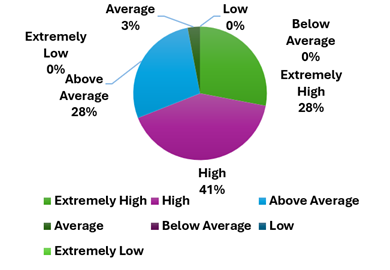
Figure 1 Attitude Towards ICT Present in the
Student Teachers |
A majority of
student teachers demonstrated a favourable attitude towards ICT. Specifically,
41% reported a High level of attitude, followed by 28% each in the Extremely
High and Above Average categories. Only 3% fell in the Average category, and
none of the respondents reported attitudes below average. This indicates an
overall positive orientation towards ICT among the student teachers. Thus, the
hypothesis H1 is rejected.
H2: There exists significant difference in the
Attitude Towards ICT of the student teachers with reference to gender
variation.
|
Table 2 |
|
Table 2 Gender-Wise Comparison of Attitude
Towards ICT |
|||||||
|
Gender |
N |
Mean |
Std. Deviation |
Std. Error Mean |
df |
t |
Sig. |
|
Male |
14 |
118.64 |
8.298 |
2.218 |
98 |
-0.841 |
0.270 |
|
Female |
86 |
121.03 |
10.092 |
1.088 |
|||
An independent
samples t-test was conducted to examine whether male and female student
teachers differed in their attitude towards ICT. Male students (M = 118.64, SD
= 8.30) and female students (M = 121.03, SD = 10.09) did not differ
significantly in their mean scores, the table value is -0.841 and the product
value is 0.270. Since the significance value is greater than 0.05, the
difference is not statistically significant. This indicates that gender does
not play a significant role in shaping student teachers’ attitude towards ICT.
So, the hypothesis H2 is rejected.
H3: There exists significant difference in the
Attitude Towards ICT of the student teachers with reference to management of
institute.
|
Table 3 |
|
Table 3 Management-Wise Comparison of
Attitude Towards ICT |
|||||||
|
Management |
N |
Mean |
Std. Deviation |
Std. Error Mean |
df |
t |
Sig. |
|
Government |
50 |
119.58 |
9.615 |
1.36 |
98 |
-1.138 |
0.857 |
|
Private |
50 |
121.82 |
10.066 |
1.424 |
|||
An independent
samples t-test was conducted to compare the attitude towards ICT between
government and private institute student teachers. The mean score of government
students (M = 119.58, SD = 9.62) was slightly lower than that of private
students (M = 121.82, SD = 10.07). However, this difference was not
statistically significant, the table value is -1.138 and the product value is
0.857. Since the significance value exceeds 0.05, the null hypothesis is
retained. This indicates that management type (government vs. private) does not
significantly influence student teachers’ attitude towards ICT. Thus, the
hypothesis H3 is rejected.
H4: There exists significant difference in the
Attitude Towards ICT of the student teachers with reference to rural and urban
areas.
|
Table 4 |
|
Table 4 Residential-Wise Comparison of
Attitude Towards ICT |
|||||||
|
Residential |
N |
Mean |
Std. Deviation |
Std. Error Mean |
Df |
t |
Sig. |
|
Rural |
53 |
120.02 |
9.787 |
1.344 |
98 |
-0.732 |
0.635 |
|
Urban |
47 |
121.47 |
9.987 |
1.457 |
|||
An independent
samples t-test was conducted to examine whether attitude towards ICT differed
between rural and urban student teachers. The mean score of rural students (M =
120.02, SD = 9.79) was slightly lower than that of urban students (M = 121.47,
SD = 9.99). However, this difference was not statistically significant, the
table value is -0.732, and the product value is 0.635. Since the significance
value is greater than 0.05, the null hypothesis is retained. This indicates
that residential background (rural vs. urban) does not significantly influence
student teachers’ attitude towards ICT. Hence, the hypothesis H4 is rejected.
H5: There exists significant difference in the
Attitude Towards ICT of the student teachers with reference to their marital
status.
|
Table 5 |
|
Table 5 Marital Status-Wise Comparison of
Attitude Towards ICT |
|||||||
|
Marital Status |
N |
Mean |
Std. Deviation |
Std. Error Mean |
df |
t |
Sig. |
|
Un-Married |
85 |
121.25 |
10.046 |
1.09 |
98 |
1.326 |
0.281 |
|
Married |
15 |
117.6 |
8.339 |
2.153 |
|||
An independent
samples t-test was conducted to determine whether attitude towards ICT differed
based on marital status. Unmarried student teachers (M = 121.25, SD = 10.05)
scored slightly higher than married student teachers (M = 117.60, SD = 8.34).
However, this difference was not statistically significant, the table value is
1.326, and the product value is 0.281. Since the significance value is greater
than 0.05, the null hypothesis is retained. This indicates that marital status
does not significantly influence student teachers’ attitude towards ICT. Hence,
the hypothesis H5 is rejected.
FINDINGS OF THE STUDY
1)
The
study found reveals that a majority of student teachers demonstrated a
favourable attitude towards ICT. Only a negligible number of student teachers
has low attitude.
2)
The
study found that there is no significant difference with regards to the gender
variations.
3)
The
attitude towards ICT between government and private institute student teachers
is found to be not significant.
4)
The
study found that there is no significant difference with regards to the
residential area variations.
5)
The
marital status variations of student teachers do not impact on the attitude
towards ICT.
CONCLUSION
Information and
Communication Technology (ICT) is a driving force of modern society. It plays
an important role in today’s world, influencing everything from routine daily
activities to major professional and educational functions. Its impact is
evident across all spheres of life. In the education systems of the 21st
century, ICT has become an essential component for enhancing teaching and
learning processes.
In the context of
teacher education, ICT skills and a positive attitude towards its use are
crucial. The integration of ICT into the teaching–learning process, along with
teachers’ readiness to adopt it, is vital for meeting contemporary educational
demands. The study highlights the need for ICT training to help student
teachers become fully competent and develop a positive attitude towards
technology. Strengthening ICT skills will not only enhance instructional
quality but also contribute to building a more inclusive and digitally
empowered educational ecosystem.
REFERENCES
Anal, R. L. (2017). Role of Information and Communication Technology (ICT) in Teacher Education. IRA-International Journal of Education and Multidisciplinary Studies, 7(3), 184–189. https://doi.org/10.21013/jems.v7.n3.p2
Aslan, A., and Zhu, C. (2015). Pre-Service Teachers’ Perceptions of ICT Integration in Teacher Education in Turkey. The Turkish Online Journal of Educational Technology, 14(3), 97–110.
Beri, N., and Sharma, L. (n.d.). Teachers’ Attitude Towards Integrating ICT in Teacher Education. International Journal of Innovative Technology and Exploring Engineering. Retrieved February 21, 2025, from
Chadha, C. (2018, March). A Study of B.Ed. Students’ Attitude Towards Using Cyber Resources. Innovation: The Research Concept, 3, 233–236.
Dela Cruz, G. B., and Rajan, V. (2022). Factors Predicting Attitudes of Teachers Towards the Use of ICT in Teaching and Learning. Technology Transactions on Application of Information and Communication Technology (ICT) in Education. https://doi.org/10.36647/TTAICTE/01.02.A002
Garrett,
H. E. (2014).
Statistics in Psychology and Education. Paragon International Publishers.
Mansuri,
L. J. (2017).
Attitude Towards Information Technology: A Study of Secondary School Teachers.
Scholarly Research Journal for Interdisciplinary Studies, 4(35), 6486–6493.
Rastogi, A., and Malhotra, S. (2013). ICT Skills and Attitude as Determinants of ICT Pedagogy Integration. European Academic Research, 1(3), 301–318.
Victor, S. R. (2013). Teacher-Trainees’ Attitude Towards ICT. Journal of Education and Practice, 4(19), 18–21.
 This work is licensed under a: Creative Commons Attribution 4.0 International License
© Granthaalayah 2014-2025. All Rights Reserved.