Original Article
A COMPREHENSIVE STUDY ON ACADEMIC ANXIETY OF SECONDARY SCHOOL STUDENTS IN UKHRUL DISTRICT, MANIPUR
|
Dr.
Laiphrakpam Nirmala Devi 1, Ronra Chonreiphy Shimray 2 1 Assistant Professor, Department
of Education, Manipur College, Imphal, India 2 Research Scholar, Department of Education, Manipur
University, Canchipur, India 3 M.A. Human Rights, Master of Education, Independent
Researcher, India |
|
|
|
ABSTRACT |
||
|
The present study provides a comprehensive understanding of academic anxiety among secondary school students in the Ukhrul District of Manipur. The objective of the study was to determine the level of academic anxiety among higher secondary school students in Ukhrul District, Manipur, based on their gender, type of school, and stream differences. The investigator employed a Descriptive Survey method. The study population consisted of students in classes XI and XII from the Ukhrul District, Manipur, under the Council of Higher Secondary Education, Manipur (COHSEM). The study sample consisted of 400 students, selected using Simple Random sampling. The Academic Anxiety Scale (AAS, 2017) was developed by M. Abid Siddiqui and Atieq Ul Rehman. A standardised questionnaire to measure the academic anxiety among higher secondary school students. The present study employed descriptive and inferential statistics, including percentages and the t-test, for comparison between groups. The findings reveal that the majority of secondary students experience an average level of academic anxiety. No significant differences were observed across gender, type of school, and stream. Keywords: Academic Anxiety, Secondary Level,
Gender, Type of School, Stream Differences |
||
INTRODUCTION
In this modern
era, it is evident that the world is undergoing rapid change in all areas.
Social media, technology, social relations, and other factors were impeding
young people's ability to think clearly. Young people nowadays experience
anxiety at higher rates than adults because of the way they think and live in
society. They also feel inferior in an
attempt to fit in because their interest is largely disapproved of in Indian
society. Children are under increasing
pressure to perform well academically in this competitive environment, which
causes them to become tense, nervous, and anxious Mochahary
(2022). Physiological, cognitive, psychological,
and emotional changes are the main areas of change and difficulties that a
person experiences during adolescence Kaur (2006). Students who enrol in higher secondary
education systems face a variety of challenges, such as academic anxiety,
academic depression, academic stress, socioeconomic hardships, anxiety about
future outcomes due to a lack of life management skills, a lack of employment
opportunities, law and order issues in a particular society, and so on.
In recent years, a
paradigm shift has occurred in the Indian educational system. The objective of
modern education has shifted from simply teaching the required curriculum to
unlocking, exploring a variety of options, the mind's Subliminal pathways, and equipping
the student with entrepreneurial skills to handle life's challenges and reach
the pinnacle of success. Adolescents often struggle with academic motivation
and performance due to their preoccupation with forming an identity for
themselves. One of the psychological phenomena that has been studied the most
is anxiety.
Education is the
only way to erase all of society’s and the nation’s
problems. The secondary education stage is the most crucial of all the
educational phases, from kindergarten to college, as it provides a strong and
reliable foundation for later studies. Students today suffer from severe
anxiety and are prevented from giving their best work because of academic
anxiety brought on by the family environment, socioeconomic status, educational
system, high societal expectations, and other factors.
ACADEMIC ANXIETY
In this era of
industrialization and technological advancement, where people’s lives are
getting increasingly complicated, they must deal with daily issues. The idea of
anxiety is regarded as a crucial component in psychology. Every aware citizen
of our society understands, based on their personal experience and observations
of their peers, that anxiety is a widespread and profound experience in this
generation. The most prevalent emotion among secondary school pupils is
academic anxiety. It has been discovered that many students experience anxiety
when studying various courses. They feel ashamed when they request to take part
in any academic activity.
Anxiety is one of
the most prevalent emotions and a fundamental component of all human behavior.
It is an unpleasant sensation of fear, unease, worry, trepidation, or concern Barlow
(2002). Stress, anxiety, and depression were
connected. The overlapping symptoms of these three psychiatric disorders may
result in a variety of academic issues that can affect students’ academic
performance. Jannata
and Nuraeni (2020) stressed that academic anxiety is frequently
present in educational settings and is often brought about by the academic
pressures experienced by students. This was further explained by Cebu and Pantalita (2023), who emphasised that academic anxiety
encompasses pressure, tension, and worry associated with exams, assignments,
and even social expectations linked to academic performance. Academic stress is
one of the most common mental health conditions that students deal with, which
is mostly brought on by worries about grades and failing classes, according to Atienza
and Dominado (2023)
Academic anxiety
is most commonly experienced when the stakes are very high, and students have
to perform at their best in front of others. According to Singh and Gupta (1984), academic anxiety is a type of state anxiety
that is associated with the fear of mistreatment from the environment of
educational institutions, such as teachers and certain subjects like English
and mathematics. The primary cause of the highest rates of anxiety and
depression among students is the irrational competition between parents,
societal pressure, and high levels of job aspiration, which place a great deal
of pressure on their kids to perform well. They apply intensive pressure on
young children to develop academic skills at an age when the child should be
allowed freedom and encouraged to study as a natural result of their innate
curiosity, fun, and readiness for experiments. As a result, when children fail
to meet their expectations, they experience anxiety, depression, and develop
suicidal thoughts.
Academic anxiety
is a novel idea that describes a variety of specific anxiety symptoms that
occur in educational settings. It is a typical performance anxiety that is
currently a major problem for many secondary school students. Anxiety is
something that everyone experiences. It's a normal psychological reaction to
anything that makes one uneasy. It has been viewed as one of the main risks to
the educational system. Many students at different educational levels have been
observed to strive with academic anxiety in relation to their academic
endeavours. In the academic field, it is regarded as an inevitable issue that
requires an immediate solution.
SIGNIFICANCE OF THE STUDY
The prevalence of
stress, anxiety, and depression among upper secondary students has been
determined by the current study. This can have an impact on their academic
achievement and result in more serious psychological problems later in life if
left undiagnosed and untreated.
Academic anxiety
has been identified as a problem for students and is given due attention across
the globe. By introducing practical and
effective strategies, mechanisms, approaches, and tools across the various school
levels with a focus on gender, location, and school types, as well as to all
students worldwide. Efforts should be made to address the issues of academic
anxiety and its consequences.
Social media has
played a significant role in the anxiety faced by the youth, as young people
spend most of their time on their phones. Social media exposes users to various
sites that negatively impact their mental health and reduce their connection to
the real world. Even in the educational sphere, where competition is fierce,
students experience pressure and depression, which leads to anxiety.
However, we often
overlook the most crucial element: the learner’s physical and mental health,
amidst the glare of sophisticated teaching and learning resources and
infrastructure. Our society places a great deal of emphasis on students’
academic performance. Children benefit when they receive support from their
parents. It will motivate them to excel in school and alleviate their academic
anxieties. Parental encouragement can help children realise their full
potential and succeed in their future endeavours. The inverse association
between academic anxiety and parental encouragement implies that academic
anxiety is lessened by parental guidance, responsiveness, and support.
Teachers should
create a nurturing and encouraging learning environment where students can
express themselves freely and fearlessly. Creating a positive learning
atmosphere, teachers also play a significant role in reducing stress. Academic
anxiety can influence educational practices to enhance students’ success and
well-being. It is the duty of educators to foster a supportive learning
environment in the classroom and provide remedial instruction to children from
rural areas, enabling them to succeed academically.
School and
classroom environments are responsible for Students, either in the zone of
anxiety or completely free from academic anxiety. It is essential for parents,
teachers, administrators, and others to ensure a better learning environment
that enables students to reach their full potential.
Parents, teachers,
administrators, counsellors, and other responsible individuals should be more
mindful of their behaviour and take the appropriate coping mechanisms in order
to control students’ behaviour. To reduce academic anxiety, it is essential to
establish workshops, seminars, and programs that help students develop a
positive outlook. Appropriate guidance and various counselling programs must be
held to reduce anxiety among adolescents.
The moral and
spiritual development of students should coexist with their intellectual
development, as this will ultimately lead to comprehensive growth. Students who
possess a well-rounded personality are better equipped to overcome the majority
of academic challenges. This will ultimately help them overcome severe academic
anxiety.
Education is the
remedy for all forms of progress. An individual’s full growth is to be realized
through Adequate educational provisions. It enlightens a person’s personality
and offers them the ability to think logically and scientifically.
OBJECTIVES OF THE STUDY
1)
To find
out the level of Academic Anxiety present in the higher secondary school
students in Ukhrul District, Manipur.
2)
To
compare the Academic Anxiety between male and female students at the secondary
level.
3)
To
compare the Academic Anxiety between government and private schools at the
secondary level.
4)
To
compare the Academic Anxiety between Arts and Science students at the secondary
level.
HYPOTHESES OF THE STUDY
1)
There is
no significant difference in academic anxiety among the higher secondary school
students with respect to the variation of gender.
2)
There is
no significant difference in academic anxiety among the higher secondary school
students with respect to the variation of institution.
3)
There
exists no significant difference in academic anxiety between arts and science.
METHOD OF THE STUDY
In the present
study, the investigator employed a descriptive survey method.
POPULATION AND SAMPLE OF THE STUDY
The study
population consisted of students in classes XI and XII from the Ukhrul
District, Manipur, under the Council of Higher Secondary Education Manipur
(COHSEM). The study sample consisted of 400 students, selected using simple
random sampling.
TOOLS AND STATISTICAL TECHNIQUES
A standardised questionnaire, the Academic
Anxiety Scale (AAS, 2017), developed by M. Abid Siddiqui and Atieq Ul Rehman,
was employed to measure academic anxiety among higher secondary school
students. The present study employed descriptive and inferential statistics,
including percentages and the t-test, for comparison between groups.
ANALYSIS AND INTERPRETATION
|
Figure 1
|
|
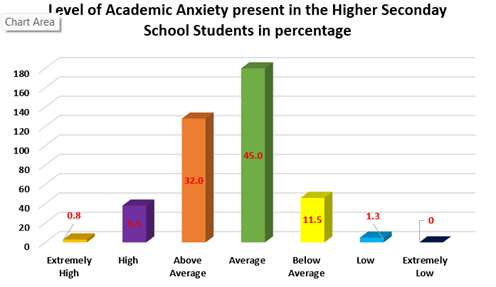
Figure 1 Academic Anxiety Level Present in the
Higher Secondary School Students in Ukhrul District HQ, Manipur |
Figure 1 indicates that 0.8% have an extremely high
level of academic anxiety, 9.5% have a high level of academic anxiety, 32.0%
have an above average level of academic anxiety, 45.0% have an average level of
academic anxiety, 11.5% have a below average academic anxiety, 1.3% have a low
level of academic anxiety and none of the students have an extremely high level
of academic anxiety. So, it can be stated that a maximum number of students are
at an average level of academic anxiety.
Ho1: No
significant difference in academic anxiety among the higher secondary school students
with respect to the variation of gender.
|
Table 1 |
|
Table 1 Academic Anxiety Between Male and Female |
|||||||
|
Gender |
N |
Mean |
SD |
t-value |
Df |
p-value |
Result |
|
Male |
200 |
80.10 |
9.66 |
.269 |
398 |
.419 |
NS |
|
Female |
200 |
79.83 |
10.04 |
||||
|
|
Table 1 shows no significant difference in academic
anxiety between male and female students. The researcher selected 200 students
from both genders; the mean value of male academic anxiety was 80.10 and 79.83
for females. The standard deviation for males and females was 9.66 and 10.04,
respectively. The t-value of both genders is 0.269, and the degrees of freedom
are 398, and significant at 0.419. So, the p-value is larger than 0.05
(P>0.05), the level of significance. According to the findings of the analysis,
there is no significant difference in academic anxiety among male and female
higher secondary students. Therefore, the null hypothesis was retained.
Ho2: No
significant difference in academic anxiety between arts and science stream
students.
|
Table 2 |
|
Table 2 Academic Anxiety Between Arts and Science
Stream Students |
|||||||
|
Stream |
N |
Mean |
SD |
t-value |
df |
p-value |
Result |
|
Arts |
200 |
80.78 |
10.09 |
1.65 |
398 |
0.329 |
NS |
|
Science |
200 |
79.15 |
9.54 |
||||
Table 2 shows no significant difference in academic
anxiety between male and female students. The researcher selected 200 students
from both genders; the mean value of male academic anxiety was 80.78 and 79.15
for females. The standard deviation for males and females was 10.09 and 9.54,
respectively. The t-value of both genders is 1.65, and the degrees of freedom
are 398, and significant at 0.329. So, the p-value is larger than 0.05
(P>0.05), the level of significance. According to the findings of the analysis,
there is no significant difference in academic anxiety among arts and science
higher secondary students. Therefore, the null hypothesis was retained.
Ho3: No
significant difference in academic anxiety among the higher secondary school
students with respect to the variation of institution.
|
Table 3 |
|
Table 3 |
|||||||
|
Types of School |
N |
Mean |
SD |
t-value |
df |
p-value |
Result |
|
Government |
200 |
79.51 |
9.34 |
.919 |
398 |
.421 |
NS |
|
Private |
200 |
80.42 |
10. 32 |
||||
Table 3 shows no significant difference in academic
anxiety between students from government and private schools. The researcher
selected 200 students from both government and private schools; the mean value
of academic anxiety was 79.51 for government schools and 80.42 for private
schools. The standard deviation was 9.34 and 10.32, respectively. The t-value
is 0.919, and the degrees of freedom are 398, and significant at 0.421. So, the
p-value is larger than 0.05 (P>0.05), the level of significance. According
to the findings of the analysis, there is no significant difference in academic
anxiety among government and private higher secondary students. Therefore, the
null hypothesis was retained.
RESULTS AND DISCUSSIONS
1)
A
maximum number of students are at an average level of academic anxiety.
2)
There is
no significant difference in academic anxiety among male and female higher
secondary students. Therefore, the null hypothesis was accepted.
3)
There is
no significant difference in academic anxiety among arts and science higher
secondary students. Therefore, the null hypothesis was accepted.
4)
There is
no significant difference in academic anxiety among government and private
higher secondary students. Therefore, the null hypothesis was accepted.
The present study
is a comprehensive study on the Academic Anxiety of secondary school students
in the Ukhrul district, Manipur. The findings of the present study indicate
that the majority of secondary school students demonstrated an average level of
academic anxiety. These results align with previous studies by Bhat and Geelani (2021), Sharma
and Shakir (2019), Das and Kumar (2022) and Dar et al. (2023). Which reported a moderate level of academic
anxiety among secondary students. The finding shows that most students,
regardless of gender, type of school and stream differences, had an average
level of academic anxiety.
With respect to gender, the study found no
significant difference between male and female secondary students. This finding
aligns with earlier studies by Rahaman
and Rana (2018), Rani and Manita (2015), Das and Kumar (2022), Dar et al. (2023), and Mannow
and Yadav (2025). Which reported that there is no
significance between male and female students on academic anxiety. However,
contradictory findings were reported by Hashmi
and Shakir (2023), which indicate that female learners were
found to be more academically anxious than male learners. Hasan
(2022) concludes that male students of private schools have more academic anxiety than their
female counterparts. Similarly, female government school students have been
shown to have more academic anxiety than female private school students. Dar et al. (2023) indicate that female senior secondary school
students experience higher examination anxiety than their male
counterparts. Das et al. (2025) found that female students are more anxious
than male students, and Das and Kumar (2022) found that female senior secondary school
students have significantly higher academic anxiety than male students. Thus,
gender has a medium effect on academic anxiety. Kaur et al. (2024) also found that female students exhibit
higher mean anxiety scores compared to male students.
In terms of the type of school, the findings
revealed no significant difference between government and private schools. It
contradicts previous studies, such as Sharma
and Shakir (2019) study, which indicates that private senior secondary school students
have more academic anxiety than government senior secondary school students.
So, the type of school has a medium effect on academic anxiety. Bihari
(2014) found a significant difference between the mean scores of government and private secondary school students. Private
school children’s less anxious compared to their counterparts. Hasan
(2022) reveals that school types have a significant effect on academic
anxiety. The study found that the students of
government schools were reported to have high academic anxiety. Mohi-ud-Din and Bhat (2021) also reveal that adolescent students
enrolled in private schools possess significantly higher academic anxiety than
students enrolled in government schools.
Regarding the stream difference, the present
study found no significant difference in academic anxiety among government and
private higher secondary students. This finding is consistent with the study by
Mannow
and Yadav (2025), which found no significant difference
between the academic anxiety of higher secondary school students studying in
the science and art streams. Kumari
and Singh (2022) also found no significant difference in
academic stress of the senior secondary school students with respect to the
stream of subjects. Mohi-ud-Din and Bhat (2021) revealed that both science and arts
adolescent students were impacted by the COVID-19 Pandemic and showed the same
level of academic anxiety. However, contradictory findings from Fatma
and Aqil (2017) suggest that science stream adolescents seem to be more anxious than
commerce stream adolescents.
CONCLUSION
The present study provides a comprehensive
understanding of academic anxiety among secondary school students in the Ukhrul
District of Manipur. The findings reveal that the majority of students
experience an average level of academic anxiety, consistent with earlier
research reporting moderate anxiety levels among adolescents. No significant
differences were observed across gender, type of school, and stream difference,
although previous studies have reported mixed results, with some suggesting
higher anxiety among female students, government school students, or science
stream learners. These inconsistencies suggest that although school type and
gender may have a moderate impact on academic anxiety, these effects vary
depending on the situation. This study primarily focused on the hilly areas of
Manipur, a region that is often underrepresented in educational research. These
results suggest that differences in the family environment, socioeconomic
status, educational system, and other factors contribute to this phenomenon in
hilly areas. The study emphasises that secondary students frequently suffer
academic anxiety, which transcends institutional and demographic borders. The
results emphasise the necessity for educators and legislators to create
universally applicable supportive therapies for anxiety. Future studies should
continue to investigate contextual elements that could account for differences
in gender, school types, and stream differences. Results show that a number of
factors, including personal, familial, institutional, social, and political,
may pose a risk of causing students to experience severe academic anxiety.
Developing Academic management skills, managing time effectively, and seeking
academic assistance from experts such as counsellors and teachers. Engaging in
extracurricular activities, including regular exercise, can help reduce stress
and anxiety. So, in order to handle the problem of severe academic anxiety
prevalent among students, the need of the hour is to create awareness among students
and teachers about them by organising seminars, conferences, workshops,
symposiums, etc.
REFERENCES
Atienza, M. J. C., and Dominado, J. M. (2023). Academic Stress and Mental Health Among College Students: A Correlational Study. International Journal of Multidisciplinary: Applied Business and Education Research, 4(3), 842–850. https://doi.org/10.11594/ijmaber.04.03.10
Banga,
C. L. (2015).
Academic Anxiety of Secondary School Students in Relation to Their Type of
Family and Social Category. Cognitive Discourses:
International Multidisciplinary Journal, 3(1), 41–50.
Barlow, D. H. (2002). Anxiety and Its Disorders: The Nature and Treatment of Anxiety and Panic (2nd ed.). Guilford Press.
Bhat, G. J., and Geelani, S. Z. A. (2021). An Examination of Academic Anxiety Among Secondary School Students of Jammu and Kashmir. Wesleyan Journal of Research, 14(2), 74–84.
Bihari, S. (2014). Academic Anxiety Among Secondary School Students with Reference to Gender, Habitat and Types of School. International Journal of Education and Psychological Research, 3(4), 29–32.
Biniya, L., Haruna, M., and Shuaibu, S. (2025). Influence of Psycho-Social Adjustment on Academic Anxiety and Achievement Among Senior Secondary School Students in Katsina State, Nigeria. International Journal of Library Science and Education Research, 7(8), 71–84. https://doi.org/10.70382/caijlser.v7i8.007
Cebu, J. C., and Pantalita, F. F. (2023). Demographic Factors and Academic Anxiety among Filipino Senior High School Students. International Journal of Social Sciences and Management Review, 6(1), 40–60. https://doi.org/10.37602/IJSSMR.2022.6103
Dar, R. A., and Lone, B. A. (2022). Impact of Depression, Stress and Anxiety on Academic Achievement of Higher Secondary Students. Journal of Xi’an University of Architecture and Technology, 14(6), 552–561. https://doi.org/10.31426/ijamsr.2019.2.1.222378
Dar, S. M. U. D., Dar, Y. A., Shah, R. A., and Mir, A. A. (2023). A Study of Examination Anxiety Among Senior Secondary Students of North Kashmir with Respect to Their Gender. International Journal of All Research Education and Scientific Methods, 11(12), 399–404.
Das, A., and Kumar, S. (2022). Study of Academic Anxiety in Relation to Academic Achievement of Senior Secondary School Students of Purulia District of West Bengal. Education India: A Quarterly Refereed Journal of Dialogues on Education, 11(4), 1–7.
Das, A., Panda, R., and Das, S. (2025). Relationship Between Academic Anxiety and Academic achievement of Students at Secondary Level. Indian Journal of Multidisciplinary Research, 2(1), 422–429. https://doi.org/10.70798/IJOMR/020040047
Fatma, F., and Aqil, Z. (2017). A Study of Anxiety of Adolescents in Relation to Their Stream, Type of College and Academic Achievement. International Journal of Research and Analytical Reviews, 4(4), 474–479.
Hasan, M. (2022). Effects of Gender, Locale and School Types on the Academic Anxiety of Secondary School Students. J-PIPS (Jurnal Pendidikan Ilmu Pengetahuan Sosial), 9(1), 43–52. https://doi.org/10.18860/jpips.v9i1.18071
Hashmi, A. T., and Shakir, M. (2023). A Study of Academic Resilience in Relation to Academic Anxiety of School Learners. Horizons of Holistic Education, 10(4), 213–227.
Jannata, A. H., and Nuraeni, N. (2020). Academic Anxiety in Students: A Systematic Review [Book Chapter]. Universitas Muhammadiyah Purwokerto Digital Library.
Kaur, R. (2006). Adolescent Psychology: New Trends and Innovations. Deep and Deep Publications.
Kaur, R., Nilam, B., and Kaur, S. (2024). Relationship of Anxiety, Metacognition, Resilience, and Problem-Solving Skills with Academic Achievement Among Secondary School Students. Educational Administration: Theory and Practice, 30(1), 5052–5060. https://doi.org/10.53555/kuey.v30i1.8611
Kohn, J. P., and Frazer, G. H. (1986). An Academic Stress Scale: Identification and Rated Importance of Academic Stressors. Psychological Reports, 59(2), 415–426. https://doi.org/10.2466/pr0.1986.59.2.415
Kumari, A., and Singh, S. K. (2022). Academic Stress of Senior Secondary School Students in Relation to Their Gender, Type of School and Stream. Kala Sarovar, 25(4), 60–66.
Mannow, N. A., and Yadav, A. S. (2025). Academic Anxiety Among Higher Secondary School Students: Stream and Gender Differences. International Journal of Scientific Research in Science, Engineering and Technology, 12(3), 239–243. https://doi.org/10.32628/IJSRST2512334
Mochahary, P. (2022). Academic Anxiety and Mental Health Among B.Ed. Trainees: A Study. NeuroQuantology, 20(1), 1–7. https://doi.org/10.48047/NQ.2022.20.1
Mohi-ud-Din, R., and Bhat, M. S. (2021). Academic Anxiety Among Adolescent Students Impacted by COVID-19 Pandemic. International Journal of Early Childhood Special Education, 13(1), 1115–1120. https://doi.org/10.48047/INT-JECSE/V13I1.211270
Rahaman,
M., and Rana, M. S. (2018). Academic Anxiety of Secondary School Students in Murshidabad
District, West Bengal, India. International Journal of Research in Social
Sciences, 8(2), 118–122.
Rani,
S., and Manita. (2015). A Study of Relationship Between Emotional Intelligence and Academic
Anxiety Among Secondary School Students. PARIPEX – Indian Journal of Research,
4(4).
Rehman,
A. U. (2016).
Academic Anxiety Among Higher Education Students of India:
Causes and Preventive Measures—An Exploratory Study. International Journal of
Modern Social Sciences, 5(2), 102–116.
Sharma,
S., and Shakir, M. (2019). A Study of Academic Anxiety of Senior Secondary School Students in
Relation to Locale and Type of School. Research and Reflections on Education,
17(4), 1–9.
Singh, A. K., and Gupta, A. S. (1984). Academic Anxiety Scale. National Psychological Corporation.
Torres, S. L. M., Bandol, M. D. D., Dantes, J. B., Lazatin, C. A. A., Tayag, K. J. Y., and Dominado, N. L. (2025). The Academic Anxiety Level and Coping Mechanism of Seventh Graders in Public Secondary School. International Journal of Multidisciplinary: Applied Business and Education Research, 6(3), 1161–1180. https://doi.org/10.11594/ijmaber.06.03.16
 This work is licensed under a: Creative Commons Attribution 4.0 International License
© Granthaalayah 2014-2025. All Rights Reserved.