Original Article
Political Elites Rebellion and Its Impact on South Sudan
|
Jacob Dut
Chol Riak 1* 1 Ph.D. Senior Researcher
and Associate Professor, Department of Political Science, School of Social
and Economic Studies, Director, Dean, Institute of Japanese Studies,
University of Juba, South Sudan 2 MSc Student, University of Juba, South
Sudan |
|
|
|
ABSTRACT |
||
|
Since it’s gained her independence in 2011, South Sudan has been plagued by political instability, largely driven by the actions and rebellions of its political elites. This research investigates the underlying motivations behind these elite-led uprisings and their wide-reaching impact on the country's socio-political landscape. The study identifies key drivers such as power struggles, ethnic divisions, corruption, and the competition for control over natural resources, particularly hydrocarbons. These conflicts, often fueled by personal and ethnic grievances, have perpetuated cycles of violence, destabilizing governance and hindering development efforts. The effects of these rebellions have been devastating for the civilian population. The research highlights the severe humanitarian crisis marked by mass displacement, economic hardship, the destruction of infrastructure, and widespread human rights abuses. The study also underscores the psychological trauma and social disintegration caused by ongoing conflicts. Additionally, it sheds light on how these rebellions have disrupted essential services such as healthcare and education, exacerbating poverty and inequality. Through a combination of qualitative and quantitative methodologies, the research provides a nuanced analysis of the visible and invisible impacts of elite rebellions. It concludes that achieving sustainable peace and political stability in South Sudan requires addressing the root causes of conflict. Proposed solutions include inclusive dialogue among political elites, governance reforms to combat corruption and enhance transparency, and reconciliation initiatives to heal historical grievances. The study further emphasizes the importance of international support and the implementation of power-sharing agreements as pathways toward conflicts resolutions. This research contributes to the broader academic discourse on political instability and elite behavior in post-colonial states, offering insights that could inform policy interventions and peace building efforts in South Sudan and other similar contexts. Keywords: Political, Elites, Rebellions, Impact,
South Sudan |
||
INTRODUCTION
Background of the study
Personal,
political, military, social, or religious grievances can lead to a rebellion,
which is a mass movement for destruction of a country. Rebellions and civil
wars are not solely motivated by opportunistic greed or by long-standing
grievances as argued by Collier
and Hoeffler (2004) rather, academics contend that people rebel
because they feel as though they are being denied the financial advantages or
social standing that they are entitled to. Potential rebels might also be
discouraged from rebelling if they would have to give up important economic
possibilities and obligations. Collectively, these problems demonstrate that
equitable government and economic opportunity should lessen the incentives and
chances for rebellion. One of the first reasons for why humans fight is that they
have innate enmity for other groups. According to this explanation, grievances
and feuds build up over centuries until members of different racial, ethnic, or
religious groups despise one another, frequently having forgotten or
misinterpreted the original and long-ago triggers. They then get ready to fight
and murder each other at any moment.
Ancient hatreds
were prominently mentioned in accounts of the atrocities in Bosnia and Rwanda.
Bosnia allegedly plunged into civil war in 1992 as a result of the collapse of
communism, which released primal hatreds among Serbs, Croats, and Bosniak
neighbours. Some traced these animosities back to the fourth-century divide
between Catholic and Eastern Orthodox Christianity that spanned the Balkans.
Similarly, the Rwandan genocide is frequently described as a reflection of
Hutus' fundamental hatred for Tutsis. Citing ancestral hatreds offers a simple
reason for ethnic violence. However, it is nearly certainly incorrect. Multiple
studies have revealed little, if any, correlation between a country's ethnic or
religious variety and its risk of experiencing civil war. Furthermore, it
appears that whether distinct groups display even modest enmity, it is heavily
influenced by circumstances. For example, Daniel Posner discovered that the
Chewa and Tumbuka ethnic groups display tremendous enmity in Malawi, yet the
same groups are fairly cordial in Zambia, even agreeing to marry across ethnic
lines. Similarly, prior to the civil conflict in Bosnia, one-quarter of
marriages crossed ethnic and religious lines.
A popular example
of how resources can fuel conflicts is diamond, as highlighted in the book
Blood Diamond During Sierra Leone’s Civil War, that rebel groups would captured
easily mined diamond fields. These diamonds were then smuggled out of the
country, helping to finance a rebellion or civil war. The rebels argued that
certain natural resources, such as oil, are associated with an increased
likelihood of conflict or insurgency, and other resources, such as diamonds,
are associated with increased insurgency or conflict duration. This is because
natural resources can lower the cost of starting a war and provide rebels with
an easy way to finance protracted conflicts. Natural resources can also make it
more profitable for the state to claim the prize, further reducing the
opportunity costs of rebellion. For the same reason, Collier and Hoeffler also
conclude that states with low GDP per capita are more likely to experience
civil war and insurgency because low median incomes make conflict a more
profitable option Collier
and Hoeffler (2004).
Fearon,
and Laitin (2003) offer the opposite view. They see
opportunity structures created by state weakness as the cause of rebellion or
civil war. They find evidence in favour of riot technology as a mechanism. In
addition, they find that ethnicity, religion, or any cultural or demographic
characteristics do not seem to be positively associated with the beginning of
civil war. Economic factors are likely to play a role in the conflict, likely
to generate grievances Fearon,
and Laitin (2003). In Why Men Rebel, Ted Gur argues that
people are motivated to rebel by “relative deprivation” rather than absolute
poverty or pure greed. Basically, “relative disadvantage” is a group’s feeling
and belief that they have not received the economic benefits or political voice
they believe they are entitled to. This sense of injustice causes conflict. In
addition, groups are often particularly motivated by the fact that they have
lost advantages or power they once enjoyed, or fear that a change in circumstances
will lead to a loss of power and economic advantages Ted
(1970).
Since gaining
independence in 2011, South Sudan has experienced chronic political instability
and civil conflict. Central to these conflicts are the actions and rebellions
of political elites, whose motivations and impacts are complex and
multifaceted. Despite their significant role in the ongoing turmoil, the
specific reasons why these elites choose to rebel and the impacts of their
actions are not well understood. This gap in understanding hinders effective
conflict resolution and governance strategies.
The purpose of this study
The study seeks to
move beyond surface-level grievances and analyse the strategic calculations,
motivations, and limitations that drive South Sudanese elites to rebel. This
involves examining the interplay of personal ambition, ethnic loyalties, access
to resources, and the pursuit of power within the context of a fragile state.
Ultimately, this study seeks to provide a nuanced and comprehensive
understanding of the complex dynamics surrounding elite-led rebellions in South
Sudan, moving beyond simplistic narratives to reveal the often-invisible ways
in which these conflicts shape the country’s political landscape.
Statement of problem
Despite the
frequent occurrence of elite rebellions in South Sudan, particularly in Juba,
their impacts often remain invisible to both the local and international
communities. This phenomenon presents a significant challenge to understanding
and addressing the root causes of instability in the country Johnson
(2014). The political elites in South Sudan are
deeply divided along ethnic lines, primarily between the Dinka and Nuer tribes.
These divisions foster a climate of mistrust and conflict, yet the consequences
of elite actions are often overshadowed by the broader ethnic tensions.
Persistent power struggles between key political figures, such as President
Salva Kiir and his former deputy Riek Machar, have led to recurrent cycles of
violence and rebellion. However, the visible impact of these power struggles on
governance and public life is often obscured by ongoing conflicts and
humanitarian crises Jok (2011).
Control over
lucrative resources, especially hydrocarbons, is a major driver of elite
rebellion. Corruption and patronage networks complicate the political
landscape, but the tangible effects on economic development and public welfare
remain difficult to discern due to widespread poverty and infrastructure
challenges Patey
(2014). The continuous conflict has resulted in a
severe humanitarian crisis, with millions of people displaced. The focus on
immediate humanitarian needs often overshadows the political dynamics and their
specific impacts, making it hard to attribute changes to particular elite
actions. South Sudan's fragile state institutions struggle to implement and
sustain reforms. The frequent changes in leadership and policy rarely lead to
significant, visible impacts on the ground due to the lack of effective
governance structures De Waal (2014).
While significant
research has been conducted by Dr. Luka Patey in (2014) on the causes and
consequences of political instability in South Sudan, there remain several
critical gaps in understanding the specific impacts of elite rebellions and why
these impacts often remain invisible. These gaps hinder effective policy-making
and intervention strategies aimed at fostering stability and development in the
country. Addressing these research gaps is crucial for developing a more
comprehensive understanding of the political dynamics in South Sudan and
improving the effectiveness of interventions aimed at stabilizing the country.
By focusing on micro-level impacts, the intersection of humanitarian and
political issues, institutional responses, media practices, and comparative
analysis, this study can provide deeper insights into the reasons why the
impacts of political elite rebellions in South Sudan remain invisible Copnall
(2014).
Research Objectives
Broad objective
To examine the
phenomenon of political elites’ rebellion in South Sudan and its impacts on the
country’s political stability and development.
Specific objectives
1)
To
identify the primary motivations behind the rebellions of political elites in
South Sudan.
2)
To
investigate the effects of rebellions on the people of South Sudan.
3)
To
explore the potential paths towards conflict resolution and peacebuilding in
the context of political elites’ rebellion in South Sudan.
Research Questions
1)
What are
the primary motivations behind the rebellions of political elites in South
Sudan?
2)
What are
the effects of rebellions on the people of South Sudan?
3)
What
will be the way forward towards conflict resolution and peacebuilding in the
context of political elites’ rebellion in South Sudan?
Significance of the Problem
Addressing these
problems is critical for several reasons:
·
A deeper
understanding of elite motivations and the hidden impacts of their actions can
inform more effective policy and peacebuilding interventions that target the
root causes of conflict.
·
Conflict
resolution: by highlighting the less visible consequences of elite actions,
this study can contribute to more holistic conflict resolution strategies that
go beyond immediate humanitarian responses.
·
Academic
contribution: this study will add to the academic discourse on political
instability and conflict, providing insights that can be applied to other
post-colonial states facing similar challenges.
Justification
The persistent
conflict and political instability in South Sudan pose significant challenges
to peacebuilding, governance, and development. Understanding the underlying
factors driving these issues is essential for crafting effective interventions.
This study focuses on the motivations behind political elite rebellions and the
often-invisible impacts of their actions, which are crucial yet underexplored
dimensions of the conflict in South Sudan. Informed policy making is imperative
by identifying the motivations behind elite rebellions, policymakers can
develop targeted strategies to address the root causes of conflict. This can
lead to more effective peacebuilding efforts and the stabilization of political
institutions. Besides, improved governance is critical through understanding
the invisible impacts of elite actions in creating governance structures that
are more resilient to manipulation and subversion by political elites. This can
strengthen state institutions and promote long-term stability.
In addition,
theoretical advancement is essential by applying and testing theories of
political instability, elite behavior, and conflict in the context of South
Sudan. The study can refine and expand existing theoretical frameworks.
Practical implication is desirable through detailed insights into elites’
motivations and the indirect consequences of elites’ actions can inform the
design of comprehensive conflict resolution mechanisms that address both
visible and hidden dimensions of the conflict. Understanding the less visible
impacts of elite rebellions can improve the effectiveness of humanitarian
interventions by highlighting areas that may be neglected due to a lack of
visibility in media and policy discussions.
Limitation of the study
The delimitation
of the study is that, it relied on secondary data that is more accessible to
primary data whose acquisition is limited. The primary data was collected from
the accessible population, whereas the general and target population
information was acquired through secondary data. The study focused on political
elites’ rebellion and its impact on South Sudan. The study's limitations
include the constrained time, resources, and access to government data.
Conceptual framework
|
|
|
Source:
Researchers, 2025 |
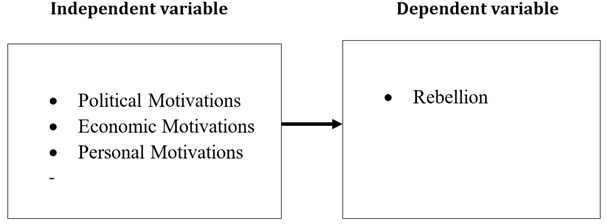
The conceptual
framework above consists of independent variables and dependent variable.
Independent variables consist of political motivation, economic motivation and
personal motivations. Dependent variable is the effect and consists of
rebellion which is caused by independent variables that led to elite
fragmentations and conflicts in South Sudan.
Literature Review
Main motives behind the rebellions of political elites in South Sudan.
Ethnic tensions and identity politics
Ethnicity has
historically been a critical factor in the political landscape of South Sudan.
Political elites often mobilize their ethnic constituencies as a means to
solidify their political influence. In a highly diverse country, this
politicization of ethnicity has led to factionalism within the state, with
elites frequently competing for power through ethnic lines rather than national
cohesion. The rivalry between President Salva Kiir (Dinka) and former Vice
President Riek Machar (Nuer) is a prime example of how ethnic politics drive
rebellion and conflict. The 2013 civil war, triggered by political
disagreements, quickly escalated into an ethnic conflict, largely due to the
way political leaders harnessed ethnic grievances for their own advantage. Ethnic
tensions and identity politics have played a critical role in shaping the
political landscape of South Sudan, both before and after the country’s
independence in 2011. The politicization of ethnicity is deeply rooted in the
country’s colonial history and has been exacerbated by successive conflicts,
ultimately becoming a powerful force behind political elite rebellions. The
manipulation of ethnic identities by political leaders for personal and
political gain has contributed to the destabilization of South Sudan, fueling
cycles of violence and rebellion. This expanded section will delve deeper into
the historical context, the ethnic divide, the role of elites, and the
consequences of ethnic politics on rebellion Rolandsen
(2015).
Historical context: colonial legacy and ethnic fragmentation
The ethnic
divisions in South Sudan can be traced back to the colonial period when the
British authorities adopted policies that emphasized and reinforced ethnic
identities. During colonial rule, the British practiced a policy of indirect
rule, where they governed the southern region of Sudan through local chiefs,
often based on ethnic affiliation. This system institutionalized ethnic
divisions by privileging certain ethnic groups over others and laying the
groundwork for ethnic competition over resources and political influence. The
colonial government also geographically and politically isolated the southern
part of Sudan from the northern part, fostering deep mistrust between the two
regions. Southern Sudanese, many of whom were from ethnic groups such as the
Dinka, Nuer, Shilluk, and Azande, felt marginalized by the northern government,
which was dominated by Arab and Muslim elites. This historical marginalization
fueled grievances that later found expression in two civil wars (1955-1972 and
1983-2005) between the northern government and southern rebels, including the
Sudan People’s Liberation Army (SPLA).
After decades of
civil war, the Comprehensive Peace Agreement (CPA) in 2005 and South Sudan’s
subsequent independence in 2011 did not resolve the ethnic tensions but instead
provided a new platform for ethnic competition among southern elites. Ethnicity
remained a central factor in politics as leaders sought to secure power by
mobilizing their ethnic constituencies, which has created new forms of rivalry
and distrust Jok (2015).
The Ethnic Divide: Dinka and Nuer rivalry
The rivalry
between the Dinka and Nuer, the two largest ethnic groups in South Sudan, has
been one of the most prominent examples of how ethnic divisions drive political
conflict. The Dinka, the largest ethnic group, has historically dominated the
country’s political landscape, particularly since independence. President Salva
Kiir, a Dinka from the Bahr el Ghazal region, has used his ethnic base to
consolidate power within the government and the military. This has led to
accusations of favoritism and marginalization from other ethnic groups,
particularly the Nuer. The Nuer, the second-largest ethnic group, has been at
the forefront of political opposition to the Dinka-dominated government. Riek
Machar, a Nuer leader and former Vice President, has positioned himself as a
representative of Nuer grievances against the Dinka-led government. The rivalry
between Machar and Kiir came to a head in December 2013, when a political
dispute within the ruling Sudan People’s Liberation Movement (SPLM) escalated
into a full-scale civil war. What began as a political struggle quickly took on
ethnic overtones, with the Dinka and Nuer mobilizing along ethnic lines Young (2016). The conflict led to horrific
violence, with both sides targeting civilians based on their ethnicity. Human
rights organizations documented mass killings, rapes, and other atrocities
committed against both Dinka and Nuer civilians during the war. The ethnicization
of the conflict deepened the divide between the two groups, making
reconciliation and peacebuilding efforts even more challenging.
Elite manipulation of ethnicity for political gain
Ethnicity has been
a tool for political elites in South Sudan to mobilize support and gain
political influence. Elites have often framed political disputes in ethnic
terms, using the grievances of their ethnic groups to justify their claims to
power. This tactic not only helps them rally support but also deflects
attention from personal ambitions or broader political issues. Salva Kiir’s
consolidation of power within the SPLM, particularly after the death of John
Garang in 2005, has been viewed by other ethnic groups as a way of maintaining
Dinka dominance within the government. Kiir’s decision to dismiss Riek Machar
and other prominent Nuer figures from their positions in 2013 was perceived as
an ethnic power grab, leading to Machar’s rebellion. Machar, in turn, mobilized
Nuer forces by framing his rebellion as a defense of Nuer rights and a response
to Dinka dominance. This dynamic has played out repeatedly in South Sudan’s
history, with political elites using ethnic grievances to justify their
rebellions. However, the use of ethnic identity as a political tool has had
disastrous consequences, as it has deepened ethnic divisions and created a
cycle of violence and retribution between groups. Instead of fostering national
unity, the ethnicization of politics has fragmented the state and undermined
efforts to build a cohesive national identity Young
(2016).
Struggles for power and leadership
Power struggles
among South Sudan's political elites have been central to the numerous
rebellions. The country’s leadership structure heavily concentrates power in
the presidency, leading political elites to view the presidency as the ultimate
prize for political and economic control. The 2013 and 2016 civil wars are
clear illustrations of how personal ambitions and political rivalries among
elites, particularly between Kiir and Machar, have led to violent conflict.
Elites who feel excluded from key positions within the government often resort
to rebellion as a means of renegotiating power structures or gaining leverage
in peace agreements. The struggles for power and leadership in South Sudan have
been a major driving force behind political instability, rebellion, and civil
war. These power struggles are rooted in the country’s complex political
landscape, where leadership positions are highly coveted due to their control
over resources, military power, and government institutions. The absence of
strong democratic institutions, the centralization of power in the executive
branch, and personal rivalries among political elites have all contributed to
intense competition for leadership. This expands from the historical
background, the centralization of power, factionalism within the ruling elite,
and the broader consequences of these leadership struggles De Waal (2014).
South Sudan’s
political landscape is heavily shaped by the legacy of its long struggle for
independence from Sudan. The Sudan People’s Liberation Movement (SPLM), and its
military wing, the Sudan People’s Liberation Army (SPLA), were the dominant
forces in this liberation struggle, led by figures like John Garang and Salva
Kiir. The SPLM/A’s military success and eventual political victory in securing
South Sudan’s independence in 2011 meant that the movement's leaders became the
de facto rulers of the new state. However, the transition from a liberation
movement to a civic governing body proved difficult. The SPLM/A was built on a
hierarchical, military-style leadership structure, contradictions that lack
democratic mechanisms for resolving disputes or sharing power. As a result,
leadership positions within the SPLM/A, and later within the government of
South Sudan, became highly contentious, with various factions vying for control
Johnson
(2014)
The death of John
Garang in a helicopter crash in 2005, just months after the signing of the
Comprehensive Peace Agreement (CPA) that ended Sudan’s civil war, created a
power vacuum that further intensified the struggle for leadership. Salva Kiir,
Garang’s deputy, assumed leadership of the SPLM and the presidency of the newly
autonomous government of Southern Sudan, but his leadership was immediately
challenged by other senior figures within the movement. These internal power
struggles, which were largely unresolved at the time of independence in 2011,
continued to fester and eventually led to the outbreak of civil war in 2013 and
many other small wars in the nascent state.
Centralization of power in the executive
One of the key
factors driving the struggles for leadership in South Sudan is the extreme
centralization of power in the executive branch, particularly the presidency.
The president appoints and fires at will. He can appoints state officer today
and revoke the appointment tomorrow. Thus, Salva Kiir gives and Salva Kiir
takes, may his name be glorified. Besides, President Kiir wields significant
control over politics, military and country’s resources. This concentration of
power has made the presidency the focal point of political competition among
elites, as controlling the executive office translates into controlling the
state apparatus and resources. Under President Salva Kiir, the executive branch
has increasingly consolidated power, sidelining other political institutions,
such as the legislature and the judiciary, which remain weak and
underdeveloped. Kiir’s dominance over the military, especially his close ties
with top commanders in the Sudan People’s Liberation Army (SPLA), has allowed
him to maintain a firm grip on power. However, this centralization has also
created resentment among other political elites, who feel excluded from
decision-making and denied access to state resources Rolandsen
(2015). The concentration of power in the
presidency also means that losing political office can result in a total loss
of influence, which incentivizes elites to resist leadership transitions. As a
result, South Sudan’s political landscape has been marked by attempts to hold
onto power at all costs, often through violent means. Political elites who are
removed from office or feel threatened by the incumbent government frequently
resort to rebellion as a way to renegotiate their access to power.
Factionalism within the ruling elite
Factionalism
within the ruling elite has been a persistent problem in South Sudan’s
political system. Since independence, the SPLM has been plagued by internal
divisions and leadership disputes, particularly between President Salva Kiir
and his former deputy, Riek Machar. These divisions have often revolved around
personal rivalries, but they have also been exacerbated by ethnic affiliations,
with Kiir representing the Dinka ethnic group and Machar representing the Nuer.
The rivalry between Kiir and Machar reached its peak in December 2013, when a
political dispute within the SPLM escalated into a violent conflict. Kiir
accused Machar of attempting a coup, leading to Machar’s dismissal as Vice
President and the subsequent outbreak of civil war. Machar denied the coup
allegations and mobilized forces loyal to him, primarily from the Nuer ethnic
group, sparking widespread violence across the country. This conflict was not
just about ethnic divisions but also about competing visions for the country’s
leadership. Machar had long criticized Kiir’s increasingly autocratic
leadership style and sought to position himself as a reformer within the SPLM.
However, his challenge to Kiir’s leadership was seen as a direct threat to
Kiir’s hold on power, leading to a violent confrontation between the two
factions. The rivalry between Kiir and Machar is indicative of a broader
pattern in South Sudan’s political elite, where leadership disputes are often
settled through violence rather than negotiation or democratic means. The absence
of strong institutions to mediate these disputes has meant that political
competition frequently leads to armed conflict, further destabilizing the
country Jok (2015)
Personal rivalries and opportunism
While ethnic and
political divisions are important factors in the power struggles in South
Sudan, personal rivalries and opportunism have also played a key role. Many of
the political conflicts in South Sudan have been driven by the ambitions of
individual leaders who seek to gain or maintain power for personal benefit.
Political office in South Sudan offers access to wealth, patronage networks,
and control over the country’s hydrocarbon resources, which makes leadership
positions highly lucrative. For many political elites, rebellion has become a
tool for bargaining. Leaders who challenge the government through rebellion are
often offered positions of power in exchange for laying down arms. This pattern
of rebellion, negotiation, and co-optation has created a cycle of violence,
where political elites use armed conflict as a way to secure their place within
the government. Riek Machar’s repeated rebellions against the government,
followed by peace agreements that offered him a return to power, are a clear
examples of this dynamic. After the signing of the 2015 peace agreement, Machar
was reinstated as Vice President, only for the peace deal to collapse in 2016,
leading to another round of fighting until 2018 peace deal that built shaky and
risky coalition. This cyclical pattern highlights the role of opportunism in
South Sudan’s leadership struggles, where elites use violence as a strategy to
advance their personal ambitions Arnold (2013).
Consequences of power struggles on governance and stability
The struggles for
power and leadership in South Sudan have had devastating consequences for
governance and stability. The constant infighting among political elites has
weakened state institutions, making it difficult for the government to provide
basic services or maintain law and order. As leaders focus on securing their
positions within the government, they often neglect the needs of the broader
population, contributing to widespread poverty, food insecurity, and
displacement. The violent nature of this leadership struggles has also
undermined peacebuilding efforts. Peace agreements, such as the 2015 Agreement
on the Resolution of the Conflict in the Republic of South Sudan (ARCSS),
failed because it didn’t address the root causes of elite competition. Instead,
it offered temporary power-sharing arrangements that were quickly broken when
one faction feels excluded or threatened. As a result, the country has
experienced repeated cycles of violence and instability, with little progress
toward sustainable governance. Patey (2017).
This is the same with 2018 Revitalized Agreement on the Resolution of the
Conflict in the Republic of South Sudan (R-ARCSS) which is at the brink of
collapse due to deep-seated mistrusts amongst the signatories to the Agreement.
The concentration of power in the executive has also stifled the development of
democratic institutions. South Sudan’s political system remains highly
centralized, with little room for opposition or independent views.
Resource control and economic marginalization
South Sudan's
wealth in natural resources, particularly, hydrocarbon has been a significant
motivator for political elites to rebel. Elites often view rebellion as a
pathway to control resource-rich areas, which in turn grants them access to
wealth and economic influence. Many of the key oilfields in South Sudan are
located in areas where elites have historical claims, creating incentives to
challenge central authority for local control of these regions Le Billion (2001). Resource control and economic
marginalization are at the heart of South Sudan’s conflicts and power
struggles. While the country is endowed with significant natural resources,
particularly, oil, which constitutes the backbone of its economy, these
resources have become a curse, as competition over their control has driven
conflict and exacerbated economic inequalities. Economic marginalization,
especially of communities living near resource-rich areas, has further deepened
grievances, fueling political instability and rebellion. This analysis will
explore the role of oil, land control, economic marginalization, corruption,
and the broader consequences of resource struggles in South Sudan.
Indeed, South
Sudan possesses vast oil reserves, which account for more than 80% of its
government. Oil exports are essential for funding public services,
infrastructure projects, and the military. The importance of oil to the
national economy has made control over oil resources a central issue in South
Sudan's political landscape. During the period leading up to South Sudan’s
independence in 2011, oil played a significant role in negotiations with Sudan.
Oil reserves are located primarily in South Sudan, while the infrastructure for
exporting oil (including pipelines and refineries) is located in Sudan. This
geographic split meant that oil became a key bargaining chip in peace
negotiations between the North and the South. Post-independence, disputes over oil
revenues between the two countries further contributed to tensions, leading to
the temporary shutdown of oil production in 2012 Le
Riche and Arnold (2013). Within South Sudan, oil control has fueled
political rivalries and violence. The central government, dominated by the
Sudan People’s Liberation Movement (SPLM), has sought to maintain tight control
over oil revenues, which has sparked resentment from other political elites and
regions that feel excluded from the benefits. During the civil wars of 2013 and
2016, many of the major battlefronts were located near oil-producing regions,
as rebel forces sought to gain control over these vital resources.
Effect of rebellions on the people of South Sudan
The rebellions in
South Sudan have resulted in profound and multifaceted consequences for the
country, deeply affecting its social structures, economic conditions, and
overall quality of life. Since gaining independence in 2011, South Sudan has
grappled with numerous internal conflicts driven by political power struggles,
ethnic tensions, and disputes over vital resources. These rebellions have
triggered a cycle of violence and instability that has significantly disrupted
the lives of millions. The effect of rebellions on the people of South Sudan is
discussed on the following areas:
Humanitarian crisis
The humanitarian
crisis in South Sudan has reached alarming proportions due to the ongoing
conflicts, significantly worsening food insecurity and health challenges. The
prolonged violence has disrupted agricultural production, leading to chronic
shortages of food. As a result, malnutrition rates have soared, particularly
among vulnerable populations such as children and pregnant women. According to
the United Nations, millions have been displaced from their homes due to
fighting, which has rendered entire communities vulnerable. By late 2023, it
was estimated that over 7.76 million people in South Sudan required
humanitarian assistance, with many facing life-threatening hunger UN OCHA (2023). The World Food Programme (WFP)
reports that over half the population is in dire need of food aid, exacerbating
the crisis as families struggle to meet their basic needs. The effects of this
humanitarian crisis extend beyond immediate food shortages; they also have
significant implications for public health. The conflict has severely strained
the already limited healthcare infrastructure, leaving many without access to
essential services. Diseases such as cholera and malaria have proliferated in
areas lacking sanitation and healthcare resources. With the ongoing violence
making it difficult for humanitarian organizations to operate effectively, the
situation remains precarious. The WFP has noted that the lack of food security
not only leads to immediate health issues but also has long-term consequences
for the population's resilience and ability to recover from the ongoing
conflict WFP (2023). In this context,
addressing food insecurity and improving health services are critical for
stabilizing the humanitarian situation in South Sudan.
Displacement and Migration
The conflicts in
South Sudan have caused massive internal displacements, forcing millions to
flee either to neighboring countries or to United Nations camps. This
displacement disrupts established communities and leads to the disintegration
of social networks and support systems. According to the Internal Displacement
Monitoring Centre (IDMC) Report, there were over 2 million internally displaced
persons (IDPs) in South Sudan as of 2023, significantly impacting their access
to education, healthcare, and economic opportunities IDMC
Report (2023). Displaced individuals often find themselves living in
overcrowded conditions with limited access to basic necessities, making them
more vulnerable to diseases and malnutrition. The loss of livelihoods
exacerbates the plight of IDPs, as many have been forced to abandon their
homes, land, and businesses, plunging them into poverty and increasing their
dependence on humanitarian assistance. Additionally, the influx of IDPs into
urban areas and refugee camps creates pressure on already strained resources
and infrastructure. Host communities often struggle to accommodate the growing
population, leading to competition for limited resources such as food, water,
and healthcare services. This situation can foster tensions between displaced
individuals and host communities, potentially leading to conflict. The United
Nations High Commissioner for Refugees (UNHCR) has reported that the influx of
IDPs and refugees can strain local services, further complicating the
humanitarian response and necessitating targeted interventions to address the
needs of both groups United
Nations High Commissioner for Refugees (2023). Addressing displacement requires
comprehensive strategies that consider the needs of IDPs while supporting host
communities to mitigate tensions and foster social cohesion.
Violence and insecurity
The rebellions in
South Sudan have resulted in widespread violence, including attacks on
civilians, sexual violence, and targeted killings. These acts of violence
contribute to a climate of fear and insecurity that prevents communities from
rebuilding and often leads to cycles of retribution and further conflict. Human
Rights Watch has documented numerous cases of violence affecting women and
children, who are particularly vulnerable in these situations Human Rights Watch (2023). The prevalence of
violence not only endangers lives but also disrupts social fabric, making it
difficult for communities to re-establish trust and cooperation necessary for
recovery and development. The social repercussions of violence can be
long-lasting, as communities struggle to cope with the trauma and loss that
result from such acts.
Moreover, the
breakdown of law and order exacerbates the security situation, as criminal
gangs and armed groups often exploit the chaos for their gain. The power vacuum
created by weakened state institutions allows these groups to operate with
impunity, undermining efforts to restore stability and governance. Reports
indicate that the lack of effective law enforcement has resulted in increased
incidents of crime and violence, further eroding public confidence in the
government’s ability to protect its citizens Collier
and Hoeffler (2004). This cycle of violence not only impacts
immediate security but also hinders long-term peace-building efforts. The need
for comprehensive security sector reforms and community-based initiatives to
address the root causes of violence is critical for restoring trust and
establishing a safer environment for all citizens.
Economic decline
The ongoing
conflicts have significantly hindered economic development and stability in
South Sudan, creating a challenging environment for growth. Frequent
disruptions to trade, agriculture, and infrastructure have led to weakening of
national currency, South Sudanese Pound (SSP), soaring inflation and increased
poverty rates. The World Bank reported that South Sudan’s GDP has contracted
dramatically since the onset of conflict, resulting in widespread economic
hardship and diminishing opportunities for the populace World
Bank (2023). The instability has deterred foreign
investment, which is crucial for stimulating economic activity and rebuilding
infrastructure. As businesses are destroyed or forced to close, unemployment
rates rise, leaving many families struggling to provide for their basic needs.
Economic decline also exacerbates governance challenges, as the government
faces increasing difficulties in delivering essential services. The lack of
economic activity limits tax revenues, which in turn constrains the
government’s ability to fund education, healthcare, and social programs. This
creates a vicious cycle in which economic decline undermines governance, while
poor governance further hampers economic recovery African
Development Bank Report (2022). As a result, public trust in government
institutions erodes, making it more difficult to implement policies that
promote stability and growth. Addressing the economic decline in South Sudan
requires targeted interventions focused on rebuilding infrastructure, fostering
investment, and creating jobs to restore public confidence and facilitate
recovery.
Social fragmentation and ethnic tensions
Rebellions often
exacerbate ethnic tensions, leading to social fragmentation and deepening
societal divides. Allegiances formed during conflicts can complicate
reconciliation efforts, making unity increasingly challenging. Research by the
African Development Bank highlights how such fragmentation leads to lasting
animosities, perpetuating cycles of violence and instability African Development Bank Report (2022). Ethnic
tensions can arise from competition over resources, political representation,
and historical grievances, often leading to violence and discrimination against
certain groups. This polarization not only weakens community bonds but also
hinders collective efforts to address shared challenges, further entrenching
divisions. Social fragmentation can also have significant implications for
governance and the rule of law. As communities become divided along ethnic
lines, trust and cooperation between different groups diminish, making it
difficult to promote effective governance and uphold the rule of law Collier
and Hoeffler (2004). The lack of social cohesion can lead to
increased crime and violence as individuals prioritize the interests of their
ethnic group over the common good. Additionally, marginalized groups may resort
to informal justice mechanisms, which can lack transparency and accountability,
further undermining the formal legal system Stewart
and Fitzgerald (2001). Addressing social fragmentation and ethnic
tensions requires inclusive policies and initiatives that foster dialogue,
promote reconciliation, and encourage collaboration among diverse groups to
build a more cohesive and peaceful society.
Governance and rule of law breakdown
Rebellions have
significantly weakened the governance structures within South Sudan, leading to
a decline in the rule of law. Many citizens express a lack of trust in
government institutions, attributing this to widespread corruption and
ineffective governance exacerbated by ongoing conflict International
Crisis Group Report (2023). As a result, communities often turn to local
forms of governance, which can vary widely in effectiveness and accountability.
This reliance on informal systems can create disparities in access to justice
and undermine the ability of the government to maintain order and enforce laws,
leading to further instability.
The impact of
conflict on governance is multifaceted and far-reaching. The breakdown of state
institutions responsible for maintaining law and order creates a power vacuum
that allows criminal groups to flourish. Such conditions hinder efforts to
establish a functioning legal system and can result in increased violence and
human rights violations Collier
and Hoeffler (2004). Furthermore, the erosion of trust in
government can lead to social unrest and impede efforts to promote good
governance. Addressing these challenges necessitates comprehensive support for
rebuilding state institutions, enhancing accountability, and restoring public
trust in governance structures Stewart and
Fitzgerald (2001). Early intervention and assistance can play a vital
role in promoting good governance and the rule of law in post-conflict
societies, ultimately paving the way for a more stable and just future.
Long-term psychological effects
The psychological
impact of ongoing conflict in South Sudan cannot be overstated, as many
individuals suffer from trauma related to violence, loss of family members, and
the stress of displacement. Mental health services are scarce in South Sudan,
and the stigma surrounding mental health issues can prevent individuals from
seeking help Médecins Sans Frontières (2023).
The long-term psychological effects of exposure to conflict can manifest in
various ways, including post-traumatic stress disorder (PTSD), depression, and
anxiety. Children exposed to violence and loss are particularly vulnerable, as
these experiences can hinder their development and educational outcomes Beardslee and Beardslee (2002).
The way forward towards conflict resolution and peacebuilding in the context of political elites' rebellion in South Sudan
Inclusive genuine dialogue
Inclusive genuine
dialogue is essential to address the grievances that drive political elites to
rebel. In South Sudan, fostering dialogue among key stakeholders—including
political elites, rebel groups, civil society organizations, marginalized
communities, and women and youth groups—creates a platform to negotiate
power-sharing agreements and address grievances constructively. Such dialogue
must be comprehensive and inclusive to avoid further fragmentation. According
to Lederach (1997), peacebuilding in deeply
divided societies must involve a broad base of society in dialogues aimed at
reconciliation, including not only political elites but also marginalized
groups who often bear the brunt of violence. This ensures that all groups feel
represented in the peace process, thus reducing the likelihood of continued
rebellion or violence. While South Sudanese national dialogue conducted in 2017
to 2020 was problematic due to un-implementation of its resolutions, conducting
genuine national can help in lessening conflicts and rebellions in South Sudan.
Good governance reforms
Governance reforms
are key to addressing the underlying causes of political conflict and rebellion
in South Sudan. Corruption, weak state institutions, and unequal distribution
of resources fuel grievances among political elites and the general population.
Implementing reforms that promote transformative leadership, transparency,
accountability, and the rule of law can address these grievances and lay the
foundation for sustainable peace. The World Bank
(2020) emphasizes that good governance reforms should prioritize
fighting corruption through the establishment of independent anti-corruption
commissions and ensuring that public institutions are transparent and inclusive
in their service delivery. By enhancing the state’s capacity to deliver public
goods fairly, political elites and marginalized groups may find fewer reasons
to rebel. Additionally, governance reforms that promote decentralization can
empower local governments to provide services more effectively, reducing
regional disparities Rotberg (2014).
Confidence-building measures
Confidence-building
measures (CBMs) are essential in fragile post-conflict environments,
particularly, where mistrust among political elites and rebel groups persists.
Implementing CBMs such as cease-fire agreements, humanitarian access
provisions, and demobilization programs can help de-escalate violence and
restore trust among warring factions. John Paul Lederach (1997) highlights the
importance of incremental steps in peacebuilding through CBMs. These measures
create an environment conducive to dialogue and negotiations by demonstrating
commitment to peace and reducing tensions between conflicting parties. In South
Sudan, such measures could include agreements on demobilization, disarmament,
and reintegration (DDR) of combatants, as well as opening access to
humanitarian aid in conflict zones Höivik and
Galtung (1971).
Reconciliation efforts
Reconciliation is
a critical aspect of peacebuilding, particularly in a country where ethnic
tensions and historical grievances have fueled conflict. Reconciliation efforts
in South Sudan should include Truth and Reconciliation Commissions (TRCs) to
address past atrocities and human rights violations. By providing a platform
for victims and perpetrators to share their experiences, TRCs can contribute to
healing societal divisions and promoting national unity. As noted by Hayner (2011), TRCs have played a crucial role in
post-conflict reconciliation in countries such as South Africa and Sierra Leone
by addressing historical grievances, promoting accountability, and fostering
national healing. In South Sudan, reconciliation efforts should also include
inter-community dialogues that address the ethnic dimensions of the conflict
and promote social cohesion across divided communities Galtung
(1969).
International support
International
support is critical to ensuring the success of peacebuilding initiatives in
South Sudan. Regional organizations such as the African Union (AU), the
Intergovernmental Authority on Development (IGAD), and international partners
including the United Nations (UN) and the European Union (EU) can provide
essential technical assistance, financial resources, and mediation efforts.
International actors can help facilitate the implementation of peace
agreements, monitor ceasefires, and provide training for local peacebuilders. Lijphart (1977) argues that international actors
play a crucial role in mediating conflicts in divided societies by ensuring
that peace agreements are enforced and by providing the necessary resources for
rebuilding good governance institutions. International donors can also support
South Sudan by investing in capacity-building initiatives aimed at
strengthening state institutions and ensuring effective governance and service
delivery, thereby addressing the root causes of conflict Lederach (1997).
Power sharing mechanisms
Establishing
power-sharing mechanisms is an effective way of addressing the political
exclusion that fuels rebellion. Lijphart (1977) emphasizes
the need for inclusive governance structures that incorporate different
societal groups, including rebel factions and political elites. This approach
ensures that all stakeholders have meaningful participation in decision-making
processes, reducing the likelihood of rebellion. Lijphart’s theory of
consociational democracy suggests that proportional representation, minority
rights protections, and coalition governments can provide political elites with
the opportunity to engage in non-violent, democratic processes. In South Sudan,
implementing genuine power-sharing mechanisms as part of peace agreements—such
as the 2018 Revitalized Agreement on the Resolution of the Conflict in South
Sudan (R-ARCSS)—can help mitigate the political exclusion that often drives
elite rebellion Lijphart (1977).
Gap in the literature
In the study of
political elites' rebellions and their impacts on South Sudan, the literature
often focuses on broad topics such as ethnic divisions, power struggles, and
economic disparities. Many studies
discuss the general consequences of political instability, but few specifically
isolate the impacts of elite-led rebellions on South Sudan's governance,
economy, and social fabric. The hidden impacts, such as psychological trauma,
social disintegration, and infrastructure damage, remain underexplored. Much of
the existing literature addresses the macro-level outcomes, such as
displacement and humanitarian crises, without diving into the micro-level
impacts, such as how elite rebellions disrupt local governance or community
structures. While ethnic loyalty and power struggles are well-researched, more
nuanced motivations such as personal ambitions, access to natural resources,
and the pursuit of economic control are less studied.
How to fill the gap
This study should
focus on the specific less visible impacts of elite rebellions at the community
level. This includes studies on how local governance is affected and the
psychological and social impacts on civilians. Research should expand on elite
motivations beyond the binary ethnic and political narratives, examining how
personal ambition, resource control, and economic disparities drive rebellion.
A comparative study between different regions within South Sudan or between
South Sudan and other post-conflict countries could provide a deeper
understanding of the unique drivers of elite rebellions. This approach would
deepen the understanding of the multifaceted impacts of elite rebellions,
informing more effective peacebuilding and policy interventions.
Research Methodology
Research Design
Garg
and Kothari (2014) describe
research design as the framework for collecting and analyzing data to ensure
relevance to the research purpose while maintaining procedural economy Garg and Kothari (2014). According to Flick (2011), the design influences all aspects of
the research, from data collection to data analysis techniques. This study
utilized a case study design. Data was collected using questionnaires from
individuals working at the study location. The research incorporates both
qualitative and quantitative methods, dealing with numerical data and providing
descriptive analysis. Mugenda and Mugenda (1999)
note that qualitative research aims to provide a detailed, holistic view of
processes, using inductive analysis and emphasizing descriptions over numerical
data. In contrast, quantitative research sought large dataset in producing
generalizable results, using deductive analysis and focusing on discrete
numerical data. Random sampling was employed to ensure the sample was
representative Flick (2011).
Target Population
Ochieng
(2009) defines the target
population as the group of respondents the researcher will interact with. The
target population for this study was drawn from the entire population being
studied. A total of 120 participants was randomly selected to represent this
population, including both males and females from various age groups and
educational backgrounds.
Sample and Sampling Procedures
According to
Orodho and Kombo, as cited by Kombo and Tromp
(2006), sampling is the process of selecting a subset of individuals or
objects from a population so that the selected subset represents the
characteristics of the whole group. Ochieng (2009) explains
that sampling procedures involve selecting respondents from the study area,
which can be done through random sampling.
Sampling size
While the target
population was 120, sample size was
calculated using Taro Yemane formula as given below:
N=N/ (1+N€2) Where
N is the sample
size
N is the
population
E is the margin
error
Target population
= 120
Let the margin
area be at the confident interval of 90%
100% - 90% = 10%,
Where 10% is 0.1
N=120/
(1+70(0.1)2)
=120/ (1+70(0.01))
N=120/
(1+0.7)
120/ (1.7) = 70 Therefore, the sampling size will be 70
respondents.
Research Instruments
Mugenda
and Mugenda (1999) categorize
the information collected in a study as either primary or secondary data.
Primary Data
Primary data is
information gathered directly from the subjects in the sample.
Secondary Data
Secondary data
includes information obtained from articles, journals, newspapers, and other
documented sources. While the researchers collected primary data through
questionnaires, interviews, and observations, secondary data was collected
through books and other sources of empirical literature.
Questionnaires
Bell
(1999) defines questionnaires as
structured techniques for collecting primary data, consisting of written
questions answered by respondents. The researchers used questionnaires due to
their flexibility, allowing respondents time to think and answer without pressure,
ensuring honest responses. They are also economical, facilitating large-scale
and geographically widespread data collection.
Interviews and
Observations
Interviews allow
the researchers to gauge the interviewee's reliability, interest, and
expressions, providing effective and efficient communication of first-hand
information. Observations involve the researchers noting key areas as a method
of data collection. Both of them were used in this study.
Piloting
Piloting helped
identify unclear questions for review. After piloting, unclear questions were
refined for clarity.
Validity and Reliability
Validity
Accurate
Interpretation: The data
should reflect what it is intended to measure. If questionnaires or
measurements are being used, they must target the specific concepts or
variables central to the research. For instance:
Content
Validity: Ensures the
questionnaire covers all relevant areas of the subject.Construct Validity:
Measures whether the tool accurately captures the theoretical concepts.
External Validity: Determines whether the results can be generalized to other
populations, settings, or timeframes. This can be done by distributing
questionnaires to different groups or at different times, and assessing if the
data remains consistent across various settings.Face Validity: Examines if the
instrument appears effective in measuring what it claims to measure, based on
expert judgment. Overall, validity was measured using Content Validty Index
(CVI) which was 0.75, proving that the research instruments were valid.
Reliability
Consistency: a
reliable study produces consistent results under the same conditions. To show
reliability: Test-Retest Method: Conduct the same test or survey multiple times
with the same group, ensuring that results are similar across these trials. Any
significant changes in results may indicate a lack of reliability. Internal
Consistency: If using questionnaires, internal consistency (e.g., using
Cronbach's Alpha) shows if different items within the same test consistently
measure the same construct.mInter-Rater Reliability: When multiple observers or
raters are involved, consistency between their judgments or scores indicates
reliability.By employing methods such as distributing questionnaires across
different times (for validity) and comparing results from repeated trials (for
reliability), the study will demonstrate both accuracy and consistency of its
findings. Given that anything above 0.7 is reliable, the study used Cronbach
Alpha Coefficient (CAC) to calculate reliability. The results read 0.8 which indicated
that the research instruments were very reliable.
Data Analysis Procedures
Ochieng
(2009) describes data analysis
as critically verifying the collected data. Prior to data collection, the
researchers followed university procedures. Both closed-ended and open-ended
questionnaires were designed and distributed to the target population. The researchers
then collected and analyzed using tables and charts.
Ethical Considerations
The study adhered
to several ethical considerations, including voluntary participations, informed
consent, confidentiality of collected data, and communication of results.
Voluntary participation ensured that no respondents were coerced through
misrepresentation or promises of rewards Coolican (2014).
Participants were informed of the study's purpose and asked to voluntarily
participate before their involvement.
Results and Discussions
primary motivations behind the rebellion of political elites in South Sudan
Table 1
|
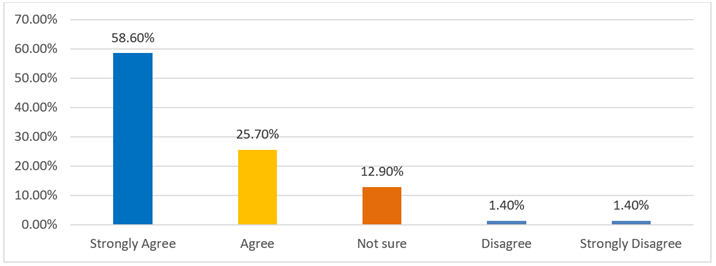
Table 1 Desire for Control Over Natural Resources
Drives Some Politicians to Rebel |
||
|
Response |
Frequency |
Percentage |
|
Strongly Agree |
41 |
58.6% |
|
Agree |
18 |
25.7% |
|
Not sure |
9 |
12.9% |
|
Disagree |
1 |
1.4% |
|
Strongly
Disagree |
1 |
1.4% |
|
Total |
70 |
100% |
|
Figure 1
|
|
Figure 1 Desire for Control Over Natural Resources
Drives Some Politicians to Rebel |
Table 1 and Figure 1 shows the respondents' views on whether the
desire for control over natural resources drives politicians to rebel. The
majority of the respondents, 58.6%, strongly agreed with this statement, while
25.7% agreed. Only 12.9% were unsure, and a very small percentage either
disagreed or strongly disagreed (1.4% each). This indicates that most
respondents believe that the desire for control over resources plays a
significant role in political rebellion.
Table 2
|
Table 2
Disagreement Over Governance and Distribution |
||
|
Response |
Frequency |
Percentage |
|
Strongly Agree |
36 |
51.4% |
|
Agree |
22 |
31.4% |
|
Not sure |
5 |
7.1% |
|
Disagree |
3 |
4.3% |
|
Strongly Disagree |
4 |
5.7% |
|
Total |
70 |
100% |
|
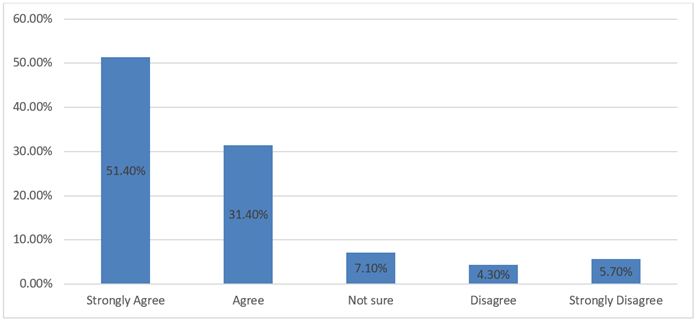
Figure 2
|
|
Figure 2 Disagreement Over Governance and
Distribution |
In Table 2 and Figure 2, 51.4% of respondents strongly agreed that disagreements over governance and distribution are key drivers of rebellion, and 31.4% agreed. Only 7.1% were not sure, while 4.3% disagreed and 5.7% strongly disagreed. This shows that a majority of the respondents support the idea that governance and distribution disputes contribute to political elites' rebellion.
Table 3
|
Table 3 Corruption Within Government Fuels
Discontent |
||
|
Response |
Frequency |
Percentage |
|
Strongly Agree |
34 |
48.6% |
|
Agree |
18 |
25.7% |
|
Not sure |
11 |
15.7% |
|
Disagree |
3 |
4.3% |
|
Strongly
Disagree |
4 |
5.7% |
|
Total |
70 |
100% |
|
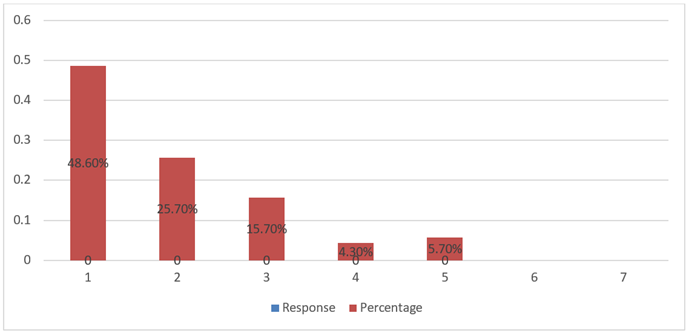
Figure 3
|
|
Figure 3 Corruption Within Government Fuels
Discontent |
Table 3 and Figure 3 highlights that 48.6% of respondents
strongly agreed that government corruption fuels discontent, and 25.7% agreed.
A smaller group of 15.7% were unsure, and only 10% either disagreed or strongly
disagreed. This suggests that the majority of the respondents believe
corruption within the government plays a significant role in causing
discontent.
Table 4
|
Table 4 Lack of Trust Between Rival Political
Factions Contributes to Ongoing Conflicts |
||
|
Response |
Frequency |
Percentage |
|
Strongly Agree |
44 |
62.9% |
|
Agree |
12 |
17.1% |
|
Not sure |
6 |
8.6% |
|
Disagree |
7 |
10.0% |
|
Strongly
Disagree |
1 |
1.4% |
|
Total |
70 |
100% |
Figure 4
|
Figure 4 Lack of Trust Between Rival Political
Factions Contributes to Ongoing Conflicts |
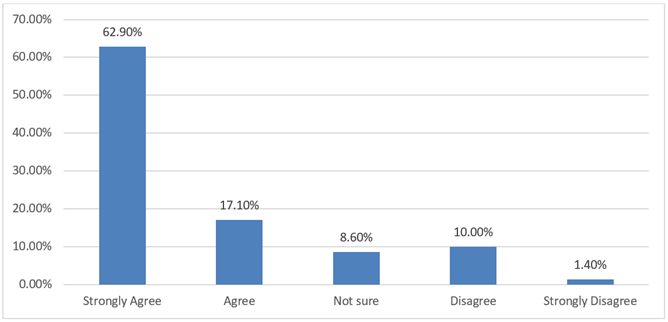
In Table 4 and Figure 4, 62.9% of the respondents strongly agreed
that a lack of trust between rival political factions contributes to ongoing
conflicts, while 17.1% agreed. Around 8.6% were not sure, and 10% disagreed.
Only 1.4% strongly disagreed. This shows that the lack of trust among political
factions is a widely recognized issue among the respondents.
Table 5
|
Table 5 Socioeconomic Disparities Contribute
Significantly Towards Elite-Led Uprisings |
||
|
Response |
Frequency |
Percentage |
|
Strongly Agree |
21 |
30.0% |
|
Agree |
21 |
30.0% |
|
Not sure |
14 |
20.0% |
|
Disagree |
10 |
14.3% |
|
Strongly
Disagree |
4 |
5.7% |
|
Total |
70 |
100% |
|
Figure 5
|
|
Figure 5 Socioeconomic Disparities Contribute
Significantly Towards Elite-Led Uprisings |
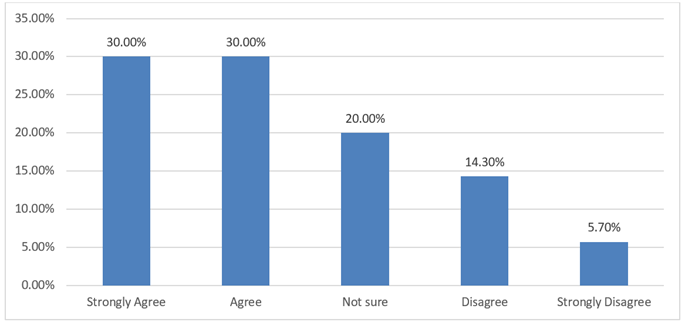
Table 5 and Figure 5 reveals that 30% of respondents strongly agreed and another 30% agreed
that socioeconomic disparities play a significant role in elite-led uprisings.
About 20% were not sure, while 14.3% disagreed, and 5.7% strongly disagreed.
This indicates a general consensus that socioeconomic disparities contribute to
rebellions, though there is still some uncertainty among respondents.
Table 6
|
Table 6 The Pursuit or Consolidation of Power is
One Key Motivation Behind These Rebellions |
||
|
Percentage |
||
|
Strongly
Agree |
30 |
42.90% |
|
Agree |
26 |
37.10% |
|
Not
sure |
4 |
5.70% |
|
Disagree |
3 |
4.30% |
|
Strongly
Disagree |
7 |
10.00% |
|
Total |
70 |
100% |
Table 6 shows that 42.9% of respondents strongly
agreed and 37.1% agreed that the pursuit or consolidation of power is a key
motivation behind political rebellions. Only 5.7% were unsure, and a small
proportion (4.3% disagreed and 10% strongly disagreed) thought otherwise. This
highlights the strong belief that power dynamics are a driving force behind the
rebellions.
Table 7
|
Table 7 Frustration with Lack of Progress Towards
Peace |
||
|
Response |
Frequency |
Percentage |
|
Strongly Agree |
33 |
47.1% |
|
Agree |
16 |
22.9% |
|
Not sure |
4 |
5.7% |
|
Disagree |
5 |
7.1% |
|
Strongly
Disagree |
12 |
17.1% |
|
Total |
70 |
100% |
Table 7 indicates that 47.1% of respondents strongly agreed that frustration
over the lack of progress toward peace is a major factor behind rebellion,
while 22.9% agreed. Around 5.7% were unsure, while 7.1% disagreed and 17.1%
strongly disagreed. This suggests that frustration with the peace process is
viewed by many as a contributing factor, though some respondents disagree.
Table 8
|
Table 8 Loss or Displacement of the Civilian
Population |
||
|
Response |
Frequency |
Percentage |
|
Strongly Agree |
49 |
70.0% |
|
Agree |
12 |
17.1% |
|
Not sure |
1 |
1.4% |
|
Disagree |
5 |
7.1% |
|
Strongly
Disagree |
3 |
4.3% |
|
Total |
70 |
100% |
Table 8 reveals that 70% of the respondents strongly
agreed that rebellion leads to the loss or displacement of civilians, while
17.1% agreed. A small percentage (1.4%) were unsure, and 7.1% disagreed, with
4.3% strongly disagreeing. This indicates that most respondents acknowledge
civilian displacement as a significant effect of the rebellion.
Table 9
|
Table 9 Destruction of Infrastructure and Services |
||
|
Response |
Frequency |
Percentage |
|
Strongly Agree |
33 |
47.1% |
|
Agree |
25 |
35.7% |
|
Not sure |
1 |
1.4% |
|
Disagree |
6 |
8.6% |
|
Strongly
Disagree |
5 |
7.1% |
|
Total |
70 |
100% |
In Table 9, 47.1% of respondents strongly agreed that
rebellions result in the destruction of infrastructure and services, and 35.7%
agreed. Only 1.4% were unsure, and a smaller group (8.6% disagreed and 7.1%
strongly disagreed) did not agree. This shows that most respondents perceive
infrastructure destruction as a significant impact of political rebellion.
Table 10
|
Table 10 Economic Hardship and Poverty |
||
|
Response |
Frequency |
Percentage |
|
Strongly Agree |
30 |
42.9% |
|
Agree |
28 |
40.0% |
|
Not sure |
5 |
7.1% |
|
Disagree |
6 |
8.6% |
|
Strongly
Disagree |
1 |
1.4% |
|
Total |
70 |
100% |
Table 10 indicates that 42.9% of respondents strongly agreed and 40% agreed that
rebellion leads to economic hardship and poverty. A smaller group of 7.1% were
unsure, while 8.6% disagreed, and only 1.4% strongly disagreed. This highlights
the widespread belief that rebellion has a major negative effect on the
economy.
Table 11
|
Table 11 Psychological Trauma |
||
|
Response |
Frequency |
Percentage |
|
Strongly Agree |
25 |
35.7% |
|
Agree |
20 |
28.6% |
|
Not sure |
9 |
12.9% |
|
Disagree |
10 |
14.3% |
|
Strongly
Disagree |
6 |
8.6% |
|
Total |
70 |
100% |
Table 11 reveals that 35.7% of respondents strongly
agreed and 28.6% agreed that rebellions cause psychological trauma. Around
12.9% were unsure, while 14.3% disagreed and 8.6% strongly disagreed. This
shows that the psychological effects of rebellion are recognized, although some
respondents expressed uncertainty or disagreement.
Table 12
|
Table 12 Disruption to Education and Healthcare
Services |
||
|
Response |
Frequency |
Percentage |
|
Strongly Agree |
31 |
44.3% |
|
Agree |
23 |
32.9% |
|
Not sure |
6 |
8.6% |
|
Disagree |
6 |
8.6% |
|
Strongly
Disagree |
4 |
5.7% |
|
Total |
70 |
100% |
In Table 12, 44.3% of respondents strongly agreed and
32.9% agreed that rebellions disrupt education and healthcare services. A
smaller group of 8.6% were unsure, and 8.6% disagreed, while 5.7% strongly
disagreed. This indicates that a majority of the respondents perceive
significant disruptions in essential services due to rebellion.
Table 13
|
Table 13 Violation of Human Rights Including Abuse
and Exploitation |
||
|
Response |
Frequency |
Percentage |
|
Strongly Agree |
45 |
64.3% |
|
Agree |
15 |
21.4% |
|
Not sure |
1 |
1.4% |
|
Disagree |
8 |
11.4% |
|
Strongly
Disagree |
1 |
1.4% |
|
Total |
70 |
100% |
Table 13 shows that 64.3% of respondents strongly
agreed that rebellion leads to human rights violations, and 21.4% agreed. Only
1.4% were unsure, while 11.4% disagreed, and 1.4% strongly disagreed. This
suggests that most respondents view human rights abuses as a common consequence
of rebellion.
Table 14
|
Table 14 Social Disintegration Due to Conflict |
||
|
Response |
Frequency |
Percentage |
|
Strongly Agree |
39 |
55.7% |
|
Agree |
18 |
25.7% |
|
Not sure |
3 |
4.3% |
|
Disagree |
5 |
7.1% |
|
Strongly
Disagree |
5 |
7.1% |
|
Total |
70 |
100% |
In Table 14, 55.7% of respondents strongly agreed and
25.7% agreed that rebellion causes social disintegration. A small group of 4.3%
were unsure, and 7.1% each disagreed or strongly disagreed. This shows that the
majority of the respondents believe that social structures break down due to
conflict.
Table 15
|
Table 15 Negotiations and Dialogue |
||
|
Response |
Frequency |
Percentage |
|
Strongly Agree |
43 |
61.4% |
|
Agree |
15 |
21.4% |
|
Not sure |
5 |
7.1% |
|
Disagree |
4 |
5.7% |
|
Strongly
Disagree |
3 |
4.3% |
|
Total |
70 |
100% |
Table 15 indicates that 61.4% of respondents strongly
agreed that negotiations and dialogue are important for resolving conflicts,
and 21.4% agreed. Only 7.1% were unsure, while 5.7% disagreed, and 4.3%
strongly disagreed. This suggests that negotiations are viewed positively by
most respondents as a solution to conflict.
Table 16
|
Table 16 Truth-Seeking Processes |
||
|
Response |
Frequency |
Percentage |
|
Strongly Agree |
25 |
35.7% |
|
Agree |
32 |
45.7% |
|
Not sure |
6 |
8.6% |
|
Disagree |
3 |
4.3% |
|
Strongly
Disagree |
4 |
5.7% |
|
Total |
70 |
100% |
In Table 16, 35.7% of respondents strongly agreed and
45.7% agreed that truth-seeking processes are essential for conflict
resolution. About 8.6% were unsure, while 4.3% disagreed, and 5.7% strongly
disagreed. This shows that truth-seeking is widely supported, though a small
percentage of respondents are skeptical.
Table 17
|
Table 17 Reconciliation Initiatives |
||
|
Response |
Frequency |
Percentage |
|
Strongly Agree |
37 |
52.9% |
|
Agree |
28 |
40.0% |
|
Not sure |
3 |
4.3% |
|
Disagree |
2 |
2.9% |
|
Strongly
Disagree |
0 |
0% |
|
Total |
70 |
100% |
Table 17 shows that 52.9% of respondents strongly
agreed and 40% agreed that reconciliation initiatives are key to resolving
conflict. Only 4.3% were unsure, and 2.9% disagreed. This highlights that
reconciliation is highly favored as a path to peace among the respondents.
Table 18
|
Table 18 Power-Sharing Agreement |
||
|
Response |
Frequency |
Percentage |
|
Strongly Agree |
31 |
44.3% |
|
Agree |
19 |
27.1% |
|
Not sure |
9 |
12.9% |
|
Disagree |
7 |
10.0% |
|
Strongly
Disagree |
4 |
5.7% |
|
Total |
70 |
100% |
In Table 18, 44.3% of respondents strongly agreed and
27.1% agreed that power-sharing agreements are necessary for resolving
rebellion-related conflicts. A smaller group of 12.9% were unsure, while 10%
disagreed and 5.7% strongly disagreed. This shows that power-sharing is
considered a viable solution by many respondents.
Table 19
|
Table 19 Security Sector Reform |
||
|
Response |
Frequency |
Percentage |
|
Strongly Agree |
44 |
62.9% |
|
Agree |
18 |
25.7% |
|
Not sure |
4 |
5.7% |
|
Disagree |
3 |
4.3% |
|
Strongly
Disagree |
1 |
1.4% |
|
Total |
70 |
100% |
Table 19 reveals that 62.9% of respondents strongly
agreed that security sector reforms are essential, and 25.7% agreed. Only 5.7%
were unsure, while 4.3% disagreed and 1.4% strongly disagreed. This indicates
strong support for security reforms as a solution to political conflicts.
Table 20
|
Table 20 Good
Governance Reforms |
||
|
Response |
Frequency |
Percentage |
|
Strongly Agree |
40 |
57.1% |
|
Agree |
21 |
30.0% |
|
Not sure |
3 |
4.3% |
|
Disagree |
0 |
0% |
|
Strongly
Disagree |
6 |
8.6% |
|
Total |
70 |
100% |
In Table 20, 57.1% of respondents strongly agreed and
30% agreed that good governance reforms are necessary for peace. Only 4.3% were
unsure, and 8.6% strongly disagreed. No respondents disagreed. This shows that
most participants recognize the importance of governance reforms.
Table 21
|
Table 21 Economic Development Programs |
||
|
Response |
Frequency |
Percentage |
|
Strongly Agree |
41 |
58.6% |
|
Agree |
14 |
20.0% |
|
Not sure |
5 |
7.1% |
|
Disagree |
4 |
5.7% |
|
Strongly
Disagree |
6 |
8.6% |
|
Total |
70 |
100% |
Table 21 shows that 58.6% of respondents strongly agreed that economic
development programs are vital for resolving conflict, and 20% agreed. About
7.1% were unsure, while 5.7% disagreed, and 8.6% strongly disagreed. This
suggests that economic programs are widely seen as a solution, though some
respondents remain uncertain or disagree.
Summary of Findings, Conclusions and Recommendations
Summary of Findings
Motivations behind political rebellions in South Sudan
The study revealed
several primary motivations behind political elites' rebellion in South Sudan:
·
Desire
for control over natural resources: A significant portion of respondents (58.6%) strongly agreed that
control over natural resources is a key driver of rebellion, emphasizing that
political elites often rebel to access or maintain control over valuable
resources.
·
Disagreements
over governance and distribution: Over 82% of respondents either strongly agreed or agreed that
disagreements over governance structures and the distribution of resources
contribute to rebellion, indicating that inequity in governance is a
fundamental issue.
·
Corruption
within the government: Nearly
75% of respondents believed that corruption fuels discontent among political
elites and the population, highlighting the role of poor governance and
corruption in exacerbating political tensions.
·
Lack
of trust between rival political factions: The most prominent finding was that 80% of respondents believed the
lack of trust between political factions contributes to ongoing conflicts,
showing the deep-rooted distrust as a key factor in political instability.
·
Socioeconomic
disparities and pursuit of power: Socioeconomic disparities (60%) and the pursuit of power (80%) were
also identified as critical motivators of rebellion, with respondents
suggesting that inequity and power struggles are central to elite-led
uprisings.
Effects of political rebellions on the people of South Sudan
The consequences
of political rebellions on the civilian population were also significant:
·
Displacement
of civilians: An
overwhelming 87.1% of respondents strongly agreed or agreed that rebellions
lead to civilian displacement, marking it as the most visible effect.
·
Destruction
of infrastructure and services:
More than 80% of respondents indicated that rebellions lead to the destruction
of infrastructure, hindering essential services such as education and
healthcare.
·
Economic
hardship and poverty: 82.9%
of respondents acknowledged that rebellion exacerbates economic hardship, which
compounds the already fragile economic conditions in the country.
·
Psychological
trauma: Over 60% of
respondents identified psychological trauma as a significant impact, showing
that the conflicts affect both the mental and emotional well-being of the
population.
·
Violation
of human rights: The
majority of respondents (85.7%) agreed that rebellions lead to human rights
violations, including abuse and exploitation, further worsening the
humanitarian crisis in South Sudan.
Paths towards conflict resolution and peacebuilding
Several strategies
were identified as important for conflict resolution and peacebuilding in South
Sudan:
·
Negotiations
and dialogue: A vast
majority of respondents (82.8%) supported negotiations and dialogue as critical
paths toward resolving the conflicts, suggesting that open communication
between rival factions is essential.
·
Truth-seeking
processes and reconciliation initiatives: Over 80% of respondents believed that truth-seeking and reconciliation
processes are crucial in healing the divisions between rival political
factions.
·
Power-sharing
and security sector reform:
Power-sharing agreements (71.4%) and security sector reform (88.6%) were
identified as necessary for addressing the root causes of rebellion and
ensuring sustainable peace.
·
Good
governance and economic development programs: The importance of governance reforms (87.1%) and economic development
(78.6%) was highlighted by respondents, showing that both political and
economic changes are necessary for peacebuilding.
Conclusions
Political elites
in South Sudan rebel primarily due to competition for control over natural
resources, corruption, and disagreements over governance. The lack of trust
between rival factions exacerbates the conflicts, making power struggles and
socioeconomic disparities even more pronounced. The effects of political
rebellions on civilians are devastating, including widespread displacement,
destruction of infrastructure, economic hardship, psychological trauma, and
human rights abuses. These impacts not only worsen the humanitarian situation
but also hinder any prospects for long-term peace. Paths toward resolving these
conflicts require a multifaceted approach that involves political dialogue,
truth-seeking processes, and reconciliation initiatives. Security sector
reforms and power-sharing agreements are essential for addressing the distrust
among political elites, while governance and economic reforms are necessary to
tackle the underlying inequities driving the rebellions.
Recommendations
Based on the
conclusions, the following recommendations are proposed to address the
political rebellions and their effects on South Sudan:
·
Strengthen
political dialogue and negotiation efforts
To resolve ongoing conflicts, the government, opposition factions, and international mediators should prioritize sustained political dialogue and negotiations. This can help restore trust and foster peaceful power-sharing agreements.
·
Implement
governance and anti-corruption reforms
The government should focus on improving transparency and accountability within its institutions to reduce corruption. Reforming governance structures to promote equitable distribution of resources and opportunities is essential to address one of the main drivers of rebellion.
·
Undertake
truth-seeking and reconciliation initiatives
Establishing a truth and reconciliation commission would help in addressing the grievances of both civilians and political elites. Such processes can also heal deep-seated mistrust among rival factions and contribute to social cohesion.
·
Prioritize
Security Sector Reform
The government should undertake comprehensive reforms in the security sector to build trust, professionalism, and neutrality in the armed forces. This can help stabilize the country and prevent future elite-led uprisings.
·
Promote
Economic Development and Address Socioeconomic Disparities
Economic development programs aimed at reducing poverty and inequality should be a priority. These programs can provide opportunities for the population, reducing the appeal of rebellion as a means to achieve socioeconomic mobility.
·
Enhance
Support for Victims of Rebellion
The government and humanitarian organizations should focus on providing psychological support, shelter, and basic services to displaced civilians and victims of conflict. A focus on mental health services, trauma counseling, and rebuilding infrastructure will be essential in post-conflict recovery.
·
Engage
Regional and International Support
Given the complexity of the conflict, regional and international actors should continue to play a supportive role in mediation efforts and provide financial and technical support for governance reforms and economic development.
Areas for further research
Further
research could focus on:
·
The role
of international actors in supporting long-term peace in South Sudan, examining
the impact of external interventions in facilitating negotiations and economic
development.
·
A deeper
investigation into the socio-economic disparities that drive political elites'
rebellion, especially the connection between poverty, inequality, and political
instability.
·
The
psychological impact of prolonged conflicts on the civilian population and how
mental health interventions can support healing and reintegration in
post-conflict societies.
ACKNOWLEDGMENTS
None.
REFERENCES
Acemoglu, D., and Robinson, J. A. (2006). Economic Origins of Dictatorship and Democracy. Cambridge University Press. https://doi.org/10.1017/CBO9780511510809
Anderson,
B. (1983).
Imagined Communities. Verso.
Bratton, M., Mattes, R., and Gyimah-Brempong, K. (2005). Public Opinion, Autocracy, and Support for Democratic Values in Africa. Comparative Political Studies, 38(7), 771–798.
Collier, P., and Hoeffler, A. (2004). Greed and Grievance in Civil War. Oxford Economic Papers, 56(4), 563–595. https://doi.org/10.1093/oep/gpf064
Copnall, J. (2014). A Poisonous Thorn in our Hearts: Sudan and South Sudan's Bitter and Incomplete Divorce. Hurst.
De Waal, A. (2014). When Kleptocracy Becomes Insolvent: Brute Causes of the Civil War in South Sudan. African Affairs, 113(452), 347–369. https://doi.org/10.1093/afraf/adu028
Fanon,
F. (1952). Black
Skin, white Masks. Grove Press.
Fanon, F. (1961). The Wretched of the Earth. Grove Press.
Fearon, J. D., and Laitin, D. D. (2003). Ethnicity, Insurgency, and Civil War. American Political Science Review, 97(1), 75–90. https://doi.org/10.1017/S0003055403000534
Food
and Agriculture Organization. (2023). [Title of report]. FAO.
Genovese,
E. D. (1974).
Roll, Jordan, roll: The world the Slaves Made. Pantheon Books.
Genovese,
E. D. (1979).
From Rebellion to Revolution: Afro-American Slave Revolts in the Making of
American Freedom. Louisiana State University Press.
Gurr,
T. R. (1970). Why
men rebel. Princeton University Press.
Hobsbawm,
E. J. (1969).
Bandits. Weidenfeld and Nicolson.
International Crisis Group. (2023). [Title of report]. International Crisis Group.
Johnson, D. H. (2014). The Political Crisis in South Sudan. African Studies Review, 57(3), 167–174. https://doi.org/10.1017/asr.2014.97
Johnson,
D. H. (2016).
South Sudan: A New History for a New Nation. Ohio University Press.
Jok,
J. M. (2011).
Sudan: Race, Religion, and Violence. One World Publications.
LeRiche,
M., and Arnold, M. (2012). South Sudan: From Revolution to Independence. Hurst and Company.
Patey, L. A. (2014). The New Kings of Crude: China, India, and the Global Struggle for Oil in Sudan and South Sudan. Hurst.
Posner, D. N. (2004). The Political Salience of Cultural Difference: Why Chewas and Tumbukas are Allies in Zambia and Adversaries in Malawi. American Journal of Political Science, 48(4), 849–865. https://doi.org/10.1111/j.0092-5853.2004.00105.x
Reno, W. (1998). Warlord Politics and African States. Lynne Rienner Publishers. https://doi.org/10.1515/9781685853822
Rolandsen, Ø. H. (2015). Another Civil War in South Sudan: The Failure of Guerrilla Government? Journal of Eastern African Studies, 9(1), 163–174. https://doi.org/10.1080/17531055.2014.993210
Scott,
J. C. (2009). The
Art of Not Being Governed: An Anarchist History of Upland Southeast Asia. Yale
University Press.
Smith,
J., and Johnson, K. (2020). Impact Assessment Report: Consequences of Insurgent Actions on
Civilians. Journal of Conflict Studies, 25(3), 45–62.
South
Sudan Human Rights Commission. (2023). [Title of report]. South Sudan Human Rights
Commission.
UNICEF. (2023). [Title of report]. UNICEF.
United Nations. (2020). United Nations Mission in South Sudan (UNMISS).
United
Nations High Commissioner for Refugees. (2023). [Title of report]. UNHCR.
United Nations Mission in South Sudan. (2023). [Title of report]. UNMISS.
United Nations Office for the Coordination of Humanitarian Affairs.
(2023). [Title of
report]. OCHA.
World
Bank. (2023).
Report. World Bank.
Young, J. (2017). Sudan's Civil War : Another Look at the Roots of Conflict. African Affairs, 116(464), 614–635.
 This work is licensed under a: Creative Commons Attribution 4.0 International License
© Granthaalayah 2014-2025. All Rights Reserved.