A Study on customer
satisfaction with special reffrence to Rubco Limited Kannur
Muhammed Nawaf 1, Dr. Priya Satsangi 2
1 MBA
(International Business), Amity Business School, Amity University, Maharashtra,
Mumbai, India
2 Associate
Professor, Amity Business School, Amity University, Maharashtra, Mumbai, India
|
|
|
ABSTRACT |
|
|
Customer satisfaction plays a central role in determining the long-term growth and sustainability of any organisation. Rubber Cooperative Limited (RUBCO), Kannur, is a major cooperative enterprise in Kerala engaged in the production and sale of rubber-based products such as mattresses, footwear, and furniture. With increasing competition, changing consumer preferences, and emerging private brands, it is essential to evaluate how satisfied customers are with RUBCO’s products and services. This study examines levels of customer satisfaction with special reference to RUBCO Limited, Kannur. Primary data was collected from customers through a structured questionnaire focusing on product quality, price, service delivery, accessibility, brand perception, and post-purchase service. The analysis reveals that product quality, brand trust, and pricing have the strongest influence on customer satisfaction. While RUBCO has a strong cooperative legacy and brand loyalty, customers expect improvements in aesthetics, product innovation, promotional activities, and after-sales support. The study
concludes with recommendations to enhance product visibility, introduce
modern design features, strengthen service quality, and adopt digital
marketing practices to retain and attract new customers. |
|||
|
Received 07 April 2025 Accepted 08 May 2025 Published 30 September 2025 DOI 10.29121/granthaalayah.v13.i9.2025.6502 Funding: This research
received no specific grant from any funding agency in the public, commercial,
or not-for-profit sectors. Copyright: © 2025 The
Author(s). This work is licensed under a Creative Commons
Attribution 4.0 International License. With the
license CC-BY, authors retain the copyright, allowing anyone to download,
reuse, re-print, modify, distribute, and/or copy their contribution. The work
must be properly attributed to its author.
|
|||
|
Keywords: Customer Satisfaction, RUBCO, Cooperative
Sector, Product Quality, Consumer Behavior |
|||
1. INTRODUCTION
Customer satisfaction refers to the degree to which consumer expectations are met or exceeded by a product or service. It is an essential determinant of customer loyalty, repeat purchases, brand image, and long-term profitability. In today’s competitive environment, satisfaction is not merely a marketing concept but a strategic necessity for all organisations. When customers are satisfied, they are more likely to continue purchasing, recommend the brand to others, and develop a sense of loyalty that contributes to organisational growth.
RUBCO Limited, formally known as the Kerala State Rubber Co-operative, is a key player in Kerala’s cooperative sector. Since its establishment, RUBCO has been producing and marketing a wide range of rubber-based products. The organisation holds a unique position in the market due to its cooperative structure, ethical business standards, and emphasis on quality. Kannur district, in particular, has a strong RUBCO customer base, with many households frequently purchasing mattresses, coir products, and footwear from RUBCO outlets.
Despite the trust and reliability associated with RUBCO, the market landscape has changed significantly. Private mattress brands, stylish footwear labels, and modern home furnishing companies have entered the scene aggressively with attractive designs, online marketing, digital sales channels, and innovative product features. Consumers today are influenced not only by price and durability but also by branding, aesthetics, online visibility, and service experience. This shift raises an important question regarding how customers currently perceive RUBCO and whether the organisation’s offerings are aligned with modern consumer expectations.
The present study investigates customer satisfaction toward RUBCO Limited in Kannur with a focus on understanding product quality perception, pricing, service experience, brand trust, and overall satisfaction. The study further explores areas where RUBCO may need improvement to strengthen its competitive edge. The insights from this research are intended to support RUBCO’s management in making informed decisions and developing strategies that enhance customer engagement and satisfaction.
2. IMPORTANCE OF TECHNOLOGY IN HR
The significance of evaluating customer satisfaction lies in its direct impact on the organisation’s ability to grow and compete effectively. RUBCO operates in a market where customer preferences are increasingly dynamic, and private brands continuously innovate in design, technology, and promotional activities. Understanding how customers perceive RUBCO’s products is essential for identifying gaps, evaluating performance, and improving competitiveness. As a cooperative institution, RUBCO has a social responsibility to serve consumers fairly, and customer satisfaction plays an important role in fulfilling this responsibility. Studying satisfaction levels helps RUBCO determine whether its traditional strengths of durability, affordability, and trust still hold relevance in the current scenario.
The study also contributes valuable insights into consumer expectations regarding product innovation, service quality, store ambience, and digital presence. These insights help RUBCO refine its marketing strategies and improve operational efficiency. The cooperative sector often struggles to keep up with private corporate marketing practices, and research like this provides direction for strengthening brand visibility and customer engagement. Moreover, the findings are helpful to researchers, policymakers, and students who wish to understand consumer behaviour in cooperative sector organisations.
3. RESEARCH GAP
Although RUBCO is a well-known and widely used brand in Kerala, very few studies have focused specifically on customer satisfaction toward RUBCO’s products in Kannur district. Most existing research on RUBCO primarily discusses its financial performance, cooperative structure, or production methods. There is a lack of comprehensive studies that examine current customer expectations in relation to RUBCO’s product design, service delivery, pricing strategies, store ambience, after-sales support, and digital presence. Previous studies have not explored how modern market competition impacts customer perception of RUBCO or how generational differences influence satisfaction levels. This study attempts to fill these gaps by conducting an in-depth analysis of the various factors that shape customer satisfaction and purchasing behaviour.
4. STATEMENT OF THE PROBLEM
Even though RUBCO has a long-standing heritage and a reputation for delivering durable and reliable products, it faces several challenges due to changes in market dynamics. Private brands have introduced advanced designs, attractive packaging, modern branding techniques, and online visibility, which strongly appeal to younger consumers. These brands have also invested heavily in marketing and digital communication, creating a competitive environment that demands continuous improvement from cooperative institutions. RUBCO, on the other hand, maintains a traditional approach in product design, store layout, and marketing. This raises concerns regarding whether the organisation is meeting the expectations of today’s consumers. The key problem is determining the current satisfaction level of customers in Kannur and identifying the factors that influence both satisfaction and dissatisfaction. Understanding these aspects will help RUBCO redesign strategies to meet modern consumer needs and maintain market relevance.
5. OBJECTIVES OF THE STUDY
The central objective of the study is to analyse customer satisfaction with special reference to RUBCO Limited in Kannur district. The research also aims to understand how customers perceive RUBCO’s product quality, pricing structure, service delivery, brand trust, and store experience. It further seeks to identify consumer expectations and areas where RUBCO can improve. By examining these aspects, the study attempts to provide actionable insights to RUBCO for enhancing customer satisfaction and strengthening its competitive position in the market.
6. SIGNIFICANCE OF THE STUDY
The study carries importance for multiple stakeholders. For RUBCO, the findings offer practical insights into consumer opinions and behavioural patterns, which can guide decision-making related to product development, service improvement, and marketing communication. In addition, the study helps identify the strengths that RUBCO should continue to uphold and the weaknesses that require immediate attention. For the cooperative sector, the study highlights the need for modernising service delivery and adopting contemporary marketing strategies to compete with private brands. From an academic standpoint, the research adds to the literature on consumer behaviour, especially within cooperative-brand contexts. It provides a foundation for further research on improving the operational efficiency and market relevance of cooperative firms in Kerala.
7. RESEARCH METHODOLOGY
The present study adopts a descriptive research design to understand customer satisfaction toward RUBCO in Kannur. Primary data was collected from customers through a structured questionnaire that included statements on product quality, service experience, pricing, and overall satisfaction. The sample consisted of 120 customers who purchased RUBCO products from various outlets in Kannur. Convenience sampling was used due to its suitability for consumer-based research. The questionnaire incorporated a five-point Likert scale for assessing customer opinions. Secondary data was drawn from journals, websites, reports, and official publications of RUBCO. Statistical tools such as percentage analysis, correlation analysis, and descriptive summaries were used to interpret the data effectively. The study considered product quality, price, service experience, store ambience, accessibility, and brand trust as independent variables, while overall customer satisfaction served as the dependent variable.
8. DATA ANALYSIS AND INTERPRETATION
The demographic analysis revealed that customers of RUBCO represent a wide age range, with a higher proportion belonging to the 25–45 age group. Many respondents visited RUBCO frequently, especially for purchasing mattresses and footwear. The gender distribution indicated that both male and female customers actively engage with the brand. A significant number of respondents were repeat customers, which demonstrates a certain level of trust and loyalty toward RUBCO.
The analysis of product quality showed that customers appreciate the durability, comfort, and authenticity of RUBCO products. Mattresses were often highlighted as reliable, long-lasting, and suitable for Kerala’s climatic conditions. Rubber footwear and coir products also received positive feedback for being sturdy and practical. However, customers expressed a desire for more modern and stylish designs, especially in footwear and home furnishing items. Many customers felt that RUBCO’s product designs appear traditional compared to private brands, which incorporate contemporary aesthetics.
Regarding pricing, customer opinions indicated that RUBCO offers products at reasonable and affordable rates. One of the major advantages of RUBCO is its cooperative structure, which allows it to maintain fair pricing. Customers particularly appreciated the affordability of mattresses and coir products. However, some respondents mentioned that selected items, particularly furniture and certain premium products, seem overpriced in comparison with private brands offering similar features.
The findings on service quality revealed that customers generally had a satisfactory experience at RUBCO outlets. Staff behaviour was considered polite, and billing procedures were straightforward. Yet, several customers pointed out that the overall service delivery could be made faster and more organised. Issues such as delayed delivery, unclear warranty information, and limited after-sales communication were noted. Customers expressed the need for RUBCO to adopt more systematic customer service practices similar to private-sector firms.
Brand trust emerged as one of RUBCO’s strongest assets. Many customers shared that they have been using RUBCO products for decades and associate the brand with reliability, value for money, and honesty. The cooperative identity and long-standing reputation of RUBCO have helped build a loyal customer base, particularly among older consumers who prioritise trust and quality over branding. Younger customers, however, are more attracted to modern private brands due to their appealing designs and strong online presence, which suggests that RUBCO must focus on updating its marketing strategies.
When evaluating store experience, customers appreciated the simplicity and cleanliness of RUBCO outlets but commented that the overall ambience lacks modern appeal. Contemporary store layouts, better lighting, improved product displays, and attractive signage could help enhance the shopping experience. Customers also mentioned that RUBCO outlets often feel functional rather than inviting, which may influence younger consumers’ perceptions of the brand.
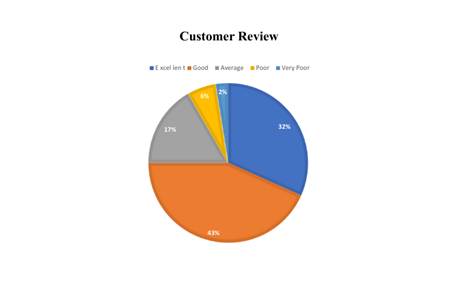
The overall satisfaction analysis revealed that a majority of customers were satisfied with RUBCO’s products and services. A considerable portion of respondents expressed neutral satisfaction, indicating areas where RUBCO could improve to create stronger customer appeal. A small percentage of customers were dissatisfied due to issues related to limited product designs, slower service processes, and lack of promotional activities. These findings suggest that RUBCO retains customer satisfaction primarily through quality and trust but must incorporate modern strategies to stay competitive.
9. FINDINGS
The study reveals that customers hold a generally positive perception of RUBCO, primarily due to its consistent product quality and cooperative values. Durability and affordability remain major strengths that differentiate RUBCO from private competitors. Customers trust the brand and appreciate its long-standing presence in the Kerala market. However, the findings also indicate that the current market expectations require RUBCO to offer more innovative product designs, improve service speed, and enhance the store environment. Customers expect a more engaging shopping experience and better digital accessibility. The lack of promotional activities and limited online presence were frequently mentioned as areas that need attention. Overall, the findings demonstrate that while RUBCO satisfies customers in terms of quality and pricing, it must introduce contemporary improvements to maintain customer interest.
10. SUGGESTIONS
Based on the analysis, the study suggests that RUBCO should invest in modernising its product designs to attract a broader customer base. Enhancing the store ambience with better product displays and lighting would create a more appealing shopping environment. Customer service should be improved through faster delivery, clearer warranty communication, and regular follow-ups. RUBCO should focus on strengthening its digital presence, including social media engagement and online shopping options. Promotional campaigns, festival offers, and loyalty programmes would help increase brand visibility. Regular feedback collection can help RUBCO understand changing consumer preferences more effectively. Updating marketing strategies and aligning them with modern trends will enable RUBCO to retain loyal customers while also attracting younger consumers.
11. LIMITATIONS
This study is limited by its sample size of 120 respondents, which may not represent the entire population of RUBCO customers in Kannur. Since the research depends on customer opinions, responses may be subjective and influenced by personal experiences. Time constraints restricted the inclusion of a wider geographical area and deeper product-wise analysis. The study focuses only on RUBCO outlets in Kannur, which limits its generalisability to other districts.
12. CONCLUSION
The study concludes that RUBCO Limited continues to enjoy significant customer satisfaction due to its consistent quality, reliability, and cooperative values. Customers view RUBCO as a trustworthy brand that offers durable products at reasonable prices. However, the changing market environment demands adjustments in product innovation, service quality, and marketing practices. To remain competitive, RUBCO must modernise its designs, enhance its store environment, improve after-sales service, and invest in digital marketing. By addressing these areas, RUBCO can improve customer satisfaction further and strengthen its position in the Kerala market. The cooperative brand has the potential to expand its customer base and remain relevant provided it adapts to modern consumer expectations while preserving its traditional strengths.
CONFLICT OF INTERESTS
None.
ACKNOWLEDGMENTS
None.
REFERENCES
Anderson, E. W., Fornell, C., & Lehmann, D. R. (1994). Customer Satisfaction, Market Share, and Profitability. Journal of Marketing, 58(3), 53–66. https://doi.org/10.1177/002224299405800304
Government of Kerala Cooperative Department.
(n.d.). Official publications. Government of
Kerala.
Jain, S., & Gupta, A. (2018). Comparative Study of Cooperative
and Private Brands. International Journal of
Marketing Research, 10(3), 101–110.
Kerala State Rubber
Co-operative Ltd. (n.d.). RUBCO Annual Report (Latest
edition). Kerala State Rubber
Co-operative Ltd.
Kothari, C. R. (n.d.). Research Methodology: Methods and
Techniques. New Age International Publishers.
Kotler, P., and Keller, K. L. (n.d.). Marketing Management. Pearson Education.
Kumar, R., & Singh, P. (2020). Customer Satisfaction in Cooperative Sector. Indian Journal of
Commerce & Management, 11(2), 45–52.
Mathews, A. (2019). Study on Consumer Preference
for Rubber Products in
Kerala. South Asian Economics Review,
8(1), 77–89.
Nair, P. R. (2021). Cooperative Retailing
and Customer Satisfaction in Kerala. Cooperative
Management Journal, 15(2), 33–42.
Oliver, R. L. (1997). Satisfaction: A Behavioral
Perspective on the Consumer. McGraw-Hill.
Parasuraman, A., Zeithaml, V. A., & Berry, L. L.
(1988). SERVQUAL Model – Service Quality Measurement. Journal of Retailing, 64(1), 12–40.
Schiffman, L., & Kanuk, L. (n.d.). Consumer Behaviour. Pearson.
Smith, A. M. (2017). Customer Loyalty and Trust in Traditional Brands. Journal of Brand Management, 24(5),
405–417.
Solomon, M. R. (n.d.). Consumer Behaviour: Buying, Having
and Being. Pearson Education.
Zeithaml, V. A., Bitner, M. J., & Gremler, D. D. (n.d.). Services Marketing: Integrating Customer Focus Across the firm. McGraw-Hill Education.
 This work is licensed under a: Creative Commons Attribution 4.0 International License
© Granthaalayah 2014-2025. All Rights Reserved.