
Original Article
RESEARCH ON PROBLEMS AND CONSUMER EXPECTATIONS IN SPORTSWEAR PRODUCTS
|
Eda Acar 1 1 Ege University, Textile Engineering
Department, İzmir, Turkey |
|
|
|
|
ABSTRACT |
|
||
|
Sportswear today is not only preferred for sporting activities but has also become a widely used product group in daily life. This situation makes consumers’ expectations and purchasing behaviors regarding sportswear increasingly significant. This study was conducted to examine the purchasing behaviors of sports center members in the Bornova district of İzmir toward sportswear products, the problems they encounter during use, and their expectations from these products. The survey, carried out with 152 participants, consisted of three sections: demographic characteristics, purchasing behaviors related to sportswear products, and expectations from garments. According to the findings, participants most frequently preferred tops and leggings when purchasing sportswear, with comfort being the primary factor influencing their purchasing decisions. The most commonly reported issues with tops were post-wash deformation, seam unraveling, and color fading, while the main problems with bottoms included rapid deformation, seam splitting, and fabric pilling. In addition, product lifespan, washing durability, air permeability, seam strength and fabric elasticity were identified as the most important expected features of sportswear. Keywords: Sports Textiles, Product Performance, Consumer
Expectations, Survey Study |
|
||
INTRODUCTION
Sportswear today is not limited to athletic activities but has also found a significant place in everyday life. With its functional design, comfort-enhancing structure, and aesthetic appeal, sportswear has become an integral part of modern clothing concepts and lifestyles. Particularly with the increasing pace of daily life and the growing interest in sports, this category of clothing has gained rising importance for both consumer preferences and the ready-to-wear industry İşler and Tama (2019).
In recent years, the sportswear category has considerably expanded its share within the apparel market. Globally, the sportswear market was valued at approximately USD 335.9 billion in 2023 and is expected to exceed USD 646 billion by 2030 Grand View Research. (2025). In the context of Turkey, while apparel and ready-to-wear exports amounted to USD 17.9 billion in 2024, sportswear products accounted for USD 370 million, representing 2.1% of the total (İHKİB, 2025). These figures indicate that the sportswear segment is gaining increasing significance within the apparel industry at both the global and national levels.
The emergence of various sports disciplines, the growing interest in sports, the increasing number of individuals engaging in physical activity, and the widespread use of sportswear in daily life have all heightened the textile industry’s interest in the sports sector, as in many other industries. In sportswear production, greater emphasis has increasingly been placed on meeting the needs and expectations of consumers. Akçalı (2016), Taştepe (2020).
In recent years, individuals engaged in sports have increasingly preferred equipment and products that enhance performance and provide a high level of comfort during physical activity Devecioğlu and Altıngül (2011). It has been observed that individuals who practice sports at an amateur level are just as meticulous as professional athletes in their choice of clothing, with expectations of superior performance and comfort Mengüç (2020). Therefore, investigating the comfort properties of garments to be used in sporting activities has become highly significant in today’s context.
The required properties of sports textiles vary depending on the specific sport and the environmental conditions under which it is performed. Among the expected features of sportswear are thermal and moisture regulation, dimensional stability, durability, comfort and lightness, ease of care, quick-drying capability, body conformity without restricting movement, as well as windproof and waterproof properties. Depending on the type of sport and its environmental demands, the level of importance attached to these characteristics may differ, and some properties may not be required at all for certain disciplines. In addition to comfort and performance-related attributes, it is also expected that garments meet aesthetic requirements Uttam (2013).
In the textile field, numerous studies have examined
textile materials utilized in sports, with particular attention to their
structural, physical, and mechanical properties Çivitci and Dengin (2014), Ölçer and Dengin (2014), Suganthi
et al. (2017), Raccuglia
et al. (2018), Cheng and Chen (2025), Chan et al. (2025).
In recent years, with the growing interest in sportswear, consumer preferences, expectations, and the problems encountered during use have been increasingly examined in the literature. Çakmak and Çeğindir (2022), in a survey conducted with 208 participants across four major cities in Turkey, reported that t-shirts, tracksuits, and vests were the most preferred products in sports activities. They emphasized that quality, brand, price, and fabric characteristics were the main determinants in purchasing decisions, while comfort in movement and aesthetic factors were also considered important.
Another study examined experts’ understanding of sports
clothing quality and their views on the evaluation process. Based on interviews
with 22 experts, quality was defined as fitness for use, first impression, and
individual perception. The study also revealed challenges in the evaluation
process, such as immeasurable attributes and the need for digitalisation Claussen
et al. (2022).
Wilfling et al. (2022) This study
investigated consumers’ expectations and perceptions of comfort in sportswear.
An online survey with 292 participants showed that comfort and fit are
perceived together, while tactile properties of fabrics are missing in online
shopping. Women valued garment fit and tactile inputs more, whereas men
prioritized physiological comfort such as thermoregulation; differences were
also found by sport intensity, gender, and nationality Wilfling et al. (2022).
Nam et al. (2017) examined the factors
influencing consumers’ purchase intention of green sportswear. Based on a
survey with 542 participants, expectations, perceptions, subjective norms, and
attitudes were found to significantly affect purchase intention. Moreover, significant
differences were observed between users and non-users of green products Nam et al. (2017).
Lee et al. (2025) investigated the
effects of functionality and sustainability on purchase intention in sportswear
with 400 participants. CFA and SEM analyses revealed that activity and comfort
functions, along with sustainability, positively influenced consumer attitudes.
Furthermore, attitudes, subjective norms, and perceived behavioral
control were found to be positively related to sustainable sportswear purchase
intention, highlighting the importance of considering functionality and
sustainability together in sportswear marketing Lee et al. (2025).
In this study, a survey conducted among sedentary individuals who are members of sports centers in the Bornova district of İzmir analyzed consumers’ purchasing behaviors regarding sportswear products, the problems they encounter during use, and their expectations from these products. The main objective of the study is to reveal consumer tendencies and expectations toward sportswear, thereby contributing both to sectoral practices and to the relevant academic literature.
MATERIAL AND METHOD
This research was conducted using the descriptive survey model, one of the quantitative research methods. The population of the study consisted of individuals who were members of sports centers located in the Bornova district of İzmir. The size of the population was determined based on the 2016 Address-Based Population Registration System data of the Turkish Statistical Institute (TÜİK). The population of the study was defined as the members of sports centers in the district. The sample size was calculated using the proportional sample size formula Kızıloğlu and Kızıloğlu (2013).
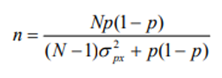 (1)
(1)
In the formula:
n = Sample size
Np = Population
size
p = Proportion of the
characteristic studied in the population (0.50 was taken to reach the maximum
sample size)
σ²px =
Variance
The sample size was calculated using the finite population sampling method, and data were collected from 152 individuals, taking into account a 90% confidence interval and a 7% margin of error. The sample was composed of sports center members who participated voluntarily. After calculating the relevant sample size for registered sports center members, the questionnaire was administered to volunteers.
As the data collection tool, a questionnaire consisting of three sections and a total of 13 questions was employed (Appendix 1). The first section included six questions regarding the demographic characteristics of the participants. The second section examined purchasing behaviors related to sportswear products, while the third section focused on problems encountered with sportswear and the expectations of consumers.
The data obtained in the study were analyzed using the SPSS 16.0 package program; within this scope, descriptive statistics based on frequency and percentage distributions were calculated and interpreted in line with the objectives of the research.
RESULTS
DEMOGRAPHIC CHARACTERISTICS
The distributions
regarding the demographic characteristics of the participants are presented in Table 1. Among the participants, 59% were female and
41% were male. In terms of age groups, the 19–24 age range constituted the
highest proportion with 51%, followed by the 25–40 age group with 30%.
Regarding
educational background, the majority of participants (63%) were university
graduates. With respect to income levels, 41% of respondents reported a monthly
income between 1001–3000 TL, while 27% had an income between 0–1000 TL.
Considering the
level of interest in sports, 55% of participants engaged in sports for
socializing or as a hobby, 34% participated at the amateur level, and 11% at
the professional level. Based on the frequency of engaging in sports, 31% of
participants exercised 1–2 hours per week, 28% for 5–6 hours, 24% for 3–4
hours, and 16% for 7 or more hours.
|
TABLE 1 |
|
Table 1 Distribution of Participants’ Demographic
Characteristics |
|||
|
Characteristic |
Groups |
Frequency |
Percentage
(%) |
|
Gender |
Male Female |
63 89 |
41.0 59.0 |
|
Age |
0–18 19–24 25–40 41 and above |
13 78 46 15 |
9.0 51.0 30.0 10.0 |
|
Educational Level |
Primary School High School University Postgraduate |
2 30 95 25 |
1.0 20.0 63.0 16.0 |
|
Income (TL) |
0–1000 1001–3000 3001–5000 5001–10,000 10,001 and above |
42 62 31 16 1 |
27.0 41.0 20.0 11.0 1.0 |
|
Level of Interest in Sports |
Health /Socializing / Hobby Amateur Professional |
84 51 17 |
55.3 33.6 11.2 |
|
Frequency of Doing Sports (per
week) |
1–2 hours 3–4 hours 5–6 hours 7 hours and above |
47 37 43 25 |
30.9 24.3 28.3 16.4 |
PURCHASING BEHAVIOR
The sportswear
purchasing habits of the participants are summarized in Table 2. Among the respondents, 40.8% stated that they
purchase sportswear once every three months. When examining expenditure levels,
participants were relatively evenly distributed across different ranges;
however, it was observed that the group spending 1000 TL or more on sportswear
accounted for a smaller proportion with 14.5%.
In terms of product
categories, the most preferred group was tops & t-shirts, chosen by 54.6%
of participants, followed by leggings with 23.7%.
When evaluating the
decisive factors in sportswear selection, 55.3% of respondents indicated that
comfort was the most important criterion. Comfort was followed by quality at
21.7% and visual/aesthetic factors at 15.1%. Price (7.2%) and fashion conformity
(0.7%) were found to have a lower level of influence on purchasing decisions.
Table 2
|
Table 2 Distribution of Participants’ Purchasing Behaviors |
|||
|
Characteristic |
Groups |
Frequency |
Percentage
(%) |
|
Sportswear purchase frequency |
Once a week Once a month Once every three months Once a year Other |
6 34 62 37 13 |
3.9 22.4 40.8 24.3 8.6 |
|
Sportswear expenditure amount
within 3-month period |
0–200 TL 201–500 TL 501–1000 TL 1001 TL and above |
45 46 39 22 |
29.6 30.3 25.7 14.5 |
|
Sports product groups |
Tops & T-shirts Hoodies & sweatshirts Leggings Sweatpants Shorts Others |
83 15 36 8 3 7 |
54.6 9.9 23.7 5.3 2.0 4.6 |
|
Determinant factors in
sportswear preference |
Comfort Price Visual/aesthetic factors Quality Fashion conformity |
84 11 23 33 1 |
55.3 7.2 15.1 21.7 0.7 |
EXPECTED PRODUCT FEATURES
In this section of
the survey, participants were first asked to indicate the problems they
encountered while using sports tops. The most frequently reported problems
regarding sports tops are presented in Table 3. According to the findings, the most commonly
stated issue was post-wash deformation (60.5%), followed by seam unraveling (40.1%) and color
fading (38.2%). Among the least reported problems were inappropriate sleeve
opening width (11.2), inappropriate neckline design (9.9) and inappropriate
sleeve length (6.6).
Table 3
|
Table 3 Problems Encountered During the Use of Sports Tops |
|
|
Problems
Experienced with Sports Tops |
Percentage
(%) |
|
Post-wash deformation |
60.5 |
|
Seam unraveling |
40.1 |
|
Color fading |
38.2 |
|
Color change when wet
(showing sweat) |
34.2 |
|
Feeling of dampness |
31.6 |
|
Restriction of movement |
31.6 |
|
Lack of breathability / poor
air permeability |
30.9 |
|
Odor formation |
27 |
|
Pilling/melting in underarm
areas |
19.7 |
|
Tightness around the collar
(neckline sagging) |
18.4 |
|
Inappropriate garment length |
15.1 |
|
Restriction of arm movement
caused by the armhole |
13.2 |
|
Inappropriate sleeve opening
width |
11.2 |
|
Inappropriate neckline
design |
9.9 |
|
Inappropriate sleeve length |
6.6 |
|
Other |
0 |
The problems encountered by participants during the use of sports bottoms are presented in Table 4. The most frequently reported issue was rapid deformation (54.6%). This was followed by seam splitting (48.7%) and pilling/melting in the crotch area (42.8%). The least reported problems included insufficient crotch height (18.4%), inappropriate hem width (14.5%) and inappropriate waist width (13.8%).
Table 4
|
Table 4 Problems Encountered During the Use of Sports Bottoms |
|
|
Problems
Experienced with Sports Bottoms |
Percentage
(%) |
|
Rapid deformation |
54.6 |
|
Seam splitting |
48.7 |
|
Pilling/melting in crotch
area |
42.8 |
|
Restriction of movement |
35.5 |
|
Color change |
32.9 |
|
Lack of breathability |
31.6 |
|
Loss of elasticity |
30.3 |
|
Feeling of dampness |
23.7 |
|
Insufficient crotch height |
18.4 |
|
Inappropriate hem width |
14.5 |
|
Inappropriate waist width |
13.8 |
|
Other |
0 |
After identifying the problems experienced with tops and bottoms in sportswear, this part of the questionnaire asked participants to rank the expected performance features of sportswear according to their level of importance. The features were rated from “most important (1)” to “least important (5),” and the mean scores of the responses were calculated.
According to the results, participants assigned the highest importance to product lifespan, washing durability, air permeability, seam strength, and fabric elasticity. In contrast, features of a more aesthetic or technological nature (such as antistatic properties and stain repellency) were considered to be of lower importance Figure 1. These findings indicate that consumers prioritize long-term use and functionality when selecting sportswear.
Figure 1

|
Figure 1 Evaluation of Expected Functional Features in
Sportswear |
In the final section
of the questionnaire, responses to the open-ended question revealed that
participants expressed various issues and suggestions regarding sportswear.
Their statements are summarized below:
·
Discomfort/irritation
at the waist in bottoms: Some participants indicated that the stitching and
elastic structures used in the waist area of bottoms negatively affected
comfort.
·
Deformation
of accessories and prints: It was reported that accessories or prints on both
tops and bottoms became deformed or detached during use.
·
Price-performance
imbalance: Participants emphasized that although sportswear is generally more
expensive compared to casual clothing, particularly outside well-known brands,
the price-performance ratio in terms of functional features is considered low.
·
Riding-up
issue in sports leggings: Participants highlighted that especially mid-length
leggings tend to ride up during movement, which adversely impacts comfort in
use.
GENERAL EVALUATION AND CONCLUSION
This study was
conducted to examine the purchasing behaviors of
individuals who are members of sports centers in the Bornova district of İzmir with regard to sportswear
products, the problems they encounter during use, and their expectations from
such products. The findings reveal that sportswear consumers are predominantly
composed of young adults and university graduates in terms of demographic
characteristics. A large proportion of participants engage in sports primarily
as a hobby or for socialization purposes, while they typically purchase
sportswear once every three months. In terms of product preferences, tops &
t-shirts and leggings stand out the most, whereas comfort ranks as the primary
determinant in purchasing decisions, followed by quality and aesthetics. In
contrast, price and fashion conformity are of lower importance.
The research further
indicates that the most frequent problems encountered with sportswear include
post-wash deformation, seam unraveling, and color fading in tops, while in bottoms, rapid deformation,
seam splitting, and wear in the crotch area are common issues. Regarding
expectations from sportswear, consumers assign greater importance to functional
attributes such as product lifespan, washing durability, breathability, seam
strength, and fabric elasticity, compared to technical properties such as
aesthetics, antistatic features, stain resistance, and quick-drying. Open-ended
responses additionally highlight issues such as discomfort caused by waist
designs, rapid deformation of accessories and prints, sagging in leggings, and
imbalances between price and performance.
The results
underscore the importance of considering consumer expectations in product
development processes within the sportswear sector. Manufacturers are advised
to prioritize functionality in product design and give precedence to properties
such as washing durability, breathability, and elasticity in fabric selection.
The widespread use of sportswear today, not only in sporting contexts but also
in daily life, further amplifies the significance of these expectations.
As this study is
limited to the Bornova district, future research
conducted in different regions and on larger samples could reveal regional
differences in sportswear consumption. Moreover, examining whether consumer
expectations vary across different types of sports could provide a valuable foundation
for further studies and contribute to the literature.
CONFLICT OF INTERESTS
None.
ACKNOWLEDGMENTS
None.
REFERENCES
Akçalı, K. (2016). Spor Tekstilleri Üretiminde Kullanılan Farklı Kumaş Yapılarının Incelenmesi. International Journal of Sport Culture and Science, 4(3), 830–842. https://doi.org/10.14486/IntJSCS632
Chan, W. S., Shi, G. Q. Q., Lau, K., and Chow, D. H. K. (2025). Evaluating the Impact of Sportswear with Different Fabric Properties on Comfort and Physiological Response During Running. International Journal of Fashion Design, Technology and Education, 18(2), 190–198. https://doi.org/10.1080/17543266.2024.2347299
Cheng, P., and Chen, D. (2025). Investigation of the Impact of Comfort Perception on the Overall Comfort of Tight-Fitting Sportswear. Journal of Engineered Fibers and Fabrics, 20, 15589250251356622. https://doi.org/10.1177/15589250251356622
Claussen, L., Lloyd, A., Ruiz, D., and Havenith, G. (2022). Experts' views on Sports Clothing Quality. International Journal of Fashion Design, Technology and Education, 15(1), 86–97. https://doi.org/10.1080/17543266.2021.2011432
Çakmak, Ş., and Çeğindir, N. (2022). Düzenli Spor Yapan Bireylerin Tercih Ettikleri Hazır Giyim Ürünleri. Uluslararası Güncel Eğitim Araştırmaları Dergisi, 8(2), 525–535.
Çivitci, Ş., and Dengin, S. (2014). Koşu Giysileri Konforunun Kullanıcılar Tarafından Değerlendirilmesi Üzerine Bir Araştırma. International Journal of Sport Culture and Science, Special Issue, 553–569. https://doi.org/10.14486/IJSCS126
Devecioğlu, S., and Altıngül, O. (2011). Spor Teknolojilerinde Inovasyon. In 6th International Advanced Technologies Symposium. Elazığ, Türkiye.
Grand View Research. (2025, August 10). Sportswear Market.
Istanbul Apparel Exporters' Association (IHKIB). (2025, August 20). Hazır Giyim Ve Konfeksiyon Sektörü Güncel Durum [PDF].
İşler, M., and Tama, D. (2019). 21. Yüzyılın Yükselen Moda Trendi: Athleisure. Turkish Journal of Fashion Design and Management, 1(1), 13–26.
Kızıloğlu, S., and Kızıloğlu, R. (2013). A Study Examining the Consumption of Domestic and Imported Meat in Erzurum City Center. Iğdır University Journal of the Institute of Science and Technology, 3(1), 61–68.
Lee, J., Son, J., and Lim, S. (2025). Consumer's contradictory needs: Functionality and Sustainability on Purchase Intentions for Sportswear. Journal of Global Fashion Marketing, 16(2), 173–195. https://doi.org/10.1080/20932685.2024.2434861
Mengüç, G. S. (2020). Studies on Moisture Management Properties of Various Textile Products. Turkish Journal of Fashion Design and Management, 2(1), 31–35.
Nam, C., Dong, H., and Lee, Y. A. (2017). Factors Influencing Consumers' Purchase Intention of Green Sportswear. Fashion and Textiles, 4(1), Article 2. https://doi.org/10.1186/s40691-017-0091-3
Ölçer, H., and Dengin, S. (2014). Sporcu Performansını Arttırmaya Yönelik Olarak Yüzücü Giysilerinin Incelenmesi Üzerine Bir Araştırma. International Journal of Science Culture and Sport, Special Issue 1, 570–581. https://doi.org/10.14486/IJSCS127
Raccuglia, M., Sales, B., Heyde, C., Havenith, G., and Hodder, S. (2018). Clothing Comfort During Physical Exercise: Determining the Critical Factors. Applied Ergonomics, 73, 33–41. https://doi.org/10.1016/j.apergo.2018.05.014
Suganthi, T., Senthilkumar, P., and Dipika, V. (2017). Thermal Comfort Properties of a Bi-Layer Knitted Fabric Structure for Volleyball Sportswear. Fibres & Textiles in Eastern Europe, 25(1(121)), 75–80. https://doi.org/10.5604/12303666.1227885
Taştepe, Ö. (2020). Dijital Pazarlama Ile Hazır Giyim Sektöründe Pazarlama Iletişimi Bağlamında Tutundurma Faaliyetlerine Yönelik Inceleme. Turkish Journal of Fashion Design and Management, 2(1), 21–29.
Uttam, D. (2013). Active Sportswear Fabrics. International Journal of IT, Engineering and Applied Sciences Research, 2(1), 34–40.
Wilfling, J., Havenith, G., Raccuglia, M., and Hodder, S. (2022). Consumer Expectations and Perception of Clothing Comfort in Sports and Exercise Garments. Research Journal of Textile and Apparel, 26(4), 293–309. https://doi.org/10.1108/RJTA-01-2021-0015
 This work is licensed under a: Creative Commons Attribution 4.0 International License
© Granthaalayah 2014-2025. All Rights Reserved.


