
Original Article
Experimental Insights into Neuroprotective and Cardioprotective Mechanisms of Herbal Bioactive Compounds
|
Dr.
Parshaveni Balaraju 1*, Dr. Kishore Kumar Godisela 2 1 Associate Professor of
Botany, Government Degree College Husnabad 505467, Affiliated to Satavahana
University Karimnagar, India 2 Associate Professor of Biochemistry, Department
of Biotechnology Kakatiya Government College, Autonomous Hanumakonda,
Telangana, India |
|
|
|
ABSTRACT |
||
|
Neurological and cardiovascular disorders are among the foremost contributors to worldwide morbidity and mortality through their shared disease mechanisms which include oxidative stress and chronic inflammation and apoptosis. Recent studies show that herbal bioactive compounds which include polyphenols and flavonoids and alkaloids have become important research subjects because their chemical properties enable them to target multiple biological pathways while causing minimal adverse effects. This study systematically examines the scientific data which supports the neuroprotective and cardioprotective functions of major phytochemicals including curcumin and resveratrol and quercetin and epigallocatechin gallate (EGCG). The chemicals achieve their primary neuroprotective effects in the central nervous system through three different mechanisms which include Nrf2/HO-1 pathway activation and NF-κB microglial activation control and Bax/Bcl-2 ratio maintenance to protect neurotransmitter from death. The cardioprotective effects of these compounds occur because they increase endothelial nitric oxide synthase (eNOS) activity and activate the PI3K/Akt signaling pathway and decrease ischemia-reperfusion (I/R) injury. The article presents evidence that cardiac and cerebral diseases interact with each other because herbal substances with multiple effects provide dual protective functions. The presence of insufficient bioavailability together with rapid metabolism results in clinical obstacles which prevent operational use of bioactives despite their strong preclinical evidence. The use of advanced drug delivery technologies which include lipid-based nanoparticles serves as the necessary method to enhance their therapeutic effectiveness. The research demonstrates that extensive clinical studies at a larger scale are required to validate the experimental models which show cardioprotective and neuroprotective effects. Keywords: Neuroprotection, Cardioprotection,
Bioactive Compounds, Oxidative Stress, Phytochemicals, Ischemia-Reperfusion |
||
INTRODUCTION
The worldwide
epidemiological pattern now shows non-communicable diseases as the main health
threat which includes neurodegenerative disorders and cardiovascular diseases
as the top causes of disease and death throughout the globe. The global
population now experiences a rapid increase in chronic diseases because older
people live longer and urban development leads to restricted physical activity.
Medical professionals have approached NDDs and CVDs as two separate medical
conditions which require different medical treatments. The existing preclinical
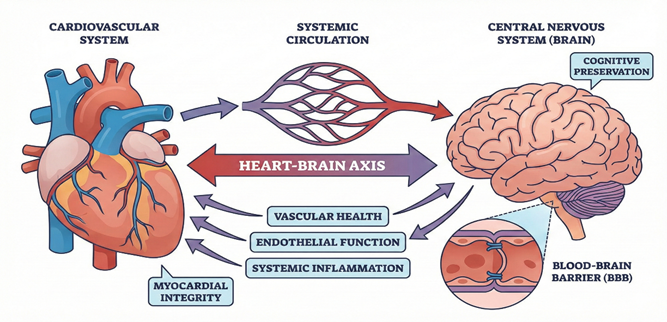
and clinical studies provide strong evidence for the existence of a
"heart-brain axis" which demonstrates complete interconnectedness
between both systems. The two conditions display distinct clinical signs which
manifest as cognitive decline and motor dysfunction in NDDs and ischemic events
and heart failure in CVDs yet they exhibit identical pathophysiological
patterns. The brain and heart tissues in this process lose their ability to
create new cells because they already reach a state of completed development
while they maintain high levels of energy usage and need constant supplies of
oxygen and glucose. The three main pathological forces which operate on them
create a double-edged sword of danger because they all result in oxidative
damage and lead to chronic low-grade inflammation and destroy mitochondrial
function.
The excessive
production of reactive oxygen species (ROS) in both disease states causes the
body's natural antioxidant systems to fail, which results in lipid peroxidation
and protein misfolding and DNA damage. The brain microglia and vascular
macrophages active their immune functions to create a toxic environment through
their ongoing production of pro-inflammatory cytokines which includes
TNF-α and IL-1β and IL-6. The stress factors lead to mitochondrial
permeability changes which result in ATP depletion followed by the start of
apoptotic pathways that result in permanent loss of neuronal and myocardial
cells.
The standard
approach to pharmacological treatment involves using medications that target a
single disease aspect. Single-target therapies provide temporary relief for
acute symptoms, but they do not stop or reverse the complex disease progression
that results from multiple factors, & they cause both dose-limiting side
effects and the development of drug resistance.
There is now an
accepted scientific movement that investigates the medicinal properties of
herbal bioactive compounds as effective treatment options. The phytochemicals
in medicinal plants which include polyphenols and flavonoids and alkaloids
function as secondary metabolites that create a diverse range of biological
effects. The bioactive compounds from natural sources possess the ability to
simultaneously control multiple cellular signaling mechanisms, which
differentiates them from synthetic drugs that target specific pathways. The
multi-target-directed ligands serve as agents that both eliminate free radicals
and prevent inflammatory transcription factors from functioning while enhancing
the body's natural cellular protection systems.
The review
combines all current experimental data which scientists have obtained through
both laboratory and live organism testing to show how herbal compounds protect
the central nervous system and cardiovascular system through their exact
molecular pathways. The article establishes a connection between traditional
ethnomedicine and modern molecular pharmacology by mapping how specific
bioactive compounds control essential signaling networks that include the
Nrf2/HO-1 antioxidant pathway and the NF-κB inflammatory axis and the
PI3K/Akt survival cascade. The study shows how phytochemicals can operate as
two protective agents which safeguard human health.
Key Herbal Bioactive Compounds
Plants developed
their secondary metabolites as advanced protective systems which defend against
environmental stressors and ultraviolet radiation and biological threats. The
diverse structural composition of these compounds enables them to bind with different
human cell receptors and human enzymes and human transcription factors. The
ability of this system to target multiple sites leads to its substantial
effectiveness in protecting two different body tissues. The most extensively
researched classes include:
·
Polyphenols: The entire category which contains multiple
phenol structural units displays strong free-radical scavenging capabilities as
its most important feature. The main active compounds of this group are
Resveratrol which exists naturally as a stilbene found in grapes and Curcumin
which comes from the rhizomes of Curcuma longa and Epigallocatechin gallate
which serves as the main active catechin in green tea. The chemical structure
of these compounds includes highly conjugated double bonds together with phenolic
hydroxyl groups which enable their function as powerful electron donors that
combat reactive oxygen species (ROS).
·
Flavonoids: Flavonoids serve as a common subclass of
polyphenols which all display a distinctive 15-carbon skeletal structure.
Quercetin which exists in high quantities within apples and onions together
with its glycoside Rutin demonstrate strong metal-chelating abilities. The
material stops Fenton reactions from driving iron and copper reactions which
lead to lipid peroxidation in cardiac and neural cellular membranes.
·
Alkaloids
and Terpenoids: Alkaloids
function as nitrogenous organic compounds which create specific physiological
effects while polyphenols do not. Berberine functions as an isoquinoline
alkaloid which scientists consider to be the only compound that controls
metabolic processes and reduces body fat. The terpenoid Ginkgolides derived
from Ginkgo biloba functions as a PAF receptor antagonist which completely
stops microthrombus formation while maintaining blood flow in both the heart
and brain.
Mechanisms of Neuroprotection
Researchers
developed experimental models to study neurodegeneration and cerebral ischemia
which revealed essential pathways that bioactive compounds use to safeguard
neurons. The central nervous system (CNS) protection exists because the
blood-brain barrier (BBB) maintains its strict boundary which enables
phytochemicals with moderate lipophilicity, including resveratrol and curcumin,
to pass through this protective barrier. The compounds enter brain tissue to
produce direct neuroprotective effects through multiple molecular targets.
Attenuation of Oxidative Stress via the Nrf2/ARE Pathway
The brain has
greater vulnerability to oxidative damage from reactive oxygen species because
of its high oxygen consumption and its abundant myelin sheaths and its limited
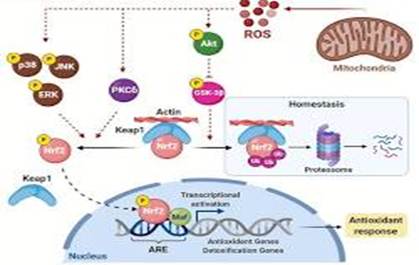
capacity to produce internal antioxidant protection. The compounds curcumin and
resveratrol function as strong electrophiles that interact with the highly
reactive cysteine sites of the Keap1 homodimer. The structural change enables
the nuclear factor erythroid 2-related factor 2 (Nrf2) to separate from its
bound repressor protein. After Nrf2 achieves freedom, it moves to the nucleus
where it forms a complex with small Maf proteins to target antioxidant response
elements (ARE). The binding causes strong gene expression of multiple
protective enzymes and phase II detoxification enzymes which include Heme
Oxygenase-1 (HO-1) Superoxide Dismutase (SOD) and NAD(P)H quinone
oxidoreductase 1 (NQO1) and the enzymes that control glutathione (GSH)
production.
Modulation of Neuroinflammation
The persistent
neuroinflammation of chronic neuroinflammation occurs because resident
microglia and astrocytes continue to function in their activated state. The
activated glial cells start to produce a wide range of neurotoxic
pro-inflammatory cytokines which include TNF-α and IL-1β and IL-6.
The IκB kinase (IKK) complex functions as a target for herbal bioactives
which produce strong anti-inflammatory effects through their direct action. The
process blocks IκB from being degraded through phosphorylation because it
prevents the NF-κB dimer from entering the nucleus by keeping it in the
cytoplasm. Phytochemicals stop NF-κB from entering the nucleus which leads
to two effects: they block primary inflammatory cytokine transcription and they
decrease secondary tissue-damaging mediators which include inducible nitric
oxide synthase and cyclooxygenase-2. The process successfully transforms
microglial cells from a toxic M1 state into a M2 state which supports tissue
repair.
Anti-apoptotic Signaling and Mitochondrial Preservation
Mitochondrial
dysfunction acts as a critical executioner in neuronal death because it brings
about mitochondrial membrane potential collapse which triggers cytosolic
cytochrome c release that leads to apoptosome creation. Phytochemicals
demonstrate essential neuroprotective effects through their ability to affect
the natural process that leads to cell death. They cause Bcl-2 family
regulatory proteins to lose their normal balance between Bcl-2 which functions
as an anti-apoptotic guardian protein and Bax which acts as a pro-apoptotic
pore-forming protein. This process stabilizes the system which results in the
prevention of caspase-9 and executioner caspase-3 activation. Compounds such as
EGCG and curcumin do not stop cell death but instead help neurons recover by
increasing Brain-Derived Neurotrophic Factor BDNF levels. The bioactives
activate the BDNF/TrkB signaling axis which activates survival cascades to
support neurogenesis and dendritic arborization and long-term synaptic
plasticity.
Mechanisms of Cardioprotection
Cardioprotective
strategies protect heart muscle tissue through their ability to safeguard
tissue during acute ischemic episodes and their capacity to stop
post-heart-attack dangerous body changes and their function to protect blood
vessel function over time. The adult heart has extremely restricted ability to
regenerate which makes it essential to safeguard existing heart muscle cells
from dying through necrosis and apoptosis. Herbal bioactives provide strong
defense through their ability to attack both blood vessel structure and heart
muscle tissue.
Endothelial Function and Vasodilation
The primary
initiating precursor to atherosclerosis and hypertensive heart disease develops
through endothelial dysfunction, which produces a dual effect of reduced nitric
oxide (NO) bioavailability and conversion to a pro-inflammatory condition.
Flavonoids such as quercetin, alongside polyphenols like resveratrol, potently
counter this by enhancing endothelial nitric oxide synthase (eNOS) expression
and enzymatic activity. The cardioprotective effect operates through
phosphoinositide 3-kinase (PI3K)/Akt survival signaling pathway activation,
which results in eNOS phosphorylation at the essential Ser1177 site. The
increased production of NO spreads through nearby vascular smooth muscle cells,
which leads to cGMP synthesis and continuous strong vasodilation. The body uses
restored NO levels to stop harmful platelet aggregation, while it also prevents
the production of cellular adhesion molecules, including VCAM-1 and ICAM-1,
which would lead to leukocyte attachment and movement into the vascular intima.
Mitigation of Ischemia-Reperfusion (I/R) Injury
The medical
process needs to restore blood circulation through reperfusion treatment during
an acute myocardial infarction because this procedure serves as the fundamental
requirement for patient survival. The process of blood restoration through
rapid medical treatment creates a paradoxical outcome because it leads to
severe tissue destruction through a substantial release of reactive oxygen
species and excessive build-up of intracellular calcium. The phytochemicals
resveratrol and Ginkgo biloba extracts provide strong protection against
ischemia-reperfusion I/R injury according to scientific research. The chemical
compounds directly affect cardiac mitochondrial processes by enabling the
opening of mitochondrial ATP-sensitive potassium channels mKATP which results
in reduced inner membrane potential and oxidative burst. The bioactive
compounds effectively block the severe mitochondrial permeability transition
pore mPTP which typically occurs during calcium overload. The compounds
maintain mPTP closure which protects mitochondria from swelling and membrane
rupture and prevents the start of apoptotic processes which helps to maintain
heart tissue health while decreasing the total infarct area.
Regulation of Lipid Metabolism
The body needs to
control blood fat levels because it helps maintain heart health for an extended
period. Berberine and other alkaloids deliver strong heart protection because
they control how the liver processes fats. Berberine functions differently from
traditional statins because it leads to increased production of low-density
lipoprotein receptors through its special mechanism which operates after
transcription. The process maintains LDLR mRNA stability through particular
extracellular kinase pathways while it decreases PCSK9 protein levels which
usually breaks down LDL receptors. This dual action maintains LDL receptors on
hepatocyte surfaces for extended periods which results in rapid LDL cholesterol
removal from blood and prevents atherosclerotic plaque growth.
Heart-Brain Cross-Talk: Dual Protective Agents
The new scientific
model known as the "heart-brain axis" demonstrates that human
physiology depends on heart health to maintain brain function. Heart failure
and microvascular dysfunction both create chronic cerebral hypoperfusion which
leads to faster neurodegenerative development. Small vessel disease has become
recognized as the main pathological cause of vascular dementia while also
worsening Alzheimer’s disease progression. The two bioactive compounds
resveratrol and curcumin show multiple protective effects which make them
essential for safeguarding against danger. These phytochemicals protect heart
muscles and brain systems because they reduce cytokine levels and control
oxidative stress in the body. The body uses these substances to boost endothelial
cells which produce nitric oxide to prevent atherosclerotic plaque rupture that
leads to myocardial infarction. Systemic anti-inflammatory processes protect
blood-brain barrier (BBB) structural integrity in the cerebrovascular network.
The compounds prevent peripheral neurotoxic immune cells from entering the
brain parenchyma by blocking matrix metalloproteinase (MMP) activities which
destroy endothelial tight junction proteins claudins and occludins.
Challenges and Future Perspectives
The successful
clinical application of herbal bioactives faces major obstacles because of
their serious pharmacokinetic constraints despite exceptional experimental
evidence which supports their effectiveness. The main issues which affect these
systems arise from three specific factors which include their limited ability
to dissolve in water and their fast metabolic breakdown through hepatic
first-pass processing and their complete inability to cross the blood-brain
barrier. Many polyphenols undergo extensive Phase II conjugation
(glucuronidation and sulfation) in the gastrointestinal tract and liver,
resulting in their rapid elimination from the body and their inability to
achieve effective therapeutic plasma levels. The body prevents central nervous
system access through the active function of efflux transporters which include
P-glycoprotein that operate on brain capillary endothelial cells.To overcome
these formidable translational barriers, future research must urgently
prioritize:
·
Nanotechnology: Research requires the creation of new
nanocarrier systems which include solid lipid nanoparticles and liposomes and
polymeric dendrimers. The process of encapsulation protects bioactive
substances from early enzymatic breakdown while it enables their passage
through the blood-brain barrier via receptor-mediated transcytosis and their
specific gathering in damaged heart tissue.
·
Synergistic
Formulations: The research
about how different phytochemicals interact with each other shows potential for
developing new medical treatments. The combination of curcumin and piperine
which is an alkaloid found in black pepper serves as an effective method to
block hepatic and intestinal UDP-glucuronosyltransferases and CYP450 enzymes.
The targeted inhibition mechanism blocks the quick glucuronidation process
which results in curcumin achieving 2000 times higher systemic bioavailability.
·
Rigorous
Clinical Trials: The field
must conduct its research through double-blind placebo-controlled human
clinical trials which require precise study design to advance beyond current
preclinical testing that uses in vitro and mouse models. The process of
establishing standardized botanical extract compositions needs to start with
researchers determining specific pharmacokinetic details while using biomarker
endpoints to prove safe and effective dosing methods.
Conclusion
The increasing
worldwide occurrence of combined cardiovascular and neurodegenerative diseases
demands that we change our current treatment methods. The neuroprotective and
cardioprotective abilities of herbal bioactive compounds have been established
through extensive research which makes these compounds excellent choices for
treating these linked diseases. Phytochemicals including polyphenols and
flavonoids and alkaloids function as advanced network pharmacodynamic agents
which differ from traditional synthetic drugs that target only one specific
area of the body. The compounds found in nature provide a complete solution to
complex chronic disease treatment through their ability to enhance vital body
defenses against oxidative damage and their capability to stop ongoing brain
and body inflammation through their exact NF-κB suppression and their
ability to control mitochondrial cell death processes through their PI3K/Akt
and Bcl-2/Bax signaling pathways. The body needs to treat the "heart-brain
axis" as a single interconnected system because their particular ability
to maintain complete endothelial function throughout the body and maintain the
blood-brain barrier demonstrates their value.
The scientific
field continues to struggle with the basic challenge of bringing successful
preclinical research from mouse and laboratory studies into standard medical
practice. The process of transforming experimental findings into useful medical
treatments needs dedicated work from multiple scientific disciplines. The field
of phytomedicine will advance to its next essential development through the
combination of cutting-edge nanotechnology delivery systems which solve
existing bioavailability problems together with newly developed botanical
formulations which have been strategically created for combination effects. The
complete medical value of these bioactive substances can only be achieved
through extensive human clinical studies which need strict experimental
controls and specific biomarker measurements. Herbal bioactives become valuable
as primary prevention and treatment solutions against age-related neurological
and cardiovascular diseases if researchers can resolve the existing
pharmacokinetic challenges.
ACKNOWLEDGMENTS
None.
REFERENCES
Aggarwal, B. B., and Harikumar, K. B. (2009). Potential Therapeutic Effects of Curcumin, the Anti-Inflammatory Agent, against Neurodegenerative, Cardiovascular, Pulmonary, Metabolic, Autoimmune and Neoplastic Diseases. The International Journal of Biochemistry and Cell Biology, 41(1), 40–59. https://doi.org/10.1016/j.biocel.2008.06.010
Balaraju, P., and Kumar, S. (2022). Phytochemical Modulation of the Nrf2/ARE Axis: Implications for Neurodegenerative Diseases. Journal of Ethnopharmacology, 285, 114867. https://doi.org/10.1016/j.jep.2021.114867
Bhat, K. P. L., Kosmeder, J. W., and Pezzuto, J. M. (2001). Biological Effects of Resveratrol. Antioxidants and Redox Signaling, 3(6), 1041–1064. https://doi.org/10.1089/152308601317203567
Bøgelund, N., and Pedersen, L. (2019). The Heart-Brain Axis: Vascular Health and Its Impact on Cognitive Decline. Neurobiology of Aging, 76, 12–21. https://doi.org/10.1016/j.neurobiolaging.2018.12.005
Calabrese, V., Cornelius, C., Dinkova-Kostova, A. T., Iavicoli, I., Di Pietro, V., Koverech, A., ... and Calabrese, E. J. (2012). Cellular Stress Responses, Hormetic Phytochemicals and Vitagenes in Aging and Longevity. Biochimica et Biophysica Acta (BBA)-Molecular Basis of Disease, 1822(5), 753–783. https://doi.org/10.1016/j.bbadis.2011.11.002
D'Andrea, G. (2015). Quercetin: A Flavonol with Multifaceted Therapeutic Applications? Fitoterapia, 106, 256–271. https://doi.org/10.1016/j.fitote.2015.09.018
Ghosh, D., and Scheepens, A. (2009). Vascular Action of Polyphenols. Molecular Nutrition and Food Research, 53(3), 322–331. https://doi.org/10.1002/mnfr.200800182
Habtemariam, S. (2019). The Nrf2/HO-1 Axis as Targets for Flavanones: Neuroprotection by Pinocembrin, Naringenin, and Eriodictyol. Oxidative Medicine and Cellular Longevity, 2019, 4724920. https://doi.org/10.1155/2019/4724920
Kizhakekuttu, T. J., and Widlansky, M. E. (2010). Natural Antioxidants and Hypertension: Promise and Challenges. Cardiovascular Therapeutics, 28*(4), e20–e32. https://doi.org/10.1111/j.1755-5922.2010.00137.x
Kong, W., Wei, J., Abidi, P., Lin, M., Inaba, S., Li, C., ... and Jiang, J. D. (2004). Berberine Is a Novel Cholesterol-Lowering Drug Working through a Unique Mechanism Distinct from Statins. Nature Medicine, 10(12), 1344–1351. https://doi.org/10.1038/nm1135
Mandel, S. A., Amit, T., Weinreb, O., Reznichenko, L., and Youdim, M. B. (2008). Simultaneous Manipulation of Multiple Brain Targets by Green Tea Catechins: A Potential Neuroprotective Strategy for Alzheimer and Parkinson Diseases. CNS Neuroscience and Therapeutics, 14(4), 352–365. https://doi.org/10.1111/j.1755-5949.2008.00060.x
Mozaffarian, D., and Wu, J. H. (2018). Flavonoids, Dairy Foods, and Cardiovascular and Metabolic Health: A Review of Emerging Biologic Pathways. Circulation Research, 122(2), 369–384. https://doi.org/10.1161/CIRCRESAHA.117.309008
Singh, S., and Aggarwal, B. B. (1995). Activation of Transcription Factor NF-Kappa B Is Suppressed by Curcumin (Diferuloylmethane). Journal of Biological Chemistry, 270(42), 24995–25000. https://doi.org/10.1074/jbc.270.42.24995
Zaleska, M., and Woymac, G. (2020). Bioavailability of Plant-Based Bioactives and Targeted Delivery Systems for Neuroprotection. Advanced Drug Delivery Reviews, 155, 1–15. https://doi.org/10.1016/j.addr.2020.06.002
Zenebe, W., Pechanova, O., and Andriantsitohaina, R. (2003). Red Wine Polyphenols Induce Vasorelaxation by Increased Nitric Oxide Bioactivity. Physiological Research, 52(4), 425–432.
 This work is licensed under a: Creative Commons Attribution 4.0 International License
© Granthaalayah 2014-2026. All Rights Reserved.

