
|
|
|
|
Case Study
Assessment of the Influence of Classroom Lighting and Acoustic Conditions on Learning Outcomes: A Case of a School in Bengaluru, India
|
Aditi Nayak 1 1 M. Arch Student, Dayananda
Sagar College of Architecture, DSI Campus, Shavige Malleswara Hills, Kumaraswamy Layout, Bengaluru 560078,
Karnataka, India 2 Associate Professor, Dayananda Sagar
College of Architecture, DSI Campus, Shavige Malleswara Hills, Kumaraswamy Layout, Bengaluru 560078,
Karnataka, India 3 Professor, Dayananda Sagar College of Architecture,
DSI Campus, Shavige Malleswara
Hills, Kumaraswamy Layout, Bengaluru 560078, Karnataka, India 4 Professor, Dayananda Sagar College of Architecture,
DSI Campus, Shavige Malleswara
Hills, Kumaraswamy Layout, Bengaluru 560078, Karnataka, India |
|
|
|
ABSTRACT |
||
|
Aim: Classroom lighting and acoustics strongly affect comfort, attention, and communication. This study aims to evaluate how the classroom lighting and acoustic conditions influence learning outcomes by assessing environmental parameters and collecting perceptual feedback from students and teachers in a selected school in South Bengaluru. Methodology: A mixed-methods research methodology was used, which combined environmental measurements and user perception surveys. A BEETECH B-105 light meter and a BEETECH B-401 sound level meter were used to obtain objective data. Subjective data was collected using structured Likert-scale questionnaires provided to 106 students and 14 teachers at a private school in Bengaluru. These data were analyzed and presented. Findings: Results showed that 53% of students experienced visual discomfort, primarily due to glare and uneven brightness. In high-illumination classrooms (above 340.5 lux), 50% reported visual fatigue, aligning with findings on over-illumination. Some students (29%) mentioned strong echo effects, whereas just under a quarter said they understood teachers well, matching earlier findings about unclear speech. In noisy spaces above 75-80 dB, teachers described effortful speaking, which aligns with prior observations on classroom sound issues. Implications: The research highlights including both sound and light elements in school building guidelines. While supporting low-cost renovation methods, it also fosters better classroom conditions that benefit students’ performance, along with staff health. Keywords: Classroom Environment, Acoustic
Comfort, Lighting Quality, Learning Outcomes, Mixed-Methods Research |
||


INTRODUCTION
The condition of
classrooms has a significant impact on how students learn, stay engaged, and
feel overall. One after another - lighting then sound - affects
sight, hearing, and interaction inside class spaces Yang et al. (2013). When light falls short, eyes tire easily;
focus drops Mott et al. (2012), whereas unclear audio muddles speech plus adds background noise
problems John et al. (2016). Although both matter greatly, they're
frequently overlooked during school planning, particularly in areas where
cities are growing rapidly Kapoor
et al. (2021). So getting visuals
right along with balanced sound becomes necessary - not optional - for fair,
functional teaching setups. This study explores how classroom lighting and
acoustic conditions affect learning outcomes, emphasizing the need to integrate
environmental considerations into educational planning and infrastructure
development Ricciardi
and Buratti (2018). Lighting and acoustics are two essential
aspects of indoor environmental quality (IEQ), influencing both learning and
teaching experiences. In educational settings, lighting affects visual comfort,
circadian rhythm, mood, and cognitive efficiency Arango
et al. (2021), whereas acoustics influence speech
intelligibility, listening effort, and instructor voice health Mogas et al.. (2021). In an Italian study, Ricciardi
and Buratti (2018) found that daylight improves attentiveness
and reduces the need for artificial illumination, though uncontrolled sunlight
may cause glare and discomfort. This highlights that effective classroom design
requires uniformity and control, an issue especially relevant in Indian schools
with wide window openings Kapoor
et al. (2021).
In terms of sound,
research such as Acoustics in Schools (2021) along with a Spanish classroom
analysis (2020) reveals that high ambient noise and prolonged echo reduce
speech clarity while boosting mental fatigue. Numerous active learning spaces
go beyond recommended baseline sound levels (35–40 dB(A)), whereas sudden loud
sounds - often due to street movement or nearby events - may rise past 75
dB(A), adding pressure on instructors and disrupting pupils. Although proof
highlights the individual importance of light conditions and auditory
environments, they’re seldom examined jointly within live teaching contexts.
This work addresses that missing link by assessing both aspects side-by-side in
a functioning school in Bengaluru, combining measured values for illumination
(lux) and volume (dB) together with subjective feedback gathered from learners
and staff. The quality of the classroom environment is gaining worldwide focus.
The 2020 UNESCO Education Report shows that about 30% of school-aged kids learn
in spaces falling below basic standards. A 2023 McKinsey study on Indian
schools found more than 45% of city classrooms suffer from poor light and sound
conditions, leading to reduced student alertness. Meanwhile, a 2022 KPMG India
report noted fewer than one in five private schools apply proper acoustic
design or natural light planning. On top of this, the WHO identifies background
noise as a key factor behind slower learning progress and emotional strain in
young learners. Field studies in Europe and the United States frequently reveal
averages of 55-65 dB(A), with peaks exceeding 75 dB(A) during regular school
activities (Acoustics in Schools, 2021). Similarly, a Spanish study on school
acoustics discovered that 90% of tested classrooms exceeded acceptable reverberation
lengths, affecting speech intelligibility and learning outcomes
(Acoustics-Spain, 2020). Based on a synthesis in Buildings (2023), proper light
for student desks usually falls within 300–500 lux; yet, numerous classrooms
struggle to keep stable brightness during school hours - particularly without
effective daylight control. Findings from an analysis of classroom lighting
studies show glare issues may impact nearly 60% of pupils where natural light
is poorly managed (A Review of Lighting Research in Educational Space, 2022).
During testing, recorded light intensity varied from below 250 lux to above 340
lux, while excessive brightness linked to visual discomfort among learners.
Sound readings averaged between 60 and 68 dB, though short bursts reached 75–80
dB, which coincided with teachers reporting vocal fatigue and lower speech
intelligibility.
Despite evidence,
most Indian schools continue to prioritize enrollment
capacity and cost efficiency over environmental quality Kapoor
et al. (2021). Research in India rarely links objective
data with how people experience light and noise in classrooms. While many
papers look at air flow or room temperature, few examine illumination and sound
through actual measurements instead of just opinions. In addition, standards
like the NBC and BIS offer suggestions about classroom lighting and acoustic
design - yet these are advisory rather than enforced rules. As a result,
implementation varies greatly, and compliance is not consistently monitored.
Classrooms in metropolitan areas are often converted from existing facilities
without adequate assessment of acoustic or visual characteristics Sundaravadhanan et al. (2017). This study bridges the gap by combining
objective environmental measurements (lux and dB levels) with subjective
perception data collected from students and teachers. It investigates how these
environmental characteristics connect to academic comfort and performance,
providing insights that can help guide improved design and policy decisions.
Theoretically, this study expands on Kim et al.'s (2023) multisensory insights
and adapts Ricciardi and Buratti's glare-control findings to a tropical,
high-solar-gain setting. It reveals how visual and aural comfort interrelate in
real-world environments, which laboratory research sometimes neglect.
Practically, it generates feasible, locally based recommendations such as
installing glare control (blinds, films), optimizing artificial illumination
uniformity, implementing basic acoustic treatment, and changing timetabling to
avoid peak noise overlaps. Using NBC standards as a reference, this research
links real-world measurements with policy guidelines - offering a model
adaptable across countries.
LITERATURE REVIEW
Lighting or
acoustics are often studied alone when it comes to classroom environments, yet
little work explores how they interact together. Daylighting research, such as Ricciardi
and Buratti (2018), show that while natural light enhances
alertness and reduces dependency on artificial sources, unshaded daylight can
produce glare and discomfort, impairing visual function. Research by
García-Hansen and team (2021) shows that, although teaching methods have
shifted, ceiling light patterns in classrooms still follow rigid grid
arrangements - just like they did years ago. Emerging measurements like melanopic equivalent daylight illuminance (m-EDI) broaden
performance assessment to include circadian influences, with research
demonstrating that electric light alone frequently fails to satisfy WELL
Building Standard requirements without daylight supplementation Borisuit et al. (2023). Acoustically, field tests at
European and Indian schools commonly show background noise levels over the
WHO's 35 dB(A) standard and reverberation lengths that exceed recommended
thresholds Shield & Dockrell
(2008); Ramesh et al. (2021). Valero et al. (2020) found that most classrooms
exceeded recommended reverberation levels, which directly affects how clearly
students hear speech. In teacher reports, vocal fatigue appears frequently,
particularly where noise is higher, highlighting why better room acoustics
matter Shield and Dockrell
(2008). Studies using mixed methods, like Kim
et al. (2023), reveal interactions between light and sound: while
lighting shapes mental performance, auditory conditions alter how space feels.
This coincides with proposals for integrated assessment systems that combine
physical measurements and user feedback.
This study is
unique in that it evaluates lighting and acoustics in operating classrooms of a
Bengaluru school while including objective measurements with student and
teacher perception surveys. Unlike simulation-driven studies, it captures
real-world settings in a warm-climate, high-daylight, high-noise metropolitan
environment, yielding suggestions based on both measurement and lived
experience. The incorporation of dual stakeholder perspectives is another
novelty. Teachers - active in communication and managing surroundings - and
learners, receiving lessons, both contribute data. A dual viewpoint uncovers
details missed by one-sided studies; for example, educators note vocal fatigue
when noise rises, whereas pupils still rate spoken words as clear. Instead of
focusing only on learner results, this work adds insights from instructors
about speaking effort, teaching barriers, and control issues in challenging
environments, giving a fuller view of classroom design. Even though light and
sound quality have each been examined separately, limited attention has been
paid to how they interact in actual schools with tight resources. Indian
studies have largely focused on heat comfort, creating gaps in broader
evaluations. In addition, few real-world examples show affordable upgrades that
meet light, sleep-cycle, and sound clarity needs in hybrid-learning classrooms.The study aims to
achieve the following objectives:
1)
To
assess the current lighting and acoustic conditions in chosen classrooms using
empirical instruments (lux and sound meters).
2)
To
evaluate student and teacher impressions of lighting and acoustic comfort using
structured Likert-scale surveys.
3)
To
investigate the correlation between observed environmental variables and
reported discomfort, concentration, and communication concerns.
4)
To
compare findings to national and international standards (NBC).
METHODOLOGY
DESCRIPTION OF THE SELECTED CLASSROOMS
|
Figure 1 |
|
|
|
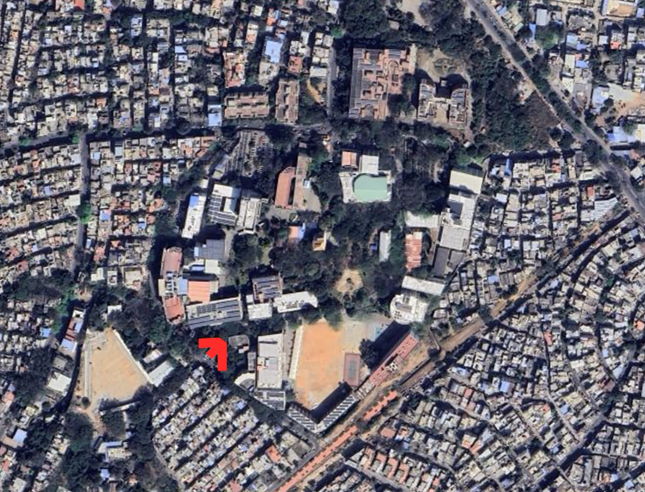
Figure 1 Location Plan |
The research took
place at a private institution in Bengaluru, chosen due to ease of access as
well as diverse classroom setups. Twelve classrooms were chosen across
different floor levels as sample spaces, varying in terms of size, layout,
daylight access, and acoustic quality.
The selection of classrooms depended on where they were located - near
both inner and outer pathways, plus one right in the middle. Around 106
students along with about 14 teachers took part in the survey. Data on
surroundings was collected during normal class times so it matched real-life
use, making results more accurate for daily learning situations.
|
Figure 2 |
|
|
|
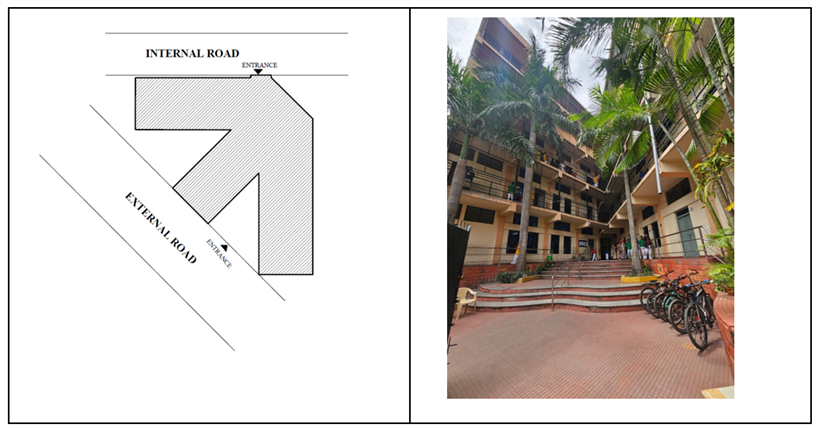
Figure 2 Plan and View of the Surveyed Reference School Building. (a) Site Plan;
(b) Courtyard View of the School |
|
Figure 3
|
|
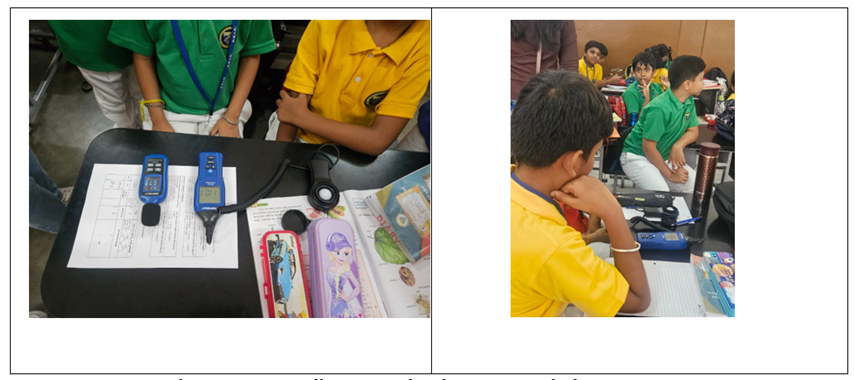
Figure 3 Data Collection
in the Classroom with the Instrument |
|
Figure 4 |
|
|
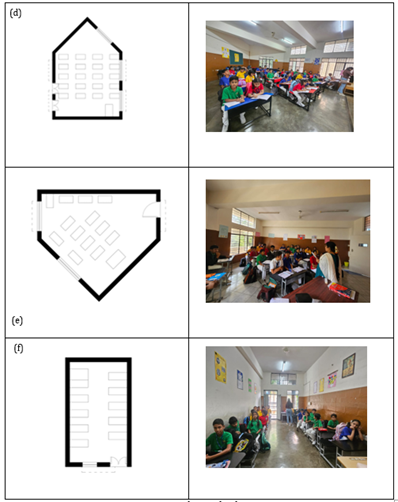
|
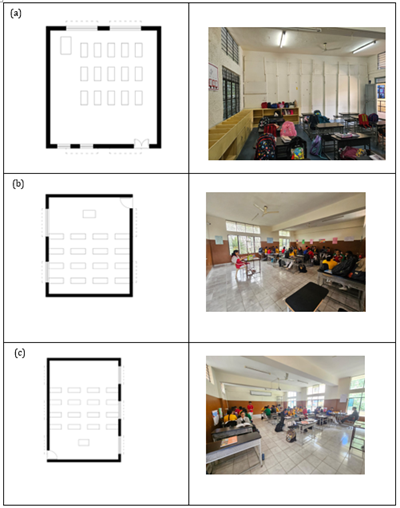
Figure 4 Typology in the Classroom |
|
Figure 5 |
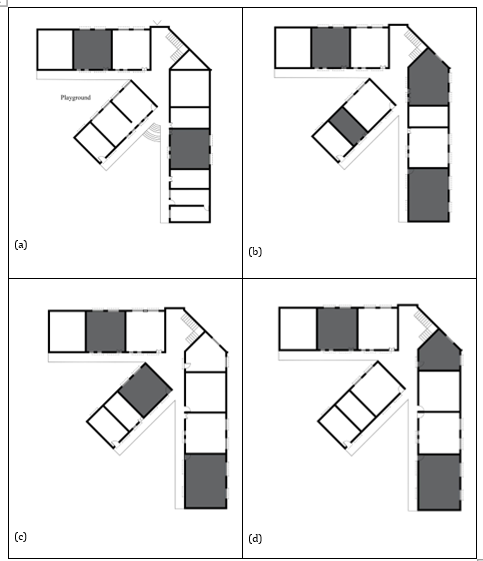
|
Figure 5 Classrooms
selected in the school building. (a) Ground Floor; (b) First Floor; (c)
Second Floor ;(d) Third Floor |
RESEARCH DESIGN
This study uses a
mixed-methods research methodology, combining quantitative and qualitative
techniques to understand how acoustics and lighting affect learning outcomes in
the classroom. The quantitative component consists of objective measurements of
environmental characteristics such as illumination levels and ambient sound
levels, which are collected using scientific instruments. The qualitative part
includes views from teachers and learners on lighting and sound conditions,
gathered through standardised questionnaires using a five-point rating system.
This combination of empirical measures and subjective feedback allows for
triangulation of results, resulting in a comprehensive analysis of both
physical conditions and user experiences in the classroom.
DATA COLLECTION METHODS- INSTRUMENTS, PARTICIPANTS
Two devices
monitored classroom environments throughout the study. A BEETECH B-105 measured
lighting intensity, capturing values in lux under normal use. At the same time,
noise exposure was tracked via a BEETECH B-401, reporting results in decibels
while rooms were in active use. Data from these instruments offered concrete
insight into visibility and sound quality - key factors shaping teaching
efficiency. Both teachers and students took part as primary participants in
this research. Students in grades one through ten regularly used the chosen
classrooms, where they directly encountered the light and sound settings. To
gather personal feedback, different guided surveys were designed - one for
educators, another for learners. Each questionnaire followed a Likert scale
format and was divided into key sections related to visual and acoustic
comfort. The student edition looked at how simple it was to view the board,
levels of light reflection, sharpness of audio, also focus capacity. The
teacher version included questions about vocal strain, frequency of
interruptions due to noise, and perceived student attentiveness.
ANALYSIS TECHNIQUES
The data gathered
through objective measures and subjective surveys was evaluated using objective
and subjective approaches. Objective environmental data, such as lux levels and
ambient noise measures, were grouped and analyzed in
Microsoft Excel to calculate averages, discover patterns, and visually map
differences among classrooms. The subjective data from the Likert-scale
questionnaires was also coded and analyzed in
Microsoft Excel for basic data cleaning, tabulation, and visualization.
Comparative analysis was conducted against standard benchmarks recommended by
the National Building Code (NBC) for classroom lighting and acoustic
performance.
RESULTS AND DISCUSSIONS
TEACHERS RESPONSE FOR LIGHTING
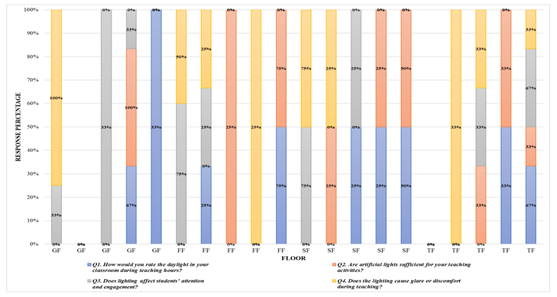
Analysis of the
teacher survey revealed that in Q1 (board visibility), the proportion of
positive ratings was highest on the ground floor (92.9%), followed by the third
floor (88.9%), first floor (80.6%), and second floor (75.9%).For Q2 (glare),
the lowest glare occurrence was reported on the first floor, with 52.8%
selecting the lowest rating, followed closely by the ground floor (50%). Higher
glare prevalence was seen on the second floor, where 37.9% gave mid-range
scores, and on the third floor, where 40.7% did so. In Q3 (eye strain), low
strain ratings were most common on the ground floor (71.4%) and first floor
(61.1%), with slightly lower proportions on the third floor (59.3%) and second
floor (55.2%). For Q4 (overall comfort), high comfort ratings (“Agree” +
“Strongly agree” categories) exceeded 60% on all floors, peaking at 76.7% on
the second floor and reaching the lowest on the ground floor (64.3%). Neutral
ratings were most frequent on the third floor (33.3%).
Figure 6
|
Figure 6 Chart Distribution of Teachers Responses by Floor and Question for
lighting |
TEACHERS RESPONSE FOR ACOUSTICS
Figure 7
|
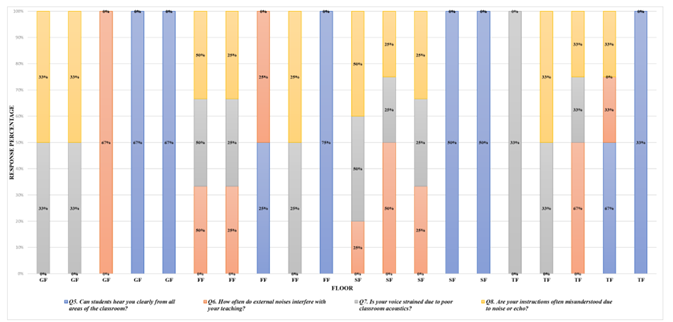
Figure 7 Chart Distribution of Teachers Responses by Floor and Question for Acoustics |
In Q5
(audibility), the proportion of high ratings was 100% for the ground, second,
and third floors, and 75% for the first floor, indicating strong audibility
overall but a minor drop on the first floor. For Q6 (external noise
interference), On the third floor, every teacher said outside noise often
caused problems - this was the highest rate. The ground floor came next, with
two out of three reporting similar issues, whereas only one in four noticed it
on the first and second levels, showing differences across floors. In Q7 (voice
strain around
66% on the bottom and top floors felt some degree of effort; half as many did
on the middle levels. This shows that speaking demands exist throughout - but
are stronger in certain areas. For Q8 (misunderstanding due to noise or echo),
everyone on the third floor experienced this problem. Two-thirds downstairs
faced the same issue, compared to fifty-fifty upstairs and mid-building. These
results match earlier findings, pointing again to worse conditions near the
roof. Sound measurements went above 75–80 dB on the ground and third floors; at
times, levels reached nearly 89 dB downstairs. Although noise was strong there,
occupants noticed little disturbance - possibly due to layout features,
materials used indoors, or where sounds came from.
STUDENTS RESPONSE FOR LIGHTING
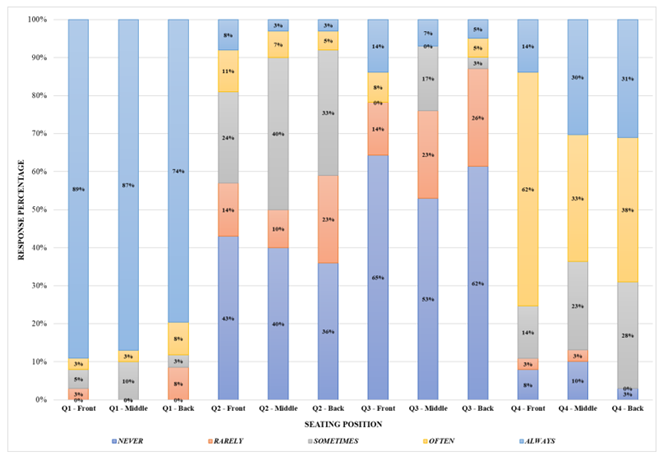
Figure 8
|
Figure 8 Comparison of
Student Responses by Seating Position and Question for Lighting |
In Q1 (visibility
of the board), the highest rating was given by 100% of students in most
front-row positions on the ground, first, and second floors, while the first
floor back row recorded 60% and the ground floor middle row 75%. For Q2 (glare), middle seats had
75% reporting no glare - front seats 57.1%. Yet third-floor front saw just
12.5%, along with 25% in the middle. More glare occurred up top: 62.5% in
third-floor mid-section; also, 50% on second-floor rear. In Q3 (eye strain),
three-quarters of those seated mid-ground felt fine - as did over two-thirds
upfront. However, fewer from first-floor center
agreed (44.4%), even less so toward back upper level (40%). Strain labeled "always" peaked both in first-floor front
and central lower area, each at 25%; linked to light intensity exceeding 300
lux. For Q4 (comfort approval reached 85.8% front down below; higher still -
90% - toward back of second tier. Ratings dipped slightly for first-floor
forward spots (66.6%) and dropped more sharply behind third-level (54.6%).
Measured illuminance ranged from under 110 lux in some ground floor seats to
over 340 lux in select first and second floor positions, with both extremes
linked to higher discomfort indicators.
STUDENTS RESPONSE FOR ACOUSTICS
Figure 9
|
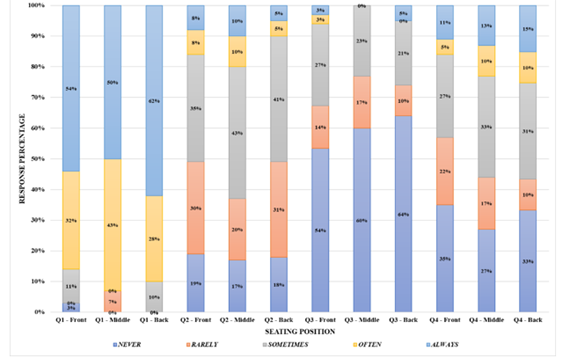
Figure 9 Comparison of Student Responses by Seating Position and Question for
Acoustics |
In Q5
(audibility), the highest rating was given by 100% of students on the ground
floor, 94.4% on the first floor, 92.6% on the third floor, and 75.9% on the
second floor. For Q6 (outside noise interference), low-interference ratings
were most frequent on the ground floor (78.6%), followed by the third floor
(48.1%), with the first floor at 38.9% and the second floor at 34.5%. In Q7
(echo), prevalence was 50% on the first floor, 21.4% on the ground floor, 14.8%
on the third floor, and 13.8% on the second floor. For Q8 (noise affecting
concentration), concerning noise disrupting focus - the second floor showed the
highest rate at 72.4%. Meanwhile, both the first and third floors reported
identical figures of 48.1%. The ground floor recorded the lowest share,
standing at 28.6%.Measured noise levels ranged from
around 63.5 dB to above 75 dB, with the second floor showing the strongest link
between higher concentration impact and elevated dB readings
LIGHTING SURVEY
Figure 10
|
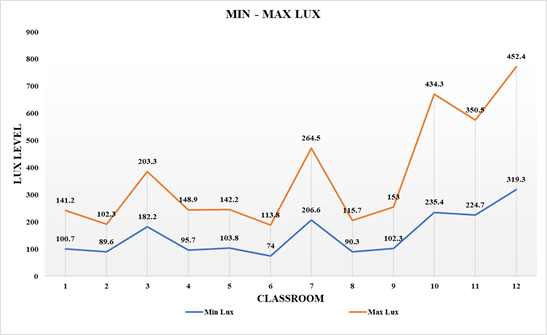
Figure 10 Minimum and Maximum Lux levels in each Classroom |
On the ground
level, light intensity varied between 89.6 and 108.2 lux; average was 102.0 lux
- this points to modest, even illumination. Moving upstairs, the first floor
showed broader differences: values spanned from 74.0 up to 182.2 lux, averaging
120.5 lux, meaning some spots were much brighter than others. Up another level,
readings on the second floor ran from 90.3 to 221.8 lux, hitting an average of
154.5 lux - light here was stronger overall but also more inconsistent. At the
top, the third floor reached the peak intensities, ranging between 224.7 and
408.2 lux, with a midpoint of 324.5 lux, which reflects markedly elevated
brightness alongside uneven spread.
ACOUSTIC SURVEY
Figure 11
|
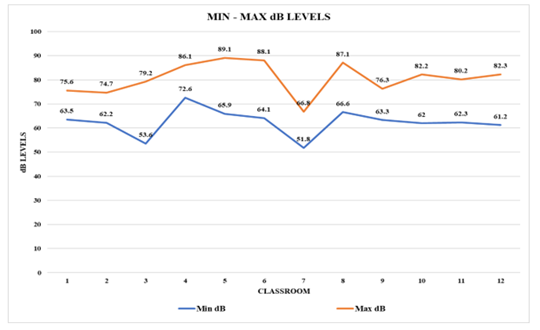
Figure 11 Minimum and
Maximum dB Levels in each Classroom |
Sound level
measurements revealed substantial variation in acoustic conditions among
classrooms. Minimum noise varied between 51.8 dB in Room 7 and 72.6 dB in Room
4; background sound was quietest in Rooms 3 and 7. In contrast, maximum levels
varied from 66.8 dB in Classroom 7 to 89.1 dB in Classroom 5, with Classrooms
4, 5, and 6 exhibiting the highest peaks. The gap from low to high noise ranged
15–25 dB on average, showing common shifts between ambient sound and sudden
spikes. Although classroom 5 showed repeated highs above 85 dB, room 4 also had
similar intense bursts - both may disrupt speech clarity or strain attention
over time. In contrast, classroom 7 stayed lower at both ends, suggesting less
overall disturbance. Despite acceptable base levels in certain rooms, excessive
peaks occurred often enough to surpass guidelines meant for schools; therefore,
specific sound control measures appear necessary.
DISCUSSION
According to the
statistics, over 80% of the students reported that they could see the board
clearly from their seats and continuously evaluated their visual comfort as
high. This finding aligns with recorded light readings often surpassing 100 lux
while sometimes reaching 200–300 lux. Still, around two-thirds of pupils noted
glare issues or eye strain - especially where natural brightness entered freely
without proper shading or softened illumination methods. Even though visibility
was generally clear, half the learners - including many exposed to extreme
levels such as 340.5 lux - reported discomfort, pointing toward intense or
poorly managed lighting contributing to visual fatigue. Prior research
similarly links insufficient and overly bright environments to reduced visual
ease and concentration among students Ricciardi
and Buratti (2018); Arango
et al. (2021). Out of fourteen educators, ten rated the
overall lighting quality as satisfactory or better, yet most acknowledged
reliance on electric lights being sufficient either constantly or nearly so.
Yet some noted that poor lighting or strong glare continued to impact student
attention in certain spots. These results match earlier studies showing
inconsistent light levels can lower focus during lessons while also impairing
mental processing Angelaki
et al. (2022); Ricciardi
and Buratti (2018).
Just 24% of pupils
felt the instructor was fully understandable; however, most noticed minimal
external sound - especially where decibel measures ranged between 60 and 68.
Still, roughly 29% mentioned strong echo effects, mostly within spacious or
untreated learning spaces. While nine teachers out of fourteen confirmed good
hearing ability during lessons, several noted concerns over periodic voice
tiredness and miscommunication due to background disturbance, mainly when
levels passed 75–80 dB. Such outcomes align with past
studies showing educators face greater risk of vocal stress under weak acoustic
setups - even if learners perceive speech clarity as acceptable Brill et
al. (2018), John et al. (2016). These results show a discrepancy between
felt acoustic comfort and measured sound conditions, which are within
acceptable limits. The results show that managing sound and light matters for
better teaching quality - both shape how well students
learn Mogas et
al. (2021). In Bengaluru, recorded light levels fell
short of the NBC's required 200 lux; most classrooms had only 95–182 lux, just
one slightly above at ~218 lux. Noise problems were consistent across spaces:
background sounds ranged from 62 to 89 dB(A), far beyond the suggested 40–45
dB(A) range. This points to deep-rooted flaws in basic room design related to
brightness and quietness. Poor illumination combined with high noise may reduce
visibility clarity, make speech harder to understand, or lower general learning
effectiveness John et al. (2016); Mogas et
al. (2021).
The Bengaluru
classrooms showed poor light levels across nearly all areas (95–182 lux),
falling short of the NBC’s required minimum (200 lux); this aligns with
findings from Ricciard and
Buratti (2018), who demonstrated that suboptimal lighting
conditions in educational spaces can negatively influence visual comfort and
task performance, particularly when illuminance falls below recommended
thresholds. Similarly, the review by Tantanatewin and
Inkarojrit (2016) emphasised that inadequate lighting
design, whether in daylight or artificial systems, often results in visual
strain and reduced learning efficiency, particularly in poorly lit classrooms.
Noise levels in Bengaluru (62–89 dB[A]) went far above the recommended 40–45
dB(A), matching earlier results from Shield and Dockrell (2008); their work showed loud surroundings
reduce speech clarity, which raises voice effort for instructors while lowering
understanding among learners. In Spain, Giménez et
al. (2022) discovered that rooms with strong echo and high sound volume
received negative feedback from educators and pupils alike - this
highlights how bad acoustics interfere with teaching effectiveness.
Contrary to Park et al.’s 2023 experiment, where light and audio factors were
adjusted under lab settings, the Indian example shows natural environments
where lighting and noise fail standard requirements at once. This supports the
proposition of combined environmental interventions, as highlighted in the Buildings journal study Pitt
& Zannin (2023), which advocates
integrated design approaches that address both lighting and acoustics
holistically to optimise learning outcomes. In Eastern Europe, local programs Kovács et al. (2022) led structured improvements to
match education infrastructure norms; however, data from Bengaluru reveals
uneven application of lighting and sound regulations - highlighting a pressing
demand for stronger oversight alongside practical updates suited to Indian city
schools.
IMPLICATIONS
For theoretical
implications, this study reinforces environmental psychology and educational
ergonomics literature by evidencing that multisensory comfort, particularly
visual and acoustic quality, affects attention, memory, and academic engagement
Ricciardi
and Buratti (2018), Park et al. (2023).
Integrating objective environmental measures with perceptual feedback provides
a replicable, interdisciplinary framework for evaluating learning spaces.
Findings highlight practical steps for improving school spaces, using natural
light wisely, adjusting electric lighting carefully, also applying affordable
sound fixes like wall coverings or ceiling units Tantanatewin and
Inkarojrit (2016); Shield
& Dockrell (2008). This dual approach,
combining user feedback with periodic environmental audits, can guide
architects and administrators in both retrofitting existing classrooms and
developing new, code-compliant facilities.
LIMITATIONS
The study only
looked at one school in Bengaluru, which could not be representative of all the
other kinds of schools, building styles, and environmental factors that exist
in the area or nation. Despite being sufficient for preliminary examination,
the sample size limits how broadly the results may be applied. Furthermore, the
subjective replies from students and teachers were based on self-reported
perceptions, which might be influenced by personal biases, mood, or recent
events. The study looked only at light and sound, ignoring factors such as room
temperature, airflow, or desk design, each possibly affect how well students
learn. Because of this limitation, though patterns emerged, direct
cause-and-effect links remain unclear; therefore, broader investigations across
varied environments are recommended to strengthen findings.
CONCLUSION AND FUTURE WORK
The research
showed that although light levels were generally sufficient, some pupils
experienced eye strain due to glare or inconsistent spread. Where brightness
was poorly managed, visibility suffered - especially for those seated near
windows. Educators often saw electric lights as suitable; however, a small
number noted drawbacks like reduced attention in harshly lit rooms. Sound
quality differed across settings - not everyone had trouble hearing, yet
several learners described mild reverberation and disruptions from hallways or
traffic. In louder environments, instructors pointed out challenges including
voice fatigue and having to restate directions frequently. Spaces combining
balanced lighting with quieter acoustics tended to support improved concentration,
physical ease, and smoother teaching.
This study adds to
current knowledge by showing how factors like light and sound affect thinking
and actions in classrooms. Because it links sensory experiences with measurable
conditions, the work extends ideas from environmental psychology and space planning.
For professionals such as school planners or designers, findings offer concrete
guidance when shaping better indoor spaces. Instead of assumptions, decisions
can rely on data tied to both well-being and academic outcomes. Where fixed
standards fall short, observational checklists help capture actual classroom
effectiveness under everyday circumstances. This study creates several paths
for follow-up work on classroom environments. Although this one looked at light
and sound conditions, later projects may examine temperature comfort or air
freshness - also relevant to student health and focus. Another option is
assessing desk design or room arrangement, since these affect engagement too.
Expanding investigations to different kinds of schools - city-based,
countryside, public, or private - could show how building standards and area
influence surroundings. Tracking grades or behavior
patterns before and after upgrades might clarify cause-effect relationships.
ACKNOWLEDGMENTS
None.
REFERENCES
Akhtar,
S. A., and Suneja, M. (n.d.). Assessment
of Acoustic Comfort in Classrooms: A Study of
Schools in Gaya, Bihar.
Angelaki,
S., Besenecker, U., and Danielsson, C. B. (2022). A Review
of Lighting Research in Educational Spaces. In IOP Conference Series: Earth and Environmental Science
(1099, 1, 012032). IOP Publishing.
Arango-Díaz, L., Flórez, O. L. M.,
Gaviria, L. R., Vega, L. M. T., and Rueda, C. M. Z. (2021). Influence of the Thermal and Lighting Performance in Classrooms
on the Cognitive Productivity of Students
in Colombia. Journal of Green Building, 16(4), 135–164.
Brill, L. C., Smith, K., and Wang, L. M. (2018). Building a Sound Future for Students: Considering the Acoustics of Occupied Active Classrooms. Acoustics Today, 14(3), 14–22.
Fretes, G., and Palau, R. (2025). The Impact of Noise on Learning in Children and Adolescents: A meta-analysis. Applied Sciences, 15(8), 4128. https://doi.org/10.3390/app15084128
John,
J., Thampuran, A. L., and Premlet,
B. (2016).
Objective and Subjective Evaluation of Acoustic
Comfort in Classrooms: A Comparative Investigation of Vernacular
and Modern School Classroom in Kerala. Applied Acoustics,
104, 33–41.
Kapoor,
N. R., Kumar, A., Alam, T., Kumar, A., Kulkarni, K. S., and Blecich,
P. (2021). A Review on Indoor Environment Quality of Indian School Classrooms.
Sustainability, 13(21), 11855.
Kiziltunali, B. (2023).
A Literature Review: The Impact of Light on Students’
Learning Performance. Humanising Language
Teaching, 25(4).
Krüger,
E. L., and Zannin, P. H. (2004). Acoustic,
Thermal and Luminous Comfort in Classrooms.
Building and Environment, 39(9), 1055–1063.
Liu,
C., Zang, Q., Li, J., Pan, X., Dai, H., and Gao, W.
(2023). The Effect of the Acoustic Environment of Learning Spaces on
Students’ learning efficiency:
A Review. Journal of Building Engineering, 79,
107911.
Lo
Verso, V. R., Giovannini, L., Valetti, L., and
Pellegrino, A. (2023). Integrative Lighting
in Classrooms: Preliminary Results from Simulations and Field Measurements.
Buildings, 13(9), 2128.
Madbouly,
A. I., Noaman, A. Y., Ragab, A. H. M., Khedra, A. M., and Fayoumi,
A. G. (2016). Assessment Model of Classroom Acoustics
Criteria for Enhancing
Speech Intelligibility and Learning Quality. Applied Acoustics, 114,
147–158.
Marchand,
G. C., Nardi, N. M., Reynolds, D., and Pamoukov, S.
(2014). The
Impact of the Classroom Built Environment
on Student Perceptions and learning. Journal of Environmental Psychology, 40, 187–197.
Mealings, K. (2023). A Scoping Review of the Effect of Classroom Acoustic Conditions on Primary School Children’s Numeracy Performance and Listening Comprehension. Acoustics Australia, 51(1), 129–158.
Mercugliano, A., Corbani, A., Bigozzi, L., Vettori, G., and Incognito, O. (2025). The Effects of Classroom Acoustic Quality on Student Perception and Wellbeing: A Systematic Review Across Educational Levels. Frontiers in Psychology, 16, 1586997. https://doi.org/10.3389/fpsyg.2025.1586997
Mogas-Recalde,
J., Palau, R., and Márquez, M. (2021). How Classroom Acoustics
Influence Students and Teachers: A Systematic Literature Review. Journal of Technology and
Science Education, 11(2), 245–259.
Mott,
M. S., Robinson, D. H., Walden, A., Burnette, J., and Rutherford, A. S. (2012). Illuminating
the Effects of Dynamic Lighting
on Student Learning. SAGE Open, 2(2), 2158244012445585.
Paunović, K., Ristovska, G., Argalasova, L., Dzhambov, A. M., and Andersen, Z. J. (2025). How are Eastern European
Countries Addressing Environmental
Noise Issues? A Post-Conference
Expert Discussion. Noise and Health, 27(126), 201–202.
Ricciardi, P., and Buratti, C. (2018). Environmental Quality of University Classrooms:
Subjective and Objective Evaluation of the Thermal, Acoustic,
and Lighting Comfort Conditions. Building And Environment, 127, 23–36.
Singh, P., Arora, R., and Goyal, R. (2020). Impact of Lighting on Performance of Students in Delhi Schools. In Indoor Environmental Quality: Select Proceedings of the 1st ACIEQ (95–108). Springer.
Sundaravadhanan, G., Selvarajan, H. G., and McPherson, B. (2017). Classroom Listening Conditions in Indian primary schools: A survey of four schools. Noise and Health, 19(86), 31–40. https://doi.org/10.4103/1463-1741.199240
Valiyappurakkal, V. K., Dolas, S., and Suresh, A. (2025). Assessing Indoor Environmental Quality of Naturally Ventilated Classrooms in Tropical Climates.
Journal of Building Engineering, 113048.
Yang, Z., Becerik-Gerber, B., and Mino, L. (2013). A Study on Student Perceptions of Higher Education Classrooms: Impact of Classroom Attributes on Student Satisfaction and Performance. Building and Environment, 70, 171–188.
|
|
 This work is licensed under a: Creative Commons Attribution 4.0 International License
© IJETMR 2014-2026. All Rights Reserved.