ShodhKosh: Journal of Visual and Performing ArtsISSN (Online): 2582-7472
|
|
China's Longji Cultural Heritage - Research on the Modern Innovative Design of Cultural and Creative Products
Zhaoli Tao 1 , Chanoknart Mayusoh
2
, Chanoknart Mayusoh
2 , Akapong
Inkuer 3
, Akapong
Inkuer 3 , Permsak
Suwannatat 4
, Permsak
Suwannatat 4
1 Doctoral
Student of Philosophy Program in Visual Arts and Design, Faculty of Fine and
Applied Arts, Suan Sunandha Rajabhat University, Thailand
2 Advisor
in Visual Arts and Design, Faculty of Fine and Applied Arts, Suan Sunandha
Rajabhat University, Thailand
3 Visual Arts and Design, Faculty of
Fine and Applied Arts, Suan Sunandha Rajabhat University, Thailand
4 Program in Creative Arts Department,
Faculty of Fine and Applied Arts Chulalongkorn University, Thailand
|
|
|
ABSTRACT |
|
|
This study is
situated within the context of the declining prominence of China’s
traditional Longji (Dragon Ridge) architectural
ornamentation, with the research objective of innovatively designing Longji-themed cultural and creative products in Jiangsu
Province. By examining the tangible and intangible cultural heritage of Longji architecture and conducting an in-depth
investigation into the decorative characteristics of Longji
structures in Jiangsu as well as public demand for related cultural products,
this study proposes feasible solutions for the innovative design of Longji-inspired creative goods. Adopting a mixed-methods
approach that integrates qualitative and quantitative research, the study
employs literature review, field surveys, interviews, and questionnaires to
analyze public perceptions of Longji architectural
ornamentation in Jiangsu and assess the current state of Longji-themed
cultural product design. Building upon these findings, the research
innovatively develops contemporary Longji-inspired
cultural products. Finally, through consumer experience evaluations and
expert assessments in the field, the study validates the effectiveness of
these designs in preserving Longji cultural
heritage. The results indicated that the proposed innovative designs offer
viable solutions and pathways for the transmission of Longji
architectural decorative culture and the promotion of local economic
development. |
|||
|
Received 28 February 2026 Accepted 30 March 2026 Published 07 May 2026 Corresponding Author Zhaoli Tao, DOI 10.29121/shodhkosh.v7.i1.2026.7859 Funding: This research
received no specific grant from any funding agency in the public, commercial,
or not-for-profit sectors. Copyright: © 2026 The
Author(s). This work is licensed under a Creative Commons
Attribution 4.0 International License. With the
license CC-BY, authors retain the copyright, allowing anyone to download,
reuse, re-print, modify, distribute, and/or copy their contribution. The work
must be properly attributed to its author.
|
|||
|
Keywords: Longji Culture,
Cultural and Creative Products, Cultural Heritage |
|||


1. INTRODUCTION
Ancient Chinese
architecture represents the crystallization of technology and art, bearing
profound cultural heritage of Chinese civilization. Particularly, the dragon
ridge ornamentation on building roofs has become an architectural treasure due
to its distinctive forms and rich symbolic meanings, demonstrating not only the
superb craftsmanship of artisans but also embodying auspicious and sacred
cultural connotations. The stylistic evolution of dragon ridge decorations
carries distinct imprints of different historical periods, reflecting dynamic
transformations in social structures, cultural values, and power relations
throughout Chinese history.
Despite its
historical significance, the Longji (Dragon Ridge), like many aspects of
traditional Chinese craftsmanship, now faces the threat of gradual obscurity.
Rapid modernization and urban development have dramatically transformed
architectural landscapes, leading to a decline in the application of
traditional decorative elements in contemporary structures. Furthermore, as Wang (2016) notes, the transmission of ancient
architectural techniques is endangered, with fewer artisans trained in the
specialized skills required to create and restore Longji ornamentation. The
younger generation, increasingly drawn to technology-oriented professions,
exhibits diminishing interest in pursuing traditional craftsmanship, resulting
in critical gaps in the preservation and continuity of these intricate skills.
Consequently,
this study focuses on the design and practical application of cultural and
creative products featuring Longji (Dragon Ridge)
ornamentation, aiming to provide enriched cultural experiences through
innovative product development while proposing new approaches for preserving
and transmitting China's Longji architectural
heritage. The cultural value of Longji decoration
manifests not only in creative product design but also in the safeguarding of
intangible cultural heritage. These distinctive Longji
cultural elements serve as a bridge between history and modernity while
functioning as a catalyst for regional economic development. Thus, precisely
and effectively conveying Longji culture through
well-designed creative products holds significant importance in strengthening
cultural identity, enhancing consumer engagement, and facilitating the dynamic
continuation of Longji architectural traditions.
2. Research
Objectives
1)
To
develop contemporary product designs incorporating dragon ridge motifs,
integrating innovative technology to harmonize tradition with modern
aesthetics.
2)
To
evaluate the effectiveness of the designed products based on cultural,
economic, and creative criteria, ensuring their viability in modern markets
while preserving cultural heritage. Research Objectives.
3. Literature Review
Before studying
and designing Longji architectural cultural and
creative products, the researchers collected and summarized relevant
literature. The research status of integrating ancient architectural ridge
decorations with modern digital technology to develop cultural and creative
industries, promote economic development, and protect and inherit ancient
buildings will be outlined, in order to provide a solid theoretical foundation
and framework for the subsequent design of Longji
architectural cultural and creative products.
1)
The
integration of ancient architectural ridge decoration and modern digital
technology
This study
examines the historical-cultural significance of Longji
architecture while innovatively exploring its artistic value through an
integrated approach combining intangible cultural heritage (ICH) preservation
principles with contemporary design methodologies. According to Gong et al. (2023), cultural and creative design approaches
can effectively reinterpret Longji decorative
patterns for adaptation into modern cultural products, thereby ensuring their
contemporary relevance while preserving their historical essence. For instance,
employing image gene extraction methodology to transform three-dimensional
ornamental sculptures from the Forbidden City's roof ridges into
two-dimensional patterns, followed by graphic reconstruction and implementation
as digital interactive art installations, presents a viable solution for both
promoting and innovating traditional ridge ornamentation.
2)
Current
trends in the cultural and creative industries
The development
and promotion of cultural and creative products has
emerged as a prominent trend in disseminating traditional culture in
contemporary society. According to Wang (2019) elucidates, the growing public demand for
cultural commodities, technology-driven innovation of cultural products in the
intelligent era, and the increasing sophistication of mass cultural consumption
have collectively contributed to the escalating demand for creative cultural
merchandise. However, current practices in integrating traditional culture with
product design still exhibit several deficiencies, including inadequate market
segmentation and weak regional cultural distinctiveness. Furthermore, many
cultural products demonstrate insufficient aesthetic consciousness and a
mismatch between practical functionality and artistic appeal, failing to
satisfy consumer expectations. Consequently, Wang emphasizes that regional
cultural specificity and emotional resonance constitute critical factors in
contemporary cultural product design.
3)
Integration
of culture and economy
Exploring
innovative cultural product designs inspired by ancient Chinese architecture
not only serves to promote traditional culture but also presents significant
potential for economic growth. According to Li (2020) highlights through the case study of museum
cultural products, the current homogeneity in creative merchandise results in
limited market competitiveness. By adopting cross-disciplinary strategic
collaborations aligned with contemporary market trends, museums can enhance
their product design frameworks, thereby achieving a mutually beneficial
synergy between cultural preservation and economic development.
4)
Protection
and inheritance of ancient buildings
The conservation
measures and methodologies employed for ancient architecture constitute one of
the most crucial endeavors in cultural heritage
preservation. According to Li (2023) elucidates, the quintessential elements of
traditional residential architectural ornamentation culture predominantly
encompass decorative patterns, carvings, and chromatic schemes. The proposed
preservation framework advocates for the establishment of a multi-stakeholder
collaborative conservation mechanism, the innovative refinement of heritage
protection paradigms, and the development of specialized tourism initiatives as
strategic interventions for safeguarding this cultural legacy.
4. Research Methodology
This study adopts
a combination of theory and practice, and uses qualitative and quantitative
analysis methods to collect data, aiming to provide guidance and reference for
the innovative selection and design direction of Longji
decorative patterns.
1)
Data
Collection
Collect relevant
literature, search online through academic journals, conference papers, etc.,
and consult historical materials on architectural ridge decoration in the
library. After obtaining information through multiple channels, screen,
systematically organize, summarize and analyze. At
the same time, conduct in-depth interviews with traditional craftsmen of
architectural ridge decoration in Jiangsu Province, using a one-on-one
approach, prepare relevant questions in advance, and obtain real and effective
first-hand information through good communication. These interview results will
provide credible data for the research, which will be mutually verified with
the literature and together form the basic support for the research.
2)
Participants
A questionnaire
was designed that included personal information, demand for Longji
cultural and creative product types, and current satisfaction with Longji cultural and creative product design. 355 copies of
the questionnaire were distributed to citizens in Jiangsu Province, and 325
valid questionnaires were collected, with an efficiency of 91%. In addition, 30
questionnaires on current satisfaction with Longji
cultural and creative product design were distributed to craftsmen and
professionals in related industries, and 30 valid questionnaires were
collected, with an efficiency of 100%, providing effective data support for
subsequent statistics and analysis. The survey data was collected and preprocessed to determine the measurement indicators of
consumer satisfaction and consumption intention with existing Longji cultural and creative products.
3)
Research
Instruments
The research
instruments were systematically established, incorporating on-site photographic
documentation and structured interviews of Longji
architectural ornamentation to provide robust data support and methodological
assurance. A scientifically designed questionnaire survey was implemented, with
subsequent data analysis conducted using SPSS software to rigorously examine
reliability (Cronbach's alpha ≥0.7) and validity (KMO measure
≥0.6), while employing descriptive statistics to quantify percentage distributions
and analyze demographic characteristics of the sample
population.
4)
Research
Analysis
Through in-depth
interviews with industry artisans and professionals, this study systematically
collected and synthesized existing information on Longji
architectural cultural creative products. Employing a five-point Likert scale
questionnaire, we quantitatively evaluated three critical dimensions: product
functionality, design quality, and cultural transmission efficacy (as detailed
in Table 1). Analytical results revealed significant
homogeneity in current dragon-themed creative products, which predominantly
manifest in two stereotypical forms: (1) traditional intimidating dragon
representations featuring intricate serpentine curves and ferocious visages
that evoke awe, and (2) oversimplified cartoonish depictions that, while
approachable, lack innovative design and substantive historical/cultural
foundations. Based on the survey results, innovative design improvements were
implemented to address the deficiencies in the product design dimensions, and
experts were then engaged to assess their satisfaction with the redesigned
product.
Table 1
|
Table 1 Evaluation Indexes of Longji Element Cultural and Creative Product Design |
|||
|
Design elements |
Product practicality |
Product Design |
Cultural heritage of products |
|
Evaluation indicators |
Convenience |
Appearance |
Integration of inheritance and innovation |
|
Functional |
Innovation |
Feature |
|
|
Mass, volume |
Technology |
Promote |
|
|
Material, durability |
Diversity |
Connotation |
|
|
Easy to clean |
Package |
Combination of traditional and modern design |
|
|
Price |
Color |
Emotional resonance |
|
Source: Author
5. Research Results
This chapter will
elaborate on the main findings of the study, including the current status of
architectural decoration in Longji, China, the views
of relevant cultural researchers and designers on the innovative design of Longji cultural and creative products, the application of
innovative design of Longji cultural and creative
products in Jiangsu Province, and the sustainable development path of cultural
and creative products.
5.1. The current status of
architectural decoration in Longji, China
Traditional Longji architectural decoration is a treasure of Chinese
culture. However, with the acceleration of modernization, self-built houses
have been transformed into commercial housing with modern unified
specifications. Traditional Longji architectural
decoration has gradually withdrawn from the stage of history. As a result, the Longji architectural carving skills have gradually been
lost. It needs to be continued through the protection of ancient buildings and
living inheritance.
5.1.1. The cultural connotation of the
dragon ridge pattern
The evolution of
the dragon ridge pattern, from the initial simple chiwei
carving, to the later exquisite longwen shape, and
then to the return to the simple style today. This process shows the journey
from the emergence of the dragon ridge to its peak, and then to the fading of
its sacred halo.Such a
transformation is not only a true portrayal of the transformation of the social
system, but also shows the trend of people's aesthetic and cultural needs
developing in a diversified direction.
5.1.2. Problems faced by Longji
decorative buildings
At present, the
inheritance of Longji architectural skills still
mainly relies on the restoration of physical buildings. However, craftsmen who
are proficient in core technology of this traditional carving skill are
becoming increasingly scarce. On the one hand, the demand for such craftsmen
and artists in modern society is decreasing. On the other hand, modern young
people generally have received higher education. They think that manual carving
and bricklaying are hard work, the learning cycle is long, and the economic
returns are low. This makes Longji architectural
skills face the risk of being lost.
5.1.3. Current status of cultural and
creative products in Longji
The existing
inheritance and protection of Longji's tangible
cultural heritage is difficult to adapt to the needs of modern social and
technological development. Therefore, it is necessary to explore ways of living
inheritance to continue China's Longji culture, such
as the popular cultural and creative design products as a carrier of cultural
communication. However, the existing Longji cultural
and creative products on the market have high similarity in patterns, serious
homogeneity, lack of recognition and cultural connotation, so the design of Longji elements needs to be improved to increase sales and
wide dissemination.
5.2. Opinions of relevant cultural
researchers and designers on the innovative design of Longji cultural and
creative products
Cultural
researchers and designers related to Longji have put
forward their own views and suggestions on the innovative design of Longji cultural and creative products. They believe that it
is necessary to choose diversified communication carriers, retain the core
culture of Longji according to market demand, and
combine modern innovative design techniques to enhance the value of Longji culture and the core competitiveness of design
products.
5.2.1. Longji Element Culture
Inheritance and Innovation
Reasonable space
planning through the layout of functional areas, ground signs, signs, lighting
guidance, etc., Guide visitors to understand the history, inheritance and
technical characteristics of needlework in an orderly manner, enhance the
coherence and experience of the visit, and avoid crowding or emptiness to
ensure comfortable viewing.
5.2.2. The choice of carriers for the
inheritance of Longji culture
Designers believe
that the use of cultural and creative product carriers, such as daily
necessities, office supplies, digital technology, etc., can solve the problem
of the single inheritance carrier and limited dissemination of Longji decoration skills. It can not only meet the daily
practical needs of modern consumers, but also continue the Longji
culture in a living form, achieving a win-win situation of cultural heritage
and economic value.
5.2.3. Meet market demands and
diversified scenarios
Tailoring
products to distinct consumer demographics - such as high-end collectors,
youth-oriented trend followers, and tourists - requires a focus on portability,
price accessibility, and emotional resonance. Examples include cultural and
creative lifestyle products, collaborative fashion items, and regionally
distinctive souvenirs. Leveraging e-commerce platforms and social media
channels can amplify outreach and enhance market competitiveness.
5.3. Innovative design and application
of cultural and creative products in Longji, Jiangsu Province
5.3.1. The Innovative Design of Longji
Cultural and Creative Products
In order to solve
the current market problems of homogeneity and single design of Longji cultural and creative products, researchers
conducted extensive data collection, excavated and refined pattern elements
with unique imprints of Longji's evolution history,
retained the original main colors of Longji buildings, and re-matched the colors.
In collaboration with Yancheng Feipu CNC Machine Tool Co., Ltd., they carried
out a series of innovative designs for Longji in
Jiangsu Province.
Figure 1

Figure 1
Innovative Design of Chiwen and Longwen
Patterns
Source:
Author
Figure 2

Figure 2
Innovative Design of Chiwei and Aoyu Patterns
Source:
Author
Figure3

Figure 3 Innovative Design of Longji Interlocking Branch Patterns and Auspicious Cloud Patterns
Source: Author
Figure 4

Figure 4 Innovative Design of Longji Cultural and Creative Fan Effect Display Picture
Source: Author
Figure 5
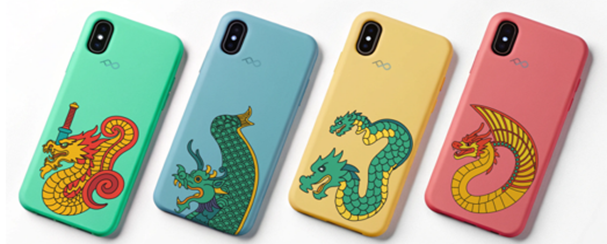
Figure 5 Innovative Design of Longji Cultural and Creative Mobile Phone Case Effect Display Picture
Source: Author
Figure 6

Figure 6 Innovative Design of Longji Creative Bags Effect Display Picture
Source: Author
Figure 7

Figure 7 Innovative Design of Longji cultural and creative masks and scarves Effect Display Picture
Source: Author
Figure 8

Figure 8 Innovative Design of Longji Cultural and Creative Mouse Pad Effect Display Picture
Source: Author
5.3.2. Expert Satisfaction Evaluation of
Innovative Longji Cultural Product Designs
Table 2 presents the evaluation criteria and
results from five domain experts regarding the design outcomes. A five-point
Likert scale (1 = strongly disagree, 2 = disagree, 3 = neutral, 4 = agree, 5 =
strongly agree) was employed to assess post-design satisfaction. The evaluation
metrics encompassed product functionality, aesthetic design of patterns, color scheme integration, pricing strategy, and cultural
transmission efficacy. Notably, the cultural transmission dimension received
unanimous maximum satisfaction (mean = 5.0), while all other criteria achieved
consistently high ratings (mean = 4.8), demonstrating expert consensus on the
innovative incorporation of Longji motifs.
Table 2
|
Table 2 Evaluation Criteria for Satisfaction with Innovative Longji Cultural Creative Product Designs |
|||||
|
Evaluation Project |
Expert 1 |
Expert 2 |
Expert 3 |
Expert 4 |
Expert 5 |
|
Functionality |
5 |
5 |
4 |
5 |
5 |
|
Appearance pattern design |
5 |
4 |
5 |
5 |
5 |
|
Color matching of patterns |
5 |
5 |
4 |
5 |
5 |
|
Price |
4 |
5 |
5 |
5 |
5 |
|
Cultural Heritage |
5 |
5 |
5 |
5 |
5 |
Source: Author
5.4. Longji cultural and creative
product design has been improved
The researchers
have made modern and innovative designs for Longji
cultural and creative products, improving them in many aspects, including
design concepts, pattern creativity, color matching,
cultural connotations, communication carriers, material selection, and product
evaluation, aiming to enhance the cultural heritage of Longji
architecture and the market competitiveness of cultural and creative products.
5.4.1. Design Concept
The evolution of
dragon ridge ornamentation—from the initial simplicity of chiwei carvings, to the later exquisitely crafted longwen motifs, and finally to the current return to an
unadorned style—reflects its trajectory from emergence to zenith, followed by
the gradual shedding of its sacred aura. This transformation not only mirrors shifts in social structures but also demonstrates the
diversification of public aesthetic preferences and cultural demands.
5.4.2. Pattern Creativity
The pattern
selects four representative forms of Longji, Chiwei, Aoyu, Chiwen, and Longwen, extracts the typical characteristics of the four
patterns, improves the Longji shape, and adds modern
innovative design. The winding branch pattern and auspicious cloud pattern of Longji architecture are extracted, and the shape is
improved and modern pattern splicing is carried out, so that the traditional Longji architectural pattern gets rid of the sense of
obsolescence and is more in line with the relaxed and pleasant atmosphere of
modern aesthetics.
5.4.3. Color Matching
The colors are mainly green and yellow, which are commonly used
in Longji decoration, and Chinese red is added. The
modern and beautiful colors collide with the retro colors, making the color matching
simple and elegant. It can enhance the visual appeal and fashion sense of the
product, while retaining the original colors to
maintain the strong correlation with Longji culture.
5.4.4. Material selection
The materials
selected for relevant cultural and creative products should be environmentally
friendly, skin-friendly, durable and low-cost, ensuring that they can be put
into mass production, reduce prices and make consumers purchase without
financial pressure.
5.4.5. Product Reviews
Through consumer
surveys and market analysis, researchers evaluated the improved cultural and
creative product designs to ensure that the designed products meet consumer
expectations and market demands.
6. Conclusions and Discussions
6.1. The modern living heritage of
China's Longji architectural culture
This study
identifies key challenges facing China's Longji
architectural heritage based on preliminary research, including the loss of
traditional craftsmanship, replacement of vernacular housing by modern
commercial developments, and inadequate preservation of ancient structures.
Through contemporary living heritage approaches such as cultural product
development and digital preservation technologies, it enhances public
understanding of traditional Longji architecture and
strengthens cultural identity.
6.2. Longji cultural and creative
product innovative design achieves win-win situation for culture and business
This study
extracts characteristic Longji patterns for cultural
product design, integrating modern aesthetics to transcend traditional
stereotypes and create a retro-modern fusion style. Through pattern design,
cultural resonance, and scenario-based applications, it cultivates target
consumer engagement. Employing eco-friendly materials and functional designs
that align with user needs, these lifestyle-oriented cultural products have
gained broad acceptance. Future efforts will focus on market-driven strategy
optimization to enhance competitiveness, developing products that synergize
contemporary demands with Longji cultural elements,
achieving sustainable cultural-commercial synergy.
6.3. Policy recommendations for the
protection of Longji architectural cultural heritage
Local governments
should establish targeted policies and specialized regulations for Longji ancient architecture, clearly defining preservation
measures. A dedicated Longji architectural fund
should be created to support routine maintenance and restoration work. The fund
should also provide financial assistance to inheritors of Longji
architectural craftsmanship and support relevant research projects. These
measures aim to incentivize broader societal participation in architectural
conservation and cultural transmission, while simultaneously promoting the
restoration of local heritage structures and regional economic development.
6.4. Contribution to academic research
This study
contributes to the Longji architectural research by providing an extensive
collection of Longji ornamental pattern typologies, while simultaneously
broadening novel approaches and design practice cases for the preservation of
tangible cultural heritage. These findings substantiate Wang (2016) proposition regarding the modernized
transmission of traditional craftsmanship. The research outcomes are
anticipated to enhance public accessibility to intuitive understanding of
Longji architectural culture, elevate its cultural valuation, amplify its
societal impact, and further stimulate interdisciplinary exploration and
practical applications among researchers engaged in Longji
architectural heritage conservation.
6.5. Future Research Directions
The dissemination of Longji architectural culture through cultural and creative product design represents merely one modality of its dynamic preservation. Subsequent studies should employ periodic interviews and structured questionnaires to systematically investigate public preferences regarding cultural transmission formats and emerging demands. Concurrently, leveraging big data analytics to monitor keyword trends and discussion topics related to Longji architecture and traditional Chinese cultural propagation across social media platforms and e-commerce channels will enable researchers to identify market trajectories with temporal precision. Such multidimensional analysis will facilitate proactive adaptation to evolving cultural consumption patterns while optimizing heritage transmission strategies.
CONFLICT OF INTERESTS
None.
ACKNOWLEDGMENTS
Researcher would like to express his sincere to the thesis advisor, Asst. Prof. Dr. Chanoknart Mayusoh for her invaluable help and constant encouragement throughout the course of this research. In addition, the researcher has to give thanks to all lecturers for their assistance: Asst. Prof. Dr. Akapong Inkuer and Asst. Prof. Dr. Pisit Puntien. At the same time, the researcher gratefully thanks to Miss Sasanant Rattanapornpisit, Mr. Chat Sukarin, Miss Vistha Chintaladdha, Miss Kanyanee Phangsua, etc. for their strong support.
Finally, the researcher would like to express his gratitude to Suan Sunandha Rajabhat University School of Fine and Applied Arts for their support in all aspects.
REFERENCES
Cao, C. (2021). A Visual Semiotic Analysis of Traditional Ridge Decoration Art in Guangfu. Cultural Industry, (20), 126–127.
Chami, M. F., and Kajiru, E. J. (2023). Assessment of 12 Years (2011–2023) Implementation of the 2003 UNESCO Convention on Safeguarding Intangible Cultural Heritage (ICH) in Tanzania. Cogent Arts and Humanities, 10(1). https://doi.org/10.1080/23311983.2023.2254044
Cheng, X., Huang, W., Yuan, M., and Yao, X. (2023). Research on the Application of “Dragon Culture” Elements in the Design of New Year Cultural and Creative Products. Footwear Craft and Design, 3(1), 59–61.
Gong, Q., Zhou, Q., Xu, C., and Xu, J. (2023). Redesign and Digital Art Application of the Eave Ridge Ornaments of the Forbidden City. Packaging Engineering, 44(8), 253–264. https://doi.org/10.1007/978-981-19-3816-0_27
Hong, S. (2014). Research on the Art of Chiwen During the Ming and Qing Dynasties [Master’s thesis, Hunan University of Technology].
Hou, C. (2024). Discussion on the Protection, Restoration, and Reinforcement Techniques of Ancient Buildings and Architectural Design. Urban Construction Theory Research (Electronic Edition), (1), 83–85.
Li, D. (2021). Research on Brand Design Based on Dragon Patterns from the Qin and Han Dynasties [Master’s thesis, Lanzhou University].
Li, Z. (2020). Research on the Development of Cultural and Creative Products in Museums Under the Background of “Internet Plus” [Master’s Thesis, Suzhou University]. https://doi.org/10.27351/d.cnki.gszhu.2020.003727
Li, Z. (2023). The protection, Inheritance, and Development of Cultural Decorations in Traditional Residential Architecture. Shanghai Light Industry, (2), 49–51.
Liu, F. (2023). Research on the Pathways for Industrialized Inheritance of Intangible Cultural Heritage. Research on Technology Economics and Management, (12), 102–105.
Qiao, L. (2021). Research on the Application of Traditional Architectural Ridge Decoration Elements in Jewelry and Packaging Design [Master’s Thesis, Hubei University of Technology].
Song, J., and Wu, J. (2024). New Trends in Intangible Cultural Heritage Protection Research from the Perspective of National Strategy: A Review of the “Academic Symposium on Intangible Cultural Heritage Protection and National Strategy.” Cultural Heritage, (1), 144–150.
Wang, X. (2019). Research on the Design of Cultural and Creative Products in the Context of Contemporary Lifestyle [Master’s Thesis, Wuhan University of Technology]. https://doi.org/10.27381/d.cnki.gwlgu.2019.002034
Wang, Y. (2016). The Modern Inheritance of Traditional Handicrafts. Yilin Press.
|
|
 This work is licensed under a: Creative Commons Attribution 4.0 International License
© ShodhKosh 2026. All Rights Reserved.