ShodhKosh: Journal of Visual and Performing ArtsISSN (Online): 2582-7472
|
|
From Tradition to Innovation: The Evolving Wooden Handicrafts of Saharanpur
Aarooshi Singhal 1
 ,
Dr. Karuna 2
,
Dr. Karuna 2
1 Research
Scholar, Department of Visual Arts, Banasthali
Vidyapith, Rajasthan, India
2 Assistant
Professor, Department of Visual Arts, Banasthali
Vidyapith, Rajasthan, India
|
|
|
ABSTRACT |
|
|
Wood carving in Saharanpur is a heart of India's cultural heritage. It is recognized for its glamorous designs and the craftsmanship of traditional artisans. This ancient art form connects the past with the present, offering a glimpse of India's rich artistic history. It also sets the stage for future generations to continue this admired tradition. Recently, there has been a rise in modern adaptations that merge traditional aesthetics with contemporary influences. Artisans are now creating innovative designs that appeal today's audience. Saharanpur’s wood-carving industry is transitioning from traditional Mughal and Kashmiri styles to modern practices, influences by changing global tastes and market demands. Wood carving
art form has seen a significant shift in today's society. Artists now blend
this ancient craft with modern elements, creating wood art that appeals to
innovative contemporary tastes. They use new techniques and viewpoints,
making wood carving a reflection of our current culture and aesthetics.
Artisans merge traditional skills with modern methods, producing pieces that honour their heritage while exploring new designs. These
creations are not just functional but also express deep artistic sentiments.
Exhibitions and galleries dedicated to this art have emerged, showcasing the
range and creativity of wood art today. This on-going dialogue between
tradition and modernity inspires both viewers and creators. It highlights the
profound beauty and depth that wood carving can bring to our contemporary
world. |
|||
|
Received 29 January 2026 Accepted 10 March
2026 Published 28 April 2026 Corresponding Author Aarooshi Singhal, aarooshi1995@gmail.com DOI 10.29121/shodhkosh.v7.i5s.2026.7793 Funding: This research
received no specific grant from any funding agency in the public, commercial,
or not-for-profit sectors. Copyright: © 2026 The
Author(s). This work is licensed under a Creative Commons
Attribution 4.0 International License. With the
license CC-BY, authors retain the copyright, allowing anyone to download,
reuse, re-print, modify, distribute, and/or copy their contribution. The work
must be properly attributed to its author.
|
|||
|
Keywords: Wood Craving, Saharanpur, Traditional, Artisans,
Contemporary |
|||



1. INTRODUCTION
This paper explores Saharanpur’s famed, centuries old woodcraft, which is famous for complicated carvings, Mughal influences and Sheesham wood, as it navigates modernization by blending traditional techniques (jaali, inlay) with contemporary designs, addressing challenges like artisan retention and market changes, to analyse the crucial balance between preserving its rich heritage and innovating for sustainable future in a global market. Saharanpur is globally renowned for its exquisite, centuries-old woodcarving tradition, a craft deeply rooted in Mughal artistry, characterized by fine lattices, floral motifs, brass inlay, primarily using locally abundant Sheesham wood. It shows transition from traditional, Mughal-inspired motifs to contemporary designs, blending ancestral craftsmanship with modern market demands. This paper examines this dynamic transition, analysing how artisans are balancing the preservation of their authentic, labour-intensive techniques with the necessity for contemporary design integration, sustainable material sourcing and technological adaptation. By investigating the challenges and innovations within Saharanpur’s woodcraft value chain, the study aim to understand how this timeless art form is securing its relevance and longevity in the 21st-century global market, ensuring its cultural significance endures for future generations.
2. Literature Review
The Indian handicrafts have always been known as the significant part of the national cultural and artistic background. Chattopadhyay (1980) has studied the evolution of Indian handicrafts in the past and highlighted that the craft traditions are the cultural identity and aesthetic sensibilities of the regional communities. The paper emphasized the role of artisan knowledge and traditional craftsmanship in cultural heritage preservation. Nevertheless, the work was more of a historical and cultural take on the subject of handicrafts and did not dwell on how the traditional methods of craft are being adopted in modern artistic processes.
Dhamija (1995), gave an in-depth discussion of the Indian folk arts and crafts, which also includes the diversity of regional craft traditions, which are the wood carving, textiles and metal work. The author recorded the stylistic features of these crafts and their value in sustaining cultural practices. Although the study provided good information about the traditional ways of craft, it focused much on the preservation of the heritage and did not analyze how these craft methods are being altered in the modern artistic practices.
Jain (2011) examined the connection between Indian handicrafts and cultural sustainability by stating that cultural traditions of crafts are critical in ensuring continuity and local identity. The paper explained why it is essential to sustain the communities of artisans and safeguard their knowledge of traditional craft in the context of globalisation. Although the study is aimed at sustainability and preservation of heritage, it did not examine the role that craft traditions can play in the current art practice.
Economic and social aspects of classical craft production have also been studied by the scholars.
Singh (2016) examined the structure of craft clusters in India and pointed out the importance of handicrafts in sustaining the livelihoods of the rural population and the local economy. The research mentioned issues like falling demand, competition in the industry and inaccessibility of markets by artisans. The research, even though it offers valuable information about the socio-economic dimension of the craft production, fails to refer to the artistic reinterpretation of the craft techniques used in the contemporary art.
Certain research on the wood carving traditions has accentuated the peculiarities of local craft activity.
Kumar and Singh (2018) discussed the ancient wood carving of Saharanpur and have recorded the complex floral designs, geometric designs, and carving designs of the craftsmen. The paper has highlighted the role of such traditions in the preservation of local craft industries. But the study mainly concentrated on the production methods and the artisan life but did not examine the re-interpretation of the methods of production in the modern art forms.
The relationship between craft and art has also been discussed by other scholars on theory. According to Dormer (1997), craft traditions were to be treated as the modes of artistic expression rather than functional production. The work placed a greater emphasis on intellectual and aesthetic worth of craftsmanship and saw through the traditional hierarchy of fine art and craft. Although this work offers a valuable theoretical framework within the context of craft as an artistic practice, it fails to look directly at regional craft traditions like Saharanpur wood carving.
Adamson (2007) has discussed the role of craft in modern art and design by stating that, modern artists are progressively using tools and techniques of traditional craft and hand work in their art work. The author recommended that this integration indicates a larger change in the context of appreciating craft as a significant instrument of artistic expression. Nevertheless, the discussion is very theoretical and does not examine particular craft traditions within the Indian context.
Adamson (2013) also examined the cultural meaning of craft in art in the present times and pointed out how contemporary artists redefine traditional materials and techniques to come up with new forms of artistic expression. The paper highlighted the increasing significance of craft-based practices in the art discourse of the present-day. Although this is a wider contribution to the theory, the work itself does not touch on Indian regional crafts like Saharanpur wood carving.
Another study by Greenhalgh (2002) examined how craft traditions carry over into contemporary artistic practice and contended that the traditional craft techniques remain the source of inspiration in contemporary design and artistic production. The author stressed that handmade processes are associated with special aesthetic qualities that can hardly be reproduced in the industrial production. The study however centers more on the craft tradition in the West and fails to explore the Indian craft practices.
Risatti (2007) suggested a theoretic comprehension of craft as an aesthetic activity that unites practical design and artistic significance. The author states that craft objects are to be perceived as forms of creativity and cultural identity instead of the utilitarian products. Although the research offers a valuable conceptual framework in explaining craft aesthetics, it fails to consider how certain regional craft traditions come into play in the modern day artistic situations.
Harrod (1999) talked about craft movements in the twentieth century and how the craft practices developed in relation to modern art movements. This research paper has brought to attention the growing acceptance of craft as a form of art and clarified the importance of craft traditions in the development of artistic creativity. However, the study primarily concentrates on European craft movements and fails to take into account the impact of Indian craft culture.
Greenhalgh (2003) also discussed the place of craft in contemporary visual culture and discussed that craft practices are becoming more and more integrated into the discourse of modern art. The paper has highlighted cultural importance of craft culture and its power to close the gap between the traditional craftsmanship and modern artistic experimentation. But it does not specifically examine the regional craft traditions, including the Saharanpur wood carving.
The gap in the research is thus evident with reference to the review of the existing literature. Although the importance of Indian handicrafts has been widely recorded in literature in relation to its cultural, historical and socio-economic role, little has been done in relation to the impact of the handicrafts on modern day artistic practices. In a similar fashion, the theoretical literature of craft and contemporary art offers a rich conceptual resource but seldom discusses regional traditions of craft. Specifically, the contribution of Saharanpur wooden handicrafts to the modern art has not been studied much. This gap is thus vital in explaining how the traditional wood carving methods and patterns in Saharanpur can be redefined in the modern art production.
3. Methodology
A qualitative approach is the most appropriate methodology of the research paper, as it will be used to analyze Saharanpur wooden handicrafts in the context of modern art, which cannot be analyzed using numerical data Creswell and Creswell (2018). In this regard, the paper discusses the way traditional wood carving practices are being defined and redefined in the field of contemporary art.
To learn the historical, aesthetic, and socio-cultural meaning of the Saharanpur woodcraft, the researcher uses mostly secondary sources such as books on Indian handicrafts, journal articles on the subject, and documented studies of the Saharanpur woodcraft to gather the information Dhamija (1995). Moreover, the design components analyzed through visual documentation include motifs, patterns, carving depth, and ornamentation Rose (2016).
The paper also uses the interpretative analysis to discuss the adaptation of traditional techniques and materials to contemporary artistic activities Denzin and Lincoln (2018). It is also based on the material culture view, which considers wooden artefacts as carriers of cultural meaning that extend beyond their practical use Adamson (2013). The continuities and transformations between traditional craftsmanship and contemporary artistic expressions are identified in a comparative way.
In general, literature review, visual analysis, interpretative approach, and material culture viewpoints allow getting a complete picture of how the issue of Saharanpur wooden handicrafts relevance is changing in contemporary art.
4. Preserving
Heritage in a Modern World: Challenges and Innovations
While Saharanpur's wood
carving tradition remains vibrant, it faces challenges in the wake of
modernization and changing consumer preferences. The demand for mass-produced
items often overshadows the painstakingly crafted handmade pieces. However, the
resilience of Saharanpur's artisans is evident as they adapt to contemporary
tastes while preserving the authenticity of their craft. Innovations such as
the incorporation of sustainable practices and the use of modern design
elements have allowed Saharanpur's wood carving to find a place in modern
homes. This delicate balance between tradition and innovation ensures the
longevity of this age-old craft in a rapidly evolving world. “From Tradition to innovation: The Evolving
Wooden Handicrafts of Saharanpur” refers to the transition of Saharanpur’s
centuries old wood craving industry from purely traditional, hand-carved floral
motifs to a modern, diversified industry that incorporates contemporary
designs, sustainable materials and modern technology.
This evolution
signifies a “new body with an old soul,” where artisans blend age old
techniques with modern consumer tastes to remain relevant in global market.
5. Key Aspects of the Evolution:
1)
Historical Roots (Tradition): Traditionally, the art was characterized by
intricate jaali, grapevine and floral carvings and
often use Sheesham, Teak and Mango wood. The craft
was influenced by Kashmiri, Mughal and Persian artistic motifs, focusing on
detailed handwork.
2)
The Shift to Modernity (Innovation):
·
Design Fusion: while keeping traditional patterns like grapevine and floral motifs,
artisans now creates minimalist, modern and abstract
designs to suit contemporary and innovative ar
·
Material Mixing: beyond pure wood,
artisans now using wood with metal, ceramic and glass to create innovative
products.
·
Technology Integration: the industry
has moved from entirely manual tools to electrical machinery, such as CNC
routers and laser cutting tools for faster production.
·
Diverse Wood Types: besides traditional
Sheesham and Mango wood, artisans now work with
Deodar, Ebony, and Rosewood to meet global tastes.
·
Economic Impact: the evolution has helped the industry scale with
Saharanpur becoming India’s largest wooden handicraft hub and a major global
exporter to the USA, UK and Europe supporting over all 1.5 lakhs artisans.
·
Cultural Preservation: despite
modernization, the industry still prioritizes the “hand- craved” element,
ensuring that the legacy of skilled craftsmanship is passed down while adapting
to changing tastes.
In essence, the
evolution ensures that Saharanpur remains relevant, transforming its
traditional, handcrafted legacy into a thriving, modern and internationally
acclaimed industr
Figure 1

Figure 1
Image Showing Traditional Floral Motifs (Clicked by Self)
Figure 2
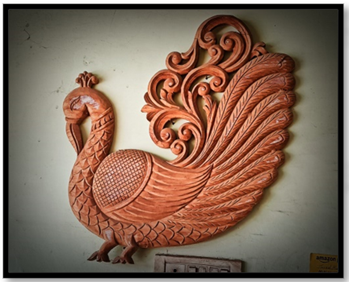
Figure 2 Image Showing Innovative Modern Design (Clicked by Self)
Figure 3

Figure 3 Image Showing Traditional Pure Wood Design (Clicked by Self)
Figure 4

Figure 4
Image Showing Modern Metal Inlay Design (Clicked by Self)
Figure 5
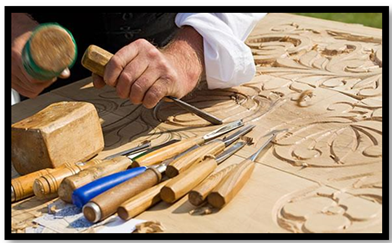
Figure 5 Image Showing Traditional Manual Tools (Clicked by Self)
Figure 6
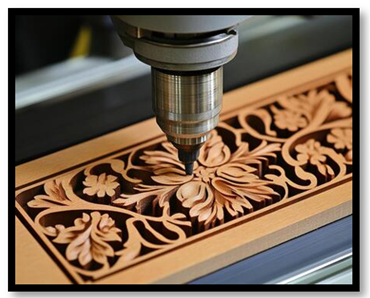
Figure 6
Image
Showing Modern Machine Made Design
https://www.vecteezy.com/free-photos/wood-cnc-machine
|
Comparison Table: Traditional vs. Innovative |
||
|
Feature |
Traditional Woodcraft |
Innovative Woodcraft |
|
·
Design Style |
Intricate, ornate,
Traditional floral /animal motifs |
Minimalist, abstract,
modern, sleek |
|
·
Technique |
Hand-craved,
traditional tools |
Machine-aided, modern
techniques, precision tools |
|
·
Raw Material |
Mostly Sheesham |
Sheesham, Mango, combined with resin/metal |
|
·
Market Target |
Conventional,
heritage-loving market |
Urban, international,
contemporary market |
|
·
Product Focus |
Heavy furniture,
traditional decor |
Lifestyle items,
compact home decor |
While traditional
techniques remain, the innovation is essential for the industry’s evolution
toward higher market visibility and competitiveness.
6. Findings
In this article, finds
that how wooden handicraft is important and now it’s going from tradition to
innovative. Key findings are: evolution of styles, technological shifts, socio-
economic challenges, need for modernization and future outlook. For long term
sustainability, Saharanpur woodcraft industry must balance traditional, skills
with, modern, innovation, while also addressing the economic and social needs
of its artisans.
7. Discussion
This article covers discussion on several productive themes, ranging from the blend of traditional techniques with modern aesthetics to the socio-economic impact on the artisan community. In core, Saharanpur’s woodcraft is at a crossroads, utilizing its deep historical roots and experienced labor to redefine its role in contemporary art.
8. Conclusion
In conclusion, we conclude that wood has become an integral part of human life in the present world; without it, our decorative creations seem lacking. The longevity of Saharanpur’s wooden handicrafts depends on balancing its rich ancestral heritage with strategic innovation. Future growth is projected through digital market linkages, enhanced government support under the “One District One Product” initiative and a shift toward high value luxury positioning to combat rising costs and declining mass-market demand.
CONFLICT OF INTERESTS
None.
ACKNOWLEDGMENTS
None.
REFERENCES
Ansari, M. A. (2021). Role of wood in contemporary Indian art with special reference to Nagina and
Saharanpur. International Journal of Literacy and
Education.
Chattopadhyaya, K. (1963). Indian handicrafts. Indian Council for
Cultural Relations; Allied
Publishers Private Ltd.
Chattopadhyaya, K. (1969). Decorative designs and craftsmanship
of India. Russi Jal Taraporevala for D. B. Taraporevala Sons and Co. Pvt. Ltd.
Dahiya, N. (1986). Arts and crafts in northern India: From the earliest times to c. 200 B.C. B.R. Publishing Corporation.
Dsource. (n.d.). Wood carving: Saharanpur (gallery).
Dsource. (n.d.). Wood carving: Saharanpur.
Handa, O. C., and Jain, M. (2000). Wood handicraft: A study of its
origin and development in
Saharanpur. Indus Publishing Company.
Nath, R. (1976). History of decorative
art in Mughal architecture. Motilal Banarsidass.
Ranjan, A. (2007). Crafts of India: Handmade
in India. Council of Handicraft Development
Corporations.
Rao, S. R. (2006). Arts and crafts of Indus civilization (H. Nandagopal, Intro.). Aryan Books International.
Times of India. (n.d.). Tale of a wooden city.
Verma, A., and Gupta, I. (2016). Trends evolution in wooden folding screen of Saharanpur. Chitrolekha.
|
|
 This work is licensed under a: Creative Commons Attribution 4.0 International License
© ShodhKosh 2026. All Rights Reserved.