ShodhKosh: Journal of Visual and Performing ArtsISSN (Online): 2582-7472
|
|
Generative Artificial Intelligence as a Strategic Tool for Sales and Marketing in the Modern Workplace: A Systematic Literature Review
Pritam Kumar 1
 ,
Amarjeet Singh Mastana 2
,
Amarjeet Singh Mastana 2 , Punnaluck
Satanasavapak 3, Sandeep
Khanijou 4
, Punnaluck
Satanasavapak 3, Sandeep
Khanijou 4
1 Lecturer,
Department of Digital Business Management, MSME Business School, Assumption
university, Bangkok, Thailand
2 Lecturer,
Faculty of Business Administration, St Teresa International University,
Bangkok, Thailand
3 Lecturer, Department of
Marketing, MSME Business School, Assumption university, Bangkok, Thailand
4 Lecturer, Department of
Business Economics, MSME Business School, Assumption university, Bangkok,
Thailand
|
|
|
ABSTRACT |
|
|
Artificial
intelligence in sales and marketing is rapidly developing, allowing companies
to improve personalization and responsiveness in their digital channels.
GenAI has become a strategic tool in the modern workplace. Through the
research presented in this paper, 38 articles on the topic of GenAI in the
modern workplace were analyzed on Google Scholar, ScienceDirect,
SpringerLink, and Scopus to determine how GenAI is transforming sales and
marketing. Using the PRISMA model, three main research questions were
answered to determine the role of GenAI in modern sales and marketing: how
GenAI is transforming sales and marketing procedures, the most common
applications of GenAI in sales and marketing, and how the use of GenAI
impacts sales and marketing performance. The results of this literature
review show that GenAI is transforming sales and marketing through the use of
large language models, conversational AI, predictive analytics, and image and
video generation. The most common applications of GenAI within sales and
marketing include personalized content creation, campaign optimization,
dynamic pricing, and sales and marketing automation. Finally, the use of
GenAI in sales and marketing allows sales and marketing departments to
improve their effectiveness, increase conversions, and reduce the amount of
effort required to complete sales and marketing tasks. Based on these
findings, a framework is proposed that models the various capabilities of
GenAI, its common applications in sales and marketing, and the impact of its
implementation on sales and marketing performance. Overall, this literature
review helps to demonstrate GenAI’s growing strategic importance within sales
and marketing departments and justifies the need for a balance between the
implementation of these technologies and the oversight of those departments.
Though uneven in their geographical and methodological representations of the
impact of GenAI on sales and marketing departments, these findings indicate
that GenAI is developing into a significant mechanism of transformation in
the sales and marketing industry worldwide. |
|||
|
Received 26 February 2026 Accepted 23 March
2026 Published 30 April 2026 Corresponding Author Pritam
Kumar, pkumar@msme.au.edu DOI 10.29121/shodhkosh.v7.i5s.2026.7741 Funding: This research
received no specific grant from any funding agency in the public, commercial,
or not-for-profit sectors. Copyright: © 2026 The
Author(s). This work is licensed under a Creative Commons
Attribution 4.0 International License. With the
license CC-BY, authors retain the copyright, allowing anyone to download,
reuse, re-print, modify, distribute, and/or copy their contribution. The work
must be properly attributed to its author.
|
|||
|
Keywords: Generative AI, Sales Management, Marketing Strategy,
Customer Engagement, Digital Transformation |
|||



1. INTRODUCTION
Artificial intelligence (AI) has undergone many developments in the business world and beyond. While there are a variety of forms of artificial intelligence that have been developed for a variety of tasks, generative artificial intelligence (GenAI) is a relatively new form of AI that is able to create new outputs for a variety of different tasks. Unlike conventional forms of AI that may aim to perform classification, detection, or other types of analyses of information provided to those AI systems, GenAI systems are capable of creating new content such as text, images, audio files, and videos Febrian et al. (2022), Gupta et al. (2024), Ding et al. (2024). Such capabilities of AI systems are especially beneficial within areas like sales and marketing for organizations Saleh et al. (2023). In sales and marketing in particular, companies are required to interact with customers in high-speed environments that require high levels of interactivity, personalization, and data analysis to effectively manage sales and marketing campaigns for those organizations. As a result of the capabilities of GenAI systems to create personalized content and to interact with customers in automated yet personalized ways, sales and marketing organizations have begun to implement GenAI to improve their effectiveness with customers. Moreover, the outcomes of these implementations within sales and marketing departments have included improved relationships between those companies with their customers, as well as improved sales and marketing outcomes and efficiencies within those organizations Bormane and Blaus (2024), Hasanuzzaman et al. (2025), Kshetri et al. (2023).
While there are a variety of studies that have investigated the role of GenAI in sales and marketing departments, however, the existing literature on the topic is fragmented. For instance, most existing studies have investigated individual applications of GenAI systems in sales and marketing departments, but have not provided overviews of how the technology has led to the transformation of the sales and marketing processes within those departments Prasanna and Kushwaha (2025), Hermann and Puntoni (2024). Moreover, while there are discussions within the literature regarding various applications of GenAI to sales and marketing departments (such as personalized content creation, sales campaign automation, dynamic pricing, and customer engagement automation), there is limited literature discussing which of those applications has been utilized by sales and marketing departments most prominently. Finally, while the outcomes of implementing GenAI in sales and marketing departments are discussed in individual studies, there is limited literature that has provided a review of the outcomes of implementing such AI systems and technologies in sales and marketing departments as a whole. Thus, there is a need for a review of the literature on the topic of GenAI within sales and marketing departments altogether. Such a literature review can help to investigate, for instance, the role that GenAI plays as a strategic tool in transforming the sales and marketing functions that occur within the modern workplace, in what ways GenAI has been utilized by those departments, and the outcomes of implementing those types of systems into the sales and marketing departments. Through performing such a review of the existing literature on the topic, knowledge can be gained about the topic that contributes to the existing literature on the topic of GenAI in sales and marketing departments. Overall, then, the significance of performing such a literature review is that it can lead to the development of a more complete understanding of the topic of GenAI in sales and marketing departments, as well as to provide knowledge to the managers and other decision-makers within sales and marketing departments about the impact that the use of GenAI systems can have upon those departments and organizations. Thus, this literature review on the topic will enable the development of a conceptual framework for the topic, the review of the literature on the topic, and the discussion of the findings of that literature review.
2. THEORETICAL BACKGROUND AND PROPOSED CONCEPTUAL FRAMEWORK
In understanding the role of GenAI in sales and marketing, it is important to discuss the topic beyond a discussion of the technology-specific role of GenAI in automating certain tasks. The significance of the use of GenAI has a much broader role in sales and marketing than that of automation alone. The use of GenAI impacts how decisions are made by sales and marketing teams, the customers are managed by those teams, and the resources that are utilized by those companies to compete with others within their markets. In reviewing the literature on each of these topics, it is possible to develop a more thorough understanding of the role of GenAI in sales and marketing. One theoretical understanding of the role of GenAI is through the use of Activity Theory. Activity Theory proposes that the introduction of a new technology to a current process within a company indicates the way in which the process itself should be altered to incorporate the new technology. Thus, the introduction of GENAI indicates a change in the way in which sales and marketing teams perform their current processes Keegan et al. (2022). Thus, Activity Theory helps to indicate the way in which GENAI is changing sales and marketing processes in general.
Beyond understanding how the technology itself alters those processes within sales and marketing, it is also important to understand how individuals within the sales and marketing teams respond to the technology. Theories of Behavioral Reasoning and Cognitive Behavioral Theory indicate the reasons that individuals within sales and marketing departments use (or do not use) the GENAI technology. For example, the reasons that sales and marketing teams use GENAI may relate to efficiency, creativity, customer responsiveness, or other factors that impact those specific teams; however, the reasons that they do not use the technology may relate to authenticity, privacy, data ownership, or employment implications within those companies Joshi et al. (2024), Guha et al. (2023). The implications of these theories is that if the sales and marketing teams of a company believe in the usefulness and trustworthiness of GENAI, they will use the technology; however, if they do not believe in its usefulness or trustworthiness of the technology, they will not use it.
In addition to understanding how and why teams use the technology, it is also important to understand the general capabilities of GENAI itself. The Resource-Based View and Resources and Capabilities Theory suggest that access to GENAI itself does not indicate a competitive advantage for companies in sales and marketing unless those capabilities can also be combined with other advantages of that company Lanfranchi et al. (2025), Kumar et al. (2024). Thus, GENAI is not a competitive advantage in and of itself, but only in relation to the other resources that the company can provide to customers Banh and Strobel (2023). The Technology Acceptance Model (TAM) provides insight into the reasons that teams adopt GENAI technology. TAM proposes that individuals will use a technology if they believe in its usefulness for those teams and in its ease-of-use Kshetri et al. (2023), Grewal et al. (2024), Uddin et al. (2025). Thus, the reason that some sales and marketing teams adopt GENAI while others do not is due to the belief of those teams as to the usefulness and ease-of-use of the technology. Technology Affordance Theory proposes the ways in which the GENAI technology may be used once it is in active use in sales and marketing departments. For example, sales and marketing teams may use GENAI to create personalized content for potential customers, engage in conversations with those customers, respond to those customers rapidly, or experiment with various marketing campaigns Ramaul et al. (2024), Arora et al. (2024), Chiarello et al. (2024). Thus, Technology Affordance Theory provides an understanding of the way that companies should benefit from the use of GENAI to sales and marketing departments.
Table 1
|
Table 1 Theories employed in review of literature |
|
|
Theories employed |
No of Articles |
|
Activity Theory |
1 |
|
Behavioral Reasoning
Theory |
1 |
|
Cognitive Behavioral
Theory |
1 |
|
The Resource-Based
View (RBV) Theory |
1 |
|
Resources and
Capabilities Theory |
1 |
|
The Technology
Acceptance Model (TAM) |
18 |
|
Technology Affordance
Theory |
5 |
|
The Theory of
Planned Behavior (TPB) |
6 |
|
NA |
3 |
Figure 1
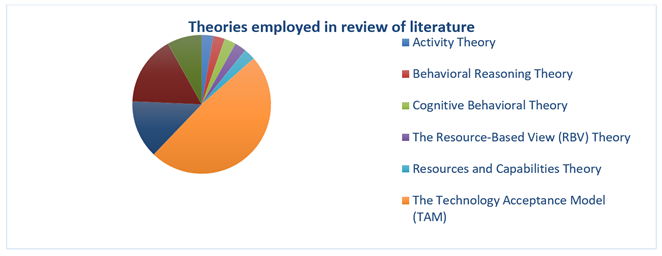
Figure 1
Theories Employed in
Review of Literature
The Theory of Planned Behavior (TPB) intends to explain the use of GENAI in relation to the social environment of the sales and marketing departments. For example, the attitude of sales and marketing departments towards GENAI, the subjective norms within those departments (such as the use of the technology by managers), and their belief in their ability to use GENAI will indicate whether they adopt the technology for use within their departments Khan et al. (2025), Bormane and Blaus (2024), Hasanuzzaman et al. (2025). Thus, the TPB helps to indicate the social factors that contribute to the adoption or the failure to adopt the technology by sales and marketing departments. Overall, then, each of these theories contribute to the understanding that the role of GENAI in sales and marketing departments is dependent upon the interaction between the technology, the humans that use it, and the organization itself. Faisal and Fortino (2025)
Figure 2 presents the conceptual framework of this research study. The framework for GENAI in sales and marketing departments generally includes discussions of the capabilities of the technology (such as the use of large language models, conversational AI, predictive analytics, and image or video generating technology), its applications (such as using the technology to create personalized content for customers, optimizing sales campaigns, utilizing dynamic pricing models, and automating sales and marketing team engagements with customers), and the benefits that are thought to result from its application (such as an increase in sales, an increase in the number of customers that are converted to paying customers, and an increase in the efficiency of the sales or marketing departments). Each of these outcomes, however, are not direct outcomes of the implementation of the technology; they are contingent upon factors like data availability, sales and marketing team capabilities in utilizing the software, their strategic use of the technology, and the oversight of those teams in relation to the GENAI software. These factors will determine whether the software is used in a purposeful way to provide those sales and marketing departments their intended benefits.
Figure 2
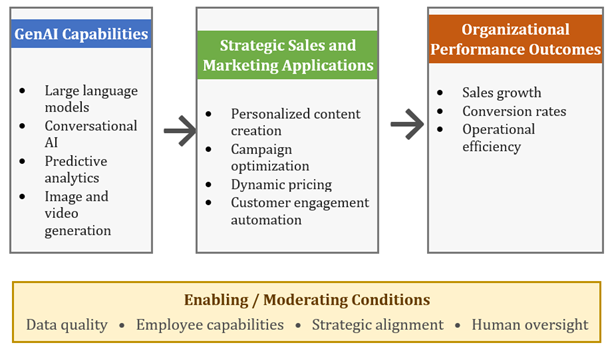
Figure 2 Proposed Conceptual Framework of Generative AI as a
Strategic Tool for Sales and Marketing
3. SYSTEMATIC REVIEW METHODOLOGY
3.1. LITERATURE SEARCH STRATEGY
Following the principles of systematic literature reviews, the study used the PRISMA framework to find, screen, and select the appropriate studies to be included in the investigation into the role of GenAI in sales and marketing within the modern workplace López-Solís et al. (2025). Such framework includes steps for providing an overview of the study’s aims, performing a search for literature according to established criteria, selecting studies according to those criteria, and then actually reviewing the selected studies in relation to their relevance to the aims of the systematic literature review Antonesi et al. (2025). Thus, the studies that would be utilized in this review were first selected according to their relevance to the goals of this research. Following the selection of those studies, data was collected regarding each study and the research articles that it published, and the research was reviewed to determine how each study related to the aims of this systematic literature review. Through performing these steps, the researchers were able to effectively review and summarize the existing research on the topic of GenAI in sales and marketing within the modern workplace.
3.2. RESEARCH QUESTIONS
Table 1 highlights the research questions that were developed in relation to the abilities of Generative Artificial Intelligence, including Large Language Models (LLMs), content generation, predictive analytics, conversational Artificial Intelligence, and image/video generation. The questions also focused on strategic sales & marketing applications, including personalized content, campaign optimization, dynamic pricing, and customer engagement automation. Moreover, there was a significant emphasis on strategic instruments for sales and marketing in the contemporary workplace.
Table 2
|
Table 2 Research Questions |
||
|
No |
Research Question |
Justification |
|
RQ1 |
How
does Generative Artificial Intelligence serve a strategic role in reshaping
sales and marketing procedures within the modern workplace? |
Evaluate
how Generative Artificial Intelligence can serve a strategic role in sales
and marketing procedures within the modern workplace. |
|
RQ2 |
What
are the primary strategic sales & marketing applications such
personalized content, campaign optimization, dynamic pricing, and customer
engagement automation that sales and marketing organizations are using? |
Explore
how Generative Artificial Intelligence addresses different strategic sales
& marketing applications to improve personalized content, campaign
optimization, dynamic pricing, and customer engagement. |
|
|
|
|
|
RQ3 |
How
does Generative Artificial Intelligence strengthen organizational performance
outcomes like sales growth, conversion rates and operational
efficiency? |
Examine
how organizational performance, particularly sales growth, conversion rates
and operational efficiency, influence the interaction of Generative
Artificial Intelligence and strengthen organizational performance outcomes. |
3.3. INCLUSION AND EXCLUSION CRITERIA
A search for relevant and credible research articles was performed through four different databases: Google Scholar, ScienceDirect, SpringerLink and Scopus. Each of these databases employed different keywords to perform searches for relevant articles: the keywords that were used included the terms: “Generative Artificial Intelligence,” “Sales Management,” “Marketing Strategy,” “Customer Engagement,” and “Digital Transformation.” These keywords were combined in different ways with Boolean operators in order to search for articles with these concepts: “Generative Artificial Intelligence” AND “Sales Management,” “Generative Artificial Intelligence” AND “Marketing Strategy,” “Generative Artificial Intelligence” AND “Customer Engagement,” and “Generative Artificial Intelligence” AND “Digital Transformation.” Additional keyword searches were performed in order to find suitable articles that meet the criteria listed in Table 2.
Table 3
|
Table 3 Inclusion and Exclusion Criteria |
|||
|
No |
Classification |
Inclusion
Criteria |
Exclusion
Criteria |
|
C1 |
Type
of study |
Research
studies investigating the relationship between Generative Artificial
Intelligence and strategic tool for sales and marketing in the modern
workplace. |
Theoretical
publications lacking empirical evidence or research regarding the correlation
between Generative Artificial Intelligence and strategic tool for sales and
marketing in the modern workplace. |
|
C2 |
Language |
Research
studies published in English language. |
Research
studies that are not published in English language. |
|
C3 |
Quality
of the journal |
Peer-reviewed
journal articles that are published in databases such as Google Scholar,
ScienceDirect, SpringerLink, and Scopus and full-text accessible. |
Conference
abstracts without full papers, editorials, blogs, or articles published in
journals not indexed in Google Scholar, ScienceDirect, SpringerLink, and
Scopus. |
|
C4 |
Duration |
Publications
published from 2022 to 2024 ensure relevance and timelessness. |
Articles
published prior to 2022 or without a validated publication. |
3.4. STUDY SELECTION AND DATA EXTRACTION
The criteria specified in Table 2 were applied in the conducting of the review to ensure the quality of the articles selected for inclusion in the review. Such criteria will guide the selection of articles for inclusion in the review, as well as the extraction of the relevant data from those articles.
Figure 3
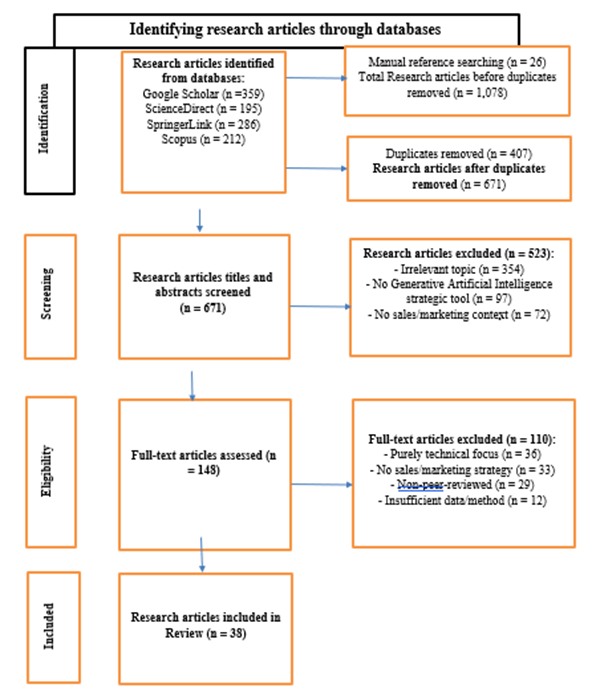
Figure 3
PRISMA flow
Chart
The process of identifying relevant literature for review has utilized four different databases: Google Scholar, ScienceDirect, SpringerLink and Scopus. Each of these databases contains a variety of scholarly publications, giving them the potential to utilize widely-cited and credible research publications within the field. The use of these databases will ensure the review of the literature on Generative AI in the context of sales and marketing is comprehensive and reflective of the current research that has been performed on the topic globally. The strategy for identifying relevant literature within these databases used four different keyword combinations within the databases. Each of these combinations was developed to specifically relate to the concepts to be reviewed. The four different search strings included: “Generative Artificial Intelligence” AND “Sales Management,” “Generative Artificial Intelligence” AND “Marketing Strategy,” “Generative Artificial Intelligence” AND “Customer Engagement,” and “Generative Artificial Intelligence” AND “Digital Transformation.” Each of these search strings was utilized to identify the articles related to the review objectives, after which the relevance and quality of those articles was assessed.
The search terms were applied to the titles, abstracts, and keywords of scientific articles to determine which scientific articles were related to the scope of the research study. The main criterion for inclusion of scientific articles was that they must investigate the use of Generative AI in sales and marketing in the workplace. Additional inclusion criteria was that the articles must be published in English. The results of applying these parameters to the scientific publications released between 2022 and 2024 revealed 1,078 scientific articles. Only scientific articles that were directly related to the concept of using Generative AI as a strategic tool within sales and marketing were included for review. Of the 1,078 scientific articles that were collected, the title, abstract, and keywords of 671 of those articles were reviewed to determine whether their content related to the objectives of this research study. These articles were eliminated if their contents did not relate to the objectives of the study. As a result, 523 scientific articles that were published in unrelated disciplines or outside of the scope of this research study were eliminated. The remaining scientific articles had their full texts reviewed to ensure that they related to the objectives of this research study. Articles with a focus on more technical aspects of Generative AI, articles that were not relevant to sales and marketing concepts, non-peer-reviewed articles, or articles without detailed methods were eliminated from consideration. As a result, 38 scientific articles were determined to be suitable for inclusion in the analysis.
4. DESCRIPTIVE OVERVIEW OF THE INCLUDED STUDIES
4.1. ARTICLES PUBLICATION TRENDS
As shown in Table 4 and Figure 4 the Annual Publication Trends in the Reviewed Literature indicates a significant rise in scholarly research about Generative Artificial Intelligence in sales and marketing from 2022 to 2025. In 2022, only 5% of initial publications were published, but by 2024, research publishing had increased to 47%. This shows that both academics and businesses are becoming more interested. The moderate contribution in 2025 (32%) indicates a transition in the field from qualitative inquiry to quantitative and strategic research. This trend is rising, which suggests that Generative Artificial Intelligence has become a key area of study in sales and marketing research.
Table 4
|
Table 4 Articles Publication Trends |
|||
|
Year |
Articles
Publication Trends |
Percentage |
Cumulative
Percentage |
|
2022 |
2 |
5 |
5 |
|
2023 |
6 |
16 |
21 |
|
2024 |
18 |
47 |
68 |
|
2025 |
12 |
32 |
100 |
|
Total |
38 |
100 |
|
Figure 4
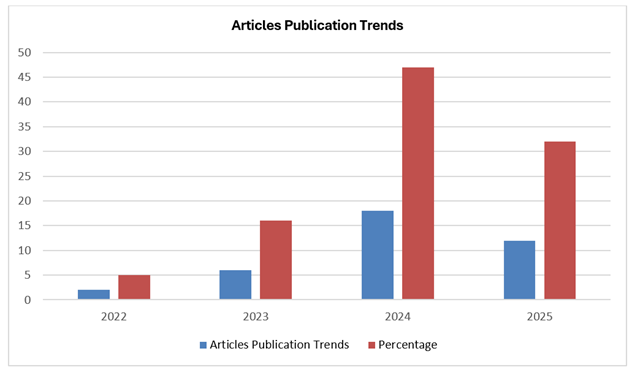
Figure 4 Articles Published by Year
4.2. THE GEOGRAPHIC DISTRIBUTION
The geographic distribution of the studies that have investigated the topic of Generative Artificial Intelligence in the context of sales and marketing is not evenly distributed. As presented in Table 5 and Figure 5 the majority of the studies originated from the world regions of Northern America (23%). Within this region, the studies originated from both the United States and Canada. Additionally, South Asia published 15% of the studies that have been conducted on this topic. All of the studies that originated from this region came from India. Furthermore, there were studies that originated from Europe, which is divided into several different regions of the world. Studies originated from Northern Europe (11%), which included countries like Finland, Latvia, Lithuania, and Sweden. Additionally, there were studies that originated from Western Europe (11%), which included France and the United Kingdom. Furthermore, there were studies that originated from Central Europe (7%), represented by Germany. Finally, there were studies that originated from Southern Europe (7%), represented by Italy.
Other regions of the world that published studies on the topic of Generative Artificial Intelligence in sales and marketing include Southeast Asia (represented by Malaysia and Indonesia), East Asia (represented by South Korea), Western Asia (represented by Qatar), the Southwestern Pacific Ocean region (represented by New Zealand), and the Northwestern Region of South America (represented by Ecuador). Finally, the Western Region of Asia was represented by Dubai. Thus, while many of the studies are published from different regions of the world, they are still mostly concentrated within a limited number of countries. The geographic distribution of these studies indicates that while there is some interest in the topic of Generative AI in sales and marketing from regions outside of those discussed, such as Southeast Asia, East Asia, Western Asia, Oceania, and even South America, the majority of the studies are still published from a limited number of regions of the world. Therefore, while the knowledge of the topic is geographically distributed, it is not geographically balanced. The fact that most of the studies are published from specific regions of the world suggests that knowledge of the topic of Generative AI in sales and marketing is still emerging in regions outside of those of Northern America, Europe, and South Asia. However, future research in this area would benefit from an increased interest in and representation of the world regions outside of those currently represented in the existing literature.
Table 5
|
Table 5 Geographical distribution of the reviewed literature |
|||
|
Articles by Region |
No of Articles |
Percentage |
Cumulative Percentage |
|
Southwestern Pacific Ocean |
1 |
3 |
3 |
|
Southeast Asia |
2 |
5 |
8 |
|
Central Europe |
3 |
7 |
15 |
|
East Asia |
1 |
3 |
18 |
|
Northeastern United States |
1 |
3 |
21 |
|
Northern America |
9 |
23 |
44 |
|
Northern Europe |
4 |
11 |
55 |
|
Northwestern South America |
1 |
3 |
58 |
|
South Asia |
6 |
15 |
73 |
|
Southeast Asia |
1 |
3 |
76 |
|
Southern Europe |
3 |
7 |
83 |
|
Western Asia |
1 |
3 |
86 |
|
Western Europe |
4 |
11 |
97 |
|
Western Region of Asia |
1 |
3 |
100 |
|
Total |
38 |
100 |
|
Figure 5

Figure 5 Geographical Distribution of the Reviewed Literature
4.3. RESEARCH METHODS
As shown in Table 6 and Figure 6 quantitative methods are employed in 71% of all studies. This strong effect shows that most people who study this area use surveys, statistical models, and in-depth reviews of the literature to learn how Generative Artificial Intelligence affects marketing and sales. Scientists are still trying to figure out how to test ideas, see what works, and figure out how AI can help businesses get more sales, higher conversion rates, and better operations. Qualitative studies, which make up 21% of the sample, show us things in a different way. A lot of these studies look at what Generative AI can do, like guess, write, make videos, and talk to people. There aren't a lot of qualitative studies, but the ones that do exist show us how and why Generative AI tools change marketing strategies in ways that numbers can't. More than one method is used in about 8% of all published studies. This means that people don't use integrative research methods very often. We can learn more about how AI affects sales and marketing by looking at both words and numbers. A lot of people don't use these methods, so we know they don't work very well. You might want to learn more about this later. People who work in manufacturing could come up with better ideas and make the results more useful if they did more research and tried new things.
Table 6
|
Table 6 Research methodologies used in the reviewed literature |
|||
|
Research
Methodologies |
No
of Articles |
Percentage |
Cumulative
Percentage |
|
Quantitative |
27 |
71 |
71 |
|
Qualitative |
8 |
21 |
92 |
|
Mixed |
3 |
8 |
100 |
|
Total |
38 |
100 |
|
Figure 6
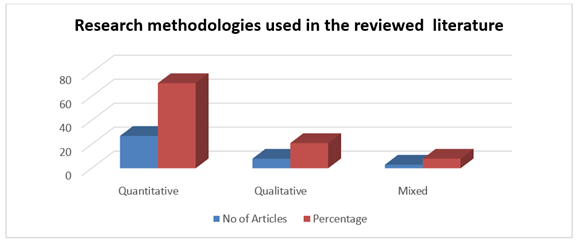
Figure 6 Research Methodologies Used in the Reviewed Literature
4.4. DATA ANALYSIS TECHNIQUES
The examination of the data analysis strategies employed in the selected research indicates an extensive tendency for qualitative analysis techniques, alongside a restricted application of specialized statistical or review-based synthesis approaches.
Table 7
|
Table 7 Data Analysis Method Employed in the Reviewed Empirical Research |
|||
|
Data
Analysis Method |
No
of Articles |
Percentage |
Cumulative
Percentage |
|
Bibliometric |
2 |
5 |
5 |
|
Open
Coding, Axial Coding |
1 |
3 |
8 |
|
PRISMA |
9 |
24 |
32 |
|
SPSS |
4 |
11 |
43 |
|
Thematic |
22 |
57 |
100 |
|
Total |
38 |
100 |
|
Figure 7
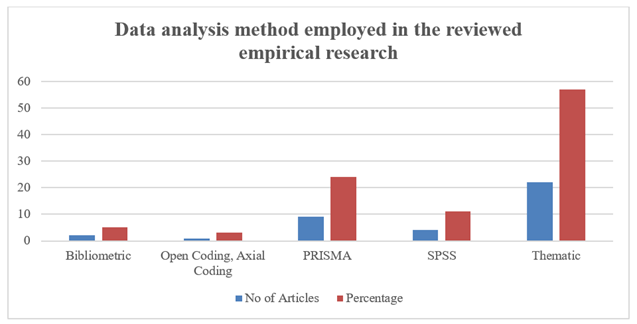
Figure 7 Data Analysis Method Employed in the Reviewed
Empirical Research
As presented in Table 7 and Figure 7, thematic analysis emerged as the most frequently employed data analysis technique, accounting for 57% of the reviewed studies. A lot of the research uses qualitative analysis to find ideas, themes, and patterns in books and other things. This shows that. The rise in the use of thematic methodologies shows that researchers are still figuring out how to best use Generative AI in sales and marketing while also coming up with new ideas. It shows that more and more people are interested in structured literature review processes that 24% of the papers use PRISMA-based systematic review methods. PRISMA shows that the steps for finding, screening, and combining scholarly contributions are the same. Scientists are working on making review methods that are simple to understand and can be used more than once. This shows that the field is getting better. 11% of the study employs SPSS for quantitative statistical analysis. There was still statistical modeling, but it didn't seem as important as putting things together in a qualitative way. This shows that a lot of modern literature is more about ideas and reviews than about thorough surveys, even though empirical validation is very important. Bibliometric analysis (5%) and open/axial coding approaches (3%) are utilized within a constrained framework. The restricted application of bibliometric approaches suggests that extensive citation network visualization and performance evaluation in the field remain inadequately developed. The lack of theory-based coding investigations indicates that substantial empirical theory creation is still a constantly changing area.
5. DISCUSSION
5.1. RESEARCH QUESTION 1: HOW DOES GENERATIVE ARTIFICIAL INTELLIGENCE SERVE A STRATEGIC ROLE IN RESHAPING SALES AND MARKETING PROCEDURES WITHIN THE MODERN WORKPLACE?
The findings of this literature review indicate that generative artificial intelligence is playing a strategic role in the reshaping of sales and marketing processes. Thus, while automation is one aspect of the capabilities of generative artificial intelligence, such intelligent systems actually act as a means of enhancing the sales and marketing processes within the modern workplace. The review of the various studies on generative artificial intelligence within sales and marketing indicates that its capabilities of employing large language models, conversational AI, predictive analytics, and the ability to generate images and videos are enabling sales and marketing procedures to be redefined within organizations Gupta et al. (2024), Hayawi and Shahriar (2025), Kshetri et al. (2023).
These interpretations of the role of generative artificial intelligence within sales and marketing are also supported by the literature review itself. For instance, the trend in the number of publications on such topics indicates an increase in the number of studies on generative artificial intelligence between 2022 and 2025, with the largest share of publications existing in the year 2024. Additionally, the distribution of these publications across different regions of the world indicates that sales and marketing processes are being reshaped by generative AI across the globe, though most studies have been published from countries that possess high levels of technological development.
Generative AI has been found to reshape sales and marketing processes in part due to the impact that the technology can have upon content processes within those sales and marketing departments. For instance, generative AI allows individual marketing departments to automatically create personalized content for various customers at large scales Rane (2023), Lanfranchi et al. (2025), Nadeem (2024), Wahid et al. (2023). Additionally, the ability of conversational AI to allow sales agents to interact with customers in real time, in a continuous manner, and with the focus upon those customers’ needs suggests a reshaping of sales processes and sales interactions with customers Chiarello et al. (2024), Israfilzade (2025), Li and Xiao (2025).
Finally, these findings are also supported by the methods of the studies that were published on sales and marketing processes with generative artificial intelligence Cillo and Rubera (2024). For instance, the majority of studies are based with quantitative analysis methods, suggesting that sales and marketing processes are being reshaped based upon measurable outcomes of those sales and marketing departments. Additionally, the existence of some studies that utilized qualitative analysis methods and mixed methods models indicates that the research is also performed into the reasons for such changes in sales and marketing processes. Thus, overall, these findings suggest that generative AI is fulfilling a strategic role within sales and marketing departments in that their procedures are being redefined and transformed into systems that are more intelligent, personalized, scalable, and focused upon performance outcomes.
5.2. RESEARCH QUESTION 2: WHAT ARE THE PRIMARY STRATEGIC SALES AND MARKETING APPLICATIONS SUCH AS PERSONALIZED CONTENT, CAMPAIGN OPTIMIZATION, DYNAMIC PRICING, AND CUSTOMER ENGAGEMENT AUTOMATION THAT SALES AND MARKETING ORGANIZATIONS ARE USING?
The findings from the literature review indicate that the primary applications of generative AI within sales and marketing strategies relate to the development of personalized content, the optimization of marketing campaigns, the implementation of dynamic pricing models, and the automation of customer engagement models Israfilzade (2025). Each of these applications relate to the shift in marketing strategies away from performing traditional forms of marketing towards strategies that are informed by the data from those current marketing efforts Kshetri et al. (2023), Lanfranchi et al. (2025), Wahid et al. (2023).
The analyses of the included studies in this review indicates that there have been a growing number of publications regarding these applications in the past few years, and that the majority of those publications have examined the applications of generative AI as tools for the managers within marketing departments and as strategic tools for marketing departments within the organization. Furthermore, the use of thematic analyses and models like PRISMA in many of those studies indicates that the field is still developing, still forming its concepts and analyses regarding these strategies, but has begun to recognize their development and applications.
One of the major applications of generative AI within sales and marketing is in the generation of personalized content for various audiences. By utilizing techniques like natural language generation, firms are able to automatically generate content for their organizations that is tailored according to the interests of each group of customers, their demographic information, and other factors that would make the development of that type of content more successful Hartmann et al. (2024), Li and Xiao (2025), Nadeem (2024), Wen and Laporte (2024). Additionally, many of the studies also indicate that such generative AI tools can also be used to develop and optimize the marketing campaigns that are used to distribute that content Grewal et al. (2024), Holmström & Carroll, 2024, Islam et al. (2024).
Beyond the ability of generative AI to create marketing and sales campaigns, these techniques can also be utilized by sales and marketing departments to develop dynamic pricing models and strategies for adjusting to predictions regarding market adjustments Bormane and Blaus (2024), Hasanuzzaman et al. (2025), Khan et al. (2025). Finally, the automation of the sales department’s efforts to engage with customers and prospects is another major area of application for these techniques, allowing for many sales departments to automatically create conversational AI and large language model interfaces to sales representatives to provide customers with more personalized interactions with those sales departments and companies Chiarello et al. (2024), Israfilzade and Sadili (2024), Ooi et al. (2023). Overall, then, the primary applications of generative AI within the sales and marketing department are a means of enhancing the personalization of sales and marketing efforts, the automation of many of those sales departments’ efforts, and their responsiveness to the market as a whole.
5.3. RESEARCH QUESTION 3: HOW DOES GENERATIVE ARTIFICIAL INTELLIGENCE STRENGTHEN ORGANIZATIONAL PERFORMANCE OUTCOMES LIKE SALES GROWTH, CONVERSION RATES, AND OPERATIONAL EFFICIENCY?
The findings of the literature review discussed in this paper indicate that generative artificial intelligence has the ability to strengthen the performance of organizations through the improvement of sales growth, conversion rates, and operational efficiency Bormane and Blaus (2024), Guha et al. (2023), Rodriguez et al. (2025). More specifically, the studies suggest that the performance value that is provided by generative artificial intelligence is not from the automation of certain tasks for those organizations, but instead in the fact that the software increases the number of sales and marketing activities that can be performed by those firms, while also reducing the amount of time and effort that is required to complete those activities Amini and Amini (2024). One of the main findings of the literature review is that sales growth is increased through the implementation of generative artificial intelligence. The studies show that organizations that utilize this artificial intelligence technologies are able to create more targeted content for their organizations, increase the engagement of their leads, increase the number of sales that are made, and generally improve their sales efforts Grewal et al. (2024), Hasanuzzaman et al. (2025), Kshetri et al. (2023). Additionally, it is also found that generative artificial intelligence can increase the conversion rates of organizations through its implementation of technologies like conversational AI, large language models, and other predictive models Hagos et al. (2024). These technologies allow organizations to more efficiently respond to customers and create content that is targeting those individual customers Chiarello et al. (2024), Israfilzade (2025), Li and Xiao (2025).
Beyond these benefits to sales and marketing departments, it is also found that operational efficiency within the organizations is increased through the implementation of these technologies. Artificial intelligence is found to automate tasks for companies, reduce the time to produce content for sales and marketing departments, implement pricing models, and reduce the number of tasks that are placed upon the employees within those departments Liu and Kim (2025), Khan et al. (2025), Lanfranchi et al. (2025). Thus, employees are able to focus upon higher-level sales and marketing activities. Finally, the descriptive results of these research studies support the interpretations of their findings. For instance, the fact that there were more publications that described the various aspects of generative artificial intelligence between 2022 and 2025 indicates that more organizations are recognizing the relationship between the technology and the improved performance of that organization. Furthermore, the observation of the dominance of studies based upon quantitative analyses indicates that there are efforts by those organizations to recognize the various ways in which the technology can boost sales and increase efficiency. Thus, these findings indicate that generative artificial intelligence can boost the performance of an organization through the increasing number of sales that are made, the increasing number of customers that are converted to customers, and the increasing operational efficiency of those organizations.
5.4. IMPLICATIONS
Building on the foregoing discussion of the implications of GenAI in sales and marketing, the implications of such developments are presented below. These implications relate to the capabilities, applications, and performance of GenAI in the sales and marketing industry, and extend the discussion that was made above regarding such implications.
5.4.1. Theoretical Implications
The research also contributes to the existing theory by providing insight into how generative artificial intelligence can be understood as a strategic capability of the organization. The findings indicate that the value of generative artificial intelligence for sales and marketing is in the way in which it can transform various aspects of the sales and marketing process within digital environments. From an activity theory perspective, the integration of generative artificial intelligence into sales and marketing processes indicates that the existing processes can be transformed through reducing tensions within the current process and leading to innovations in those processes Keegan et al. (2022). From the viewpoint of behavioral reasoning theory, the findings indicate that the decision of both organizations and consumers to adopt or not to adopt generative artificial intelligence is based upon the reasons and justifications for its use Joshi et al. (2024). Additionally, the findings are also consistent with the idea that the effectiveness of generative artificial intelligence is not based upon the technology itself, but in the way that individuals perceive its usefulness for sales and marketing processes Guha et al. (2023). Finally, the findings also support the technology acceptance model and the resource-based view in that the value of generative artificial intelligence is not based upon its adoption by organizations and individuals in the sales and marketing departments, but in how the technology can be integrated into the existing resources of the organization to form a strategic capability that is difficult for competitors to replicate with their own resources Kshetri et al. (2023), Grewal et al. (2024), Lanfranchi et al. (2025). Overall, then, the findings indicate that generative artificial intelligence should be understood as a strategic capability that adopts, integrates, and adapts to the organization as a whole.
5.4.2. Managerial Implications
The findings of this review have several implications for managers in the area of sales and marketing. One of the implications of the research is that managers should consider the use of Generative Artificial Intelligence to improve their sales and marketing processes. Such uses may range from increasing the rate at which content can be created, improving customer interaction with those companies, improving marketing campaigns, and increasing the responsiveness of those companies to their customers. Thus, the implications of the research are that Generative Artificial Intelligence can be incorporated into the sales and marketing processes of a company to enhance those processes.
Furthermore, the findings indicate that there are a variety of benefits to the use of Generative AI in sales and marketing. Four benefit areas that can be specifically highlighted from the research include the ability of the tools to create personalized content for customers, to optimize sales campaigns, to implement dynamic pricing models, and to automate various sales and marketing processes. Beyond indicating the benefits of implementing Generative AI into sales and marketing departments, the research also indicates that not all implementations of such tools are equally effective. The effectiveness of implementing these tools into sales and marketing processes is dependent upon the training provided to employees using those tools, the availability of data from those sales and marketing departments, and the integration of those AI sales and marketing tools into current sales and marketing processes. Thus, training sales and marketing department employees is one recommendation to increase the benefit of implementing these technologies. Finally, the findings of the research also indicate that sales and marketing departments that utilize Generative AI tools require some level of managerial oversight. Because there may be issues with the accuracy, trust, appropriateness, and alignment of content generated by these AI tools with sales objectives, it is important to implement those tools in a way that still allows for some level of management and supervision of those sales and marketing departments to ensure that issues can be resolved before they have a detrimental impact upon the organization’s sales and marketing performance.
5.4.3. Policy and Future Practice Implications
The review also has implications for policymakers and the management of organizations. As Generative Artificial Intelligence becomes increasingly embedded in sales and marketing activities, policymakers should establish guidelines and regulations to ensure that the innovations that emerge from these applications of Generative AI are conducted in ways that are responsible and minimize potential issues. While the regulations established for these emerging technologies should balance the desire to support innovation and development with necessary rules for responsible use, policymakers should avoid establishing regulations that may inhibit the development of these technologies by the organizations that utilize them. For professional practice, the researchers suggest that to successfully utilize Generative Artificial Intelligence within sales and marketing activities, organizations should establish guidelines for the use of the technology. These guidelines can help to ensure that the technology is utilized in ways that realize the benefits of Generative AI for the organization’s sales and marketing efforts, while also minimizing any potential issues that may emerge from their use of the technology.
5.5. LIMITATIONS AND FUTURE STUDIES
This review has several limitations. The main limitation of this review is the relatively small number of publications that have been included in this review. Although the review attempted to include as many relevant publications as possible, it is likely that not all the publications on the topic of Generative Artificial Intelligence in sales and marketing have been included in this review. Another limitation is that all the databases that were searched were selected databases, and only publications in the English language were considered for inclusion in this review. Additionally, most of the publications in the field of Generative Artificial Intelligence in sales and marketing have been published in recent years and in specific geographical areas of the world. The majority of the studies that were included in this review employed different methodologies. Thus, it was difficult to compare the findings of different studies included in this review. Due to the emerging nature of Generative AI within the context of sales and marketing, most published studies on the topic are relatively recent and focus upon the opportunities and applications of such AI within these areas, rather than the outcomes of its implementation into these functions.
Nevertheless, these limitations also provide directions for future research in this emerging field. For example, future research can be conducted that expands the databases and databases from which publications are sourced for review, as well as research that considers publications published in languages other than English. Additionally, future research could investigate the relationship between the implementation of Generative Artificial Intelligence in sales and marketing departments, and various outcomes of such implementation in those departments. Longitudinal research in particular may be beneficial to determine if the benefits of implementing Generative Artificial Intelligence into sales and marketing departments are sustained over time. Furthermore, research that compares different industries, sizes of companies, or countries may help to determine if the benefits of implementing Generative Artificial Intelligence are consistent across various contexts. Finally, research that investigates the various factors that may moderate or impact the benefits of implementing Generative Artificial Intelligence in sales and marketing departments would also be beneficial to conduct. Overall, each of these suggestions for future research would help to provide additional guidance to organizations regarding their potential implementation of Generative Artificial Intelligence into their sales and marketing departments.
6. CONCLUSION
This literature review examines the role of Generative Artificial Intelligence as a tool within the sales and marketing department of the modern workplace. The results of the research show that Generative Artificial Intelligence is moving beyond its technological role within the sales and marketing departments, and is beginning to act as a strategic tool that changes how the departments within the organization function. Generative AI was found to influence sales and marketing through features like large language models, conversational AI, predictive analytics, and multimedia content creation capabilities. Generative AI has a strategic role within the sales and marketing departments in that it can change the processes within those departments. Overall, the significance of AI within sales and marketing departments is that it allows them to move from conventional processes to more automated, efficient processes. Furthermore, personalized content creation, campaign optimization, dynamic pricing, and customer engagement automation are some of the main ways that Generative AI is currently being applied within sales and marketing departments. Thus, the technology is becoming integrated into the departments and their functions. Generative AI has also contributed to sales and marketing departments in that sales representatives have become more effective in their sales processes, more conversions have been created for sales efforts, and there has been an increased efficiency within the departments overall. The ability of the technology to automate and personalize sales processes for companies allows them to improve the quality and volume of sales activities that occur within their companies. However, benefits were only obtained for sales departments through the incorporation of AI if those departments managed to effectively implement the technology into their sales processes and goals. Overall, the findings of this literature review help to expand the knowledge of the topic in that it establishes that Generative AI is a strategic tool that is transforming sales and marketing departments within the modern workplace. Despite some limitations in the research that was performed, the findings indicate that AI as a tool for sales and marketing departments is growing in importance for companies looking to improve their competitiveness within the digital marketplace. Future research into this topic will help to further establish the relationships between sales departments, sales processes, sales efforts, and the impact of implementing Generative AI into those sales departments and processes.
CONFLICT OF INTERESTS
None.
ACKNOWLEDGMENTS
None.
REFERENCES
Amini, R., and Amini, A. (2024). An Overview of Artificial Intelligence and its Application in Marketing with Focus on Large Language Models. International Journal of Science and Research Archive, 12(2), 455–465. https://doi.org/10.30574/ijsra.2024.12.2.1223
Antonesi, G., Cioara, T., Anghel, I., Michalakopoulos, V., Sarmas, E., and Toderean, L. (2025). A Systematic Review of Transformers and Large Language Models in the Energy Sector: Towards Agentic Digital Twins. Applied Energy, 401, 126670. https://doi.org/10.1016/j.apenergy.2025.126670
Arora, N., Chakraborty, I., and Nishimura, Y. (2024). AI–Human Hybrids for Marketing Research: Leveraging Large Language Models (LLMs) as collaborators. Journal of Marketing, 89(2), 43–70. https://doi.org/10.1177/00222429241276529
Banh, L., and Strobel, G. (2023). Generative Artificial Intelligence. Electronic Markets, 33(1). https://doi.org/10.1007/s12525-023-00680-1
Bormane, S., and Blaus, E. (2024). Artificial Intelligence in the Context of Digital Marketing Communication. Frontiers in Communication, 9. https://doi.org/10.3389/fcomm.2024.1411226
Chiarello, F., Giordano, V., Spada, I., Barandoni, S., and Fantoni, G. (2024). Future Applications of Generative Large Language Models: A Data-Driven Case Study on ChatGPT. Technovation, 133, 103002. https://doi.org/10.1016/j.technovation.2024.103002
Cillo, P., and Rubera, G. (2024). Generative AI in Innovation and Marketing ses: A Roadmap of Research Opportunities. Journal of the Academy of Marketing Science, 53(3), 684–701. https://doi.org/10.1007/s11747-024-01044-7
Ding, M., Dong, S., and Grewal, R. (2024). Generative AI and Usage in Marketing Classroom. Customer Needs and Solutions, 11(1). https://doi.org/10.1007/s40547-024-00145-2
Faisal, K., and Fortino, A. (2025). STEM With Generative AI: Fundamentals of Data Warehousing. In 2025 IEEE Integrated STEM Education Conference (ISEC) (1–8). IEEE. https://doi.org/10.1109/ISEC64801.2025.11147378
Febrian, A., Nani, D. A., Lina, L. F., and Husna, N. (2022). The Role of Social Media Activities to Enhance Brand Equity. Journal of Economics Business and Accountancy Ventura, 25(1), 20–30. https://doi.org/10.14414/jebav.v25i1.2881
Grewal, D., Satornino, C. B., Davenport, T., and Guha, A. (2024). How Generative AI is Shaping the Future of Marketing. Journal of the Academy of Marketing Science, 53(3), 702–722. https://doi.org/10.1007/s11747-024-01064-3
Guha, A., Grewal, D., and Atlas, S. (2023). Generative AI and Marketing Education: What the Future Holds. Journal of Marketing Education, 46(1), 6–17. https://doi.org/10.1177/02734753231215436
Gupta, R., Nair, K., Mishra, M., Ibrahim, B., and Bhardwaj, S. (2024). Adoption and Impacts of Generative Artificial Intelligence: Theoretical Underpinnings and Research Agenda. International Journal of Information Management Data Insights, 4(1), 100232. https://doi.org/10.1016/j.jjimei.2024.100232
Hagos, D. H., Battle, R., and Rawat, D. B. (2024). Recent Advances in Generative AI and Large Language Models: Current Status, Challenges, and Perspectives. arXiv. https://doi.org/10.48550/arxiv.2407.14962
Hartmann, J., Exner, Y., and Domdey, S. (2024). The Power of Generative Marketing: Can Generative AI Create Superhuman Visual Marketing Content? International Journal of Research in Marketing, 42(1), 13–31. https://doi.org/10.1016/j.ijresmar.2024.09.002
Hasanuzzaman, M., Hossain, M., Rahman, M. M., Rabbi, M. M. K., Khan, M. M., Zeeshan, M. A. F., Sarker, B., Rabbi, M. N. S., and Kawsar, M. (2025). Understanding Social Media Behavior in the USA: AI-driven insights for Predicting Digital Trends and user Engagement. Journal of Ecohumanism, 4(4), 119–141. https://doi.org/10.62754/joe.v4i4.6717
Hayawi, K., and Shahriar, S. (2025). Generative AI for text-to-video Generation: Recent Advances and Future Directions. Preprints.org. https://doi.org/10.20944/preprints202512.1476.v1
Hermann, E., and Puntoni, S. (2024). Generative AI in Marketing and Principles for Ethical Design and Deployment. Journal of Public Policy & Marketing, 44(3), 332–349. https://doi.org/10.1177/07439156241309874
Islam, T., Miron, A., Nandy, M., Choudrie, J., Liu, X., and Li, Y. (2024). Transforming Digital Marketing with Generative AI. Computers, 13(7), 168. https://doi.org/10.3390/computers13070168
Israfilzade, K. (2025). Perspective Chapter: The Impact of Generative AI in Shapin g Customer Engagement – Humanising Conversational Marketing. In Business, Management and Economics. https://doi.org/10.5772/intechopen.1010894
Israfilzade, K., and Sadili, N. (2024). Beyond Interaction: Generative AI in Conversational Marketing – Foundations, Developments, and Future Directions. Journal of Life Economics, 11(1), 13–29. https://doi.org/10.15637/jlecon.2294
Joshi, S., Bhattacharya, S., Pathak, P., Natraj, N., Saini, J., and Goswami, S. (2024). Harnessing the Potential of Generative AI in Digital Marketing Using the Behavioral Reasoning Theory Approach. International Journal of Information Management Data Insights, 5(1), 100317. https://doi.org/10.1016/j.jjimei.2024.100317
Keegan, B. J., Dennehy, D., and Naudé, P. (2022). Implementing Artificial Intelligence in Traditional B2B Marketing Practices: An Activity Theory perspective. Information Systems Frontiers, 26(3), 1025–1039. https://doi.org/10.1007/s10796-022-10294-1
Khan, A., Hamid, A. B. A., and Siddiqui, H. A. (2025). Shaping Business Behavior Through Generative AI: Predicting Future Consumer Trends in marketing. International Journal of Academic Research in Business and Social Sciences, 15(4). https://doi.org/10.6007/ijarbss/v15-i4/25293
Kshetri, N., Dwivedi, Y. K., Davenport, T. H., and Panteli, N. (2023). Generative Artificial Intelligence in Marketing: Applications, Opportunities, Challenges, and Research Agenda. International Journal of Information Management, 75, 102716. https://doi.org/10.1016/j.ijinfomgt.2023.102716
Kumar, V., Kotler, P., Gupta, S., and Rajan, B. (2024). Generative AI in Marketing: Promises, Perils, and Public Policy Implications. Journal of Public Policy & Marketing, 44(3), 309–331. https://doi.org/10.1177/07439156241286499
Lanfranchi, G., Cioli, A., Amanti, A., And Marinelli, L. (2025). Reconfiguring Competitive Advantage: A Resource Dynamic Framework for Generative AI Adoption in Digital Content Marketing. European Journal of Innovation Management, 1–29. https://doi.org/10.1108/ejim-03-2024-0317
Li, X., and Xiao, L. (2025). A Conceptual Framework for Exploring the Application of Generative AI in Content Marketing: Emphasizing its Collaborative Role with Employees and Customers. Australasian Marketing Journal. https://doi.org/10.1177/14413582251390582
Liu, W., and Kim, H. (2025). The Visual Communication Using Generative Artificial Intelligence in the Context of New Media. Scientific Reports, 15(1), 11577. https://doi.org/10.1038/s41598-025-96869-9
López-Solís, O., Luzuriaga-Jaramillo, A., Bedoya-Jara, M., Naranjo-Santamaría, J., Bonilla-Jurado, D., and Acosta-Vargas, P. (2025). Effect of Generative Artificial Intelligence on Strategic Decision-Making in Entrepreneurial Business Initiatives: A Systematic Literature Review. Administrative Sciences, 15 (2), 66. https://doi.org/10.3390/admsci15020066
Nadeem, M. (2024). Generative artificial intelligence (GAI): Enhancing Future Marketing Strategies with Emotional Intelligence (EI) and social Skills? British Journal of Marketing Studies, 12(1), 1–15. https://doi.org/10.37745/bjms.2013/vol12n1115
Ooi, K., Tan, G. W., Al-Emran, M., Al-Sharafi, M. A., Capatina, A., Chakraborty, A., Dwivedi, Y. K., Huang, T., Kar, A. K., Lee, V., Loh, X., Micu, A., Mikalef, P., Mogaji, E., Pandey, N., Raman, R., Rana, N. P., Sarker, P., Sharma, A., … Wong, L. (2023). The Potential of Generative Artificial Intelligence Across Disciplines: Perspectives and Future Directions. Journal of Computer Information Systems, 65(1), 76–107. https://doi.org/10.1080/08874417.2023.2261010
Prasanna, A., and Kushwaha, B. P. (2025). Generative AI in Marketing: Foundations, Trends, and Future Research Propositions. Human Behavior and Emerging Technologies, 2025(1). https://doi.org/10.1155/hbe2/5542513
Ramaul, L., Ritala, P., and Ruokonen, M. (2024). Creational and conversational AI Affordances: How the new breed of Chatbots is Revolutionizing Knowledge Industries. Business Horizons, 67(5), 615–627. https://doi.org/10.1016/j.bushor.2024.05.006
Rane, N. (2023). Role and challenges of ChatGPT and Similar Generative Artificial Intelligence in Business Management. SSRN Electronic Journal. https://doi.org/10.2139/ssrn.4603227
Rodriguez, M., Deeter-Schmelz, D. R., and Krush, M. T. (2025). The Impact of Generative AI Technology on B2B Sales Process and Performance: An Empirical Study. Journal of Business and Industrial Marketing, 40*(10), 2013–2027. https://doi.org/10.1108/jbim-02-2025-0097
Uddin, M., Arfeen, S. U., Alanazi, F., Hussain, S., Mazhar, T., and Rahman, M. A. (2025). A critical analysis of generative AI: Challenges, Opportunities, and Future Research Directions. Archives of Computational Methods in Engineering, 33(2), 1763–1793. https://doi.org/10.1007/s11831-025-10355-z
Wahid, R., Mero, J., and Ritala, P. (2023). Editorial: Written by ChatGPT, illustrated by Midjourney: Generative AI for Content Marketing. Asia Pacific Journal of Marketing and Logistics, 35(8), 1813–1822. https://doi.org/10.1108/apjml-10-2023-994
Wen, Y., and Laporte, S. (2024). Experiential Narratives in Marketing: A Comparison of Generative AI and Human Content. Journal of Public Policy & Marketing, 44(3), 392–410. https://doi.org/10.1177/07439156241297973
|
|
 This work is licensed under a: Creative Commons Attribution 4.0 International License
© ShodhKosh 2026. All Rights Reserved.