ShodhKosh: Journal of Visual and Performing ArtsISSN (Online): 2582-7472
|
|
|
SPECIAL ISSUE ON CREATIVE INTELLIGENCE AND DIGITAL
FUTURES: VISUAL NARRATIVES, DESIGN, AND INSTITUTIONAL TRANSFORMATION Dr. Baliram N. Gaikwad 1 1 Lifelong Learning and Extension, University of Mumbai, Maharashtra,
India 2 Associate Professor, Department of Computer Science and
Engineering, CSMSS CHH. SHAHU COLLEGE OF ENGINEERING, Chhatrapati Sambhajinagar, Maharashtra, India 3 Director of SIES School of Business Studies, India 4 Associate
Professor, Interior Architecture and Environmental Designer, Muğla Sıtkı Koçman University, Mugla,
Turkey 5 Professor, Department of Computer Science Ladoke Akintola University
of Technology Ogbomoso, Nigeria |
|
|
|




Dear Readers and Contributors,
ShodhKosh: Journal of
Visual and Performing Arts invites original research papers, review
articles, case studies, and creative-critical contributions for a Special Issue
titled “Creative Intelligence and Digital Futures: Visual Narratives,
Design, and Institutional Transformation.”
In the contemporary era, creative practices
and institutional systems are being rapidly reshaped by the growing interaction
between visual culture, digital technologies, and intelligent design processes.
From illustration in advertising and visual storytelling to AI-based
optimization in fashion, interior, and industrial design, and from artistic
expressions of rare musical genius to the digitization of legal and
administrative systems, the concept of creative intelligence now extends beyond
traditional disciplinary boundaries. It has become central to understanding how
narratives are constructed, experiences are designed, and institutions are
transformed in a digitally mediated world.
This Special Issue seeks to explore the
evolving intersections of visual narratives, design innovation, and
institutional transformation within contemporary cultural and technological
contexts. It aims to provide an interdisciplinary platform for scholars,
researchers, designers, media practitioners, and policy thinkers to critically
examine how creative intelligence functions across diverse domains. The issue
is particularly interested in the ways illustration, visual communication,
music, AI-assisted design, and digital reform contribute to new forms of
meaning-making, problem-solving, public engagement, and systemic change.
The Special Issue also encourages discussion
on how digital futures are being imagined and enacted through creative and
institutional frameworks. In the field of advertising, illustration plays a
significant role in shaping visual narratives that influence public perception,
identity, and consumer culture. In design disciplines, data-driven and AI-based
systems are transforming the processes of ideation, customization,
sustainability, and production. In artistic and cultural discourse, studies of
exceptional creative talent, including musical genius, continue to deepen our
understanding of human expression and aesthetic intelligence. At the
institutional level, digital platforms and reforms such as e-courts demonstrate
how technology can address structural inefficiencies, improve accessibility,
and redefine the relationship between citizens and public systems.
Aligned with the journal’s commitment to
interdisciplinary research in visual arts, performing arts, media studies,
design, culture, and creative technologies, this Special Issue welcomes
contributions that combine theoretical depth, methodological rigor, and
contemporary relevance. Submissions may engage with illustration and visual
narrative in Indian advertising, creativity and representation in digital
visual culture, the aesthetics and cultural significance of musical genius,
AI-based design optimization in fashion, interior, and industrial design,
data-driven creativity and intelligent design systems, digital transformation
in public institutions and governance, e-courts and judicial reform in India,
visual culture and platform-based storytelling, and the broader relationship
between human creativity and machine intelligence.
We invite contributors to submit original and unpublished work that reflects innovative scholarship and critical insight into the relationship between creativity, technology, design, and institutional change. The editorial team looks forward to receiving contributions that will enrich contemporary discourse on creative intelligence and its transformative role in shaping digital futures.
Sincerely,
|
|
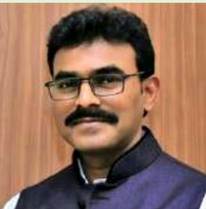
Dr. Baliram N. Gaikwad is a Professor and Director at the
Department of Lifelong Learning and Extension, University of Mumbai. He's
also served as Registrar of the University of Mumbai and has a rich academic
background, with a Ph.D. in English from Dr. Babasaheb Ambedkar Marathwada
University. He has 22 years of teaching English
Literature at undergraduate level and 15 years at Post-graduation
level. He has guided six Ph. D. scholars. He
is a recipient of many Academic Excellence Awards in the Education Category
from Government of Maharashtra and also US Fulbright Fellowship from
University of Florida. He is an Author of 17 books and 25 research papers
available on various international research platforms. |
|
|
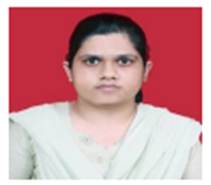
Dr. Swati Vitthal Khidse is an Associate Professor in the Department of Computer Science and Engineering at CSMSS Chhatrapati Shahu College of Engineering, Chhatrapati Sambhajinagar, Maharashtra, India. With a strong academic foundation and extensive teaching experience, she has contributed significantly to engineering education, research development, and student mentorship. Her work spans core areas of computer science, including emerging technologies, computational problem‑solving, and engineering pedagogy. Dr. Khidse is actively involved in guiding undergraduate and postgraduate students, fostering research culture, and supporting departmental academic initiatives. She has participated in conferences, workshops, and faculty development programs, strengthening her expertise in both technical and pedagogical domains. Her professional engagement extends to collaborative academic activities, curriculum enhancement, and continuous improvement of teaching‑learning processes. Known for her dedication to student success and academic excellence, Dr. Khidse continues to contribute meaningfully to the advancement of computer science education. |
|
|
Dr. Deepa Dixit is currently the Director of SIES
School of Business Studies and holds a PhD in Marketing specializing in the
impact of social media on consumer behavior. She is
a faculty of Communication, Marketing and Digital Marketing and Using Design
Thinking for Social Impact projects. With over 28 years of experience in
higher education, she has designed and launched cutting-edge programs and
partnerships with industry and academic institutions, both nationally and
internationally, to enhance the quality and relevance of education. She has
led digital content and online engagement strategy roles in the education
sector. She also has leadership experience in accreditation management. Her research work explores the
intersections of AI-enabled media analysis, big data in e-learning, and
blockchain technology. Her editorial and academic leadership is evidenced by
her role in organizing international research conferences and her experience
as an evaluator for research papers, doctoral theses and book-editor. She has
authored a case study which won an international award by -Giving Voice to
Values, Babson College & United Nations Global Compact PRME (Principle
for Responsible Management Education). Throughout my academic career, I have
been actively involved in teaching, research supervision, and organizing
seminars, workshops, technical events, and hackathons for engineering
students. As an editor, I am committed to maintaining high academic standards, ensuring a rigorous peer-review process, and promoting innovative research in emerging areas of computer science and engineering. |
|
|
Nilay Özsavaş
Uluçay is an accomplished scholar and designer serving as Associate
Professor of Interior Architecture and Environmental Design at Muğla Sıtkı Koçman University, Turkey. Her ShodhKosh
profile states: “Nilay ÖZSAVAŞ ULUÇAY is Associate Professor, Interior
Architecture and Environmental Designer, Muğla
Sıtkı Koçman
University, Mugla, Turkey.” She holds a Ph.D. in Art (2012–2015),
an M.A. in Interior Architecture (2008–2011), and a B.A. in Interior
Architecture and Environmental Design (2003–2007), all from leading Turkish
universities. Her academic work spans interior architecture, color theory, design education, contemporary art, spatial
analysis, and cultural studies, with publications in journals such as Color Research & Application, SOBİDER, and
Journal of Art and Architecture Studies. Dr. Uluçay has received notable recognition, including a Turkish Patent Institute design patent (2014) and multiple national design awards. Her research contributions, exhibitions, and interdisciplinary design projects position her as a leading voice in contemporary interior architecture and design pedagogy. |
|
|
Stephen Olatunde Olabiyisi is a distinguished Professor of
Computer Science in the Department of Computer Science and Engineering,
Ladoke Akintola University of Technology (LAUTECH), Ogbomoso, Nigeria. His
academic profile notes that he holds B.Tech, M.Tech, and Ph.D. degrees in Applied Mathematics from
LAUTECH (1999, 2001, 2006) and an M.Sc. in Computer Science from the
University of Ibadan (2003) .With a career spanning over two decades, he has
risen through all academic ranks—from Graduate Assistant in 2000 to full
Professor in 2013—reflecting sustained excellence in teaching, research, and
academic leadership . His research impact is significant, with 1,665
citations, an h‑index of 19, and 47 i10‑index publications on
Google Scholar. Prof. Olabiyisi
has authored over 189 peer‑reviewed publications, supervised 42 Ph.D.
and 47 Master’s theses, and co‑authored several books in computing and
applied mathematics. His research spans computational complexity, performance
modeling, soft computing, machine learning, and
scientific computing |



|
|
 This work is licensed under a: Creative Commons Attribution 4.0 International License
© ShodhKosh 2026. All Rights Reserved.