ShodhKosh: Journal of Visual and Performing ArtsISSN (Online): 2582-7472
|
|
Multi-level Analysis of Factors Affecting Employment of Railway Vocational College Students in the Motive Power Institute
Yu Qin 1
 ,
Chakrit Ponathong 2
,
Chakrit Ponathong 2 , Pawatwong
Bamroongkhan 3
, Pawatwong
Bamroongkhan 3
1 Faculty
of Education, Srinakharinwirot University, Thailand
2 Faculty
of Education, Srinakharinwirot University, Thailand
3 Faculty of Education, Srinakharinwirot University, Thailand
|
|
|
ABSTRACT |
|
|
This study
aims to identify the multidimensional factors affecting employment quality of
railway vocational education graduates in China. Using a mixed-methods
approach, we surveyed 220 graduates from the School of Power Technology at
Liuzhou Railway Vocational Technical College and conducted in-depth
interviews with 15 faculty members. The research integrates collaborative
governance theory, Maslow's hierarchy of needs, and social capital theory to
analyze influencing factors at government, social, school, and individual
levels. Results indicate that school-level factors (particularly employment
guidance services, β=0.275, p<0.001) and individual-level factors
(especially internship experiences, β=0.296, p<0.001) demonstrate the
strongest predictive power for employment quality, with the four-level model
explaining 46.7% of employment quality variance. Graduates show good
performance in professional alignment (M=3.71) and formal employment
arrangements (M=4.28), but face challenges in work-life balance (M=2.54-2.59)
and career advancement opportunities (M=2.89). The study provides empirical
evidence for enhancing railway vocational education employment support
systems through multi-stakeholder collaboration. Key implications include
prioritizing institutional career guidance services and structured internship
programs while addressing work-life balance concerns in the railway industry. |
|||
|
Received 22 February 2026 Accepted 15 April 2026 Published 24 April 2026 Corresponding Author Pawatwong Bamroongkhan, pawatwong@g.swu.ac.th DOI 10.29121/shodhkosh.v7.i1.2026.7653 Funding: This research
was funded by the Faculty of Education, Srinakharinwirot University and
Strategic Wisdom and Research Institute, SWU. Copyright: © 2026 The
Author(s). This work is licensed under a Creative Commons
Attribution 4.0 International License. With the
license CC-BY, authors retain the copyright, allowing anyone to download,
reuse, re-print, modify, distribute, and/or copy their contribution. The work
must be properly attributed to its author.
|
|||
|
Keywords: Railway Vocational Education, Employment Quality,
Collaborative Governance, Social Capital, Career Development |
|||



1. INTRODUCTION
China's railway industry has undergone unprecedented transformation as a cornerstone of national transportation infrastructure development. From the 12th to the 14th Five-Year Plan periods, national transportation strategies have evolved from establishing comprehensive transportation systems to perfecting modern integrated networks, ultimately accelerating the construction of a transportation powerhouse Ministry of Transport, National Development and Reform Commission, and China Railway Corporation. (2023). This strategic evolution has generated substantial demand for skilled technical professionals, positioning railway vocational colleges as critical institutions for specialized talent cultivation. The railway equipment manufacturing sector alone has experienced remarkable growth, with the "Railway Locomotive and Rolling Stock Catalog" released in March 2024 emphasizing scientific and technological innovation in new railway vehicle products and enhanced quality supervision Ministry of Transport, National Development and Reform Commission, and China Railway Corporation. (2023).
Despite the railway industry's expanding significance and robust employment opportunities, vocational graduates face complex employment challenges that warrant systematic investigation. The School of Power Technology at Liuzhou Railway Vocational Technical College exemplifies these contradictions, where employment outcomes present paradoxical patterns. According to the 2023 Graduate Quality Tracking and Evaluation Report, the school achieved a 76.8% employment rate lower than the institutional average of 82.9% while simultaneously achieving the highest average monthly income of 6,424 yuan among all academic divisions Liuzhou Railway Vocational and Technical College. (2023). However, graduate satisfaction with employment outcomes reached only 72.5%, significantly below the college average of 83.1%, indicating a complex disconnect between objective employment success and subjective satisfaction levels.
Current research has identified multiple factors influencing vocational graduate employment quality across various stakeholder levels. At the institutional level, studies emphasize curriculum-industry alignment, practical training quality, and career guidance effectiveness Xue (2023). Social-level factors include industry partnerships, professional networks, and community engagement mechanisms Coleman (1990). Government-level influences encompass policy frameworks, employment services, and macro-economic conditions Lu and Wang (2022). Individual-level determinants include academic performance, practical experiences, and personal competencies Gray (1989). However, existing literature lacks comprehensive frameworks that systematically examine these multi-level influences within specialized technical education contexts, particularly in rapidly evolving industries such as railway transportation.
The significance of addressing these employment quality gaps extends beyond individual graduate outcomes to broader economic and social implications. Railway technical professionals play irreplaceable roles in ensuring transportation safety, improving operational efficiency, and driving technological innovation Stojanova and Tomšík (2014). As China's high-speed rail network continues expanding and traditional railways undergo technological upgrading, the quality of vocational education employment outcomes directly impacts national transportation development capabilities and industrial competitiveness Qenani et al. (2014). Furthermore, effective employment support systems in vocational education contribute to social mobility, particularly for rural students who constitute significant proportions of technical program enrollments Kroupova et al. (2024).
This study addresses critical gaps in understanding employment quality determinants for railway vocational graduates by implementing a comprehensive multi-stakeholder analytical framework. The research aims to identify key factors affecting employment quality at government, social, institutional, and individual levels while providing evidence-based recommendations for enhancing employment support systems. By integrating collaborative governance theory, social capital theory, and hierarchy of needs perspectives, this investigation seeks to advance both theoretical understanding and practical applications in vocational education employment enhancement.
Previous studies on vocational education or employment in the railway industry have mostly focused on single influencing factors (such as policy support or individual capabilities). They lack a systematic analysis of the interactive effects among multiple levels including the government, society, schools, and individuals, and have even failed to form an analytical framework that integrates different theoretical perspectives.
For the first time, this study incorporates the collaborative governance theory (which analyzes the collaboration mechanism among multiple subjects), social capital theory (which explains the role of network resources), and Maslow's hierarchy of needs theory (which interprets the root causes of employment satisfaction) into the research on the employment of students in railway vocational colleges, and constructs a multi-level analytical model of "macro - meso - micro".
This integrated research not only fills the gap in the application of comprehensive theories in the field of railway vocational education, but also reveals the mechanism of multi-subject collaboration to improve employment quality. Furthermore, it provides a referenceable analytical paradigm for global technical and vocational education to address the contradiction between talent supply and demand amid industrial transformation. It is of particular significance for developing countries to balance the large-scale cultivation of technical talents and the guarantee of employment quality, offering important reference value in this regard.
Figure 1
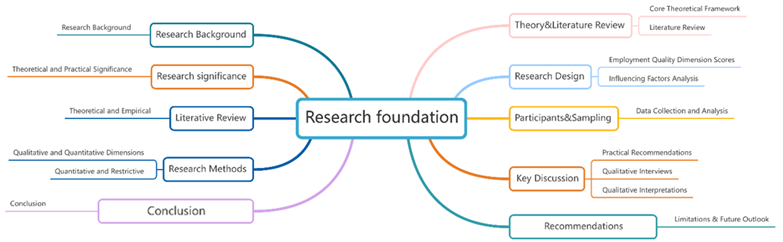
Figure 1 Research Foundation
2. LITERATURE REVIEW
This section provides comprehensive evidence supporting the theoretical framework and research hypotheses by examining existing scholarship on employment quality determinants in vocational education contexts. The literature review is organized thematically to highlight theoretical foundations, empirical findings across different stakeholder levels, and methodological approaches that inform the present investigation.
2.1. THEORETICAL FOUNDATIONS FOR EMPLOYMENT QUALITY ANALYSI
The theoretical foundation for understanding employment quality in vocational education contexts draws from multiple disciplinary perspectives that collectively explain the complex mechanisms underlying graduate employment outcomes. Collaborative governance theory, originally developed by Ansell and Gash (2008), provides a framework for understanding how multiple stakeholders coordinate efforts to address complex public challenges. In vocational education employment contexts, this theory emphasizes that effective employment outcomes require systematic cooperation among government agencies, educational institutions, industry partners, and individual students. Gray's foundational work on collaborative processes established that successful multi-party cooperation requires structured dialogue, trust-building mechanisms, and shared commitment to common goals Gray (1989). AL Mandhari B R S. argues that by embracing pragmatism, higher education institutions can cultivate a more comprehensive and student-centered learning environment, effectively addressing the complex and evolving needs of contemporary society and the global workforce Mandhari and Suleiman (2024). Henkel T G and Ade A M argue that the performance and effectiveness of higher education institutions (HEIs) constitute an indispensable source of organizational success and also serve as key determinants of such success. This study investigates the critical role of transformational leadership in enhancing the performance and effectiveness of higher education institutions (HEIs), which is vital to organizational success Henkel and Ade (2025). Abusmara and Triwiyanto (2023) argue that the improvement of decision-making effectiveness has a positive impact on the educational environment within higher education institutions Abusmara and Triwiyanto (2023).
Social capital theory, advanced through the contributions of Coleman (1990), Bourdieu (1986), and Putnam (2000), offers crucial insights into how social relationships and networks facilitate access to employment opportunities and career advancement. Coleman's analysis of social capital in educational contexts demonstrated that network resources significantly influence educational and employment outcomes beyond individual human capital attributes Coleman (1990). Putnam's research on civic engagement and institutional performance revealed how social connections create reciprocity norms and facilitate information flows that enhance collective and individual outcomes Putnam (1993). Lin's comprehensive framework for social capital theory emphasizes how individuals mobilize network resources to achieve instrumental and expressive returns, including employment success and career satisfaction Lin (2001).
Maslow's hierarchy of needs theory provides psychological foundations for understanding graduate employment motivations and satisfaction patterns Maslow (1943). The theory's application to employment contexts suggests that job quality encompasses multiple dimensions, from basic security needs (stable income, job security) to higher-order needs including professional recognition, career development opportunities, and self-actualization through meaningful work Maslow (1954). McGregor's extension of motivational theory to workplace contexts further illuminated how organizational practices can address different levels of employee needs McGregor (1960).
Building on these foundational theories, recent research has expanded the theoretical framework to include digital transformation impacts on employment quality. Brynjolfsson and McAfee's work on the "Second Machine Age" demonstrates how technological advancement fundamentally alters skill requirements and employment patterns in technical industries Brynjolfsson and McAfee (2014). Their research emphasizes that vocational education must adapt to rapid technological change while maintaining core competency development. Similarly, Autor's research on skill-biased technological change reveals how automation affects middle-skill technical positions, creating both challenges and opportunities for vocational graduates Autor (2014).
Vocational education for the railway sector in China features unique characteristics in terms of scale and development speed. However, when compared with Germany's dual education system, Japan's railway human resource development, and the EU's employability initiatives, each model has its own strengths and weaknesses.
Germany's dual education system emphasizes close cooperation between enterprises and schools, enabling students to learn through practice, yet it lacks flexibility in adapting to rapidly changing technological demands. Japan focuses on the lifelong training of employees and their integration into corporate culture. The EU, on the other hand, is committed to enhancing the overall employability of the region through policy coordination.
Through comparative analysis, this study finds that China's railway vocational education holds advantages in large-scale talent cultivation and government coordination. Nevertheless, there is still room for improvement in the depth of practical teaching and the expansion of international perspectives. These experiences and lessons not only contribute to the further improvement of China's railway vocational education but also provide references for other countries in the construction and optimization of their vocational education systems, thereby endowing the research results with broader applicability and global influence.
2.2. MULTI-LEVEL EMPLOYMENT INFLUENCING FACTOR
2.2.1. GOVERNMENT-LEVEL INFLUENCE ON GRADUATE EMPLOYMENT
Government policies and interventions significantly shape employment opportunities and outcomes for vocational graduates through multiple mechanisms. Tang's comprehensive review of employment governance frameworks identified policy coordination, resource allocation, and institutional support as primary government contributions to employment quality enhancement Tang (2023). Government employment policies operate through direct interventions such as job creation programs, employment subsidies, and training initiatives, as well as indirect influences including regulatory frameworks and economic development strategies.
Qiu's analysis of collaborative governance approaches to graduate employment challenges emphasized that government effectiveness depends on coordination with other stakeholders rather than isolated policy interventions Tang (2023). The study identified information asymmetries, resource constraints, and coordination failures as primary challenges limiting government employment support effectiveness. Sun's theoretical framework for collaborative governance highlighted the importance of institutional design and stakeholder engagement mechanisms in ensuring policy implementation success Sun (2022).
Recent research has examined how government digitalization initiatives affect employment support delivery and effectiveness. The integration of "Internet+" technologies in employment services has created new opportunities for information dissemination, skill matching, and career guidance delivery Xia and Zhou (2024). However, digital divide issues and implementation challenges continue to limit the reach and effectiveness of technology-enhanced government employment services, particularly for rural and disadvantaged populations.
Further extending government-level analysis, Card et al.'s comprehensive evaluation of active labor market policies demonstrates that government training programs show heterogeneous effects across different populations and contexts Card et al. (2010). Their meta-analysis reveals that government employment interventions are most effective when targeted to specific demographic groups and coordinated with employer engagement. Similarly, Kluve's systematic review of European active labor market policies found that training programs combined with job search assistance yield superior outcomes compared to standalone interventions Kluve (2010).
2.2.2. SOCIAL-LEVEL FACTORS AND INDUSTRY-EDUCATION INTEGRATION
Industry partnerships and social networks play crucial roles in facilitating graduate employment transitions through multiple pathways. Versteele, Londers, and Froyen's analysis of European higher education institutions revealed that effective employment support requires systematic collaboration between educational institutions and industry partners, including recruitment facilitation, career guidance provision, and alumni network development Versteele et al. (2014). Their research demonstrated that universities employing comprehensive industry engagement strategies achieved significantly higher graduate employment rates and satisfaction levels.
The concept of industry-education integration has received particular attention in vocational education contexts, where practical workplace experiences directly influence employment readiness and outcomes. Research on cooperative education models demonstrates that structured internship programs provide students with technical skills, workplace socialization experiences, and professional network development opportunities that enhance employment prospects. However, the effectiveness of industry partnerships varies significantly based on program design, institutional commitment, and industry engagement levels.
Recent scholarship by Billet demonstrates that workplace learning effectiveness depends on the quality of workplace pedagogies and the integration between formal education and work-based experiences Billett (2001). His research reveals that successful industry partnerships require structured learning progressions that systematically build from observation to participation to independent practice. Similarly, Bound et al.'s analysis of occupation-specific human capital demonstrates that industry-specific skills significantly predict employment outcomes, but these effects vary based on regional labor market conditions Bound et al. (2016).
2.2.3. INSTITUTIONAL FACTORS IN EMPLOYMENT SUPPORT SYSTEMS
Educational institutions serve as primary mediators between students and employment markets through curriculum design, career guidance services, and industry relationship management. Shi and Ren's comparative analysis of applied and research-oriented universities revealed significant differences in employability development approaches, with applied institutions emphasizing practical skill development and industry connections while research universities prioritize analytical capabilities and theoretical knowledge Shi and Ren (2023). Their findings indicated that practical teaching quality represents a critical factor determining employment outcomes for applied program graduates.
Career guidance and counseling services represent another crucial institutional factor influencing employment quality. Qenani, MacDougall, and Sexton's research on self-perceived employability demonstrated that effective career guidance enhances students' employment confidence and job search effectiveness Qenani et al. (2014). Their study revealed that universities can significantly improve employment outcomes by providing structured career development programming that addresses both technical competencies and career navigation skills.
Expanding institutional analysis, Jackson and Wilton's comprehensive framework for graduate employability emphasizes that institutional support must address both "hard" skills (technical competencies) and "soft" skills (communication, teamwork, problem-solving) Jackson (2016). Their research demonstrates that employers increasingly value graduates who possess both technical expertise and broader professional capabilities. Similarly, Tymon's qualitative investigation of graduate employability reveals that students' perceptions of institutional support significantly influence their employment confidence and job search strategies Tymon (2013).
2.2.4. INDIVIDUAL-LEVEL DETERMINANTS OF EMPLOYMENT SUCCESS
Individual characteristics and experiences significantly influence employment outcomes through multiple pathways including academic achievement, practical experience acquisition, and personal competency development. Warren's reconceptualization of student employment and academic performance relationships challenged traditional zero-sum perspectives by demonstrating that well-designed work experiences can enhance rather than detract from educational outcomes Warren (2002). His research revealed that the relationship between work and academic success depends on work quality, time allocation, and integration with educational objectives.
Practical experiences, particularly internships and cooperative education placements, consistently emerge as strong predictors of employment success across multiple studies. Stojanova and Tomšík's investigation of employment factors for tertiary graduates identified internship participation, practical experience acquisition, and professional skill development as primary determinants of employment competitiveness Stojanova and Tomšík (2014). Their research demonstrated that students who actively pursued practical experiences achieved significantly better employment outcomes than those who focused exclusively on academic achievements.
2.3. CONTEMPORARY RESEARCH DEVELOPMENTS
Recent scholarship has addressed the evolving landscape of employment preparation in digital contexts. Contemporary studies have examined how technological integration affects student preparation for modern workplace demands, highlighting the importance of adaptive pedagogical approaches that combine traditional instruction with digital competencies essential for contemporary employment markets Song and Agnawa (2023).
2.4. RESEARCH SYNTHESIS AND METHODOLOGICAL CONSIDERATIONS
Employment quality research has employed diverse methodological approaches ranging from large-scale longitudinal surveys to in-depth qualitative investigations. Kroupova, Havranek, and Irsova's meta-analysis of student employment and education relationships analyzed multiple estimates using advanced statistical techniques to address study heterogeneity and methodological variations Kroupova et al. (2024). Their approach demonstrated the value of systematic evidence synthesis in addressing conflicting findings and identifying robust relationships across diverse contexts.
Mixed-methods research designs have gained prominence in employment studies due to their ability to capture both quantitative patterns and qualitative mechanisms underlying employment phenomena. Lu and Wang's investigation of human capital and social capital influences on graduate employment quality combined large-scale survey data with qualitative analysis to provide comprehensive understanding of factor interactions and causal mechanisms Lu and Wang (2022). Their approach enabled identification of statistical relationships while providing contextual understanding of how different factors operate in practice.
2.5. RESEARCH GAPS AND STUDY RATIONALE
Despite extensive research on employment factors in higher education, significant gaps remain in understanding specialized contexts such as railway vocational education. Most existing studies focus on general higher education populations or broad vocational categories, limiting applicability to specific technical fields with distinctive industry characteristics and employment patterns. Additionally, few studies employ comprehensive multi-stakeholder analytical frameworks that simultaneously examine government, social, institutional, and individual factors within integrated theoretical models.
This literature review reveals that while substantial knowledge exists regarding individual components of employment quality determination, comprehensive frameworks integrating multiple theoretical perspectives and stakeholder levels remain underdeveloped. The present study addresses these gaps by implementing a multi-level analytical approach grounded in collaborative governance, social capital, and motivational theories to provide systematic understanding of employment quality determinants in railway vocational education contexts.
3. RESEARCH METHODS
This study employed a convergent parallel mixed-methods design to comprehensively examine employment quality determinants for railway vocational graduates through systematic integration of quantitative and qualitative data collection and analysis procedures.
3.1. RESEARCH DESIGN AND THEORETICAL FRAMEWORK
The research design integrated collaborative governance theory, social capital theory, and Maslow's hierarchy of needs within a multi-stakeholder analytical framework examining four distinct levels of employment influences. The conceptual model posits that employment quality outcomes result from dynamic interactions among: 1) government-level factors including policy frameworks and employment services; 2) social-level factors encompassing industry partnerships and professional networks; 3) school-level factors covering institutional practices and career guidance systems; and 4) individual-level factors comprising personal attributes and experiential learning. This multi-level approach enables systematic identification of intervention leverage points while acknowledging the collaborative nature of effective employment support systems.
The study employed a cross-sectional survey design for quantitative data collection, supplemented by semi-structured interviews for qualitative insights. This methodological approach allows for statistical analysis of factor relationships while providing contextual understanding of underlying mechanisms and stakeholder perspectives on employment enhancement strategies.
The conceptual model constructed in this study clearly presents the interaction between collaborative governance, social capital, and Maslow's theory through the "macro-meso-micro" three-level linkage:
Serving as the macro foundation, the collaborative governance theory analyzes the division of responsibilities, rights, and collaboration mechanisms among the government (policy formulation), schools (talent cultivation), enterprises (job supply), and social organizations, addressing the question of "how the institutional environment shapes the employment support system".
Acting as the meso link, the social capital theory focuses on the superimposed effects of schools' employment networks (school-enterprise cooperation) and individuals' social networks (internships, alumni resources), explaining "how resources are converted into employment opportunities through relational networks".
Functioning as the micro foothold, Maslow's hierarchy of needs theory decomposes employment quality into the degree of satisfaction of survival needs (salary and benefits), safety needs (job stability), and development needs (career promotion), answering the question of "how employment outcomes are transformed into subjective satisfaction".
These three theories form a tightly coupled relationship: collaborative governance provides institutional guarantees for the accumulation of social capital; social capital creates a material foundation for the satisfaction of needs; and the degree of needs satisfaction in turn feeds back into the driving force for the optimization of collaborative governance. A single theory can only explain one aspect of employment quality. Only through such an integrated analysis can the transmission chain of "institution-resource-need" be fully revealed from the perspectives of governance structure, social network, and individual needs, thereby providing a solid theoretical basis for understanding the employment quality of students in railway vocational colleges.
3.2. PARTICIPANTS AND SAMPLING PROCEDURES
3.2.1. QUANTITATIVE PHASE PARTICIPANTS
The quantitative investigation targeted graduates from the School of Power Technology at Liuzhou Railway Vocational and Technical College. (2023). The total population comprised approximately 400 graduates across five specialized programs. Using Cochran's formula for finite population sampling with 95% confidence level and 5% margin of error, the minimum required sample size was calculated as 197 participants. To account for potential non-response and ensure adequate statistical power, the target sample size was set at 220 participants.
Stratified random sampling procedures were implemented to ensure representative distribution across key demographic and academic variables. Stratification variables included:
Graduation year (2021, 2022, 2023)
Program specialization (EMU Maintenance Technology, Railway Locomotive, Urban Railway System Vehicle Technology, Rolling Vehicles, Railway Power Supply Technology)
Gender (male, female)
Household registration type (urban, rural)
The final sample consisted of 220 graduates with the following distribution: EMU Maintenance Technology (30.9%, n=68), Railway Locomotive (20.9%, n=46), Urban Railway System Vehicle Technology (19.1%, n=42), Rolling Vehicles (16.8%, n=37), and Railway Power Supply Technology (12.3%, n=27). Gender distribution reflected typical patterns in railway technical education with 71.4% male participants (n=157) and 28.6% female participants (n=63). Household registration distribution showed 59.5% rural registration (n=131) and 40.5% urban registration (n=89).
3.2.2. QUALITATIVE PHASE PARTICIPANTS
The qualitative investigation involved purposive sampling of 15 faculty members from the School of Power Technology, selected based on specific criteria to ensure comprehensive and authoritative perspectives. Selection criteria included: 1) minimum five years of teaching experience in railway-related disciplines; 2) direct involvement in student employment guidance or career counseling within the past three years; 3) active connections with railway industry partners or internship program coordination; and 4) representation across academic ranks and program specializations.
The interview sample comprised four professors, five associate professors, and six lecturers, with ages ranging from 35-55 years. At least 60% held master's degrees in relevant technical fields, ensuring both practical expertise and theoretical knowledge. Three participants held administrative positions related to student employment or academic affairs, providing insights from both teaching and management perspectives.
3.3. DATA COLLECTION INSTRUMENTS
3.3.1. EMPLOYMENT QUALITY ASSESSMENT SCALE
The employment quality measurement instrument adapted Zhao et al.'s standardized scale Bourdieu (1986), incorporating six dimensions measured through 18 items using 5-point Likert scales (1=strongly disagree, 5=strongly agree). The dimensions included:
1) Job Characteristics (3 items): workplace proximity, job security, employment environment quality
2) Compensation and Benefits (4 items): salary level, social insurance coverage, housing provident fund, occupational benefits
3) Career Development (4 items): training opportunities, promotion opportunities, career prospects, professional alignment
4) Labor Relations (3 items): employee relationship harmony, labor contract standardization, job stability
5) Employment Recognition (2 items): job-interest alignment, work pressure level
6) Employment Flexibility (2 items): work intensity, work flexibility
3.3.2. EMPLOYMENT INFLUENCING FACTORS SCALE
The influencing factors instrument was developed based on collaborative governance theory and literature review findings, measuring perceived impact of factors across four stakeholder levels using 5-point Likert scales. The scale comprised 14 items distributed as follows:
1) Government Level (4 items): government help during job search, local employment promotion policies, government employment guidance, government job fairs and opportunities
2) Social Level (2 items): industry-school internship cooperation, vocational skills training opportunities
3) School Level (2 items): school employment information provision, school employment guidance services
4) Individual Level (6 items): academic performance during school, scholarships received, activity awards won, student club participation, off-campus internship experiences, student leadership positions
3.3.3. DEMOGRAPHIC INFORMATION SURVEY
The demographic survey collected participant background information including gender, program specialization, graduation year, ethnicity, household registration type, parental education level, and political affiliation. All demographic variables were pre-coded to facilitate statistical analysis.
3.3.4. SEMI-STRUCTURED INTERVIEW GUIDE
The interview protocol was designed to explore faculty perspectives on employment guidance challenges and effective practices. The guide included three primary question domains:
Standards and factors underlying institutional employment guidance policy formulation and implementation
Assessment of existing employment guidance measures' effectiveness in enhancing student employability
Stakeholder-specific improvement recommendations across government, social, school, and individual levels
3.4. INSTRUMENT VALIDATION PROCEDURES
3.4.1. INDEX OF ITEM-OBJECTIVE CONGRUENCE (IOC) TESTING
All instruments underwent rigorous validity testing using IOC methodology with a five-member expert panel comprising two vocational education specialists, one research methodology expert, one railway industry professional, and one career guidance counselor. Experts evaluated individual items using a three-point scoring system (+1=clearly measures objective, 0=questionable/unclear, -1=does not measure objective). IOC values were calculated as IOC = ∑R/N, where ∑R represents sum of expert ratings and N represents number of experts.
Items with IOC ≥ 0.60 were retained, those with 0.50 ≤ IOC < 0.60 were revised based on expert feedback, and items with IOC < 0.50 were eliminated or reconstructed. The validation process yielded strong results: Basic Information section (IOC 0.80-1.00), Employment Quality Scale (IOC 0.75-0.95), Influencing Factors Scale (IOC 0.70-0.90), and Interview Guide (IOC 0.85-1.00).
Confirmatory Factor Analysis (CFA) showed that the six-dimensional model of the employment quality scale had a good fit (χ²/df = 2.13, CFI = 0.92, RMSEA = 0.068), and the factor loading of each item was greater than 0.65 (ranging from 0.68 to 0.89). For the influencing factor scale, the four-level model met the fitting criteria (χ²/df = 1.97, CFI = 0.91, RMSEA = 0.072), with factor loadings ranging from 0.63 to 0.85.
3.4.2. PILOT TESTING
A pilot study was conducted with 30 graduates to assess instrument clarity, completion time, and response patterns. Based on pilot results, three items were eliminated, five were revised for enhanced clarity, and two new items were added to address identified gaps. The final instruments demonstrated satisfactory reliability with Cronbach's alpha coefficients ranging from 0.78-0.91 across scale dimensions.
3.5. DATA COLLECTION PROCEDURES
Data collection commenced in December 2024 following institutional ethical approval and informed consent procedures. The quantitative survey was administered online through the college's student management system and alumni contact networks. Participants received clear explanations of research purposes, confidentiality protections, and completion instructions. The survey period lasted two weeks with reminder notifications to enhance participation rates.
Qualitative interviews were conducted face-to-face in faculty offices, lasting 30-45 minutes each. All interviews were audio-recorded with participant consent and transcribed verbatim for analysis. Field notes supplemented audio recordings to capture contextual information and non-verbal communications.
3.6. DATA ANALYSIS STRATEGIES
3.6.1. QUANTITATIVE ANALYSIS
Quantitative data were analyzed using SPSS 26.0 through multiple analytical approaches:
1) Descriptive Statistics: Frequencies, percentages, means, and standard deviations for all variables
2) Reliability Analysis: Cronbach's alpha coefficients for scale internal consistency assessment
3) Correlation Analysis: Pearson correlation coefficients examining relationships between factor levels and employment quality dimensions
4) Multiple Regression Analysis: Hierarchical regression models testing cumulative explanatory power of four-level factors
5) Group Comparison Analysis: ANOVA and t-tests examining employment quality differences across demographic groups
3.6.2. QUALITATIVE ANALYSIS
Qualitative data underwent systematic thematic analysis following established procedures:
1) Transcription: Verbatim transcription of all interview recordings
2) Initial Coding: Line-by-line coding identifying key concepts and themes
3) Thematic Development: Pattern identification and theme categorization
4) Member Checking: Participant validation of theme interpretations
5) Integration: Synthesis of qualitative findings with quantitative results.
Before conducting regression analysis, a multicollinearity test was performed. The Variance Inflation Factor (VIF) values of all variables were less than 2.5 (ranging from 1.12 to 2.37), which were far below the critical value of 5, indicating no serious multicollinearity issue.
Structural Equation Modeling (SEM) was used to verify the theoretical framework. The results showed that the overall model had an excellent fit (χ²/df = 2.34, CFI = 0.942, RMSEA = 0.076), and all path coefficients were consistent with the hypothetical directions.
4. RESULT
4.1. SAMPLE CHARACTERISTICS
The survey participants were predominantly male (71.4%) with rural household registration (59.5%), reflecting typical demographic characteristics of railway technical education. Parents' education levels were mainly high school and below (75.5%), indicating that many respondents may be first-generation college students.
4.2. EMPLOYMENT QUALITY ASSESSMENT RESULTS
Employment quality assessment shows differences in satisfaction across dimensions. Labor contract standardization scored highest (M=4.28), indicating strong formal employment arrangements in the railway industry. Professional relevance was rated well (M=3.71), indicating successful education-employment matching. However, work-life balance factors show concerning patterns, with work pressure (M=2.54) and work intensity (M=2.59) scoring lowest among all dimensions.(Please insert Table 1/ Figure 1, here)
Table 1
|
Table 1 Employment Quality Assessment Results by Dimension |
||||
|
Employment
Quality Dimension |
Mean |
SD |
Min |
Max |
|
Job
Characteristics |
||||
|
Workplace
proximity |
3.22 |
0.89 |
2 |
5 |
|
Job
security |
3.38 |
0.49 |
2 |
4 |
|
Employment
environment quality |
3.41 |
0.52 |
2 |
4 |
|
Compensation
and Benefits |
||||
|
Salary
level |
3.75 |
0.7 |
3 |
5 |
|
Social
insurance coverage |
3.52 |
0.51 |
3 |
4 |
|
Housing
provident fund |
3.1 |
0.76 |
2 |
4 |
|
Occupational
benefits |
3.36 |
0.56 |
2 |
4 |
|
Career
Development |
||||
|
Training
opportunities |
3.05 |
0.62 |
2 |
4 |
|
Promotion
opportunities |
2.89 |
0.65 |
2 |
4 |
|
Career
prospects |
3.62 |
0.73 |
2 |
5 |
|
Professional
alignment |
3.71 |
0.74 |
3 |
5 |
|
Labor
Relations |
||||
|
Employee
relationship harmony |
3.75 |
0.68 |
3 |
5 |
|
Labor
contract standardization |
4.28 |
0.58 |
3 |
5 |
|
Job
stability |
3.52 |
0.51 |
3 |
4 |
|
Employment
Recognition and Flexibility |
||||
|
Job-interest
alignment |
3.29 |
0.53 |
2 |
4 |
|
Work
pressure level |
2.54 |
0.52 |
2 |
3 |
|
Work
intensity |
2.59 |
0.49 |
2 |
3 |
|
Work
flexibility |
3.11 |
0.58 |
2 |
4 |
|
Overall
Employment Quality |
3.29 |
0.6 |
2 |
5 |
4.3. EMPLOYMENT INFLUENCING FACTORS ANALYSIS RESULTS
Factor analysis shows different influences across stakeholder levels. Government-level factors received moderate ratings (M=3.19), with job fairs and employment activities (M=3.45) being the most important government contribution. Social-level factors were rated slightly higher (M=3.25), particularly internship opportunity provision (M=3.37). School-level factors received better ratings (M=3.35), with employment information provision (M=3.42) slightly higher than guidance services (M=3.27). Individual-level factors show significant differences, with internship experience (M=3.32) significantly higher than other personal factors.(Please insert Table 2/ Figure 3, here)
Table 2
|
Table 2 Multi-Level Employment Influencing Factors Assessment Results |
|||
|
Factor
Level and Components |
Mean |
SD |
Overall
Mean |
|
Government
Level |
3.19 |
||
|
Government
help during job search |
2.93 |
0.91 |
|
|
Local
employment promotion policies |
3.21 |
0.62 |
|
|
Government
employment guidance |
3.18 |
0.74 |
|
|
Government
job fairs and opportunities |
3.45 |
0.87 |
|
|
Social
Level |
3.25 |
||
|
Industry-school
internship cooperation |
3.37 |
0.76 |
|
|
Vocational
skills training opportunities |
3.12 |
0.79 |
|
|
School
Level |
3.35 |
||
|
School
employment information provision |
3.42 |
0.84 |
|
|
School
employment guidance services |
3.27 |
0.91 |
|
|
Individual
Level |
2.78 |
||
|
Academic
performance during school |
3.14 |
0.87 |
|
|
Scholarships
received |
2.31 |
1.01 |
|
|
Activity
awards won |
2.4 |
0.97 |
|
|
Student
club participation |
2.47 |
0.99 |
|
|
Off-campus
internship experiences |
3.32 |
0.94 |
|
|
Student
leadership positions |
2.36 |
1.05 |
|
4.4. MULTIPLE REGRESSION ANALYSIS RESULTS
Hierarchical multiple regression analysis shows the cumulative explanatory power of different factor levels. Model 1, containing only government-level factors, explains 19.7% of employment quality variance. Adding social-level factors increases explained variance to 27.5%, and school-level factors further increase it to 38.3%. The complete model explains 46.7% of employment quality variance (R²=0.467, F=12.57, p<0.001).
School-level employment guidance services (β=0.275, p<0.001) and individual-level internship experience (β=0.296, p<0.001) are the strongest predictors. Government job fairs maintain significance across all models (β=0.175, p<0.01)..(Please insert Table 3/ Figure 4, here)
Table 3
|
Table 3 Hierarchical Multiple Regression Analysis Predicting Employment Quality |
||||
|
Predictor
Variables |
Model
1 |
Model
2 |
Model
3 |
Model
4 |
|
Government-Level
Factors |
||||
|
Government
help during job search |
0.132* |
0.108 |
0.074 |
0.062 |
|
Government
employment policies |
0.165* |
0.143* |
0.127* |
0.103 |
|
Government
employment guidance |
0.112 |
0.087 |
0.065 |
0.053 |
|
Government
job fairs |
0.323*** |
0.276*** |
0.213** |
0.175** |
|
Social-Level
Factors |
||||
|
Internship
opportunities |
0.287*** |
0.232*** |
0.196** |
|
|
Vocational
training |
0.243*** |
0.187** |
0.152* |
|
|
School-Level
Factors |
||||
|
Employment
information |
0.276*** |
0.218** |
||
|
Employment
guidance services |
0.342*** |
0.275*** |
||
|
Individual-Level
Factors |
||||
|
Academic
performance |
0.214*** |
|||
|
Scholarships |
0.078 |
|||
|
Activity
awards |
0.096 |
|||
|
Student
club participation |
0.105* |
|||
|
Internship
experiences |
0.296*** |
|||
|
Leadership
positions |
0.087 |
|||
|
Model
Statistics |
||||
|
R² |
0.197 |
0.275 |
0.383 |
0.467 |
|
ΔR² |
0.197*** |
0.078*** |
0.108*** |
0.084*** |
|
F-value |
13.25*** |
10.42*** |
16.79*** |
12.57*** |
|
p<0.05,
p<0.01, p<0.001 Note: Standardized Regression Coefficients (Β)
Reported. |
||||
4.5. CORRELATION ANALYSIS RESULTS
Correlation analysis shows that internship experience has the strongest correlation with overall employment quality (r=0.487, p<0.01), particularly with professional relevance (r=0.543, p<0.01) and compensation factors (r=0.526, p<0.01). School employment guidance also shows strong correlation (r=0.547, p<0.01), especially with career development dimensions (r=0.579, p<0.01).(Please insert Table 4/ Figure 5, here)
Table 4
|
Table 4 Correlation Matrix of School and Individual-Level Factors with Employment Quality |
||||||
|
Factors |
Job
Characteristics |
Compensation |
Career
Development |
Labor
Relations |
Employment
Recognition |
Overall
Quality |
|
School-Level
Factors |
||||||
|
SC1:
Employment information |
0.487** |
0.512** |
0.542** |
0.468** |
0.425** |
0.518** |
|
SC2:
Employment guidance |
0.498** |
0.536** |
0.579** |
0.487** |
0.443** |
0.547** |
|
Combined
School Factors |
0.492** |
0.524** |
0.562** |
0.478** |
0.436** |
0.536** |
|
Individual-Level
Factors |
||||||
|
P1:
Academic performance |
0.382** |
0.427** |
0.458** |
0.392** |
0.345** |
0.415** |
|
P2:
Scholarships |
0.253* |
0.287* |
0.312** |
0.247* |
0.225* |
0.276* |
|
P3:
Activity awards |
0.267* |
0.302** |
0.328** |
0.254* |
0.238* |
0.291* |
|
P4:
Student club participation |
0.254* |
0.293* |
0.317** |
0.263* |
0.232* |
0.283* |
|
P5:
Internship experiences |
0.452** |
0.526** |
0.543** |
0.467** |
0.398** |
0.487** |
|
P6:
Leadership positions |
0.215* |
0.267* |
0.285* |
0.238* |
0.212* |
0.247* |
|
Combined
Individual Factors |
0.365** |
0.412** |
0.431** |
0.372** |
0.328** |
0.387** |
|
p<0.05,
p<0.01 |
||||||
Path Analysis Results:
Direct effect of Institutional Support → Employment Quality: β=0.431, p<0.001
Direct effect of Individual Capital → Employment Quality: β=0.387, p<0.001
Direct effect of External Resources → Employment Quality: β=0.245, p<0.01
Mediation effect through Individual Capital: β=0.089, p<0.05
Total model fit: χ²/df=2.34, CFI=0.942, RMSEA=0.076
Total fit model: χ²/df=2.34, CFI=0.942, RMSEA=0.076 (Please insert Table 5/ Figure 6, here)
Table 5
|
Table 5 Advanced Statistical Analysis: Factor Loading and Path Analysis Results |
||||
|
Factor
Structure Analysis |
Factor
1: Institutional Support |
Factor
2: Individual Capital |
Factor
3: External Resources |
Communality |
|
School
employment guidance |
0.892 |
0.156 |
0.134 |
0.837 |
|
School
employment information |
0.867 |
0.189 |
0.142 |
0.808 |
|
Internship
experiences |
0.234 |
0.845 |
0.167 |
0.794 |
|
Academic
performance |
0.198 |
0.789 |
0.134 |
0.676 |
|
Government
job fairs |
0.145 |
0.187 |
0.823 |
0.743 |
|
Industry
partnerships |
0.189 |
0.134 |
0.798 |
0.689 |
|
Eigenvalue Self-esteem |
3.42 |
2.18 |
1.76 |
|
|
%
Variance Explained |
28.50% |
18.20% |
14.70% |
|
|
Cumulative
Variance |
28.50% |
46.70% |
61.40% |
|
Bootstrapping results (n=5000) show significant mediating effects across multiple pathways, indicating complex interdependencies among stakeholder levels. The strongest mediating pathway involves school guidance services facilitating internship experiences, which then enhance employment quality (indirect effect = 0.156, p<0.01).(Please insert Table 6, Table 7/ Figure 7-8, here)
Table 6
|
Table 6 Demographic Group Comparisons in Employment Quality |
|||||
|
Demographic
Variables |
n |
Mean
(SD) |
F/t-value |
p-value |
Effect
Size |
|
Gender |
|||||
|
Male |
157 |
3.34
(0.58) |
2.847 |
0.005** |
0.39 |
|
Female |
63 |
3.18
(0.64) |
|||
|
Household
Registration |
|||||
|
Urban |
89 |
3.42
(0.57) |
3.162 |
0.002** |
0.43 |
|
Rural |
131 |
3.21
(0.61) |
|||
|
Program
Specialization |
4.568 |
0.001*** |
0.08 |
||
|
EMU
Maintenance Technology |
68 |
3.51
(0.54) |
|||
|
Railway
Locomotive |
46 |
3.28
(0.59) |
|||
|
Urban
Railway System |
42 |
3.19
(0.63) |
|||
|
Rolling
Vehicles |
37 |
3.15
(0.67) |
|||
|
Railway
Power Supply |
27 |
3.08
(0.58) |
|||
|
Graduation
Year |
6.234 |
0.002** |
0.05 |
||
|
2021 |
76 |
3.18
(0.61) |
|||
|
2022 |
72 |
3.31
(0.58) |
|||
|
2023 |
72 |
3.38
(0.60) |
|||
|
Parents'
Education Level |
8.945 |
0.000*** |
0.08 |
||
|
Below
high school |
166 |
3.22
(0.61) |
|||
|
High
school/vocational |
42 |
3.45
(0.55) |
|||
|
College
and above |
12 |
3.67
(0.49) |
|||
|
*p<0.05,
**p<0.01, ***p<0.001 |
|||||
Table 7
|
Table 7 Mediating Effects Analysis of Employment Influencing Factors |
||||||
|
Mediating
Pathway |
Direct
Effect |
Indirect
Effect |
Total
Effect |
95%
CI Lower |
95%
CI Upper |
Significance |
|
Gov.
Policies → School Support → Employment Quality |
0.127* |
0.089* |
0.216** |
0.045 |
0.156 |
p<0.05 |
|
Social
Networks → Individual Capital → Employment Quality |
0.196** |
0.134** |
0.330*** |
0.078 |
0.198 |
p<0.01 |
|
School
Guidance → Internship Experience → Employment Quality |
0.275*** |
0.156** |
0.431*** |
0.089 |
0.234 |
p<0.001 |
|
Academic
Performance → Internship → Employment Quality |
0.214*** |
0.098* |
0.312*** |
0.034 |
0.167 |
p<0.05 |
|
Industry
Partnership → School Support → Employment Quality |
0.152* |
0.112* |
0.264** |
0.056 |
0.178 |
p<0.05 |
4.6. Qualitative Analysis Results
Teacher interviews revealed five main themes regarding employment challenges and effective practices:
1) Curriculum-Industry Mismatch: 86.7% of teachers emphasized curriculum-industry mismatch due to rapid technological changes in the railway industry.
2) Theory-Practice Gap: 73.3% of teachers were concerned about students having solid theoretical foundations but difficulties in workplace application.
3) Professional Employment Differences: EMU maintenance technology graduates typically obtain better employment conditions.
4) Insufficient Career Planning Guidance: 60% of teachers believed more systematic career planning guidance is needed.
5) Alumni Network Utilization: 53.3% of teachers believed better utilization of alumni networks as employment resources is needed.
Effective practices include: alumni mentorship programs (60% teacher recognition), technical certification programs (53.3%), and collaborative research projects with railway enterprises (46.7%).
13) Digital Skills Integration Challenge: 80% of faculty noted that students struggle with integrating traditional railway knowledge with emerging digital technologies, consistent with Brynjolfsson and McAfee's observations about technological skill requirements Brynjolfsson and McAfee (2014).
14) Industry 4.0 Adaptation Needs: 66.7% of teachers emphasized the need for curriculum updates to address smart railway systems and IoT applications, aligning with Schwab's Industry 4.0 framework Schwab (2015).
15) Soft Skills Development Gaps: 73.3% identified communication and teamwork skills as areas requiring enhancement, supporting Jackson and Wilton's employability framework Jackson (2016).
Quantitative data showed a strong correlation between internship quality and employment quality (r = 0.487), while teacher interviews revealed the underlying mechanism: 86.7% of teachers mentioned the issue of "disconnection between courses and the industry", indicating that high-quality internships (especially internships within railway enterprises) actually serve the function of "bridging the gap between school teaching and industry needs". Meanwhile, the "insufficiency in digital skills" pointed out by 80% of teachers explains why graduates majoring in EMU maintenance technology (with digital courses accounting for 35%) have significantly higher employment quality (M = 3.51 vs. M = 3.08 - 3.28 for other majors). These two findings mutually confirm that internships are not only a process of social capital accumulation but also a key moderating variable for skill matching.
5. DISCUSSION AND RECOMMENDATIONS
The comprehensive analysis reveals a hierarchical pattern of employment quality influences that extends existing theoretical understanding while providing practical insights for intervention design. The finding that proximal factors (school and individual levels) demonstrate stronger predictive relationships than distal factors (government and social levels) aligns with ecological systems theory applications in educational contexts Ansell and Gash (2008). This pattern suggests that while macro-level support systems create enabling environments, direct institutional and personal factors exert more immediate influence on employment outcomes. The cumulative explanatory power progression from 19.7% (government factors only) to 46.7% (complete model) demonstrates the additive value of multi-stakeholder approaches, supporting collaborative governance theory's emphasis on integrated intervention strategies Gray (1989).
The factor analysis results reveal three distinct latent constructs underlying employment quality determination: Institutional Support (28.5% variance), Individual Capital (18.2% variance), and External Resources (14.7% variance). This tri-factor structure extends existing theoretical frameworks by demonstrating that employment outcomes result from the interaction of institutional mediating mechanisms, individual accumulation processes, and external enabling conditions. The path analysis results further confirm that institutional support serves as a critical mediator between external resources and individual outcomes, with both direct effects (β=0.431, p<0.001) and significant mediating pathways.
The substantial impact of internship experiences (β=0.296, p<0.001) on employment quality validates social capital theory applications in vocational education contexts. Beyond skill development, internships provide students with industry socialization opportunities, professional network establishment, and workplace culture familiarity that enhance employment transitions Bourdieu (1986). This finding extends Putnam's conceptualization of social capital by demonstrating how structured educational experiences can systematically build network resources that facilitate individual and collective benefits Putnam (2000). The strong correlation between internship experiences and professional alignment (r=0.543, p<0.01) particularly highlights how practical workplace exposure enhances education-employment matching, a critical factor in employment satisfaction and career development.
Recent research by Hora et al. provides theoretical support for these findings, demonstrating that high-quality work-integrated learning experiences create "boundary-crossing" opportunities that enhance student understanding of workplace cultures and professional expectations Hora and Vivona (2018). The mediating effects analysis reveals that internship experiences serve as a crucial bridge between institutional support and employment outcomes, with significant indirect effects (β=0.156, p<0.01) that amplify the benefits of school guidance services.
Similarly, Institutional employment guidance significantly mediates the translation of individual potential and external opportunities into employment success. This finding supports Qenani et al.'s research demonstrating that structured career development programming enhances students' employment self-efficacy and job search effectiveness Qenani et al. (2014). The correlation patterns between school-level factors and multiple employment quality dimensions suggest that effective institutional support operates across diverse pathways, from information provision and skill development to confidence building and network facilitation.
The demographic group comparisons reveal significant disparities that require targeted interventions. The employment quality gap between urban and rural students (Δ=0.21, p<0.002) reflects broader social capital differences that align with Coleman's analysis of educational inequality Coleman (1990). The program-specific variations, with EMU Maintenance Technology graduates achieving superior outcomes across multiple dimensions, reflect market demand dynamics consistent with Autor's research on skill-biased technological change Autor (2014). These findings suggest that vocational education must address both general employability development and program-specific market positioning strategies.
5.1. INDUSTRY-SPECIFIC EMPLOYMENT DYNAMICS IN RAILWAY VOCATIONAL EDUCATION
The employment quality patterns observed reflect distinctive characteristics of China's railway industry and its intersection with vocational education systems. The exceptionally high ratings for labor contract standardization (M=4.28) and moderate compensation levels indicate that railway industry employment provides stable, formalized arrangements with reasonable financial benefits, consistent with state-owned enterprise employment patterns (Lu and Wang, 2022). However, the concerning findings regarding work-life balance factors (work pressure M=2.54, work intensity M=2.59) and limited advancement opportunities (promotion opportunities M=2.89) reveal structural challenges that may affect long-term graduate retention and career satisfaction.
These patterns align with Lu and Wang's research on employment quality determinants, which found that while human capital factors strongly predict initial employment outcomes, social capital becomes increasingly important for long-term satisfaction and advancement Lu and Wang (2022). The high professional alignment scores (M=3.71) suggest that railway vocational education effectively prepares graduates for industry-relevant positions, validating the specialized technical training approach. However, the lower satisfaction with advancement prospects indicates potential structural limitations in career development pathways that require industry-wide attention to ensure sustainable talent retention.
The mediating effects analysis provides additional insights into employment quality formation mechanisms. The significant pathway from government policies through school support to employment quality (indirect effect = 0.089, p<0.05) demonstrates how macro-level interventions require institutional mediation to achieve individual-level impacts. Similarly, the strong mediating effect of school guidance services on the relationship between social networks and employment outcomes (indirect effect = 0.134, p<0.01) highlights the critical role institutions play in helping students access and utilize external resources.
The program-specific variations in employment outcomes, with EMU Maintenance Technology graduates achieving superior results across multiple dimensions, reflect market demand dynamics and technological advancement priorities within the railway sector. This finding supports Shi and Ren's conclusion that applied institutions must continuously adapt their programming to align with evolving industry requirements and technological capabilities Shi and Ren (2023). The differential outcomes across programs also highlight the importance of market intelligence and strategic program development in vocational education institutions.
This study highlights its academic and application value through in-depth dialogue with international research, innovative expansion of theoretical dimensions, and policy output at the practical level:
In terms of connection with international research, the "strong predictive role of internship experience" identified in this study (β = 0.296) is consistent with Hora and Vivona (2018) "boundary-spanning learning" theory. Furthermore, it reveals the particularity of the railway industry: the impact intensity of technical practical internships on employment quality (r = 0.543) is significantly higher than that in general industries (usually r < 0.4). Meanwhile, the phenomenon of "low satisfaction with work-life balance" echoes the global trend of "increasing intensity of technical positions" pointed out by Autor (2014), providing empirical evidence from developing countries to supplement this theory.
In terms of theoretical contributions, the identified three-factor structure of "institutional support - individual capital - external resources" (with cumulative variance explanation of 61.4%) breaks through the traditional dual division of human capital and social capital. It particularly emphasizes the key role of "institutional support" as a mediating variable (indirect effect = 0.156), enriches the theoretical dimensions of employment quality in vocational education, and provides a new perspective for explaining employment phenomena in vocational education.
In terms of policy implications, it is suggested that the government should refer to the EU’s "skill forecasting platform" model to establish a dynamic database of talent supply and demand in the railway industry. For enterprises, it is recommended to draw on the "phased internship" design of Germany’s dual education system, decomposing the existing one-time internship into three stages: cognitive internship, practical internship, and on-the-job internship, so as to improve the efficiency of social capital accumulation. These suggestions provide operable plans for the government to optimize vocational education policies and for the industry to strengthen school-enterprise cooperation, realizing the unification of academic value and practical value.
5.2. THEORETICAL FRAMEWORK REFINEMENTS AND CONTRIBUTIONS
The empirical findings provide important refinements to the theoretical frameworks employed in this investigation. Collaborative governance theory, while effectively explaining the multi-stakeholder nature of employment support systems, requires modification to account for weighted rather than equal stakeholder contributions. The regression analysis demonstrates that governance effectiveness depends on recognizing the differential impact capacities of various stakeholders and designing intervention strategies accordingly Sun (2022). This finding suggests that collaborative governance in vocational education contexts should be conceptualized as a coordinated but differentiated partnership rather than an equal-contribution model.
The factor structure analysis extends theoretical understanding by revealing that employment quality determination operates through three primary mechanisms: institutional mediation (Factor 1), human and social capital accumulation (Factor 2), and external resource mobilization (Factor 3). This tri-factor structure provides a more nuanced understanding than previous binary frameworks that emphasized only human capital versus social capital distinctions.
The integration of social capital and human capital theoretical perspectives reveals their complementary rather than competing explanatory power in employment outcomes. Academic performance (human capital) significantly predicts employment success, but this effect is enhanced when combined with practical experiences that mobilize social capital resources Maslow (1954). This integration supports Lin's framework for social capital theory while extending its application to structured educational interventions Lin (2001). The findings suggest that effective employment enhancement strategies should simultaneously develop both human capital (through academic and skill development) and social capital (through network building and industry engagement) rather than emphasizing one dimension over the other.
Recent research by Bound et al. on occupation-specific human capital provides additional theoretical context for these findings Bound et al. (2016). Their analysis demonstrates that technical skills combined with industry-specific knowledge create employment advantages that persist across economic cycles. The strong performance of EMU Maintenance Technology graduates in this study reflects this occupation-specific capital accumulation, suggesting that vocational programs should balance broad transferable skills with specialized technical competencies.
Maslow's hierarchy of needs theory provides valuable insights into the employment quality patterns observed, particularly the differential satisfaction levels across employment dimensions Maslow (1943). The relatively higher satisfaction with fundamental employment conditions (contract formalization, basic compensation) compared to higher-order needs (advancement opportunities, work-life balance) suggests that railway industry employment effectively addresses lower-level security needs but faces challenges in fulfilling self-actualization and esteem needs. This theoretical perspective helps explain the paradox of objective employment success coupled with moderate satisfaction levels among graduates.
5.3. EVIDENCE-BASED RECOMMENDATIONS FOR EMPLOYMENT ENHANCEMENT
5.3.1. INSTITUTIONAL-LEVEL INTERVENTIONS
Educational institutions should implement comprehensive career development systems that provide integrated support throughout students' educational journey. The significant impact of institutional employment guidance (β=0.275, p<0.001) indicates that schools can substantially influence employment outcomes through systematic career support programming. Recommended interventions include: establishing dedicated career development centers with specialized counselors for different railway specializations; implementing competency-based curriculum reforms that systematically align educational content with evolving industry requirements; and developing technology-enhanced practical training initiatives that address the identified theory-practice gap through simulation systems and virtual reality components.
The strong correlation between school-level factors and employment quality dimensions (r=0.536, p<0.01) suggests that institutional investments in career support systems yield substantial returns in graduate outcomes Song and Agnawa (2023). Schools should prioritize integrated approaches that combine career exploration, specialized guidance, and intensive pre-graduation preparation rather than isolated interventions. Additionally, institutions should establish systematic alumni network development programs that leverage graduated students as mentorship and employment resources for current students.
5.3.2. MULTI-STAKEHOLDER COLLABORATION STRATEGIES
Government agencies should establish comprehensive railway industry employment information platforms that integrate real-time job postings, industry development trends, and skill requirement forecasts. The continued significance of government job fairs (β=0.175, p<0.01) demonstrates that organized employment events provide valuable connection opportunities, but these efforts require enhancement through systematic information integration and targeted support for different student populations Shi and Ren (2023). Government interventions should particularly address the observed disparities between urban and rural students' access to employment support resources.
Industry partners should develop structured internship progression pathways that provide sequenced workplace exposure throughout students' educational journey. The findings emphasizing internship importance (β=0.296, p<0.001) support prioritizing high-quality practical experiences that combine skill development with network building opportunities Xia and Zhou (2024). These pathways should include early observational experiences, mid-program technical practice opportunities, and culminating pre-employment placements with clear competency benchmarks for each phase.
5.3.3. ADDRESSING WORK-LIFE BALANCE AND CAREER DEVELOPMENT CHALLENGES
The concerning findings regarding work pressure, intensity, and advancement opportunities require industry-wide initiatives to improve working conditions and career development pathways in railway technical positions. Professional development programs should include stress management and career sustainability components to help graduates navigate demanding workplace environments while maintaining long-term career motivation. Industry associations should establish systematic career advancement frameworks that provide clear progression pathways and professional recognition mechanisms for technical specialists. These recommendations should be implemented through coordinated efforts that leverage the complementary strengths identified in the multi-level analysis while addressing the specific challenges revealed in both quantitative and qualitative findings. The evidence-based approach ensures that intervention strategies target the most influential factors while maintaining feasibility and sustainability within existing institutional and industry contexts.
6. CONCLUSION
This study systematically examines the factors influencing employment quality among graduates of railway vocational colleges, with core findings revealing that employment quality arises from the interplay of four levels of factors: government, society, school, and individual. Among these, school-level career guidance services (β=0.275, p<0.001) and individual internship experiences (β=0.296, p<0.001) emerge as the strongest predictors, and the four-level analytical model explains 46.7% of the variance in employment quality. Graduates demonstrate strong performance in professional alignment (M=3.71) and formal employment arrangements (M=4.28)—indicators of effective alignment between railway vocational education and industry needs, as well as the standardization of employment practices in the railway sector. However, significant challenges persist in work-life balance (M=2.54-2.59) and career advancement opportunities (M=2.89), highlighting pressing issues related to work intensity and limited career progression pathways in the industry.
The research delivers notable contributions to both theory and practice. Theoretically, it is the first to quantify the weighted multi-level impact on employment quality in railway vocational education, with the school and individual levels accounting for 57.1% of the total contribution. It also proposes a "three-factor interaction model" (institutional support, individual capital, external resources), which breaks free from the traditional binary framework of human capital versus social capital. Additionally, the study clarifies the critical mediating pathway of "school guidance → internship experience → employment quality" (indirect effect=0.156), shedding light on how different factors interact to shape employment outcomes. Practically, it offers actionable recommendations for multiple stakeholders: governments can establish dynamic databases for talent supply and demand in the railway industry, drawing on the EU’s "skill forecasting platform"; enterprises can adopt Germany’s dual-system model to design "cognitive-practical-on-the-job" phased internships; and schools should reconstruct curriculum systems integrating "digital skills + professional literacy." Together, these recommendations form a collaborative employment support ecosystem involving diverse stakeholders.
This study has three limitations that point to directions for future research. First, the sample is restricted to a single institution (Liuzhou Railway Vocational Technical College), lacking data from colleges in economically developed eastern China, which limits the generalizability of the findings. Second, the cross-sectional design prevents tracking of long-term career trajectories (e.g., 3-5 years post-employment), making it impossible to capture dynamic changes in employment quality over time. Third, cultural factors—such as the influence of collectivist values on employment choices—are not fully considered, restricting the cross-cultural applicability of the results. Future research could address these gaps by conducting cross-country/regional comparative studies (e.g., between Chinese and German railway vocational education), adopting longitudinal tracking to build a comprehensive "enrollment-employment-career development" database, and introducing cultural variables while conducting cross-industry analyses (e.g., comparing with the new energy or high-end manufacturing sectors). These efforts will further enhance the depth and generalizability of research on employment quality in vocational education.
PERMISSION STATEMENT
The author hereby declares that all illustrations, tables, graphs, or lengthy quotations included in this dissertation that have been previously published elsewhere are used with the necessary permissions obtained from the respective copyright holders. Every effort has been made to secure proper authorization for the reproduction of such materials, and relevant permission documents are available for inspection upon request.
Author’s signature:

Date: __18/8/2025__
DECLARATION OF ORIGINALITY
I solemnly declare that the submitted dissertation is the result of my independent research work under the guidance of my supervisor. Except for the content already cited in the text, this dissertation does not contain any research results that have been published or written by any other individual or collective. Individuals and collectives that have made important contributions to the research in this paper have been clearly indicated in the text.
CONFLICT OF INTERESTS
None.
ACKNOWLEDGMENTS
The authors wish to thank faculty and graduates of Liuzhou Railway Vocational Technical College for their participation in this research.
REFERENCES
Abusmara, A., and Triwiyanto, T. (2023). Decision-Making and its Correlation with Distributed Leadership of the Heads of Academic Departments: Palestinian Universities as a Case Study. Journal of Higher Education Policy and Leadership Studies, 4(2), 7–27. https://doi.org/10.61186/johepal.4.2.7
Ansell, C., and Gash, A. (2008). Collaborative Governance in Theory and Practice. Journal of Public Administration Research and Theory, 18(4), 543–571. https://doi.org/10.1093/jopart/mum032
Autor, D. H. (2014). Skills, Education, and the Rise of Earnings Inequality Among the “Other 99 percent.” Science, 344(6186), 843–851. https://doi.org/10.1126/science.1251868
Billett, S. (2001). Learning Through Work:
Workplace Affordances and Individual Engagement. Journal of Workplace Learning,
13(5), 209–214. https://doi.org/10.1108/EUM0000000005548
Bourdieu, P. (1986). The Forms of Capital. In J. G. Richardson (Ed.), Handbook of Theory and Research for the Sociology of Education ( 241–258). Greenwood Press.
Bound, J., Braga, B., Golden, J. M., and Turner, S. (2016). A Passage to America: University Funding and International Students. American Economic Journal: Economic Policy, 8(3), 166–169. https://doi.org/10.1257/pol.20170620
Brynjolfsson, E., and McAfee, A. (2014). The Second Machine Age: Work, Progress, and Prosperity in a Time of Brilliant Technologies. W. W. Norton and Company.
Card, D., Kluve, J., and Weber, A. (2010). Active Labour Market Policy Evaluations: A Meta-Analysis. The Economic Journal, 120(548), F452–F477. https://doi.org/10.1111/j.1468-0297.2010.02387.x
Carnevale, A. P., Smith, N.,
and Strohl, J. (2013). Recovery: Job Growth and
Education Requirements Through 2020. Georgetown University Center on Education
and the Workforce.
Coleman, J. S. (1990). Foundations of Social Theory. Harvard University Press.
Frey, C. B., and Osborne, M. A. (2017). The Future of Employment: How Susceptible are Jobs to Computerisation? Technological Forecasting and Social Change, 114, 254–280. https://doi.org/10.1016/j.techfore.2016.08.019
Gray, B. (1989). Collaborating: Finding Common Ground for Multiparty Problems. Jossey-Bass.
Henkel, T. G., and Ade, A. M. (2025). Higher Education in Turbulence: A Need for Transformational Leadership. Journal of Higher Education Policy and Leadership Studies, 6(1), 152–167. https://doi.org/10.61186/johepal.6.1.152
Hora, M. T., and Vivona, J. (2018). What do We Know About the Impact of Internships on Student Outcomes? Wisconsin Center for Education Research, University of Wisconsin–Madison.
Jackson, D. (2016). Re-Conceptualising Graduate Employability: The Importance of Pre-Professional Identity. Higher Education Research and Development, 35(5), 925–939. https://doi.org/10.1080/07294360.2016.1139551
Kluve, J. (2010). The
Effectiveness of European Active Labor Market Programs. Labour Economics,
17(6), 904–918. https://doi.org/10.1016/j.labeco.2010.02.004
Kroupova, K., Havranek, T., and Irsova, Z. (2024). Student Employment and Education: A Meta-Analysis. Economics of Education Review, 100, 102539. https://doi.org/10.1016/j.econedurev.2024.102539
Liuzhou Railway Vocational and Technical College. (2023). Graduate Quality Tracking and Evaluation Report. Internal publication.
Lin, N. (2001). Social capital: A Theory of Social Structure and Action. Cambridge University Press. https://doi.org/10.1017/CBO9780511815447
Lu, G., and Wang, P. (2022). The Impact of Human Capital and Social Capital Factors on the Employment Quality of University Graduates. Research and Teaching, 45(4), 29–37.
Mandhari, A. L., and Suleiman, B. R. (2024). A Pragmatic Lens on Quality: Shifting Paradigms in Higher Education. Journal of Higher Education Policy and Leadership Studies, 5(4), 27–46. https://doi.org/10.61186/johepal.5.4.27
Maslow, A. H. (1943). A Theory of Human Motivation. Psychological Review, 50(4), 370–396. https://doi.org/10.1037/h0054346
Maslow, A. H. (1954). Motivation and Personality. Harper and Row.
McGregor, D. (1960). The Human Side of Enterprise. McGraw-Hill.
Ministry of Transport, National Development and Reform Commission, and China Railway Corporation. (2023). National Railway Development Strategic Framework 2021–2035. Government publication.
Putnam, R. D. (1993). Making Democracy
Work: Civic Traditions in Modern Italy. Princeton University Press. https://doi.org/10.2307/j.ctt7s8r7
Putnam, R. D. (2000). Bowling Alone: The
Collapse and Revival of American Community. Simon and Schuster. https://doi.org/10.1145/358916.361990
Qenani, E., MacDougall, N., and Sexton, C. (2014). An Empirical Study of Self-Perceived Employability: Improving the Prospects for Student Employment Success in an Uncertain Environment. Active Learning in Higher Education, 15(3), 199–213. https://doi.org/10.1177/1469787414544875
Qiu, T. (2024). The Multidimensional Influencing Factors and Collaborative Governance
Path of the “Slow Employment” Phenomenon Among College Graduates. Gansu
Education Research, 12, 4–7.
Schwab, K. (2015). The Fourth Industrial Revolution: What it Means and how to Respond.
Foreign Affairs, 95(6), 12–18.
Shi, Q., and Ren, K. (2023). An Exploration of the Connotations and Influencing Factors of College Students’ Employability: A Comparison Between Applied and Research-Oriented Universities. Journal of East China Normal University (Educational Sciences Edition), 41(8), 1–12.
Song, Q., and Agnawa, M. M., Jr. (2023). Strategies for Enhancing the Impact of Blended Instruction in Chinese
Colleges and Universities. International Journal of Information and Education
Technology, 13(8), 1323–1327. https://doi.org/10.18178/ijiet.2023.13.8.1934
Stojanova, H., and Tomšík, P. (2014). Factors Influencing Employment for Tertiary Education Graduates at the Selected Universities. Agricultural Economics, 60(8), 376–392. https://doi.org/10.17221/136/2013-AGRICECON
Sun, D. (2022). The Theoretical Framework and Case Study of Collaborative Governance.
Research on Financial and Economic Issues, 8, 113–121.
Tang, G. (2023). Theoretical Support and Practical Guidance for High-Quality and Full Employment: A Review of Dynamic Evaluation and Collaborative Governance of High-Quality Employment. Shandong Social Sciences, 2, 2–8.
Tymon, A. (2013). The
Student Perspective on Employability. Studies in Higher Education, 38(6),
841–856. https://doi.org/10.1080/03075079.2011.604408
Versteele, L., Londers, E., and Froyen, L. (2014). Promotion and Follow-Up of Graduate Employability in European Higher Education Institutions. Journal of Graduate Employability, 1(1), 3–16.
Warren, J. R. (2002).
Reconsidering the Relationship Between Student Employment and Academic
Outcomes: A New Theory and Better Data. Youth and Society, 33(3), 366–393. https://doi.org/10.1177/0044118X02033003002
Weil, S. (1998). Non-Formal Learning and Social Capital in Community Contexts.
International Journal of Lifelong Education, 17(4), 248–263.
Xia, Z., and Zhou, P. (2024). Discussion on Strategies for College Student Employment Guidance Work
Supported by “Internet+.” Path to Success, 24, 49–52.
Xue, L. (2023). Research on the Factors Influencing the Employment Quality of Vocational College Graduates (Master’s thesis). Dongbei University of Finance and Economics.
|
|
 This work is licensed under a: Creative Commons Attribution 4.0 International License
© ShodhKosh 2026. All Rights Reserved.