ShodhKosh: Journal of Visual and Performing ArtsISSN (Online): 2582-7472
|
|
Perceptions of Social Media–Informed Management Strategies in Higher Education: Evidence from Yunnan University of Finance and Economics
Qifei Chen 1
 ,
Asawin Nedpogaeo 2
,
Asawin Nedpogaeo 2
1 Graduate School of Communication Arts and Management Innovation,
National Institute of Development Administration, Bangkok 10240, Thailand
2Graduate
School of Communication Arts and Management Innovation, National Institute of
Development Administration, Bangkok 10240, Thailand
|
|
|
ABSTRACT |
|
|
This study
investigates how social media big data, viewed from a psycho-social
perspective, influences higher education management strategies, using Yunnan
University of Finance and Economics as the case context. A quantitative,
cross-sectional survey design was adopted. Two self-administered
questionnaires (originally developed in Chinese) were used for faculty and
students, with 5-point Likert items and reverse-scored items where
applicable. Stratified sampling and data screening yielded 330 valid faculty
and 420 valid student responses. Reliability and construct validity were
assessed using SPSS 26.0. Hierarchical regression tested direct effects and a
mediation pathway in which Impact on Work and Life (IWL) mediates links
between key predictors and Higher Education Management Strategies (HEMS).
Bootstrap mediation was used for indirect effects. After adding predictors,
the model explained substantial variance in HEMS. Usage awareness, knowledge
and skills, and organizational support/environment significantly and
positively predicted HEMS. Predictors also explained IWL, and IWL strongly
predicted HEMS. Bootstrap results confirmed significant indirect effects for
all three predictors , indicating partial mediation.
The study links psycho-social readiness and organizational conditions to
data-informed higher education management outcomes and clarifies the
mediating role of work–life impacts in this process. |
|||
|
Received 28 January 2026 Accepted 26 March
2026 Published 22 April 2026 Corresponding Author Asawin Nedpogaeo, asawin.n@nida.ac.th DOI 10.29121/shodhkosh.v7.i5s.2026.7643 Funding: This research
received no specific grant from any funding agency in the public, commercial,
or not-for-profit sectors. Copyright: © 2026 The
Author(s). This work is licensed under a Creative Commons
Attribution 4.0 International License. With the
license CC-BY, authors retain the copyright, allowing anyone to download,
reuse, re-print, modify, distribute, and/or copy their contribution. The work
must be properly attributed to its author.
|
|||
|
Keywords: Social Media Big Data, Psycho-Social Perspective,
Higher Education Management, Self-Efficacy, Yunnan China |
|||



1. INTRODUCTION
Big data analytics has become central to organizational strategy across sectors. As an important part of big data, social media has been rapidly popularized and widely used in higher education with its unique information dissemination and interactive communication functions. With the widespread application of social media technology, the way people communicate and collaborate has changed fundamentally. As many studies have pointed out and a consensus globally, social media has not only changed how people live, but also had a profound impact on the management of higher education Dong and Lazaro (2024), Francis et al. (2025). Specifically, by creating and sharing information, people would expand interpersonal networks and accelerate the speed of information transmission. Social media platforms can quickly spread a lot of information, including course arrangement, academic activities, internship and recruitment information, etc. This rapid information transmission method breaks the barrier of slow information flow in traditional education models, enabling students to obtain the latest academic resources and opportunities in a timely manner Dong and Lazaro (2024). For example, social media, such as WeChat, Weibo, Xiaohongshu, Zhihu, and Bilibili, have become the core platforms for university students to express their views, establish social relationships, and participate in campus affairs Liu et al. (2024) . Students have discovered that the quality of their courses through campus chat, share their campus life through short videos, and talk about their psychological pressure through anonymous communities such as “Tree Hole”—meaning a secrets sharing platform. The huge amount of data generated by these behaviors provides a new perspective for analyzing students' psychological dynamics. Despite the endless possibilities of social media in higher education, there are still many challenges to its effective use. One of the main problems is the information overload Sun et al. (2022). In addition, privacy and security are also issues that cannot be ignored Sun et al. (2022). To sum up, the popularization and application of social media in higher education not only changes the way of information dissemination and the access to learning resources, but also promotes the interaction, community building and scientific research cooperation between teachers and students. From the perspective of social psychology, this study hopefully be able to analyze the influence of social media big data on the management strategies of higher education, and provide new ideas and methods for college education management.
Traditional social psychology theories such as social identity theory and group polarization theory are mostly based on offline experiments or small-sample studies, which are difficult to explain the dynamic evolution of group behaviors in social media Wang (2023). While, the advent of the big data era, especially for social media platforms, people have generated a huge amount of data on the network, which contains a wealth of information about people's speech, behavior, emotions, etc., and provides a completely new perspective and resources for social psychology research. What has been proved is real, accurate and timely big data samples bring brand-new opportunities for the change of social psychology research methods, with the help of big data, social psychology can largely get rid of the dependence on physical laboratories, and maximize and most efficiently expand the potential research objects Lazer et al. (2009), Kosinski et al. (2013). Therefore, education administrators need to shift from “experience-driven” to “data-psychology-driven” mode and use social media data to build early warning systems—taking example of suicidal tendency monitoring and dynamic intervention mechanisms—taking example of curriculum optimization). Based on the literature review, theoretical analysis, and practical experience, this study hypothesizes that social media big data can enhance higher education management efficiency and decision-making, influence students’ and teachers’ psychological behaviors, optimize management strategies, and simultaneously introduce non-negligible risks and challenges
This study combines social psychology with big data analysis technology in the field of higher education management, drawing on data-driven decision-making perspectives in learning analytics/educational data mining and social identity-based explanations of online behavior Baker and Siemens (2014), Hershkovitz et al. (2024), Attard et al. (2023). This interdisciplinary research perspective helps to expand the boundaries of existing research and inject new vitality into the theory of higher education management. By mining and analyzing social media big data, universities can more accurately understand the needs, preferences and behavior patterns of teachers and students, so as to develop more scientific and reasonable management strategies. Social media big data provides rich data support for educational decision-making. Lack of long-term tracking research, existing studies are mostly based on cross-sectional data and lack long-term tracking of how social media behavior affects students' psychology and management effects over time, such as the dynamic changes from freshman year to graduation stage. Insufficient in-depth interpretation of unstructured data, the unstructured features of social media data such as emoticons, short videos, and online coded language have not been fully explored, and existing research relies on the analysis of textual keywords, ignoring the psychological significance of visual symbols and subcultural contexts. The absence of educational administrators' perspectives, most studies focus on student behavior, but fewer explore how differences in college administrators' perceptions of social media data, such as technological capabilities and decision-making inertia, affect the effectiveness of strategies on the ground. Data blindness of marginalized groups: Social media big data may overlook the online behavioral characteristics of “silent groups” such as students from rural backgrounds and international students, resulting in management strategies that are biased toward active users and exacerbating educational inequity Gorenc (2025). The lack of cross-cultural comparisons and the scarcity of comparative studies on higher education systems in different countries, such as liberal arts education in Europe and the United States and vocationally oriented education in Asia, make it difficult to distill universal rules.
Focusing on Yunnan University of Finance and Economics (YUFE), a typical university of economics and management, this study explores the optimization path of data-driven management strategies from the perspective of social psychology, combined with social media big data technology. Data were collected only through questionnaire surveys. Statistical software was used to quantify the questionnaire data, including descriptive statistics, correlation analysis, and regression analysis, to examine the relationship between social media big data and higher education management strategies. To evaluate the positive and negative impacts of social media big data on higher education management strategies.
2. Literature Review
2.1. Social Psychology Theory
Social psychology theory emphasizes interactions between individuals and groups and how these interactions shape cognition, emotion, and behavior Fiske (2001). In the context of social media big data and higher education management, it provides a lens to explain how students and teachers are influenced by online information and how this influence shapes learning motivation, social behavior, self-perception, and acceptance of management strategies. For instance, positive feedback and success stories on social media may enhance students’ confidence and motivation, while negative information may lead to anxiety or resistance, offering a scientific basis for more humanized and effective educational management strategies Bandura (2001), Nurius (2013) .
Uses and gratification theory further explains how audiences choose and use media based on their own needs and motives to obtain satisfaction. Communication scholars such as Katz et al. (1973)highlighted that users’ motives—such as information seeking, social interaction, entertainment, and leisure—shape how media are used and the outcomes that result. In other words, the same platform can generate very different behaviors and perceptions depending on what users are trying to achieve. Applied to higher education, students may use learning resources on social media to supplement classroom knowledge, while teachers may communicate and coach via platforms; these behaviors also affect users’ acceptance and satisfaction with management strategies. Consequently, these motive-driven practices are not only focus on usage behaviors but also influence users’ acceptance, and satisfaction, higher-education management strategies implemented through social media. Additionally, stakeholder theory enrich management perspective by stressing that effective governance requires balancing the interests and requirements of multiple groups, in the context of this study, students, teachers and administrative staffs. The theory argues that organizational survival and development depend on how well managers respond to stakeholders’ interests, rather than only prioritizing shareholders Freeman (1984), Freeman et al. (2010).
2.2. Social Media and Education
Social media consists of online platforms that allow users to create, share, and exchange information while connecting with others. These platforms not only promote communication between individuals, but also provide channels for businesses, organizations and government agencies to interact with the public.
Users can post a feed, articles, videos and other content on social media to share information and ideas with other users. Through likes, comments, forwarding and other functions, users can have real-time interaction and feedback. Users on social media platforms can form different communities or groups according to their interests, regions and other conditions to communicate and share together. With the development of technology and changing user needs, the functions of social media are also expanding and improving.
With the rapid development of information technology, the application of social media big data in higher education management is increasingly extensive. Chinese scholars have increasingly examined how social media big data supports innovation in higher education management. Existing studies suggest that data generated from platforms such as WeChat, Weibo, and other campus-related social media enable universities to capture multidimensional information on students’ learning behaviors, interests, and social interactions. By analyzing these large-scale datasets, universities can improve management decision-making and provide support for more personalized and precise educational programs, thereby enhancing the effectiveness of higher education governance Dong and Lazaro (2024), Li et al. (2025). A study that reviewed the application of social media in education from 2007 to 2020 also noted that user-generated content (UGC) on social media platforms provides abundant material for education researches and help learning while revealing problems and challenges in educational processes Ge (2022). More scholars further argue that big data of social media can enhance interaction between teachers and students, teaching efficiency, and resource allocation; the drawbacks are such as privacy protection, information security, and algorithm bias Saputra et al. (2025).
Empirical works indicate that analyzing learners’ learning behavior data on social media platforms work in building accurate learner portraits, and enhancing personalized teaching Hou (2024). Also, Related studies depict the situation that big data applications allow universities to grasp students’ learning dynamics and social situations in real time for more accurate educational management and intervention, as well as emphasizing the need for strengthened supervision to ensure data accuracy and security Xiao et al. (2020), Ullah et al. (2024). That is why, in practice, many universities open social media groups to facilitate academic exchange and collaborative learning. In detailed, platform interactions including sharing notes and discussing questions, which can contribute to learning community building. Social media’s emotional and interactive features through likes, comments and sharing also provide support for sustaining learning communities, and platforms such as Xiaohongshu—a Chinese leading APP, can attract students through life-sharing modes.
2.3. Conceptual Framework.
Based on related studies and observations, social media big data is seen as a primary resource that can shape management efficiency and effectiveness, decision-making processes, psychological behavior, and strategy optimization. On the other hand, the potential risks and challenges, for example, digital privacy, security, and overload information are depicted as the constraints that can hinder the effective use of the data.
Figure 1
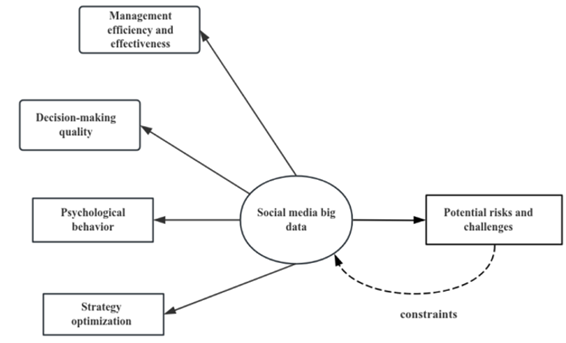
Figure 1 Conceptual Framework
Figure 1 presents the study’s conceptual idea. It provides the theoretical scope, while the empirical tests focus on scale-based predictors and outcomes reported in result section.
3. Methodology
3.1. Research Design
This study adopts a quantitative, cross-sectional survey design. The questionnaire is self-administered to examine relation between social media big data from a psycho-social perspective and higher education management strategies. The questionnaire design covers multiple dimensions: social media use, psychological–behavioral factors, and perceived impacts on educational management strategies. The questionnaire was originally developed in Chinese.
Two versions were created: one for faculty and one for students. Core items used a 5-point Likert scale ranging from Strongly Disagree (1) to Strongly Agree (5). Reverse-scored items were recorded during analysis. The faculty version measured seven dimensions: usage awareness, knowledge and skills, organizational support and environment, self-efficacy, privacy awareness, impact on work and life, and impact on higher education management strategies. The student version measured four dimensions: self-disclosure tendency, knowledge and skills, privacy awareness, and impact on learning and life.
3.2. Population and Sample
The research population focuses on Yunnan University of Finance and Economics (YUFE), covering students, teachers, and administrators as the core subject groups.
To enhance representativeness, the thesis reports using stratified random sampling within YUFE. After data screening/cleaning, the thesis reports 330 valid teacher and administrative staff questionnaires and 420 valid student questionnaires meeting statistical requirements.
3.3. Measurement of Variables
All construct items are measured on a 5-point Likert scale. Reverse-scored items are recoded prior to computing construct scores (e.g., "information overload anxiety") . Construct scores are calculated using the mean (or summed) score of items under each construct.
For faculty, the model specified usage awareness, knowledge and skills utilization, and organizational support and environment as independent variables. Impact on work and life served as the mediating variable, while higher education management strategies was the dependent variable. Self-efficacy and privacy awareness functioned as moderators.
Each construct was measured using multiple items in the faculty questionnaire : usage awareness (3 items), knowledge and skills (5 items), organizational support and environment (4 items), self-efficacy (3 items), privacy awareness (3 items), impact on work and life (4 items, including one reverse-scored item), and higher education management strategies (4 items).
The student questionnaire measured self-disclosure tendency, knowledge and skills, privacy awareness, and impact on learning and life, with reverse-scored items included where appropriate.
3.4. Data Collection and Analysis
Survey data are collected using Questionnaire Star on WeChat app as the questionnaire platform/source. The instrument is administered anonymously and intended to be completed in approximately 5–10 minutes.
The analysis proceeded in several steps. First step was data cleaning, aiming to remove invalid or inconsistent responses. Internal consistency and construct validity were evaluated using SPSS 26.0. The overall scales showed high reliability (Cronbach's α = 0.940 for the faculty questionnaire; 0.889 for the student questionnaire). Validity was further examined using the Kaiser–Meyer–Olkin (KMO) measure and Bartlett’s test of sphericity. The results indicated strong sampling adequacy (KMO = 0.927 for faculty; 0.901 for students) and significant Bartlett’s tests (p < 0.001), supporting factorability. Descriptive statistics were calculated, including means, standard deviations, and frequency distributions. Correlation analysis examined bivariate associations among variables. Regression analysis tested the hypothesized relationships, including mediation and moderation effects. Finally, structural equation modeling (SEM) was conducted to evaluate the overall model fit, with indices including χ²/df, RMSEA, and CFI reported.
3.5. Ethical Consideration
This study was approved by the IRB at the National Institute of Development Administration, Thailand (Protocol ID No. ECNIDA 2025/0121). It was conducted at Yunnan University of Finance and Economics, where permission was granted by the university office and consent was obtained from all participating individuals.
4. Results and Discussion
The measurement model checks are reported briefly to justify that the questionnaire data are suitable for subsequent hypothesis testing.
4.1. Respondent Profile and Daily Social Media Exposure
The sample includes three key groups: students (42.2%), administrative staff (35.6%), and teachers (21.2%), supporting a multi-stakeholder view of higher education management. Social media engagement is frequent: 41.8% spend 1–3 hours/day and 25.2% spend 3–5 hours/day, showing that social media is already embedded in everyday routines and provides a realistic data environment for management-related analysis.
Figure 2
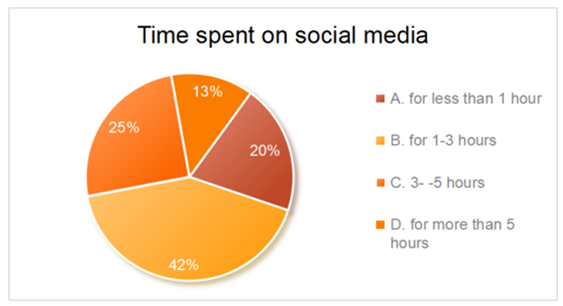
Figure 2
Time Spent on Social-Media
4.2. Common Social Media Activity Patterns
Usage is largely content-consumption and interaction oriented. The most common activity is browsing others’ content (63.0%), followed by discussion/comments (45.4%) and posting updates (34.6%); sharing information (16.4%) is less frequent. This pattern suggests that management communication may spread efficiently through content feeds, while interaction functions may support feedback and engagement.
4.3. Awareness of Social Media Big Data and Perceived Future Potential
Concept awareness is moderate: only 19.4% report “very good” understanding, while 50.2% report “some understanding,” and 30.4% show low/no understanding. Despite this, perceptions of application prospects are positive: 23.0% see it as “very promising” and 49.0% see “some potential,” compared with 23.4% uncertain and 4.6% pessimistic. This combination indicates an adoption opportunity but also a knowledge/training gap—important context for later organizational support and self-efficacy analyses.
Figure 3
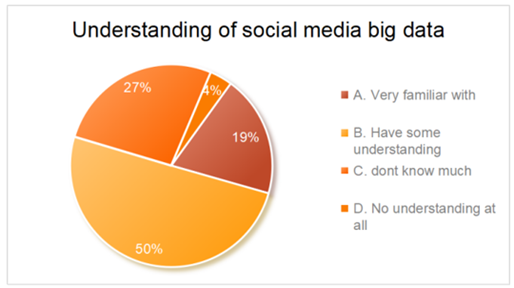
Figure 3 Understanding of Social-Media Big Data
Figure 4
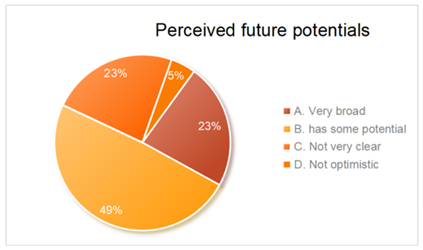
Figure 4
Perceived Future
Potential
4.4. Institutional Adoption Status
Implementation is uneven across units: 41.2% report that their school/unit has used social media big data for educational management, 41.6% report no use, and 17.2% are unsure. This shows that diffusion is incomplete and that internal information transparency about digital governance practices may still be limited.
4.5. Key Application Areas in Higher Education Management
Among the reported areas, teaching effectiveness evaluation (55.8%) and public opinion monitoring/management (52.0%) are most common. Student behavior analysis (37.4%) and enrollment publicity/consultation (37.2%) appear less frequently, suggesting that current practice prioritizes institutional governance and quality monitoring rather than purely student-level analytics.
4.6. Perceived Management Benefits of Social Media Big Data
Respondents most often associate social media big data with personalized teaching and guidance (61.6%) and optimized resource allocation (56.0%). Data-based decision support (37.4%) and teacher–student communication enhancement (36.8%) are also recognized. These results establish an empirical rationale for testing how psycho-social and organizational factors translate into perceived improvements in management strategies.
4.7. Measurement Validation and Model Testing
Overall, the descriptive analysis show high exposure, moderate literacy, and uneven implementation, yet clear perceived benefits. This provides the foundation for the next step—moving from descriptive patterns to formal measurement validation and hypothesis testing.
Following data screening, invalid or logically inconsistent questionnaires were removed, and 330 valid teacher responses and 420 valid student responses were retained for statistical analysis. Descriptive statistics (means, standard deviations, and frequency distributions) were first calculated to summarize response patterns and confirm that the data met basic distributional requirements. The teacher-scale means ranged from 3.19–3.43, and the student-scale means ranged from 2.92–3.08; the absolute values of skewness and kurtosis were < 2, indicating acceptable normality for subsequent parametric testing.
Next, measurement quality was examined to ensure the questionnaire data were suitable for hypothesis testing. Internal consistency was high, with Cronbach’s α = 0.940 for the teacher questionnaire and α = 0.889 for the student questionnaire. Construct validity and factorability were supported by strong KMO values (0.927 for teachers; 0.901 for students) and significant Bartlett’s tests (e.g., student questionnaire: χ² = 4493.374, df = 105, p < 0.001), confirming that the item sets were appropriate for factor-based modeling.
A confirmatory factor analysis was conducted using AMOS 24.0 to evaluate the overall model fit. The model demonstrated excellent fit to the data (χ²/df = 1.115, RMSEA = 0.019, SRMR = 0.028, CFI = 0.995, TLI = 0.994, IFI = 0.995, NFI = 0.956, GFI = 0.934, AGFI = 0.916), indicating good structural validity and overall model adequacy.
With these preliminary checks establishing data adequacy and measurement robustness, the analysis proceeded to formal hypothesis testing. The questionnaire included separate student and faculty versions; the following hypothesis-testing models are based only on the faculty sample (n = 330).
Table 1
|
Table 1 Testing the Direct Influence Relationship of Variables |
||||||||
|
Higher Education
Management Strategies |
Impact on Work and
Life |
Higher Education
Management Strategies |
||||||
|
Model 1 |
Model 2 |
Model 3 |
Model 4 |
Model 5 |
Model 6 |
|||
|
Constant Term |
3.433 |
0.141 |
3.797 |
1.011 |
0.882 |
-0.184 |
||
|
(0.375) |
(0.320) |
(0.354) |
(0.326) |
(0.338) |
(0.307) |
|||
|
Gender |
-0.043 |
-0.047 |
-0.192 |
-0.173 |
0.087 |
0.009 |
||
|
(0.144) |
(0.101) |
(0.136) |
(0.103) |
(0.112) |
(0.096) |
|||
|
Age |
-0.122 |
0.021 |
-0.053 |
0.038 |
-0.086 |
0.008 |
||
|
(0.123) |
(0.087) |
(0.116) |
(0.089) |
(0.095) |
(0.083) |
|||
|
Teaching Experience |
0.041 |
0.002 |
0.017 |
0.005 |
0.029 |
0.001 |
||
|
(0.117) |
(0.082) |
(0.110) |
(0.084) |
(0.090) |
(0.078) |
|||
|
Professional Title |
-0.015 |
-0.099 |
0.002 |
-0.072 |
-0.016 |
-0.076 |
||
|
(0.099) |
(0.070) |
(0.094) |
(0.071) |
(0.077) |
(0.066) |
|||
|
Spending Time Every
Day |
0.052 |
0.066 |
0.011 |
0.025 |
0.045 |
0.058 |
||
|
(0.084) |
(0.059) |
(0.079) |
(0.060) |
(0.065) |
(0.056) |
|||
|
Usage Awareness |
0.346 |
0.257 |
0.263 |
|||||
|
(0.049) |
(0.050) |
(0.048) |
||||||
|
Utilize Knowledge and
Skills |
0.223 |
0.315 |
0.121 |
|||||
|
(0.048) |
(0.049) |
(0.048) |
||||||
|
Organizational Support
and Environment |
0.401 |
0.251 |
0.320 |
|||||
|
(0.047) |
(0.048) |
(0.046) |
||||||
|
Impact On Work and
Life |
0.672 |
0.322 |
||||||
|
(0.046) |
(0.052) |
|||||||
|
R2 |
0.006 |
0.513 |
0.007 |
0.433 |
0.406 |
0.566 |
||
|
Adjust R2 |
-0.009 |
0.501 |
-0.008 |
0.419 |
0.395 |
0.554 |
||
|
F |
0.383 |
42.344 |
0.471 |
30.628 |
36.726 |
46.375 |
||
|
p |
0.86 |
0 |
0.798 |
0 |
0 |
0 |
||
|
Note: p < 0.05; p < 0.01; p < 0.001. |
|
|
|
|
|
|
||
Table 1 reports a set of hierarchical regression models testing the direct effects and the mediation path structure among the study variables. Models 1–2 use Higher Education Management Strategies (HEMS) as the dependent variable, where Model 1 includes only control variables (gender, age, teaching experience, professional title, and daily social media time) and Model 2 adds the core predictors (usage awareness, utilize knowledge and skills, and organizational support and environment). Models 3–4 use Impact on Work and Life (IWL) as the dependent variable, with Model 3 including controls only and Model 4 adding the same core predictors. Models 5–6 return to HEMS as the dependent variable to test the mediation pathway: Model 5 includes IWL (plus controls), and Model 6 includes the predictors and IWL simultaneously (plus controls). Abbreviations: HEMS = Higher Education Management Strategies; IWL = Impact on Work and Life.
The control-only models (Models 1 and 3) show limited explanatory power (R² = 0.006 for HEMS; R² = 0.007 for IWL), indicating that demographic and usage-time controls alone do not substantially predict the outcomes. After adding the predictors, Model 2 explains a large proportion of variance in HEMS (R² = 0.513; Adjusted R² = 0.501; F = 42.344, p < 0.001). All three predictors are positive and significant: usage awareness (β = 0.346, p < 0.001), utilize knowledge and skills (β = 0.223, p < 0.001), and organizational support and environment (β = 0.401, p < 0.001), suggesting that both individual-level readiness and institutional conditions are strongly associated with perceived improvements in management strategies. Similarly, Model 4 shows that the predictors significantly explain IWL (R² = 0.433; Adjusted R² = 0.419; F = 30.628, p < 0.001), with significant positive effects for usage awareness (β = 0.257, p < 0.001), knowledge and skills (β = 0.315, p < 0.001), and organizational support (β = 0.251, p < 0.001). In the mediation path, IWL strongly predicts HEMS in Model 5 (β = 0.672, p < 0.001; R² = 0.406). When both the predictors and IWL are entered together (Model 6), IWL remains significant (β = 0.322, p < 0.001) and the coefficients for the predictors decrease but remain significant (usage awareness β = 0.263, p < 0.001; organizational support β = 0.320, p < 0.001; knowledge and skills β = 0.121, p < 0.05), supporting a partial mediation pattern in which psycho-social readiness and organizational support influence HEMS both directly and indirectly through their effects on IWL.
Table 2
|
Table 2 Mediation Effect Test |
|||||
|
Effect
Decomposition |
Effect |
Boot
SE |
95% Lower |
95%2 Upper |
|
|
Usage
awareness → Impact on Work and Life → Higher education management
strategies |
Total
Effect |
0.597 |
0.050 |
0.499 |
0.696 |
|
Direct
Effect |
0.341 |
0.050 |
0.242 |
0.439 |
|
|
Mediating
Effect |
0.257 |
0.036 |
0.189 |
0.331 |
|
|
Using
knowledge and skills → Impact on work and life → Higher education
management strategies |
Total
Effect |
0.546 |
0.047 |
0.453 |
0.639 |
|
Direct
Effect |
0.271 |
0.051 |
0.172 |
0.371 |
|
|
Mediating
Effect |
0.275 |
0.040 |
0.203 |
0.357 |
|
|
Organizational
Support and Environment → Impact on Work and Life → Higher
Education Management Strategies |
Total
Effect |
0.617 |
0.049 |
0.521 |
0.713 |
|
Direct
Effect |
0.380 |
0.048 |
0.286 |
0.475 |
|
|
Mediating
Effect |
0.237 |
0.037 |
0.171 |
0.315 |
|
Table 2 presents the bootstrap mediation effect test for the proposed mechanism in which Impact on Work and Life (IWL) transmits the effects of three predictors—Usage Awareness, Using Knowledge and Skills, and Organizational Support and Environment—to Higher Education Management Strategies (HEMS). For each predictor, the table reports the Total Effect, Direct Effect, and Indirect (Mediating) Effect, along with the bootstrapped standard error (Boot SE) and 95% confidence intervals (CI) for inference. Mediation is supported when the 95% CI for the indirect effect does not include zero.
All three mediation paths are statistically supported because the 95% CIs for the indirect effects are entirely positive. For Usage Awareness → IWL → HEMS, the total effect is 0.597 (Boot SE = 0.050, 95% CI [0.499, 0.696]), with a direct effect of 0.341 (Boot SE = 0.050, 95% CI [0.242, 0.439]) and an indirect effect of 0.257 (Boot SE = 0.036, 95% CI [0.189, 0.331]), indicating a meaningful mediated component. For Using Knowledge and Skills, the total effect is 0.546 (Boot SE = 0.047, 95% CI [0.453, 0.639]); both the direct effect (0.271, 95% CI [0.172, 0.371]) and indirect effect (0.275, 95% CI [0.203, 0.357]) are significant, and the indirect effect is slightly larger than the direct effect, suggesting that improvements in work–life outcomes are a major pathway through which skills translate into better management strategies. For Organizational Support and Environment, the total effect is 0.617 (Boot SE = 0.049, 95% CI [0.521, 0.713]), with a direct effect of 0.380 (95% CI [0.286, 0.475]) and an indirect effect of 0.237 (95% CI [0.171, 0.315]). Overall, the consistent significance of both direct and indirect effects across predictors supports a partial mediation pattern, meaning that these predictors influence HEMS both directly and indirectly through IWL.
Table 3
|
Table 3 Adjustment Effect Test |
||
|
Impact
on Work and Life |
Higher
Education Management Strategies |
|
|
Model
7 |
Model
8 |
|
|
Constant
Term |
3.382(0.246) |
3.134(0.281) |
|
Gender |
-0.090(0.094) |
0.089(0.108) |
|
Age |
0.033(0.080) |
-0.058(0.092) |
|
Teaching
Experience |
-0.026(0.076) |
0.014(0.087) |
|
Professional
Title |
-0.025(0.065) |
-0.025(0.074) |
|
Spending
Time Every Day |
0.039(0.054) |
0.045(0.063) |
|
Usage
Awareness |
0.369(0.057) |
|
|
Utilize
Knowledge and Skills |
0.432(0.057) |
|
|
Organizational
Support and Environment |
0.342(0.052) |
|
|
Impact
On Work and Life |
0.777(0.054) |
|
|
Self-Efficacy |
-0.075(0.050) |
|
|
Privacy
Awareness |
0.187(0.054) |
|
|
Use
Awareness × Self-Efficacy |
0.113(0.052) |
|
|
Using
Knowledge and Skills × Self-Efficacy |
0.237(0.055) |
|
|
Organizational
Support and Environment × Self-Efficacy |
0.180(0.050) |
|
|
The
Impact of Work and Life × Privacy Awareness |
0.203(0.054) |
|
|
R2 |
0.553 |
0.451 |
|
Adjust
R2 |
0.536 |
0.438 |
|
F |
32.662 |
33.027 |
|
p |
0.000 |
0.000 |
|
Note: p
< 0.05; p
< 0.01; p
< 0.001. |
||
Table 3 reports the moderation (adjustment) effects using two regression models. In Model 7 (DV = Impact on Work and Life), Usage Awareness (b = 0.369, p < 0.001), Knowledge and Skills (b = 0.432, p < 0.001), and Organizational Support and Environment (b = 0.342, p < 0.001) all show significant positive effects, and Self-Efficacy strengthens these relationships as indicated by significant interaction terms (UA×SE: b = 0.113, p < 0.05; KS×SE: b = 0.237, p < 0.001; OSE×SE: b = 0.180, p < 0.001), with strong explanatory power (R² = 0.553; Adj. R² = 0.536; F = 32.662, p < 0.001). In Model 8 (DV = Higher Education Management Strategies), Impact on Work and Life has a strong positive effect (b = 0.777, p < 0.001), Privacy Awareness is also positive (b = 0.187, p < 0.01), and privacy awareness further amplifies the effect of work–life impact on management strategies (IWL×PA: b = 0.203, p < 0.001), with solid model fit (R² = 0.451; Adj. R² = 0.438; F = 33.027, p < 0.001).
Table 4
|
Table 4 Conditional Indirect Effects |
|||||
|
Effect |
Boot
SE |
95% Lower |
95% Upper |
||
|
Usage
Awareness |
Low
self-efficacy - low privacy awareness |
0.107 |
0.035 |
0.047 |
0.183 |
|
Low
self-efficacy - high privacy awareness |
0.213 |
0.048 |
0.123 |
0.311 |
|
|
High
self-efficacy - low privacy awareness |
0.267 |
0.061 |
0.151 |
0.394 |
|
|
High
self-efficacy - high privacy awareness |
0.531 |
0.06 |
0.414 |
0.646 |
|
|
Utilize
Knowledge and Skills |
Low
self-efficacy - low privacy awareness |
0.096 |
0.034 |
0.039 |
0.172 |
|
Low
self-efficacy - high privacy awareness |
0.188 |
0.047 |
0.099 |
0.282 |
|
|
High
self-efficacy - low privacy awareness |
0.308 |
0.07 |
0.174 |
0.449 |
|
|
High
self-efficacy - high privacy awareness |
0.600 |
0.062 |
0.479 |
0.720 |
|
|
Organizational
Support and Environment |
Low
self-efficacy - low privacy awareness |
0.094 |
0.033 |
0.040 |
0.168 |
|
Low
self-efficacy - high privacy awareness |
0.167 |
0.047 |
0.079 |
0.262 |
|
|
High
self-efficacy - low privacy awareness |
0.247 |
0.053 |
0.150 |
0.356 |
|
|
High
self-efficacy - high privacy awareness |
0.436 |
0.055 |
0.331 |
0.545 |
|
Table 4 reports the conditional indirect effects (bootstrapped) of Usage Awareness, Knowledge and Skills, and Organizational Support and Environment on Higher Education Management Strategies through Impact on Work and Life, under four combinations of self-efficacy (low/high) and privacy awareness (low/high). Across all predictors and conditions, the indirect effects are positive and statistically supported because the 95% CIs do not include zero, indicating robust moderated mediation. The magnitude of the indirect effect increases systematically as the moderators move from low to high, and the strongest mediation consistently occurs when both self-efficacy and privacy awareness are high (Usage Awareness: 0.531, 95% CI [0.414, 0.646]; Knowledge and Skills: 0.600, 95% CI [0.479, 0.720]; Organizational Support: 0.436, 95% CI [0.331, 0.545]). In contrast, the weakest indirect effects appear under low self-efficacy and low privacy awareness (≈ 0.094–0.107), suggesting that both psychological capability (self-efficacy) and risk sensitivity (privacy awareness) jointly strengthen the pathway through which social media big data–related factors translate into improved management strategy outcomes.
5. Conclusion and Discussion
Overall, the indirect pathway via Impact on Work and Life becomes much stronger as self-efficacy and privacy awareness move from low to high. For Usage Awareness, the conditional indirect effect rises from 0.107 (low SE–low PA) to 0.531 (high SE–high PA), an increase of 0.424 (~5.0× larger). For Knowledge and Skills, it increases from 0.096 to 0.600, a gain of 0.504 (~6.25× larger). For Organizational Support and Environment, it increases from 0.094 to 0.436, a gain of 0.342 (~4.6× larger). In short, the mediation mechanism is consistently present, but it is substantially amplified when both self-efficacy and privacy awareness are high, with the largest conditional indirect effect observed for Knowledge and Skills (0.600, 95% CI [0.479, 0.720]).
Social media big data, with its massive, real-time and diversified characteristics, provides a new perspective and tool for higher education management decision-making. On social media platforms, the data generated by teachers and students contains rich educational information and needs. By mining and analyzing these data, the internal laws and trends of educational activities can be revealed, providing more accurate and comprehensive support for decision-making Pope and Gao (2022). In detailed, in the broader field of higher education, social media big data has improved management efficiency and efficiency in many aspects Selowa et al. (2022). In teaching management, by analyzing students learning trajectory and course feedback data, managers can dynamically adjust teaching plan and course setting, improve teaching quality and meet students personalized needs Zeng et al. (2024). In resource allocation, the application of big data is first reflected in the accurate insight into the demand of educational resources Bai (2024). Social media platforms gather a huge amount of data and information about students learning preferences, course evaluation and resource use, providing managers with an important basis for resource allocation.
However, some teachers also said that although social media big data has brought many opportunities for education management, its application also faces some challenges. First, privacy protection is one of the most prominent problems. With the rapid development of social media and big data technologies, their widespread application in higher education has brought unprecedented convenience to teaching management, student service and other aspects, but it is also accompanied by the risk of personal privacy leakage Ang et al. (2020). In today’s digital age, social media big data has brought unprecedented opportunities for higher education, but it is also accompanied by a series of ethical and legal challenges. Through existing literature studies, it can be found that many respondents are concerned about the ethical norms and supervision mechanism of social media big data applications.
Therefore, colleges and universities should provide basic training for all teachers and students to popularize the basic concepts and technologies of big data Yao (2025). At the same time, strictly abide by the relevant national and local laws and regulations, such as China’s Cybersecurity Law and Personal Information Protection Law. On this basis, colleges and universities should formulate more detailed internal rules and operating procedures to ensure that data use is legal and compliant Selowa et al. (2022). Although a large amount of first-hand data is collected, the actual data used may have some limitations due to the difficulty of data acquisition and the requirements of privacy protection. Social media data is highly sensitive, and its acquisition and use are restricted by legal and ethical requirements, which may affect the comprehensiveness and depth of data analysis.
6. Implication
First, the data-driven management decision-making mechanism is an important way to improve the governance capacity of higher education. Practically, as more researches have pointed out that universities will realize the comprehensive integration and efficient utilization of data and then implement decision-making through building a sound data governance system and data sharing mechanism Bai (2024). Second, universities should provide basic training for all teachers and students to popularize the basic concepts and technologies of big data, which is so-called digital literacy. If teachers and students who need further learning, universities should be able to provide step on training and in-depth explain the technical details and application methods of big data Yao (2025). Third, universities should develop detailed guidelines for the use of data on which types of information can be shared publicly and which must be kept confidential Ang et al. (2020). For example, access to sensitive personal information should be strictly restricted, and only authorized personnel can access it. A concise informed consent template was designed to describe the purpose, scope and intended effect of data collection in plain language to ensure that each participant can fully understand and voluntarily agree to participate. Advanced encryption technology and access control mechanisms are introduced to ensure that all personal data stored and transmitted is highly encrypted and cannot be read or tampered with by unauthorized persons Ang et al. (2020). Finally, strictly abide by the relevant national and local laws and regulations. On this basis, educational institutions should put forward more detailed internal guidelines and operating procedures to ensure that data use is legal and compliant.
7. Limitation
We collected extensive first-hand data for this study. Instead of using identifiable social media records, we relied on self-reported perceptions. This choice helps protect privacy, but it may not capture behavior as precisely. While social media data analytics is important in our broader research, this study did not include detailed data mining of large-scale social media activity. Instead, we used survey-based measures. This method is practical and respects privacy, but it may limit how precisely we can measure behavior and the depth of insights we can derive from platform-level data.
CONFLICT OF INTERESTS
None.
ACKNOWLEDGMENTS
This article is derived from the author’s doctoral thesis submitted to the Doctor of Philosophy Program in Communication Arts and Management Innovation, Graduate School of Communication Arts and Management Innovation, National Institute of Development Administration (NIDA), Thailand. The author gratefully acknowledges the support of NIDA and Yunnan University of Finance and Economics (YUFE) and sincerely thanks all participants for their valuable time and contributions.
REFERENCES
Ang, K. L.-M., Ge, F., and Seng, K. (2020). Big Educational Data and Analytics: Survey, Architecture and Challenges. IEEE Access, 8, 116392–116414. https://doi.org/10.1109/ACCESS.2020.2994561
Attard, R., Smyth, L., Ollis, L., Valter, K., and Webb, A. L. (2023). Is it the Same, Socially? Fully Online Learning and its Impacts on Social Identification, Academic Performance and Confidence. Higher Education Research and Development, 42(8), 1855–1873. https://doi.org/10.1080/07294360.2023.2209521
Bai, H. (2024). Design and Application of Decision Support System for Educational Management Based on Big Data. Journal of Electrical Systems, 20(2). https://doi.org/10.52783/jes.3084
Baker, R. S., and Siemens, G. (2014). Educational Data Mining and Learning Analytics. In R. K. Sawyer (Ed.), The Cambridge Handbook of the Learning Sciences (2nd ed.,253–272). Cambridge University Press. https://doi.org/10.1017/CBO9781139519526.016
Bandura, A. (2001). Social Cognitive Theory: An Agentic Perspective. Annual Review of Psychology, 52, 1–26. https://doi.org/10.1146/annurev.psych.52.1.1
Dong, J., and Lazaro, J. P. (2024). The Influence of Social Media on College Choice Among Undergraduates Majoring in Big Data Management and Application in China. Journal of Contemporary Educational Research, 8(10). https://doi.org/10.26689/jcer.v8i10.8432
Fiske, S. T. (2001). Social Psychology, Theories of. In N. J. Smelser and P. B. Baltes (Eds.), International Encyclopedia of the Social and Behavioral Sciences (14413–14421). Elsevier. https://doi.org/10.1016/B0-08-043076-7/01648-X
Francis, G., Omar, Y., Moise, A., et al. (2025). Exploring the Impact of LearnENT’s Social Media Team as a Powerful Tool in Otolaryngology Medical Education. Journal of Otolaryngology - Head and Neck Surgery, 54. https://doi.org/10.1177/19160216251345465
Ge, Z. (2022). Review of Application of Social Media in Education: From 2007 to 2020. Journal of Beijing University of Posts and Telecommunications (Social Sciences Edition), 24(1), 102–112. https://doi.org/10.19722/j.cnki.1008-7729.2021.0190
Gorenc, N. (2025). AI Embedded Bias on Social Platforms. International Review of Sociology, 35(2), 317–336. https://doi.org/10.1080/03906701.2025.2489056
Hou, X. (2024). Big Data-Driven Analysis of Music Learning Behavior: Personalized Teaching Recommendations and Learning Strategy Optimization. Applied and Computational Engineering, 5(1). https://doi.org/10.54254/2755-2721/2025.18472
Katz, E., Blumler, J. G., and Gurevitch, M. (1973). Uses and Gratifications Research. Public Opinion Quarterly, 37(4), 509–523. https://doi.org/10.1086/268109
Kosinski, M., Stillwell, D., and Graepel, T. (2013). Private Traits and Attributes are Predictable from Digital Records of Human Behavior. Proceedings of the National Academy of Sciences of the United States of America, 110(15), 5802–5805. https://doi.org/10.1073/pnas.1218772110
Lazer, D., Pentland, A., Adamic, L., Aral, S., Barabási, A.-L., Brewer, D., Christakis, N., Contractor, N., Fowler, J., Gutmann, M., Jebara, T., King, G., Macy, M., Roy, D., and Van Alstyne, M. (2009). Computational Social Science. Science, 323(5915), 721–723. https://doi.org/10.1126/science.1167742
Li, Y., Sun, C., Wang, Y., Chi, H., Tang, H., Ma, M., Wei, L., Zhong, L., Li, J., Wei, K., Sha, Z., Fan, C., Zhang, G., Sun, P., and Jiao, M. (2025). Bias in Student Evaluations of Teaching in Undergraduate Medical Education: A Qualitative Study from a Medical School in Northern China. BMC Medical Education, 25, Article 73. https://doi.org/10.1186/s12909-025-07300-w
Liu, X., Feng, X., Zhang, M., Liu, J., and Chen, M. (2024). Educational Advices for New-Graduate Nurse on Social Media in China: A Grounded Theory Study. Journal of Nursing Management, 2024, Article 1276010. https://doi.org/10.1155/jonm/1276010
Nurius, P. S. (2013). Cognition and Social Cognitive Theory. Oxford Research Encyclopedia of Social Work. https://doi.org/10.1093/acrefore/9780199975839.013.65
Saputra, F., Tseng, T. M., Casuga, F. P., Lai, Y. H., Hung, C. H., and Hsiao, C. D. (2025). Application of an Imagej-Based Method to Measure Blood Flow in Adult Zebrafish and its Applications for Toxicological and Pharmacological Assessments. Biology, 14. https://doi.org/10.3390/biology14010051
Selowa, K. T., Ilorah, A., and Mokwena, S. N. (2022). Using Big Data Analytics Tools to Influence Decision-Making in Higher Education. SA Journal of Information Management, 24(1). https://doi.org/10.4102/sajim.v24i1.1489
Sun, H., Qian, L., Xue, M., Zhou, T., Qu, J., Zhou, J., Ji, S., Bu, Y., Hu, Y. R., Wu, S., Chen, Y., You, J., and Liu, Y. (2022). The Relationship Between Ehealth Literacy, Social Media Self-Efficacy and Health Communication Intention Among Chinese Nursing Undergraduates: A Cross-Sectional Study. Frontiers in Public Health, 10. https://doi.org/10.3389/fpubh.2022.1030887
Ullah, R. S., Asghar, A., Ali, M. I., and Jan, R. (2024). Studying How AI Tools Integrated with Social Media Can Help Teachers Manage Classrooms by Providing Insights into Student Behavior, Engagement Levels, and Areas Needing Improvement. Review of Education, Administration and Law, 7(4). https://doi.org/10.47067/real.v7i4.393
Usher, M., and Hershkovitz, A. (2023). Data-Driven Decisions of Higher Education Instructors in an Era of a Global Pandemic. Online Learning, 27(2), 170–186. https://doi.org/10.24059/olj.v27i2.3452
Wang, M. (2023). Analyzing the Impact of Social Media on College Students’ Post Graduation Planning. Lecture Notes in Education Psychology and Public Media, 3, 301–312. https://doi.org/10.54254/2753-7048/3/2022552
Xiao, J., Wang, L., Zhao, J., and Fu, A.-M. (2020). Research on Adaptive Learning Prediction Based on xAPI. International Journal of Information and Education Technology, 10(9), 679–684. https://doi.org/10.18178/ijiet.2020.10.9.1443
Yao, Y. (2025). Examining the Current Status and Strategies of Job-Course Integration for Preschool Education Majors in Higher Vocational Colleges Under the Employment-First Strategy. Journal of Advances in Humanities Research, 4(1), 22–41. https://doi.org/10.56868/jadhur.v4i1.265
Zeng, F., Chen, X., and Song, X. (2024). Utilising Big Data Analysis to Augment Student Learning: A Deep Dive into Customised Teaching and Management Mode. International Journal of Emerging Technologies in Learning, 19(2). https://doi.org/10.3991/ijet.v19i02.47229
|
|
 This work is licensed under a: Creative Commons Attribution 4.0 International License
© ShodhKosh 2026. All Rights Reserved.