ShodhKosh: Journal of Visual and Performing ArtsISSN (Online): 2582-7472
|
|
Performance Art and Cultural Diplomacy in West Asia
Jyotika Teckchandani
1

1 Assistant
Professor, Amity Institute of Social Sciences, Amity University, Noida, India
|
|
|
ABSTRACT |
|
|
In an era
where geopolitical competition increasingly unfolds through symbolic and
cultural arenas, performance art has emerged as a significant yet
under-theorized instrument of cultural diplomacy. This study examines how
live artistic performance functions as a distinct diplomatic practice in West
Asia by introducing the Embodied Cultural Diplomacy Model. Moving beyond
conventional frameworks that treat cultural diplomacy primarily as
institutional projection or national branding, the article conceptualizes
performance as an affective and spatial mechanism operating through embodied
interaction, emotional engagement, identity reframing, and soft power
transformation. Drawing on interdisciplinary insights from cultural diplomacy
scholarship, constructivist international relations, and performance studies,
the study develops a theoretical typology comprising three configurations:
institutional performance diplomacy, narrative-resistance diplomacy, and
heritage-reconstruction diplomacy. These configurations are analytically
applied to illustrative cases in West Asia, including state-supported
cultural platforms, grassroots diasporic initiatives, and exilic heritage
revival projects. The findings demonstrate that performance diplomacy is
structurally diverse and extends beyond state-centric models, encompassing
civil society and transnational actors. By foregrounding embodiment and
affect as central diplomatic mechanisms, the study expands existing debates
on soft power and sustainable cultural diplomacy and positions performance
art as a core arena in which geopolitical narratives, collective identities,
and symbolic legitimacy are negotiated. |
|||
|
Received 14 January 2026 Accepted 09 March
2026 Published 11 April 2026 Corresponding Author Jyotika Teckchandani, jyotikateckchandani@gmail.com DOI 10.29121/shodhkosh.v7.i4s.2026.7639 Funding: This research
received no specific grant from any funding agency in the public, commercial,
or not-for-profit sectors. Copyright: © 2026 The
Author(s). This work is licensed under a Creative Commons
Attribution 4.0 International License. With the
license CC-BY, authors retain the copyright, allowing anyone to download,
reuse, re-print, modify, distribute, and/or copy their contribution. The work
must be properly attributed to its author.
|
|||
|
Keywords: Cultural Diplomacy, Performance Art, Soft Power,
West Asia, Embodiment, Identity Formation |
|||



1. INTRODUCTION
In recent decades, cultural diplomacy has moved from the margins of foreign policy to a central position in global political strategy. As geopolitical tensions increasingly unfold not only through military and economic instruments but also through symbolic and cultural arenas, states and non-state actors alike have invested in culture as a means of influence, attraction, and narrative construction. Contemporary scholarship emphasizes that cultural diplomacy extends beyond the exchange of artistic products; it constitutes a strategic process aimed at shaping perceptions, fostering legitimacy, and cultivating long-term relational capital Faucher and Zhu (2025); Schneider (2009). Rather than functioning as a supplementary tool to hard power, culture has become a primary arena in which political meaning is negotiated and soft power is generated.
Recent work has further demonstrated that cultural diplomacy is not static but continually reconfigured in response to global transformations. For instance, Wüst and Nicolai (2023) illustrate how soft power strategies evolve through cultural platforms, particularly in regions marked by political contestation and historical complexity. Similarly, Zhu and Paquette (2025) argue that cultural institutions, galleries, libraries, archives, and museums increasingly operate as transnational diplomatic actors, expanding the boundaries of what diplomacy entails. These developments suggest that cultural diplomacy is no longer limited to formal state initiatives but includes diverse actors and aesthetic forms operating across borders.
Within this expanding field, the arts occupy a particularly significant position. Festivals, performances, exhibitions, and ritualized cultural events function as visible and affective sites of diplomatic engagement. Cultural festivals, for example, have been shown to operate as bottom-up diplomatic mechanisms, facilitating intercultural exchange and reshaping local-global relationships Kolokytha (2022). In addition, artistic exchange programs and symbolic rituals have been identified as processes through which political meanings are staged and collectively internalized Pacher (2018). These dynamics underscore the performative and symbolic dimensions of diplomacy, revealing how cultural events may serve not merely as representation but as active political practice.
Despite this growing recognition of arts-based diplomacy, much of the existing literature continues to focus on institutional frameworks, policy mechanisms, and strategic communication models. Cultural diplomacy is frequently analyzed through the lens of national branding, public diplomacy campaigns, or institutional best practices Schneider (2009). Edited volumes on arts and geopolitics highlight the significance of festivals and artistic infrastructures in international relations, yet the emphasis often remains on organizational structures rather than embodied artistic practice Lovrinic (2018). Consequently, while the arts are acknowledged as diplomatic tools, performance art itself remains under-theorized as a distinct mode of diplomatic action.
This gap is particularly evident in the context of West Asia, a region characterized by complex geopolitical rivalries, contested identities, and layered civilizational histories. In this environment, performance art does not merely function as cultural expression but as a site where identity, memory, resistance, and state projection intersect. Major art platforms such as Art Dubai exemplify institutional cultural diplomacy, positioning the Gulf as a global cultural hub. At the same time, diasporic initiatives such as the Syrian Cultural Caravan illustrate how performance can serve as a narrative intervention that challenges dominant media representations. Similarly, projects like Les Ballets Persans demonstrate how exilic performance revives heritage and negotiates transnational identity. These diverse practices suggest that performance art operates across multiple diplomatic registers—state-led, civil society–driven, and heritage-oriented—yet a coherent theoretical framework explaining this multiplicity remains absent.
· To address this conceptual lacuna, this study advances the following objectives:
· To establish a conceptual linkage between performance art and contemporary theories of cultural diplomacy.
· To develop a theoretical model explaining how embodied artistic practices generate diplomatic effects.
· To construct a typology of performance diplomacy applicable to West Asian contexts.
· To demonstrate how institutional, narrative-resistance, and heritage-reconstruction performances function within distinct diplomatic logics.
Guided by these objectives, the central research question of this article is:
How does performance art function as a distinct mode of
cultural diplomacy in West Asia?
By reframing performance art as an embodied and affective diplomatic practice rather than a mere representational tool, this article introduces the Embodied Cultural Diplomacy Model. This model conceptualizes performance as a process that moves from live artistic enactment to audience engagement, identity reframing, and ultimately soft power transformation. In doing so, the study contributes to ongoing debates on sustainable and reconfigured cultural diplomacy Faucher and Zhu (2025); Wüst and Nicolai (2023) while extending scholarship beyond institutional analysis toward the experiential and performative dimensions of diplomatic interaction.
Through integrating insights from international relations and performance studies, this article seeks to demonstrate that performance art constitutes not a peripheral cultural activity but a central diplomatic arena in which geopolitical narratives, collective identities, and symbolic power are continuously negotiated.
2. THEORETICAL BACKGROUND
Cultural diplomacy has emerged as a central dimension of contemporary international relations, particularly as states and non-state actors increasingly rely on symbolic and aesthetic resources to advance foreign policy objectives. Traditionally understood as the exchange of ideas, artistic practices, heritage, and intellectual traditions across borders, cultural diplomacy operates through attraction and legitimacy rather than coercion. In the language of soft power, culture constitutes a resource capable of shaping preferences and aligning perceptions without overt force. Soft power theory emphasizes that influence flows from credibility, values, and cultural appeal, and public diplomacy provides the communicative infrastructure through which that influence is projected and sustained Melissen (2011). Cultural diplomacy thus occupies a strategic space where identity, perception, and foreign policy intersect.
Recent scholarship has expanded this understanding by examining how cultural initiatives are embedded in governance frameworks and policy systems. Studies in the International Journal of Cultural Policy highlight how cultural production increasingly functions within broader economic and urban strategies, linking creative sectors to branding and international positioning (Journal of Cultural Policy, 2015). Similarly, Faucher and Zhu (2025) argue that cultural diplomacy must be understood in terms of sustainability, institutional continuity, and long-term relational investment rather than episodic display. Culture becomes not merely symbolic representation but a structured field of political action that requires infrastructural and normative support.
At the same time, scholars have pointed to the unrealized potential of cultural diplomacy. Schneider (2009) contends that cultural diplomacy often remains underdeveloped, constrained by bureaucratic limitations and instrumental thinking that reduces artistic engagement to promotional messaging. When cultural diplomacy is treated solely as projection, its deeper transformative capacity is diminished. This critique suggests that prevailing models may overlook dimensions of cultural interaction that operate beyond representation and branding.
Empirical research has further demonstrated that cultural diplomacy reconfigures soft power in context-specific ways. Wüst and Nicolai (2023), examining Morocco, show how cultural diplomacy can reshape regional alignments and international narratives through symbolic and artistic engagement. Their findings reinforce the view that culture functions not only as an accessory to foreign policy but as a constitutive force that shapes geopolitical positioning. Likewise, Zhu and Paquette (2025) extend the analysis beyond formal diplomatic channels, demonstrating how galleries, libraries, archives, and museums (GLAM institutions) participate in transnational cultural circulation, often operating alongside or beyond state-centered diplomacy. These developments complicate traditional distinctions between official diplomacy and cultural exchange.
Constructivist international relations theory provides an essential lens for understanding these dynamics. Constructivism argues that identities and interests are socially constructed through interaction. Diplomatic practices do not merely reflect pre-existing national identities; they actively produce and stabilize them. Cultural diplomacy therefore functions as a site of identity formation, where narratives of heritage, belonging, and sovereignty are articulated and negotiated. Adler-Nissen (2014) underscores that diplomatic practice is deeply entwined with sovereignty and political positioning, suggesting that cultural engagement inevitably participates in broader struggles over legitimacy and recognition.
Symbolic politics plays a crucial role in this process. Pacher (2018) demonstrates how public diplomacy relies on ritualized exchanges that create and stabilize political symbols. International cultural encounters generate shared performances of recognition, through which states and communities enact political relationships. These ritualized interactions reveal that diplomacy is not solely textual or strategic but performative. Culture, in this sense, becomes a medium through which political meaning is staged and interpreted.
While cultural diplomacy scholarship increasingly acknowledges symbolic and relational dimensions, it often continues to treat culture as representational output—exhibitions, language programs, or heritage displays. However, performance studies offer conceptual tools that shift the focus from representation to embodiment. Performance theory conceptualizes artistic action as a structured, repeatable practice that carries memory, identity, and political meaning. Schechner’s notion of performance as restored behavior emphasizes that performance reactivates cultural scripts in new contexts, allowing reinterpretation and transformation. Butler’s theory of performativity further suggests that identities are constituted through repeated embodied acts, making performance central to political subject formation.
Diana Taylor’s distinction between archive and repertoire deepens this insight. Whereas archives preserve cultural memory through documents and artifacts, the repertoire transmits memory through embodied practice. Performance thus becomes a living carrier of identity, enabling audiences and participants to experience culture as presence rather than abstraction. In political contexts, this embodied transmission has significant implications. Saward (2024) argues that political representation unfolds through presence and performative enactment, particularly in public spaces where bodies, gestures, and collective gatherings generate political meaning. Performance is therefore not peripheral to politics; it is a mode of political articulation.
Urban and regional case studies reinforce this perspective. Kolokytha (2022), analyzing a dance festival in the Greek periphery, illustrates how bottom-up cultural initiatives generate localized forms of diplomacy that reshape regional identity and international visibility. Lovrinic (2018), reviewing scholarship on festivals and geopolitics, underscores how artistic events function as arenas where cultural exchange and geopolitical positioning intersect. These examples highlight that performance-based cultural engagement often transcends simple image management, operating instead through spatial interaction and collective experience.
Taken together, this body of scholarship establishes that cultural diplomacy operates at the intersection of identity construction, symbolic politics, and relational influence. Yet, prevailing frameworks continue to emphasize institutional projection and representational output. Performance art introduces a distinct dimension to this discussion. Unlike static exhibitions or mediated cultural products, live performance generates immediate, embodied encounters between performers and audiences. These encounters produce affective engagement, shared temporality, and spatial co-presence. Through embodied interaction, identities are enacted, contested, and reframed in real time.
Existing cultural diplomacy models therefore require expansion. If cultural diplomacy is understood primarily as representation, its embodied and affective mechanisms remain underexplored. Performance art challenges this limitation by demonstrating how diplomatic influence can emerge through presence, ritual, and emotional resonance. By foregrounding embodiment and affect, performance reframes cultural diplomacy not simply as projection but as relational enactment. This theoretical foundation provides the basis for conceptualizing performance art as a distinct mode of diplomacy, one that operates through interaction, affective engagement, and identity transformation rather than solely through symbolic display.
3. CONCEPTUAL FRAMEWORK: EMBODIED CULTURAL DIPLOMACY MODEL
Building on the theoretical foundations of cultural diplomacy, constructivism, and performance theory, this section develops the Embodied Cultural Diplomacy Model as a conceptual framework for analyzing performance art as a distinct diplomatic practice. While existing scholarship recognizes culture as a soft power resource and a vehicle of symbolic influence Melissen (2011), Schneider (2009), Wüst and Nicolai (2023), it has largely emphasized representation, policy instruments, and institutional projection. The model proposed here shifts analytical attention toward embodiment, affect, and spatial interaction as central mechanisms of diplomatic transformation.
3.1. Defining Embodied Cultural Diplomacy
Embodied Cultural Diplomacy refers to the use of live artistic performance as an affective, spatial, and identity-forming diplomatic practice that operates through direct audience engagement. Unlike traditional cultural diplomacy tools—such as language programs, exhibitions, or media dissemination—performance art produces shared physical and temporal encounters. These encounters generate relational dynamics that can reshape perceptions, identities, and political alignments.
Cultural diplomacy scholarship increasingly acknowledges that influence operates through relational engagement rather than mere projection Faucher and Zhu (2025); Zhu and Paquette (2025). However, most analyses still conceptualize culture as transferable content or symbolic capital. Performance art complicates this view because it functions through presence, gesture, rhythm, and affective exchange. As Pacher (2018) demonstrates, diplomatic rituals create political symbols through embodied interaction. Performance extends this logic beyond formal state ritual to artistic enactment, where symbolic meaning is co-produced by performers and audiences.
Embodiment intensifies diplomatic engagement by collapsing distance between representation and reception. Saward (2024) argues that political representation unfolds through presence in public space; performance art operates similarly by staging identity claims in visible, participatory settings. Rather than transmitting culture as static content, performance enacts it. This enactment invites audiences into a process of meaning-making that may transform how identities are perceived and negotiated.
3.2. Core Process Logic
The Embodied Cultural Diplomacy Model conceptualizes diplomatic transformation as a sequential and relational process. At its foundation lies performance art itself—a live, structured artistic practice. Performance initiates embodied interaction: performers and audiences share a physical and temporal environment in which gestures, movements, and expressions circulate. This interaction generates affective engagement, as emotional responses such as empathy, solidarity, or reflection emerge through shared experience.
Affective engagement, in turn, opens the possibility of identity reframing. Constructivist theory suggests that identities are not fixed but are continuously shaped through interaction Adler (2014). In the context of performance, audiences may reinterpret narratives about nationhood, heritage, or political belonging. Identity reframing does not necessarily imply ideological conversion; rather, it signals a shift in perception that reconfigures relational understanding.
The final stage of the process involves soft power projection. As Melissen (2011) emphasizes, soft power depends on attraction and credibility. When identity reframing generates increased understanding or affinity, diplomatic capital accumulates. Wüst and Nicolai (2023) demonstrate that cultural engagement can reconfigure geopolitical narratives by reshaping perceptions of legitimacy and modernity. Through embodied and affective pathways, performance art contributes to this reconfiguration.
The process logic of the model can be summarized as follows Figure 1.
Figure 1
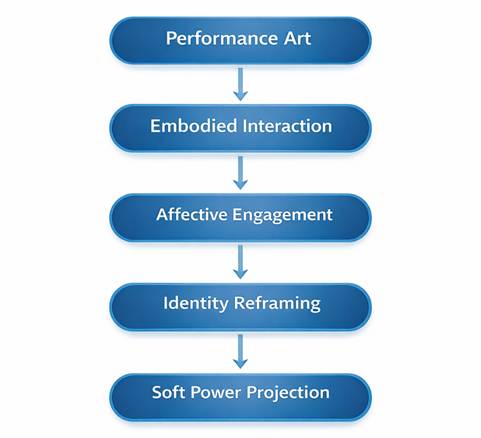
Figure 1 Embodied Cultural Diplomacy Model
Figure 1 illustrates the sequential process through which live artistic performance generates diplomatic influence via embodied and affective mechanisms (Author’s conceptual model).
This mechanism distinguishes performance diplomacy from representational diplomacy. Whereas exhibitions or media campaigns operate primarily through symbolic messaging, performance operates through lived experience. The immediacy of embodied interaction amplifies the potential for relational transformation.
3.3. Three Dimensions of Performance Diplomacy
While the core process logic explains how performance produces diplomatic effects through embodied interaction and affective engagement, performance diplomacy manifests in three distinct structural configurations.
Institutional Performance Diplomacy refers to state-supported or officially endorsed performances that project national image, prestige, and strategic narratives. Embedded in festivals, biennales, and cultural forums, these initiatives align artistic production with branding objectives. When grounded in authenticity rather than mere promotion, such performances contribute to sustainable soft power and signal political positioning within shared public space Schneider (2009);Faucher and Zhu (2025), Adler (2014).
Narrative-Resistance Diplomacy emerges from civil society, diasporic communities, or grassroots artistic actors. Instead of reinforcing official narratives, these performances challenge dominant representations and introduce alternative political stories. Through affective engagement and symbolic enactment, they reshape perceptions and expand diplomatic agency beyond the state Kolokytha (2022), Pacher (2018).
Heritage-Reconstruction Diplomacy operates where performance revives and reinterprets historical traditions across transnational contexts. By reactivating embodied repertoire and cultural memory, performers enact continuity and identity restoration, sometimes generating geopolitical tension over symbolic ownership Zhu and Paquette (2025), Wüst and Nicolai (2023).
Together, these three dimensions demonstrate that performance diplomacy is multi-layered and not confined to formal state structures. Each configuration activates the model’s process—performance, interaction, affect, identity reframing, and soft power projection—under different political conditions. The Embodied Cultural Diplomacy Model thus offers a flexible yet coherent framework for understanding how live artistic practice functions as a distinctive diplomatic mechanism in West Asia.
4. ANALYTICAL APPLICATION: PERFORMANCE DIPLOMACY IN WEST ASIA
This section applies the Embodied Cultural Diplomacy Model to three distinct configurations of performance diplomacy in West Asia. Rather than organizing the discussion by country, the analysis follows the model’s structural dimensions: institutional performance diplomacy, narrative-resistance diplomacy, and heritage-reconstruction diplomacy. Each configuration activates the same underlying process—performance, embodied interaction, affective engagement, identity reframing, and soft power projection—but does so under different political and organizational conditions.
4.1. Institutional Performance Diplomacy
Institutional performance diplomacy refers to state-supported or officially endorsed performance initiatives designed to project national image and cultural prestige. A prominent illustration of this configuration is Art Dubai, an international art fair established in 2007 and held annually under royal patronage in the United Arab Emirates. Art Dubai operates not only as a commercial art platform but as a strategic cultural infrastructure embedded within Dubai’s broader urban branding and global positioning strategy.
State patronage is central to this configuration. Art Dubai is held under the patronage of Sheikh Mohammed bin Rashid Al Maktoum, signaling institutional legitimacy and national endorsement. The fair regularly attracts more than 90 galleries from over 40 countries and tens of thousands of visitors, including collectors, curators, and representatives of international museums. These characteristics situate the event within elite transnational cultural networks. The fair’s programming extends beyond gallery exhibitions to include commissioned performance projects, artist residencies, and the Global Art Forum—an annual conference that convenes cultural leaders and intellectuals.
The logic underlying institutional performance diplomacy aligns with scholarship emphasizing the strategic use of culture in foreign policy. Cultural initiatives increasingly function as instruments of sustainable soft power when embedded within long-term policy frameworks Faucher and Zhu (2025). Institutional festivals, biennales, and forums create durable platforms for repeated interaction, reinforcing reputational capital over time. Wüst and Nicolai (2023) demonstrate that cultural diplomacy can reconfigure regional power narratives by aligning artistic production with national positioning strategies. In the case of Art Dubai, performance art becomes part of a broader narrative of cosmopolitan modernity, innovation, and openness.
Cultural economy also plays a role in this configuration. Art Dubai has been reported to generate significant economic impact for the local service sector, reinforcing the integration of cultural production and economic diversification. Such integration supports Schneider (2009) observation that cultural diplomacy is often tied to national image-building objectives. When performance art is embedded in institutional frameworks, it operates simultaneously as aesthetic practice and as strategic branding mechanism.
Global elite networks further intensify diplomatic reach. The Global Art Forum functions as a discursive platform where narratives about technology, culture, and geopolitics are debated in highly visible public settings. As Pacher (2018) argues, public diplomacy relies on ritualized symbolic exchanges. In this institutional context, performance art becomes a structured arena in which political and cultural identities are staged before international audiences.
Within the Embodied Cultural Diplomacy Model, institutional performance diplomacy activates the process logic identified earlier: performance generates embodied interaction within curated spaces; affective engagement emerges through aesthetic experience; identity reframing occurs as audiences reinterpret Dubai’s role as a global art hub; and soft power projection consolidates reputational influence. The political risk associated with this configuration remains relatively low, as state institutions carefully manage the boundaries of performance.
4.2. Narrative-Resistance Diplomacy
Narrative-resistance diplomacy emerges from civil society, diasporic communities, or grassroots artistic movements rather than from state apparatuses. The Syrian Cultural Caravan provides a compelling illustration of this configuration. Initiated in 2014 by Syrian artists, the Caravan traveled across multiple European cities, presenting multi-format exhibitions that combined dance, music, poetry, film screenings, and public debates. The stated objective was to counter dominant media narratives about Syria by foregrounding civil society voices and contemporary artistic expression.
Unlike institutional diplomacy, the Caravan was largely self-organized and initially self-financed. Its performances occurred in diverse settings—from cultural centers and festivals to public spaces—emphasizing mobility and accessibility. This grassroots structure aligns with scholarship on bottom-up cultural diplomacy, which highlights how localized and non-state initiatives reshape international perceptions Kolokytha (2022). Such initiatives often operate beyond formal diplomatic channels, yet they can significantly influence transnational narratives.
The Caravan’s strategy centered on counter-media storytelling. By creating platforms for dialogue and shared meals alongside performances, the movement sought to humanize Syrian society and challenge simplified representations of conflict. Emotional diplomacy was central to its impact. Performance art mobilized empathy, inviting European audiences to experience Syrian cultural production directly rather than through mediated reportage. This affective dimension resonates with Pacher (2018) argument that symbolic politics is generated through performative interaction.
Mobility across Europe expanded the Caravan’s diplomatic reach. Performances in France, Germany, Belgium, and other countries created transnational networks of solidarity. In this configuration, performance art functioned as counter-discourse, reframing identity through embodied engagement. Political risk was moderate: while not officially state-sponsored, the movement operated within politically sensitive contexts and addressed contentious narratives about war and displacement.
Within the Embodied Cultural Diplomacy Model, narrative-resistance diplomacy activates the same sequential process but under different conditions. Performance generates embodied interaction in decentralized spaces; affective engagement produces empathy and relational solidarity; identity reframing challenges dominant geopolitical narratives; and soft power emerges as moral persuasion rather than as state branding. This configuration demonstrates that diplomatic agency can be distributed and that performance art expands the boundaries of who participates in diplomacy.
4.3. Heritage-Reconstruction Diplomacy
Heritage-reconstruction diplomacy operates where performance revives, preserves, or reinterprets historical traditions in transnational contexts. Les Ballets Persans, founded in 2002 in Sweden as the successor to the former Iranian National Ballet, exemplifies this configuration. The company seeks to revive Iranian ballet heritage through classical and contemporary productions grounded in Persian cultural themes.
Exilic reconstruction is central to this case. Established outside Iran, the company positions itself as a cultural bridge linking diaspora communities with historical memory. Its repertoire includes choreographies based on Persian literature and mythology, and it collaborates with national ballet ensembles from Central Asia. Through performance, the company reactivates embodied repertoire, transmitting cultural identity across borders.
Cultural ownership conflicts illustrate the geopolitical dimension of heritage reconstruction. During its 2002 world premiere, Les Ballets Persans staged Azerbaijani ballets, triggering protests and political tension related to claims over national heritage. These controversies underscore how performance can become a site of symbolic contestation. Wüst and Nicolai (2023) show that cultural diplomacy reconfigures soft power landscapes; heritage revival similarly reshapes identity hierarchies and territorial narratives.
Geopolitical tensions intensify when performance challenges established boundaries of national identity. Zhu and Paquette (2025) note that transnational cultural institutions often participate in renegotiating identity across borders. In the case of Les Ballets Persans, embodied performance enacts continuity with Persian heritage while simultaneously navigating complex regional politics.
Within the Embodied Cultural Diplomacy Model, heritage-reconstruction diplomacy activates identity reframing through memory revival. Performance generates embodied interaction; affective engagement reinforces attachment to cultural heritage; identity reframing emphasizes continuity and belonging; and soft power projection emerges as civilizational legitimacy. Political risk in this configuration is comparatively high, as symbolic claims over heritage may provoke diplomatic friction. The comparative structural characteristics of the three performance diplomacy configurations are summarized in Table 1.
Table 1
|
Table 1 Structural Variations in Performance Diplomacy |
|||
|
Analytical Variable |
Institutional
Configuration |
Narrative-Resistance
Configuration |
Heritage-Reconstruction
Configuration |
|
Organizational Base |
Government-aligned
cultural infrastructure |
Independent artistic
networks |
Diaspora-led cultural
revival bodies |
|
Strategic Orientation |
International
visibility and reputation management |
Reframing dominant
geopolitical narratives |
Reassertion of
historical-cultural continuity |
|
Spatial Setting |
Curated global art
platforms |
Mobile, public, and
community spaces |
Transnational
performance circuits |
|
Source of Legitimacy |
State endorsement and
policy alignment |
Moral authority and
civic authenticity |
Civilizational memory
and tradition |
|
Diplomatic
Vulnerability |
Reputational
fluctuation |
Political sensitivity
and dissent exposure |
Symbolic ownership
disputes |
|
Influence Mechanism |
Prestige consolidation |
Empathic resonance |
Identity reaffirmation |
Table 1 presents analytically distinct variables across the three performance diplomacy configurations
The spectrum of performance diplomacy—from state-centered branding to civic resistance, with heritage mediation occupying an intermediate position—is visualized in Figure 2.
Figure 2

Figure 2 Performance Diplomacy Spectrum
Figure 2 visualizes the continuum of performance diplomacy configurations from institutional branding to grassroots resistance, with heritage mediation occupying an intermediate position
Together, these applications demonstrate that performance diplomacy in West Asia is neither monolithic nor confined to state institutions. Institutional, narrative-resistance, and heritage-reconstruction configurations each activate embodied interaction and affective engagement but do so within distinct political frameworks. By organizing the analysis around model dimensions rather than geographic units, the section highlights the structural flexibility of performance art as a diplomatic mechanism.
5. DISCUSSION
The findings of this study suggest that performance art expands the analytical boundaries of cultural diplomacy by foregrounding embodiment, affect, and spatial interaction. While traditional cultural diplomacy scholarship emphasizes policy instruments, representation, and institutional projection Schneider (2009), Melissen (2011), the Embodied Cultural Diplomacy Model demonstrates that live artistic performance operates through a distinct relational mechanism. Rather than transmitting culture as symbolic content, performance generates shared experiential encounters that can reshape perceptions and recalibrate diplomatic relationships.
Institutional performance diplomacy, as illustrated through state-supported cultural platforms, aligns with recent arguments that cultural diplomacy must be understood as a structured and sustainable practice rather than episodic display Faucher and Zhu (2025). When performance initiatives are embedded within broader policy ecosystems—such as international art fairs or curated forums—they contribute to durable reputational capital and long-term soft power consolidation. Wüst and Nicolai (2023) show that cultural diplomacy can reconfigure soft power by reshaping regional narratives and signaling modernity or openness. In the West Asian context, institutional performance diplomacy operates not merely as branding but as geopolitical positioning, projecting images of cosmopolitanism and global connectivity.
However, reducing performance to state-managed branding risks underestimating its transformative capacity. Schneider (2009) cautions that cultural diplomacy often fails to realize its potential when constrained by promotional logic. The embodied dimension identified in this study suggests that performance art exceeds image management because it engages audiences affectively and relationally. Rai and Reinelt (Eds.). (2014) argue that politics is enacted through performance, where gestures, bodies, and staged encounters generate political meaning. In this sense, performance diplomacy is not simply representational but constitutive: it produces shared spaces where identity claims are enacted rather than merely described.
The analysis of narrative-resistance diplomacy further complicates state-centric models. Grassroots and diasporic performance initiatives demonstrate that diplomatic agency is distributed across civil society. Kolokytha (2022) illustrates how bottom-up cultural initiatives can reshape urban and international narratives through localized festivals. Such initiatives operate through emotional mobilization and relational solidarity rather than formal diplomatic channels. Hutchison (2016) emphasizes the role of collective emotions in shaping political communities; performance art activates these affective processes by creating shared experiences of empathy, grief, or resilience. Through affective engagement, audiences may reinterpret political narratives and recalibrate their perceptions of legitimacy and belonging.
This affective mechanism underscores a key contribution of the Embodied Cultural Diplomacy Model: identity reframing occurs not only through discourse but through emotional encounter. Pacher (2018) demonstrates that public diplomacy relies on ritualized symbolic exchanges that create political meaning. Performance art intensifies this ritual dimension by situating political symbolism within embodied co-presence. The diplomatic effect is therefore relational and experiential rather than purely communicative.
Heritage-reconstruction diplomacy introduces an additional layer of complexity. When performance revives historical traditions in transnational contexts, it engages questions of memory, legitimacy, and symbolic ownership. Zhu, and Paquette (2025) argue that cultural institutions participate in transnational identity formation beyond traditional diplomatic structures. Performance-based heritage revival similarly negotiates identity across borders, sometimes generating geopolitical tension. Wüst and Nicolai (2023) show that cultural diplomacy can reconfigure soft power hierarchies; heritage reconstruction can likewise challenge or reaffirm narratives of civilizational continuity.
Importantly, the embodied dimension intensifies these dynamics. Saward (2024) emphasizes that political representation unfolds through presence in public space. Performance art situates identity claims within visible and participatory settings, amplifying their diplomatic resonance. Unlike digital or mediated public diplomacy Bjola Cassidy, and Manor (2019), embodied performance creates immediate relational proximity. This proximity enhances affective intensity and strengthens the potential for identity transformation.
Collectively, these findings suggest that performance diplomacy cannot be fully captured within conventional soft power frameworks. While soft power theory explains attraction and influence, the Embodied Cultural Diplomacy Model reveals the mechanisms through which attraction is generated: embodied interaction, affective engagement, and identity reframing. Institutional, narrative-resistance, and heritage-reconstruction configurations each activate these mechanisms under distinct political conditions, ranging from low-risk branding environments to high-risk symbolic contestation.
By integrating insights from cultural diplomacy scholarship Faucher and Zhu (2025), Schneider (2009), soft power reconfiguration Wüst and Nicolai (2023), bottom-up diplomacy Kolokytha (2022), affective politics (Hutchison, 2016), and performance theory Rai and Reinelt (Eds.). (2014), Saward (2024), this discussion demonstrates that performance art constitutes a distinct and under-theorized diplomatic practice. It operates not merely through representation but through embodied presence and relational experience. In the context of West Asia, where identity, sovereignty, and geopolitical narratives remain contested, performance art functions as a flexible yet potent mechanism of cultural engagement capable of reshaping diplomatic landscapes through lived encounter.
6. CONCLUSION
This study has demonstrated that performance art functions as a distinctive mode of cultural diplomacy by operating through embodiment, affect, and relational engagement rather than mere symbolic representation. Through the Embodied Cultural Diplomacy Model, it has shown that live artistic performance generates diplomatic influence via embodied interaction, affective resonance, and identity reframing, ultimately contributing to soft power projection. By applying this framework to institutional, narrative-resistance, and heritage-reconstruction configurations in West Asia, the analysis reveals that performance diplomacy is structurally diverse and extends beyond state-centric approaches, encompassing grassroots and transnational actors. Integrating insights from soft power theory, constructivism, and performance studies, the study expands existing cultural diplomacy scholarship and underscores the political significance of embodied artistic practice in shaping perceptions, identities, and geopolitical relationships.
CONFLICT OF INTERESTS
None.
ACKNOWLEDGMENTS
None.
REFERENCES
Adler-Nissen, R. (2014). Opting out of the European Union: Diplomacy, Sovereignty and European Integration. Cambridge University Press.
Ang, I., Isar, Y. R., and Mar, P. (2015). Cultural Diplomacy: Beyond the National Interest? International Journal of Cultural Policy, 21(4), 365–381. https://doi.org/10.1080/10286632.2015.1042474
Bjola, C., Cassidy, J., and Manor, I. (2019). Public Diplomacy in the Digital Age. In Public diplomacy in the digital age. https://doi.org/10.1163/9789004410824_008
Faucher, C., and Zhu, B. (2025). Towards a Sustainable Cultural Diplomacy. International Journal of Cultural Policy, 1–16. https://doi.org/10.1080/10286632.2025.2470826
Hutchison, E. (2016). Affective Communities in World Politics: Collective Emotions After trauma. Cambridge University Press. https://www.cambridge.org/core/books/affective-communities-in-world-politics/7A68E09FEAF58AA701AC82778CD58D04
Kolokytha, O. (2022). Bottom-Up Cultural Diplomacy in the Greek Periphery: The City of Chania and Dance Days Chania festival. City, Culture and Society, 29, 100448. https://doi.org/10.1016/j.ccs.2022.100448
Lovrinic, B. (2018). Review of the Book Cultural Diplomacy: Arts, Festivals And Geopolitics, by M. D. Šešić, L. Rogač Mijatović, & N. Mihaljinac (Eds.). Croatian International Relations Review, 24(82).
Melissen, J. (2011). Concluding Reflections on Soft Power and Public Diplomacy in East Asia. In S. J. Lee & J. Melissen (Eds.), Public Diplomacy and Soft Power in East Asia. Palgrave Macmillan. https://doi.org/10.1057/9780230118447_12
Pacher, A. (2018). The Ritual Creation of Political Symbols: International Exchanges in Public Diplomacy. The British Journal of Politics and International Relations, 20, Article 136914811878604. https://doi.org/10.1177/1369148118786043
Rai, S. M., and Reinelt, J. (Eds.). (2014). The grammar of politics and performance (1st ed.). Routledge. https://doi.org/10.4324/9781315879871
Saward, M. (2024). Presence, Power, and Performing Political Representation; or, what Happens in the Square. In (Chapter 4). Oxford University Press. https://doi.org/10.1093/oso/9780198934905.003.0004
Schneider, C. P. (2009). The unrealized potential of cultural diplomacy: “Best practices” and what could be, if only…. The Journal of Arts Management, Law, and Society, 39(4), 260–279. https://doi.org/10.1080/10632920903449027
Wüst, A., and Nicolai, K. (2023). Cultural Diplomacy and the Reconfiguration of Soft Power: Evidence from Morocco. Mediterranean Politics, 28(4), 554–579. https://doi.org/10.1080/13629395.2022.2033513
Zhu, B., and Paquette, J. (2025). Beyond Diplomacy: GLAM and Cultural Transnationalism. Globalizations, 1–22. https://doi.org/10.1080/14747731.2025.2576963
|
|
 This work is licensed under a: Creative Commons Attribution 4.0 International License
© ShodhKosh 2026. All Rights Reserved.