ShodhKosh: Journal of Visual and Performing ArtsISSN (Online): 2582-7472
|
|
|
Special Issue on Technological Convergence in Visual
Arts: Integrating AI, Data-Driven Systems, and Immersive Media for Creative
Transformation Dr. Chaitanya Shinkhede 1 1 Assistant Professor, School of Media and Communication, MIT World
Peace University, Pune, India 2 Head of Department & Assistant Professor, Faculty of Mass
Communication & Media Technology, Shree Guru Gobind Singh Tricentenary
University, Gurugram, Haryana – 122505, India 3 Yadavrao Tasgaonkar
Institute of Engineering and Technology, Karjat,
Maharashtra, India 4 Assistant
Professor & Head of Department, PhD in Computer Science, Former Tech
Lead, Nashik, Maharashtra, India 5 Lecturer, Kocaeli University Ömer İsmet Uzunyol Vocational
School, Department of Auditory Techniques and Media Production, Turkey |
|
|
|




Dear Readers and Contributors,
The ShodhKosh:
Journal of Visual and Performing Arts invites original
research papers, review articles, and creative–critical contributions for a
Special Issue titled “Technological Convergence in Visual Arts: Integrating AI,
Data-Driven Systems, and Immersive Media for Creative Transformation.”
In the
contemporary era, rapid advancements in artificial intelligence, data-driven
systems, and immersive technologies are significantly transforming the
landscape of visual arts. The integration of these technologies is not only
redefining artistic practices but also reshaping the processes of creation,
curation, and audience engagement. Artificial intelligence is emerging as a
creative collaborator, data-driven systems are influencing aesthetic
decision-making, and immersive media such as virtual reality and augmented
reality are enabling new experiential dimensions of art. Together, these
developments represent a paradigm shift in how visual culture is produced,
interpreted, and experienced.
This Special Issue seeks to explore the
dynamic intersections of art, technology, and digital innovation, with a
particular emphasis on the convergence of computational intelligence and
immersive environments within artistic practices. It aims to provide a
multidisciplinary platform for scholars, practitioners, and researchers to
critically examine the implications of these transformations on creativity,
authorship, ethics, and cultural expression. The issue also encourages
reflection on how technological convergence contributes to new forms of
storytelling, interactive installations, virtual exhibitions, and digitally
mediated cultural experiences.
Aligned with the journal’s commitment to
fostering interdisciplinary research across visual arts, media studies, design,
and cultural studies, this Special Issue emphasizes the importance of bridging
artistic inquiry with emerging technological frameworks. It welcomes
contributions that demonstrate theoretical rigor, methodological innovation,
and critical engagement with contemporary issues surrounding technological
integration in the arts. Both empirical and conceptual research, as well as
practice-based studies, are encouraged, particularly those that investigate the
evolving relationship between human creativity and machine intelligence.
We invite contributors to submit their original work that reflects innovative thinking and scholarly excellence in this rapidly evolving field. The editorial team looks forward to receiving submissions that will contribute meaningfully to the discourse on technological convergence and its transformative impact on visual arts and creative practices.
Sincerely,
|
|
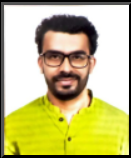
Dr. Chaitanya Shinkhede is an Assistant Professor in the
School of Media and Communication, MIT World Peace University, Pune, where he
contributes to teaching, research, and academic development in media studies.
His ShodhKosh profile states: “Dr. Chaitanya
Shinkhede is Assistant Professor, School of Media and Communication, MIT
World Peace University, Pune.” He
holds a Ph.D. in Mass Communication and Journalism from Tilak Maharashtra Vidyapeeth
(2021), completing his doctoral research on “Assessing Sustainability of
Rural Community Radio Stations in Maharashtra with Special Reference to Mann
Deshi Taranga.” His academic background includes master’s degrees in Mass Communication and Journalism and
Ancient Indian History & Archaeology, along with a BCA, reflecting a
multidisciplinary foundation. He has taught at several institutions,
including PAH Solapur University, Marathwada Mitra Mandal College of
Commerce, and Sangameshwar College. Dr. Shinkhede’s
research interests span community radio, media ethics, development
communication, cultural theory, and online journalism, supported by
publications, book reviews, and participation in national workshops. |
|
|
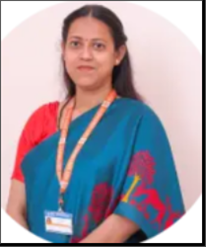
Dr. Tejee Isha is an Assistant Professor in the Faculty of Mass Communication & Media Technology at SGT University, where she contributes to teaching, research, and academic development in media studies. Her institutional profile notes that she holds qualifications including BAMC (Hons), M.A. (Mass Communication), M.Phil., and a Ph.D. in Mass Communication, with her doctoral research focusing on “Sensibility of Women in North‑Eastern Media.” With over 4.7 years of academic and industry experience, Dr. Isha has published more than 200 articles on North‑Eastern culture, women’s issues, and contemporary media, along with 19 research papers in national and international journals. She has also authored a book titled Human Values & Professional Ethics and has contributed significantly to mobile journalism and digital media studies. Her research interests span culture studies, new media, gender studies, climate issues, and development communication, and she frequently serves as a resource person, chair, and presenter at conferences, workshops, and FDPs. |
|
|
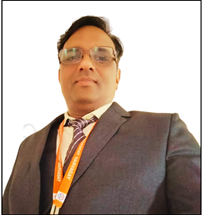
Dr. Harish Barapatre an academician and researcher in the
field of Computer Science and Engineering with 19 years of teaching
experience. I am currently working with Yadavrao
Tasgaonkar Institute of Engineering and Technology, Karjat,
Maharashtra, India. I completed my Ph.D. in Computer
Science and Engineering from Shri Jagdishprasad Jhabarmal Tibrewala University,
Rajasthan, India in 2024. My research interests include
Artificial Intelligence, Machine Learning, Deep Learning, Image Processing,
Data Science, and Medical Image Analysis. I have published several research
papers in Scopus indexed and peer-reviewed journals, and my publications are
also available on Google Scholar. My research work has been published in
journals such as ShodhKosh: Journal of Visual and
Performing Arts, International Journal of Novel Research and Development,
International Engineering Journal for Research & Development,
International Journal of Advance Research, Ideas and Innovations in
Technology. Throughout my academic career, I have
been actively involved in teaching, research supervision, and organizing
seminars, workshops, technical events, and hackathons for engineering
students. As an editor, I am committed to maintaining high academic standards, ensuring a rigorous peer-review process, and promoting innovative research in emerging areas of computer science and engineering. |
|
|
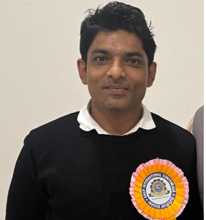
Dr. Balkrishna K. Patil is a Computer Science researcher and
academic leader with over 14 years of combined experience in software
engineering, distributed systems, and higher education. His CV states that he
is an “Assistant Professor & Head of Department” at SITRC, Nashik, and a
former Tech Lead with extensive industry experience across telecom, defence,
and cloud‑based enterprise environments. He holds a PhD in Computer
Science, with doctoral research focused on “POAST (Proof of Authenticated
Space‑Time), a blockchain‑based consensus approach for
delay‑tolerant space communication environments.” His research portfolio includes 11
Scopus‑indexed publications, a published patent (2025), and active
contributions to AI, blockchain, deep learning, and secure distributed
systems. He has presented internationally, including at the National University
of Singapore, and serves as a reviewer and contributing author for global
publishers. Dr. Patil’s academic leadership includes curriculum development, NBA documentation, student mentoring, and guiding 20+ applied projects. His blend of research depth and industry expertise positions him as a significant contributor to emerging technologies and engineering education. |
|
|
Dr. Bayram Çağlar is a scholar in Communication and
Media Studies affiliated with Gümüşhane
University, Türkiye, where he contributes to teaching, research, and academic
development in the field of communication sciences. According to his academic
profile, he is ranked within the discipline of “İletişim
bilimleri” and maintains measurable research
impact, reflected in an H‑index of 5, i10‑index of 2, and 52
total citations. His work spans contemporary
communication theory, media analysis, and interdisciplinary approaches to
social sciences. Dr. Çağlar’s research momentum is notable, with 80%
H‑index momentum and 71.2% citation momentum, indicating strong recent
scholarly activity. He contributes to academic discourse
through publications, conference participation, and engagement with emerging
communication trends. His profile reflects a growing influence within Türkiye
and Europe, positioning him as an active researcher committed to advancing
media and communication scholarship. |
|
|
 This work is licensed under a: Creative Commons Attribution 4.0 International License
© ShodhKosh 2026. All Rights Reserved.