ShodhKosh: Journal of Visual and Performing ArtsISSN (Online): 2582-7472
|
|
Algorithmic Emotion and Influencer Imagery: A Multimodal Visual Media Analysis of Consumer Perception in Social Media Advertising
Twinkle Soni 1
 ,
Dr. Vinod 2
,
Dr. Vinod 2 , Deepali Verma 3
1 Research
Scholar, University Institute of Media Studies, Chandigarh University, Mohali,
Punjab, India
2 Associate Professor, University
Institute of Media Studies, Chandigarh University, Mohali, Punjab, India
3 Assistant Professor, School of Media,
Film and Entertainment, Sharda University, Greater Noida, India
|
|
|
ABSTRACT |
|
|
The rapid
development of social media platforms has revolutionized the field of
advertising and made it a highly personalized, image-oriented, and
algorithmically-driven process. This experiment will look into the
relationship between algorithmic emotion and influencer imagery and how they
will produce an effect on consumer perception within the digital advertising
environment. The hypothesis of this research is a multimodal analysis based
on the extraction of the visual characteristics of the content, sentiment
analysis, and engagement rates to determine to what extent the emotionally
resounding influencer content is boosted by the platform algorithms. The data
obtained on prominent social media platforms, with the examples of Instagram,
Tik Tok, and YouTube, are processed with the help of deep learning algorithms
in the form of convolutional neural networks to process the image and natural
language processing to detect the sentiment. The results indicate that the
content of influencers that is aesthetically pleasing and has a positive
emotional impact on the user has a huge boost on user engagement and
perception. Platform analysis provides insights into how short-form content
platform is more engaging since it is more immersive and algorithm-driven.
The study underlines the importance of integrating emotional intelligence and
using visual stories as the part of the digital marketing strategy and the
need to address the ethical concerns related to the manipulations in
algorithms. Overall, the proposed framework can be highly beneficial to
marketers, researchers, and the creators of the platforms to optimize
consumer engagements in social media advertising. |
|||
|
Received 31 January 2026 Accepted 16 March
2026 Published 11 April 2026 Corresponding Author Deepali
Verma, deepali.verma@sharda.ac.in DOI 10.29121/shodhkosh.v7.i4s.2026.7606 Funding: This research
received no specific grant from any funding agency in the public, commercial,
or not-for-profit sectors. Copyright: © 2026 The
Author(s). This work is licensed under a Creative Commons
Attribution 4.0 International License. With the
license CC-BY, authors retain the copyright, allowing anyone to download,
reuse, re-print, modify, distribute, and/or copy their contribution. The work
must be properly attributed to its author.
|
|||
|
Keywords: Algorithmic Emotion, Influencer Marketing, Consumer
Perception, Social Media Advertising, Visual Media Analysis, Multimodal
Learning, Sentiment Analysis, Engagement Metrics |
|||



1. INTRODUCTION
The fast growth of digital platforms has revolutionized the advertising landscape, moving it beyond the traditional broadcast media, and into the highly personal, aesthetically oriented and algorithmically selected space. Instagram, Tik Tok, and YouTube have become the most popular social platforms to be used as channels of brand communication, and the visual storytelling and the use of influencers are important to shape the perception of consumers. In contrast to traditional advertising, where the mass communication strategy was of utmost importance, the contemporary social media advertising is directly integrated into the user-generated content ecosystems and is propelled by the advanced recommendation algorithms Francisco et al. (2021). These algorithms study user behavior, preferences and interactions to promote content that maximizes engagement and thus come up with the notion of algorithmic emotion where emotional reactions are not only elicited but also predicted and optimized using computational models. This paradigm shift has transformed the way consumers are engaging the advertisements whereby emotional appeal and visual attractiveness are key to the effectiveness of marketing.
Visuals like color schemes, facial expression, body language and the contextual backgrounds help to create an emotional tone of the content and this affects the perception of the audiences towards the influencer and the brand. Consequently, the influencer imagery has turned into a digital marketing strategic asset, which can influence attitudes, preferences, and purchasing intentions Malinen and Koivula (2020). These visual strategies are even more effective because they are integrated with platform algorithms that, in turn, enhance the effect of the content that induces more emotional appeal, as the latter has a higher chance to get promoted and spread widely.
Algorithms emotion is a phenomenon at the crossroads of artificial intelligence and affective computing and digital marketing. It is described as the capacity of algorithms to identify, comprehend and react to human feelings using data-based methods Joshi et al. (2023). The algorithms deduce emotional responses and interests by examining the user behavior in terms of likes, sharing, comments and viewing patterns, which allows the sites to present content that resonates with their psychological tendencies. Within the framework of social media advertising, this implies that the content of influencers that is emotionally charged is not just developed on purpose, but also carefully selected by algorithms to be extended to reach as many people as possible and to engage them. This is a feedback loop between the creation of emotional content and the reinforcement provided by an algorithm and generates a potent mechanism that can influence consumer perception in both subtle but significant ways Kitsios et al. (2021). Therefore, it becomes necessary to comprehend the nature of algorithmic emotion in relation to influencer imagery in order to assess the success of the new advertising practices.
Although the role of these factors is increasing, a gap in the literature exists in the complete study of visual media with algorithmic emotion in relation to consumer perception. Current research tends to either concentrate on the effectiveness of influencer marketing or to concentrate on the technicalities of the recommendation systems without giving proper emphasis on their joint effect Oliveira et al. (2019). Additionally, subjective emotional perception and dynamic behavior of social media algorithms are major challenges to researchers trying to model these interactions. Such a gap explains why a multidisciplinary approach that integrates computer science, marketing, psychology, and media study insights may be necessary in order to come up with a holistic view of the phenomenon Zabel (2023).
The main aim of this research is to examine the interactions between algorithmic emotion and influencer imagery and consumer perception in social media advertisement. To be more specific, the paper will look into the visual characteristics of the influencer contents, research the role of emotional appeal to induce the engagement and evaluate how the algorithmic processes enhance or inhibit the aspects. The study will unveil patterns and relationship that can be employed to inform both research and practical marketing strategies through a combination of both qualitative and quantitative research. Besides, the study will assist in creating a more ethical and transparent advertising system, as the study will draw the picture of the effects of emotional manipulation by algorithms.
The present study is limited to the largest social media networks where influencer marketing is widespread, with the visual content (images and short videos) being especially used. The analysis takes into account multiple aspects, such as visual appeal, emotionality, and performance measures, and algorithmic presence. Although the research gives important information about the interaction between the algorithmic emotion and influencer image, the study does not intend to generalize the results of all types of digital advertisement or cultural backgrounds. Instead, it aims at establishing the most relevant key trends and mechanisms, which are most pertinent to the modern social media settings. In such a way, the study becomes a narrow but all-encompassing view of the role of visual media and algorithmic mechanisms, together forming consumer perception in the new environment of digital advertising.
2. Literature Review
The history of social media advertising has greatly transformed how brands communicate with consumers, as previously one-way, one-dimensional communication models have given way to dynamic, interactive, and data-driven communication models. Studies have shown that consumers tend to positively react more to influencer-created content than to conventional advertisements since it minimizes the perceived business intent Dimitrova and Ilieva (2023), Gómez (2019). The success of influencer marketing is intertwined with visual communication where the image is a key element of meaning, emotion, and identity. Composition, lighting, facial expression, and contextual settings are some of the elements that help in the formation of a visual story that may appeal to the audiences. Research on the theory of visual media proposes that this imagery not only attracts attention, but may also result in an easier processing of emotions, which is a very important aspect in the development of consumer attitudes Dwivedi et al. (2021).
The incorporation of emotional intelligence into electronic systems has created the area of affective computing, on which the notion of algorithmic emotion is based. Affective computing is the creation of systems that can identify, analyze and replicate human emotions. Algorithms used in the context of social media examine user-generated data (patterns of engagement, textual sentiment, frequency of interaction, etc.), to deduce emotional states and preferences Delbaere et al. (2020). Such understandings are then applied in order to streamline content delivery so that the users are presented with content that resonates with their emotional leanings. It is a process that forms a feedback loop where emotionally compelling content is given a higher priority thus solidifying some varieties of visual and narrative styles Influencer Marketing Hub (2024).
There are numerous studies which are inclined to study these domains separately, without taking into consideration their interdependence. As an example, although research on influencer marketing tends to consider credibility, authenticity, and measures of engagement, it rarely considers how platform algorithms increase or decrease the visibility of content Bellavista et al. (2019). Likewise, the literature on recommendation systems and algorithmic bias mainly includes technical reasoning, which does not cover the emotional and visual aspects of content. Moreover, the empirical studies, which combine the analysis of visual media and computational modeling, are scarce to evaluate the effect of the interaction between the images and algorithmic procedures on consumer perception Siregar et al. (2023). The active and black box characteristics of the social media algorithms also present a methodological problem, as it is hard to determine the causal relationships.
Besides these loopholes, the ethical issues of algorithmic emotion and influencer marketing are also becoming more and more popular. The manipulation of emotional response by the algorithms casts doubts on the issue of transparency, user autonomy and the possibility of exploitation. When properly tailored to an emotive appeal, influencer content can potentially become indistinguishable between an authentic expression and persuasion Ouvrein et al. (2021). This poses a complicated situation in which consumers can be manipulated without realizing how it works Dimitrieska and Efremova (2021).
Table 1
|
Table 1 Summary of Existing Literature on Social Media Advertising, Influencer Imagery, and Algorithmic Emotion |
||||
|
Area |
Key Concepts |
Findings from Literature |
Limitations Identified |
Research Gap |
|
Social Media Advertising Evolution Influencer Marketing Hub (2024) |
Digital advertising, personalization, data-driven
targeting |
Shift from traditional ads to AI-driven
personalized content; platforms use behavioral and psychographic profiling |
Over-reliance on engagement metrics; limited
transparency in algorithms |
Lack of integration between personalization
techniques and emotional impact analysis |
|
Influencer Marketing Loxton et al. (2020) |
Influencer credibility, authenticity,
trust-building |
Influencers enhance brand trust and engagement;
relatable content increases consumer response |
Focus mainly on engagement metrics; limited study
on visual-emotional impact |
Need to analyze how influencer imagery affects
perception through emotional triggers |
|
Visual Communication in Media Nguyen et al. (2021) |
Image aesthetics, composition, facial
expressions, storytelling |
Visual cues significantly influence attention,
emotion, and decision-making |
Mostly qualitative analysis; lacks computational
modeling |
Insufficient integration of visual features with
algorithmic amplification mechanisms |
|
Algorithmic Emotion (Affective Computing) Bellavista et al. (2019) |
Emotion detection, sentiment analysis,
recommendation systems |
Algorithms predict and amplify emotionally
engaging content based on user behavior |
Black-box nature of algorithms; lack of
interpretability |
Limited research on how algorithms shape
emotional perception via visual media |
|
Consumer Perception Models Siregar et al. (2023) |
ELM, TAM, SOR framework |
Emotional and visual stimuli strongly influence
consumer decision-making and engagement |
Models are not adapted to dynamic social media
environments |
Need to extend traditional models to include
algorithmic influence |
|
Platform Algorithms & Content Visibility Ouvrein et al. (2021) |
Recommendation systems, engagement optimization |
Content with higher emotional engagement gets
more visibility |
Lack of transparency; bias in content promotion |
Missing link between influencer content strategy
and algorithmic boosting |
|
Ethical Considerations Dimitrieska and Efremova (2021) |
Manipulation, transparency, user autonomy |
Emotional targeting raises ethical concerns;
users may be unknowingly influenced |
Limited regulatory frameworks; lack of awareness |
Need for ethical frameworks for algorithm-driven
advertising |
|
Multidisciplinary Integration Leung et al. (2022) |
Marketing + AI + Psychology + Media Studies |
Combined approaches provide better understanding
of digital consumer behavior |
Studies are fragmented across domains |
Need for unified framework combining visual media
and algorithmic emotion |
Table 1 above presents a systematic review of the literature in various fields, which are pertinent to the current research, such as social media advertising, influencer marketing, visual communication, algorithmic emotion, and consumer perception models. It also shows the significance of customized advertising, emotion appeal and visual narratives in consumer behavior as proven by previous studies. Nevertheless, severe limitations are noted, especially the discontinuous character of research that considers the image of influencers and algorithmic systems separately. The absence of the transparency of algorithmic procedures and the inadequate incorporation of emotional and visual aspects in the computational models are also highlighted in the table. Moreover, the ethical issues associated with emotional manipulation and autonomy of users are singled out as the emergent issues. In general, the discussion indicates that there is a critical gap in research in developing a unified, multidisciplinary framework to investigate the joint effect of algorithmic emotion and influencer imagery on consumer perception, which the current study will fill.
3. Methodology
This study methodology will focus on exploring the interaction between influencer imagery and algorithmic emotion in the formation of consumer perception in social media advertising in a systematic model.
Fiugre
1
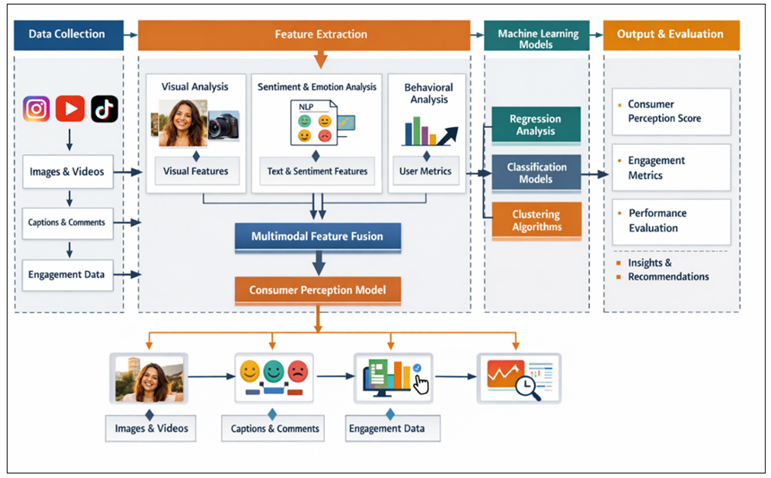
Figure 1 Proposed Framework for Multimodal Analysis of Algorithmic Emotion and Influencer Imagery
The architecture described is a multimodal architecture of analysing the content of the social media driven by influencers. This system commences with the data collection of the social media where pictures, caption texts and the number of interactions are collected. All that are handled in parallel pipelines where visual data are handled through convolutional neural networks to detect aesthetic and emotional features and textual data are handled through sentiment and emotion analysis through natural language processing algorithms. User interaction metrics generate behavioral features which give understanding of engagement patterns. The features obtained are then clustered into a single representation that is presented to machine learning models to be predicted and analyzed. The consumer perception score is the last score and is a blend of the effects of the visual and emotional factors. This architecture focuses on integration of different types of data and data analysis techniques, as an influential tool to understand consumer behavior in advertising on social media.
3.1. Research Design
and Framework
The study design is a hybrid and modular model, that combines the data-based analysis with theoretical modeling. The paper will be divided into several steps, such as data collection and preprocessing, feature extraction, model development and evaluation. This systematic method enables one to explore relationship between visual characteristics, emotional cues as well as consumer behavior systematically. It should be scalable and flexible in its framework and can be applied to all manner of content and social media platforms.
The suggested framework is based on the combination of multimodal data sources, such as the image, textual captions, and user interaction measures. Contrary to the conventional research that uses one data modality, this study utilizes the complementary strengths of visual and textual data to give a more in-depth analysis. The model includes both supervised and unsupervised learning methods of deriving patterns and relationships of the data. This methodology will make sure that explicit or implicit determinants of consumer perception are well captured. Besides this, the research design is an algorithmic feedback-based system, in which the algorithmic behaviour is viewed as an active element, determining the content visibility and interaction. The framework appreciates the reality that the social media algorithms are always evolving as per the interaction by the users, and hence, it is a dynamic environment. The project will be trying to answer the question of how emotional and visual stimuli are reinforced within the digital ecosystem via a simulation of this content-algorithmic amplification.
3.2. Data Collection
The purpose of data collection process is to get high-quality, relevant, and diverse data on the most popular social media platforms (Instagram, YouTube, Tik Tok). They were chosen due to the great focus on the visual content and influencer marketing. Influencer posts in different areas, including fashion, technology, fitness and lifestyle, will be added to the sample, which will guarantee diversity in the content and demographics of the viewers. Data is gathered via APIs and web scraping, in accordance with platform policies, and ethical concerns. Each data point comprises a number of elements, including visual (images or video frames), textual (captions, hashtags and comments), and engagement (likes, shares, views and comments) ones. The multimodal data enables the researcher to take an in-depth study on the nature of the content itself and the reactions of the user. Moreover, the time data (e.g. when it was posted and how many times) is also available to learn about trends related to the visibility and activity of the content.
Preprocessing methods are used to guarantee the quality of the data such as eliminating noise, dual filtering and normalization of the engagement data. The influencers’ profiles will be chosen according to the pre-determined criteria like the number of followers, the rate of engagement, the regularity of the content provided. This filtering mechanism makes sure that the dataset is a reflection of meaningful interactions, as opposed to random content or low-impact content. The resultant data is a good foundation that will be used in the subsequent analysis and modelling.
3.3. Feature
Extraction
Among the most significant processes to the methodology is feature extraction which transforms the raw information into meaningful representations, which can be analyzed in a computational manner. It starts with the extraction of the visual features with deep learning models, including convolutional neural networks (CNNs). These features are color distribution, brightness, presence of object, facial expression and general image composition. These attributes play a vital role in the familiarity of the aesthetic and emotional values of influencer photographs. At the same time, emotional features are extracted with the help of the natural language processing tools on captions as well as user comments. Sentiment analysis is done to categorize the text in a positive, negative or neutral condition whereas sophisticated models identify subtle emotional conditions like happiness, excitement or trust. There is also an analysis of engagement metrics to deduce implicit emotional reactions since the more people engage, the more they tend to have emotional resonance.
The patterns of interaction, such as frequency of interaction, length of viewing, and time of interaction will form the basis of behavioral features, which will be formed on the basis of the user interaction data. These characteristics give a clue about the reaction of users to the content in the long run. The integration of visual, emotional and behavioral attributes results in a holistic feature vector that describes different aspects of consumer perceptions. Such a multidimensional representation allows analyzing it in more accurate and insightful ways in the next steps.
3.4. Analytical
Techniques
The analysis stage involves a machine learning and statistical model that can be used to predict the correlation between features of analyzes and consumer perception. Visual data are analyzed with the help of Convolutional Neural Networks (CNNs), which allows identifying the patterns connected with aesthetics and emotional hints. In the case of text data, sentiment analysis and emotion classifier techniques of natural language processors are used to extract valuable information about captions and comments. Besides deep learning models, there are regression and classification algorithms to predict the level of engagement and consumer perception score. Such models can be used to estimate the impact of various features and find the most prominent factors that impact the user behaviors. The techniques of clustering are also utilized in order to cluster similar pattern of user interaction that gives information about the various audience and their preferences.
Combining these methods enables a fully developed analysis of the data which involves predictive modelling and exploratory analysis. The consumer perception score is calculated as a weighted average of visual, emotional and behavioral characteristics, which allows to have a single reflection of the influence of influencer content. This strategy makes sure that individual and interactive impacts of various categories of features are well captured.
4. Results and Discussion
In this case, the results of the experiment and the results of the analysis which were obtained following the recommendations of the presented framework are presented. The results are arranged in such a way that they evaluate the impact of influencer image and algorithmic emotion on the consumer perception in the quantitative and visual perceptions. Such dimensions include patterns of engagement, emotional impact, comparing platforms, and the effectiveness of predictive models, which are analyzed. To ensure an easily interpretable and clear understanding of the results, numerical tables and graphical plots are included. The results will confirm the usefulness of the multimodal framework suggested and clarify the main tendencies affecting consumer behavior in the advertising of social media.
4.1. Analysis of
Influencer Imagery Impact
The aesthetic features of content of the influencers are important in influencing the engagement and perceptions of the user. Such features as color brightness, facial expression, and layout of the scene were assessed to find which aspect of engagement rates.
Table 2
|
Table 2 Influence of Visual Features on Engagement Levels |
|||
|
Image Feature |
High Engagement (%) |
Medium Engagement (%) |
Low Engagement (%) |
|
Bright Colors |
78 |
15 |
7 |
|
Smiling Faces |
82 |
12 |
6 |
|
Product Focus |
69 |
20 |
11 |
|
Lifestyle Context |
85 |
10 |
5 |
Table 2 shows the correlation between particular visual features and their level of engagement of influencer posts. The statistics show that the context of lifestyle and smiling faces show the best engagement rates, which implies that closer-to-life and emotionally-promoting images can contribute to the interaction with the audience significantly. Bright color schemes also help in increasing visibility and appeal, and thus, increased engagement. Conversely, posts that do not include a contextual narrative of product display, but instead just display products, exhibit relatively lower engagement. This brings out the need to incorporate emotional and narrative aspects to visual content. The results indicate that consumers are more positively influenced by the content which creates a sense of familiarity and emotional appeal as compared to content which is entirely promotional.
4.2. Role of
Algorithmic Emotion in Consumer Engagement
The algorithmic emotion was also tested using sentiment polarity and the relationship between this sentiment polarity and engagement measures.
Table 3
|
Table 3 Impact of Sentiment on Engagement |
|||
|
Sentiment Type |
Average Likes |
Average Comments |
Engagement Rate (%) |
|
Positive |
1250 |
320 |
8.5 |
|
Neutral |
780 |
150 |
5.2 |
|
Negative |
420 |
90 |
2.8 |
Table 3 shows that emotional tone and user engagement have a positive correlation. The positive sentiment content performs much better in all the engagement metrics such as likes, comments and the overall engagement rate as compared to the neutral and negative content. This implies that algorithmic systems focus on emotionally engaging or attractive content, which enhances its presence and exposure. Intermediate engagement is observed with neutral content, whereas negative sentiment posts are the minimum in terms of engagement, which can be attributed to less amplification by algorithms. These results confirm that emotional resonance is one of the strongest motivators of consumer interaction, and the algorithms used to filter the content are more likely to favor the material with positive emotional reactions.
4.3. Comparative
Study Across Platforms
To assess the effect of various platforms on consumer perception, they were compared.
Table 4
|
Table 4 Platform-wise Performance Comparison |
|||
|
Platform |
Avg Engagement Rate (%) |
Visual Impact Score |
Emotional Influence Score |
|
Instagram |
9.2 |
8.8 |
9.0 |
|
TikTok |
10.5 |
9.2 |
9.4 |
|
YouTube |
7.8 |
7.5 |
8.1 |
Table 4 points out the difference in engagement and perception various social media platforms. The highest engagement rate and emotional influence score are observed in Tik Tok that can be explained by its algorithmic content delivery and focus on the short, visually-focused videos. Instagram is also performing well especially in terms of visuality, as it is image based. Compared to YouTube, which is effective in the long-form content, the engagement rates are relatively lower. These findings imply that platform-specific factors have a significant effect on the perception and interaction with content, and the importance of a specific content strategy.
4.4. Statistical and
Visual Data Interpretation
Figure
2
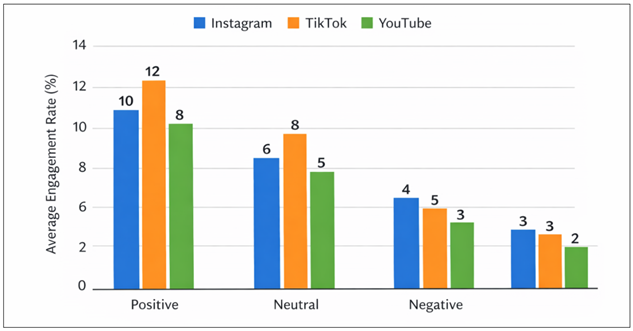
Figure 2 Comparative Visualization of Engagement and Sentiment Impact
The graphical representation of the engagement metrics by the different sentiment types and media is shown in Figure 2. The bar chart shows clearly that positive sentiment is the main one that contributed to the increased level of engagement with the next positive and negative sentiment. Also, comparing platforms, it can be seen that Tik Tok has always outperformed Instagram in terms of engagement in all categories of sentiments, whereas Instagram is a well-balanced platform. The visualization also draws attention to the difference in the engagement rates that emotional and visual influences are not the same across platforms. This graphical representation supports the statistical results as well as gives a visual interpretation of the trends behind.
4.5. Key Findings
The findings of the experiment can provide some valuable insights into the dynamics of social media advertising. To begin with, visual characteristics like the context of a lifestyle and emotional displays play a crucial role in engagement, which proves the significance of aesthetic and narrative content in influencer content. Second, algorithmic emotion is an important factor that enhances the content that produces positive emotional responses to achieve visibility and reach. Third, the characteristics of platforms influence the perception of content, and short-form video platforms are more likely to be characterized by a high level of engagement. On the whole, the results confirm that the suggested multimodal framework is effective in the context of describing the intricate relationships between visual images and emotional stimuli and user actions. The findings indicate that there is a necessity to adopt a combination of approaches which would take into account both the content design and algorithmic processes to maximize consumer perception. Moreover, the research offers new information to marketers and researchers, highlighting the significance of emotional intelligence and visual storytelling in online marketing.
5. Conclusion and Future Work
The current paper examined the complex connection between algorithmic emotion and influencer images in the development of consumer perception under the social media advertising context. The study was able to fully understand the interactions between emotional cues and aesthetics and algorithm-driven content delivery systems by combining the visual media analysis and computational modeling techniques. The results indicate that the influencer imagery, especially when supplemented with emotionally positive and relatable visual characteristics, can dramatically boost the user engagement and perception. Facial expressions, context of lifestyle and visual composition were identified to be critical elements in gaining user attention and emotional bonding. Moreover, the experiment proved that algorithmic processes actively boost such emotionally resonant content, thus solidifying its presence and influence. One of the major contributions of this study is the multimodal analytical model that integrates visual, textual and behavior data to calculate a single consumer perception score. This methodology contrasts with the conventional studies which examine individual factors but not the dynamics of interaction between design of content and amplification by algorithms. The findings demonstrated that the higher the emotional content is positive, the higher the engagement rate will be, which means that the algorithms will prioritize and promote the content that corresponds to the emotional preferences of users. Further, platform-specific analysis revealed that platform with short form content has a higher level of engagement because of the quick and immersive content delivery interfaces. The insights highlighted the need to optimize influencer content approaches with emotional appeals and platform dynamics to create maximum impact. Although the study has its contributions, it has some limitations. The use of publicly accessible social media data can also come with the bias of platform algorithms and demographics of users. Moreover, because recommendation systems are dynamic and opaque, it might be difficult to completely understand the causal interactions between the algorithmic behavior and the perception of users. The research is also more visual and emotional oriented and does not deeply consider other factors influencing such as the cultural context, the brand name and other external socio-economic factors. These restrictions underscore the importance of further controlled experimental studies and access to more platform-level data to perform more detailed analysis.
This study can be expanded in the future by adding new deep learning algorithms like transformer architecture as a multimodal analyzer, and by investigating the use of adaptive systems in real-time by adjusting and adapting them to the user feelings. Moreover, cross-cultural research may offer further understanding of the variation of emotional perception of diverse demographic groups. Another avenue to look into in the future is researching the psychological and behavioral effects of emotional content generated by algorithms over time. On the whole, this research provides a basis to a more comprehensive and ethically conscious approach to the consumer perception in the new reality of social media advertising.
CONFLICT OF INTERESTS
None.
ACKNOWLEDGMENTS
None.
REFERENCES
Bellavista, P., Foschini, L., and Ghiselli, N. (2019). Analysis of Growth Strategies in Social Media: The Instagram use Case. In Proceedings of the IEEE 24th International Workshop on Computer Aided Modeling and Design of Communication Links and Networks (CAMAD) (1–7). IEEE. https://doi.org/10.1109/CAMAD.2019.8858439
Delbaere, M., Michael, B., and Phillips, B. J. (2020). Social Media Influencers: A Route to Brand Engagement for Consumers. Journal of Interactive Advertising. https://doi.org/10.1002/mar.21419
Dimitrieska, S., and Efremova, T. (2021). The Effectiveness of Influencer Marketing. Economics and Management, 18(1), 109–118.
Dimitrova, T., and Ilieva, I. (2023). Consumption Behaviour Towards Branded Functional Beverages Among Gen Z in Post-COVID-19 Times: Exploring Antecedents and Mediators. Behavioral Sciences, 13(8), 670. https://doi.org/10.3390/bs13080670
Dwivedi, Y. K., Ismagilova, E., Hughes, D. L., Carlson, J., Filieri, R., Jacobson, J., Jain, V., Karjaluoto, H., Kefi, H., and Krishen, A. S. (2021). Setting the Future of Digital and Social Media Marketing Research: Perspectives and Research Propositions. International Journal of Information Management, 59, 102168. https://doi.org/10.1016/j.ijinfomgt.2020.102168
Francisco, E., Fardos, N., Bhatt, A., and Bizel, G. (2021). Impact of The COVID-19 Pandemic on Instagram and Influencer Marketing. International Journal of Marketing Studies, 13(2), 20–35. https://doi.org/10.5539/ijms.v13n2p20
Gómez, A. R. (2019). Digital Fame and Fortune in the Age of Social Media: A Classification of Social Media Influencers. aDRes. Revista Internacional de Investigación en Comunicación, 19(1), 8–29. https://doi.org/10.7263/adresic-019-01
Influencer Marketing Hub. (2024). The State of Influencer Marketing 2024: Benchmark Report.
Joshi, Y., Lim, W. M., Jagani, K., and Kumar, S. (2023). Social Media Influencer Marketing: Foundations, Trends, and Ways Forward. Electronic Commerce Research, 1–55. https://doi.org/10.1007/s10660-023-09719-z
Kitsios, F., Kamariotou, M., Karanikolas, P., and Grigoroudis, E. (2021). Digital Marketing Platforms and Customer Satisfaction: Identifying eWOM Using Big Data and Text Mining. Applied Sciences, 11(17), 8032. https://doi.org/10.3390/app11178032
Leung, F. F., Gu, F. F., and Palmatier, R. W. (2022). Online Influencer Marketing. Journal of the Academy of Marketing Science, 50(1), 226–251. https://doi.org/10.1007/s11747-021-00829-4
Loxton, M., Truskett, R., Scarf, B., Sindone, L., Baldry, G., and Zhao, Y. (2020). Consumer Behaviour During Crises: Preliminary Research on how Coronavirus has Manifested Consumer Panic Buying, Herd Mentality, Changing Discretionary Spending and the Role of the Media in Influencing Behaviour. Journal of Risk and Financial Management, 13(8), 166. https://doi.org/10.3390/jrfm13080166
Malinen, S., and Koivula, A. (2020). Influencers and Targets on Social Media: Investigating the Impact of Network Homogeneity and Group Identification on Online Influence. First Monday, 25(4). https://doi.org/10.5210/fm.v25i4.10453
Nguyen, T. M., Le, D., Quach, S., Thaichon, P., and Ratten, V. (2021). The Current Trends and Future Direction of Digital and Relationship Marketing: A Business Perspective. In Developing Digital Marketing: Relationship Perspectives (191–200). Emerald Publishing. https://doi.org/10.1108/978-1-80071-348-220211011
Oliveira, M., Barbosa, R., and Sousa, A. (2019). The Use of Influencers in Social Media Marketing. In Proceedings of the International Conference Marketing Technologies (ICMarkTech) (112–124). Springer. https://doi.org/10.1007/978-981-15-1564-4_12
Ouvrein, G., Pabian, S., Giles, D., Hudders, L., and De Backer, C. (2021). The Web of Influencers: A Marketing-Audience Classification of (Potential) Social Media Influencers. Journal of Marketing Management, 37(13–14), 1313–1342. https://doi.org/10.1080/0267257X.2021.1912142
Siregar, V. M. M., Sinaga, K., Sirait, E., Manalu, A. S., and Yunus, M. (2023). Classification of Customer Satisfaction Through Machine Learning: An Artificial Neural Network Approach. Internet of Things and Artificial Intelligence Journal, 3(3), 273–282. https://doi.org/10.31763/iota.v3i3.643
Zabel, C. (2023). The Business of Influencing: Business Models of Social Media Influencers—A Literature Review. Nordic Journal of Media Management, 4(1), 3–36.
|
|
 This work is licensed under a: Creative Commons Attribution 4.0 International License
© ShodhKosh 2026. All Rights Reserved.