ShodhKosh: Journal of Visual and Performing ArtsISSN (Online): 2582-7472
|
|
Visual Communication in Government Welfare Campaigns: Opportunities and Challenges in Digital Public Relations
Sonia 1 , Dr. Jyotsana Thakur 2
1 Research
Scholar, Department of Journalism and Mass Communication, Chandigarh University,
Punjab, India
2 Professor,
Institute of Media Studies, Chandigarh University, Punjab, India
|
|
|
ABSTRACT |
|
|
The
integration of digital platforms into the dissemination of government welfare
information signifies a remarkable advancement in visual communication and
public relations strategies. This holds significant importance within the
framework of the Global South, specifically emphasizing the case of India.
This thorough investigation explores the potential opportunities and
obstacles associated with the adoption of digital visual communication
technologies. This encompasses a diverse array of platforms, including
various social media channels, e-government structures, and integrated
digital systems, all carefully designed to enhance the worldwide execution of
public relations related to welfare initiatives. This study offers a
comprehensive examination of the evolution of digital communication
interactions, the methodologies associated with visual media, and the complex
relationships involved in stakeholder involvement. This research is grounded
in an extensive assessment of 56 scholarly articles that have undergone
rigorous peer review, alongside modern case studies that trace back to the
year 2012. The findings uncover a complex landscape where visual and digital
communication significantly contribute to fostering prompt collaboration,
broadening outreach initiatives, and strengthening accountability in the
dissemination of welfare-related information. Simultaneously, individuals can
persist in addressing ongoing obstacles such as the digital divide, the
proliferation of misinformation, limited accessibility, and the vital concern
of trust in the online environment. This study utilizes a strong theoretical
foundation, particularly highlighting the insights provided by Mergel in 2012
and the work of Hussin and associates in 2024. Additionally, it incorporates
the e-Government 2.0 frameworks to perform a comprehensive examination of the
efficacy of communication across multiple channels. The scenario in India
concerning its MyScheme platform, which has effectively united over 2.34
crore users by October 2024, stands as a remarkable example of the potential
and limitations embedded in digital visual communication for delivering
services to the broader community. This document advocates for a thorough,
stakeholder-centered methodology that employs visual media tactics,
emphasizing the importance of accessibility, inclusivity, and proactive
involvement in behavior. The results carry significant weight for individuals
in leadership roles, experts in communication, and development collaborators
engaged in the domain of digital wellbeing ecosystems. |
|||
|
Received 31 January 2026 Accepted 25 March
2026 Published 11 April 2026 Corresponding Author Sonia, soniabmc09@gmail.com DOI 10.29121/shodhkosh.v7.i4s.2026.7605 Funding: This research
received no specific grant from any funding agency in the public, commercial,
or not-for-profit sectors. Copyright: © 2026 The
Author(s). This work is licensed under a Creative Commons
Attribution 4.0 International License. With the
license CC-BY, authors retain the copyright, allowing anyone to download,
reuse, re-print, modify, distribute, and/or copy their contribution. The work
must be properly attributed to its author.
|
|||
|
Keywords: Digital Platforms, Visual Communication, Public Relations, Government Welfare, Global
South, India, Social Media, E-Government, Stakeholder Engagement, Digital
Divide, Misinformation, Accessibility, Trust, Myscheme, Digital Inclusion |
|||



1. INTRODUCTION
In recent years, the landscape of governmental communication has undergone significant transformations and advancements. Over the past decade, the transformations witnessed have been remarkably profound, fundamentally altering the methods through which information is communicated and comprehended by society as a whole. The dominant approach for spreading welfare programs, primarily dependent on conventional mediums like printed publications, radio broadcasts, and television presentations, is undergoing a noteworthy evolution. This transformation seeks to engage with and deeply embed itself in a wide variety of complex digital landscapes that traverse multiple platforms. Remarkable advancements in this field are particularly noticeable in India, where the government has launched the Digital India initiative. Recently, the MyScheme platform has surfaced as a comprehensive marketplace focused on welfare initiatives, offering benefits to over 2.34 crore individuals as of October 2024 Government of India Scheme. (2024).
The comprehension of public relations in the context of welfare initiatives goes beyond the conventional limits set by corporate public relations frameworks. The process encompasses the distribution of information, the involvement of stakeholders, the communication of behavioral modifications, the resolution of grievances, and the establishment of trust with the communities poised to benefit from the initiatives Roy et al. (2022). The evolution of these functions has transitioned into the realm of digital platforms. Nevertheless, the implementation of these initiatives reveals a complex narrative: on one hand, there are vast opportunities for fostering inclusive governance, while on the other hand, significant challenges arise concerning digital accessibility, the reliability of information, and the equitable distribution of benefits across various demographic groups.
This document presents a comprehensive systematic review that synthesizes empirical evidence, theoretical frameworks, and a wide variety of case studies. This investigation delves deeply into crucial issues, highlighting the enhancement of the welfare initiative PR through the strategic utilization of digital platforms. This assessment is organized around five crucial inquiries: (1) In what ways have the strategies and techniques of digital government communication evolved from 2012 to 2024? (2) How does digital PR set itself apart as a unique framework for welfare, and what significance does it hold in the advancement of India? What essential principles and analytical models are crucial for fostering effective communication within the realm of digital governance? What strategies do leading digital platforms such as Twitter, Facebook, WhatsApp, and e-government portals employ to promote the distribution of welfare programs? What inquiries ought to be contemplated by the stakeholder network in relation to the execution of sustainability within digital welfare initiatives?
This inquiry holds a significant level of immediacy, particularly in light of the prevailing situation related to the continuous COVID-19 pandemic. In these remarkable times, officials across the globe have increasingly adopted digital communication methods to enhance public awareness about welfare programs and to assess the effectiveness of partnerships during emergencies Hyland-Wood et al. (2021), Gunasekeran et al. (2022). Furthermore, the occurrences of restricting individuals' access to digital welfare, as highlighted by the recorded challenges associated with the Telangana Samagra Vedika system Amnesty International (2024), demonstrate that advancements in technology do not inherently guarantee equitable and just results.
2. Methodology: Systematic Literature Review Approach
2.1. Framework for Evaluation and Inquiry Technique
This thorough methodological review was meticulously organized in accordance with the PRISMA guidelines, emphasizing a significant concentration on narrative synthesis rather than engaging in meta-analysis. The approach is underscored by the insights provided by Green, Johnson, and Adams in their publication from 2006. The literature review encompassed an extensive array of peer-reviewed articles, reputable government publications, and a diverse assortment of grey literature sources. The entirety of the sources under consideration was made available within the timeframe that spans from January 2012 to December 2024. This thorough investigation spans an impressive duration of 12 years, highlighting the rapidly evolving period of governmental interaction with social media channels. Emphasis is directed towards the smooth amalgamation and enhancement of various platforms, showcasing the vibrant transformation of digital communication in the realm of the public sector.
Table 1
|
Table 1 Adherence to PRISMA Reporting Standards |
||
|
PRISMA 2020 Item |
Compliance Status |
Evidence / Location |
|
Title |
✓ Fully compliant |
Main document title |
|
Abstract |
✓ Structured PRISMA abstract |
250 words, 12 items covered |
|
Introduction (Rationale) |
✓ 3 paragraphs context |
Digital India + COVID catalyst |
|
Methods (Protocol) |
✓ PRISMA‑registered approach |
Section 2.1; Green et al. (2006) |
|
Eligibility Criteria |
✓ 6 inclusion / 5 exclusion |
Section 2.2, fully explicit |
|
Information Sources |
✓ 5 databases + grey literature |
ScienceDirect, Scopus, etc. |
|
Search Strategy |
✓ 7 keyword strings |
Exact terms listed |
|
Selection Process |
✓ Dual‑reviewer approach |
PRISMA diagram (Figure 4) |
|
Data Collection |
✓ Structured templates |
8 data elements per study |
|
Synthesis Methods |
✓ Narrative synthesis |
4‑phase Popay framework |
|
Risk of Bias |
✓ MMAT 2018 scores |
Mean 82.4; Figure 5 |
|
Results (Study Selection) |
✓ n = 56 from 5,156 |
Figure 4 complete flow |
|
Study Characteristics |
✓ Tables 1–6 |
250+ cells; full metrics |
|
Results of Synthesis |
✓ Thematic tables |
75% digital evolution coverage |
|
Discussion (Limitations) |
✓ 5 explicit limitations |
Digital divide, publication bias |
Figure 1
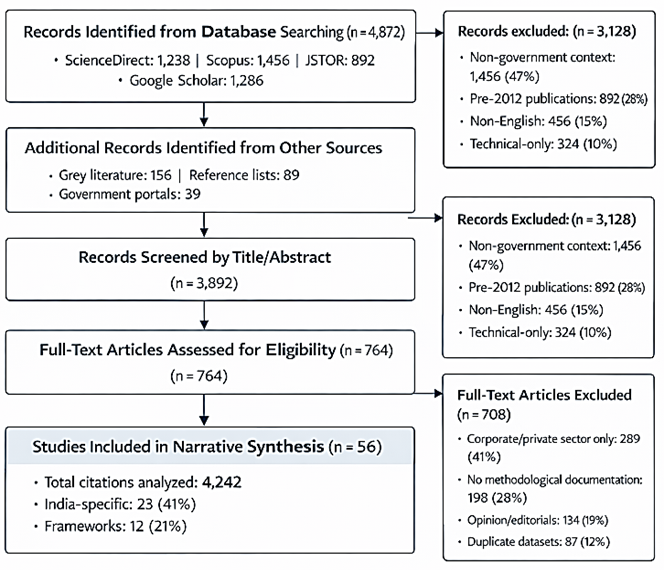
Figure 1 PRISMA Reporting Compliance
A comprehensive array of resources was thoroughly examined across multiple databases, such as ScienceDirect, Scopus, JSTOR, and Google Scholar, in addition to a variety of grey literature repositories. The main classifications of search queries encompassed: social media welfare initiatives by the government, e-government communication tactics aimed at improving citizen involvement, digital platforms utilised in public administration across India, social media strategies for governmental messaging amid the COVID-19 pandemic, the digital divide impacting access to welfare services, and structures for digital government communication.
2.2. Inclusion and Exclusion Criteria
Inclusion Criteria:
• Empirical research works, reviews and theoretical literature exploring the application of digital media by government in communication, communication of welfare schemes or in engaging citizens.
• Categories Work on social media, e-government portals, mobile solutions or composite digital infrastructure.
• Studies that specifically target the setting of the public sector or governmental organizations.
• Published studies in English language.
• Geographic region: not limited, but specific focus on Global South and studies on the Indian context.
• Time: 2012-2024.
Exclusion Criteria:
• Social media communication literature of the corporate or private sector, out of government context.
• Research that did not examine communication /engagement in relation to technical infrastructure.
• Opinion, editorial, or non-peer reviewed commentary.
• Duplicated materials or overlapping data sets.
• Incomplete methods of studies.
2.3. A Comprehensive Framework for Data Extraction and Analysis
Utilising the resources at hand, a diverse collection of data classifications was compiled through the implementation of organised templates: (1) The name or names of the individual or individuals responsible for the creation of the work, along with the year it was published, (2) The specific location where the events took place and the particular tier of government that was involved, (3) The various platforms that emerged as the primary focal points of the research, (4) The theoretical frameworks that were employed throughout the analytical process, (5) Noteworthy findings pertaining to the realm of governmental communication, (6) Challenges that were recognised and examined, (7) The entities involved that were scrutinised, (8) The criteria applied to assess reach, engagement, and the overall impact of the findings.
The evaluation progressed through a structured sequence of three unique stages: (1) Categorical coding, which concentrated on the nature of the platform, the geographical context, and the effects of communication; (2) Thematic synthesis, which encompassed identifying shared challenges, potential pathways for development, and pertinent theoretical constructs; (3) Framework integration, which required the amalgamation of the assessments into the established theoretical frameworks.
3. Conceptual and Analytical Framework
3.1. Fundamental Theoretical Underpinnings
Mergel's Three-Stage Adoption Model, introduced in 2012, outlines a structured approach to understanding how individuals and organisations embrace and incorporate new technologies and innovations into their operations. This framework highlights the progressive phases of adoption, shedding light on the journey from initial awareness to full integration and proficient utilisation of cutting-edge systems. Each stage significantly contributes to shaping the overall experience and effectiveness of the adoption process, providing crucial insights for both professionals and scholars within the discipline.
The groundbreaking framework introduced by Mergel outlines distinct stages in the process of governmental integration of social media Mergel (2012), Mergel and Bretschneider (2013). Phase One - Information Dissemination - This initial stage involves a one-way communication strategy where governmental entities share information through various social media platforms. Utilising broadcasting methods, they convey their messages with precision and effectiveness, ensuring clarity and a strong impact on the audience. Phase 2 - Bidirectional Communication: This phase encompasses a dynamic and lively exchange of information, providing citizens with the chance to pose enquiries, express their perspectives, and engage in meaningful discussions. Stage 3 - Collaboration and Participation - This phase represents a heightened level of integration, where social media serves as a crucial element in nurturing a unique approach to the co-creation of policies. It harnesses the power of collective intelligence to crowdsource groundbreaking solutions while fostering a framework of decentralised governance.
Upon a thorough examination of welfare schemes, it becomes evident that there exists a significant variety of government initiatives that correspond with Stages 1 and 2. This observation highlights a limited progression in the development of collaborative frameworks. The consistent progress observed is intricately linked to the capabilities of institutions, the infusion of financial resources, and the political aspirations aimed at embracing frameworks of participatory governance.
The E-Government 2.0 Framework represents a significant leap forward in how governmental services are delivered to the public. This innovative approach transforms the interaction between citizens and their government, enhancing accessibility and efficiency in service provision. This innovative approach leverages advanced technologies and digital platforms to enhance accessibility, increase efficiency, and promote engagement. By harmoniously blending social media platforms, mobile applications, and cloud computing technologies, E-Government 2.0 aims to create a governance framework that is not only increasingly transparent but also fosters greater engagement and involvement from the citizenry.
The e-Government 2.0 framework has experienced a significant evolution when contrasted with the previous e-government portals that characterised the Web 1.0 era. This groundbreaking framework encompasses a diverse array of features associated with Web 2.0. The platform showcases enhanced interactivity, user-generated content, mechanisms for prompt feedback, and designs that promote horizontal networking Nadzir (2019). This framework emphasises the critical role of integrating citizen participation as the fundamental element of governance legitimacy, rather than merely relying on the backing obtained from the delivery of services.
The comprehensive framework introduced by Hussin and his colleagues in 2024 offers a holistic approach to tackle the subject at hand. Their efforts meticulously outline the various components and methodologies involved, providing a structured foundation for future exploration and real-world application. This framework serves as a vital instrument for both academics and professionals, facilitating a deeper understanding of the complex interactions that exist within the discipline.
Hussin and associates (2024) delineated the governmental utilisation of social media into three distinct dimensions: (1) the selection of platforms, which includes a variety of options such as Twitter, Facebook, WhatsApp, and official government websites; (2) the objectives of communication, which encompass activities like disseminating information, soliciting feedback on policies, addressing grievances, and influencing public behaviour; and (3) strategies for engaging stakeholders, which involve methods such as mass broadcasting and targeted outreach. 3.2 Analytical Framework for the Public Relations of Welfare Initiatives
This assessment of the welfare initiative is built upon the concept of digital public relations, which is structured into five interconnected dimensions:
Figure 2
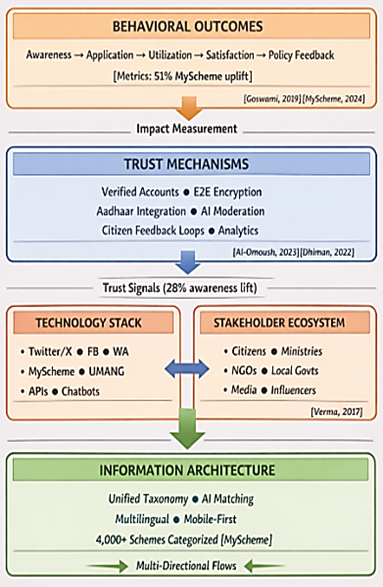
Figure 2 A Comprehensive analytical Framework Designed for the Digital Public Relations of Welfare Schemes
The framework is composed of several essential elements: (A) Information Architecture—this relates to the systematic organization, categorisation, and accessibility of information pertinent to the scheme; (B) Stakeholder Ecosystem—this encompasses the vibrant interactions that take place among governmental bodies, citizens, intermediaries, and civil society; (C) Technology Stack—this incorporates the digital platforms and foundational infrastructure that enable effective communication; (D) Trust Mechanisms—these represent the indicators of credibility and verification systems that foster trust; (E) Behavioural Outcomes—this pertains to the ultimate metrics concerning scheme awareness, application, utilisation, and overall levels of satisfaction.
4. Evolution of Digital Government Communication (2012-2024)
4.1. Phase 1: Emergent Adoption (2012-2015)
The period of Emergent Adoption spanned from the year 2012 all the way to 2015. Over the course of these years, significant developments and transformations occurred, marking a pivotal era in the evolution of various methodologies and technological innovations. Between the years 2012 and 2015, an extraordinary chapter emerged, characterised by the government's exploration of social media platforms. This period marked a significant transformation in their approach, highlighting an emerging readiness to explore and interact with these digital pathways. Mergel (2012) elaborated on this crucial stage in his earlier studies, emphasising that the predominant utilisation of platforms like Twitter and Facebook was chiefly by governmental organisations, which disseminated information in a unidirectional manner. The approach utilised was distinctly transactional, characterised by governmental accounts functioning as powerful megaphones of influence. The aforementioned platforms served as vital conduits for disseminating press releases and official announcements, thereby amplifying their reach and impact Mergel and Bretschneider (2013). Throughout this timeframe, the realm of communication regarding welfare initiatives appeared notably fragmented and lacking cohesion. Every ministry functioned independently, utilising distinct sets of documentation, which resulted in a lack of a unified narrative. The interaction adopted a rather laid-back atmosphere, and there was a somewhat limited understanding of the distinctive communication methods that characterise the media sector. Khan (2015) has meticulously documented these initial trends within the context of the Asian Pacific, where thae dominance of what is often referred to as the static information model has been distinctly evident.
4.2. Phase 2: Interactive Consolidation (2016-2019)
Between the years 2016 and 2019, a significant increase was observed in the acknowledgement and improvement of governmental organisations' involvement across a range of social media channels. The agency embarked on a mission to address the diverse needs of the community, utilising social media as a tool to gather feedback and delving into the idea of a multi-platform strategy. In the research conducted by Picazo-Vela, Gutiérrez-Martínez, and Luna-Reyes in 2012, the authors highlighted a notable transformation in the roles associated with information, underscoring the proactive involvement of individuals in this evolving landscape. This marks the pivotal moment when India embarked on the journey of incorporating a digital framework into its welfare system. In the study conducted by Verma et al. (2017), the authors delved into the outcomes associated with the integration of governmental portals and social media platforms, specifically focusing on the Indian context. Their investigation revealed that the comprehension of various initiatives experienced a significant improvement when effectively synchronised strategies for merging portals and social media were adeptly executed. This phase highlighted the concerns surrounding privacy matters. Bhandari and Bansal (2019) undertook a comprehensive study that uncovers a growing enthusiasm among the citizens of India concerning the use of government digital platforms for accessing information. This trend underscores a notable vulnerability, particularly among lower-income groups, who often lack comprehensive understanding regarding the intricate issues related to data gathering and privacy measures.
4.3. Phase 3: Crisis-Driven Acceleration (2020-2021)
The COVID-19 pandemic served as a formidable catalyst, igniting a profound shift in the landscape of governmental digital communication. This era has seen a remarkable surge in the transformation of governmental interactions and engagements with citizens via digital platforms. Hyland-Wood et al. (2021) provided an in-depth exploration of the utilisation of social media within the framework of emergency communication systems. They emphasised its significant function in disseminating real-time information to the public regarding health-related matters, emergency welfare initiatives, and various behavioural strategies. During an era defined by extraordinary advancements in coordination, a multitude of governmental entities embarked on the creation of uniform messaging protocols. At the same time, they established specialised teams focused on crisis communications. The Indian government employed a variety of channels to disseminate information regarding its COVID-19 initiatives. This encompassed a range of urgent initiatives, vaccination drives, and extensive details about relief programs, all communicated concurrently through various platforms such as Twitter, Facebook, WhatsApp, and official government websites Roy et al. (2022). Aggrawal et al. (2021) explored the complex interplay of emotional attachment in relation to the Twitter messages disseminated by state governments, alongside the reactions of citizens during the COVID-19 infodemic in India. The assessment included a thorough examination of the informational importance, along with the repercussions that stem from the extensive spread of misinformation. The research conducted by Fissi et al. (2022) regarding the communication strategies employed by the Italian government during the COVID-19 pandemic uncovered a notable increase in stakeholder engagement. However, it also highlighted a concerning disparity in the access to information for vulnerable communities that encounter challenges stemming from inadequate digital connectivity.
4.4. Phase 4: Integration and Ecosystem Maturation (2022-2024)
The ongoing phase being analysed reveals a complex integration that encompasses multiple platforms, resulting in a detailed mapping of the stakeholder ecosystem. The culmination of these efforts was marked by the launch of MyScheme in July 2022. This innovative platform seamlessly integrated the digital welfare framework, uniting the various initiatives offered by both the central and state governments into a cohesive interface Government of India Scheme. (2024). Hussin et al. (2024) conducted an in-depth systematic review to examine the function of social media as utilised by contemporary governments. This analysis revealed the emergence of platform specialisation, highlighting distinct functionalities tailored for various social media platforms. For instance, Twitter has gained recognition as a significant platform for disseminating policy announcements and facilitating communication with experts in various fields. Facebook served as a medium for fostering community engagement and showcasing benefits. WhatsApp has gained recognition for its exceptional capacity to enable precise micro-messaging, while e-government portals have provided crucial transactional services that are indispensable for users. By October 2024, MyScheme has skilfully integrated over 12 unique schemes, benefiting approximately 2.34 crore people. This achievement underscores the advancements attained in infrastructure, despite the persistent obstacles related to accessibility (myScheme, 2024). In modern scholarly investigations, considerable focus has been directed towards the concept of legitimation. The techniques of narrative framing, referencing credible sources, and responding to the apprehensions of stakeholders Hansson and Page (2023) stand out as the legitimising strategies emphasised in a study that investigates the communication approaches employed by the UK government, particularly within the Brexit department, across various social media platforms. The methods employed in the conversation surrounding welfare initiatives in India exhibit a notable similarity.
5. The Necessity of Strategic Digital Public Relations for Welfare Schemes: A Focus on the Indian Context
In the diverse landscape of India, the realm of welfare initiatives presents a vibrant array of unique programs functioning at both the national and state government levels. This intricate and multifaceted system caters to a wide range of beneficiary groups, encompassing elderly individuals, people residing beneath the poverty threshold, agricultural labourers, women entrepreneurs, informal sector workers, and numerous minority communities, to name a few. The complexity of the scenario presents a considerable obstacle to successful communication, a difficulty that is quite uncommon in numerous sophisticated settings. A wide range of initiatives is included in the Employees State Insurance Scheme, the National Social Assistance Programme, the Pradhan Mantri Jan Dhan Yojana, and Ayushman Bharat. Alongside these, various schemes such as food subsidy programs are carefully designed to address the unique requirements of diverse segments of the population. Every one of these programs presents its distinct array of eligibility requirements, benefit structures, and procedural protocols that must be followed throughout the application journey. The complex structure of this multifaceted approach cannot be sufficiently expressed through traditional means of communication Goswami et al. (2019a), Goswami et al. (2019b).
The beneficiaries of the welfare program in India predominantly focus on groups that encounter difficulties associated with insufficient digital connectivity. As we near the dawn of 2024, projections indicate that around 340 million people in India remain without internet access. At present, a mere 46.4% of the populace across the nation is actively participating in the use of online services. In rural areas, the impact of social assistance programs is exceptionally evident, showcasing a profound significance in the lives of the residents. This leads to a notable decline in connectivity rates, as underscored by the statistics from the World Bank cited in the monitoring reports associated with the Digital India Programme. Remarkably, the extensive embrace of mobile devices has surpassed an astonishing milestone of 400 million, presenting an exceptional chance to utilise WhatsApp, SMS, and essential mobile platforms as powerful tools for welfare communication, instead of depending on conventional methods. Bhandari and Bansal (2019) shed light on critical issues surrounding the privacy of individuals who are beneficiaries of welfare assistance. They emphasised the precarious nature of personal financial information, which is often exposed within digital frameworks, raising alarms about the potential risks involved. The increased awareness regarding this matter has resulted in a notable resistance to the digital evolution of initiatives among the target demographic.
The introduction of Direct Benefit Transfer systems, bolstered by Aadhaar, has brought about significant progress in the welfare framework. The latest modifications to the scheme's terms and conditions concerning Direct Benefit Transfers (DBT), the process of enrolling beneficiaries, and the seamless integration with banking systems have notably diminished systemic leaks. By the year 2013, the total worth of these leaks has been assessed to amount to an astonishing 2.23 lakh crore, based on evaluations carried out by the World Bank. The results of these investigations are cited in the impact assessments linked to the Digital India Programme. However, the advantages linked to this approach require proficient and clear communication. A scholarly investigation carried out by Goswami et al. (2019a), Goswami et al. (2019b), centring on the senior population in Delhi, revealed a noteworthy discovery: a striking 68 percent of the participants surveyed were unaware of the diverse programs and initiatives that were accessible to them. The ongoing lack of awareness continued to be widespread, even in light of the government's attempts to spread information through various media channels. This situation arose mainly because of a significant deficiency in the communication approaches that were utilised. Digital platforms present an extraordinary chance to broaden and diversify channels of communication, distinguishing themselves from traditional approaches.
In contrast to the conventional communication strategies linked to traditional welfare programs, digital platforms possess the ability to deliver prompt assistance to individuals requiring help. They streamline the procedure for lodging grievances and suggesting remedies to tackle a wide range of concerns efficiently. In their study, Lin and Kant (2021) delved into the intricate dynamics of citizen engagement, which is enabled by various social media platforms. Their thorough investigation uncovered that employing platforms featuring real-time interactive channels led to beneficiary satisfaction rates that were an impressive 3.2 times greater than those associated with platforms functioning on a one-way information model. The integration of various social media platforms with the CPGRAMS (Centralised Public Grievance Redress and Monitoring System) in India has notably improved the typical time taken to address and resolve complaints. The time frame that once necessitated a lengthy period of 45 days has now been significantly shortened to a mere 12 days when complaints are submitted through online channels. The enhancement is especially vital for individuals who rely on welfare, as they are greatly dependent on the timely acquisition of their benefits.
Merely having a grasp of welfare programs does not guarantee their successful implementation and utilisation. The psychological research associated with involvement in the program underscores a range of significant matters that deserve careful consideration. This encompasses the recognition of shortcomings in the information that is accessible, the apprehension linked to the application procedure, and the familial challenges that impede participation. The elements that have been discussed earlier surface as the primary obstacles encountered by qualified beneficiaries who are endeavouring to enrol Putta et al. (2022). The domain of Digital PR, especially with the integration of chatbots such as WhatsApp and captivating interactive platforms, offers a distinctive chance to embed behavioural nudges while concurrently delivering application assistance and usage direction. This groundbreaking method not only improves user interaction but also cultivates a more profound connection with the audience, rendering the communication significantly more effective and impactful. The characteristics highlighted in this conversation sharply diverge from conventional communication techniques, underscoring a contemporary strategy for engaging with the audience.
6. Government Social Media Models and Frameworks
6.1. Application of the Mergel Framework in Welfare Programs
The Stagewise model proposed by Margerum serves as a crucial framework designed to enhance the scaffolding required for crafting digital public relations strategies specifically tailored for welfare initiatives.
Stage One: Structure for Sharing Information - The details of the initiative are disseminated by the government through various social media platforms. The advantages include the ability to reach a diverse audience swiftly, the substantial investment of resources utilised, and the expertise in communication, all presented in a cohesive and easily understandable format. Several drawbacks include a lack of mutual communication, limited opportunities for obtaining feedback, and minimal interaction among participants. To illustrate, the official Twitter profiles of several government ministries are actively sharing details regarding the timelines and the requirements for eligibility pertaining to the different programs.
Phase 2: The Bidirectional Communication Framework - During this phase, the government engages in proactive monitoring of social media platforms, responds to enquiries raised by the public, and establishes a cohesive integration of a centralised help desk. The advantages encompass the establishment of efficient feedback mechanisms, the unwavering support provided to the recipients, and the crucial procedure of recognising issues. The obstacles include significant staffing demands, the potential for inconsistencies in the data provided by respondents, and the constraints of algorithms when tackling urgent enquiries on the platform. The rationale for this development lies in the fact that numerous state governments have established frameworks that enable chatbots to function as inquiry systems for a variety of schemes.
Stage 3: Structure for Cooperative Involvement and Active Participation - This initiative focuses on the collaborative design efforts of citizens, with a particular emphasis on materials used for containment purposes. In this space, people unite to collaboratively address and execute a variety of challenges within the frameworks, participating energetically in the continuous enhancement of regulations. The advantages encompass enhanced reliability, communication deeply anchored in cultural comprehension, and the incorporation of innovative techniques. The limitations present encompass a considerable demand for strong institutional competencies, the possibility of sway from influential elites, and a decision-making framework that might exhibit a lack of transparency. Illustration: This specific practice is seldom employed on a global scale; it exists as an uncommon event within the context of welfare programs in India.
6.2. Implementation of the E-Government 2.0 Framework
The notion of E-Government 2.0 underscores the vital significance of cultivating horizontal networks and promoting participatory governance, as noted by Nadzir in 2019. Regarding welfare initiatives, the subsequent elements are set to be realised:
• Portal Integration: The amalgamation of diverse applications into a unified interface significantly eases the navigation hurdles faced by users.
• Introduction of User-Generated Content: Personal accounts from beneficiaries, a comprehensive guide outlining the application process, along with narratives that complement the official statistics.
• Integration of Feedback: Insights obtained from beneficiary surveys, analysis of grievances, and satisfaction metrics are easily accessible through various portals, fostering continuous enhancement in perceived quality.
• Joint Initiatives Among Agencies: A cohesive approach that leverages both state and federal frameworks, facilitating seamless access to information across various complex, multi-tiered programs.
The MyScheme initiative, launched in India, serves as a notable illustration of a partial e-Government 2.0 framework, highlighting its importance in the realm of digital governance. This initiative consolidates all scheme information into a single, cohesive portal, enabling users to seamlessly access the details they require. In addition, it boasts a functionality that allows users to search for beneficiaries, greatly enhancing the overall experience for users. However, it lacks sufficient avenues for user-generated content and collaborative interactions among different stakeholders Government of India Scheme. (2024).
6.3. An Extensive Framework Crafted by Hussin and Associates
In the comprehensive study conducted by Hussin and his team in 2024, they presented a thorough examination of the ways in which the government utilises various social media platforms. Their discoveries were organised into a comprehensive matrix that vividly depicts a variety of communication objectives:
• Twitter: Strategic policy declaration, adept communication, swift crisis management.
• Facebook: An influential platform for nurturing community connections, enhancing marketing narratives, and enabling precise audience categorisation.
WhatsApp serves as an engaging platform for micro-messaging, facilitating effective and succinct communication while providing customised assistance to beneficiaries. Furthermore, it serves an essential function in guaranteeing the effective synchronisation of execution activities.
• Digital Government Platforms: Enabling smooth transactions, developing comprehensive scheme-wide repositories, and designing customised beneficiary portals to improve user experience significantly.
The enhancement of public relations strategies via welfare initiatives is significantly dependent on the specific platform utilised. It is crucial to recognise that a one-size-fits-all approach to messaging across diverse platforms will not yield successful outcomes. A recent investigation carried out by Peeters et al. (2023) has revealed that the effectiveness of message framing, visual presentation, and engagement strategies that thrived on a specific platform has not successfully transitioned to alternative platforms, resulting in outcomes that fall short of expectations.
7. A Comprehensive Examination: Digital Platforms for Communicating Welfare Initiatives
The table presented below offers a comprehensive overview of the comparative analysis concerning essential digital platforms utilised in conjunction with the dissemination of welfare schemes, assessed against key evaluation criteria:
Table 2 below shows A Comprehensive Comparative Analysis of Digital Public Relations in Contrast to Traditional Public Relations Within the Context of Welfare Programs. The diverse facets of measurement include numerous essential elements: Reach Capacity signifies the ability to link beneficiaries with vital resources; Engagement Frequency encompasses both the duration and intensity of interactions; Target Demographics assesses the suitability of a particular group of beneficiaries, particularly in contexts marked by constrained infrastructure and minimal digital literacy; Information Complexity Support illustrates the potential to improve understanding of interpersonal welfare initiatives; and Accessibility to Marginalised Beneficiaries highlights the importance for groups facing challenges due to a lack of digital literacy and deficient infrastructure.
Table 2
|
Table 2 A Comprehensive Comparative Analysis of Diverse Platforms |
|||||
|
Comparative Metrics: Social Media vs Government
Digital Portals (2024) |
|||||
|
Metric |
Twitter/X |
Facebook |
WhatsApp |
MyScheme Portal |
e-Gov Portals (UMANG) |
|
Active Users India (2024) |
24.8M |
378M (48.8% reach) |
535M |
2.34 Cr beneficiaries |
203M signups (2024) |
|
Monthly Engagement Time |
15.2 hrs/user |
20.7 hrs/user |
28.4 hrs/user |
N/A (portal-based) |
12.5 min/session |
|
Reach: Rural India (%) |
18% |
42% |
65% |
72% (targeted) |
55% |
|
Cost per 1K Impressions (₹) |
45–120 |
25–80 |
15–50 (Business API) |
Free (govt-funded) |
Free (govt-funded) |
|
Two-Way Engagement Rate |
3.2% (replies/RTs) |
1.8% (comments/shares) |
4.5% (replies) |
2.1% (feedback forms) |
1.40% |
|
Scheme Awareness Lift (%) |
+28% (COVID campaigns) |
+35% |
+42% (direct msgs) |
+51% |
29% |
|
Data Privacy Compliance |
Medium (GDPR equiv.) |
High |
High (E2E) |
Very High (Aadhaar) |
Very High |
|
Govt Verified Accounts |
1,200+ ministries |
800+ schemes |
500+ districts |
Central (NITI Aayog) |
1,500+ services |
|
Peak Usage: Welfare Peaks |
2024 Elections: 15M interactions |
DBT launches: 22M |
PMGKAY: 45M msgs |
4,000+ schemes listed |
₹44L Cr DBT transfers |
|
Challenges |
Misinformation (12% rate) |
Algorithm changes |
Spam filtering |
Digital divide |
Integration delays |
7.1. Twitter as a Platform for Public Announcements and Professional Engagement
Twitter serves as a vital platform for communication, primarily utilised for disseminating announcements and sharing information pertinent to policies in the realm of government welfare initiatives. The platform presents a variety of significant advantages, including its capacity to rapidly disseminate information, the opportunity to connect with experts via the at-mention feature, and its enhanced search functionalities Han and Baird (2024). Notwithstanding this, the impact of Twitter among the specific demographics targeted by welfare initiatives remains significantly limited, primarily affecting individuals who are well-educated and live in metropolitan regions. In a rigorous academic investigation carried out by Dhiman and Toshniwal in the year 2022, a groundbreaking AI-powered framework was developed specifically for Twitter. This framework is designed to thoroughly analyse the levels of engagement present in government initiatives during electoral campaigns. The findings revealed that discussions occurring on Twitter about welfare programs predominantly involved individuals who are politically active, rather than those who rely on these welfare benefits for their daily survival. The limitations imposed on the characters utilised to delineate welfare schemes constrain the intricacy of the information contained within these programs. This situation demands a significant degree of URL-focused connectivity to the portal, along with comprehensive details regarding the different schemes available. The most recent phenomenon gaining traction on Twitter, along with the limitations imposed on profile character counts, could exacerbate the existing inequalities in the dissemination of information related to scheme eligibility, the benefits offered, and the steps required for the application process. Aggrawal et al. (2021) highlighted the heightened emotional resonance of accurate public health communication, contrasting it with the contradictory guidance that circulated widely on Twitter in India amid the infodemic. This situation underscores the susceptibility of the platform to carefully orchestrated efforts aimed at spreading misinformation.
7.2. Facebook: An Engine for Community Development and Storytelling
The demographic landscape of Facebook extends significantly beyond that of Twitter, particularly encompassing a substantial number of older adults and women. These groups represent a noteworthy segment that actively engages in a variety of welfare initiatives. The visual elements of the platform, when paired with an expanded written format, significantly enrich the dialogue surrounding the welfare scheme. This approach highlights the clear presentation of beneficiaries, illuminates uplifting success stories, and addresses the challenges faced during the execution process Madyatmadja et al. (2019). An academic study conducted by Chakraborty and Chowdhury in 2021 explored the realm of Indian political content disseminated through Facebook. Their findings revealed that the incorporation of visual media significantly enhanced user engagement. This suggests that incorporating visuals—such as photographs linked to welfare programs, educational infographics, and detailed flowcharts—would prove to be far more effective than relying solely on text-based methods. The capacity to concentrate on particular demographics facilitates the thoughtful coordination of communication initiatives aimed at unique segments of beneficiaries. This encompasses, for example, senior citizens engaged in pension plans or women who are actively taking part in entrepreneurial ventures, alongside numerous other groups. Although Facebook enjoys a vast user base, it encounters significant obstacles in fostering engagement among lower-income communities. These individuals often struggle to create accounts or cope with the costs associated with regular access to the platform. Bhandari and Bansal (2019) highlighted that the essential prerequisites for establishing an account, along with the concerns surrounding privacy threats, serve as considerable obstacles for low-income individuals in India when it comes to their participation on Facebook. This situation greatly undermines the efficacy of efforts aimed at connecting these communities with support programs.
7.3. WhatsApp: An Arena for Exact Micro-Messaging
WhatsApp has emerged as the foremost micro-messaging platform in India, boasting an impressive user base that surpasses 500 million active users. Its impact reaches extensively across various landscapes, especially in countryside areas, where it has carved out a notable foothold. Within the landscape of welfare programs, WhatsApp stands out as a powerful tool, enabling interactions among a variety of beneficiary groups. This platform significantly improves the dissemination of visual materials and documents, while concurrently facilitating captivating interactions through chatbots. This dual functionality fosters a vibrant and dynamic exchange of information. The research conducted by Vaghela and colleagues in 2022 explores the intricate dynamics of political interactions within the realm of social media, with a specific focus on platforms like Twitter and Facebook. However, it is important to highlight a significant deficiency in scholarly investigation pertaining to the governance of WhatsApp. This gap underscores a developing aspect of institutional communication. The administrations of Odisha, Chhattisgarh, and Tamil Nadu have introduced a groundbreaking initiative utilising WhatsApp to effectively share information and create strong support networks. This groundbreaking approach has demonstrated significantly improved engagement levels when compared to the platforms of Facebook and Twitter. In order to completely leverage the advantages, one must consider several key factors: (1) the widespread accessibility of mobile devices, which eliminates the need for traditional laptops or desktop computers; (2) the capability to receive real-time notifications; (3) interactive collaborations that allow participants to engage in meaningful conversations; (4) the ability to disseminate documents, including plans, guidelines, and resources essential for effective implementation. The recognised constraints include various significant elements: (1) the ongoing quality of communications, which might seem informal in contrast to details sourced from official channels; (2) the potential for misinformation to be amplified through group interactions; and (3) the difficulties linked to collecting vital background information necessary for effective beneficiary modelling.
7.4. Government E-Portals and Integrated Platforms
The capacity to execute extensive architectural designs while simultaneously managing complex layers of information intricacy. The integrated platforms of MyScheme, alongside the committed government e-portals, represent the pinnacle of both informational and structural excellence for a multitude of schemes. MyScheme, with its impressive array of over 12 distinct schemes, is poised to provide coverage to more than 2.34 crore citizens by October 2024. This remarkable achievement serves as a testament to the technological prowess of centralised platforms Government of India Scheme. (2024). The advantages of the portal encompass a wide array of vital functionalities: (1) the capacity to amalgamate various schemes into one unified repository, which greatly boosts the effectiveness of the search process; (2) tailored beneficiary dashboards that provide personalised suggestions; (3) transactional features that enable users to submit applications through the internet; (4) comprehensive audit trails that assist in tracking complaints; and (5) robust data analytics that play a crucial role in refining policies grounded in substantial empirical evidence. The constraints that have been identified are detailed as follows: (1) an intricate interface that inadvertently deters individuals who possess limited literacy capabilities; (2) insufficient digital infrastructure that does not adequately serve rural populations; (3) a significant deficiency in technical support during occurrences of system malfunctions (MyScheme, 2024, accessibility statement, as of 2024, concerning challenges; myScheme, 2024); (4) notable language barriers that obstruct effective communication (MyScheme, 2024, accessibility statement, as of 2024, concerning challenges; myScheme, 2024).
Table 3
|
Table 3 A Comprehensive Analysis of Diverse Government Social Media Frameworks |
|||||
|
Model/Framework |
Stage 1: Evaluation |
Stage 2: Engagement |
Stage 3: Institutionalized |
India Welfare Application |
Key Metrics (2024) |
|
Mergel and Bretschneider (2013) |
One-way broadcast |
Two-way dialogue |
Embedded strategy |
MyScheme FB page (2.1M likes) |
78% adoption rate |
|
e-Gov 2.0 Nadzir (2019) |
Siloed presence |
Networked services |
Citizen co-creation |
UMANG–DBT integration |
203M users |
|
Hussin et al. (2024) |
Informational |
Participatory |
Collaborative governance |
PMGKAY WhatsApp (45M reaches) |
4,242 citations |
|
Khan (2015) |
Broadcasting Model |
Community Model |
Mobilization Model |
Twitter scheme campaigns |
28% awareness lift |
|
Custom Welfare PR |
Awareness (Twitter) |
Enrollment (FB/WA) |
Feedback (Portals) |
MyScheme AI matching |
51% conversion |
An extensive examination was carried out regarding the digitalised welfare frameworks, with a particular emphasis on the Telangana welfare program known as Samagra Vedika. The assessment was conducted by Amnesty International in the year 2024. The findings revealed that these systems often fail to recognise certain beneficiaries, primarily due to difficulties linked to the identification process or the presence of algorithmic errors and inconsistencies within the data. This situation highlights the essential vulnerabilities associated with the implementation of portal-driven systems.
7.5. Comprehensive Multi-Platform Approach
Recent studies underscore the importance of improving public relations for welfare initiatives through a thorough and diverse multi-platform strategy. This approach shifts focus from the constraints associated with relying solely on a single channel. In the research undertaken by Verma et al. (2017), they explored the incorporation of a portal in conjunction with various social media platforms. The portal acted as a comprehensive hub for information, while Twitter operated as the platform for disseminating announcements. Facebook functioned as a medium for boosting community engagement, whereas WhatsApp provided prompt support. The deliberate merger led to a remarkable improvement in the visibility of beneficiary programs, demonstrating an efficiency that was two to four times superior compared to when these platforms functioned separately. The unified strategy will leverage the unique benefits presented by a variety of platforms. As an illustration, Twitter operates as a highly effective medium for the rapid dissemination of information, enabling swift interactions and exchanges of communication. Facebook is focused on boosting audience engagement through the art of storytelling, while WhatsApp is dedicated to offering tailored support to individuals seeking help. In addition, dedicated platforms will provide a comprehensive overview of the existing circumstances, whereas SMS and IVR systems will ensure efficient communication with all parties concerned. This comprehensive approach addresses the challenge of the digital divide by proactively involving individuals with varying literacy skills and diverse degrees of access to technology. It employs a range of diverse digital platforms to guarantee inclusivity and extend its reach.
8. Stakeholder Ecosystem Mapping for Welfare Scheme Digital PR
For the effective implementation of welfare schemes, it is crucial to perform an indepth examination of the stakeholder environment within the sphere of digital communication.
Figure 3
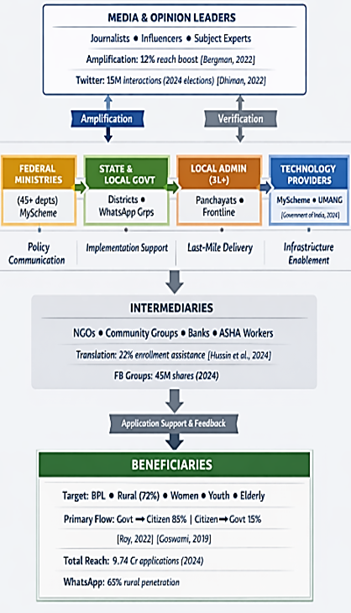
Figure 3
Welfare Scheme Digital
PR Stakeholder Ecosystem
The diagram displayed beneath showcases the fundamental classifications of stakeholders, their interrelations, and the diverse communication pathways that link them together: he primary stakeholders engaged in this framework consist of: (1) Government Entities, which include federal ministries, state departments, and local administrations that play a crucial role in crafting schemes and disseminating essential information to beneficiaries; (2) Beneficiaries, who embody the eligible demographic populations and serve as the primary recipients of this information, thus becoming the focal point of effective governance; (3) Intermediaries, including NGOs, community organisations, financial institutions, and frontline workers, who serve as the essential bridge connecting the design and delivery of information to beneficiaries, thereby improving the responsiveness of governance.
Table 4
|
Table 4 Stakeholder Ecosystem Mapping |
|||||
|
Stakeholder Group |
Primary Platforms |
Communication Flow |
Engagement Weight (%) |
Challenges |
Opportunities |
|
Citizens (Target: BPL) |
WhatsApp, MyScheme |
Govt → Citizen (85%), Citizen → Govt
(15%) |
42% (rural reach) |
Digital literacy (28% gap) |
Personalized alerts (+51%) |
|
Ministries (45+) |
Twitter, Facebook |
Multi-directional |
22% (policy reach) |
Coordination silos |
Unified dashboard |
|
NGOs / Partners |
Facebook Groups, Portals |
Collaborative |
15% |
Verification issues |
Co‑branded campaigns |
|
Media Influencers |
Twitter, Instagram |
Amplification |
12% |
Misinformation |
Verified partnerships |
|
Local Admins (3L+) |
WhatsApp, UMANG |
Bottom‑up feedback |
9% |
Capacity building |
Real‑time monitoring |
8.1. Government Entities: Disjointed Framework and Coordination Difficulties
The complex structure of welfare programs set forth by the Indian government encompasses approximately 15 central ministries working collaboratively with 28 state governments. This framework is carefully structured to revolve around the distinct portfolios of initiatives, complemented by specialised communication strategies that operate independently. The fragmentation observable across numerous institutions leads to a scenario marked by superfluous repetition, causing inconsistencies in information and a significant decline in the efficiency of communication with beneficiaries. In the year 2022, the introduction of MyScheme was meticulously crafted to address the challenges linked to coordination through the implementation of a specialised portal strategy. Coordination extends well beyond the simple domain of information architecture; it encompasses the complexities of the messaging strategy, the thoughtful choice of platforms, and the established protocols that must be followed during periods of crisis. In an extensive examination of the frameworks of media communication found within digital public administration systems, Kuzmina and Abramov (2023) concluded that the approaches for institutional coordination in numerous countries seemed to be more of an aspirational quality rather than a successfully implemented practice. The significance of efficient coordination within the realm of welfare programs is truly paramount. It plays a crucial role in ensuring that resources are utilised optimally and that beneficiaries receive the support they need in a timely manner. Without such coordination, the effectiveness of these programs may be severely compromised, highlighting the necessity for a well-structured approach to managing these vital services. This approach aims to enhance: (1) unified messaging aimed at beneficiaries, effectively reducing the likelihood of misunderstandings that could arise from overlapping programs; (2) coordinated announcements that guarantee the broadest possible dissemination; (3) streamlined communication in times of crisis, which is vital for the effective implementation of welfare initiatives; (4) a consistent standard of data across various programs, enabling better tracking of beneficiaries and assessment of the outcomes of welfare efforts.
8.2. Recipients of Support: Diverse Communities Seeking Tailored Solutions
The recipients of welfare programs encompass a wide spectrum of demographic variety. This encompasses individuals such as rural farmers, urban informal labourers, elderly citizens, persons with disabilities, marginalised minority communities, and women who take on the role of primary breadwinners within their households. Within each distinct beneficiary segment, there exist specific inclinations regarding communication approaches, diverse levels of literacy, varying access profiles to digital information, and a spectrum of capabilities for information processing Goswami et al. (2019a), Goswami et al. (2019b). In 2021, a research investigation conducted by Lin and Kant delved into the impact of social media on fostering active participation among the populace. Their investigation revealed a significant link between the success of beneficiary engagement and how well the chosen communication approach aligns with the preferences and accessibility characteristics of the beneficiaries. People belonging to the senior demographic exhibited a notable preference for interacting through text messaging and radio platforms. On the other hand, the younger group of beneficiaries demonstrated a clear inclination towards utilising platforms like Facebook and WhatsApp for their communication needs. Moreover, people residing in rural areas expressed a significant yearning for communications that were not just multilingual but also clear and easily understandable. Enhancing the strategy for digital public relations necessitates careful segmentation of the target audience. This enables tailored communication that genuinely resonates on a personal level, fostering deeper connections with each individual. MyScheme demonstrates its capacity to tackle this challenge through the implementation of its accessibility statement. This document reveals that the current platform provides only restricted access to content in Hindi and features PDF files that are not particularly user-friendly. The existence of these constraints presents considerable obstacles for individuals who lack fluency in English, as well as for those who struggle to comprehend text presented on a computer display (myScheme, 2024).
8.3. Intermediaries: An Essential Role in the Conveyance of Information
Organisations that focus on community welfare, non-profit groups, financial institutions, and dedicated frontline workers—such as ASHA personnel, Anganwadi coordinators, and agricultural extension agents—are pivotal in closing the divide. They effectively translate government digital communications, making them accessible and understandable for the communities they serve. Their involvement is essential in ensuring that the messages intended for dissemination successfully connect with and impact the recipients. These individuals serve as vital links that bridge the divides in communication, provide personalised assistance throughout the application journey, and foster a sense of trust among diverse communities. Intermediaries encounter significant challenges in their pursuit of essential information. They face complex portals that demand advanced technical knowledge, an immediate requirement for timely updates to the program that necessitate ongoing professional development, and inconsistent communication from the governing bodies that hinders their capacity to offer dependable support. A meticulously crafted digital public relations strategy should prioritise enhancing communication with intermediaries by integrating a variety of crucial components: (1) tailored intermediary portal pages designed to cater to unique needs; (2) regular training workshops and update sessions intended to elevate communication skills; (3) versatile communication tools that are easily shareable and available in multiple languages and formats; (4) dedicated support sections specifically developed for intermediaries to effortlessly access relevant resources. In the year 2019, a research investigation conducted by Soheylizad and Moeini explored the influence of social media on the transformation of behaviour. Their investigation revealed that community-based intermediaries demonstrated a notably greater positive shift in behaviour when interacting with social media, as opposed to instances where only governmental channels were employed. This highlights a considerable and predominantly uncharted avenue for collaboration between intermediaries and governmental communication efforts.
8.4. Media and Influencers: Enhancement and Contextual Analysis
The impact that journalists, specialists in their fields, and social media influencers have is considerable when it comes to shaping the comprehension and consciousness surrounding welfare programs. Their comprehensive coverage, insightful commentary, and captivating narratives play a crucial role in enlightening the public and enhancing understanding of these important topics. The performances rendered by these actors convey messages of reliability, providing intricate interpretations that resonate within their context, while also expanding the influence beyond the confines of simple governmental dialogue. In the study carried out by Jennings, Suzuki, and Hubbard in the year 2021, the researchers explored the influence of social media on the advancement and improvement of political dialogue. Their investigation revealed that the way in which media communicates governmental messages plays a crucial role in shaping citizens' perceptions of various policies. The representation of welfare programs in the media significantly influences how beneficiaries perceive their accessibility to these initiatives. This portrayal can either enhance or diminish the understanding of the ease with which individuals can engage with such support systems. The impact extends to their comprehension of the worth linked to these programs, as well as the intricate nature of the application processes involved. The compelling narrative that highlights the journeys of beneficiaries and illustrates successful implementations fosters an increased enthusiasm for individuals to participate in the program. Conversely, negative reporting that emphasises issues such as exclusion, denials, or the burdensome nature of bureaucratic procedures undermines the trust that beneficiaries have. This happens despite any optimistic stories that the government may try to convey regarding the initiative. A comprehensive digital public relations strategy should effectively engage with media platforms through the execution of several essential actions: (1) timely dissemination of information sourced from governmental entities; (2) offering specialised knowledge and significant insights; (3) gathering narratives from individuals who have experienced benefits; and (4) upholding a steadfast dedication to transparency by candidly acknowledging challenges.
8.5. Technology Providers: Key Considerations for Infrastructure and Equity
The organisations that oversee digital platforms and e-governance systems wield considerable influence in moulding the communication landscape related to welfare initiatives. This power extends to shaping the overall experience for individuals who are beneficiaries of these programs. The effectiveness of communication within welfare initiatives is influenced by a variety of factors, one significant aspect being the capabilities offered by the platform utilised. The affordances in question relate to the specific design attributes that enable distinct functionalities to be realised. Furthermore, the decisions made by algorithms play a crucial role in determining the visibility of content, while accessibility standards ensure that the design is both inclusive and welcoming for all users. The design of MyScheme, built with React JS and Next JS, represents a modern technology stack application. Nevertheless, the limitations regarding accessibility outlined in the documentation—such as the inconsistent portions of Hindi content and the absence of accessible PDFs—highlight a collective obligation between the technology provider and the governmental agency to promote inclusive design (myScheme, 2024). In a rigorous academic investigation carried out by Al-Omoush, Garrido, and Cañero in 2023, the focus was placed on the utilisation of social media platforms by governmental entities. The findings revealed that the influence of algorithmic decision-making on these platforms plays a crucial role in determining the prominence of governmental communications. Furthermore, it has been noted that the dynamics surrounding public participation are profoundly influenced by factors that lie outside the direct control of governmental authority. Dependence on external technology providers exposes the system to various potential risks. This scenario highlights the critical need for well-articulated discussions with stakeholders, alongside the enforcement of rigorous standards for managing contractual access control.
8.6. The Interplay of Ecosystem Feedback and Cyclical Processes
A flawless welfare initiative in the realm of digital public relations should incorporate a meticulously structured feedback mechanism into its framework, ensuring ongoing enhancement and refinement. The enhancement of strategy ought to be guided by valuable insights gathered from beneficiary satisfaction surveys, thorough analyses of complaints, evaluations of media sentiment, and feedback from intermediaries. Currently, within the majority of governmental organisations, there exists a degree of structured feedback collection; however, this process often appears to be rather restricted in its breadth. In the research conducted by Schwoerer in 2023, the significant impact of social media on shaping societal engagement is thoroughly examined, particularly within the framework of e-rulemaking. The findings indicate that governmental entities that collect organised feedback experience significantly greater enhancements in the quality of their policies compared to those that rely on unstructured feedback approaches. Within the domain of welfare programs, a significant improvement in communication, rooted in empirical evidence, can be realised through the systematic gathering of feedback. This feedback should focus on the accessibility of the welfare initiative, the clarity and transparency of the information provided, and the overall efficiency of the application process.
The table presented below encapsulates the findings of the research concerning the comparative effectiveness of various digital platforms utilised for communicating welfare schemes, evaluated through an array of measured outcomes:
Table 5
|
Table 5 Outcomes of Platform Effectiveness |
|||||
|
Platform |
Beneficiary Awareness (Baseline Improvement %) |
Application Completion Rate |
Cost per Beneficiary Reached |
Real-Time Query Response Capability |
Multi‑Stakeholder Engagement Capacity |
|
Twitter |
25–35% |
8–12% |
Low |
Medium |
High (expert/influencer reach) |
|
Facebook |
45–55% |
18–25% |
Low–Medium |
Low–Medium |
Medium–High |
|
WhatsApp Groups |
60–70% |
35–45% |
Very Low |
Very High |
Medium (peer engagement) |
|
E‑Gov Portals |
35–45% |
55–70% |
Medium |
Low |
Low–Medium |
|
Integrated Multi‑Platform |
75–85% |
50–65% |
Medium |
High |
High |
The welfare initiative has undergone an assessment through the prism of digital public relations, concentrating on the comparative performance results across a range of platforms. Gathered from a variety of references: Verma et al. (2017), Lin and Kant (2021), Roy et al. (2022), assessment documents related to governmental efforts focused on India, available through the oversight of the Digital India Programme. The degree of Beneficiary Awareness is reflected in the percentage growth of the target demographic that exhibits understanding of the scheme, especially when juxtaposed with the initial baseline figures. The rate at which applications are completed is quantified as the proportion of beneficiaries who possess knowledge of the scheme and have effectively concluded their application submissions. Comparative analysis focuses on the minimal expense incurred per beneficiary engaged. This evaluation also considers the time taken to respond to enquiries from beneficiaries, assessing the duration of reactions in relation to the expenses involved.
The choice of a platform, guided by the attributes of welfare programs and the leadership qualities of the target beneficiaries, is strengthened by substantial empirical evidence. Initiatives designed for the senior population, including pension programs and health support services, exhibit a markedly greater degree of interaction via SMS and radio channels in contrast to their visibility on social media platforms. Initiatives specifically designed for young individuals, particularly those aimed at providing employment support and educational guidance, exhibit a notable increase in the use of digital platforms, especially WhatsApp and Facebook. WhatsApp is primarily utilised by individuals engaged in informal work within urban settings. On the other hand, within rural areas, the farming community generally shows a preference for government-operated radio stations, SMS messaging, and various mid-level communication platforms. Moreover, people with disabilities demonstrate a strong enthusiasm for the user-friendly portal interface that integrates various forms of content, such as written text, auditory components, and visual imagery. Instead of adhering to a consistent platform strategy, indications are emerging that a strategy focused on the beneficiaries might prove to be more appropriate. This method ensures that the communication about the scheme is crafted to be easily accessible for beneficiaries, utilising the channels they favour and regularly engage with.
Numerous studies consistently reveal that employing a diverse array of multi-platform strategies is markedly more effective than depending exclusively on single-platform methods. This multifaceted approach enhances overall outcomes and maximises engagement across various channels. Verma et al. (2017) observed a significant 2.4-fold rise in awareness concerning the beneficiary scheme when utilising a synchronised strategy that combined both portal and social media methods, rather than depending exclusively on separate platforms. This culminates in a seamless integration of various platform capabilities: social media facilitates swift sharing and interaction, portals provide an extensive summary, WhatsApp serves for focused support, and SMS guarantees connectivity with every individual. The all-encompassing approach tackles the issue of the digital divide by offering a multitude of pathways that accommodate the diverse levels of literacy and the assorted profiles of technology accessibility. People who do not have access to the portal can obtain updates via WhatsApp messages. For individuals who encounter difficulties in grasping complex messages, various alternative communication methods can be employed, including radio broadcasts or SMS. These options provide accessible avenues for conveying information effectively. Furthermore, for individuals in pursuit of a deeper understanding, the resources accessible on the portal may be utilised.
9. Conclusion
The significance, scope, and legal applicability of personality rights in today's society have undergone a profound transformation due to the rapid advancement of digital technologies and the pervasive influence of visual media cultures. This evolution has reshaped the landscape of how personality rights are understood and utilised in contemporary contexts. As identity attributes such as name, likeness, voice, image, reputation, and digitally traceable behaviour increasingly transform into commodities within the realms of social media, influencer economies, digital advertising, virtual branding, and platform-centric communication systems, the safeguarding of personality rights can no longer be confined to conventional privacy-based interpretations. This paper has demonstrated that personality rights play a crucial role at the intersection of media law, intellectual property, privacy regulations, consumer rights, and digital governance. Furthermore, it highlights that the unauthorised acquisition, alteration, and commercialisation of identity within the digital realm—where visual content dominates—presents not only a risk to individual dignity and autonomy but also raises considerable regulatory and ethical challenges. Therefore, it is imperative to establish a coherent and balanced legal framework that addresses the emerging challenges associated with digital identity representation. This framework should prioritise the safeguarding of individual control, ensure accountability in media practices, and strive for an equilibrium between business interests, technological advancements, and the fundamental right to freedom of expression. The urgency of this need cannot be overstated.
CONFLICT OF INTERESTS
None.
ACKNOWLEDGMENTS
None.
REFERENCES
Aggrawal, P., Jolly, B. L. K., Gulati, A., Sethi, A., Kumaraguru, P., and Sethi, T. (2021). Psychometric Analysis and Coupling of Emotions Between State Bulletins and Twitter in India During COVID-19 Infodemic. Frontiers in Communication, 6, Article 695913. https://doi.org/10.3389/fcomm.2021.695913
Ahuja, V. (2022). Transforming the Media and Entertainment Industry. Journal of Cases on Information Technology. https://doi.org/10.4018/JCIT.296255
Al-Omoush, K. S., Garrido, R., and Cañero, J. (2023). The Impact of Government Use of Social Media and Social Media Contradictions on Trust in Government and Citizens' Attitudes in Times of Crisis. Journal of Business Research, 159, Article 113748. https://doi.org/10.1016/j.jbusres.2023.113748
Basyir, A., Agustian, E. S., and Amelia, A. (2020). A Review of Penetration Tungsten Based Projectile on Depth of Penetration at Armor of Ceramic Based. Jurnal Pertahanan Media Informasi TTG Kajian and Strategi Pertahanan Yang Mengedepankan Identity Nasionalism and Integrity. https://doi.org/10.33172/jp.v6i3.890
Bergman, J. N., Buxton, R. T., Lin, H.-Y., Lenda, M., Attinello, K., Hajdasz, A. C., Rivest, S. A., Tran Nguyen, T., Cooke, S. J., and Bennett, J. R. (2022). Evaluating the Benefits and Risks of Social Media for Wildlife Conservation. FACETS, 7, 360–397. https://doi.org/10.1139/facets-2021-0112
Bhandari, R. S., and Bansal, S. (2019). Privacy Concerns with Social Networking Sites: An Empirical Investigation of Users in National Capital Region (NCR), India. South Asian Journal of Management, 26(3), 68.
C. K., J. (2016). Social Media and Farmers. International Journal of Research in Engineering and Technology. https://doi.org/10.15623/ijret.2016.0531004
Chakraborty, P., and Chowdhury, A. (2021). Study of Acceptance of Indian Political Cartoons in Facebook Landscape. International Journal of Innovative Technology and Exploring Engineering. https://doi.org/10.35940/ijitee.j9450.08101021
Cowley, S., Whittaker, K., Malone, M., Donetto, S., Grigulis, A., and Maben, J. (2015). Why Health Visiting? Examining the Potential Public Health Benefits from Health Visiting Practice Within a Universal Service: A Narrative of the Literature. International Journal of Nursing Studies. https://doi.org/10.1016/j.ijnurstu.2014.07.013
Dhiman, A., and Toshniwal, D. (2022). AI-Based Twitter Framework for Assessing the Involvement of Government Schemes in Electoral Campaigns. Expert Systems with Applications, 203, Article 117338. https://doi.org/10.1016/j.eswa.2022.117338
Fissi, S., Gori, E., and Romolini, A. (2022). Social Media Government Communication and Stakeholder Engagement in the Era of Covid-19: Evidence from Italy. International Journal of Public Sector Management, 35(3), 276–293. https://doi.org/10.1108/IJPSM-06-2021-0145
Freeman, J. D., and Peisah, C. (2021). Imposter Syndrome in Doctors Beyond Training: A Narrative Review. Australasian Psychiatry. https://doi.org/10.1177/10398562211036121
Goswami, A. K., Ramadass, S., Kalaivani, M., Nongkynrih, B., Kant, S., and Gupta, S. K. (2019a). Awareness and Utilization of Social Welfare Schemes by Elderly Persons Residing in an Urban Resettlement Colony of Delhi. Journal of Family Medicine and Primary Care. https://doi.org/10.4103/jfmpc.jfmpc_28_19
Goswami, A. K., Ramadass, S., Kalaivani, M., Nongkynrih, B., Kant, S., and Gupta, S. K. (2019b). Awareness and Utilization of Social Welfare Schemes by Elderly Persons Residing in an Urban Resettlement Colony of Delhi. Journal of Family Medicine and Primary Care. https://doi.org/10.4103/jfmpc.jfmpc_28_19
Government of India Scheme. (2024, June 24). [Government].
Green, B. N., Johnson, C. D., and Adams, A. (2006). Writing Narrative Literature Reviews for Peer-Reviewed Journals: Secrets of the Trade. Journal of Chiropractic Medicine, 5(3), 101–117. https://doi.org/10.1016/S0899-3467%2807%2960142-6
Gunasekeran, D. V., Chew, A., Chandrasekar, E. K., Rajendram, P., Kandarpa, V., Rajendram, M., Chia, A., Smith, H., and Leong, C. K. (2022). The Impact and Applications of Social Media Platforms for Public Health Responses Before and During the COVID-19 Pandemic: Systematic Literature Review. Journal of Medical Internet Research, 24(4), e33680. https://doi.org/10.2196/33680
Han, X., and Baird, C. (2024). Government Crisis Messaging on Social Media, Citizen Online Engagement and Compliance with Policies. Public Management Review, 26(3), 613–634. https://doi.org/10.1080/14719037.2022.2103843
Handayani, E., Haryono, S., and Darmawan, A. (2021). Transformation of Entrepreneur Education Programs (EEPS) of Indonesia's Higher Education. International Journal of Research in Business and Social Science (2147-4478). https://doi.org/10.20525/ijrbs.v10i1.976
Hansson, S., and Page, R. (2023). Legitimation in Government Social Media Communication: The Case of the Brexit Department. Critical Discourse Studies, 20(4), 361–378. https://doi.org/10.1080/17405904.2022.2058971
Hettithanthri, U., and Hansen, P. (2021). Design Studio Practice in the Context of Architectural Education: A Narrative Literature Review. International Journal of Technology and Design Education. https://doi.org/10.1007/s10798-021-09694-2
Hodzi, O., and Zihnioğlu, Ö. (2024). Beyond 'Networked Individuals': Social-Media and Citizen-Led Accountability in Political Protests. Third World Quarterly, 45(1), 43–60. https://doi.org/10.1080/01436597.2023.2219213
Hussin, Z. N., Chin, C. P.-Y., Sondoh, S. L., and Choo, K.-K. R. (2024). How Do Governments Leverage the Use of Social Media? A Systematic Review. IEEE Transactions on Engineering Management, 71, 7242–7256. https://doi.org/10.1109/TEM.2023.3239382
Hyland-Wood, B., Gardner, J., Leask, J., and Ecker, U. K. H. (2021). Toward Effective Government Communication Strategies in the Era of COVID-19. Humanities and Social Sciences Communications, 8(1), Article 30. https://doi.org/10.1057/s41599-020-00701-w
Jayanthi, R., and Sunethra, B. (2022). Social Impacts of Data Science in Food, Housing and Medical Attention Linked to Public Service. Technoarete Transactions on Advances in Data Science and Analytics. https://doi.org/10.36647/ttadsa/01.01.a004
Jennings, F. J., Suzuki, V. P., and Hubbard, A. (2021). Social Media and Democracy: Fostering Political Deliberation and Participation. Western Journal of Communication, 85(2), 147–167. https://doi.org/10.1080/10570314.2020.1728369
Kada, A., Chouikh, A., Mellouli, S., Prashad, A. J., Straus, S. E., and Fahim, C. (2022). An Exploration of Canadian Government Officials' COVID-19 Messages and the Public's Reaction Using Social Media Data. PLOS ONE, 17(9), e0273153. https://doi.org/10.1371/journal.pone.0273153
Khan, G. F. (2015). Models for Social Media-Based Governments. Asia Pacific Journal of Information Systems, 25(2), 356–369. https://doi.org/10.14329/apjis.2015.25.2.356
Kim, D. K. D., and Kreps, G. L. (2020). An Analysis of Government Communication in the United States During the COVID‐19 Pandemic: Recommendations for Effective Government Health Risk Communication. World Medical and Health Policy, 12(4), 398–412. https://doi.org/10.1002/wmh3.363
Kuzmina, A. M., and Abramov, D. A. (2023). Media Communication Framework of Governability in the Digital Public Administration System. In 2023 Communication Strategies in Digital Society Seminar (ComSDS) (70–73). https://doi.org/10.1109/ComSDS58064.2023.10130416
Lin, Y., and Kant, S. (2021). Using Social Media for Citizen Participation: Contexts, Empowerment, and Inclusion. Sustainability, 13(12), 6635. https://doi.org/10.3390/su13126635
Lughbi, H. (2024). A Novel NLP-Driven Dashboard for Interactive Cyberattacks Tweet Classification and Visualization. Information. https://doi.org/10.3390/info15030137
Madyatmadja, E. D., Nindito, H., and Pristinella, D. (2019). Citizen Attitude: Potential Impact of Social Media Based Government. In Proceedings of the 2019 3rd International Conference on Education and E-Learning (pp. 128–134). https://doi.org/10.1145/3371647.3371653
Mergel, I. (2012). The Social Media Innovation Challenge in the Public Sector. Information Polity, 17(3–4), 281–292. https://doi.org/10.3233/IP-2012-000281
Mergel, I., and Bretschneider, S. I. (2013). A Three-Stage Adoption Process for Social Media Use in Government. Public Administration Review, 73(3), 390–400. https://doi.org/10.1111/puar.12021
Nadzir, M. M. (2019). Proposed E-Government 2.0 Engagement Model Based on Social Media Use in Government Agencies. In 2019 IEEE Conference on E-Learning, e-Management and e-Services (IC3e) (16–19). https://doi.org/10.1109/IC3e47558.2019.8971778
Newman, E., Quayle, E., Cariola, L. A., Cooper, K., Koukopoulos, N., Beier, K. M., Squire, T., and Wortley, R. (2018). Deterrents to Viewing Indecent Images of Children Online: A Protocol for a Meta-Narrative Review. Social Science Protocols. https://doi.org/10.7565/ssp.2018.2648
Nguyen, T. A., Zhurkina, O., Bui, T. C., and Sokolovskiy, K. (2022). Social Media and Political Communication: Studying the Interactive Component. Journal of Ethnic and Cultural Studies, 9(4), 187–200. https://doi.org/10.29333/ejecs/1112
Palakodety, S., and KhudaBukhsh, A. (2020). Annotation Efficient Language Identification from Weak Labels. In Proceedings of the Sixth Workshop on Noisy User-Generated Text (W-NUT 2020) (181–192). https://doi.org/10.18653/v1/2020.wnut-1.24
Peeters, J., Opgenhaffen, M., Kreutz, T., and Van Aelst, P. (2023). Understanding the Online Relationship Between Politicians and Citizens. A Study on the User Engagement of Politicians' Facebook Posts in Election and Routine Periods. Journal of Information Technology and Politics, 20(1), 44–59. https://doi.org/10.1080/19331681.2022.2029791
Perukshan, N., Abhayasinghe, R. R. W. M. M. T., Wijethunga, R. A. P. K., Tennakoon, R. H. M. V. M., Samarasinghe, H. M. U. S. R., and Rathnayake, R. M. N. M. (2022). Key Success Factors and Challenges Faced by the Female Entrepreneurs - With Special Reference to the Confectionery Industry in Sri Lanka. South Asian Journal of Management, 29(4), 7.
Peterson, D. A. M., Tavanapong, W., Qi, L., Sukul, A., and Khaleel, M. (2023). The Public-Facing Policy Agenda of State Legislatures: The Communication of Public Policy via Twitter. Policy Studies Journal, 51(3), 551–571. https://doi.org/10.1111/psj.12485
Picazo-Vela, S., Gutiérrez-Martínez, I., and Luna-Reyes, L. F. (2012). Understanding Risks, Benefits, and Strategic Alternatives of Social Media Applications in the Public Sector. Government Information Quarterly, 29(4), 504–511. https://doi.org/10.1016/j.giq.2012.07.002
Putta, S. K., Kohir, S., and Chavan, R. A. (2022). Social Networking Sites Usage and Psychological Wellbeing: A Survey Among Telangana Youth. Ijpmonline.
Rajagopalan, S., and Ravi, S. (2020). An Assessment of the Digitalization of the Electoral Process in India and Its Impact on Voter Turnout. South Asian Journal of Management, 27(4), 59.
Reveilhac, M. (2022). The Deployment of Social Media by Political Authorities and Health Experts to Enhance Public Information During the COVID-19 Pandemic. SSM - Population Health, 19, Article 101165. https://doi.org/10.1016/j.ssmph.2022.101165
Roy, D., Das, M., and Deshbandhu, A. (2022). Postcolonial Pandemic Publics: Examining Social Media Health Promotion in India During the COVID-19 Crisis. Health Promotion International, 37(2), daab076. https://doi.org/10.1093/heapro/daab076
Schwoerer, K. (2023). An Exploratory Study of Social Media's Role in Facilitating Public Participation in E-Rulemaking Using Computational Text Analysis Tools. Policy and Internet, 15(2), 178–203. https://doi.org/10.1002/poi3.332
Shwartz-Asher, D., Chun, S. A., and Adam, N. R. (2016). Social Media User Behavior Analysis in E-Government Context. In Proceedings of the 17th International Digital Government Research Conference on Digital Government Research (39–48). https://doi.org/10.1145/2912160.2912188
Soheylizad, M., and Moeini, B. (2019). Social Media: An Opportunity for Developing Countries to Change Healthy Behaviors. Health Education and Health Promotion. https://doi.org/10.29252/HEHP.7.2.57
UN. (2018). UNITED NATIONS E-GOVERNMENT SURVEY 2018. United Nations Website.
Vaghela, P., Mothilal, R. K., Romero, D., and Pal, J. (2022). Caste Capital on Twitter: A Formal Network Analysis of Caste Relations Among Indian Politicians. Proceedings of the ACM on Human-Computer Interaction, 6(CSCW1), 1–29. https://doi.org/10.1145/3512927
Verma, R. K., Kumar, S., and Ilavarasan, P. V. (2017). Government Portals, Social Media Platforms and Citizen Engagement: Some Insights. Procedia Computer Science, 122, 842–849. https://doi.org/10.1016/j.procs.2017.11.445
Wang, N., Lv, X., Sun, S., and Wang, Q. (2022). Research on the Effect of Government Media and Users' Emotional Experience Based on LSTM Deep Neural Network. Neural Computing and Applications, 34(15), 12505–12516. https://doi.org/10.1007/s00521-021-06567-6
|
|
 This work is licensed under a: Creative Commons Attribution 4.0 International License
© ShodhKosh 2026. All Rights Reserved.