ShodhKosh: Journal of Visual and Performing ArtsISSN (Online): 2582-7472
|
|
Body Aesthetics and Embodied Cognition in Chinese Folk Dance Education
Fang Yi Zhang 1
 ,
Jie Zhang 2
,
Jie Zhang 2
1 School
of Music and Dance, Huaihua University, Hunan,
418000, China
2 School
of Music and Dance, Huaihua University, Hunan,
418000, China
|
|
|
ABSTRACT |
|
|
Background/ problem: Background/Problem: Contemporary Chinese folk dance education emphasizes technical proficiency at the expense of cultural understanding and embodied experience. This pedagogical limitation restricts learners' capacity to engage with the cultural significance and embodied wisdom inherent in folk dance traditions. Objective/Purpose: This study examines how body aesthetics and embodied cognition principles can be systematically integrated into Chinese folk dance education to create a culturally grounded, experientially rich learning paradigm that addresses both theoretical gaps in dance education literature and practical challenges in contemporary pedagogy. Design and Methodology: Drawing on Richard Shusterman's theory of body aesthetics, Maurice Merleau-Ponty's phenomenology of perception, and embodied cognition research, this conceptual study systematically analyzes the symbolic structures of Chinese folk dance traditions across six major ethnic groups and proposes an innovative pedagogical framework featuring phased development and modular training approaches. Results: The proposed framework comprises four developmental phases (body awareness awakening, movement meaning decoding, emotion-body integration, self-expression construction) and five training modules (perceptual training, movement analysis, reflective practice, cultural immersion, creative expression), providing systematic guidance for integrating somatic consciousness and cultural understanding into dance education. Conclusion
and Implications: This study contributes to
behavioral science by demonstrating how embodied cognitive practices in arts
education enhance self-awareness, cultural consciousness, and aesthetic
judgment. The framework offers practical pathways for dance educators to
transform movement learning from technical execution into meaningful cultural
practice, with implications extending to other embodied cultural traditions. |
|||
|
Received 25 February 2026 Accepted 11 April 2026 Published 20 April 2026 Corresponding Author Jie Zhang,
78646031@qq.com DOI 10.29121/shodhkosh.v7.i1.2026.7590 Funding: This research
received no specific grant from any funding agency in the public, commercial,
or not-for-profit sectors. Copyright: © 2026 The
Author(s). This work is licensed under a Creative Commons
Attribution 4.0 International License. With the
license CC-BY, authors retain the copyright, allowing anyone to download,
reuse, re-print, modify, distribute, and/or copy their contribution. The work
must be properly attributed to its author.
|
|||
|
Keywords: Chinese Folk Dance Education, Body Aesthetics,
Embodied Cognition, Somatic Awareness, Cultural Understanding, Dance
Pedagogy, Aesthetic Judgment, Embodied Cultural Practice |
|||



1. INTRODUCTION
Chinese folk dance, as an integral component of China's cultural heritage, represents more than mere physical movement or entertainment. It constitutes a complex symbolic system that embodies the collective memory, aesthetic consciousness, and philosophical worldview of China's diverse ethnic groups Zhang (2018), Zhou and Wang (2020). As an art form that utilizes the body as its primary medium of expression, folk dance transforms lived experiences, environmental relationships, and cultural values into a dynamic performative language Noland (2009). This transformation occurs through a three-dimensional structure encompassing form, emotion, and meaning, creating an intergenerational inheritance mechanism that preserves and transmits cultural knowledge, aesthetic standards, and emotional patterns across generations Farnell (2012).
Contemporary dance education in Chinese universities, however, often emphasizes technical proficiency and standardized movement execution at the expense of deeper cultural understanding and embodied experience Zhou and Wang (2020). This pedagogical orientation reflects a broader tension in arts education between skill-based training and holistic cultural transmission. The prevalent focus on achieving precise movements, ideal body contours, and technical excellence, while valuable for performance quality, may inadvertently diminish learners' capacity to engage with the cultural significance, emotional depth, and embodied wisdom inherent in folk dance traditions. This limitation becomes particularly problematic when considering dance education's role in cultural preservation and identity formation within rapidly globalizing contexts Zhang (2018).
The introduction of body aesthetics theory, particularly as developed by American philosopher Richard Shusterman (2008), Shusterman (2012), offers a potentially transformative framework for reconceptualizing dance education. Body aesthetics proposes that the body should be recognized as both subject and object of aesthetic experience, capable of enhanced perception, self-awareness, and creative expression through systematic cultivation. This study examines how body aesthetics and embodied cognition principles can be systematically integrated into Chinese folk dance education, investigating the symbolic structures of various ethnic folk dance traditions and proposing innovative pedagogical strategies based on somatic consciousness and reflective practice.
2. Literature Review
2.1. Theoretical Background
2.1.1. Chinese Folk Dance as Cultural Symbol System
Chinese folk dance encompasses diverse traditions from 56 ethnic groups, each possessing distinctive movement vocabularies rooted in specific cultural, geographical, and historical contexts Zhang (2018). These dance forms function as symbol systems that encode and transmit cultural knowledge through bodily practice Csordas (1990), Noland (2009). The scholarly literature distinguishes between ethnic dance traditions, which emphasize collective identity and cultural distinctiveness of specific ethnic groups, and folk traditions, which arise from grassroots cultural practices and daily life experiences. This distinction reflects different mechanisms of cultural transmission and varying relationships between dance practice and social organization Farnell (2012).
Each ethnic tradition demonstrates distinctive body aesthetic characteristics. Mongolian dance, characterized by wide stances, elevated arms, and upright posture, conveys confidence, strength, and freedom associated with grassland culture and nomadic heritage Zhang (2018). Tibetan dance presents contrasting aesthetic principles through its characteristic "one smooth side" movement pattern, where body parts move harmoniously in the same direction, reflecting philosophical concepts regarding unity with nature and cosmic order Zhou and Wang (2020). Dai dance is renowned for its graceful "three bends" posture, creating elegant S-shaped curves through coordinated bending of neck, waist, and knees, reflecting cultural values emphasizing subtle beauty, natural harmony, and fluid grace.
Each ethnic tradition demonstrates how dance movements function as cultural texts that convey historical experiences, philosophical worldviews, religious beliefs, and aesthetic principles Noland (2009). The symbolic dimension of these movement systems presents both opportunities and challenges for contemporary dance education, requiring pedagogical approaches that can transmit not only movement forms but also their cultural meanings and embodied significance.
2.2. Body Aesthetics and Embodied Cognition Theory
Richard Shusterman's body aesthetics represents a philosophical intervention that challenges mind-body dualism and advocates for recognizing the body as both aesthetic subject and object Shusterman (2008). In his foundational works, particularly "Body Consciousness and Body Aesthetics," Shusterman critiques Western philosophical traditions that have historically devalued bodily experience in favor of mental or spiritual domains. Drawing on pragmatist philosophy, particularly the works of William James and John Dewey, Shusterman (2012) develops a theoretical framework emphasizing the body's central role in perception, knowledge acquisition, and aesthetic experience.
Shusterman (2008) theory distinguishes three dimensions of body aesthetics: analytical body aesthetics examines philosophical questions regarding bodily experience and perception; practical body aesthetics focuses on methodological approaches for enhancing bodily awareness; and practical body aesthetics emphasizes transformative practices that cultivate refined body consciousness through sustained engagement with somatic disciplines. Shusterman (2008) identifies dance as "the most pragmatic body art," recognizing its unique potential for developing embodied consciousness and aesthetic awareness.
The concept of embodied cognition complements body aesthetics by proposing that cognitive processes are fundamentally shaped by bodily experience and sensorimotor engagement with the environment Shapiro (2019), Varela et al. (2016). This perspective challenges traditional cognitive science models that treated the mind as an abstract information processor operating independently of bodily constraints Wilson (2002). Embodied cognition research demonstrates that conceptual understanding, memory formation, and even abstract reasoning depend on bodily experiences and motor schemas Gallagher and Lindgren (2015). For dance education, this theoretical framework suggests that learning dance movements involves not merely acquiring motor skills but developing new modes of bodily understanding and perceptual awareness Stolz (2015).
Maurice Merleau-Ponty’s phenomenology of perception provides additional theoretical support for understanding the body as the primary site of experience and meaning generation Merleau-Ponty (2012). Merleau-Ponty argued that perception is not a passive reception of sensory data but an active, embodied engagement with the world. The body possesses its own intelligence and intentionality, capable of grasping situations and responding meaningfully without explicit conscious deliberation. For dance, this suggests that movement learning involves cultivating bodily intelligence that operates through feel and intuition rather than explicit rules or conscious analysis Johnson (2007).
2.2.1. Research Variables
This conceptual study examines the integration of body aesthetics principles into Chinese folk dance education through analysis of key variables: (1) Body aesthetic characteristics of major Chinese ethnic folk dance traditions, including gestures, postures, movement dynamics, spatial orientations, and expressive qualities; (2) Pedagogical approaches emphasizing embodied cognition, including perceptual awareness, experiential learning, and reflective practice; (3) Learning outcomes encompassing technical proficiency, cultural understanding, somatic consciousness, and creative expression capacity; and (4) Implementation factors affecting systematic integration of body aesthetics principles into existing curricula.
2.2.2. Conceptual Framework
Figure 1 presents the conceptual framework guiding this study. The
framework integrates three theoretical perspectives body aesthetics, embodied
cognition, and phenomenology of perception to inform a comprehensive
pedagogical model for Chinese folk dance education.
The framework operates at multiple levels, beginning with analysis of body
aesthetic characteristics embedded in various ethnic dance traditions,
progressing through phased developmental approaches to teaching and learning,
and culminating in outcomes that transcend technical proficiency to encompass
cultural consciousness and creative expression.
Figure 1
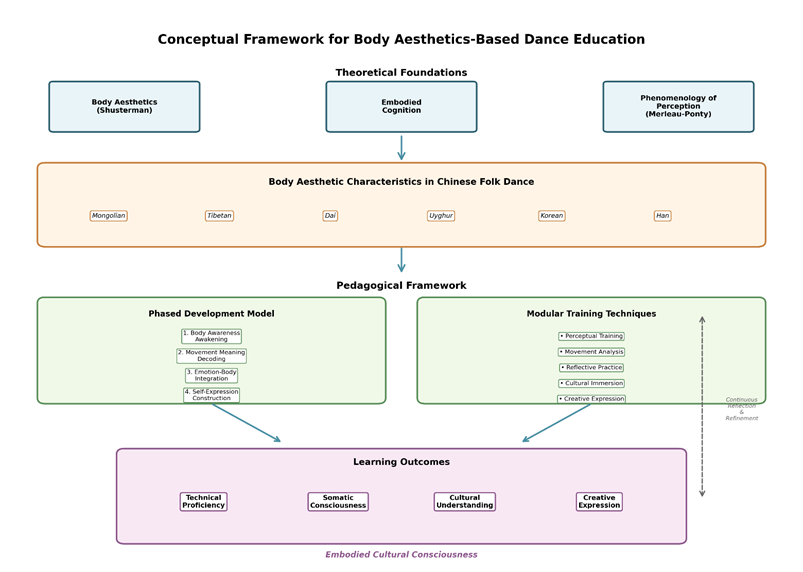
Figure 1 Conceptual Framework for Body Aesthetics-Based Dance
Education
Note. The framework illustrates
the integration of theoretical foundations, pedagogical approaches, and
learning outcomes in embodied dance education.
3. Proposed Pedagogical Framework
3.1. Phased Development Model
The proposed pedagogical framework organizes dance learning as a developmental process progressing through distinct but interconnected phases Stolz (2015). Each phase addresses specific learning objectives while building upon previous foundations and preparing for subsequent developments. This phased approach recognizes that embodied learning involves multiple dimensions developing at different rates and requiring varied pedagogical strategies Gallagher and Lindgren (2015). The framework comprises four primary phases: body awareness awakening, movement meaning decoding, emotion-body integration, and self-expression construction.
Table 1 presents the comprehensive characteristics of each developmental phase, including specific learning objectives and pedagogical strategies. This structured yet flexible approach can be adapted to different educational contexts, student populations, and instructional objectives while maintaining focus on embodied cognition and cultural transmission.
Table 1
|
Table 1 Phased Development Model for Embodied Dance Education |
||
|
Phase |
Learning Objectives |
Pedagogical Strategies |
|
Body Awareness Awakening |
Develop somatic consciousness;
cultivate perceptual sensitivity; establish mind-body connection |
Mindfulness practices, body scanning,
breathing awareness, exploratory movement |
|
Movement Meaning Decoding |
Understand cultural contexts; interpret
symbolic dimensions; develop cultural literacy |
Ethnographic study, cultural analysis,
historical investigation, comparative examination |
|
Emotion-Body Integration |
Infuse movements with emotional
content; develop expressive capacity; connect technique with feeling |
Character study, emotional preparation,
imagery work, expressive experimentation |
|
Self-Expression Construction |
Develop individual artistic voice;
create contemporary relevance; maintain cultural authenticity |
Choreographic projects, creative
reinterpretation, cross-cultural synthesis |
|
Note. Each phase builds
upon previous foundations while preparing for subsequent developments in
embodied learning. |
||
The phased model provides structure while allowing for recursive movement between phases as learners deepen their understanding and refine their skills Gallagher and Lindgren (2015). The developmental progression is not strictly linear but involves continuous cycles of practice, reflection, refinement, and creative application. Teachers can emphasize different phases according to students' developmental stages, prior experience, and specific learning needs while maintaining the overall trajectory from basic awareness to sophisticated artistic expression.
3.2. Training Techniques
Complementing the phased development model, the pedagogical framework incorporates specific training modules addressing different dimensions of embodied learning. These modules can be integrated flexibly within the overall developmental progression, with different modules receiving emphasis at different phases. Table 2 presents the modular training components and their relationship to specific learning outcomes and assessment approaches. This modular organization provides flexibility for adapting the pedagogical framework to different institutional contexts, course durations, and student populations while maintaining coherent pedagogical principles and learning objectives.
Table 2
|
Table 2 Modular Training Components and Learning Outcomes |
||
|
Training Module |
Primary Learning Outcomes |
Assessment Approaches |
|
Perceptual Training |
Refined kinesthetic
awareness; enhanced body consciousness; improved self-regulation capacity |
Self-assessment reports; peer
observation feedback; movement quality analysis |
|
Movement Analysis |
Systematic understanding of movement
structure; analytical vocabulary development; technical refinement |
Written analysis assignments; practical
demonstrations; teaching exercises |
|
Reflective Practice |
Metacognitive awareness; articulation
of learning processes; self-directed learning capacity |
Learning journals; group discussions;
self-evaluation portfolios |
|
Cultural Immersion |
Cultural literacy; respect for
traditions; understanding of social contexts |
Ethnographic reports; documentation
projects; community engagement activities |
|
Creative Expression |
Individual artistic voice; experimental
capacity; contemporary relevance |
Choreographic projects; performance
presentations; creative portfolios |
|
Note. All modules share
commitment to embodied cognition principles, emphasizing internal experience
alongside external execution, cultural understanding alongside technical
skill, and reflective awareness alongside practical competence. |
||
3.3. Body Aesthetic Characteristics in Chinese Folk Dance
The application of body aesthetics to Chinese folk dance education requires systematic analysis of how different ethnic dance traditions embody specific aesthetic principles and cultural values Shusterman (2008). Table 3 presents the body aesthetic characteristics of major Chinese ethnic folk dance traditions, demonstrating how specific movement vocabularies encode particular value systems and aesthetic principles, providing a foundation for developing pedagogical strategies that can transmit both technical forms and their underlying cultural meanings Zhou and Wang (2020).
Table 3
|
Table 3 Body Aesthetic Characteristics of Chinese Ethnic Folk Dance Traditions |
|||
|
Ethnic Tradition |
Characteristic Movements |
Body Aesthetic Connotation |
|
|
Mongolian |
Hard shoulder, soft arm, wide stance |
Cultural confidence, strength, and
freedom; expression of grassland warrior traditions |
|
|
Tibetan |
One smooth side (unified directional
movement) |
Harmony with nature, spiritual
reverence, internal strength channeled through
controlled movement |
|
|
Dai |
Three bends (neck, waist, knees);
S-curve |
Graceful flexibility, subtle beauty,
harmonious human-nature relationship |
|
|
Uyghur |
Moving neck, snapping fingers, turning
wrists, spinning |
Cultural synthesis of East-West
influences, expressive vitality, emotional richness |
|
|
Korean |
Willow hand gestures, crane step
footwork |
Elegant tranquility,
spiritual transcendence, otherworldly grace |
|
|
Han (Yangge) |
Twisting steps, root movements,
floating walk |
Perseverance in adversity, open-hearted
character, connection to agricultural traditions |
|
|
Note. These characteristics
represent embodied expressions of cultural worldviews, philosophical
concepts, and aesthetic ideals transmitted through generations of
practitioners. |
|||
4. Discussion and Conclusion
This study contributes to behavioral science literature by demonstrating how embodied cognition principles can inform pedagogical innovation in arts education Gallagher and Lindgren (2015), Stolz (2015). The integration of body aesthetics theory with Chinese folk dance education addresses several theoretical gaps. First, it extends embodied cognition research beyond laboratory settings and cognitive psychology into applied educational contexts, demonstrating practical implications of embodied cognition principles for curriculum design and teaching practice Shapiro (2019), Wilson (2002). Second, it bridges Western philosophical frameworks and Eastern cultural traditions, showing how Shusterman (2008), Shusterman (2012) body aesthetics can productively engage with Chinese aesthetic principles and educational practices Zhang (2018), Zhou and Wang (2020).
The proposed framework challenges conventional assumptions about dance education that prioritize external correctness over internal experience Zhou and Wang (2020). By foregrounding somatic consciousness and embodied understanding, this approach suggests that effective cultural transmission requires attending to the experiential dimensions of bodily practice rather than focusing exclusively on reproducing movement forms Shusterman (2008). This insight has implications beyond dance education for understanding how cultural knowledge is maintained and transmitted through embodied practices more generally, including martial arts, crafts, ritual performances, and other tradition-based practices Farnell (2012), Noland (2009).
The framework also contributes to aesthetic education theory by demonstrating how aesthetic sensitivity and judgment can be cultivated through systematic training rather than treated as innate talents Johnson (2007), Shusterman (2012). The phased development model shows how aesthetic capacities emerge through progressive engagement with increasingly sophisticated challenges, moving from basic perceptual awareness through cultural understanding to creative expression.
4.1. Limitations
This study presents a theoretical and conceptual framework rather than empirical evaluation of pedagogical outcomes. While the framework is grounded in established theories and responds to documented problems in current practice, its effectiveness requires empirical validation through systematic implementation and assessment Gallagher and Lindgren (2015). Future research should examine how different components of the framework affect specific learning outcomes, comparing traditional and embodied cognition approaches through controlled studies.
The framework focuses primarily on university-level dance education, but its principles may apply to other educational levels and contexts. Assessment methodology represents another area requiring further development. While the framework proposes diverse assessment approaches, developing reliable and valid instruments for measuring outcomes like body consciousness, cultural understanding, and aesthetic sensitivity remains challenging Stolz (2015).
The framework emphasizes individual learning but gives less attention to collective dimensions of dance as social practice. Future research could examine how embodied cognition approaches affect group dynamics, collaborative creativity, and community formation Farnell (2012).
4.2. Implications for Behavioral Science
This study illuminates how cultural socialization occurs through bodily practice and how specific training methodologies can enhance this socialization process Csordas (1990). The emphasis on reflective practice and metacognitive awareness demonstrates how explicit attention to learning processes can enhance implicit bodily learning Stolz (2015). This integration of explicit and implicit learning processes represents an important contribution to understanding how complex cultural competencies are acquired.
For practice, the proposed framework offers systematic guidance for integrating body aesthetics and embodied cognition principles into existing curricula. The modular structure allows instructors to adopt specific components according to their expertise, institutional constraints, and student needs. The framework addresses documented limitations in current practice, particularly the overemphasis on technical execution at the expense of cultural understanding and internal experience Zhang (2018), Zhou and Wang (2020).
For theory development, this study demonstrates concrete applications of embodied cognition principles in educational contexts, moving theoretical discussions toward practical implementation. By examining how complex cultural knowledge is learned through bodily practice, it illuminates fundamental processes in cultural socialization. By showing how aesthetic capacities develop through systematic training, it challenges assumptions about aesthetic judgment as innate talent.
5. Conclusion
This study has proposed an innovative pedagogical framework for Chinese folk dance education grounded in body aesthetics theory and embodied cognition principles. By systematically analyzing the symbolic structures of major ethnic dance traditions and developing phased and modular approaches to teaching that emphasize somatic consciousness, cultural understanding, and reflective practice, this framework addresses significant limitations in current dance pedagogy while respecting technical rigor and cultural authenticity.
The integration of body aesthetics and embodied cognition into dance education represents fundamental reconceptualization of what dance learning involves and what dance education should accomplish. Rather than treating dance as primarily technical skill requiring disciplined training, this approach recognizes dance as embodied cultural knowledge requiring experiential engagement, perceptual sensitivity, and critical reflection. Rather than positioning students as passive recipients of cultural traditions, it encourages active, conscious participation in cultural transmission and creative renewal.
As Chinese society continues rapid modernization and globalization, the challenge of transmitting traditional cultural knowledge while remaining relevant to contemporary life becomes increasingly urgent. Dance education, properly conceived and implemented, can serve as vital site for negotiating this challenge, helping new generations develop embodied connections to cultural heritage while cultivating creative capacities for cultural innovation. The pedagogical framework proposed here offers one pathway toward realizing this potential, demonstrating how theoretical insights from body aesthetics and embodied cognition can inform practical educational innovation that serves both cultural preservation and human flourishing.
CONFLICT OF INTERESTS
None.
ACKNOWLEDGMENTS
None.
REFERENCES
Csordas, T. J. (1990). Embodiment as a Paradigm for Anthropology. Ethos, 18(1), 5–47. https://doi.org/10.1525/eth.1990.18.1.02a00010
Farnell, B. (2012). Dynamic Embodiment for Social Theory: “I Move Therefore I Am.” Routledge. https://doi.org/10.4324/9780203805039
Gallagher, S., and Lindgren, R. (2015). Enactive Metaphors: Learning Through Full-Body Engagement. Educational Psychology Review, 27(3), 391–404. https://doi.org/10.1007/s10648-015-9327-1
Johnson, M. (2007). The Meaning of the Body: Aesthetics of Human Understanding. University of Chicago Press. https://doi.org/10.7208/chicago/9780226026992.001.0001
Merleau-Ponty, M. (2012). Phenomenology of Perception (D. A. Landes, Trans.). Routledge. (Original work published 1945) https://doi.org/10.4324/9780203720714
Noland, C. (2009). Agency and Embodiment: Performing Gestures/Producing Culture. Harvard University Press. https://doi.org/10.4159/9780674054387
Shapiro, L. (2019). Embodied Cognition (2nd ed.). Routledge. https://doi.org/10.4324/9781315180380
Sheets-Johnstone, M. (2011). The Primacy of Movement (2nd expanded ed.). John Benjamins Publishing. https://doi.org/10.1075/aicr.82
Shusterman, R. (2008). Body Consciousness: A Philosophy of Mindfulness and Somaesthetics. Cambridge University Press. https://doi.org/10.1017/CBO9780511802829
Shusterman, R. (2012). Thinking Through the Body: Essays in Somaesthetics. Cambridge University Press. https://doi.org/10.1017/CBO9781139094030
Stolz, S. A. (2015). Embodied Learning. Educational Philosophy and Theory, 47(5), 474–487. https://doi.org/10.1080/00131857.2013.879694
Varela, F. J., Thompson, E., and Rosch, E. (2016). The Embodied Mind: Cognitive Science and Human Experience (Rev. ed.). MIT Press. https://doi.org/10.7551/mitpress/9780262529365.001.0001
Wilson, M. (2002). Six Views of Embodied Cognition. Psychonomic Bulletin and Review, 9(4), 625–636. https://doi.org/10.3758/BF03196322
Zhang, J. (2018). Chinese Folk Dance and Cultural Identity: Ethnographic Perspectives on Dance Education. Dance Research Journal, 50(2), 34–52. https://doi.org/10.1017/S0149767718000134
Zhou, L., and Wang, M. (2020). Embodied Cultural Transmission in Traditional Chinese Dance Pedagogy. International Journal of Education and the Arts, 21(15), 1–28.
|
|
 This work is licensed under a: Creative Commons Attribution 4.0 International License
© ShodhKosh 2026. All Rights Reserved.