ShodhKosh: Journal of Visual and Performing ArtsISSN (Online): 2582-7472
|
|
The Aesthetics of Data Flow: Enhancing Reliability and Efficiency in Resource-Constrained Wireless Sensor Networks
Bansude Vijaysinh Uttamrao 1 , Rahul Kumar Budania 2
 ,
Shrinivas Tanaji Shirkande 3
,
Shrinivas Tanaji Shirkande 3 ,
Zade Mahesh Mahadev 4
,
Zade Mahesh Mahadev 4
1 Research Scholar, Shri Jagdish Prasad Jhabarmal Tibrewala University, Rajasthan, India, and Assistant Professor, S. B. Patil College of Engineering, Indapur, Maharashtra, India
2 Associate
Professor, Shri Jagdish Prasad Jhabarmal Tibrewala University, Rajasthan, India
3 Associate Professor at S.
B. Patil College of Engineering, Indapur, Maharashtra, India
4 Research Scholar at Shri
Jagdish Prasad Jhabarmal Tibrewala University, Rajasthan, and Assistant
Professor at S. K. N. Sinhgad College of Engineering, Korti, Pandharpur, Maharashtra,
India
|
|
|
ABSTRACT |
|
|
WSNs have
become crucial towards providing real-time solutions and making intelligent
decisions in different areas of applications such as smart cities,
healthcare, industrial automation and environmental sensing. Nonetheless, the
issues of limited energy, dynamic network environment and unreliable
communication channels greatly limit the performance of WSNs. The paper
proposes the idea of data flow aesthetics as an integrated approach to the
analysis and the optimization of the efficiency and reliability of data
transfer in resource-constrained WSNs. This study (as opposed to the
traditional methods) concentrates on the quality of the structure of data
movement (not single optimization metrics) flow smoothness, load balancing,
reduction of redundancy and efficiency of the path. The paper logically
analyzes the various data flow models, reliability issue, and energy
optimization, and emphasizes on the interdependency between these issues.
Comparative analysis of routing strategies reveals that the routing strategies
that include balanced data distribution, multipath communication, and
congestion control can greatly enhance key performance measures of the ratio
of packet delivery, throughput, and fault recovery rate and decrease the
packet loss and latency. The results prove that data flow optimization in
terms of aesthetics improves network stability, as well as leads to efficient
use of resources and long network life. |
|||
|
Received 10 January 2026 Accepted 03 March
2026 Published 17 April 2026 Corresponding Author Bansude
Vijaysinh Uttamrao, vijubansude@gmail.com DOI 10.29121/shodhkosh.v7.i5s.2026.7534 Funding: This research
received no specific grant from any funding agency in the public, commercial,
or not-for-profit sectors. Copyright: © 2026 The
Author(s). This work is licensed under a Creative Commons
Attribution 4.0 International License. With the
license CC-BY, authors retain the copyright, allowing anyone to download,
reuse, re-print, modify, distribute, and/or copy their contribution. The work
must be properly attributed to its author.
|
|||
|
Keywords: Wireless Sensor Networks (WSN), Data Flow
Aesthetics, Reliability, Energy Efficiency, Load Balancing, Packet Delivery
Ratio, Multipath Routing, Congestion Control, Resource-Constrained Networks,
IOT Integration |
|||



1. INTRODUCTION
WSNs have become an
underpinning technology that allows ubiquitous sensing, measuring and smart
decision-making in a wide variety of applications including environmental
sensors, smart agriculture, medical devices, industrial automation, and smart
cities. A normal WSN is a collection of a
great deal of spatially spread sensor nodes that cooperate to gather, process,
as well as relay data to a main base station or sink. These sensor nodes are typically defined by weak computing
power, memory constraints, limited bandwidth as well as most importantly
limited energy sources Villordo-Jimenez
et al. (2022). Consequently, the
development of efficient and dependable communication schemes becomes one of
the key problems in the research of WSNs, especially in those cases when the
nodes are distributed in inaccessible or extremely hostile locations and
replenishing the batteries is not feasible. In
this case, data flow within the network, its structure, balance, and efficiency
determine decisively the general performance and stability of the network.
Conventionally, the studies of WSNs have been aimed
at the optimization of the routing procedures, minimization of energy use,
reliability, and scalability. The recent
progresses have however pointed to the significance of seeing data transmission
not so much as a functional process but as a structured and optimized process
that can be analyzed, refined and improved through concepts akin to aesthetics
in the design systems. Data flow aesthetics
is a notion in WSNs that is used to determine the qualitative and quantitative
effectiveness with which data flows across the network in a smooth and
harmonious manner. It summarizes the
following features; balanced distribution of loads, minimum redundancy, less
congestion and optimum path selection Zhang et
al. (2023) .
Properly designed data flow may
also save much energy dissipation, avoid network bottlenecks, and increase the
reliability of communication to extend the network lifetime and increase
Quality of Service (QoS). Inefficient
patterns of data flow in resource limited systems may result in
disproportionate energy consumption, also known as the energy hole problem, in
which the nodes closest to the sink deplete their energy more quickly since
they have too many forwarding obligations. Likewise
redundant transmissions and skewed routing paths may add latency, packet loss
and congestion that will eventually reduce reliability of the network He et al. (2018).
This requires a paradigm shift in approach to a less protocol-centric optimization and a more holistic approach which takes into consideration the natural nature of data movement in the network. Although the importance of these challenges is increasingly being realized, a unified framework of analyzing how data flow patterns, reliability, and energy efficiency interact in WSNs has not yet been established. Current literature tends to tackle these points separately with either the routing being energy efficient, fault tolerance mechanism, or methods of data aggregation. Nevertheless, little concern has been focused on the integrative view which studies how optimal data flow can optimize aesthetically and improve the performance indicators at the same time. This is especially important in the light of the new applications like IoT-based smart systems, where high-scale deployments and the dynamics of the network require flexible and effective data processing approaches Rebaiaia and Ait-Kadi (2013). The rationale of this research is to fill this gap with an organized knowledge of the data flow aesthetics and its effects on the key performance indicators in WSNs. Throughout the investigation of the connections between the flow smoothness, load balancing, redundancy reduction, and path optimization, this work intends to point out the impact of all of these factors on the network reliability and energy consumption Díez-González et al. (2020). Moreover, the research paper also underlines the need to implement multi-dimensional assessment measures that would help in both quantitative performance results and qualitative structural attributes of data flow Qiu et al. (2017). The main goal of this paper is to explore how data flow aesthetics can be used to increase the reliability and efficiency of wireless sensor networks of limited resources.
In particular, the paper is aimed at (i) examining basic data flow patterns and their drawbacks, (ii) determining to what extent data flow structure is interdependent with network performance, (iii) providing an extensive overview of existing methods and new trends that deal with these issues. The combination of knowledge in various fields of study such as routing protocols, data aggregation, optimization algorithms and intelligent systems is set to provide a perspective that will be viewed as a whole in future research and practice. The current paper is limited to the resource-constrained WSN setting, and the situations, in which the energy efficiency and reliability are of the utmost importance. Though the discussion includes the aspects of other related fields like Internet of Things (IoT), edge computing, and artificial intelligence, the main focus is on the basic WSN architectures and communication protocols. A detailed review of the literature available supports the analysis, pointing out the strong points, weaknesses, and the possible ways of improvement.
2. Fundamentals of Wireless Sensor Networks
WSNs are a paradigm of distributed sensing where numerous autonomous sensor nodes can cooperate in order to measure physical or environmental conditions including temperature, humidity, pressure, vibration and motion. These networks are meant to work in dynamic and in most cases hostile environments whereby manual intervention is minimal or impossible Subhan et al. (2019). The basic design of a WSN is generally a group of sensor nodes, communication channels and a single or decentralized information source referred to as sink or base station. Every sensor node will have sensing units, a microcontroller to process, a transceiver to communicate and a power unit typically batteries. Combination of these elements allows the nodes to detect the environmental information, local processing, and the transferred information to the adjacent nodes or the sink itself Verma et al. (2026).
The WSN architecture can be divided into flat, hierarchical and hybrid architecture. In flat architectures, sensor nodes are equally endowed with equal capabilities and roles and data is broadcasted by means of multi-hop communication to the sink. Even though this method is easy and scalable it frequently results in lopsided energy usage and results in more network congestion Rei and Schilling (2008). Hierarchical architectures, conversely, add clustering capabilities in which nodes are grouped together into clusters and cluster heads are in charge of combining and routing the data to the sink. Hybrid architectures are based on the benefits of the flat and hierarchical models, such that they allow flexible and adaptive communication strategies that are applicable to various application scenarios Mo et al. (2018).
The intense resource limitation of sensor nodes is one of the traits that define the WSNs. The most important factor is its energy limitation since sensor nodes are normally battery-powered and they are installed in places where recharging or replacement is unfeasible. Communication functions particularly wireless transmission utilize a large amount of energy in comparison to sensing and computation and therefore effective data transmission plans are very important in enhancing the lifetime of the networks Ingle et al. (2025). Besides the energy limitations sensor nodes have limits on their memory capacity, processing power as well as communication bandwidth. Such limitations require lightweight protocols and effective data handling mechanisms that would cause the minimum of computational overhead and the most performance possible Kawahara et al. (2019). The communication in WSNs has different models based on the application need, as well as network design. Data dissemination may be done on a continuous basis, event basis, or query basis. In continuous data flow, sensor nodes relay data to the sink at regular intervals which is applicable in applications that need real-time monitoring. Instead, event-driven models use only the transmission of data when certain conditions or thresholds are fulfilled and thus save energy by avoiding unnecessary communication Xiang and Yang (2019). The query-based models require the sink to request certain data of the nodes and thus be able to selectively and specifically retrieve data. All these models have some kind of trade-offs in terms of energy usage, latency, and reliability, and the model used has a great impact on the general data flow behavior in the network.
The routing of data in WSNs is normally done by multi-hop communication where a packet of data is sent to the next node till it reaches the sink. The routing protocols are also developed to maximize different performance indicators like energy efficient, reliability, latency, and load balancing Xing and Dai (2008). Conventional routing methods encompass flooding, gossiping and data-centric routing whereas advanced methods entail clustering routing, geographic routing and energy-efficient routing methods. These protocols are tightly connected with the data flow in the network, which makes the need to organize and optimize the data flow patterns. The other important issue associated with WSNs is that of data aggregation and fusion whose purpose is to minimize redundancy and decrease the amount of information being transmitted. This is because sensor nodes can produce correlated or overlapping data, and therefore, they may require unnecessary energy consumption and network congestion when all raw data are transmitted Behera et al. (2019). During data aggregation, data used by several nodes is combined to remove redundancy whereas in data fusion, processing and interpretation of the aggregated data is done to extract meaningful information. These methods not only can help increase the efficiency of energy but also the quality and relevance of collected data. The capability to offer real time and scalable solutions to monitoring has seen WSNs massively applied in different fields. WSNs are applied in environmental monitoring to monitor climate conditions, forest fires, as well as wildlife habitats. They allow the real-time monitoring of patients and help in the early diagnostics of illnesses in the healthcare sector. Predictive maintenance, process monitoring, and automation are used in industrial applications, whereas WSNs are used in the implementation of smart city infrastructure management, traffic management, and pollution monitoring. The introduction of the WSNs in the context of the new technologies Internet of Things (IoT), edge computing, and artificial intelligence has widened their functions, allowing them to make intelligent and autonomous decision-making systems [16].
Even being versatile and useful in a wide range of applications, the WSNs have serious issues concerning scalability, reliability, and security. The wireless communication is dynamic and the environmental conditions like interference and signal attenuation may result into frequent link failures and loss of data. Also, sensor nodes are susceptible to eavesdropping, data tampering and denial-of-service because of the distributed and unattended deployment of sensor nodes. To counter such issues, effective communication protocols, adaptive routing mechanisms, and effective data handling methods are needed that will be able to work within the limits of limited resources.
3. Data Flow in Wireless Sensor Networks
The concept of data flow in Wireless Sensor Networks (WSNs) is used to characterize how sensed information flows in a system of distributed sensor nodes to a central sink or base station. It is one of the key features that affect the performance of a network directly, energy consumption, reliability, and scalability. As compared to the traditional networks, where the transmission of data remains rather stable and resource abundant, the WSNs exist under severe limitations, so the design of the effective data flow mechanisms is of the crucial research problem. The network structure, pattern, and behavior of data flow are used to measure the efficiency of the network in using the limited resources available as well as ensuring acceptable Quality of Service (QoS).
Data flow in the WSNs can be classified into three major types namely, continuous, event-driven, and query-based. Sensing nodes periodically send sensed data at a fixed rate in continuous flow data, and is appropriate in applications that need real-time information, including environmental monitoring and industrial automation. Nevertheless, this may result in unreasonable consumption of energy, as transmissions are frequent. On event-driven data flow, however, data flow is activated only when certain conditions or thresholds are reached, e.g. the abnormal temperature or motion are detected. This is an energy-efficient model that can cause delays in case the events are irregular or infrequent. Query-based data flow is when the sink makes a request of certain knowledge to sensor nodes so that it can directly communicate to the sensor node and reduce redundancy but the process can also lead to extra latency based on the query processing time.
The data collection and dissemination process in WSNs has several steps, which are sensing, local processing, aggregation, and transmission. First, sensor nodes gather raw data about the surrounding environment and can do pre-processing of data e.g. filtering or compression. The processed information is then sent to sink either directly or by way of intermediate nodes by using multi-hop communication. In dissemination of data, the strategy depends on the architecture network, where flat network involves peer to peer communication and hierarchical network involves cluster heads to carry out efficient aggregation and forwarding. The effectiveness of these mechanisms is greatly affected by the underlying data flow structure that should have a minimum of redundant transmissions and a high reliability of delivery.
Distribution of network load and traffic are very important to data flow behavior. The distribution of data traffic in most WSN implementation is also not homogeneous and as a result, hotspots are formed where a few nodes process a disproportionate share of the data forwarding. This imbalance causes a quick depletion of energy of the critical nodes hence network partitioning and shorter lifetime. The idea of load balancing is to spread the traffic equally on the network thus avoiding congestion and improving the efficiency. In this respect, the idea of a form of data flow aesthetic data flow is introduced as an expectable feature of data flow in which there is no congestion, data flow is balanced, and the movement is smooth.
The methods of aggregation and fusion of data are a crucial way of optimizing the data flow within the WSNs. The neighboring sensor nodes usually produce correlated data, and therefore, all the raw data transmitted will result in redundancy and unnecessary energy usage. Aggregation methods allow the information of two or more nodes to be merged to minimise the amount of data transmitted or fusion methods can draw meaningful conclusions out of aggregated data. These solutions do not only save on energy but they also enhance better usage of bandwidth and minimizing network congestion. Nevertheless, too much aggregation can result in information loss or low accuracy and it is in this respect that a mixed method approach will be required.
Although these optimization methods have been brought, there are a number of issues that continue to be faced in the management of the data flow in WSNs. These are dynamic network topology concerning mobility or failure of the node, bandwidth constraint, interference in wireless communication and application requirement variation. Besides that, there are also trade-offs in providing reliability and reducing the use of energy.
Table 1
|
Table 1 Comparative Analysis of Data Flow Types in WSNs |
||||
|
Data Flow Type |
Description |
Advantages |
Limitations |
Suitable Applications |
|
Continuous |
Periodic transmission of sensed data at fixed
intervals |
Real-time monitoring, consistent data
availability |
High energy consumption, redundant data
transmission |
Environmental monitoring, industrial automation |
|
Event-Driven |
Data transmission triggered by specific events or
thresholds |
Energy efficient, reduced unnecessary
communication |
Possible delay in reporting, event dependency |
Intrusion detection, disaster monitoring |
|
Query-Based |
Data is transmitted in response to queries from
the sink |
Targeted communication, reduced redundancy |
Increased latency, query overhead |
On-demand data retrieval, healthcare monitoring |
The Table 1 is a systematic comparison of the three main data flow models in WSNs, which gives information on the nature of operations and trade-offs of these models. The flow of data allows the availability of data in real-time, and therefore, it is applicable in applications where continuous monitoring is needed. Nonetheless, it is easily transmitted, and this makes it easy to deplete energy, which is a major disadvantage in resource-constrained settings. Event-driven data flow is a solution to this problem since only data required is sent and thus consumes less energy as well as less network traffic. However, its dependency on certain triggers can lead to the fact that data is not detected in time or at all in case some events are not observed properly. Query-based data flow presents a more regulated data flow process, in which data flow only happens in reaction to sink requests. This method reduces redundancy, maximizes the use of resources but can cause latency as a result of query processing and response time.
In general, the choice of a proper data flow model is determined by the application specific requirements such as the energy requirements, the latency tolerance, as well as the reliability requirements. Practically, hybrid methods with several data flow models are usually used to establish a compromise between efficiency and performance. The knowledge of these mechanisms of data flow and its implications is critical to the study of how structured and aesthetically optimized data flow can increase the reliability and efficiency of WSNs as discussed in later sections.
4. Aesthetics of Data Flow: Concept and Metrics
The idea of data flow aesthetics of the Wireless Sensor Networks (WSNs) implies a new point of view, which is not confined to the conventional performance optimization. Although the traditional methods are based on the quantitative values, including the energy usage, latency, and throughput, the concept of aesthetics concentrates on the quality of structure, harmony, and efficiency of data flow in the network. Here, aesthetics is not a term that is applicable to visual appeal, but to the structure and conduct of data circulation that leads to the balanced, efficient and trustworthy communication. Aesthetic optimal data flow can be described as one which has a smooth transition, less redundancy, a balanced load and adaptive routing patterns that cumulatively improve network performance.
Figure 1
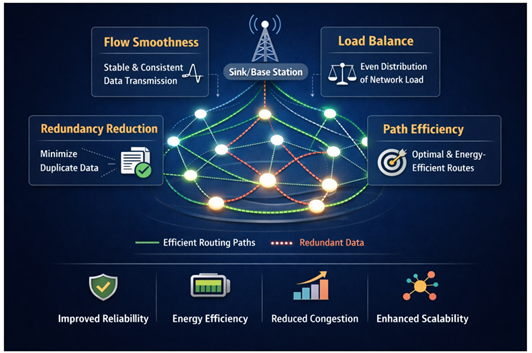
Figure 1 Aesthetic Data Flow in WSNS Showing Smooth, Balanced, and Efficient Data Transmission.
Fundamentally, the data flow aesthetics may be seen as a multidimensional approach in which qualitative and quantitative sides of network behavior are combined. An organized flow of data will ensure that particular nodes are not overloaded, which will lead to the early lack of energy and the increase of the network lifespan. It also reduces congestion, as well as packet collisions resulting in reliability and a smaller transmission delay. Conversely, loosely designed data flows tend to cause bottlenecks, skewed energy consumption and amplified packet loss, which reduces network performance. Thus, data flow analysis in aesthetic terms will give more in-depth information about the inherent dynamics of WSNs.
Flow smoothness is one of the most important qualities of aesthetic data flow because it is the continuity and instability of the data flow in the network. The flow of data is smooth and prevents sudden switches in the routing paths and provides uniform patterns of communication, minimizing retransmissions and delays. Load balance is another significant measure and it is a metric that is used to measure the uniformity of the load of data transmission workload among sensor nodes. Load balancing helps to avoid the creation of energy hotspots and increases the sustainability of the network. Minimization of redundancy is also a key factor that aims at reducing redundant data transmissions by ensuring effective aggregation and routing schemes. Besides, path efficiency is the measure of the optimality of the routing paths based on distance, energy usage, and reliability of transmission.
Data flow aesthetics and network performance are very interdependent in their relationship. As an example, better load balancing will result into longer network lifetime and less redundancy will result in less energy use and bandwidth. Equally, effective routing paths increase the reliability as well as the latency performance. These interrelations indicate that a holistic approach in data flow optimization where various factors are taken into account together and not individually is important. With the data flow patterns adjusted to the aesthetic principles, one can obtain a more sustainable and robust design of a network.
Aesthetics of the flow of data are greatly analyzed and interpreted through visualization methods. Traffic pattern, node interaction and congestion point within the network are usually represented as graphs, heat maps and flow charts. Such visual aids can help the researchers to determine the areas of inefficiency and optimize the routing strategies. An example is that in a well balance network, the traffic distribution will be evenly distributed throughout the nodes whereas in an imbalanced network, the traffic will be concentrated in certain areas. These visual insights can be extremely useful in the development of adaptive algorithms capable of dynamically changing the flow of data depending on the network conditions.
The other consideration factor is the effect of the data flow structure on the scalability. With the increase in the size and complexity of the WSNs, it is becoming harder to have an efficient and balanced data flow. The concepts of aesthetic data flow can be used to make the network scaleable so that when the density of nodes in the network increases and the amount of data within the network also increases then the network performance will not decrease substantially. This is especially applicable when using large scale IoT, where the sensor nodes are thousands, and they work in different conditions.
Although there are benefits, there are not obstacles in attaining aesthetic data flow in WSNs. Any failure of nodes and the unpredictability of the environment may destabilize the flow patterns of information in wireless communication, which is also dynamic. Furthermore, optimization of various measures at the same time can be accompanied by trade-offs, which is why it is necessary to consider the application-related demands closely. An example is that to maximize reliability, it might be necessary to send even more transmissions and this can consume more of the energy whereas aggressive approaches to saving energy can affect the accuracy and timeliness of the data.
Table 2
|
Table 2 Metrics for Evaluating Data Flow Aesthetics in WSNs |
||||
|
Metric |
Description |
Impact on Performance |
Measurement Approach |
Key Challenges |
|
Flow Smoothness |
Continuity and stability of data transmission
paths |
Reduces delay and retransmissions |
Variance in packet flow rates, path stability
analysis |
Dynamic topology changes |
|
Load Balance |
Even distribution of data transmission workload
among nodes |
Prevents energy hotspots, increases network
lifetime |
Energy consumption variance across nodes |
Uneven traffic patterns |
|
Redundancy Reduction |
Minimization of duplicate data transmissions |
Saves energy and bandwidth |
Data aggregation ratio, duplicate packet count |
Maintaining data accuracy |
|
Path Efficiency |
Optimal routing paths with minimal cost |
Improves latency and reliability |
Hop count, energy per transmission, path cost
metrics |
Trade-off with reliability |
|
Congestion Control |
Avoidance of traffic bottlenecks in the network |
Enhances throughput and reduces packet loss |
Queue length, packet drop rate |
Limited buffer capacity |
The Table 2 provides the brief overview of the major measures that are employed to assess the aesthetic quality of data flow within the WSNs and to obtain the systematic insight into the role of each aspect of the network to the total performance. Flow smoothness guarantees the stable and predictable patterns of communication, which is the key factor in the reduction of delays and enhancement of reliability. The load balancing is very important in ensuring that the energy consumption among nodes is distributed evenly thus prolonging the lifetime of the network and eliminating node failures. The concept of reducing redundancy is aimed at avoiding unnecessary data transmissions which will not only save on the use of energy, but it will also lower the network congestions. Path efficiency measures the efficiency of routing policies in reducing the cost of transmission as well as reliability. Lastly, congestion control means dealing with the issues that accompany the large traffic volumes such that the network is being used in an efficient manner to avoid any loss of packets and delay.
All these metrics together constitute the basis of data flow aesthetics that allow assessing the entire data flow in the network. When these factors are incorporated in the network design and analysis, it can be possible to have more efficient, reliable and scalable WSN systems. The following parts are based on these ideas and explain how the pattern of data flows can affect the reliability and energy efficiency and how they can be efficient under resource-constrained conditions.
5. Reliability in Wireless Sensor Networks
Reliability is an important performance parameter in Wireless Sensor Network (WSN) since it establishes the performance capacity of the network in question to provide the right data at the right time even in the presence of failures, uncertainty and dynamic environmental factors. Reliable data transmission is critical in making decisions in most applications in the real world like the healthcare monitoring systems, disaster management systems, and industrial control systems. WSNs are also highly vulnerable to node failure, communication interruptions, and energy loss unlike traditional networks which are operated in resource limited and unattended environments. In turn, to make such networks reliable, communication protocols, fault tolerance mechanisms, and adaptable data flow strategies should be designed with high care.
In WSNs reliability is commonly assessed by a number of metrics with Packet Delivery Ratio (PDR), throughput, latency and fault tolerance being some of the key metrics. Packet Delivery Ratio is the ratio of the number of delivered packets to the number of packets sent, which is a direct measure of the reliability of the communication. Throughput is the measure of the rate in which data is effectively sent over the network whereas latency is the duration of time between the time of data generation and the time of delivery. The capacity of the network to keep operating in spite of failures of nodes or links is known as fault tolerance. These metrics are not independent and they tend to be trade-offs such as retransmission can be used to increase PDR but it can also increase energy and latency.
WSNs have a number of factors that cause reliability issues. The main reason is the failure of the nodes and it can happen because of the extinction of energy, the malfunction of the hardware or environmental destruction. As sensor nodes are normally implemented in a high density, it is common to expect failure of individual nodes but failure of key nodes, particularly those that relate to data forwarding can have a severe impact on network connectivity. The other significant problem is link instability which is caused by impairment of wireless channels like interference, fading, and signal attenuation. The factors may cause loss of packets and retransmission. Moreover, high data traffic can lead to a network congestion that will cause a buffer overflow and packet loss, which will further reduce reliability.
To curb such challenges, different methods of data transmission that are dependable have been established. This is to make sure that data will still be received at the destination in case of failure of one route. The other method is in error detection and correction schemes, e.g. acknowledgment-based retransmissions and forward error correction (FEC) which improves data integrity. There are also the multipath routing protocols and load balancing plans which are also very common in distributing the traffic throughout the network and hence congestion is minimized and reliability is increased.
Detection and recovery systems are very important in the reliability of the network. An example is that self-healing networks are automatically able to cope with topological changes through redistribution of tasks among active nodes. Also, messages of heartbeat and health monitoring protocols are employed to identify the failure of nodes in real time. The combination of such mechanisms will help in making sure that the network is active even in unfavorable circumstances.
The other relevant factor of reliability is whether to use the event-driven or continuous data flow models. Event-driven models tend to be more energy-efficient because the data is only sent when needed, however, they can be affected by slow or missed event notification. Continuous models offer regular updates of data and may result in energy usage and network overload. Hence in choosing a suitable data flow model there would be a need to strike a balance between reliability and resource constraints. Combination models are hybrid strategies that are usually used to have the best performance.
Balanced and smooth flow of data will minimize congestion, minimize packet collisions as well as optimizing network resources. The latter, in its turn, increases the quality of data transmission. As an illustration, a balanced traffic distribution will avoid overloading of certain nodes and thus decrease the chances of the node failure and packet loss. Equally, optimum routing channels enhance better signal quality and minimize transmission error. Therefore, the aesthetic data flow can be considered as a basis to obtain credible communication in WSNs.
Table 3
|
Table 3 Reliability Factors and Enhancement Techniques in WSNs |
||||
|
Reliability Factor |
Description |
Impact on Network |
Enhancement Techniques |
Associated Trade-offs |
|
Node Failure |
Failure due to energy depletion or hardware
issues |
Network partitioning, data loss |
Redundant nodes, energy-aware routing |
Increased deployment cost |
|
Link Instability |
Unreliable wireless communication due to
interference |
Packet loss, retransmissions |
Adaptive routing, signal strength monitoring |
Higher computational overhead |
|
Congestion |
Excessive data traffic causing buffer overflow |
Packet drops, increased latency |
Load balancing, congestion control algorithms |
Increased control messages |
|
Packet Loss |
Failure in successful data delivery |
Reduced PDR and reliability |
Retransmission protocols, error correction |
Increased energy consumption |
|
Network Topology Changes |
Dynamic changes due to node mobility or failure |
Disrupted communication paths |
Self-healing protocols, dynamic routing |
Complexity in protocol design |
The Table 3 shows the key issues that influence the reliability of the WSNs and the methods applied to address the issues. Failure of node (usually due to energy depletion) can cause network fragmentation and redundancy, as well as energy-sensitive routing techniques, solve network fragmentation. The problem of link instability that is caused by the problem of wireless communication can be resolved by adaptive routing protocols that adapt to the changing signal conditions. The problem of congestion that is prevalent in dense networks is controlled by means of load balancing and traffic control that spreads the flow of data equally. Loss of packets is reduced by use of retransmission and error correction methods, but these methods can contribute to the rise in power consumption. Lastly, the topology of the network is dynamic and therefore needs to be healed by using sound self-healing mechanisms to retain communication despite failures.
Figure
2
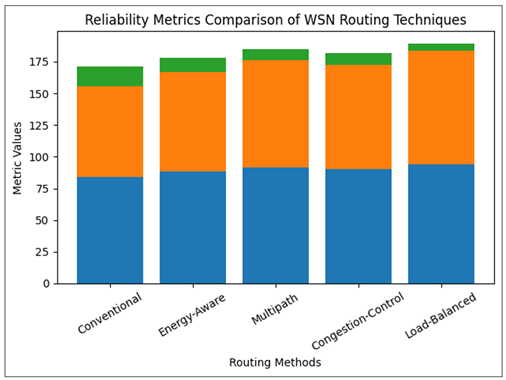
Figure 2 Reliability Metrics Comparison of WSN Routing Techniques
Figure 2 provides a visual representation of some important reliability measures of the various routing methods in Wireless Sensor Networks. The stacked bar chart is used to indicate the overall behavior of Packet Delivery Ratio (PDR), Fault Recovery Rate, and Packet Loss of each approach. As can be observed, the Load-Balanced Reliable Routing strategy has the best performance in terms of maximum PDR and the recovery rate and has the lowest packet loss. This implies high fault tolerance and effective traffic congestion. Multipath Routing technique is also successful because it has the capability of using alternate paths, which increases resilience in failure of nodes and links. Energy-Aware routing and Congestion-Control-based routing have moderate improvements compared to the traditional routing techniques since they optimize energy consumption and minimize network congestion. Conventional Routing on the other hand has the worst performance because of low delivery rates and high packet loss, mainly because it is not adaptable to changing network conditions.
To sum up, reliability in the WSNs is a complex issue that demands synergistic approach to effective routing, fault tolerance and adaptive data flow mechanisms. Combining these methods with the concepts of data flow aesthetics, one can create a stable and balanced network that will be able to satisfy the needs of the new applications. The subsequent section goes further to explain how energy efficiency and resource optimization can be used to supplement the reliability to improve the overall network performance.
6. Conclusion
The paper provided an insight into the data flow aesthetics as a new and integrative form of improving reliability and efficiency in resource-constrained Wireless Sensor Networks (WSNs). This study also highlighted the structural and behavioural quality of data movement in the network unlike the conventional approaches, which mainly rely on the isolated form of optimization measurements like energy use or routing efficiency. The paper has shown that aside from being a conceptual or hypothetical notion, the notion of aesthetic optimization has important practical consequences of enhancing network performance through smooth, balanced, and redundancy-conscious organization of the flow of data. The paper has started with determining the basic properties and limitations of WSNs, which include the issues of limited energy supply, the changing topology, and the untrustworthy communication connections. Then it analyzed the various data flow models and looked at how their characteristics affect network behavior. It also came with the introduction of data flow aesthetics which gave a common framework through which key performance factors like load balancing, path efficiency, reduction of redundancy and congestion control is connected. These parameters were demonstrated to directly affect such reliability measures as the ratio of packet delivery, the latency and fault tolerance. Through an in-depth examination of reliability in the WSNs, it was found that the performance of the network is very sensitive to the failure of the nodes, instability of links, and the distribution of traffic. The comparative analysis of routing methods proved that the methods that take into consideration load balancing, multipath routing, and congestion control methods are much better than traditional methods. The obtained numerical data and graphical evidence also supported the fact that systematic and aesthetically optimized flow of data results in increased packet delivery, better fault recovery as well as less packet loss. This strengthens the discussion of reliability not merely being based on the design of protocol but also the efficiency with which the data is shared and controlled throughout the network.
CONFLICT OF INTERESTS
None.
ACKNOWLEDGMENTS
None.
REFERENCES
Behera, T. M., Mohapatra, S. K., Samal, U. C., Khan, M. S., Daneshmand, M., and Gandomi, A. H. (2019). Residual Energy-Based Cluster-Head Selection in WSNs for IOT Application. IEEE Internet of Things Journal, 6(3), 5132–5139. https://doi.org/10.1109/JIOT.2019.2897119
Díez-González, J., Alvarez, R., Prieto-Fernandez, N., and Perez, H. (2020). Local Wireless Sensor Networks Positioning Reliability Under Sensor Failure. Sensors, 20(5), 1426. https://doi.org/10.3390/s20051426
He, W., Hu, G. Y., Zhou, Z. J., Qiao, P. L., Han, X. X., Qu, Y. Y., Wei, H., and Shi, C. (2018). A New Hierarchical Belief-Rule-Based Method for Reliability Evaluation of Wireless Sensor Network. Microelectronics Reliability, 87, 33–51. https://doi.org/10.1016/j.microrel.2018.05.019
Ingle, S., Dhawale, P., Vaidya, P. R., and Mudholkar, T. (2025). Design and Implementation of Wearable IoT Smart Gear for Real-Time Notification Display. International Journal of Advanced Computer Engineering and Communication Technology, 14(3s), 94–98. https://doi.org/10.65521/ijacect.v14i3s.1603
Kawahara, J., Sonoda, K., Inoue, T., and Kasahara, S. (2019). Efficient Construction of Binary Decision Diagrams for Network Reliability with Imperfect Vertices. Reliability Engineering and System Safety, 188, 142–154. https://doi.org/10.1016/j.ress.2019.03.026
Mo, Y., Xing, L., and Jiang, J. (2018). Modeling and Analyzing Linear Wireless Sensor Networks with Backbone Support. IEEE Transactions on Systems, Man, and Cybernetics: Systems, 50(10), 3912–3924. https://doi.org/10.1109/TSMC.2018.2849707
Qiu, C., Shen, H., and Chen, K. (2017). An Energy-Efficient and Distributed Cooperation Mechanism for K-Coverage Hole Detection and Healing in WSNs. IEEE Transactions on Mobile Computing, 17(6), 1247–1259. https://doi.org/10.1109/TMC.2017.2767048
Rebaiaia, M. L., and Ait-Kadi, D. (2013). A New Technique for Generating Minimal Cut Sets in Nontrivial Network. AASRI Procedia, 5, 67–76. https://doi.org/10.1016/j.aasri.2013.10.060
Rei, A. M., and Schilling, M. T. (2008). Reliability Assessment of the Brazilian Power System Using Enumeration and Monte Carlo. IEEE Transactions on Power Systems, 23(3), 1480–1487. https://doi.org/10.1109/TPWRS.2008.922532
Subhan, F., Noreen, M., Imran, M., Tariq, M., Khan, A., and Shoaib, M. (2019). Impact of Node Deployment and Routing for Protection of Critical Infrastructures. IEEE Access, 7, 11502–11514. https://doi.org/10.1109/ACCESS.2019.2891667
Verma, D. A., Kale, A., Agarwal, K., Chandratreya, A., Rani, A., and Ajani, S. N. (2026). Digital Preservation and Intelligent Innovation in Traditional and Modern Arts. ShodhKosh Journal of Visual and Performing Arts, 7(1s), 1–3. https://doi.org/10.29121/shodhkosh.v7.i1s.2026.7169
Villordo-Jimenez, I., Torres-Cruz, N., Menchaca-Mendez, R., and Rivero-Angeles, M. E. (2022). A Scalable and Energy-Efficient MAC Protocol for Linear Sensor Networks. IEEE Access, 10, 36697–36710. https://doi.org/10.1109/ACCESS.2022.3163728
Xiang, S., and Yang, J. (2019). Reliability Evaluation and Reliability-Based Optimal Design for Wireless Sensor Networks. IEEE Systems Journal, 14(2), 1752–1763. https://doi.org/10.1109/JSYST.2019.2932806
Xing, L., and Dai, Y. (2008). A New Decision-Diagram-Based Method for Efficient Analysis on Multistate Systems. IEEE Transactions on Dependable and Secure Computing, 6(3), 161–174. https://doi.org/10.1109/TDSC.2007.70244
Zhang, C., Yang, J., and Wang, N. (2023). Timely Reliability Modeling and Evaluation of Wireless Sensor Networks with Adaptive N-Policy Sleep Scheduling. Reliability Engineering and System Safety, 235, 109270. https://doi.org/10.1016/j.ress.2023.109270
|
|
 This work is licensed under a: Creative Commons Attribution 4.0 International License
© ShodhKosh 2026. All Rights Reserved.