ShodhKosh: Journal of Visual and Performing ArtsISSN (Online): 2582-7472
|
|
ANALYSING PEDAGOGICAL CHANGES IN POST-INDEPENDENCE INDIA THROUGH THE LENS OF K. G. SUBRAMANYAN’S PRACTICE
Anupriya Rajawat 1
 ,
Anoop Daniel Ponnachan 2
,
Anoop Daniel Ponnachan 2 ,
Jaynat Kumar Gupta 3
,
Jaynat Kumar Gupta 3
 , Dr.
Megha Attray Purohit 4
, Dr.
Megha Attray Purohit 4
1 Ph.D.
Researcher, Department of Visual Arts, Banasthali
Vidyapith, Banasthali, Rajasthan 304022, India
2 Ph.D.
Researcher, Department of Visual Arts, Banasthali
Vidyapith, Banasthali, Rajasthan 304022, India
3 Ph.D. Researcher, Department of Visual Arts, Banasthali Vidyapith, Banasthali, Rajasthan 304022, India
4 Assistant
Professor, Department of Visual Arts, Banasthali
Vidyapith, Banasthali, Rajasthan 304022, India
|
|
|
ABSTRACT |
|
|
This paper
investigates the situation of art education in post-independent India and how
it evolved through different patterns and negotiations among modernity,
inherited cultural spaces, and institutional authority. Existing research
often limits pedagogy to the formal curriculum, ignoring the broader context
of studio culture, material understanding, and real-life interactions that
play a prominent role in building aesthetic understanding. This paper lays
the foundation for rethinking pedagogy as institutional culture in motion,
developed through experiments in teaching practices, shared learning spaces,
public platforms, and implicit values that students absorbed through making.
Through K. G. Subramanyan’s writings, institutional initiatives, and selected
works, as well as the distinct trajectories of students associated with
Baroda, the paper suggests that Subramanyan’s contribution is not limited in
introducing a method instead it is reshaping the concerns under which
artistic knowledge could be developed, circulated, and recognized. |
|||
|
Received 16 February
2026 Accepted 25 March
2026 Published 28 April 2026 Corresponding Author Anupriya Rajawat, anupriya.rajawat@gmail.com DOI 10.29121/shodhkosh.v7.i5s.2026.7517 Funding: This research
received no specific grant from any funding agency in the public, commercial,
or not-for-profit sectors. Copyright: © 2026 The
Author(s). This work is licensed under a Creative Commons
Attribution 4.0 International License. With the
license CC-BY, authors retain the copyright, allowing anyone to download,
reuse, re-print, modify, distribute, and/or copy their contribution. The work
must be properly attributed to its author.
|
|||
|
Keywords: Art Education, Pedagogy, Institutional Culture and Modern
Indian Art |
|||



1. INTRODUCTION
After independence in India,
art education became a site of responsibility and at the same time a critical
site where modernity, cultural inheritance, and institutional frameworks were
supposed to be negotiated. It was not a project designed for a limited period
of time, it developed organically and was shaped by different pedagogues,
universities came out with their individual voices, nationalists developed a
cultural thought, and debates around craft, tradition, and freedom in
expression. There are several writings on this period focusing on the evolution
of Indian art or institutional narratives that treat pedagogy mainly as
curriculum. This paper does not confine pedagogy to curriculum alone whereas it
examines pedagogy as it is constituted through practice and experiments over
time. This shift allows postcolonial art education to be read as a field of
mediation between different time frames.
K. G. Subramanyan
(1924–2016) a poet and educator, offers a specific perspective where his
pedagogical methods have shaped Indian art and its aesthetics. Positioned
across two foundational sites, Kala Bhavana, Santiniketan, where he trained
from 1944 to 1948 and the Faculty of Fine Arts, Maharaja Sayajirao University
(MSU), Baroda, where he taught from the early 1950s through the late 1970s, his
approach allows us to trace how pedagogic ideas travelled, evolved and acquired
different meanings across institutions. His movement across these spaces helped
him see how Santiniketan’s craft-centred way of thinking reshaped within the
formal system of a post-independent university format.
We see his contribution to pedagogy through art practice and writings both. Therefore by reading Subramanyan as an artist and as a pedagogue, this paper argues that his pedagogical practice functioned as a bridge between tradition and modernity, creative freedom and institutional constraint.
This study adopts a
qualitative interpretive approach grounded in art-historical and institutional
analysis. The paper reads pedagogy as a
dynamic set of relationships among teaching practices, material processes, studio
culture, and institutional structures through combined approach of reading
texts, understanding institutional context, and analyzing
visual forms
First, the paper analyses
selected writings and reflections by Subramanyan, especially his discussions of
art, craft, education, and modernity. These are read alongside broader
educational ideas associated with Rabindranath Tagore and the pedagogic ethos
of Santiniketan. Second, the paper examines secondary scholarship on
Santiniketan and the Faculty of Fine Arts at Baroda in order to situate
Subramanyan’s practice within larger institutional histories. Third, it uses
visual analysis of selected works by Subramanyan to understand how his artistic
practice itself embodied pedagogic values related to material experimentation,
narrative plurality, and the reworking of traditional knowledge.
The study is not based on
field interviews or archival excavation for this particular paper. Its findings
are drawn from close reading of published sources and from interpretive
analysis of artworks and institutional contexts. This methodology is appropriate
to the paper’s aim, which is not focusing on producing a comprehensive
institutional history, but to examine how pedagogical change may be understood
through a key practitioner whose career linked with two influential sites of
post-independence Indian art education.
3.1. Santiniketan’s
Influence: Learning in a Loose Creative Community
Subramanyan’s formative
years at Kala Bhavana, Santiniketan helped in building an ethical and
conceptual ground for pedagogy he later developed. Rabindranath Tagore’s
broader vision with craft, culture and education brought new avenues in
Shantiniketan, it departed from the academic art school to a space for practice
that connected with surroundings rather than being limited to academic
structure and credentials. Pedagogy there, is imagined as a lived process,
embedded in environment, community, and material engagement. Subramanyan later
described the institution as a “loose creative community,” stressing that one
entered Santiniketan not to acquire professional credentials but to develop a
value toward art as a way of thinking and living Subramanyan (2007). Encounters with teachers such as Nandalal Bose,
Benode Behari Mukherjee, and Ramkinkar Baij often took place outside formal settings, reinforcing
a mentor-based model in which learning emerged through dialogue usually beyond
the classroom walls.
Although he was not overtly
political, his deep understanding of craft traditions in India and across the
world, along with his engagement with the Gandhian vision of nation-building,
shaped his thinking. It enabled him to see craft as a structured practice
rooted in processes and conventions and, in turn, to understand art as a form
of language. Tagore’s belief that education should nurture learning and
curiosity, informed this approach, positioning pedagogues as a change maker Tagore (1961). Subramanyan repeatedly returned to this idea that art
needs to be taught through experience, repeated practice, and self-critical
engagement.
For Subramanyan a crucial
influence during this period was Nandalal Bose’s emphasis on practice as
discipline. His analogy of the potter’s wheel, where initial instability
gradually resolves through continuous effort, offered a model of learning
grounded in lived experience Kumar (1997). The analogy frames uncertainty and experimentation as
the conditions through which creative experience and judgement develop in a
practitioner. “Shantiniketan grew with Rabindranath, Kala Bhavan grew with
Nandlal Bose. Bose conceived his work with students at Kala Bhavan as a journey
undertaken with a band of fellow travelers, generally
led by him but also learning from one another as they went along.” This
statement from R. Siva Kumar clearly reflects how pedagogy at Shantiniketan had
come together.
Figure
1
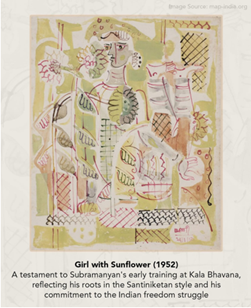
Figure 1 Subramanyan K.G. “Girl with Sunflower” (1952). Artwork cited in discussion of Santiniketan’s
experiential pedagogy.
Source: Museum of Art & Photography (MAP),
“Understanding K.G. Subramanyan through Six Pivotal Artworks,” https://map-india.org/understanding-kg-subramanyan-through-six-pivotal-artworks/ ,
accessed April 14, 2026.
Subramanyan’s early work
reflects this approach, his early painting “Girl with Sunflower” (1952) made
soon after his time at Shantiniketan, leans toward observation, simple
elements, and a sensitivity to local visual traditions, moving away from strict
academic realism. The work draws on indigenous visual languages while being
sensitive towards the material qualities of watercolor
as a medium. More importantly, it reflects upon a way of making in the sphere
of aesthetics in which form develops through sustained observation and material
exploration while not becoming limited to strict academic frameworks.
3.2. From
Santiniketan to Baroda: Translating Pedagogy Across Institutions
Subramanyan’s move to the
Faculty of Fine Arts, Baroda, in 1951 marked a decisive shift in the
institutional conditions under which the orientations discussed above would
function. He joined as a junior colleague in the close-knit team of Markand Bhatt, Sankho Chaudhuri,
and N. S. Bendre. The Faculty had been established under the
Vice-Chancellorship of Hansa Mehta, who invited Markand
Bhatt to found the programme, and this early formation gave Subramanyan
considerable freedom to work, experiment, and shape his pedagogy within the
institution. If Santiniketan shaped his sense of art education as environmental
and process-driven, Baroda confronted him with the demands of a newly
constituted university system, formal curricula, departmental structures, assessment,
and institutional legitimacy. Santiniketan’s sensibilities had to be
articulated within institutional frameworks, not outside them. Founded in 1950,
the Baroda Faculty of Fine Arts was among the earliest attempts
post-independence to establish a modern, university based art school in India.
While it selectively engaged European models of art education, it was also
invested in articulating a postcolonial cultural identity. Subramanyan entered
this context as one of the first Santiniketan trained artists on the faculty,
carrying with him an ethos shaped by informality, material engagement, and
interdisciplinarity. At Baroda, however, such values had to be made operational
within bureaucratic and disciplinary structures.
Subramanyan’s pedagogical
significance at Baroda lies in how he redefined what could count as artistic
knowledge within the university. Craft, folk traditions, and cross-media
practices, including terracotta, mural, toy-making, illustration, and textile-related
processes, were not positioned as peripheral skills but as integral to modern
artistic inquiry Subramanyan (2007). Through this move, he challenged the hierarchy that
separated fine art from craft in academic discourse. Craft, in his framing, was
neither quaint survival nor decorative supplement; it was a way of thinking
through form, material intelligence, and cultural history. He Joins Weavers’ Service Centre of the All India Handloom
Board as deputy director in Bombay from 1959 to 1961 and further
consolidated this position by exposing him to textile and craft traditions
whose techniques embody complex systems of knowledge. This experience fed back
into his teaching at Baroda, where craft functioned as both pedagogical
resource and conceptual framework. As Parul Dave Mukherji notes, “K.G.
Subramanyan revived the Santiniketan legacy of mural in Baroda and saw in them
potential for public art; this was a meeting point between traditional
artisanal practice, like Jaipuri sand casting and a modernist preoccupation
with the grid and repeatable units” Mitter et al. (2022).
This position becomes even
clearer in Subramanyan’s own reflections on pedagogy. When he was asked what he
thought about art pedagogy in India, he replied that it was “not very
innovative” and pointed to Tagore and Gandhi as the two figures who had
seriously thought about education. He described Tagore’s educational vision as
modern in the deepest sense, especially in its insistence that education should
prepare people not only for existing society, but for the society that is yet
to be built. He also valued Gandhi’s idea of co-relative education, where
people are educated alongside their trades so that they can later decide
whether to stay or leave. From this answer, it becomes clear that Subramanyan
sees pedagogy as a social and civilizational question, not only an academic
one. He values educational models that join thinking, making, ethics, and
community. It also suggests that post-independent India inherited radical
pedagogic ideas but institutionalized them only weakly. Subramanyan says these
ideas do not really enter the present system, and this gives an important
opening to discuss the gap between pedagogic ideals and institutional practice
in post-independence India. In this sense, education for Subramanyan is not a
romantic return to tradition, but a question of informed freedom, imaginative
possibility, and social transformation Mitter et al. (2022).
Subramanyan’s strategy was
not to reject the institution, but to bend it by expanding what counted as
legitimate work and building platforms where students could test art’s relation
to everyday publics. The Fine Arts Fair treated
circulation and use as pedagogical questions, and helped students imagine
artistic practice as socially embedded rather than confined inside the studio or gallery. Within the classroom,
Subramanyan maintained a mentorship model consistent with his Santiniketan
formation, prioritizing exploration over prescription. At Baroda, this approach
gained institutional force through curriculum design, studio culture, and
faculty decisions, including the incorporation of master craftsmen such as and
not limited to Gyarsilal Varma. What is visible here
is that the movement from Santiniketan to Baroda was not simply a shift from
one institution to another, but a process of translating open-ended,
interdisciplinary, and socially rooted pedagogic values into the structured framework
of a modern university Glukhova and Khachmafova
(2026).
3.3. Visual
Pedagogy: Artworks as Models of Method
Subramanyan’s dual identity
as practicing artist and teacher meant that his artworks often embodied the
pedagogical values he argued for. Many pieces can be read as demonstrations of
possibility, ways to blend tradition and modernity and to respond to social
contexts through material practice without turning into stylistic templates.
For that reason, studying Subramanyan’s pedagogy is equally important as
studying his own artistic practice
Figure 2
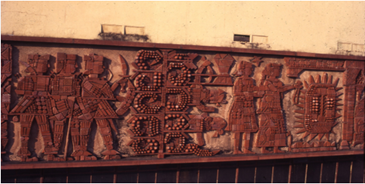
Figure 2
Subramanyan K.G. “The
King of the Dark Chamber” (Terracotta Mural, 1963). Artwork cited in
discussion of public art and material process.
Source: Asia Art Archive, “The
King of the Dark Chamber (Partial),” https://aaa.org.hk/en/collections/search/archive/k-g-subramanyan-archive/object/the-king-of-the-dark-chamber-partial , accessed April 14, 2026
A related strand appears in
his terracotta and mural work, where the craft process becomes inseparable from
public address. Above work shows how clay, relief modelling, and narrative
staging can operate outside the easel tradition while still engaging questions
of modern pictorial construction. Such works showcased to the students that
modern practice could be materially grounded, collaborative, and architectural
without losing conceptual complexity.
Figure 3
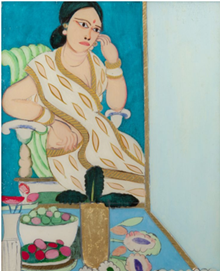
Figure 3 Subramanyan, K.G. “Woman in the Blue Room”
(1981) Reverse Glass Painting. Artwork Cited in Discussion of Medium, Method,
and Tradition as Working Vocabulary.
Source: Museum of Art & Photography,
“Understanding K.G. Subramanyan through Six Pivotal Artworks,” https://map-india.org/understanding-kg-subramanyan-through-six-pivotal-artworks/, Accessed
April 14, 2026.
The above work executed as a
reverse glass painting, is another key example. Reverse glass painting, widely
associated with bazaar and devotional imagery, had largely fallen outside the
canon of modern art by the late twentieth century. Subramanyan’s return to this
technique is not nostalgic but methodological. The reverse process, where
details must be painted before background, demands deliberate planning while
producing a luminous, flattened surface. In this work, the domestic interior,
populated by human and animal forms, resists fixed narrative and instead
operates through symbolic suggestion. The visual language draws on popular
painting, miniature traditions, and modernist interior space, making visible
Subramanyan’s insistence that tradition can function as a working vocabulary
rather than a fixed inheritance.
Figure 4
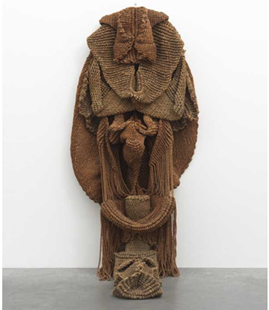
Figure 4 Mukherjee, M. (1977). “Ritu Raja” [Hemp and
Mild Steel]. Hemp and Mild Steel. Artwork Cited in Discussion of Later Artistic
Trajectories Shaped by Material Intelligence.
Source: National Gallery of Modern Art, “Mrinalini
Mukherjee – Ritu Raja,” https://ngmaindia.gov.in/ (Collection Page), Accessed April 14, 2026.
These aspects and concerns
reveal themselves also in the practice of artists whom he had mentored.
Comparable orientations appear in the practices of artists such as Mrinalini
Mukherjee, Gulammohammed Sheikh, Jyoti Bhatt, and Laxma Goud. Mukherjee’s work with knotted fibre, scaled to
monumental form and later translated into bronze, retains a tactile sensibility
that treats craft intelligence as an aesthetic device. Sheikh’s layered compositions integrate
miniature painting, literature, and contemporary political contexts, extending
an encouragement of narrative plurality and cultural diversity. Bhatt’s
printmaking and photographic documentation emerge from sustained encounters
with folk practices such as rangoli and village mural traditions, translated into
academic work through fieldwork and visual research MAP Academy (2022d), Kumar (1997). The point is not adoption of “folk style,” but an
orientation toward living visual cultures as sites of knowledge.
Taken together, these
trajectories suggest that Subramanyan’s pedagogical legacy operates
infrastructurally rather than stylistically. His influence persists as a way of
thinking through materials, narratives, and cultural resources, an approach
shaped at Santiniketan and made institutionally durable at Baroda.
4. Conclusion
Subramanyan’s significance
lies in the way he brought an experiential, craft-inclusive, and
environment-oriented pedagogy into the disciplinary structure of a modern
university without letting it become doctrinal. At Baroda, craft practices,
vernacular visual systems, and cross-media experimentation were not placed
outside modern art, but became part of the methods through which modern
artistic inquiry could be pursued within an institutional setting. Through
curriculum design, public initiatives such as the Fine Arts Fair, sustained
studio mentorship, and his own artistic practice, he kept these pedagogic
possibilities active within the institution.
The visual analysis of his work and that of his students makes clear that this pedagogy did not function through imitation or stylistic uniformity. Instead, it shaped a shared mode of inquiry marked by material attentiveness, narrative plurality, and a refusal of rigid distinctions between art and craft. Post-independence art education in India is therefore best understood as an evolving field of mediation between inherited knowledge, modern institutional structures, and contemporary practice. Reading Subramanyan through this lens allows a broader rethinking of art pedagogy as dynamic institutional culture rather than as curriculum alone. It also opens further scope for comparing formal art schools with more open contemporary platforms such as KHOJ, FICA, and the Kochi Biennale, where interdisciplinary and socially engaged models of learning continue to be reworked outside or alongside the conventional academy.
REFERENCES
Glukhova, O. V., and
Khachmafova, Z. R. (2026). Semantic Shifts of
Indian Loanwords in Russian: The Corpus and Associative Analysis. ShodhGyan-NU:
Journal of Literature and Culture Studies, 4(1), 73–82. https://doi.org/10.29121/shodhgyan.v4.i1.2026.91
MAP Academy. (2022a, April 21). Baroda School. In MAP Academy Encyclopedia of Art.
MAP Academy. (2022b, April 21). Faculty
of Fine Arts, Maharaja Sayajirao University, Baroda.
In MAP Academy encyclopedia
of art.
MAP Academy. (2022c, April 21). K. G. Subramanyan. In MAP Academy Encyclopedia of Art.
MAP Academy. (2022d, April 21). Jyoti Bhatt. In MAP Academy encyclopedia of art.
Mitter, P., Mukherji, P. D., and Balaram, R. (Eds.). (2022). 20th Century Indian Art:
Modern, Post-Independence, Contemporary. Thames and
Hudson.
Siva Kumar, R. (1997). Santiniketan: The Making of a Contextual Modernism. National Gallery of Modern Art.
Subramanyan, K. G. (2007). The Magic of Making: Essays on Art and Culture. Seagull
Books.
Tagore, R. (1961). Towards
Universal Man. Asia Publishing House.
Watson, G. (n.d.). Sheela Gowda:
Open Eye Policy. Irish Museum of Modern Art.
|
|
 This work is licensed under a: Creative Commons Attribution 4.0 International License
© ShodhKosh 2026. All Rights Reserved.