ShodhKosh: Journal of Visual and Performing ArtsISSN (Online): 2582-7472
|
|
IoT-Enabled Interactive Visual Art Displays That Respond to Environmental Changes Dynamically
Ipsita Dash 1
 ,
Ponmurugan Panneerselvam 2
,
Ponmurugan Panneerselvam 2 , Prerak
Sudan 3
, Prerak
Sudan 3 ,
Gajanan Chavan 4
,
Gajanan Chavan 4 , Suresh Arumugam 5
 , Vinay Kumar Sadolalu Boregowda 6
1 Assistant
Professor, Department of Centre for Internet of Things, Institute of Technical
Education and Research, Siksha 'O' Anusandhan (Deemed to be University),
Bhubaneswar, Odisha, India
2 Professor,
Department of Research, Meenakshi College of Arts and Science, Meenakshi
Academy of Higher Education and Research, Chennai, Tamil Nadu 600080, India
3 Centre of Research Impact and Outcome, Chitkara University, Rajpura-
140417, Punjab, India
4 Assistant Professor, Department of E&TC Engineering, Vishwakarma
Institute of Technology, Pune, Maharashtra 411037, India
5 Scientist, Central Research Laboratory, Meenakshi College of Arts and
Science, Meenakshi Academy of Higher Education and Research, Chennai, Tamil
Nadu 600080, India
6 Assistant Professor, Department of Electronics and Communication
Engineering, Faculty of Engineering and Technology, JAIN (Deemed-to-be
University), Bengaluru, Karnataka, India
|
|
|
ABSTRACT |
|
|
The adoption
of Internet of Things (IOT) technologies and integration with the field of
digital visual arts has made possible the creation of interactive art
systems, which are responsive to the conditions in the environment. The paper
presents the design and deployment of interactive visual art displays mounted
in the form of the IoT which can adjust their visual representations, in real
time, as a response to environmental data. The given system consists of
several environmental sensors such as temperature, the intensity of lights,
humidity, sound level, and movement detection that are connected using IOT
sensor networks and microcontrollers processing units. These sensors
continuously scan environmental information that are sent to a data
processing unit, where decision logic algorithms are used to process the
information and as such cause digital display interfaces to undergo
respective types of visual changes. The conceptual model integrates hardware
elements like sensors, microcontrollers and display systems with software
systems that are built on dynamic visual representation and data centric
interaction. By so integrating together, environmental variation affects
other parameters of art, like color intensity, motion pattern, brightness,
and visual composition. The paper outlines how IoT technologies can improve
the level of audience engagement by changing the passive art displays into
immersive and interactive activities. |
|||
|
Received 13 January 2026 Accepted 16 March
2026 Published 11 April 2026 Corresponding Author Ipsita
Dash, ipsitadash@soa.ac.in DOI 10.29121/shodhkosh.v7.i4s.2026.7507 Funding: This research
received no specific grant from any funding agency in the public, commercial,
or not-for-profit sectors. Copyright: © 2026 The
Author(s). This work is licensed under a Creative Commons
Attribution 4.0 International License. With the
license CC-BY, authors retain the copyright, allowing anyone to download,
reuse, re-print, modify, distribute, and/or copy their contribution. The work
must be properly attributed to its author.
|
|||
|
Keywords: IOT-Based Interactive Art, Environmental Sensing
Systems, Responsive Digital Displays, Smart Cultural Installations, Real-Time
Visual Rendering, Interactive Media Art Systems |
|||



1. INTRODUCTION
The fast development of digital technologies has changed the model of visual art production, experience, and perception greatly. Conventional art was usually a still object or performance, which depended on a preconceived visual composition and on a pre-established artistic expression. Nevertheless, with the advent of interactive technologies, the new possibilities of dynamic artistic experience have been made available in reacting to viewers and the environment. Over the past few years, the combination of Internet of Things (IoT) technology with digital media systems has provided avenues of developing responsive visual art installations with the ability to respond to changes in the real-world environment Tang et al. (2022). The goal of interactive art installations is to produce immersion through the ability of the audience or the environment to affect artistic outputs. As compared to traditional art exhibits, where the displayed art does not change in any way, under the interactive system, there are sensors, embedded computer systems and real time process algorithms that produce any changing visual pattern. Such parameters as temperature, ambient lights, sound intensity, humidity, and human movement may be taken as input parameters in order to dynamically alter the artistic depiction Nukusheva et al. (2021). This change allows the works of art to act as living systems, which are constantly changing due to their environment.
The Internet of Things offers the technological base needed to have such responsive systems. IoT networks are comprised of connected networks of sensors, microcontrollers, communication modules and cloud or edge computing platforms which can gather and process real time environmental data. Incorporating IoT devices into art space, artists and technologists will have a chance to build installations in which environmental variables directly affect visual characteristics color intensity, brightness, movement patterns and composition of the structure. An example of this is that ambient light changes can change color palettes, sound volume can cause any visual animation and even human movement can cause interactive projections Xiong and Yang (2024). The sensor-driven IoT architecture can create a dynamic, environmentally responsive interactive visual display, which is demonstrated in Figure 1. The abilities enable artworks to be dynamic, situational systems that combine both artistic creativity and technological smartness.
Figure 1
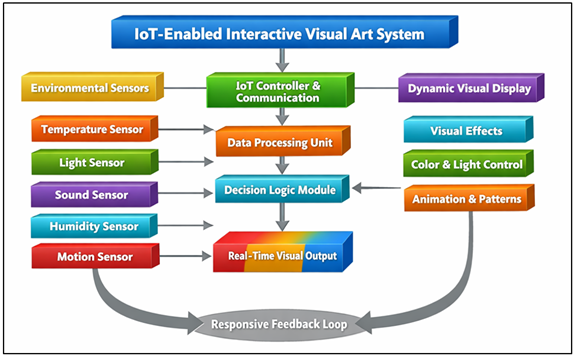
Figure 1 Architecture of IOT-Enabled Interactive Visual Art
Display System Responding to Environmental Changes
Environmental sensing and monitoring technologies are very important in facilitating such responsive art systems. Environmental sensors used to measure the environmental parameters are able to record continuous streams of data which show the variation in conditions around. Embedded computing platforms or edge computing devices are used to process these streams of data applying decision logic to decide upon the visual transformations that should be made Sulistiawati (2024). In this process, environmental information will be an integral part of the process of artistic creation which will, in a way transform natural or urban conditions to inputs of creative activities. The combination of IoT technologies and visual arts also conforms to overall development of smart spaces and intelligent open spaces. Interactive technologies are becoming widespread in smart museums, digital galleries, and urban installations of art pieces that are designed to engage visitors and provide a memorable cultural experience Malik and Ford (2025).
2. Literature Review
2.1. Evolution of interactive media and digital art installations
The interactive media and digital art installation has developed tremendously over the last few decades as technological advances have grown to give the artists and designers more creative options to exploit. The first manifestations of digital art were observed at the end of the twentieth century when the computer graphics and the multimedia technologies started to affect the art production. The first works were mainly concerned with programs to generate images algorithmically and with digital animation, in which computers were viewed as a means to visualize an image on the artist scale and not as an interactive system Kishorebabu and Sravanthi (2020). With the rise of computing power and the availability of sensor technologies, artists started to include interactivity in their installations so that the audience could affect artistic results. In the early 2000s interactive installations started to use motion sensors, camera and projection systems to allow the audience to participate. Artists tried the responsive environment in which visual outputs could be changed by using movement, gestures, and sound Narayana et al. (2024). The developments had turned the viewers into interactive participants in art experiences as opposed to passive consumers. One-on-one digital art installations started to emerge in museums, galleries, and streets in the public, and connected the idea of creativity through technology. The latest development in the field of immersive technologies, such as augmented reality, virtual reality, and real-time generative graphics has extended the practice of interactive art even more Essamlali et al. (2024).
2.2. Role of IoT Technologies in Creative and Cultural Applications
Internet of Things (IoT) has become one of the new technologies that can affect physical environments by linking them to digital platforms with the help of sensor networks, embedded systems, and communication platforms. In the arts and cultures, IoT technologies allow the establishment of new modes of interaction between the artistic installations, the environmental factors and the viewers. Through sensor networks and microcontroller-driven devices, IoT systems enable artists to gather real-time information about the environment around them and inject this information feed into dynamic artistic behaviours Shuford (2024). IoT technologies are used to promote different applications in cultural facilities including museums, galleries, and other art installations in the public. IoT sensors applied in museum settings can accurately monitor visitor flow, the physical environment and interaction behaviors to dynamically adjust digital displays. Smart exhibitions can also react to the level of visitor engagement by changing the lighting conditions, visual displays, or interactions Himeur et al. (2022). Table 1 contrasts IoT based interactive art systems, technologies, contributions and limitations. This allows visitors to become more immersed in the experience of the exhibitions and participate more.
Table 1
|
Table 1 Comparative Review of Related Work on Iot-Enabled Interactive Visual Art Systems |
|||
|
Technology Used |
Sensors/Inputs |
Application Environment |
Limitations |
|
Embedded systems, projection
mapping |
Motion, light |
Art galleries |
Limited environmental
sensing parameters |
|
IoT platforms, wireless
sensor networks Maganathan et al. (2020) |
Temperature, humidity,
motion |
Smart museums |
Limited scalability for
large installations |
|
Data-driven generative
algorithms |
Weather, sound |
Public art spaces |
Lack of real-time
multi-sensor integration |
|
IoT communication frameworks
Kosovic et al. (2020) |
Motion, sound, light |
Urban public spaces |
High system deployment cost |
|
Microcontrollers and LED
matrix systems |
Light, motion |
Digital galleries |
Limited visual complexity |
|
Cloud-connected IoT devices |
Temperature, sound |
Exhibition halls |
Dependence on stable
internet connectivity |
|
IoT + machine learning Suguna et al. (2021) |
Motion, environmental data |
Interactive museums |
Complex computational
requirements |
|
IoT monitoring and
visualization systems |
Temperature, humidity |
Heritage sites |
Limited user interaction
features |
|
Sensor fusion systems Kashyap et al. (2025) |
Sound, light, motion |
Art installations |
High calibration
requirements |
|
IoT sensor network and edge
computing Solomou and Sengupta (2024) |
Environmental sensors |
Urban cultural spaces |
Limited evaluation metrics |
|
Embedded IoT architecture |
Motion, light, sound |
Museums and galleries |
Limited large-scale
deployment testing |
|
IoT + real-time
visualization platforms Bouziane et al. (2021) |
Temperature, humidity, sound |
Public exhibitions |
High hardware integration
complexity |
3. Conceptual Framework for IoT-Based Interactive Art Systems
3.1. System architecture integrating sensors, controllers, and visual interfaces
The overall architectural approach to IoT-based interactive art systems is based on a layered architecture of the architectures that incorporates sensing technologies, processing units, communication networks, and visual output interfaces. This architecture makes possible the effect of environmental data on artistic visualization in the real time. On the lower most level, physical data of the surrounding environment is gathered by environmental sensors. Such sensors can be temperature sensors, light intensity sensors, sound detectors, humidity sensors, and motion sensors which constantly check the state of the surrounding environment in the area of installation. The sensor information that has been gathered is passed on to a controller layer which is a set of embedded micro controllers or single board computers like Arduino or Raspberry Pi. These controllers are processing units that act as intermediaries between sensor communication, data filtering and initial processing of data. The controller layer also facilitates the communication between sensors and upper level software systems by the use of wired or wireless communication protocols. The topmost component of the architecture is the visual interfaces that are to display the artistic outputs.
3.2. Environmental Data Acquisition Using IoT Sensor Networks
One of the key aspects of interactive art systems powered by IoT is the collection of environmental data as this component is necessary to create the information needed to produce responsive visual changes. IoT sensor network is a combination of several interconnected sensors that measure the environmental variables and provide data to the central processing units. Such networks usually contain sensors that can identify temperature, humidity, light intensity in the installation area, sound level, and motion activity in the installation area. Sensors in interactive art systems are located strategically in the exhibition area to record any change in the environment and the interaction of audience. Figure 2 demonstrates the sensor network of the IoT to record the environmental data used in interactive art. As an example, motion sensors can be used to determine visitors moving and close to an installation, whereas light sensors can be used to measure the amount of light in the environment which can affect the visual brightness or color contrast.
Figure 2
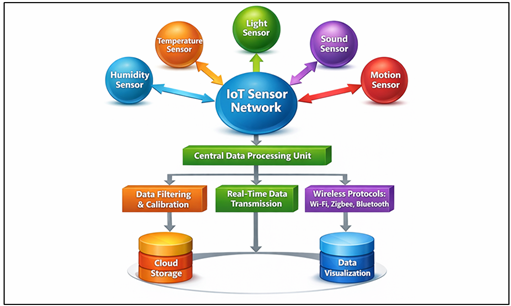
Figure 2 Environmental Data Acquisition Architecture Using Iot
Sensor Networks in Interactive Art Systems
On the same note, microphones or sound sensors pick the changes in acoustics that can elicit a dynamic view on digital displays. The sensor nodes are interconnected with the controllers via wireless protocols, e.g. Wi-Fi, Bluetooth, Cosmogate, Zigbee, or any other IoT communication protocol.
3.3. Data Processing and Decision Logic for Visual Transformation
After the process of gathering environmental information using IoT sensor networks, the second step in the conceptual model then entails processing of the information collected and implementing decision logic to guide relevant visual changes. Embedded computing platforms, edge computing systems, or centralized software systems are often used to provide the implementation of data processing systems that can interpret sensor data and provide artistic outputs in a dynamic fashion. Preprocessing operations will initiate the data processing phase which is used to remove noise, brings sensor data under normal distribution and transforms raw sensor data into useful parameters. An instance here is so that temperature values can be represented as color gradients, and motion intensity values can be represented by speed of animation or pattern of movement in digital graphics. The system is based on these mappings. Decision logic algorithms process sensor data which has been processed and decide how visual elements need to vary responding to environmental conditions. Visual transformations are usually controlled by rule based systems, threshold based triggers or algorithmic mapping functions.
4. Design and Development of the Interactive Art Display
4.1. Hardware components including sensors, microcontrollers, and display units
In order to create an interactive art display on the basis of the IoT, a number of hardware elements are needed, which together allow sensing the environment, processing the data, and dynamically displaying the images. The first hardware layer will comprise environmental sensors that will record instantaneous information on the immediate environment. Such sensors can be temperature sensors, humidity sensors, light intensity sensors, sound detection sensors and motion sensors. Every sensor has the task of detecting particular environmental conditions and producing digital signals that indicate environmental changes. Microcontrollers are also important in processing sensor data and controlling the operations of the system. Arduino, ESP32, or Raspberry Pi platforms are usually utilized because they can be connected to a variety of sensors and they can be used to work with the wireless communication technologies. These controllers receive information on data and sensors connected with it, do some pre-processing of the initial data, and relay the processed data to the visualization system. Microcontrollers are also compatible with other communication protocols like Wi-Fi or Bluetooth which help in the process of transferring data among hardware components and software systems.
4.2. Environmental Parameters Monitored (Temperature, Light, Sound, Humidity, Motion)
Environmental parameters are the most crucial input variables, which affect the behavior of interactive art displays with the use of IoT. Measuring several environmental conditions also enables the system to produce complex and context-sensitive visual output that adapts to the dynamic environment. Some of the most frequently measured parameters include temperature, the intensity of light, sound level, humidity and the activity of motion. Temperature sensors are used to detect thermal environment in the installation environment. The differences in temperature can be mapped to visual characteristics like color ranges, levels of brightness or rate of visual movement. Light sensors check the ambient light and enable the system to change the display brightness and colour intensity so that it can display maximum clarity in various conditions depending on the light conditions. Acoustic sensors in the space are sound sensors or microphones that sense acoustic signals in the space. Dynamic visual animations or reactive graphical effects capable of responding to acoustic environmental changes can be caused by changes in sound intensity or rhythm. The sensors check the humidity of the air that may be converted into visual display textures or environmental themes.
4.3. Software Architecture for Dynamic Visual Rendering
The sensor data processing and the resulting dynamic visual output are done by the software architecture of an IoT-enabled interactive art display. This type of architecture usually involves a number of software modules that process data, deal with data acquisition, decision logic and graphical presentation. The modules are all parts of the whole functionality of interactive art system. The initial part of the software architecture is the data acquisition software that receives the sensor data sent to it by microcontrollers or IoT communication interfaces. This module makes sure that there is constant flow of data between sensors and the transformation of raw sensor readings into structured data formats that are useful in further analysis. Figure 3 depicts software modules that make it possible to have real-time sensor-based dynamic visual rendering. The other step is the data processing and interpretation module. During this phase, environmental data is filtered, normalized and mapped to certain parameters of art.
Figure 3
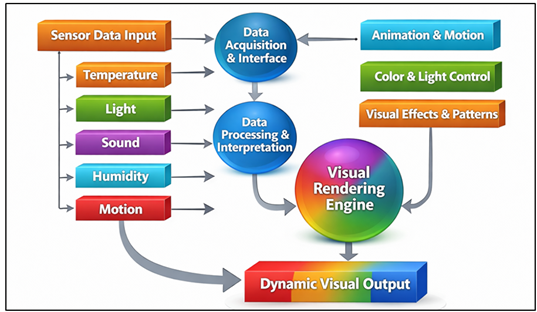
Figure 3 Software Architecture for Dynamic Visual Rendering in
Iot-Enabled Interactive Art Displays
Sound intensity can speed up animation, whereas temperature changes can modify color palettes of visual compositions and so on. Through these mappings, the environmental data can be converted into meaningful inputs to be transformed into the form of visual information. The last element of the architecture is the visual rendering engine. This module produces graphical results based on programming environments like Processing, OpenFrameworks or other real-time graphics environments. The rendering engine generates animations, patterns and transitions of colors in accordance with processed sensor inputs. With this system architecture, a constant exchange between visualization and artistic representation can be made between environmental information and art.
5. Applications and Future Opportunities
5.1. Smart museums and digital galleries
Interactive visual art screens that are connected to IoT can greatly alter the conventional museums and online galleries to be dynamic and immersive cultural environments. In the traditional exhibition settings, the works are mostly inert objects that are being observed. Nevertheless, with the introduction of most IoT technologies and environmental sensors, museums would be able to develop responsive installations that adjust to the visitors and the conditions of the environment. The audience movement, the level of ambient light, sound, and temperature in exhibition halls can be monitored by the sensors, and the artworks are able to react dynamically by changing colors, motion patterns, or visual effects. These interactive systems increase the participation of the visitors as they become active participants of the artistic experience. An example is the digital artworks that could alter their visual arrangement as visitors came closer to them to provide each visitor with a unique experience. Moreover, IoT-compatible systems help curators study visitor records of interaction and the climate in the area, which can be used to make enhancements to the design of the exhibition. With the trend of greater integration of digital technologies into museums, interactive IoT-based art installations are a promising future of museums to expand their cultural experience and develop technologically-enhanced spaces of artistic experiences.
5.2. Urban Public Art and Smart City Installations
Cities are slowly becoming more digital to facilitate smart city projects and interactive art displays made via the IoT can be significant in improving cultural urban areas. Environmental sensors can be included in public art installations located in parks, city centers, transportation centers, or building facades, and these sensors can track the weather conditions, pedestrian traffic, traffic flow, and the levels of sound in the environment. Visual displays that are impacted by these environmental inputs can include dynamic light sculptures, digital murals or projections based artworks. These installations are responsive to environmental factors and provide appealing visual experiences in the city by the changes observed during the day. As an example, the lighting patterns can vary depending on the weather conditions or the number of the walkers, whereas sound-reactive projections can turn people areas into the interactive visual experience during cultural events. Community involvement is also achieved through such installations as art is made accessible as part of the normal city environment. Public art systems on IoT can also be used to support urban identity and tourism by establishing unique landmarks that build on creativity and technological innovation. These interactive installations form a novel expression of the city in technologically sophisticated cities.
5.3. Educational Environments and Creative Learning Spaces
Another good opportunity of introducing the implementation of the IoT deployed interactive visual art displays is in educational institutions. The use of interdisciplinary patterns of teaching consisting of the combination of art, technology, science, and design is increasingly popular in schools, universities, and other learning centers. IoT-driven interactive art systems may be used as an effective learning environment in which students could actively investigate the connection between environmental information, digital systems, and art. Sensor-based installations can be used in the classroom or laboratory context to teach students the effect of the parameters of the environment on digital visualizations. As an illustration, one can change temperature or sound data recorded in the classroom setting and encode it into visual patterns on digital screens. The interactive model helps students to explore the worlds of programming, electronics, and digital design and acquires creative problem-solving skills. It is also compatible with project-based learning in which such installations are used to allow students to build their own responsive art systems using sensors and microcontrollers.
6. Results and Discussion
The ad hoc application of interactive art display based on the IoT proved to be responsive to the environmental changes. Real time visual transformations triggered by sensor inputs like temperature, light intensity, sound levels, humidity and motion were achieved successfully. The system ensured the stability of data transmission and stability in visual representation, which suggested stable operation of the combined hardware and software architecture. Responsiveness of the visual environment further provided more audience interaction as the audience actively participated in the environment.
Table 2
|
Table 2 Performance Evaluation of Iot-Based Interactive Art Display System |
||||
|
System Component |
Data Accuracy (%) |
Response Time (ms) |
System Reliability (%) |
Processing Efficiency (%) |
|
Environmental Sensor Network |
93.4 |
32 |
90.6 |
88.7 |
|
Microcontroller Processing
Unit |
91.8 |
26 |
89.9 |
90.2 |
|
IoT Communication Module |
92.5 |
29 |
91.3 |
87.6 |
|
Data Processing Engine |
94.1 |
24 |
92.7 |
91.5 |
The performance analysis of the interactive art display system based on IoT is provided in Table 2 in relation to the major system components. The environmental sensor network demonstrated high accuracy of data (93.4%) and response time (32 ms) which implies that the environmental data was obtained reliably. Figure 4 relates performance contributions of IoT components that make responsive interactive art.
Figure 4
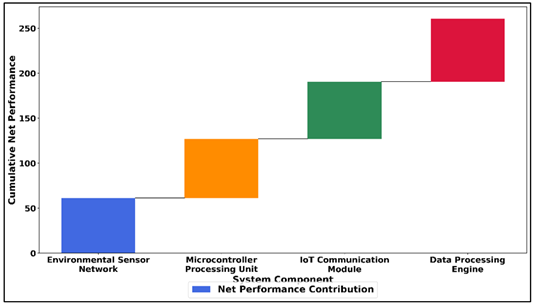
Figure 4 Analysis of Net Performance Contribution Across Iot System
Components
The microcontroller processing unit had proved to be efficient in data processing with an accuracy of 91.8 and a quicker reaction duration of 26 ms which supports real-time interaction. Accuracy, reliability, and efficiency distribution among parts of the IoT are demonstrated by Figure 5. The accuracy and system reliability of the IoT communication module was 92.5% and 91.3% respectively, which guaranteed the stable wireless data transfer between sensors and processing units.
Figure 5
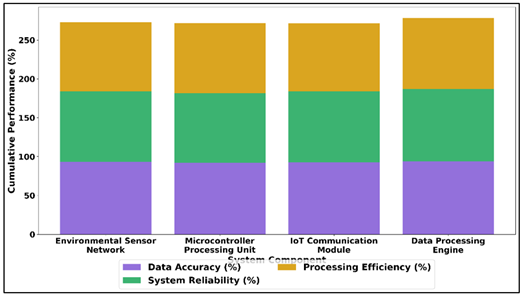
Figure 5 Distribution of Accuracy, Reliability, and Processing
Efficiency in Iot System Components
In the meantime, the highest performance was noted with the data processing engine with the level of 94.1% data accuracy, 24ms response time, and 91.5% processing efficiency, which validated its ability to quickly process environmental inputs and produce dynamic visual outputs. The findings, on the whole, reveal that the combined hardware-software system offers stable, precise, and responsive performance of the interactive visual art systems.
7. Conclusion
Digital visual art can be integrated with Internet of Things (IoT) technologies to offer a range of opportunities in establishing interactive and adaptive artistic environments. This paper has discussed the creation of a dynamic interactive visual art installation using IoT and able to respond to changes in the environment. The proposed framework incorporates environmental sensors, processing units fitted with microcontrollers, and systems of dynamic visual representations, which illustrates how environmental information could be converted into changing visual artworks. The theoretical framework emphasized the roles of the sensor networks, embedded controllers and digital displays in the integration of sensor networks, embedded controllers and digital displays in order to facilitate the real time interaction between input and output of the environment and the artistic performance. The environmental conditions including temperature, light intensity, sound levels, humidity and movement were effectively tracked and mapped to visual changes to enable the display to respond to changing conditions in the environment. The technique converts the conventional static art pieces into interactive systems able to produce immersive visual artworks. The findings have shown that interactive art installations using IoT have a high potential to increase the level of engagement in the audience in the sense that the audience can co-create visual outputs by their presence and interaction with their environment. These systems are also used in wider applications in smart museums, digital galleries, urban public art installations, and at educational institutions. Combining art and intelligent sensing technologies, these installations bring dynamic cultural experience that is changing over the time and space.
CONFLICT OF INTERESTS
None.
ACKNOWLEDGMENTS
None.
REFERENCES
Bouziane, S. E., Khadir, M. T., and Dugdale, J. (2021). A Collaborative Predictive Multi-Agent System for Forecasting Carbon Emissions Related to Energy Consumption. Multiagent and Grid Systems, 17, 39–58. https://doi.org/10.3233/MGS-210342
Essamlali, I., Nhaila, H., and El Khaili, M. (2024). Advances in Machine Learning and IoT for Water Quality Monitoring: A Comprehensive Review. Heliyon, 10, e27920. https://doi.org/10.1016/j.heliyon.2024.e27920
Himeur, Y., Rimal, B., Tiwary, A., and Amira, A. (2022). Using Artificial Intelligence and Data Fusion for Environmental Monitoring: A Review and Future Perspectives. Information Fusion, 86–87, 44–75. https://doi.org/10.1016/j.inffus.2022.06.003
Kashyap, S. V., Purohit, S., Kumar, D. A., Jawaid, F. I. M., Kumar, J. R. R., and Ajani, S. N. (2025). Visual Storytelling and Explainable Intelligence in Organizational Change Communication. ShodhKosh: Journal of Visual and Performing Arts, 6(5s), 696–707. https://doi.org/10.29121/shodhkosh.v6.i5s.2025.6965
Kishorebabu, V., and Sravanthi, R. (2020). Real Time Monitoring of Environmental Parameters Using IoT. Wireless Personal Communications, 112, 785–808. https://doi.org/10.1007/s11277-020-07074-y
Kosovic, I. N., Mastelic, T., and Ivankovic, D. (2020). Using Artificial Intelligence on Environmental Data from Internet of Things for Estimating Solar Radiation: Comprehensive Analysis. Journal of Cleaner Production, 266, 121489. https://doi.org/10.1016/j.jclepro.2020.121489
Maganathan, T., Senthilkumar, S., and Balakrishnan, V. (2020). Machine Learning and Data Analytics for Environmental Science: A Review, Prospects and Challenges. IOP Conference Series: Materials Science and Engineering, 955, 012107. https://doi.org/10.1088/1757-899X/955/1/012107
Malik, I. H., and Ford, J. D. (2025). Monitoring Climate Change Vulnerability in the Himalayas. Ambio, 54, 1–19. https://doi.org/10.1007/s13280-024-02066-9
Narayana, T. L., Venkatesh, C., Kiran, A., J, C. B., Kumar, A., Khan, S. B., Almusharraf, A., and Quasim, M. T. (2024). Advances in Real Time Smart Monitoring of Environmental Parameters Using IoT and Sensors. Heliyon, 10, e28195. https://doi.org/10.1016/j.heliyon.2024.e28195
Nukusheva, A., Ilyassova, G., Rustembekova, D., Zhamiyeva, R., and Arenova, L. (2021). Global Warming Problem Faced by the International Community: International Legal Aspect. International Environmental Agreements: Politics, Law and Economics, 21, 219–233. https://doi.org/10.1007/s10784-020-09500-9
Shuford, J. (2024). Interdisciplinary Perspectives: Fusing Artificial Intelligence with Environmental Science for Sustainable Solutions. Journal of Artificial Intelligence and General Science, 1, 106–123. https://doi.org/10.60087/jaigs.v1i1.87
Solomou, S., and Sengupta, U. (2024). Simulating Complex Urban Behaviours with AI: Incorporating Improved Intelligent Agents in Urban Simulation Models. Urban Planning, 10, 8561. https://doi.org/10.17645/up.8561
Suguna, S. K., Dhivya, M., and Paiva, S. (Eds.). (2021). Artificial Intelligence (AI): Recent Trends and Applications. CRC Press. https://doi.org/10.1201/9781003005629
Sulistiawati, L. Y. (2024). Climate Change Related Litigation in Indonesia. Communications Earth and Environment, 5, 522. https://doi.org/10.1038/s43247-024-01684-1
Tang, W., Pei, Y., Zheng, H., Zhao, Y., Shu, L., and Zhang, H. (2022). Twenty Years of China’s Water Pollution Control: Experiences and Challenges. Chemosphere, 295, 133875. https://doi.org/10.1016/j.chemosphere.2022.133875
Xiong, J., and Yang, Y. (2024). Climate Change and Hydrological Extremes. Current Climate Change Reports, 11, 1. https://doi.org/10.1007/s40641-024-00198-4
|
|
 This work is licensed under a: Creative Commons Attribution 4.0 International License
© ShodhKosh 2026. All Rights Reserved.