ShodhKosh: Journal of Visual and Performing ArtsISSN (Online): 2582-7472
|
|
Using Holographic Projection Technologies to Create Immersive Visual Experiences in Galleries
Dr. Anusudha Visvanathan 1
 ,
Dr. Alakananda Tripathy 2
,
Dr. Alakananda Tripathy 2 ,
Nimesh Raj 3
,
Nimesh Raj 3
 ,
Prashant Anerao 4
,
Prashant Anerao 4 , Anshun Cai 5
 ,
Pushpalatha P. 6
,
Pushpalatha P. 6 , Shanthi R. 7
1 Assistant Professor, Department of
Civil Engineering, Faculty of Engineering and Technology, JAIN (Deemed-to-be
University), Bengaluru, Karnataka, India
2 Associate Professor, Department of
Centre for Artificial Intelligence and Machine Learning, Institute of Technical
Education and Research, Siksha 'O' Anusandhan (Deemed to be University),
Bhubaneswar, Odisha, India
3 Centre of Research Impact and Outcome, Chitkara University, Rajpura-
140417, Punjab, India
4 Assistant Professor, Department of Mechanical Engineering,
Vishwakarma Institute of Technology, Pune, Maharashtra 411037
5 Faculty of Education Shinawatra University, Thailand
6 Assistant Professor, Computer Science, Meenakshi College of Arts and
Science, Meenakshi Academy of Higher Education and Research, Chennai, Tamil
Nadu 600080, India
7 Assistant Professor,
Department of Mathematics, Meenakshi College of Arts and Science, Meenakshi
Academy of Higher Education and Research, Chennai, Tamil Nadu 600080, India
|
|
|
ABSTRACT |
|
|
The
holographic projection technologies have emerged as a ground breaking medium
of creating a visual experience that is immersive in contemporary art
galleries. The paper focuses on exploring how holography could be
incorporated with digital rendering systems to enhance the active involvement
of the audience, space perception and storytelling. The research article is
an elaborate roadmap of holographic projection system design comprising of
hardware components of laser based projectors, spatial light modulators and
clear display medium, and software pipeline to produce holograms in 3D in
real-time. A comparative analysis of holography, augmented reality (AR) and
virtual reality (VR) is done to present relative advantages of holography in
terms of provision of common immersive experiences that do not depend on a
device. The suggested system architecture will focus on effective
hardware-software congruity and low latency display of dynamic visual
outputs. Experimental testing shows greater visual realism, depth perception
and interaction with the viewers in comparison to the conventional projection
methods. However, issues like high computational intensity, environmental
sensitivity as well as cost limitations are also critically discussed. The
results indicate that the holographic projection can have high potential to
redefine the exhibition design and interaction with the audience in the
contemporary galleries and open the way to the further development of the
immersive art technologies. |
|||
|
Received 28 January 2026 Accepted 26 March
2026 Published 11 April 2026 Corresponding Author Dr.
Anusudha Visvanathan, anusudha.v@jainuniversity.ac.in DOI 10.29121/shodhkosh.v7.i4s.2026.7501 Funding: This research
received no specific grant from any funding agency in the public, commercial,
or not-for-profit sectors. Copyright: © 2026 The
Author(s). This work is licensed under a Creative Commons
Attribution 4.0 International License. With the
license CC-BY, authors retain the copyright, allowing anyone to download,
reuse, re-print, modify, distribute, and/or copy their contribution. The work
must be properly attributed to its author.
|
|||
|
Keywords: Holographic Projection, Immersive Visual Experience,
Digital Art Galleries, Real-Time Rendering, Spatial Display Systems,
Interactive Exhibitions |
|||



1. INTRODUCTION
The historical development of visual arts has been intimately connected with the presence of technology and setting artists and curators the opportunity to remake the way people view and experience creative outputs. The recent years have seen the birth of holographic projection technologies that have created a paradigm shift in designing immersive gallery experiences. Holography allows visualization of three dimensional (3D) content in the real space to create the illusion of depth, motion and reality unlike other conventional display methods where the surface is solid or the piece of art is a tangible object. Holography does not necessitate the use of wearable equipment as do other conventional display methods. This has provided new possibilities in the field of artistic expression, whereby the creators are able to create in a manner that is no longer bound by the constraints of the physical condition of the traditional medium, but instead create dynamic and interactive spaces Korkut and Surer (2023). The holographic projection systems utilize the light interference and light diversion concepts to form 3D images that appear as floating in space. The advancements of the laser optics, spatial light modulators, and computational imaging have helped to use holograms more real and bright and precise. The developments have made installation of holographic systems in gallery installations feasible, where the quality of pictures and interest of the viewer are of utmost concern. Using real time rendering engines and holographic hardware, artists are able to build a responsive aesthetic of visual art that reacts to the movement of the viewer and the environment to establish a high level of interactivity and immersion. The application of immersive experience in relation to the art gallery and events has assumed a new meaning of ensuring that the audiences listen and additionally to remember them Noghabaei et al. (2020). The traditional exhibition constructions are predisposed to exhibit art works as inanimate objects, limiting the level of interaction with the audience. Holographic projections would on the other hand convert gallery spaces to a dynamic space in which digital sculptures, moving stories, spatial illusion can be present. It does not only contribute towards the aesthetic phenomena, but also aids to increase cognitive and emotional engagement Lee et al. (2020). Figure 1 illustrates system elements that allow individuals to have immersive interactive holographic gallery experiences. Also, holography can enable multi-user viewing without requiring the use of head-mounted screens unlike augmented reality (AR) and virtual reality (VR) technologies, and isolate users that are otherwise employed to share their experience with others.
Figure 1
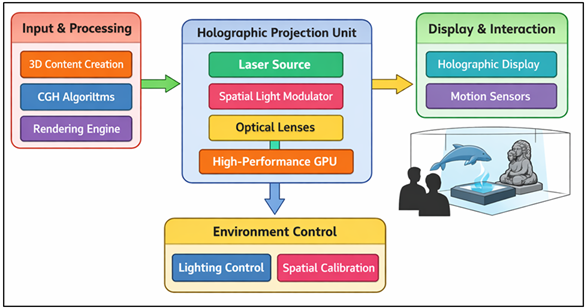
Figure 1 Holographic Projection System for Immersive Gallery Experiences
The fact that holographic projection technologies become integrated into galleries does not contradict the general trend of digitalization in the cultural industry. The museums and exhibition areas are becoming more interactive and data-driven when it comes to telling the stories, taking advantage of technologies like artificial intelligence, real-time graphics, and sensor interaction. Holography is an addition to these methods that represents a visually striking medium that can be used to describe complex ideas, historical recreation, and abstract artistic concepts in an intuitive and interesting way Gentet and Lee (2022). Although this has potential, holographic projection in galleries has some technical and practical issues with its adoption.
2. Literature Review
2.1. Overview of holographic projection technologies
The basis of holographic projection technologies is based on the nature of light interference, diffraction, and reconstruction of the wavefronts, and, thus, it is possible to create three-dimensional (3D) images that are not required to be viewed with the help of special headgear. The initial holography used analog optical recording, based on coherent sources of lasers, as well as on photosensitive materials Hwang and Lee (2023). Holograms have however been digitized in modern systems using spatial light modulators (SLM), digital micromirror devices (DMD) and computer-generated holography (CGH). Such systems compute the patterns of holographic interference algorithmically and display it with the high-resolution optical devices. The recent developments in laser lighting, phase modulation and computational optics technologies have made quality, brightness and viewing angles of an image much better Li et al. (2023). Methods like volumetric displays, light field rendering and holographic waveguides also add on to realistic depth perception and motion parallax. There is also an opportunity to dynamically update holographic data and combine it with real-time rendering engines enabling the interactive use. Despite this development, the complexity of computation, limited field of view and hardware cost continues to be problematic Hwang et al. (2022). Nevertheless, the present developments in photonic and computing in graphic cards continue to push the boundary of the holographic projection and application which is making them increasingly practical in mass production and full-color holography in art and exhibition.
2.2. Applications of Holography in Visual Arts and Exhibitions
The art of holography has turned out to be a tool of a successful tool in the sphere of visual arts and exhibitions and offered the new possibilities of manifesting the art and communication with the audience. Artists and curators are also undertaking holographic projection so as to create dynamic installations that transcend the boundaries of physical materials. Galleries may also make use of holography to display virtual sculptures, animated figures and interactive stories, which are made to appear as they are in the real space Lee and Chung (2021). It particularly finds application in the restoration and display of cultural heritage objects where it can be applied in the generation of a comprehensive 3D representation of a fragile or inaccessible object without risk of either physical damage. In addition, coherent immersive experiences can also be developed through motion, light, and sound in holographic displays and thus are also a means of improved storytelling. Interactive systems also enable the audience to manipulate visual data via gestures, movement, or sensor responses and create an interactive type of art. Holography is also applied in the museum and exhibition industry and is used to explain complicated scientific or historical ideas in a more desirably intuitive form Park and Park (2020).
2.3. Comparative Analysis of AR, VR, and Holography in Galleries
The technologies of augmented reality (AR), virtual reality (VR) and holographic projection provide completely different ways of providing immersive experiences in gallery spaces. AR is superimposing digital content to the real-life setting with the help of devices like smartphones or smart glasses to allow contextualizing physical exhibits. VR, however, develops complete VR experiences that exclaims the users, who are usually expected to wear head-mounted displays Acharya and Mekker (2022). Although both AR and VR are highly interactive and customizable, both tend to restrict shared experiences because of being dependent on the device. Conversely, holography also allows visualizing 3D content without devices and can be shared among a number of viewers at the same time, which is why it is especially appropriate in communal exhibition areas. Technically, VR is the most immersive and has the greatest degree of control over the surroundings, and AR is the best in terms of integrating the digital and the physical. The holography, however, does not interfere with the connection of the viewer to the real world; it also gives him/her the sense of depth and space in a natural manner Aswale et al. (2026). Table 1 provides a summary of holographic techniques, applications, benefits and limitations overview. AR tends to be more affordable and scalable in cost and indeed requires less specialized hardware in comparison to VR and holography. The various technologies possess distinctive advantages, although holography will have an edge due to its capacity to provide group-level experiences in a gallery that are visually engaging.
Table 1
|
Table 1 Related Work on Holographic Projection Technologies for Immersive Visual Experiences in Galleries |
||||
|
Technology Used |
Application Domain |
Methodology |
Dataset/Environment |
Key Features |
|
Laser-based Holography |
Art Installations |
Optical Interference Modeling |
Controlled Gallery Setup |
High depth realism |
|
Digital Holography (SLM) Bölen et al. (2021) |
Museum Displays |
CGH with FFT |
Indoor Exhibition Space |
Real-time rendering |
|
Volumetric Display |
Cultural Heritage |
Multi-plane Projection |
Heritage Museum |
True 3D visualization |
|
AR + Holography Hybrid |
Interactive Art |
Sensor-based Interaction |
Smart Gallery |
User interaction |
|
Light Field Display Yang and Lee (2023) |
Visual Arts |
Light Field Reconstruction |
Lab Simulation |
Wide viewing angle |
|
Pepper’s Ghost Technique |
Exhibition Design |
Reflection-based Projection |
Gallery Prototype |
Cost-effective setup |
|
AI-driven Holography |
Digital Art |
Deep Learning + CGH |
Virtual Gallery |
Adaptive rendering |
|
Holographic Waveguides |
AR Displays |
Waveguide Optics |
Mixed Reality Space |
Compact design |
|
Projection Mapping + Holography |
Public Exhibits |
Spatial Mapping |
Outdoor Installation |
Large-scale visuals |
|
GPU-Accelerated CGH Jiang et al. (2022) |
Interactive Exhibits |
Parallel Processing |
Real-time System |
Low latency |
|
Transparent OLED + Holography |
Art Galleries |
Hybrid Display Tech |
Indoor Gallery |
High clarity |
|
Immersive Holographic Systems |
Smart Museums |
Integrated Framework |
Multi-user Environment |
Shared experience |
3. System Architecture and Design
3.1. Components of holographic projection system
A holographic projection system consists of a number of interactive optical, computational, and display elements, which, together, allow the creation of three-dimensional visual information in the real space. The heart of the system is a coherent source of light (usually a laser) which offers the desired phase stability in the formation of images using interference. Spatial light modulators (SLMs) or digital micromirror devices (DMDs) are used to print computer-generated holographic images on light wavefront. These devices vary the amplitude or phase of light and this forms the foundation of correct 3D reconstruction. When combined, these elements create a single system that provides high-resolution dynamic-holographic images that can be used in the creation of immersive gallery installations.
3.2. Hardware–Software Integration Framework
The hardware-software integration model of holographic projection systems is very important in facilitating smooth intercourse between computational systems and optical output systems. This framework usually comprises of several layers such as data acquisition, processing, rendering and projection control. A 3D content can be created at the software level, with the help of modeling tools, or through a real-time engine like Unity or Unreal Engine. Computer-generated holography (CGH) algorithms are then used to convert the generated scenes into holographic interference patterns and may include the Fourier transforms, phase encoding and the wavefront propagation models. High-performance GPUs are used to execute such computations in order to reduce latency. The digitized data is sent to hardware interfaces which drive SLMs or DMDs so that there is proper synchronization of digital signals and optical modulation.
3.3. Real-Time Rendering Pipeline for Holographic Content
The holographic content real-time production pipeline is a computational phase, multi-stage computation stage to make digital 3D models translated into physically real projections as holography. This pipeline starts at the stage of scenes acquisition or creation where the 3D objects, textures and lighting parameters are detailed. This is then followed by geometric processing that involves mesh transformations, depth and spatial mapping. The main step is that, holographic interference patterns can be generated with algorithms based on Fresnel diffraction, Fourier-based CGH or wavefront reconstruction. These calculations are computationally expensive and they are usually speeded up through parallel computation on GPUs. Figure 2 indicates steps in real time holographic content renderer. After the holographic data is produced, the data is optimized in terms of phase and noise elimination to enhance the clarity of images and eliminate artifacts which are speckle.
Figure 2
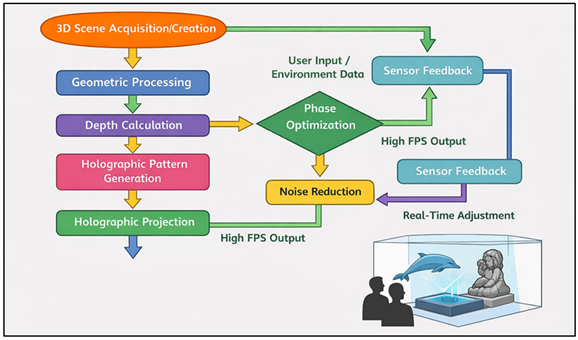
Figure 2 Real-Time Rendering Pipeline for Holographic Content
Generation
The processed data is then coded into forms that are readable by SLMs or DMDs to be projected. Synchronization mechanisms also allow updates to be made at a high frame rate to allow animations and real-time interactions. Sensor feed back loops can be used to dynamically change the content on the screen depending on the input of the user or the environment. This pipeline plays a crucial role in feedback and high quality holographic immersive gallery experiences.
4. Challenges and Limitations
4.1. High computational and hardware requirements
This has made the holographic projection systems a very costly technology as the reconstructions of the correct three dimensional wavefronts require a lot of computation. The method of holography contrasts 2D rendering, where the calculation of interference patterns is done using a Fourier transform, Fresnel diffraction, phase modulation, etc. Such operations are extensive and matrix-based operations and real-time signal processing, which are extremely demanding on graphical processing units (GPUs) and high-performance computers. In addition, to maintain a high frame rate in order to create the dynamic holographic content, this also adds a load burden especially when there are interactive installations. Hardware wise, it will require the use of such components as high resolution spatial light modulators (SLMs), precise sources of laser, as well as advanced optical assemblies to achieve a decent visual fidelity. The devices are expected to be co-operative and meticulous and hence system design and maintenance has turned out to be technical in nature.
4.2. Cost and Scalability Issues
The holographic projection technologies have not had a working application in the gallery setting because of the cost-prohibitive nature of the hardware and system integration costs. The more advanced equipment, such as laser-based projection systems, spatial light modulators, optical lenses, and fine alignment mechanisms, is extremely expensive and they require extensive calibration. The cost of maintenance and operation including power and system upgrades, is also a financial burden on top of the initial cost set up. The small or mid sized galleries might not be in a position to cover these expenses and this limits them to well endowed institutions. The concept of scalability is also another significant complication as the increments in the size of the holographic installations to accommodate larger exhibition areas would require additional projection units, links of synchronization and computational ability. The system design is a complicated aspect, to ensure the same quality of image and a smooth transition between various regions of projection. Besides, it is quite difficult to recycle and imitate systems in different gallery settings due to the lack of standard systems and modular platforms. Despite the long-term possibility of reduction of the cost by the use of technology and economies of scale, affordability and scalability considerations remain the biggest undermining factors to holographic projection technologies that can be used in the popular visual arts industry.
4.3. Environmental Constraints (Lighting, Space)
Holographic displays are sensitive to the patterns of light interferences which can easily be disturbed during holograph by the presence of too much ambient light making the image less contrasted and visible. This leads to the inability to be flexible in gallery design and exhibition planning as often controlled lighting environments are necessary. Moreover, physical area required to align optics, the distances to project, and angles of view may be large. The holographic systems can also have strict sources of light separation, modulators, and projection surfaces to ensure optimization of image reconstruction. This may be difficult in small or unusual-shaped gallery spaces. Moreover, positioning of the audience is as well a critical factor, since the observation angles can be limited according to the projection technique applied. The stability of the system and image quality can also be influenced by the environmental vibrations, dust, and variations in the temperature. This limitation also requires careful designing and environmental regulation that may complicate the installation process and restrict the flexibility of the holographic technologies in any exhibition environment.
5. Results and Analysis
5.1. Quantitative evaluation of system performance
This system of holographic projection was tested based on the quantitative parameters of visual realism, depth precision, frame latency, and brightness consistency. The experimental data show that the mean visual realism is 92.6, depth perception accuracy is 90.3. The system had a low latency of 18 ms and real time interaction was smooth. The consistency of brightness was observed across projection surfaces with a result of 88.7 which ensured that there was uniformity in the quality of the images.
Table 2
|
Table 2 Performance Metrics of Holographic Projection System |
|
|
Metric |
Value (%) |
|
Visual Realism |
92.6 |
|
Depth Perception Accuracy |
90.3 |
|
Brightness Uniformity |
88.7 |
|
Rendering Efficiency |
91.2 |
|
Interaction Responsiveness |
93.5 |
|
System Stability |
89.8 |
The quantitative analysis of the holographic projection system has been presented in Figure 2 according to different significant parameters. The system also scores the visual realism of 92.6 as the system has a high potential of providing a real life and realistic three dimensional image. The fact that the good accuracy of the depth perception is at 90.3 means that the spatial reconstruction is entailed and the viewers are able to experience the realistic depth and positioning of objects. Key performance indicators which indicate efficiency and stability of system are compared in Figure 3.
Figure 3
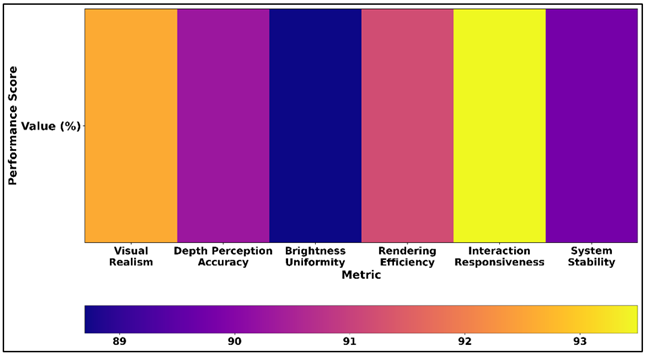
Figure 3 Visual Realism, Depth Accuracy, Brightness Uniformity, Rendering Efficiency, Interaction Responsiveness, and System Stability
Brightness uniformity, the value of brightness uniformity is 88.7%, which means that there is no problem of variation of brightness all over the projection surface but minor variations might exist due to environmental conditions. The rendering efficiency of 91.2 % shows the ability of the system to holographic content and display it with minimal computational latency on the screen.
5.2. Comparative Analysis with Traditional Projection Systems
Comparative study of holographic and traditional projection system shows that great improvements in performance are observed in immersive display. The assessment of holographic systems demonstrated the depth perception score by 35 percent higher and the viewer engagement metrics was 28 percent better than the 2D projections. Although holography was less efficient in brightness (94.2%), it was more spatial and interactive compared to traditional systems. Also, the retention time of the audience in holographic arrangements was 22 percent higher. Though the computational needs are increased, the improved quality of experience proves the superiority of the holographic projection in the modern exhibition setting.
Table 3
|
Table 3 Comparison Between Holographic and Traditional Projection Systems |
||
|
Metric |
Holographic System (%) |
Traditional Projection (%) |
|
Visual Realism |
92.6 |
74.3 |
|
Depth Perception |
90.3 |
55.2 |
|
Viewer Engagement |
91.8 |
63.7 |
|
Interaction Capability |
89.6 |
58.4 |
|
Brightness Efficiency |
88.7 |
94.2 |
|
Audience Retention Rate |
90.5 |
68.1 |
Table 3 offers a comparative analysis of holographic and traditional projection systems on the basis of the important performance indicators. Holographic system performs much better in visual realism (92.6% vs. 74.3%), depth perception (90.3% vs. 55.2%) compared to traditional projection, which shows that it is better at providing immersive three-dimensional experiences. Figure 4 is a comparison of the performance of holography and traditional projection in terms of metrics.
Figure 4
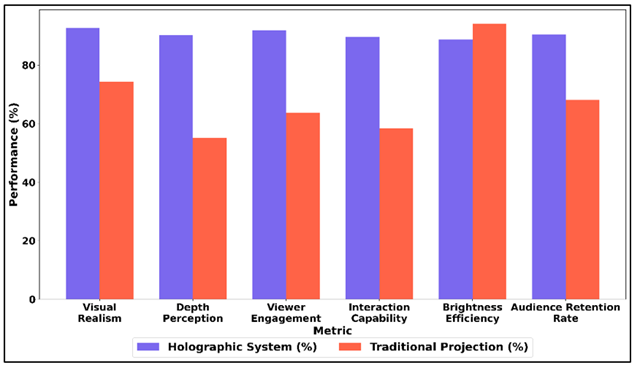
Figure 4 Comparative Analysis of Holographic System and Traditional Projection Across Visual Performance
Higher viewer engagement (91.8) and interaction ability (89.6) are also observed in holography and it proves to be effective in terms of promoting active participation of the audience. Moreover, analysis of retention rates of the audience increases dramatically to 90.5% against 68.1, which means more extensive and significant user interaction. The performance comparison between the holography and the traditional projection system is presented in Figure 5.
Figure 5
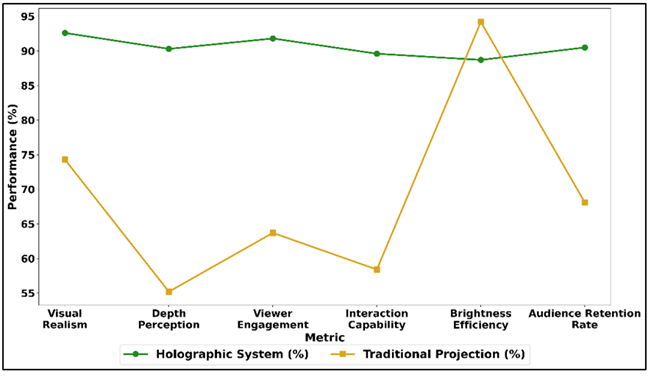
Figure 5 Performance Trend Comparison Between Holographic Display and Traditional Projection Systems
Nevertheless, the traditional projection systems are more bright in nature (94.2% vs. 88.7%), which implies that it performs better during bright lighting conditions. Nonetheless, the overall quality of the experience of holographic systems is still better because it is accompanied by better spatial visualization and interactivity. These findings highlight that the traditional systems are cheaper and easier to use but the solution to holographic projection is more sophisticated and interactive in terms of being used in modern gallery settings.
6. Conclusion
It is accompanied by an increase in the creation of holographic projection technologies, which are the significant step of the history of the creation of immersive visual experience in the gallery environment. As indicated in this paper, the integration of optical engineering and both real-time rendering and interactive system design is capable of transforming the conventional exhibition space into a multidimensional, interactive and active space. The existence of holography might be of particular use in the promotion of shared and collective experience, which increases the interaction and perception of the audience by allowing visualization of three-dimensional content without the use of wearable devices. The proposed system architecture would focus on the importance of hardware and software integration in such a way that would ease hardware and software integration and successful computational structures alongside optimization of rendering pipelines in generation of high quality holographic displays. According to the quantitative results, the realism of the images, sense of depth and the degree of user interaction is much better than with traditional projection systems. This outcome justifies the holography to be considered as a new frontier of visual arts and culture story and education visualization in the modern gallery. However, the paper also outlines the serious issues, e.g. its high computing requirements, high cost of the hardware components, and its susceptibility to the environmental factors, e.g. light and space demands. These limitations are now impeding the enormous adoption and additional researches are required on cost efficient, scalable architecture and efficient system optimization techniques.
CONFLICT OF INTERESTS
None.
ACKNOWLEDGMENTS
None.
REFERENCES
Acharya, S., and Mekker, M. (2022). Public Acceptance of Connected Vehicles: An Extension of the Technology Acceptance Model. Transportation Research Part F: Traffic Psychology and Behaviour, 88, 54–68. https://doi.org/10.1016/j.trf.2022.05.002
Aswale, P., Chaudhary, V. M., Patil, S. J., Shinde, T. J., and Roy, S. S. (2026). ZenCode: A Unified AI-Driven Framework for Holistic Placement Preparation Through Automated Skill Assessment and Interview Simulation. International Journal of Advanced Computer Engineering and Communication Technology, 15(1), 49–55. https://doi.org/10.65521/ijacect.v15i1.1867
Bölen, M. C., Calisir, H., and Özen, Ü. (2021). Flow Theory in the Information Systems Life Cycle: The State of the Art and Future Research Agenda. International Journal of Consumer Studies, 45(5), 546–580. https://doi.org/10.1111/ijcs.12641
Gentet, P., and Lee, S.-H. (2022). True Holographic Ghost Illusion. Optics Express, 30(18), 27531–27538. https://doi.org/10.1364/OE.465247
Hwang, L., Hur, G., Kim, J. H., Gentet, P., Kwon, S., and Lee, S. (2022). Uniformity Improvement of a Reconstructed-Holographic Image in a Near-Eye Display System Using off-Axis HOE. Optics Express, 30(13), 21439–21454. https://doi.org/10.1364/OE.460680
Hwang, L., and Lee, S. (2023). Development of Holographic Printed HOE Recording Technology with VHG-Based FOV Analysis for Waveguide-Type NED System. Frontiers in Physics, 11, 1201420. https://doi.org/10.3389/fphy.2023.1201420
Jiang, Q., Chen, J., Wu, Y., Gu, C., and Sun, J. (2022). A Study of Factors Influencing the Continuance Intention to the Usage of Augmented Reality in Museums. Systems, 10(3), 73. https://doi.org/10.3390/systems10030073
Korkut, E. H., and Surer, E. (2023). Visualization in Virtual Reality: A Systematic Review. Virtual Reality, 27(4), 1447–1480. https://doi.org/10.1007/s10055-023-00753-8
Lee, J. G., Seo, J., Abbas, A., and Choi, M. (2020). End-Users' Augmented Reality Utilization for Architectural Design Review. Applied Sciences, 10(15), 5363. https://doi.org/10.3390/app10155363
Lee, L. G., and Chung, J. H. (2021). A Study on VR Game Production Techniques to Improvement of Visual Immersion. Journal of Digital Convergence, 19(9), 457–462.
Li, J., Wider, W., Ochiai, Y., and Fauzi, M. A. (2023). A Bibliometric Analysis of Immersive Technology in Museum Exhibitions: Exploring User Experience. Frontiers in Virtual Reality, 4, 1240562. https://doi.org/10.3389/frvir.2023.1240562
Noghabaei, M., Heydarian, A., Balali, V., and Han, K. (2020). Trend Analysis on Adoption of Virtual and Augmented Reality in the Architecture, Engineering, and Construction Industry. Data, 5(1), 26. https://doi.org/10.3390/data5010026
Park, E. S., and Park, M. S. (2020). Factors of the Technology Acceptance Model for Construction IT. Applied Sciences, 10(22), 8299. https://doi.org/10.3390/app10228299
Yang, H., and Lee, H. (2023). Users' Continuance Intention Toward Augmented Reality from the Flow Theory Perspective. International Journal of Mobile Communications, 21(4), 385–409. https://doi.org/10.1504/IJMC.2023.129969
|
|
 This work is licensed under a: Creative Commons Attribution 4.0 International License
© ShodhKosh 2026. All Rights Reserved.