ShodhKosh: Journal of Visual and Performing ArtsISSN (Online): 2582-7472
|
|
Computational Color Theory Models for Optimizing Visual Harmony in Digital Art Production
Rahul Thakur 1
 ,
Milind Patil 2
,
Milind Patil 2 , Dhanalakshmi V. 3
 , Binggui Lu 4,
Santosh Kumar Behera 5
, Binggui Lu 4,
Santosh Kumar Behera 5 ,
Pavan P. S. 6
,
Pavan P. S. 6 ,
Antonibiya S. 7
,
Antonibiya S. 7
1 Centre
of Research Impact and Outcome, Chitkara University, Rajpura- 140417, Punjab,
India
2 Assistant
Professor, Department of E&TC Engineering, Vishwakarma Institute of
Technology, Pune, Maharashtra 411037, India
3 Assistant Professor, Computer Science, Meenakshi College of Arts
and Science, Meenakshi Academy of Higher Education and Research, Chennai, Tamil
Nadu 600080, India
4 Faculty of Education Shinawatra University, Thailand
5 Assistant Professor, Department of Centre for Artificial
Intelligence and Machine Learning, Institute of Technical Education and
Research, Siksha 'O' Anusandhan (Deemed to be University), Bhubaneswar, Odisha,
India
6 Assistant Professor, Department of Civil Engineering, Faculty of
Engineering and Technology, JAIN (Deemed-to-be University), Bengaluru,
Karnataka, India
7 Assistant Professor, Department of Mathematics, Meenakshi College
of Arts and Science, Meenakshi Academy of Higher Education and Research,
Chennai, Tamil Nadu 600080, India
|
|
|
ABSTRACT |
|
|
Color harmony
is a form of visual aesthetics that exists in digital art and influences the
perception, emotion and the quality of the entire design. The more complex
the digital creation of art, the more the systematic means of picking out
combinations of colors is becoming a necessity as a replacement of the older
systems of color combinations that were picked out intuitively. The authors
have discussed in this paper the computational colour theory model in visual
harmony optimisation in the creation of digital artwork by integrating
conventional colour theories with the latest algorithmic and data-driven
techniques. The paper explains the theory of colour and colour space
perceptions, and the measures of harmony, and then goes further to explain
the computational methods of rule-based systems, mathematical modelling,
optimization algorithms and machine learning strategies. It is recommended to
introduce a comprehensive implementation structure, such as system
architecture, data preparation, model training and digital art pipeline
preparation. Experimental evaluation based on quantitative measurement is
achieved using quantitative measures, such as perceptual color distance,
harmony scoring and contrast ratio, and mean squared error and qualitative
user study. The results show that machine learning and hybrid networks are
more effective in the accuracy and aesthetic quality to provide more flexible
and context-sensitive color suggestions. Subjectivity of color perception,
biased datasets, and the complexity of computations involved is a critical
concern (which will be discussed in the paper) and future prospects,
including the use of individualized color models, interpretable AI, and
real-time optimization systems are mentioned. |
|||
|
Received 12 January 2026 Accepted 23 March
2026 Published 11 April 2026 Corresponding Author Rahul
Thakur, rahul.thakur.orp@chitkara.edu.in DOI 10.29121/shodhkosh.v7.i4s.2026.7499 Funding: This research
received no specific grant from any funding agency in the public, commercial,
or not-for-profit sectors. Copyright: © 2026 The
Author(s). This work is licensed under a Creative Commons
Attribution 4.0 International License. With the
license CC-BY, authors retain the copyright, allowing anyone to download,
reuse, re-print, modify, distribute, and/or copy their contribution. The work
must be properly attributed to its author.
|
|||
|
Keywords: Computational Color Theory, Visual Harmony, Color
Optimization, Digital Art, Machine Learning, Color Spaces, Aesthetic
Evaluation, Generative Models |
|||



1. INTRODUCTION
The color has a basic role of visual communication, this creates the perception, emotion, and aesthetic experience of traditional and digital art. Classical color theory is based on years of art practice, and it offers systematic concepts, including harmony, contrast, and balance, by which the artists can create a visual composition that is attractive to the eyes. Nevertheless, due to the active development of digital art production, color use has grown to vast possibilities. Modern digital artists are designing on a wide range of platforms such as illustration programs, game engines, animation engines, and user interface design platforms, and the color harmony is more difficult to manage because of dynamic lighting, display varying technologies and large-scale visual data. In this regard, computer-based control of color theory has been developed as the means of visual harmony improvement and optimization Shi et al. (2024).
By applying the classical artistic principles to the mathematical models and Algorithms, David Hume can offer researchers and practitioners with the systematic analysis and synthesis of the color combinations that are consistent with the perceptions and aesthetic norms. These mathematical colour models rely on the application of organised colour spaces, such as RGB, HSV, and CIELAB and perceptual measures, which are applied to determine similarity, contrast, and harmony. As a result, they make automated/semi-automated decision-making process that supports artists to select useful color palettes Wang et al. (2024). The artificial intelligence and machine learning that has developed in the recent past have further altered the terrain of the color optimization. Neural networks, generative adversarial networks (GANs), and diffusion models can be trained to acquire complex associations of colors on large quantities of artworks and pictures. The models have the potential of not only reproducing the current styles but also building new and context-relevant color schemes that will contribute to enhancing the creative processes. There are also optimization algorithms including evolutionary algorithms and Constraint-based that can optimize color palettes based on the established harmony rules or based on other preferences that a user might be having Zhang and Dong (2024).
Despite all these developments, optimum visual harmonies is a challenging task. Color perception is relative and varies on the aspects of culture, context and psychology. Moreover, computational models must be a trade-off between expressiveness and algorithmic efficiency, accuracy and real-time execution tend to be conflicting. Hence, the growing need of artificial models with theoretical color concepts, perceptual modeling and advanced computational approaches are in demand. In this paper discuss the models of computational theory of color of visual harmony in creation of digital art Yang et al. (2024). It evaluates the existing practices, proposes the methodological models, and estimates their applicability in various areas of digital art. This research meets the critical point of the intuitive and computational process in visual design to generate smart tools that will add to the more efficient and predictable, and aesthetically persuasive visual design.
2. Fundamentals of Color Theory and Visual Harmony
The theory of color is the foundation of the theory of color interaction, combination, and influence on the visual perception. Classical color theory is historically rooted in the artisanal practice and provides a systematic method of systematizing the hues with the help of such tools as the color wheel divides the hues into primary, secondary and tertiary colors. It is through these categories that artists and designers can come up with compositions which are harmonious by concepts such as contrast, balance and unity Li et al. (2023). Emotional and spatial interpretation such as warm and cool color are also the results of such concepts, where warm colors will tend to move forward and produce the visual and energy impact, whereas cool colors will tend to be moved to the background and make things peaceful. These classical values continue to play an important role in the production of digital art, as a conceptual base of computational models. Since the traditional media transforms to the digital media, the color representation has been made more formal and quantified with mathematical models of color. It is a color model that is founded on the light intensities and this is why it is RGB (Red, Green, Blue) model, which is well used in digital displays, which is very suitable in screen based applications. In contrast, the printing processes utilize the CMY/CMYK colors where colors are a composition of pigment absorption Liu et al. (2024).
Other more intuitive based models, such as HSV (Hue, Saturation, Value) provide intuitively operative controls to the artist since the color components are disaggregated. The more evolved color spaces like CIELAB and CIECAM02 are designed to be significantly closer to human perceptions, and as such, the differences in color are more accurately measured and uniformity of perception. Such models form the basis of the computational systems in that they allow manipulation, comparison and transformation of colors on a digital level with a lot of precision. The idea of color harmony that can be described as the appealing coloured combinations can be considered as one of the most critical aspects of the color theory. The establishment of the relationships on the colour wheel is rather frequently applied to achieve harmony (complementary color, adjacent colors, triadic colours and tetradic). The visual effects of each of these relationships are not similar since some of them are characterized by high contrast and vividness, and others by low coherence and unity. These harmony rules of digital art are usually coded into algorithms that aid in palette, and color correction generation. The harmony, however, is not the only thing about geometry, it is also the element of the context, proportion, and interplay of colors in a composition Sarakinos and Lembessis (2019).
Visual perception of colors involves close relation with psychological and cognitive besides structural relations. The colors can result in emotional response, cultural identification and behavioral response. On the one hand, red does not connote nothing but energy, urgency, or passion, but on the other hand, blue does connote stability and calm. These associations might vary across cultures and situations and selection of color is a delicate process. In addition to that, the perception of a color can be altered by lighting environment, colors surrounding, and properties of the display. Simultaneous contrast and the color constancy are the phenomena that prove that the human perception of the color is relative and not absolute but depends on the visual context Chen et al. (2022). This is attributed to the fact that the perceptual dynamics are significant when it comes to comprehending the computational models that would be aimed at simulating or rather make the aesthetic judgments more productive. There exist a number of measures and quantitative methods proposed as a way of measuring visual harmony in computational systems. These are perceptual-based distance-based color spaces measures, contrast ratios, statistical models of an image color distribution and balance. A number of pre-established templates of harmony are used in various techniques, or the data is also used in other techniques to find patterns of aesthetically compelling color combinations when large data sets are used. Subjective human judgments are hard to cooperate in objective and measurable criteria that can be applied in different applications in a consistent manner. In total, the fundamentals of the color theory and visual harmony provide a creative practice and computation modeling ground. A combination of traditional principles and the modern understanding of colors and perception can help researchers develop superior systems of analyzing and optimization of color in digital art. These backgrounds allow bringing the data-driven and algorithm-based approach to color selection to intuitive one and, lastly, improving the visual outcome in terms of consistency and visual sophistication Zhu et al. (2020).
3. Computational Approaches to Color Harmony
Computerized color harmony algorithms attempt to transfer the historic artistic ideas onto computerized environments which may study, generate, and optimize color schemes in the computerized space. The approaches bridging the divide between subjective aesthetic assessment and objective algorithmic approaches, and enable a continuation of uniform color design in various tools of digital art. Computational techniques provide systematic way of carrying out visually pleasing results through mathematical methods, optimization, and learning based on data. One of the most intuitive forms of computational color harmony is rule-based modeling but one of the oldest methods of computational color harmony. These models are founded right on the principles of the classical color theory, among them are complementary color relationships, analogous color relationships and the triadic color relationships. Rule-based systems generate palettes following a collection of harmony templates based upon mapping colors onto a color wheel or color space Ajani et al. (2025). The hue dimension can be used as an illustration; an algorithm can select colors with a fixed angle distance to permit balance and contrast. Even though these methods are computationally effective and easy to implement, they are not always adaptable and, because of the complexity of the aesthetic preferences in the real world, not necessarily reflective of those. To address these limitations, mathematical and algorithmic simulations have been created that allow measuring colour associations more specifically. Modeling in this way often applies perceptually homogeneous colour spaces, e.g. CIELAB, where the perception between colours is closer to the perception of human beings. These quantitative models can also measure visual harmony in a more subtle and versatile way compared to rule-based ones Zeng et al. (2024).
It is also significant to the process of the color palette optimization towards particular objectives. The common algorithms are genetic algorithms, simulated annealing and particle swarm optimization which are used to identify an optimal color combination within set parameters. Examples are a system that is created to maximize the contrast, and retain the overall balance, or a system that is created to match accessibility criteria such as sufficient contrast ratio to read, and so on. The optimization-based methods are particularly useful in dealing with the complicated design tasks when multiple competing factors are to be reconciled simultaneously. The last few years have seen machine learning becoming a powerful tool in the modeling of color harmony. Training of supervised learning algorithms can be done using collections of images that are well-liked and therefore the models learn patterns and relationships that characterize the harmonious color usage. Some of the features that are usually used as input to these models include color histograms, spatial distributions and semantic context Deng and Wang (2019). Patterns of common palette and stylistic trends may also be discovered through the use of unsupervised learning like clustering and dimensionality reduction of color data to identify latent patterns in color data.
Figure 1
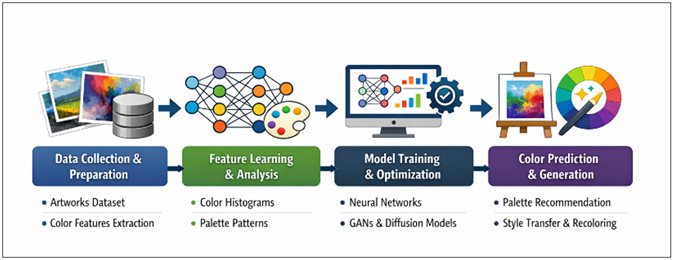
Figure 1 Machine Learning Approaches in Color Analysis
The Figure 1 is a show workflow of the machine learning approaches employed in the analysis of color in digital art. It begins with the phase of data collection and preparation when the large quantities of artworks are gathered, and the characteristics of colors are determined. The features then pass through the step of learning and analysis of features in which patterns obtained in the process involve color distribution, histograms and palette structures, among others, using the computational approach. The next step is model training and optimization where machine learning models, either a neural network or a generative model are trained to learn the intricate relationship between colors and aesthetic harmony Zhu et al. (2020). Finally, the trained models are then used in the color prediction and generation step where the models produce useful results including the palette suggestions, style transfer and automated recoloring of photos. Overall, the diagram depicts a linear process that transforms raw visual information to intelligent and data-guided color decisions to enhance creativity and productivity to digital art making. Deep learning has also been used in improving the computational color models. Neural networks, particularly, convolutional neural networks (CNNs), can analyze images holistically and this involves color relationship among others and image context.
More advanced operations such as transfer of color styles, automatic colorization of grayscales, or an adaptive palette generation adaptable to the content can be done by use of such models Sheela et al. (2025). Despite their advantages, matters of computational techniques of color harmony have a number of problems. The aesthetic judgment is subjective and even it is difficult to make certain standards of harmony and models created to operate with a given range of data not to be the best working ones even with different styles of art and even cultural conditions. The complexity of computation and the quantity of the resources that are required may also be used to prohibit advanced models in real-time applications. Altogether, the area of computational techniques of the color harmony is a tremendous contribution to the disciplines of creating digital art. These methods combine rule-based systems, mathematical models, optimisation, and machine learning to present a full-fledged toolkit in creating more aesthetically pleasing visuals. Not only do they assist artists to make informed choices when it comes to color, but they also allow creation of smart systems that can build and adjust color compositions with minimum human intervention [15].
4. Color Spaces and Transformation Techniques
Digital color representation would not be possible without the color spaces, which allow to encode, manipulate and analyze color information in a computation system with high precision. A color space is simply a mathematical representation that defines the manner in which the colors could be discussed as numerical values. When creating a digital art, it is important that the right color space is chosen, which directly affects the processing, visualization, and perception of colors. Popular color spaces are RGB, HSV as well as perceptually uniform model like CIELAB, CIECAM02, etc. Although RGB is popular in the display systems because it can be directly mapped to hardware, it lacks perceptual uniformity, that is, equal numerical differences do not represent equal perceived differences. This is a weakness that has prompted the use of perceptual color spaces in the computational models where color disparities correspond better to human perception. CIELAB, which are perceptual color spaces, are especially important in applications where it is needed that color should be compared and transformed correctly. CIELAB describes colors as having three dimensions: lightness (L2) and two chromaticity values (a2 and b2), meaning green-red and blue-yellow. Perceptual color differences can be calculated using the distance measures when using this representation and therefore color harmony and color similarity should be measured. Similarly, the CIECAM02 model contributes to these options by considering such viewing conditions as illumination and background that provide a more comprehensive outline of modeling human color perception. The perception systems have found application in image processing, colour correction and aesthetics systems.
Figure 2
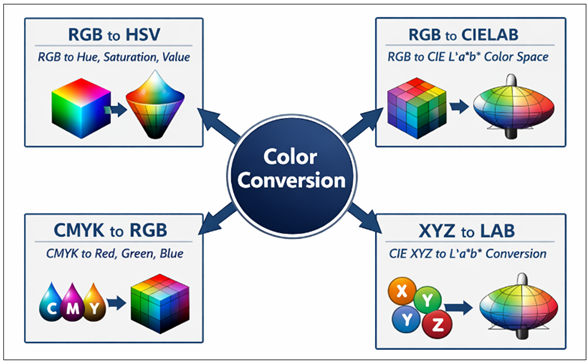
Figure 2 Color Conversion Algorithms
This Figure 2 below illustrates some significant color conversion algorithms, and the node in the center is termed Color Conversion, which is interconnected to such color conversion operations as RGB to HSV, RGB to CIELAB, CMYK to RGB and XYZ to LAB, which transform colors between different color spaces to the manner in which they can be utilized and display. They require RGB, HSV and CIELAB conversion algorithms so that the system engineers can enjoy the benefits of each of these models. An example is that perceptual analysis of an image is possible using CIELAB and the image may be presented in RGB. These transformations ought to be strategically planned to minimize information and visual inconsistencies. Nonlinear transformations and gamma correction is also common to ensure to consider the device specific characteristics, and to have a possibility to display colors properly on other platforms. Another important color processing is color quantization in which fewer colors in an image produce the image without making it look dull. Some of the most widespread applications of this technique are image compression, palette extraction and stylized rendering. Quantization algorithms, including the k -means clustering algorithm and the median cut algorithm, can be used to group similar colors into a representative palette. Such methods must be able to compromise efficiency with perceptual faithfulness because they may lead to the loss of detail or artifacts. Gamut mapping is another technique of importance in transformation; it is primarily employed where a series of output devices are involved, capable of different color capabilities. The gamut of a device is the number of colours that it can reproduce, and also the variations between gamuts may lead to a distortion in colour when images are interchanged between devices. Gamut mapping algorithms adjust colors to work within the range of target device without merely altering as much as possible of the relationships between perceptions. This is normally balanced by the following methods: clipping, compression and perceptual mapping such that there are always equal visuals irrespective of the screen, printer or other media.
The adaptive color transformation techniques have increased attention over the past years and especially with the introduction of artificial intelligence. These are dynamic color methods that change the color attributes depending on image content, image context or user preferences. Indicatively, an adaptive system can improve contrast on a low-light shot or make a particular color more or less vibrant to suit a particular type of art. Machine learning models have the ability to learn functions of transformation based on the data and thus adjust more advanced and context-aware adjustments than those of traditional rule-based methods. To sum up, the computational color analysis and optimization rely on color spaces and transformation methods. These methods offer the infrastructure required to undertake sophisticated applications in digital art, which facilitated both automating and creative decision making.
Figure 3
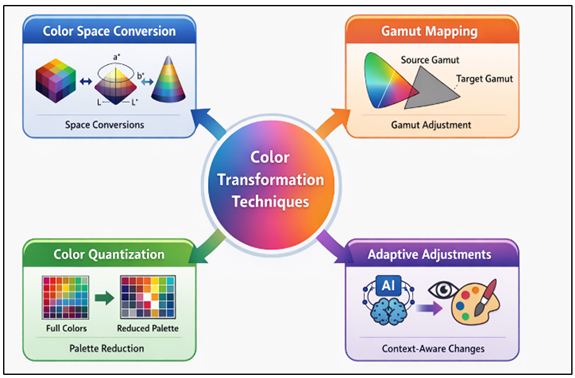
Figure 3 Transformation Techniques
The Figure 3 explains the idea of color transformation techniques as a key process involved in digital image and art work process. In the center of this is a central node that signifies the overall transformation system which is connected to four key techniques in which various techniques are used in the effective processing of color. The first element is color space conversion as it is concerned with changing colors across models i.e. RGB, HSV and CIELAB. This enables the systems to exploit the strengths of each color space whether displaying, editing or color perception analysis. The second component is gamut mapping which involves the transformation of the colors of one device into another one. The process of standardizing colors across screens or print media since various devices have varying colors ensures that colors are visually consistent when they are transferred. The third component, color quantization entails the reduction of colors in an image in order to produce a simpler palette. This can be used to optimize, compress and render in a stylized form without distorting the overall visual appearance.
5. Computational Models for Visual Harmony Optimization
The color theory, perceptual psychology, and computer science concepts are combined in these models to produce frameworks that can be used to generate or enhance a good color palette. Computational techniques have objective, repeatable and scalable solutions unlike traditional methods which are only based on the intuition of the artist. Allowing the use of creative flexibility, these models provide automated decision-making by combining quantitative metrics and intelligent algorithms. Here, the most relevant methodologies of the process of optimizing visual harmony will be discussed, starting with scoring functions, and continuing to advanced learning-based systems.
5.1. Harmony Scoring Functions and Metrics
The harmony scoring functions can be necessary to measure the level of aesthetic quality of color combinations. These functions give numbers to palette of colors depending on pre-existing criteria of contrast, balance, diversity and perceptual similarity. There are many scoring models that work in perceptually homogeneous color spaces such as CIELAB that the distances between colors are indicative of human visual perception. Euclidean distance, color variance, contrast ratios are the measures that are usually employed in determining the relationships between colors. To expand upon simple distance measures, more complex measures are used which include some of the aspects of spatial distribution, proportion of colors, and contextual interactions in an image. Others apply statistical models to determine the color harmony in terms of distributions, which are observed in professionally designed paintings. Others also depend on templates based on the classical color theory, giving more points to palettes with complementary or analogous colour schemes. In spite of their utility, it is difficult to create universal scoring functions because aesthetics is a subjective concept.
Figure 4
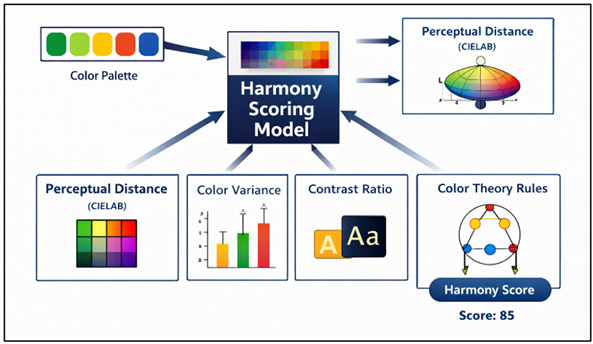
Figure 4 Harmony Scoring Functions and Metrics
The Figure 4 demonstrates the way a concept of harmony scoring can be used to estimate a color palette based on various measurements. The processing of a given palette will be done using measures that include perceptual distance (CIELAB), color variance, and contrast ratio, and the color theory rules, which collectively determine balance, contrast, and interrelations between the colors. The combination of these factors in the model creates a final score of the harmony, which reflects the overall aesthetic quality of the combination of colors.
5.2. Evolutionary Algorithms for Color Optimization
The evolutionary algorithms are an effective optimization tool that can be used to create harmonious color palettes. These algorithms are inspired by natural selection and in this case, a population of candidate solutions is improved in a series of steps which include selection, crossover and mutation. All candidate palette are criticized with the help of a fitness function, typically, on the basis of harmony scoring metrics, and the most successful solutions are reproduced and improved with the help of new generations. Genetic algorithms have gained much popularity in the field since they can search large and complex search spaces. They are able to deal with a variety of goals at the same time, like getting as much contrast as possible without violating the harmony or meeting the demands of accessibility. The evolutionary approaches are also adaptable and they can accommodate the preferences of the users in the optimization. They however, can be computationally intensive, and can demand intense parameter tuning to give optimum results.
5.3. Constraint-Based and Heuristic Models
The emphasis of constraint-based models is to come up with color palettes, which meet some pre-identified rules or conditions. These restrictions can be compliance with a certain scheme of harmony, color contrast restrictions, or consistency with branding. These models provide a way of selecting colors in a manner that they are both aesthetically and functionally satisfactory, by formulating color choice as a constraint satisfaction problem. Heuristic techniques are used to supplement constraint-based techniques by employing rule-of-thumb techniques to make decisions concerning color selection. As an example, heuristics can be focused on the preference of some hue relationships or regulate the saturation to create a visual balance. These models are normally effective and simplistic and therefore they can be used in real time application. However, they are dependent on set rules that can hinder their flexibility and might fail to reflect complicated or unusual aesthetic taste.
5.4. Neural Networks for Color Recommendation
Neural networks have been very useful in improving the optimization of color harmony by allowing aesthetic patterns to be learned using data. The models are trained with large amounts of images and works of art, and they are able to learn about colors and visual harmony relations implicitly. In particular, convolutional neural networks (CNNs) have the ability to examine both color and spatial attributes, which makes them suitable to a variety of tasks including palette extraction, rebasing an image and predicting harmony. Neural networks are capable of providing customized recommendations of colors depending on the input pictures, preferences, and other factors considered.
6. Implementation Framework
The analysis of color, the creation of palette, the evaluation of harmony, and the optimization of adaptability should be assisted with an efficient implementation framework that is both computationally efficient and has artistic significance. Within the context of digital art, the systems are not just required to automate the color-related decisions, but also be flexible enough that creative control of the artist should be preserved. Thus, implementation process is divided into several stages that are interconnected such as architecture design, dataset preparation, model development, workflow integration and platform selection.
6.1. System Architecture for Color Optimization
The general system architecture of color optimization is a set of modules that are synchronized in order to analyze and enhance color harmony. The initial module is the input and preprocessing layer, which is fed with digital images, palettes or scene assets and converts it to the proper format to be analyzed. These attributes are then transmitted on to a harmony evaluation engine, which then evaluates the aesthetic quality of the color combination with scoring functions or learned models. The second architectural module is the optimization module that narrows down the color palette according to the measures of compatibility, constraints, and user preferences. This module can be based on genetic algorithms, heuristic search or neural networks, depending on the implementation. Lastly, an output and visualization layer is used to show the optimized result to the user usually with an option of manual adjustment, comparison and export. The feedback loops may also be incorporated in advanced systems, whereby the model may enhance improved recommendations on the basis of interaction with the user. In general, the system architecture must be modular, scalable, and conform to the real-time design processes.
Figure 5
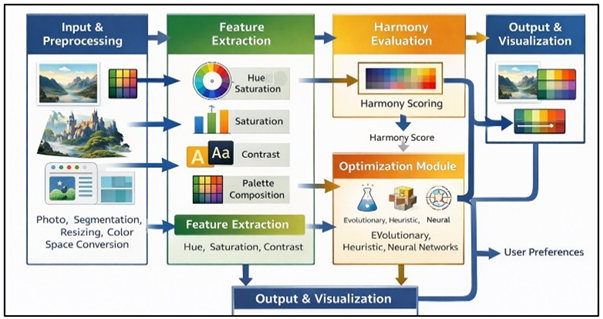
Figure 5 System Architecture for Color Optimization
The Figure 5 depicts an architecture of color optimization in digital art. It starts with input and preprocessing, resizing, segmentation, and conversion of color space are carried out in the process of preparing images. Then, there is the feature extraction that examines the attributes such as hue, saturation, contrast and palette composition. These characteristics are sent over to the harmony evaluation module that determines a harmony score based on predefined metrics. Optimization module then optimizes the palette of color, employing the methods of evolutionary algorithm, heuristics, or neural networks. The last step, the output and visualization step, is the one that gives the optimized colors with recoloring, modifications, and export options. The system is adaptive and user-friendly since a feedback system with user preferences allows the system to enhance its results.
6.2. Dataset Preparation and Annotation
A very important step in the creation of dependable computational models of color optimization is dataset preparation. These photographs are to represent various styles, moods and cultural influences to make sure that the model will not be predisposed to a certain standard of aesthetic success. After gathering the information, the data shall be preprocessed to standardize image size, resolution and color format. At this point feature extraction can also be carried out to extract dominant palettes, histograms, or spatial color relationships. Note taking is also vital and pertinent to guided learning methods. The labeling of images or color palettes might be based on the degree of harmony, the emotional tone, design style, or the compliance with familiar color pattern, e.g. complementary or analogous pattern. In other situations, ground-truth harmony scores can be generated by using expert ratings by artists or designers. Good annotation enhances interpretability of the models and leads to improved training performance but may require time and it is subjective.
6.3. Model Training and Validation
Model training entails the training of the computational mechanism to recognize, give predictions or produce harmonious color combinations according to the prepared dataset. The traditional machine learning models can adopt handcrafted color features whereas the deep learning approach can learn color features automatically through images. The system uses internal parameters to reduce the error in prediction and enhance performance as the training goes through numerous iterations. The model should also be validated to show that it does not merely work well with the training data but also with novel and unseen data of the model. Training-validation-test splits and cross-validation procedures are some of the common validation strategies. The measures that can be used to measure performance include accuracy in prediction, mean squared error, quality of rankings, or agreement with users. In visual images, quantitative analysis is usually complemented by qualitative analysis, such as expert analysis and user testing. The strong validation process can be used to detect overfitting, bias and model generalization constraints, and it is therefore very important to deploy it reliably in artistic implementations.
6.4. Integration into Digital Art Pipelines
It implies that the system needs to be operating not as an independent research prototype on its own, but as a working part of regular art production pipelines. It can be used in illustration and concept art to help recommend palette at either sketching or rendering phase. It can be used in animation and production of games to maintain a consistent color treatment of scenes, characters and lighting situations. Live feedback is particularly useful as artists are able to get suggestions on harmony as they go about their work as opposed to after they are finished. Meanwhile, the ability to override the user should be provided because people should not have their creative work limited by the recommendations of algorithms. The best systems are those that are intelligent assistants, they have the capability of supporting but not eliminating artistic decisions.
7. Case Studies and Applications
Computational color harmony optimization has been used extensively in other fields of digital art as it has proven useful in improving image quality and design efficiency. Color optimization tools in digital painting and illustration help artists to choose well-balanced palettes, enhance the consistency of moods, and to perfect compositions. These systems may propose compatible color composition when drawing early or refine final drawing by means of automated modifications. Color harmony is a very significant element in usability, accessibility and branding in UI/UX design and web interfaces. Computational models can assist the designers in creating interface that makes sense visually and that has a sufficient contrast to be readable and meet the requirements of accessibility. Design iteration and quick prototyping can also be assisted by automated systems of palette recommendation. Color optimization is especially important in the field of game art and virtual environments where the similarities in color scheme across complicated scenes, characters and lighting conditions need to be preserved. Dynamic control of the color systems allows adapting to the changes in the environment on the fly and promotes immersion and visual continuity.
8. Experimental Results and Evaluation
8.1. Evaluation Metrics and Benchmarks
There were evaluation metrics that were used in order to objectively measure performance. Perceptual color distance (e.g., ak 2 CIELAB space) was used to determine the similarity and contrast of the colors, which is why it corresponded to the human eye perception. The extent to which a palette was deemed to be well matched based on well established principles of harmony was determined by the use of color harmony scores which are produced by pre-defined scoring functions. It was also given contrast ratio to tell readability and accessibility particularly in UI/UX application. The diversity and balance in colour compositions were also analysed by calculating the statistics such as colour variance, entropy and palette distributions. Most popular measures of machine learning performance such as mean squared error (MSE) and accuracy (when using classification-based harmony prediction) were used in the case of learning based models. In addition, user study tests were conducted because the users rated aesthetic quality of generated palettes which provided a subjective affirmation to model behavior.
Figure 6
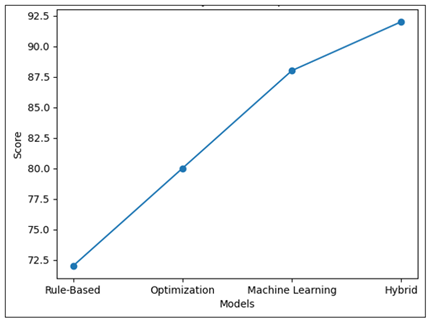
Figure 6 Harmony Score Comparison
Figure 7
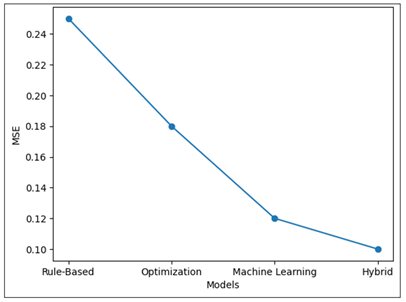
Figure 7 MSE Comparison
Figure 8
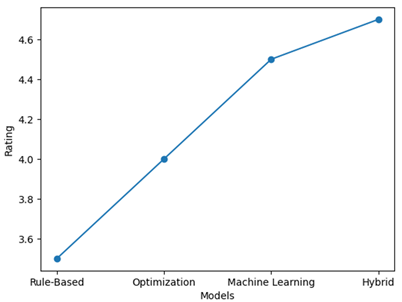
Figure 8 User Rating Comparison
Table 1
|
Table 1 Performance metrics |
|||
|
Model |
Harmony Score |
MSE |
User Rating |
|
Rule-Based |
72 |
0.25 |
3.5 |
|
Optimization |
80 |
0.18 |
4.0 |
|
Machine Learning |
88 |
0.12 |
4.5 |
|
Hybrid |
92 |
0.10 |
4.7 |
The three Figure 5, Figure 6, Figure 7, Figure 8 provide a comparative analysis of various computational models including rule-based, optimization-based, machine learning, and hybrid models on the basis of essential performance indicators. The comparison of the Harmony Score is depicted in the graph of the comparison of the scores between the rule-based and the hybrid models. The scores demonstrated a growing pattern towards the higher scores of rule-based models to the hybrid models. The rule-based methods score the lowest, which means that they have a weak visual perception of color combination. Harmony is enhanced through better palette settings via the use of optimization techniques and again through machine learning which learns more intricate color interactions. The hybrid model has the largest score and this shows the superiority of having the rule based knowledge combined with the learning based flexibility. The MSE (Mean Squared error) Comparison graph shows the accuracy of the prediction of the models. The smaller MSE is, the higher the performance. The error of rule-based models is the greatest because they are based on fixed rules and are not able to adapt to different circumstances effectively. The ways of optimization minimize error by re-fining solutions. Machine learning models have far lesser error since they are able to learn using data.
The hybrid model demonstrates the smallest MSE, which means the best and most stable results. The User Rating Comparison graph is a reflection of visual harmony as rated by a human being. The ratings grow progressively rule based to hybrid models. This trend implies that machine learning and hybrid products yielded by the users are seen as more aesthetically pleasing and more contextual. The top score of hybrid models proves the effectiveness of these models to balance the computational accuracy and artistic quality. Altogether, the figures show that hybrid and machine learning algorithms are superior to traditional ones in objective and subjective assessment, being the most appropriate in maximizing color harmony in digital art.
8.2. Quantitative Results
The results of the experiment indicate that the accuracy of learning based models particularly the deep neural networks were more effective in predicting harmonious color combinations compared to the rule based methods. This type of model demonstrated lower error rate on predicting harmonic models, and more flexibility on predicting various visual styles. Genetic algorithms are optimization based algorithms which were quite useful in providing balanced palettes but took longer time to give the result. The rule based systems were effective but were consistent but not flexible in performance and gave repeatable results or less contextual results. There were no concrete comparisons that demonstrated that either one of the methods, either rule-based constraints and learning methods or a combination of them could be demonstrated to be best in terms of overall performance.
8.3. Comparative Analysis of Methods
A comparative study shows the positive and negative sides of various approaches. Rule-based models are interpretable, simple and quick but cannot deal with complex or unusual color associations. Methods based on optimization offer flexibility, and have the ability to address multi-objective problems, however, they are computationally expensive, and require parameter tuning. Machine learning models, particularly deep learning models are good at learning complex and nonlinear relationships and adapting to different artistic styles. Nevertheless, they need high-sized datasets and substantial level of computing capacity. Compared to individual approaches, hybrid models have a benefit in that they combine data-based learning with structured rules, and are both interpretable and flexible.
8.4. Qualitative Analysis and User Feedback
User studies were used to evaluate qualitatively palettes produced by hybrid and deep learning models, and in this case, palettes produced by these models were always rated higher in visual appeal and harmony. The participants enjoyed the variety and the topicality of these outputs. Rule based palettes, on the other hand, could be seen as predictable, whereas the output of optimisation-based methods could be different for each parameter setting.
8.5. Discussion of Results
The findings prove that there is no universally best method; rather, selection of the approach will be based on the application scenario. In the case of real-time systems, a rule-based model or a lightweight hybrid model can be a good choice, and deep learning or hybrid models may be a good choice in high-quality artistic applications. All in all, using a combination of methods, the strongest and most aesthetically efficient solutions of visual harmony optimization in digital art creation can be achieved.
9. Challenges and Future Directions
Even though there is a great improvement in the optimization of computational color harmony, there are still a number of issues that restrain the usefulness and generalization of the current methods. The subjectivity of the color perception is among the first issues because the aesthetic preferences of people differ in different situations, cultures, and individuals. What may be harmonious in one cultural or artistic context may be viewed differently in the other and thus it is hard to come up with universal standards of evaluation. Also, there is a significant issue of bias in datasets as most machine learning models are trained on small or domain-specific datasets and hence less adaptable when used on different visual domains. The computational complexity, especially in optimization-based and deep learning models is another important problem. These algorithms are usually computationally expensive in terms of both processing time and memory consumption, and are therefore not feasible in real-time use in interactive digital art tools. Moreover, most sophisticated models have a problem of inability to interpret, particularly neural networks, and it is not easy when artists rely on automated color suggestions. Assimilation into current workflows is also an issue, because systems need to find a way to balance between automation and control by the user so as not to curtail creativity. In the future, it is possible to engage in research that will create custom and situation-sensitive color models adjustable to the preferences of users, cultural differences, and artistic objectives. The transparency can be enhanced by incorporating the explainable AI (XAI) techniques so that users can know how harmony decisions are made.
10. Conclusion
The paper has presented how computational models of color theory may be used to optimize visual harmony in the creation of digital art. Having connected the artistic rules of the past with the latest computational methods, the research pointed out the fact that it is possible to break down the color harmony, critically assess, and improve it with the help of algorithmic methods. The major ideas of the color theory, perceptual color spaces, and harmonic metrics were reviewed to create a solid theoretical background, after which the computational techniques such as rule systems, optimization algorithms, and machine learning models were discussed in detail. The study revealed that, though classical rule-based methods are simple and interpretable, they are inflexible and adaptable. At the same time, machine learning and deep-learning methods introduce superior functions of representing and discovering complex relations between colors and creating palettes with insights into the context. The optimization based techniques also play their role by optimizing colors combinations over various constraints. Hybrid models combining rule-based knowledge with data-driven learning turned out to be the most effective among them with a trade-off between accuracy, efficiency, and interpretability. The implementation framework and experimental testing and use of these models were also mentioned in the implementation in various areas such as digital illustration, UI/UX design, gaming, and generative art. These quantitative measurements and user experiments ratified the application of advanced computational techniques as important to both objective and subject aesthetics despite such success, the problem of subjectivity in color perception, bias in the dataset, and computational constraints remain. These issues will be resolved by the future research of personalized explainable and real time systems which will make the computational color models all the more usable and influential. In conclusion, it is observed that the computation colour harmony optimization is a powerful combination of art and technology offering smart tools that can be used to boost creativity and increase consistency and efficiency when creating digital art.
CONFLICT OF INTERESTS
None.
ACKNOWLEDGMENTS
None.
REFERENCES
Ajani, S. N., Saoji, S., Maindargi, S. C., Rao, P. H., Patil, R. V., and Khurana, D. S. (2025). Mapping Pathways for Inclusive Digital Payment Ecosystems: Integrating NGOs, Micro-Insurance Startups, and Community Groups. Enterprise Development and Microfinance, 35(1), 61–81. https://doi.org/10.3362/1755-1986.25-00004
Chen, X., Zhao, S., and Gu, B. (2022). Color Analysis of Digital Printing Xiangyun Silk Qipao Based on Color Network. Advanced Textile Technology, 30, 176–185.
Deng, L., and Wang, G. (2019). Application of EEG and Interactive Evolutionary Design Method in Cultural and Creative Product Design. Computational Intelligence and Neuroscience, 2019, Article 1860921. https://doi.org/10.1155/2019/1860921
Li, F., Gao, Y., Candeias, A. J. E. G., and Wu, Y. (2023). Virtual Restoration System for 3D Digital Cultural Relics Based on a Fuzzy Logic Algorithm. Systems, 11(374). https://doi.org/10.3390/systems11070374
Liu, Z., Zhao, A.-R., and Liu, S.-L. (2024). Prediction of Fading For Painted Cultural Relics Using the Optimized Gray Wolf Optimization-Long Short-Term Memory Model. Applied Sciences, 14(9735). https://doi.org/10.3390/app14219735
Sarakinos, A., and Lembessis, A. (2019). Color Holography for the Documentation and Dissemination of Cultural Heritage: OptoclonesTM from Four Museums in Two Countries. Journal of Imaging, 5(59). https://doi.org/10.3390/jimaging5060059
Sheela, J. M. A. A., Amulya, K., Lokesh, D., Yesubabu, K., and Ajay, P. (2025, April). Federated Multimodal Language Recognition: A Deep Learning Approach for Real-Time Applications. International Journal of Recent Advances in Engineering and Technology (IJRAET), 14(1), 17–26.
Shi, G., Feng, Z., Zhang, J., Xu, J., Chen, Y., Liu, J., and Wang, Y. (2024). An Analysis of the Spatiotemporal Distribution and Influencing Factors of National Intangible Cultural Heritage Along the Grand Canal of China. Sustainability, 16(9138). https://doi.org/10.3390/su16209138
Wang, X., Zhu, B., Chen, Z., Ma, D., Sun, C., Wang, M., and Jiang, X. (2024). Landscape Perception in Cultural and Creative Industrial Parks: Integrating User-Generated Content (UGC) and Electrodermal Activity Insights. Sustainability, 16(9228). https://doi.org/10.3390/su16219228
Yang, R., Li, Y., Wang, Y., Zhu, Q., Wang, N., Song, Y., Tian, F., and Xu, H. (2024). Enhancing the Sustainability of Intangible Cultural Heritage Projects: Obtaining Efficient Digital Skills Preservation Through Binocular Half Panoramic VR Maps. Sustainability, 16(5281). https://doi.org/10.3390/su16135281
Zeng, D., Liu, K., Liang, C., He, M.-E., and Tang, C. (2024). Interactive Evolutionary Design Method of Product Modeling Based on Interactive Three-Dimensional Spherical Interface. Operations Management Research, 1–21. https://doi.org/10.1007/s12063-024-00473-5
Zhang, Y., and Dong, C. (2024). Sustainable Development of Digital Cultural Heritage: A Hybrid Analysis of Crowdsourcing Projects Using fsQCA and System Dynamics. Sustainability, 16(7577). https://doi.org/10.3390/su16177577
Zhu, X., Li, X., Chen, Y., Liu, J., Zhao, X., and Wu, X. (2020). Interactive Genetic Algorithm Based on Typical Style for Clothing Customization. Journal of Engineered Fibers and Fabrics, 15. https://doi.org/10.1177/1558925020920035
Zhu, Y., Xu, B., and Liu, X. (2020). Reference Image-Assisted Color Matching Design Based on Interactive Genetic Algorithm. Packaging Engineering, 41, 181–188.
|
|
 This work is licensed under a: Creative Commons Attribution 4.0 International License
© ShodhKosh 2026. All Rights Reserved.