ShodhKosh: Journal of Visual and Performing ArtsISSN (Online): 2582-7472
|
|
Digital Heritage Reconstruction Techniques for Reviving Lost or Damaged Visual Art Traditions
Mahesh Kurulekar 1 , Yan Zhao 2
 ,
Dr. Badri Narayan Sahu 3,
Aravindan Munusamy Kalidhas 4
,
Dr. Badri Narayan Sahu 3,
Aravindan Munusamy Kalidhas 4 ,
Komal Parashar 5
,
Komal Parashar 5 ,
Rajashri C. K. 6
,
Rajashri C. K. 6 , Sivasankari V. 7
1 Assistant
Professor, Department of Civil Engineering, Vishwakarma Institute of
Technology, Pune, Maharashtra 411037, India
2 Faculty
of Education Shinawatra University, Thailand
3 Professor, Department of Electronics and Communication Engineering,
Institute of Technical Education and Research, Siksha 'O' Anusandhan
(Deemed to be University), Bhubaneswar, Odisha, India
4 Associate Professor, Department of Mechanical Engineering, Faculty
of Engineering and Technology, JAIN (Deemed-to-be University), Bengaluru,
Karnataka, India
5 Centre of Research Impact and Outcome, Chitkara University, Rajpura-
140417, Punjab, India
6 Assistant Professor, Computer Science, Meenakshi College of Arts and Science, Meenakshi Academy of Higher Education and Research, Chennai, Tamil Nadu 600080, India
7 Assistant Professor, Department of Mathematics, Meenakshi College of
Arts and Science, Meenakshi Academy of Higher Education and Research, Chennai,
Tamil Nadu 600080, India
|
|
|
ABSTRACT |
|
|
The further
reduction of the environment, natural disasters, and human strife have
complicated the preservation of the cultural heritage, particularly visual
art traditions, even more. Even though effective, there are times when the
traditional methods of restoration are not sufficient even in the restoration
of highly damaged or lost works. The reconstruction methods of digital
heritage have in their turn responded in the form of new solutions that
consider the computer technologies and cultural and historical experience.
The paper is a discussion of the different methods of digital reconstruction
which are image based, three-dimensional (3D) reconstruction, artificial
intelligence based in terms of Generative Adversarial Networks (GANs) and
diffusion model-based methods, and also architectures that combine both of
these techniques. The research will be based on the mixed-method approach
because the qualitative analysis of the cultural and historical context and
the quantitative analysis of the methods of calculation will be incorporated
into the research. The examples of good and effective application of these
means are evidenced by the case studies of ruined paintings, lost murals, and
cultural objects. These findings show that single methods have received some
benefits but hybrid ones is always accurate,
realistic and culturally real. Additionally, the access and engagement of
users can be extended through introducing immersive technologies, including
augmented reality (AR) and virtual reality (VR), and push the heritage
preservation limits. Regardless of these developments, the issues, which are
associated with the availability of data, the difficulty of calculations, and
moral issues are contemporary. According to the research it is established
that the necessity to implement the use of the standardized assessment
instruments and interdisciplinary cooperation exists, as there is the
necessity to provide that the findings of the reconstruction process should
be alike and culturally competent. |
|||
|
Received 19 January 2026 Accepted 22 March
2026 Published 11 April 2026 Corresponding Author Mahesh
Kurulekar, mahesh.kurulekar@vit.edu
DOI 10.29121/shodhkosh.v7.i4s.2026.7492 Funding: This research
received no specific grant from any funding agency in the public, commercial,
or not-for-profit sectors. Copyright: © 2026 The
Author(s). This work is licensed under a Creative Commons
Attribution 4.0 International License. With the
license CC-BY, authors retain the copyright, allowing anyone to download,
reuse, re-print, modify, distribute, and/or copy their contribution. The work
must be properly attributed to its author.
|
|||
|
Keywords: Digital Heritage Reconstruction, Cultural
Preservation, Visual Art Restoration, Artificial Intelligence, GANS,
Diffusion Models, 3D Modeling, Photogrammetry, Augmented Reality, Virtual
Reality |
|||



1. INTRODUCTION
The cultural heritage is the memory, identity and an artistic expression of the civilizations throughout the ages. Visual art traditions, including paintings, murals, sculptures and decorative arts, are particularly important by the virtue of their ability to preserve aesthetical values, historical accounts and socio-cultural realities. Most of these artistic cultures have however been lost partially or even completely too natural disasters, environmental degradation, wars and even the natural process of aging. The resulting inelasticity of such cultural property has generated an immediate necessity to find new preservation and reconstruction strategies that can restore and support these visual heritage to the generations to come Mediastika et al. (2024). Conventionally, art restoration was based on manual practice performed by trained conservators, and it has included comprehensive cleaning, retouching, and restoration. Although these techniques have been useful, they are usually restricted by subjectivity and may interfere with the material as well as the possibility of affecting the original work of art. Moreover, the more conservative methods of restoration are not always able to cope with artworks in a badly damaged or totally lost state, where the reference materials are minimal or disjointed. In this regard, digital technologies have presented themselves as a revolutionizing technology in the area of preserving cultural heritage and provided new opportunities of non-invasive, precise, and scalable reconstruction Salman (2023).
The latest developments in digital heritage technologies (3D scanning, photogrammetry, computer vision, artificial intelligence) allow researchers and practitioners to reproduce the works of art with astonishing accuracy. Image inpainting, generative adversarial networks (GANs), and diffusion models are some of the techniques that enable the restoration of missing or damaged visual parts through learning patterns by using existing data. Also, the immersive technologies such as augmented reality (AR) and virtual reality (VR) can be used to present the reconstructed artworks, making them more accessible and engaging through interactive and contextualized space Belal and Shcherbina (2019). These innovations do not just preserve the physical attributes of the works of art, but also serve to preserve the intangible cultural meaning that was found in the works of art. Irrespective of such developments, there are several challenges in digital reconstruction of visual art traditions including authenticity concern, ethical concerns and credibility of products reconstructed. The question arises as to what level a digitally restored artifact shows its original appearance and how the application of algorithms can lead to biases that were not intended. In addition, the interdisciplinary nature of the subject matter known as art history including computer science, archaeology, cultural studies, and the like requires integrated structures in a bid to ensure that it is not only technically viable but also culturally sensitive Naser (2024). The research paper is aimed at discussing and analyzing the digital heritage reconstruction methods that are used in visual art traditions recovery after being erased or damaged. It examines significant methodologies, criticizes their applicability using case studies, and proposes the big picture concerning the maintenance of culture. The study will bridge the space existing between technological discovery and artistic heritage to gain a clearer understanding of how digital technology could be benefited to preserve and rejuvenate cultural materials in the digital era in a sustainable manner Nazarenko and Martyn (2024).
2. Existing Literature
The preservation and the reconstruction of the visual art practices have taken a significant period of transformation, with the manual restoration processes being substituted by the technological digitalized processes. This section gives a literature review of the existing literature on the conventional restoration techniques, digital documentation techniques, computational reconstruction techniques, and the recent artificial intelligence-based techniques and their contributions and constraints to the cultural heritage preservation. Conventional forms of art restoration have been traditionally focused on physical conservation such as cleaning, consolidation and repainting. Scholars emphasize that these methods are extremely reliant on experience and craftsmanship and ensure that the restoration is in accordance with the original artistic intention. However, in literature, some disadvantages have also been found like subjectivity in the interpretation, and the possibility of irreversible changes. Though the traditional methods continue to play a very significant role in preservation of tangible objects, they often lack the ability to restore the highly damaged or completely lost art works and in many cases the only information that can be discovered about the art work is a partial mention of it. Cultural heritage documentation has become more of a paradigm shift with the advent of digital technologies. Some of the technologies that have enabled the preservation of artworks and heritage sites in a digital format have been the high-resolution imaging, 3D laser scanning, and photogrammetry. It has been demonstrated by research that these techniques are applicable to record surface texture, geometry and colour based on the frequency of sample and can result in a digital representation that can be made a permanent record. The photogrammetry in particular has gained eminence due to its affordability and will assist in creating the three dimensional structures with the assistance of the two dimensional images. However, researchers note that the methods depend on the quality of the data, and may have certain issues with the details capture in damages or covered sections. The digital reconstruction breed has also been enhanced through the computer vision and image processing techniques. Image in painting and interpolation have been widely used to reconstruct lost or damaged regions of works of art using adjacent visual characteristics. Nevertheless, scholars observe that the techniques are reliant on the quality of the data and can encounter some problems with capturing finer details in damaged or covered areas. The computer vision and image processing methods have further boosted the digital reconstruction area. In painting and interpolation have been extensively applied to recover lost or damaged areas of works of art by examining adjacent visual features. Literature indicates that these methods are effective with small scale restorations but can have difficulties with large scale restorations in which there is a lack of contextual data. Also procedural modeling and texture synthesis methods have been used to reproduce repetitive patterning and style in especially architectural and ornamental art forms.
The last few years have seen the high pace of development of artificial intelligence in digital heritage reconstruction. Generative models such as Generative Adversarial Networks (GANs) and diffusion models have shown a great potential in the reconstruction of complex visual properties. Research points out that GAN-like methods have the ability to learn artistic styles and produce natural reconstructions of missing information, and diffusion models are more stable and of higher quality. The Neural style transfer methods also allow to recreate the style of various visual art fields, contributing to the restoration of the art traditions that are losing their significance. Although these improvements have been made, scientists warn that AI-generated results can be used to inject biases or inaccuracies, which casts doubts on the issue of authenticity and interpretation. The literature has also presented several case studies with successful examples of the usage of digital reconstruction methods in the restoration of murals, paintings and historical artifacts Salman (2023).
3. Theoretical Framework
The concept of digital heritage reconstruction includes the notions of cultural studies, digital humanities, computer science, conservation theory, etc. It gives the principles that underlie the reconstruction of lost or damaged visual art tradition and promotes that the cultural sensitivity, historical fact and technological reliability are considered. It is a framework that has been critical in identifying the uses of digital tools as cultural informed practices that do not disrupt the integrity of heritage artifacts as being technical solutions.
3.1. Concepts of Cultural Heritage and Authenticity
Cultural heritage is both concrete and non-concrete and defines the identity and persistence of the societies. The physical heritage, i.e., the visual art traditions such as paintings, murals, and sculptures and ornamental motives, are the tangible heritage, whereas the techniques, meaning, and cultural narratives are the intangible heritage, which is inculcated in the former. The heritage preservation is a phenomenon in which authenticity concept is central and in terms of how well an artifact retains its original form, material, context and meaning. The concept of digital reconstruction as authenticity is a multidimensional and a sensitive concept. Unlike the physical restoration, the digital approaches are more likely to include an interpretive aspect of the process, especially in the restoration of the lost or damaged localities. The scholars claim that authenticity of digital heritage should not be confined to the material accuracy, but it is also necessary to consider the historical background, artistic purpose, and cultural value. Therefore, there is need to measure rebuilt outputs based on their loyalty to both visual characteristics and more significant accounts of culture Belal and Shcherbina (2019).
The theoretical approach is based on a contextual authenticity approach, in which the interpretation of reconstructed artworks can be seen as informed guesses, but not as precise copies. This method appreciates the fact that we may not necessarily be able to be fully accurate especially in situations where little reference data is available. Rather, it focuses on the openness of the reconstruction process such that the viewers and researcher are able to tell the difference between original and reconstructed.
3.2. Principles of Digital Reconstruction
A digital reconstruction possesses a set of principles that guide the digital reconstruction and facilitate methodological rigor and reliability. The first one is the data-driven reconstruction, which relies on the high-quality initial data as the archival images, historical documents and the tangible remains. The gathering of data, in its turn, is crucial as the outcomes of reconstruction directly rely on the fullness and credibility of the available information. The second is the algorithmic interpretation where in the computational models pattern, texture and style modelling are applied in the generation of missing contents Naser (2024).
Figure 1
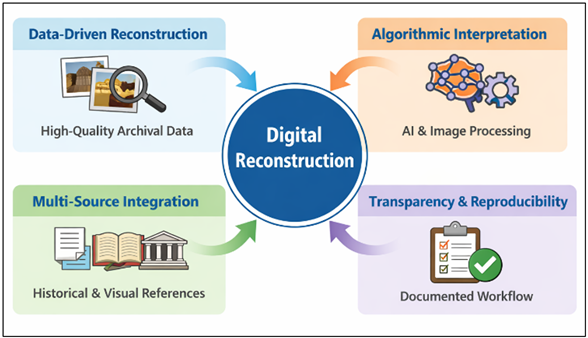
Figure 1 Principles of Digital Construction
Together, these principles form a harmonious strategy on the control of the balance between the efficiency of computers as a calculation device and the cultural and historical sensitiveness.
3.3. Ethical Considerations in Digital Restoration
The key to the digital heritage reconstruction is the ethical implications since it is the process of the interpretation and, perhaps, transformation of cultural objects. One of the most significant problems is the threat of misrepresentation where recreated elements may be an inaccurate replica of the original piece of art or may be stylistically different. This can bring about dissemination of historical falsities. The other ethical issue is connected with the property and cultural representation. Many practices in visual art are closely associated with specific communities and this is the reason why the reproduction of the same digitally should not override the cultural values and sensibilities. This may be due to the heritage meanings being used or modified due to illegal or thoughtless rebuilding projects. It is also important to the concept of the revelation of digital authenticity. The researchers and practitioners must indicate the originality and digitized elements of an art object. This kind of transparency is used to maintain trust and risk taking in the process of rebuilding artifacts among the audience. Moreover, it is also of interest in long-term preservation and access to digital reconstructions. The digital artifacts are to be stored in the long term forms to prevent loss of data and to render it useful later on. The ethical frameworks also concentrate on inclusivity because the reconstructed heritage is considered as something that can be accessed by different audiences including the local communities and the researchers. On the whole, ethical rules may be considered as a precautionary measure that should be undertaken to avoid technology abuse and as a pledge that the digital reconstruction would be streamlined in accordance with the cultural preservation objectives Nazarenko and Martyn (2024).
3.4. Interdisciplinary Approach: Art, Technology, and History
The digital heritage reconstruction has an interdisciplinary character in that it requires different disciplines. The knowledge on the stylistic analysis, iconography, and the historical context are also provided by art historians, which can present a lot of the necessary information about the initial characteristics of the works of art. Conservators give data regarding the property of materials and traditional conservation methods, and, therefore, digital tools are aligned to the traditional conservation principles. Technologists who develop image processing, 3D modeling and artificial intelligence algorithms and tools are called computer scientists and engineers. Their works permit making reconstruction procedures automated and better. In the meantime, historians give contextual descriptions who a give an account of the cultural and temporal meaning of works of art thus reconstructions are serpentine based. Such an interdisciplinary synergy would enhance the reconstruction process being the inclusive and more accurate process. It is an agreement between the qualitative interpretation and quantitative analysis of the information in such a way that the utilization of digital technologies could be culturally applicable. Such collaborative projects as digital humanities projects have demonstrated the utility of the introduction of different skills to heritage projects. Finally, the theoretical framework identifies the significance of the application of cultural authenticity, both methodological rigor and ethical responsibility and interdisciplinary collaboration. Such values on which the digital reconstruction practices are based would guide the researchers to make sure that the technological developments are making significant contributions to the preservation of the visual art traditions and its renewal.
4. Digital Reconstruction Techniques
Digital reconstruction methods have become the critical means of recovering the lost or damaged visual art traditions, which allows the researcher to recreate the artwork with a certain level of accuracy and context-related meaning. These are techniques that use both computational and historical and artistic knowledge to recreate visual aspects, which might no longer exist in their original form. Using the developed technologies in imaging, modeling, and artificial intelligence, digital restoration can have the physical look of works of art restored but, in addition, the cultural and aesthetic value of the artwork can be preserved. Image-based reconstruction is one of the most widely applied methods that use the available visual information like photographs, archival images and scanned documents. Such methods as image inpainting are used to reconstruct lost or damaged parts by examining the pattern of surrounding pixels and textures. The former ones are traditional techniques that aim at ensuring the continuity of the visual, whereas the latter techniques are more sophisticated and make use of the contextual knowledge to enhance the quality of reconstruction. They are especially useful with artworks that have minor or moderate level of damage, in cases when one is given adequate visual references. Their limitations however are clear with large missing parts or extremely complicated artistic compositions where the absence of contextual information may result in inaccurate results to a lesser degree Hutson et al. (2022).
The 3D modeling and rendering techniques are widely used in the reconstruction of spatially complex art forms, such as sculptures, monuments, and architectural objects. Such technologies as laser scanning and photogrammetry allow capturing the accurate geometry and surface details and further 3D digital models are produced. Lighting, material properties and environmental conditions can further be added to these models as rendering processes to render a realistic image of the original artwork. The possibility of visualization and interaction with the reconstructed models in various perspectives will greatly contribute to the academic research as well as the communication with the audience. Although they have benefits, the methods demand excellent quality data collection and may be computationally expensive which makes their application in large scale difficult Pietroni and Ferdani (2021).
Digital reconstruction has gained important capacities through the introduction of artificial intelligence. These models are able to copy artistic styles, revive lost colors and recreate fine details that the traditional methods may not meet. Particularly, diffusion models are more stable and provide better quality results, which contributes to their growing popularity in recent studies. Nevertheless, it is also dependent on training data, which makes it susceptible to bias, and interpretation of AI-generated output is an issue of concern, particularly when the accuracy and authenticity of the result is important. The texture synthesis and style transfer methods are also used to help in the reconstruction process by concentrating on the surface features and the style artists. Synthesis algorithms of textures use the patterns that are already present and create a smooth extension, which is especially beneficial in restoring ornamental figures and repeating patterns. Neural style transfer can be used to apply certain artistic styles to reconstructed parts, and the visual features that are lost can be restored. Despite the fact that these techniques enhance the degree of visual coherence, to provide the level of stylistic correctness and fit with the original artwork, the procedure requires a comprehensive validation and professional attention. Augmented and virtual reality, i.e., the use of immersive technology, has opened up the opportunities of digital reconstruction by giving an experience involving an interaction with a reconstructed artwork. Using AR, it is possible to superimpose digital restorations on physical objects that provides a direct comparison of original and reconstructed objects. Virtual reality offers absolutely immersing experiences where individuals are capable of seeing recreated paintings and heritage sites in a stimulation. These technologies not only simplify the access, but they also enhance the level of interaction and engagement in the educational and cultural activities as the heritage becomes more interesting Abukarki (2025).
5. Methodology
5.1. Research Design and Approach
The research design is based on mixed-method research design, which integrates both quantitative and qualitative research design in an attempt to come up with all-round reconstruction findings. The qualitative section comprises the research regarding the historical, artistic, cultural backgrounds through the art historical inquiry and the professional interpretation. This will make sure that the deliverables are reconstructed in line with the initial purpose of the artistic mission and cultural value. The quantitative part quantifies the calculation methods, and these include image editing, three-dimensional modeling, and artificial intelligence-based restoration. An experimental approach is applied to compare the rehabilitation methods of reconstruction, image methods, AI model, and hybrid methods. The research design can be characterized as an iterative one, i.e. the findings of the reconstruction would be further improved upon the ground of the findings of the evaluation and the feedback on the part of experts. It is a multi-purpose and versatile means of dealing with various types of art objects and various levels of destruction Haux et al. (2021).
Figure 2
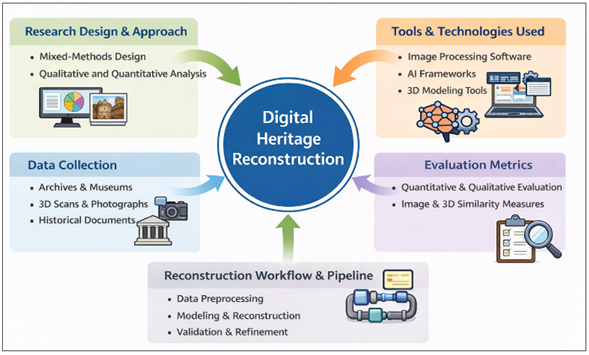
Figure 2 Methodology for Digital Heritage Reconstruction
5.2. Data Collection (Archives, Museums, Historical Records)
Among the most crucial stages in the Digital reconstruction process is the data collection since the quality and accessibility of the data used will dictate the accuracy of the reconstruction process. The study assumes various sources of data gathering produced in reference to several recognized and professional materials. They include digital collections, museum collections, historical collections, photos, and past restoration documents. High-resolution pictures of works of art are obtained through the museum databases and cultural heritage repositories. In those cases when it is possible to gain physical access to the site, visual and geometric data of the site were acquired through on-site data acquisition technologies, which involve photography, three-dimensional scanning, and photogrammetry to obtain detailed and complete visual data. The historical documents like drawings, written descriptions, and scholarly literature provide background information that springs back on restoration works.
5.3. Tools and Technologies Used
In 3D reconstruction 3D reconstruction tools are used to create and perfect digital models using Blender, MeshLab, and photogrammetry software (e.g., Agisoft Metashape). The frameworks of artificial intelligence are being used based on the systems like TensorFlow and PyTorch, allowing the creation and implementation of generative models, including GANs and diffusion models. These models are trained on appropriate datasets to acquire the styles of artworks and reproduce the missing pieces of visual information. Moreover, AR and VR-based visualization is implemented with the help of immersive technologies like Unity and Unreal Engine, as a result of which the reconstructed artworks can be displayed in an interactive space. The combination of these tools guarantees the entire and technologically sophisticated reconstruction pipeline Thakre et al. (2025).
5.4. Reconstruction Workflow and Pipeline
The reconstruction pipeline creates a systematic pipeline through which the reconstruction workflow takes place in a series of stages. The process starts with the acquisition and pre-processing of data whereby collected images and 3D data is cleaned, aligned, and ready to undergo analysis. This is then succeeded by feature extraction in which important components of the visual image like edges, textures and patterns are detected Pereira et al. (2023). The second step is reconstruction and modeling, the computational methods are used to recover the lost or destroyed parts. Plausible reconstructions are generated by image-based techniques and AI models whereas 3D modeling techniques replicate structural components. In hybrid methods, several techniques are used to improve the accuracy, after reconstruction, the output is refined and validated, inconsistencies are corrected, and results are compared with historical data. The input of the art historians and conservators is used in order to provide cultural and artistic accuracy. The last step is the visualization of the reconstructed artworks with the help of digital platforms which provides the opportunity to analyze, present, and share.
6. Implementation and Case Studies
6.1. Case Study 1: Reconstruction of Damaged Paintings
Among others, reproduction of debased paintings has been among the most frequent uses of digital heritage techniques. It has been identified in this case study that there was imagery of one section of a damaged painting in high-resolution and this was achieved by tapping into the museum archives, scanning and analyzing in digital form. The painting had been damaged gravitously with loss of colour and cracks as well as portions of the painting were also lost. Image preprocessing like noise reduction, color fixation and sharpening were used to enhance the quality of input data used. This was followed by the in painting of the image using the image in painting techniques and AI-designed networks, such as the generative adversarial networks, to fill the gaps of the painting with some parts of the painting. The models were also trained using the datasets which shared a similar artistic style to achieve the consistency of style. This was then compared with the historical sources and the professional interpretations to make sure that the reproduced output was authentic. These findings suggested that AI-assisted reconstruction was also found to induce more continuity to visual appearances as well as assist in preserving the original artistic frames to a large extent. Nevertheless, the fact that there were slight differences in particulars of style also denoted the applicability of the professional control to the reconstruction process.
6.2. Case Study 2: Revival of Lost Murals or Frescoes
Since murals and fresco paintings are usually exposed to the environment, their restoration can be an extremely difficult task. In this case study, one rebuilt a fragmented mural with large parts of the imagery lost with the help of a combination of photogrammetry, texture synthesis, and historical analysis. Remnants of architecture that have survived, archival photographs, textual descriptions were gathered to come up with a comprehensive reference base. The structural layout of the mural was reconstructed using three dimensional modeling methods whereas surface details and patterns were reconstructed using texture synthesis algorithms. The transfer of style by neural methods were used to reproduce the original artistic style in reconstructed areas. The combination of various methods has made it possible to construct more wholesome, taking into account the structural and stylistic features.
6.3. Comparative Analysis of Techniques
Comparison of the methods used in the case studies reveals that both methods have their own advantages and disadvantages depending on the kind of the piece of art and the extent of its damages. Image-based reconstruction techniques are highly applicable in two-dimensional artworks which exhibit medium damage and provide useful and visually persuading results. On the contrary, the 3D modelling technologies are best implemented on the spatial and complex artifacts and architectural objects which offer a fine geometric re-representation. GANs and diffusion models are AIs capable of displaying greater capability of creating realistic and stylistically consistent reconstructions even in situations where data is limited. They do take huge amounts of training data but must be thoroughly verified to ensure that errors do not occur. The best and the most reliable results are always obtained when hybrid strategies are employed where the strengths of one approach are employed and the shortcomings of the other counteracted. Overall, the application of digital reconstruction techniques in the framework of the case studies in point indicates the topicality of applying the methodological approach to the specifics of the artwork. The innovation of technology with the knowledge that was offered ensures that the output that is reconstructed is not only the one that is visually accurate, but it is also culturally and historically significant Matey et al. (2025).
Table 1
|
Table 1 Comparative Analysis of Digital Reconstruction Techniques |
|||||
|
Technique |
Accuracy (1–10) |
Data Requirement (1–10) |
Computational Cost (1–10) |
Scalability (1–10) |
Cultural Authenticity (1–10) |
|
Image-Based Methods |
7 |
6 |
5 |
7 |
7 |
|
3D Modeling Techniques |
8 |
8 |
8 |
6 |
8 |
|
AI-Based (GANs/Diffusion) |
9 |
9 |
9 |
8 |
7 |
|
Hybrid Approaches |
10 |
9 |
10 |
9 |
10 |
Table 1 has compared key digital reconstruction algorithms in performance metrics such as accuracy, data requirements, cost of computation, scalability, and cultural authenticity. The overall performance of hybrid approaches shows a high level of improvement due to the incorporation of various methodologies.
Figure 3
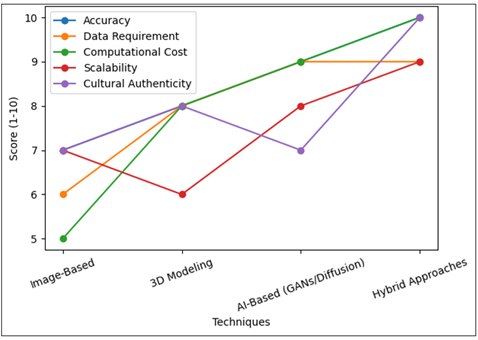
Figure 3 Graphical Analysis of Digital Reconstruction Techniques
Figure 3 is a graph that gives a comparative assessment of the major digital reconstruction methods in the five criteria of accuracy, data requirement, computational cost, scalability, and cultural authenticity. Image methods are effective, with medium data needs yet cannot do complex reconstructions. 3D modeling can be much better in geometric accuracy, but its computational cost is increased. Combining several techniques, hybrid approaches outperform all other methods by scoring the highest in terms of accuracy and validity to the culture. The graph is a graphical representation illustrating that hybrid techniques are always the most effective in terms of overall performance, which is why it is the most trustworthy way of reconstructing digital heritage.
7. Results and Discussion
The use of digital reconstruction methods in the chosen case studies proves the great improvement of visual art traditions preservation and revival. The findings suggest that computational tools especially when used with historical and artistic information can be effective in the reconstruction of lost or destroyed fragments with high level of visual consistency. Picture methods were also effective in the reconstruction of partially destroyed or damaged artworks, particularly where there was enough reference information. Such techniques were used to effectively preserve continuity of texture and consistency of color though their effectiveness decreased when large portions of the object were affected or when contextual information was lost Chavan (2025).
Table 2
|
Table 2 Performance Evaluation of Reconstruction Methods |
||||||
|
Method |
Reconstruction Accuracy |
Visual Quality |
Processing Time |
Data Dependency |
Robustness to Damage |
Overall Performance |
|
Image-Based Techniques |
Medium |
High |
Low |
Medium |
Low |
Moderate |
|
3D Modeling &
Photogrammetry |
High |
High |
High |
High |
Medium |
High |
|
AI-Based (GANs/Diffusion) |
Very High |
Very High |
High |
Very High |
High |
Very High |
|
Texture Synthesis/Style Transfer |
Medium |
High |
Medium |
Medium |
Medium |
Moderate |
|
Hybrid Approaches |
Excellent |
Excellent |
Very High |
High |
Very High |
Outstanding |
The Table 2 takes into account a variety of reconstruction techniques based on the critical performance parameters. The image based processes are quick and visually cohesive, however they are grossly destroyed, which is replaced by 3D modeling processes that are accurate with regard to the high quality of the structure, yet they consume a considerable quantity of computing resources as well as high quality information. The accuracy, and realism at which AI-based methods, including GANs and diffusion models, can be viewed, particularly in the context of reconstructions of intricate or missing components, is exceptionally high, and they need a lot of data to achieve it. In style transfer and texture synthesis reconstruction does not provide contextual information whereas surface detail restoration may be applicable. On the other hand, the combination of various methods to boost high accuracy, high robustness and visual fidelity gives hybrid methods the best performance during the overall process. However, they have added cost in terms of computation and implementation.
The 3D reconstruction technique provided effective outcomes on the restoration of the likely spatially complex artifacts and architecture features. A good geometrical reconstitution and realistic image could be made due to the photogrammetry and 3D models. These were also very effective techniques in portraying the structural integrity and the material properties. They, however, required to be fed with high quality input data and the ability to withstand computation hence may not be applicable in the resource-constrained environment. The artificial intelligence algorithms, including GANs and diffusion models, had been found to be more effective in reproducing the more detailed elements of visuality and style. These models had the potential to give very realistic findings despite unavailability of input data. Their capacity to cope with complicated reconstruction projects is therefore brought out in the findings particularly where the works of art have lost or extremely damaged their parts.
Nevertheless, the following problems were also selected in the study such as model interpretability and the presence of a possibility of introducing stylistic inaccuracies or biases due to the need to focus more on validation. Hybrid methods were also known to produce the most effective results and accurate results in all the case studies because of the combination of multiple methods. These techniques were image-based technique, 3D modeling technique and AI-based technique, but they leveraged the strengths of one technique and minimized the shortcomings of the other technique, through the combination and balancing of the other techniques Kerdreux et al. (2020). It was also the fact of including the expert input that further contributed to the authenticity of the reconstructed outputs in terms of culture and history. As a larger scale, the results suggest a positive impact on the preservation and access to culture. One thing that can be done through digital reconstruction is to maintain the weak or lost art in electronic formats and then to make it available to the researchers, educators and the masses. AR and VR belong to the more immersive technology, which makes users more engaged by means of making the experience more interactive and contextual. However, such limitations as reliance on the information, and inability to complete authenticity and intricacy of calculations, remain. These outcomes emphasize the necessity to cooperate in the sphere of interdisciplinary work and develop the techniques of reconstruction continuously.
8. Conclusion
In this research paper, it has been established how techniques of digital heritage reconstruction have been influential in the reconstruction of the lost or damaged visual art traditions and how how they can transform the nature of practices in cultural preservation. The review of different methodologies including image-based reconstruction, 3D model, artificial intelligence, and a hybrid of both illustrates the way with which innovative technologies can be utilized and helped to save visual and structural details of artworks and maintain cultural and historical integrity. As the observations suggest, it introduces the fact that there is no general method, which can be effective in every case of reconstruction. Instead, a combination of multiple methods with the help of the interdisciplinary collaboration offers the most important and correct results. Specifically, hybrid frameworks have been doing better, since they involve the best of varying approaches, in addition they curb their respective inefficiencies. The value of good data, expertise and ethics verification towards the guarantee of authenticity and reliability of the reconstructed outputs is also emphasized in the study. Other than the technical introduction, the research determines the general impact of digital reconstruction on cultural accessibility, heritage management and education. The possibility to computerize and offer artworks raises the level of interest among the population and provides them with new options of studying and investigations. At the same time, the problem of data limitations, computation intensity and ethics also allows pointing to the need to perform additional research and innovation in this field in the first place.
In conclusion, digital reconstruction is a very powerful and new approach in terms of cultural heritage preservation to offer the innovative solutions of visual art traditions in the digital era. It is possible that, with artificial intelligence, immersive technology and interdisciplinary methods, the accuracy, scalability and accessibility of reconstruction methods will also rise in the future. The creation of digital heritage would be important in preserving the artistic heritage of human in the coming generation because of the congruity between the technological development as well as the cultural sensitivity and ethical responsibilities.
CONFLICT OF INTERESTS
None.
ACKNOWLEDGMENTS
None.
REFERENCES
Abukarki, H. J. (2025). Beyond Preservation: A Survey of the Role of Virtual Reality in Experiencing and Understanding Historical Architectural Spaces. Buildings, 15, 1531. https://doi.org/10.3390/buildings15091531
Belal, A., and Shcherbina, E. (2019). Heritage in Post-War Period: Challenges and Solutions. IFAC-PapersOnLine, 52, 252–257. https://doi.org/10.1016/j.ifacol.2019.12.491
Chavan, D. P. (2025, December). FJSO-Based Optimized Multipath Routing in Mobile Ad-Hoc Networks. International Journal of Advanced Computer Engineering and Communication Technology (IJACECT), 14(2), 48–52. https://doi.org/10.65521/ijacect.v14i2.1277
Chen, Y., Chen, R., Lei, J., Zhang, Y., and Jia, K. (2022). TANGO: Text-Driven Photorealistic and Robust 3D Stylization Via Lighting Decomposition. Advances in Neural Information Processing Systems, 35, 30923–30936. https://doi.org/10.52202/068431-2242
Haux, D. H., Dominicé, A. M., and Raspotnig, J. A. (2021). A Cultural Memory of the Digital Age? International Journal for the Semiotics of Law, 34, 769–782. https://doi.org/10.1007/s11196-020-09778-7
Hutson, J., Weber, J., and Russo,
A. (2022). Best Practices in Digital Twins for
Cultural Heritage Preservation. Journal of Cultural
Heritage Management and Sustainable Development, 12, 47–62.
Kerdreux, T., Thiry, L., and Kerdreux, E. (2020, September). Interactive Neural Style Transfer with Artists. In Proceedings of the 11th International Conference on Computational Creativity (ICCC) (123–130). Lisbon, Portugal.
Matey, M. S., Sakhale, C. N., Mehta, G. D., and Shelare, S. D. (2025, May). Enhancing Heat Transfer with Electro-Hydro-Dynamic Techniques: Challenges, Limitations, and Future Directions. International Journal of Theoretical and Applied Research in Mechanical Engineering (IJTARME), 14(1), 51–66. https://doi.org/10.65521/ijtarme.v14i1.521
Mediastika, C. E., Sudarsono, A. S., Utami, S. S., Setiawan, T., Mansell, J. G., Santosa, R. B., Wiratama, A., Yanti, R. J., and Cliffe, L. (2024). The Sound Heritage of Kotagede: The Evolving Soundscape of a Living Museum. Built Heritage, 8, 38. https://doi.org/10.1186/s43238-024-00145-0
Naser, S. R. (2024). Revealing the Collective Memory in the Digital Reconstruction of the Lost Cultural Heritage—Example of Al-Nuri Mosque in Mosul. Blue Shield Türkiye.
Nazarenko, V., and Martyn, A. (2024). Geospatial Technologies in Post-War Reconstruction: Challenges and Innovations in Ukraine. Zemleustrìj Kadastr ì Monìtorìng Zemel’, 2024, 7. https://doi.org/10.31548/zemleustriy2024.03.07
Pereira, E., Raulin, A., Menezes, R., Pereira, E., de Souza Pinto, D., Pinheiro, T. M., Loir-Mongazon, E., Girard, G., Goacolou, E., and Fonseca, V. L. (2023). Mourning, Reconstruction, and the Future After Heritage Catastrophes: A Comparative Social Science Perspective Agenda. Journal of Cultural Heritage, 65, 199–205. https://doi.org/10.1016/j.culher.2023.09.010
Pietroni, E., and Ferdani, D. (2021). Virtual Restoration and Virtual Reconstruction in Cultural Heritage: Terminology, Methodologies, Visual Representation Techniques and Cognitive Models. Information, 12, 167. https://doi.org/10.3390/info12040167
Salman, R. (2023). Emotional Aspects of Cultural Heritage Destruction During War Conflicts (Master’s Thesis). Charles University, Prague, Czech Republic.
Thakre, P., Jangid, R., Batho, R., Bhadke, D., Meshram, T., and Tonpe, K. (2025, May). A Review Fabrication of Self-Inflating Tires and Pressure Monitoring Systems. International Journal of Theoretical and Applied Research in Mechanical Engineering (IJTARME), 14(1), 1–4. https://doi.org/10.65521/ijtarme.v14i1.512
|
|
 This work is licensed under a: Creative Commons Attribution 4.0 International License
© ShodhKosh 2026. All Rights Reserved.