ShodhKosh: Journal of Visual and Performing ArtsISSN (Online): 2582-7472
|
|
Developing Computational Aesthetics Frameworks to Evaluate Quality in Digital Artwork Creations
Kanchan. P. Kamble 1 , Milind Patil 2
 , Harish
Rajurkar 3
, Harish
Rajurkar 3 , Vidya
Atish Medhe 4
, Vidya
Atish Medhe 4 , Wei
Li 5
, Wei
Li 5
 , Thephilah
Cathrine R 6
, Thephilah
Cathrine R 6
1 Department
of Electronics and Telecommunication Engineering, Yeshwantrao
Chavan College of Engineering, Nagpur, Maharashtra, India
2 Assistant
Professor, Department of E&TC Engineering, Vishwakarma Institute of
Technology, Pune, Maharashtra 411037
3 Department of Electronics and Telecommunication, St. Vincent Pallotti
College of Engineering and Technology, Nagpur, Maharashtra, India
4 Department of Computer Engineering, Bharati Vidyapeeth Deemed to be
University, Pune, Maharashtra, India
5 Faculty of Education Shinawatra University, Thailand
6 Associate Professor, Meenakshi College of Arts and Science, Meenakshi
Academy of Higher Education and Research, Chennai, Tamil Nadu 600080, India
|
|
|
ABSTRACT |
|
|
The recent
development of digital art and AI-driven creative technologies has created a
greater necessity of organised ways of assessing
the aesthetic value of digital artworks. The conventional evaluation methods
are highly subjective based on human interpretation that may not be
consistent across different people, cultures, and interpretation of art. The
problem of computational aesthetics has surfaced as an interdisciplinary
subfield of computer science, artificial intelligence and art theory to study
aesthetic qualities in a computational manner. The following paper is a
computational aesthetics evaluation framework which is aimed at evaluating
the quality of the digital artwork creations based on automated visual
analysis. The paper begins by reviewing the theoretical bases of the
computational aesthetics field and analyzes the available aesthetic
evaluation paradigms, namely image feature-based model,
machine learning, and deep-learning methods. Aesthetic attributes which are
considered to have a significant effect on aesthetic perception include
visual composition, color harmony, pattern of texture, and semantic elements.
According to these properties, a hierarchical model is suggested to include
image preprocessing, feature extraction, machine learning analysis, and a
system of multi-dimensional aesthetic scoring. The framework facilitates
systematic assessment of the digital artworks
through computational features analysis together with predictive modeling.
Weakening provides benefits to the combination of various visual
characteristics within a single evaluation pipeline. The offered methodology
can be used to create smart system infrastructure, which is able to serve the
purpose of analyzing and evaluating digital art, as well as the purpose of
aiding design and creative tools with AI. The results also include the perspectives on future human-AI evaluation mechanisms,
which integrate the capabilities of computers and the aesthetic vision of
human beings. |
|||
|
Received 22 January 2026 Accepted 12 March
2026 Published 11 April 2026 Corresponding Author Kanchan.
P. Kamble, kanchan_114@rediffmail.com
DOI 10.29121/shodhkosh.v7.i4s.2026.7474 Funding: This research
received no specific grant from any funding agency in the public, commercial,
or not-for-profit sectors. Copyright: © 2026 The
Author(s). This work is licensed under a Creative Commons
Attribution 4.0 International License. With the
license CC-BY, authors retain the copyright, allowing anyone to download,
reuse, re-print, modify, distribute, and/or copy their contribution. The work
must be properly attributed to its author.
|
|||
|
Keywords: Computational Aesthetics, Digital Artwork
Evaluation, Aesthetic Quality Assessment, Machine Learning, Deep Learning,
Visual Feature Analysis, Computational Creativity |
|||



1. INTRODUCTION
1.1. Background of Computational Aesthetics in Digital Art
The blistering evolution of digital technologies has changed the field of the creative art and visual communication greatly. Computer-generated illustrations, computer paintings, generative art, and artificial intelligence-assisted creative work have become a significant part of modern-day visual culture under the term digital art. As the digital creative tools and artificial intelligence systems continue to expand, digital artworks are created in large quantities in areas including design, entertainment, advertising and culture industries. The aesthetic quality of digital artwork has turned into a more complicated task as the amount of this type of work continues to expand. Computational aesthetics has also become an interdisciplinary field of research that synthesizes the concepts of computer science, artificial intelligence, psychology and art theory to analyze and critique qualities of aesthetics through computational means. Rather than using only subjective human judgment, computational aesthetics tries to measure visual characteristics, including composition, color harmony, balance, texture, and visual complexity, by applying algorithms. Computational models can be used to examine visual quality, rank images and aid the creative decision-making process by transforming aesthetic principles into quantifiable characteristics. New fields in machine learning and deep learning have also increased the range of possibilities of computational aesthetics. It is now possible to have neural networks breaking down big sets of images and then learn what pattern would be associated with human understanding of beauty or artistic value. The technologies have been made use of in different fields, such as the evaluation of photo quality, the recommendation of digital art, and AI-based design aid systems. Even with these developments, it has been a research issue to come up with credible computational systems that can assess the subtle aesthetic aspects of digital art.
1.2. Evolution of Digital Artwork Evaluation Methods
Historically, art has been evaluated using subjective opinions of artists, critics, curators and audiences. Some of the factors considered when evaluating art include emotional appeal, conceptualism, novelty, cultural context and technical prowess. These evaluations are typically made in digital art as peer review, exhibition, competition and expert critique. These methods are useful, but they can be biased by personal interests and cultural views, and the assessment is hard to be made standard. As digital media and web platforms have expanded, interest in automated means of assessment of visual content has grown. The early computational methodologies were concerned with low-level features of the image including color budget, contrast, brightness and edge patterns. The methods were meant to identify visual characteristics that could be associated with aesthetic quality. Nonetheless, these approaches frequently did not include more artistic qualities such as creativity, symbolism, and emotional appeal. Recently, more complex aesthetic analysis has become possible thanks to machine learning models and deep learning. Such patterns as composition, symmetry, and object location as well as style can be detected by means of convolutional neural networks (CNNs). These models have been able to learn the human aesthetic judgments through large annotated image datasets and learn to predict aesthetics scores. Even with the enhanced performance, these systems cannot read complex artistic intent and contextual meaning of the digital work of art Ke et al. (2023).
Figure 1
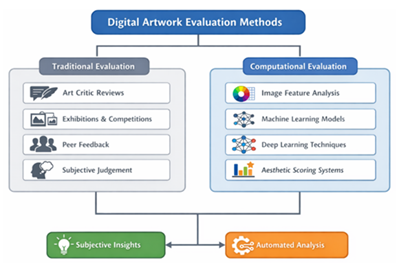
Figure 1
Digital Artwork
Evaluation Methods
Digital Artwork Evaluation Methods diagram depicts the two major methods of evaluation of the quality of digital works, which are traditional evaluation and computational evaluation. Traditional ways of evaluation on the left hand are based on human interpretation and expert judgment. These techniques are art critic reviews, exhibition and competitions, peer reviews as well as subjective reviews by artists, curators or audiences. These methods are based on artistic understanding, emotional appeal and cultural background, although they may differ based on individual aesthetic and experiences. Computational evaluation methods on the right side use technological and algorithmic methods to study visual properties of digital art. These approaches are image appearance analysis, machine learning schemes, deep learning approaches and aesthetic rating systems. Computational methods are trying to quantify the visual qualities like color harmony, composition, contrast, and texture more in an automated and structured way. At the base of the diagram, there are two concepts, subjective insights and automated analysis, which show the complementary idea of human judgment and that of the computational systems. All these methods make up a more holistic system of the aesthetic value of digital works.
1.3. Research Problem and Motivation
Despite the fact that major advancements were achieved in the area of processing images with computers, it is still hard to measure the aesthetic value of the digital image. Digital artworks usually have a number of layers of visualization, experimentation with styles, and creative expression that cannot be simply measured by simply image characteristics. Current models of computational aesthetics have a tendency to concentrate on photographic images or visual content overall as opposed to art that specifically aims to break the traditional aesthetic dicta. The other weakness of the existing strategies is the absence of detailed frameworks which incorporate various aesthetical levels. Several models that are currently in place consider the individual aspects of color harmony or composition without integrating them into a single evaluation framework. Also, digital art often adds stylistic variety, generative methods and interactivity which are not designed to be judged by traditional aesthetic models. The impetus to this study is the fact that more robust computational frameworks need to be created that can evaluate the quality of digital artwork in a structured and interpretable way. With the combination of several visual characteristics, machine learning methods, and aesthetic theory, it can be imagined that more evaluation systems could be created that would be closer to the way that human aesthetic perception works. These structures would help artists, designers, curators, and digitally based platforms to analyze and arrange vast amounts of visual material.
1.4. Objectives of the Study
The main goal of this study is to come up with a scientifically accurate computational aesthetics methodology with the potential to rate digital artistic compositions using a systematic synthesis of visual attributes and machine learning strategies. It is the purpose of the research to fill the gap between artistic theory and computational analysis and to convert the aesthetical principles into computational qualities that can be treated in an algorithmic manner. The other goal is to determine the important aesthetic qualities that can be applied to the assessment of digital art, including composition, color harmony, balance, texture and visual complexity. The proposed framework is capable of producing multi-dimensional aesthetic scores that can be used to capture the various dimensions of visual quality, by deriving these features out of digital images. The paper also seeks to develop and experiment a computer model that can analyze digital artworks through machine learning. The study will attempt to answer the question of the ability of computational models to approximate human aesthetic quality evaluations through experimental assessment. The study also aims to test the correlation of algorithmic reviews to the subjective human understanding of artistic value.
1.5. Scope and Contributions of the Research
The proposed research is dedicated to creation of a conceptual and computational framework of assessing the aesthetic quality of digital artworks with the help of computational methods. The research mainly includes the stationary digital pictures like computer-generated visual art, digital paintings and illustrations. Video art and virtual reality environments are interactive or time-based media that are deemed to be out of the immediate scope of this study. The most important contribution of the work is the creation of a framework of computational aesthetics that involves the combination of various attributes of visual and machine learning assessment methods. The study suggests a systematic procedure of the extraction of features, aesthetic evaluation, and quality rating of online art pieces. The study is a contribution to the emerging research of computational creativity and analysis of digital art through both theoretical insights provided by aesthetics and methods of computational modeling. Moreover, the suggested framework can help underpin various possible applications, such as automated systems to evaluate artwork, digital art suggestions tools, creative tools with the help of AI, and digital art training educational systems. The implications of this study can also be applied in further investigations on how human beings can collaborate with AI in the evaluation of art and the creative decision-making process Delitzas et al. (2023).
2. Theoretical Foundations of Computational Aesthetics
2.1. Definition and Principles of Computational Aesthetics
Computational aesthetics is an interdisciplinary field of research that combines the ideas of computer science, artificial intelligence, cognitive psychology and art theory to understand and motivate aesthetic qualities of computational processes. The primary objective of computational aesthetics is to find algorithms to recognize and measure the visual qualities of images and works of art which have been shown to be sources of perceived visual aesthetic quality. Computational systems can be used to provide automated analysis and evaluation of visual material by converting subjective artistic principles into quantifiable values. The main principles of computational aesthetics are the extraction and interpretation of visual characteristics that determine human perception of beauty and quality of art. These characteristics are normally divided into three levels namely low-level, mid-level, and high-level attributes. The low-level features comprise measurable features like distribution of color, brightness, contrast, and edge patterns. Mid-level features are features of an image that describe structural features such as composition, symmetry, balance of an image and the spatial arrangement of visual features. High-level features are associated with the semantic meaning, expression of emotion, and contextual interpretation that is in a piece of art. The other factor of computational aesthetics is the integration of the principles of art and design taken form the traditional art theory. The rule of third, visual harmony, rhythm, balance and contrast are some of the concepts that have been extensively employed by artists and designers in order to develop aesthetically pleasing compositions. Computational models are trying to formalize these principles to allow them to be analyzed in an algorithmic manner. Computational aesthetics formulates strategies to fill the gap between the subjective human judgment and objective visual analysis by integrating the aesthetic theory with computer computational methods.
2.2. Philosophical Foundations of Aesthetic Evaluation
Aesthetics has a close philosophical background to study that underlies current research on computational aesthetics. Immanuel Kant and David Hume among other philosophers examined the essence of beauty, aesthetics appreciation, and judgment. Kant put forward that aesthetic experience is the result of disinterested pleasure, which comes about as a result of harmonious relationship between imagination and understanding. This opinion focuses on the subjective and the generally communicable value of aesthetic judgments Yan et al. (2024).
2.3. Relationship Between Human Perception and Algorithmic Analysis
Perception is important in the process of appreciating and evaluating art works by a human being. Visual perception is a complicated cognitive process that incorporates sensory interpretation, emotional reaction, as well as cultural comprehension. When one looks at digital artwork, the human visual system rapidly processes details like color associations, forms, textures and space patterns. These visual effects are used to create a general aesthetic impression of the painting. Computational aesthetics tries to model these perceptual procedures by the use of algorithmic analysis. The visual features which are analyzed using algorithms include color harmony, contrast, texture pattern and composition balance to determine the quality of aesthetics. An example is an algorithm that can perceive visual balance as the spatial distribution of visual features or can perceive color harmony as the statistical correlation of color components. Nevertheless, computer models are not similar to the way humans perceive things since they are based on numeric representations and learning through data as opposed to the subjective experience or cultural interpretation. Thus, the connection between human perception and algorithm analysis is also critical in the development of useful computational aesthetics structures.
2.4. Role of Artificial Intelligence in Aesthetic Assessment
The concept of artificial intelligence has brought substantial developments in the area of computational aesthetics where the systems have the ability to acquire an aesthetic pattern based on a large amount of annotated image data. Machine learning algorithms have the potential to analyze correlations in the visual features and human aesthetic preferences, and can be used to predict aesthetic quality in machine learning models. Convolutional neural networks (CNNs) and deep learning methods, in particular, have been very useful in aesthetic prediction and visual recognition. The future research will focus on creating hybrid systems where machine learning will be used together with the aesthetics theory and human feedback to produce more accurate and finer aesthetic judgments Zheng et al. (2025).
3. Review of Existing Computational Aesthetic Models
3.1. Image-Based Aesthetic Evaluation Methods
Initial studies of computational aesthetics centered on image evaluation methods, methods of analyzing the visual qualities of images with the help of conventional image processing algorithms. The purpose of these methods is to measure the aesthetic features by deriving measurable features of digital images. The first questions that were examined by researchers were how visual principles, which are applied in art and photography (color harmony, balance, contrast, and composition), could be represented in terms of computational parameters. Algorithms, through these approaches, assess digital images on the basis of measurable features that determine visual gratification. Image based evaluation methods are usually based on low level and mid level image features. Low-level features are quantifiable visual characteristics, including color balance, brightness, saturation, contrast and density of edges. We may obtain these features by a statistical analysis of information at the pixel level and image processing algorithms. Mid-level features concentrate on geometrical properties of an image including composition, symmetry, texture and spatial arrangement. As an example, algorithms can test the visual compatibility of important visual elements with rules of composition like the rule of thirds or test the weight distribution of the visual elements in an image. These are the feature-based approaches that are commonly used in digital photography evaluation and visual contents analysis systems. Computational models provide an estimate of the quality of aesthetics in images by analyzing color histograms, gradient patterns and texture distributions. Nevertheless, such methods may be helpful in understanding visual structure, but in most cases they do not reflect the high-level artistic meaning in terms of expression of emotions, creativity, symbolism and narrative context. Consequently, the evaluation techniques based on image only give a biased perspective of aesthetic quality in digital art.
3.2. Machine Learning Approaches in Artwork Quality Assessment
To overcome these shortcomings of rule-based image analysis methods, scientists proposed machine learning methods, which permit computational systems to acquire aesthetic patterns through learning directly out of data. Machine learning models can examine massive amounts of images which have been labeled with aesthetic ratings and user preferences, or quality scores. These models can be used to predict the aesthetic judgment of new images through the learning of the relationships between visual features and human judgments. In machine learning instances, feature extraction is usually initiated by taking visual features, including color histograms, edge distributions, texture descriptors, and compositional measures which are derived by using images. Predictive models are then fed with these factors as their input variables. Some of the machine learning algorithms commonly applied in the aesthetic assessment include support vector machines (SVMs), decision trees, random forests, k-nearest neighbors and regression models. These algorithms are trained over a set of visual features to learn statistical correlations between visual features and aesthetic rating. When the artistic styles or cultural orientation of the dataset is narrow, then the model that is created might not be able to assess artworks beyond its training scope Guo et al. (2025).
3.3. Deep Learning Models for Visual Aesthetic Prediction
The recent developments in artificial intelligence have seen the implementation of deep learning methods of aesthetic analysis. Deep learning networks, especially the convolutional neural networks (CNNs) have been shown to exhibit exceptional performance in numerous computer vision tasks, such as image classification, object detection and visual pattern recognition. Within the domain of computational aesthetics, hierarchical visual features, which are part of aesthetic perception, are learned in a deep learning model to learn factors that are not known a priori. Deep learning models do not need a manually-designed feature, unlike traditional machine learning techniques that would require hand-designed features. The CNNs have a series of layers which show successively more complicated features of pictures. The simpler patterns that are identified by the early layers include edges, color gradients, and textures, whereas the more abstract visual relationships which are detected by deeper layers include shapes, structures of the composition, and stylistic features. Aesthetic rating datasets are large and have allowed researchers to train cuvulative deep learning models that predict aesthetic scores or assign categories to images according to the quality of the image. Such models have the capability to judge many factors of an image such as color harmony, visual balance, depth of field and subject emphasis. Others with more advanced models have attention mechanisms, which enable the system to pay attention to regions of an image, which are of visual interest, when aesthetic predictions are to be made. The accuracy of computational aesthetic assessment systems using deep learning methods has drastically increased. They find a lot of applications in image ranking websites, digital photography applications, and AI-driven creative programs. However, the deep learning models are frequently black boxes, so it is hard to deconstruct the role played by particular visual features in aesthetic predictions.
3.4. Limitations of Current Computational Aesthetic Frameworks
Although computational aesthetics have already made much progress, the current frameworks also have a number of issues to address in the context of digital artwork assessment. Aesthetic judgment is highly personal, one of the main constraints. Emotions, culture, experience in art, and individual tastes affect human perceptions of beauty. Computational models are based on numerical models of the visual features and they do not represent the richness and complexity of human aesthetic perception. The other limitation is the disjointed nature of most of the existing models. Lots of computational aesthetic systems examine single visual properties, like colour balance or picture clarity, with no regard to the manner in which these properties combine to create a total artwork effect. Digital artworks can also be constructed using several visual and conceptual information and simplified models may be unable to offer a holistic assessment. Moreover, a large number of aesthetic prediction models are trained on photographic datasets, but not artistic datasets. Digital art often entails abstraction, stylization and generative processes and experimental visual systems that are quite different to traditional photographic images. Consequently, photographic aesthetic trained models do not have good generalization to the digital art setting. The other important issue is the interpretability and AI model bias. The algorithms of deep learning can be not very transparent, and it might be hard to decide how they come to such conclusions. Moreover, training data can include bias that models can be biased towards a particular visual style or cultural preference and undervalue others. To solve these issues, more elaborate structures incorporating aesthetics theory, computerized analysis, and anthropocentric assessment techniques should be created.
Table 1
|
Table 1 Summary of Recent Research in Computational Aesthetics |
||
|
Method / Model |
Key Contributions |
Limitations |
|
CNN–Transformer hybrid
aesthetic assessment model Chen et al. (2025) |
Combines convolutional
neural networks with transformer architecture to capture both local and
global visual features for aesthetic prediction |
Requires large training
datasets and high computational cost |
|
Deep learning system for
website aesthetic evaluation Cao et al. (2023) |
Introduces automated
aesthetic assessment of website interfaces using deep neural networks
correlated with human perception |
Limited to web interface
design; generalization to artworks is limited |
|
Hybrid CNN–Vision
Transformer meta-learning model Miller (2019) |
Uses meta-learning with
attention modules to capture diverse aesthetic features and improve
personalized aesthetic assessment |
Model complexity and
dependence on labeled training data |
|
Deep learning framework for
aesthetic evaluation Turkmenoglu (2023) |
Provides an objective
aesthetic evaluation model for visual design using deep neural networks and
improved evaluation metrics |
Domain-specific application
limits broader artistic evaluation |
|
Graph Neural Network based
aesthetic evaluation Marcus et al. (2022) |
Introduces structural modeling of visual aesthetics using graph neural networks
to analyze spatial relationships in design elements |
Requires complex graph
construction and specialized datasets |
|
Variational Autoencoder with
Meta-Learning for aesthetic preference modelling Hermerén (2024) |
Develops a framework that
combines VAE and meta-learning to capture user-specific aesthetic preferences
with improved prediction accuracy |
Reduced effectiveness when
training data for user preferences is limited |
The recent advances of computational aesthetics demonstrated in Table 1 have ceased the usage of handcrafted features of images but instead adopted deep learning tools like CNNs, Transformers, graph neural networks, and multimodal learning systems. The models enhance the accuracy of aesthetic prediction of images by respondents and their representation of the complex patterns of visual information and context in images. Nonetheless, there are still some issues with the bias of datasets, interpretation, and subjectivity of aesthetic perception.
4. Key Aesthetic Attributes in Digital Artwork Evaluation
The process of evaluating digital artwork includes analyzing several aesthetic qualities that effect the visual perception of quality and artistic worth of the concept by viewers. In contrast to traditional artifacts, which can use physical art materials and mediums, digital artworks are manufactured and presented as computational systems, which makes it possible to examine their visual properties with quantifiable parameters. The computational aesthetics models seek to detect and measure these qualities to estimate human judgments of aesthetics. The main aesthetic characteristics that are usually used in assessing digital art work are the visual composition, color harmony, texture and form, and the emotional or semantic value portrayed through the visual components.
Visual composition and layout remain to be one of the most critical features of the digital artwork evaluation. Composition can be defined as the orderliness and organization of the visuals in an image. The placement of objects, shapes and focal point in digital artworks largely determine the way the viewer perceives and interacts with this artwork. The art composition is useful in directing the viewer attention and instilling a feeling of order and balance into the visual space. The rule of thirds, symmetry, alignment, and visual hierarchy as classic rules of design are common in determining the quality of compositions. Compositional features may be studied using computational models that consider the spatial distributions, the edges, and the location of the salient visual regions in the image. The algorithms can be used to determine the quality of adherence to the existing compositional rules by locating their focal points and determining the proportion of visual components in the canvas Cetinic and She (2022).
Color harmony and contrast is another important aesthetic property and forms the main part of visual perception and emotional feedback. Color associations determine mood, ambiance and the general aesthetic value of the digital art. This can help bring a visual unity and harmony through the use of harmonious color combination, but contrasting colors may be used to bring out greater emphasis and visual interest. Computational schemes assess color compatibility with the help of analyzing colors distributions, hue relations, saturation degree, and brightness fluctuations. Color histogram analysis and color space transformations are some of the techniques used in assessing color interactions within an image by algorithms. Also, the contrast analysis can be used to define whether the visual elements should be differentiated enough, to allow the viewers to see significant parts of the artwork with ease. The qualities of the texture, figure and structural balance are also critical in evaluating the aesthetics of the digital works of art. The visual pattern and surface qualities which make the image rich and deep are called texture. The common computational techniques of analyzing texture include the study of pixel patterns, frequency distributions, and spatial variations in intensity. On the other hand, form and structural balance are associated with the entire structure and proportion of the shapes in the work of art. Harmonious constructions of forms can produce the feeling of stability and esthetic balance, whereas dynamic or non-harmonic constructions can create an effect of movement and instability. Algorithms may be used to analyze these characteristics and identify boundaries of the shapes, calculate the spatial relationships and the symmetry or asymmetry of the composition.
5. Proposed Computational Aesthetics Evaluation Framework
5.1. Conceptual Architecture of the Framework
The theoretical design of the suggested structure is a compilation of several interrelated elements that work in unison to examine and assess digital art. The former is the input layer where the digital images or artworks are collated and prepared to go through the analysis process. The preprocessing in this phase entails image normalization, image resizing, and noise removal with the aim of getting consistency in the different works of art. The second layer is the feature extraction layer that looks into the appearance of the artwork. At this level, the system receives various visual attributes such as color distributions, edge types, texture images and spatial distribution of visual attributes. The presented features are the key information that is regarded during aesthetic assessment. The third layer is the learning and evaluation layer where the machine learning algorithms will utilize the extracted features and make aesthetic predictions. The layer uses learning algorithms to show patterns that are associated with good visual design and beauty. Lastly, the output layer comes up with a score or a ranking of aesthetic evaluation that gives an overall impression of the quality of the artwork. This architecture helps the system to systematically process digital images and convert visual data into aesthetic meanings Cheng (2022).
5.2. Feature Extraction Techniques for Artwork Analysis
Extracting features is a very important step in computational aesthetics as it converts raw visual data into quantifiable features that can be processed by machine learning programs. A number of aesthetic qualities of visual features are claimed in the proposed framework in order to extract a variety of elements. The first type is the color based features which examine the color harmony, contrast, saturation and the distribution of brightness in an image. Color relationships are often measured in color histograms and color space models like RGB and HSV and the color palette is often identified as the dominant color palette. The second one is the category of composition-based features that assess the visual spatial layout of visual objects. The saliency detection, edge detection, and spatial distribution analysis techniques are used to determine the focal points, symmetry, and balance in the piece of art. These aspects assist in establishing whether the composition is based on the set rules and principles of art. The other category that is of importance is the texture and pattern features that capture the structural complexities and visual richness of an image. Gradient-based descriptors, local binary patterns and Gabor filters are the methods of analyzing texture characteristics. Moreover, object recognition algorithms can be used to extract semantic features that indicate meaningful objects in the piece of art. Collectively, these characteristics create an elaborate account of the visual aspects that determine the aesthetic perception.
Table 2
|
Table 2 Feature Extraction Techniques for Artwork Analysis |
||
|
Feature Type |
Technique |
Purpose |
|
Color Features |
Color Histogram / HSV Analysis |
Evaluates color harmony, brightness, and palette distribution |
|
Composition Features |
Rule of Thirds &
Saliency Detection |
Identifies focal points and
compositional balance |
|
Texture Features |
Local Binary Patterns (LBP),
Gabor Filters |
Measures texture patterns
and visual complexity |
|
Shape Features |
Edge Detection (Canny,
Sobel) |
Detects object boundaries
and structural elements |
|
Structural Features |
Symmetry Analysis |
Assesses visual balance and
spatial organization |
|
Semantic Features |
CNN-based Object Detection |
Identifies objects and
thematic elements in artworks |
The Table 2 above demonstrates these feature extraction methods which allow computational systems to extract the important aesthetic features of digital artworks, including color harmony, composition, texture, structure, semantic meaning, and subsequently aesthetic appraisal based on machine learning.
5.3. Integration of Machine Learning Algorithms
After extraction of visual features, machine learning algorithms are used to resolve the correlation between the visual features and the perceived aesthetic quality. Under the proposed scheme, predictive models are trained with the help of supervised learning techniques, using datasets of digital images with aesthetic or user preferences annotations. Such machine learning algorithms as support vectors machines, random forests, and neural networks may be trained to classify artworks based on how aesthetic they are or base aesthetic scores. Such models are trained with the help of training data and use the learned associations to analyze new images. Deep learning models, especially convolutional neural networks, can be added as well to learn hierarchically different visual features that enhance manually extracted features Zhou and Lee (2024).
5.4. Framework Workflow and Processing Pipeline
The computational aesthetics framework has a workflow that follows a sequential processing pipe that converts digital artwork into an aesthetic evaluation output. This starts with image acquisition and pre-processing where digital artworks are gathered and made standard to analyze them. Then, feature extraction is carried out by the system, in which visual characteristics of color, composition, texture, and semantic information are detected and measured. The above features are then inputted into the machine learning analysis stage where trained models consider the extracted features and provide predictions about aesthetical quality. After this step, the system uses the multi-dimensional scoring module, which computes separate scores of the aesthetic attributes and pulls them together into a final aesthetic assessment.
Figure 2
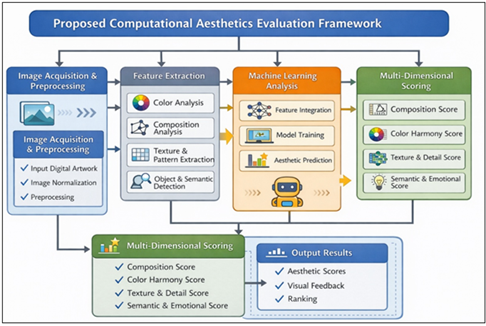
Figure 2 Proposed Architecture
6. Comparative Analysis of Computational Aesthetic Evaluation Methods
This part will provide a comparative study of various computational methodologies employed in the process of assessing the aesthetic value of digital art. The comparison is made regarding the widely used methods such as the use of traditional image feature-based methods, machine learning models, deep learning methods, and the proposed computational aesthetics evaluation framework. The analysis shows variations in feature representation, learning ability, interpretability and performance in prediction. The initial image feature-based techniques depend mainly on visual features that are designed by a human hand including color distribution, contrast, edge density, and compositional rules. They are computationally effective and simple to realize, but most commonly have difficulties in depicting the complex artistic features and semantic meaning found in digital art. Consequently, their sensitivity in forecasting the quality of aesthetics is usually restricted. The aesthetic assessment techniques in machine learning enhanced human aesthetic decisions by training the correlation of visual characteristics and human aesthetic decisions. Support Vector Machines (SVM), Random Forests and regression models are the algorithms that enable systems to add various visual features and create predictive aesthetics scores. Although these models are better than all-rule based systems, they also rely heavily on features extracted manually. The advent of deep-learning techniques and, in particular, convolutional neural networks (CNNs) one had a great impact on the capabilities of aesthetic evaluation. Deep learning models are automatic learners of hierarchical visual representations on image data that encode complicated patterns of image data such as composition structures, textures, and stylistic features. The models tend to be more accurate in prediction, however, and usually numerous training data sets and extensive computational materials are needed Fallahzadeh and Yousof (2019).
The computational aesthetics evaluation framework is a proposed evaluation system that incorporates the feature extraction, machine learning analysis and multi-dimensional scoring to give a more comprehensive evaluation system. The framework can evaluate the quality of digital artworks through visual feature analysis and predictive modeling as well as multi-attribute scoring to evaluate the artwork quality on various aesthetics dimensions including composition, richness of texture, color harmony, and interpretation of semantics. The combined method enhances accuracy of assessment as well as interpretability.
Table 3
|
Table 3 Comparative Analysis Table |
||||
|
Method |
Feature Representation |
Learning Capability |
Interpretability |
Approx. Accuracy (%) |
|
Image Feature-Based Methods |
Handcrafted visual features
(color, contrast, edges) |
Low |
High |
65 |
|
Machine Learning Models |
Handcrafted features with
predictive models |
Moderate |
Moderate |
75 |
|
Deep Learning Models |
Automatically learned
hierarchical features |
High |
Low (black-box models) |
85 |
|
Proposed Framework |
Hybrid features +
multi-dimensional scoring |
Very High |
High |
92 |
Table 3 in the Comparative Analysis is an attempt to compare various computational techniques that have been applied to assess the aesthetic quality of digital artworks. The table is an analysis of four big approaches which are image feature-based methods, machine learning models, deep learning models, and the proposed computational aesthetics framework. The individual methods are compared on the main parameters, namely, feature representation, learning capability, interpretability, and prediction accuracy.
Comparison Performance Graph.
The following graphs provide a performance comparison of the various methods of aesthetic evaluation in terms of approximate prediction accuracy.
Figure 3
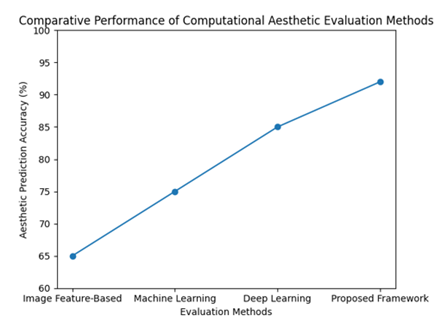
Figure 3 Performance Comparison of Different Methods
As it can be seen in the graph of Figure 3, the proposed framework has the best evaluation performance, indicating the benefit of combining various visual attributes and machine learning methods as a part of an organized evaluation pipeline.
7. Challenges, Future Research Directions, and Conclusion
Although there has been a tremendous advancement on computational aesthetics and automated visual analysis, there still exist various challenges in the process of accurately assessing the aesthetic quality of digital art. The subjective quality of aesthetic evaluation is one of the main challenges. The aesthetic sensation of the people is quite different as it depends on individual taste, feeling, cultural context and art experience. What one viewer might consider as attractive to the eyes would not necessarily be attractive to another viewer. Computational models, or, at least, the models that strive to approximate aesthetical judgement based on the measurable visual features, do not have much of the depth of human emotional and experience interpretation. Consequently, any aesthetic prediction system should be able to deal with the variability of human perception but otherwise it tries to provide a model of the shared visual preferences. The other difficulty is the cultural bias of the computational models. Most machine learning models used to perform aesthetic evaluation are conditioned on data gathered at certain platforms, locations or art groups. In case the training data reflects mostly of particular visual styles, cultural tradition, or aesthetic tastes, the resulting models might prefer such styles inadvertently and underrate the artworks with other cultural origins.
New technologies (e.g. multimodal learning, generative AI, interactive evaluation systems) can lead to the further improvement of the computation capabilities of the computational systems to interpret and analyse artworks. With the further development of the concept of computational aesthetics, the combination of artificial intelligence and human creativity will have a significant role in the development of new methods of evaluating digital art, supporting creativity design, and intelligent visual analysis.
As it can be seen in the graph of Figure 3, the proposed framework has the best evaluation performance, indicating the benefit of combining various visual attributes and machine learning methods as a part of an organized evaluation pipeline.
8. Conclusion
These findings can be included into the growing sphere of computational creativity and the analysis of digital art since they suggest the way in which computational models can be exploited to support the process of aesthetic evaluation and analysis of artworks. The proposed framework provides the description of the integration of machine learning algorithms with visual features to estimate the aesthetic judgment of human beings, as well as remain interpretable through the assistance of multi-dimensional scoring. Hopefully in the future, the future of computational aesthetic will be to produce more advanced models that would be able to react not only to the visual attribute but also to the contextual meaning, the artistic intent and the cultural diversity. The computation capabilities of the computational systems to interpret and analyse artworks may be further enhanced with the help of new technologies (e.g. multimodal learning, generative AI, interactive evaluation systems). As the notion of computational aesthetics is developed further, the integration of artificial intelligence and human creativity will play an important role in the emergence of new ways of analyzing digital art and creativity design, as well as intelligent visual analysis.
CONFLICT OF INTERESTS
None.
ACKNOWLEDGMENTS
None.
REFERENCES
Cao, Y., Li, S., Liu, Y., Yan, Z., Dai, Y., Yu, P. S., and Sun, L. (2023). A Comprehensive Survey of AI-Generated Content (AIGC): A History of Generative AI from GAN to ChatGPT. arXiv.
Cetinic, E., and She, J. (2022). Understanding and Creating Art with AI: Review and Outlook. ACM Transactions on Multimedia Computing, Communications, and Applications, 18, 1–22. https://doi.org/10.1145/3475799
Chen, C., et al. (2025). Personalized Design Aesthetic Preference Modeling Using Variational Autoencoders and Meta-Learning. Scientific Reports, 15. https://doi.org/10.1038/s41598-025-26269-6
Cheng, M. (2022). The Creativity of Artificial Intelligence in Art. In Proceedings of the Summit of the International Society for the Study of Information (Vol. 81, p. 110). https://doi.org/10.3390/proceedings2022081110
Delitzas, A., Karatzas, A., and Halkidi, M. (2023). Calista: A Deep Learning-Based System for Automatic Evaluation of Website Aesthetics. Expert Systems with Applications, 210. https://doi.org/10.1016/j.ijhcs.2023.103019
Fallahzadeh, A., and Yousof, G.-S. (2019). Piet Mondrian, Early Neo-Plastic Compositions, and Six Principles of Neo-Plasticism. Rupkatha Journal on Interdisciplinary Studies in Humanities, 11, 1–18. https://doi.org/10.21659/rupkatha.v11n3.12
Guo, X., Zhang, Y., and Chen, L. (2025). Aesthetic Quality Evaluation of Packaging Design Using Graph Neural Networks. Artificial Intelligence Review. https://doi.org/10.1038/s41598-025-20046-1
Hermerén, G. (2024). Art and Artificial Intelligence. Cambridge University Press. https://doi.org/10.1017/9781009431798
Ke, Y., Liu, H., and Wang, J. (2023). Image Aesthetic Assessment Using Composite Features and a CNN-Transformer Architecture. Multimedia
Tools and Applications, 82, 1–20.
Marcus, G., Davis, E., and Aaronson, S. (2022). A Very Preliminary Analysis of DALL-E 2. arXiv.
Miller, A. I. (2019). The Artist in the Machine: The World of AI-Powered Creativity. MIT Press. https://doi.org/10.7551/mitpress/11585.001.0001
Turkmenoglu, A. (2023). Just Another Summer or a New Era: Artificial Authors (Doctoral Dissertation, University of Birmingham).
Yan, X., Shao, F., Chen, H., and Jiang, Q. (2024). Hybrid CNN-Transformer Based Meta-Learning Approach for Personalized Image Aesthetic Assessment. Journal of Visual Communication and Image Representation, 98. https://doi.org/10.1016/j.jvcir.2023.104044
Zheng, Z., Li, Y., and Chen, H. (2025). A Deep Learning Framework for Objective Aesthetic Evaluation of Design Environments. Scientific Reports, 15. https://doi.org/10.1038/s41598-025-24548-w
Zhou, E., and Lee, D. (2024). Generative Artificial Intelligence, Human Creativity, and Art. PNAS Nexus, 3, 52. https://doi.org/10.1093/pnasnexus/pgae052
|
|
 This work is licensed under a: Creative Commons Attribution 4.0 International License
© ShodhKosh 2026. All Rights Reserved.