ShodhKosh: Journal of Visual and Performing ArtsISSN (Online): 2582-7472
|
|
Cultural Policy and Governance in the Age of Digital Creativity
Gajanan Bonsale 1 , Kiran Ingale 2
 , Bhuminathan
Swamikannu 3
, Bhuminathan
Swamikannu 3 , Manoj
Vasantrao Bramhe 4
, Manoj
Vasantrao Bramhe 4 , Dr.
Vijay Suresh Karwande 5
, Dr.
Vijay Suresh Karwande 5 ,Piyush K. Ingole 6
1 Bharati
Vidyapeeth (Deemed to be University) College of Engineering, Pune, Maharashtra,
411037, India
2 Assistant
Professor, Department of E and TC Engineering, Vishwakarma Institute of
Technology, Pune, Maharashtra, 411037, India
3 Professor of Prosthodontics, Sree Balaji Dental College and Hospital,
BIHER University, Pallikaranai, Chennai 600100, Tamil Nadu, India
4 Department of Computer Science and Engineering, St. Vincent Pallotti
College of Engineering and Technology, Nagpur, India
5 Assistant Professor, Department of Computer Engineering, Sandip
Institute of Technology and Research Centre, Nashik
6 Department of Computer
Technology, Yeshwantrao Chavan College of Engineering, Nagpur, Maharashtra,
India
|
|
|
ABSTRACT |
|
|
The blistering
growth of digital technologies has put a major shift in cultural production,
distribution, and governance all over the globe. With the advent of digital
art, web-based creative platforms, and the use of artistic works by
artificial intelligence and generative tools, the process of creating,
sharing, and consuming works of art has been re-established. On the one hand,
these inventions increase the accessibility, engagement and cultural exchange
around the globe, on the other hand, they create issues of governance and
policymaking that are complicated by the questions of intellectual property
rights, ownership, ethical regulation as well as cultural preservation. This
paper discusses the changing culture policy and governance in the digital age
of creative processes through the fusion of digital transformation in
cultural production and the contribution of the emerging technologies like
artificial intelligence on creative processes. The study also explores the
national and global policy frameworks to govern the digital cultural
ecosystems with a focus on the roles of governments, cultural organisations
and technology firms in the development of responsible digital cultural
regulation. The major problems of governance such as protection of copyright,
regulation of works created by AI, the balance of the cultural maintenance
and the technological development are discussed critically. Also, there are
select case studies of government-funded digital art projects, cultural
heritage digitization projects, and policy reactions to AI-enhanced creative
platforms that are being utilized to demonstrate how governance can be
applied practically. |
|||
|
Received 10 January 2026 Accepted 03 March
2026 Published 11 April 2026 Corresponding Author Gajanan
Bonsale, bonsalegp@bvucoep.edu.in DOI 10.29121/shodhkosh.v7.i4s.2026.7444 Funding: This research
received no specific grant from any funding agency in the public, commercial,
or not-for-profit sectors. Copyright: © 2026 The
Author(s). This work is licensed under a Creative Commons
Attribution 4.0 International License. With the
license CC-BY, authors retain the copyright, allowing anyone to download,
reuse, re-print, modify, distribute, and/or copy their contribution. The work
must be properly attributed to its author.
|
|||
|
Keywords: Digital Creativity, Cultural Policy, Digital
Governance, Artificial Intelligence in Art, Cultural Heritage Digitization,
Creative Economy |
|||



1. INTRODUCTION
The accelerated development of digital technologies has completely changed the cultural and creative industry in the world. The traditional cultural practices used to be restricted to physical spaces in museums, galleries, theatres and publishing houses are slowly shifting to online space. This transformation has created a new digital ecosystem of creativity that artists, designers, performers and cultural producers use digital media, virtual spaces, and artificial intelligence systems to produce new versions of cultural expression Chai et al. (2023). This is causing the blurring of boundaries among creators, audiences, and distributors and giving preference to more participatory and collaborative cultural production. Digital creativity is an extensive area of practice, comprising of digital art, multimedia installations, online performances, and AI assisted creative generation. With the access to digital technologies and the internet, the cultural field has become democratized because independent artists and makers can share their work globally without necessarily reliant on some established cultural venue Klein et al. (2021).
The virtual galleries, streaming platforms, social media platforms, and interactive virtual worlds have become important platforms of culture dissemination, allowing the creation of new relations between creators and the audience. Consequently, not just the practice of art, but also that of cultural economy is also being transformed by digital technologies and opening up new possibilities of cultural entrepreneurship, markets on digital technologies and a global cultural exchange Daubaraite-Radikiene and Startiene (2022). Digitalization of cultural production poses significant problems in governance and policies, despite all these opportunities. The development of art, preservation of cultural heritage and the further promotion of cultural diversity has always been given a lot of consideration to the cultural policy, but now it has to adapt to the digital ecosystems. The issues of the contemporary cultural regulation have been the questions of copyright security, the virtual property, the control of intellectual property, and the reasonable compensation of the digital creators. Moreover, the rapid development of artificial intelligence and the systems of the images creation also raise certain new questions regarding the authorship, originality, and the legal status of the images created by artificial intelligence Jordan et al. (2023). According to Figure 1, digital creativity is being impacted by policy frameworks, the stakeholders, technologies, and the governance issues. The cultural institutions and policymakers must therefore reconsider the existing regulatory frameworks to ensure that the innovation of digital creativity does not undermine ethical principles, cultural sincerity and the rights of artists.
Figure 1
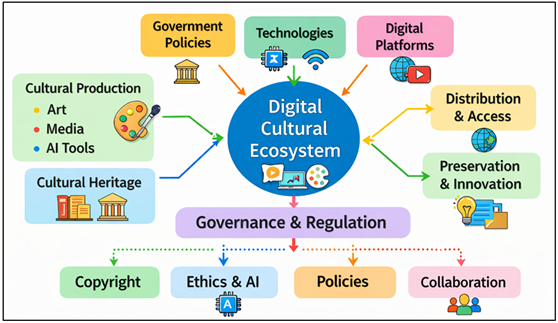
Figure 1 Cultural Policy and Governance in the Age of Digital
Creativity
The other aspect of digital cultural governance is conservation and access to the cultural heritage. Online technologies present powerful possibilities in recording, preservation, and dissemination of cultural artifacts and bring more historical collections and intangible cultural tradition to other people. However, digitalization of cultural heritage also has a number of ethical challenges with the cultural presentation, ownership of the information, and the sustainability of the digital archives in the long-term Bouquillion and Ithurbide (2023). Finding a balance between the development of technology and the responsible cultural management is a big concern to policy makers, both the institutions possessing these cultures and technology developers. In this case cultural policy and cultural management must be constructed to overcome complex interactions of digital innovation, creative industries and management of cultural heritage. International organizations, governments, cultural organisations and technology companies play an important role in designing regulatory systems that enable digital creativity and ensuring cultural diversity, inclusiveness and ethical governing Khlystova et al. (2022). There is therefore the need to know such dynamic forces so as to develop some effective policies that can enhance such cultural ecosystems in the rapidly changing digital world.
2. Related Work
The present convergence of culture, technology and governance has been attracting increased scholarly interests within the past few years. Researchers have written about how digital technologies are changing aspects of cultural production, cultural participation and policy formations of the new cultures. The primary purpose of the cultural policy, as per the initial studies on the subject, was to ensure a seamless operation of the artistic institutions, to promote the cultural traditions and cultivate the national cultural identity. However, with the advent of the digital media and online creative sites, academicians have begun to look into the shift in cultural governance that is required to address the challenges and opportunities that the digital creativity presented. The revolutionary influence of digital technologies on prolonging the involvement and display of culture are highlighted in some of the studies Yao et al. (2022). Online galleries, social media networks, streaming services, and other digital technologies have helped artists to reach the audience worldwide and communicate to the viewers directly. The digital change has enabled researchers to believe the culture production to be more democratic by opening the doors to small-scale creative companies and independent producers. The interactive technologies are also described in other works of the digital cultural ecosystem that underscores the role of interactive technologies in simplifying the collaborative and participatory cultural experience that is being seen outside of more traditional institutional frameworks Xi (2022). The other significant line of study is that which deals with what artificial intelligence and generative technologies are in the production of works of art.
Generative adversarial networks and diffusion models are two AI-based creativity systems that resulted in novel paradigms of artistic production that challenge the traditional idea of authorship and originality. Scholars have presented the question of the machine-generated art that raises problematic issues of intellectual property, copyright rights and ethical responsibility of the art practices. The necessity to think about alternative regulatory regimes that can assist in managing the specifics of AI-generated cultural content has been preceded by such an increasing discussion General Office of the Central Committee of the Communist Party of China, and General Office of the State Council. (2022). In addition to the technological shift, there is also a case study of how cultural policies can assist control and contribute to the development of the digital creative industries. According to research papers on the topic of digital cultural governance, the importance of national cultural policies, cross-border cultural collaboration and institutional collaboration in the creation of sustainable creative ecosystems is also indicated. The international organizations and the cultural agencies have also emphasized on the need to have policy frameworks that promote cultural diversity, protection of digital heritage as well as the equitable access to digital cultural resources. Other current researches are also undergoing into the digitization of cultural heritage and the creation of digital archives as the alternate way of preserving the relics of history and cultural heritage Xie and He (2024). Table 1 gives a summary of past studies, technologies, governance concerns, and trends in the studies.
Table 1
|
Table 1 Summary on Cultural Policy and Governance in the Age of Digital Creativity |
||||
|
Technology / Platform
Studied |
Key Findings |
Policy Implications |
Limitations |
Future Research Direction |
|
Online cultural platforms Cheng (2022) |
Digital platforms expand
cultural participation globally |
Need updated national
digital cultural strategies |
Limited regional policy
comparison |
Comparative global cultural
policy studies |
|
Digital galleries and media
platforms Liu and Liu (2022) |
Digital art increases
accessibility and global collaboration |
Governments should support
digital creative industries |
Focus on developed countries |
Study digital art in
emerging economies |
|
Digital archives and museum
platforms Fazlagić and
Szczepankiewicz (2020) |
Digitization improves
preservation and access |
Investment required for
digital heritage infrastructure |
Sustainability challenges |
Long-term digital
preservation models |
|
Generative AI tools Zhou et al. (2024) |
AI tools enhance creative
experimentation |
Policy frameworks needed for
AI-generated content |
Ethical and copyright
concerns |
Regulation models for AI art |
|
Social media and streaming
platforms |
Online platforms reshape
cultural dissemination |
Regulation needed for fair
creator compensation |
Platform algorithm bias |
Study transparency in
platform governance |
|
Global digital media
networks Zhang et al. (2024) |
Dominant platforms influence
cultural visibility |
Need policies promoting
cultural diversity online |
Limited minority
representation |
Algorithm fairness research |
|
Cultural policy and digital
law |
Integrated governance
improves cultural regulation |
Strong legal frameworks for
digital cultural management |
Rapid technology evolution |
Adaptive cultural policy
models |
|
Generative art platforms Eissa et al. (2021) |
AI systems produce
high-quality artistic outputs |
Regulation needed for AI
authorship and ownership |
Data bias and copyright
disputes |
Ethical AI creativity
frameworks |
|
Museums and cultural
archives Lv et al. (2021) |
Digital platforms improve
public cultural engagement |
Institutional digital
transformation strategies |
Resource constraints |
Scalable digital heritage
platforms |
|
International cultural
cooperation |
Global collaboration
strengthens cultural governance |
International policy
coordination required |
Policy implementation
differences |
Global digital cultural
governance models |
3. Digital Transformation of Cultural Production
3.1. Emergence of digital art, media, and creative platforms
Digital art, in contrast to the more traditional types of art, enables the creator to manipulate images, sound, motion and interactive elements dynamically and flexibly. Diverse creative forms have also been developed with the emergence of digital media such as digital illustration, multimedia installations, video art, interactive performances, and immersive storytelling experiences. Such inventions allow artists to explore new forms of hybrid techniques of art that merge visual, aural, and interactive elements. Therefore, there is an increment in interdisciplinary cooperation between artists, designers, programmers, and media specialists in cultural production. The development of digital art has been additionally facilitated by the creation of the creative platforms, which have offered available space through which artists can produce, design and distribute their creations. Cheng et al. (2022)
3.2. Role of Artificial Intelligence and Generative Tools in Creativity
The field of artificial intelligence (AI) has been a growing trend in the modern cultural production, introducing innovative ways to create artistic materials and facilitate creative work. Generative tools based on AI involve machine learning algorithms to process big data of images, music, text, and other cultural resources to generate original creative content. The generative adversarial networks (GANs), diffusion models, and neural style transfer systems allow machines to create works of art, music pieces, digital designs, and literary texts of impressive complexity and aesthetic value. Such generative tools are frequently deployed as collaborative tools that help artists to experiment with new forms of creativeness. Instead of substituting human creativity, AI systems can be used to complement artistic processes to automatize repetitive processes, create visual variations, or propose new design patterns. The algorithmic creativity of artists can be experimented by supplying the AI system with prompts, parameters, or training data to condition the system. The result of this interplay between human innovation and computers intelligence is a hybrid creative system in which there is a contribution of human intuition and machine learning to the end result of artistic work. Liu and Liu (2022)
3.3. Transformation of Cultural Distribution through Online Platforms
The cultural content has been largely affected by digital technologies in terms of distribution and consumption. Traditionally the circulation of cultures relied on actual spaces, such as museums, theaters, galleries, sovereign publishing houses. However, with the introduction of web-based applications and the digital network, there has been a platform that has been opened to serve the cultural products universally. Much of cultural distribution now consists of websites, streaming, social media, and digital marketplaces with creators being capable of publishing and advertising their work to their fans. This has never given artists and cultural organizations this chance to be visible and to collaborate with the audience as many as possible through the online platforms. Musicians sell their music with the help of streaming services, visual artists place their works on the Internet and galleries, and film-makers post the content on the video sharing platforms. Another aspect that has been brought about by the new social media networks is the ability to act as a powerful cultural promotional tool where artists could form communities, interact with their fans as well as having global fan bases. Fazlagić and Szczepankiewicz (2020) Besides increasing the scope of the audience, digital platforms have brought a new culture of cultural consumption. Through mobile devices, audiences may enjoy cultural material on demand, attend live performances or join virtual exhibitions or digital cultural events. These inventions have helped to expand the digital cultural economies whereby creative materials spread at a high rate across geographical borders.
4. Policy Frameworks for Digital Cultural Governance
4.1. National cultural policies in the digital environment
The national cultural policies are also important in informing the development, maintenance and control of the cultural activities in a country. With the advent of digital technologies, governments are entering into a new phase of cultural policy to accommodate the changes in the production, distribution and consumption of culture occurring due to these digital technologies. Cultural policies that were traditionally based on the idea of mainly funding the arts institutions, preserving cultural heritage and being concerned with the creative professions are currently being broadened to cover digital infrastructure, online cultural participation and online creative industries. Figure 2 indicates national policies in favour of digital culture, innovation, accessibility, governance. Zhou et al. (2024)
Figure 2
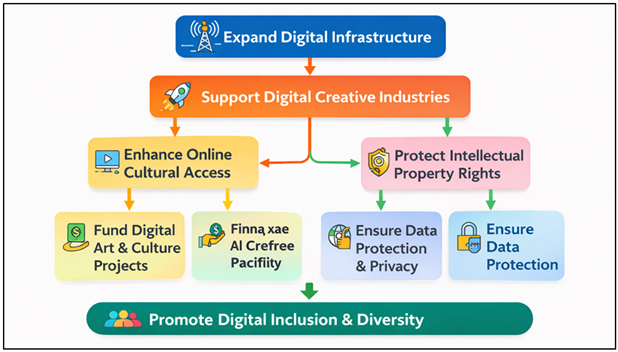
Figure 2 National Cultural Policies in the Digital
Environment
Governments are enacting policies that encourage digital creativity by investing in digital cultural platforms, virtual museums, online archives and online education programs. Such efforts are meant to make cultural assets more accessible so that citizens can be able to interact with art, literature, music, and heritage via the digital platform. The creative industries are also promoted using national policies, which favor digital artists, multimedia producers, and game developers, among other creative content creators of digital content. The other significant issue of national cultural policy is the safety of cultural identity and diversity over the internet. Governments commonly come up with systems of regulations which will provide equitable representation of local culture on the international digital platforms. Zhang et al. (2024)
4.2. International Cultural Policy Frameworks and Cooperation
Cultural governance is no longer bound by the boundaries of nations and thus has been found to be internationally collaborative in an ever-connected digital world. The process of cultural exchange across the globe has become more aggressive with the use of digital communication networks, online platforms and creative cooperation across the borders. Consequently, cultures and cultural policies across the borders have become crucial in the organization of cultural administration, safeguarding of cultural variety and the fair usage of digital cultural materials. The international organizations and cultural agencies have come up with guidelines and conventions that assist in enhancing collaboration among the nations in managing the digital cultural ecosystems. These frameworks promote the protection of cultural heritage, encourage creative industries, as well as safeguard intellectual property rights on the digital environment by member states. By collaborative work, exchange of knowledge and technological transfer as well as mutual research on digital cultural preservation and management are also enabled. Eissa et al. (2021)
4.3. Legal Frameworks for Digital Cultural Management
Legislation is a crucial component of the regulation of digital cultural ecosystems and the assurance that cultural creation in the framework of digital environment is carried out in the frames of clear legal and ethical regulations. As the circulation of cultural contents in the digital networks continues, governments and legal institutions are forced to change existing laws to accommodate the complexities that are presented by the online aspect of digital ownership, intellectual property rights and distribution. One of the biggest legal concerns of digital cultural management has been copyright security of digital creative works. The digital technologies suggest rapid reproduction and dissemination of the cultural material, and because of it, the unauthorized copying and piracy is easier. To help in the countering of these problems, there are laws that are undergoing modification so as to improve on a better practice of copyright protection and also guard the rights of the online creators. Other laws ought to react to emerging issues in the environment of artificial intelligence created content, beyond the copyright laws. Authorship, ownership and liability of the AI-generated artworks have to be considered by finding new meanings of the law and policy. The question policymakers have to answer is how the intellectual property law can be used in cases where the creative works are generated in part or fully based on algorithmic systems. The digital archiving and culture preservation also involves the use of legal regulations. Lv et al. (2021)
5. Governance Challenges in the Age of Digital Creativity
5.1. Copyright and ownership of digital creative works
The spread of online technologies has made matters pertaining to copyright and the right to creative works extremely complicated. In classical art cultures, ownership and authorship were relatively straightforward since the creation of artistic work and its dissemination were carried out by recognizable persons or organizations. The same however in the digital world where the digital cultural content can be copied, edited and re-distributed at will over numerous online platforms, with little or no approval of the original originator of the content. This poses difficulties in the protection of intellectual property rights of artists, designers, musicians, and other digital creators. Online sources allow spreading creative works in the world in a few minutes, yet they also contribute to the increase of unauthorized reproduction, piracy, and plagiarism. Artists usually encounter some problems with monitoring their online usage of the digital content after it has been uploaded. In addition to this, the rise of remix culture, where creative works are already in existence and the works are reused and altered to form new types of expression, also makes issues of ownership and originality more complex. The other problem is due to the presence of various parties that contribute to digital cultural production such as platform owners, computer software developers, and community creators. Defining the owner of a digital work can be complicated when creative works are created in the collaborative space of digital technologies or using the help of algorithms. Jadhav (2027)
5.2. Regulation of Artificial Intelligence Generated Art
Artificial intelligence has also brought in a different aspect of cultural production as machines can create art, music, writings and other forms of creative work. Although AI-based creative tools provide creative opportunities in artistic experimentation, they also pose serious governance and regulation issues. Among the key questions is to define who is an author and a creator of AI-generated works. As these works are generated by the algorithm that is being trained on the substantial sets of data, there is a challenge in determining who should be credited with these works it is either the programmer, the user that is giving the prompts or the AI itself. The other regulation issue is connected to the data set with the help of which AI models are trained. Several AI systems are based on enormous databases of existing works of art, photos, and texts to figure out the artistic patterns. In case such datasets are equipped with copyrighted content without their explicit consent, it can result in copyright violation and ethical issues of using works of artists without their payments and recognition. Moreover, the fast development of AI-generated art evokes the questions of authenticity and originality and the value of culture.
5.3. Cultural Preservation versus Digital Transformation
The digitalisation of cultural organisations offers both a chance and a challenge to the preservation of culture. Digital technologies enable cultural organizations, museums and libraries to digitize historical records, manuscripts, works of art and other artifacts and to make them available to the global audience via online resources. Digitization increases educational opportunities, helps to conduct cultural research, and allows preserving the fragile cultural material in digital form to be viewed by the next generations. Karule et al. (2025)
6. Role of Institutions and Stakeholders
6.1. Government agencies and cultural ministries
Cultural policy and government in the digital age involve government agencies and cultural ministries to the frontline in the cultural policy and governance development. These organizations are tasked with creating regulatory frameworks, financing cultural programs, as well as making sure that cultural heritage and creative industries are secured and promoted in the fast changing technological landscapes. Regarding digital creativity, governments should develop policies that promote creativity to support cultural diversity, intellectual property rights, and ethics. National strategy development that incorporates the implementation of digital technologies into culture development is one of the primary roles of cultural ministries. Online cultural projects that governments tend to sponsor include online cultural archives, virtual museums, digital art programs, and creative technology incubators. Vasanthan et al. (2025)
Figure 3
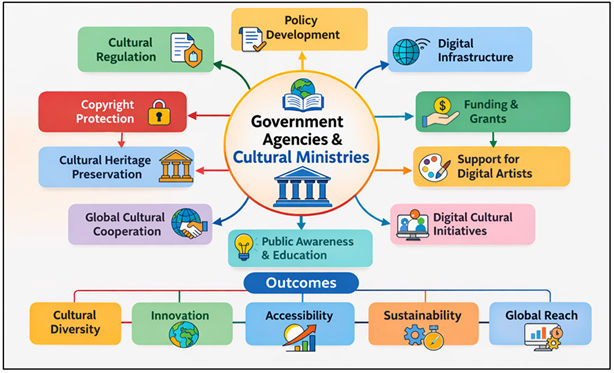
Figure 3 Roles of Government Agencies and Cultural Ministries
in Digital Cultural Governance
Such initiatives are meant to increase the access of the masses to the cultural resources as well as promote the development of digital creative industries. Figure 3 depicts how government agencies influence the policy, funding, regulation, and cultural governance. The government agencies also participate in the process of regulating the digital cultural markets and the fair involvement of artists and cultural organizations. The policies can involve laws on copyright protection, the subsidies of digital artists and encouragement of technological innovation in cultural institutions. Also, governments work together with international organizations and networks of cultures in order to facilitate cross-border cultural exchange and cooperation. Rawandale and Kolte (2021)
6.2. Cultural Institutions, Museums, and Galleries
Museums, galleries, libraries, and archives are some of the cultural institutions that can readily be seen as primary owners of cultural heritage and are increasingly significant in the digital transformation of cultural production and distribution. Historically, these were institutions that specialized in conserving, displaying and interpreting cultural artifacts in physical environments. Nevertheless, the digital technologies have helped them to increase their operations through the development of virtual exhibitions, online collections and interactive cultural experiences. In an attempt to become digital, museums and galleries are digitalizing artworks, historical artifacts, manuscripts, and cultural records. Digital archiving projects are an opportunity to institutions that handle fragile materials to store them even though they can be accessed by researchers, educators, and the general population over the internet. Cultural content through virtual exhibitions and immersive technologies like augmented reality and virtual reality enables the audience to access cultural material remotely, which enhances accessibility to cultural heritage around the globe. Besides conservation and exhibition, cultural institutions serve as a source of education and communal involvement through conducting digital workshops and online lectures and interactive learning programs. Such programs allow closing the gap between the conservative culture and the technologic world. Rathore et al. (2023)
6.3. Technology Companies and Digital Platforms
The digital platforms and technology firms have become key players in the modern cultural environment. The creation, distribution and consumption of digital cultural content relies upon platforms like social media networks, digital marketplace, streaming and content-sharing websites. Through these channels, artists, musicians, film makers, and other producers are able to access audiences all over the world without the need to pass through cultural institutions or intermediaries, in traditional institutions or ways. The new cultural participation and collaboration through digital platforms are made possible by providing users with real-time creation, sharing and interaction with creative content. Artists have the ability to create communities around their work, get feedback about their work by the audience, and collaborate in creative processes across geographical limits. Technological companies also design technologies, which include creative programs, artificial intelligence, and digital design platforms, helping in the process of creative artworks.
7. Case Studies of Digital Cultural Governance
7.1. Government-supported digital art initiatives
The world governments have been paying more attention to the need to promote digital art projects as a subset of more general strategies to develop culture. These campaigns are meant to foster digital creativity, stimulate innovation within the arts and give artists opportunities to explore new technology. Most governments have launched funding schemes, grants and digital infrastructure projects that allow artists to make and present digital artworks with the help of virtual exhibitions, online galleries and multimedia installations. Indicatively, a number of national cultural agencies have created digital art festivals, innovation studio, where artists, technologists, researchers collaborate in creating interdisciplinary creative projects. They usually involve the introduction of technologies like augmented reality (AR), virtual reality (VR), interactive media and artificial intelligence in the creation of art. Governments support experimental practices of digital art to allow artists to experiment in telling stories, creating visual and engaging with the audience. Digital art funded by the government is also significant in making more cultural experiences accessible. Online cultural events and virtual exhibitions enable people in various geographical locations to be involved in cultural practices that were accessible only in the past in physical locations. This helps in democratizing cultural participation and enhancing the visibility of the national creative industries all over the world.
7.2. Cultural Heritage Digitization Programs
One of the most important innovations in the digital cultural governance is the cultural heritage digitization programs. Historical artifacts, artworks, manuscripts, and cultural records are being digitized by museums, libraries, archives, and other cultural institutions around the world on a mass scale. These programs include preserving important cultural resources and availing them to researchers, educators and ordinary people via digital media. Digitization projects are usually characterized by high-resolution scanning, digital cataloging, and the establishment of online databases through which the user is able to navigate cultural collections at a remote location. Educational programs and cultural research are also supported by the digital archives which can give the scholar access to rare material that may not be easy to access otherwise. Moreover, digital preservation will decrease the physical contact of the weak objects and contribute to the longevity of the historically important items. Most governments and international organizations join to facilitate these programs by funding them, availing technological knowledge and policy advice. Partnerships between institutions further enable cultural institutions to exchange best practices and devise standardized ways of digital preservation. Even with these advantages, digitization initiatives are faced with issues that touch on the ownership of data, cultural sensitivity, and digitally saved data in the long-term. The authenticity, accuracy and sustainability of digital cultural archives is a major concern to all the institutions that endeavor to protect cultural heritage during the digital era. Hazarika et al. (2025)
7.3. Policy Responses to AI-Generated Art and Creative Platforms
The fast evolution of artificial intelligence has encouraged governments and cultural policy-makers to think of new regulatory strategies of AI-generated art and creativity-based platforms. Artificial intelligence systems able to generate visual art, music, literature and design have created multifaceted concerns about who is the author, who owns the copyright and who is morally responsible? Consequently, policymakers are considering policy reactions both to the opportunities and threats of the AI-driven creativity. Some countries already started the revision of the current intellectual property laws to define their application to AI-generated content. Other policy debates revolve around the question of whether the artworks created by AI should be accorded a copyright status and who the legal creator of such art work would be. In most scenarios, policymakers are already thinking about frameworks, which designate the human user or developer who makes the initial AI creative mechanism.
8. Conclusion
The rapid changes of digital technology have impacted the culture sphere of production, distribution, and governance greatly. Digital creative acts have come into being because of online sites, multimedia and artificial intelligence where people have more chances to create in art and share cultures across the globe. Cultural industries, artists and cultural institutions are operating now in digital ecosystems that are more interconnected the cultural content can be produced, distributed and consumed across geographical boundaries. Although this change makes it easier and more accessible, it brings about complex governance problems, which need to be considered in policy. Another aspect of cultural policy structures that have been highlighted in this paper is that cultural policy structures must remain flexible in order to respond to the dynamism of the digital cultural spaces. The international organizations, cultural institutions and governments of countries play very important parts of establishing policies which will enable digital creativity in that it conserves the cultural heritage and intellectual rights. In order to rule efficiently there has to be a balance between the technological innovation and the morality and the digital platforms should be operating in such a way that not only safeguard the rights of the artists but also promote the culture of diversity and inclusion. With the introduction of artificial intelligence into the creative production process, the need to have flexive rules and regulations, which can address the issues that are surrounding the authorship, copyright and transparency, comes out further.
CONFLICT OF INTERESTS
None.
ACKNOWLEDGMENTS
None.
REFERENCES
Bouquillion, P., and Ithurbide, C. (2023). Policy for Cultural and Creative Industries in India: The Issue of Regulation Through Digital Policy. Contemporary South Asia, 31(3), 326–340. https://doi.org/10.1080/09584935.2023.2203902
Chai, A., Stepanova, E., and Moneta, A. (2023). Quantifying Expenditure Hierarchies and the Expansion of Global Consumption Diversity. Journal of Economic Behavior and Organization, 214, 860–886. https://doi.org/10.1016/j.jebo.2023.07.012
Cheng, H., Yu, Y., Zhang, L., and Zhang, Z. (2022). The Effect of Subsidies on Cultural and Creative Enterprise Performance: Mediating Role of Patents. Engineering Economics, 33(2), 188–199. https://doi.org/10.5755/j01.ee.33.2.28844
Daubaraite-Radikiene, U., and Startiene, G. (2022). Index-Based Measurement of Creative Industries’ Impact on National Economy. Engineering Economics, 33(1), 13–26. https://doi.org/10.5755/j01.ee.33.1.27869
Eissa, R., Eid, M. S., and Elbeltagi, E. (2021). Current Applications of Game Theory in Construction Engineering and Management Research: A Social Network Analysis Approach. Journal of Construction Engineering and Management, 147(4), 04021066. https://doi.org/10.1061/(ASCE)CO.1943-7862.0002085
Fazlagić, J., and Szczepankiewicz, E. I. (2020). The Role of Local Governments in Supporting Creative Industries: A Conceptual Model. Sustainability, 12(1), 438. https://doi.org/10.3390/su12010438
General Office of the Central Committee of the Communist Party of China, and General Office of the State Council. (2022). The 14th Five-Year Plan for Cultural Development. Xinhua News Agency, 24, 4–22.
Hazarika, I., Saoji, S., Bhandari, R. B., Jorvekar, G., Rao, P. H., and Porwal, T. (2025). Mapping Resilience Pathways: A Conceptual Framework for Portfolio Risk Management in Microenterprise Lending During Economic Shocks. Enterprise Development and Microfinance, 35(1), 1–20. https://doi.org/10.3362/1755-1986.25-00001
Jadhav, K. D. (2027). Integrating IoT, Sensors, and Machine Learning for Enhancing Crop Yield and Irrigation Efficiency Systems. In R. R. Janghel, R. Doriya, J. Lachure, and Y. K. Rathore (Eds.), Sustainable Agriculture Production using Blockchain Technology. https://doi.org/10.1002/9781394248711.ch11
Jordan, J., Dasgupta, R. K., and Hitchen, G. (2023). Mapping Innovation in India’s Creative Industries: An Ecosystem Framework. Cultural Trends, 32(5), 416–428. https://doi.org/10.1080/09548963.2023.2217416
Karule, K. P., Sapkal, V., Mirajkar, G., Babajanov, M., Tajne, P., Ahire, L. K., and Qushnazarova, U. (2025). Leveraging Transfer Learning Techniques for Automated Tuberculosis Classification on Chest X-Ray. Indian Journal of Tuberculosis, 72, S512–S130. https://doi.org/10.1016/j.ijtb.2025.11.015
Khlystova, O., Kalyuzhnova, Y., and Belitski, M. (2022). The Impact of the COVID-19 Pandemic on the Creative Industries: A Literature Review and Future Research Agenda. Journal of Business Research, 139, 1192–1210. https://doi.org/10.1016/j.jbusres.2021.09.062
Klein, M., Gutowski, P., Gerlitz, L., and Gutowska, E. (2021). Creative and Culture Industry in Baltic Sea Region: Condition and Future. Sustainability, 13(8), 4239. https://doi.org/10.3390/su13084239
Liu, Y., and Liu, F. (2022). Innovative Practice of Cultural and Creative Development Through the Collaboration of Multiple Subjects in “Public Libraries + cultural and Creative Camps”. Journal of Academic Libraries, 40, 79–84.
Lv, J., Lin, M., Zhou, W., and Xu, M. (2021). How PPP Renegotiation Behaviors Evolve with Traffic Changes: Evolutionary Game Approach. Journal of Construction Engineering and Management, 147(4), 04021032. https://doi.org/10.1061/(ASCE)CO.1943-7862.0002024
Rathore, Y., Mishra Chaturvedi, V., Sujay Madhukar, K., Karwande, V. S., Rokade, A. H., and Nagargoje, Y. (2023). Patient Engagement and Satisfaction in AI-Enhanced Healthcare Management. In Proceedings of the International Conference on Artificial Intelligence for Innovations in Healthcare Industries (ICAIIHI 2023). https://doi.org/10.1109/ICAIIHI57871.2023.10489712
Rawandale, U. S., and Kolte, M. T. (2021). Design, Development and Analysis of Variable Bandwidth Filter Bank for Enhancing the Performance of Hearing Aid System. International Journal of Intelligent Engineering Systems, 14(6), 391–401. https://doi.org/10.22266/ijies2021.1231.35
Vasanthan, R., Babu, M. R. N., Dzuvichu,
K., Chong, S. T., Rana, V. S., and Singh, A. (2025).
Bridging Social Norms Theory and Community Mobilization: Pathways for
Overcoming Gender Stereotypes in Women’s Economic Empowerment Programs.
Xi, J. (2022).
Hold High the Great Banner of Socialism with Chinese Characteristics and Strive
to Build a Modern Socialist Country in an All-Round Way—Report at the 20th
National Congress of the Communist Party of China (October 16, 2022). Qiushi,
21, 4–35.
Xie, X., and He, X. (2024). Construction of a Digitally Strong Nation With Chinese Characteristics in Modernization: Theoretical Logic and Innovative Pathways. Journal of Tongji University (Social Science Edition), 35, 44–58.
Yao, L., Maneejuk, P., Yamaka, W., and Liu, J. (2022). Quantifying the Competitiveness of Cultural Industry and its Impacts on Chinese Economic Growth. Sustainability, 15(1), 79. https://doi.org/10.3390/su15010079
Zhang, G., Chen, X., and Wei, T. (2024). Research on the Tri-Element Integration and Innovation Strategy of Cloud Brocade Cultural and Creative Branding Design. Scientific Research Management, 45, 172–180.
Zhou, X., Wang, Z., and Wang, J. (2024). Government Support, Director Characteristics and Innovation Performance: Evidence from China’s Digital Creative Industry. International Journal of Technology Management, 94, 271–290. https://doi.org/10.1504/IJTM.2024.135726
|
|
 This work is licensed under a: Creative Commons Attribution 4.0 International License
© ShodhKosh 2026. All Rights Reserved.