ShodhKosh: Journal of Visual and Performing ArtsISSN (Online): 2582-7472
|
|
The Role of Illustration in Shaping Visual Narratives in Indian Advertising
Rajeev Sharma 1 , Dr. Khushboo Chaturvedi 2
 , Dr. Pooja Jain 3
1 Research
Scholar, Amity University, India
2 Associate
Professor, Amity University, India
3 Associate
Professor, Srishti Manipal Institute of Art, Design and Technology, India
|
|
|
ABSTRACT |
|
|
Visual
communication has become predominant in capturing consumer attention and
perception in the fast-changing environment that is Indian advertising.
Illustration is among other visual elements that contribute to crafting
interesting stories that can easily convey the brand messages. This paper
discusses the importance of illustration in Indian advertising through the
lens of brand identity, emotional appeal, cultural representation, and how it
affects the audience perception. A thorough examination of theoretical
frameworks, literature knowledge and formal data displays, the study
illuminates the role of illustrations in storytelling by making complex
concepts simple and producing a visually stimulating content. The paper also
explores the application of illustration in shaping consumer behavior with
measures like recall, engagement and purchase intention. It also covers the
prevailing trends, including digital and motion illustration and issues of
cultural sensitivity and integrating AI-generated images. The results
indicate that illustration is not just a form of aesthetic but a strategic
means of communication that enhances brand differentiation and an effective
way of advertising in a diversified market such as India. The paper ends by
highlighting how novel, culturally sensitive and technologically combined
illustration practices can be used to address emerging consumer demands and
increase the effectiveness of advertising stories. |
|||
|
Received 15 January 2026 Accepted 26 March
2026 Published 17 April 2026 Corresponding Author Rajeev
Sharma, rsharma22@amity.edu DOI 10.29121/shodhkosh.v7.i5s.2026.7401 Funding: This research
received no specific grant from any funding agency in the public, commercial,
or not-for-profit sectors. Copyright: © 2026 The
Author(s). This work is licensed under a Creative Commons
Attribution 4.0 International License. With the
license CC-BY, authors retain the copyright, allowing anyone to download,
reuse, re-print, modify, distribute, and/or copy their contribution. The work
must be properly attributed to its author.
|
|||
|
Keywords: Illustration, Visual Narratives, Indian Advertising,
Visual Communication, Consumer Perception, Brand Identity, Storytelling |
|||



1. INTRODUCTION
The area of advertising in India has experienced a radical change in the last few decades since it is no longer a mere text-based announcement but a highly developed, visually engaging stories that seek to attract consumers in a highly competitive market. With this vibrant environment, illustration has become an effective tool of visual communication as it helps advertisers to create strong stories that are emotionally and culturally appealing to a wide range of audiences. In contrast to the purely photographic depictions, illustrations are flexible, abstract, and symbolic, which enables brands to express a complex idea, cultural subtleties, and creative concepts in a more interesting and memorable way Das and Ramalingam (2022). The trend of increased use of visual storytelling in Indian advertising suggests the necessity to comprehend how illustration can be used to create narratives that can impact perceptions, involvement, and ultimately consumer behavior.
Traditionally, Indian advertisements have a background in the traditional art and print media whereby illustrations were hand drawn and used in the newspapers, posters and even in the packaging designs. Since the classic poster painted by hand of the mid 20 th century in the cinema, to the elaborate illustrations of the early advertisements in magazines, visual art has always been at the centre of communication strategies. As television and subsequent digital media came into existence, there was an increase in the nature of advertising and advertisements to include motion graphics, animation and digital illustration techniques. The shift did not only help to make advertisements more appealing aesthetically but also expanded the area of the storytelling process, letting brands to include cultural motifs, folklore, and modern topics into the unified visual messages Wang (2021). Since the socio-cultural environment of India is diverse in terms of language, tradition and lifestyle, illustration can be used as a flexible tool that is able to mediate between these differences and develop content that can be universally relatable.
Illustration in advertising is not just about decoration but is a strategic component of advertising which increases the clarity of the message, its emotional appeal, and brand recognition. Illustrations have the ability to simplify concepts that are abstract, to exaggerate details to highlight, and to create a certain kind of mood that will suit positioning of the brand. As an example, the use of playful and colorful illustrations can be used in advertisement aimed at younger audience, whereas minimalistic and high-end design can be used in advertisements of high-end brands Bakti et al. (2020). This flexibility enables the advertisers to customize the visual stories in relation to the target audience and, therefore, illustration is an essential element of the design and communication cycle. Moreover, drawings can overcome language obstacles and, therefore, they can be especially useful in a multilingual nation such as India where images can have more direct significance than text.
Visual narratives in advertising are the systematic application of images and design components to narrate a tale that conveys a brand message, values and identity. These stories are well composed to focus the mind of the viewer, provoke emotions and make memorable impressions. Illustration here is critical as it gives the designers freedom of creativity where they can illustrate a situation that may not be easily portrayed by photographing Jiang et al. (2021). Illustrations can be used to form immersive storytelling experiences through stylization, symbolism and composition that are suitable to the cultural context and consumer expectations. Illustrated narratives can naturally find a resonance in Indian advertising where traditions of storytelling are deeply embedded in the cultural practices of Indian mythology, folklore and performing arts, which contributes to their effectiveness and relatability.
The other significant aspect of illustration in Indian advertising is that it portrays and supports the cultural identity. Regional art styles, traditional motifs and culturally relevant symbols are frequently used in the advertisements to create the sense of authenticity and emotional resonance with the viewers. Be it Madhubani patterns or Warli art, or modern graphic designs, which are inspired by the Indian aesthetics, illustrations help in developing a feeling of familiarity and cultural pride Erdmann et al. (2023). Such cultural implantation does not only enhance positioning of brands, but also creates a difference in advertisements in a saturated market. Over the past years, illustration has been used more and more by brands to commemorate festivals, represent local tales, and convey social messages, thus enhancing their relevance and social performance.
Against these considerations, the main aim of this paper is to understand how illustration can be applied in the creation of visual narratives in Indian advertisement. This study will examine the role of illustrations in telling the story, the impression it creates on the viewers and how it helps in brand communication. It also tries to analyze the cultural, psychological and technological influences that have an effect on the application of illustration in advertising Carlson et al. (2021). Through the combination of theoretical views and practical implications and case study, the research will be aimed at offering a clear insight into the importance of illustration as a modern day practice in advertising.
This paper has a narrow scope of Indian advertising in the print, television, and digital media, and more importantly, illustrated content. Although the research appreciates the influence of the other visual components like photography and typography, it particularly examines the exclusive influence of illustration in building the narrative and involving the audience. The paper is divided into several subsections, the first one being a literature review, then a theoretical framework, analysis of illustration in ad stories, how it affects consumer perception, discussion of challenges and future trends and finally a conclusion and future research directions.
2. Literature Review
Illustration as a field of advertisement study has received a major focus within the recent years, especially with the rising interest in visual communication and narration within the digital and multimedia settings. Illustrations as a medium of meaning-making, emotional engagement and brand differentiation have been studied by scholars in disciplines like design, communication studies, marketing, and psychology. The section presents a literature review of the subject of illustration as a tool of visual communication and how it can be used in storytelling, its applicability in the Indian context of advertising, and how illustration can be compared to other types of visual communication. It also determines important gaps in research that could lead to the necessity of the current study.
2.1. Illustration as a Visual Communication Tool
Illustration has been a well-known potent medium of providing information in a simple and visually captivating way. Illustrations offer instant visual messages and make it easier to understand and retain, as opposed to textual communication, which involves cognitive processing of the language. According to studies in visual communication theory, images are processed much quicker by the human brain and are therefore useful in getting attention as well as being able to convey complex ideas in a concise manner Ryan (2015). Illustrations, especially, have the benefit of being abstract, and enable the designer to focus on certain elements of a message and exclude unnecessary information.
Illustration is common in advertising where it is used to come up with a specific visual identity which identifies with the brand values. It has been emphasized that illustrated images can boost brand recognition, through the development of distinctive and familiar images, which distinguishes a brand among others in the market. Moreover, images allow causing inventive exaggeration and stylization, which is why an advertisement becomes more memorable and can have an emotional effect Chen et al. (2020). This elasticity is particularly helpful in illustration to convey abstract ideas like trust, innovativeness or happiness, which otherwise might be hard to represent in realistic terms alone.
2.2. Visual Storytelling in Advertising
Ranging from the notion that visual forms of storytelling are a key approach to the contemporary advertising, where brands strive to capture the interest of audiences through narrative, as opposed to explicit promotional messages. According to literature on the narrative theory, the story is always more interesting than facts because it involves evocation of emotion, and that they lead to a feeling of connection with the audience Li et al. (2023). In this regard, illustrations are important in building and developing these narratives through ensuring continuity of visuals, symbolism and context.
Scholars have shown that illustrated stories can be effective direction of viewer focus, organization of information and be emotionally stimulating. Illustrations through the use of characters, settings and sequential images allow advertisers to construct an entertaining and persuasive story. Illustrated stories are commonly used in Indian advertisement, where the culture of storytelling is deeply enshrined in common practices and beliefs like mythology and folklore, to increase their relatability Ghali-Zinoubi and Toukabri (2019). Such a combination of the classical elements of story-telling and the current design practices has been defined as one of the elements of success of numerous advertising campaigns.
2.3. Role of Graphic Design in Indian Advertising
As a more general field including illustration, typography, and layout, graphic design is an important aspect of the language of visual advertising. Graphic design in the Indian scenario has transformed a lot, both under the influence of indigenous art forms, and world design trends. According to literature, Indian advertising is usually based on combining the traditional aesthetics with the modern design, which creates a distinct visual identity with cultural diversity Quesenberry and Coolsen (2019).
Illustration, being an element of graphic design, is a part of this hybrid graphic visual language, which integrates the regional style of art, the use of strong colors and symbolic imagery. Research has demonstrated that design components that are culturally-relevant may help to increase the level of audience engagement through fostering familiarity and authenticity. As an illustration, illustrations can be used to make the target audience emotionally connected to the message by the use of familiar motifs or characters that are locally inspired Meng et al. (2021). Moreover, the concepts of graphic design, including balance, contrast, hierarchy, etc., are crucial to making sure that the illustrated advertisements are attractive and, at the same time, communicate effectively.
2.4. Cultural Symbolism in Indian Illustrations
A close relationship with the cultural symbolism is one of the hallmarks of Indian advertising illustration. The rich cultural heritage of India offers a rich source of visual information such as the traditional art forms, religious symbols and regional motifs that can be used in illustrations to create meaning and inspire emotional response. Cultural studies and semiotics literature highlight that these symbols have rich cultural meanings and may have an impact on the way viewers perceive visual messages Agmeka et al. (2019).
Scholars have noted that advertisements can be more effective with culturally-relevant illustrations because these can be aligned with the values, beliefs, and experiences of these people. As an example, during major Indian festivals there is a general use of festive based illustrations that are meant to instill a sense of happiness, unity and celebration. Likewise, the drawings of rural or traditional life have the potential to appeal to particular groups of demographics Hsieh et al. (2023). Nevertheless, literature also warns against either misusing or misinterpreting a culture symbol through over-simplification, and this can result in being misinterpreted or culturally insensitive Daassi and Debbabi (2021). This highlights the essence of contextual sensitivity in the designing and use of illustrations in advertisement.
2.5. Illustration vs Photography in Advertising
The question of whether to use illustration or photography in advertisement has been a topic of much literature. The two media have their own merits and demerits and their successfully depends on the conditions and the purposes of the advertisement Krishen et al. (2021). Photography can be seen as a thing connected with reality and genuineness, which is why it is appropriate to display products or real-life situations. Illustration, in its turn, offers more freedom of creativity and enables creative and stylized depictions that can be quite engaging and express abstract concepts Zeng et al. (2020).
Comparative studies on the two mediums indicate that the illustrated advertisement is more likely to remain and interest more especially in situations where the target is to develop a distinct brand image or elicit emotions. Illustrations also can be used to overcome practical constraints of photography including the physical surroundings, models, or location Chen and Yao (2022). Also, illustrations can be easily transformed and adjusted to various situations, and they are a non-expensive choice of advertisers. Nonetheless, photography can be more effective in the situations when the authenticity and realism are of utmost importance. The decision of illustration or photography is thus dependent on factors like target audience, brand positioning and communication goals.
Table 1
|
Table 1 Summary of Literature on Illustration in Advertising |
|||
|
Focus Area |
Methodology |
Key Findings |
Limitations |
|
Visual Communication & Illustration Li et al. (2023) |
Qualitative analysis of ad campaigns |
Illustrations enhance message clarity and visual
engagement |
Limited to Western advertising context |
|
Indian Advertising Design Ghali-Zinoubi and Toukabri
(2019) |
Case study-based analysis |
Cultural elements in illustrations improve
audience relatability |
Lack of quantitative validation |
|
Visual Storytelling Quesenberry and Coolsen (2019) |
Experimental study |
Narrative-driven visuals increase emotional
engagement and recall |
Focus not specific to illustration |
|
Consumer Perception Meng et al. (2021) |
Survey-based research |
Illustrated ads show higher brand recall than
text-heavy ads |
Limited demographic diversity |
|
Illustration vs Photography Agmeka ey al. (2019) |
Comparative experimental study |
Illustrations outperform photography in
creativity and memorability |
Photography better for realism |
|
Cultural Symbolism in India Hsieh et al. (2023) |
Content analysis of Indian ads |
Use of traditional motifs strengthens brand
identity |
Risk of cultural stereotyping |
|
Digital Advertising Daassi and Debbabi (2021) |
Mixed-method approach |
Motion illustration increases engagement in
social media ads |
Limited long-term impact analysis |
|
AI-based Illustration Krishen et al. (2021) |
Conceptual study |
AI-generated visuals reduce cost and time in ad
production |
Concerns over originality and ethics |
|
Consumer Behavior Zeng et al. (2020) |
Quantitative analysis |
Visual narratives significantly influence
purchase decisions |
Does not isolate illustration impact |
|
Indian Digital Campaigns Chen and Yao (2022) |
Case study + analytics |
Illustrated storytelling improves click-through
rates and engagement |
Platform-specific findings |
3. Role of Illustration in Indian Advertising Narratives
Illustration has come to the fore of creating visual stories in Indian advertising, with the ability of brands to convey their concepts to customers through imaginative, entertaining and culturally appealing imagery. Illustration can be used in a market with language diversity and diverse consumer tastes as it is a medium that is flexible and moves beyond textual barriers and improves the effectiveness of storytelling. It enables advertisers to create visually appealing stories in such a way that they are not only able to get attention but also deliver brand values and messages in a way that is easy to remember. The role of illustration in Indian advertising stories is considered in this section in terms of brand identity, emotional involvement, cultural image, narrative strategies, digital revolution, and its usage.
Figure 1
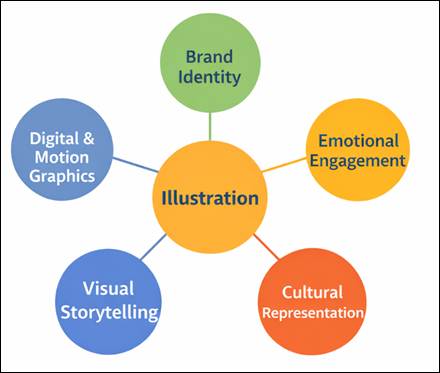
Figure 1 Role of Illustration in Indian Advertising Narratives
3.1. Illustration as a Tool for Brand Identity Creation
Brand identity is the perception of the brand by the audience and illustration is very important in building and strengthening the brand identity. Illustrations are different to standardized photographic images and can be customized in a unique way to portray the personality, tone, and values of a brand. This personalization helps brands to develop a unique visual language that makes them stand out among others.
Illustrations are commonly employed to create mascots, icons and repetitive visual elements in Indian advertising to create brand recognition. These factors bring uniformity on various platforms such as print, television and online media. As an illustration, colorful and light-hearted illustrations are common among brands that are aimed at younger audiences, whereas minimalistic and elegant designs are used in premium brands. The flexibility that illustration gives enables brands to be consistent in identity and change with the passing times so that the recall and familiarity among consumers can be reinforced.
3.2. Emotional Engagement through Illustrated Content
One of the factors that determine whether advertising is effective or not is the emotional engagement and illustration forms a major part in creating emotions. Illustrations have the power to convey emotions of happiness, nostalgia, excitement and empathy through expressive figures, symbolic images as well as dynamic compositions. Thead of family, relationships, and Indian values are a common aspect of advertising in the Indian context. Through illustrations, the advertisers can portray these themes in a relatable and stylized way that would make them more emotional. As an example, the warm color schemes and cheerful visuals are common in festive campaigns to promote a feeling of celebrations and unity. Likewise, the social awareness campaigns are minimalistic and powerful in using illustrations to send serious messages and be thought provoking. The illustration establishes a bond between the audience and the brand, as it makes difficult feelings visually appealing, creating trust and future loyalty.
3.3. Representation of Indian Culture, Traditions, and Diversity
Cultural diversity in India offers some exceptional opportunities to advertisers to develop meaningful and relatable content. Illustration is a powerful way of expressing this diversity as it includes details like traditional clothing, art forms of a region, festival, and surrounding landscapes. Culturally rich stories are often done using illustrations that are inspired by traditional Indian art forms such as Madhubani, Warli, and Pattachitra. These styles make it more real and relevant to the viewers, as they echo familiar cultural aspects. Culturally-themed illustrations are frequently used by brands during festive seasons to make their message more in tune with the feelings and customs of the event. In addition, through illustration inclusive representation is possible, as various characters and social situations are represented. This inclusiveness is critical towards responding to the diverse tastes and experiences of Indian consumers, which enhances the reliability and interest.
3.4. Storytelling Techniques using Illustration
Illustration is an effective storytelling mechanism that allows advertisers to build interesting narratives using the visual medium. Through characters, settings and sequences, stories that convey brand messages can be illustrated using illustrations. Sequential storytelling is one of such techniques as several frames or panels depict various parts of a story. This method is more effective especially in the digital media, where the content can be interacted by scrolling or swiping. The other strategy is the use of mascots or repetitive characters that help to lead the story and bring continuity to the campaigns. Symbolism and metaphor are also used to depict abstract concepts in illustrations. Ideas like growth, innovation, and sustainability can be represented graphically in the form of symbols, which are easier to comprehend and are more captivating. Storytelling, especially with humor, fantasy and cultural allusions are common in Indian advertising and are well presented with the help of illustrative techniques.
4. Impact of Illustration on Audience Perception
The way the audiences perceive, interpret and react to the message communicated ultimately determines the effectiveness of advertising. Illustration, in this regard, has a great influence in perception of the audience, as it affects the way the audience thinks, feels and acts. Since visuals can be processed more quickly than any textual data, illustrated material can immediately attract attention and have long-term effects. This part looks at how illustration affects perception of the audience in Indian advertisement, in terms of brand recall, consumer involvement, appeal to eyes, targeting demographics, and effectiveness in comparison.
4.1. Influence on Brand Recall and Recognition
Memorability of the brand is one of the main aims of the advertising, it makes the brand memorable to the consumer. Illustration is also a major factor in brand recall where unique and attractive illustrations are formed, which are easy to identify and recall. In contrast to generic photographic images, illustrations can be specially created to capture brand identity and thus are easily recognized in a highly crowded advertising space. The cognitive psychology studies suggest that human beings are more likely to remember images than text, this effect is commonly known as picture superiority effect. Advertisements that use this effect are illustrated ones that use a combination of both visual attractiveness and storytelling as a way to make them more memorable. Illustrations can be used in Indian context where consumers have been subjected to multilingual content, as this could be used as a universal visual cue to recognition despite language barriers. This renders them especially efficient in creating brand recognition that is sustainable in the long run.
4.2. Consumer Engagement and Buying Behavior
Illustration plays a key role in the interaction of consumers with advertisement and purchase decision. The use of visuals has the ability to attract, maintain and incite interaction, which are essential elements of consumer decision-making process. Illustrated content can entail aspects of storytelling, humor, and creativity making it more appealing and shareable, particularly on online platforms. The relatable characters and situations used in the illustrations can help to develop a feeling of association between the audience and the brand. This emotional bond is very important in shaping buying behavior, because consumers will tend to believe and interact more with brands that they identify with in regards to their values and experiences. Also, illustrated ads make product features and benefits more simplified, and easy to comprehend and compare, which makes it easier to make informed choices.
Illustrated content is more likely to be shared, liked and commented on in digital advertising where it is more likely to reach more people and have an impact. This increased interaction does not only increase brand awareness but also leads to a rise in the conversion rate, which illustrates the practical importance of illustration in the process of altering the consumer behavior.
4.3. Visual Appeal vs Informational Content
The balance between the visual appeal and informational content is a critical part of advertising effectiveness. Although illustrations are very effective in capturing attention and establishing aesthetics, they should be able to provide pertinent information in a straightforward manner to attain communication goals. The interaction of these two factors influences the perception and reactions of the audiences towards the advertisements. Examples can be used to increase the informational clarity with the help of arrangements of the information visually and emphasis of the most important messages with the help of the expressive elements of the design color, contrast, hierarchy. To give an example, complex data or processes can be presented in an over-simplified and appealing way with the help of infographic-style illustrations. But too much use of decoration or too sophisticated design may cause overload of information, decreasing the effectiveness of the advertisement.
The capability of illustrations to pass information across in a visual manner comes in handy in the Indian context of advertising whereby the audience differs in terms of literacy and exposure to media. To make sure that the message is not only interesting but also comprehended readily, the advertisers should take their time to be innovative and at the same time be clear enough.
4.4. Role in Targeting Diverse Demographics
The population of India is diverse making it a challenge to advertisers on how to target various group of people. Illustration is a flexible solution as it allows producing tailored visual content that will attract target audiences depending on their age, culture, language, and socio-economic status. As an example, the advertising aimed at children usually incorporates the use of cartoonish graphics in bright colours with humorous characters, to attract attention and generate interest. Conversely, the youth in the city campaign can be done using contemporary and minimalistic illustrations, which capture current lifestyles and trends. In the same way, rural adverts can be done using settings and culturally-specific images to increase reliability.
Illustration can also be used in inclusive representation as various characters and situations are illustrated, thus catering to the needs and tastes of various demographics. Such inclusivity not only makes the advertising campaign more engaging but also increases the social relevance of the advertising campaign.
4.5. Comparative Analysis: Illustrated vs Non-Illustrated Ads
An analysis of the effectiveness of illustration in advertising should include a comparison of illustration with non-illustration forms of advertisement like text-based advertisement or pure photographs advertisement. Research and industry experience indicate that illustrated advertising can be quite more effective in terms of involvement, retention and creativity as compared to non-illustrated advertising.
Table 2
|
Table 2 Impact of Illustration on Advertising Performance Metrics |
||
|
Metric |
Illustrated Ads (%) |
Non-Illustrated Ads (%) |
|
Brand Recall |
85 |
62 |
|
Engagement Rate |
78 |
55 |
|
Click-Through Rate (CTR) |
64 |
42 |
|
Emotional Connection |
88 |
60 |
|
Purchase Intention |
72 |
50 |
As the Table 2 shows, the illustrated advertisements perform better in all measures considered compared to non-illustrated ones. Emotional connection (88 percent) is the most improved, which means that illustration increases the connection of the audience with the brand. There are also significant gains in brand recall and engagement, which proves that rich content based on visuals is better to remember and engage. The positive change in the purchase intention indicates that illustration has a positive impact on consumer decision-making.
Figure 2
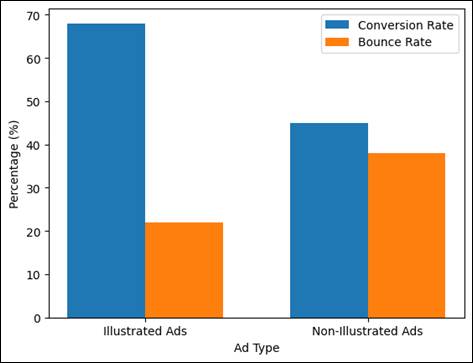
Figure 2 Relationship Between Conversion Rates and Bounce Rates for illustrated and Non-Illustrated Advertisements
As it is apparent in the bar chart provided in Figure 2, it is evident that the illustrated advertisements have a much higher conversion rate in comparison to the non-illustrated ads which imply that they are effective in motivating user actions. Simultaneously, a significantly lower bounce rate is demonstrated by illustrated advertisements, which implies that users have to spend more time on them. On the contrary, non-illustrated advertisements have less conversions and bounce rates, indicating lack of user interest and engagement. The negative correlation between conversion and bounce rate proves that the use of visual narratives developed using illustration is appealing to users, as well as able to maintain attention, which eventually results in the improved performance of the advertisement.
The Indian advertising industry heavily relies on illustration to have a significant influence on the perception of the audience, the way the consumers interpret, perceive and react to brand messages. Its capacity to boost brand recognition, create emotional associations, weight visual impact and information, and its capacity to attract a wide range of demographics make it a great resource in the hands of advertisers. With the constantly changing preferences of consumers and the continuously increasing dominance of digital media, the importance of illustration as the means of shaping the audience perception is likely to increase even more. This knowledge of the effects will be useful in creating effective advertising campaigns as discussed in the next section on challenges and emerging trends.
5. Challenges and Emerging Trends
Although illustration has found its way as a strong tool in the creation of visual storytelling in Indian advertising, there are challenges of its application. Advertisers have to deal with the problems of creativity, cultural sensitivity, technological disruption, and ethical issues and ensure the effectiveness of the communication. Meanwhile, the swift development of digital technologies and shifting consumer trends are raising new tendencies that are transforming the role of illustration in advertising. In this section, the author will discuss the main issues relating to the sphere of illustration in Indian advertising and outline the dynamic trends that are influencing its further development.
5.1. Limitations of Illustration in Advertising
Although it is versatile, illustration has some intrinsic limitations that may affect its ability to be effective in advertising. Among the main issues is the possibility of not being realistic, thus diminishing credibility in advertisements that need to depict the products accurately. As an example, consumers tend to choose realistic images in commercial activities like healthcare, real estate, or luxury products, in order to have a clear picture of the product or service.
The other constraint is the possibility of misinterpretation. As illustrations tend to be based on abstraction and symbolism, various audiences can perceive the same visual differently and, as such, result in ambiguity in communications. This is specially applicable in a multi-culturally diverse nation such as India where perception can be affected by cultural and linguistic differences.
Also, the quality of design and performance is vital in illustration. Illustrations with a bad design may not attract attention or get the intended message and this will decrease the impact of the advertisement. Here the significance of talented designers and clear artistic plans in the application of illustration can be seen.
5.2. Balancing Creativity and Commercial Objectives
Advertising is a blend of creativity and business and striking a balance between these two is a big task. Though the artistic freedom provided by illustration is tremendous, advertisers should make sure that the visual aspects do not obscure the message or brand goals.
Too much focus on creativity can cause appealing-to-the-eye-but conceptually poor adverts that do not convey the message. Conversely, too commercial designs may not be original and they may not captivate the audience. To balance it all, a strategic approach that balances creative expression and communication objectives is needed.
This balance is even more critical in the Indian advertising environment, where competition is high, and the attention span of consumers is short. The advertiser has to create illustrations which are not only appealing to the eye but also advert-focused, and should be in line with the brand identity and marketing goals.
5.3. Rise of AI-Generated Illustrations
The advent of artificial intelligence has brought about a new aspect of illustration in advertising. AI-based solutions are able to create quality images at low expenses and are able to create high-quality content in large amounts within a limited time span. This has greatly changed the creative process and illustration has become more accessible and scalable. Artificial intelligence-generated illustrations have a number of benefits such as speed, personalization, and affordability. Advertisers are able to make the personalized images that are specific to the particular sections of the audience thereby increasing the relevance and appeal. Nevertheless, originality, authenticity and intellectual property rights are also a matter of concern with this technological advancement.
The second issue that comes along with the AI-generated illustrations is that they may result in the loss of human creativity and artistic originality. Although AI will be able to imitate styles and create the content that will look visually appealing, it might not be as profound, emotional, and culturally sensitive as human designers are to the creative process. Thus, the implementation of AI in illustration must have a balanced solution that involves the efficiency of technology and creativity of humans.
5.4. Future Trends in Indian Visual Advertising
There are a number of new trends which are influencing the future of illustration in Indian advertising due to the technological innovation and changing consumer behavior. Among the trends is the growing use of motion graphics and animated illustrations, especially in digital and social media advertising. Such dynamic images are more attractive and they can be better used to pass messages in brief periods of time.
The combination of illustration and interaction technologies like augmented reality (AR) and virtual reality (VR) is another significant tendency. It is possible to create immersive storytelling experiences using these technologies and engage consumers with illustrated content in real-time. This increases interaction and brand experiences that are memorable.
Another important area that is taking shape is personalization, and advertisers are utilising data-driven concepts to produce specific illustrations to various groups of audiences. This will enhance the effectiveness of advertising campaigns and relevancy.
Moreover, the trend is also towards minimalism and flat design, especially in urban and digital circles. These designs are simple, clear and functional, which can meet the modern design trends. Simultaneously, however, the interest in the traditional and handcrafted forms of illustration is revived, and the need to preserve the cultural heritage and authenticity is expressed.
6. Conclusion
Illustration is a graphic that has become an influential and effective aspect of creating visual storytelling in Indian advertising. This paper underscores the fact that illustration is not just about beautifying the design, but also serves an important purpose in conveying the brand name, making concepts more relatable and developing emotional appeal. Illustrations are the universal visual language in a multicultural and multilingual country, like India, allowing the brands to reach out to audiences in various cultural or linguistic backgrounds. The discussion proves that illustration is one of the most effective means of enhancing various important advertising results including brand recognition, audience attention and intent to buy. This characteristic of being used to provide stories in a symbolic and expressive visual form makes it especially efficient as it relates to manipulation of consumer perception and behavior. In addition, the incorporation of cultural aspects in illustrations makes it more relatable and authentic which is key in developing trust and long-term association with the brand. As digital platforms continue to develop at a very high pace, the illustration has become an even more significant role with the application of motion graphics, animation and personalized content. The developments have allowed advertisers to develop more dynamic, interactive, and immersive advertisements, which meet the changing tastes of today's consumers. Nevertheless, it also highlights issues like keeping the clarity, cultural sensitivity, and dealing with the issues arising around AI-generated visuals and ethical portrayal. In summary, illustration is an important aspect of contemporary advertisement, which integrates creativity and strategic communication to provide effective visual messages. With the advertising landscape only continuing to evolve, good application to illustration will only be important in the brands trying to distinguish themselves and have a meaningful interaction with their audiences.
CONFLICT OF INTERESTS
None.
ACKNOWLEDGMENTS
None.
REFERENCES
Agmeka, F., Wathoni, R. N., and Santoso, A. S. (2019). The Influence of Discount Framing Towards Brand Reputation and Brand Image on Purchase Intention and Actual Behaviour in E-Commerce. Procedia Computer Science, 161, 851–858. https://doi.org/10.1016/j.procs.2019.11.192
Bakti, I. G. M. Y., Rakhmawati, T., Sumaedi, S., Widianti, T., Yarmen, M., and Astrini, N. J. (2020). Public Transport Users' WOM: An Integration Model of the Theory of Planned Behavior, Customer Satisfaction Theory, and Personal Norm Theory. Transportation Research Procedia, 48, 3365–3379. https://doi.org/10.1016/j.trpro.2020.08.117
Carlson, J., Rahman, S. M., Rahman, M. M., Wyllie, J., and Voola, R. (2021). Engaging Gen Y Customers in Online Brand Communities: A Cross-National Assessment. International Journal of Information Management, 56, 102252. https://doi.org/10.1016/j.ijinfomgt.2020.102252
Chen, C., and Yao, M. Z. (2022). Strategic Use of Immersive Media and Narrative Message in Virtual Marketing: Understanding the Roles of Telepresence and Transportation. Psychology and Marketing, 39, 524–542. https://doi.org/10.1002/mar.21630
Chen, T., Peng, L., Jing, B., Wu, C., Yang, J., and Cong, G. (2020). The Impact of the COVID-19 Pandemic on User Experience With Online Education Platforms in China. Sustainability, 12, 7329. https://doi.org/10.3390/su12187329
Daassi, M., and Debbabi, S. (2021). Intention to Reuse AR-Based Apps: The Combined Role of the Sense of Immersion, Product Presence and Perceived Realism. Information and Management, 58, 103453. https://doi.org/10.1016/j.im.2021.103453
Das, M., and Ramalingam, M. (2022). What Drives Product Involvement and Satisfaction With OFDs Amid COVID-19? Journal of Retailing and Consumer Services, 68, 103063. https://doi.org/10.1016/j.jretconser.2022.103063
Erdmann, A., Mas, J. M., and Arilla, R. (2023). Value-Based Adoption of Augmented Reality: A Study on the Influence on Online Purchase Intention in Retail. Journal of Consumer Behaviour, 22, 912–932. https://doi.org/10.1002/cb.1993
Ghali-Zinoubi, Z., and Toukabri, M. (2019). The Antecedents of the Consumer Purchase Intention: Sensitivity to Price and Involvement in Organic Product: Moderating Role of Product Regional Identity. Trends in Food Science and Technology, 90, 175–179. https://doi.org/10.1016/j.tifs.2019.02.028
Hsieh, C.-H., Yang, J.-Y., Huang, C.-W., and Chin, W. C. B. (2023). The Effect of Water Sound Level in Virtual Reality: A Study of Restorative Benefits in Young Adults Through Immersive Natural Environments. Journal of Environmental Psychology, 88, 102012. https://doi.org/10.1016/j.jenvp.2023.102012
Jiang, Q., Sun, J., Yang, C., and Gu, C. (2021). The Impact of Perceived Interactivity and Intrinsic Value on Users' Continuance Intention in Using Mobile Augmented Reality Virtual Shoe-Try-On Function. Systems, 10, 3. https://doi.org/10.3390/systems10010003
Krishen, A. S., Dwivedi, Y. K., Bindu, N., and Kumar, K. S. (2021). A Broad Overview of Interactive Digital Marketing: A Bibliometric Network Analysis. Journal of Business Research, 131, 183–195. https://doi.org/10.1016/j.jbusres.2021.03.061
Li, L., Yuan, L., and Tian, J. (2023). Influence of Online E-Commerce Interaction on Consumer Satisfaction Based on Big Data Algorithm. Heliyon, 9, e18322. https://doi.org/10.1016/j.heliyon.2023.e18322
Meng, L. M., Duan, S., Zhao, Y., Lü, K., and Chen, S. (2021). The Impact of Online Celebrity in Livestreaming E-Commerce on Purchase Intention From the Perspective of Emotional Contagion. Journal of Retailing and Consumer Services, 63, 102733. https://doi.org/10.1016/j.jretconser.2021.102733
Quesenberry, K. A., and Coolsen, M. K. (2019). Drama Goes Viral: Effects of Story Development on Shares and Views of Online Advertising Videos. Journal of Interactive Marketing, 48, 1–16. https://doi.org/10.1016/j.intmar.2019.05.001
Ryan, M.-L. (2015). Narrative as Virtual Reality 2: Revisiting Immersion and Interactivity in Literature and Electronic Media. JHU Press.
Wang, C. L. (2021). New Frontiers and Future Directions in Interactive Marketing: Inaugural Editorial. Journal of Research in Interactive Marketing, 15, 1–9. https://doi.org/10.1108/JRIM-03-2021-270
Zeng, J., Parks, S., and Shang, J. (2020). To Learn Scientifically, Effectively, and Enjoyably: A Review of Educational Games. Human Behavior and Emerging Technologies, 2, 186–195. https://doi.org/10.1002/hbe2.188
|
|
 This work is licensed under a: Creative Commons Attribution 4.0 International License
© ShodhKosh 2026. All Rights Reserved.