ShodhKosh: Journal of Visual and Performing ArtsISSN (Online): 2582-7472
|
|
Beyond Ornamentation- The Semiotic Function of Inanimate Objects in the Rajasthani Miniature Paintings
Dr. Kanu Priya 1

1 Assistant
Professor, Department of History of Art, Banaras Hindu University,
Varanasi-221005, Uttar Pradesh, India
|
|
|
ABSTRACT |
|
|
Indian
miniature paintings, celebrated for their meticulous detail, intricate
brushwork, vivid color palettes, and narrative richness, employ a wide range
of visual strategies to create multidimensional experiences. Within this
visual repertoire, props defined as inanimate objects integrated into the
pictorial space emerging not merely as ornamental flourishes but as essential
narrative and aesthetic devices. In Rajasthani miniature painting in
particular, props serve to anchor storytelling, guide the viewer’s gaze, and
generate visual rhythm, while simultaneously enhance
the compositional harmony, spatial balance, and
ornamental refinement. Their deliberate selection and placement communicate
symbolic meanings that extend beyond decoration, reflecting the cultural
values, social hierarchies, political realities, and emotional restraints of
the time by situating props within the broader visual languages of Indian
miniature traditions, Mughal, Pahari, Rajasthani, and Deccani. This study
highlights how the Rajasthani school cultivated a
distinctive sophistication in their deployment. Through art historical
methodologies and semiotic analysis, the paper argues that props function as
active agents in visual storytelling, embodying both the visible and the
symbolic. The visual allure of props in Rajasthani miniatures thus transcends
mere ornamentation, positioning them as critical components within the
artistic and cultural lexicon, while simultaneously testifying to the
painter’s skill and pursuit of aesthetic harmony. |
|||
|
Received 23 February 2026 Accepted 18 April 2026 Published 21 April 2026 Corresponding Author Dr. Kanu
Priya, kanu.priya@bhu.ac.in DOI 10.29121/shodhkosh.v7.i5s.2026.7391 Funding: This research
received no specific grant from any funding agency in the public, commercial,
or not-for-profit sectors. Copyright: © 2026 The
Author(s). This work is licensed under a Creative Commons
Attribution 4.0 International License. With the
license CC-BY, authors retain the copyright, allowing anyone to download,
reuse, re-print, modify, distribute, and/or copy their contribution. The work
must be properly attributed to its author.
|
|||
|
Keywords: Rajasthani Miniature Painting, Semiotic Analysis,
Material Culture, Sringara Rasa, Nayika-Bheda, Spatial Composition, Visual Storytelling |
|||



1. INTRODUCTION
The Timeless Beauty of Indian Miniature Paintings are a testament to the country's artistic excellence, cultural diversity, and creative spirit. They serve as a visual record of India’s rich spiritual and highly sophisticated cultural traditions and their timeless beauty, extravagant details, and captivating narratives continue to enchant audiences, making them one of the most cherished art forms in India's rich heritage. These paintings, though small in size, are remarkable for their minute details, intricate detailed brushwork, vivid colour palettes, refined technique, and narrative richness with profound storytelling employing various visual elements to create a multidimensional experience, which are not just visual feasts but also chronicle marvels. Originating centuries ago, miniature paintings reflect the cultural, religious, and social life of different periods and regions of India. The tradition of miniature painting in India began as early as the 9th and 10th centuries, with the earliest examples found in Buddhist palm-leaf manuscripts. Over the time, various regional schools developed, each reflecting the distinct style, themes, and tastes of their patrons. Miniature paintings are not merely works of art; they are historical documents that provide insight into the customs, clothing, architecture, and daily life of their time. In Indian miniature paintings, the props defined as inanimate objects placed within the pictorial space are more than ornamental flourishes; they are narrative tools that serve as aesthetic devices which convey symbolic meanings reflecting the cultural, social, and political milieu of the time celebrating the visual expressions of poetry, devotion, courtly life, and folklore for centuries. Their thoughtful integration into the composition turns each painting into a multidimensional work of art, where the visible and the symbolic amalgamate. These small-scale yet profoundly detailed paintings, spanning from the Mughal and Deccani to Pahari and Rajasthani schools, integrate a wide array of elements.
Rajasthani miniature paintings, flourishing between the 16th and 19th centuries across the princely states of Rajasthan, form a distinctive chapter in the history of Indian art. Characterized by their dynamic colors, stylized forms, and religious and secular themes, these paintings are rich in visual details. While figures, landscapes, and architectural structures often take central focus, props such as musical instruments, furniture, textiles, mirrors, flora, fauna, musical instruments and ornaments, play an equally important yet underexplored role and a prominent position within the compositional framework. In this context, props are not just supplementary objects but integral components that elevate the painting's visual sophistication. Thus, this study interrogates how these inanimate elements contribute to the broader visual and narrative strategies employed by Rajasthani miniature artists.
2. Aesthetic Function: Spatial Balance and Composition
In Rajasthani painting, props serve to anchor figures, preventing visual emptiness and enhancing symmetry. Unlike Western linear perspective, Indian painters utilized vertical layering, stacking elements upward to suggest depth.
1) The Hookah as Spatial Anchor: Props often serve to anchor figures within a defined space, preventing visual emptiness and enhancing compositional symmetry. Indian miniature painters often used vertical layering rather than Western-style linear perspective. They stacked elements upward on the pictorial plane to suggest depth. This technique allowed them to present multiple narrative elements within a limited space. Props often serve to anchor figures within a defined space, preventing visual emptiness and enhancing compositional symmetry. For instance, a hookah placed beside a reclining or seated nobleman that provides both contextual grounding and spatial rhythm. Such objects help define foreground, middle ground, and background, crucial in miniature painting where spatial layering is subtly managed.
Figure 1
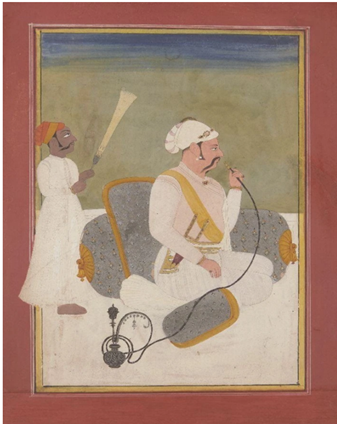
Figure 1
A Prince Smoking a
Hookah on a Terrace, Circa 1800, Opaque Pigments and Gold on Paper, 33x22.5 cm
2) Sovereignty in the Portrait of Thakur Uttam Ram (c. 1760): Like many portraits of the Rajput elite, this depiction of Thakur Uttam Ram shows him with objects that indicates his status. He reclines on a bulbous cushion and smokes an elaborate silver bidriware hookah painted with applied silver; even the complex floral designs typical of this refined metalwork has been shown here. The long hukkah pipe, often curling gracefully across the surface, introduces elegant linear movement, guiding the viewer's eye around the painting. He wears elaborate jewels, turban with sirpench, possess curved moustaches touching his throat, sitting posture with royal splendour displaying his sword placed on carpets rendered in great detail. All these props especially hukkah signifies a controlled, relaxed sovereignty, emphasizing that the ruler has achieved a position of comfort and stability where he can enjoy the luxuries of court life.
Figure
2
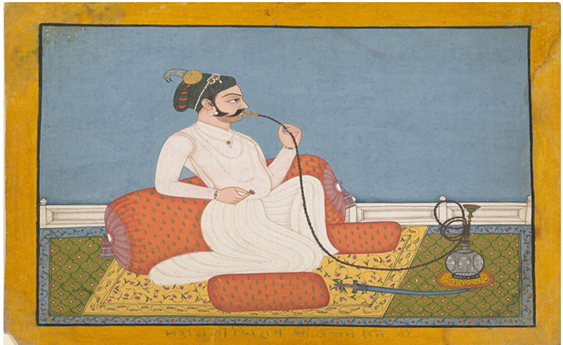
Figure 2 Portrait of Thakur Uttam Ram, Jhilai, Rajasthan, ca. 1760, Ink, Opaque Watercolour and Silver on Paper, 22.2x27.3 cm
3. Spatial Balance and the Vertical Plane
A defining characteristic of the Rajasthani school is the use of vertical layering rather than Western-style linear perspective. Elements are stacked upward on the pictorial plane to suggest depth. Props are essential to this spatial management.
1) Spatial Analysis- Foreground (Narrative Focus), Middleground, Background: The central focus is on Krishna and Radha playing with colours of Holi festival shown joyfully throwing colored powders (gulal) at each other. They at the centre are creating a spatial anchor in the foreground. The artists used bright natural pigments (vermilion, yellow, green and gold) to highlight the primary figures and draw immediate viewer attention towards Radha reclining on the foreground. The playful interaction is emphasized through dynamic hand gestures, curved body postures, and swirling scarves (dupattas), creating movement within the intimate foreground. Close Attendants- Gopis and sakhis accompany Radha and Krishna, participating in the color play, holding trays of colored powders and squirt guns (pichkaris). All these props fill the space, emphasizing the joyous, enhancing the festive mood. The splashes of colored powder fill the pictorial space, creating texture and chromatic richness. In the middleground (Supporting Scene), there is a terrace of pavilion filled with sprinkled Holi colours. Flowery shrubs and blossoming trees suggest the opulent palace garden, symbolizing the arrival of spring and fertility. The lush green rocky forest acts as a spatial divider between middle and background zones, the view of city and chhatris and distant temples, the architectural buildings establish depth while maintaining the planar surface which may also be present to evoke a sense of sacredness. View of Yamuna river in between with small sized boats separates the foreground from the distant hills and horizon. These elements add depth and context, without distracting from the primary narrative. In the background (Atmospheric and Contextual Setting), the distant soft undulating rolling hills are depicted in layered horizontal band. And a clear blue sky typical of Kishangarh give a sense of idyllic Vrindavan landscape. The entire background is rendered with subtle color gradations to suggest distance, yet it remains stylized rather than naturalistic. The vertical stacking technique is used and distant elements are positioned higher on the pictorial plane. The horizon, river, and hills create an illusion of far-off space, while maintaining flatness. The viewer is drawn into an idealized world of joyful divine love, where every element animate and inanimate participates in the celebration. The careful placement of props and figures allows multiple layers of narrative and symbolic meaning to coexist harmoniously within a compact, vertically organized pictorial space. This technique reflects not only the aesthetic priorities of the Rajasthani artists but also the spiritual and cultural values embedded within the tradition of miniature painting.
Figure
3
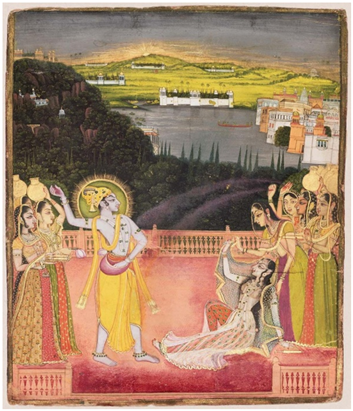
Figure 3 Krishna Celebrates Holi with Radha and the Gopis by Nihal Chand, Kishangarh, Rajasthan, c.1750-60, Opaque Watercolour and Gold on Paper, 19.4x15.9
4. Decorative Detailing and Enrichment
Finely rendered props with patterned carpets, bejeweled thrones, and floral vases amplify visual richness. In many miniatures, the level of detail in a carpet’s motif rivals that of the protagonist’s attire, maintaining decorative parity.
1) Aesthetic Function of Props: The finely rendered props such as intricately patterned carpets, bejeweled thrones, floral vases, and embroidered cushions and bolsters act as ornamental components that amplify the visual richness of the scene. The depiction of velvet, gemstones, and silk drapery allows the artist to showcase technical brilliance, inviting the viewer to dwell on every minute detail. In many Rajasthani miniatures, for example, the level of detail in a carpet’s motif rivals that of the main character’s attire, demonstrating the painter’s intent to maintain decorative parity throughout the frame. The presence of such luxurious props reinforces the opulence of the royal setting. They signify not only wealth and refinement but also the painter’s mastery in capturing material culture with exquisite precision. These props provide visual anchors within the pictorial space, balancing the verticality of human figures with horizontal planes of carpets and bolsters. The repetitive patterns and symmetry contribute to the rhythmic harmony of the composition. Beyond decoration, these objects evoke the highly cultivated lifestyle of the court, where art, luxury, and aesthetic sensibility were deeply interwoven into daily existence. The props thus function as markers of taste, status, and cultural identity. The fine depiction of textures like the softness of velvet, the sparkle of gemstones, the fluid drapery of silk allows the artist to showcase technical brilliance, inviting the viewer’s eye to dwell on every minute detail.
Figure 4
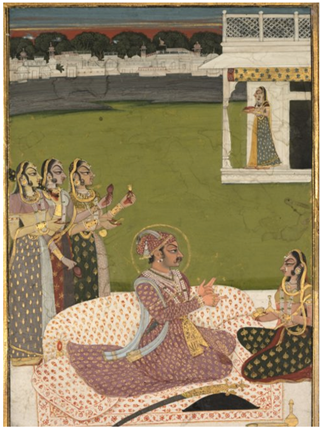
Figure 4
Portrait of Maharaja
Savant Singh with Consort, Bani Thani by Nihal Chand, Kishangarh, Rajasthan, c.
1748–1757, Ink, coloyr and gold on paper, 27.4x20 cm,
Cleveland Museum of Art
5. The Semiotics of Personal Grooming (Shringar)
Toilet scenes occupy a significant space in aristocratic portrayals, where mirrors, chowkies (low stools), and pitchers serve as aesthetic and symbolic devices.
1) The moments of female adornment occupy a significant space, particularly within depictions of royal and aristocratic life. These intimate portrayals of personal grooming rituals are marked by the presence of specific props such as mirrors, chowkies (low stools), and pitchers. Far beyond their utilitarian function, these objects serve as powerful aesthetic, symbolic, and compositional devices. The mirror is perhaps the most iconic prop. It anchors the act of self-adornment, often portraying the woman gazing at her reflection while applying cosmetics or adjusting jewelry or veil. The mirror often displays a partial reflection, allowing the painter to showcase both frontal and reflected profiles of the subject, demonstrating technical virtuosity. The Chowky accommodates the seated or standing lady engaged in grooming. It functions as a grounding element in the composition, defining the spatial plane of the foreground. Its intricate design, often inlaid with ivory, gold, or elaborate motifs, reflects the wealth and opulence of the subject’s environment. And the pitcher’s rounded form often contrasts with the linear structures of standing figure or architecture, adding compositional harmony. Props allow the artist to demonstrate mastery in rendering fine craftsmanship, inlay work, floral carvings, and metallic reflections enhancing the painting’s decorative value. The careful arrangement of props suggests ritualized privacy, providing viewers a privileged glimpse into the secluded world of feminine beauty.
Figure
5
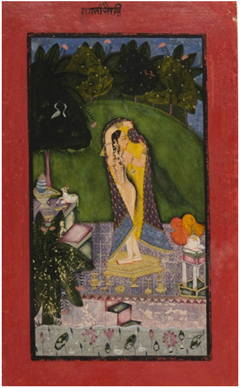
Figure 5
Bhairavi Ragini,
Bundi, Rajasthan, c. 1736, Opaque Watercolour and Gold on Paper
2) The mirror, for instance, not only facilitates the act of self-adornment but also symbolizes self-awareness, vanity, and romantic anticipation, often hinting at the unseen lover for whom the adornment is performed. The chowky elevates the act of grooming to a ritualistic practice, where posture and elegance are emphasized. The pitcher, evokes both purification and abundance, connecting bodily adornment to larger cultural notions of ritual cleanliness and divine beauty. These props also contribute to the spatial balance and compositional rhythm of the painting, their circular, rectangular, or curvilinear forms interplaying with the architecture and human figures to create a harmonious visual narrative. Through their intricate detailing of floral motifs, inlaid jewels, and gilded surfaces, these objects manifest the opulence of courtly life, while simultaneously acting as silent witnesses to private, yet culturally significant, moments of feminine identity and social expectation.
Figure
6
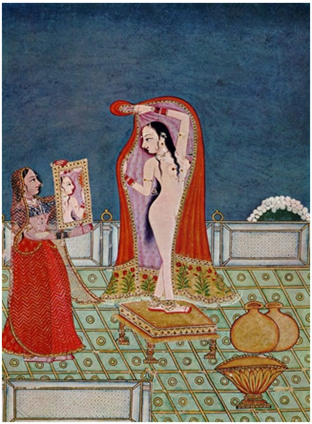
Figure 6 After the Bath, Bundi
Rajasthan, about 1775, Allahabad Museum, 15x22 cm
3) Reflective Complexity in Vilaval Ragini where props such as jewelry, textiles, chowry (fly-whisks), architectural niches, utensils, mirrors, bolsters, and cushions are meticulously rendered with extraordinary precision and exquisite craftsmanship in Indian miniature paintings. Artists use the mirror to create reflections showing partial glimpses of the woman’s face, jewelry, or hairstyle which adds complexity and visual depth. The reflective surface allows the painter to display technical mastery in rendering light, gloss, and dimensionality within a small pictorial space. The chowry is typically rendered with long, flowing white yak-tail fibers or peacock feathers attached to ornate handles often studded with gold, ivory, or jewels. Its sweeping curves introduce graceful movement into otherwise static compositions, adding visual rhythm. The chowry is a symbol of sovereignty and divine kingship the supreme status of seated lady. The intricate detailing of embroidered garments, pearl-stringed jewelry, and delicate floral motifs adorning canopies and courtly pavilions collectively evoke an atmosphere of grandeur and regal splendor. These finely executed elements are not merely decorative; they function as vital aesthetic devices that demonstrate the painter’s technical virtuosity, elevating the painting into a multisensory visual experience. Every minute object becomes a micro-cosm of artistic excellence, capturing the viewer’s gaze and inviting prolonged contemplation. The careful balance of ornamentation and narrative not only reflects the cultural sophistication of the court but also transforms the painted surface into a vibrant expression of luxury, refinement, and symbolic power.
Figure 7
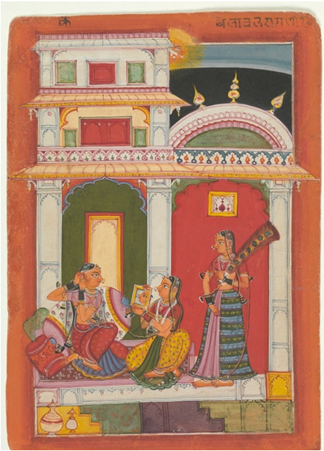
Figure 7 Vilaval Ragini, Folio from a Ragamala series, Sirohi, Rajasthan, ca. 1680, Ink and Opaque Watercolor on Paper, 22.2x16.2 cm
6. Chromatic Cohesion and Textural Diversity
1) Props often complement or contrast the primary color scheme, creating visual cohesion. A scarlet and a turquoise demonic figure, or a pink and blue hilly rocks, often depicted in a stylized manner, are a recurring Persian element, particularly in landscapes. These rocks, contribute to the distinctive visual language of the art form, often appearing as outcrops or formations in mountainous or hilly terrains. Tones of green chromatic vibrancy and textural diversity is carefully chosen to avoid monotony and enhance depth, often echoing motifs seen in costumes or bodies of demons.
Figure 8
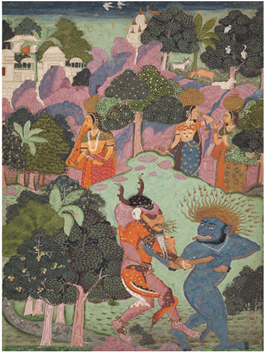
Figure 8
Demons Fighting Over
an Animal Limb, Bikaner, Rajasthan, Late 17th century, Ink, Opaque Watercolour,
and Gold on Paper, 29.4x18.6 cm, The Metropolitan Museum of Art
7. Props as Emotional Metaphors (Viraha and Sringara)
1) The Void of the Vipralabdha Nayika, where nayika embodies the emotional depth of separation (viraha), one of the central themes of Sringara Rasa in Indian aesthetics. She is depicted as the jilted heroine, overwhelmed by disappointed love, yearning, and emotional desolation. Her downcast eyes, slumped posture, and lonely demeanor vividly express the intensity of her inner turmoil. The stark contrast between her vibrant emotional state and the lifeless, misty background accentuates her isolation. The use of grayish patches and an empty, formless backdrop suggest not only her physical solitude but also her inner void and mental disarray. The absence of nature with no blooming flowers, no birds, no flowing water removes any sense of vitality or hope, reinforcing the mood of abandonment and longing. The sparse background becomes a visual metaphor for her emotional barrenness; nature itself refuses to bloom in the absence of her beloved. Props are minimized or entirely absent to heighten the mood of emptiness. a single prop such as a discarded bed, unembellished empty pitchers and a piece of cloth may serve as a silent witness to her state, symbolizing the absence of joy. The barren spatial composition transforms the entire pictorial plane into an extension of her inner world.
Figure
9
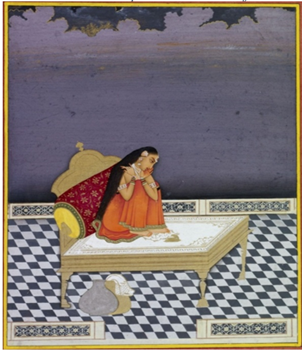
Figure 9 Vipralabdha Nayika, Jaipur, Rajasthan, circa 1800, British Museum, London
2) The lotus frequent in depictions of nayika paintings represents purity, youth, and divine love. The peacock is a common prop denoting beauty, grace, and seasonal monsoons, often aligned with the mood of longing (viraha). The creepers meandering around the tree trunk resembles that of elegant and graceful body of the nayika winding around the strong tree which is symbolizing nayaka’s body. Thus, props serve as visual metaphors that transcend their literal representation, embedding philosophical meanings within the artwork. And artist used such sensating props that actually helps in arousing the craving for love.
Figure 10
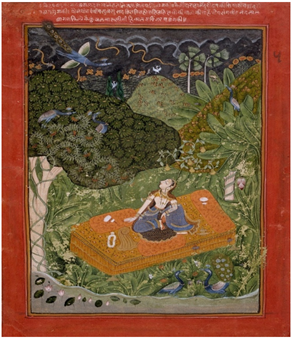
Figure 10 Utka Nayika, Folio from Keshavadasa’s Rasikapriya, Uniara, Rajasthan, circa 1760 or later, Opaque Watercolor, Gold and Ink on Paper, 25.71x16.82 cm
8. Historical Material Culture and Gender Roles
1) Miniature paintings are also important visual records of historical material culture. Through props, one can observe the clothing styles, arms and armor, or even the life style of man and woman in various regions and periods. For instance, this painting of Kota region depicts a lady shooting tigers fearlessly accompanied by two others in hunting pose. Paintings of noblewomen engaging in tiger hunts (shikar) depict powerful royal women participating in traditionally masculine activities, offering a fascinating inversion of gender roles. Women wielding weapons asserts their royal authority and martial capabilities. Props like bows and guns in the hands of women challenge conventional feminine stereotypes, emphasizi ng female valor and sovereignty. Weapons direct the viewer's gaze toward the action. Distant forest trees or palace structures frame the background, anchoring the narrative in a specific time and place. Each prop like weapon, animal, or textile are carefully selected and rendered to enhance the drama, assert royal power and challenge gender norms.
Figure 11
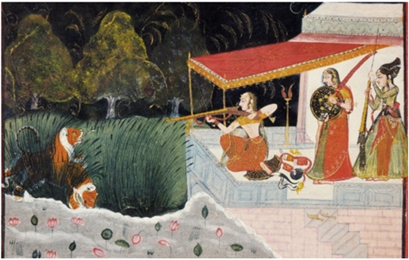
Figure 11 Ladies Hunting Tigers, Kotah, Rajasthan, 18th century
2) The Courtly Appropriation of Tribal Identity: In this visually striking miniature painting, the central female figure, adorned with lavish adornment like pearl strings, ornate armlets, heavy anklets, rich textiles, and sophisticated posture strongly suggests her identity as a court lady, clearly does not belong to the tribal Bhil community, unlike the attendant figure behind her engaged in deer hunting, and female holding a torch to illuminate the prey. The court lady adopts the guise of a huntress, an activity typically associated with masculine or tribal identity but her fine jewelry and aristocratic demeanor remain intact, preserving her courtly status. This creates a hybridized portrait that combines elements of adventure, luxury, and fantasy. The portrayal of such a figure in a hunter’s costume, engaged in an adventurous hunting scene, reflects a deliberate act of courtly appropriation of tribal identity for visual and cultural effect. The torch serves a practical purpose illuminating the deers in the dark. Symbolically, it enhances the drama and theatricality of the night hunt. The burning torch or mashaal, rendered with dynamic flames, adds visual movement and light contrast, heightening the viewer’s engagement. The inclusion of the Bhil figure introduces an ethnographic element, reflecting the historical association of Bhils with hunting skills.
Figure
12
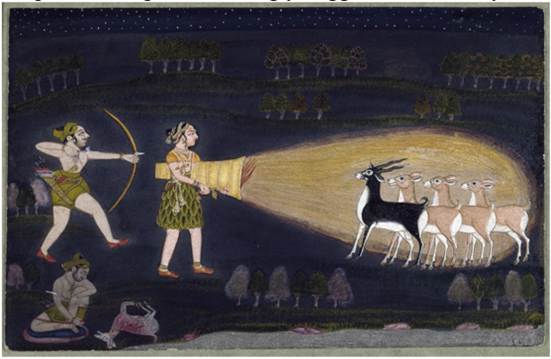
Figure 12 A Deer Hunt, Kota, Rajasthan, circa 1775, Walters Art Museum
3) This elaborate miniature painting presents a fascinating fusion of royal identity, tribal costume, and gendered hunting roles, exemplifying the imaginative visual culture of Rajasthani courtly art. The museum description reads: The ruler, who has the title Maharana, wears the leaf skirt of the Bhil people of Western India, as he hunts deer with a female tracker. They both wear a girdle of bells to scare the quarry out of the underbrush. The rhythmic jingling serves to flush out animals from dense foliage. Accompanying the ruler is a female tracker, a highly unusual but symbolically rich figure. She assists by holding a lamp enclosed in a pot, casting directed light upon the deer hiding in the underbrush. Her role is both practical and symbolic. Practically, the controlled light disorients the quarry, forcing it into the open. Symbolically, the lamp introduces a dynamic source of illumination in the composition, creating dramatic contrasts of light and shadow, enhancing the night-time drama of the hunt. The jungle backdrop, though stylized, evokes the lush yet controlled wildness of royal hunting grounds, a space where nature becomes a stage for demonstrating princely prowess.
Figure 13
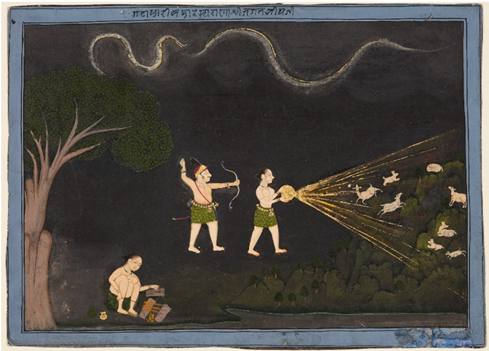
Figure 13 Maharana Jagat Singh II of dressed as a Bhil Hunting Deer at Night, c. 1735-40, Cleveland Museum of Art
9. Internal Frames and Narrative Suspension
1) Props in Indian miniature paintings often serve as anchors in storytelling. Many a times nature elements like lotus ponds or birds and animals in pair subtly communicate the mood or rasa (emotion) of a scene. To depict scenes on such themes, artists concentrated on the mental and geographical realms of the nayika who dreams of the reunion in the world imagined or created by her. Painter of this picture divided adjacent spaces using variety of internal frames and unifies them within a single page. Here world outside the bower seems abundant with the detailing of nature, it is noisy as various birds and animals are in play mood where as nature is suspended inside the bower is totally opposite, still and tranquil.
Figure
14
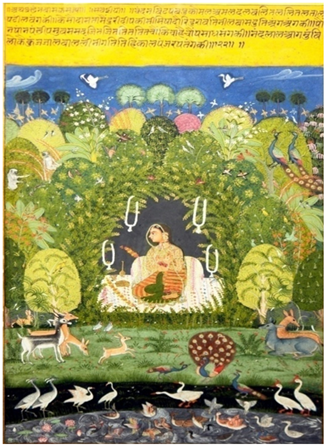
Figure 14 Vasakasajja Nayika, Illustration to Keshavadasa's Rasikapriya, Bundi, Rajasthan, 17th Century A.D., Paper, 38.5x25 cm, National Museum of India
2) This painting offers a rich and nuanced interpretation of the archetype, where the heroine traverses a treacherous path at night, undeterred by fearsome supernatural beings. At the core of the composition is the Abhisarika Nayika, traditionally characterized by her bold journey through darkness to meet her beloved. Here, she walks with such focused concentration that the menacing surroundings witches, serpents, animals, and ominous landscapes fail to disturb her resolve. Her gaze is steady, her posture firm, suggesting not mere bravery but spiritual control akin to yogic meditation. An unusual element in this rendering is the presence of a yogi-like figure positioned in the top right corner. While his role is not explicitly narrative, his inclusion may serve multiple interpretive purposes. His meditative stance mirrors the nayika’s internal concentration, suggesting that she too is practicing a form of moving yoga, where mental steadiness overcomes physical threats. The yogi serves as a silent witness or spiritual metaphor, elevating the emotional state of longing into the domain of spiritual discipline. As the accompanying poetic verse suggests, the witches themselves are astonished by the nayika’s ability to transcend fear: “What kind of yoga is this? Nothing shakes her concentration.” The witches (ogresses), depicted in grotesque yet animated forms, serve not simply as physical dangers but as psychological embodiments of fear, doubt, and distraction, the very obstacles a yogic practitioner learns to overcome. The depiction of one witch pointing at the nayika can be read as a gesture of astonishment and reluctant admiration, emphasizing her spiritual triumph.
Figure
15
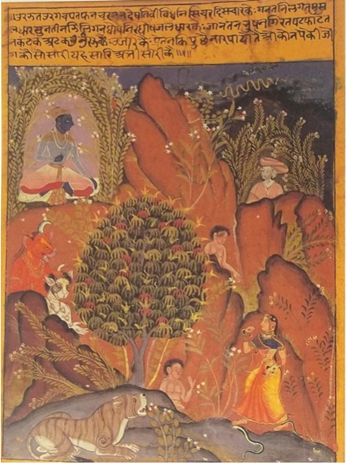
Figure 15 Abhisarika Nayika, Rasamanjari, Mewar, Rajasthan, Second Quarter of the 17th Century
3) Scenes of women engaged in leisure shown often in palace gardens or lotus ponds are common. In these intimate compositions, fishes frequently appear as active props within the water bodies where women bathe, play, or feed aquatic creatures. Far beyond their decorative function, fishes serve multiple symbolic, aesthetic, and narrative purposes. The graceful movement of fish in water often mirrors the fluidity of female grace and sensuality, making them ideal companions in scenes of feminine beauty. Water and fish together reinforce the idea of life-giving energy, prosperity, and erotic vitality, particularly in the context of shringar rasa (the aesthetic mood of romantic and sensual love).
Figure
16
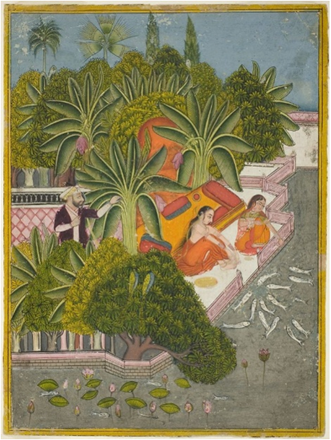
Figure 16
Royal Women Feeding
Fish, c. 1740, Bundi, Rajasthan
10. The Meteorological Prop: Rain as Emotion
1) Lines about this particular nayika, Abhisarika, a woman in love "She stepped out into the rain-drenched night, where each droplet fell like a string of pearls, forming a shimmering curtain between her and the world yet nothing could hold her back from meeting her beloved." This miniature is one of the examples that reflects how rain droplets themselves become significant props in miniature art, used not just to indicate weather, but to enhance emotion, narrative, and visual rhythm. The delicate pearl-like droplets form a metaphorical veil, to signify separation, anticipation, or emotional intensity. Especially in Abhisarika Nayika depictions, rain becomes a backdrop of yearning, suggesting the heroine’s urgency and romantic longing. In scenes where a lady ventures out to meet her lover during the monsoon, the rain acts almost like a character itself as a silent witness and participant in the secret rendezvous. The droplet "curtain" divides the interior safety from the outer emotional adventure, mirroring the heroine’s internal conflict. Like pearl strings, the droplets often overlay or frame the heroine, creating depth and layering in composition. This not only guides the viewer’s gaze but adds opulence and delicacy, mirroring the fine jewelry or textiles depicted elsewhere in the painting. The falling droplets are not painted randomly. Artists often arrange them in curved, rhythmic strings, resembling garlands or beaded curtains. This transforms the rain into a decorative prop, enhancing the visual grace of the scene. These droplets become tools to evoke 'Sringara' rasa, the aesthetic of love, romance, and beauty. These aren’t natural elements, they're narrative devices, guiding the story and heightening the emotional stakes.
Figure
17
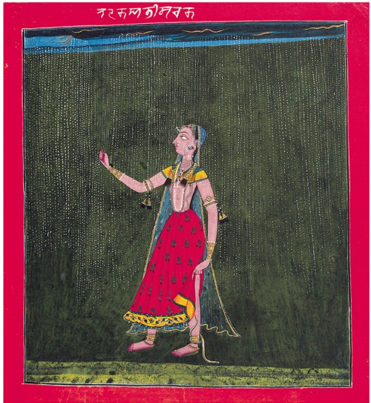
Figure 17 Abhisarika Nayika, Basohli, perhaps at Mankot, ca. 1700, Collection Jagdish and Kamla Mittal Museum of Indian Art, Hyderabad
11. Conclusion
Each appearing or disappearing element in these Miniature Paintings is found important possessing meaning of its own having some relation directly or indirectly with the narration that has been illustrated by the artist. They were painted to symbolize something which is usually ignored by spectator and art interpreters and thus was concluded that each prop used in painting was selected and included with an intention and idea behind. They are so significant that many a times they compliment the mood of the whole picture. Through numerous birds and animals shown in play mood, many a times artist added abundance to the detailing of nature to create noisy surrounding. Whereas totally opposite to it, nature is suspended sometimes to generate still and tranquil environment and flat colours are filled in the background. Artist executed each detail so delicately and brilliantly that each element helped in serving the atmosphere. The only thing that these paintings needed was the same keenness of eyes and curiosity of mind with which they were painted by the artists.
CONFLICT OF INTERESTS
None.
None.
REFERENCES
Aitken, M. E. (2010). The Intelligence of Tradition in Rajput Court Painting. Yale University Press.
Bahadur, K. P. (1972). The Rasikapriya of Keshavadasa. Motilal Banarsidass.
Banerji, A. (1956–1957). Illustrations to the Rasikapriya from Bundi-Kotah. Lalit Kala Akademi, (3–4), 67.
Beach, M. C. (1974). Rajput Painting at Bundi and Kota. Artibus Asiae. https://doi.org/10.2307/1522680
Coomaraswamy, A. K. (1916). Rajput Painting. Oxford University Press. https://doi.org/10.5479/sla.862548.39088015190135
Craven, R. C. (1997). Indian Art: A Concise History.
Thames and Hudson.
Dalrymple, W., and Sharma, Y.
(2012). Princes and Painters
in Mughal Delhi, 1707–1857. Asia Society.
Dehejia, H. V. (1996). The Advaita of Art. Motilal
Banarsidass.
Dehejia, H. V. (2004). A Celebration of Love: The Romantic Heroine in the Indian Arts. Lustre Press/Roli Books.
Dehejia, V. (2009). The Body Adorned:
Dissolving Boundaries Between Sacred and Profane in India's
Art. Columbia University Press.
Losty, J. P. (1982). The Art of the Book in
India. British Library.
Pande, A. (2011). Shringara: The Many Faces of Indian Beauty. Rupa Publications.
Randhawa, M. S. (1954). Basohli Painting. Publications Division,
Ministry of Information and Broadcasting.
Schwartzberg, J. E. (1992). South Asian Cartography. In J. B. Harley
and D. Woodward (Eds.), The History
of cartography (Vol. 2, Book 1). University
of Chicago Press.
Sodhi, J. (1999). A study of Bundi School of Painting.
Abhinav Publications.
Topsfield, A. (2001). Court Painting at Udaipur: Art Under the Maharanas of Mewar. Artibus Asiae Publishers.
|
|
 This work is licensed under a: Creative Commons Attribution 4.0 International License
© ShodhKosh 2026. All Rights Reserved.