ShodhKosh: Journal of Visual and Performing ArtsISSN (Online): 2582-7472
|
|
Generative AI as Creative Collaborators in Visual Art and Film: A Posthumanism Perspective
Shopita Khurana 1
 ,
Dr. Kamaljeet Kaur 2
,
Dr. Kamaljeet Kaur 2 ,
Akanksha Singh 3
,
Akanksha Singh 3 ,
Dr. Monika Sharma 4
,
Dr. Monika Sharma 4 ,
Dr. Ashok Bairagi 5
,
Dr. Ashok Bairagi 5 ,
Dr. Preeti Singh 6
,
Dr. Preeti Singh 6 , Dr. Jyotsana Thakur 7

1 Research Scholar, University Institute
of Media Studies, Chandigarh University, Mohali, Punjab, India
2 Professor, University Institute of Media Studies, Chandigarh
University, Mohali, Punjab, India
3 PhD Research Scholar, Department of Peoples Education and Mass Communication, Mahatma Gandhi Chitrakoot Gramodaya Vishwavidyalaya, M.P., India
4 Assistant Professor, Department of Media Studies, Gurugram University, Gurugram, Haryana, India
5 Assistant Professor, Head of Department (School of Cinema) AAFT
University of Media and Arts, Raipur, India
6 Associate Professor, School of Management, Amity University, Greater
Noida, India
7 Professor, University Institute of Media Studies, Chandigarh University, Mohali, Punjab, India
|
|
|
ABSTRACT |
|
|
The current
accelerated development of generative artificial intelligence (GenAI) has
radically reformed the practices of creativity in visual art and film,
questioning the author and originality and creative agency. In the current
paper, I will analyze the position of generative AI as a creative partner in
the context of posthumanism, a theoretical framework that separates
creativity out of the purely human-centered frameworks. The paper discusses
the ways AI-controlled systems, generative models, like GANs, diffusion
models, and transformer-based designs, can support artistic creation by
allowing new types of expression, enhancing the efficiency of their creation,
and supporting the creative process through repetition. The paper employs a
qualitative and conceptual approach of research and examines the available
literature and case studies, as well as real-life examples of the use of
AI-assisted art and filmmaking. A posthumanist theoretical paradigm is
created to comprehend creativity as a process that is distributed and
relational created as a result of an interaction between human intuition and
machine intelligence. The paper also suggests a model of human-AI creative
collaboration, the key points of which are shared agency, co-creation, and
the generation of hybrids. The findings indicated that human creativity is
required to guarantee the contextual knowledge, emotional richness, and
critical thinking but AI is significant in matters of innovativeness,
magnitude, and exploration. The comparative analysis is utilized to
demonstrate that the human-AI collaboration has better performance in various
areas related to creativity, particularly, the domains of innovation and
efficiency. The implementation of AI, in its turn, brings up the required
aspects of challenging issues, including the problem of ethics concerning the
authorship, intellectual property, biased data and potential homogenization
of artworks. Concluding the paper, it is stated that generative AI should not
be viewed as a danger to human creators rather as a creative collaborator
that transforms the creative ecosystem. It illuminates the need to have
cross-functional models, codes of ethics, and policy solutions that would
ensure the responsible and sustainable use of AI in the creative sector. |
|||
|
Received 22 December 2025 Accepted 25 March 2026 Published 28 March 2026 Corresponding Author Dr. Preeti Singh,
preetisingh.jmc@gmail.com DOI 10.29121/shodhkosh.v7.i2s.2026.7360 Funding: This research
received no specific grant from any funding agency in the public, commercial,
or not-for-profit sectors. Copyright: © 2026 The
Author(s). This work is licensed under a Creative Commons
Attribution 4.0 International License. With the
license CC-BY, authors retain the copyright, allowing anyone to download,
reuse, re-print, modify, distribute, and/or copy their contribution. The work
must be properly attributed to its author.
|
|||
|
Keywords: Generative Artificial Intelligence, Posthumanism,
Creative Collaboration, Visual Art, Film Production, Human–AI Interaction,
Computational Creativity, Digital Aesthetics |
|||


1. INTRODUCTION
Generative Artificial Intelligence (GenAI) has been able to develop blisteringly to redefine the creative economy of the creative industries, particularly in the visual art and film sectors. Historically, the artistic creation has been considered a kind of human activity that is based on imagination, emotionality, and subjective experience. Nevertheless, with the advent of generative models, including Generative Adversarial Networks (GANs), diffusion models, transformer-based ones, and others, this time-honored paradigm has been questioned. It is now possible to create highly advanced artworks, film images, scripts, and even whole stories using these technologies and, therefore, artificially intelligent does not serve as a tool but a partner in the creative process. Over the past few years, the introduction of AI into the creative process of artwork has been moved beyond experimental applications into mainstream use. Currently, artists and filmmakers are using AI systems to ideate, transfer styles, create animations, visual effects, and stories Bhullar (2024). Art created by AI has been displayed in art galleries, sold at highly valuable auction houses and has also been used in creating films and other digital media. This change is an indication of the movement away from human centered creativity towards creative ecosystems that are hybrids where machine intelligence and human intuition are merged to give rise to new forms of expression. This revolution poses some basic issues concerning nature of creativity and authorship. In case an AI system is relied upon to help in the production of a work, can it be called a co-creator? Who owns AI generated content, the one who created it, the one who uses it, or the algorithm? Questions about AI are also complicated due to the lack of transparency of the AI models, which can be black boxes, meaning it is hard to track the origin of the products of creativity. This is in turn blurring the customary line between creators, tool, and medium Black (2018).
In order to critically explore such developments, this paper takes a posthumanism approach that endangered anthropocentric approaches and reorganized human-machinery and machine-creativity interactions. The theoretical framework under the term posthumanism focuses on decentering the human subject and acknowledges that non-human objects contribute to the culture and technological process. In this context, AI is not an object dominated by human beings but a participant in co-creation of meaning and artistic worth. The main aim of the research paper is to investigate the application of generative AI as an imaginative partner in visual art and film by applying the posthumanism perspective. Particularly, the paper will seek to: (i) observe how AI is developing its changing role in the generation of art, (ii) look into how human-AI cooperation affects creativity and authorship, and (iii) explore the ethical, cultural, and theoretical issues that appear as a result of this new paradigm. In such a way, the research aims at adding to the expanding debate of AI-driven creativity and its influence on modern visual culture. This paper is an interdisciplinary one and that is why it is so significant because it bridges the gap between technology, art, philosophy, and the studies of media. As the creative practice is continuously being redefined by AI, it requires new conceptual models, which can describe the changes. The posthumanist approach can be useful in achieving the creativity as a relational and distributed practice rather than a pure human in-quality. The change has immense effects to artists, filmmakers, scholars, and policymakers who find their way through the shifting digital ecosystem. The rest of this paper is organized as follows: Section II comes up with a review of existing literature on generative AI, creative collaboration, and posthumanism. Section III contains the theoretical framework of the study. In Part IV, the author explores the technology behind and uses of generative AI in art and film. Section V presents the method of the research. Section VI will include analysis and discussion of important findings, and Section VII will bring an end to the paper with future directions and recommendations.
2. Review of Existing work in the domain
The interface of the generative artificial intelligence (GenAI), the visual creativity and the posthumanist philosophy has gained a considerable amount of scholarly attention over past few years. This section will conduct a review on the available literature in the four main areas: (i) generative AI in visual art and film, (ii) posthumanism and creative agency, (iii) human-AI co-creation models, and (iv) ethical and legal issues of AI-generated content. Generative AI technologies, in particular, Generative Adversarial Networks (GANs) and diffusion models have transformed the digital art and film-making industry. Later developments, such as diffusion-based models such as DALL•E and Stable Diffusion, have made high-resolution semantically expressive visual text-to-image prompting possible. Within the art field of visual arts, researchers point to the role of AI-created art pieces in disrupting the concept of originality and artistic purpose. Research has shown that AI systems have the ability to recreate the artistic styles, create new musical compositions and aid in creative ideation. The AI is now being utilized in cinema creation in the form of scripting, shot creation, visual effects (VFX), and deepfake. Scientists believe that these tools are efficient and increase creative opportunities, as well as creating new dependencies with algorithmic systems Blanco et al. (2024), Bowen and Giannini (2019).
The posthumanism theory is the basis of perception AI as a creative partner. Donna Haraway and Rosi Braidotti are thinkers who focus on how knowledge and cultural production are decentered around human power and allow non-human agency to take priority. The notion of the cyborg introduced by Haraway is where human and machine are intertwined, whereas the works by Braidotti consider the subjectivity as being distributed throughout the technological and biological structures. More recent works utilize posthumanist approaches to digital creativity by suggesting that AI systems are not supposed to be passive means of creativity but parts of creative networks. According to the scholars, this point of view is crucial to interpret modern art practices that are influenced by algorithmic interventions Bringsjord and Govindarajulu (2024).
There is a development of literature on frameworks of human-AI collaboration in creative processes. Co-creation models usually divide AI jobs into: (i) assistant (ii) collaborator and (iii) autonomous creator. AI supports creativity of humans in assistant-based models with suggestions and automation. Both human and AI make their contributions into the creative output iteratively in collaborative models. Less frequented, autonomous models are a situation where AI creates content with little human intervention. Research on interactive design and computational creativity suggests collaborative systems augment innovation being able to merge human intuition with machine-based pattern recognition. As an example, AI can create various design options in a short period of time, and artists can consider numerous creative possibilities. Nonetheless, researchers also observe that over-dependence on AI, the loss of creative power, and the homogenization of the creative product are also risky issues with the training data bias. The incorporation of generative AI into the field of creativity has prompted massive ethical and legal concerns. Authorship is one of the major issues: who is the creator of AI-generated content. Current copyright laws that are more humanistic find it difficult to adapt machine-generated works Browne (2021), Cao et al. (2024).
Data ethics is also another serious problem. Users frequently feed AI models with large datasets, which contain copyrighted content, which creates the issue of unauthorized utilization and breach of intellectual property. Moreover, AI use in the film industry, especially the deepfake technology, carries security risks associated with misinformation, manipulation of identities, and consent. Researchers emphasize the possibility of AI democratizing creativity through the increased access to artistic tools, which is culturally relevant. Simultaneously, the issue of marginalisation of the traditional artist and the loss of human creative values is also of concern. In the literature, it is recommended that innovative forces need to be balanced with ethical responsibility to achieve sustainable application of AI in creative sectors. In spite of the increasing literature, there are still a number of gaps. To begin with, weak integration of posthumanist theory with empirical research into AI-oriented creativity is observed. Second, the literature on AI tends to regard it as a means but not a co-creative object, ignoring its role in the production of art that is increasingly becoming more and more creative. Third, no overarching models that relate technological abilities and philosophical senses of creativity exist Cao et al. (2023). The given research fills these gaps with a posthumanist approach to generative AI as a creative partner in visual art and film. It connects the theoretical knowledge with the practical ones, providing a comprehensive view of the changing pattern of human-AI creativity.
Table 1
|
Table 1 Summary of Recent Research |
|||
|
Technique / Domain |
Application Area |
Key Contribution |
Limitations |
|
Generative AI, Cultural Analytics Carey (2021) |
Cultural Heritage, Digital Art |
Examines relationship between GenAI and human
agency; introduces debate on AI-generated heritage |
Lacks empirical validation; largely conceptual |
|
Posthuman AI Co-creation Cetinic and She (2021) |
Creative Writing, Visual Narratives |
Proposes posthuman framework where AI acts as
creative collaborator |
Limited case-based experimentation |
|
Diffusion, NeRF, Generative Models Chiang (2024) |
Film Production |
Surveys AI-driven filmmaking workflows (VFX,
storytelling, animation) |
Focuses more on technical aspects than theory |
|
Generative Aesthetics Christie’s (2025) |
AI Cinema |
Identifies emerging aesthetic models in
AI-generated cinema |
Limited dataset and early-stage analysis |
|
Human-AI Dialogue Framework Chuet al. (2022) |
Visual Art Ecosystems |
Introduces culturally situated evaluation of AI
creativity |
Requires complex interdisciplinary setup |
|
Interactive AI Art (Diffusion Models) Chung (2023) |
Digital Installations |
Demonstrates audience-AI interaction in
generative artworks |
Niche application; limited scalability |
|
Generative AI in Education Cichocka (2022) |
Art Education |
Explores AI as a tool for creative learning and
visualization |
Focused on pedagogy, not professional art |
|
Generative AI Media Systems Raj (2025) |
Creative Industries |
Analyzes transformation of media industries due
to GenAI adoption |
Limited focus on posthuman theory |
Table 1 of the literature review reveals that the trend of recent research points to the fact that the generative AI is turning the creativity as a human-oriented process into a collaborative venture of humans and machines. The majority of research is devoted to the application of higher models like diffusion models and GANs in the creation of visual art and films and shows that they can produce quality images, cinematographic works, and interactive artistic experiences. Theoretically, some of the works take the posthumanism approach, as they note that AI cannot be regarded as a tool but as a co-creative partner that can contribute to the artistic results. The change reinvents established notions of authorship, imagination and control of creativity. Meanwhile, technical literature emphasizes the implementation of AI in the workflow of a film industry, digital installations, and creative industries, demonstrating that it can increase efficiency and broadest creativity opportunities. Nevertheless, there are also main limitations in the literature that the table displays. There are numerous works that are either conceptual, or not empirically validated, or those that pay much attention to technical issues, without considering the philosophical points of view. Also, such ethical and legal issues as copyright, the use of data, and authenticity of AI-generated content are not yet resolved.
3. Theoretical Framework: Posthumanism and Creative Collaboration
This theoretical basis will be based on posthumanism, which is a critical approach to the problem of traditional humanistic perceptions of creativity and agency. Posthumanism re-placates the human not as the unique source of meaning and artistic creation, but as the larger network of relations with machines, algorithms, and systems of digital relations. This attitude is especially apt in the context of generative artificial intelligence, where AI systems are not passive instruments anymore, but they are involved in creative practice. Posthumanism makes it possible to reconsider the concept of creativity as a distributed phenomenon produced through the cooperation of humans and machines due to the decentering of the human authority. In this context, creativity is redefined as a relational and emergent process instead of the cognitive activity of an individual. Referring to generative AI systems with their ability to generate new content based on the large amounts of data fed into them, one can note the existence of a certain kind of computational creativity, which supplements the intuition and imagination of humans. The connection between human contribution and machine generated production forms a feedback loop, with the two entities affecting the end artistic product. This symbiotic relationship is in line with posthumanist thinking that talks about hybridity, interdependence and boundaries between human and non-human actors being blurred. The main feature of this framework is the re-definition of agency. Agency has traditionally been defined as a human concept, where tools are just the means of extension of human will. But in creative cultures based on AI, the agency is distributed and bargained. Generative models have the ability to add unpredictable changes, rework artistic prompts and even oppose the original intent of a creator. This implies that AI has a type of an algorithmic agency, which means that it adds value to the creative result. By holding onto such a view, it is not to say that AI has a consciousness or intentional mind in a human sense but is a proactive participant in the development of creative processes.
Also, the posthumanist paradigm disrupts the traditional idea of authorship and originality. In the case of human-AI systems in collaboration, the delineation between creator, tool and medium becomes more and more blurred. The final art or movie is commonly the outcome of a collection of numerous layers of input, such as dataset impacts, algorithmic processing, and human curation. It calls into significant question the question of ownership, intellectual property and the value of creative work. Posthumanism could provide the conceptual framework to rethink those issues in the age of the generative AI because it encourages creativity and transforms it into a distributed and collective achievement. The other concept that is incorporated into the framework is the concept of co-creation models, where AI can perform in various different roles such as the assistant, collaborator, or autonomous generator. In assistant work, AI improves human creativity as it is used to automate repetitive processes or propose ideologies. It participates in the back and forth process with the human creator in collaborative roles, as it affects the direction of art. In more progressive cases, AI systems can automatically produce content which can be later edited or refined by humans. Such different degrees of interaction provide a picture of the range of human-AI collaboration and emphasize the changing character of creative collaborations. Lastly, this work suggests a conceptualization of human-AI creative collaboration, a system of three interacting parts, including human creativity (intuition, emotion, intent), machine intelligence (pattern recognition, data-driven generation), and interaction interface (tools, prompts, and feedback mechanisms). These elements interact to bring about hybrid creative products, which can not be attributed to either human beings or machines. The main idea of the paper is emphasized in this model, which states that generative AI can be perceived not only as a technological innovation, but as a revolutionary force changing the ontology of creativity itself.
Figure 1
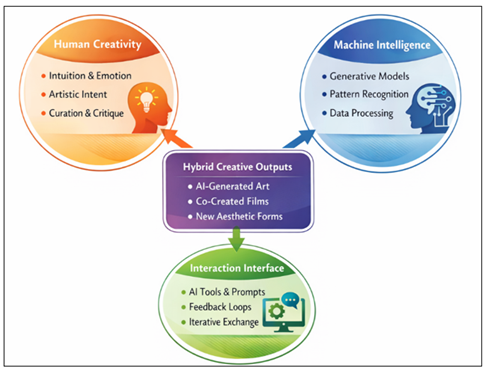
Figure 1 Human – AI Creative Collaboration Framework
Figure 1 is a Human -AI Creative Collaboration Framework, in which the creativity appears as a result of the interaction between three fundamental elements, namely, human creativity, machine intelligence, and the interface of interaction. Human creativity brings with it the ability of intuition, feeling and artistic will whereas machine thinking gives us the data driven possibilities of pattern recognition and data modeling. The interface of interaction the use of tools, prompts and feedback loops serve as the channel through which a constant communication between the human and AI system is possible. These factors culminate in the middle, giving rise to hybrid artistic products, including AI-generated art, co-created video, and novel aesthetics. The model focuses on joint agency and co-creation, where the focus on creativity is not exclusively human but rather a collaboration between human and machine-driven contributions in a post humanist outlook.
4. Generative AI Technologies in Art and Film
The field of visual art and film Generative works have become a groundbreaking innovator in modern art through the fast development of machine learning architectures, including Generative Adversarial Networks (GANs), diffusion models, and transformer-based systems. These technologies allow machines to master the trends on large amounts of data and produce new and a high-quality content that is similar to works created by humans. The generative models, in contrast to the rule-based systems, are based on probabilistic learning, which means that they can generate various and contextually relevant outputs. This potential has greatly extended the horizons of the creative production so that the artists and filmmakers can experiment more with aesthetic possibilities and workflow. In visual art, generative AI has been used to produce works of art, both in the style of classical paintings and in completely new visual pieces. Artists are more likely to generate ideas with the help of AI, transfer styles, create images and installations that interact. An example of hybrid styles is the ability to create realistic portraits, abstract art, and a combination of styles using GAN-based systems. Likewise, diffusion models can be controlled in order to generate images with high precision and use textual input to generate images that represent an idea that could only be translated into visual form with a lot of difficulty. These technologies not only contribute to the increase in the efficiency of creativity, but also democratize the production of art, allowing complex devices to be used by even a greater number of people.
Generative AI is also essential in several phases of the creative pipeline in the area of film and media production. The AI-enhanced tools are applied in writing scripts, storyboarding, character development, animation, and visual effects (VFX). Language models based on transformers help in the generation of dialogues and narrative structure, whereas image and video generation models are used to help in the scene visualization and cinematography design. Video editing, color grading and scene reconstruction are also done using deep learning techniques with a large reduction in the production time and cost. Moreover, there are technologies so deepfakes and neural rendering, that allow manipulating facial expressions and spaces in a realistic way, which opens a new opportunity to tell a story and be immersed into the environment. The other aspect of generative AI in film that is relevant is the pre-visualization and virtual production. The AI systems have the ability to create environments, create the backgrounds, and guide directors with regards to planning the shots even before the real filming is done. The implementation of AI into the creative process enables filmmakers to try various visual situations, which improves decision-making and exploration. Moreover, AI-based tools are used in the real-time rendering and augmented reality (AR) applications, which help to build the interactive and immersive cinematic experiences.
Although such developments have taken place, there are also a number of challenges in the application of generative AI in art and film. The problem of originality is one of the most significant issues because AI models will be trained on already existing data that can contain copyrighted information. This brings us to the issue of the intellectual property rights and the originality of the AI-generated content. Also, due to the use of algorithmic systems, it can result in homogenization of the outputs of the creativity process since models are likely to reproduce the major patterns that exist in the training data. The biases, lack of contextual insight, and insufficient interpretability are additional technical constraints that make the application of AI more challenging in areas related to creativity. Furthermore, the introduction of generative AI to the field of creative industries carries serious consequences to work and creativity. Although AI makes the workplace more productive, allowing new forms of expression, it also interferes with the usual workflow and questions the position of artists and film-makers. The transformation of manual production to one that is based on algorithms necessitates new skills, such as, timely engineering, model training, and online curation. Due to this fact, creative professionals will also be forced to adjust to hybrid roles, which involve artistic sensitivity and technological skills. To sum up, the generative AI technologies are transforming the scenery of visual art and film by introducing new tools, procedures, and types of collaboration. These technologies do not only enhance the human creativity but also transform the art production in its essence. Nevertheless, their integration should be done with a critical approach in regards to their transformative potential and ethical, legal, and cultural issues that they bring. This section highlights why it is essential to not only look at generative AI as a technological innovation, but also as a form of reimagining the concept of creativity in the posthuman era.
5. Methodology
The research design of this study is qualitative and conceptual in nature as an attempt to study the role of the generative artificial intelligence as a creative collaborator in visual art and film using a posthumanist approach. Since the topic under investigation is interdisciplinary, technology, arts, and philosophy, qualitative methods will be suitable to reflect the depths of interaction between human innovators and AI systems. The study is mainly based on secondary forms of data, such as scholarly articles, case studies on AI-generated works of art and films, reports by the industry, and documented instances of human-AI creative partnership. The research project is planned to be conducted using the paradigm of a case-oriented and interpretive approach whereby the selected samples of AI-assisted creative works are to be studied in order to be informed about the collaborative processes. Examples of this may include AI-generated visual art, AI-assisted filmmaking, and intermediary creativity in which human and AI creators come into contact. The relevance, the diversity of use, and the presentation of different levels of AI engagement, such as assistive equipment and autonomous generative systems, are taken as the inclusion criteria of such cases. This would be needed to have a clear understanding of how generative AI operates in various creative situations. The systematic review and content analysis of the scholarly articles, digital archives, media reports, and publicly available AI-generated works are used as the methods of data collection. Further, where relevant, the experiences of artist interviews, expert views, professional practice within the industry are used to add to the analysis. The data gathered are arranged, based on themes, paying attention to such significant aspects as creative process, AI autonomy level, interaction mechanisms, and the nature of outputs. The given thematic classification allows a systematic investigation of human-AI patterns of collaboration.
The thematic and interpretive analysis is the tool of analysis of the study and is informed by the posthumanist theoretical framework as mentioned earlier. The themes that are recurrent in terms of agency, authorship, creativity, and collaboration are analyzed. All the cases are analyzed to determine the role of AI in the creative process and the role of human input in influencing or reacting to the results of the machine. The paper also assesses to what degree AI affects artistic choices, originality, and results of aesthetics. In order to determine the success of human-AI cooperation, the research applies a series of evaluation criteria, such as: (i) extent of creative input by AI, (ii) extent of human control and intervention, (iii) originality and novelty of outputs, (iv) efficiency and productivity increase, and (v) ethical and authorship issues. The criteria give a comparative framework of studying various creative situations and determining how AI changes its role in artistic creation. In addition, the conceptual modeling is also included in the study, as the findings of the analysis are applied to prove and improve the suggested human-AI creative collaboration model. This paradigm is a theoretical construct towards the explanation of the interaction of human creativity and machine intelligence and interface mechanisms. Though, the model is not empirically tested in the context of the quantitative research, it is supported by both qualitative evidence and the existing literature. The methodology identifies certain weaknesses. Secondary data may limit the scope of empirical validation, and since the generation AI technologies work very fast, the results may be updated continuously. Further, subjective nature of the interpretation may as well lead to subjectivity, but the efforts are taken to make the analysis rigorous with the help of systematic selection of data and consistency of themes.
6. Comparative Analysis and Discussion
The generative artificial intelligence in visual art and film discussion shows the dramatic paradigm shift in the very notion of creativity, which was once an individualistic and, human-focused approach to the issue to a collaborative and hybrid one. Typically, the findings indicate that generative AI is not merely a helpful technology but also an active part of the creative process, and it also takes part in idea generation, content creation, and the introduction of aesthetic innovations. This trend is similar to the posthumanist model, according to which creativity is being viewed as a distributed process that is created in the interaction between human and non-human actors. One of the most important points of the analysis is the comparison of human creativity and the AI-generated creativity. The human creativity is usually typified by deliberateness, richness, cultural background, and personal meaning. Conversely, the creativity of AI is based on pattern recognition, probabilistic creatively generation, and efficiency in computations. Although AI does not have consciousness or experience, it is capable of generating outputs that are new, coherent, and can often be hard to differentiate with those that were created by humans. The complementary nature of these two types of creativity results in more advanced results, as human instincts are used in the process, and AI increases the pool of opportunities by quickly generating and varying them. The paper also brings out the development of a collective agency during the production of creativity. The conventional artistic process gives the creative agency complete control to the human creator. In the case of AI-assisted environments, however, there is a distribution of agency among several parties, the human artist, the algorithm, and the training dataset on which the model is trained. The AI systems are capable of causing unforeseen changes, repurposing prompts, and determining the artistic direction, which will then affect the end product in a manner that may not have been expected of the human designer. This situational agency upsets traditional ideas about authorship and creates doubts about the problem of ownership and responsibility in the creative practice.
Workflow Generative AI plays a crucial role in reducing efficiency and productivity in visual art and in film production. AI tools can be used to either automate or be much faster in tasks that were previously labor intensive, including concept design, scene generation, animation, and visual effects. Artists can also use AI to do pre-visualization, script support, and real-time rendering and be able to iterate and experiment more quickly. In the same way, with AI-generated variations, artists are able to experiment with a variety of creative approaches and the creative process can be dynamic and exploratory. Nevertheless, this higher efficiency also brings up the issues of over-dependence on AI and loss of human expertise. The ethical and legal issues of the generative AI in creative areas are also analyzed. The problem of copyright and intellectual property is still in focus because AI models are frequently trained using the datasets that contain already created works without any prior permission of the original creators. This brings the issue of plagiarism, ownership, and fair use. Moreover, there are threats of identity manipulation, misinformation and lack of ethics in such industries as the filmmaking industry due to such technologies as deepfakes. The fact that there are no evident regulatory frameworks also contributes to these dilemmas, thus, something should be changed to take into account the realities of AI-driven creativity as an element of the new policies. AI use in artistic practices has enabler and disruptive cultural effects. On the one hand, generative AI allows democratizing the process of creating art and marketing products, so a kind of person with poor technical or artistic skills can create high-quality works. This promotes inclusivity and innovation in other societies. On the other hand, homogenization of art is developing into a matter of concern in that AI models would imitate the best tendencies in the training data. Otherwise this may result in the erosion of originality and ethnic variety in creative work.
The second useful finding is the position of the changing role of creative professionals. The artists and filmmakers are increasingly required to play the role of hybrids, as they are more technologically savvy and thus more artistic. Timely response to engineering, selection of models, and digital curation are already becoming a part of the creative process. This trend is the pointer of even greater transformation in the creative industries, where the collaboration with intelligent systems is one of the determinants of the professional practice. Despite the potential to be transformative, generative AI is limited in a number of ways. Even AI systems cannot understand the context, narrate subtle stories, and make ethical decisions. Many models are black box and it is thus hard to explain how certain outputs are produced and this may prevent trust and accountability. Furthermore, the quality of generated AI-based content is highly reliant on the quality and variety of training data that are likely to present biases and inaccuracies.
6.1. Comparative Analysis of Human vs. AI vs. Human–AI Collaborative Creativity
In a bid to interpret the changing creative paradigm, the comparative analysis is introduced in three dimensions Human Creativity, AI-Generated Creativity and Human-AI Collaborative Creativity.
Table 2
|
Table 2 Comparative Analysis of Creativity Models |
|||
|
Criteria |
Human Creativity |
AI-Generated Creativity |
Human–AI Collaboration |
|
Creativity Source |
Emotion, intuition, experience |
Data, algorithms, patterns |
Hybrid (intuition + computation) |
|
Originality |
High (contextual, subjective) |
Moderate (derived from training data) |
High (enhanced novelty) |
|
Speed & Efficiency |
Slow, time-intensive |
Very fast, automated |
Optimized (fast + refined) |
|
Control |
Full human control |
Algorithm-driven |
Shared control |
|
Adaptability |
High (context-aware) |
Limited (depends on training data) |
High (adaptive + scalable) |
|
Innovation Potential |
Moderate |
High (exploratory variations) |
Very High (combined strengths) |
|
Ethical Concerns |
Minimal |
High (bias, copyright issues) |
Moderate (shared accountability) |
|
Consistency |
Variable |
High (repeatable outputs) |
Balanced |
|
Skill Requirement |
Artistic expertise |
Technical setup |
Hybrid skills (art + tech) |
|
Role in Industry |
Traditional creator |
Automation tool |
Co-creator / collaborator |
There is a clear indication on the comparative analysis that the human-AI collaboration is superior when compared to individual systems in most aspects. Human creativity is frequently constrained by time and scale whereas it is more proficient in emotional richness, contextual learning and originality. Conversely, AI exhibits the highest level of speed, accuracy, and the capability of producing many variants, yet it does not have a real understanding and sensitivity to contexts. The synergistic model integrates the capabilities of the two realms, which leads to more innovation, efficiency, and creativity. This hybrid solution makes it a quicker idea generation process with human refinement, which results in more advanced and varied products. Nevertheless, it also brings in moderate ethical issues as a result of being a co-author and reliance on AI systems. Within the framework of posthumanism, such a comparison helps to stipulate the notion that creativity is no longer limited to the human thought but it is shared in human-machine networks. The human-AI-collaboration model is the most optimal and future-oriented model and corresponds to the new trends of creative industries.
Figure 2

Figure 2 Radar Comparison of Creativity Models
Table 2 and the related graph 2 are the comparative ways of describing the dynamic between human creativity, AI-creativity, and human-AI collaboration in regards to the major aspects, namely originality, efficiency, innovation, control, and ethical risk. The table indicates that human creativity has been demonstrated to be more creative and more controllable through emotional and contextual knowledge whereas AI has been proven to be more efficient and more consistent through the capability of its computational speed and automation. Nonetheless, the radar and bar charts make it evident that the human-AI collaborative model has the greatest overall performance, especially the innovation and originality, as it utilizes the human intuition and machine intelligence. Meanwhile, the graphs also reveal moderate risks of AI and collaborative model with respect to human creativity only. In general, the table, as well as the visualizations, support the main thesis of the research, which indicates that hybrid collaboration between humans and AI is the most balanced and future-oriented model of creativity and it is based on the posthumanist view of shared agency and co-creation.
7. Conclusion and Future Directions
This paper has discussed how generative artificial intelligence as a creative partner in visual art and film has been changing its role under a posthumanist approach. The results show that generative AI is not a technologic instrument but a disruptive technology that has a realigning impact on the ontology of creativity, authorship, and production of art. Combining machine smarts with human intuition, creative practices today are being relocated in hybrid, and co-creative ecosystems, in which agency is shared between human and non-human players. Theoretically speaking, posthumanism as it is applied can give a significant framework of the explanation of this shift. It disputes the anthropocenic assumptions and establishes a new definition of creativity as a process of relationship, emergence instead of a human ability. The paper explains how AI systems are used in the creative process in art by creating new patterns and providing alternative interpretations and molding creativity. Such special agency of humanity with machines also presupposes reevaluation of long-time known concepts such as originality, property and creative control. Practically, the implementation of generative AI in film and visual art has led to a significant improvement in productivity, as well as creativity and access. Now artists and filmmakers are able to facilitate the process of work, experiment with various creative possibilities and create high-quality products with fewer time and money with the help of AI. In addition to this, democratization of AI tools will enable a larger population to participate in creative industries and this will create inclusiveness and widen artistic expression. However, change is also accompanied by shocks, i.e. professional artists must adapt to working in new positions, where creativity skills and the use of technologies have to be combined.
Despite these benefits, there are severe issues that are found in the research. The question of copyright, data use and authorship has ethical side to it which has not yet been fully addressed particularly in the absence of cut and dried regulatory frameworks. The possibility of bias and non-transparency of AI models, as well as possible homogenization of the creative output, also increases the challenge of adopting AI in art, which is why the use of AI in the art industry is even more challenging. In addition, there is the question of the existence of human creativity and cultural diversity due to the application of machine generated content. These findings lead to the conclusion that the development of the cross-disciplinary systems, which will help to combine technological innovation with the philosophical and ethical components, should be the main goal of the future studies. The empirical study of artists, film-makers, and AI practitioners can be used to provide further observations of the actual human-AI cooperation. More sophisticated indicators of creativity in hybrid systems, as well as the way to add transparency and responsibility to the creations of AI, also need to be considered. In addition, the need to undertake studies on the policy-based researches to address the loopholes in the law regarding intellectual property and authorship, where AI-based creativity is involved, is paramount. The necessary inclusion of ethical parameters of AI use, data handling and fair attribution will be needed to attain sustainable use. The newer generation technologies should also be evolved to be more interpretable, less biased and encouragement of culturally diverse forms of creativity.
CONFLICT OF INTERESTS
None.
ACKNOWLEDGMENTS
None.
REFERENCES
Bhullar, R. (2024). Creative Artificial Intelligence: Exploring the Qualities of Popular AI Art Tools to Determine Effectiveness. NHSJS.
Black, G. (2018). Meeting the Audience Challenge in the “Age of Participation.” Museum Management and Curatorship, 33(3), 302–319. https://doi.org/10.1080/09647775.2018.1469097
Blanco, A. D., et al. (2024, November). Exploring the Neural Impact of AI-Generated Art at MoMA: An EEG Study on Refik Anadol’s Unsupervised. OSF Preprints.
Bowen, J. P., and Giannini, T. (2019). The Digital Future for Museums. In T. Giannini and J. P. Bowen (Eds.), Museums and Digital Culture (xxx–xxx). Cham, Switzerland: Springer. https://doi.org/10.1007/978-3-319-97457-6_28
Bringsjord, S., and Govindarajulu, N. S. (2024). Artificial Intelligence. In E. N. Zalta and U. Nodelman (Eds.), The Stanford Encyclopedia of Philosophy (Fall 2024 ed.). Stanford, CA: The Metaphysics Research Lab.
Browne, K. (2021). Who (or what) is an AI Artist? Leonardo, 55(2), 130–134. https://doi.org/10.1162/leon_a_02092
Cao, S., Jiang, W., Wang, J., and Yang, B. (2024). From Man vs. Machine to Man + Machine: The Art and AI of Stock Analyses. Journal of Financial Economics, 160, 103910. https://doi.org/10.1016/j.jfineco.2024.103910
Cao, Y., et al. (2023). A Comprehensive Survey of AI-Generated Content (AIGC): A History of Generative AI from GAN to ChatGPT. arXiv preprint arXiv:2303.04226.
Carey, J. M. (2021). Anna Ridler: A Contemporary Tulipmania. Antennae Journal, 16, 53–65.
Cetinic, E., and She, J. (2021). Understanding and Creating Art with AI: Review and Outlook. ACM Transactions on Multimedia Computing, Communications, and Applications, 18(2), 1–22. https://doi.org/10.1145/3475799
Chiang, T. (2024). Why A.I. isn’t Going to Make Art. The New Yorker.
Christie’s. (2025). What is AI Art?
Chu, J., et al. (2022). Research on Ethical Issues of Artificial Intelligence in Education. In J. Yang et al. (Eds.), Resilience and Future of Smart Learning (xxx–xxx). Singapore: Springer. https://doi.org/10.1007/978-981-19-5967-7_12
Chung, J. (2023). Steerable AI-Powered Art-Making Tools (Doctoral Dissertation, University of Michigan, Ann Arbor, MI). https://doi.org/10.1145/3596925
Cichocka, A. (2022, December 15). AI in Art: What Does it Mean? DailyArt Magazine.
Raj, D. F. (2025). Comparative Evaluation of CNN-Autoencoder with Existing Models for Security Threat Detection in Cloud Environments. International Journal of Advanced Computer Engineering and Communication Technology (IJACECT), 14(2), 71–83.
|
|
 This work is licensed under a: Creative Commons Attribution 4.0 International License
© ShodhKosh 2026. All Rights Reserved.