ShodhKosh: Journal of Visual and Performing ArtsISSN (Online): 2582-7472
|
|
LEARNER EXPERIENCES IN DIGITAL AND VISUAL LEARNING ENVIRONMENTS: A QUALITATIVE STUDY OF MOTIVATION, CHALLENGES, AND ASPIRATIONS IN ALTERNATIVE EDUCATION
Cristie Marie C. Dalisay 1
1
Pangasinan State University, Lingayen, Pangasinan, Philippines
|
|
|
ABSTRACT |
|
|
This
qualitative study explored learner experiences in digital and visual learning
environments within alternative education, focusing on the lived experiences
of twelve (12) students enrolled in the Expanded Tertiary Education
Equivalency and Accreditation Program (ETEEAP). Participants were selected
through purposive sampling, and data were analyzed using thematic analysis.
Findings revealed that learners were primarily driven by strong personal
aspirations and practical professional needs. For many, ETEEAP provided an
opportunity to fulfill long-postponed educational goals and achieve career
advancement that would have been difficult without formal academic
credentials. Several participants learned about the program through family
members or colleagues who shared their experiences. Within digital and visual
learning contexts, managing academic responsibilities alongside work and
family obligations required effective time management, self-discipline, and
consistent support from relatives. Participants described establishing
structured routines, breaking tasks into manageable goals, and adjusting
daily schedules to meet demands. Key challenges included time constraints,
sustaining motivation, and readapting to academic writing and digital
technologies after a long absence from formal education. Despite these
difficulties, students demonstrated resilience through careful planning and
strong personal commitment. Institutional support—such as clear
communication, structured guidance, and flexible arrangements—was
appreciated; however, participants recommended improvements in feedback
timeliness, online resources, and opportunities for peer interaction. Many aspired to use their qualifications for career
progression, further education, or entrepreneurial development, highlighting
the program’s role in fostering lifelong learning and professional growth. |
|||
|
Received 22 January 2026 Accepted 18 February 2026 Published 31 March 2026 DOI 10.29121/shodhkosh.v7.i1.2026.7348 Funding: This research
received no specific grant from any funding agency in the public, commercial,
or not-for-profit sectors. Copyright: © 2026 The
Author(s). This work is licensed under a Creative Commons
Attribution 4.0 International License. With the
license CC-BY, authors retain the copyright, allowing anyone to download,
reuse, re-print, modify, distribute, and/or copy their contribution. The work
must be properly attributed to its author.
|
|||
|
Keywords: Experiences, Digital and Visual Learning,
Motivation, Qualitative Study, Aspirations |
|||



1. INTRODUCTION
Among the most important programs in the Philippines, the Expanded Tertiary Education Equivalency and Accreditation Program (ETEEAP) allows non-traditional students to get college degrees by having their previous coursework and work experience recognized (Commission on Higher Education CHED (2019). Recognizing that professional and experience learning play an important role in adult learners' pursuit of academic credentials, this program caters to their varied needs CHED (2020). Personal development, professional advancement, and the requirement for official recognition of skills gained outside of conventional classroom settings are some of the many factors that influence people's decisions to seek education through ETEEAP Jones and Smith (2021).
The importance of ETEEAP and similar alternative pathways in fostering both workforce preparedness and lifelong learning is growing in tandem with the transformation of higher education. In order to keep up with the ever-changing labor market, advance in their current positions, or change careers, many adults decide to return to school Reyes and Dizon (2023). Obtaining equivalency certification, though, isn't a picnic. Smith (2023) notes that many ETEEAP students have to juggle job, family, and school responsibilities with little help from the institution. In light of these facts, it is clear that schools need to do more to remove the personal and systemic obstacles that students face.
In addition, returning to school after a period in the industry can be a challenging transition for ETEEAP students, who often struggle with issues of self-confidence and anxiety about their academic performance. This being said, their experiences frequently demonstrate perseverance, intrinsic drive, and a firm resolve to grow professionally and personally Brown and Garcia, (2024). This study aims to add to the expanding conversation around non-traditional education and how institutions can better assist adult learners in reaching their maximum potential by shedding light on these experiences.
For ETEEAP to be more adaptable and long-lasting, it is essential to learn about the students' goals, struggles, and reasons for participating. Policies that encourage inclusive practices, flexible learning options, and more extensive guidance services can be informed by a greater understanding of their lived experiences Del Rosario and Cruz (2025). This research aims to give ETEEAP students a platform to share their stories and demonstrate how their experiences impact not just their personal growth but also the development of human capital at the national level and the larger goal of creating a more inclusive and flexible higher education system in the Philippines.
1.1. Statement of the Problem
This research study sought to investigate the motivations, challenges, and future aspirations that ETEEAP students had experienced in the course of pursuing their academic and professional goals.
Specifically, it sought to answer the following questions:
1) What factors motivate students to enroll in the Expanded Tertiary Education Equivalency and Accreditation Program (ETEEAP)?
2) How do ETEEAP students describe their experiences balancing academic requirements with personal and professional responsibilities?
3) What specific challenges do ETEEAP students encounter throughout their journey in the program?
4) How do ETEEAP students perceive the support systems and resources provided by their institutions?
5) What are the future aspirations and career goals of students who complete the ETEEAP program, and how do they plan to achieve them?
1.2. Scope and Delimitations
Students
participating in the Expanded Tertiary Education Equivalency and Accreditation
Program (ETEEAP) at a subset of participating universities were the primary
subjects of this qualitative research project. By taking into
account their existing knowledge and job experience, it addressed adult
learners who had taken non-traditional routes to get degrees. Researchers
mainly used in-depth narratives gleaned from interviews and focus groups to
learn more about the ways in which ETEEAP influenced participants' educational
paths, self-development, and professional aspirations.
Only
current or former ETEEAP students who were enrolled or graduated from the
program during the past three years were eligible to participate in the survey.
Program administrators or employers' viewpoints were absent. The results may
also not apply to ETEEAP students in other regions because the study
only included a certain school in one area. The focus of the study was not on quantitative measures of academic
performance but on the participants' actual experiences and reflections.
1.3. Review of Related Literatures
Comprehending the motivations, obstacles, and future ambitions of ETEEAP students necessitates an analysis of pertinent results regarding intrapersonal aspects, motivational experiences, and career aspirations across diverse educational settings. Forde (2024) underscored the critical influence of intrapersonal factors on behavioral outcomes in Latino youth, asserting that self-perception, resilience, and intrinsic motivation might mitigate or moderate risk behaviors. Forde’s study, while centered on youth within a particular cultural context, offers valuable insights into intrapersonal dynamics that are pertinent for examining how ETEEAP students confront personal and contextual obstacles in their educational pursuits.
Lamssali et al. (2024) examined the impact of pleasant academic experiences on the motivation of undergraduate STEM students during the COVID-19 pandemic. Their research demonstrated that recognizing progress and obtaining constructive assistance enhanced pupils' resilience under extraordinary disruptions. This discovery aligns with the experiences of ETEEAP students, as many juggle professional obligations while seeking academic equivalence, necessitating comparable sources of motivational support to endure hurdles.
Furthermore, Hasan et al. (2025) investigated research involvement and career ambitions among public health graduate students in a developing nation, highlighting that possibilities for substantive research and professional advancement profoundly influence students' future career paths. The study emphasizes the significance of institutional support and pertinent opportunities in cultivating aspirational objectives, which aligns with the necessity for customized direction and acknowledgment of prior learning in ETEEAP programs. Collectively, these studies offer essential insights into the intricate dynamics of motivations, obstacles, and ambitions that influence the educational experiences of ETEEAP students.
Comprehending the motivations, problems, and objectives of students participating in the Expanded Tertiary Education Equivalency and Accreditation Program (ETEEAP) necessitates an analysis of how non-traditional learners endure and conceptualize their educational paths. Sainvilus (2024) undertook a comprehensive examination of the persistence and dropout trends among at-risk students in their inaugural year of postsecondary education. This study emphasized the diverse socio-academic elements influencing student retention or attrition, highlighting the significance of institutional support and personal resilience in surmounting obstacles. These findings align with the experiences of ETEEAP students, who frequently balance numerous duties while seeking formal acknowledgment of earlier learning.
Wang et al. (2024) conducted a thorough bibliometric study that delineated the foundations and progression of career ambition research, broadening the perspective on students' future outlooks. Their research illustrated how students' job aspirations are influenced by a confluence of personal objectives, external possibilities, and socio-cultural environments. This finding pertains to ETEEAP members whose incentives frequently encompass not only degree accomplishment but also job progression and personal satisfaction. By comprehending these changing goals, institutions can more effectively connect program delivery with the requirements of adult learners.
Nhi (2025) examined the core aspects of study abroad desires among Vietnamese students in Japan, highlighting the interplay between personal motivations and overarching life objectives. Despite differing contexts, the study demonstrates the importance of personal relevance and self-determination in educational endeavors. For ETEEAP students, whose educational trajectories are non-linear and highly individualized, such intrinsic motivators are important in influencing their perseverance and achievement. Collectively, these studies offer a detailed context for examining how ETEEAP students manage their motivations, address problems, and formulate objectives for their future.
Comprehending students' motivations, obstacles, and future objectives is a multifaceted process shaped by numerous personal, environmental, and institutional aspects. Svensson et al. (2024) examined the coexistence of appreciation and discomfort in Swedish male forensic psychiatric patients with substance use disorders. This study illustrates how individuals may manage conflicting emotions during personal growth and rehabilitation, akin to how ETEEAP students might reconcile gratitude for the program's opportunities with unease about re-entering formal education after prolonged workforce engagement.
Likewise, Vukša et al. (2025) investigated the motivations of Croatian nursing students who opted to pursue a master’s program despite constrained career growth opportunities. Their findings indicated that intrinsic reasons, including personal fulfillment and professional identity, may surpass practical obstacles. This observation pertains to ETEEAP students, who frequently pursue degree completion not solely for advancement but for self-actualization, validation of competencies, and formal acknowledgment of experience learning.
Furthermore, Quang et al. (2025) examined the intricate relationship between individual and external influences on medical students' specialization selections. Their qualitative investigation highlighted how decisions are influenced by personal interests, familial expectations, financial factors, and mentorship. These findings reflect the diverse factors affecting ETEEAP students' motives and objectives as they balance their professions with school obligations.
A recent mixed-methods study on Technological self-Efficacy, Motivation, and Contextual Factors in Advanced EFL E-Learning: A Mixed-Methods Study of Strategy use and Satisfaction (2025) revealed that motivation is intricately linked to learners’ confidence in navigating new technologies and adapting to flexible learning environments. For ETEEAP students, who often juggle employment, family, and school via blended or online formats, technological self-efficacy is a vital element that can either promote or impede their advancement.
Collectively, these studies highlight that the motivations and obstacles of adult learners are influenced by a dynamic interplay of internal drives and external circumstances. This collection of literature offers a significant perspective for analyzing the distinct experiences of ETEEAP students, whose paths entail balancing previous educational deficiencies with current aspirations and future objectives.
1.4. Theoretical Framework
This study
utilized two pertinent theoretical frameworks to enhance the comprehension of
adult learners' experiences in non-traditional educational paths.
The study
utilized Knowles’ Andragogy Theory (Knowles, 1980), which highlights
that adult learners are self-directed, intrinsically motivated, and possess
extensive life experiences relevant to the learning context. This idea
corresponded effectively with ETEEAP students, who generally re-entered formal
education following years in the labor force.
Knowles' principles elucidated the reasons behind these students' participation
in the program, their strategies for managing its requirements, and the
influence of their previous experiences on their educational aspirations and
self-conceptions. The framework offered a perspective for examining the
motivations and learning practices of ETEEAP students, emphasizing the
importance of relevance, autonomy, and practical application in their
educational experience.
The study
employed Schlossberg’s Transition Theory (Schlossberg, 1981) to analyze how ETEEAP students managed their reintegration
into academic life. Schlossberg’s approach concentrated on adult responses to
substantial life transitions, highlighting aspects like the individual’s
situation, self, support, and strategies (the 4S’s). This hypothesis elucidated
the distinct problems encountered by these students, such as reconciling work,
familial obligations, and academic requirements, as well as their utilization
of personal and institutional support structures to navigate these transitions.
Schlossberg’s theory was crucial in situating the students’ ambitions within
the larger context of their life transitions and adaptation.
Collectively,
these theoretical frameworks enhanced the study by offering a solid foundation
for examining ETEEAP students' motivations, problems, and future objectives
from both educational and life-transition viewpoints.
1.5. Conceptual
Framework
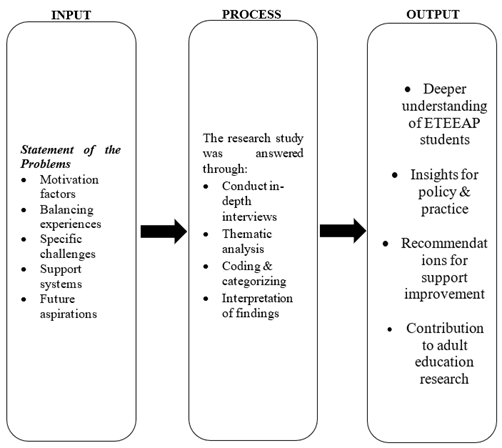
The
conceptual framework visually illustrated the systematic exploration of the
lived experiences of ETEEAP students. The Input portion encompassed the
fundamental components that defined the study—namely, the five research
questions that were its foundation. The inquiries addressed the primary causes
motivating student enrollment, their experiences
managing various tasks, the distinct problems encountered, their views on
institutional support, and their anticipated future trajectories. These
inquiries directed the data collection and ensured that the inquiry focused on
the fundamental elements of the ETEEAP experience.
During the
Process phase, the research illustrated the transformation of these inputs into
significant findings via meticulous qualitative methodologies. The research
design included in-depth interviews to collect genuine narratives directly from
ETEEAP students. Thematic analysis and coding enabled the researcher to
methodically categorize the extensive qualitative data into themes, emphasizing
repeating patterns and distinct viewpoints. The framework prioritized a
streamlined methodology by omitting triangulation, concentrating on theme
extraction and direct interpretation of participants' narratives. The
interpretation of these data was essential in establishing links between the
students' experiences and the wider implications for educational practice.
Ultimately,
the Output delineated the anticipated contributions and outcomes of the
research. The research yielded an enhanced comprehension of the motivations,
challenges, and ambitions of ETEEAP students. These insights provided
actionable recommendations for enhancing support systems and institutional
policies for adult learners seeking equivalence and accreditation. Furthermore,
the findings enriched the existing knowledge in adult education, providing
significant implications for educators, administrators, and policymakers aiming
to enhance the accessibility and support of the ETEEAP. The methodology
illustrated how meticulously organized qualitative research might convert
student experiences into practical knowledge for program advancement and policy
improvement.
2. METHODOLOGY
2.1. Research Design
This study utilized a qualitative research approach to obtain a comprehensive knowledge of the motivations, problems, and future objectives of students participating in the Expanded Tertiary Education Equivalency and Accreditation Program (ETEEAP). A phenomenological technique was employed to elucidate the lived experiences and personal narratives of the participants, facilitating the emergence of detailed descriptions from their perspectives. This approach aligned with the study's objective of investigating subjective experiences that were unquantifiable yet necessitated profound interpretation and meaning-making.
2.2. Population and Sampling
Technique
The study population comprised ETEEAP students enrolled in a public higher education institution that offers the program. A purposive sampling method was employed to select (12) twelve participants who fulfilled the inclusion criteria: they were active ETEEAP students who had completed a minimum of one year in the program. This guaranteed that participants possessed adequate experience to provide significant insights on their motives, the problems they faced, and their aspirations following the program's completion.
2.3. Data Gathering Procedure
Gathering
of data was performed via semi-structured, comprehensive interviews. The
interviews were arranged at suitable times for the participants and were
conducted either in person or by online video conferencing platforms, based on
the participants' availability and preference. Each interview lasted roughly 45
to 60 minutes and was conducted according to an interview protocol that
permitted flexibility for probing and follow-up questions to obtain more
profound responses. Audio recordings were conducted with the participants'
consent to guarantee precise transcription and analysis.
2.4. Data Analysis
The data
obtained from the interviews were transcribed verbatim and subjected to
thematic analysis. The researcher meticulously reviewed the transcripts several
times to familiarize themselves with the data prior to classifying salient
remarks and developing themes. Patterns were discerned and categorized into
overarching themes that represented the individuals' motivations, the obstacles
they encountered, and their aspirations.
The
analysis concentrated on elucidating the significance of the students'
statements and developing a cohesive narrative that responded to the research
inquiries. Triangulation was not utilized; rather, the credibility of the
findings depended on meticulous recordkeeping, reflexivity, and member checking
to validate participants' intended meanings.
2.5. Limitations and Ethical Considerations
This study included specific limitations. The sample size was restricted to twelve individuals from one institution, thereby failing to encapsulate the experiences of all ETEEAP students across different contexts or geographies. Moreover, participants' responses may have been affected by their comfort in disclosing personal experiences during interviews. The subjective character of qualitative research may have allowed the researcher’s interpretations to add possible bias, despite attempts to maintain objectivity and reflexivity throughout the process.
Ethical considerations were meticulously adhered to. Before participation, all subjects were apprised of the study's objective, their voluntary engagement, and their entitlement to withdraw at any moment without repercussions. Informed consent was secured, and confidentiality was guaranteed by anonymizing participants' identities in both transcripts and the final report. The researcher guaranteed that all data were securely stored and accessible just to the research team. Sensitive material was handled with care and integrity, prioritizing the wellbeing and privacy of all participants during the research process.
3. RESULTS AND DISCUSSION
Based on
the findings, here’s how the research questions answered:
SOP 1. What factors motivate students to enroll
in the Expanded Tertiary Education Equivalency and Accreditation Program
(ETEEAP)?
For SOP 1,
it is evident from the participants’ accounts that motivations are grounded in
profound personal ambitions and professional requirements that frequently
intersect. Numerous students emphasized that their motivation to study ETEEAP
is primarily driven by the necessity to obtain improved employment
opportunities and career progression that would be unattainable without a
formal degree. One respondent openly stated, “I pursued ETEEAP to obtain a
degree that acknowledges my extensive work experience. This represents progress
in realizing my aspirations and expanding prospects for professional
advancement and promotion.” This emotion resonates throughout numerous
narratives, indicating that for adult learners, the degree serves not just as a
certificate but as a critical key to access opportunities that years of
experience alone cannot provide.
The notion
of personal fulfillment and self-actualization is
equally potent. Numerous participants articulated that their aspirations were
deferred owing to familial or financial constraints, and how ETEEAP rejuvenates
that desire. One person remarked, “Obtaining a college degree has consistently
been a lifelong aspiration. I already assured myself that even if I had to
attend college with my daughter, I would still complete my education.”
This remark demonstrates how education via ETEEAP serves as a rehabilitative
avenue—realizing unfulfilled aspirations while affirming to oneself and to
family that tenacity and learning remain timeless, irrespective of age.
A
significant role is how students initially become aware of ETEEAP. For numerous
individuals, knowledge of the program disseminates via word of mouth—from
relatives, colleagues, or acquaintances who have themselves completed ETEEAP.
The motivating example of a cherished individual or associate serves as a
catalyst. One member stated, “I initially discovered the ETEEAP program
via my sibling. I was attracted to it due to its provision of a professional
and quick avenue for obtaining a degree by acknowledging and accrediting my
pertinent work experience and talents.” The practicality of obtaining a
degree without compromising present employment or income renders ETEEAP
especially attractive to individuals managing several obligations. Certain
responders highlighted that the program's modular structure and acknowledgment
of existing experience mitigate the obstacles typically associated with
conventional education.
Support
from family and the workplace also proves to be essential facilitators.
Numerous learners articulated the emotional and motivational impetus provided
by their loved ones. An explicit illustration is, “My wife and daughters motivate
me to participate in ETEEAP because they recognize my desire to complete my
college education. They frequently tell me that it is not too late for me to
obtain my degree.” This form of encouragement maintains the learner's
drive throughout professional, academic, and familial obligations. Similarly,
the job serves as a significant motivator, either directly through
encouragement or indirectly through its requirements for official
certifications. The absence of a degree serves as an impediment to promotions
or permanent employment, so prompting individuals to take
action. One participant remarked, “Advancement in my profession necessitates a
degree, thus I enrolled in ETEEAP.”
The
incentives propelling ETEEAP students are multifaceted—rooted
in economic necessities, professional advancement, personal aspirations, and
social support. Their narratives illustrate how this adaptable program serves
as a conduit between practical experience and formal academic acknowledgment,
enabling individuals to reclaim their aspirations while remaining anchored in
their obligations. This equilibrium between ambition and pragmatism elucidates
why ETEEAP continues to serve as a significant educational option for several
employed Filipinos today.
SOP 2. How do ETEEAP students describe their experiences balancing
academic requirements with personal and professional responsibilities?
The
participants regularly underscored the critical importance of time management,
familial support, self-discipline, and a defined sense of purpose for their
success in the program, in response to SOP 2. Numerous ETEEAP students
articulated their intentional allocation of specific hours throughout the
day—early mornings, lunch breaks, nights, or weekends—to concentrate on their
academic responsibilities. A participant stated, “I arrived at my workplace early
in the morning and commenced my daily tasks promptly. After completing my
assignment, I allocated time to access my modules and respond to them to the
best of my ability.” This illustrates how learners ingeniously optimize
intervals of spare time within their professional obligations. They frequently
adjust their daily schedules to accommodate family demands, as illustrated by
the participant's statement: “Regarding my family responsibilities, I
ensure that I have prepared everything they require. Subsequently, they urge me
to concentrate on finalizing my modules.” This indicates that balancing
roles is not a solitary endeavor; familial support is
an essential structure that sustains learners' momentum.
Maintaining
commitment to the ETEEAP journey is firmly rooted in their objectives and
pragmatic tactics that provide discipline and goal orientation, even among
hectic schedules. A participant stated, “I remind myself that completing the ETEEAP
program is crucial for advancing my career to a higher position.” This
assertion demonstrates how a defined vision of professional advancement fosters
perseverance. To maintain focus, participants utilize structured planning aids,
such as printed weekly plans placed on desks, serving as a visual reminder to
allocate consistent study hours. A participant emphasized the efficacy of
incremental objectives, asserting, “I establish explicit, short-term goals—such
as completing designated modules or portfolio assignments weekly—which
maintains my focus and organization.” These ideas emphasize that
commitment is maintained not alone by intrinsic desire but also via concrete behaviors such as establishing routines, deconstructing
tasks, and engaging with supportive family or friends who provide encouragement
throughout challenges.
The
influence of ETEEAP membership on their everyday life is significant,
frequently altering habits and redefining personal priorities. Although the
augmented duties may provide challenges, numerous learners perceive the
alterations as gratifying and conducive to personal development. A participant
articulated: “Enrolling in ETEEAP influences my daily life and routines, fostering
greater discipline in my time management.” The transition frequently
necessitates the forfeiture of leisure activities or hobbies to dedicate
additional hours to studying, however students
perceive this exchange as valuable. As another learner observed, “After
work, rather than participating in leisure activities, I allocate several hours
to reviewing my modules. Notwithstanding these alterations in my daily routine,
they imparted a sense of purpose and fulfillment.”
These words emphasize the profound sense of accomplishment that students
experience as their sacrifices manifest in concrete academic progress and
professional development. ETEEAP students adeptly manage intricate balancing
acts through discipline, familial support, strategic scheduling, and steadfast
personal determination, transforming daily problems into significant milestones
in their pursuit of lifelong learning and career advancement.
SOP 3. What specific challenges do ETEEAP students encounter throughout
their journey in the program?
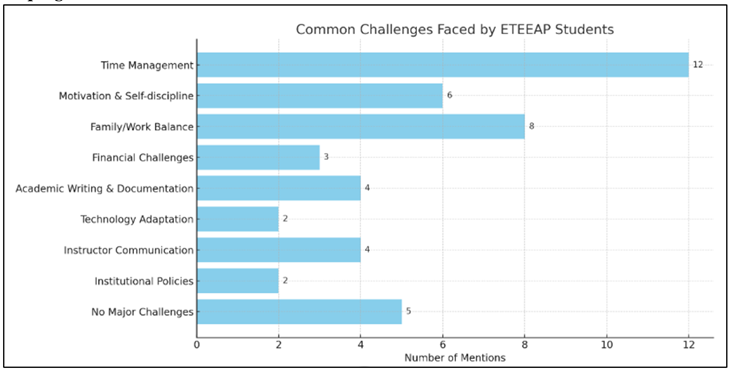
A review of
responses to SOP 3 revealed multiple repeating themes. The predominant problem
stated was time management. Numerous students articulated their challenges in
reconciling professional duties, familial commitments, and academic demands.
Unforeseen work obligations, exhaustion from extended work hours, and
conflicting priorities frequently interrupted their study routines, hindering
their ability to maintain pace with modules and assignments.
Besides
time constraints, students frequently encountered challenges in sustaining
enthusiasm and self-discipline. Numerous respondents indicated that maintaining
concentration on their studies was often challenging, particularly in a
self-directed, modular setting devoid of the framework provided by regular
classroom engagement. Occasional feelings of fatigue, discouragement, and
self-doubt impeded their capacity to consistently finish academic assignments.
The
interplay of professional obligations, familial duties, and academic
commitments exacerbated these issues. A significant number of ETEEAP students
were working professionals or parents managing several responsibilities everyday. Some encountered financial limitations that
restricted their capacity to manage expenses associated with transportation,
educational resources, or essential needs while fulfilling program obligations.
A number of
students identified challenges related to academic writing and documentation.
Individuals who had been absent from formal education for years sometimes
encountered difficulties in reengaging with academic responsibilities,
including writing papers, assembling portfolios, and adhering to academic
norms. Moreover, the adaptation to technology and online learning platforms
presented slight obstacles for many students, especially those who did not have
early exposure to digital technologies.
Although
the majority of respondents reported no substantial difficulties with
institutional policies, teachers, or course delivery, a minority noted concerns
over instructor communication. Several students reported delays in obtaining
feedback or challenges in reaching their teachers, which often resulted in
doubt over their progress. Notwithstanding this, some participants commended
their instructors for being accessible and supportive, and several conveyed
gratitude for the flexibility provided by their institutions.
A few
students notably claimed that they encountered no significant obstacles in
fulfilling the program requirements. The students credited their seamless
experience to transparent institutional procedures, well
articulated policies, supportive professors, and their own readiness.
Students
articulated diverse ways to address the issues they encountered. They
effectively controlled their time by employing scheduling and prioritization,
sought assistance from family, peers, or mentors, and sustained motivation by
recalling their objectives. Some resorted to prayer, mindfulness, and
introspection to maintain focus and resilience. The responses underscored the
students' resilience and resolve to surmount challenges in the pursuit of their
educational and professional goals.
SOP 4. How do ETEEAP students perceive the support systems and resources
provided by their institutions?
According
to the collected replies for SOP 4, ETEEAP students perceive their
institutions' support systems and resources as significant and essential to
their academic experience; nonetheless, there are clear opportunities for
improvement and enhancement. A multitude of students indicate that the most
beneficial assistance they obtain is through accessible communication channels,
explicit academic advice, and adaptable timetables that correspond with their
distinct obligations as adult learners. A student remarked, “Messenger
chats are the most effective means of communication for me, as my professors
consistently respond to my inquiries promptly,” underscoring the
importance of timely and responsive communication for their advancement. Others
share this sentiment, valuing accessible coordinators and instructors who
deliver clear instructions and feedback, so facilitating their navigation of
intricate program requirements with reduced uncertainty and stress.
Nonetheless,
despite this predominantly favorable perspective,
several students believe that the support should be enhanced or augmented,
particularly in aspects that tackle the issues specific to working
professionals and international learners. A participant noted that although the
personnel are responsive and the programs are "excellent,"
effective communication is essential, as they stated, "even if the programs are
good, they become ineffective if your questions or queries are not addressed
adequately." This indicates a consensus that the core of ETEEAP’s
efficacy is in consistent, transparent, and timely communication. Students
advocate for enhancements like increased frequency of check-ins, more explicit
rules for requirements, expedited feedback mechanisms, and improved online
resources—especially for individuals studying abroad or managing work and
family obligations. There are also demands for increased peer involvement and
interactive virtual sessions to mitigate the feelings of isolation associated
with modular, self-paced learning. A student openly articulated that the
absence of peer connection can create a sense of "navigating everything
alone," indicating a wish for the program to promote community
development among participants.
Faculty and
staff accessibility and responsiveness receive considerable praise, with
numerous students characterizing them as approachable, amiable, and perpetually
"one
call away." However, several stories indicate that this support
may fluctuate, with occurrences of delayed responses or unanswered inquiries,
which can be exasperating for students balancing employment, family, and
academic responsibilities. A student underscored the significance of
establishing explicit expectations on timetables, processes, and distinct
academic requirements from the outset to prevent confusion and last-minute
difficulties. One participant stated that the university's website need more explicit information to ensure that students are
informed prior to the day of enrollment.
ETEEAP students express gratitude for the encouragement and
practical assistance they get, whether from familial support, peer counsel, or
adaptable academic provisions. However, qualitative observations indicate that
sustaining robust, continuous communication and improving institutional
systems—such as clearer information conduits, more accessible online resources,
proactive mentoring, and opportunities for peer connection—can significantly
enhance their experience, making it more supportive and successful. These
thoughts indicate that although the fundamental support systems are esteemed,
the efficacy of ETEEAP is contingent upon the institutions' ability to
accommodate the distinct circumstances of adult learners and working
professionals endeavoring to attain their degrees.
SOP 5. What are the future aspirations and career goals of students who
complete the ETEEAP program, and how do they plan to achieve them?
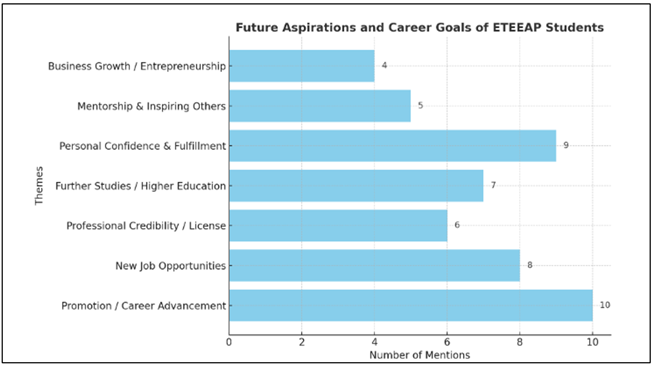
The replies to SOP 5 indicate that the completion of the Expanded Tertiary Education Equivalency and Accreditation Program (ETEEAP) significantly influences students' professional and personal development. A prevailing theme that surfaced is professional progression. Numerous participants highlighted that obtaining a formal degree via ETEEAP immediately enhances their qualifications for promotions or advanced positions within their existing organizations. For government officials and those in regulated sectors such as education, the degree serves as an essential prerequisite for eligibility in civil service promotions, teaching licenses, or formal certifications that were previously inaccessible.
A prevalent ambition among several students is the quest for additional employment alternatives outside their existing positions. Some perceive ETEEAP as a catalyst for transitioning into more stable, secure, or higher-paying professions, while others aim to utilize it as a means to enhance their professional network and access roles that more closely fit with their abilities and aspirations. In addition to these immediate employment objectives, some participants articulated definitive plans to seek advanced education, including master's or doctoral degrees. For them, ETEEAP signifies not merely a conclusion but the commencement of an enhanced academic endeavor that will allow them to augment their skills and maintain competitiveness in their selected domains.
The personal effect emphasized in the responses is equally significant. A multitude of students indicated that finishing ETEEAP has markedly enhanced their self-confidence and sense of accomplishment, demonstrating that patience and commitment can surmount prior constraints. This feeling of achievement frequently leads to increased enthusiasm to pursue new challenges, both in professional and personal contexts. Several participants remarked that their experiences motivated them to mentor colleagues, inspire their families, or serve as role models for non-traditional learners who may feel marginalized by standard educational routes.
A smaller but significant number of respondents associated their ETEEAP certificate with entrepreneurial aspirations or business development. The degree augments the credibility and professional image of self-employed persons and business owners, facilitating the expansion of their businesses or the exploration of new markets. The findings indicate that ETEEAP graduates are motivated not only by the pursuit of actual economic advantages but also by profound ambitions for lifelong learning, personal development, and constructive contributions to their communities.
The ETEEAP program has enabled students to convert longstanding aspirations into tangible objectives and implementable strategies. The students' comments indicate that ETEEAP serves not merely as an academic expedient, but as a catalyst for enduring personal and professional advancement, facilitated through promotions, further education, professional licensure, mentorship, or company creation.
4. SUMMARY
The results
indicate that students are largely motivated to participate in the Expanded
Tertiary Education Equivalency and Accreditation Program (ETEEAP) by
aspirations for professional progression and personal satisfaction. Numerous
adult learners perceive the degree as a pivotal instrument that facilitates
access to chances unattainable through job experience alone, particularly in
sectors where official qualifications are necessary for advancement. For some,
ETEEAP resurrects long-held aspirations of obtaining a college degree that were
previously hindered by financial or familial obligations. The program is
frequently discovered by word of mouth, and students like ETEEAP's adaptable
framework, enabling them to obtain a degree while managing work and family
responsibilities. Familial support and employer encouragement bolster their
determination to seek higher education despite conflicting responsibilities.
Reconciling
the academic requirements of ETEEAP with personal and professional obligations
presents a persistent challenge. Students assert that effective time
management, self-discipline, familial support, and a defined sense of purpose
are essential for maintaining focus. Numerous individuals allocate study time
before or after work, during breaks, or on weekends, depending on the support
and encouragement of family members who assist in alleviating home
responsibilities, so enabling them to concentrate on their modules. Explicit
short-term objectives, systematic schedules, and prompts maintain their
organization, while concessions like relinquishing leisure time are regarded as
essential trade-offs for prospective benefits. Despite the increased effort,
students frequently characterize this balancing endeavor
as gratifying, since it cultivates discipline and engenders a profound sense of
accomplishment.
Nonetheless,
pupils encounter enduring difficulties. Time limitations are the primary
impediment, as demanding work commitments, familial obligations, and unforeseen
exigencies frequently disrupt study schedules. Sustaining focus and motivation
is challenging in a self-directed, modular curriculum devoid of consistent
classroom engagement. Certain students encounter challenges in academic writing
or readjusting to formal schooling after prolonged absences, while a minority
experience slight difficulty with technology or using online learning systems.
While institutional support is typically valued, certain learners encounter
delays in communication or feedback, exacerbating stress in their already
constrained schedules. Notwithstanding these challenges, students exhibit
resilience by employing tactics such as meticulous scheduling, familial
support, prayer, and self-reflection to maintain their commitment.
Students
typically see their schools' support systems favorably,
commending attentive educators and adaptable timetables that align with their
adult obligations. Prompt communication, readily available coordinators, and
explicit instructions mitigate ambiguity and foster confidence. Participants
identify opportunities for enhancement, including expedited feedback, more
explicit guidelines, and increased interactive peer participation to mitigate
feelings of isolation. Recommendations encompass increased frequency of
check-ins, enhanced online resources, and chances for community engagement
among learners.
Ultimately,
the objectives of ETEEAP graduates underscore the program's significant
influence on professional and personal development. Numerous individuals
perceive their degrees as catalysts for promotions, professional
certifications, and new employment prospects within or outside their existing
domains. Some intend to pursue advanced studies such as master's or doctoral
degrees, while others aspire to initiate or expand enterprises, leveraging
their qualifications to enhance their prestige. Completing ETEEAP enhances
students' self-assurance and motivates them to mentor peers, serve as role
models for their families, and support other non-traditional learners. ETEEAP
serves as more than an educational expedient; it is a significant catalyst for
professional advancement, continuous learning, and the realization of
long-cherished aspirations.
5. CONCLUSIONS
·
The
results distinctly demonstrate that ETEEAP students are chiefly driven by
interconnected personal and professional aspirations—particularly, the pursuit
of career progression, enhanced job opportunities, and the realization of
long-postponed educational objectives. Support from family, employment demands,
and the feasibility of a flexible, experience-oriented academic curriculum
further bolster their determination. ETEEAP serves as a pivotal conduit that
connects informal competencies with formal qualifications, enabling adult
learners to aspire to greater achievements while maintaining their existing
obligations.
·
Managing
academic, professional, and personal obligations within ETEEAP necessitates
robust self-discipline, effective time management, and steadfast familial
support. Students adeptly incorporate study regimens into their everyday
routines and maintain momentum with explicit short-term objectives and tangible
reminders of their ambitions. This balance, albeit difficult, converts their
daily lives into organized and rewarding routines that enhance their feeling of
purpose and personal development.
·
Despite
the flexibility of ETEEAP, students encounter considerable problems, including
in time management, sustaining motivation, and readapting to academic writing
and online platforms following an extended absence from formal education.
External variables, like occupational pressures, familial responsibilities, and
financial constraints, frequently exacerbate these challenges. Students exhibit
notable resilience by formulating coping mechanisms, relying on familial
support, and deriving strength from their dedication to attaining their
degrees.
·
ETEEAP
students typically value the support systems and resources offered by their
schools, particularly attentive teachers, explicit guidelines, and adaptable
arrangements. Nonetheless, deficiencies in communication and insufficient peer
contact may result in students feeling alienated or ambiguous. Although the
basic support is praiseworthy, students perceive significant potential in
improved responsiveness, more explicit guidelines, and possibilities to foster
a better feeling of community among peers.
·
Finally,
completing ETEEAP enhances students' professional mobility, facilitating access
to promotions, new employment prospects, and further academic pursuits. In
addition to professional aspirations, the feeling of achievement fosters
enhanced self-assurance, motivating graduates to guide others, establish
loftier personal objectives, and embark on entrepreneurial endeavors.
The program functions as both a certification system and a stimulus for
lifelong learning, community engagement, and personal development.
6. RECOMMENDATIONS
Based from the findings and conclusions of the study, the
following recommendations are suggested:
1)
Firstly,
institutions and politicians are advised to enhance the marketing and
accessibility of ETEEAP, particularly via transparent information campaigns,
community involvement, and alumni success narratives to engage a broader
spectrum of prospective adult learners. Moreover, customizing outreach
initiatives to emphasize the alignment of ETEEAP with job advancement and
personal satisfaction can enhance enrollment and
enthusiasm among employed individuals.
2)
Institutions
should offer training in effective time management and study skills
specifically designed for adult learners to enhance student support. They
should also contemplate establishing peer support groups or accountability
circles to assist students in sustaining motivation, exchanging effective
balancing tactics, and alleviating isolation during the program.
3)
Institutions
are advised to implement focused interventions, including refresher training on
academic writing, technological orientation, and stress management seminars.
Assigning specialized academic mentors or counselors
who actively engage with students can enhance their ability to overcome
challenges and maintain motivation throughout the program.
4)
Institutions
ought to enhance and standardize communication procedures to guarantee prompt
responses and unequivocal assistance at each phase. Enhancing interactive
online platforms, virtual peer gatherings, and mentorship initiatives can
mitigate feelings of isolation and cultivate a supportive learning environment
that maintains motivation and connectivity among ETEEAP students.
5)
Finally,
to further this beneficial effect, universities must to
establish systematic career counseling and
post-graduation trajectories that direct ETEEAP graduates towards advanced
studies, licensure examinations, or entrepreneurial ventures. Alumni networks
and mentorship programs can leverage graduates' experiences to motivate new
students, enhancing the program's function as a conduit for ongoing development
and expanded career opportunities.
CONFLICT OF INTERESTS
None.
ACKNOWLEDGMENTS
I would like to express my sincere appreciation to anyone who assisted me during this research endeavor. I am profoundly grateful to my mentors and academic advisors, whose direction, support, and invaluable insights were pivotal in the development of this work. I express my profound gratitude to the teacher education institutions, faculty members, and participants from Pangasinan State University in the Philippines who generously contributed their time, experiences, and knowledge, facilitating this study. I extend my profound gratitude to my family and friends for their steadfast support, patience, and understanding during the research process. I sincerely recognize the resources and support from my institution, together with the contributions of all individuals who, directly or indirectly, facilitated the effective completion of this research.
REFERENCES
Forde, M. H. (2024). An Examination of Intrapersonal Factors Related to Behavioral Risk Outcomes Among Latino Youth in the Adelante Study: Mediation, Moderation, and Path Analyses (Order No. 31332847). Available from Publicly Available Content Database. (3105785079).
Hasan, M. J., Zaman, S., Islam, S., Hoque, M. B., Fardous, J., Afrin, S., … Alamgir, H. (2025). Research Engagement and Career Aspirations Among Public Health Graduate Students: Experiences from a Developing Country. BMC Medical Education, 25(1), 1–11. https://doi.org/10.1186/s12909-025-06730-w
Lamssali, M., Ofori-Boadu, A., Ferguson, A., Deng, D., and Hyeng, C. B. (2024). Perceiving Advancement: An Exploration of Positive Experiences that Strengthened Undergraduate STEM Students' Motivation During the COVID-19 Pandemic. Journal of STEM Education: Innovations and Research, 25(3), 64–80. https://doi.org/10.63504/jstem.v25i3.2630
Nhi, T. L. T. (2025). Exploring the Intrinsic Dimensions of Study Abroad Aspirations: The Case of Vietnamese International Students in Japan. Journal of International Students, 15(5), 97–116. https://doi.org/10.32674/8w93vt76
Quang, T. N., Minh Phan, N. N., Nhi, Y. B., Ngo, M. Q., Nguyen, L. V. T., and Dang, T. T. (2025). The Complex Interplay of Personal and External Factors in Medical Students' Specialty Decision-Making: A Qualitative Study. PLoS One, 20(6), Article e0326932. https://doi.org/10.1371/journal.pone.0326932
Sainvilus, P. (2024). An Exploration of at-Risk Students' Persistence and Dropout During the First Year of Postsecondary Education (Order No. 31767963). Available from Publicly Available Content Database. (3150968568).
Svensson, C., Hildebrand Karlén, M., Alexiou, E., Olausson, S., and Holmberg, C. (2024). Gratitude Despite Unease Among Swedish Male Forensic Psychiatric Patients with Substance Use Disorders: An Interview Study. International Journal of Qualitative Studies on Health and Well-being, 19(1), Article 2418671. https://doi.org/10.1080/17482631.2024.2418671
Technological self-Efficacy, Motivation, and Contextual Factors in Advanced EFL E-Learning: A Mixed-Methods Study of Strategy use and Satisfaction. (2025). Humanities and Social Sciences Communications, 12(1), Article 677. https://doi.org/10.1057/s41599-025-04947-0
Vukša, A., Čivljak, M., Matic, I., Čargo, M., Mijoč, V., Ivanišević, K., … Puljak, L. (2025). Croatian Nursing Students' Motives for Enrolling in the Master of Nursing Program Despite Limited Career opportunities: A Qualitative Study. BMC Nursing, 24(1), 1–12. https://doi.org/10.1186/s12912-025-03152-3
Wang, Y., Liu, D., and Li, C. (2024). Mapping the Foundations and Evolution of Career Aspiration Research: A Bibliometric Analysis. Career Development International, 29(4), 481–493. https://doi.org/10.1108/CDI-08-2023-0296
|
|
 This work is licensed under a: Creative Commons Attribution 4.0 International License
© ShodhKosh 2026. All Rights Reserved.