ShodhKosh: Journal of Visual and Performing ArtsISSN (Online): 2582-7472
|
|
Art, Technology, and Accessibility: Expanding Inclusive Creative Experiences
Harshini R. 1 , Shanthi P. 2
 , Arivukkodi R. 3
 ,
Divya S. 4,
Prathiba S. 5, Dr. Ganesh Ramesh 6
,
Divya S. 4,
Prathiba S. 5, Dr. Ganesh Ramesh 6
1 Department
of Computer Science, Meenakshi College of Arts and Science, Meenakshi Academy
of Higher Education and Research, India
2 Department
of Visual Communication, Meenakshi College of Arts and Science, Meenakshi
Academy of Higher Education and Research, India
3 Department of Computer Science, Meenakshi College of Arts and
Science, Meenakshi Academy of Higher Education and Research, India
4 Meenakshi College of Physiotherapy, Meenakshi Academy of Higher
Education and Research, India
5 Lecturer, Department of Pharmacology, Meenakshi Ammal Dental College
and Hospital, Meenakshi Academy of Higher Education and Research, India
6 Professor, Department of Prosthodontics Crown and Bridge, Sree
Balaji Dental College and Hospital, Bharath Institute of Higher Education and
Research, India
|
|
|
ABSTRACT |
|
|
The merger
between technology and art has practically transformed the accessibility and
the availability of the creative experience in contemporary culture. The
present paper examines how technological inventions have helped to increase
access to visual and performing arts to a large population of viewers and
performers including the physically challenged, sensory and cognitively
challenged. This paper will explore the conceptual frames of inclusive
creative experiences by exploring the principles of accessibility, universal
design strategies and the intersection of artistic expression and emerging
digital technologies. Special attention is paid to such assistive
technologies as screen readers, audio description systems, captioning tools,
tactile interfaces and adaptive performance technologies that enable more
individuals to participate in artistic activity. In addition, the immersive
technologies are discussed including virtual reality (VR), augmented reality
(AR), and the use of artificial intelligence (AI)-based creative tools due to
a potential to provoke the sensory interactions and a tailored cultural
experience. The paper also sheds some light on the significance of the
digital platforms at hand such as the virtual museums, online exhibitions,
social media storytelling, and interactive multimedia installations in making
distant and participatory artistic experiences a possibility. |
|||
|
Received 27 December 2025 Accepted 29 March
2026 Published 03 April 2026 Corresponding Author Harshini
R., harshinir@maher.ac.in DOI 10.29121/shodhkosh.v7.i3s.2026.7335 Funding: This research
received no specific grant from any funding agency in the public, commercial,
or not-for-profit sectors. Copyright: © 2026 The
Author(s). This work is licensed under a Creative Commons
Attribution 4.0 International License. With the
license CC-BY, authors retain the copyright, allowing anyone to download,
reuse, re-print, modify, distribute, and/or copy their contribution. The work
must be properly attributed to its author.
|
|||
|
Keywords: Art Accessibility, Inclusive Creative Experiences,
Assistive Technologies, Digital Art Platforms, Virtual and Augmented Reality,
Cultural Participation |
|||


1. INTRODUCTION
Collective experiences, values, and identities are expressed through visual arts, music, theatre, and digital mediums, among the societies. Access to artistic and cultural involvement has however not always been equally accessible to everybody. The barriers to the inclusion of people with disabilities and marginalized communities in a creative setting have been largely physical, sensory, technological, and socio-economic. The past few years have seen increased involvement of technology into the artistic process that has provided a novel way to overcome these obstacles and broaden access to creative experiences. In arts, accessibility can be defined as the creation of artistic space, technologies, and practices to allow people with varying abilities to experience cultural content Di Giovanni and Raffi (2022). Conventional art spaces like museums, galleries and theatres have traditionally paid attention to material access protocols such as ramps, lifts and seating layouts. Although these changes enhanced the access to mobility, they occasionally failed to respond to the needs of visually, auditorily, cognitively, and neurologically different people. The appearance of digital technologies has expanded the understanding of the concept of accessibility greatly as it facilitated multisensory interaction, participation, and delivery of content remotely Verbeek et al. (2022). Art and technology have been convergent, and they have presented new tools that change the interaction of the audiences with the artistic works. With the help of assistive technologies, screen readers, audio descriptions, systems of interpreting the sign language, captioning tools, and tactile interfaces allow people with sensory disabilities to engage with the artistic content in a more appropriate way.
Similarly, the multimedia and digital media have amplified possibilities of participatory art whereby the audiences can experience the works of art and even respond to them through the use of interactive and immersive space. The technological advances have seen the shift in focus to eliminate barriers with the move being taken to actively create the artistic experiences that are being designed to be inclusive in nature. Such new technologies as virtual reality (VR), augmented reality (AR) and artificial intelligence (AI) also lead to the enhanced accessibility of creative environments Vaz et al. (2020). The VR and AR technologies allow individuals to explore digital museums, performances and exhibitions without regard to where they are located physically or geographically, and AI-based systems help to promote automated captioning, audio narration and adaptive interfaces based on the requirements of an individual user Butler (2023). The involvement of art and technology and the access making creative experiences inclusive are shown in Figure 1. These technologies not only make works of art more accessible, but also make interactions between works of art and their listeners more personal and engaging since they can now be and are more interactiv.
Figure 1
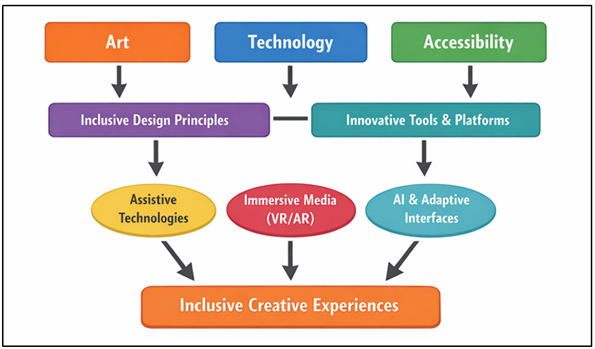
Figure 1 Conceptual Framework of Art, Technology, and Accessibility for Inclusive Creative Experiences
Art galleries, virtual exhibitions, social media, and digital storytelling resources are able to offer easy points through which artists and audiences can give, develop, and encounter art. These media allow people in different places and backgrounds to engage in creative work processes that was once restricted to physical spaces D’Evie (2022). Consequently, artistic practices are becoming increasingly more global, participatory and inclusive. Regardless of these developments, there are still issues of making accessibility a constant aspect of the artistic design and technological progress.
2. Conceptual Framework of Inclusive Creative Experiences
2.1. Definition of accessibility in arts and cultural participation
Arts and cultural participation Accessibility is achieved when people with varied physical, sensory, cognitive and socio-economic conditions are free to experience, perceive and participate in artistic and cultural activities without restriction. Historically, accessibility in cultural institutions was mainly concerned with physical accessibility, including wheelchair ramps, lifts, and seating plans that allowed people with mobility disabilities to move in and around cultural venues Bobier et al. (2021). Nonetheless, contemporary concepts of accessibility go beyond the physical environment and focus on the establishment of open spaces that support the variegated sensory and cognitive faculties. A contextual use of accessibility in the arts and cultural participation is through making artistic material perceivable and experienceable by more than one channel of sensory input Kashyap et al. (2025). An example can be that visual art can have audio descriptions of the visual impaired and performances can have captioning and sign language interpretation to the hearing impaired. Equally, multisensory installations, tactile exhibits and adaptive technologies allow audiences to experience art in a tactile manner, by touch, sound, and interaction interfaces. Online engagement, as people can access cultural materials on the internet by browsing online exhibitions and online museums, as well as an interactive platform, is also a part of accessibility Sica et al. (2020).
2.2. Principles of Universal Design and Inclusive Creativity
Universal design is a model that helps to design the environment, products, and systems in such a way that is usable by the largest possible number of people without adaptation or special modifications. In the arts and creative practice context, the principles of universal design are used to enhance the creation of artistic experiences that are inherently inclusive and accessible to audiences with a wide range of abilities and needs Vergori and Arima (2020). Flexibility in use is one of the most important principles of the universal design of a creative environment that enables artistic material to be presented in various form. As an example, the arts can consist of visual, audio and touch attributes to ensure that the viewers with diverse sensory capabilities can comprehend the message. The other key value is perceptible information, where artistic information is presented in a very clear way through the different senses, including captions, audio narration, and visual clues Lim et al. (2020). Inclusive creativity also focuses on fair contribution towards the creative process. The cultural institutions, artists, and designers are introducing more participatory methods that engage the communities with disabilities in the processes of creating and assessing artistic experiences.
2.3. Intersection of Art, Technology, and Accessibility
The cross side of art, technology and accessibility is an innovative place where creativity is expressed with the help of technology to make all types of culture more inclusive. The growth of digital technology has increased the capabilities of artists, cultural organizations as well as technologists in creating artistic spaces that can serve diverse audiences and address the barriers to traditional access patterns Domšić (2021). Technology is very important in facilitating multisensory experience of artistic contents. Digital audio guides and automatic systems of narration, as the examples, enable blind visitors to discover museum collections with the help of descriptive narration Kasemsarn (2022). Virtual reality (VR), augmented reality (AR), and artificial intelligence (AI) also increase access in the art world. VR and AR technologies enable viewers to immerse themselves in digital galleries and performances, which are designed in an inclusive way and can be tailored to the needs of each user with regard to their sensory preferences. It is also helpful that AI-based systems can help in the creation of automatic captions, translation of artistic material, and the adjustment of interfaces to the needs of the users Tešin et al. (2020). The summary on Table 1 is a synopsis of previous studies that have combined art and technology with accessibility to include creative activities. The fusion of art and technology as such thus re-imagines the conceptualization of accessibility within the cultural spaces.
Table 1
|
Table 1 Summary of Related Work on Art, Technology, and Accessibility in Inclusive Creative Environments |
|||||
|
Research Focus |
Technology Used |
Accessibility Approach |
Methodology |
Limitations |
Future Scope |
|
Digital accessibility in museums |
Mobile museum apps |
Audio description, screen readers |
Case study |
Limited interaction features |
AI-guided museum navigation |
|
Inclusive digital exhibitions |
Web-based platforms |
Captioning and text adaptation |
Experimental analysis |
Limited immersive experience |
VR-based exhibitions |
|
Assistive technologies in performing arts Mezgaile et al. (2021) |
Captioning systems, hearing loops |
Real-time captioning |
User experience study |
Requires technical infrastructure |
Automated captioning |
|
Interactive art accessibility |
Multimedia installations |
Gesture-based interaction |
Prototype development |
Accessibility varies across users |
Adaptive interfaces |
|
VR-based cultural heritage access |
Virtual reality |
Immersive navigation |
Simulation study |
VR hardware limitations |
Lightweight VR systems |
|
AI-driven accessibility tools Kothare et al. (2025) |
Machine learning |
Automated captions and audio descriptions |
Algorithmic evaluation |
Data dependency issues |
AI adaptive systems |
|
AR in museum learning |
Augmented reality |
Visual overlays and audio guidance |
Field experiment |
Limited device compatibility |
AR-based learning environments |
|
Inclusive storytelling platforms |
Social media tools |
Captioning and alt-text |
Survey analysis |
Content moderation challenges |
AI-assisted storytelling |
|
Accessible virtual exhibitions |
Web VR systems |
Multisensory accessibility |
Usability testing |
Network dependency |
Cloud-based immersive platforms |
|
Participatory digital art |
Interactive installations |
Sensor-based interaction |
Design framework |
Cost of installations |
Scalable digital participation |
|
Inclusive art education |
AI-based learning platforms |
Adaptive interfaces |
Mixed-method analysis |
Requires training datasets |
Intelligent tutoring systems |
|
Multisensory digital art environments |
Haptic interfaces |
Tactile feedback systems |
Prototype testing |
Hardware complexity |
Multisensory immersive art systems |
3. Technological Innovations Enabling Accessibility in Arts
3.1. Assistive technologies in visual and performing arts
Assistive technology has greatly contributed to increasing accessibility in visual and performing arts by giving people with disabilities a chance to experience artistic content using adaptive equipment and interfaces. Such technologies are aimed to assist the audience with sensory, cognitive or mobility disabilities, such that artistic spaces can be made more diverse and participatory. Figure 2 demonstrates that assistive technologies enhance accessibility in the performing arts, particularly in visual arts. Assistive technologies used in museums and galleries, like audio description systems, are used when visually impaired patrons want to learn more about works of art and have more detailed explanations of colors, shapes and backgrounds of works of art. Mezgaile et al. (2021)
Figure 2
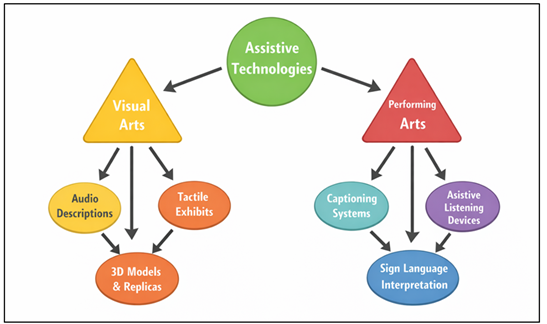
Figure 2 Assistive Technologies Framework for Enhancing
Accessibility in Visual and Performing Arts
The tactile displays and 3D-printed models of works of art also allow people to engage with works of art using their hands and the touch of their bodies, increasing their interaction with art. Assistive technologies in the performing arts setting like theatre, dance and musical performance include captioning systems, sign language interpretation displays and assistive listening devices. Real-time captioning involves the textual representation of the dialogue and sound effects, allowing the hearing-impaired viewers to track performances in a better manner.
3.2. Virtual Reality (VR) and Augmented Reality (AR) for Immersive Accessibility
AR and VR technologies have brought in immersive opportunities regarding improving the accessibility of artistic and cultural spaces. These technologies enable viewers to view art in digitally simulated or augmented spaces which can be tailored to personal sensual or accessibility requirements. VR develops entirely immersive online spaces in which users are able to experience virtual galleries, exhibitions, and performances irrespective of their place of location. The feature is especially useful with people who have physical limitations or geographical restrictions and cannot access physical cultural establishments. AR technology, in its turn, superimposes digital information on the real-life surrounding, which allows experiencing the interaction with the artwork and exhibits more profoundly. As an illustration, museum applications can use AR to offer visual captions, sound descriptions, and interactive animations to enhance the comprehension of artistic information by the viewer. These characteristics allow all audience with different sensory requirements to receive information in a variety of way at the time. Improved accessibility is also another significant benefit of VR and AR technologies as it offers individual accessibility. The audio, visual contrast, text size, and navigation interfaces are customizable to the preference of the users. Moreover, VR scenarios may be used to add tactile feedback or spatial acoustic effects to provide better sensory experiences to the people with visual impairment. Kothare et al. (2025)
3.3. Artificial Intelligence and Machine Learning in Creative Accessibility Tools
Artificial intelligence (AI) and machine learning technologies are actively becoming a part of artistic platforms to make it more accessible and provide individuals with a more personalized experience with creative content. Through these technologies, analytical, interpretive, and adaptive analysis and interpretation of artistic data can be performed automatically so that audiences of various capabilities can engage in interaction with cultural material more successfully. Ai systems are popular in automated captioning systems, speech recognition systems, and in real time translation systems, which can greatly enhance accessibility of hearing impaired audiences in performances, movies and digitally. Machine learning algorithms are also able to produce audio descriptions of visual artworks through analyzing image features and creating detailed descriptions in the form of verbal content. This aspect assists the blind audiences to discern artistic works, textures and space arrangement. Also, recommendation systems based on AI can enhance the experience with art by recommending artworks, performances, or exhibitions, depending on the preferences of the user and accessibility needs. A related new use of AI in creative accessibility is smart interfaces that adapt to the behavior of users. Jadhav (2027)
4. Accessible Digital Platforms for Creative Participation
4.1. Online galleries and virtual exhibitions for remote access
Virtual exhibitions and online galleries have turned out to be very important online platforms to increase accessibility and involvement in the arts and cultural experiences. These spaces enable viewers to learn about works of art, exhibits and collections using the web based platforms, without geographical or physical restrictions that could limit the access to traditional cultural institutions. With the help of digital galleries, people have the opportunity to see large-scale shots of their work, read multimedia information, and navigate their exhibitions at their convenience, using personal gadgets. Virtual exhibitions can also have some interactive elements, which include zooming artwork images, audio narration, subtitles, and multilingual texts, to make sure that different audiences can access them. In the case of visually impaired people, audio descriptions and interfaces that can be used by a screen-reader can assist in giving in-depth descriptions of artworks and exhibition plans. In the same way, captions and sign language videos will enhance accessibility to the hearing-impaired users. These characteristics make digital exhibitions include design principles of inclusive design. The other major strength of the online galleries is that they also offer remote cultural experience to people who might lack the mobility privilege or those living in isolated locations.
4.2. Social Media and Digital Storytelling Platforms
The features of digital stories and social media application have transformed the communication patterns of artists and their creative works. One of the sites where artists, performers, and cultural institutions can spread visual, audio, and multimedia content to their audiences all over the world in real-time is the digital content-sharing networks. Such features as automatic captioning, image description, and voice narrations allow the concept of accessible communication to be implemented with such platforms because such features make creative content easier to approach by individuals with sensory impairments. Online storytelling platforms allow artists to narrate tales through interacting in multimedia which includes the use of pictures, video, sound and text in conveying any artistic messages. The approach renders it more accessible as the audience can perceive the artistic accounts with more than one of the five senses. Thus, in this manner, they use captioned videos, narrated visual materials and interactive story maps to ensure the individuals with different abilities can understand the works of art in the most appropriate way. Moreover, social media networks also help in participatory culture through interacting with the audience by commenting, collaborating, and discussing with a community. Vijayakumar et al. (2026)
4.3. Interactive Multimedia Installations and Participatory Art Systems
Interactive multimedia installations, and participatory art systems are the new directions in the development of a comprehensive and involving artistic environment. These systems integrate digital media, sensors, projection technologies and interactive interfaces so that the audiences can actively contribute to the creation of artistic works or the transformation thereof. As opposed to the conventional art display where viewers look on the displayed art, interactive installations allow visitors to look around, touch, and control the artistic features instantly. One of the major concerns regarding participatory art system design is accessibility. The interactive installations frequently have adaptable interfaces like touchscreens, gestures, voice recognition, and motion sensors that provide people with varying abilities to participate in the piece. As an example, body movement, hand gesture, or verbal input can cause soundscapes, visual projections, or digital animation to occur in the presence of the visitor. The multisensory encounters allow viewers with different sensory impairments to perceive art differently and in a personalized manner. Participatory art systems also facilitate community working together and community building by visitors through collective creative experiences. Interactive installations in museums, galleries, and other art-related locations may create a gathering of people with various backgrounds to add to the changing artistic pieces. Vasanthan et al. (2025)
5. Case Studies of Accessible Art and Technology Integration
5.1. Museums implementing digital accessibility tools
Digital accessibility tools have become more and more popular in museums worldwide to help them make cultural heritage and artistic collections available to different audiences. Those institutions combine the use of assistive technologies and online platforms to enhance the experience of visitors with visual, auditory, or mobility disabilities. Most museums currently have mobile applications and online guides which have audio descriptions, high-contrast text-exhibits and multi-lingual narration to help people with disabilities enjoy exhibits. Figure 3 shows online resources that can be used to facilitate accessible and inclusive experiences of museums. Audio description systems allow the visually impaired visitor to have works of art described in detail, and digital catalogs that are readable by a screen-reader allow access to museum collections.
Figure 3
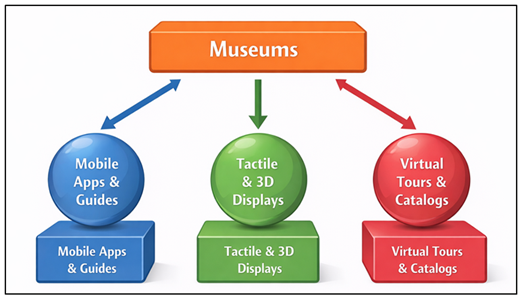
Figure 3 Digital Accessibility Tools Framework for Inclusive Museum Experiences
Tactile technologies are also being brought in besides audio tools in order to enable the visitor to touch and feel artistic forms. Other museums are 3D printing tactile models of historical artifacts and sculptures so that people with visual impairments can feel the works of art. Accessibility of visitors who have visual impairments is also improved with the interactive touchscreens which can be configured to have customizable size of text and color contrast. Rawandale and Kolte (2021)
5.2. Theatre and Performance Incorporating Assistive Technologies
Theatres and other performing arts have been embracing the use of assistive technologies to provide inclusive performance experiences to people with varying abilities. Conventionally, theatre shows were based on sound and sight which restricted its reach to people with hearing or visual impairments. Nevertheless, the latest technological advancements have allowed the spaces of performance to incorporate adaptive features to promote audience engagement. Real-time captioning is one common example of the latter, in which dialogue and sound effects are shown on a screen or mobile device in real-time when a performance is taking place. Such technology allows hearing impaired audiences to track storyline and emotional action of theatrical performances. On the same note, sign language interpretation in the performances has also been incorporated most of the time by placing the interpreters on stage or by use of digital display systems. Audio description is offered to visually impaired audiences to help them have an explanation of the movements, costumes and the visual aspect of the performance being narrated to them. These descriptions are presented in the form of wireless headsets, which are synchronized with the live performance. Also, models with tactile stages and pre-performance touch tours enable the visually impaired audience to get familiar with the stage layouts, costumes and props prior to the commencement of the performance.
5.3. Digital Art Exhibitions Designed for Visually or Hearing-Impaired Audiences
Digital art exhibitions have become potent platforms to create an inclusive artistic space that is carefully designed to accommodate the visually and hearing-impaired audience. Digital exhibitions can include multisensory technologies, unlike traditional ones, which can be based mostly on visual observation and thus offer alternative methods of experiencing artistic content. Such exhibitions may also incorporate audio narration, haptic feedback systems as well as captioned multimedia presentations to support the various sensory requirements. Digital exhibitions can incorporate textual audio description of works of art, space audio environment and sound-based installations that are interactive to visually impaired audiences. These technologies enable individuals to work their way through digital galleries by listening and reading the stories. Other exhibitions also incorporate haptic devices or vibration feedback systems that interpret visual patterns as haptic senses so that visitors can feel the form of digital artworks. In digital exhibitions, captioned videos, sign language interpretation overlays and visual storytelling (telling artistic narratives using images, animation, and text) are typically provided to hearing-impaired audiences. Interactive online screens also enable their users to change the visual contrasts, text size and display options in order to enhance reading. Moulick et al. (2025)
6. Impact of Accessibility on Audience Engagement and Cultural Participation
6.1. Increased participation of marginalized communities
The arts and cultural contexts have become very welcoming and this has made the work of accessibility to gain a lot of ground in bringing the marginalized communities previously locked out of the artistic experiences. The groups of people who may be marginalized are physically or sensitively challenged, the people who are of old age, the communities who are economically disadvantaged, and people living in geographically dispersed areas. Examples of barriers that may arise in the traditional art institutions have included physical inaccessibility, inadequate assistive technology, or expensive costs of traveling and enrollment. Due to this, a great number of people could not immerse themselves in cultural activities and creative spaces. Most of these barriers have been eliminated with the integration of the available technologies and the use of inclusive design practice. The use of digital platforms, virtual exhibitions and online creative communities enables individuals with varied backgrounds to engage in artistic experiences without necessarily having to be physically present. There is also Assistive technology like captioning system, screen reader, and audio description to help people with sensory impairment to access artistic content better. Hazarika et al. (2025)
6.2. Transformation of Audience Experience Through Technology
Modern technologies have altered the experience and level of interaction between the audience and the artistic and cultural content greatly. The traditional artistic settings were typically in the form of the audience passively watching an art object or a performance without their involvement. However, the application of the digital technologies, immersive media, and interactive platforms transformed the audience experience to the active engagement and participation. The technologies that allow the audience to learn about the artistic spaces in more personal and immersive ways are VR, AR, and interactive multimedia installations. To give an example, VR application of museum experience lets the user search virtual galleries and viewing the works in different perspectives compared to AR applications which feature the additional background information and virtual overlay which adds an additional layer into the process of examining the paintings. In digital interfaces and artificial intelligence, there is one more element of art experience personalization the content is tailored to the needs of the specific tastes and accessibility. To take an example, the AI-based systems would generate captions, would provide audio description or adjust the interface features to accommodate a range of sensory abilities. The changes in technologies also encourage group communication, where viewers are welcome to participate in creating or altering digital pieces of art with the help of participatory websites.
6.3. Social and Cultural Benefits of Inclusive Artistic Environments
Inclusion in the communities through artistic communities also has a tremendous social and cultural influence in providing diversity, sympathy and reciprocal interactions in communities. They make the artistic institutions more accessible and open to people, thus preparing the path to a place where people of different backgrounds and abilities can communicate and share their opinion as well as the exchange of their cultures. It is with these settings that understanding amongst one another is fostered and thus leads to the elimination of social boundaries that are likely to separate different groups of people within the society. The representation of diverse voices and experiences is among the key artistic cultural benefits of an inclusive culture. With the availability of the artistic space to the disadvantaged groups, they have a chance to share their cultures, practices, and narratives using arts. Such difference saturates the cultural landscape with new artistic perspectives and adds an array of creative interpretations of the artistic offering to the viewer. The teamwork artistic space also supports the social cohesion well as people are able to enjoy working together in the cultural activities. People can experience shared art by doing their work together with interactive exhibits, community art projects and online storytelling sites. Such alliances help to improve social integration on a community level and cultural tolerance.
7. Result and Discussion
As discussed, integration of technology has a significant effect on the accessibility and involvement in artistic and cultural environment. Digital, assistive and immersive technology such as virtual reality and augmented reality can be used in the medium to enable more people to participate because it reduces physical, sensory and geographic constraints. As the findings also testify, the availability of digital tools helps in reaching out to the audiences, particularly the disabled and marginalized communities. Online exhibitions and interactive installations are also superior to the other approaches of engaging users as it allows the viewers to engage in the creative experiences. In addition, the individual preference treatment of art objects is made easier by captioning, audio description, and adaptive interfaces through the application of artificial intelligence. This suggests that the further improvements to participation can be achieved with the use of technology-enhanced accessibility which, in addition to the benefits, also has the potential to alter the audience-artistic space relationship in order to encourage the inclusion and collaborative cultural experience.
Table 2
|
Table 2 Audience Engagement and Accessibility Performance across Digital Art Platforms |
||||
|
Platform Type |
Accessibility Support Score (%) |
Audience Engagement Rate (%) |
Participation Rate (%) |
User Satisfaction Score |
|
Online Virtual Galleries |
82.4 |
76.8 |
71.5 |
8.2 |
|
Social Media Art Platforms |
88.7 |
84.9 |
79.6 |
8.7 |
|
VR-Based Art Experiences |
91.5 |
89.3 |
85.7 |
9.1 |
|
AR Interactive Exhibitions |
87.2 |
83.6 |
78.4 |
8.6 |
A comparative analysis of the audience engagement and accessibility performance of various digital art platforms is provided in Table 2. The findings show that the VR-based art experiences show the best overall performance with the accessibility support score of 91.5, the audience engagement rate taking 89.3 and the highest participation rate of 85.7 as well as highest user satisfaction score of 9.1. The comparison of the accessibility support and audience engagement in digital art platforms is presented in Figure 4.
Figure 4
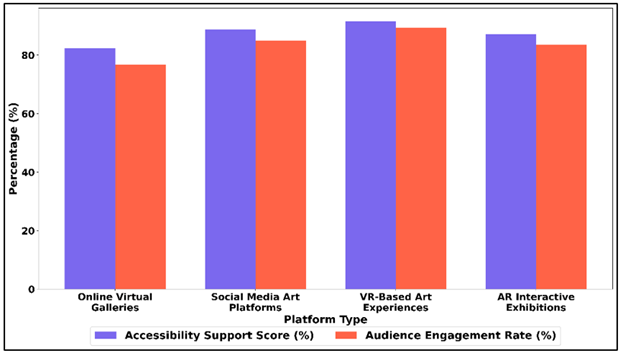
Figure 4 Comparative Analysis of Accessibility Support and Audience Engagement Across Digital Art Platforms
This implies that the immersive technologies play a significant role to the extent of user interaction and inclusive artistic experience, as they are able to offer very engaging environments which are interactive. Figure 5 presents patterns of participation and user satisfaction of interactive art platforms. Another area of strong performance is social media art platforms, whose accessibility score is 88.7% and engagement rate is equal to 84.9% as these platforms are effective in participation in digital art and allow people to communicate their culture worldwide.
Figure 5
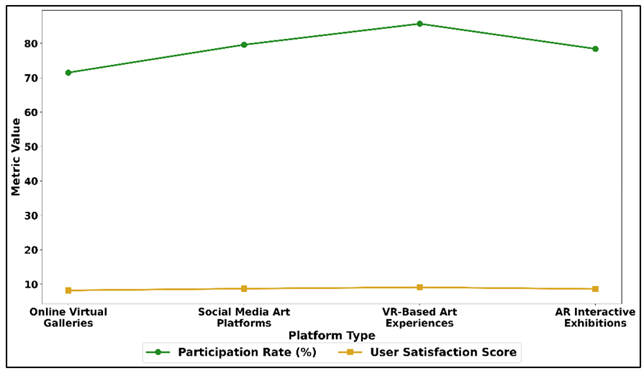
Figure 5 Participation Rate and User Satisfaction Trends in Interactive Art Platform Environments
The accessibility and engagement of AR interactive exhibitions are moderate because the scores of 87.2 per cent and 83.6 per cent indicated that AR interactive exhibitions can improve real-world art environments with the help of augmented digital information.
8. Conclusion
The combination of art, technology, accessibility has produced novel prospects of broadening the creative experiences of inclusivity within the cultural and artistic contexts. This paper highlights the importance of adopting new technological changes like assistive technologies, immersive media, and online platforms to remove the restrictions that tend to impede the process of participating in arts. The design approach based on accessibility can help cultural institutions open the artistic content to individuals with various physical, sensory and cognitive disabilities. Assistive technologies such as the use of audio description systems, captioning devices and adaptive interfaces comprise a major contribution to the access of visual and performing arts by individuals with disabilities. Similarly, new technologies like virtual reality, augmented reality, and artificial intelligence are useful to facilitate the cultivation of artistic interest by enabling to experience culture in a more engaging and personalized manner. The other digital mediums that further democratize the process of engaging in art are the online galleries, the virtual exhibition, and the social media story telling systems, which connect the audiences across the world and allow them to interact with the cultures remotely. The findings of this paper suggest that artistic spaces made available do not only increase the presence of the audience, but also provide opportunities to the cultural diversity, inclusion, and group creative practice. Inclusive design invites the marginalized groups to explore the artistic order as audience and participants of the artistic realm, thus enhancing the cultural ecosystem.
CONFLICT OF INTERESTS
None.
ACKNOWLEDGMENTS
None.
REFERENCES
Bobier, D., Sawchuk, K., and Thulin, S. (2021). An Interview with David Bobier of VibraFusionLab. Canadian Journal of Disability Studies, 10, 237–254. https://doi.org/10.15353/cjds.v10i2.800
Butler, J. (2023). Writing the Central Role of Captions in Live Performances. College English, 85, 498–521. https://doi.org/10.58680/ce202332618
Di Giovanni, E., and Raffi, F. (2022). Inclusive Theatres as Boosters of Wellbeing: Concepts and Practices. Journal of Audiovisual Translation, 5, 166–185. https://doi.org/10.47476/jat.v5i1.2022.223
Domšić, L. (2021). Participatory Museum Projects with Young People: Measuring the Social Value of Participation. International Journal of the Inclusive Museum, 14, 149–165. https://doi.org/10.18848/1835-2014/CGP/v14i02/149-165
D’Evie, F. (2022). From Dust to Dust: Hallucinating the Absent Exhibition. In A. Cachia (Ed.), Curating access (87–98). Routledge. https://doi.org/10.4324/9781003171935-9
Hazarika, I., Youdan, A., Daypuyart, G. T., Gonzales, A., Bautista, J., Ramos, J., Yadav, R. K., and Zhou, Y. (2025). Internal Communication’s Role in Employee Well-Being (SDG 3) and Productivity (SDG 8). Lex Localis: Journal of Local Self-Government, 23(S6), 7599.
Jadhav, K. D. (2027). Integrating IoT, Sensors, and Machine Learning for Enhancing Crop Yield and Irrigation Efficiency Systems. In R. R. Janghel, R. Doriya, J. Lachure, and Y. K. Rathore (Eds.), Sustainable Agriculture Production Using Blockchain Technology. Wiley. https://doi.org/10.1002/9781394248711.ch11
Kasemsarn, K. (2022). Creating a Cultural Youth Tourism Ebook Guidelines with Four Design Factors. International Journal of Visual Design, 16, 31–51. https://doi.org/10.18848/2325-1581/CGP/v16i02/31-51
Kashyap, S. V., Purohit, S., Kumar, D. A., Jawaid, F. I. M., Kumar, J. R. R., and Ajani, S. N. (2025). Visual Storytelling and Explainable Intelligence in Organizational Change Communication. Shodhkosh: Journal of Visual and Performing Arts, 6(5s), 696–707. https://doi.org/10.29121/shodhkosh.v6.i5s.2025.6965
Kothare, H. J., Lanjewar, S. S., Wankhede, M. V., Bagadte, V. R., and Polke, A. (2025). Wireless Bluetooth Low Energy (BLE) Voltmeter: A Modern Solution for Remote Voltage Monitoring. International Journal of Advances in Electrical and Electronics Engineering, 14(1), 6–10. https://doi.org/10.65521/ijaeee.v14i1.324
Lim, Y., Joseph, G., and Farnaz, N. (2020). What is Psychosocially Inclusive Design? A Definition with constructs. The Design Journal, 24, 5–28. https://doi.org/10.1080/14606925.2020.1849964
Mezgaile, A., Grinberga, K., Singh, N., and Livina, A. (2021). A Study on Youth Behavior Towards the North Vidzeme Biosphere Reserve in Latvia. Journal of Environmental Management and Tourism, 12, 1171–1178. https://doi.org/10.14505/jemt.v12.5(53).02
Moulick, J., Phursule, R., Kale, A. P., Rana, V. S., Goswami, S., and Karwande, V. S. (2025). Real-Time Crypt Analysis and Defense Mechanisms in Cloud Computing Services. Journal of Discrete Mathematical Sciences and Cryptography, 28(5), 1753–1761. https://doi.org/10.47974/JDMSC-2175
Rawandale, U. S., and Kolte, M. T. (2021). Design, Development and Analysis of Variable Bandwidth Filter Bank for Enhancing the Performance of Hearing Aid System. International Journal of Intelligent Engineering Systems, 14(6), 391–401. https://doi.org/10.22266/ijies2021.1231.35
Sica, E., Sisto, R., Bianchi, P., and Cappelletti, G. (2020). Inclusivity and Responsible Tourism: Designing a Trademark for a National Park Area. Sustainability, 13, 13. https://doi.org/10.3390/su13010013
Tešin, A., Kovačić, S., Pivac, T., Vujičić, M. D., and Obradović, S. (2020). From Children to Seniors: Is Culture Accessible to Everyone? International Journal of Culture, Tourism and Hospitality Research, 15, 183–201. https://doi.org/10.1108/IJCTHR-08-2019-0142
Vasanthan, R., Babu, M. R. N., Dzuvichu, K., Chong, S. T., Rana, V. S., and Singh, A. (2025). Bridging Social Norms Theory and Community Mobilization: Pathways for Overcoming Gender Stereotypes in Women’s Economic Empowerment Programs.
Vaz, R., Freitas, D., and Coelho, A. (2020). Blind and Visually Impaired Visitors’ Experiences in Museums: Increasing Accessibility Through Assistive Technologies. International Journal of the Inclusive Museum, 13, 57–80. https://doi.org/10.18848/1835-2014/CGP/v13i02/57-80
Verbeek, C., Leemans, I., and Fleming, B. (2022). How can Scents Enhance the Impact of Guided Museum Tours? Towards an Impact Approach for Olfactory Museology. The Senses and Society, 17, 315–342. https://doi.org/10.1080/17458927.2022.2142012
Vergori, A. S., and Arima, S. (2020). Cultural and Non-Cultural Tourism: Evidence from Italian Experience. Tourism Management, 78, 104058. https://doi.org/10.1016/j.tourman.2019.104058
Vijayakumar, M., Muniyandy, E., Mirajkar, G., et al. (2026). Intrusion Detection and Localization Using Deep Learning Approaches in VANET Environments. SN Computer Science, 7, 234. https://doi.org/10.1007/s42979-026-04769-0
|
|
 This work is licensed under a: Creative Commons Attribution 4.0 International License
© ShodhKosh 2026. All Rights Reserved.