ShodhKosh: Journal of Visual and Performing ArtsISSN (Online): 2582-7472
|
|
Digital Archiving and Preservation of Performing Arts Heritage
Priyadharshini K 1 , Shanthi P 2
 , Damodaran B 3
 , Sugasri Sureshkumar 4
 , Mohana Thiruchenduran 5
 , Mahendran Arumugam 6
1 Assistant
Professor, Department of Management Studies, Meenakshi College of Arts and
Science, Meenakshi Academy of Higher Education and Research, India
2 Department
of Visual Communication, Meenakshi College of Arts and Science, Meenakshi
Academy of Higher Education and Research, India
3 Associate Professor, Department of Psychology, Meenakshi College of Arts and Science, Meenakshi Academy of Higher Education and Research, India
4 Meenakshi College of Physiotherapy, Meenakshi Academy of Higher Education and Research, India s
5 Associate Professor, Department of Biochemistry, Meenakshi Ammal Dental College and Hospital, Meenakshi Academy of Higher Education and Research, India
6 Center for Global Health
Research, Saveetha Medical College, Saveetha Institute of Medical and Technical
Sciences, Chennai, India
|
|
|
ABSTRACT |
|
|
Dance art, Theatre, music and ritual performances are
an important aspect of intangible cultural heritage which aids in identity,
tradition and collective memory of people. However, these types of art are
dynamic and not definitive and as such, their preservation is hard due to the fact that the performance can at best be
preserved in a live situation and then lost over the passage of time due to
the lack of a means of documentation. A new access to preservation of
performing arts heritage has been created through the use
of recording, archiving and dissemination systems due to the
development of digital technologies. This paper will look at the present-day
approaches to digital preservation of performing arts heritage and also explain how contemporary technologies can be
applied to preserve cultural expressions. The paper discusses the traditional
forms of documentation, the audio-visual data recording, digital cultural
archives, database management systems and online archives. These methods are
contrasted and analyzed by evaluation criteria such as preservation accuracy,
access to these means, metadata management, performance storage and
interaction with the user. Based on the shortcomings identified in the
agencies of the existing means, the paper proposes an elaborate digital
archiving model of performing arts heritage. The proposed architecture will
have multimedia data gathering, computer-based processing, metadata
classification and categorization, cloud-based data-storing mechanism and
web-based access mechanism. This is a single structure that enables effective
documentation, sustained maintenance and access of performing arts
information within the global arena. The results of the comparative analysis
have demonstrated that the presented framework will radically improve the
precision of the preservation, the availability of
the data, and communication between users in contrast to the modes of the
traditional documentation and the simplistic digital repositories. Other
significant challenges of digital preservation as identified in the paper
include technological obsolete, metadata standardization, intellectual
property problems, and the digital divide. Overall, the proposed model of
digital archiving provides a long-term and scalable approach to digital
preservation of performing arts heritage. The research is beneficial in the
development of the technology-based cultural protection systems and the
provision of information to the cultural institutions, researchers and
policymakers in the safeguarding of the intangible cultural heritage. |
|||
|
Received 05 December 2025 Accepted 28 March 2026 Published 03 April 2026 Corresponding Author Priyadharshini
K, kpriyamba@maher.ac.in DOI 10.29121/shodhkosh.v7.i3s.2026.7331 Funding: This research
received no specific grant from any funding agency in the public, commercial,
or not-for-profit sectors. Copyright: © 2026 The
Author(s). This work is licensed under a Creative Commons
Attribution 4.0 International License. With the
license CC-BY, authors retain the copyright, allowing anyone to download,
reuse, re-print, modify, distribute, and/or copy their contribution. The work
must be properly attributed to its author.
|
|||
|
Keywords: Digital
Archiving, Performing Arts Heritage, Cultural Heritage Preservation,
Multimedia Documentation, Metadata Management, Digital Cultural Repositories,
Cloud-Based Archives, Intangible Cultural Heritage, Digital Preservation
Technologies, Cultural Heritage Informatics |
|||



1. INTRODUCTION
1.1. Background of Performing Arts Heritage
One of the most important aspects of cultural presentation and definition in societies is performing arts. History, social, and spiritual values of communities are manifested in traditions that include theatre, dance, music, storytelling and ritual performances. In contrast to physical cultural artefacts, e.g. monuments, manuscripts, performing arts fall into the genre of intangible cultural heritage, i.e. this is best considered to exist only through live performance, memory and the transfer of cultural information between generations. Such artistic cultures maintain knowledge, aesthetic values and community stories. Nonetheless, there is a growing threat of modernization, globalization and shifting tastes of the audience on many traditional performing arts. The shrinkage of traditional performance spaces, lack of involvement by the younger generations and the lack of documentation has led to the slow disappearance of numerous cultural forms. The traditional dance styles, folk theatre as well as indigenous music practice is dying in some of the regions without systematic preservation of these practices. In ancient times, performing arts were held by word of mouth, apprenticeship systems and live community shows. Although such approaches guaranteed continuity over centuries, they cannot be considered adequate in digital times. Such high-speed technological changes have offered a new chance to record, preserve, and share the performances of art forms in a manner that was not possible before. This has seen the rise of digital archiving as a significant approach to the preservation of such cultural expressions to be used by the future generations.
1.2. Importance of Preservation of Intangible Cultural Heritage
Performing arts especially have been used as a source of transferring traditions, languages, rituals, and social values to the next generation. They are also a great source of cultural education, tourism and national identity. Maintaining the history of performing arts makes communities stay in touch with their past, as well as allows culture awareness among a wider audience. Historians of other disciplines like anthropology, performing arts studies, and culture history base their analysis of the artistic techniques, narrative structures, and cultural symbolism on documented performances. Moreover, the performance heritage of traditional performances may vanish without documentation and preservation of the knowledge.Moreover, the performance heritage of the traditional performance is a part of the creative economy and cultural industries. Cultural education programmes, heritage tourism and festivals are usually based on traditional performances to appeal to audiences and encourage cultural participation.
1.3. Role of Digital Technologies in Cultural Preservation
Metadata systems are used to classify and group archival materials according to their classification characteristics like the type of performance, location, artist, and historical context. The new possibilities in preserving culture immersively are also created as cloud computing technologies allow the long-term storage and availability of the digital archives, and the global access to the cultural resources is now possible.The opportunities of virtual reality (VR) and augmented reality (AR) also have a prominent position in this field. These technologies enable individuals to enjoy past performances in virtual settings, hence improving the study and participation in culture. Artificial intelligence applications are also under consideration to be used in automated tagging and pattern recognition and repairing of archival documents.
Figure 1
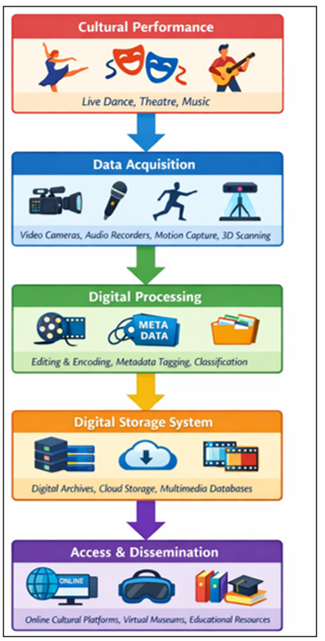
Figure 1 Role of Digital Technologies in Cultural Heritage Preservation
The Figure 1 shows the way digital technologies facilitate cultural heritage and its spread, especially performing arts. This is initiated with cultural performances like dance, theatre, and music which are useful intangible heritage. These performances are recorded by data acquisition devices such as video cameras, audio recorders, motion capture devices and 3D scanning devices. The retrieved information is then subjected to the digital process where the operations of editing, encoding, tagging of metadata and classification are carried out in order to structure the information efficiently. The digital content is then stored in digital storage platforms like cloud solutions, multimedia databases, and digital archives as a long-term storage mechanism to be preserved and secured.
1.4. Need for Digital Archiving of Performing Arts
Most traditions of performing arts are still insufficiently documented even though some of the most sophisticated technologies are available. Conventional preservation techniques may be based on fragmented recordings, personal collections or small institutional archives. Consequently, precious knowledge regarding performance methods, choreography, music pieces and cultural background can be lost in the course of time. Digital archiving provides a structured resolution of capturing and following up performing arts heritage. Digital archives could be able to maintain extensive records of performances by incorporating multimedia documentation with organized metadata systems. This kind of archive may contain video records, audio files, scripts, photographs, motion data and background information on the performers and cultural practices. Wider access that is presented through digital archiving as depicted in the Figure 2 can promote this.
Figure 2
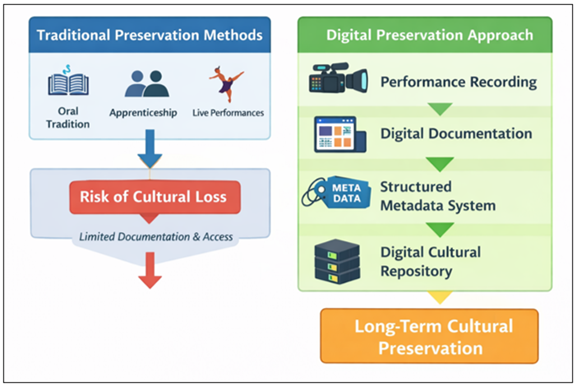
Figure 2 Need for Digital Archiving
1.5. Research Objectives and Scope of the Study
The research is to refer to the practical approaches of the online archiving and conservation of performing arts heritage. The paper will look at the existing digital preservation methods and propose a compound model that will merge modern technology and cultural documentation.
The research objectives will be:
· Examination of already established procedures that are used in documenting and archiving of performing arts.
· Selection of technological solutions and digital platforms of culture heritage preservation.
· The constraints and limitations that exist with the existing archiving systems.
· Evaluation of potential application of digital archives in research, education and cultural promotion.
The paper discusses the various follow-ups to performing arts such as the traditional dance, theatre, music performance, and the folk cultural performance. The proposed paradigm is based on the integration of digital technologies, metadata management, and multimedia databases with the aim to ensure their long-term preservation and availability.
2. Literature Review
2.1. Evolution of Archiving Methods in Performing Arts
The process of preservation of performing arts has changed to include oral transmission, handwritten scripts, photographs and analog audio-video recordings into more formal digital ecosystems. According to the recent scholarship, the discipline ceases to be merely a matter of mere documentation; it is becoming more and more interactive, searchable, and reusable knowledge systems. Digitization is now associated to research on dance heritage, computerized dance modeling, analysis of movement, visualization and transmission of culture as opposed to storing recordings. This is a change of the fixed preservation to the dynamic interpretation and re-use of the performance data. Such a shift can be observed in the general research of digital cultural heritage. Bibliometric research on digital cultural heritage demonstrates that the area has grown fast over technologies including VR/AR, multimodal databases, and computational analysis, and however, newer archeological structures are currently attempting to unify tangible, intangible, and born-digital heritage in a single framework. This is of particular interest to the performance art heritage due to the generation of layered data in the form of movement, sound, costume, staging, audience interaction, and cultural context during the performance Katifori et al. (2023).
2.2. Digital Documentation Techniques for Performing Arts
A significant body of research is concerned with the task of capturing ephemeral performances. The 3D reconstruction, motion capture, high-definition video, audio recording and annotation pipelines are now fundamental tools in documentation in the performing arts field. The article reviewing the digitization of dance focuses on the fact that computerized dance modeling is currently capable of assisting with not only archival preservation but also reconstruction of choreographic frameworks as well as movement repertoires. Similarly, the development of Joget dance reveals motion capture as being able to maintain fine move paths and symbolic gestures that would otherwise be lost in the nuances of a regular filming. Recent researches also shift out of capture into semantic enrichment. The example of DanXe, it is an AI-digitized and automatic analysis combined with extended reality as the immersive exploration of the heritage of dances, with the purpose to establish a digital twin of the documentary resources on the topic of dance. This implies that the performing arts archives are turning into analytical spaces where big collections can be packaged, examined, and analyzed by computers Chalkidou et al. (2023).
2.3. Technologies Used in Cultural Heritage Preservation
Across the literature, there is a high overlap between heritage preservation and the current digital technologies. Digital twin methods have been applied in the field of music tradition, creating virtual museums that recreate soundscapes, instruments, and other contextual information, combined with VR, AR, blockchain, and AI, to preserve and display. The studies that are centered on built heritage instead of performing arts as such can nevertheless provide valuable methodological data. Heritage preservation models in IoT show the power of sensor-based monitoring, predictive analytics, and decision support in enhancing the conservation management of the long term. In the case of performing arts, the parallel is in checking the integrity of files, files usage history, metadata quality and long-term readability of digital materials.
2.4. Role of Multimedia and Interactive Platforms in Archiving
Another recent societal movement that has been observable in literature is the development of archives into facets of interactive publicity. Instead of placing media into closed repositories, scholars are growing more focused on the ability to discover media publicly, interact with users, and explore it immersively. A good case in point is the Dancing through Time project: which transforms an established archive of dance-related audiovisual material into an interactive installation, where users can experience decades of performance documentation through embodied movement through the installation itself. Its analysis revealed good scores in user experience and interaction, and this means that interactive interfaces can enhance the accessibility of archives without diminishing academic worth. This is in line with the general increase in virtual exhibitions. A 2025 systematic review established that the virtual heritage exhibitions are now functioning within three intersections, namely, technology infrastructure, curatorial/application workflows, and user experience. In the case of performing arts heritage, it implies that effective archiving is no longer merely based on the quality of preservation; it also relies on storytelling, interface design, and educational quality as well as on people’s trust. Gabrijelčič and Javoršek (2021).
Table 1
|
Table 1 Recent Review of Recent Digital Archiving and Preservation of Performing Arts Heritage |
|||
|
No. |
Method Used |
Key Contributions |
Limitations |
|
1 |
Computerized dance modeling,
multimedia documentation Park et al. (2022) |
Provides a comprehensive overview of
digital techniques used to document and preserve dance heritage and
emphasizes the importance of digitization in safeguarding cultural knowledge. |
Mainly review-based; lacks
implementation of a unified digital archiving system. |
|
2 |
Motion capture technology, trajectory
analysis Valeonti et al. (2024) |
Demonstrates how motion capture can
capture detailed dance movement trajectories and preserve symbolic gestures
of traditional dances. |
Focuses on a single cultural dance form
and limited scalability for other performing arts. |
|
3 |
Optical motion capture, multimodal
digital preservation Bolognesi and Sorrenti (2023) |
Uses motion capture and multimodal data
recording to document movement patterns and improve preservation of dance
heritage. |
Requires specialized hardware and high
technical expertise. |
|
4 |
Motion capture repository,
visualization tools Liao et al. (2020) |
Developed a digital repository for
storing and visualizing dance motion data for research and learning. |
Limited representation of contextual
cultural information. |
|
5 |
Multimedia digitization, VR/AR
technologies Gervasi et al. (2022) |
Integrates multimedia archives and
immersive technologies to enhance engagement with music and dance heritage. |
Requires high computational resources
and infrastructure. |
|
6 |
Motion capture analysis, motion
tracking systems Pandey and Kumar (2020) |
Demonstrates how motion capture
technology can capture body movements accurately for preservation and
educational training. |
Mainly applied in teaching environments
rather than archival systems. |
|
7 |
Archival science framework, cultural
data systems Rasmussen et al. (2022) |
Proposes a conceptual framework for
digital cultural heritage archives and emphasizes data-driven cultural
governance. |
Focuses broadly on cultural heritage
rather than specifically performing arts. |
|
8 |
Digital archiving, immersive multimedia
systems Breathnach and Margaria (2025) |
Combines digital archiving with
immersive storytelling to preserve shadow puppetry traditions and improve
public engagement. |
Requires advanced multimedia platforms
and complex system design. |
|
9 |
Motion capture, avatar-based
performance systems Davis and Heravi (2021) |
Explores the use of digital avatars and
motion capture to extend performing arts into digital environments. |
Focuses more on performance innovation
than archival preservation. |
|
10 |
Vision-language models, ontology-based
metadata extraction Tasovac et al. (2020) |
Introduces AI-based workflow to convert
theatre programmes into structured digital data for large-scale archival
analysis. |
AI models require training datasets and
validation to ensure archival accuracy. |
According to the Table 1, performing art heritage is digitized in digital archives through a mix of various technologies in motion capture systems, multimedia digitization, metadata frameworks, artificial intelligence, and immersive technologies like VR/AR. Motion capture is popular with the purpose of preserving dances, whereas digital repositories and archival frameworks are used to handle cultural datasets. New research also focuses on AI-enhanced metadata extraction and interactive online experiences in order to make it more accessible and researched. But current solutions have a number of challenges such as expensive technology, non-standardization of metadata format, scalability, and other solutions, along with inability to integrate across performing arts media. The restrictions present the necessity to have an all-encompassing digital archiving model that can encompass multimedia capture, metadata management, and long-term preservation systems on the cloud.
3. Existing Methods for Digital Preservation of Performing Arts
Digital preservation is typically understood as a combination of strategies, policies, and technologies applied to preserve digital information to make it available and usable over a period of time Navarrete (2020).
3.1. Traditional Documentation Approaches
In the era of digital technologies, performing arts have been preserved in the traditional way of documentation including written records, photographs, scripts, and oral narratives. These were common means of recording performances and artistic traditions that cultural institutions, historians, and researchers used. Conventional records were usually gathered as performance scripts, stage designs, costumes, photographs and written descriptions of choreography or musical works. The cultural scholars also documented the performances using field notes and interviewing the performers. Dance, theatre, and music knowledge was spread in apprenticeship and oral tradition in lots of communities.
Although these methods helped in a great way to preserve the culture, they were limited in a number of ways. It was impossible to record movement activities, sound content, and audience engagement, which are crucial elements of performing arts just through written recordings. In addition, the physical records like manuscripts and photographs are prone to degradation, environmental degradation and loss through time.
3.2. Audio-Visual Recording Techniques
Audio-visual documentation was one of the most popular methods of preservation of performing arts along with the rise of the recording technologies. Video cameras, microphones and digital recording devices are used to record the visual movements, music, dialogue and designing aspects of the stage. Audio-visual recording methods also allow the researcher to archive high quality digital formats of performances. Multi-camera rigs and high-definition recording of video are utilized to record various views of the stage act. Also, motion capture technology is able to record the movement of the bodies of performers, which makes it possible to preserve the detailed choreography and physical expressions. Such digital records may then be edited, processed and stored in multimedia archives hence becomes available to educational and research purposes.
3.3. Digital Libraries and Cultural Heritage Repositories
Digital libraries and cultural heritage stores offer organized avenues of storing and controlling digitized cultural assets. These repositories enable organizations to arrange huge amounts of online resources such as video recordings, photos, scripts, and research papers. Included in such systems are the digital cultural repositories and collaborative platforms created by the museums, archives, and libraries. Such systems enable institutions to organize the data about heritage in an efficient way and provide access to digital collections to the public. Some projects like digital language and culture archives archive extensive bodies of audio recordings and cultural information to guarantee long-term access to at-risk cultural information.
3.4. Use of Metadata and Cataloguing Systems
Metadata is a very crucial aspect in digital preservation since it characterizes, structures and supports digital resources. Metadata contains details like performance, name of artist, place, cultural setup, date of recording, file type etc.Dublin core, PREMIS and the OAIS model are standardized metadata structures commonly used in digital archisting.
3.5. Cloud-Based Archival Platforms
Digital preservation systems have developed and become much more efficient with the help of cloud computing technologies that allow storage to be extended and accessed worldwide. Cultural institutions can use cloud-based archival services to store multimedia collections of large scale in safe online archives and avail of functions like automated backup, remote access and joint oversight of data. It is also possible to use these platforms in distributed digital preservation by providing institutions in different areas to maintain joint heritage depositories.Online systems of metadata collection and management of digital assets are also available through cloud-based workflows, integrating databases, file storage, and digital processing tools Hu and Olivieri (2020).
3.6. Limitations and Challenges of Current Systems
The current technologies of digital preservation have certain issues in spite of the advancements that have been made on it. Technological obsolescence is one of the main problems because hardware and programs that are utilized to store digital files are often out of date after some time. To ensure accessibility in the long term, there should be constant transfer of data to new formats and storage platforms. There is also the issue of non-standardized metadata across institutions, and this may be a major problem with integrating or sharing cultural data across repositories. Also, high-quality multimedia records are digital and necessitate large amounts of financial resources, technical skills, and equipment to be digitized and stored. Matters to do with copyright protection, cultural sensitivity and intellectual property rights also influence the accessibility and distribution of performing arts archives. Besides, the challenge faced by many archives is how to scale and sustain over the long term because of the high rate of expansion of digital collections.
4. Methodology: Proposed Digital Archiving Framework for Performing Arts Heritage
The conservation of the heritage of performing arts should engage a framework of digital codes that merge multimedia records, metadata administration, information storage vault, and suitable user-friendly procedures. Current preservation systems frequently deal with single elements of preservation (recording or storage), however, a successful archival system will integrate different technologies into a single workflow. The Digital Archiving Framework of Performing Arts Heritage is offered to offer a general method of data collection, processing, storage, and distribution of performing arts. The framework combines the current technologies like multimedia recording systems, metadata standards, digital repositories, and cloud computing to provide the cultural performance with the long time preservation and accessibility.
4.1. Design Principles for Digital Preservation
The system is expected to record various movements of performing arts such as visual movements, music, dialogues, costumes, stage designs, and contexts. Multimedia documentation will assure that the cultural meaning of performances will be carried on precisely. Normalized Metadata Management: Metadata standards have to be adopted in order to systematize digital content. Performers, context of the performance, the place of the performance, the cultural aspect, and the recording details should be included in the metadata. Scalable storage Infrastructure: Digital preservation systems must have the ability to promote scalable storage infrastructure with the capacity to manage big multimedia collections. There is assistance of cloud-based systems and distributed storage networks to ensure long-term accessibility. Accessibility: This site has not been optimized to facilitate user accessibility tools and programs.
4.2. Architecture of the Proposed Digital Archiving System
The architecture proposed is made up of various inter-connecting layers which facilitate the entire lifecycle of digital archiving. These layers are data acquisition, digital processing, metadata management, archival storage and access platforms. The initial phase of the suggested framework is based on the capturing of the performing arts data by high-tech multimedia devices. Recording of live performances takes place with the help of high-definition motion cameras, sound recordings, and motion sensors. The technologies allow proper recording of motions, musical components, and stage interactions. Digitization is also the process of making analog recordings in digital form to make them compatible with the new digital preservation systems. The digitization process will mean that past recordings that were in tapes or hardcopy materials can be incorporated into digital archives.
Figure 3
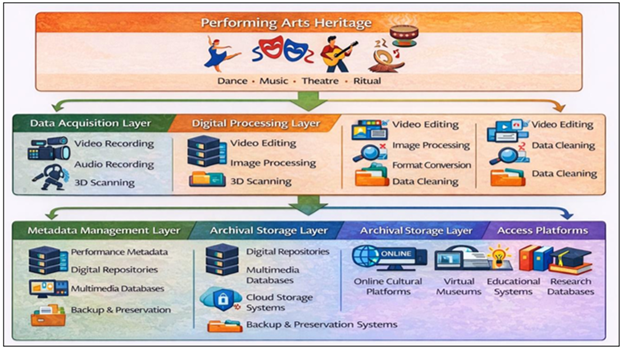
Figure 3 Proposed Architecture
Multimedia documentation, metadata systems, digital storage platforms and access mechanisms to the whole preservation model are utilized as Figure 3 suggested digital archiving shows. The framework ensures that using the technologies, the legacy of performing arts would be preserved by integrating the technologies and thus be orderly and spread across generations.
5. Applications and Results
The proposed Digital Archiving Framework of Performing Arts Heritage may be applied in different areas including cultural preservation, education, research, and interaction with the audience. The system helps the cultural institutions to store and distribute performing arts heritage efficiently by integrating multimedia documentation, administration of metadata, and the cloud-based repositories. In this section, the key goals of the use of the framework and its effectiveness in relation to the existing preservation plans are given.
5.1. Applications of the Digital Archiving Framework
5.1.1. Cultural Heritage Preservation
One of the significant applications of the proposed framework is the conservation of traditional performing arts such as the dance, the theatre, and the music and ritual performances. The structure ensures that the artistic expressions are preserved digitally so that they will be used by the future generations since the performances will be captured using high definition video, motion capture technologies and audio recording systems. Digital archives also remove any loss or physical decay of the cultural heritage and any damage by the environment Lian and Xie (2024).
5.1.2. Educational and Academic Use
Digital archive of performing art can become a useful resource to students, researchers, and educators. Schools can also take advantage of the practice of archived performances as a form of learning choreography, stage design, and methods of performance and cultural stories. Learning digital space and virtual museums may provide students with an opportunity to interact with cultural resources kept in archives in a very interactive and engaging manner.
5.1.3. Cultural Research and Documentation
The researchers can use digital archives in other fields such as research on performing arts, anthropology, and cultural history to study the trends in art and cultural transformation. It is organized metadata and databases that could be searched, which enables scholars to locate a particular performance and compare works of different cultural traditions.
5.1.4. Public Cultural Engagement
Through digital portals and online museums, as well as online exhibitions, the performing arts heritage is made available to the global audiences on the digital platform. This enhances cultural awareness and appreciation of traditional forms of art by the people who are diverse.
5.2. System Implementation Results
The adoption of the suggested framework shows a number of advancements over the traditional methods of preservation. The digital documentation system is more accurate in documenting performances and the metadata management system allows the archival material to be easily retrieved. Clouded storage systems also guarantee long-term storage and world availability.
The analysis of the framework will be based on the following performance indicators:
· Preservation accuracy
· The availability of cultural data.
· Storage efficiency
· Metadata management capability.
· User engagement
5.3. Comparative Analysis of Archiving Methods
In order to assess the success of the suggested digital archiving framework, the proposed framework is compared to the current preservation methods as illustrated in Table 2 such as traditional documentation, audio-visual recording, and digital repositories. Karthikeyan et al. (2023)
Table 2
|
Table 2 Comparative Analysis of Performing Arts Preservation Methods |
|||||
|
Method |
Preservation Accuracy |
Accessibility |
Storage Efficiency |
Metadata Support |
User Engagement |
|
Traditional Documentation |
Low |
Limited |
Moderate |
Very Low |
Low |
|
Audio-Visual Recording |
Moderate |
Limited |
Moderate |
Low |
Moderate |
|
Digital Cultural Repositories |
High |
High |
High |
Moderate |
High |
|
Proposed Digital Archiving Framework |
Very High |
Very High |
High |
Very High |
Very High |
5.4. Evaluation Graph of Preservation Methods
Figure 4
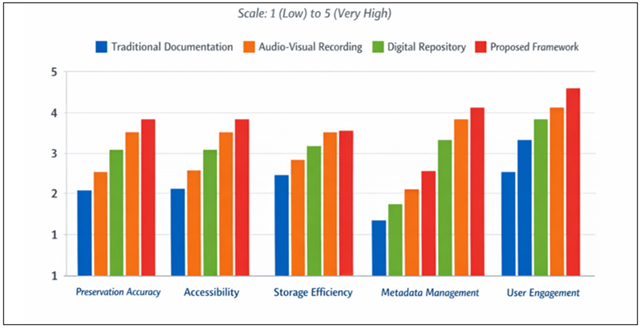
Figure 4 Performance Evaluation of Archiving Methods
As seen in the performance analysis and comparison on Figure 4 above, the proposed digital archiving framework has a great impact on enhancing cultural preservation performance as opposed to the traditional system. The classic methods of documentation are mostly based on textual explanations and photography, which have no ability to reflect the richness of doing art. Audio-visual recording has superior documentation, but has no organized metadata and efficient systems of retrieval. Digital repositories are better stored and more accessible yet might not be fully metadata controlled and interactive cultural platforms. The suggested model combines all the necessary elements such as multimedia documentation, metadata classification, cloud storage, and access platforms online. Consequently, it gives it better preservation precision, better accessibility and user engagement. Rawandale et al. (2022), Karwande et al. (2024)
6. Comparative Analysis of Digital Preservation Approaches
A comparative study is also conducted to service the efficacy of different methods that are utilized in the digital conservancy of performing arts heritage in relation to some analysis measures. The traditional methods of record keeping, audio-visual methods of record keeping, digital cultural archives, and the proposed digital archiving system are evaluated with regard to how effective they are in storing cultural material. The analysis has led to the identification of the flaws and advantages of the existing preservation mechanisms and has identified the advantages of the proposed framework. The preservation of performing arts heritage contains elements of capturing a dynamic element with regard to movement, sound, performance context, and relationship with the audience. The traditional forms of documentation are largely reliant on a written description, photographs and written scripts which cannot represent these dynamic aspects comprehensively. The audio-visual recording techniques allow better protection as they transfer visual and sound information, but they are not systematically placed and identified. Digital repositories are systematized repositories and have more convenient access; however, they may not fully realize high-technology such as motion capture, cloud storage and metadata classification systems. Hazarika et al. (2025)
The digital archiving model proposed is an amalgamation of diverse arrays of technology including multimedia recording system, metadata management software, digital repositories and cloud computing storage system. This is the combined approach that leads to more efficient documentation, information retrieval and dissemination of performing arts.
6.1. Evaluation Criteria for Digital Preservation Systems
To compare performance of different approaches to archiving, the following assessment criteria can be taken into consideration: Preservation Accuracy: Measures how well a system can recreate the totality of the attributes of performing arts including visual motion, music, stage design and cultural context. Metadata Management: Assesses the system using the capability to categorize and structured digital documentations using standard metadata structures. Storage Efficiency: It examines the ability of the system to store large amounts of multimedia information and also ensure that data integrity and reliability is not compromised. User Engagement: Measures how well the system will help to support the communication of the population through online tools, virtual museums, and educational applications.
6.2. Comparative Analysis Table
Table 3
|
Table 3 Traditional Methods Comparison |
|||||
|
Preservation Method |
Preservation Accuracy |
Accessibility |
Metadata Management |
Storage Efficiency |
User Engagement |
|
Traditional Documentation |
Low |
Low |
Very Low |
Moderate |
Low |
|
Audio-Visual Recording |
Moderate |
Moderate |
Low |
Moderate |
Moderate |
|
Digital Cultural Repositories |
High |
High |
Moderate |
High |
High |
|
Proposed Digital Archiving Framework |
Very High |
Very High |
Very High |
High |
Very High |
The comparison presented in Table 3 indicates that conventional documentation methods are constrained by the fact that they are unable to capture dynamic elements of performance. Audio-visual recording enhances documentation systems, yet they are not structured with metadata and built-in storage facilities. The digital cultural repositories are more accessible and efficient to store information, though they are not always compatible with such advanced technologies as motion capture or immersive visualization. The suggested scheme has exhibited enhanced results in all the assessment units through incorporateation of multimedia capture, metadata and archival storage in the clouds.
7. Challenges and Future Research Directions
Although digital technologies have been fairly developed, there are still various technical, organizational, and cultural issues related to the preservation of the heritage of performing arts. Performing arts are dynamic and ephemeral in nature and therefore, preservation of these art forms is more complicated compared to tangible cultural artifacts. To conduct good digital archiving, it is not enough that performances are documented but also that contextual information about the performance should be preserved including cultural and performer expertise, audience engagement, and stage set up. The challenges related to the digital preservation of the heritage of performing arts, the main ones, and the possible directions of the future research are discussed in this section.
Technological obsolescence is one of the primary issues of digital preservation. The technology of digital storage, file formats and software systems changes fast and hence this can cause compatibility problems in the long run. Various forms of digital materials such as videos, audio records, photographs, scripts and background materials can be found in the performing arts archives. In the absence of standard metadata structures, it is not easy to organize and access the archival materials efficiently. There are various metadata standards employed by many cultural institutions, which may be a hindrance to interoperability between digital repositories. The next stage of the research that should be considered to undertake in the future is the creation of unified metadata frameworks with a specific focus on performing arts heritage.
Another critical issue is the issue of cultural authenticity. Online records can be able to document visual and auditory features of performances and still may not be able to reflect upon the cultural meaning and symbolic value of the traditional art forms. There are a lot of performing arts traditions that are founded on community practices, religion, and oral traditions. To manage access to cultural heritage materials fairly, there is need to develop good policies to be applied in the management of copyright and ethical use of digital archives. The other big issue is the digital divide and access issues. Although digital technologies provide opportunities to the entire world to access cultural heritage, numerous communities cannot access online archives due to the lack of the technological infrastructure. Internet connectivity, digital literacy and inadequate technological infrastructure might deny the community the opportunities to gain access to digital preservation efforts. This digital divide needs to be bridged so as to create a fair access to cultural heritage resources. The trend of digital preservation of performing arts heritage in the future should be to integrate new technologies like artificial intelligence, virtual reality, and augmented reality.
8. Conclusion
The heritage of performing arts is the essential element of safeguarding the cultural identity, traditions of arts and memory. Among the important components of intangible cultural heritage, one can single out dance, theatre, music, and ritual performances that help to determine social values, history, and creative expression of communities. However the performance arts are dynamic and temporary in nature thus they are hard to preserve. The traditional modes of documenting the cultural traditions are written documents, photographs and oral transmission, which has played a great role in preserving the tradition but would fall short in capturing the richness of the live performance. The research paper analysed the utilisation of digital technologies in the process of performing arts heritage preservation and the existing means of cultural documentation and archiving. These were the traditional methods of documentation, audio visual recording methods, digital cultural repositories, metadata systems, and the online archival systems. Despite the fact that these methods have been instrumental in the digitization and archiving of performing arts information, they do have many disadvantages including difficulty in standardizing metadata, sustainability with technologies, availability, and cultural validity. To address these shortcomings, this paper proposal provided an elaborate digital archiving framework to the performance art heritage archiving. The proposed model brings in many levels of technology like multimedia data capture, computer processing, metadata management, archival storage and access systems. These elements will be capable of providing the system with a scaled and properly structured system of capturing, storing and distributing performing arts information. The comparative analysis has revealed that the proposed framework has numerous advantages over the conventional preservation strategies in preservation accuracy, retrieval, metadata organization, and interaction between the user.
The research study has also revealed that there are several challenges that are involved with the digital preservation that comprise technological obsolescence, costly infrastructure, intellectual property and the digital divide. Cultural organizations, researchers, technology engineers, and local populations need to collaborate in order to overcome these problems. The research on the new technologies implementation such as artificial intelligence, virtual reality and interactive digital platforms needs to be incorporated into the next generation of research to facilitate performing arts archives documentation and availability. In conclusion, the idea of digital archiving is a potential challenge in preserving and selling performing arts heritage in the digital age. Cultural institutions can ensure that the traditions of performing arts are properly documented and made available to the next generation through their adoption of better digital preservation efforts and methods of partnerships.
CONFLICT OF INTERESTS
None.
ACKNOWLEDGMENTS
None.
REFERENCES
Bolognesi, C., and Sorrenti, D. (2023). New Representation Tools in VR and Holographic View. In Beyond Digital Representation: Advanced Experiences in AR and AI for Cultural Heritage and Innovative Design ( 805–820). Springer. https://doi.org/10.1007/978-3-031-36155-5_52
Breathnach, C., and Margaria, T. (2025). Digital Humanities and Cultural Heritage in AI and IT-Enabled Environments. In Bridging the Gap Between AI and Reality (AISoLA 2023). Springer. https://doi.org/10.1007/978-3-031-73741-1_1
Chalkidou, S., Tokmakidis, P., Patias, P., Georgoula, O., and Arvanitis, A. (2023). Identifying Lost Cultural Heritage Assets from Historic Town Planning Maps: The case of Thessaloniki, Greece. e-Perimetron, 18, 207–223.
Davis, E., and Heravi, B. (2021). Linked Data and Cultural Heritage: A Systematic Review of Participation, Collaboration, and Motivation. Journal on Computing and Cultural Heritage, 14, 1–18. https://doi.org/10.1145/3429458
Dingankar, S., Dixit, R., Dhaku Jadhav, K., Bathla, G., Rane, M. E., and Raina, A. (2025). Synthesizing Best Practice Frameworks for Enhancing Financial Literacy Support in Microenterprise Lending. Enterprise Development and Microfinance, 35(1), 263–282. https://doi.org/10.3362/edm.v35i1.21
Gabrijelčič Tomc, H., and Javoršek, D. (2021). Colorimetric Accuracy of Color Reproductions in 3D Scenes. Tehnički Vjesnik, 28, 20–26. https://doi.org/10.17559/TV-20181204101720
Gervasi, O., Perri, D., Simonetti, M., and Tasso, S. (2022). Strategies for the Digitalization of Cultural Heritage. In International Conference on Computational Science and its Applications ( 486–502). Springer. https://doi.org/10.1007/978-3-031-10592-0_35
Gurav, M., Yadav, M., and Taral, M. (2025). Classification of Overlapping Red Blood Cells in Microscopic Blood Smear Images Using Deep Learning. IJACECT, 14(2), 37–47. https://doi.org/10.65521/ijacect.v14i2.1269
Hazarika, I., Saoji, S., Bhandari, R. B., Jorvekar, G., Rao, P. H., and Porwal, T. (2025). Mapping Resilience Pathways: A Conceptual Framework for Portfolio Risk Management in Microenterprise Lending During Economic Shocks. Enterprise Development and Microfinance, 35(1), 1–20. https://doi.org/10.3362/edm.v35i1.5
Hu, L., and Olivieri, M. (2020). Cultural Heritage on Social Media: The Case of the National Museum of Science and Technology Leonardo da Vinci in Milan. In Digital Transformation in the Cultural and Creative Industries ( 211–223). Routledge. https://doi.org/10.4324/9780429329852-16
Karthikeyan, J., Vasanthan, R., Sundari, P. S., Nandhini, T. J., and Devi, V. C. (2023). Construction and Implementation of English Translation Simulation Training Classroom Based on Deep Learning. In Proceedings of the 2nd International Conference on Smart Technologies for Smart Nation (SmartTechCon 2023) ( 716–719). https://doi.org/10.1109/SmartTechCon57526.2023.10391666
Karwande, V. S., Pawar, U. B., and Pattnaik, O. (2024). Leveraging Speech-Driven Patterns Multimodal Machine Learning Framework for Accurate Early-Stage Parkinson’s Disease Prediction: A Survey. In Proceedings of the 2nd International Conference on Advanced Computing and Communication Technologies (ICACCTech 2024) ( 525–532). https://doi.org/10.1109/ICACCTech65084.2024.00091
Katifori, A., Antoniou, A., Damala, A., and Raftopoulou, P. (2023). Editorial for the Special Issue “Advanced Technologies in Digitizing Cultural Heritage.” Applied Sciences, 13, 5873. https://doi.org/10.3390/app13105873
Lian, Y., and Xie, J. (2024). The Evolution of Digital Cultural Heritage Research: Identifying Key Trends, Hotspots, and Challenges through Bibliometric Analysis. Sustainability, 16(7125). https://doi.org/10.3390/su16167125
Liao, H. T., Zhao, M., and Sun, S. P. (2020). A Literature Review of Museum and Heritage on Digitization, Digitalization, and Digital Transformation. In Proceedings of the 6th International Conference on Humanities and Social Science Research (ICHSSR) ( 473–476). https://doi.org/10.2991/assehr.k.200428.101
Navarrete, T. (2020). Crowdsourcing the Digital Transformation of Heritage. In Digital Transformation in the Cultural and Creative Industries ( 99–116). Routledge. https://doi.org/10.4324/9780429329852-9
Pandey, R., and Kumar, V. (2020). Exploring the Impediments to Digitization and Digital Preservation of Cultural Heritage Resources: A Selective Review. Preservation, Digital Technology and Culture, 49, 26–37. https://doi.org/10.1515/pdtc-2020-0006
Park, J. J., Kim, E. Y., Lim, S. Y., and Jun, H. J. (2022). Development of a Customized Bim-Based Architectural Design Service Platform for Architectural Design Practitioners. Journal of the Architectural Institute of Korea, 38, 59–66.
Rasmussen, C. H., Rydbeck, K., and Larsen, H. (Eds.). (2022). Libraries, Archives, and Museums in Transition: Changes, Challenges, and Convergence in a Scandinavian Perspective (1st ed.). Routledge. https://doi.org/10.4324/9781003188834-1
Rawandale, U. S., Ganorkar, S. R., and Kolte, M. T. (2022). Audiogram Study in Filter Bank Used for Hearing Aid System to Enhance Performance. In 2022 6th International Conference on Computing, Communication, Control and Automation (ICCUBEA) ( 1–4). https://doi.org/10.1109/ICCUBEA54992.2022.10010832
Suri, S., Lakshman, K., Goyal, E., Goyal, G., Sood, G., Mirajkar, G. S., and Anerao, P. (2025). Emotion Modeling in Sculpture Design Using Neural Networks. ShodhKosh: Journal of Visual and Performing Arts, 3(3s), 31–40. https://doi.org/10.29121/shodhkosh.v6.i3s.2025.6756
Tasovac, T., Chambers, S., and Tóth-Czifra, E. (2020). Cultural Heritage Data from a Humanities Research Perspective: A DARIAH Position Paper.
Valeonti, F., Vlachidis, A., Nyhan, J., Bikakis, A., Kotarski, R., and Jovanovic, P. (2024). Decentralising Digital Humanities: Exploring Blockchain Technology and Web3 for the Sloane Lab and Towards a National Collection (TaNC). Journal of Documentation. Advance online publication. https://doi.org/10.1108/JD-04-2024-0093
|
|
 This work is licensed under a: Creative Commons Attribution 4.0 International License
© ShodhKosh 2026. All Rights Reserved.