ShodhKosh: Journal of Visual and Performing ArtsISSN (Online): 2582-7472
|
|
Sustainable Practices in Visual and Performing Arts: Policy, Management, and Innovation
Suganya S 1 , Gayathri M 2
 , Sathya Arthi R 3
 , Balamurugan N 4
 , Subbulakshmi Packirisamy 5
 , Doris Ifeoma Ogeri 6
1 Assistant Professor, Department of
Management Studies, Meenakshi College of Arts and Science, Meenakshi Academy of
Higher Education and Research, India
2 Assistant Professor, Department of
Management Studies, Meenakshi College of Arts and Science, Meenakshi Academy of
Higher Education and Research, India
3 Assistant Professor, Department of Management Studies, Meenakshi College of Arts and Science, Meenakshi Academy of Higher Education and Research, India
4 Meenakshi College of Physiotherapy, Meenakshi Academy of Higher Education and Research, India
5 Assistant Professor, Department of Pharmacology, Meenakshi Ammal Dental College and Hospital, Meenakshi Academy of Higher Education and Research, India
6 Faculty of Management, Shinawatra University, Thailand; Research Fellow, INTI International University, Malaysia
|
|
|
ABSTRACT |
|
|
The notion of
sustainability has become an urgent issue of discussion in the modern world
of cultural and creative industries, specifically, in the domain of the
visual and performing arts. With the increasing overlap of the
artistic production and cultural event with
the environmental, social as well as economic issues, sustainable practices
are now considered to be essential to the cultural
administration and long-term creative growth. The paper discusses sustainable
practice in the visual and performing arts using the lenses of cultural
policy, institutional management, and technological innovation. The study
examines the application of the principles of sustainability in the art
production process, exhibition design, museum activities, and the performing
arts venues. Visual arts have been using environmentally friendly materials,
environmentally friendly exhibition practices and recyclable resources to
minimize environmental effects and foster responsible experimentation in the
arts. Sustainable stage design, green lighting and sound technologies, and
touring practices are rapidly becoming the norm in production and event
management in the performing arts industry. It also examines the theory basis
of sustainability in cultural governance especially the implementation of the
triple bottom line theory that considers the environmental responsibility,
social inclusion and economic viability. Although the awareness has been
increased, there are various challenges associated with the implementation of
sustainable practices, such as financial constraints, infrastructural
constraints, low policy integration, and barriers to technological adoption. |
|||
|
Received 04 December 2025 Accepted 26 March 2026 Published 03 April 2026 Corresponding Author Suganya S,
DOI 10.29121/shodhkosh.v7.i3s.2026.7329 Funding: This research
received no specific grant from any funding agency in the public, commercial,
or not-for-profit sectors. Copyright: © 2026 The
Author(s). This work is licensed under a Creative Commons
Attribution 4.0 International License. With the
license CC-BY, authors retain the copyright, allowing anyone to download,
reuse, re-print, modify, distribute, and/or copy their contribution. The work
must be properly attributed to its author.
|
|||
|
Keywords: Sustainability, Cultural Policy, Visual and
Performing Arts, Creative Economy, Green Cultural Management |
|||



1. INTRODUCTION
The concept of sustainability has emerged as a theme of the global development debate and as such, it has affected policy formulation, institutional governance and the operational practice in various sectors. Over the past years, cultural and creative industries and specifically the visual and performing art have realized the need to integrate the practice of sustainability into the production of art, management of culture, as well as policy. Conventionally, creativity, cultural expression, and social interaction have been the main qualifications of the arts industry, but the rise of environmental issues, scarcity of resources and global climate crisis have seen the need to integrate environmentally friendly and socially inclusive practices within cultural institutions and artistic communities Galluccio and Giambona (2024). Sustainability has therefore become a relevant guideline in future development of visual and performing arts industry. Museums, galleries, theatres, performance houses are all visual and performing arts establishments that have an important role in creating cultural narratives and impacting the general consciousness. Such institutions do not just conserve the historical culture, but also provide a venue of innovation, learning and community involvement. Nevertheless, there is a lot of material consumption, energy consumption, and waste generation that is involved in the daily activities of art production, exhibition design, stage construction, and tours performances McGhie (2023). Big shows, theatre productions, spotlights and global traveling shows cause carbon emission and environmental effects. Consequently, policymakers, arts managers, and creative practitioners are putting more and more effort in identifying ways to reduce ecological footprints, without compromising artistic quality and cultural accessibility Jelinčić (2021). Integrated framework- Policy: Figure 1 depicts how policy can be linked to management and innovation to achieve sustainability. Sustainability in arts is a notion not just relating to the environmental issues but also to the social and economic aspects.
Figure 1
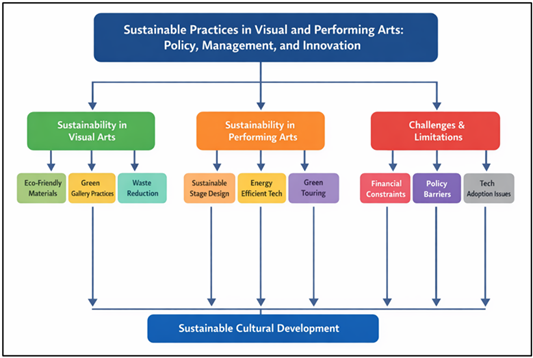
Figure 1 Sustainable Practices Framework in Visual and
Performing Arts: Policy, Management, and Innovation
Sustainable cultural development focuses on cultural experiences, participation of the community and long term viability of the cultural institutions. The incorporation of the principles of sustainability is in line with the larger world endeavors, including the sustainable development models and the creative economy models, where the focus is on the need to balance the cultural development with the environmental responsibility and social inclusion. In this regard, the arts industry is changing to be not only a creative domain but also a significant part of sustainable urbanization and cultural policy Wu and Lin (2021). The visual arts industry is adopting sustainable practices by employing materials that are friendly to the environment, sourcing of artistic materials in a responsible manner and designing exhibition with environmental concerns. Recycled materials, biodegradable media and sustainable methods of fabrication are also being experimented on by artists and curators. Equally, museums and galleries are embracing green management practices that encompass energy saving in climatic controls, environmentally friendly building architects and minimization of wastage during exhibitions Gao et al. (2024). These traditions not only add to environmental sustainability, but also prompt to innovative artistic experimentation, which presents the current ecological issues. There is also a shift in the performing arts industry toward sustainable production and management. Live events, theatre productions, and dance performances are becoming more and more appropriate to energy-efficient lighting technologies, stage design tools that are digital, and touring that is environmentally friendly. Sustainable stage design, reusable set design, and efficient transportation planning are now looked upon as significant factors by performing arts organizations in a bid to minimise their effects on the environment Gaitán et al. (2023). Also, the consumptions of sustainable event management are being incorporated in festivals and cultural events in order to foster responsible resource use and environmental friendly audience participation.
2. Literature Review
2.1. Concept of sustainability in cultural and creative industries
The idea of sustainability in cultural and creative industries (CCIs) has been receiving growing academic attention as the world economy, as well as the environment, is witnessing the growth of cultural production. Sustainability of CCIs usually denotes the inclusion of environmental responsibility, social inclusivity, and economic sustainability in cultural practices, artistic creation and creative businesses. Researchers highlight that such cultural institutions, artists, and creativity organizations can play an important role in terms of sustainable development as they facilitate cultural diversity, social unity, and sustainable use of resources Kioupi and Voulvoulis (2022). The environmental, social and economic sustainability conceptual framework represented by the triple bottom line has ended up being a common conceptual approach used to assess on how sustainably the arts and creative sectors are. The studies have outlined that CCIs have significant potential in enhancing the sustainable development objectives by promoting cultural enlightenment and promoting pro-environmental conduct by way of creative expression and community participation Giliberto and Labadi (2022). Cultural organizations have become a valuable platform of sustainability discourse allowing artists and communities to discuss ecological themes and environmental activism through their creative practice. Moreover, creative industries also play a part in sustainable urban development in terms of renewing cultural spaces, enhancing local economies and facilitating local culture-based cultural activities.
2.2. Sustainable Practices in Visual Arts Production and Exhibition
Visual arts production and exhibition processes have been identified as areas where sustainable practices have taken on a greater significance as artists, curators and cultural institutions are trying to mitigate the environmental impact of artistic processes. The conventional methods of preparing art usually entail use of non-renewable resources, chemical-enhanced pigments, artificial substrates, and energy-consuming making procedures Vikmane and Lake (2021). As a result, numerous modern artists and organizations are incorporating eco-friendly practices, including the use of eco-friendly materials and sourcing sustainably and using production techniques that do not consume resources. Reproduction of recycled and biodegradable materials in artwork creation has become one of the most important trends in sustainable visual arts. Artists are more often using re-purposed materials and objects, natural pigment and fibers, and reorganizing existing materials to create art objects which cause minimal environmental damage to maximize the creative possibilities of artistic works Harper (2021). These practices can lead to waste reduction as well as increase awareness of the people on the sustainability of the environment through artistic stories. Museums and galleries are instituting green solutions in the exhibition management centering on the energy efficient lighting systems, optimization of climate control, and sustainable exhibition design.
2.3. Environmental Management in Performing Arts Institutions
The issue of environmental management has emerged as a concern to the conducting arts organizations like the theatres, opera houses, concert halls, and cultural festival. These types of institutions have large facilities that consume a lot of energy through lighting systems, sound system, stage technologies, and climate management systems Kalfas et al. (2024). Moreover, production activities of staging often include the occasional construction of stage sets, use of costumes, and touring logistics that may produce a lot of material waste and carbon emissions. In order to overcome these challenges, performing arts organizations are now embracing environmental management practices that are geared towards minimizing their ecological footprint. They are using energy efficient devices such as stage lighting (LED), digital projection systems and automated lighting control systems to curtail the use of electricity during performances Dalle Nogare and Murzyn-Kupisz (2021). The technologies not only reduce the operational cost but also make it a sustainable venue management. Another major field in performing arts institutions environmental innovation is sustainable stage design. Designers have also become more involved in designing modular and reusable stage sets that can be reused across several productions Killingsworth (2021). The application of sustainable materials, recycling props, and friendly methods of making costumes assists in minimizing wastes produced during the shows. Table 1 provides a comparison of the past research on sustainability practice in the visual and performing arts. In addition, green touring is being embraced in order to reduce the environmental effects of the traveling productions.
Table 1
|
Table 1 Related Work on Sustainable Practices in Visual and Performing Arts |
||||
|
Research Focus |
Sector |
Methodology |
Key Sustainable Practice |
Limitation |
|
Sustainability integration in cultural
institutions Hansson and Öhman (2022) |
Museums |
Case study analysis |
Energy-efficient building design |
High implementation cost |
|
Environmental impact of art exhibitions |
Visual Arts |
Qualitative institutional study |
Reusable exhibition structures |
Limited adoption in smaller galleries |
|
Sustainable materials in contemporary art |
Visual Arts |
Artist practice survey |
Recycled and biodegradable art materials |
Material durability concerns |
|
Energy efficiency in theatre venues |
Performing Arts |
Technical energy analysis |
LED stage lighting systems |
Initial infrastructure investment |
|
Circular economy in museum management Iwasaki and Pederzoli
(2023) |
Museums |
Policy and operational review |
Reuse and recycling of exhibition materials |
Limited policy standardization |
|
Sustainable stage design practices |
Performing Arts |
Production design analysis |
Modular stage construction |
Design flexibility limitations |
|
Cultural policy for sustainable arts management |
Cultural Policy |
Comparative policy analysis |
Sustainability-focused cultural governance |
Fragmented policy implementation |
|
Green touring strategies in performing arts |
Performing Arts |
Industry survey |
Reduced equipment transport and shared logistics |
Coordination challenges between venues |
|
Sustainable museum operations Sheela et al. (2025) |
Museums |
Institutional sustainability audit |
Energy-efficient HVAC and lighting |
High upgrade expenses |
|
Digital technologies for sustainable exhibitions |
Visual Arts |
Digital exhibition case study |
Virtual exhibitions and digital displays |
Limited audience accessibility in some regions |
|
Sustainable event management in cultural
festivals |
Performing Arts |
Event management evaluation |
Waste management and eco-friendly logistics |
Implementation complexity |
|
Creative economy and sustainability in arts
sector |
Cultural Management |
Mixed-method research |
Sustainable cultural entrepreneurship |
Requires long-term institutional commitment |
3. Theoretical Framework
3.1. Sustainability theory and triple bottom line (environmental, social, economic)
The sustainability theory offers a scaffolding framework on the manner in which institutions and industries can act in a way that is environmentally friendly, socially satisfactory, and economically feasible. Among the most well-known frameworks that are used in the sustainability theory, it is necessary to point out the Triple Bottom Line (TBL) model that assesses the sustainability of organizations in three dimensions that are all interconnected with each other, such as environmental, social, and economic sustainability. In the visual and performing arts, this framework assists cultural organizations and practitioners in the arts to incorporate responsible resource management along with social interaction and economic wellness. Environmental dimension is aimed at reducing the ecological impact by responsibly using materials, saving energy, and reducing wastes and adopting sustainable patterns of production. Museums, galleries, and theatres are becoming more eco-friendly with use of materials that are eco-friendly, renewable energy sources and use of sustainable building techniques to minimize the environmental impact. Hansson and Öhman (2022) The social aspect focuses on inclusivity, involvement of community, access to culture and the conservation of culture. Artistic projects tend to raise social consciousness, support cultural diversity, and create a discussion of environmental and social problems. The economic aspect emphasizes the need to be financially sustainable and institutionally viable in the long-term.
3.2. Cultural Policy and Governance Models
The Cultural policy and governance models are important in determining the way sustainability principles are applied in arts and cultural sectors. Cultural policy is the governmental and institutional policies to promote the art production, the cultural preservation and the industries of creativity and combats social and environmental issues. Good governance systems are known to assist in matching the cultural development to the wider sustainability objectives through regulatory control, support, and planning. Iwasaki and Pederzoli (2023) Cultural management governance models are usually collaborative entities between a member of the community, a public institution, and the private organization. Governments normally offer finance, regulatory systems, and cultural infrastructure allowing the organizations of arts to thrive and to explore novelty. Figure 2 demonstrates the governance models that should guide the cultural policy of sustainable arts management. Sustainability goals have become a part of cultural policies, where museums, galleries, and performing arts organizations are encouraged to use environmental friendly procedures as well as culturally inclusive programs.
Figure 2
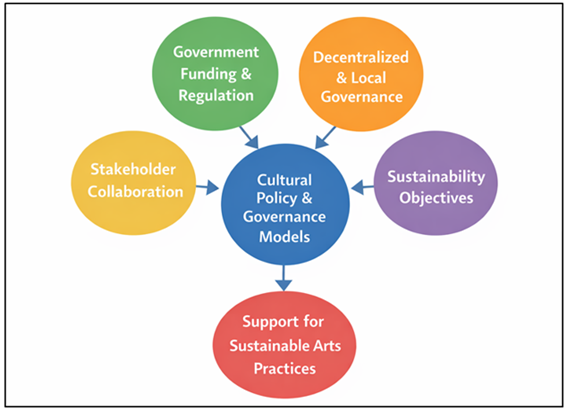
Figure 2 Cultural Policy and Governance Models for
Sustainable Arts Management
The decentralized models of governance also enable the local cultural institutions to come up with contextual sustainability plans. The cultural policies of the region can be used to encourage sustainable tourism, heritage preservation, and environmentally friendly cultural festivals that can also help in the local economic growth. Also, the cultural governance models usually focus on transparency, involvement of the stakeholders and accountability in decision-making. Recent literature emphasizes the need to incorporate sustainability in the design of cultural policy to guarantee the cultural resilience in the long perspective. Governments and cultural institutions can use good governance systems and their supportive policy initiatives to promote sustainable artistic production, green cultural infrastructure, and enhance the sustainability of arts in the development of society. Sheela et al. (2025)
3.3. Creative Economy and Sustainable Development Frameworks
The creative economy model acknowledges the cultural and creative industries to be significant in the economic development, innovation and social development. In this context, the performing arts and visual arts play a role in enhancing culture as well as generating jobs, regenerating cities, and the exchange of cultures among the people of various nations. Combined with the principles of sustainable development, the creative economy can help sustainably produce cultural products and socially include in the cultural practices. The sustainable development models have highlighted the importance of ensuring that there is a balance between economic growth and the environment as well as social equity. Cultural industries are also significant towards the realization of these objectives by enhancing sustainable practice of culture, cultural heritage and environmentally sensitive popular participation. The innovative sustainable design, digital technologies, and cultural entrepreneurship, the stimulated results of the creative economy, are capable of minimizing the environmental effects and promoting economic development. Creative businesses, cultural organizations and festivals are embracing sustainable management approaches that are more in line with more general sustainable development agendas. The strategies are sustainable event planning, environmentally responsible cultural tourism, and digital cultural platforms that minimise material usage and increase the audience reach. Furthermore, creative industries usually become catalysts to increase the awareness of people on sustainability concerns by telling stories through art and expressing culture. Vijayakumar et al. (2026)
4. Sustainable Practices in Visual Arts
4.1. Eco-friendly materials and sustainable art production
Sustainable art production and use of materials that are environmentally friendly has gained more significance in the modern visual arts as artists and institutions strive to lessen the effects on the environment without sacrificing the creativity values. The use of synthetic materials, chemical pigments, plastics, and non-biodegradable substrates is often necessary to the traditional way of art production, which may result in environmental pollution and depletion of resources. With the increasing attention to the idea of environmental sustainability, artists are considering various other materials and production processes that would cause the minimum of harmful impact on the environment, and would contribute to responsible artistic practices. Recycled, biodegradable, as well as naturally sourced material is often used in creating sustainable artworks. Artists are also using more reclaimed wood, recycled metals, used fabric, organic dyes, natural dyes and biodegradable mediums into their art. The materials not only minimally affect the environment, but also promote innovative experimentation and theoretical work with the environmental issues. Besides, sustainable sourcing also focuses on the use of locally sourced material, which lowers carbon emissions during transportation and also promotes local resource networks. Digital technologies have also played a role in sustainable art production providing artists with the opportunity to produce and distribute artworks digitally which do not require physical materials and mass production of the works. Vasanthan and Nandhini (2022)
4.2. Green Gallery and Museum Management Practices
The importance of green management in galleries and museums is becoming more and more significant as a strategy in ensuring sustainability in the visual arts industry. Museums and galleries are usually in need of large infrastructure to maintain the artifacts, climate control systems, and administration of exhibition areas. Such operational processes may entail intensive energy use, material usage and wastes. This has seen a lot of the cultural institutions implementing eco-friendly approaches in the management of their activities to minimize their ecological imprint, but offer high art conservation and visitor experiences. Energy efficiency is among the most significant things in green gallery and museum management. Some of the energy saving technologies being implemented in cultural institutions are LED lighting systems, automated lighting controls and energy saving heating, ventilation and air conditioning (HVAC) systems. Such technologies lower energy usage without compromising the best environmental conditions that are needed in preservation of art works. The design and renovation of buildings should be sustainable too, which is a significant aspect of green museum management. A lot of institutions are embracing the concept of green architecture such as natural light, better insulation, incorporating renewable energy, and sustainable building materials. In addition, smart procurement policies towards the environment support recyclable materials in exhibitions, packaging materials that are eco-friendly and sustainable transportation of art works. Rawandale et al. (2023)
4.3. Waste Reduction and Circular Economy in Art Exhibitions
The concept of waste reduction and a circular economy is being transferred to the art exhibitions as the cultural institutions aim to reduce the environmental impact of temporary exhibitions installations. Conventional exhibition design entails massive building of exhibiting structures, print materials, and ornaments that are disposed once exhibitions are over. Such linear manner of production of the exhibition can result in large production of waste and consumption of resources. A more sustainable approach by the circular economy model focuses on reusing, recycling, and efficiency of resources during the lifecycle of the exhibition. In this model, the designs of exhibition material in the form of display panels, modular walls, lighting fixtures and support structures are made reusable to serve various exhibitions. Figure 3 indicates circular strategies that minimize waste in the sustainable art exhibitions. Modular exhibition systems have made possible the reuse of the display elements in various exhibitions by curators and designers without necessarily producing new material waste.
Figure 3
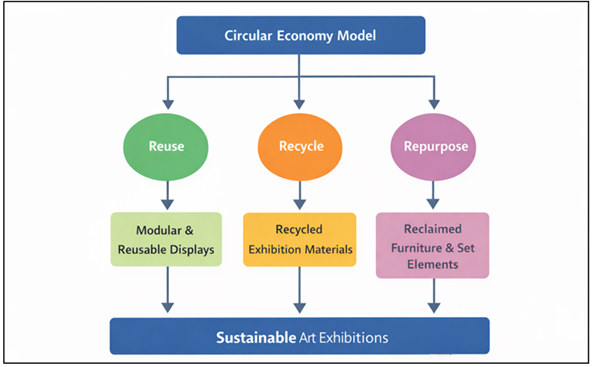
Figure 3 Waste Reduction and Circular Economy Framework for Sustainable Art Exhibitions
Circular practices of exhibition also involve recycling and repurposing the materials. The exhibition designers are turning to recycled materials, reclaimed furniture, and used building parts to make aesthetically interesting displays without harming the environment so much. Digital technologies like virtual exhibitions, interactive digital displays, drive the usage of printed materials and installations even lower. Rathore et al. (2023)
5. Sustainable Practices in Performing Arts
5.1. Sustainable stage design and production techniques
The use of sustainable stage design and production methods is currently gaining prominence within the performing arts community as theatres, performance companies and event organizers aim to minimize the environmental effects of stage building and theatrical production. Conventional stage production can entail massive sets, temporary buildings, and elements of decoration that are constructed in individual productions and dismantled at the conclusion of the production. The practice may create a lot of waste material which may lead to a lack of sustainability in resource consumption. As a result, there is increasing popularity with most performing arts organizations towards sustainable design that emphasizes reuse, flexibility and sustainable materials. Modular and reusable components of set designs are one of the methods of sustainable stage design. Designers come up with dynamic stage designs which could be redesigned to accommodate more than one production and minimal construction wastes were generated. Other sustainable products like recycled wood, biodegradable fabrics, and low-impact paints are also being used in building the stage and making costumes. These materials cause less damage to the environment and do not compromise on the quality of art and its expression. The use of digital technologies is also changing the production practices of stages. Projection mapping, virtual scenery and digital backgrounds will enable the designers to substitute the heavy physical sets with digitized ones and therefore cut down on material usage as well as transportation needs.
5.2. Energy-Efficient Lighting, Sound, and Stage Technologies
The consumption of energy is an essential operation issue that performing arts venues experience because theatres and performance halls strongly depend on lighting, sound systems, and stage technologies to recreate immersive experiences to the audience. The conventional stage lights, especially those equipped with incandescent or halogen bulbs, use large quantities of electricity and produce heat that adds to the energy consumption by the climate control systems. To overcome these challenges, the performing arts institutions are now embracing energy efficient technologies that save on the consumption of electricity without compromising on the quality performance environment. The use of LED lighting systems has also become one of the most major technological changes in sustainable stage management. The LED stage lights use much less energy than conventional lighting fixtures and last longer than the traditional lighting fixtures, which saves on energy and costs of maintenance. Also, current lighting control systems enable the technicians to program specific lighting patterns, saving power during rehearsal and performance. The sound systems have also been developed to lean towards more energy efficient digital systems. The sound processing equipment provided digitally is less power-demanding and has a higher acoustic control, which means that performance places can provide good-quality audio experiences with fewer energy sources. Patil (2025)
5.3. Green Touring Practices and Sustainable Event Management
The central aspects of the performing arts industry are touring productions and large-scale cultural events that allow different artists and organizations to target a wide range of audiences in various regions and countries. Nevertheless, the process of touring activities is usually associated with long-distance journeys, transportation of stage equipment and massive logistical operations, which also pollute the atmosphere with carbon emissions and other adverse effects on the environment. Consequently, performing arts organizations are turning into greener touring organizations and green event management to limit their environmental impact. Green touring has been focused on efficient transportation planning and lessening equipments transportation. The strategies being implemented in performance companies include downsizing and lightening of touring sets, sharing of equipment with local venue, and application of digital technologies in the stage to minimize physical transportation demands. Moreover, actors and production companies are invited to choose means of transportation that are environmentally friendly such as visiting the rails or sharing a common transport infrastructure where feasible. Dhaku Jadhav et al. (2025)- Desai et al. (2026)
6. Challenges and Limitations
6.1. Financial and infrastructural constraints
Financial and infrastructural limitations are some of the greatest obstacles to sustainable practices implementation in institutions of visual and performing arts. Individual galleries, theatre companies, and community based arts organizations, especially small ones, have little financial base and rely on government grants, sponsorship, or ticket sales.
Figure 4
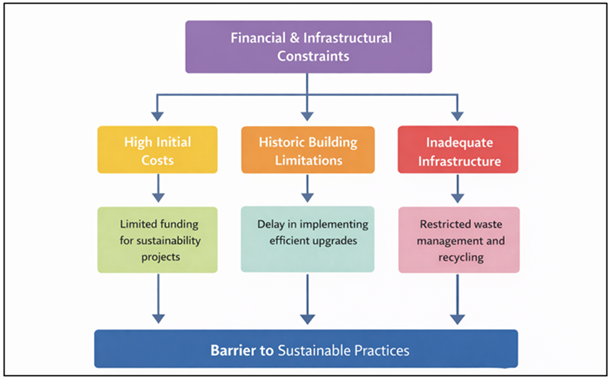
Figure 4 Financial and Infrastructural Constraints Affecting Sustainable Practices in Arts Institutions
The implementation of eco-friendly technologies and eco-friendly materials have a high price that can be affordable to organizations with limited funds. To take a look at the example, it can be costly to install the systems with efficient use of energy, improve the climate control facilities in museums, or use renewable energy sources. Besides financial constraints, infrastructural issues may be one of the factors that prevent the shift to sustainability. Numerous cultural buildings are also housed in historic buildings or heritage sites with the structural changes limited by the conservation regulations. Figure 4 indicates monetary and infrastructure constraints to the practice of sustainable arts. Karthikeyan et al. (2023) This complicates the introduction of energy efficient architecture or renewable energy systems or contemporary waste management systems. Moreover, the use of the practice of a circular economy in exhibitions and stage productions can be hampered by a lack of storage facilities and inefficient infrastructure to recycle or use materials. Such financial and infrastructural limitations tend to make institutions focus on short term operational needs rather than long term sustainability projects. The solutions are to financial streams, government funding initiatives, and institutional associations which enable sustainable development of infrastructure to address these challenges. Policymakers can support cultural organizations to embrace sustainable practices by ensuring that artistic and cultural activities are not compromised by offering specific funding and infrastructure assistance. Rawandale et al. (2024)
6.2. Policy Implementation Barriers
Despite the fact that most governments and cultural organizations acknowledge the role sustainability has in the arts industry, engaging cultural policies towards ensuring sustainability is usually met with serious challenges. The cultural policy frameworks are often oriented on the aspects of artistic development, preserving heritage, and developing creative economy, whereas the environmental sustainability can be given relatively little attention. Consequently, sustainability projects in the arts sector might not have explicit regulation policies, consistency of implementation policy and policy support. The dispersion of roles of various governmental services and cultural institutions is one of the major obstacles to the successful policy implementation. Administrative policies and plans such as cultural policy, environmental regulation, urban planning and economic development are often handled by different administrative units thus creating coordination problems and unequal enforcement of policies. In the absence of built in structures of governance, sustainability projects in cultural institutions can be left isolated or irregularly implemented. The other difficulty is that there are no standardized sustainability measures and assessment models on cultural institutions. The arts industry does not necessarily have a standard set of measures that can be used to measure the environmental performance or determine sustainability results, unlike sectors with well-identified environmental performance parameters. It becomes hard to assess the impact of sustainability initiatives by the policymakers and institutions. Venkata et al. (2025)
6.3. Technological Adoption Challenges
The use of technological innovation is vital in facilitating sustainable operations in the arts industry but application of advanced technological methods usually poses a number of challenges to cultural institutions. Most museums, galleries and performing art houses have operating within their traditional production methods and technical systems which might not readily adapt to newer sustainable technologies. Changing to a more energy-efficient lighting system, digital stage technologies or climate control systems that are more environmentally efficient would need technical skills, employee education, and expenses. The other significant problem is the small technical capacity of the smaller cultural institutions. Independent theatres, community art spaces and small galleries may have no access to those professional technical staff who could install and maintain complex systems of technology. Banerjee and Hazarika (2014) Consequently, innovations can be reluctantly implemented in institutions because they fear that it will complicate their operations and create costs. Artists and production teams can also be resistant to the use of technology, as they may be interested in the old methods of art or proven stage technologies. Sustainable technologies can be regarded as a restriction to the creative abilities of creative professionals or production flexibility in certain situations. These perceptions are the ones that need to be overcome through education, demonstration projects and joint experimentation with technology showing how it can help to augment artistic creativity instead of inhibit it.
7. Conclusion
Sustainability has assumed a critical factor in the development of visual and performing arts because cultural institutions have started to appreciate the need to deal with environmental, social and economic issues. This paper examined the importance of sustainable practices in the arts industry in terms of policy development, institutional management, as well as technological innovation. The adoption of the principles of sustainability in the artistic production and cultural management reflects the potential of arts to support the development of the overall sustainability without sacrificing the creativity and cultural expression. The international visual arts industry has used eco-friendly materials in the sector, safe sourcing of artistic materials and environmentally friendly exhibition design to reduce environmental effects of art creation and exhibition. Green management practices such as energy efficient lighting systems, sustainable building design, and reuse and waste minimizing circular exhibition systems are increasingly being adopted in museums and galleries. These projects show that creative artistic exploration and cultural interaction do not necessarily have to go against environmentally responsible practices. On the same note, the performing arts industry has started to adopt sustainable production models by using energy efficient stage technologies, modular stage designs, and green touring among others. Installation of LED lighting systems, digital stage environments and effective transportation planning have been used to minimise ecological footprint of theatre productions, concerts, and cultural festivals. The strategies of sustainable event management also contribute to the environmentally friendly nature of the cultural events coupled with the quality audience experience.
CONFLICT OF INTERESTS
None.
ACKNOWLEDGMENTS
None.
REFERENCES
Banerjee, R., and Hazarika, I. (2014). Determinants of Financial Performance of Commercial Banks in Dubai, UAE: A CAMELS Model Analysis. In International Proceedings of AWBMAMD Conference.
Dalle Nogare, C., and Murzyn-Kupisz, M. (2021). Do Museums Foster Innovation Through Engagement with the Cultural and Creative Industries? Journal of Cultural Economics, 45(4), 671–704. https://doi.org/10.1007/s10824-021-09418-3
Desai, V. P., Shinde, P. P., Mirajkar, G. S., Pillai, P. K., and Oza, K. S. (2026). Assessment of Adulteration in Edible Oil Using Machine Learning. IAENG International Journal of Computer Science, 53(1), 456–464.
Dhaku Jadhav, K., Majumdar, R., Ahmad Khanday, S., Sarvade, N., Musaev, U., and Akhmedov, S. (2025). Mapping Collaborative Governance for Effective Community Engagement in Urban Hygiene Campaigns. Waterlines, 43(1), 34–43. https://doi.org/10.3362/waterlines.v43i1.36
Dinkar, S., Jayapriya, K., Pallerla, N., Jadhav, K. D., and Shet, A. R. (2025). Convolutional Neural Networks for the Intelligent and Automated Detection of Mango Leaf Disease to Enhance Crop Health Management. Agricultural Science Digest, 45(6), 1004. https://doi.org/10.18805/ag.DF-717
Gaitán, M., Alba, E., Giner, X., and Navarro, M. (2023). Design Archives: Sustainable Solutions for Young Designers in Valencia, Spain. Sustainability, 15(6), 4946. https://doi.org/10.3390/su15064946
Galluccio, C., and Giambona, F. (2024). Cultural Heritage and Economic Development: Measuring Sustainability Over Time. Socio-Economic Planning Sciences, 95, 101998. https://doi.org/10.1016/j.seps.2024.101998
Gao, Y., Turkina, E., and Van Assche, A. (2024). The Nexus Between the Cultural and Creative Industries and the Sustainable Development Goals: A Network Perspective. Regional Studies, 58(5), 841–859. https://doi.org/10.1080/00343404.2023.2252474
Giliberto, F., and Labadi, S. (2022). Harnessing Cultural Heritage for Sustainable Development: An Analysis of Three Internationally Funded Projects in MENA Countries. International Journal of Heritage Studies, 28(2), 133–146. https://doi.org/10.1080/13527258.2021.1950026
Hansson, P., and Öhman, J. (2022). Museum Education and Sustainable Development: A Public Pedagogy. European Educational Research Journal, 21(3), 469–483. https://doi.org/10.1177/14749041211056443
Harper, G. (2021). Sustainable Development and the Creative Economy. Creative Industries Journal, 14(1), 107–108. https://doi.org/10.1080/17510694.2021.1952735
Iwasaki, A., and Pederzoli, J. L. (2023). Why Collections Matter: Impacts of Cultural Heritage Collections on People’s Lives. International Journal of Heritage Studies, 29(11), 1229–1249. https://doi.org/10.1080/13527258.2023.2243481
Jelinčić, D. A. (2021). Indicators for Cultural and Creative Industries’ Impact Assessment on Cultural Heritage and Tourism. Sustainability, 13(14), 7732. https://doi.org/10.3390/su13147732
Kalfas, D., Kalogiannidis, S., Ambas, V., and Chatzitheodoridis, F. (2024). Contribution of the Cultural and Creative Industries to Regional Development and Revitalization: A European Perspective. Urban Science, 8(2), 39. https://doi.org/10.3390/urbansci8020039
Karthikeyan, J., Vasanthan, R., and Dzuvichu, K. (2023). A Sociolinguistic Discourse Analysis of Assimilated English Words: A Usage-Based Model of Language Acquisition. Salud, Ciencia y Tecnología - Serie de Conferencias, 2, 600. https://doi.org/10.56294/sctconf2023600
Killingsworth, J. (2021). Unifying Sustainable Development Goals: How Cultural and Creative Engagement are the Missing Links to Advancement. European Journal of Sustainable Development, 10(3), 291. https://doi.org/10.14207/ejsd.2021.v10n3p291
Kioupi, V., and Voulvoulis, N. (2022). Education for Sustainable Development as the Catalyst for Local Transitions Toward the Sustainable Development Goals. Frontiers in Sustainability, 3, 889904. https://doi.org/10.3389/frsus.2022.889904
McGhie, H. (2023). Museums for Better Futures. Curating Tomorrow.
Patil, R. V., et al. (2025). Decentralized Autonomous Organizations as Emerging Economic Entities in Accounting and Governance Frameworks. International Journal of Accounting and Economics Studies, 12(4), 166–177. https://doi.org/10.14419/1sy2j677
Rathore, Y., Mishra Chaturvedi, V., Madhukar, K. S., Karwande, V. S., Rokade, A. H., and Nagargoje, Y. (2023). Patient Engagement and Satisfaction in AI-Enhanced Healthcare Management. In Proceedings of the International Conference on Artificial Intelligence for Innovations in Healthcare Industries. https://doi.org/10.1109/ICAIIHI57871.2023.10489712
Rawandale, U. S., Ganorkar, S. R., and Kolte, M. T. (2023). VHDL-Based Design of an Efficient Hearing aid Filter Using an Intelligent Variable-Bandwidth Filter. International Journal of Advanced Computer Science and Applications, 14(1). https://doi.org/10.14569/IJACSA.2023.0140122
Rawandale, U. S., Ganorkar, S. R., and Kolte, M. T. (2024). Variable-Bandwidth Noise Filtering Mechanism for the Hearing Aid System. In A. Katti and R. K. Chourasia (Eds.), Advances in Photonics and Electronics. Springer. https://doi.org/10.1007/978-3-031-68038-0_13
Sheela, M. A. A., Nikhitha, G., Chennakesavulu, G., Kumar, D. M., and Kumar, K. M. (2025). Early Stage Detection of Lung Cancer Using Ensemble Classification Techniques. International Journal on Advanced Computer Engineering and Communication Technology, 14(1), 40–47. https://doi.org/10.65521/ijacect.v14i1.170
Vasanthan, R., and Nandhini, R. (2022). Integrating the Sub-Skills of LSRW for ESL Learners. In Contemporary ELT Strategies in Engineering Pedagogy ( 95–116). https://doi.org/10.4324/9781003268529-9
Venkata, S. B., Wong, C. H., Karwande, V. S., Divyaraj, G., Singh, S., and Patil, R. V. (2025). Metaheuristic-Tuned Gramnet Architecture for Enhanced Video-Based Anomaly Detection Using UCF50 Dataset. In Proceedings of the International Conference on Innovations in Intelligent Systems. https://doi.org/10.1109/ISAC364032.2025.11156508
Vijayakumar, M., Muniyandy, E., Mirajkar, G., et al. (2026). Intrusion Detection and Localization using Deep Learning Approaches in VANET Environments. SN Computer Science, 7, 234. https://doi.org/10.1007/s42979-026-04769-0
Vikmane, E., and Lake, A. (2021). Critical Review of Sustainability Priorities in the Heritage Sector: Evidence from Latvia’s Most Visited Museums. European Integration Studies, 15, 95–110. https://doi.org/10.5755/j01.eis.1.15.28886
Wu, Y.-C., and Lin, S.-W. (2021). Integrated Approach for Exploring Critical Elements that Affect Sustainable Development of Cultural and Creative Industries. Journal of Business Economics and Management, 22(3), 596–615. https://doi.org/10.3846/jbem.2021.14261
|
|
 This work is licensed under a: Creative Commons Attribution 4.0 International License
© ShodhKosh 2026. All Rights Reserved.