ShodhKosh: Journal of Visual and Performing ArtsISSN (Online): 2582-7472
|
|
Art and Artificial Intelligence in Shaping Contemporary Visual Culture
Gayathri M 1 , Harshini R 2
 , Gayathri B 3
 , Ashika Fathima B 4
 , Prathiba S 5
 , Dr. Priyadharshini S 6
1 Assistant
Professor, Department of Management Studies, Meenakshi College of Arts and
Science, Meenakshi Academy of Higher Education and Research, Chennai, Tamil
Nadu, India
2 Department
of Computer Science, Meenakshi College of Arts and Science, Meenakshi Academy
of Higher Education and Research, Chennai, Tamil Nadu, India
3 Department of Computer Science,
Meenakshi College of Arts and Science, Meenakshi Academy of Higher Education
and Research,
4 Meenakshi College of Physiotherapy,
Meenakshi Academy of Higher Education and Research, Chennai, Tamil
Nadu, India
5 Lecturer,
Department of Pharmacology, Meenakshi Ammal Dental College and Hospital,
Meenakshi Academy of Higher Education and Research, Chennai, Tamil
Nadu, India
6 Senior
Lecturer, Department of Oral Medicine and Radiology, Sree Balaji Dental College
and Hospital, Bharath Institute of Higher Education and Research, Chennai, Tamil
Nadu, India
|
|
|
ABSTRACT |
|
|
In the digital
age, more than ever before, Artificial Intelligence (AI) has quickly reshaped
the practices of art, visual communication, and cultural production. The
combination of machine learning, computer vision, generative models and
neural networks with artistic workflows has established new paradigms of
artistic creation and curation and interaction among audiences. AI-generated
artworks, algorithmic aesthetic and interactive media installations are
transforming the modern visual culture in a way that defines the concept of
creativity, authorship as well as cultural representation. Artists continue
to work with smart systems in order to create new visual representations,
immersive environments, and algorithmic art works. Simultaneously, AI poses
complicated challenges concerning intellectual property, the authenticity of
artworks, dataset bias, and the socio-economic consequences of the creative
experts. The recent breakthroughs in generative adversarial networks (GANs)
and diffusion models can enable machines to create images, paintings, and
visual compositions that are aesthetically of a high quality and go against
the conventional definition of artistic production. The AI-powered systems
also can provide dynamic visual experiences, in which artworks react to the
audience behavior and environmental inputs, which increases the participation
and engagement. Nevertheless, the increasing role of algorithmic creativity
also demands new ethical principles and regulatory models of responsible and
transparent artistic activity. In this paper, the author discusses the
changing connection between art and artificial intelligence and its role in
the formation of modern visual culture. It examines the previous literature
on AI-driven artistic practices, considers the technological processes that
drive AI-authored art, and compares the current digital art models. Moreover,
the paper suggests a theoretical framework of AI-based visual culture which
combines the creative aspect of artistry and the smart implementation of
computational mechanisms. The paper indicates the revolutionary nature of AI
in broadening the creative opportunities of art and the necessity of ethical
regulation and collaborative creativity between humans and machines in
further cultural output. |
|||
|
Received 06 December 2025 Accepted 24 March
2026 Published 03 April 2026 Corresponding Author Gayathri
M, gayathrimba@maher.ac.in DOI 10.29121/shodhkosh.v7.i3s.2026.7326 Funding: This research
received no specific grant from any funding agency in the public, commercial,
or not-for-profit sectors. Copyright: © 2026 The
Author(s). This work is licensed under a Creative Commons
Attribution 4.0 International License. With the
license CC-BY, authors retain the copyright, allowing anyone to download,
reuse, re-print, modify, distribute, and/or copy their contribution. The work
must be properly attributed to its author.
|
|||
|
Keywords: Artificial Intelligence, Digital Art, Visual
Culture, Generative Art, Machine Learning, Computational Creativity, Media
Art |
|||



1. INTRODUCTION
1.1. Background of Visual Culture in the Digital Age
Visual culture is the set of visual images, visual symbols, pieces of media, systems of visual communication that influence the way communities perceive reality. As the digital technologies have spread, the visual culture is integrated more closely with the means of computation and cyberspace. The internet, social media networks and immersive media technologies have had a tremendous impact on the manner in which images are produced, shared and construed. AI has become one of the most powerful technologies that have been changing the visual culture in recent years. Artificial Intelligence can be defined as computational machines which have the ability to do tasks traditionally performed by human intelligence like pattern recognition, learning and decision making. The field of art and design is no exception and AI algorithms have the ability to analyze masses of data of images, learn visual patterns and create new art pieces. Machine learning and generative models allow the computer to replicate elements of human creativity, creating art that provokes the conventional approach to art. Researchers suggest that AI technologies enable artists to experiment with creativity opportunities by processing large visual data and creating new visual images. The contemporary art production heavily relies on machine learning algorithms, computer vision systems, and generative adversarial networks to produce the experience of interactivity and immersion in visual content.
1.2. Emergence of Artificial Intelligence in Art
The association between technology and art is not novel. Photography, film and digital graphics are some of the new technologies embraced by artists in the past to create their works. Nonetheless, AI opens a new stage of independence when machines may be involved in creative production and not only a tool. It is now possible to have paintings, visual patterns, animation, and multimedia installations created by AI systems. An example of such networks is generative adversarial networks (GANs), which enable computers to create images that are similar to human artworks based on the training on big sets of images. These technologies allow the artists to explore hybrid forms of creativity in which human imagination and machine computation work together in the production of art Ali et al. (2021).
1.3. Role of AI in Shaping Contemporary Visual Culture
Artificial intelligence has turned out to be a major cause of change in the modern visual culture. AI generated images are represented in digital art galleries, film making, graphic design, advertisement, and the internet media. The introduction of AI technologies has developed new genres of art including generative art, algorithmic art, and data-driven visual storytelling.
Besides the production of content, AI provides effects on the way the audiences engage with visual culture. Smart installations enable a work of art to change dynamically in relation to the audience, as it analyzes audience movement and their emotional reactions. Such interactive systems transform the relationship between artists, artworks and audiences.
1.4. Research Objectives
This study aims to answer the main question of how artificial intelligence is changing the modern visual culture and creative activity. Due to the rapid development of computational technologies, the artificial intelligence has become an important instrument of creative experimentation, allowing the artists and designers to create new types of visual expression. Thus, the purpose of the study is to discuss the impact of AI technologies on the contemporary artistic output, visual art, and consumer experience in the online cultural environment. To begin with, the study aims at the discussion of the role of artificial intelligence in the modern art sphere in terms of the way in which intelligent systems can aid in artistic creativity and the production of digital media. Machine learning, computer vision, and generative models among other technologies based on artificial intelligence enable artists to experiment with new visual methods and automate some parts of the artistic process. The concept of the incorporation of these technologies into the artistic processes can help to understand how AI disrupts the limits of human creativity and art. Second, the paper will analyze technological backgrounds that facilitate AI-based artistic creation. Those computational methods that have been examined and include neural networks, generative adversarial networks (GANs), and diffusion models in aiding visual generation and artistic experimentation will be included. Through the study of such technologies, the study aims to monitor the development of previous research in the field of artificial intelligence and visual culture generation through advanced algorithms and their application in creating new visual effects and interactive art. A thorough literature analysis is carried out to study the new academic research, technological advances, and artwork that is showing the rise in the integration of art and artificial intelligence. This review contributes to finding out the current trends of research, theoretical outlook, and technology in AI-based artistic systems. Ali et al. (2021).
Fourth, the paper contrasts the current AI-based artistic models and systems to assess their functionality, technology schemes and constraints. Comparing the features of algorithmic art systems, machine learning-based art platforms, and generative AI models in the research, strengths and limitations of the existing technological solutions to digital art production are discovered. Lastly, as the result of the experience of the literature review and the comparative analysis, the study suggests an AI-based system of the visual culture in the future. The suggested framework applies the combination of artistic creativity and computational intelligence with engagement with the audience to encourage innovative artistic activities. Within this framework, the proposed study is expected to deliver a conceptual modelling that will inform future research and development and AI-assisted art creation and digital visual culture.
1.5. Organization of the Paper
The rest of this paper will be structured in the following way. Section II introduces a literature review on the place of artificial intelligence in art and visual culture, describing recent research activities and theoretical approaches in artistic practices of AI. Section III explains the most significant technologies that are applied to AI-based visual art such as machine learning, computer vision, and generative models that make it possible to be computationally creative. Part IV is a comparative overview of current AI art systems and methods to determine their potential, advantages, and disadvantages. Section V proposes a conceptual approach to AI-based visual culture, which involves intelligent technologies, creativity of artists, and interaction with the audience. Section VI addresses the key issues regarding AI in art and provides potential directions of research in the future. Lastly, Section VII has the conclusion of the study, which summarizes the main findings and implications of the study.
2. Literature Review
The intersection of art and artificial intelligence (AI) has drawn a lot of scholarly interest over the last years, with the role of computational technologies becoming more and more important in the process of creating art, visual aesthetics, and cultural production. The topic of AI changing artistic practices and visual culture has been investigated by researchers in media studies, computer science, digital humanities, and cultural theory. The section discusses the main literature within the context of AI development in art, generative algorithms of visual creativity, artificial cooperation in art, and the cultural context of machine-generated images. Initial studies of computational creativity were a result of the experiments in computer-generated art in the 1960s and 1970s when artists started to utilize algorithms to generate geometric and abstract visual structures. These early experiments formed a basis of the modern generative art, and proved that computers could generate aesthetic patterns by using rule-based systems. It was observed by scholars that algorithmic art has ushered in a new paradigm where artists have developed systems as opposed to creating single pieces. As the digital technologies were introduced at the end of the twentieth century, it was gradually becoming possible to incorporate the computational approaches to artistic practices, allowing the artists to explore the digital imagery, animation and interactive installations.
Machine learning and neural networks became available, creating many opportunities of computational art. Machine learning algorithms can perform the identification of patterns in massive datasets and produce new visual representation based on the trained representation. Scholars have pointed to machine learning by allowing artists to interpret stylistic elements of the works of the past to create fresh works that follow or reference the artistic traditions of the past. This has resulted in the development of AI-assisted systems of art that blend human creativity and computational intelligence. These types of systems are curated by artists, set parameters, and control the process of training, and AI models create images that prompt new directions in art. The implementation of the Generative Adversarial Networks (GANs) is one of the most impactful technological innovations brought to the field of AI art. The GANs are made out of two neural networks, a generator and a discriminator, which rival each other to create images that look real. The generator tries to produce images which are like the training data, and the discriminator tries to assess the genuineness or falseness of the generated images. The system is able to learn through iteration and this allows it to create images that are visualized and convincing. The use of GANs in digital artmaking has become common in researchers' work, with portraits, abstract works, and experimental visual art being made possible through this technology. Research shows that the GAN-based systems enable artists to experiment with the hybrid aesthetics through the combination of several art styles and visual traditions.
Besides GANs, diffusion models and transformer-based generative systems have also benefited from recent popularity in image generation based on AI. High-resolution images can be created on the basis of textual description with the help of these models and give artists the possibility to directly transform the conceptual ideas into the visual ones. According to scholars such technologies democratize the process of artistic production, allowing people not having formal artistic education to produce aesthetically refined images. Nonetheless, the democratization is also accompanied by the inquiries of artistic authenticity and originality since AI systems have to use already existing datasets to produce new works. The other significant aspect of the literature is the collaboration between humans and the AI in creative arts. Most scholars do not argue that AI is obtaining artists, but stress that it is a partner that allows to have more creative options. Within the context of collaborative art systems, artists offer conceptual guidance, aesthetic control and contextual interpretation while AI offers computational processing and pattern recognition services. Such collaboration provides artists with an opportunity to experiment with sophisticated visual designs, generative work, and data-driven aesthetics, which would be hard to create manually. Research points out that human-AI co-creation creates interdisciplinary collaboration among artists, programmers, and researchers. Nonetheless, the ethical and cultural issues regarding the impact of AI implementation on the artistic output are also quite important. The problem of authorship is one of the key ones. The conventional artistic systems presuppose that the works of art are produced by single artists who have creative intent and intellectual property. AI-created artworks criticize this assumption since the creative production is made with the help of interactions between artists, algorithm, and data. Scientists argue over the question of who to credit with the authorship of the software, the one that wrote it was the programmer, the artist who is training the model, or the artificial intelligence itself. This problem has significant repercussions on the copyright law and intellectual property rights Anadol (2022).
2.1. Evolution of AI in Artistic Practices
Artificial intelligence has been used in the production of art since early efforts to use computers in creating art in the 1960s. Nevertheless, the recent development of deep learning and generative models has greatly increased the possibilities of computational creativity. Research demonstrates that AI technologies can help artists to examine visual patterns and create new aesthetic forms. Through machine learning algorithms, paintings, sculptures, and other multimedia installations may be generated by combining artistic styles across many sources of culture.
2.2. Generative AI and Algorithmic Art
The generative AI systems can be used to create original visual content using learned patterns. The generative adversarial networks include two neural networks: a generator and a discriminator that jointly collaborate to create realistic images. The GANs are utilized by artists to create abstract paintings, portraits, and digital landscapes. The systems allow experimentation in the worlds of visual aesthetics that would not have been possible in classical artistic methods.
2.3. AI in Interactive Media Art
There are also increased opportunities of interactive and immersive art installations in AI. Computer vision systems have the ability to recognize movement of the audience as well as facial expression which enables a work of art to be dynamically responsive to the viewers. This type of interactive installation allows to increase the attention of the audience and sell active participants in the creative process.
Better Literature Review Table 1 with research gaps and limitations provided below is usually needed in IEEE Section II Literature Review / Related Work.
Table 1
|
Table 1 Literature Review of Recent Studies on AI in Contemporary Visual Culture |
|||
|
Research Focus |
Methodology |
Key Contributions |
Research Gaps / Limitations |
|
Generative AI and human creativity Anadol and Kivrak (2023) |
Large-scale dataset analysis of
artworks |
Demonstrated that text-to-image AI can
increase creative productivity and engagement among users. |
Focuses mainly on productivity metrics;
limited analysis of cultural or artistic quality of AI-generated works. |
|
Cultural evaluation of generative AI
art Avlonitou (2018) |
Artist–AI dialogue method and case
study |
Proposed culturally informed evaluation
methods for generative AI artworks. |
Limited sample size of artists; results
may not represent global artistic communities. |
|
Diffusion models in visual art
generation Bellaiche et al. (2023) |
Technical survey of diffusion-based
generative models |
Explained how diffusion models
revolutionize AI-driven visual art creation. |
Primarily technical focus; lacks
discussion of artistic interpretation and cultural implications. |
|
Human perception of AI-generated art Bhullar (2024) |
Experimental comparison between AI and
human artworks |
Found that AI-generated images can
appear indistinguishable from human artworks in many cases. |
Study mainly evaluates perception
rather than deeper artistic meaning or creativity assessment. |
|
Artistic Turing test for AI creativity Black (2018) |
Human vs AI artwork identification
experiment |
Showed increasing overlap between
machine creativity and human creativity. |
Experimental context may not reflect
real-world artistic production environments. |
|
AI impact on traditional painting Blanco et al. (2024) |
Computational art experiment |
Demonstrated how generative AI tools
can transform traditional painting techniques. |
Limited exploration of long-term
cultural impact on traditional art forms. |
|
Generative AI in art education Boden (2004) |
Systematic review of AI tools in art
learning |
Identified benefits of AI tools in
enhancing creativity and personalized art education. |
Empirical research still limited; field
remains in early stages of development. |
|
Bias in evaluation of AI vs human art Bowen and Giannini (2019) |
Behavioral study with audience
participants |
Found that audiences tend to favor
human-made art when both are compared directly. |
Cultural bias in perception studies;
results may vary across cultural contexts. |
|
Artists’ perception of AI-generated art
Verma et al. (2026) |
Survey of digital artists |
Revealed mixed reactions from artists
regarding AI as a creative tool vs threat to creativity. |
Focus on specific industry groups;
lacks broader cultural or institutional analysis. |
|
Generative AI for visual artistic
creativity Chatterjee (2022) |
Conceptual and experimental study |
Demonstrated AI’s potential to generate
new artistic ideas and design possibilities. |
Issues related to originality,
authorship, and artistic intent remain unresolved. |
3. Technologies Used in AI-Based Visual Art
The fast evolution of artificial intelligence has also presented a selection of computational technologies beneficial in the process of artistic production, visual studies, and the development of interactive media. Machine learning, computer vision, and generative adversarial networks (GANs) are some of the technologies that are important in facilitating AI-driven artistic practices. These technologies enable computers to learn through visual data, process visual data, and create new works of art. Consequently, artists and designers are progressively incorporating AI technologies into their working process to research new ways in visual expression and digital aesthetics.
Figure 1
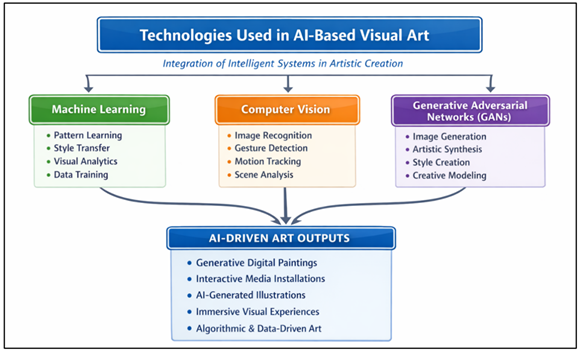
Figure 1 Technologies used in AI-Based Visual Art
One of the most basic technologies applied in AI-based visual art is machine learning which can be seen in Figure 1 above. It is a name of a group of algorithms which allows computers to acquire patterns and relationships between large datasets, without needing to be explicitly programmed. Machine learning models in arts are trained using a set of images, paintings, photos and other visual content with the aim of identifying artistic styles, textures, colors and structural compositions. The algorithms are able to identify stylistic patterns to identify various artistic movements like impressionism, surrealism or abstract art by using these datasets. Machine learning systems are frequently used to experiment with style transfer, image synthesis, and visual pattern generation by artists. Style transfer methods enable artistic features of one image to be transferred to the other image to produce the hybrid artistic compositions. As an example, one can turn a photograph into an image that looks like the way a famous artist paints. Generative systems are also possible with machine learning in the creation of new visual forms through the analysis of aesthetic patterns. Machine learning has often become part of creative computerized art practices, often through creative code systems and design tools, which creators can use to interact with intelligent algorithms. This collaboration between humans and machines increases the possibilities of creativity by means of combining the analysis with the intuition and thinking concepts.
Another significant technological element in AI-based visual art systems is computer vision. Computer vision can be defined as the capability of the machines to process and understand visual data in images or video or real time camera feeds. Computer vision algorithms can locate visual objects in computer settings through the methods of image recognition, object detection, and motion tracking. These potentials have been used in the artistic world to make visual installation interactive and responsive. Computer vision technologies are also used by many modern media artists to create art pieces that react to the audience behavior. The visual data is registered in real-time by sensors and cameras, and then AI algorithms process it in order to recognize gestures, facial expressions, or patterns of movements. The art may be dynamically altered in color, shape or effects on the viewer. These systems, make participating in the arts through interaction and participation a reality out of what was formerly passive viewing experiences. Computer vision has also been applied to digital archiving and preservation of cultural heritage, where visual data can be analyzed and visual features can be identified and algorithms are applied to aid the processes of restoration or documentation of historical art. Computer vision is also used to create immersive art experiences, which combine physical and digital space through such applications Ibrahim (2023).
Generative adversarial networks (GANs) can be considered one of the most significant technologies in the AI-based visual art. The GANs are the models of deep learning which include two neural networks, i.e., a generator and a discriminator. The discriminator judges whether the generated images are similar to real data and the generator develops new images based on learned patterns on the basis of training datasets. The generator improves its capability to create realistic and aesthetically convincing pictures in a gradual training process. Generative art has experienced revolution with GANs since machines are now capable of creating high-level visual art. GAN models are applied by artists to create portraits, abstracts, digital artcases and experimental textures in visuals Núñez-Cacho et al. (2024). The fact that it is possible to create new artistic forms through synthesizing visual features of several different sources is one of the most striking features of GAN-based art. The effect of this process is distinctive artistic appearance that would not be created by means of conventional artistic techniques. Another common use of GANs is in the creative sectors of animation, filming and digital designing, where they are used to assist in the generation of backgrounds, visual effects, and conceptual images.
4. Existing AI Art Systems
Artificial intelligence has played a huge role in shaping modern visual art due to the introduction of computational systems that can create, analyze and modify visual art. Current AI art System combines machine learning algorithms, computer vision techniques, and generative models to assist in supporting artistic production and digital creativity. Such systems allow the artists to work together with intelligent algorithms to experiment with new aesthetic forms, automate the artistic process, and provide interactive visual experiences. Algorithms were one of the first types of AI-based artistic systems, with artists creating patterns of visual results by applying mathematical rules and algorithms of procedures. These models were based on deterministic programming as opposed to learning-based models. As much as algorithmic art offered a basis on computational creativity, its scope of creativity was constrained since the results were stipulated by programmed rules and not acquired through data. Digital art generation became far more powerful with the introduction of machine learning-based art systems. Machine learning models would be able to take large samples of paintings, photographs and digital images to pinpoint stylistic trends and visual shapes Ekatpure et al. (2025). The neural style transfer systems enable the artists to mix stylistic images with photographs to produce hybrid images. These technologies can also allow artists to experiment with new aesthetic potentials and retain control over the creative process.
The other significant development in the AI art systems is the generative adversarial networks (GANs). GAN based systems are made up of two neural networks which compete against each other to generate realistic visual output. Such models are able to produce paintings, portraits, and abstract artworks that could look similar to human styles of art. The use of GANs has become very popular on digital art galleries and creative sectors since it enables machines to produce new visual artworks instead of modifying the existing ones.
The recent developments have also brought interactive systems of AI art in which the computer vision and sensor technology enable the artwork to dynamically react to the interaction of the audience. Within such systems, cameras and sensors record the gestures, movement or facial expressions of a user, which is processed by AI algorithms so as to alter visual outputs in real time. Interactive installations change audiences as passive consumers to active participative audiences in artistic activities. More so, even with these developments, there are various challenges with the current AI art systems. A lot of systems use training datasets, and they can be biased in terms of culture and restrict artistic diversity. Moreover, there are questions involving artistic authorship, intellectual property rights and ethical uses of AI-generated content that are still not resolved. However, AI art systems are still developing with new ways of human machine collaboration in visual creativity being investigated by artists and researchers. The existing AI Art Systems are classified as shown in Figure 2 below.
Figure 2
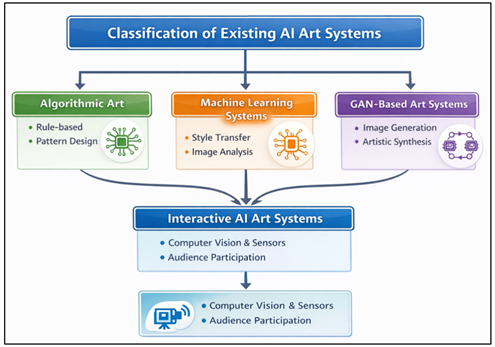
Figure 2 Classification of Existing AI Art Systems
Table 2
|
Table 2 Comparative Analysis Table of Existing AI Art Systems |
||||
|
AI Art System |
Technology Used |
Creativity Level |
Interaction |
Limitations |
|
Algorithmic Art |
Rule-based algorithms |
Medium |
Low |
Limited learning capability |
|
Machine Learning Art |
Neural networks |
High |
Medium |
Requires large datasets |
|
GAN-Based Art |
Generative adversarial networks |
Very High |
Medium |
Training complexity |
|
Interactive AI Art |
Computer vision + AI |
High |
Very High |
Requires hardware infrastructure |
Figure 3
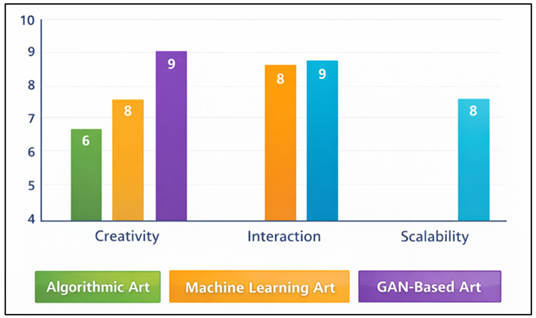
Figure 3 Performance comparison of AI Art Systems
Table 2 and Figure 3 compare various AI art systems using creativity and interactivity potential. GAN-based systems have the most potential to be creative because they can produce completely novel visual imagery, whereas the system of interactive AI art is the most engaged with the audience by allowing them to interact in real-time.
5. Proposed AI-Driven Visual Culture Framework
The suggested AI-Based Visual Framework of Culture will contribute to merging artistic imagination and cutting-edge technologies of artificial intelligence to provide innovative visual art production and interaction with viewers. The framework integrates computational intelligence, generative algorithms and the human artistic contribution to generate a working environment whereby artists and intelligent systems interact through collaborative effort to generate novel visual experiences. This tiered system makes sure that the artistic information, smart processing, generative creation, and user engagement is successfully incorporated into an integrated system. The model consists of five large layers with each layer having the task of a particular phase in the creative process of production and interaction.
5.1. Data Collection Layer
Data Collection Layer is the base of the framework because it involves the accumulation of various visual datasets which are needed to train AI models. This layer contains digital images, works of art, photographs, cultural archives, multimedia materials and internet visual media. Information can also be gathered in museums, digital collections of art, social networks, open picture collections. The data obtained is preprocessed by methods of image normalization, metadata tagging and annotation of datasets. This step will make sure that the AI system takes in structured and good-quality data so that it can learn and identify artistic patterns effectively.
5.2. AI Processing Layer
AI Processing Layer will be focused on the analysis and interpretation of the data collected based on artificial intelligence technologies. It is a layer that uses machine learning algorithms, computer vision systems, and deep learning models to find meaningful patterns to visual data. AI models examine the artistic style, texture, the shape, color arrangement, and visual designs in the dataset. The computer vision methods also allow the system to read and capture visual objects that determine the artistic production. Raw visual data is converted into more meaningful representations to be used in the creative generation process by the processing layer.
5.3. Creative Generation Layer
The Creative Generation Layer is the main element where the AI systems are used to create new visual art. Generative adversarial networks (GANs), diffusion models and neural style transfer methods, are generative models applied in this layer to generate original visual content. These models merge acquired artistic designs to produce digital paintings, abstract photographs or multimedia art decorations. The generative systems also have the capability of altering existing images to generate artistic compositions that are hybrid. The layer allows one to generate innovative artistic works that combine computational intelligence with aesthetics.
5.4. Human Collaboration Layer
Even though AI systems are capable of creating artistic outputs, human creativity is still imperative in shaping artistic direction, and interpretation of artistic outputs created. Human Collaboration Layer allows artists, designers, and curators to engage with AI-generated content. They allow artists to manipulate parameters, edit the results produced, refine visual output and add conceptual stories to the work. This level highlights the interaction between humans and AI making sure that it is not entirely automated but instead, human creativity drives the artistic expression.
5.5. Audience Interaction Layer
The last layer of the framework is the Audience Interaction Layer in which works of art are offered to the audiences in an interactive manner. AR, VR, projection mapping, and sensor-based installations are examples of technologies that can assist the audience in direct interaction with AI-created artworks. Pertaining to the visual arts, computer vision systems and sensors are able to monitor audience movement, gestures or emotional responses so that artwork may dynamically respond to viewer interaction. The layer will make the traditional passive art perception an immersive and participatory visual experience.
The suggested architecture presented in Figure 4 below displays a stratified system that incorporates artistic data feeds, AI processing methods, generative creative architecture, human artistic teamwork, and interactive audience involvement tools. Both the layers assist in the evolution of AI-assisted art creation and the experiences of immersive visual culture.
Figure 4
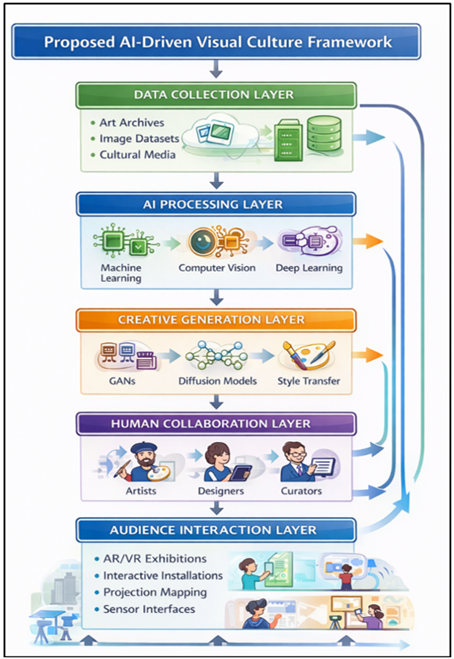
Figure 4 Proposed Framework for AI driven Visual Culture
6. Challenges and Future Research Directions
Despite the fact that the introduction of artificial intelligence has provided new opportunities to artistic work and visual culture, the infiltration of the art ecosystem by the technology also harbors a number of technological, ethical, and socio-economic issues. Art created by an AI is causing concerns regarding the questions of authorship, equity, cultural representation, and the future of creative careers. These are some of the questions that need to be addressed in order to make sure that the development of the contemporary visual culture depends on some positive influence of the AI technologies. This part of the paper argues on the main issues surrounding AI in art and puts a key emphasis on the directions that ought to be taken by future studies in this area Ekatpure et al. (2025).
6.1. Authorship and Copyright
Among the most disputed issues of AI-generated art is the problem of authorship and ownership of copyright. The classic artistic models presuppose the creation of the works of art by separate artists who own the intellectual property rights to their work. Nonetheless, AI-assisted art systems make this assumption more complicated since the powerful forces behind artistic production are the interactions of artists, programmers, training data, and machine learning software.An example is the case when an AI model creates a visual art piece, and it is challenging to know who is the creator of the work. To some, the creator of the AI model or the one who trained the model must be the owner of the rights, whereas the programmer that developed the algorithm is supposed to be credited to some. A third viewpoint bodes that the AI systems, as such, are also involved into the creative process and hence disrupt the current definitions of the authorship. The existing copyrights in most nations are not well-equipped to deal with AI-generated works. The copyright protection in most legal systems involves human authorship, and hence the AI-generated works might not be eligible in the copyright protection. This leaves artists, researchers and creative industries that use AI technologies uncertain. The future studies should be aimed at creating new legal frameworks and intellectual property policies that will demystify ownership rights in terms of human-AI collaborative creativity. Garg et al. (2025)
6.2. Dataset Bias
The other significant problem of AI-generated art is
associated with bias in the dataset. The training of artificial intelligence
models is highly dependent on large datasets and factors like the properties of
such datasets have a remarkable effect on visual outputs of the AI systems.
When the training datasets are not diverse or are culturally, geographically,
or socially biased, the AI-created artworks might be biased. Indicatively, a
dataset with Western style of art could lead AI systems to generate such
artworks that have been biased towards Western styles at the expense of other
cultures. In the same way, biased data can regenerate stereotypes or affirm the
pre-existing gaps in visual representation across cultures. These questions of
equity, representation, and cultural accuracy bring up the question of
fairness, inclusivity, and cultural representation in AI-generated art. To
solve the issue of the bias in datasets, it is necessary to develop more
inclusive and diverse training datasets which can be representative of a
broader variety of artistic traditions and cultural contexts. Future studies
ought to examine the means of bias detection, audit towards the dataset, and
culturally sensitive AI training methods. Artists and researchers should also
work together with cultural institutions, museums, and heritage organizations
to make sure that AI systems represent artistic diversity in the world. Vijayakumar et al. (2026)
6.3. Economic Impact on Artists
With the fast development of AI-based creative
technologies, the question of their economic effects on artists and creative
practitioners has been brought up. It is now possible to produce illustrations,
digital paintings, graphic designs, and concept art with high speed and low
costs with AI systems. Consequently, other artists are afraid that AI
technologies will substitute some types of human creative work, especially in
such sectors as advertising, game development, and content production in the
digital media. The other issue is that the works of the artists are used in
training sets without any direct consent or payment. There are numerous AI
models that are trained on big images based on publicly available photographs
that can include photos of copyrighted art. Artists have also argued that AI
systems can reproduce their artistic styles without any recognition and without
earning them revenue. Meanwhile, AI technologies can also become the source of
new opportunities to artists. AI should not be seen as a substitute to human
creativity but rather as an active partner, which will stimulate exploration
and experimentation in art. AI systems enable artists to make novel visual
concepts and experiment with styles and create interactive art pieces. Subsequent
studies ought to focus on how AI can enable inventive economies that are
sustainable due to the encouragement of equitable compensation frameworks,
artist-oriented AI devices, and human-AI creative workflows. Desai et al. (2026)
6.4. Ethical Governance
Ethical concerns of AI-generated art are not limited to owner/no-owner and economic issues. Since more and more AI technologies are introduced into the sphere of artistic activities, there is a need to establish ethical standards that would aid in responsible AI use in creative work. Ethical governance is connected to the creation of guidelines of transparency, accountability, fairness, and cultural sensitivity in AI-created art systems.
Transparency in AI-generated content is one of the aspects that are important in ethical governance. It should be notified when artworks are created or affected by AI systems. Transparency assists in preserving the confidence in artistic genuineness and enable spectators to comprehend the contribution of technology in artistic generation. The second ethical issue is the likelihood of misusing the generative AI technologies. Misleading or manipulated visual material can be produced by means of AI systems that produce realistic images. Therefore, without proper precautions, these technologies may serve as a source of misinformation or inappropriate visual manipulation. Future studies ought to involve coming up with interdisciplinary ethical paradigms that incorporate knowledge of technology, art, law and cultural studies. The mechanisms to be used when using datasets responsibly, transparent AI training procedures, and governance structures, which guarantee ethical AI use in creative creation should also be investigated. Babu et al. (2025)
6.5. Future Research Directions
In order to overcome the above challenges, there are a number of research directions that should be undertaken. To start with, the interdisciplinary interconnections among artists, computer scientists, legal professionals, and cultural researchers are the key to the creation of the comprehensive framework that will serve the ethical and sustainable AI-based art practices. Second, it is recommended that future research explore more sophisticated generative models that use explainable AI methods so that artists and audiences can have an understanding of how AI systems create a visual response. Third, studies should be conducted about human and AI creativity models based on partnership instead of substitution of human artists. Moreover, the next direction in the field should be the creation of AI tools to increase the accessibility of the arts that can make people of different backgrounds engage in digital creative activities. New forms of interactive visual culture can also be developed by the combination of new technologies, like virtual reality, augmented reality and immersive media with AI-driven art systems. Rawandale and Kolte (2019)
7. Expected Outcomes and Cultural Impact
The advent of artificial intelligence into the art practice can make a tremendous impact on the modern visual culture. Ai-based visual art systems allow new creative practices, and increase access to artistic tools as well as encourage new collaborations between artists, technologists, and audiences. Using computational intelligence and human creativity, AI technologies are transforming the production, experience, and sharing of artworks in the contemporary cultural contexts. The results of the AI-related visual culture are expected to be experienced on various levels, which are creative innovation, accessibility, audience involvement, and collaboration between disciplines.
7.1. Expansion of Creative Possibilities
Among the greatest consequences of AI application in the
field of visual art, one can identify the growth of creative opportunities. AI
can help artists to experiment with the visual patterns and make new artistic
styles, as well as experiment with enormous visual data that would be hard to
study manually. Artists are able to produce new visual images by using the
technologies of machine learning, generative adversarial networks (GANs), and
diffusion models to integrate multiple artistic traditions and aesthetic
styles. The visual results produced by AI-based systems are based on the
patterns learned in historical artworks, photography, and the digital media.
This has enabled artists to experiment with the hybrid forms of art, combining
the old-school artistic styles with the new digital art styles. Moreover, AI
generative tools ensure that experimentation is faster, which allows artists to
refine their ideas and achieve a higher level of efficiency. Consequently,
artists will be able to stretch the limits of creativity and create new visual
stories that are current with the technological culture. Karwande et al. (2024)
7.2. Democratization of Artistic Production
The democratization of artistic production by providing creative tools to a greater amount of individuals is also achieved through AI technologies. Historically, professional creation of art needed special abilities, costly equipment and a lot of training. Nonetheless, AI-based creative tools enable users without strong technical or artistic background to create high-quality visual art with easy-to-use interfaces and automated tools. The text-to-image generators, neural style transfer applications, and AI-based designer platforms empower the users to create visual images out of conceptual ideas with a few clicks. This access will promote more people to participate in artistic creation and enable those with different backgrounds to take part in the digital art practices. With the increase in the visibility of AI resources, the professional and amateur lines can become more permeable and result in more inclusive modes of creative expression.
7.3. Interactive Audience Experiences
The interaction between the artwork and the audience, also the level of interaction and immersion of the artworks also changes because of AI-driven visual culture. The conventional art exhibitions, in most cases, imply the passive aspect of art exhibition that is characterized by the viewer passively watching the paintings on the gallery or in a museum. By contrast, AI art installations enable visitors to participate in art by way of gesture, movement, voice recognition, or even through their feelings. Sensor technologies, computer vision and real-time data processing allow the artwork to react to the interactions of the audience in real-time. As an illustration, an interactive exhibition can vary its visual patterns depending on the movement of the audience in the exhibition area. These experiences are further enhanced with augmented reality (AR) and virtual reality (VR) technologies which provide the opportunity to create immersive environments that allow the audience to see the digital artworks in different ways. This kind of interactive systems turns the audiences into the participants of the artistic process instead of being mere observers. This participatory method improves the level of engagement, stimulates exploration, and fosters a sense of personalized artistic experiences which change according to the behavior of the viewer. Hazarika et al. (2025)
7.4. Cross-Disciplinary Collaboration Between Art and Technology
The other cultural implication of the AI-driven visual art is the development of the cross-disciplinary approach between artistic and technological processes. The creation of AI-based artistic systems needs the knowledge of various fields, such as computer science, visual design, cultural studies, digital media, and human-computer interaction. Consequently, more artists also work together with researchers, engineers, and technologists in order to create new creative projects. Such interdisciplinary partnerships promote the interchange of creative and technical knowledge, and new practices of artistic experimentation are the result of this process. As an illustration, artists can collaborate with AI researchers to create generative models to capture certain cultural messages or artistic ideas. On the same note, the technology developers can also work together with artists to come up with artistic instruments that can advance artistic exploration and expression. These partnerships will help to build new creative ecosystems with art and technology mutually affecting one another. This cross-cultural context promotes innovation both in artistic practice and technological advancement, which eventually forms the future of the modern visual culture.
8. Conclusion
The increasing speed of the development of artificial intelligence greatly altered the field of modern visual culture and artistic creation. This study explored the changing nature of art and artificial intelligence, and the manner in which the computational technologies are transforming how visual artworks are constructed, encountered, and perceived. The application of machine learning, computer vision, and generative models in artistic processes is allowing AI-based systems to empower artists to pursue novel creative opportunities and transform their perspectives on how art should be done. The paper has examined AI-based art systems that are already in existence and discussed their technological underpinnings in terms of algorithmic art practices, machine learning frameworks, and generative adversarial networks. The literature analysis showed that the development, in terms of complexity of rules and highly complex generative schemes, of AI technologies has resulted in the creation of visually complex and aesthetically rich works of art. Comparative study of the current AI art systems demonstrated that various technological solutions have different degrees of creativity, scaling, and engagement with the audience. Although algorithmic art offers systematic computational design, machine learning and systems based on GANs can support more advanced generative art. Interactive AI art systems go even further to involve the audience in the artistic process by making them actively participate in the process of creativity. All these systems illustrate the disruptive nature of AI technologies on art in the present-day world.
In response to the dynamic demands of AI-assisted artistic production, this study suggested a Visual Culture Framework of AI-Driven that comprises five layers: data collection, AI processing, creative generation, human collaboration and audience interaction. The suggested framework shows the significance of the combination of computational intelligence with human imagination and involving the audience in participation. Through its organization of the creative procedure into a layered architecture, the structure helps to build new artistic systems that integrate information-based technologies with the imaginative artistic perception. Although AI-based visual culture has a lot of opportunities, the study also showed that there are a number of critical challenges, such as authorship, bias in the datasets, the effect on artists in the economy, and the ethical governance. To solve these issues, there is a need to involve interdisciplinary efforts among artists, technologists, policymakers, and cultural institutions in order to come up with responsible models of AI-assisted artistic production.
CONFLICT OF INTERESTS
None.
ACKNOWLEDGMENTS
None.
REFERENCES
Ali, S., DiPaola, D., Lee, I., Hong, J., and Breazeal, C. (2021). Exploring Generative Models With Middle School Students. In Proceedings of the CHI Conference on Human Factors in Computing Systems (CHI ’21) (1–13). https://doi.org/10.1145/3411764.3445226
Ali, S., DiPaola, D., Lee, I., Sindato, V., Kim, G., Blumofe, R., and Breazeal, C. (2021). Children as Creators, Thinkers and Citizens in an AI-Driven Future. Computers and Education: Artificial Intelligence, 2, 100040. https://doi.org/10.1016/j.caeai.2021.100040
Ali, S., Park, H. W., and Breazeal, C. (2020). Can Children Emulate a Robotic Non-Player Character’s Figural Creativity? In Proceedings of the Annual Symposium on Computer-Human Interaction in Play (CHI PLAY ’20) (499–509). https://doi.org/10.1145/3410404.3414251
Ambrosio, C. (2019). Unsettling Robots and the Future of Art. Science, 365, 38–39. https://doi.org/10.1126/science.aay1956
Anadol, R. (2022). Space in the Mind of a Machine: Immersive Narratives. Architectural Design, 92, 28–37. https://doi.org/10.1002/ad.2810
Anadol, R., and Kivrak, P. (2023). Machines That Dream: How AI-Human Collaborations in Art Deepen Audience Engagement. Management and Business Review, 3, 101–107. https://doi.org/10.1177/2694105820230301018
Avlonitou, Z. (2018). Collector and Collection, an Indivisible Unity: The Case of the Collector and Collection of Giorgos Kostakis (Doctoral dissertation, University of Ioannina, Greece).
Babu, M. R. N., Tungoe, C., Vasanthan, R., Pimple, J., Khandare, K. S., and Kalyani, L. K. (2025). AI for Accessibility in Digital Media Education. ShodhKosh, 6(2S), Article 67. https://doi.org/10.29121/shodhkosh.v6.i2s.2025.6704
Bellaiche, L., Shahi, R., Turpin, M. H., Ragnhildstveit, A., Sprockett, S., Barr, N., Christensen, A., and Seli, P. (2023). Humans Versus AI: Whether and Why We Prefer Human-Created Compared to AI-Created Artwork. Cognitive Research: Principles and Implications, 8, 42. https://doi.org/10.1186/s41235-023-00499-6
Bhullar, R. (2024). Creative Artificial Intelligence: Exploring the Qualities of Popular AI Art Tools to Determine Effectiveness.
Black, G. (2018). Meeting the Audience Challenge in the ‘Age of Participation’. Museum Management and Curatorship, 33, 302–319. https://doi.org/10.1080/09647775.2018.1469097
Blanco, A. D., Kroupi, E., Soria-Frisch, A., Gazzaley, A., Anadol, R.,
Maiques, A., and Ruffini, G. (2024). Exploring the
Neural Impact of AI-Generated Art at MoMA: An EEG Study on Refik Anadol’s
Unsupervised. OSF Preprints.
Boden, M. A. (2004). The Creative Mind: Myths and Mechanisms. Routledge. https://doi.org/10.4324/9780203508527
Bowen, J. P., and Giannini, T. (2019). The Digital Future for Museums. In T. Giannini and J. P. Bowen (Eds.), Museums and Digital Culture. Springer. https://doi.org/10.1007/978-3-319-97457-6_28
Chatterjee, A. (2022). Art in an Age of Artificial Intelligence. Annals of the New York
Academy of Sciences.
Desai, V. P., Shinde, P. P., Mirajkar,
G. S., Pillai, P. K., and Oza, K. S. (2026).
Assessment of Adulteration in Edible Oil Using Machine Learning. IAENG
International Journal of Computer Science, 53(1), 456–464.
Ekatpure, M. J. N., Asabe, T., Gaikwad, R., and Nagare, N. (2025). Exploration of EduQuest – An AI-Powered System for Question Generation and Test Automation. International Journal of Research in Applied Engineering and Technology, 14(2), 42–45.
Garg, N., Jadhav, K. D., Solanki, S., Dabral, K., Padghan, N. P., and Gode, S. A. (2025). Public Private Partnerships for Sustainable Urban WASH Infrastructure Development. Waterlines, 43(2), 113–130. https://doi.org/10.3362/waterlines.v43i2.528
Hazarika, I., Cai, Z., Ghunnar, P., and Cheng, Y. (2025). Cross-Cultural Advertising for Promoting Gender Equality and Diversity (SDG 5 and 10). Lex Localis: Journal of Local Self-Government, 23(S6), 7520. https://doi.org/10.52152/tmw9y075
Ibrahim, A. (2023). Impact of Artificial Intelligence in Visual Art Performance. Research Journal in Advanced Humanities.
Karwande, V. S., Pawar, U. B., and Pattnaik, O. (2024). Leveraging Speech-Driven Patterns Multimodal Machine Learning Framework for Accurate Early-Stage Parkinson’s Disease Prediction: A Survey. In Proceedings of the 2nd International Conference on Advanced Computing and Communication Technologies (ICACCTech 2024) (525–532). https://doi.org/10.1109/ICACCTech65084.2024.00091
Núñez-Cacho, P., Pastor, J. M., Gil-Ruiz, M. A., et al. (2024). Exploring the Transformative Power of AI in Art. Heliyon.
Rawandale, U. S., and Kolte, M. T. (2019). Study of Audiogram for Speech Processing in Hearing Aid System. In 2019 IEEE Pune Section International Conference (PuneCon) (1–4). https://doi.org/10.1109/PuneCon46936.2019.9105706
Verma, D. A., Kale, A., Agarwal, K., Chandratreya, A., Rani, A., and Ajani, S. N. (2026). Digital Preservation and Intelligent Innovation in Traditional and Modern Arts. ShodhKosh Journal of Visual and Performing Arts, 7(1s), 1–3. https://doi.org/10.29121/shodhkosh.v7.i1s.2026.7169
Vijayakumar, M., Muniyandy, E., Mirajkar, G., et al. (2026). Intrusion Detection and Localization Using Deep Learning Approaches in VANET Environments. SN Computer Science, 7, 234. https://doi.org/10.1007/s42979-026-04769-0
|
|
 This work is licensed under a: Creative Commons Attribution 4.0 International License
© ShodhKosh 2026. All Rights Reserved.