ShodhKosh: Journal of Visual and Performing ArtsISSN (Online): 2582-7472
|
|
Innovation in Art Education through Adaptive and Digital Learning Platforms
Aswitha V 1 , Shalini E 2
 , Rajashri CK 3
 , Snehaa G 4
 , Subbulakshmi Packirisamy 5, Doris Ifeoma Ogeri 6

1 Assistant Professor, Department of
English, Meenakshi College of Arts and Science, Meenakshi Academy of Higher
Education and Research, India
2 Department of Computer Science,
Meenakshi College of Arts and Science, Meenakshi Academy of Higher Education
and Research, India
3 Assistant Professor,
Department of Computer Science, Meenakshi College of Arts and Science,
Meenakshi Academy of Higher Education and Research, India
4 Meenakshi College of
Physiotherapy, Meenakshi Academy of Higher Education and Research, India
5 Assistant Professor,
Department of Pharmacology, Meenakshi Ammal Dental College and Hospital,
Meenakshi Academy of Higher Education and Research, India
6 Faculty of Management,
Shinawatra University, Thailand; Research Fellow, INTI International
University, Malaysia
|
|
|
ABSTRACT |
|
|
The use of
digital tools and adaptive learning systems has changed the modern art
education greatly by making it flexible, personalized, and interactive.
Conventional in person training is usually constrained in terms of
accessibility, personal feedback and resources. Adaptive digital learning
systems solve these issues by means of applying artificial intelligence and
data analytics and interactive multimedia tools to customize learning
material and content based on artistic talents, learning speeds, and creativity
that the students have. This paper discusses the theoretical and
technological underpinnings of adaptive online platforms in art education as
well as its educational implications. It investigates the use of virtual
studios, digital drawing instruments, augmented reality (AR), virtual reality
(VR), and collaborative multimedia space in improving artistic
experimentation and creativity. The study also examines the algorithms of
personalization, AI-informed feedback, and adaptive evaluation models that
facilitate the process of unceasing enhancement of artistic learning
outcomes. Findings suggest that adaptive online platforms can equally
contribute to creativity and engagement in addition to increasing
accessibility to a wide range of learners through flexible learning
opportunities and inclusive learning materials. |
|||
|
Received 19 December 2025 Accepted 29 March
2026 Published 03 April 2026 Corresponding Author Aswitha V,
aswithav@maher.ac.in DOI 10.29121/shodhkosh.v7.i3s.2026.7320 Funding: This research
received no specific grant from any funding agency in the public, commercial,
or not-for-profit sectors. Copyright: © 2026 The
Author(s). This work is licensed under a Creative Commons
Attribution 4.0 International License. With the
license CC-BY, authors retain the copyright, allowing anyone to download,
reuse, re-print, modify, distribute, and/or copy their contribution. The work
must be properly attributed to its author.
|
|||
|
Keywords: Adaptive learning platforms, Digital art education,
Artificial intelligence in education, Virtual and augmented reality, Personalized
learning systems, Creative digital learning |
|||



1. INTRODUCTION
Conventionally, art education has been rooted in studio-based learning contexts within which students train creative skills by observing, experimenting and practicing under the guidance of the instructor. These are settings that value both practical artistic production, social interaction with peers and critical self-reflection as part and parcel of artistic growth. Nevertheless, the intensive development of digital technologies and the increased role of information and communication technologies (ICT) in learning have had a great impact on the ways of teaching and learning creativity disciplines. Digital platforms, artificial intelligence, and adaptive learning systems are more frequently applied to art education in the modern educational setting to make learning processes more engaging, accessible, and able to promote individualized artistic growth Chen (2022). The appearance of online learning has allowed art teachers to leave the traditional classroom or studio restrictions behind. Learning spaces on the internet now also offer students an environment, which they can access virtual studios, digital drawing, multimedia, and collaborative tools which enable them to experiment with several artistic techniques and creative processes. These platforms allow learning with different styles, tools, and expressions and right after that, getting the feedback and guidance in real time. Digital technologies, augmented reality (AR), virtual reality (VR) and interactive multimedia systems also enhance the learning experience by building immersive and interactive artistic experiences that mimic the creative space in real world Cong (2024).
Another valuable innovation in the modern art education is adaptive learning platforms. In contrast to the conventional teaching models that rely on a single teaching process among all learners, adaptive learning systems apply artificial intelligence, machine learning, and data analytics to tailor the learning content and learning routes to the individual learners. Such systems study student interaction, artistic development and skill and suggest personalized learning activities, tutorials and evaluations. Consequently, students are provided with customized information that is in tandem with their creative skills and learning styles, hence enhancing their involvement and learning performance in artistic subjects Dai et al. (2022). More so, digital and adaptive technologies can solve old problems in the field of art education, such as the inaccessibility to professional tools of art, unequal learning opportunities, and the inability to provide individual feedback in large classes. Students are able to join worldwide creative communities, engage in work sharing, and discuss their arts and be discussed by their peers and artists through the use of cloud-based solutions, digital portfolios, and collaborative learning spaces Engelsrud et al. (2021). This electronic connectivity supports interdisciplinary learning and promotes the emergence of new art practices that combine ancient forms of art with the digital media. Moreover, the increasing significance of digital creativity in modern sectors of the economy like animation, digital design, game development, and multimedia production also points to the necessity of art education systems including technology-based learning models. Adaptive digital platforms do not only facilitate creative exploration, they also assist students to acquire digital literacy, technical proficiency and problem-solving skills needed in contemporary creative careers Ezquerra et al. (2022).
2. Literature Review
2.1. Studies on technology integration in art education
The incorporation of technology in the teaching and learning of art has been a major subject of educational research with the use of digital tools having a rising influence on both the creative activities and teaching of art. The initial research on technology-based art education has focused on multimedia, digital drawings computer-assisted design systems to extend conventional methods of art. It was found that digital tools allow students to test color, composition and visual effects more efficiently than traditional ones Kahila et al. (2024). The graphic tablet, image editing programs, and digital illustration websites have enabled art educators to launch new capabilities of visual expression in which traditional art concepts are merged with digital technologies. Online learning management systems and digital portfolios have also been noted by scholars as their contribution to the education of art. These technologies allow students to post artwork and get instructor feedback as well as peer reviews Khoirroni et al. (2023). Digital portfolio systems have especially played a prominent role in recording the developments in art, and fostering the learning process with reflection. Moreover, the integration of technology facilitates collaborative creativity in that learners can collaborate on common projects using cloud-based applications and the means of communication Lee and Lee (2021). It has been shown that the implementation of technology improves student involvement and motivation in the teaching of art.
2.2. Research on Digital Learning Environments for Creative Disciplines
There has been the emergence of digital learning environments as transformative platforms of teaching and learning materials in creative fields like art, design and multimedia studies. These spaces use interactive multimedia materials, web-based collaborative technologies and online learning environments that facilitate creative inquiry and artistic experimentation. Scholars have underscored that digital learning space offers innovative and convenient possibilities to learners to acquire innovative competencies despite geographical and institutional limitations Vaidya et al. (2025). Virtual studios and online creative workspaces are one of the main characteristics of the digital learning environment within the creative education. These applications recreate traditional art workshop through the application of digital means of drawing, painting, animation and design. Learners have the opportunity to explore the world of art and learn different creative methods with the help of video tutorials, interactive demonstrations, and digital feedback platforms Seo et al. (2021). They also encourage a learner to learn at their own pace, which means that the learner is able to revisit the instructional materials and develop the required skills of art with time. Research has also shown that team learning in online creative studios is essential. The Internet enables artists and students to share their work, exchange ideas as well as engage in a group critique.
2.3. Previous Work on Adaptive Learning Systems in Education
The adaptive learning systems have received growing interest in the sphere of educational studies because they are capable of providing personalized learning experiences based on the personal characteristics and performance of the learners. Such systems use algorithms of machine learning, artificial intelligence, and data analytics to understand student behavior and monitor academic progress and dynamically change instructional content. In contrast to the conventional system of education which is structured around standardized curriculum, adaptive learning systems offer individualized learning courses which can meet the needs and capabilities of individual students Vistorte et al. (2024). A number of studies have proven the usefulness of adaptive learning platforms in enhancing learning outcomes in different fields. Adaptive systems are also capable of detecting gaps in knowledge through the interaction of the students with the digital learning materials and suggesting specific instructional resource. Such systems usually have well-developed tutoring applications, automated feedback applications, and customized evaluation plans that facilitate lifelong learning and skill development Kashyap et al. (2025). Table 1 provides an overview of previous research findings of technologies, methods, findings, applications, limitations. Adaptive learning systems have also started to aid individualized artistic education by suggesting tutorials, exercises, and projects based on the artistic interests and ability of the technical skill of a student.
Table 1
|
Table 1 Related Work on Innovation in Art Education through Adaptive and Digital Learning Platforms |
||||
|
Technology Used |
Educational Context |
Key Findings |
Application Area |
Limitations |
|
Digital drawing software |
Higher education art
programs |
Improved student engagement
using digital illustration tools |
Digital illustration
training |
Limited personalization
features |
|
Online art learning
platforms Rizzuto et al. (2022) |
Art and design institutes |
Online platforms support
remote artistic collaboration |
Distance art education |
Lack of immersive tools |
|
Virtual studio platforms |
University-level art courses |
Virtual studios enhance
creative experimentation |
Digital studio environments |
Limited adaptive learning |
|
Multimedia-based art
learning Rizzuto et al. (2022) |
Secondary school art
education |
Multimedia resources improve
visual understanding |
Interactive art tutorials |
Technical infrastructure
dependency |
|
Adaptive learning systems |
Creative digital education |
Personalized learning
improves artistic skill progression |
AI-driven art learning |
Dataset limitations |
|
Augmented reality tools Freedman et al. (2022) |
Art history and museum
learning |
AR improves visualization of
artworks and installations |
AR-based art instruction |
High hardware requirements |
|
AI-based feedback systems |
Digital design education |
Automated critique enhances
learning efficiency |
AI-assisted art assessment |
Accuracy depends on training
data |
|
Collaborative digital
platforms |
Global online art courses |
Peer interaction increases
creativity and knowledge sharing |
Online art collaboration |
Limited instructor
monitoring |
|
Interactive multimedia
learning |
Visual communication courses |
Interactive modules improve
concept retention |
Multimedia art instruction |
Learning curve for new tools |
|
AI + AR hybrid art systems |
Advanced digital art
training |
Hybrid technologies create
immersive creative experiences |
Smart art education systems |
Scalability challenges |
3. Conceptual Foundations of Digital and Adaptive Learning in Art Education
3.1. Definition of adaptive learning platforms
Adaptive learning platforms are technology-based educational systems that dynamically modify instructional materials, learning routes, and feedbacks as per some personal learner traits, performance and engagement patterns. These platforms utilize artificial intelligence, machine learning algorithms, and educational data analytics to understand the behavior of students and customize learning experiences to address the different educational needs. Adaptive learning platforms are useful in terms of art education by proposing exercises, tutorials, and artistic project suggestions that align with the skill level, artistic style, and learning pace of a particular learner. The adaptive platforms keep track of the progress of the students unlike traditional instructional approaches, which provide uniform content to all students, and engages with them digitally by submitting drawings, design tasks, and creative assignments. According to this analysis, the system alters the instructional strategies through providing specific guidance, alternative learning materials, or challenging. Such adaptive mechanism will allow the learners to go beyond certain challenges and motivate them to research further into creative methods. Rizzuto et al. (2022) Adaptive learning systems also incorporate automated feedback systems, electronic assessment tools and interactive learning modules which facilitate the ongoing betterment of artistic performance.
3.2. Digital Learning Environments in Creative Disciplines
Digital learning environments are technologically mediated environments, which support teaching, learning, and creative collaboration based on online platforms, multimedia tools and interactive digital resources. These kinds of environments offer flexible and immersive environments in creative fields like art, design, animation, and multimedia production whereby students are able to explore artistic concepts outside of the classroom or studio settings. Figure 1 illustrates digital platforms which facilitate immersive collaborative, and technology-enhanced creative learning settings. Digital learning spaces adopt application of tools like graphic design programs, digital illustration programs, animation programs, and multi media editing programs to facilitate artistic experimentation and invention. Rizzuto et al. (2022)
Figure 1
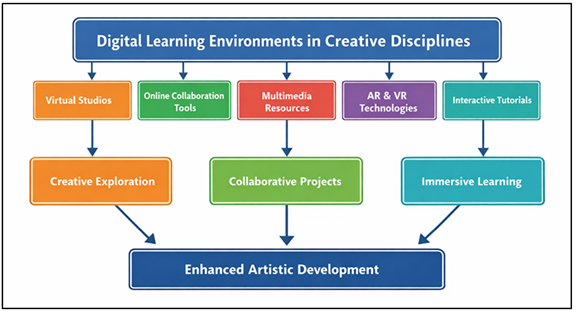
Figure 1 Conceptual Flowchart of Digital Learning
Environments Supporting Creative Disciplines in Art Education
The access to virtual studio where students can develop, edit and perfect their works with digital tools has become one of the characteristic features of digital learning environment. Such virtual spaces are imitations of the real world artistic processes but provide added functionality of undo functions, layer operations, color collections and digital effects. Consequently, students feel free and efficient enough to experiment with artistic ideas. Moreover, the online learning environments enable collaboration in learning because they bring together students, instructors and artists in online communication systems.
3.3. Theoretical Foundations of Technology-Enhanced Art Education
Art education made and facilitated by technology is based on various educational theories which stress creativity, learner-centered learning, and experience. The constructivist learning theory is one of the theoretical frameworks that form the basis of the learning theory and proposes that learners are active in constructing knowledge by means of interaction, exploration, and creative problem-solving. Digital tools and interactive platforms used in art education allow learners to experiment with artistic ideas, create their own interpretations, and practice their creative ideas to a better state. Experiential learning theory is another valuable theoretical approach that emphasizes the significance of concrete experience and the reflective practice in the course of learning. Online art tools facilitate experiential learning through the use of creative tools, simulation of creative technique, and reflection of work in the form of a digital portfolio and critique session. Through these interactive experiences, the learners are able to acquire both technical and conceptual knowledge. Also, connectivism has proven to be an applicable theory in the era of online learning. The ideas that are promoted by connectivism include the significance of networks, digital connectivity, and collaborative creation of knowledge in contemporary learning. Technology-based art education sees the learner gaining access to a wide variety of artistic resources, engaging with the global art communities, and being able to present their work using online media. Technology-enhanced art education should be incorporated to facilitate new methods of teaching by incorporating constructivist, experiential and network learning principles, as well as incorporating creativity, digital technology and collaborative learning. Freedman et al. (2022)
4. Adaptive Learning Platforms for Art Education
4.1. Architecture of adaptive digital learning systems
Adaptive digital learning systems architecture is modeled to combine smart technologies, digital creative technologies, and information-driven learning management systems to assist in the individual artistic development. These systems normally have a series of interconnected components, which include the user interface layer, data processing layer, adaptive learning engine, and content management module. The user interface key will offer digital drawing tools, multimedia tutorials, virtual studios, and learning communities to the students. It is through this interface that learners engage with learning materials and upload artwork and also get support by teachers or computer applications. The data processing layer gathers and processes the information about the interaction of learners such as artistic progress, time spent on tasks, feedbacks response, and engagement patterns. This data is kept in databases of learning analytics which helps to track the progress of students continuously. The main part is the adaptive learning engine which produces individual learning paths. It checks the performance of learners through predictive algorithms and suggests definite learning activities, experiments, or instructions depending on the needs in art. More and Birmule (2025)
4.2. Personalization Algorithms for Learner Engagement
Algorithms of personalization are important in adaptive learning systems in that they enable the customization of learning experiences based on personal preferences of learners, their ability, and learning patterns. In teaching art, such algorithms examine large volumes of data such as patterns of student interaction, student art submissions, student learning, and student feedback. According to this analysis, the system is dynamic to change the learning content and instructional strategies to maximize the engagement of learners and their creative development. One of the methods is the use of recommendation algorithms which propose appropriate tutorials, exercises, and art projects based on the current abilities of a learner. To provide an example, an intermediate in the field of digital illustration can be advised on simple drawing skills and color theory, whereas advanced students can be shown complex design tasks or multimedia assignments. These response strategies promote slow learning of skills and long-term motivation. The clustering and predictive modeling techniques of machine learning are commonly used to determine the trends in the performance and learning preferences of the students. Such algorithms organize learners with similar creative abilities or levels of skills and create individualized learning paths in accordance. Furthermore, the personalization algorithms have an opportunity to adjust the lesson pace, offering more practice or challenging activities depending on the performance of the learner. Jadhav (2027)
4.3. AI-Driven Feedback and Assessment Mechanisms
Feedback and assessment systems based on artificial intelligence are a major innovation in online education of art. They are computer vision, machine learning, and pattern recognition-based systems that analyze and provide automated feedback on students artwork on different aspects of art. Contrary to the traditional assessment systems that are based on the evaluation conducted by a teacher, AI-based systems provide instant and ongoing feedback that facilitates learning through iteration and creative feedback. Assessment tools that are powered by AI can analyze various features of digital art, which include balance in composition, color balance, and accuracy of perspective and uniformity of brush stroke. The system can be used to determine the strengths and weaknesses of students by comparing student submissions with pre-established artistic standards or reference datasets. In case, for instance, the artwork of a learner is not contrasted or has no depth, the system will suggest tutorials about the lighting effects or methods of shading. Besides the visual analysis, AI systems are able to track the data of interaction of learners like speed of drawing, revision patterns and interaction with information in instructions. Such information can enable the system to create individualistic feedback that caters to both the technical and conceptual area of artistic learning. Formative assessment through automated feedback also allows it to guide the creative process constantly. Karule et al. (2025)
5. Digital Tools and Technologies Supporting Art Learning
5.1. Virtual studios and digital drawing platforms
Online studios and online drawing programs have gained a crucial role in contemporary art education because they give students the opportunity to design, test and perfect artistic work in digital settings. The platforms imitate the conventional studio practices but offer other technological features that are more creative and efficient. Digital drawing programs, graphic tablets, and online drawing programs enable students to create artwork with a large variety of digital brushes, textures, palettes of colors and overlay effects. These tools mimic the features of traditional media of art, but they provide sophisticated editing abilities to facilitate the process of experimental iteration and exploration of creative possibilities. Virtual studios are also structured settings in which learners have access to instructional materials, are able to engage in guided tutorials and are able to submit creative assignments. These digital environments can come with built-in technologies like version tracking, digital portfolios and cloud-like storage where students can record their artistic development as it evolves. Teachers will be able to observe the work of students remotely and give specific feedback directly on the platform.
5.2. Augmented Reality and Virtual Reality in Art Instruction
AR and VR technologies have brought about the notion of immersive learning that has considerably improved the teaching of art. This type of technologies enables students to communicate with digital art pieces, creative spaces and artistic instruments in three dimensional space that is very similar to real-world artistic spaces. With VR headsets and interactive devices, students will be able to visit virtual galleries, studios, or exhibition halls in which the students can view, examine, and produce artistic data in simulated settings. The virtual reality platforms open the opportunities to students to experience the large-scale art installations, sculpture design and spatial composition in a way that is hard to do in a conventional classroom. Students have the ability to interact with virtual objects, play around with lighting and perspective and conceptualize intricate artistic ideas in three dimensional virtual worlds. This learning experience facilitates a further insight into the relationship of space and composition of artworks. Augmented reality also improves the process of art education by superimposing digital elements on physical space. AR-enabled devices allow students to see the digital sketches, interactive animations, or historical works in the real life scenarios. Karthikeyan et al. (2023)
5.3. Interactive Multimedia and Collaborative Digital Environments
There is a significant role of interactive multimedia technologies and collaborative digital environments in assisting in creative learning and artistic cooperation in contemporary art education. Multimedia systems combine a number of digital media content such as images, video, animation, sound and interaction graphics, to develop lively learning experiences. Through these materials, students learn the techniques of art, the movements of art history, and the art making processes in an interesting visual and audiovisual way. Self-paced learning can also be facilitated using interactive multimedia tools whereby learners can access instructional material, demonstrations and practice tasks on their own.
Figure 2
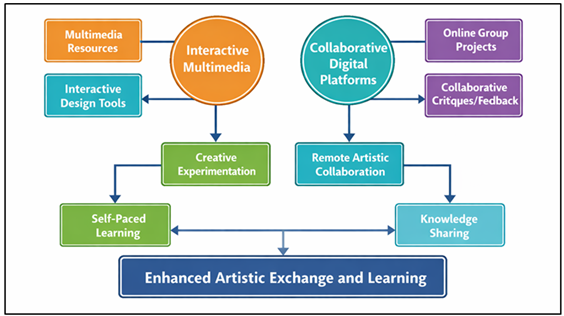
Figure 2 Interactive Multimedia and Collaborative Digital
Environments for Art Learning
Instructions on videos, interactive design courses, and animated demonstrations can make students familiar with complicated artistic techniques and experiment with creative concepts. Figure 2 demonstrates the possibilities of collaboration, creativity and interactive learning of art with the help of multimedia tools. These materials are specifically handy to visual learners who prefer to see the artistic processes at a closer. Online classes and learning environments even improve the learning of art by bringing students, teachers, and artists together using the internet. Digital communication tools enable learners to exchange works of art, conduct group work, and have positive peer critique meetings. Multi users are also enabled to collaborate and work on the same creative project in real time via cloud based collaboration platforms, which encourage teamwork and interdisciplinary creativity. Rawandale and Kolte (2021)
6. Impact of Adaptive Digital Platforms on Art Education
6.1. Enhancement of student creativity and experimentation
Adaptive online platforms have already contributed greatly to the creativity and experimentation in art education by offering students versatile tools in learning and customized learning routes. In traditional art education, experimentation can be inhibited by factors like lack of time in studio, access to materials or availability of instructor. On the contrary, online platforms allow the students to experience a vast array of artistic methods, styles, and creative concepts in virtual realms that facilitate constant practice and revision. Digital layering, undo options, simulating colors and customizable brushes are the features that enable the learners to go out there and experiment without the fear of permanently modifying their work. Adaptive systems also facilitate the creativity process by suggesting studying materials, games, and artistic tasks according to the interests and abilities of a student. These systems can propose alternative techniques of design, visual solutions, or multimedia tools that foster innovation thinking by examining the progress of learners and the patterns of their creativity. The students are thus presented with a variety of creative options that they might not necessarily find in the conventional classrooms.
6.2. Improvement in Accessibility and Inclusive Learning
Adaptive online platforms are significant to enhance accessibility, and inclusivity in the art education sector by eliminating barriers in terms of location, physical resources, and learning diversity. The conventional studio-art training might be challenging to those students who cannot access the use of professional art materials, specialised facilities or instructors. The online learning environments overcome these issues through access to online creative tools, lessons, and learning communities. Through this, students of different backgrounds and geographical areas have an opportunity to engage in art education without being restricted by the physical geography. Inclusive learning is also facilitated by these platforms because they allow varying learning styles and capabilities. Adaptive systems examine the personal learning behaviors and modify the instructional content according to the pace, preferences and artistic proficiency of a learner. Students with special needs are given specific tutorials and feedback or creative challenges that are more difficult than those with general needs. Venkata et al. (2025)
6.3. Development of Digital Artistic Skills and Competencies
Digital creative platforms are important in fostering digital artistic skills and competency that is becoming vital in the modern creative industries. With the further incorporation of digital technologies into the realms of art and design, the artists are bound to gain proficiency in software applications, multimedia creation, digital drawing, animation and visual communication. Online learning environments offer structured systems to enable the acquisition of such skills by the students guided by practice, interactive tutorials and project-based learning tasks. Virtual studios and digital creative tools provide learners with exposure to software tools related to graphic design, digital painting programs, and multimedia editing programs, which are highly applied in professional artistic processes. Adaptive learning systems can also be used to improve skills acquisition by evaluating the performance of students and prescribing specific exercises that improve particular technical skills. This individualized strategy will make learners develop basic and advanced digital skills progressively.
7. Result and Discussion
The comparison of adaptive and digital learning tools in art education proves that the creative activity, learning adaptability, and teaching efficiency have improved greatly. Students can be engaged in artistic concepts via digital tools in virtual studios, multimedia learning materials, and immersive technologies, which help them learn in interactive and experimental settings. The adaptive learning systems further add to this process by making the instructional content more personal and prescribing learning paths according to the performance and creative preferences of the different students. The findings reveal that learners on adaptive digital platforms exhibit greater degrees of creative experimentation and skill growth and collaborative engagement than traditional learning models based on studio learning.
Table 2
|
Table 2 Performance Comparison of Traditional and Adaptive Digital Art Learning Platforms |
||||
|
Learning Approach |
Student Engagement (%) |
Creativity Development Score
(%) |
Learning Retention (%) |
Average Completion Time
(hrs) |
|
Traditional Studio-Based
Learning |
68.5 |
71.2 |
69.4 |
14.8 |
|
Digital Learning Platforms |
79.6 |
82.4 |
78.1 |
12.3 |
|
Adaptive Digital Learning
Platforms |
91.7 |
89.6 |
88.3 |
10.6 |
Table 2 consists of a performance comparison between various approaches to art learning which include traditional studio-based learning, digital learning platforms, and adaptive digital learning platforms. The findings show that adaptive digital learning platforms have the best performance in all of the metrics that have been analyzed. Figure 3 suggests the comparison between the level of engagement and creativity in traditional and adaptive learning.
Figure 3
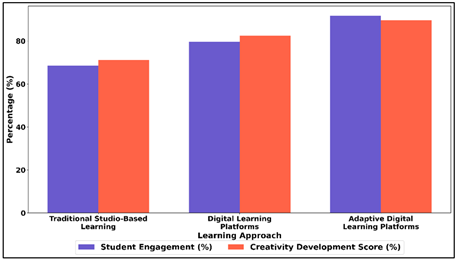
Figure 3 Comparative Analysis of Student Engagement and
Creativity Development Across Learning Approaches
The difference in student engagement is considerably large: 68.5 percent in traditional educational settings and 91.7 percent in adaptive ones, which prompts to believe that a personalized learning pathway and interactive tools can promote the involvement of learners. Figure 4 will compare the retention rates and the time taken to complete the learning process between learning models. On the same note, the score of creativity development increases to 89.6% in adaptive systems compared to 71.2% in traditional settings, which is the advantage of experimentation and exploration of creativity that is enabled by technology.
Figure 4
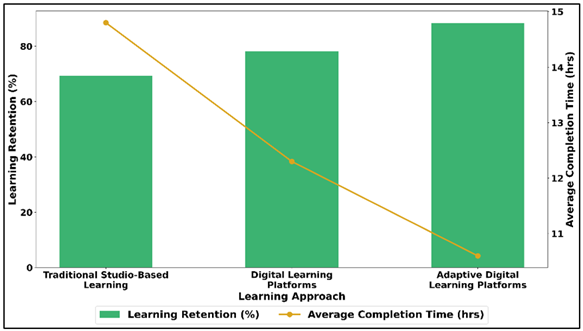
Figure 4 Learning Retention and Average Completion Time
Across Traditional and Digital Learning Models
Retention of learning also improves significantly which stands at 88.3 in adaptive platforms of learning as compared to 69.4 in traditional methods. Also, the mean time to complete reduces to 10.6 hours compared to 14.8 hours, which shows that the learning processes are more effective.
Table 3
|
Table 3 Impact of Digital and Adaptive Technologies on Art Learning Outcomes |
||||
|
Technology Type |
Creativity Improvement (%) |
Skill Acquisition Rate (%) |
Accessibility Score (%) |
Collaboration Index (%) |
|
Virtual Studios |
83.4 |
81.6 |
78.9 |
76.2 |
|
AR/VR-Based Art Instruction |
88.7 |
85.9 |
82.1 |
80.3 |
|
Interactive Multimedia Tools |
84.2 |
83.7 |
86.5 |
88.4 |
|
Adaptive AI-Based Learning
Platforms |
92.5 |
90.3 |
91.7 |
87.8 |
As shown in Table 3, the application of various digital and adaptive technologies affects the performance of art learning according to four main indicators, including the improvement of creativity, the rate of learning skills, the accessibility of learning and learning through collaboration. The findings indicate that adaptive AI learning websites perform best in general, with an improvement in creativity of 92.5% and skills acquisition of 90.3% which means that the approach to artistic growth based on personalized and data-driven learning systems is productive. Figure 5 juxtaposes the improvement of creativity and acquisition of skills in educational technologies.
Figure 5
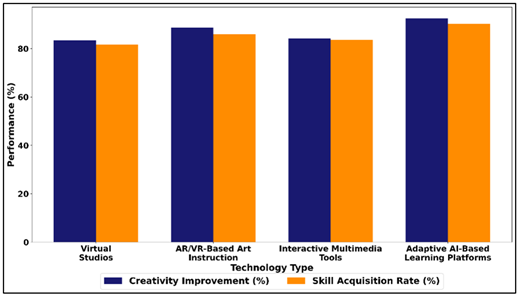
Figure 5 Comparative Analysis of Creativity Improvement and
Skill Acquisition Across Educational Technology Types
Similar results are shown in AR/VR-based art teaching especially creativity (88.7) and immersive learning experiences that enhance spatial visualization and experimentation. The interactive multimedia tools have strong collaboration with the greatest index of collaboration being 88.4 indicating that they are effective in facilitating group learning and creative exchange.
8. Conclusion
The introduction of adaptive learning platforms and digital technologies is a revolutionary change in the modern art education. Conventional teaching of art has always been based on the studio approach to teaching, focusing on the immediate contact with materials and the direct instruction provided by the teacher. Although such approaches are still significant, the rise of digital technologies has broadened the perspectives of creative learning by opening the possibilities of flexible, personalized, and technology-enhanced learning space. The educators can create learning experiences that cater to the needs of the varied students and their creative strengths using adaptive digital platforms. These systems may dynamically modify the instructional content, give specific feedback, and show learners along individualized artistic paths of learning using artificial intelligence, learning analytics, and personalization algorithms. These possibilities help involve more and encourage experimentation and further development of the artistic possibilities. Moreover, online learning spaces with virtual studios, multimedia technologies, augmented reality, collaborative online learning platforms give students a chance to experiment with new artistic expressions. Such technologies not only further creativity but also assist learners to become digital competent and this is becoming increasingly demanded in the creative sectors of the contemporary world like digital design, animation and multimedia production.
CONFLICT OF INTERESTS
None.
ACKNOWLEDGMENTS
None.
REFERENCES
Chen, S., Lin, P., and Chien, W. (2022). Children’s Digital Art Ability Training System Based on AI-Assisted Learning: A Case Study of Drawing Color Perception. Frontiers in Psychology, 13, Article 102931. https://doi.org/10.3389/fpsyg.2022.823078
Cong, S. (2024). A Study of Teaching Strategies Optimized with the Integration of Artificial Intelligence Technologies. Applied Mathematics and Nonlinear Sciences, 9, 1195. https://doi.org/10.2478/amns-2024-1195
Dai, Y., Liu, A., Qin, J., Guo, Y., Jong, M., Chai, C., and Lin, Z. (2022). Collaborative Construction of Artificial Intelligence Curriculum in Primary Schools. Journal of Engineering Education, 112, 23–42. https://doi.org/10.1002/jee.20503
Engelsrud, G., Rugseth, G., and Nordtug, B. (2021). Taking Time for New Ideas: Learning Qualitative Research Methods in Higher Sports Education. Sport, Education and Society, 28, 239–252. https://doi.org/10.1080/13573322.2021.2014804
Ezquerra, Á., Agen, F., Rodríguez-Arteche, I., and Ezquerra-Romano, I. (2022). Integrating Artificial Intelligence into Research on Emotions and Behaviors in Science Education. Eurasia Journal of Mathematics, Science and Technology Education, 18, Article 11927. https://doi.org/10.29333/ejmste/11927
Freedman, K., Cornwall, J., Schulte, C., Carpenter, B., and Castro, J. (2022). Mapping Research with a Systematic Review: The Example of Social and Emotional Learning in Art Education. Studies in Art Education, 63, 296–312. https://doi.org/10.1080/00393541.2022.2116679
Jadhav, K. D. (2027). Integrating IoT, Sensors, and Machine Learning for Enhancing Crop Yield and Irrigation Efficiency Systems. In R. R. Janghel, R. Doriya, J. Lachure, and Y. K. Rathore (Eds.), Sustainable Agriculture Production Using Blockchain Technology. https://doi.org/10.1002/9781394248711.ch11
Kahila, J., Vartiainen, H., Tedre, M., Arkko, E., Lin, A., Pope, N., Jormanainen, I., and Valtonen, T. (2024). Pedagogical Framework for Cultivating Children's Data Agency and Creative Abilities in the Age of AI. Informatics in Education, 23, Article 15. https://doi.org/10.15388/infedu.2024.15
Karthikeyan, J., Vasanthan, R., Sundari, P. S., Nandhini, T. J., and Devi, V. C. (2023). Construction and Implementation of English Translation Simulation Training Classroom Based on Deep Learning. In 2023 2nd International Conference on Smart Technologies for Smart Nation (SmartTechCon) ( 716–719). https://doi.org/10.1109/SmartTechCon57526.2023.10391666
Karule, K. P., Sapkal, V., Mirajkar, G., Babajanov, M., Tajne, P., Ahire, L. K., and Qushnazarova, U. (2025). Leveraging Transfer Learning Techniques for Automated Tuberculosis Classification on Chest X-ray. Indian Journal of Tuberculosis, 72, S512–S530. https://doi.org/10.1016/j.ijtb.2025.11.015
Kashyap, S. V., Purohit, S., Kumar, D. A., Jawaid, F. I. M., Kumar, J. R. R., and Ajani, S. N. (2025). Visual Storytelling and Explainable Intelligence in Organizational Change Communication. ShodhKosh: Journal of Visual and Performing Arts, 6(5s), 696–707. https://doi.org/10.29121/shodhkosh.v6.i5s.2025.6965
Khoirroni, I. A., Patinasarani, R., Hermayanti, N. I., and Santoso, G. (2023). Character Education: Elementary School Children in the Digital Age (Pendidikan karakter: Tingkat Anak Sekolah Dasar Di Era Digital). Jurnal Pendidikan Transformasi, 2, 269–279.
Lee, H., and Lee, M. (2021). Visual Art Education and Social-Emotional Learning of Students in Rural Kenya. International Journal of Educational Research, 108, Article 101781. https://doi.org/10.1016/j.ijer.2021.101781
More, S. S., and Birmule, P. R. (2025). Technology-Based Scheduling and Event Management in Sports. International Journal of Research and Development in Management Research, 14(1), 50–54. https://doi.org/10.65521/ijrdmr.v14i1.288
Patil, R. V., et al. (2025). Decentralized Autonomous Organizations as Emerging Economic Entities in Accounting and Governance Frameworks. International Journal of Accounting and Economics Studies, 12(4), 166–177. https://doi.org/10.14419/1sy2j677
Rawandale, U. S., and Kolte, M. T. (2021). Design, Development and Analysis of Variable Bandwidth Filter Bank for Enhancing the Performance of Hearing Aid System. International Journal of Intelligent Engineering Systems, 14(6), 391–401. https://doi.org/10.22266/ijies2021.1231.35
Rizzuto, T., Cordeiro, K., and Roda, A. (2022). The Lost Art: Teachers’ Perceptions of the Connections Between the Arts and Social-Emotional Learning. Arts Education Policy Review, 125, 150–162. https://doi.org/10.1080/10632913.2022.2053919
Seo, K., Tang, J., Roll, I., Fels, S., and Yoon, D. (2021). The Impact of Artificial Intelligence on Learner–Instructor Interaction in Online Learning. International Journal of Educational Technology in Higher Education, 18, Article 54. https://doi.org/10.1186/s41239-021-00292-9
Vaidya, C., Chopade, S., Khobragade, P., Bhure, K., and Parate, A. (2025). Development of a Face Recognition-Based Attendance System. In 2025 12th International Conference on Emerging Trends in Engineering and Technology – Signal and Information Processing (ICETET-SIP) ( 1–6). https://doi.org/10.1109/ICETETSIP64213.2025.11156883
Venkata, S. B., Wong, C. H., Karwande, V. S., Divyaraj, G., Singh, S., and Patil, R. V. (2025). Metaheuristic-Tuned GraMNet Architecture for Enhanced Video-Based Anomaly Detection Using UCF50 Dataset. In International Conference on Innovations in Intelligent Systems: Advancements in Computing, Communication, and Cybersecurity (ISAC3 2025). https://doi.org/10.1109/ISAC364032.2025.11156508
Vistorte, A., Deroncele-Acosta, A., Ayala, J., Barrasa, A., López-Granero, C., and Martí-González, M. (2024). Integrating Artificial Intelligence to Assess Emotions in Learning Environments: A Systematic Literature Review. Frontiers in Psychology, 15, Article 1387089. https://doi.org/10.3389/fpsyg.2024.1387089
|
|
 This work is licensed under a: Creative Commons Attribution 4.0 International License
© ShodhKosh 2026. All Rights Reserved.