ShodhKosh: Journal of Visual and Performing ArtsISSN (Online): 2582-7472
|
|
Yoga, Meditation, and Performance Practice: Enhancing Creativity, Presence, and Well-Being
Dr. Surendra Pal Singh 1
 ,
Dr. Lohans Kumar Kalyani 2
,
Dr. Lohans Kumar Kalyani 2 ,
Dr. Manju Singh 3
,
Dr. Manju Singh 3 , Anuj Kumar Verma 4
 ,
Pradeep Kumar Yadav 5
,
Pradeep Kumar Yadav 5 ,
Bindu Rani 6
,
Bindu Rani 6
1 Assistant
Professor, Department of Teacher Education, D.S. College, Aligarh, Uttar Pradesh,
India
2 Assistant
Professor, Department of Teacher Education (B.Ed.), Shri Lal Bahadur Shastri
Degree College, Gonda, Uttar Pradesh, India
3 Assistant Professor, Department of Psychology, D.S. College,
Aligarh, Uttar Pradesh,
India
4 Assistant Professor, Department of Teacher Education, D.B.S.
College, Govindnagar, Kanpur, Uttar Pradesh, India
5 Research Scholar, Department of Education, Ishwar Saran Degree
College, University of Allahabad, India
6 Assistant Professor, Department of Teacher Education, D.B.S.
College, Govindnagar, Kanpur, Uttar Pradesh, India
|
|
|
ABSTRACT |
|
|
There has been
increasing research on the application of yoga and meditation to the
composition of performing arts as one of the comprehensive approaches to
creativity, stage performance, and well-being of the performers. Exposing the
works of art to intense physical exercises, emotional outbursts, and
excessive psychological stress, tend to affect the performance, as well as
their health in long-term. This paper discusses yoga and meditation as
mind-body practices, which assist an artist to develop and perform
sustainably. The study will be based on interdisciplinary literature in the
performing arts, psychology and mindfulness studies to give the contribution
of meditative practices to increased physical awareness, cognitive
concentration, emotional control and creative engagement. The paper proceeds
to discuss the history and philosophy of yoga and meditation and how it can
be applied to training in art. It also reiterates the significance of such
practices as asana (poses), pranayama (breath control) and meditation to
enhance alignment in the body, breathing performance and clarity of mind in
the performers. These practices are particularly applicable in arts such as
dance, music, theatre where the performers are required to rely on the
capability to make movements of their body in coordination, expressive
interpretation and focus. The mindfulness-based interventions also help
reduce performance anxiety, and emotional resilience, such that the
performers will be calm and in the here and now when preparing their
performance and to perform on stage. Besides this, the paper also constructs
a Mindfulness-Based Performance Framework which integrates yoga, breath
control, meditation and creative performance practices into a model training. The framework is concerned with
interdependent relationship between the physical
training, mind concentration and art. These factors may be incorporated into
the education of performing arts and rehearsal techniques in
order to allow the artists to gain a deeper understanding of themselves,
greater creativity process and confidence in the stage. The findings suggest
that yoga and meditation are valuable assets of promoting the overall
development of art and promoting the well-being of the involved performer. |
|||
|
Received 05 December 2025 Accepted 26 March 2026 Published 03 April 2026 Corresponding Author Dr.
Surendra Pal Singh, sosinghdscollege@gmail.com DOI 10.29121/shodhkosh.v7.i3s.2026.7319 Funding: This research
received no specific grant from any funding agency in the public, commercial,
or not-for-profit sectors. Copyright: © 2026 The
Author(s). This work is licensed under a Creative Commons
Attribution 4.0 International License. With the
license CC-BY, authors retain the copyright, allowing anyone to download,
reuse, re-print, modify, distribute, and/or copy their contribution. The work
must be properly attributed to its author.
|
|||
|
Keywords: Yoga, Meditation, Performing Arts, Mindfulness,
Creativity, Stage Presence, Performer Well-Being, Mind–Body Integration |
|||



1. INTRODUCTION
1.1. Background of Yoga and Meditation in Artistic Practices
Yoga and meditation have been long known as holistic practices which develop physical well-being, clarity of mind, and emotional composure. Historical developments of the practices, which were developed historically as methods of harmony of the body, mind, and spirit are of ancient Indian philosophical traditions. Their advantages have grown over time to be recognized in various sections, such as in health services, education, sports psychology, and creative arts. Regarding the artistic practice, especially dance, theatre, and music, yoga, and meditation are useful tools to increase the sense of the body, the control of the breath, the focus, and the emotional display. Most traditional performing arts systems, notably in India, have naturalistically used yogic principles. Classical dance like Bharatanatyam and Odissi focus on posture and alignment, rhythmic breathing and controlled body motion which are close to the yogic training. In the same way, meditation techniques are used to teach the performers a sense of mental focus and emotional presence which enables them to relate with their artistic performance and interaction with the audience. Over the last few years, the practice of incorporating formal yoga and mindfulness interventions into performance training programs gained traction among artists and educators across the globe to enhance the process of creative growth, as well as, general well-being.
1.2. Importance of Mind–Body Integration in Performance
Performance practice must have a high level of coordination of the physical movement, the emotion, and the cognitive awareness. Artists must be physically sound, mentally centered and emotionally honest simultaneously respond to the fluctuating environment of live performance situations. The role of mind-body integration in establishing this balance in the performers is very significant. The body awareness, breath control and mindfulness are encouraged using the systematic methods given in yoga and meditation. Such techniques as asanas (poses), pranayama (breathing techniques) and meditation can also help performers improve their posture and flexibility and physical strength. At the same time, even the extent of cognitive attention and emotional regulation can be improved with the help of mindfulness-based practices and make the performers fully concentrated on the stage. This kind of an integrated approach makes it more technical performance as well as the artistic understanding and expressive capacity more profound. Besides this, mind-body methods can be used to help performers with stage fright, help them minimize stress and become psychologically in tough art careers Forseth et al. (2022).
1.3. Research Problem and Motivation
Yoga and meditation are both becoming more recognized as creative and curative practice, but their systematic application as a methodological tool in performance practice is a relatively unexplored area of study in the academic community. Training programs in performing arts continue to be preoccupied with technical training and artistic technique and they do not pay much attention to the psychological and physiological well-being of the performers. As a result, actors tend to deal with such issues as performance anxiety, physical stress, creative stagnation and mental fatigue. These problems have brought about need to have integrative training processes that can facilitate artistic quality and personal health. The reasoning behind the research is that holistic methods which have the potential to enhance creativity, presence and stability among performers, are becoming increasingly popular. This study will be capable of contributing to a more in-depth examination of mind-body skills in art training through examining how yoga and meditation can be incorporated into performance practice Herbert (2022).
1.4. Objectives of the Study
The central aim of the work is to study the possibility of yoga and meditation to promote the practice of performance and creative aspect of art. Specifically, it will investigate how practices of mindfulness can be used to promote the degree of physical awareness, mental focus, and/or emotional performance of performers. The other objective is to study the potential benefits of yoga and meditation in terms of reducing stress in performance and improving the wellbeing of artists. The study also seeks to develop a conceptual framework, which will integrate the application of yogic and meditative in the process of training and creativity of performing art.
1.5. Research Questions
There are a number of research questions which guide this study. The first question is how yoga and meditation can be used to enhance creativity and expressive ability in performing arts? Second, how do mindfulness-based interventions promote the presence, concentration, and experience of performers in the stage? Third, how do yoga and meditation help to sustain the physical and psychological health of the performers? Lastly, what are the ways these practices can be successfully incorporated into modern performance training and workflow?
1.6. Structure of the Paper
The rest of this paper is divided into various sections. The second section, II, goes through the available literature on yoga, meditation, and mindfulness in performing arts and creative practices. Section III addresses the theoretical background associated to mind body integration, embodied cognition, and performance creativity. Section IV outlines the research approach to be applied in order to examine how yoga and meditation can be incorporated in performance practice. Section V discusses the contribution of these practices to the promotion of creativity, presence, and well-being in performers. Part VI suggests a theoretical model of the application of yoga and meditation to artistic education and performance settings. The last section, VII, is the summary of the main findings as well as the description of the future research directions in the sphere of mindfulness-based performance practice.
2. Literature Review
2.1. Historical and Philosophical Foundations of Yoga and Meditation
The origins of yoga and meditation lie in the ancient Indian philosophy especially in the writings of the Yoga Sutras of Patanjali, Bhagavad Gita and the Upanishads. These schools of thought understand yoga as a whole practice trying to create harmony between the body, the mind and awareness. Ashtanga Yoga or the classical eightfold path of yoga consists of principles of ethics, yoga postures (asanas), breath control (pranayama), concentration (dharana) and meditation (dhyana). Although the yoga and meditation were originally meant as spiritual and contemplation practices, they have over time been tailored to suit contemporary world (health, education, psychology and creative fields) Elstad et al. (2020).
2.2. Yoga and Meditation in Creative Arts Training
During the last several decades, researchers and professionals have been excavating a more profound purpose of yoga and meditation in the sphere of creative arts education. It is shown that the practices result in improved concentration, body awareness and emotion regulation that are important in artistic performances. Yoga-based activities are usually implemented as the warming-up programs of dancers and actors because the activities can increase the flexibility, posture, and muscular control. Similarly, meditation skills are used in order to create mental clarity and to reduce the distraction experienced during rehearsals and performances. Researchers have also discovered that the mindfulness practice can be used to achieve creative thinking since it is an open process that is aware of its present state and observes any idea without any judgment. This is the kind of mood that allows the artists to explore other forms of expression and to escape creative blockages.
2.3. Mindfulness and Performance Psychology
Mindfulness is described as the ability to be conscious of the current situation and not to be too judgmental or distracted. According to research in the field of performance psychology, mindfulness-based interventions are capable of assisting the performers cope with anxiety, remain focused, and build confidence when performing on stage. Practices like breath awareness and body scans enable the performers to stay in the present and stay in focus to enhance technical accuracy and the authenticity of the performance Rashedi and Schonert-Reichl (2019).
2.4. Applications in Dance, Music, and Theatre
Meditation and yoga have been extensively used in most performing arts. Bend, stretch and alignment exercises taken through yoga are also beneficial in dance training to maintain balance, flexibility and prevention of injury. Most of the contemporary dance institutions have yoga in their physical conditioning programs to improve their strength and stamina. Techniques of meditation and breath control have been applied in music performance to enhance concentration, rhythmic stability and interpretation of emotions. Mindful breathing is a common practice among musicians to overcome the feeling of nervousness on the stage and perform consistently under pressure. Mindfulness activities are also employed by theatre practitioners to make characters become immersive, expressive, and present on the stage. To the extent of acting techniques affected by thoughtful practices, acting entails performers being completely conscious of their physical experience, feelings, and communication with other performers thus contributing to the credibility of theatre performances.
2.5. Benefits for Creativity and Well-Being
The benefits of yoga and meditations are also expanded to creativity and well-being as noted in the literature. Consistent practice of the same has been linked to better mental health, lower rates of stress, and greater emotional strength. The physical conditioning and injury prevention is facilitated by yoga, and cognitive flexibility and emotional balance are promoted with the help of meditation. These practices combined will help teach in a holistic manner, focusing on the overall development of the artistic process, including physical health, a clear mind, and creativity Simmer-Brown (2018).
Table 1
|
Table 1 Summary of Literature Review |
||
|
Methodology |
Key Contributions |
Cons |
|
Pilot experimental study with an 8-week yoga
intervention involving university participants; pre- and post-assessment of
mental and physiological indicators Wolfe and Moran (2017) |
Demonstrated that regular yoga practice
significantly reduced stress and depressive symptoms and improved
physiological health markers |
Small sample size and short intervention period
limit generalizability |
|
10-week experimental intervention with medical
students; mental health measured using validated psychological scales Lee et al. (2021) |
Found significant reductions in stress, anxiety,
and depression and improvements in sleep quality and emotional regulation |
Lack of a strong control group and possible
lifestyle confounding factors |
|
Exploratory empirical study examining Yoga Nidra
practice and creativity using creativity tests and psychological measures Tong et al. (2020) |
Shows that mindfulness-based yoga practices can
enhance creative thinking and mood states |
Small sample size and limited duration |
|
Scoping review analyzing
studies on dance-based mindfulness and embodied movement practices Kishida et al. (2019) |
Identifies how movement-based mindfulness
supports emotional regulation and somatic awareness |
Limited empirical measurement of creativity
outcomes |
|
Review of mindfulness-based intervention programs
across educational and professional settings Pascal and Marken (2022) |
Demonstrates that mindfulness improves
self-awareness, cognitive flexibility, and emotional regulation |
Not specific to performing arts context |
|
Systematic review of controlled studies examining
the effects of Isha yoga practices Kinsella et al. (2020) |
Shows consistent improvements in mental health,
resilience, and stress reduction |
Heterogeneity in study designs reduces certainty
of results |
|
Scoping review of qualitative research on
mindfulness practices Braun and Clark (2021) |
Provides an overview of methodological approaches
and themes in mindfulness research |
Limited empirical data on intervention outcomes |
|
Scoping review on mindfulness-based interventions
for stress management among students Peters et al. (2020) |
Concludes that mindfulness training significantly
supports stress reduction and emotional well-being |
Most studies rely on self-reported measures |
The Table 1 indicates recent studies in the field of Yoga and meditation interventions constantly indicate the decrease of the stress, anxiety, and depression in the participants. One of the benefits of mindfulness is that it enhances self-awareness, emotional flexibility, and cognitive flexibility, which are a key component of creative performance and mental health. New studies also indicate that such practice as Yoga Nidra and embodied mindfulness can also have a positive effect on creativity and artistic expression.
2.6. Research Gaps and Future Directions
Whereas current literature has shown promising factors of yoga and meditation to performers, there is a number of research gaps. Numerous studies are concerned with therapeutic or health related outcomes, but not on how these outcomes directly affect artistic creativity and the performance presence. Also, little is known about systematic frameworks that enable mindfulness practices to be effectively integrated into performance training programs. There are also limited empirical studies assessing how yoga and meditation have a long-term effect on the productivity of artists, their interest in art, and how an audience perceives the artist. This study can make a substantial contribution to interdisciplinary areas of study that show the link between performing arts, psychology, and the study of mindfulness.
3. Theoretical Framework
3.1. Mindfulness Theory in Artistic Practice
One of the most popular theories in art today is the mindfulness theory regarding artistic practice.
The mindfulness theory offers a substantial conceptual basis to comprehend the impact of yoga and meditation on the performance of artists. Mindfulness can be described as an awareness state where people intentionally pay attention to what is going on in the here and now, whilst noting their thoughts, feelings, and physical sensations without passing judgment. This increased awareness also allows the performers to stay invested in the creative process and react intuitively to the fluctuating nature of performance in artistic practice. All these are needed in order to stay focused during rehearsals and live performances. Mindfulness is also able to help artists through performance anxiety and creative blocks by encouraging them to be non-judgmental in observing the inner world. Consequently, mindfulness theory encourages advanced artistic presence, sincerity, and receptiveness in the performance surroundings.
3.2. Embodied Cognition and Performance
Embodied cognition represents a theoretical approach that underlines the mutual relationship in the correlation of physical movement, perception, and cognition. The theory postulates that knowledge and understanding are not merely the end product of the mental activity but are highly informed by bodily experience and the sense of interaction with the environment. The body is a primary tool of expression in performing arts, and embodied cognition is especially applicable to the practice of performance. Due to the repetitive movement patterns and conscious awareness, performers learn physical gestures and emotional expressions, which lead to the interpretation of art. This combination of physical awareness and cognitive processing can enable the performers to convey meaning to the audiences in a more effective way and yet be in control of their physical and emotional conditions Richard (2025).
3.3. Flow Theory and Creative Engagement
Flow theory was introduced by a psychologist known as Mihaly Csikszentmihalyi and it explains a psychological state where people are completely engaged in an activity that is neither too difficult nor too easy. Flow experiences are characterized by people saying that they feel deeply focused, are able to act without thinking and lack self-consciousness. Within the framework of the practice of performance, the flow state is usually linked to the instances of outstanding artistic performance and creativity. The practice of yoga and meditation assists in the acquisition of the conditions that will help in facilitating the flow through increasing concentration, minimizing mental distractions, and emotional balance. Performers are taught to relax and stay flexible through frequent mindfulness training to ensure that they are able to concentrate on their attention. This state of mind enables them to immerse themselves in their artistic work and react to the creative impulses spontaneously. Flow theory is thus a helpful theory that can be applied in making sense of how mind-body practices can be used to increase creative engagement and optimal performance experiences.
3.4. Integrative Model of Yoga–Meditation–Performance Practice
Judging by the concepts of mindfulness, embodied cognition, and the flow theory, the presented research implies a somewhat integrative theoretical framework of yoga, meditation, and the practice of performance. In the model, yoga practices are significant in physical consciousness, position, breathing and body stability. Mental sharpness, control of emotions and attention are enhanced with meditation exercises. The practices are a holistic way that enables technical performance and creativity. When such aspects are multiplied, performers are in a greater place to be more present, better coordinated, physically, and emotionally, when performances take place. Furthermore, the model suggests that the daily routine of yoga and meditation can result in the long-term well-being, eliminating stress, preventing any physical injuries, and increasing psychological stability. This combination of theoretical perspectives in the proposed framework will be effective towards the application of the mind-body practices in the modern performance training and arts development.
4. Methodology
4.1. Research Design
The research design chosen is the qualitative and exploratory research design because of the interest to understand how yoga and meditation can help in enhancing creativity, presence and well being during the performance practice. A qualitative approach is appropriate and justified because the research aims to understand the experience, perception, and practice of the audience of the performers who employ the methods of mindfulness-based techniques as an artistic routine. The study aims at the interpretive analysis of the experience of the subjects to look into the effectiveness of mind-body practices to the creative process and involvement in the performance. The study will examine personal stories, training and practice of meditation to create a deeper understanding of the connection between yoga, meditation and performance outcomes. The exploratory study style could also allow identifying the emerging trends and conceptual knowledge that could be used to inform the future empirical studies in the field of performing arts and mindfulness studies.
4.2. Participant Selection and Context
Students to take part in the study will be selected in the performing arts that include dance, music, and theatre. Such participants will be professional performers, performing arts students, and instructors that have experience using yoga or meditation in training or performance preparation. Identification of the individuals with the appropriate experience and knowledge associated with mindfulness-based artistic practice is achieved with the help of a purposive sampling method. It is also because the participants used in the study were of various artistic backgrounds and assisted in giving a very clear picture of how yoga and meditation can be used in various performance settings. Both the traditional and contemporary artistic setting can be considered in the study whereby the mind body practices can be compared on their impacts on the different styles of performance and the practice training used within these performance styles.
4.3. Data Collection Methods
Several data collection techniques are employed in acquiring an all-inclusive data regarding the fusion of yoga and meditation in the practice of performance. The main tool of data collection in terms of qualitative data collection is the use of semi-structured interviews, which will be used to allow participants to explain their experiences, motivation, and how they view the benefits of mindfulness practices in their artistic practice. It is also possible to make observations of rehearses or training to learn the way yoga and meditation techniques are integrated in the everyday artistic activity. Moreover, supplementary information connected with the degree of mindfulness practice, perceived creativity, performance confidence, and overall well-being of participants may be obtained with the help of questionnaires or surveys. The multiple sources of data can be used to be sure of a deeper and more valid interpretation of the phenomenon under the study Gunnell et al. (2017).
4.4. Data Analysis Techniques
The thematic analysis is used to analyze the collected data as it is a qualitative research method that finds patterns, themes, and significant information within textual and observational data. The transcripts of the interviews, observation notes and survey responses are thoroughly examined in order to determine the recurrent ideas in the areas of creativity, performance presence, physical consciousness and psychological well-being. The codes and categories are created in order to categorize the data according to some meaningful themes that will be based on the experiences and perceptions of the participants. It is in this process of analysis that the study is aimed at establishing the main relationships between the mindfulness practices and performance outcomes. The analysis findings are involved in the creation of the conceptual framework explaining the way yoga and meditation helps the artistic development and well-being of performers. Dinkar et al. (2025)
Figure 1
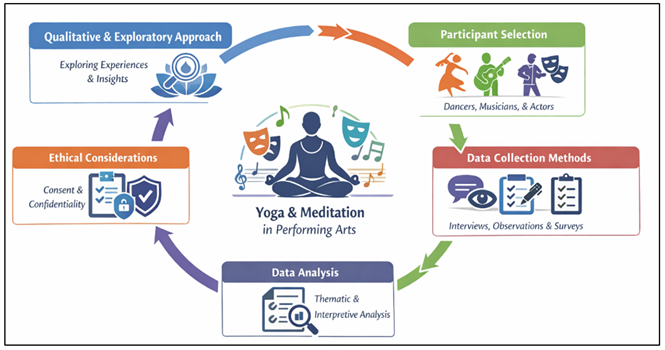
Figure 1 Proposed Methodology
The research methodology framework applied in the research is shown in Figure 1 above. It starts out with a qualitative, exploratory research design which aims at comprehending the experiences of performers with yoga and meditation in performance practice. The participants will be chosen among dance, music, and theatre fields, including performers, students, and instructors. The information is obtained by interviews, observations, and surveys and analyzed with the help of the thematic analysis to find patterns associated with creativity, presence, and well-being. The framework further takes into consideration the ethical aspects, such as informed consent, confidentiality and voluntary involvement in order to conduct responsible research. Karule et al. (2025)
4.5. Ethical Considerations
The methodology of the research involves ethical issues. The individuals to be involved in the study are informed of the purpose and aims of the study before getting interviewed or conducting surveys. Participation will be voluntary and no-one will be subjected to any adverse repercussions should he/she decide to withdraw out of the study. All participants are informed of their participation in the process and thus, informed consent is given so that their rights are respected. Besides, the personal details of the participants and answers are secured and only used to gather research. The foundations of anonymity are upheld in the publication of the results to safeguard the participants. These ethical provisions will make the course of the research responsible without infringing the dignity and privacy of all the people in the study.
5. Yoga and Meditation in Performance Training
5.1. Breath Control and Pranayama for Performers
The control of breath is an important element of performance training because it has a direct impact on physical endurance, voice quality, emotional range and cognitive concentration. Pranayama or the breathing yoga enables the performers to learn the methods of controlling their breath cycles and making them more effective in breathing. Controlled breathing is used in the performing arts of music, theatre, and dance to provide an element of rhythmic stability, clarity in the voice and continuation of physical movement. Deep breathing, alternate nostril breathing, and breathing exercises that are done rhythmically are pranayama practices that can assist performers to relax their nervous systems, and eliminate anxiety during pre-performance moments. These activities will also enhance the oxygenation of the brain and muscles which will aid in the concentration, energy equilibrium, and the overall quality of the performance. Vasanthan and Nandhini (2022)
5.2. Asana Practice for Physical Alignment and Balance
There are yoga postures called asanas, which have a lot of contribution in the physical conditioning of performers. Performing artists need a strong, flexible, posture-correct, and body-control so that they can make movements correctly and safely. Stretching and strengthening exercises using yoga contribute to increasing muscular balance, joint mobility, and body awareness. Asanas increase flexibility and coordination which are necessary in the work of dancers and actors as they perform physically demanding shows. Yoga postures also help to maintain the correct position of the spine and muscle stability which decreases the chances of repetitive movements or muscle fatigue which can lead to injury. Conscious movement and talented control of the posture help performers to get closer to their body, which enables them to move more accurately and expressively. Asanas can also enhance recovery and relaxation following the hard practices or shows, which allows the performers to have a healthy physical body in the long run. Rawandale et al. (2023)
5.3. Meditation for Stage Presence and Mental Focus
The technique of meditation is an effective means of achieving clarity of mind, emotional regulation and stage presence. Performers also have to deal with a lot of pressure, a lot of performance anxiety, and distraction of the mind in performance settings. The meditations like mindfulness meditation, guided visualization and focused attention exercises enable the performers to develop calmness and mental stability. Meditation helps performers to be continually focused on the now moment so that they can be completely involved in their artistic expression and interrelations on stage. This increased awareness boosts the intuitiveness of the performer to music, movement and other performers in live performances. The emotional regulation enhanced by the meditation will also enable performers to use their emotions in a positive way in their artistic expression instead of being overcome by the stress or self-doubt. Consequently, meditation enhances confidence levels of performers on stage, and their presence.
5.4. Integrating Mindfulness into Rehearsal Processes
It is possible to make the practice of mindfulness a part of the rehearsal process, which is likely to have a massive impact on the performance training. Mindful rehearsal helps performers to be more attentive and self-aware of their practice times and give those practices an opportunity to experiment. As an example, in the first rehearsals, it can be useful to start the process with short breathing exercises or guided meditation sessions that can bring the attention of the performers and allow them to prepare mentally to engage in creative work. The methods of mindfulness will also help the performers to notice their movements, emotions, and creative thoughts with less judgment. This non-judgmental understanding helps in creative investigation and the fear of committing errors that occur in rehearsals is minimized. Mindfulness in the performance environment can also enhance communication and coordination between performers in collaborative performance environments through promoting attentive listening and awareness of others. With the introduction of yoga and meditation sessions into the rehearsal procedures, the performers will be able to develop a balanced attitude towards the artistic training, which will contribute to creativity, focus, and health. Venkata et al. (2025)
6. Impact on Creativity, Presence, and Well-Being
6.1. Enhancing Creative Expression
Yoga and meditation are significant in the process of increasing the expressive creativity of the performers by promoting clarity of mind, receptiveness, and imagination. Meditation promotes a non-judgmental attitude and this aspect minimizes the self-criticisms and enables artists to play around with new thoughts and interpretations. Likewise, yoga exercises enhance self-awareness of the body and fluidity of movement making the performers express themselves and tell narratives in a more expressive way using their bodies and the aesthetic performance. Yoga and meditation also provide an enabling mental atmosphere by encouraging creative thinking and artistic innovation since they relax the mind and enable it to be at its best, mentally focused.
6.2. Improving Performer Presence and Audience Connection
The element of stage presence is vital in the successful performance. It is an aptitude of the performer to gain attention, express authenticity and have a significant connection with the audience. Strong stage presence can be developed through yoga and meditation, which helps to be attentive to the mind and emotions. Breath control and concentration are some of the practices that help the performers to be completely in the moment of performance, instead of being distracted by anxiety or the external pressure. Such a strong presence enables the artists to better participate in the performance and react instinctively to the energy of the crowd. The mindfulness also increases the ability of the performers to perceive the subtle elements like rhythmic, movement, and emotional tone.
6.3. Stress Reduction and Emotional Resilience
After the relaxation response of the body is activated, through breathing methods and meditation styles, the levels of physiological stress are down-regulated, the nervous system is soothed. Consistent mindfulness training also allows performers to become emotionally resilient, thereby being better able to handle such difficulties as performance errors or harsh critiques. Through better emotional control and mental stability, yoga and meditation aids performers in staying confident and psychologically healthy in the course of their artistic careers.
6.4. Physical Health and Injury Prevention
Performers who strongly use their bodies as instruments of artistic expression are in need of physical health. Monotonous training, unbearable drills, and physically harsh performances may enhance the possibility of trauma and muscular tension. The exercises that are done through yoga, strengthen the muscles, increase the flexibility and create better movements in the joints all which contribute to the prevention of injury. Appropriate positioning and posture acquired by doing Yoga also minimize the chances of musculoskeletal issues that dancers, actors and musicians usually have. Also, meditation and mindful movement allow performers to recuperate better once performances are over. Through physical conditioning and relaxation, yoga and meditation enable long-term performance practices that enable the artists to sustain long-term health and career sustainability.
7. Proposed Mindfulness-Based Performance Framework
7.1. Design Principles for Yoga–Meditation Integration
The Mindfulness-Based Performance Framework that has been proposed will help to incorporate yoga and meditation into the process of performing arts training to improve creativity, presence, and well-being. There are a number of major principles that guide the framework and focus on the holistic development of art. First, there is mind-body awareness as a central value that promotes the development of awareness of physical movements, breath patterns, and emotional states among the artists in their artistic practice. Second, the principle of present moment attention focuses on mindfulness and concentration, which enables performers to be fully present in their performance activities and not to be distracted by anxiety and other external pressures. Third, the non-judgemental approach to creative exploration urges the performers not to critically judge their ideas and expressions but observe them, as it fosters creative experimentation and artistic development. Lastly, the framework also focuses on sustainable artistic well-being because it is known that sustained creative productivity relies on physical and mental strength. Patil et al. (2025)
7.2. Framework Components and Structure
The proposed framework consists of four components that relate to each other and may be applied to obtain the active participation of yoga and meditation in the performance practice. The first one is Physical Preparation, comprising yoga exercises such as asanas and stretching exercises that improve the posture, flexibility, and the ability of the body to work. The practices help the performers to be conscious of their bodies and train their bodies to perform strenuous performance activities. The second one is the Breath and Energy Regulation whereby breathing and physical workout in the controlled breathing technique are involved to enhance control of breathing and emotional stability. Voice control assists in projection of the voice, rhythmic control in addition to reducing stress.
The third component is Mindfulness and Mental Focus that involves taking meditation exercises where concentration, emotional sensitivity and mental stability are strengthened. These tricks help the performer to overcome the fear to perform and be coherent in the rehearsal and live performances. The fourth facet is Creative Expression and Performance Integration whereby the physical and intellectual benefit of yoga and meditation is directly transferred to performing art. At this stage, the augmented consciousness and attention of the performers is shifted to the expressive movement, musical interpretation, or dramatic narration. All these components form a harmonious system of physical training, psychological education and artistic expression converging into one system of acting.
7.3. Application in Performing Arts Education and Training
The given framework can be applied in any of the performing arts learning and training environments e.g. dance schools, theatre schools, music schools, and interdisciplinary arts programs. In the initial stages of the rehearsals, teachers can incorporate some short yoga and meditation sessions that would enable the students to prepare both physically and mentally to the artistic tasks. Structured mindfulness exercises can also be introduced to performance workshops so as to increase the level of focus, teamwork and emotional expression among the performers. Also, since the framework can be utilized, one can make comprehensive training programs, which will be balanced concerning both building technical skills and mental health. By integrating mind-body techniques into the learning of arts, the learning institutions will be able to attain healthier learning and creative long-term career. Lastly, the Mindfulness-Based Performance Framework provides a plausible model of merging the traditional contemplative practice with the current performance training that would further entangle the connection of the creativity, presence, and well-being in performing arts.
Figure 2
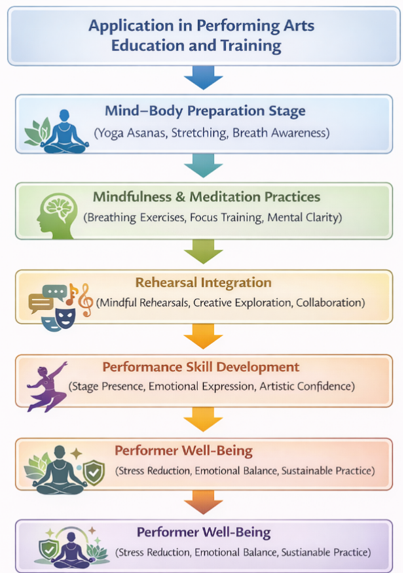
Figure 2 Applications in Performing Arts, Education and
Training
The Figure 2 demonstrates how yoga and meditation are used in the education and training of performing arts using a systematic approach. It starts with mind body preparation when yoga postures, stretching and breath awareness can train performers to create physical alignment and body control. This is then accompanied by mindfulness and meditation which increases focus, emotional intelligence and mental clarity. These methods are then incorporated into a rehearsal process which promotes mindful practice, exploration/ creativity, and learning in a group context. Therefore, through this process, performers enhance performance competencies, including stage presence skills, emotional expression, and artistic confidence. Finally, the framework facilitates the well-being of performers, such as reduction of stress, emotional stability, and sustainable artistic practice.
8. Challenges and Future Research Directions
8.1. Cultural and Pedagogical Barriers
Although yoga and meditation are becoming increasingly popular in performance training, there are a number of cultural and pedagogical issues that could prevent their proliferation. In other performing arts organizations, the conventional training paradigm is to focus on mastery and intensity of rehearsal, with little time to engage in reflective or restorative practices. Consequently, yoga and meditation can be considered secondary and not key parts of performance education. Moreover, the cultural understanding of the mindfulness practices might not be uniform within the institutions and geography. Yoga has become popular in the world but its philosophical and holistic nature is not always taken seriously in contemporary academic settings. The solution to these obstacles is to make educators and institutions more aware of the possible advantages of incorporating mind-body practices into artistic training programs.
8.2. Accessibility and Training Limitations
The availability of trained instructors and organization of training materials is another issue in applying yoga and meditation to the performance practice. Most institutions of performing art cannot afford skilled individuals to help performers in mindfulness-based practice. Performers may find it difficult to make such practices a habit or to effectively use them in their artistic practice without sufficient guidance. Moreover, lack of time during rigorous training programs can be a barrier to performing regular mindfulness training on the part of the performers. To respond to these constraints, the institutions might have to create interdisciplinary training programs that united performing arts training with wellness and mindfulness training.
8.3. Need for Empirical Validation
Most of the existing studies are based on qualitative observations or a small sample size that could inhibit the extrapolation of their results. Further studies need to be directed towards controlled experiments, longitudinal studies, and interdisciplinary studies that look at the verifiable effect of mindfulness practices on performance outcomes. Quantitative measures of stress reduction, confidence in performance training, assessment of creativity, and audience involvement may prove to be useful in determining the impact of yoga and meditation on performance training.
8.4. Opportunities for Interdisciplinary Research
The combination of yoga, meditation, and performance practice provide opportunities of interdisciplinary cooperation and collaboration in the sphere of performing arts, psychology, neuroscience, education, and the studies of wellness. The question of the impact of mindfulness practices on creativity, attention, and emotion regulation related to cognitive processes can be investigated by researchers. One can also look to technological progress in the fields of physiological monitoring, motion analysis, and neurocognitive assessment tools that might offer further ways in which mind-body practices and artistic performance can be examined in relation to each other. Also, the role of traditional contemplative practices regarding the expression of art in various cultural settings can be explored through cross-cultural studies. These interdisciplinary studies can further enhance our knowledge about the use of mindfulness in creative practice and can be used to introduce new training methods to performers in the future.
9. Conclusion
In this paper, the author will discuss the application of yoga and meditation to enhance creativity, being a performer, and general well-being of performing artists. As performing arts involve a complex integration of physical agility, emotionally investing, and cognitive focus, the establishment of mind-body practices is an implementation of a systematic plan of executing training and performance development. The research illustrates the essence of the conventional techniques such as yoga postures, breathing regulation and meditation to assist the performers to become increasingly conscious physically, mentally and emotionally stable. All these contribute to the improved expressive art and performance viability.
This is demonstrated in the literature review which indicates that yoga and meditation have increasingly become established as a viable application in training of creative arts. These methods make artists more flexible, in a good posture, able to control breath and the concentration which are the major components of a successful performance. In addition, performers can engage in mindfulness-based practices to cope with performance anxiety, stress, and the ability to cope with challenging artistic environments. Cultivation of the sense of the present moment and non-judgmental observation help the performers to be more involved into their creative practices and be more natural in their reactions during live shows. The other study recommendation is the Mindfulness-Based Performance Framework which assumes that yoga and breath-control, meditation and creative performance practices together were integrated in a systematic model of artistic training. The system is centered on the centralized combination of physical training, the mental concentration and the expressive creativity. With the assistance of such factors in the practice and education of rehearsal it is possible to cultivate an environment of artistic growth that is healthier and more conducive by incorporating the factors into practice and education. Such a combination method can be used to not only enhance the level of performance but it can also help the performers in the long run health and well being. However, the popularization of mindfulness-based practices in the field of performance training still has some problems. Cultural perceptions, absence of institutional support and availability of qualified teachers can determine the effectiveness of yoga and meditation as applied in the field of art education. Further, the empirical results regarding the practices require future research that would substantiate the quantitative results of the practices on long-term advantages of the practices on creativity, quality of performance and psychological resilience.
CONFLICT OF INTERESTS
None.
ACKNOWLEDGMENTS
None.
REFERENCES
Braun, V., and Clark, V. (2021). Thematic Analysis: A Practical Guide. SAGE Publications.
Dinkar, S., Jayapriya, K., Pallerla, N., Jadhav, K. D., and Shet, A. R. (2025). Convolutional Neural Networks for The Intelligent and Automated Detection of Mango Leaf Disease to Enhance Crop Health Management. Agricultural Science Digest, 45(6), 1004. https://doi.org/10.18805/ag.DF-717
Elstad, T., Ulleberg, P., Klonteig, S., Hisdal, J., Dyrdal, G. M., and Bjorndal, A. (2020). The Effects of Yoga on Student Mental Health: A Randomized Controlled Trial. Health Psychology and Behavioral Medicine, 8(1), 573–586. https://doi.org/10.1080/21642850.2020.1843466
Forseth, B., Polfuss, M., Brondino, M., Hunter, S. D., Lawlor, M. W., Beatka, M. J., Prom, M. J., Eells, J., and Lyons, J. A. (2022). Adherence to and Changes in Mental and Physiological Health During an 8-Week Yoga Intervention: A Pilot Study. Journal of Bodywork and Movement Therapies, 30, 203–209. https://doi.org/10.1016/j.jbmt.2022.01.004
Gunnell, K. E., Mosewich, A. D., McEwan, C. E., Eklund, R. C., and Crocker, P. R. E. (2017). Don’t be so Hard on Yourself! Changes in Self-Compassion During the First Year of University are Associated with Changes in Well-Being. Personality and Individual Differences, 107, 43–48. https://doi.org/10.1016/j.paid.2016.11.032
Herbert, C. (2022). Enhancing Mental Health, Well-Being and Active Lifestyles of University Students by Means of Physical Activity and Exercise Research Programs. Frontiers in Public Health, 10, 849093. https://doi.org/10.3389/fpubh.2022.849093
Karule, K. P., Sapkal, V., Mirajkar, G., Babajanov, M., Tajne, P., Ahire, L. K., and Qushnazarova, U. (2025). Leveraging Transfer Learning Techniques for Automated Tuberculosis Classification on Chest X-ray. Indian Journal of Tuberculosis, 72, S512–S530. https://doi.org/10.1016/j.ijtb.2025.11.015
Kinsella, E. A., Smith, K., Bhanji, S., Shepley, R., Modor, A., and Bertrim, A. (2020). Mindfulness in Allied Health and Social Care Professional Education: A Scoping Review. Disability and Rehabilitation, 42(2), 283–295. https://doi.org/10.1080/09638288.2018.1496150
Kishida, M., Molenaar, P. C. M., and Elavsky, S. (2019). The Impact of Trait Mindfulness on Relational Outcomes in Novice Yoga Practitioners Participating in An Academic Yoga Course. Journal of American College Health, 67(4), 250–262. https://doi.org/10.1080/07448481.2018.1469505
Lee, J. P., Kim, K. H., Webster, C. S., and Henning, M. A. (2021). The Evolution of Mindfulness from 1916 to 2019. Mindfulness, 12(8), 1849–1859. https://doi.org/10.1007/s12671-021-01603-x
Pascal, F., and Marken, M. F. (2022). Developments in Qualitative Mindfulness Practice Research: A Pilot Scoping Review. Mindfulness, 13(1), 17–36. https://doi.org/10.1007/s12671-021-01748-9
Patil, R. V., et al. (2025). Decentralized Autonomous Organizations as Emerging Economic Entities in Accounting and Governance Frameworks. International Journal of Accounting and Economics Studies, 12(4), 166–177. https://doi.org/10.14419/1sy2j677
Peters, M. D. J., Godfrey, C., McInerney, P., Munn, Z., Tricco, A. C., and Khalil, H. (2020). Scoping Reviews (2020 Version). In E. Aromataris and Z. Munn (Eds.), JBI Manual for Evidence Synthesis. Joanna Briggs Institute.
Rashedi, R. N., and Schonert-Reichl, K. (2019). Yoga and Willful Embodiment: A New Direction for Improving Education. Educational Psychology Review, 31(3), 725–734. https://doi.org/10.1007/s10648-019-09481-5
Rawandale, U. S., Ganorkar, S. R., and Kolte, M. T. (2023). VHDL-Based Design of an Efficient Hearing Aid Filter Using An Intelligent Variable-Bandwidth Filter. International Journal of Advanced Computer Science and Applications, 14(1). https://doi.org/10.14569/IJACSA.2023.0140122
Richard, D. K. S. (2025). Service Quality Dimensions Relationships with Satisfaction Among Domestic and Foreign Tourists in Pondicherry. International Journal of Research in Development and Management Review, 14(2), 20–26. https://doi.org/10.65521/ijrdmr.v14i2.924
Simmer-Brown, J. (2018). Contemplative Teaching and Learning: Opportunities for Asian Studies. In Proceedings of the ASIANetwork Conference, Philadelphia, PA, USA, April 6–8, 2018. https://doi.org/10.16995/ane.291
Tong, J., Qi, X., He, Z., Chen, S., Pedersen, S. J., Cooley, P. D., Spencer-Rodgers, J., He, S., and Zhu, X. (2020). The Immediate and Durable Effects of Yoga and Physical Fitness Exercises on Stress. Journal of American College Health, 69(6), 675–683. https://doi.org/10.1080/07448481.2019.1705840
Vasanthan, R., and Nandhini, R. (2022). Integrating the Sub-Skills of LSRW for ESL Learners. In Contemporary ELT Strategies in Engineering Pedagogy: Theory and Practice (95–116). Routledge. https://doi.org/10.4324/9781003268529-9
Venkata, S. B., Wong, C. H., Karwande, V. S., Divyaraj, G., Singh, S., and Patil, R. V. (2025). Metaheuristic-Tuned GraMNet Architecture for Enhanced Video-Based Anomaly Detection Using UCF50 Dataset. In Proceedings of the International Conference on Innovations in Intelligent Systems: Advancements in Computing, Communication, and Cybersecurity (ISAC3 2025). IEEE. https://doi.org/10.1109/ISAC364032.2025.11156508
Wolfe, U., and Moran, A. (2017). Integrating Brain Science Into Health Studies: An Interdisciplinary course in Contemplative Neuroscience and Yoga. Journal of Undergraduate Neuroscience Education, 16(2), A77–A82.
|
|
 This work is licensed under a: Creative Commons Attribution 4.0 International License
© ShodhKosh 2026. All Rights Reserved.