ShodhKosh: Journal of Visual and Performing ArtsISSN (Online): 2582-7472
|
|
Performing Arts as a Tool for Community Health and Social Inclusion
Vaishali V. Raje 1 , Punitha VC 2
 , Shanthi
P 3
, Shanthi
P 3 , Arivukkodi
R 4, Malar
Kodi K 5
, Arivukkodi
R 4, Malar
Kodi K 5 , Parimala
K 6
, Parimala
K 6 , T.
Puhazhendhi 7
, T.
Puhazhendhi 7
1 Department
of Community Medicine, Krishna Institute of Medical Sciences, Krishna Vishwa
Vidyapeeth (Deemed to be University), Taluka Karad, District Satara, Pin
415539, Maharashtra, India
2 Department of Community Medicine,
Meenakshi Medical College Hospital & Research Institute, Meenakshi Academy
of Higher Education and Research, India
3 Department of Visual
Communication, Meenakshi College of Arts and Science, Meenakshi Academy of
Higher Education and Research, India
4 Department of Computer
Science, Meenakshi College of Arts and Science, Meenakshi Academy of Higher
Education and Research, India
5 Meenakshi College of
Physiotherapy, Meenakshi Academy of Higher Education and Research, India
6 Department of
Pharmacology, Meenakshi Medical College Hospital & Research Institute,
Meenakshi Academy of Higher Education and Research, India
7 Department of Public
Health Dentistry, Sree Balaji Dental College and Hospital, Bharath Institute of
Higher Education and Research, India
|
|
|
ABSTRACT |
|
|
The use of performing art has also gained recognition
as a great tool to promote health among the community, social inclusion and
culture. The paper will examine the significance of performing arts including
theatre, music, dance, and participatory performance in enhancing the
emotional state and transforming communities into social entities. Unlike the
conventional health promotion techniques that have relied on informational
campaigns to a larger extent, performing arts provide interactive and participative
stages that can enable creativity, communication and collective action.
Through the activities, the individuals are able to communicate and share,
give each other their experiences, and have worthwhile relationships that
lead to enhanced state of mental health and neighborhood integration. The
article gives a well-developed literature review of other works available on
arts-based interventions and their impact on the social inclusion and health
of the population. A number of performing arts strategies such as
theatre-based sensitisation, community music, dance and movement therapy and
participatory performances are discussed with an aim of understanding their
contribution to emotional wellbeing, cultural participation, and social
empowerment. The comparative analysis of these interventions demonstrates the
advantages of these interventions, the degree of community involvement, and
the potential constraint in the real world setting. Based on such findings,
the study provides a conceptual framework on the manner in which performing
arts can become part of the community health strategies. The proposed model
emphasizes on the creative interaction, community engagement, active
participation and remedial evaluation in such a way that the arts based
programs can be successfully implemented and sustainable in the long run. The
research also presents the possibilities of the likely increase in the mental
health along with the social cohesion and the cultural identity as well as
the issues with the availability, resources and impact assessment are also
discussed. |
|||
|
Received 21 December 2025 Accepted 29 March
2026 Published 03 April 2026 Corresponding Author Vaishali
V. Raje, vaishalinalawade@yahoo.com
DOI 10.29121/shodhkosh.v7.i3s.2026.7317 Funding: This research
received no specific grant from any funding agency in the public, commercial,
or not-for-profit sectors. Copyright: © 2026 The
Author(s). This work is licensed under a Creative Commons
Attribution 4.0 International License. With the
license CC-BY, authors retain the copyright, allowing anyone to download,
reuse, re-print, modify, distribute, and/or copy their contribution. The work
must be properly attributed to its author.
|
|||
|
Keywords: Performing
Arts, Community Health, Social Inclusion, Arts-Based Interventions, Mental
Well-being, Community Engagement, Cultural Participation, Public Health
Promotion |
|||



1. INTRODUCTION
1.1. Background of Performing Arts in Society
Theatre, music, dance, and storytelling, which are part of performing arts, have been an important aspect of human society involving the expression of culture, communication, and social interaction. Throughout the history of various societies, performing arts have been used to convey the values and social patterns, as well as the collective experiences of various cultures. In most of the traditional cultures, performances were directly associated with the community rituals, feasts and learning activities, where members could exchange knowledge and strengthen their culture. In addition to entertainment, performing arts are also effective instruments of social introspection and discussion and can help communities to solve social problems and engage in collaboration. Performing arts in modern communities is now not only important so that they serve the purpose of maintaining cultures but also the aspect of social growth and community participation. Such activities usually lead to empathy, mutual understanding, and cooperation among the participants, which makes the communities generally well.
1.2. Performing Arts and Community Engagement
Community engagement is a process by which persons and groups are actively involved in activities that affect the social, cultural and developmental issues of their communities. The such engagement, through facilitation of collaboration, dialogue, and expressiveness, is facilitated through performing arts as such a platform is unique and inclusive. Theatrical performances in a community, music festivals, dance classes, and participatory storytelling allow people of various ages, cultural and socioeconomic backgrounds to gather together and experience. Participatory performing arts programs have been embraced across the board in community development programs since they promote participation as opposed to passive observation. Individuals involved in the creation and performance of artistic works get a sense of ownership and belong to the community. The practice of collaboration also supports the social network and promotes trust in the participants. Besides, the performing arts may give a voice to the marginalized groups that may express their stories and views in the open forums. These efforts can contribute to a decrease in social isolation, enhancement of cultural awareness, and building of the social fabric of communities Sonke et al. (2025).
1.3. Importance of Social Inclusion and Community Health
Social inclusion and community health are two interdependent concepts that are crucial in the process of sustainable development of the society. Social inclusion means that individuals and groups of people especially the marginalized and the less fortunate have equal access to all the social, cultural and economic activities. Social inclusion within a community is likely to lead to a greater degree of trust, cooperation and even social cohesion that leads to enhanced overall well being. Community health is not merely a non-existence of disease but it is also physical, mental, emotional and even social health of a population. Over the last few years, the role of social determinants in health outcomes promotion has become an important issue of concern among the researchers in the field of public health, who started to consider cultural participation, social connectedness, and community engagement as essential factors. Art and cultural activities can be reduced to stress, enhance mental health, strengthen emotional resilience, and help a person feel that he or she belongs. The activities of performing arts, specifically, promote physical activity, creativity, and human interaction, all of which lead to the state of holistic health and wellness.
1.4. Role of Arts in Public Health Promotion
The artistic approach to health promotion and community empowerment has become an increasingly popular concept of integrating arts within the framework of the public health. Such interventions usually deal with such health problems as depression, anxiety and social isolation, and stigma through providing non-dangerous and empathetic places of expression and discussion. The use of performing arts can also be done as a means of educating people about the problem of health in the society by creating awareness about issues like disease prevention, mental health awareness, and healthy ways of living. An example is the community theatre employed in different parts of the world to deliver the knowledge of HIV prevention, sanitation regime, and mental health consciousness in a culturally appealing manner. Performing arts can also be used to inform various people and motivate behavioral change by incorporating entertainment into the message. This practice is consistent with the current policies of the public health with regard to community involvement and communication based on cultural values.
2. Literature Review
2.1. Historical Role of Performing Arts in Community Development
The performing arts have also been used in the past as effective tools of communication, cultural preservation and community development. The most popular traditional theatre, music and dance practices were commonly applied in many societies to educate communities, exchange cultural values and solve social problems. Public performances in ancient civilizations tended to teach morals, historical accounts, and general experiences which provided social integration. Communication of social message and cultural identity among communities is an old practice through folk theatre like street theatre, storytelling performances and ritual dances.
Participatory development initiatives have also taken part in community-based performing arts. Community theatre has been implemented in various parts of Asia, Africa and Latin America through participatory communication as a tool to deal with areas like education, health awareness, gender equality and environmental sustainability. Such performances usually include local people to create an expression of their experience and problems by means of dramaturgy. This participatory approach promotes the communication between the performers and the audience, leaving the possibility to think and solve problems together. This has led to the adoption of performing arts as one of the effective ways of promoting community participation and enhancing local networks Agres et al. (2025).
2.2. Performing Arts and Mental Health Benefits
Recent studies emphasize that performing arts can be of great importance in enhancing mental well-being and emotional health. Engaging in the arts like music performance, dance and theatre has proven to be effective in stress reduction, anxiety reduction, and depression. The process of creative expression enables people to work through the emotions, share their own experiences and come up with coping strategies in a supportive setting.
An example is the use of music therapy in the healthcare setting to assist psychologically distraught people, those with neurological and emotional problems. Research shows that musical involvement may generate brain activity that is related to emotional control and memory thus leading to enhanced psychological well being. Likewise, dance-motions therapy are also identified to increase physical activities and at the same time generate emotional expression and self-confidence. Dance therapy is one of the effective methods of enhancing mental and physical health because of the combination of physical movement, rhythm, and creative expression. The interventions based on the theatre have also become known as useful methods of emotional recovery and self-awareness. The participatory theatre programs make people share their stories, address social issues, and learn to be empathetic to others. Such programs are especially helpful in the case of people who are traumatized, socially isolated, or have mental health problems.
2.3. Arts-Based Interventions for Social Inclusion
Social inclusion entails making sure that everyone, especially the marginalized groups, are accorded a chance to be actively involved in social, cultural and economic practices. Arts-based interventions have been adopted as an inclusive platform that empowers people with various backgrounds to communicate and interact with the communities. Performing activities of performing arts may tend to draw in any person irrespective of age, education, physical strength, and cultural diversity, thus making it extremely accessible modes of engagement.
Integrated theatre, music, and dance programs have been successfully applied to benefit vulnerable groups in the community like elderly, people with disabilities, migrants, and poor and needy communities. As an example, the community theatre programs enable the underprivileged groups to express their lived experiences and deal with the discrimination, inequality, and social exclusion problems. Through these performances, the participants will be able to sensitize and encourage a discussion among the wider community.
2.4. Community Theatre, Music, and Dance in Public Health Programs
It has been observed that performing arts have grown over the last few years to become part of the public health programs as alternative health education and awareness instruments. In the example of community theatre, there has been the extensive application of such a tool to convey significant health messages which are disease prevention, sanitation, nutrition and awareness of mental health. Contrary to the conventional information campaigns, the theatre-based communication relies on storytelling, humor, and emotional appeal in conveying the messages in a culturally relatable manner. Music and dance are also frequently used in the community health promotion programs. Programs that are founded on music have the potential to encourage relaxation, emotional recovery and socialization especially among the elderly population and those who feel lonely or have mental issues. On the same note, dance fitness programs promote physical fitness and socialization and expression of culture. Such initiatives can lead to the better physical wellbeing, the lessening of stress, and the strengthening of social ties Heard et al. (2024).
2.5. Digital Transformation in Performing Arts for Community Engagement
Development of digital technologies has revolutionized the mode of performance of the arts, their distribution and experience. Social media, streaming service providers over the internet and the virtual performance space have broadened the scope of performing art out of the physical space. Such technologies can help artists and community groups to interact with audiences beyond geographic limits and offer more avenues to arts and culture. This has made digital performing arts endeavors especially valuable at times of global events like the COVID-19 pandemic when people could not meet physically. Most artists and community organizations adapted and provided online staging, virtual music concerts, and interactive dancing lessons. These virtual spaces enabled people to stay connected with artistic expression even with the physical distancing measures.
2.6. Research Gaps in Performing Arts for Community Health
Although there is increased appreciation of the role of performing arts in enhancing community health and social inclusiveness, there are gaps in the research. Numerous extant research projects concentrate more on the psychological advantages of particular individuals, as opposed to the outcomes of a particular community. Little empirical data has been conducted to examine the impact of performing arts programs on long-term social cohesion, community resilience and the health outcomes of the people. The other gap is that, there are no standardized frameworks to measure the effectiveness of the arts-based community interventions. The social and health effects of the performing arts programs can be quite difficult to measure because the process of artistic participation is qualitative and experience-based. The researchers may use subjective feedback, case studies, or pilot programs, which could be arranging the generalizability of the results.
2.7. Recent Literature Review
More recent scholarship is certainly locating performing arts as a viable option of expression of culture as well as an efficient means of enhancing health, belonging, and resilience of the community. The synthesis of evidence on how arts participation relates to social cohesion and well-being in community-based contexts by Sonke et al. (2025) can be used as a good starting point. The review indicates that participation in arts has the capacity to enhance trust, connectedness and shared identity, and also enhances well-being, and suggests that social cohesion typically serves to mediate the relationship between arts engagement and health-related outcomes. This paper is particularly applicable since it puts the individual benefit aside and moves towards the collective community benefit.
The second valuable input is the randomized controlled trial by Agres et al. (2025) on the Movin’ and Groovin’ for Wellness program. The paper has discussed facilitated sessions in which students at the university were trained on how to play drums and dance and the participants improved on their mental health, quality of life, social connection, and creative expression. It is important because it shows that structured performing-arts engagement can lead to psychosocial effects that can be measured in a relatively brief period of intervention, which is a good indication of the effectiveness of arts-based models of health promotion.
Heard et al. (2024)/2026 online record) studied the use of participatory music programs as a remedy to loneliness in the conditions of social marginalization in the domain of community music. According to their analysis, community music is not a simple recreational activity: it can form significant social connections and connections, minimize loneliness, and enable the involved members of the group to feel safe emotionally and supportive of each other. This renders the paper very pertinent in terms of research on inclusion in the society especially whereby people are excluded due to poverty, stigma, or structural disadvantage.
An almost similar contribution is provided by Piccolo et al. (2025), who examined communal music as a mood-controlling tool following the exposure to social ostracism and negative affect. Their results show that collective music is able to enhance positive affect and strengthen a sense of belongingness post-socially distressing events. The significance of this paper is that it gives an experimentally based explanation of how shared musical experiences can reverse social disconnection and facilitate emotional healing.
As a theme on music and social prescribing, Forbes (2025) suggested that community music can be realized more systematically in healthcare systems by linking people to community music through referral pathways. The article puts music in perspective not as a peripheral accessory, but rather as a community-based health service which can be used to augment traditional care. The mentioned view is especially useful with the proposed framework on the community health as it bridges performing arts with the system of delivery of public health and preventive care.
There are also good evidences out of research on dance. A scoping review of the literature on dance programs in the elderly discovered that dance is linked to positive effects on physical health, mental health, and social inclusion, with no unified program design or evaluation processes Waugh et al. (2024). The review identifies dance as a multimodal intervention; a combination of movement, rhythm, expression, and social interaction, and therefore, it is particularly appropriate in healthy ageing and community engagement activities.
Expanding on this field, Delattre et al. (2024) conducted the review of social dance and movement in connection with low mood and depression. Their narrative review indicates that emotional well being may be facilitated by social dance through physical activity and collective social experience as well as pleasure and embodied expression. In the context of community-health research, this article is significant as it puts dance in the context of mental-health and inclusion plan and not necessarily a pure artistic or exercise-oriented practice.
Du et al. (2025) mapped and plotted dance interventions and their association with well being in educational and youth settings. Their scoping review reveals that dance programs in the education setting can possibly enhance the sense of confidence, emotional outpouring, and social bonding, but more robust methodological regularity is required. The current paper expands the body of literature because it demonstrates that performing arts are capable of promoting health and inclusion at an earlier age even in non-clinical, or older-adult, populations.
Participation based on choirs has also become a significant branch of recent literature. Bloska et al. (2025) conducted a review of barriers and facilitators of adult community choir membership and identified that people could benefit by joining a choir, although access can be limited by other factors, such as affordability, transport, confidence, and inclusive design. In a way, it is that the present paper is particularly useful, as it does not focus on the results, but rather studies the conditions of participation, which is a prerequisite of any socially inclusive performing-arts model.
In the younger age groups, Blagojevic et al. (2025) studied the well-being of youth participating in choirs and found that it had positive effects such as connectedness, confidence, positive self-perception, and social inclusion. The authors of the study provide an idea that the process of group singing can not only encourage personal growth but also strengthen the sense of belonging to a group, which confirms the importance of performing arts in ensembles in community building. This applies to articles that desire to write about preventative and developmental advantages of arts participation.
Table 1
|
Table 1 Summary of Recent Studies on Performing Arts, Community Health, and Social Inclusion |
||||
|
Performing Arts Method |
Application Area |
Key Findings / Contribution |
Limitations |
|
|
Community Arts Participation
Piccolo et al. (2025) |
Public health and social
cohesion |
Demonstrated that arts
engagement improves social cohesion and community well-being |
Limited empirical long-term
data |
|
|
Music and Dance (Drumming
Program) Forbes (2025) |
Mental health and university
wellness |
Improved psychological
well-being, creativity, and social bonding among participants |
Conducted in a limited
demographic group |
|
|
Community Music Programs Waugh et al. (2024) |
Social inclusion and
loneliness |
Music participation helped
reduce social isolation and improved community interaction |
Small community sample |
|
|
Communal Music Activities Delattre et al. (2024) |
Emotional recovery and
belonging |
Shared musical experiences
improved mood and strengthened sense of belonging |
Short-term experimental
study |
|
|
Community Music & Social
Prescribing Du et al. (2025) |
Healthcare and preventive
care |
Suggested integration of
music participation into healthcare referral systems |
Requires institutional
implementation |
|
|
Dance Programs Golchha et al. (2024) |
Healthy aging and physical
well-being |
Dance improved physical
fitness, mental health, and social engagement among older adults |
Program design variations
across studies |
|
|
Social Dance Blagojević et al. (2025) |
Mental health improvement |
Dance participation
supported emotional expression and reduced depressive symptoms |
Lack of standardized
evaluation metrics |
|
|
Dance-Based Interventions McDonald et al. (2024) |
Youth development and
education |
Dance programs improved
confidence, creativity, and emotional well-being |
Limited cross-cultural
research |
|
|
Community Choir
Participation Kodama et al. (2024) |
Social participation and
inclusion |
Choir singing strengthened
community bonds and reduced loneliness |
Barriers such as cost and
accessibility |
|
|
Youth Choir Programs Elkarif et al. (2025) |
Youth social development |
Choir participation enhanced
self-esteem, belonging, and collaboration |
Mostly school-based studies |
|
3. Performing Arts Approaches for Community Health
Performing arts have proved as an effective participatory mechanism of promoting health in the community as well as enhancing social inclusion. In contrast to traditional health promotion models that are mainly based on dissemination of information, performing arts appeal to people on the emotional, physical and social levels. Theatrical, musical and dance-based programs provide interactive settings in which members are allowed the opportunity to share personal experiences, build social relations and acquire awareness on issues relating to health. These activities usually incorporate the creative expression and community discussion that allow people to discuss the sensitive issues of mental illness, discrimination, social isolation, and cultural identity in the safe and supportive environment. Due to this, performing arts programs have been integrated more into community development programs, health promotion programs, and social inclusion programs.
Performing arts are effective in the community health promotion because they can bring about a combination of various dimensions of well-being. Engaging in art activities stimulates physical activity, emotional expression, and group interaction between people. These factors bring about better psychological strength, enhanced social support system and better community integration. Furthermore, the performing arts programs are commonly approached in such a way that community members could be both performers and viewers, thus giving them a chance to become actively involved in the process of creation and comprehension of the art piece Saar et al. (2025).
Figure 1

Figure 1
Performing Arts
Approaches for Community Health and Social Inclusion Framework
3.1. Theatre-Based Health Awareness Programs
The theatre based health awareness programs are one of the most common performing arts strategies among health promotion of communities. Some of the most popular ways of how community theatre initiatives help to deliver messages of health related issues in a manner that is interesting and culturally sensitive include storytelling, role playing, and dramatic performance. These programs are effective in those societies when there may be barriers to traditional education programs (e.g. low levels of literacy or resistance to formal health education because of culture). Some types of participatory theatre such as forum theatre and street theatre involve local individuals in the theatre performance. Performance can frequently have some sort of social problem that is depicted; it could be a mental health stigma, substance abuse, gender inequality or social health problem. After the performance, the facilitators also encourage the discussion of the possible solutions and alternative opinions by the performers and the audience. This participative approach produces critical thinking and causes the members of the community to examine themselves regarding behaviors and attitudes.
3.2. Music Therapy and Community Well-being
The therapeutic and social value of music has been well understood. Interventions that are based on music such as group singing, drumming circles, and instrumental workshops are popularly applied to address the emotional well-being of people as well as strengthen the bonds within the community. The music therapy plans usually include systematic sessions during which the members of the group struggle with musical activities that foster relaxation, emotional expressions, and socialization. Among the main positive aspects of music therapy, it is possible to mention the fact that it makes emotions manageable and lessens the psychological stress. Musical rhythms and melodies have the potential to activate neural pathways that deal with memory, mood and emotional processing. Consequently, it has become a common practice to apply music-based activities to help people with anxiety, depression, or social isolation. It has been demonstrated that group singing programs like community choirs enhance self-esteem and a sense of belonging among the people attending.
3.3. Dance and Movement Therapy
Another effective performing arts intervention is dance and movement therapy with the aim of encouraging physical health, emotional well-being and social connection. In contrast to most other types of art expression, dance combines physical exercise with artistry and, therefore, it is especially useful concerning the holistic promotion of health. Dance programs have a tendency to integrate features of rhythm, dancing, and choreography to influence the participants in exploring the emotions and experiences through the use of their bodies. Dance may enhance physical fitness, co-ordination and flexibility. The advantages are especially valuable in such populations as older people, disabled people, and those who are in the process of overcoming physical/mental health difficulties. Stress can also be decreased and mood improved by regularly attending dance programs to activate the secretion of endorphins and other positive neurochemical responses. Social interaction and communal creativity is also a part of dance therapy programs. Group dances help participants to work together, build trust, and communicate. Most community programs have the participants working together to produce some choreographed performances that capture common experiences or cultural traditions Balaji et al. (2025).
3.4. Participatory Community Performances
The participants work with artists, educators and community facilitators to come up with scripts, music pieces or dance routines that resonate their experiences and views. These performances are created through the process that promotes dialogue, understanding, and group problem-solving. These programs are especially useful in disadvantaged or underserved areas where people are possibly having less time to express themselves. Performances that are participatory are a platform where diverse voices that are generally marginalized within the mainstream cultural realms are heard. Through artistic expression, participants can defy the stereotypes and social issues, as well as strengthen their community networks. Moreover, mass performances tend to appeal to larger groups of people, which provide an opportunity to have a conversation between various social groups and encourage more social inclusion.
4. Comparative Analysis of Performing Arts Interventions
Theatre, music, dance and participatory performance are some of the performing arts interventions that have been extensively practiced to support community health and social inclusion. Nevertheless, these methods may be effective in different situations depending on the level of participation, situation, and design of the program. The comparative analysis is useful to assess the role of various approach to performing arts in community well-being and find the most effective approaches to meet the social and health-related outcomes. Hazarika et al. (2019)
There are those approaches that are more oriented towards expressing emotions and psychological healing, and there are those that are more oriented towards social interaction and cultural involvement. Theatre-based interventions usually facilitate discussions and social consciousness, music programs build emotional health and social cohesion, and dance interventions build physical and mental health. Some of these aspects are integrated in participatory community performances through group artistic creation and storytelling. Examining strengths and weaknesses of these strategies, the researchers and policymakers will be able to see the best strategies that would meet the needs of particular health issues in the community.
4.1. Evaluation Criteria for Community Arts Programs
In order to be able to compare the performing arts interventions, one must create a list of evaluation criteria that would mirror the aims of community health promotion and social inclusion. The first significant criterion is community participation that means the degree of individual involvement in the planning, creation and performance of the artistic activity. Those programs that foster use of active participation usually create greater social networks and increased community engagement. Accessibility and inclusiveness is another major criteria. Effective community arts initiatives ought to be made available to all persons with different socioeconomic, cultural, and physical backgrounds. Inclusive programs modify their programs to suit the needs of various participants with varying abilities, ages, and cultural backgrounds. Accessibility also encompasses the possibility of resources, facilities and digital platforms so that more people can participate. Another important assessment factor is psychological impact. Emotional well-being may be altered through performing arts activities that lead to a decrease of stress, better mood, and self-confidence. Programs that involve expressive aspects like storytelling, the creation of music or improvising dances usually have powerful psychological impact on the participants. Veeravalli et al. (2025)
4.2. Comparative Analysis of Existing Arts-Based Health Programs
Different performing arts programs have been incorporated in different communities in order to enhance health and social interactions. Theatre-based programmes usually emphasise on creation of social and health awareness by means of the storytelling and role-playing. Communicating complicated issues like mental health stigma, gender equality, or disease prevention, these programs are especially useful to communicate them. The interactive theatre enables the audience to participate in discussions and retrospect real-life experience, which may cause positive behavioral changes. Interventions that are based on music are usually focused on emotional expression and group interaction. The Community choirs, drumming circle, and music workshops provide a setting in which the participants are able to experience the creative community and build social relationships. It is a well-known fact that the music activities help to alleviate stress, improve mood, and increase social connectedness between the participants. The programs are particularly useful in dealing with loneliness and social isolation in old age groups and marginalized groups.
Dance and movement based programs combine physical activities and art. Dance programs initiate fitness, co-ordination and emotional outburst besides fostering group involvement. Dance is especially useful in enhancing physical and mental health outcomes since it is a combination of movement and creativity. Dance workshops may be a part of community centers, schools, and rehabilitation programs to help to maintain good health and socialization.
4.3. Impact on Mental Health and Emotional Well-being
The effects of performing arts intervention on mental health and emotional well-being are probably one of the most important. Engagement in artistic processes helps people to convey passion, process experience, and gain confidence. Drama and theatre-related activities offer participants an opportunity to learn and analyze personal stories via role-playing and telling stories, which may teach the participants to recognize and better process their emotions. Music programs have also been demonstrated to enhance the psychological well being by arousing emotional response and providing relaxing environments. Musical collaboration and singing in a group is capable of lowering stress levels and increasing the levels of happiness and belonging. On the same note, dance practices encourage release of emotions using movements and rhythm allowing the dance participants to express themselves non-verbally. Rawandale et al. (2024)
Emotional healing can also be achieved through the participation of arts programs by people who have either been traumatized or affected socially. Through these programs the participants get to interact and exchange experiences with others expressing similar challenges because the programs offer safe and conducive environments where they can express themselves. Consequently, the use of performing arts interventions can be relevant in facilitating mental health and emotional stability in communities.
4.4. Impact on Social Cohesion and Inclusion
In addition to boosting the personal health, the performance arts interventions are quite beneficial in boosting social cohesion and inclusion. The artistic activities facilitate teamwork and the experience and this will lead to trust and understanding among the participants. As individuals interact in group work in terms of production as well as the performance of the work of art, interpersonal relationships become stronger and the sense of the common identity develops. Through performance of arts programs cultural exchange and intercultural dialogue is also promoted. Communities that have diverse cultural backgrounds can use music, dance as well as theatre to share their experiences and traditions and this will aid in appreciating diversity within cultures. These relations can reduce social barriers and provide the attitude of inclusion in communities. Vasanthan and Nandhini (2014)
The use of participatory arts programs is rather helpful in empowering the underprivileged groups of people. Through such programs, the participants are able to share their stories and opinions with more people because they will provide them with the platforms that they will use to showcase their creativity and present in front of others. Such a visibility can shatter such stereotypes and raise an awareness on societal matters that have plagued the marginalized groups.
Table 2
|
Table 2 Comparative Analysis of Performing Arts Interventions for Community Health and Social Inclusion |
|||||
|
Intervention Method |
Primary Focus |
Community Participation
Level |
Health Benefits |
Social Inclusion Impact |
Limitations |
|
Theatre-Based Programs |
Health awareness and social
dialogue |
High |
Emotional expression, stress
reduction, improved communication skills |
Encourages dialogue on
social issues and community reflection |
Requires trained
facilitators and structured organization |
|
Music Therapy &
Community Music |
Emotional well-being and
social bonding |
Medium–High |
Reduces anxiety and
depression, improves mood and cognitive engagement |
Strengthens community
relationships and cultural exchange |
Limited participation if
musical resources are unavailable |
|
Dance and Movement Therapy |
Physical and emotional
health |
High |
Improves physical fitness,
coordination, and emotional regulation |
Promotes group interaction
and cultural participation |
Physical limitations may
restrict participation for some individuals |
|
Participatory Community
Performances |
Collective storytelling and
empowerment |
Very High |
Enhances self-confidence and
psychological resilience |
Encourages strong community
identity and collaborative creativity |
Time-intensive preparation
and coordination |
|
Inclusive Arts Programs for
Marginalized Groups |
Social inclusion and
empowerment |
High |
Improves self-esteem, mental
well-being, and social participation |
Provides representation and
opportunities for marginalized populations |
Requires specialized program
design and accessibility support |
Table 2 is comparative analysis where the various performing arts interventions have been evaluated on the basis of their contribution to community health and social inclusion. To analyze the provided information, the given factors are important, such as the core focus of every intervention, the degree of community engagement, health benefits, role in social inclusion, and its possible restrictions. This assessment assists in determining the way in which various performing arts strategies cater to different traits of the community well being.
5. Proposed Framework: Community Health through Performing Arts
Despite the numerous positive results of numerous arts-based projects, their realization is usually still isolated and localized. These interventions can be organized systematically to ensure that the performing arts programs are successful in promoting health to the community as well as providing social inclusion. In this section, the researcher offers a theoretical framework that integrates performing arts activities, community engagement, and joint ventures in the pursuit of the holistic wellbeing.
The framework suggested is aimed at merging various performing arts strategies, including theatre, music, and dance, with the community involvement mechanism and health promotion goals. With creative expression and engagement, the framework aims to develop spaces of inclusiveness whereby individuals have the chance of expressing themselves, building social networks, and engaging in selecting activities in the community. The framework focuses on the teamwork between the artists, healthcare practitioners, educators, community leaders, and policymakers so as to optimize the social and health effects of performing arts programs. Mirajkar et al. (2023)
5.1. Conceptual Framework for Arts-Based Community Health
The conceptual framework of the arts based community health is premised on the value that creative engagement can be employed to influence interrelated aspects of well-being simultaneously. The Carrying out of performing arts also makes available an opportunity to express emotions, physical activity, socialization, and culture. All this will result in psychological health, stronger social ties, and community ties.
The framework has been built around three layers which are interconnected like the artistic engagement, community participation and health outcomes. The artistic engagement is the primary activities of the framework and includes the theatre performances, music workshops, dance sessions and participatory artistic projects. These activities act as entry points and people get provoked to join creative experiences.
The second layer is a community based involvement and cooperation. This stage involves the participants to bring artists, facilitators and other individuals within the community to create artistic material that is reflective of both shared experiences and cultural identities. This type of cooperation builds up social networks and facilitates exchange of issues. The final level is the one which gives attention to health outcomes like improvement in mental health, improved social inclusion, and resilience in the community. These intersections offer the template on how the performing arts can be applied as a community health promotion strategy to be implemented in a holistic way.
5.2. Components of the Proposed Performing Arts Model
Creative interaction involves individuals to show feelings, exchange experiences and gain confidence using arts. The second element is the community collaboration. Arts-based programs that have been successful are usually those that are collaborative efforts between artists, community agencies, schools, and health care agencies. The partnerships assist in making programs relevant culturally and in line with community requirements. As an illustration, healthcare professionals may collaborate with artists in creating performances to create awareness on mental health or the problem of public health.
Inclusive participation is another significant element. Arts programs must be modeled to meet the needs of people with different backgrounds including the marginalized groups like the elderly, the migrants, and the people with disabilities. The design of the inclusive programs implies that everyone will feel invited and valued and the social cohesion will be enhanced. The last element is the evaluation and feedback systems. Tracking and reviewing of the arts-based programs can assist in determining their ability to yield health and social outcomes. These assessment techniques can be participant surveys, interviews, community feedback discussions, and health impact assessments. These assessment procedures offer quality information that could be used to enhance the design of the programs as well as making them sustainable over time. Jadhav et al. (2025)
5.3. Integration of Community Participation and Cultural Practices
The involvement of the community is one of the key components of the proposed framework. Performing arts projects become most useful when the community members take an active part in the process of creation and performance of the artistic works. There are numerous communities with rich traditions of storytelling, music, dance, and performing of rituals that portray their cultural background. By incorporating these cultural practices into cultural arts projects, one can retain the cultural identity and at the same time make the programs significant and more interesting to the participants.
Figure 2
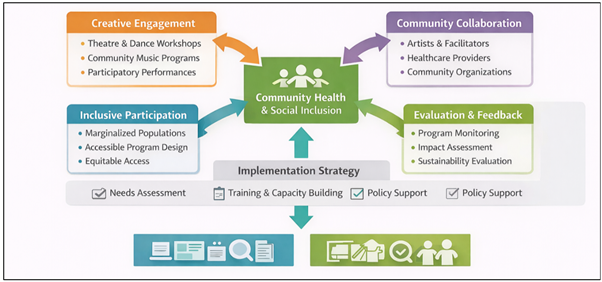
Figure 2
Proposed Framework
for Community Health through Performing Arts
5.4. Role of Technology and Digital Platforms
The digital technology has greatly increased the potential in conducting the performing arts engagement and community participation. The virtual performance, virtual collaboration tools, and online platforms enable artists and communities to interact despite geographical borders. The technologies allow the participation of people who might be restricted to physical activity due to one reason or another (immobility, geographic distance, etc.), or be involved into artistic activities. Community performances are also spread to broader audiences with the help of digital platforms. Live streaming, sharing on social media, and tools of digital storytelling enable communities to present their artistic works and create awareness regarding social issues. It is also possible to stimulate cross-cultural interaction and cooperation of communities in various regions with the help of these platforms.
5.5. Implementation Strategy for Community-Based Arts Programs
The proposed framework should be implemented carefully, with the participation of other people, and the distribution of resources. The initial one is the community needs assessment that will determine the local health issues, resources, and possible groups of participants. The knowledge of community needs can assist in making sure that arts programs can cover the issues of social and health concern. The following involves formation of joint ventures among artists, health care providers, community organizations, and schools. Such partnerships offer the skills and resources to create useful arts-based initiatives. Indicatively, healthcare workers may give counsel on mental health issues as artists establish artistic means of conveying the messages. Training and capacity building programs must then be provided to the facilitators and community leaders after the development of the programs. The training will ensure that the facilitators are equipped with skills to handle the participatory arts activity and to facilitate the participants to have a supportive environment.
The last activity is monitoring and evaluation that is done to evaluate the program effectiveness and improvements. The outcome of the evaluation can be used to develop future programs and also to extend other successful programs to other communities.
6. Expected Outcomes and Impact
When performing arts are incorporated in community health programs, it could have several social, psychological, and cultural outcomes. Such artistic processes as theatre, music, and dance form open spaces in which people can communicate, be creative, and establish valuable relationships. Such activities lead to better mental health, community bonding, and community strength. Through fostering teamwork and engagement, the performing arts programs can be used to solve problems like social isolation, cultural alienation, and mental health problems in communities.
6.1. Improvement in Community Mental Health
The emotional expression, creativity and stress relieving are the opportunities that performing arts programs give. Theatre performance, music workshops, dancing are some of the activities that enable the participants to express feelings and experiences through the supportive environment. Such activities are capable of alleviating stress, making one feel better, and raising his/her psychological state.
6.2. Strengthening Social Inclusion and Cultural Identity
Through performing arts programs, social inclusion can be encouraged through the blending of people of different cultural and social groups together through mutual creative experiences. Participatory performances may also be based on traditional musical performances, dancing and telling of stories that represents cultural heritage of community members.
6.3. Community Empowerment through Participatory Arts
The participatory arts programs empower the communities because it motivates them to participate actively in both creative and social activities. In the course of the work, the participants are confident, learn how to communicate and build their relationships with each other.
6.4. Policy Implications for Public Health and Cultural Development
There are significant implications of the performing arts programs implementation on the public health and cultural policies. Arts-based interventions can be incorporated in health promotion activities by governments and other organizations to deal with social determinants of health including isolation and community involvement.
7. Conclusion
Performing arts have presented themselves as an effective channel of community health promotion, social integration and cultural participation. This paper examined the possibilities of using the performing art, such as theatre, music, dance, and participatory performance, as the means of enhancing the emotional health and building social networks in communities. In contrast to health promotion approaches that are commonly used in the traditional model that mainly utilize the dissemination of information, performing arts promote the active participation, the use of creativity as well as interpersonal communication. It is these attributes that render arts-based solutions, especially effective when dealing with complex socially related problems, like mental health problems, social isolation, and cultural marginalization. As the literature review indicated, there is an increasing amount of research that proves that performing arts have a beneficial effect on psychological health, social integration, and empowerment of the community. Different forms of arts-based interventions such as theatre-based awareness, community music programs, dance therapy programs etc. have demonstrated great possibilities to enhance emotional expression, stress reduction, and interpersonal relationships. The comparative analysis also indicated that the performance arts strategies have a number of contributions to the health outcomes of the community. Theatre programs are used to permit social dialogue and awareness, music programs promote social bonding, and dancing programs promote physical and emotional health. Based on the above insights, this research proposed a conceptual model that integrates performing arts practice in the presence of the community and collaborative efforts. The proposed model emphasizes the creative participation, open-mindedness, and continuous review procedures to ensure the feasibility and sustainability of the programs which are related to arts. The framework aims at recruiting artists, community organizations, healthcare workers, and policymakers so that they can establish enabling conditions in which people will experience meaningful arts experiences in the course of addressing community health problems. Despite the high potential of performing arts initiatives, there are still several challenges including the situation when resources are scarce, the barriers of accessibility, and issues of evaluating the outcomes of the programs. In an effort to curb such challenges, it is necessary to possess an improved institutional support, inter-disciplinary coordination and development of systematic methodologies of assessment.
CONFLICT OF INTERESTS
None.
ACKNOWLEDGMENTS
None.
REFERENCES
Agres, K., Foubert, S., and Sridhar, M. (2025). Movin’ and Groovin’ for Wellness: A Randomized Controlled Trial of a Music and Dance Intervention for Mental Health. Frontiers in Psychology, 16, 1–14.
Balaji, A., Balanjali, D., Subbaiah, G., Reddy, A. A., and Karthik, D. (2025). Federated Deep Learning for Robust Multi-Modal Biometric Authentication Based on Facial and Eye-Blink Cues. International Journal of Advances in Computer Engineering and Communication Technology, 14(1), 17–24. https://doi.org/10.65521/ijacect.v14i1.167
Blagojević, J., Nikolić, M., and Petrović, T. (2025). Youth Choir Participation and Well-Being: Impacts on Social Inclusion and Identity. Behavioral Sciences, 15(10), 1–12. https://doi.org/10.3390/bs15101337
Delattre, L., Martin, J., and Dubois, C.
(2024). Social Dance and Mental Health: A Narrative
Review on Mood and Depression. Mental Health and Social Inclusion, 28(3),
214–223.
Du, Y., Zhang, H., and Li, X. (2025). Dance Interventions and Well-Being Outcomes Among Youth: A Scoping Review. Research in Dance Education, 26(1), 35–50.
Elkarif, H., Li, H., and Wong, S. (2025). Tele-Drama Therapy for Community-Dwelling Older Adults: A Randomized Controlled Trial. The Journal of Positive Psychology, 20(2), 250–263. https://doi.org/10.1080/17439760.2024.2427581
Forbes. (2025). Community Music and Social Prescribing: Integrating Arts Participation into Healthcare Pathways. Music and Science, 8, 1–10.
Golchha, R., Khobragade, P., and Talekar, A. (2024). Design of an Efficient Model for Health Status Prediction using LSTM, Transformer, and Bayesian Neural Networks. In 2024 International Conference on Innovations and Challenges in Emerging Technologies (ICICET) ( 1–5). https://doi.org/10.1109/ICICET59348.2024.10616353
Hazarika, I., Khalfan, J., Ahmed, M.,
and Yousif, A. (2019). Role of HR Metrics in
Enhancing Firm Performance of Selected UAE Airline Companies. Academy of
Strategic Management Journal, 18(6), 1–8.
Heard, V., Camlin, M., and Manton, A. (2024). Community Music as a Strategy for Addressing Loneliness and Social Marginalization. Arts and Health, 16(2), 145–158.
Jadhav, K. D., Majumdar, R., Ahmad Khanday, S., Sarvade, N., Musaev, U., and Akhmedov, S. (2025). Mapping Collaborative Governance for Effective Community Engagement in Urban Hygiene Campaigns. Waterlines, 43(1), 34–43. https://doi.org/10.3362/waterlines.v43i1.36
Kodama, M., Tanaka, K., and Saito, Y. (2024). Senior Theater Programs and Active Aging: Effects on Depression and Physical Frailty. International Journal of Environmental Research and Public Health, 21(10), 1–14. https://doi.org/10.3390/ijerph21101289
McDonald, S., Gee, T. W., and O’Neill, R. (2024). Theater-Based Interventions and Cognitive Health in Aging Populations: A Systematic Review. The Gerontologist, 64(4), 598–610.
Mirajkar, G., Garg, L., Alagirisamy, M., and Shinde, S. (2023). Image Processing in Toxicology: A Systematic Review. In A. Mirzazadeh et al. (Eds.), Science, Engineering Management, and Information Technology (SEMIT 2023) (Vol. 2198). Springer. https://doi.org/10.1007/978-3-031-72284-4_10
Piccolo, M., Frischen, R., and Saarikallio, L. (2025). Communal Music Listening and Emotional Recovery Following Social Exclusion. Psychology of Music, 53(1), 78–92.
Rawandale, U. S., Ganorkar, S. R., and Kolte, M. T. (2024). Variable-Bandwidth Noise Filtering Mechanism for the Hearing Aid System. In A. Katti and R. K. Chourasia (Eds.), Advances in Photonics and Electronics ( xx–xx). Springer. https://doi.org/10.1007/978-3-031-68038-0_13
Saar, T., Gordon, A., and Lewis, M. (2025). Inclusive Theater Programming for Individuals with Developmental Disabilities. Research in Developmental Disabilities, 150, 104–115.
Sonke, J., Lee, S., and Rollins, J. (2025). Arts Participation, Social Cohesion, and Community Well-Being: An Integrative Public Health Review. Frontiers in Public Health, 13, 1–15. https://doi.org/10.3389/fpubh.2025.1589693
Vasanthan, R., and Nandhini, R. (2014). Activities Based Content for Language Teaching at the College Level: An Indian Classroom Perspective. Man in India, 94(4), 987–995.
Veeravalli, S. D., Patil, P. A., Porwal, T., Karwande, V. S., Budhewar, A. S., and Nanche, B. M. (2025). Adaptive-Personalised Federated Deep Learning for Privacy-Aware NAFLD Screening. In International Conference on Innovations in Intelligent Systems: Advancements in Computing, Communication, and Cybersecurity (ISAC3 2025). https://doi.org/10.1109/ISAC364032.2025.11156569
Waugh, J., Wilson, L., and McGill, P. (2024). Dance Programs and Well-Being in Older Adults: A Scoping Review. BMC Public Health, 24, 1–16.
|
|
 This work is licensed under a: Creative Commons Attribution 4.0 International License
© ShodhKosh 2026. All Rights Reserved.