ShodhKosh: Journal of Visual and Performing ArtsISSN (Online): 2582-7472
|
|
Data Analytics in Audience Engagement and Cultural Participation
Keerthika K 1 , Shalini E 2
 , Rajashri CK 3
 , Divya N 4
 , Anandhi D 5
 , Jiang Qingming 6
1 Department
of Computer Science, Meenakshi College of Arts and Science, Meenakshi Academy
of Higher Education and Research, India
2 Department
of Computer Science, Meenakshi College of Arts and Science, Meenakshi Academy
of Higher Education and Research, India
3 Assistant Professor, Department of Computer Science, Meenakshi
College of Arts and Science, Meenakshi Academy of Higher Education and Research,
India
4
Meenakshi College of
Physiotherapy, Meenakshi Academy of Higher Education and Research, India
5 Assistant Professor / Research Scientist, Department of
Biochemistry, Meenakshi Ammal Dental College and Hospital, Meenakshi Academy of
Higher Education and Research, India
6 Faculty of Education, Shinawatra University, Thailand; Research Fellow, INTI International University, Malaysia
|
|
|
ABSTRACT |
|
|
The digital
revolution in the cultural and creative industries is the factor,
which has radically changed the way the audience communicated with the
cultural content and organizations. Digital platforms are becoming a more and more significant instrument which cultural
organizations utilize in order to connect with more
people, become more participatory, such as websites, social media, mobile
applications, cultural archives on the Internet. It has been observed that
data analytics are a huge source, in this case, to understand the audience
behavior, increase the engagement strategy, and evidence-based
decision-making. The paper research analyzes how data analytics is used in
the engagement and cultural participation of the audience and further offers
a comprehensive outline of data analytics that should be used by culture
institutions. The first analysis of the paper is the currently existing
data-driven models of engagement, including audience analytics frameworks,
smart cultural analytics systems, and engagement modeled on
the basis of personalization. The elementary limitations and gaps in
research will be conducted through comparison analysis to identify gaps in
research in the current systems. Based on such findings, a hierarchical data
analytics framework can be proposed, which includes many components,
including cultural data sources, data collection and data integration module,
scalable data storage platform, analytics and machine learning, visualization
dashboards, and decision-making operations. The proposed framework can enable
cultural institutions to accumulate, process, and analyze the audience data
on different online platforms to generate meaningful insights into the
audience preferences and activity patterns. Evaluation and key performance
indicators measurements are also provided to show whether the given framework
was successful in improving the outcomes of cultural participation and
engagement. The results prove that data-driven cultural analytics has the
potential to enhance audience engagement, strategy-oriented approaches to
cultural decisions significantly, and the sustainability of cultural
organizations. The other implementation challenges are also discussed in the
study and the future research directions are outlined as applying artificial
intelligence, predictive analytics, immersive technologies, and smart
cultural ecosystems. |
|||
|
Received 05 December 2025 Accepted 26 March
2026 Published 03 April 2026 Corresponding Author Keerthika
K, keerthikak@maher.ac.in DOI 10.29121/shodhkosh.v7.i3s.2026.7315 Funding: This research
received no specific grant from any funding agency in the public, commercial,
or not-for-profit sectors. Copyright: © 2026 The
Author(s). This work is licensed under a Creative Commons
Attribution 4.0 International License. With the
license CC-BY, authors retain the copyright, allowing anyone to download,
reuse, re-print, modify, distribute, and/or copy their contribution. The work
must be properly attributed to its author.
|
|||
|
Keywords: Cultural Data Analytics, Audience Engagement,
Cultural Participation, Digital Transformation, Cultural Institutions,
Machine Learning, Smart Cultural Ecosystems |
|||



1. INTRODUCTION
1.1. Background of Audience Engagement in Cultural and Creative Industries
The cultural and creative industries are characterized by audience engagement, which entails the activities that link people to the art, culture and heritage experiences. Cultural institutions such as museums, theatres, music festivals, art galleries and heritage centers rely on the involvement of active audience to sustain their programs and generate cultural awareness. The previous approaches to evaluating the audience engagement were rather premised on the actual attendance of cultural events, sales of tickets and workshops or attendance of exhibitions. The behavior and preference of the audience was not really provided in such traditional measurements. Cultural interaction has also transformed a great deal due to the active development of digital technologies. Culture institutions no longer only interact with the audience in the physical realm, but also through the internet, social media, streaming platforms, virtual exhibition, and online cultural community. This enables agencies to reach a greater number of individuals and distribute cultural participation across geographical boundaries through such channels. This has led to the multidimensional process of interaction with the audience which involves physical and online contacts. Another consequence of the emergence of the digital technologies, cultural entities have changed the way they collect and digest information pertaining to audiences. Through online communications, there will be huge volumes of data that will record the favors of the audience, patterns of attendance and participation, and the level of involvement. Cultural institutions have some new opportunities to know their audiences better in these sources of data and create programs concerning their interests. This has resulted in increased importance of digital technologies and analytical tools integration, in the improvement of the level of the audience and making cultural initiatives more sustainable.
1.2. Importance of Cultural Participation in Society
On a society level, cultural engagement helps to maintain and pass cultural traditions between generations. Cultural institutions serve as custodians of cultural heritage as they host events, exhibitions as well as educative programs which present artistic and cultural expressions. Such activities assist the communities to retain their cultural identity as they continue to adjust to the dynamic social circumstances. Moreover, cultural participation helps to develop economic amenities by expanding the cultural and creative industries. Tourism is drawn to cultural events, employment opportunities are created and the local economies are energized. Cultural participation is becoming a priority in the governments and among policymakers as a means of social development and economic sustainability. Thus, the factors that can contribute to the engagement and participation of the audience have become the topical direction of the study of cultural management and policy Botangen et al. (2018).
1.3. Role of Data Analytics in Understanding Audience Behavior
Over the last several years, data analytics has become an effective method of evaluating the involvement and the interest of the audience in cultural activities. Data analytics is a process of channeling large amounts of data systematically, processing and interpreting the data in order to establish patterns, trends, and other valuable insights. Within the cultural institution setting, data analytics can be applied, and the aspects of audience demographics, the frequency of participation, the channels of engagement, and the patterns of behavior can be analyzed. Organizations in the culture sector are increasingly drawing data that is accumulated in different formats including ticketing systems, social media, websites, mobile applications and online feedback systems. These information sources are useful in terms of the interests of the audience, their preferences, and patterns of interaction. Using the data mining, machine learning, and sentiment analysis tools, the institutions will be able to uncover information that can inform them to come up with certain engagement strategies. An example to explain it is that social media analytics can be utilized to learn how the audience reacts and perceives cultural activities, and web analytics can be utilized to trace the interactions of the visitors of the digital cultural platforms. Similarly, the ticketing information will also be in a position to provide an insight view on the attendance trend, demographics, and buying behaviors. Having a mix of such data sources, the cultural organizations will manage to create one full picture of the interaction with the audience and make the right decisions that will allow cultural participation to be improved He et al. (2020).
Figure 1

Figure 1 Conceptual Framework of Data Analytics in Audience Engagement
1.4. Motivation for Data-Driven Cultural Management
The increased complexity of the modern audience during the online era has provoked the cultural organizations to collaborate with data-rich management. According to the cultural management conventional decision-making approaches, it applies intuition, small surveys or attendance history. Though these methods provide some information, they may not provide an explanation of the dynamic nature of the modern audience interest. Data-driven cultural management enables the cultural institutions to make decisions based on empirical evidence informed by big data. The data analytics will assist the organizations to determine future trends of the audience, measure the success of cultural programmes and streamline the marketing strategies. The approach would help organizations use their resources better and develop the programs that would be interesting to the different categories of viewers. Another reason why data analytics should be implemented is the need to make the audience and their access more inclusive. The patterns of participation can allow the cultural institutions to define the individuals representing the underrepresented groups and define activities which will be able to bring more people into the community. The cultural experience individualization can be facilitated by data-driven strategies as well to enable organizations to change events, recommendations, and communication strategies to suit the preferences of the audience Lai et al. (2022).
1.5. Research Objectives and Scope of the Study
The most important objective of the research is the analysis of how the data analytics would be utilized in order to get more audience and cultural engagement. The paper shall discuss how data-driven approaches can help cultural institutions to understand how to read the behavior of the audience, benefit the engagement process and make the culture inclusive.
In particular, the following objectives are covered in the research:
1) To investigate the existing possibilities of analyzing the audience engagement in cultural facilities.
2) To explore the opportunities of applying data analytics technologies to understand the behavior of the audience.
3) To find out weaknesses and constraints that are present with the current audience engagement systems.
4) To recommend an abstract model of data analytics application in cultural participation approaches.
5) To determine how data-based solutions can potentially impact cultural interaction and engagement.
The field of research will be the cultural organizations such as museums, performing arts organizations, heritage centres, and digital cultural organizations. The paper is devoted to the tools of analysis that can help analyze the audience engagement including data mining, machine learning, and social media analytics.
2. Background and Related Work
2.1. Evolution of Audience Engagement in Cultural Institutions
The last several decades have altered the audience engagement process as it has been altered by the use of digital technologies and shift to the expectations imposed on an audience. Traditionally, cultural organisations (e.g., museums, theatres, art galleries and heritage centres) were usually founded on passive involvement of the audience that came to visit a specific event, exhibition, or performance without being engaged with the material. The interactions were primarily measured by the number of attendance, ticket and the number of actual visitors. The cultural institutions have been preoccupied with the interactive and participatory models of engagement owing to the evolution of the digital media and communication technologies. In the modern world, individuals require immersion and interactivity during the exhibition and the means of experiencing cultural content through digital medium. The assistance of such technologies as social media, mobile applications, and virtual performances has helped cultural institutions to reach a greater number of individuals who do not necessarily have to be in their physical locations. This change has also changed the manner in which the institutions measure the attention of the audience. Besides the attendance statistics, institutions also review the online statistical measures of online engagement, i.e. use of social media, number of visits to the sites, viewing streams, and attendance per the online cultural programmes. Such measures provide a more in-depth account of the interaction of audiences and cultural contents.
2.2. Digital Transformation in Cultural and Creative Sectors
This has brought about a significant influence on the way cultural contents are produced, distributed and consumed through the digitalization of cultural and creative industries. To achieve accessibility, reach more audiences and create superior user experiences, cultural organizations begin to employ the digital technologies as well. Some of the technologies that are already introduced in cultural platforms are the virtual reality (VR), augmented reality (AR), artificial intelligence (AI), and big data analytics, as well as cloud computing. This has contributed to the fact that cultural participation is not a physical location only. Digital platforms have also facilitated the flow of culture content everywhere in the world. Online streaming services, digital archives and cultural sites give access to cultural resources and cultural events to the viewers in different geographical locations thus allowing them to become members of the site and participate in cultural events remotely. This universal connectivity has amended the extent of the cultural institution, and this has been cross-cultural communication. The other major problem of the digital transformation is the emergence of the digital cultural ecosystem, in which different stakeholders, such as artists, audiences, cultural institutions, and policymakers, interact with each other through the digital platforms. These ecosystems generate very large volumes of information that can be analyzed to get to know the preferences of the audience and the way they engage. The consequent effect is that digital transformation exemplified by figure 2 has introduced new opportunities of applying data analytics in cultural management and audience engagement Liang et al. (2021).
Figure 2

Figure 2 Digital Transformation in Cultural and Creative Sectors
2.3. Role of Data Analytics in Cultural Research
Audience behavior is one of the main areas in which data analytics can be applied in cultural research. Through the examination of the collected data on the ticketing systems, online and social media communication, researchers can determine the aspects that affect the participation of the audience in cultural events. These lessons can guide cultural organizations to create specific engagement strategies and enhance the satisfaction of the audience. Predictive modeling is also enabled by data analytics, and the institutions can predict a large number of people to come, the popularity of events, and their engagement. Predictive models work with past data and machine learning algorithms to determine the future trends in cultural participation. This aspect enables cultural institutions to organize and plan events better in addition to resource allocation. Sentiment analysis is another application of the data analytics that involves exploring the opinion of the audience in form of posts and reviews on social networks, comments on websites, and so on. Sentiment analysis assists institutions in knowing the ways the audiences perceive cultural events, exhibitions and performances. Through the evaluation of positive and negative feelings, one can help cultural organizations to make their programs better and improve the audience experiences Panchal and Mago (2024).
2.4. Audience Behavior Modeling and Participation Patterns
It is important to learn how the audience conducts itself so as to create effective strategies of cultural engagement. Audience behavior modeling is the research of participation patterns and the factors of cultural involvement. Some of the variables that affect the audience engagement on the cultural activities are demographic variables, socio-economic status, cultural interests, facilities of the cultural activities as well as the presence of digital platforms. Investigations into those variables can be performed using data analytics methods that enable researchers to find the correlation between the audience features and the trends of participation. Audience segmentation is one of the commonly applied analysis tools to model the audience behavior. Audience segmentation is where audiences are separated into specific groups by their uniform characteristics like age, interests, frequency of participation, and channels of engagement. As an illustration, the younger generations can be more active on digital cultural platforms, and the older generations can enjoy classic cultural events. Network analysis is the other significant type of analysis that can be used to study the interaction of the audience with cultural content using the digital platform. The social media networks, web communities and digital discussion forums can offer critical information regarding the audience engagement trends and cultural discourse. The temporal analysis is also applied to observe the changes in the audience participation with the time. Through the analysis of previous data, scholars can determine the seasonal changes, cycles of popularity of various events, and changes in the preferences of the audience. Such insights can be used to create programs in cultural institutions that the audiences anticipate and can participate in a large number.
2.5. Review of Existing Data-Driven Audience Engagement Systems
A number of cultural organizations and research projects have instigated data-driven systems with the aim of enhancing the interaction with the audience. Such systems usually combine several elements of data including ticketing databases, web analytics, social metrics, and user feedback system. The implementation of customer relationship management (CRM) systems in institutions of culture is one of the most common methods. CRM systems are useful in assisting organizations to monitor engagement with the audience, facilitate event subscriptions, and evaluate patterns of participation. Such systems offer useful data on the preferences of the audience and assist the institutions in creating personalized communication products. Social media analytics tools are another popular solution and analyze engagement statistics, including likes and shares, comments and the number of followers. The social media analytics assists the cultural organizations to gain insights into the publicity on the cultural content on the social media and provide an insight into the trending topics about the cultural events. Also, there are cultural institutions that have embraced big data platforms which combine data of various digital sources to central data repositories. Such platforms allow using more complex analytics features, including machine learning, predictive modeling, and real-time engagement analysis Song et al. (2019). Although these improvements have been made, there are still problems in most of the available systems, including limitations on the integration of data, data privacy, and complexity of analytics. Cultural institutions have a tendency of failing to synthesize information that comes in different forms into cohesive analytical systems. In addition, the ethical issues of data privacy and responsible data use are also still major issues in deploying data analytics in cultural settings. Thus, it is increasingly necessary to have in-depth analytical systems that combine various sources of data, sophisticated analytics algorithms, and ethical approaches to data management to increase the audience involvement and cultural engagement.
Table 1
|
Table 1 Summary of Recent Research on Data Analytics in Audience Engagement |
|||
|
Method / Dataset |
Techniques Used |
Key Findings |
Limitations |
|
Social media data from
multiple museums Wen (2021) |
CNN-based image
classification |
AI models improved user
participation, sharing rates, and interaction in museum social media
campaigns |
Limited to image content
analysis and specific platforms |
|
Case study of three Italian
museums Yan and Li (2023) |
Social media strategy
analysis |
Social media significantly
influences cultural participation and audience outreach |
Small institutional sample
size |
|
Review of archival and
museum data analytics practices Zhang et al. (2022) |
Data analytics, machine
learning, web analytics |
Data analytics enhances
public programming, access, and engagement in cultural institutions |
Data quality and privacy
challenges remain significant |
|
Entertainment platform
datasets Cheng and Li (2024) |
Big data analytics,
recommendation systems |
Audience behavior
analysis enables personalized content recommendation and revenue optimization |
Focus mainly on
entertainment platforms rather than cultural institutions |
|
Visitor interviews and
observational analysis Dong et al. (2022) |
Qualitative analysis of
museum audiences |
Cultural background
influences visitor engagement and perceptions of digital museums |
Limited dataset and
qualitative approach |
|
Facebook data from cultural
institutions Dinkar et al. (2025) |
Social media analytics and
engagement metrics |
Data-driven evaluation of
social media performance improves audience interaction |
Focus restricted to Facebook
platform |
|
Digital heritage
communication systems Hazarika (2014) |
AI-driven communication
analysis |
AI-enhanced digital heritage
platforms increase content dissemination and public interaction |
Requires large training
datasets |
|
Survey of digital heritage
platform users Huang (2023) |
Structural equation modeling and neural networks |
AI-generated cultural
platforms increase offline cultural participation intentions |
Privacy concerns and
perceived risks affect participation |
|
Cultural heritage
storytelling systems Zheng (2023) |
Digital storytelling
frameworks |
Interactive storytelling
increases cultural engagement and audience immersion |
Limited analytics
integration |
|
Online audience engagement
datasets Karule et al. (2025) |
Web analytics and content
quality analysis |
Digital content features
significantly influence audience engagement behavior |
Focus on online news
audiences rather than cultural events |
As recent studies in table 1 show, the use of data analytics, artificial intelligence, and social media analytics has been growing to examine the engagement of the audience to cultural settings. The research points to the increasing importance of digital platforms, machine learning models, and big data systems to study the pattern of participation and audience behavior analysis. Indicatively, convolutional neural networks and other AI-driven techniques have been used to maximise the content of museum social media and participation by the audience. On the same note, studies into cultural institutes have shown that social media tactics and digital channels of communication prove to have a strong impact on cultural engagement and reach out to their audience. ther studies also reflect the significance of big data analytics and recommendation services in helping people to comprehend their preferences and provide them with personalised cultural experiences. In spite of all these developments, the literature also cites a number of challenges such as the lack of data integration, privacy issues, and the inability of the available systems to integrate physical and digital engagement data.
3. Data Analytics Technologies for Cultural Engagement
Cultural institutions have been transformed at a very high rate due to the digital transformation, which has led to a high availability of data related to the audience. The digital platforms, ticketing programs, social media communications, and internet communication channels have enabled museums, theaters, galleries, and cultural organizations to accumulate big volumes of information. Technologies in data analytics help institutions to convert this data into valuable insights that facilitate strategic decision-making and help to attract more audience. Through the combination of big data technologies, machine learning algorithms, social media analytics, visualisation tools and cloud computing platforms, cultural institutions will be in a better position to comprehend the behavior and preferences of the audience as well as the patterns of participation and so on. This part explains the major technological elements that facilitate data-driven cultural interaction.
Figure 3
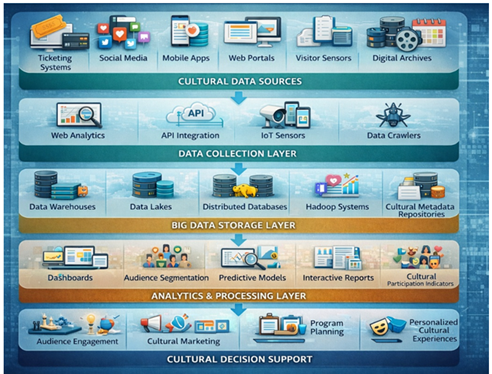
Figure 3 Data Analytics technologies for cultural Engagement
3.1. Big Data and Cultural Data Sources
The cultural institutions can use big data technologies to handle large and diverse datasets that are produced during audience interactions. The sources of cultural information are numerous digital and physical such as online ticketing systems, interactions on the websites, social media, mobile apps, visitor tracking, and digital archives. These sources of data can offer important insights about the audience demographics, engagement trends, attendance trends, and participation behavior. The cultural industry is distinct as big data with the five traditional big data dimensions of volume, velocity, variety, veracity, and value. Cultural organizations have to combine both the structured (sales of the tickets, surveys), semi-structured (logs of the websites, metadata), and the unstructured (social media posts, images, videos) data. The institutions are able to process these datasets effectively and aid in making evidence-based decisions with the use of big data infrastructure, including distributed databases and analytics engines.
3.2. Audience Data Collection Methods
One of the major steps in cultural analytics is the collection of audience data. Cultural institutions employ both the traditional and the digital means to collect information concerning the participation and involvement of the audience. The conventional methods involve surveys, feedback forms, interviews and attendance record. Although such approaches offer qualitative information, they can be small and outdated. Contemporary cultural analytics is based on automated methods of collecting data web analytics, monitoring mobile applications, interaction with QR codes, RFID-based visitor monitoring and online ticketing Karwande et al. (2024).
3.3. Machine Learning for Audience Behavior Analysis
Machine learning applications are applicable in the analysis of the pattern of audience engagement. By locating cultural organizations on the basis of predictive models, clustering algorithms and recommendation systems, it is possible to determine the audience segments, predict the attendance, and cultural experience customization. Due to frequency of participation, interests and demographics, the algorithms of clustering can cluster the audience. The predictive models are able to factor in the attendances of an event or demand of the tickets and assist the institutions to optimize their scheduling and marketing process. The recommendation systems can also suggest exhibitions, performance or cultural events to the targeted audience depending on their needs. Other behavioral patterns that are identified based on machine learning models are repeat visits, content preferences, and strength of engagement. Such observations can help cultural organizations create audience-oriented outreach and improve the retention of the audience.
3.4. Social Media Analytics and Sentiment Analysis
The social media have been a highly significant medium of cultural communication and contact with the audience. Cultural organizations are going more towards them as Facebook, Instagram, Twitter, and YouTube are such platforms that popularize events, spread the artistic materials and communicate with the audience. The instruments of social media analytics help the institutions to analyze the interactions and rate of engagement and also to analyze the content performance. Such techniques as sentiment analysis rely on the principles of natural language processing (NLP) to discover whether the audience responded to the cultural content in a positive, negative or neutral manner. The insights give organizations the opportunity to know the perception of the audiences, evaluation of the marketing campaigns, and improvement of the communications strategies. In this manner, cultural institutions have the chance to customize their programming and outreach strategies to the audience interests by monitoring the conversation and interaction trends on the internet.
3.5. Data Visualization Techniques for Cultural Insights
The analysis of data in forms of visualization is highly significant in the process of communicating the analytical results to cultural managers, curators and policymakers. Using visualization methods helps simplify data, which is complicated, into simple graphical representations that can be utilized in business decisions. Some of the commonly used visualization techniques include dashboards, interactive charts, heat maps, network diagrams and audience segmentation graphs. A good visualization may assist the decision-makers in discovering the tendencies in participation, the performance of the marketing, and measuring the success of the cultural programs.
3.6. Cloud-Based Cultural Data Platforms
Cloud computing is scalable in terms of data storage, processing and analysis of cultural data. The cloud applications also allow the cultural institutions to handle large quantities of data without having to have large amounts of hardware infrastructure on site. These platforms are distributed storage platforms, real-time analytics engines, and work groups of data sharing environments. Cloud computing built cultural analytics platforms enable institutions to integrate different data sources, do advanced analytics and deploy audience engagement apps. The cloud computing will also assist in the process of obtaining a remote access to the cultural information in order to enable the researchers, curators, and cultural managers to collaborate irrespective of the geographic location. As the digital approach of the cultural institutions grows, cloud-based digital analytics solutions will become the center of the technology in aiding in developing sustainable data-driven cultural systems Liang et al. (2022).
4. Comparative Analysis of Existing Data-Driven Engagement Models
A variety of models of audience engagement founded on the data have been developed as a result of the widespread introduction of digital technologies in cultural organizations. These models will be looking into the behavior of the audience, augment the cultural involvement and aid in the strategic decision making in the cultural organizations. The literature presents different solutions such as the audience analytics models, smart cultural systems, the personalized cultural experience models. This part is a summary of these techniques and a comparative review of the techniques to determine the strengths, limitations of these techniques as well as the gaps in the study.
4.1. Data-Driven Audience Engagement Frameworks
The audience engagement frameworks are data-driven and aimed at using audience data to boost cultural participation and better audience experience. These structures usually combine sources of data including ticketing, Web analytics, social media communications, and event attendance history. This is then analyzed using analytical tools to derive information on the demographics of the audience, attendance patterns and the level of engagement. These frameworks have been applied by many cultural institutions to come up with specific marketing strategies as well as enhance communication with audiences. Organizations can use the historical engagement data to reveal the trends in audience preferences and optimize event programming based on the trends. Nevertheless, a lot of the current frameworks pay primary attention to descriptive analytics but do not offer sophisticated predictive analytics to estimate the audience behavior. Lyu (2024)
4.2. Smart Cultural Analytics Systems
Smart cultural analytics systems will enhance the existing data-driven frameworks with high-tech tools, including machine learning, artificial intelligence and real-time analytics. The data collected and processed in these systems are a variety of digital sources such as mobile apps, IoT-based visitor systems, and internet-based engagement systems.
The latter systems allow cultural institutions to track the interest of the audience in real-time and produce insights. To give an example, intelligent museums may track movement patterns of the visitors and make changes on the exhibition layouts. In a similar manner, cultural organizers of events can utilize analytics dashboards to assess attendance at live events. In spite of such benefits, smart cultural analytics systems may demand large amounts of technological infrastructure and technical expertise, which could restrict their use by smaller cultural institutions.
4.3. Audience Experience Personalization Models
Models of personalization of the experience of the audience are designed to improve the cultural participation of the audience offering them tailored cultural products, depending on their preferences and behavioral tendencies. These systems apply recommendation algorithms, collaborative filtering systems and user profiling to offer individualized recommendations to exhibit, performance or cultural programs. Such models are currently being used by digital streaming platforms and online cultural portals to customize the content based on the interests of the individual audience. The personalization enhances the satisfaction of the users and engagement through offering culturally related content. Nevertheless, these models also have the issues concerning the privacy of data, the biasness of algorithms, and the lack of diversity in the exposure to various cultures as these recommendation systems can support the maintenance of preferences instead of promoting the new cultural experience.
4.4. Comparative Evaluation of Existing Models
To get a closer insight into the efficiency of those practices, one can compare the key features of the current data-driven engagement models by a series of appraisal standards such as data integration, analytical power, the level of personalization, scalability, and the complexity of implementation.
Table 2
|
Table 2 Comparative Analysis of Data-Driven Audience Engagement Models |
|||||
|
Model Type |
Data Integration |
Analytics Capability |
Personalization |
Scalability |
Implementation Complexity |
|
Data-Driven Audience
Engagement Frameworks |
Medium |
Descriptive Analytics |
Low |
Medium |
Low |
|
Smart Cultural Analytics
Systems |
High |
Predictive & Real-Time
Analytics |
Medium |
High |
High |
|
Audience Experience
Personalization Models |
Medium |
Machine Learning-Based |
High |
High |
Medium |
|
Proposed Integrated Cultural
Analytics Framework |
High |
Advanced Predictive
Analytics |
High |
High |
Medium |
The comparison presented in table 2 reveals that traditional data-driven models offer basic analytics functionality but do not always feature the predictive modeling and personalization. Intelligent cultural analytics system is extremely analytical but demands a lot of technological infrastructure. Personalization models enhance the experience of the audience but may not be adequately able to incorporate various cultural data. Thus, a universal framework encompassing the use of data analytics, personalization, and scalable infrastructure is necessary. Rawandale et al. (2023)
Figure 4

Figure 4 Comparative Evaluation Graph
5. Proposed Data Analytics Framework for Audience Engagement
The fast growth of the digital technologies has opened new opportunities to cultural institutions to learn and interact with their audiences. Nevertheless, the current audience analytics solutions tend to work disjointedly where the data sources, analytical solutions, and engagement plans are not entirely seamless. In order to overcome these shortcomings, the proposed research offers a suggested data analytics model of audience engagement that will combine several cultural data streams, sophisticated analytics methods, and decision-support systems. The suggested framework will allow cultural institutions like museums, galleries, performing arts institutions, and cultural heritage agencies, to gather, process and analyze audience data in a structured and scalable form. Steinert and Dennis (2022)
5.1. Components of the Proposed System
The proposed system includes a series of intertwined components that all enable influencing the audience in accordance with the data. Data Sources: It has a number of sources which are input to the cultural data ecosystem and they are ticketing, visiting websites, social media, digital archives, mobile applications, and visitor tracking technology. The sources generate bulk numbers of structured and unstructured data on contribution by the audience. Data Collection and Integration Module: Data collection module receives data on different platforms and centralizes it in one repository. The data gathering systems are APIs, web analysis tools, social networking surveillance tools, and sensor tracking technology. It is an effective storage solution to manage a great deal of data and conduct advanced analytics. Analytics and Machine Learning Module: This is a module that is utilized to analyze data by using machine learning algorithms and statistic methods. Audience segmentation, sentiment analysis, predictive modeling and identification of patterns of engagement are some of the processes that are analytical.
Visualization and Dashboard System: Visualization and interactive dashboards are used to display the results of the analysis. The tools will enable cultural managers to track the engagement of the audience and to assess the effectiveness of cultural programs. Decision Support Layer: The last part of the framework is where analytical insights will be converted into actionable strategies of cultural institutions. Such insights are used in the marketing strategies, program planning and audience development initiatives. Vasanthan et al. (2019)
Figure 5
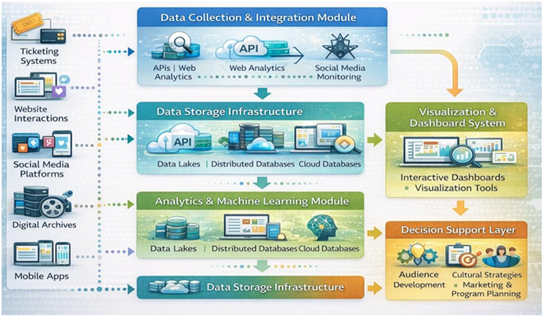
Figure 5
Proposed Data
Analytics System for Audience Engagement
The 5 figure describes the suggested data analytics system to engage the audience in cultural institutions. Audience-related data is produced by various data sources including the ticketing systems, interactions with the websites, social media, digital archives, mobile apps, and visitor tracking systems. This information is compiled and added with the help of APIs, web analytics tools, and monitoring systems in a central repository. The acquired data is stored in cloud databases and data lakes that are scalable systems to implement efficiently. One of the data processing modules is the analytics and machine learning one, which relies on audience segmentation, sentiment analysis, and predictive modeling to identify patterns of engagement. The results also present themselves as visualization dashboards, which will enable cultural managers to change the trend of the audience. Finally, the decision-support layer converts the analytical data to strategic tasks such as cultural marketing, program planning and development of audience.
5.2. Architecture of the Data Analytics Framework
The figure 5 of the proposed structure is a layered structure that can offer effective information exchange and architecture of modularity in the design of systems. The architecture contains 5 main layers that encompass data acquisition, data management, analytics processing and visualization and decision support. Data gathering layer collects data on the audience relating to the different online platforms including ticketing systems, websites, social networking sites, and cultural mobile applications. The layer establishes continuity of data collection and integration. The data management layer stores and organises the data collected in the form of organized storage facilities such as data warehouse or storage systems. That is where cleaning and preprocessing of the data is performed to ensure high quality and consistency of the data. The analytics processing layer executes sophisticated analytical operations including machine learning procedures, predictive analytics procedures and audience segmentation strategies. These tools enable a person to draw any meaningful findings out of the big data. Lastly, the decision-support layer assists the cultural managers to develop data-motivated policies to improve the degree of audience engagement, optimum cultural programming and cultural outreach programs. Xue et al. (2019)
5.3. Data Processing and Analytics Workflow
The proposed framework has a process flow that is a structured pattern of operations that transforms the raw data on cultures into real-life knowledge. The first stage is a data acquisition process where the audience-specific data will be gathered in different digital platforms and cultural interaction means. These data sets include the information related to the attendance data, Internet communications, social networks as well as visits. The second phase is preprocessing and fusion of information whereby certain dataset is filtered, manipulated, and merged to one space of analysis. Preprocessing of data also ensures quality of data as it does away with any inconsistencies, missing data and redundancy. Data analytics and modeling is the third step where machine learning and statistical analysis applications are applied to identify trends in audience engagement. This could be clustering, classification and predictive modeling. The fourth is the insight generation that is seen as the results of the analysis process interpreted in order to identify preferences of the audience, trends of participation and engagement trends. Finally, these findings are then used during the decision-support step to guide cultural institution strategic planning. Analytical insights can enable managers to create special cultural programmes, can accomplish better marketing and create better experiences on behalf of the audience.
5.4. Implementation Strategy for Cultural Institutions
To be successful, the proposed framework will be forced to be put into place strategically by integrating the technological infrastructure, organizational capacity, and policy support. The first action that the cultural institutions must undertake is creating an online data infrastructure that will be used to collect and handle the data on audiences. Cloud-based platforms and integrated data bases have the ability to provide scalable and cost-effective solutions. Second, educational institutions will apply analytics platforms and tools that will enable them to process and visualize information. These tools should be made available to the cultural managers and analysts without the need to possess much technical knowledge. Third, it is recommended that organizations invest in capacity building and training that imparts digital literacy and data analytics skill of cultural professionals. Fourth, the institutions are supposed to establish data governance policies that will ensure ethical use of data, privacy and accountability of the use of data in decision making. Finally, sustainable digital ecosystems can be established with the help of cultural institutions, technology providers, and policymakers to cultural analytics. By implementing this framework cultural organizations can deploy data analytics to create a superior interaction with the audience, more cultural engagement and make cultural sustainable in the long run. He et al. (2020)
6. Evaluation and Performance Analysis
To assess the effectiveness of the proposed data analytics system as an engaging audience engagement tool, a full-scale evaluation strategy must be used. The evaluation will be directed at the identification of the extent to which the framework helps to make the analysis of audience engagement, cultural involvement monitoring, and decision-making based on the data in cultural institutions. The section will present the evaluation criteria, key performance indicators, experimental set up, and findings of the experiment and interpretation of findings. The evaluation will aim at establishing the ability of the proposed framework to improve the ability of the cultural institutions to comprehend the audience behavior, their approach to engaging them and whether it promotes the evidenced-based management of the cultural programs.
6.1. Evaluation Criteria for Audience Engagement Analytics
The proposed framework is assessed based on several criteria that observe the ability of the system to process and analyse the cultural audience data successfully.
· Data Integration Capability: This parameter evaluates the system of the capability to combine disparate data sources such as ticketing systems, social media sites, web interfaces and digital archives. Through successful integration, it will ensure that the cultural institutions can obtain a view of the audience involvement at large. Analytical Accuracy: The level of analytical accuracy is the extent to which the system utilizes patterns in the behavior and engagement pattern of the audience. The results of the analytic work are rather reliable due to the use of machine learning algorithms and predictive models.
· Scalability: Scalability assesses the ability of the system to handle large volume of cultural information generated by different digital sources. High-quality scalability is associated with the technologies of cloud-based storage and distributed computing.
· User Accessibility: This criterion is applied to find out how the visualization dashboards and reporting tools enable the cultural managers and decision-makers to explore the analytical findings.
· Decision support effectiveness: The final evaluation criterion is the degree to which the structure can be used in the process of making strategic decisions that refer to cultural programming, audience development and marketing programs.
Figure 6
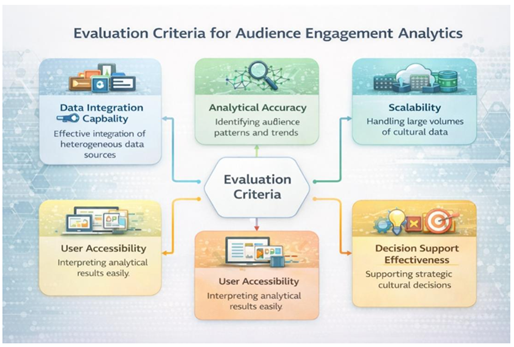
Figure 6
Evaluation Criteria
for Audience Engagement Analysis
6.2. Results and Analysis
The results of the given evaluation have revealed that the proposed framework can be a significant contribution to the increased ability of the cultural institutions to analyze the trends of audience engagement and involvement. The system data architecture will allow combining different data in one analytics platform to provide a more in-depth view of the audience behavior. The analytics module is based on machine learning, which can identify segments of the audience based on demographics, engagement, and cultural preferences. Such analytical understandings are presented in a visual manner through interactive charts and reports which can be followed by the cultural managers in real-time to monitor the trends of audience engagement. It has also been stated in the analysis that the framework improves the identification of the new engagement patterns, which in turn causes the institutions to develop the specific cultural programmes and marketing campaigns.
6.3. Discussion of Findings
As the analysis indicates, the proposed data analytics platform will be able to provide a series of advantages in comparison to the traditional audience engagement strategies. The framework enables cultural institutions to comprehend the audience behavior in a better manner because of integrating multiple sources of information and advanced analytics tools. One of the key findings is the fact that the integration of data and analytics will be significant to the ability to monitor the audience engagement pattern in the virtual as well as real cultural environment. This can result in strategic planning and better decision making. Moreover, visualization dashboards will improve the access to cultural managers with the possibility of low technical skills. However, several challenges are also observed in the appraisal. Such analytics systems require excellent digital infrastructure, the expertise of personnel and explicit data governance guidelines. The privacy problem should also be addressed by the cultural institutions and ensure that the audience data is ethically used. Regardless of these challenges, the results indicate that data analytics frameworks could prove crucial to the establishment of audience engagement systems and cultural development.
7. Expected Outcomes and Impact
Probably, the implementation of the proposed data analytics framework will present the cultural institutions with the prospects in terms of improved audience interactions, decision-making based on data, and the ability to empower cultural programs sustainability. The framework will allow institutions to understand better the behavior of audiences and involvement patterns through using advanced analytics technologies with cultural data ecosystems. The insights can be helpful in helping organizations to plan good cultural experiences, streamline planning of program, and refining strategies of cultural engagement, in general.
7.1. Enhanced Audience Engagement
Among the key effects of the proposed structure is the increased communication with the audience in the virtual and real cultural spaces. Considering the information about the contact with the audience on the sites, social media and mobile apps, cultural institutions will be capable of understanding the preferences of the audience and how they can participate in a more efficient manner. The information helps the institutions generate more intriguing displays, performances and cultural events. Personalized recommendations based on the actions of the visitors may also enhance user experiences and encourage the latter to interact with cultural content at all times.
7.2. Data-Driven Cultural Decision Making
The framework assists in making evidence-based decisions as it offers cultural managers the analytical information on the trends of audience participation and engagement. The reports and visualization dashboards enable the institutions to track the performance of the events and assess the success of the cultural efforts. Consequently, cultural organizations have the ability to make decisions that are more informed when it comes to planning programs, allocating resources and strategies of reaching the audience.
7.3. Increased Cultural Participation
Data analytics may also serve to enhance cultural engagement through assisting institutions in determining what their audience likes and does not like as well as the obstacles to engagement. Online performance and virtual exhibitions are the digital forms that increase access to culture outside of physical space, bringing audiences in different geographic areas into the cultural experience.
7.4. Long-Term Sustainability of Cultural Institutions
Data analytics can offer a long-term sustainability of cultural institutions by increasing the engagement of the audience and boosting strategic planning. Evidence-based information is useful in effective management of resources, cultural programming innovation, and enhanced relationships with viewers and audiences.
8. Challenges and Limitations
Despite the fact that data analytics has substantial opportunities regarding enhancing the audience engagement in cultural institutions, there are a number of challenges and limitations that should be taken into account. These are associated with ethical, technological infrastructure, quality and accessibility of data. These shortcomings should be addressed to achieve responsible and sustainable data-driven cultural management system implementation.
8.1. Data Privacy and Ethical Concerns
The company arranges all data informed with ethical guidelines to ensure the privacy of each patient and control the spread of information upon the patient's approval.<|human|>Data privacy/ethical concerns: The company maintains all data with ethical considerations to guarantee the privacy of every patient and to manage the dissemination of information only upon consent of the patient.
Ethical collecting and using of audience data is one of the most important issues in cultural data analytics. Demographic data, behavior trends, and records of online interaction are some of the sensitive information that cultural institutions usually gather. Handling such information improperly can cause an issue of privacy and lack of audience trust. Institutions should thus adopt the principle of transparency in the management of data that outlines the manner in which audience information will be gathered, stored and examined. Privacy laws and ethical policies should be adhered to in order to have responsible use of data. Moreover, user consent, use of anonymization methods, and safe data storage practices should be the focus of the cultural organizations to safeguard information of the audience. The other ethical issue is associated with the bias in data analytics systems. Analytical models can also end up supporting the existing cultural preferences or lock out underrepresented communities. It is thus important that cultural analytics systems be made just and inclusive.
8.2. Data Quality and Integration Issues
Cultural data is usually heterogeneous with numerous sources including ticketing services, electronic archives, online social media, and analytics systems on websites. The datasets can vary in form, structure and quality, and it can be difficult to combine them. Data that is not complete, inconsistent metadata and absent data may impair the credibility of the end analysis. Moreover, cultural institutions might not have standard data management systems, and as a result, data systems will be fragmented. To solve these problems, companies need to use standardized data formatting, data cleaning processes, and metadata management behavior. Better data governance policies can be used to make sure that cultural data analytics systems yield correct and valid insights.
8.3. Technical and Infrastructure Limitations
To apply sophisticated analytics systems, the company must have strong technological infrastructure and trained experts. The need to use large-scale analytics systems might not be met by many cultural institutions, especially small and medium-sized organizations, due to the lack of computing infrastructure, insufficient data storage, and data analytics skills. It might also demand substantial investment in terms of finances to integrate the current technologies like machine learning and cloud-based data platforms. The cultural organizations can address these shortcomings by adopting scalable cloud-based environments and engaging the technologies vendors or research institutions. The technical skills needed to handle cultural data analytics can be developed through capacity-building activities as well as digital training.
8.4. Digital Divide in Cultural Participation
The other shortcoming of digital cultural interaction is the digital divide that influences the access to cultural resources. Although digital platforms provide access to cultural content to audiences everywhere, not all audiences have the same access to digital technologies and internet access. Cultural participation opportunities are not available to communities that have limited digital infrastructure. Also, disparities in digital literacy can lead some categories of the audience to be unable to get full access to digital cultural platforms.
9. Future Research Directions
The artificially intelligent engagement with the audience must play a major role in the future of cultural analytics. The audience data critical masses can be analyzed with the help of AI, and behavioral patterns, cultural leanings, as well as personal cultural experiences can be determined. The following action in the research may be development of intelligent recommendation systems that will make suggestions of the exhibitions, performances, or cultural events as per the interests of the users. Audience segmentation, better marketing strategies, and adaptive cultural programming can also be automated with the help of AI techniques. Moreover, explainable AI models will be relevant to this direction towards making AI-powered cultural analytics systems more transparent, fair, and trusted.Another direction is predictive cultural analytics, where data on past audience is used to predict attendance patterns, preferences, and patterns of participation. More complex machine learning and deep learning models can assist cultural institutions in estimating the need in cultural programs and efficient use of the events. Such predictive features can assist institutions to change their reactive approach towards decision-making to proactive cultural management strategies.
10. Conclusion
The approach to incorporating data analytics technologies into cultural and creative industries can change the manner in which cultural institutions perceive and relate with audiences in a very substantial way. This paper discussed how data analytics could be used to increase viewer experience and cultural involvement by reviewing the current engagement models, outlining their weaknesses, and suggesting a full data analytics system to use in cultural organizations. The framework presented incorporates several elements such as cultural data feeds, data collection and integration platforms, scalable data storage platforms, analytics and machine learning applications, visualization dashboards, and decision support systems. By integrating these components within a single architecture, the framework enables cultural organizations to earn and process information regarding the audience on a variety of platforms such as ticketing systems, social media, websites, and online archives. The analytic knowledge, which is generated within such a framework, helps the culture managers become familiar with the tastes of the audience and follow the trend of engagement and create cultural programs that are more particular. It has been demonstrated through the analysis and comparison that evidence-based strategies can enhance the audience experience, cultural participation and evidence-based decisions in cultural management. In addition, the combination of the visualization tools and analytics dashboards offers the ease of access to the analytical understanding of the cultural specialists who might efficiently work with marketing techniques and administration of programming. In spite of the mentioned advantages, such concerns as the privacy of data, the infrastructural concerns, and digital divide must be tackled to promote the responsible and no specialized use of cultural analytics systems. It is possible that the future development of data analytics in cultural establishments may be further developed with the help of artificial intelligence, predictive analytics, and interactive technologies and smart cultural ecosystems and make cultural industries sustainable, innovative, and viewer-oriented in the age of digital technologies. Overall, the suggested framework can contribute to the further development of data analytics application in cultural facilities and establishment of the sustainable, innovative, and people-oriented cultural ecosystem in the digital era.
CONFLICT OF INTERESTS
None.
ACKNOWLEDGMENTS
None.
REFERENCES
Botangen, K. A., Vodanovich, S., and Yu, J. (2018). Preservation of Indigenous Culture Among Indigenous Migrants Through Social Media: The Igorot Peoples. arXiv. https://doi.org/10.24251/HICSS.2017.278
Cheng, Z., and Li, Y. (2024). Like, Comment, and Share on TikTok: Exploring the Effect of Sentiment and Second-Person View on User Engagement with TikTok News Videos. Social Science Computer Review, 42, 201–223. https://doi.org/10.1177/08944393231178603
Dinkar, S., Jayapriya, K., Pallerla, N., Jadhav, K. D., and Shet, A. R. (2025). Convolutional Neural Networks for the Intelligent and Automated Detection of Mango Leaf Disease to Enhance Crop Health Management. Agricultural Science Digest, 45(6), 1004. https://doi.org/10.18805/ag.DF-717
Dong, J., He, Y., Song, J., Ding, H., and Kong, Y. (2022). Universal Scaling Behavior and Hawkes Process of Videos’ Views on Bilibili.com. Frontiers in Physics, 10, Article 1018704. https://doi.org/10.3389/fphy.2022.1018704
Hazarika, I. (2014). Performance Metrics Versus Wealth Metrics of Dubai Telecommunication Sector. In Proceedings of the International Business Information Management Association Conference (IBIMA) (Vol. 23).
He, T., Huang, C., Li, M., Zhou, Y., and Li, S. (2020). Social Participation of the Elderly in China: The Roles of Conventional Media, Digital Access and Social Media Engagement. Telematics and Informatics, 48, Article 101347. https://doi.org/10.1016/j.tele.2020.101347
Huang, L. C. (2023). The Effect of Incentives on Facilitating User Engagement with Succulent Retailers’ Social Media Pages. Horticulturae, 9, Article 849. https://doi.org/10.3390/horticulturae9080849
Karule, K. P., Sapkal, V., Mirajkar, G., Babajanov, M., Tajne, P., Ahire, L. K., and Qushnazarova, U. (2025). Leveraging Transfer Learning Techniques for Automated Tuberculosis Classification on Chest X-ray. Indian Journal of Tuberculosis, 72, S512–S530. https://doi.org/10.1016/j.ijtb.2025.11.015
Karwande, V. S., Pawar, U. B., and Pattnaik, O. (2024). Leveraging Speech-Driven Patterns Multimodal Machine Learning Framework for Accurate Early-Stage Parkinson’s Disease Prediction: A Survey. In Proceedings of the 2nd International Conference on Advanced Computing and Communication Technologies (ICACCTech 2024) ( 525–532). https://doi.org/10.1109/ICACCTech65084.2024.00091
Lai, C., Gu, M., Gao, F., and Yung, J. W. S. (2022). Motivational Mechanisms of Ethnic Minorities’ Social Media Engagement with Mainstream Culture. Journal of Multilingual and Multicultural Development, 43(4), 387–403. https://doi.org/10.1080/01434632.2020.1738442
Liang, X., Hua, N., Martin, J., Dellapiana, E., Coscia, C., and Zhang, Y. (2022). Social Media as a Medium to Promote Local Perception Expression in China’s World Heritage Sites. Land, 11, Article 841. https://doi.org/10.3390/land11060841
Liang, X., Lu, Y., and Martin, J. (2021). A Review of the Role of Social Media for Cultural Heritage Sustainability. Sustainability, 13(3), Article 1055. https://doi.org/10.3390/su13031055
Lyu, S. (2024). Research on the Dissemination and Preservation of Traditional Culture in the Era of New Media. Journal of Education, Humanities and Social Sciences, 36, 140–145. https://doi.org/10.54097/2fmgtv19
Panchal, P., and Mago, B. (2024). Social Media as a Tool for Cultural Preservation Among Diaspora Communities. International Journal of Global Academic Scientific Research, 3, 14–20. https://doi.org/10.55938/ijgasr.v3i3.79
Rawandale, U. S., Ganorkar, S. R., and Kolte, M. T. (2023). VHDL-Based Design of an Efficient Hearing aid Filter Using an Intelligent Variable-Bandwidth Filter. International Journal of Advanced Computer Science and Applications, 14(1). https://doi.org/10.14569/IJACSA.2023.0140122
Song, X., Yang, Y., Yang, R., and Shafi, M. (2019). Keeping Watch on Intangible Cultural Heritage: Live Transmission and Sustainable Development of Chinese Lacquer Art. Sustainability, 11(14), Article 3868. https://doi.org/10.3390/su11143868
Steinert, S., and Dennis, M. J. (2022). Emotions and Digital Well-Being: On Social Media’s Emotional Affordances. Philosophy and Technology, 35, Article 36. https://doi.org/10.1007/s13347-022-00530-6
Vasanthan, R., Balaji, P., and Dzuvichu, K. (2019). A Study on Kinaesthetic Style Preferences and Second Language Learning Requirements at the Primary Level. Journal of Advanced Research in Dynamical and Control Systems, 11(Special Issue), 861–869. https://doi.org/10.5373/JARDCS/V11SP11/20193108
Wen, J. (2021). Research on Short Video Communication Strategy of Local Culture Based on Rural Revitalization Strategy: Taking Shadow Play Culture in Huanxian County of Gansu Province as an Example. IOP Conference Series: Earth and Environmental Science, 692, Article 042079. https://doi.org/10.1088/1755-1315/692/4/042079
Xue, K., Li, Y., and Meng, X. (2019). An Evaluation Model to Assess the Communication Effects of Intangible Cultural Heritage. Journal of Cultural Heritage, 40, 124–132. https://doi.org/10.1016/j.culher.2019.05.021
Yan, W. J., and Li, K. R. (2023). Sustainable Cultural Innovation Practice: Heritage Education in Universities and Creative Inheritance of Intangible Cultural Heritage Craft. Sustainability, 15(2), Article 1194. https://doi.org/10.3390/su15021194
Zhang, Y., Yasin, M. A. I., Alsagoff, S. A. B. S., and Hoon, A. L. (2022). The Mediating Role of New Media Engagement in this Digital Age. Frontiers in Public Health, 10, Article 879530. https://doi.org/10.3389/fpubh.2022.879530
Zheng, S. (2023). Safeguarding Food Heritage Through Social Media? Between Heritagization and Commercialization. International Journal of Gastronomy and Food Science, 31, Article 100678. https://doi.org/10.1016/j.ijgfs.2023.100678
|
|
 This work is licensed under a: Creative Commons Attribution 4.0 International License
© ShodhKosh 2026. All Rights Reserved.