ShodhKosh: Journal of Visual and Performing ArtsISSN (Online): 2582-7472
|
|
Artificial Intelligence-Generated Art and the Question of Authorship
Gayathri B 1 , Dhanalakshmi V 2
 , Shalini E 3
 , Shyamrani Y 4
 , Bhavani Ganapathy 5
 , Jiang Min 6
1 Department
of Computer Science, Meenakshi College of Arts and Science, Meenakshi Academy
of Higher Education and Research, India
2 Assistant
Professor, Department of Computer Science, Meenakshi College of Arts and
Science, Meenakshi Academy of Higher Education and Research, India
3 Department of Computer Science, Meenakshi College of Arts and
Science, Meenakshi Academy of Higher Education and Research, India
4 Meenakshi College of Physiotherapy, Meenakshi Academy of Higher
Education and Research, India
5 Associate Professor, Department of Pharmacology, Meenakshi Ammal
Dental College and Hospital, Meenakshi Academy of Higher Education and
Research, India
6 Faculty of Education, Shinawatra University, Thailand, Research Fellow,
INTI International University, Malaysia
|
|
|
ABSTRACT |
|
|
Artificial
Intelligence (AI) has quickly changed the artistic production by allowing
machines to produce images, music, literature, and multimedia works that
mimic the work of humans with regard to creativity. The latest developments
of machine learning, especially deep neural networks, Generative Adversarial
Networks (GANs), and diffusion-based models, have increased what
computational systems can do: creating complex artistic patterns based on
massive data. Such developments have also brought up critical theoretical,
legal, and philosophical issues of authorship, originality, and creative
ownership on AI-generated artworks. This paper looks at the technical
underlying principals of AI generated art and
discusses the processes by which algorithms discover stylistic tropes,
generate visual shapes and respond to human intervention in user prompts and
parameter adjustment. The paper also discusses the changing argument over
authorship in AI-generated art, which takes into account programmers, dataset
curators, artists, and end users advantages in the
creative pipeline. Moral and cultural considerations are also outlined, such
as the issues concerning intellectual property, cultural biasness in training
data, and the possible repercussion to the conventional artistic careers.
With the combination of the views of computational creativity, the digital
humanities and the cultural policy, the study points to the transformative
paradigm of human-intelligent systems collaborativity
of creativity. |
|||
|
Received 19 December 2025 Accepted 25 March
2026 Published 03 April 2026 Corresponding Author Gayathri
B, gayathrib@maher.ac.in DOI 10.29121/shodhkosh.v7.i3s.2026.7311 Funding: This research
received no specific grant from any funding agency in the public, commercial,
or not-for-profit sectors. Copyright: © 2026 The
Author(s). This work is licensed under a Creative Commons
Attribution 4.0 International License. With the
license CC-BY, authors retain the copyright, allowing anyone to download,
reuse, re-print, modify, distribute, and/or copy their contribution. The work
must be properly attributed to its author.
|
|||
|
Keywords: Artificial Intelligence Art, Generative Algorithms,
Digital Authorship, Computational Creativity, GANs and Diffusion Models,
Human–AI Collaboration |
|||



1. INTRODUCTION
The use of artificial intelligence (AI) technologies has made a big change in most of the creative industries, such as the visual arts, music, literature, and digital media. Historically, art making has been regarded as a distinctly human activity that is based on imagination, expressing feelings and interpreting cultures. Nonetheless, the recent advances in machine learning, deep neural networks, and generative algorithms have allowed the computational systems to generate works of art that can be considered similar to, or even competing with, the creative works created by humans. Such trends have brought some basic questions regarding creativity, authorship, and the problem of technology in the production of art. With the further involvement of AI systems in the creative process, the line between human and machine creativity is becoming more and more indistinct Hook (2024). The art created using artificial intelligence is known as artificial intelligence-generated art and is generated with the help or without the help of computational systems that are trained on grand collections of pictures, texts, or other cultural artifacts. Such systems observe patterns, styles, and structural relations in the training content and then produce novel artistic outputs that mirror the characteristics that were learnt. Convolutional neural networks Abbott (2023), Generative Adversarial Networks (GANs) and more recently diffusion-based generative models have shown impressive abilities in generating visually engaging pieces of art, style transitions and artful visual arrangements. These models are able to generate new images, recreate classic artistic styles, and even create new visual aesthetics that were not directly coded by the developers Kretschmer et al. (2025). The growing application of AI to the art field has raised a significant controversy over the notion of authorship. Under traditional artistic practice, the person who conceives and creates the work is normally recognized as the author.
In the AI-generated art, however, there can be several participants in the creative loop. Software developers are parts of this group that create the algorithms, data curators that assemble the training datasets, artists that devise prompts or structure the generation process, and the AI models to algorithmically produce the final visual output Walczak and Cellary (2023). This complicated mixture begs hard questions regarding the individual that is to be considered as a creator of the piece of art. The authorship is further complicated when the outputs of AI systems are produced under minimal human supervision as autonomous generation. Amongst legal and intellectual property issues, there are more cultural and ethical consequences of the AI-generated art. Critics claim that AI art works are not creative or deep, as they are based on the patterns constructed out of the existing art works Kalniņa et al. (2024). Some consider AI as an effective collaborative instrument that opens creative opportunities and allows new creative experiments. Other factors covered in the debate include the bias in the data set, cultural appropriation, and the economic effect that might be imposed on the traditional artists and creative industries Alotaibi (2024). Considering these changing issues, it is vital to focus on the technological processes, ethical aspects, and philosophical views on the issues of AI-created art and authorship.
2. Related Work
The advent of artificial intelligence in the artistic creation has raised much academic interest among computer science, digital humanities, art theory, and intellectual property law researchers. The initial studies in the field of computational creativity were mainly centered on rule-based generative systems and algorithmic art in which artists and computer programmers created mathematical processes to generate visual patterns and abstract pieces. The development of algorithmic aesthetics was pioneering work that showed how computer could create artistic forms by application of deterministic rules, fractal mathematics and procedural graphics Hutson and Lang (2023). These early systems also yielded creatively fascinating results but had a low creative bandwidth since they could not adapt through learning but used hard programmed rules. Due to the creation of machine learning and deep neural networks, the study of AI-generated art grew to a large extent Xu and Jiang (2022). Deep learning models also allowed computers to discover artistic styles and visual representations straight out of big data collections of images. The creation of neural style transfer techniques was one of the contributions that influence it because one system can compose parts of one image and the artistic style of the other. This method showed that neural networks were able to reproduce stylistic features like brush strokes, color distributions and texture patterns that existed in classical paintings. The methods were later applied in other studies to produce new pieces of art instead of merely modulating existing images Ernesto and Gerardou (2023).
The other significant breakthrough in the realm of AI-assisted artistic creation was the so-called Generative Adversarial Networks (GANs). GANs were introduced as a system that comprises two components a generator and discriminator, and the system is capable of producing very realistic images by acquiring the statistical distribution of the training samples Lacey and Smith (2023). GAN architectures have been used in several studies involving the synthesis of artistic images, generation of portraits, and style exploration. The examples of research projects and digital art platforms have shown that the GAN-based systems can generate artworks, which are hard to tell whether created by a human being or a machine. The emergence of these developments has contributed to the increased acceptance of AI as a creative medium in the modern digital art practices. In recent years, the ability of AI-generated art has been expanded with the help of diffusion models and large-scale generative systems Cao et al. (2023). Research that looks at diffusion-based systems points to the fact that such systems can generate structures of visual output that are highly detailed and contextually relevant, and that this greatly extends the range of computational creativity O’Dea (2024). Table 1 presents previous research on artificial intelligence (AI) generated art, creativity, and authorship controversies. Meanwhile, researchers have started to research the social, ethical, and legal consequences of such technologies.
Table 1
|
Table 1 Related Work on Artificial Intelligence-Generated Art and Authorship Debate |
||||
|
Research Focus |
AI Technique Used |
Dataset / Source |
Application Domain |
Limitation |
|
Creative adversarial
networks for art generation |
Creative Adversarial Network
(CAN) |
WikiArt dataset |
Digital art generation |
Limited interpretability of
creative process |
|
Neural style transfer for
artistic synthesis |
Convolutional Neural
Networks |
ImageNet + artistic images |
Image stylization |
Limited originality; style
imitation |
|
Generative adversarial
network framework Pataranutaporn et al. (2021) |
GAN |
Large image datasets |
Image synthesis |
Training instability |
|
Text-to-image generative
systems |
Diffusion + Transformer
models |
Large multimodal datasets |
Creative design systems |
Dataset bias concerns |
|
Computational creativity in
visual arts Davidovitch and Cohen (2024) |
Algorithmic + ML approaches |
Digital art archives |
Digital art theory |
Lack of empirical evaluation |
|
Autonomous generative art
systems |
Evolutionary algorithms +
GANs |
Generative art datasets |
Generative art platforms |
Limited artistic context
awareness |
|
Cultural implications of AI
creativity Fathima (2025) |
Machine learning systems |
Online media datasets |
Media arts |
Conceptual focus, limited
technical evaluation |
|
Ethical implications of
AI-generated media |
Deep learning models |
Multimedia datasets |
Creative industries |
Lack of standardized
regulation |
|
AI authorship and
intellectual property law Sullivan et al. (2023) |
Generative algorithms |
Legal case studies |
Policy and law |
Legal ambiguity |
|
Style innovation using AI
art systems |
GAN-based creative networks |
Historical painting datasets |
Computational art |
Dataset dependency |
|
Foundation models in
generative AI |
Large multimodal models |
Web-scale datasets |
Multimodal generation |
Ethical and bias challenges |
|
High-resolution image
synthesis |
StyleGAN architecture |
Large image collections |
Digital art and design |
Requires extensive training
resources |
3. Development of Artificial Intelligence in Artistic Production
3.1. Evolution of generative algorithms and creative AI systems
The evolution of artificial intelligence in the creation of art has passed through various technological levels such as early generative algorithms and procedural art systems. During the 1960s and 1970s computer scientists and artists explored algorithmic art, as a visual pattern which was generated using a mathematical formula or rule-based logic, or even by a deterministic process. The programming languages and mathematical models that were initially employed to create abstract images and patterns by early innovators in the field of computational art include fractals, mathematical transformations, and stochastic processes. The prototype generative systems proved that computers have the capability to generate aesthetically pleasing forms though they were constrained in creative flexibility since they relied much on pre-programmed rules and instructions provided by human creators. Generative art systems grew more sophisticated and could create dynamic and interactive visual output as computing power and sophistication of algorithms improved. Scientists started combining randomness, evolutionary methods, and generative models where rules are followed to recreate elements of innovativeness and diversity in creative works. Evolutionary art systems, such as those, employed genetic algorithms to go through the visual forms through an iterative process that resembled the process of natural selection, so artists could control the creative exploration.
3.2. Machine Learning and Neural Networks in Art Generation
Machine learning has been a revolutionary aspect in the development of artistic production engineered by artificial intelligence. Machine learning models allow computers to discover patterns with data as opposed to traditional algorithmic systems that use a well-defined set of programming rules. When applied to the art generation, machine learning systems are trained on massive datasets of images, paintings, illustrations, and other visual works of art. In this process of training, the models acquire statistical relations of shapes, colours, textures, and compositional structures to characterize artistic styles. Neural networks, especially deep learning models, have played a major role in facilitating this ability. Convolutional Neural Networks (CNNs) are extensively involved in visual analysis of features and hierarchical patterns in the images. The visual processing in these networks is done in multiple layers which successively capture simple objects like edges and colors till they capture more complicated objects like objects, textures and artistic structures. This hierarchical model enables neural networks to learn and generalize stylistic attributes of artistic images in artistic data. A major advancement in the neural-network-based generation of art was the idea of neural style transfer, which proved that a machine learning model had the ability to decouple the content of an image and its artistic style. Figure 1 depicts neural networks that are trained to produce art images using artistic patterns. The system had the potential to use the style of renowned artists on completely different pictures by recombining these elements.
Figure 1

Figure 1 Machine Learning and Neural Network Framework for
AI-Based Artistic Image Generation
This invention left new options of creative experimentation, where artists and designers could experiment with the stylistic variations in a computer-like fashion. Due to the ongoing development of machine learning methods, the neural networks can produce original artistic content more and more, instead of changing the existing images. These innovations have made machine learning one of the focal technologies in the current AI-assisted artistic production. Pataranutaporn et al. (2021)
3.3. Generative Adversarial Networks (GANs) and Diffusion Models
Generative Adversarial Networks (GANs) can be described as one of the most impactful innovations of the realm of art generation by artificial intelligence. GANs allow the creation of very realistic images by being introduced as a deep learning architecture that comprises two neural networks that compete with each other, the generator and the discriminator. The generator network tries to produce new images using random noise or latent representation and discriminator checks whether or not the generated images are similar to original samples of the training set. With this adversarial form of training, the generator increasingly becomes more effective at generating believable visual images. The models of GAN-based have been popular in the field of digital art creation, portrait synthesis, style search, and creative image editing. GAN architectures have been used by artists and researchers to create completely novel forms of art, to recreate classical painting styles, as well as, to experiment with new visual aesthetics. These systems have shown the ability to create images that are significantly similar to works of art created by humans, thus casting significant questions on the aspects of originality and authorship in AI-generated art.
4. Mechanisms of AI-Generated Art Creation
4.1. Data collection and training datasets for generative models
Artificial intelligence-generated art cannot be made without the presence of large and varied training datasets. Generative AIs are trained to learn artistic trends, visual composition and style features on sets of images that are collected via digital art archives, museum collections, online art collections and publicly accessible image collections. These databases typically contain thousands of even millions of artworks in various artistic movements, styles, cultures, and visual compositions. Using machine learning models on such large amounts of visual poetry enables AI systems to detect statistical relationships among colors, textures, shapes, and compositional forms of artistic styles. The process of dataset preparation usually consists of a number of steps, such as data acquisition; filtering, annotation, and preprocessing. Images can also be resized, normalized, and standardized during preprocessing to make all images to have similar inputs in training the neural network. Metadata can also be provided in other cases like artist names, art styles, historical periods and thematic groups allowing the model to learn contextual relationships among artistic attributes. Big data sources like image libraries and open-source visual datasets have served as an important source of generative art technologies. Davidovitch and Cohen (2024)
4.2. Algorithmic Learning and Pattern Synthesis
The principle underlying the art generation of artificial intelligence systems is algorithmic learning. Machine learning algorithms are then applied to the visual data once the training datasets are gathered and processed to learn patterns, structures and stylistic features that characterize artistic compositions. It is done by training neural networks on identifying complex relationships between pixels, shapes, textures, and color distributions on thousands of images. The model is optimized through the use of iterative optimization and, as a result, progressively changes its internal parameters to encode these patterns and reproduce them in the creation of new images. Neural networks find hierarchical visual features during the training process. The simpler elements that are usually recognized by lower levels include edges, gradients, and color gradient, whereas the higher-level artistic forms that are recognized by deeper levels include composition, object shapes, and stylistic textures. The AI system has an internal perception of artistic patterns which is formed by integrating these layers of representation. After training, the model is able to generate new visual images that are similar to the style and attributes of the training examples but still generate new variations. Fathima (2025)
4.3. Human Interaction Through Prompts and Parameter Tuning
Even though the models of artificial intelligence can produce artistic outputs based on the autogenic mode of operation, the role of human input in the process of creating the AI art is still a crucial aspect of the process. The workflow of the majority of current generative art systems is collaborative, where humans provide directions to the AI model by making prompts, configuring it, and choosing the desired output. Such an interaction makes AI systems not entirely autonomous generators but creative tools that can help human artists to experiment by creating new visual possibilities. Prompt-based generation is one of the most popular ways of interaction in current systems of AI art. Under this method, the users give text descriptions that define the preferred visual content, style or thematic details of the artwork. The generative model reads these prompts and uses the associations between the language and images that the model has learned in order to translate the prompts into visual representations. The composition, style, color palette, and subject matter of the generated artwork can be manipulated by artists through the alteration of prompt descriptions. Creating a parameter tuned generative model is also significant in regulating the creative output of the model.
5. The Question of Authorship in AI-Generated Art
5.1. Human creator versus algorithmic creator debate
The advent of artificial intelligence in art creation is the topic that has led to a heated argument concerning the idea of authorship and creative property. Classically, the artisans were considered the authors of their own works of art and exercised their creative abilities, skills, and feelings to conceptualize the work and create it personally. In AI-generated art, however, the creative process is highly likely to entail complicated computational machinery producing images independently or semi-independently. This is what has made scholars, artists, and legal experts doubt whether the authors should solely remain human or whether the algorithmic systems should also be considered as the contributors of the creative process. According to the proponents of the human-centered authorship position, AI systems remain tools created by humans and governed by humans. Under this view, it is the human being who conceived the idea, gave prompts or chose the final output among various results generated that is the true creator. The algorithm is just a processor of the computational instructions but does not have the consciousness or deliberate creativity. Sullivan et al. (2023)
5.2. Role of Programmers, Dataset Curators, and Users
AI-generated art is often not credited to one author, but rather a multi-layered art-making system, which entails multiple human actors. Programmers are the fundamental contributors to this list since they develop the algorithms, neural network architectures and computational structures that allow the existence of generative models. The aesthetic possibilities of the AI-generated art are indirectly influenced by programmers, who define how the system works with the data, acquires patterns, and produces outputs. Another way the creative output of AI art systems is determined is by dataset curators. The training datasets of generative models are usually massive archives of pictures that can be characterized as various artistic styles, historical paintings, and visual designs. These datasets need to be chosen, structured and filtered to define the visual information that is learned by the AI system. As a result, curators affect the aesthetic nature and cultural depiction inherent in the created pictures. Another important aspect of the authorship process is comprised of users and artists. The AI system is steered to desired creative results through prompts, parameter adjustments, and trial-and-error as determined by the user. In most instances, the user chooses the most interesting output among many generated variations, thus, engaging into aesthetic judgment; just like any other artist.
5.3. Collaborative Creativity Between Human and Machine
The increased use of artificial intelligence in artistic creation has prompted academics to accept that AI does not act much as an autopoietic entity, but rather as a partner in the artistic process. Rather than substituting human artists, AI systems can very easily serve to supplement human creativity by providing new ways of experimentation and exploration as well as visual synthesis. Figure 2 demonstrates that there is a collaborative interaction between AI generation and human creativity. This school of thought stresses the idea of co-creation involving humans and machines, with artistic products being the product of the interaction of human mean and computational generation. Hazarika et al. (2024)
Figure 2
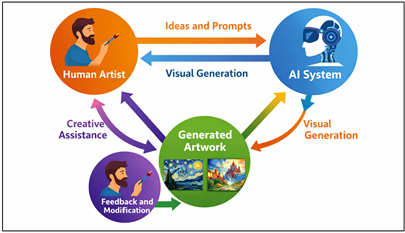
Figure 2 Human–AI Collaborative Creativity Framework for
AI-Generated Artistic Production
In cooperative AI art processes, the human artist is generally offering conceptual guidance, aesthetic objectives, and theme guidance. The AI engine then produces visual variations, which are depending on learned patterns of huge training data. Artists can also polish prompts or adjust parameters or may choose the outputs that they like best with an iterative process until they see their desired vision. Such a cyclic process converts the creative procedure into a conversation between the creative human mind and the algorithmic creation.
6. Ethical and Cultural Implications
6.1. Impact on traditional artists and creative industries
The high rate of development in the field of artificial intelligence in artistic creation has led to a lot of debate regarding the effects of such a technology on the creative art world and the overall creativity industry. AI image systems are capable of creating images, illustrations, and designs in seconds and this brings up concerns of human artists being displaced in the fields of graphic design, digital illustration, advertising, and concept art. Non-computerized creative agencies and businesses can also start using AI solutions that will cut down the time and cost of production, which can result in less demand on some types of manual artistic work. Simultaneously, several researchers suggest that AI cannot be perceived as a substitute of artists but rather as a transformative tool modifying the way of how the artistic work is created. Like previous technology changes in the form of digital photography and software in graphic design, AI systems can change the creative process, but not destroy the careers of artists completely. Artists may employ AI as an assistant technology to come up with ideas, experiment with visual variations, and fasten creative experimentation. Venkata et al. (2025)
6.2. Authenticity and Originality Concerns in AI Art
Authenticity has always been an issue of artistic practice since originality, personal expression and artistic intent are important constituents of artistic work. With the advent of AI-generated art, these conventional conceptions are now being questioned since the artistic output is created by the means of computation that absorbs the knowledge of the already existing art. Generative models are not only trained using large amounts of data of many artistic preferences and visual patterns, which is why critics argue that AI-generated images can be considered derivative, not original. Among the biggest issues is the fact that AI systems may copy the stylistic features of the existing works of art without clearly specifying the authors of such works. This has brought controversial issues concerning whether AI generated art is truly creative or it is merely a rediscovery of old patterns having been previously learned. The legal community also wonders about the way in which the concept of originality should be applied to copyright law in the situation when a machine learning model is used to produce images without human intervention. According to the advocates of AI-generated art, the creative process frequently implies recombination and reinterpretation of preexisting concepts, even in conventional art. In this sense, AI systems act like human artists who are inspired by the past artworks and cultural impacts. Rawandale and Kolte (2019)
6.3. Cultural Bias and Dataset Ethics
Ethical aspects of AI-generated art go beyond authorship and originality to such issues as cultural representation and dataset bias. Generative AI is trained on artistic patterns by training sets that can represent different cultures unequally. When a dataset consists mostly of artworks of a particular geographical area or artistic tradition, the AI system can reproduce those more than other styles. Such imbalance will tend to socially strengthen cultural bias and restrict the diversity of the artistic outputs generated. Questions on the origin of training data are also related to dataset ethics. Most of the generative AI models are trained using a big set of publicly available images, including artworks produced by professional artists. In other instances, the use of these artworks is unapproved of the original creators, so the issue of fairness and ethical use of data is brought up. Artists have more and more complained that their creations are being used to train AI systems that could eventually create similar styles without crediting and compensating the artists. These problems can be overcome by being clearer in their practices of data sets, better documenting the source of training, and creating ethical principles in the training of AI models. Curated databases can be responsible to make sure that the systems of AI-generated art are culturally diverse and do not ignore the works and rights of human artists.
7. Result and discussion
The critical review of the AI-generated art shows that the modern-day generative models have reached the high levels of producing the artworks that are visually rich and stylistically versatile. Neural networks, GANs, and diffusion models have proven to be effective systems to create new images with learning patterns based on a large artistic data set. The paper suggests that AI is more of an aid-creative technology than a completely independent agent of art. Findings of the available literature and application demonstrate that human intervention including timely design, data organization, and the choice of output is still relevant in the creation of the final artwork. Simultaneously, the discussion reveals the continuous controversies on authorship, originality, and intellectual property. These results indicate that AI-generated art is a collaborative creative work where technological innovation and human creativity exist in the changing artistic ecosystem.
Table 2
|
Table 2 Evaluation of Creative Contribution in AI-Generated Art Systems |
||||
|
Creative Component |
Human Contribution (%) |
AI System Contribution (%) |
Hybrid Contribution (%) |
Perceived Authorship Score
(%) |
|
Concept Development |
78.5 |
12.3 |
9.2 |
84 |
|
Dataset Preparation |
64.7 |
21.5 |
13.8 |
76 |
|
Style Adaptation |
41.3 |
46.8 |
11.9 |
78 |
|
Final Artwork Selection |
72.9 |
15.4 |
11.7 |
86 |
Table 2 is an assessment of the creative contribution in the AI-generated art systems by contrasting the positions of the human creators, the artificial intelligence systems, and the hybrid interactions. The findings indicated that concept development is still mostly human in nature as it contributed 78.5, which means that most of the concept development is still done by human imagination and conceptual thinking to initiate artistic ideas. Figure 3 indicates human, AI, and hybrid creative contributions allocation.
Figure 3

Figure 3 Comparative Distribution of Human, AI, and Hybrid
Contributions Across Creative Components
Conversely, AI system plays an important part in the process of style adaptation as the contribution of AI in this process is 46.8, which indicates the power of machine learning models in interpreting patterns and reproducing art styles. Figure 4 demonstrates the trends in authorship perception in the various stages of human-AI creative workflows. The preparation of data phase indicates the equal distribution of the responsibilities, whereas human participation (64.7) is also critical to control and structure the training information, and AI helps to process data automatically. Babu et al. (2025)
Figure 4

Figure 4 Perceived Authorship Score and Human–AI Contribution
Trends in Creative Workflow Stages
Also, the process of selecting final artwork demonstrates a significant level of human influence (72.9) and the highest value of perceived authorship (86) which implies that human judgment plays a crucial role in the selection of final artistic product. On the whole, the results show that AI is used as mostly a creative assistant, but the human remains the dominant participant of the artistic choice and authorship.
Table 3
|
Table 3 Performance and Perception Analysis of AI-Generated Art Platforms |
||||
|
AI Art System Type |
Visual Quality Score (%) |
Creativity Index (%) |
Human Control Level (%) |
Output Diversity Score (%) |
|
GAN-Based Art Generator |
86.7 |
81.5 |
62.4 |
78.9 |
|
Diffusion Model Generator |
92.8 |
88.6 |
69.7 |
84.3 |
|
Prompt-Based AI Art Systems |
89.4 |
85.7 |
78.1 |
82.5 |
Table 3 is a comparative analysis of various AI-generated art platforms in terms of visual quality, creativity, human control, and the diversity of outputs. The findings demonstrate that diffusion model generators have the best performance on visual quality (92.8%), creativity index (88.6%) and thus they are capable of creating highly detailed and aesthetically advanced works of art. Figure 5 demonstrates a visual quality and creativity analysis between AI art systems. These models also show a significant level of output diversification (84.3%), implying that they could be used in producing a large series of artistic variations. The importance of having human input in the artistic generation process through textual prompts makes the system of AI art that is prompt-based have the highest level of human control (78.1%).
Figure 5
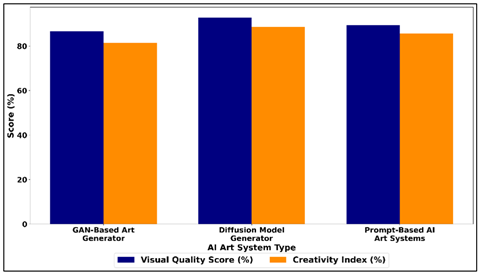
Figure 5 Comparative Analysis of Visual Quality and
Creativity Across AI Art System Types
This implies that through these systems, artists have a greater means of directing style, composition, and content. Suri et al. (2025) In the meantime, GAN-based generators are highly successful in visual generation (86.7) although they have a slightly lower diversity than diffusion models. In general, the findings show that diffusion models are the most developed generative systems, whereas prompt-based systems focus on human-AI collaborative creativity. Garg et al. (2025)
8. Conclusion
The rapid progress of artificial intelligence has already changed the environment of the art production greatly, as there are new ways of creating visual and multimedia art pieces. With the creation of machine learning models, neural networks, Generative Adversarial Networks, and diffusion-based systems, AI has now been able to generate intricate artistic pieces that are very similar to those created by humans. Such technological innovations have widened the possibilities of digital creativity and at the same time highlight the traditional definitions of the authorship and originality in art. This paper has explored the technological processes of the development of the AI-generated art, such as training the dataset, algorithmic learning, and the interaction between a human and the generative system on the prompt. The discussion shows that big data and computer-generated pattern recognition are essential in the AI systems, which are used to generate artificial artworks on a massive scale. Despite the fact that the generation process is automated, human intervention is still at the core of crafting creative results by timely design, parameter adjustment and aesthetic consideration. The authorship discussion shows that the AI-generated art cannot be easily placed in the traditional approaches to the creation ownership. Therefore, the authorship in AI-generated art may be considered as the distributed or collaborative creativity which is a product of the engagement between human will and computation.
CONFLICT OF INTERESTS
None.
ACKNOWLEDGMENTS
None.
REFERENCES
Abbott, R. (2023). We, the Robots? Regulating Artificial Intelligence and the Limits of the Law. International and Comparative Law Quarterly, 72, 272–273.
Alotaibi, N. S. (2024). The impact of AI and LMS Integration on the Future of Higher Education: Opportunities, Challenges, and Strategies for Transformation. Sustainability, 16, Article 10357. https://doi.org/10.3390/su162310357
Babu, M. R. N., Tungoe, C., Vasanthan, R., Pimple, J., Khandare, K. S., and Kalyani, L. K. (2025). AI for Accessibility in Digital Media Education. Shodhkosh, 6(2S), Article 67. https://doi.org/10.29121/shodhkosh.v6.i2s.2025.67
Cao, Y., Li, S., Liu, Y., Yan, Z., Dai, Y., Yu, P. S., and Sun, L. (2023). A Comprehensive Survey of AI-Generated Content (AIGC): A History of Generative AI from GAN to ChatGPT. Arxiv.
Davidovitch, N., and Cohen, E. (2024). Administrative Roles in Academia: Potential Clash with Research Output and Teaching Quality? Cogent Education, 11, Article 2357914. https://doi.org/10.1080/2331186X.2024.2357914
Ernesto, D., and Gerardou, F. S. (2023). Challenges and Opportunities of Generative AI for Higher Education as Explained by ChatGPT. Education Sciences, 13, Article 856. https://doi.org/10.3390/educsci13090856
Fathima, M. (2025). Determinants of Cross-Cultural Competence Among IT Professionals in Chennai. International Journal of Research and Development in Management Research (IJRDMR), 14(2), 9–19. https://doi.org/10.65521/ijrdmr.v14i2.923
Garg, N., Jadhav, K. D., Solanki, S., Dabral, K., Padghan, N. P., and Gode, S. A. (2025). Public Private Partnerships for Sustainable Urban WASH Infrastructure Development. Waterlines, 43(2), 113–130. https://doi.org/10.3362/waterlines.v43i2.528
Hazarika, C. A. I., Khalfan, J., Ahmed, M., Yousif, A., and Hussain, J. (2024). Role of Fintech as an Enabler to Fulfill HR Requirements and Attain Sustainability. In A. Hamdan and A. Harraf (Eds.), Business Development Via AI and Digitalization (Studies in Systems, Decision and Control, Vol. 537). Springer. https://doi.org/10.1007/978-3-031-62106-2_5
Hook, S. (2024). Moral Rights, Creativity, and Copyright Law: The Death of the Transformative Author. Routledge. https://doi.org/10.4324/9781003412144
Hutson, J., and Lang, M. (2023). Content Creation or Interpolation: AI Generative Digital Art in the Classroom. Metaverse, 4, Article 13. https://doi.org/10.54517/m.v4i1.2158
Kalniņa, D., Nīmante, D., and Baranova, S. (2024). Artificial Intelligence for Higher Education: Benefits and Challenges for Pre-Service Teachers. Frontiers in Education, 9, Article 1501819. https://doi.org/10.3389/feduc.2024.1501819
Kretschmer, M., Meletti, B., Bently, L., Cifrodell, G., Eben, M., Erickson, K., Iramina, A., Li, Z., McDonagh, L., Perot, E., et al. (2025). Copyright and AI in the UK: Opting-in or Opting-Out? GRUR International, 74, 1055–1070. https://doi.org/10.1093/grurint/ikaf093
Lacey, M. M., and Smith, D. P. (2023). Teaching and Assessment of the Future Today: Higher Education and AI. Microbiology Australia, 44, 124–126. https://doi.org/10.1071/MA23036
O’Dea, X. (2024). Generative AI: Is it a Paradigm Shift for Higher Education? Studies in Higher Education, 49, 811–816. https://doi.org/10.1080/03075079.2024.2332944
Pataranutaporn, P., Danry, V., Leong, J., Punpongsanon, P., Novy, D., Maes, P., and Sra, M. (2021). AI-Generated Characters for Supporting Personalized Learning and Well-Being. Nature Machine Intelligence, 3, 1013–1022. https://doi.org/10.1038/s42256-021-00417-9
Rawandale, U. S., and Kolte, M. T. (2019). Study of Audiogram for Speech Processing in Hearing Aid System. In 2019 IEEE Pune Section International Conference (PuneCon) ( 1–4). IEEE. https://doi.org/10.1109/PuneCon46936.2019.9105706
Sullivan, M., Kelly, A., and McLaughlan, P. (2023). ChatGPT in Higher Education: Considerations for Academic Integrity and Student Learning. Journal of Applied Learning and Teaching, 6, 1–10. https://doi.org/10.37074/jalt.2023.6.1.17
Suri, S., Lakshman, K., Goyal, E., Goyal, G., Sood, G., Mirajkar, G. S., and Anerao, P. (2025). Emotion Modeling in Sculpture Design Using Neural Networks. Shodhkosh: Journal of Visual and Performing Arts, 6(3S), 31–40. https://doi.org/10.29121/shodhkosh.v6.i3s.2025.6756
Venkata, S. B., Wong, C. H., Karwande, V. S., Divyaraj, G., Singh, S., and Patil, R. V. (2025). Metaheuristic-Tuned GraMNet Architecture for Enhanced Video-Based Anomaly Detection Using UCF50 Dataset. In Proceedings of the International Conference on Innovations in Intelligent Systems: Advancements in Computing, Communication, and Cybersecurity (ISAC3 2025). https://doi.org/10.1109/ISAC364032.2025.11156508
Walczak, K., and Cellary, W. (2023). Challenges for Higher Education in the Era of Widespread Access to Generative AI. Economics and Business Review, 9, 71–100. https://doi.org/10.18559/ebr.2023.2.743
Xu, B., and Jiang, J. (2022). Exploitation for Multimedia Asian Information Processing and Artificial Intelligence-Based Art Design and Teaching in Colleges. ACM Transactions on Asian and Low-Resource Language Information Processing, 21, Article 114. https://doi.org/10.1145/3526219
|
|
 This work is licensed under a: Creative Commons Attribution 4.0 International License
© ShodhKosh 2026. All Rights Reserved.