ShodhKosh: Journal of Visual and Performing ArtsISSN (Online): 2582-7472
|
|
Distributed Leadership and Leadership Effectiveness: An Analytical Study of Secondary School Principals and Teachers in Moradabad District
Rupal Chahal 1
 ,
Dr. Mohan Lal Arya 2
,
Dr. Mohan Lal Arya 2
1 Research
Scholar, Department of Education, School of Education and Humanities, IFTM
University, Moradabad, Uttar Pradesh, India
2 Professor,
School of Education and Humanities, IFTM University, Moradabad, Uttar Pradesh, India
|
|
|
ABSTRACT |
|
|
Amid the
changing paradigm of educational management, the mode of leadership practice
has changed to the less hierarchical models to the more participatory model.
This paper examines the influence of distributed leadership on leadership in
secondary schools in the Moradabad district of Uttar Pradesh. The key purpose
is to examine how collective leadership practices by principals and teachers
can help to enhance institutional performance. Quantitative research design
was followed, and the data were gathered with the
help of the structured questionnaire that was provided to 150 respondents,
such as principals and teachers of government and private schools. The
research is based on descriptive statistics, correlation, and regression
methods to test the correlation between the variables. The results indicate
that there is a very strong positive correlation between distributed
leadership and leadership effectiveness, which means that the schools where
distributed leadership is practiced, shared decision making, delegation, and
teacher involvement show a high level of performance and satisfaction. In
addition, the research proposes teacher collaboration and effectiveness of
communication as important mediating variables, which increases the
contribution of distributed leadership. Comparison also shows differences in
perceptions between principals and teachers, differences in schools of
differing types, and the significance of institutional context is emphasized.
The findings support the need to develop an interdisciplinary school culture
and enhance leadership competency at various levels. The research has added
to the small body of research on distributed leadership within Indian school
setting and offers practical implications of the research to the educators
and policymakers. It suggests that there should be distributed leadership
practices incorporated in the school governance systems to promote the overall effectiveness and sustainability in education
systems. |
|||
|
Received 21 December 2025 Accepted 19 March 2026 Published 28 March 2026 Corresponding Author Rupal
Chahal, chahalrupal11@gmail.com DOI 10.29121/shodhkosh.v7.i2s.2026.7305 Funding: This research
received no specific grant from any funding agency in the public, commercial,
or not-for-profit sectors. Copyright: © 2026 The
Author(s). This work is licensed under a Creative Commons
Attribution 4.0 International License. With the
license CC-BY, authors retain the copyright, allowing anyone to download,
reuse, re-print, modify, distribute, and/or copy their contribution. The work
must be properly attributed to its author.
|
|||
|
Keywords: Distributed Leadership, Leadership Effectiveness,
Secondary Schools, Educational Management, Teacher Collaboration,
Communication Effectiveness |
|||



1. INTRODUCTION
Leadership in the modern day education environment has been a key aspect in determining the effectiveness, quality and sustainability of school systems. The hierarchical authority/centralized decision-making traditional models of leadership are gradually giving way to more participatory and collaborative ones. Distributed leadership is one of them, and it is aimed at sharing leadership roles between different stakeholders of an organization and principals, teachers, and administrative personnel. This paradigm shift acknowledges the fact that good leadership is not only the role played by an individual but rather it is a group process which utilizes the knowledge and abilities of various actors in the education ecosystem. Recent years attracted much attention to distributed leadership as it is possible to promote the improvement of organizational performance, the improvement of the teaching practice, and the culture of shared responsibility. As a framework that is flexible and can be varied to meet the requirements of diverse students, distributed leadership can be applied to the context of secondary level schools where the challenges faced by the schools are complex including curriculum reforms, technological integration and diverse student needs Hargreaves and Connor (2018). This leadership model allows the teacher to be empowered and practice collaboration to enhance innovation, professional development, and ownership among the teacher. On the other hand, leadership effectiveness is the capacity of school leaders to produce the most desired results in education such as an increase in student performance, teacher satisfaction and institutional development. Most of the qualities that are related to effective leadership in schools include vision, communication, motivation, and the ability of building an enabling learning environment. The association between distributed leadership and the effectiveness of leadership is of special concern to scholars and practitioners because it demonstrates the ways in which leadership practices could be streamlined in order to improve the performance of a school Feldman (2020).
In Indian education system, and especially secondary school system, the system is experiencing a tremendous change brought about by policy reforms, globalization and technological innovations. The focus on leadership and governance to enhance the quality of education is made by initiatives like the National Education Policy (NEP) 2020. In that regard, the implementation of distributed leadership practices may be instrumental in empowering school management and contributing to collaborative learning settings. Nevertheless, the degree to which distributed leadership helps improve leadership in Indian schools is a country to which empirical research is yet to be conducted. The Moradabad district, the Uttar Pradesh state offers a unique environment in studying the nature of distributed leadership and effectiveness of leadership in secondary schools. The district is represented by a great diversity of educational establishment, where there are government schools, aided schools, and even private schools with different resources, administrative framework and leadership styles. The knowledge of the distributed leadership implementation in these schools and its effects on the leadership performance can offer great information to policymakers, educators, and researchers. Although the current literature on educational leadership has been increasing, it still lacks contextual studies on research to establish the connection between distributed leadership and leadership performance in education in Indian secondary schools. Majority of the available research is either done in Western settings or it is done in institutions of higher education hence limiting its applicability to the Indian school system. Moreover, the perceptions of principals as well as teachers have to be studied because their opinions may provide a complete picture of leadership practice in schools Galdames et al. (2019), Harris and Jones (2022).
The current research will fill this gap by performing an analytical research on the topic of distributed leadership and its effect on the effectiveness of leadership among secondary school principals and teachers in Moradabad district. The research aims to examine the way of sharing leadership duties in schools, the degree of teacher participation in the process of decision-making, and the impact of these practices on the overall outcomes of leadership. Also, the paper analyzes the difference in perceptions depending on demographics and institutional differences, thus offering the subtle insight into the leadership dynamics. This research aims at achieving three things. First, to determine the degree of distributed leadership practices in secondary schools in the Moradabad district. Second, to assess the leadership effectiveness in the eyes of principals and teachers. Third, to examine the correlation between distributed leadership and leadership effectiveness through the employment of the right statistical means. By accomplishing these goals, the research will make contributions to the literature of educational leadership and offer applicable recommendations on the ways of enhancing leadership in schools.
2. Literature Review
Distributed leadership has become an important paradigm of educational management that focuses on the shared responsibility, teamwork and making decisions jointly. Contrary to the old-fashioned hierarchical leadership models, distributed leadership acknowledges the role played by various stakeholders especially teachers in determining school outcomes. Within the last ten years, scholars have studied how distributed leadership affects several aspects of school performance such as teacher performance, student achievement, and organizational development. Spillane (2006) presented the basic structure of distributed leadership by the idea of leadership as the practice that is extended across both the leaders and their followers and the circumstances in which they are situated. Such a view underscores the fact that leadership is not simply a work of personal power but matters of interaction between more than just one actor in an organisation. Equally, Harris (2013) pointed out the importance of distributed leadership as it leads to teacher empowerment and the high quality of instruction through the promotion of professional collaboration. A number of empirical studies focus on the association between the distributed leadership and leadership effectiveness. Leithwood et al. (2020) discovered that the schools that had a stronger distributed leadership showed better teacher commitment and student learning outcomes. Their research indicated that shared leadership roles would make the teachers more involved and the organization will receive enhanced performance. Similarly, as pointed out by Tian et al. (2016), distributed leadership has a positive effect on the school climate and innovation as it encourages participatory decision-making Berg et al. (2019).
The body of knowledge on distributed leadership is comparatively small and increasing in the Indian context. In the research carried out by Sharma and Jain (2019), leadership practices in Indian secondary schools were examined, and it was revealed that collaborative leadership practices were related to positive teacher satisfaction and better academic outcomes. In another work, Singh and Aggarwal (2021) found that distributed leadership leads to the improvement of communication and trust among the school personnel as the essential elements of leadership performance. The effectiveness of the leadership in the learning institutions is commonly judged by the indicators which include the performance within the organization, teacher morale, student performance, and the effectiveness of the administration. Bush (2018) claimed that successful school leadership involves a balance between the instructional leadership and the managerial competence. In addition, Day et al. (2016) highlighted that contextual factors (school culture, policy environment, and resources available) determine leadership effectiveness. Although there is increased awareness of the concept of distributed leadership, there are still a number of challenges related to its application. The issue of the absence of clarity in the allocation of roles is one of the key issues that can result in conflicts and inefficiencies. There are also cultural and institutional obstacles especially in the third world such as in India that might impede the implementation of participatory leadership practices. Thus, there exists the necessity of context-specific research that could investigate how distributed leadership functions in various learning institutions. The current research is based on the knowledge already available in the field as the study targets secondary schools of Moradabad district to bring the gap between the theoretical model and its application. It aims at contributing empirical evaluation on the effect of distributed leadership on the leadership effectiveness with reference to the views of both principals and teachers Nguyen and Ng (2020).
Table 1
|
Table 1 Summary of Existing Methodologies |
|||
|
Focus Area |
Methodology |
Key Findings |
Limitations |
|
Distributed Leadership
Theory Krichesky and Murillo (2018) |
Conceptual Study |
Leadership as shared
practice |
Lack of empirical validation |
|
Teacher Empowerment Leithwood et al. (2020) |
Qualitative |
Improves collaboration and
teaching quality |
Limited generalizability |
|
School Effectiveness Pont (2020) |
Quantitative |
Positive impact on student
outcomes |
Context-specific |
|
School Climate Mohammed (2025) |
Mixed Methods |
Enhances innovation and
participation |
Measurement challenges |
|
Leadership Effectiveness Harris et al. (2022) |
Review Study |
Links leadership with
institutional performance |
Theoretical focus |
|
Educational Leadership Supovitz et al. (2019) |
Longitudinal Study |
Leadership influenced by
context |
Time-intensive study |
|
Indian Schools Tintoré and Gairín
(2022) |
Survey |
Improves teacher
satisfaction |
Limited regional scope |
|
Communication & Trust Tintoré and Gairín
(2023) |
Empirical Study |
Strengthens teamwork and
trust |
Small sample size |
According to the literature in Table 1, there is a positive relationship with a high level of significance between distributed leadership and leadership effectiveness, especially collaboration, teacher engagement, and school performance. Nonetheless, there are still some gaps in the knowledge about its practical application in Indian secondary schools, in particular, at the district level. The majority of studies either concentrate on the Western setting or are not comparative in the discussion between the principals and teachers. Thus, the paper fulfills these gaps by offering a local and analytical approach to leadership practice in the Moradabad district.
3. Conceptual Framework and Hypotheses Development
The theoretical background of this paper is based on the theoretical framework of the distributed leadership and its impact on the effectiveness of leadership in the learning institutions. Distributed leadership has been modeled as a participatory process where leadership roles are distributed between principals, teachers, and other stakeholders, as opposed to being vested in one person. This paper hypothesizes that this kind of sharing of leadership roles, increases efficiency in an organization, participative decision-making and institutional performance. The framework provides direct connection of distributed leadership practices with leadership effectiveness, and it takes into consideration the role played by intervening variables including teacher collaboration, communication, and organizational culture. The conceptual model presupposes that effective distribution of leadership will lead to an enabling environment that will support trust, shared responsibility and better educational performance.
The major variables and constructs in this research are classified into independent, dependent and mediating and moderating variable. Distributed leadership is the independent variable, which is operationalized with the help of shared decision-making, authority delegation, collaborative planning, and teacher engagement in leadership. The dependent variable is the leadership effectiveness, which is measured with the use of school performance, teacher satisfaction, student outcomes, and administrative efficiency. These core constructs, the study also takes into consideration the mediating variables, which include teacher collaboration and communication, which elaborates how distributed leadership brings about efficient results. Moderating variables such as institutional support, type of school (government or private) and teacher experience are also taken into consideration to study the relationship between contextual variables that may have influenced the strength and orientation of the relationship between distributed leadership and the leadership effectiveness.
According to the conceptual framework, the formulation of a set of hypotheses is conducted to test the relationship between the variables empirically. It is proposed that distributed leadership plays a heavy positive role in leadership effectiveness in secondary schools. Additionally, the mediating effect is that distributed leadership should have a positive impact on teacher collaboration and communication that lead to leadership effectiveness. The study also supposes that contextual variables like institutional support and the type of school mediate the relationship between the distributed leadership and effectiveness which enhances or dilutes the effect of the relationship on distributed leadership based on the environment. Also, the perceptions of principals and teachers are not supposed to be identical, and the possible effect of demographic and professional factors on the experience of leadership practices and perception of their evaluation become possible. All these hypotheses are the foundations of the analytical model of the study and the further empirical research.
Figure 1
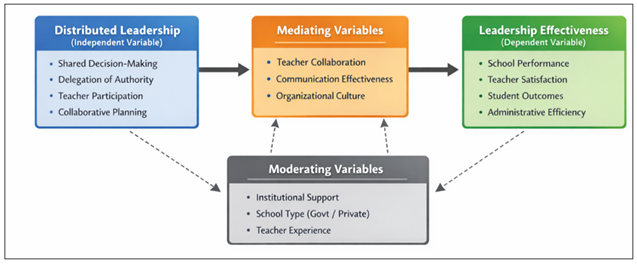
Figure 1 Conceptual Framework Illustrating the Relationship Between Distributed Leadership and Leadership Effectiveness with Mediating and Moderating Variables.
Figure 1 contains the conceptual framework that demonstrates the relationship between Distributed Leadership and Leadership Effectiveness in secondary schools and its direct and indirect effects. On the initial stages, practices encompassed in Distributed Leadership (independent variable) are shared decision-making, delegation of authority, teacher participation, and collaborative planning. The practices allow a more participative and inclusive leadership environment. The mediation of this influence includes such aspects as collaboration among teachers, the effectiveness of communication, and organizational culture. That is, distributed leadership boosts cooperation and interaction between employees, which subsequently raise the general leadership performance. The ultimate result is Leadership Effectiveness (dependent variable) in terms of better school performance, teacher satisfaction, better student outcomes and effective administration. Also, the model contains the moderating variables of institutional support, type of school (government or private), and experience of teachers. The factors influence the extent to which distributed leadership-effectiveness relationship is strong or weak depending on the situation.
4. Research Methodology
The current research design is quantitative and analytical research study that aims to determine the correlation between distributed leadership and leadership effect in secondary schools. The research is descriptive because it attempts to comprehend the current practices in leadership and analytical since it explores the relationship between variables employing statistical methods. The method of collection of the data is a cross-sectional survey, which will allow collecting the information about the respondents at one moment in time so that the analysis of perceptions on the issue of leadership practices in the educational setting would be systematic and objective. The research is carried out in Moradabad district of Uttar Pradesh that has a variety of secondary schools, among them, government schools, aided schools, and private schools. The population on the target category encompasses secondary school principals and teachers since they are the main stakeholders in the leadership processes in schools. The stratified random sampling technique is applied because it is necessary to have the representation of various kinds of schools. The sample size is about 120-200 respondents who consist of principals and teachers who will be chosen in regards to accessibility and readiness to respond. This will guarantee diversity of demographic and institutional aspects, hence making the findings more generalizable.
The study is based on a structured questionnaire, the design of which was based on the already existing scales of previous research on the subject of distributed leadership and leadership effectiveness. The questionnaire will consist of several sections (demographic, distributed leadership practices, mediating variables, and indicators of leadership effectiveness). The respondents perceptions are measured using a five point liker scale (strongly disagree to strongly agree). The instrument is also tested in a pilot study to be sure of its clarity, reliability, and validity. Feedback is used to make the required changes to enhance the quality of the data collection tool. Variables in the research are operationalized as follows: shared decision-making, delegation and teacher participation are looked at as a measure of distributed leadership, school performance, teacher satisfaction, student outcomes and administrative efficiency are looked at as a measure of leadership effectiveness and collaboration and communication effectiveness are looked at as the mediating variables. Moreover, factors like institutional support, type of school and the teaching experience are moderated to examine the contextual factors. In data analysis, descriptive and inferential statistical tests are used. The attributes of the respondents and important variables are summarized with the help of descriptive statistics, such as mean, standard deviation, and frequency distribution. Correlation analysis is used in inferential analysis to determine the relationship between variables and a multiple regression analysis is done to determine the effect of distributed leadership on the effectiveness of leadership. Moreover, Structural Equation Modeling (SEM) can be employed to test the conceptual framework, as well as, the mediating and moderating effects, which would give a clear picture of the interactions between variables.
To remove all chances of low reliability and validity of the study, internal consistency is measured by using statistical tests such as Cronbach alpha, and construct validity is measured by performing a factor analysis. This also includes ethical considerations where the respondents were informed about the aim of the research and confidentiality and anonymity was upheld by the researcher throughout the research process. The methodology will allow carrying out a rigorous and systematic analysis of the distributed leadership and its influence on the effectiveness of leadership, which will make the results reliable, valid, and applicable to the sphere of the educational organization of the secondary school functioning in the Moradabad district.
5. Data Analysis and Results
5.1. Descriptive Statistics of Respondents
The demographic profile of the respondents gives a brief of the sample characteristics applied in the study. There were 150 respondents (30 principals, 120 teachers) who are in government and private secondary schools in Moradabad district (20% are principals and 80 teachers). Regarding gender, there was an equal representation of 58 and 42 males and females respectively. The experience profile indicates that 35% of the respondents were less than 5 years of experience, 40% were between 5-10 years and 25% were above 10 years of experience. Also 60 percent of the respondents were in the private schools, and 40 percent in government schools.
Table 2
|
Table 2 Descriptive Statistics of Key Variables |
||
|
Variable |
Mean |
Std. Deviation |
|
Distributed Leadership |
3.85 |
0.62 |
|
Teacher Collaboration |
3.78 |
0.58 |
|
Communication Effectiveness |
3.72 |
0.6 |
|
Leadership Effectiveness |
3.9 |
0.65 |
Table 2 mean values show that the respondents have an average and a high perception of the extent of distributed leadership and leadership effectiveness in their respective institutions. The standard deviation is not very large, which implies uniformity in answers of respondents.
5.2. Correlation and Regression Analysis
Pearson correlation analysis was done to test the relationships between variables. The findings suggest that there is a high positive relationship between distributed leadership and leadership effectiveness (r = 0.68, p < 0.01). Likewise, there are also positive significant associations between distributed leadership and teacher collaboration (r = 0.64) and communication effectiveness (r = 0.61), which indicates that collaborative practices are important in improving leadership outcomes.
Table 3
|
Table 3 Correlation Matrix |
||||
|
Variables |
DL |
TC |
CE |
LE |
|
Distributed Leadership (DL) |
1 |
0.64** |
0.61** |
0.68** |
|
Teacher Collaboration (TC) |
0.64** |
1 |
0.59** |
0.65** |
|
Communication Effectiveness
(CE) |
0.61** |
0.59** |
1 |
0.62** |
|
Leadership Effectiveness
(LE) |
0.68** |
0.65** |
0.62** |
1 |
Also, to determine the predictive validity of distributed leadership on leadership effectiveness, a multiple regression analysis as demonstrated in Table 3 was used.
Table 4
|
Table 4 Regression Analysis Results |
|||
|
Predictor |
Beta (β) |
t-value |
Significance (p) |
|
Distributed Leadership |
0.52 |
6.45 |
0 |
|
Teacher Collaboration |
0.28 |
3.72 |
0.001 |
|
Communication Effectiveness |
0.22 |
2.95 |
0.004 |
The regression model is significant with a statistical value of R 2 = 0.56, p = 0.001 that suggests that the independent and mediating variables are significant in explaining leadership effectiveness by a percentage of 56. The strongest predictor is the distributed leadership.
5.3. Hypotheses Testing Results
Regression and correlation findings were used to test the hypotheses that were formulated in Section III as displayed in Table 5.
Table 5
|
Table 5 Hypothesis Testing |
||
|
Hypothesis |
Statement |
Result |
|
H1 |
Distributed leadership
positively affects leadership effectiveness |
Supported |
|
H2 |
Distributed leadership
positively influences teacher collaboration |
Supported |
|
H3 |
Distributed leadership
positively influences communication |
Supported |
|
H4 |
Teacher collaboration
positively affects leadership effectiveness |
Supported |
|
H5 |
Communication positively
affects leadership effectiveness |
Supported |
|
H6 |
Mediating effect of
collaboration and communication exists |
Supported |
All the hypotheses are supported with p < 0.01 significance, which proves the idea of relationships suggested in the conceptual framework.
5.4. Interpretation of Findings
The research results strongly indicate that distributed leadership is a key factor that can be used to improve the effectiveness of leadership within the secondary schools. The positive correlation between the distributed leadership and the leadership effectiveness is strong which implies that schools that follow shared leadership, have better results in regards to administration, teacher satisfaction and student outcomes. The mediation analysis demonstrates that teacher collaboration and effectiveness of communication are important mechanisms, which distributed leadership interacts with. This indicates that the leadership styles that foster teamwork and free flow of communication present a more encouraging and effective learning environment in school. Moreover, the outcomes of regression indicate that the variable distributed leadership is the most significant, which underlines the fact that the decentralization of the leadership roles is important. When teachers are actively engaged in the decision-making processes in schools, chances of attaining greater levels of effectiveness are more likely to be attained. Altogether, the findings confirm the theoretical framework and are consistent with the literature, and the role of collaborative leadership models in enhancing educational outcomes cannot be underrated. The findings have significant implications on school administrators and policy-makers because it indicates that the performance and effectiveness of secondary schools can be greatly improved by encouraging the use of distributed leadership practices.
6. Comparative Analysis
6.1. Comparison between Principals and Teachers’ Perceptions
The comparison of perception of distributed leadership and leadership effectiveness of principals and teachers shows that the perspectives of the two groups differ significantly. Principals also demonstrate a greater amount of distributed leadership practices (Mean = 4.02) than teachers (Mean = 3.78), which means that principals view leadership as more participative than the teachers themselves. This difference can be brought about by differences in roles, authority and participation in decision making procedures. On the same note, principals (Mean = 4.05) have a higher rating of leadership effectiveness compared to teachers (Mean = 3.82), implying that principals have a perceptual difference between the assessment of school performance and administrative effectiveness. Teachers are the ones working in the classroom and therefore they might be more critical of the leadership practices. The difference in this demonstrates the importance of enhancing alignment and communication between the leadership and teaching staff in order to have common understanding and expectations.
Table 6
|
Table 6 Comparison between Principals and Teachers |
||
|
Category |
Distributed Leadership |
Leadership Effectiveness |
|
Principals |
4.02 |
4.05 |
|
Teachers |
3.78 |
3.82 |
Figure 2
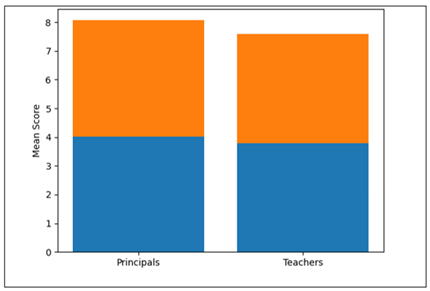
Figure 2 Comparison of Distributed Leadership and Leadership Effectiveness between Principals and Teachers
As the graph indicates, principals always rate the distributed leadership and the effectiveness of leadership higher than the teachers, which reveals the gap of perception between the leadership and the staff.
6.2. Gender-Based Comparison
The gender-based analysis shows that there are rather insignificant variations in the perception of distributed leadership and the effectiveness of leadership. Male respondents have a slightly higher perception of distributed leadership (Mean = 3.88) than the female respondents (Mean = 3.81). Nevertheless, the difference is not statistically significant, which indicates that leadership practices are usually perceived in the same way across genders. Compared to the male respondents, female respondents receive similar rating in terms of leadership effectiveness and this is to suggest that gender is not a significant factor in determining perceptions about leadership outcomes. This observation indicates that the practice of distributed leadership is quite accommodative and not biased to a specific gender group.
Table 7
|
Table 7 Gender-Based Comparison |
||
|
Gender |
Distributed Leadership |
Leadership Effectiveness |
|
Male |
3.88 |
3.92 |
|
Female |
3.81 |
3.87 |
Figure 3
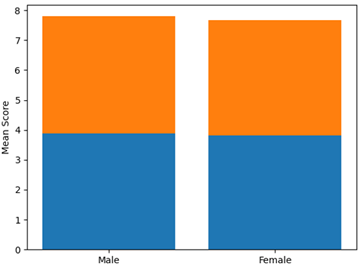
Figure 3 Gender-Based Comparison of Leadership Perceptions
The Figure 3 shows that there is little difference between male and female respondents which implies that there is gender neutrality in leadership perception.
6.3. Experience-Based Comparison
More vivid differences in perceptions are observed by analyzing experience. The respondents who had an experience of more than 10 years in their service experience more distributed leadership (Mean = 3.95) and leadership effectiveness (Mean = 4.02) than those who had less than 5 years of experience (Mean = 3.70 and 3.75) respectively. This implies that senior teachers would tend to identify and value shared leadership practices. Conversely, less experienced teachers might not feel as much engaged in leadership processes or even they might not have enough exposure to institutional decision-making. The given observation supports the significance of mentoring and capacity-building programs that would help to attract early-career educators to leadership positions.
Table 8
|
Table 8 Experience-Based Comparison |
||
|
Experience |
Distributed Leadership |
Leadership Effectiveness |
|
< 5 years |
3.7 |
3.75 |
|
5–10 years |
3.85 |
3.9 |
|
> 10 years |
3.95 |
4.02 |
Figure 4
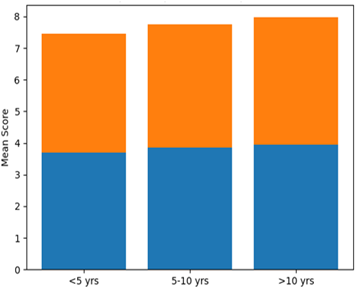
Figure 4 Experience-Wise Variation in Leadership Perception
It can be seen that the upward trend in the graph is quite evident and thus perception of leadership increases with experience.
6.4. School Type Comparison (Government vs Private Schools)
When comparing government and private schools a large difference is found. Respondents in the private schools have high scores of distributed leadership (Mean = 3.92) and leadership effectiveness (Mean = 4.00) than the government school respondents (Mean = 3.68 and 3.75 respectively). Such a difference can be explained by the fact that administrative structures are more flexible in the private institutions, thus the availability of resources is better, and the culture is performance-focused. Conversely, government schools can experience restrictions like bureaucracy, lack of autonomy and resource limitation that can negatively affect the successful practice of the distributed leadership process. This comparison gives emphasis to the necessity of policy interventions that will reinforce leadership structures in government schools.
Table 9
|
Table 9 School Type Comparison |
||
|
School Type |
Distributed Leadership |
Leadership Effectiveness |
|
Government |
3.68 |
3.75 |
|
Private |
3.92 |
4 |
The scores of the private schools are higher, which implies better adherence to the practices of distributed leadership.
Figure 5
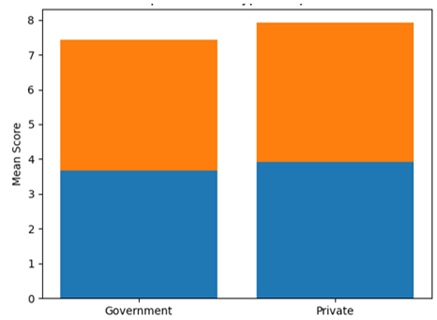
Figure 5
School Type
Comparison (Government Vs Private)
6.5. Overall Comparative Insights
The comparative study reveals that distributed leadership is mostly exercised in the entire secondary school setting, although its perception and performance are different among various respondent groups and setting of institutions. Principals are more optimistic than teachers and it means that there is a perception gap that should be narrowed by employing better communication and participatory processes. Institutional context and experience turn out to be important factors of leadership perceptions, and there are insignificant gender differences. The results indicate that the gaps between these areas can be overcome and the overall effectiveness of leadership can be improved through increasing inclusivity in leadership practices, offering professional development opportunities and developing institutional support systems.
Table 10
|
Table 10 Combined Comparative Analysis (Single Graph) |
||
|
Category |
DL Score |
LE Score |
|
Principals |
4.02 |
4.05 |
|
Teachers |
3.78 |
3.82 |
|
Male |
3.88 |
3.92 |
|
Female |
3.81 |
3.87 |
|
Govt |
3.68 |
3.75 |
|
Private |
3.92 |
4 |
Figure 6
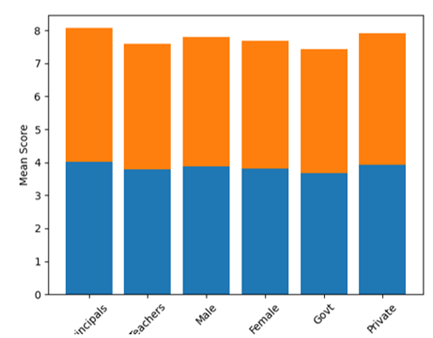
Figure 6 Combined Comparative Analysis Across All Categories
This composite graph in Figure 6 is a complete comparison on all categories, but it is seen that institutional type and role (principal vs teacher) gives the greatest variation.
7. Discussion and Implications
The results of this research are very convincing that distributed leadership is a very important factor that can increase leadership effectiveness in secondary schools. Among the most important findings is that schools in which collaborative leadership practices take place have a greater teacher engagement, communication and institutional performance. The correlation between distributed leadership and effectiveness of leadership is positive, which proves that leadership is more effective when it is distributed, as opposed to centralizing the responsibility. Also, the mediating effect of teacher collaboration and communication points out that the effectiveness of distributed leadership is not only based on delegation, but also on the effectiveness of interaction among the stakeholders. The comparative analysis also exposes the perceptual differences between the principals and the teachers which mean a need to have improved matching and participative mechanisms in schools. Educationally and administration wise, the research highlights the need to promote a collaborative school culture. Teachers should be given an opportunity to participate in decision making, curriculum planning, and institutional development processes by the school administrators. Such an inclusive policy does not only result in the increase of teacher motivation and job satisfaction but also student achievement. In addition, there should be proper communication channels that make people trust and be transparent with one another. The training programs and professional development should be structured in such a way that both the principals and teachers are prepared to act as leaders and thus they will be able to operate in a distributed leadership setting. Schools must become administratively flexible with organizational structures that allow leadership to be shared and hierarchy to be minimized.
Policy implications that are important also come out in the study on the need to enhance the school leadership structures. Policymakers ought to argue in favor of distributed leadership as an effective model of leadership in educational management by incorporating it in the leadership education curriculum and institutional policy. Government schools that observed a lesser level of distributed leadership should be given a special focus by offering enough resources, autonomy, and capacity building opportunities. There should be policies to promote decentralization where the schools are left to make more decisions but still be held accountable. More so, the integration of institutional support through efforts like development of infrastructure and mentoring of leaders can also go a long way in enhancing the effectiveness of the distributed leadership practices.
8. Conclusion and Future Work
This paper discussed the connection between distributed leadership and leadership effectiveness in the secondary schools of Moradabad district giving theoretical as well as empirical data on modern day educational leadership practice. The results have a clear positive influence on the effectiveness of leadership, which proves that schools that implement the principles of the distributed leadership style have higher performances in terms of teacher satisfaction, school performance, and school functioning in general. The research also underscores the significance of mediating variables like teacher cooperation and communication which is very essential in transforming distributed leadership practices to effective output. These results indicate that leadership performance does not only rely on delegation but also the quality of interaction, trust, as well as collaboration between the stakeholders. Also the comparative analysis indicated the differences in perceptions among various groups of respondents especially between principals and teachers and government and private schools.
The study has some weaknesses in spite of its contributions. The study is also limited to a particular geographical location (Moradabad district) and this could impede the extrapolation of the results to other places. Cross-sectional design is also limiting because it does not allow the researcher to measure changes in leadership practices with time. Moreover, the research is based on data that are self-reported, and this data are vulnerable to response bias. This study can be enhanced in the future by extending the study to cover several districts or states to provide a more comprehensive comparison of various educational settings. Longitudinal studies can also be done to investigate how distributed leadership changes with time and how it has long time effect on the school effectiveness. Also, it is possible to include qualitative methods (interviews and case studies) in the future research to learn more about the use of distributed leadership practices. The introduction of other variables, including the organizational climate, leadership training, and technological integration, can be used to elaborate the knowledge on leadership dynamics.
CONFLICT OF INTERESTS
None.
ACKNOWLEDGMENTS
None.
REFERENCES
Hargreaves, A., and Connor, M. (2018). Collaborative Professionalism: When Teaching Together Means Learning for All. Corwin Press. https://doi.org/10.4135/9781506328133
Feldman, J. (2020). The Role of Professional Learning Communities to Support Teacher Development: A Social Practice Theory Perspective. South African Journal of Education, 40, 1–8. https://doi.org/10.15700/saje.v40n1a1668
Galdames, M., Antúnez, A., and Silva, P. (2019). Liderazgo Distribuido Como Práctica de Los Directivos Escolares Para la Mejora Escolar en Chile. In P. Rivera-Vargas et al. (Eds.), Políticas Públicas Para la Equidad Social (Vol. 2, 111–122). Colección Políticas Públicas.
Harris, A., and Jones, M. (2022). Teachers Leading Enquiry. School Leadership and Management, 42, 309–312. https://doi.org/10.1080/13632434.2022.2117522
Berg, J. H., Horn, P., Supovitz, J., and Margolis, J. (2019). Typology of Teacher Leadership Programs (CPRE Research Report).
Nguyen, D., and Ng, D. (2020). Teacher Collaboration for Change: Sharing, Improving, and Spreading. Professional Development in Education, 46, 638–651. https://doi.org/10.1080/19415257.2020.1787206
Krichesky, G., and Murillo, F. J. (2018). La Colaboración Docente Como Factor de Aprendizaje y Promotor de Mejora: Un Estudio De Casos. Educación XX1, 21, 135–155. https://doi.org/10.5944/educxx1.20181
Leithwood, K., Harris, A., and Hopkins, D. (2020). Seven Strong Claims About Successful School Leadership Revisited. School Leadership and Management, 40, 5–22. https://doi.org/10.1080/13632434.2019.1596077
Pont, B. (2020). A Literature Review of School Leadership Policy Reforms. European Journal of Education, 55, 154–168. https://doi.org/10.1111/ejed.12398
Mohammed, D. S. A. (2025). Agent-Vs-Agent Cyber Warfare: Autonomous AI Systems Defending Against AI-Enabled APTs. International Journal of Advanced Computer Engineering and Communication Technology, 14(2), 9–17. https://doi.org/10.65521/ijacect.v14i2.926
Harris, A., Jones, M., and Ismail, N. (2022). Distributed Leadership: Taking a Retrospective and Contemporary View of the Evidence Base. School Leadership and Management, 42, 438–456. https://doi.org/10.1080/13632434.2022.2109620
Supovitz, J. A., D’Auria, J., and Spillane, J. P. (2019). Meaningful and Sustainable School Improvement with Distributed Leadership (CPRE Research Report).
Tintoré, M., and Gairín, J. (2022). Tres Décadas de Investigación Sobre Liderazgo Educativo en España: Un Mapeo Sistemático. REICE, 20, 5–24. https://doi.org/10.15366/reice2022.20.3.001
Tintoré, M., and Gairín, J. (2023). Liderazgo Educativo en España: Revisión Sistemática de la Literatura. In M. A. Díaz Delgado (Ed.), Liderazgo Educativo en Iberoamérica ( 59–84). Autonomous University of Madrid.
|
|
 This work is licensed under a: Creative Commons Attribution 4.0 International License
© ShodhKosh 2026. All Rights Reserved.