ShodhKosh: Journal of Visual and Performing ArtsISSN (Online): 2582-7472
|
|
Digital Arts, Community and Global Learning: Transforming Teacher Preparation for Creative and Participatory E-Learning
Gopal Singh 1
1 Assistant
Professor, Department of Education, Chhatrapati Shahu Ji Maharaj University,
Kanpur, Uttar Pradesh, India
|
|
|
ABSTRACT |
|
|
The rapid
evolvement of digital technologies has brought a lot of transformation in the
education practices particularly in the participatory and creative learning
settings. This research is aimed at providing a Digital Arts-Driven
Participatory E-Learning Framework (DAPEF) that could transform the idea of
teacher preparation in order to incorporate the digital arts, community
participation and global learning. The proposed research is going to be
premised on a mixed-methodology to determine the extent to which the
suggested framework could be utilized to enhance the effectiveness of primary
teaching competencies, such as creativity, digital literacy, collaboration,
and global awareness among the pre-service teachers. It relies on the
principles of constructivism, connectivism, and experiential learning and is
implemented in a multi-step process that includes the creation of content,
collaboration, interaction, reflection, and adaptation. The study will
include the comparative analysis of the traditional teacher preparation and
the suggested one. The findings indicate that the DAPEF model has a positive
significant influence on the relationship with learners, creative expression,
and digital skills and enables the building of the intercultural competence
revolving around global cooperation and community learning processes. The
results suggest the idea that integrating the elements of digital arts in
pedagogical process will allow teachers to establish more interactive and
oriented to the learner classes. In addition, participatory e-learning
strategies enhance the on-going professional development and experiential
learning. However, the technological connectivity concerns, structural
barriers, and varying levels of digital preparedness are mentioned as potential
implementation barriers. The study contributes to the field of teaching
education since it provides a multifaceted and personalized system that would
appeal to the contemporary education demands. It indicates the need to
introduce new and interdisciplinary ways of educating teachers to be prepared
to work in versatile and globally integrated learning setting. |
|||
|
Received 14 January 2026 Accepted 06 March
2026 Published 03 April 2026 Corresponding Author Gopal
Singh, gopal@csjmu.ac.in DOI 10.29121/shodhkosh.v7.i3s.2026.7271 Funding: This research
received no specific grant from any funding agency in the public, commercial,
or not-for-profit sectors. Copyright: © 2026 The
Author(s). This work is licensed under a Creative Commons
Attribution 4.0 International License. With the
license CC-BY, authors retain the copyright, allowing anyone to download,
reuse, re-print, modify, distribute, and/or copy their contribution. The work
must be properly attributed to its author.
|
|||
|
Keywords: Digital Arts, Teacher Preparation, Participatory
E-Learning, Community Engagement, Global Learning, Digital Literacy, Creative
Pedagogy |
|||


1. INTRODUCTION
The rapid digitalization of the educational process has imposed an immense change of the educational environment, particularly in the sphere of creative disciplines. Of these, the digital arts have come to play a role to be utilised in cultivating creativity, critical thinking and also participation. The introduction of digital technologies into the art sector has not only broken the borders of both the visual and performing art; but has also transformed the pedagogical ideology in the overlapping lexicon of teacher training. As the usage of technology-mediated learning environments in educational systems grows, the need to rethink teacher education paradigms is increasing to include the digital arts, community-based, and global approach to learning. Traditionally, teacher preparation programs have involved subject knowledge, pedagogical theories and managing the classroom in more or less localized and standardized programs. However, the demands of 21 st century that are shifting to globalization, digital connectedness, and cultural diversity require the educators to possess broader skills base. These include; digital literacy, intercultural communication, supporting collaborative learning and the ability to develop immersive and participatory learning. In this instance, digital arts can offer a unique interdisciplinary space to offer a contact point between creativity and technology and enable the educators to engage the learners in both creative and meaningful sense Sinner et al. (2022). The relevance and effects of educational practices are further enhanced through implementation of community based learning in teacher education. Through community involvement, experiential learning is encouraged in which pre-service teachers are given a chance to correlate the theoretical knowledge to real life scenarios. Participatory approaches can be used by educators to instill in learners a sense of social responsibility and inclusivity, and the approach may involve collaborative art work, digital storytelling, and social engaged media practices. The given shift in the traditional classroom-centered pedagogic model of community-based learning is in line with the recent educational paradigms that advocate learner-centered, context-focused, and socially responsive pedagogy.
Meanwhile, the concept of global learning has been suggested as a crucial element of modern education. The height of digital communication technologies has made it easier to have cross cultural interaction and learning together across geographical boundaries. The world has been facilitated by online learning platforms, which enable the exchange of ideas, cultural orientations and practices in the creative art and thereby enhancing learning. Regarding teacher preparation, it implies that the future teachers would be equipped with the capacity to work with the multicultural background, create international-oriented curriculum and utilize digital media to work with teachers internationally. In this regard, the digital arts may be regarded as the universal language because it is not limited by linguistic and cultural peculiarities and, therefore, it is particularly helpful in global learning programs. Despite these developments, the modern paradigms of teacher preparation often do not succeed in the unification of the digital arts, community and global learning into a parallel system. So there are myriands of programs, which are yet encumbered with rigid curriculums, availability of technological tools, and focus on the interdisciplinary and experiential learning. Also, systematic models are lacking to guide the systematic incorporation of creative practices in teacher education in digital practices. This gap raises the need of new approaches that can transform the aged training of the teacher into dynamic and flexible and situational learning process. The concept of participatory e-learning presents a desirable prospect in the manner of addressing these matters. Being highly interactive, participatory e-learning involves the learner, group learning, and co-creation of knowledge through digital media. It may be applied to digital arts that can be used to develop immersion and interaction in learning where the learner does not receive what is being presented, but actively develops. In the example of teacher preparation, the strategy encourages such important skills as creativity, flexibility, problem-solving, and internet fluency. It is also involved in the development of reflective practitioners who can always adapt to the dynamic nature of the learning environment. The research aims to learn how digital arts, community involvement and globally oriented learning can transform teacher preparation into creative participatory e-learning spaces. Specifically, the study will strive to develop a comprehensive framework that is inclusive to accommodate these factors as a single integrated teacher education framework. The study provides the responses to significant questions about how to use digital arts to enhance pedagogical instructions, how to introduce community-based learning to the process of teacher preparation, and how to incorporate global learning visions to the digital learning processes Wilson and Snæbjörnsdóttir (2022).
The significance of this research is that it may contribute to the further development of the teacher education offering new strategies according to the existing learning demands. The suggested scheme will be useful in reducing the gap between theory and practice and help turn the technologically prepared educators into the creatively minded and socially conscious ones. In addition, the study provides the specifics of the construction and application of participatory e-learning environments that will be able to facilitate participative, interactive and globally connected learning. In conclusion, the preparation of teachers in the age of digitality must now be reshaped in a comprehensive way that involves digital arts, community work and global learning. As education continues to evolve based on the changes that take place in the educational field and the society as a whole, there has been an imminent need to prepare the teachers with the skills and knowledge that they might need to navigate through this complex environment. This paper is an effort to fulfill this need by proposing a futuristic model, which reinvents teacher education into the participatory and creative e-learning era.
2. Background and Recent Work
The integration of the digital arts, community based learning and the global e-learning has received increased scholarly attention in the past few years. This part reviews the recent research (20232025) devoted to the field of digital creativity, pedagogical change, immersive learning, and teacher education in digitally mediated learning. Recent studies indicate that education is new being digitalized and therefore specialization particularly in creative subject has new paradigm. Teaching digital arts does not merely emphasize on the development of skills that are technical in nature but has also incorporated critical thinking, creativity, and interdisciplinary learning. Digital creativity has emerged as widely discussed concept as a core competency in contemporary education that provides technological fluency and creative thinking and collaborative practice. The change highlights the importance of training teachers in a manner that will help them implement digital technologies in innovative pedagogies effectively. Moreover, the appearance of digital visual culture, the introduction of AI into the education of art has introduced new pedagogical skills. The role of teachers has transformed to assume interactive and personalized and learner-centered experiences using AI-powered tools and online platforms . Such transformations reveal that there is a transition of conventional approach of teaching to lively and interactive learning environments Vella and Pavlou (2024), Gross (2020).
Immersive technologies and e learning systems have been influential in the transformation of art education as well. Studies have demonstrated that e-learning systems based on neural networks and hyper-real digital environment have the ability of enhancing student engagement, motivation and emotional thinking. This form of technologies help in the learning process which is most important in creative courses like in the digital arts. Speaking of the teacher preparation, the research articles focus on the rising influence of personal digital literacy and professional education. The success of digital competence is closely linked with the fact that the digital technologies have been used by the teachers in the form of flexible training opportunities, which enabled them to implement digital technologies successfully. Moreover, digital literacy assists in establishing the purpose of teachers to use ICT tools in teaching, specifically art education, whereby there is need of creative application of technology. The involvement of the community and participatory learning practices have also been determined like significant components of modern education. Online technologies establish cooperative and social-applicable learning and enable the learners to relate with the real world and the global community. The infrastructure limitation, training deficiency, and disproportional availability of the technology, nonetheless, continue to present barriers to the successful implementation of digital and global learning models Paek (2020), Pavlou and Kadji-Beltran (2021). In addition, the opportunities and challenges are indicated with the help of AI-based pedagogic design in visual arts education. Even though AI enables a one-on-one learning process, personalized feedback, and virtual reality, ethical implication and privacy concerns, and even the loss of human creativity, are of high concern.
Table 1
|
Table 1 Review of Recent research in the Domain |
|||
|
Focus Area |
Methodology |
Key Contribution |
Limitations |
|
Digital literacy in art education World Alliance for Arts Education (2023) |
Quantitative |
DL enhances ICT adoption in teaching |
Limited focus on art-specific pedagogy |
|
Digital visual culture & AI Ubachs et al. (2022) |
Qualitative |
Identifies new competencies for digital art
educators |
Lack of empirical validation |
|
Immersive e-learning in art Broughton and Thorson (2021) |
Experimental |
Improves engagement and emotional cognition |
Focus limited to platform design |
|
Teacher digital training Brumfield Montero (2021) |
Mixed-method |
Highlights need for flexible training systems |
Regional limitation (Europe) |
|
Digital creativity Burke (2021) |
Literature review |
Defines digital creativity and frameworks |
Limited empirical applications |
|
Digital tools in art teaching Ijdens (2021) |
Empirical |
Enhances student engagement and access |
Focus on school-level implementation |
|
AI in visual arts pedagogy Pavlou (2022) |
Review |
AI enables personalized and immersive learning |
Ethical and infrastructure challenges |
|
Online education challenges Sabol (2022) |
Survey |
Identifies barriers in participation and training |
Limited focus on creative disciplines |
Table 1 presents a micro overview of the current studies (20232025) on the subject, i.e., the digital arts, integration of technology, and teacher preparation. All of the articles refer to the large-scale tendency towards incorporating digital technologies, AI, and experience technologies in art education to enhance the degree of creativity, interaction, and the results of learning. Several sources emphasize the topicality of digital literacy and educators training and prove that the skill of teachers to operate technology is one of the most significant aspects of an effective implementation. Also, the research on digital creativity and visual culture emphasizes the recent role of teachers as the facilitators of interdisciplinary and participatory learning experiences. However, the table also reflects the fact that there are also some serious flaws in the studies. Many of them are abstract or small and lack an enormous empirical validation. Other people focus on technological problems more without much consideration given to the pedagogical or community based problems. The remaining ones are region or education level specific and hence not so generalizable. Overall, despite the descriptions of the potential of digital arts and e-learning, there is also a lack of an integrated, holistic approach to teacher preparation that would imply creativity, community interactions, and global learning attitudes, as it can be seen in the studies.
Although literature on digital arts, community-based learning and global e-learning has continued to increase, there are still some evident gaps that exist in the literature. Most of the studies tend to redo the research in these fields and it turns to be fragmented rather than a unified means of teacher preparation. It is seen that there exist no massive structures that can be integrated to digital arts combined with the involvement of the community and learning world wide to enable participatory e-learning environments Song and Lim (2022). Moreover, the existing literature is much preoccupied with the achievement of students with insufficient attention to equip teachers with necessary skills and competencies to be capable of implementing creative and technologically based pedagogies. Although the ideas of digital creativity, AI-based learning and immersive environment turned out to be widespread issues of discussion, the empirical data on the theoretical application of these concepts in teacher education programs are scarce. Furthermore, the role of community-based and socially involved learning is also underresearched, which limits the opportunities to reduce the gap between the theoretical knowledge and the real one. There is also a lack of research by teacher training models on the international aspect of learning particularly the cross-cultural cooperation and the international internet activity. The problem of ethical considerations like data privacy, digital divide and the impact of AI in the human creativity has not also been exhaustively discussed. Finally, despite the fact that online resources have an unequal distribution and access, there are still technical barriers and the inability to implement innovative educational formulas successfully, which is most pronounced in developing countries. Such loopholes reveal a need to have a broad, practical and scalable paradigm to transform teacher preparation in digital arts and global learning of participants.
3. Conceptual Framework and Proposed Model
The digitalization of the teacher training during the digital age needs a powerful conceptual framework that establishes a composite pedagogical model of digital arts, community, and global learning. The proposed study is a Digital Arts-Led Participatory E-Learning Framework (DAPEF) which will equip teachers with competences that they require to deliver creatively, collaboratively and globally.
The proposed framework is based on the theories of three most significant educational theories namely Constructivism, Connectives and Experiential Learning. Constructivist theory is centered in the active construction of knowledge by the learners in view to the experience and interaction. In the context of the digital arts, students are engaged in creative production (e.g. digital storytelling, visual design), which enables the students to get a better grasp of it, since students are involved in the practical work. Connectives puts much emphasis on the role of networks and technology in the learning process. It assists in uniting international e-learning platforms whereby the knowledge is distributed through the networks and this helps in collaboration notwithstanding the geographical barriers. Experiential learning theory (Kolb) is premised on reflections and actual experiences.
The proposed model is layered and process based such that the inputs will be refined into measurable learning outcomes through well structured interactions. The framework incorporates the pre-service teachers, digital tools and platforms, and the community and global learning resources as the input stage. All these components make up the background of the model such that teacher preparation is not limited by the theoretical knowledge itself, but is accompanied with the exposure to technologies and the real life learning situations. The digital platforms and resources that exist in the world contribute to the availability of different points of view and, therefore, promote learning far beyond the classroom walls. The model dwells on the integration of digital arts within the curriculum during processing stage and this enables new pedagogical implementations. The specific emphasis will be made on collaborative and participatory learning practices that will facilitate active participation of learners in the co-creation and information sharing. Furthermore, the community engagement and foreign interaction are also included in this step and pre-service teachers will be able to connect to wider learning environments. The given step will result in the dynamics of learning, its being experiential and socially relevant and will contribute to both individual and social development. The last phase is the output that serves to observe the practical outcomes of the framework, in which the learners are more creative and innovative because of the use of digital arts and participatory strategies. Besides, the paradigm will result in improved digital literacy and instructional proficiency that will empower the prospective educator to be competent in technology-based environments with the necessary skills. The other significant consequence is that it will result in the development of global and cultural awareness that is crucial in ensuring that teachers are equipped to work in the multicultural and diverse educational setting.
Figure 1
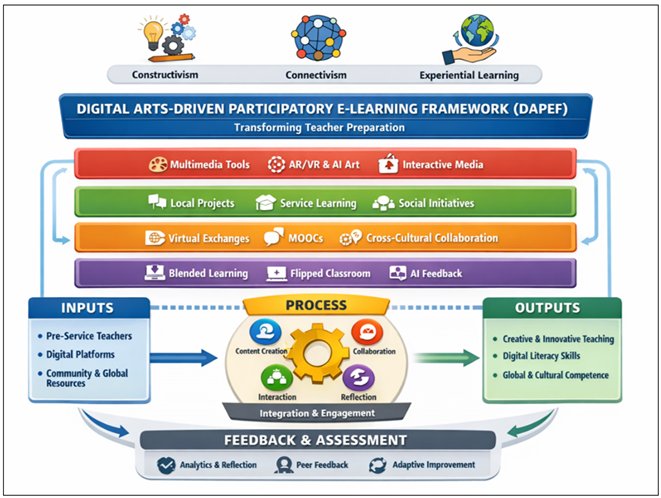
Figure 1 Framework for Digital Arts Driven Participatory E-Learning
The Digital Arts -based Participatory E-Learning Framework (DAPEF) is created as a multi-layered conceptual framework that can transform teacher preparation as a traditional and stereotypical process into a creative, interactive, and global process. The model uses four main dimensions, which are digital arts, community engagement, global learning, and pedagogical innovation, to generate future educators that can be dynamic, creative and technologically competent. The first layer is the input level which is at the bottom of the framework and is concerned with the pre-service teachers and digital technologies and contextual resources such as the knowledge of the community and the international learning platforms. The first level is this layer, as in it the students are introduced to digital tools (e.g. multimedia software, AI-based creative tools, AR/VR experiences) and oriented towards collaborative and experiential learning. These inputs ensure that the training of teachers begins with introduction into the technology potential and the real world. It is a framework that is founded on three interrelated domains. The first one is digital arts integration that acts as the driving force of creativity and innovation. Digital storytelling, the development and design of interactive media and animation engage learners in the active process of knowledge creation and help them become digitally fluent. This domain advances the fact that creativity is not a topic of conversation, but a pedagogical tool.
The second one is community engagement that defines the contextual and socially relevant learning. Pre-service teachers are teachers who participate in community based projects, service learning and participatory media in which knowledge in the classroom is connected to the real life issues. This will build an understanding, culturally aware and socially responsible personality, which is a pre-requisite of the modern day teacher. The third one is global learning that broadens the context of education with regards to the local situations. The model supports cross-cultural communication and exchange of learning through the global e-learning platforms, virtual exchange programs and international collaborations. The dimension will make teachers operate efficiently in multicultural environments that are very diverse to increase inclusiveness and global awareness. These three areas are where the layer of pedagogical innovation fits and supports the new current teaching practices which are blended learning, flipped classroom and participatory e-learning. The current stratum can ensure that the idea about the combination of digital arts and collaborative practice would be altered into the effective instructional design and learner-centered approaches. The process flow of the framework is a circle and repetition; it is based on content creation, collaboration, interaction, reflection, and adaptation. This cycle of process helps teachers to enhance practice through feedback and evolving learning needs. It also improves life time learning and development. Finally, the output layer is able to show the outputs of the framework including the improved creativity, the degree of digital literacy, the degree of pedagogical competence, the degree of global and cultural awareness. These are as well the outcomes that contemporary teachers in the 21st century are supposed to possess.
4. Methodology
The research design proposed to be used in the study is a mixed method study in order to comprehensively examine the application of the proposed Digital Arts-Driven Participatory E-Learning Framework (DAPEF) in transforming the teacher preparation. To have an all-encompassing perspective on the role of digital arts, community engagement, and global learning in pedagogy development, the mixed-method method will be applied to combine both the quantitative and qualitative research methods. The integration of these techniques makes it simple to conduct data triangulation, which ensures enhanced validity and reliability of the findings. The research is conducted in the context of the tertiary education institutions offering teacher training programmes, particularly, the ones offering digital learning environment and creative courses. The target population will comprise of pre-service teachers enrolled in Bachelor of Education (B.Ed.) programs or equivalent programs and teacher educators and academic coordinators. The sample population that has already encountered digital tools or is engaged in the creative learning process will be identified via the purposive sampling. It will consist of approximately 100-150 pre-service teachers and 1015 faculty members in such a way that adequate numbers of both statistical analysis and qualitative data may be obtained. The study will be structured into three phases, that is, design and implementation, data collection, and assessment. DAPEF model is done during the first stage using structured intervention programme during 68 weeks. This period is characterized by a set of activities that are used by the participants based on the components of the framework. They include digital art production work (such as multimedia storytelling and visual design), community-based work (such as local cultural documentation or community social consciousness raising), and global collaborative work (such as virtual work or global group work with international students). The intervention is facilitated through digital platforms (Learning Management Systems (LMS), collaborative tools and virtual communication technologies).
The data collection employs multiple instruments to capture quantitative as well as the qualitative aspect of learning. It is pre- and post-intervention surveys that identify the modification of the competencies of the participants, creativity, digital literacy, collaboration skills, and global awareness. The survey scales will be constructed on the Likert-scale questions and will be tested with the assistance of the expert review and pilot testing to become reliable. Besides, structured questionnaires are used to determine what the participants feel about the framework and how well it works in assisting them to enhance readiness in teaching. To complement the quantitative data, the qualitative methods are employed which involve semi-structured interviews, focus group discussions, and reflective journals. The interviews of the selected participants and the faculty members will provide further understanding of their experiences, challenges and their views concerning the DAPEF model. The focus group discussions will encourage group thinking and help to uncover the commonality in terms of engagement, learning outcomes, and impediments to implementation. The reflective journals kept by the participants throughout the intervention period indicate the learning processes, productively creative, and personal development of the participants. The information that was gathered is analyzed using the assistance of relevant statistics and thematic analyses. The quantitative data on the surveys are analyzed using descriptive and inferential statistics (paired t-tests), to determine the significance of the changes in the results in the pre- and post-intervention. Major competencies will be evaluated in reference to the impact of the framework on the frameworks in the analyses. Thematic analysis is the method of analysis of the qualitative data (interviews, discussions, journals) basing on the recognition of the recurrent patterns and themes, coding and interpretation. This approach provides a contextual feel and the quantitative results are supported by this approach. To ensure that the study can be valid and reliable, several measures are embraced. Instrument validity is established through expert reviews and pilot tests whilst reliability can be established through reference to the statistic values of Cronbachs alpha. The validity of the findings is enhanced by the use of concurrent sources of data (surveys, interviews, and observations). Further, the aspects of ethics are followed i.e. informed consent, confidentiality of the participant data and voluntary participation. The proposed model in question is assessed with respect to numerous levels, including learning outcomes, levels of engagement, and pedagogical competence. The effectiveness of the framework is analyzed by the indicators that are the advancement in the creative output, utilization of digital tools, the effective application of collaborative learning, and the global outlook. The benefits and drawbacks of the intervention considering the DAPEF are also compared to the traditional teaching approaches to describe the advantages and limitations of the approach.
5. Proposed Model Implementation and Workflow
The given model is implemented in the modular and activity based mode, based on which the pre-service teachers are engaged actively in digital, collaborative, and experiential learning conditions. The orientation stage will be the starting point of the implementation as the participants will be introduced to digital tools, creative platform, and collaborative technologies. This move will ensure that the participants possess at least the level of digital skills required to be successful participants in the learning process. There are also multimedia design software, virtual collaboration and Learning Management Systems (LMS) which facilitate creative learning and participatory learning. The model prominently jumps to the digital arts integration as the part of the implementation in the center stage following the orientation. Digital storytelling, animation, production of interactive media, and design of visual communication is the activities that are involved in this stage. These assignments are aligned with the pedagogical objectives, and the participants will be able to know how it is achievable to include digital arts in the teaching concerning a subject. It is oriented towards learning-by-creating whereby the participants can enable them to gain technical and creative competencies during the process of designing learning materials. The second phase is the community engagement whereby the members apply what they have been learning in the real world. This includes some of the initiatives such as the digitalization of the local cultural practices, conducting awareness programmes on the social problems or collaborating with the community groups. This step brings more interaction of the theoretical and the practical and the appreciation of the social responsibility and the understanding the context. It also enhances the ability of the learners to come up with comprehensive and culturally appropriate approaches of teaching.
The model is extended by the international learning stage which incorporates international collaboration and cross-cultural communication. They take part in the virtual exchange programs, joint projects with international students, and Internet-based discussions in which the participants are exposed to other perspectives. This phase employs the digital platforms to facilitate the exchange of knowledge and communication even across geographical boundaries. It promotes intercultural competence, and prepares educators to be able to work in an inter-connected educational environment around the world. Participatory e-learning workflow is a construct that makes the process of implementation easier and it is a cycle:
1) Production of Content- The participants generate electronic learning tools and artistic output.
2) Collaboration - The students are taught to work with teams, regionally and internationally, in generating knowledge.
3) Interaction Interaction via discussions, peer reviews and online.
4) Reflection - On the one hand, the participants evaluate their learning processes with journals and feedback.
5) Adaptation- The instructional methods and products are ameliorated in regards to insights and feedback.
This is an ongoing process of self-improvement and this facilitates the reflective practice that is always desirable in the profession development in teaching. The model evaluates using formative and summative approaches to assessment. The peer feedback, instructor observation, and reflective journal are forms of formative assessment that provide a continuous feedback concerning the progress of the learner. The rubrics are directed at reviewing creativity, technical proficiency, collaboration, and pedagogical proficiency. An implementation of the DAPEF model is also technology based through feedback mechanism (analytics created by LMS platforms) and AI based feedback tools. The systems enable the instructors to personalize the instruction and support through provision of real-time data on the engagement, performance, and even participation by the learners. Besides, the model will be replicable and implemented in other learning contexts. It can be used in both online and blended learning environments and thus can apply in any number of institutional environments. The modular format provides the educators with a chance to plan the activities based on resources they have, the requirements of the curriculum and the requirements of the learners. The outcomes to be expected with the implementation are increased digital literacy, creativity, teamwork, and global recognition of pre-service teachers. Moreover, the model enhances the development of new teaching practices that are consistent with the new educational needs
Figure 2
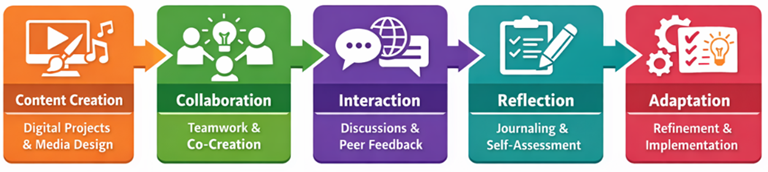
Figure 2 Participatory E-Learning Workflow
The Figure 2 is cyclic participatory e-learning workflow which was embraced in the suggested framework. It begins with Content Creation whereby students develop digital projects through assistance of tools that are creative. It is followed then by Collaboration where the learners develop knowledge together and collaborate. Exchanging ideas is done during Interaction stage through the use of discussions and peer feedbacks. Then there is Reflection in which learners are able to perform self-reflection and journaling of their work. Finally, in Adaptation, the learners enhance and refine the work based on the feedback. It repeats itself again and the cycle goes on in an endless process of learning, enhancing and acquiring knowledge.
6. Results, Comparative Analysis, and Discussion
The quantitative research shows that there has been a great improvement in the competencies of the participants upon the introduction of the DAPEF model. All survey outcomes of the pre- and post-intervention intervention indicate significant growth in the mean scores of all the parameters assessed. The level of creativity was enhanced because the participants were subjected to digital art activities like multimedia story telling and interactive design. On the same note, there was an increment in digital literacy scores because of the regular exposure to digital tools, platforms, and collaborative technologies. These improvements are statistically significant and proved with the help of paired t-tests and the fact that the proposed framework is effective. Along with the increase in creativity and digital skills, the level of cooperation and engagement improved significantly as well. During the collaborative stages of the model, the participants noted increased interaction, teamwork, and sharing of knowledge. Another tool that reinforced the level of engagement was the use of community-based projects to bridge the gap between learning and practice. Students were more motivated and actively engaged in doing socially relevant and culturally contextualized tasks. These findings are backed by the qualitative data that offers a better perspective of the experiences of the participants. The interviews and reflective journals indicate that the learners found the DAPEF model to be interactive, flexible, and learner-centered. Several responders noted that digital arts have become important in the process of making learning meaningful and interesting. The possibility to cooperate with peers and engage in global learning processes were also marked as one of the main strengths of the framework. Nonetheless, certain issues were identified, such as the initial trouble in adjustment to new technologies and lack of time to complete project-based assignments.
A comparative-based analysis was made between the approach based on the use of the DAPEF and the traditional teacher preparation methods to better understand the effectiveness of the proposed model. The traditional methods are normally lecture based, theory based and constrained in regards to practical involvement. The DAPEF model on the other hand focuses on experiential learning, creativity and participation. The comparison indicates that the suggested model can be much more effective than the traditional approaches in terms of engagement, development of the skills, and the ability to work in digital settings.
Table 2
|
Table 2 Comparative Analysis of Traditional vs. DAPEF Model |
||
|
Criteria |
Traditional Approach |
DAPEF Model |
|
Teaching Style |
Lecture-based |
Participatory & experiential |
|
Creativity Development |
Limited |
High (digital arts integration) |
|
Digital Literacy |
Basic |
Advanced |
|
Collaboration |
Minimal |
Strong (local & global) |
|
Community Engagement |
Rare |
Integrated |
|
Global Exposure |
Limited |
High |
|
Learner Engagement |
Moderate |
High |
As Table 2 reveals, the DAPEF model can help in the formation of teaching abilities of the 21st century, such as critical thinking, problem-solving, and flexibility. Digital arts allow instructors to create new and interactive learning environments, whereas community and global interaction allow developing cultural sensitivity and inclusivity. Although the results of these positive outcomes were realized, there were some limitations realized. Implementation of the framework presupposes the availability of digital infrastructure and technological resources, which are not always equally available in all institutions. Also, the effectiveness of the model will be based on the willingness of teachers to learn new pedagogical strategies and incorporate technology in the most effective way. As can be seen in the discussion, the DAPEF model is correlated with modern trends in education that have directed their focus towards learner-centered, technology-based, and global education. The results imply that incorporation of digital arts and participatory e-learning may result in substantial teacher preparation and the reduction of the drawbacks of traditional models. The framework does not only enhance technical and creative expertise but also equips the educators to operate in a varied and dynamic learning setting.
Figure 3
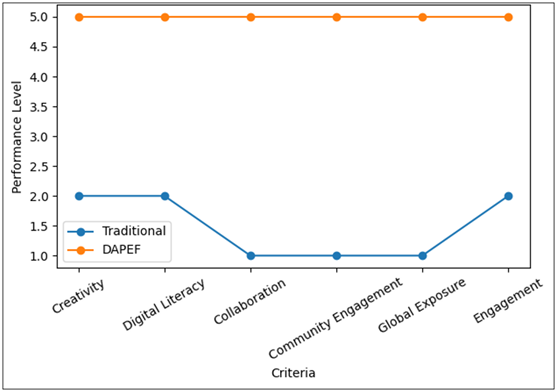
Figure 3 Comparative Analysis: Traditional Vs. DAPEF Model
As can be noticed in Figure 3, there is a consistent improvement of the DAPEF model over the traditional approach in all dimensions but in collaboration, community engagement, and global exposure, the latter has the lowest scores. This is one of the strengths of participatory, digital-based arts learning.
7. Conclusion and Future Directions
This paper discussed the potential transformations of teacher preparation through the proposed Digital Arts-Driven Participatory E-Learning Framework (DAPEF) involving integration of digital arts, community involvement as well as global learning. These findings reveal that the traditional teacher education models, which usually include theoretical learning and little practical learning, cannot be used to fulfill the requirements of the current digital and global learning settings. By comparison, the DAPEF model is a learner-centered and technology-enabled approach to teaching that is holistic and improves the teaching competencies and learning experiences significantly. The study results show that the application of the DAPEF framework results in significant changes in such main aspects of the study as creativity, digital literacy, collaboration, and global awareness. The model promotes creativity in thinking and, as a result, it allows the teacher to develop interesting and interactive learning activities by integrating digital arts in their pedagogical methods. Contextualized and socially valid teaching is achieved by the presence of community-based learning, and intercultural competence and readiness of educators to work in various institutional settings is facilitated by the inclusion of global learning environments. A key contribution to this study is that it has resulted in the creation of a conceptual framework that is structured and scalable, and bridges the gap between theory and practice in teacher education. Proposed model not only combines various aspects of current education but also offers a very definite workflow to be followed in its implementation, such as content creation, collaboration, interaction, reflection, and adaptation. The cyclical process facilitates the ongoing learning and professional growth and, this way, the framework can be changed based on the changing needs of education.
Although the study has positive aspects, it has been noted to have some limitations. The effectiveness of the implementation of the DAPEF model will be contingent on the presence of the digital infrastructure, access to the technological means, and the willingness of the institutions and instructors to accept new methods of pedagogy. Moreover, the research was carried out under a certain educational setting which could restrict the extrapolation of the results to other areas or fields. The time was also a problem since some participants were not as digital savvy as others, and this created difficulty in the implementation process. Regarding the practical implications, the results indicate that training schools must focus on using digital art and participatory e-learning practices in training programs of teachers. The policy makers and curriculum designers are advised to install interdisciplinary methods that integrate creativity, technology and community involvement. Moreover, the professional development programs must be structured in such a way that they increase the level of digital competencies of the teachers and facilitate the implementation of innovative teaching strategies.
CONFLICT OF INTERESTS
None.
ACKNOWLEDGMENTS
None.
REFERENCES
Broughton, M., and Thorson, C. (2021). Reflections on Distance Learning and Quarantine in Spring 2020: The Oxbow School's Pandemic Story. Art Education, 74, 24–27. https://doi.org/10.1080/00043125.2021.1954475
Brumfield Montero, J. (2021). Creating Student Relationships: From “Best Practices” to “Next Practices” in a Virtual Classroom. Art Education, 74, 13–18. https://doi.org/10.1080/00043125.2021.1954474
Burke, K. (2021). “How can the Creative Arts Possibly be Taught Online?” Perspectives and Experiences of Online Educators in Australian Higher Education. Asia-Pacific Journal of Teacher Education, 49, 347–361. https://doi.org/10.1080/1359866X.2020.1777531
Gross, K. M. (2020). Social Interaction Development in Inclusive Art Rooms. International Journal of Education Through Art, 16, 129–142. https://doi.org/10.1386/eta_00021_1
Ijdens, T. (2021). Digitalization in/and Arts Education: Opinions and Perceptions from European and Latin American arts education experts. European Network Observatory for Arts Education.
Paek, K. M. (2020). Opportunities and Challenges in Collaborative Reform Practice: School-Community Partnerships Through Art in Korean Schools. International Journal of Art and Design Education, 39, 509–522. https://doi.org/10.1111/jade.12313
Pavlou, V. (2022). Expanding Access to Art Education through Distance Learning: Opportunities for Generalist Teachers. Australian Art Education, 43, 33–53.
Pavlou, V., and Kadji-Beltran, C. (2021). Enhancing Arts Education with Education for Sustainable Development Competences: A Proposed Framework for Visual Arts Education Educators. In E. Wagner et al. (Eds.), Arts, sustainability education: ENO yearbook (Vol. 2, 217–235). Springer. https://doi.org/10.1007/978-981-16-3452-9_11
Sabol, F. R. (2022). Art Education During the COVID-19 Pandemic: The Journey Across a Changing landscape. Arts Education Policy Review, 123, 127–134. https://doi.org/10.1080/10632913.2021.1931599
Sinner, A., Nakamura, K., and Yazdanpanah, E. (2022). Transnational Tomorrows Today. UNESCO Observatory Multidisciplinary E-Journal in the Arts, 8, 1–19.
Song, B., and Lim, K. (2022). Exploring Online Art Education: Multi-Institutional Perspectives and Practices. International Journal of Education Through Art, 18, 325–346. https://doi.org/10.1386/eta_00104_1
Ubachs, G., and Henderikx, P. (2022). Quality Assurance Systems for Digital Higher Education in Europe. In Handbook of Open, distance and digital education (pp. 1–20). Springer Nature. https://doi.org/10.1007/978-981-19-0351-9_41-1
Vella, R., and Pavlou, V. (2024). Learning Communities and Creative Actions for a More Sustainable Planet. In R. Vella and V. Pavlou (Eds.), Art, Sustainability and Learning Communities (1–10). Intellect. https://doi.org/10.1386/9781789388978_1
Wilson, M., and Snæbjörnsdóttir, B. (2022). Art, Belonging, and Sense and to Whom Nonsense Belongs. In Relational and Critical Perspectives on Education for Sustainable Development: Belonging and Sensing in a vanishing world (19–32). Springer. https://doi.org/10.1007/978-3-030-84510-0_2
World Alliance for Arts Education. (2023). WAAE Report for the Development of the UNESCO Framework for Culture and Arts Education.
|
|
 This work is licensed under a: Creative Commons Attribution 4.0 International License
© ShodhKosh 2026. All Rights Reserved.