ShodhKosh: Journal of Visual and Performing ArtsISSN (Online): 2582-7472
|
|
Latin Dance research during 1996–2025 in the Web of Science Core Collection: a bibliometric analysis
Qi Liang 1
 ,
Muhamad Hafiz Bin Ismail 2
,
Muhamad Hafiz Bin Ismail 2 ,
Diyana Zulaika Binti Abdul Ghani 3
,
Diyana Zulaika Binti Abdul Ghani 3 ,
Mimi Guo 4
,
Mimi Guo 4
1 Faculty
of Educational Sciences and Technology, Universiti Teknologi Malaysia, Skudai,
Johor, Malaysia
2 Faculty
of Educational Sciences and Technology, Universiti Teknologi Malaysia, Skudai,
Johor, Malaysia
3 Faculty of Educational Sciences and Technology, Universiti
Teknologi Malaysia, Skudai,
Johor, Malaysia
4 Faculty of Educational
Sciences and Technology, Universiti Teknologi Malaysia, Skudai,
Johor, Malaysia
|
|
|
ABSTRACT |
|
|
Objective: This study aimed to examine the knowledge structure, developmental trajectory, and research trends of Latin dance research indexed in the Web of Science Core Collection from 1996 to 2025. Specifically, it sought to identify publication patterns, influential sources, leading authors, collaboration networks, major research hotspots, and thematic evolution within the field. Methodology/approach:
A bibliometric analysis was conducted using publications retrieved from the Web of Science Core Collection. The final records were exported in BibTeX format and analyzed in R using the Bibliometrix package and its Biblioshiny interface. The analysis included annual scientific production, most productive sources, most influential authors and documents, author-, institution-, and country-level collaboration networks, keyword frequency and trend-topic analysis, as well as thematic evolution mapping. Originality/Relevance: Although Latin dance has been widely discussed in cultural, artistic, and educational contexts, a comprehensive bibliometric understanding of its intellectual structure and long-term development has remained limited. This study provides a systematic and quantitative overview of the field over a 30-year period and demonstrates how Latin dance research has gradually evolved from a predominantly culture-oriented topic into an interdisciplinary domain increasingly associated with physical activity, health promotion, intervention, and aging-related research. Theoretical/Methodological
Contributions: The findings
reveal a clear thematic shift from early topics such as identity, women,
music, and culture toward more recent emphases on exercise, performance,
physical activity, balance, intervention, and quality of life. The study also
shows that the field is characterized by moderate but sustained growth, a
fragmented yet expanding collaboration structure, and a dual knowledge base
connecting cultural studies with health and movement sciences.
Methodologically, this study demonstrates the value of bibliometric analysis
for mapping the intellectual landscape, collaboration patterns, and emerging
directions of an interdisciplinary research field. The results provide a
useful reference for future studies in dance science, rehabilitation, public
health, healthy aging, and cross-cultural research. |
|||
|
Received 28 February 2026 Accepted 29 March 2026 Published 14 April 2026 Corresponding Author Qi Liang,
qiliang@graduate.utm.my DOI 10.29121/shodhkosh.v7.i1.2026.7269 Funding: This study was
conducted with the support of research supervision and technical facilities
provided by Universiti Teknologi
Malaysia (UTM). No specific external funding or grant number was received for
this research. Copyright: © 2026 The
Author(s). This work is licensed under a Creative Commons
Attribution 4.0 International License. With the
license CC-BY, authors retain the copyright, allowing anyone to download,
reuse, re-print, modify, distribute, and/or copy their contribution. The work
must be properly attributed to its author.
|
|||
|
Keywords: Latin Dance, Bibliometric Analysis, Web of Science,
Thematic Evolution, Physical Activity, Health Promotion |
|||



1. INTRODUCTION
Latin dance, broadly rooted in Latin American social and performance traditions, has developed into a form of practice situated at the intersection of artistic expression, physical activity, and competitive performance. Scholarship on salsa and related Latin dance forms has long emphasized embodiment, identity, globalization, and the social meanings attached to dance participation, showing that Latin dance is not only a movement practice but also a culturally mediated form of self-expression and social interaction Román-Velázquez (1999), Skinner (2007), Bosse (2013), Domene and Morley (2022). In recent years, it has attracted growing academic attention not only as a cultural form, but also as a movement-based activity relevant to health, rehabilitation, and sport science. Recent evidence suggests that Latin dance has been increasingly investigated in relation to physical and mental health outcomes, while intervention studies in older Latino adults have linked Latin dance participation with favorable changes in physical activity, physical function, cardiorespiratory fitness, and cognition Marquez et al. (2014), Marquez et al. (2015), Marquez et al. (2022), Aguiñaga and Marquez (2017), Aguiñaga and Marquez (2019), Aguiñaga et al. (2022), Lopez et al. (2024), Liu et al. (2023). In parallel, research on ballroom dance has highlighted its potential relevance for gait, balance, and quality of life in clinical and aging populations Wells and Yang (2021).
As the literature has expanded, Latin dance has increasingly been examined from a wider range of disciplinary perspectives. Beyond its cultural and pedagogical relevance, recent studies have addressed acute exercise responses, gait-related adaptations, balance performance, lower-limb loading, and psychological outcomes in dancers. For example, community-based studies have shown that salsa dance can elicit meaningful physiological and psychosocial responses, supporting its relevance as a health-promoting activity Domene et al. (2016). Other work has reported better gait symmetry, balance ability, and dynamic postural control in trained Latin dancers than in non-dancer controls Liu et al. (2022), Kılıç and Nalbant (2022). Biomechanical analyses have further identified distinctive lower-limb characteristics during walking in trained Latin dancers, suggesting that long-term dance practice may be associated with specific movement adaptations Gao et al. (2023). At the same time, emerging work on Latin ballroom dancers has explored possible associations with anxiety, depression, and gait biomechanics, while also indicating that the evidence base remains limited and that some findings are mixed rather than conclusive Hanks et al. (2024).
Despite this growing body of research, a macro-level understanding of the field remains comparatively underdeveloped. Existing empirical and review studies have mainly focused on discrete topics such as intervention effects, rehabilitation outcomes, cultural identity, or specific biomechanical variables. These studies are valuable, but they do not readily show how the field has evolved over time, which authors, institutions, and countries have driven its development, how collaboration patterns are structured, or which themes have emerged, persisted, or declined across periods. Bibliometric analysis is well suited to addressing such questions because it enables the quantitative mapping of publication output, citation impact, collaboration networks, and thematic development within a research domain Aria and Cuccurullo (2017), Zupic and Čater (2015).
Therefore, the present study conducts a bibliometric
analysis of Latin dance research indexed in the Web of Science Core Collection
from 1996 to 2025. Using Bibliometrix and Biblioshiny, this study examines publication trends,
influential sources, leading contributors, collaboration networks, keyword
co-occurrence, and thematic evolution. By providing a structured overview of
the intellectual landscape of Latin dance research, this study aims to clarify
the field’s developmental trajectory and to offer a reference point for future
work in dance studies, health promotion, rehabilitation, and sport science Aria and Cuccurullo (2017).
2. Materials and Methods
2.1. Data Source
This study conducted a bibliometric analysis of Latin dance research based on publications indexed in the Web of Science Core Collection (WoSCC). Literature published between 1996 and 2025 was retrieved from WoSCC to provide a structured overview of the development of this field. WoSCC was selected because it is widely used in bibliometric studies and provides standardized bibliographic information suitable for science mapping and performance analysis Mongeon and Paul-Hus (2016), Donthu et al. (2021).
2.2. Search Strategy and
Eligibility Criteria
To ensure broad retrieval coverage, the search strategy
included the core term “Latin dance” as well as related terms representing
competitive and social Latin dance forms, including “sports dance,” “latin dance,” “Cha-cha-cha,” “Samba,” “Jive,” “Paso Doble,”
“Salsa,” and “Bachata.” The detailed publication selection procedure is
presented in Figure 1.
Figure 1
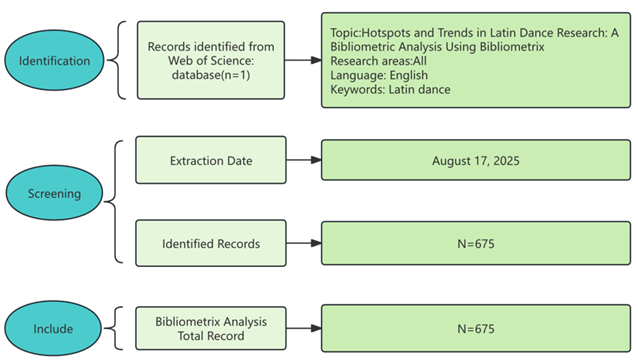
Figure 1 Flowchart of the Publication Selection Process.
Records were screened according to predefined eligibility criteria. Publications were excluded if they were unrelated to Latin dance, did not address sport, physical performance, or health-related topics, or were published in languages other than English. After screening and eligibility assessment, the remaining records were included in the final dataset for bibliometric analysis.
2.3. Data Extraction and
Bibliometric Analysis
The final dataset was exported in BibTeX format and analyzed using the Bibliometrix package in the R environment through its web-based interface, Biblioshiny Aria and Cuccurullo (2017). The analytical procedures included descriptive analysis of annual scientific production, document types, and growth trends; collaboration network analysis at the author, institution, and country levels; keyword frequency and co-occurrence analysis; thematic evolution analysis; and citation-based and social network analyses. These procedures are commonly used in bibliometric research to identify knowledge structures, research hotspots, and the developmental trajectory of a research field Zupic and Čater (2015), Donthu et al. (2021).
3. Results
3.1. Main information
Figure 2 shows the general bibliometric characteristics of Latin dance research from 1996 to 2025. A total of 675 documents were published across 393 sources, involving 5,295 authors, with an average of 8.59 co-authors per document, whereas only 367 authors contributed to single-authored papers, indicating that research in this field is mainly collaboration-based. The proportion of international co-authorship was 15.85%, suggesting that cross-national collaboration exists but remains limited. In addition, the dataset included 1,467 authors’ keywords and 18,668 references, reflecting considerable thematic diversity and a broad knowledge base. The annual growth rate was 2.56%, the document average age was 10.2 years, and the average citations per document was 3.973, indicating steady but moderate development of the field. Compared with adjacent dance-related bibliometric fields, Latin dance research appears to show relatively lower growth and citation impact, as dance medicine and dance science reported an average annual growth rate of 11.04% Brown-Appenzeller et al. (2025), whereas dance therapy in rehabilitation reached a compound annual growth rate of 19.34% with an average of 19.4 citations per publication Yang et al. (2026).
Figure
2
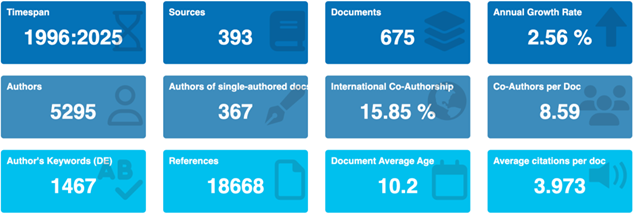
Figure 2 Main Information
3.2. Annual Publication Output and
Citation Trends
Figure 3 shows that the annual scientific production on Latin dance research generally increased from 1996 to 2025, despite some fluctuations. Publication output remained low in the early stage (1996–2007), reaching its minimum in 2001 (n = 1). From 2008 onward, the number of publications showed a clear upward trend, rising from a moderate level in 2008–2015 to a relatively stable level in 2016–2019. A marked increase was observed after 2020, with annual outputs of 52, 49, 53, and 54 publications from 2020 to 2023, respectively, and the highest value recorded in 2023. Although the number declined to 47 in 2024 and 25 in 2025, the lower value in 2025 is likely related to incomplete indexing of the current year. Overall, the trend indicates that Latin dance research has experienced progressive expansion, especially in recent years.
Figure 3
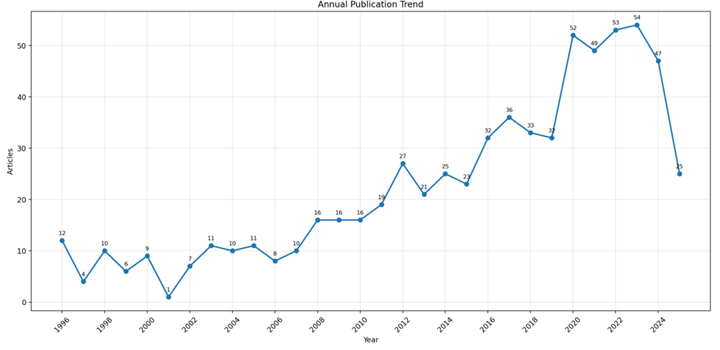
Figure 3 Annual Publication Trends in Latin Dance Research from 1996 to 2025.
3.3. Most Productive Sources and
Core Journals
3.3.1.
Most Relevant Sources
Figure 4 presents the most
productive sources in Latin dance research. Among all sources, LATIN AMERICAN
MUSIC REVIEW–REVISTA DE MUSICA LATI ranked first with 47 documents, far
exceeding the other publication venues. This was followed by DANCE MAGAZINE and
LATIN AMERICAN PERSPECTIVES, each with 17 documents, then DANCING TIMES (16),
LATIN AMERICAN THEATRE REVIEW (15), and LATIN AMERICAN RESEARCH REVIEW (14).
Several other sources contributed a moderate number of publications, including
ANNALS OF BEHAVIORAL MEDICINE (10), JOURNAL OF LATIN AMERICAN AND CARIBBEAN
ANTHROPOLO (9), and JOURNAL OF LATIN AMERICAN STUDIES (9). Overall, the
distribution indicates that Latin dance research is concentrated mainly in
journals related to Latin American culture, music, theatre, and dance, while a
smaller proportion of studies has been published in health- and
psychology-related journals, reflecting the interdisciplinary nature of the
field.
Figure
4
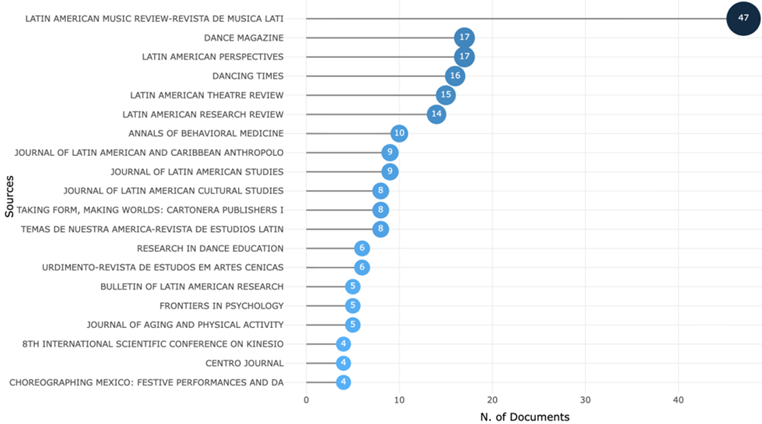
Figure 4 Most Productive Sources in Latin Dance Research
3.3.2.
Most Local Cited Sources
Table 1 presents the most locally cited sources in Latin dance research. Among them, Medicine & Science in Sports & Exercise (MED SCI SPORT EXER) ranked first with 114 local citations, indicating that sports science and exercise-related literature forms the most important knowledge base of this field. THESIS ranked second with 68 citations, followed by Journal of Aging and Physical Activity (J AGING PHYS ACTIV, 64) and Journal of Dance Medicine & Science (J DANCE MED SCI, 62). Other highly cited sources included PLOS ONE (58), Dance Research Journal (57), Frontiers in Psychology (52), Gait & Posture (48), Latin American Music Review (48), and International Journal of Environmental Research and Public Health (47). Overall, the distribution of local cited sources suggests that Latin dance research is supported by an interdisciplinary knowledge base, mainly drawing on sports science, aging and physical activity, dance medicine, biomechanics, psychology, and public health, while also retaining important links to music and cultural studies.
Table 1
|
Table 1 Most Local Cited Sources in Latin Dance Research |
|
|
Sources |
Articles |
|
MED SCI SPORT EXER |
114 |
|
THESIS |
68 |
|
J AGING PHYS ACTIV |
64 |
|
J DANCE MED SCI |
62 |
|
PLOS ONE |
58 |
|
DANCE RES J |
57 |
|
FRONT PSYCHOL |
52 |
|
GAIT POSTURE |
48 |
|
LAT AM MUSIC REV |
48 |
|
INT J ENV RES PUB HE |
47 |
|
LECT NOTES COMPUT SC |
47 |
|
ETHNOMUSICOLOGY |
45 |
|
SPORTS MED |
42 |
|
MED PROBL PERFORM AR |
41 |
|
COMMUNICATION |
40 |
|
BRIT J SPORT MED |
39 |
|
J GERONTOL A-BIOL |
36 |
|
FRONT AGING NEUROSCI |
35 |
3.4. Leading Authors and Author
Impact
3.4.1.
Authors’ Productivity over Time
Figure 5 illustrates the publication activity and temporal distribution of key authors between 2000 and 2025. Overall, the productivity of authors in the field of Latin dance research exhibits clear stages and fluctuations: early on, fewer authors were active, and publications were scattered; since 2010, the number of authors has gradually increased, especially during 2021-2024, when a more concentrated period of author activity emerged, indicating a significant increase in research participants and a relatively active phase of academic output in recent years.
In terms of sustainability, MARQUEZ DX and AGUINAGA S have long periods of activity, both continuing from around 2011 to 2025, and publishing in multiple years, demonstrating their strong and consistent contributions and stable research participation in the field. In contrast, some authors, although active for shorter periods, exhibited large bubbles in certain years, indicating a concentration of publications within specific timeframes. For example, authors such as CORDIOLI M, KANAI M, RACHEL R, and ANTONIO A produced significant output around 2023, demonstrating the driving force of this emerging group of authors in the field in recent years.
In summary, author productivity has shown a trend of increasing concentration over time, moving from a scattered distribution, indicating that the academic community for Latin dance research is gradually expanding and exhibiting stronger research activity in recent years.
Figure
5
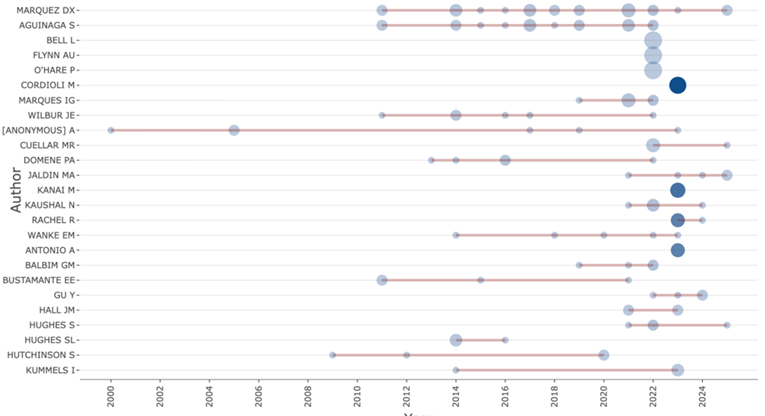
Figure 5 Authors’ Productivity Over Time
3.4.2.
Author Impact within the Field
Figure 6 presents the most locally cited authors in Latin dance research, reflecting the authors with the greatest influence within the dataset itself. Among all authors, MARQUEZ DX ranked first with 40 local citations, followed by AGUINAGA S with 31, indicating that these two authors occupy the most prominent positions in the intellectual structure of the field. BUCHNER DM ranked third with 21 local citations, while WILBUR JE (17), BUSTAMANTE EE (16), and HERNANDEZ R (16) also showed relatively strong local influence. In addition, BALBIM GM and MARQUES IG each received 15 local citations, and several other authors, including HUGHES S, KAUSHAL N, MCAULEY E, SANCHEZ R, VASQUEZ PM, WANG T, and WILSON, each recorded 12 local citations. Overall, the distribution suggests that author impact in Latin dance research is relatively concentrated, with a small number of highly cited authors forming the core knowledge base of the field, while a broader group of authors contributes moderate but important influence.
Figure 6
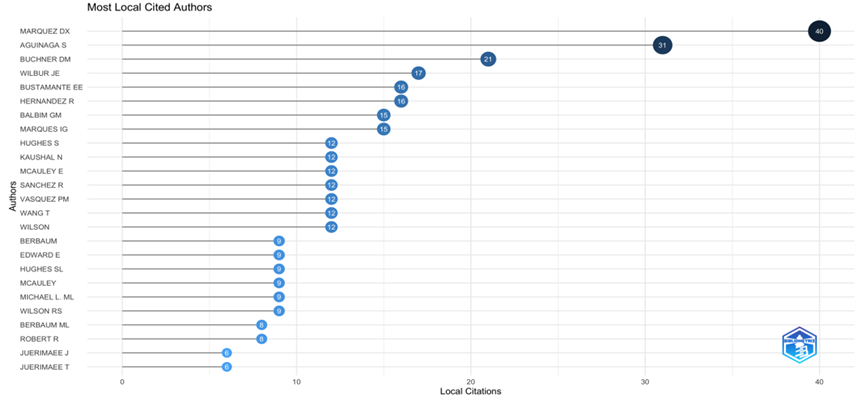
Figure 6 Most Local Cited Authors
3.4.3.
Distribution of Author Productivity
Figure 7 illustrates the distribution of author productivity in the field of Latin dance research based on Lotka's law. The results show a highly skewed distribution, with the vast majority of authors having published only one paper, and the proportion of authors decreasing sharply as the number of published papers increases. Authors who have published two to three papers constitute only a small percentage, while those who have published four or more papers are extremely rare. This pattern suggests that the field of Latin dance research is primarily dominated by a large number of authors who publish only occasionally and a very small number of highly productive authors. Furthermore, the observed rate of decline in the distribution curve appears steeper than the theoretical Lotka curve, indicating that author productivity in this field is more concentrated among a low-productivity group than expected by standard bibliometric distributions.
In summary, the results indicate that a large and stable core of highly productive authors has not yet formed in this field, and its knowledge production still relies primarily on the scattered contributions of numerous independent researchers.
Figure
7
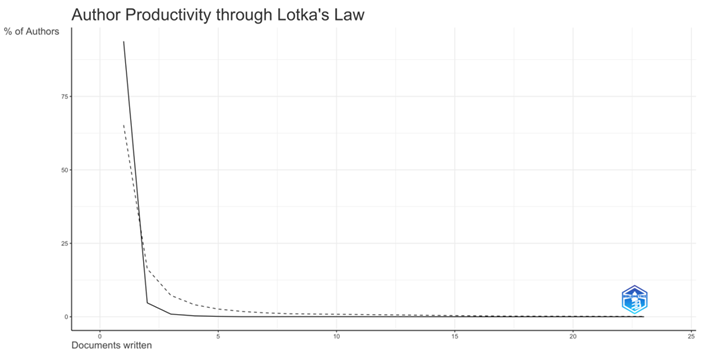
Figure 7 Author Productivity through Lotka's Law
3.5. Highly Cited Documents and
Intellectual Basis
3.5.1.
Most Global Cited Documents
Table 2 lists the most cited papers globally in the Latin dance research dataset. In terms of total citations, RAYMOND J (2005, Applied Psychophysiology and Biofeedback) tops the list with 121 citations, followed by AUMASSON JP (2008, Fast Software Encryption) with 98 citations, and OLVEA N (2010, Obesity) with 68 citations. Recently published highly cited papers include KANAI M (2023, Nature) with 66 citations and GOULD CC (2018, Bioethics) with 53 citations. Overall, the results indicate that the most cited papers globally in the dataset are concentrated in a relatively small number of papers, suggesting that a few high-impact papers contribute disproportionately to the overall citation impact of the field.
Examining citation impact from a time-adjusted perspective, KANAI M (2023) has the highest annual total citations (TC) and normalized total citations (TC) (16.50), indicating exceptionally strong recent citation performance. Following closely are GOULD CC (2018) with 13.66 normalized total citations; OLVERA N (2010) with 11.22; and AUMASSON JP (2008) with 10.97. In contrast, some earlier published works, such as PIERRO A (2003) and BOSSE J (2007), while having moderate total citations, have lower annualized impact, reflecting the influence of publication time on citation accumulation.
In summary, these findings suggest that long-term citation accumulation and recent citation momentum jointly shape the global impact pattern of retrieved literature.
Table 2
|
Table 2 Most Global Cited Documents |
|||
|
Paper |
Total Citations |
TC per Year |
Normalized TC |
|
RAYMOND J, 2005, APPL
PSYCHOPHYSIOL BIOFEEDBACK |
121 |
5.5 |
9.58 |
|
AUMASSON JP, 2008,
FAST SOFTWARE ENCRYPTION |
98 |
5.16 |
10.97 |
|
OLVERA N, 2010,
OBESITY |
68 |
4 |
11.22 |
|
KANAI M, 2023, NATURE |
66 |
16.5 |
18.47 |
|
GOULD CC, 2018,
BIOETHICS |
53 |
5.89 |
13.66 |
|
SANCHEZ R, 2016,
DANCING JACOBINS: A VENEZUELAN GENEALOGY OF LATIN AMERICAN POPULISM |
48 |
4.36 |
9.91 |
|
KUNKEL D, 2017, CLIN
REHABIL |
43 |
4.3 |
5.25 |
|
GUZMAN-GARCIA A, 2013,
DEMENT-INT J SOC RES PRACT |
40 |
2.86 |
7.18 |
|
MARQUEZ DX, 2017, J
AGING PHYS ACT |
40 |
4 |
4.88 |
|
PIERRO A, 2003, SELF
IDENTITY |
40 |
1.67 |
5.12 |
|
DA SILVA BORGES EG,
2012, ARCH GERONTOL GERIATR |
35 |
2.33 |
8.51 |
|
BRIA S, 2011, J SPORTS
MED PHYS FIT |
35 |
2.19 |
5.59 |
|
FROMONT C, 2013, COLON
LAT AM REV |
32 |
2.29 |
5.74 |
|
DOMENE PA, 2016, J
SPORTS SCI |
32 |
2.91 |
6.61 |
|
Marquez et al. (2015), HEALTH EDUC BEHAV |
31 |
2.58 |
4.99 |
|
HULBERT S, 2017,
COMPLEMENT THER MED |
31 |
3.1 |
3.78 |
|
CHAN JSY, 2020,
NEUROSCI BIOBEHAV REV |
30 |
4.29 |
10.06 |
|
BOSSE J, 2007, J AM
FOLK |
29 |
1.45 |
4.14 |
|
AGUINAGA S, 2019, J
AGING HEALTH |
28 |
3.5 |
10.8 |
|
Marquez et al. (2014), CONTEMP CLIN TRIALS |
28 |
2.15 |
4.96 |
3.5.2.
Most Local Cited Documents
Table 3 lists the most frequently cited publications in the field of Latin dance research, reflecting the most influential publications in the retrieval dataset. Among all publications, Marquez et al. (2015) ranks first with 16 local citations, followed by Marquez et al. (2014) with 9 local citations, and Marquez et al. (2022) with 8 local citations. This result indicates that the research of Marquez and colleagues occupies a central position in the internal knowledge structure of this field.
Regarding the relationship between local and global influence, Marquez et al. (2015) has the highest local/global influence ratio (51.61%), followed by ADILOGULLARI I (2014) (50.00%) and Marquez et al. (2022) (42.11%), suggesting that these studies are not only cited globally but also highly relevant within the field of Latin dance research itself. In contrast, some publications, such as SANCHEZ R (2016) and LIIV H (2014), while having relatively high global citation counts, have low local/global impact ratios (8.33% and 14.81%, respectively), suggesting their citation impact may extend beyond the field of Latin dance itself.
In terms of standardized metrics, Marquez et al. (2022) has the highest standardized local citation count (35.33), followed by Marquez et al. (2015) (23.00) and AGUINAGA S (2022) (17.67), indicating that these recently published papers still possess particularly strong internal impact after adjusting for publication year.This internal prominence is consistent with the central role of the BAILAMOS/BAILA intervention line in Latin dance research, particularly in relation to physical activity promotion and cognitive health among middle-aged and older Latinos Marquez et al. (2014), Marquez et al. (2015), 2022, Aguiñaga et al. (2022).
In summary, the results indicate that the most locally cited literature is concentrated in a few core studies, primarily concerning health behaviors, intervention design, aging, and physical activity, which together constitute an important knowledge base for Latin dance research.
Table 3
|
Table 3 Most Local Cited Documents |
||||||
|
Document |
Year |
Local Citations |
Global Citations |
LC/GC Ratio (%) |
Normalized Local
Citations |
Normalized Global
Citations |
|
Marquez et al. (2015), HEALTH EDUC BEHAV |
2015 |
16 |
31 |
51.61 |
23 |
4.99 |
|
Marquez et al. (2014), CONTEMP CLIN TRIALS |
2014 |
9 |
28 |
32.14 |
10.23 |
4.96 |
|
Marquez et al. (2022), ANN BEHAV MED |
2022 |
8 |
19 |
42.11 |
35.33 |
6.25 |
|
ADILOGULLARI I, 2014,
ANTHROPOLOGIST |
2014 |
4 |
8 |
50.00 |
4.55 |
1.42 |
|
LIIV H, 2014, EUR J
SPORT SCI |
2014 |
4 |
27 |
14.81 |
4.55 |
4.79 |
|
DOMENE PA, 2016, J
SPORT HEALTH SCI |
2016 |
4 |
19 |
21.05 |
7.53 |
3.92 |
|
SANCHEZ R, 2016,
DANCING JACOBINS: A VENEZUELAN GENEALOGY OF LATIN AMERICAN POPULISM |
2016 |
4 |
48 |
8.33 |
7.53 |
9.91 |
|
SANCHEZ R, 2016,
DANCING JACOBINS: A VENEZUELAN GENEALOGY OF LATIN AMERICAN POPULISM-a |
2016 |
4 |
0 |
7.53 |
0.00 |
|
|
SANCHEZ R, 2016,
DANCING JACOBINS: A VENEZUELAN GENEALOGY OF LATIN AMERICAN POPULISM-a-b |
2016 |
4 |
0 |
7.53 |
0.00 |
|
|
AGUINAGA S, 2022,
FRONT AGING NEUROSCI |
2022 |
4 |
15 |
26.67 |
17.67 |
4.94 |
3.6. Collaboration Network of
Authors, Institutions, and Countries
3.6.1.
Author Collaboration Network
Figure 8 illustrates the author collaboration network in the field of Latin dance research. This network consists of several relatively independent clusters, indicating that collaboration in this field primarily occurs within small research teams rather than within highly integrated author groups. Among all authors, Marquez DX occupies a central position, forming the largest collaborative cluster, closely linked with authors such as Wilbur JE, Marques IG, Bustamante EE, and Hughes SL, suggesting that this team plays a dominant role in the collaborative structure of the field.
Besides the Marquez-centered cluster, several smaller but well-defined collaborative groups can be observed, including the Kanai M cluster, the Flynn AU cluster, the Groneberg DA–Wanke EM cluster, the Alvarez C–Cadore EL cluster, the Soh KG–Liu X cluster, and the Gu Y–Xu D cluster. However, these groups exhibit limited connections and a lack of inter-group communication.A similarly clustered but geographically concentrated collaboration pattern has also been reported in the broader field of dance medicine and dance science Brown-Appenzeller et al. (2025).
In summary, this network demonstrates that author collaboration in Latin dance research remains fragmented, with a few relatively stable teams dominating knowledge production, while broader cross-team collaboration remains limited.
Figure
8
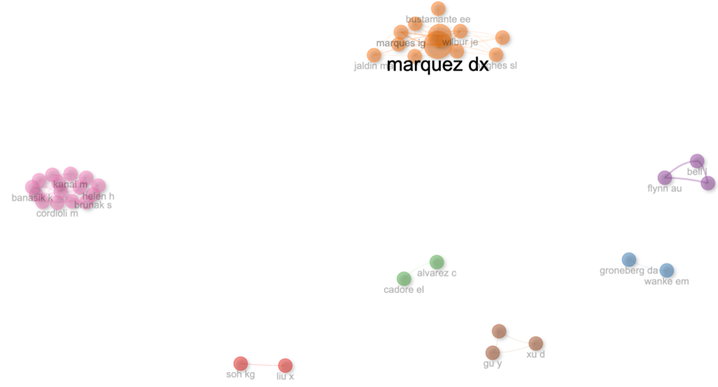
Figure 8 Author Collaboration Network
3.6.2.
Institutional Collaboration Network
Figure 9 illustrates the institutional collaboration network in the field of Latin dance studies. This network exhibits a core-periphery structure, with a few institutions occupying central positions and several smaller institutions situated on the relative periphery. Among all institutions, the University of Illinois and UCLA are the most prominent nodes, indicating their high visibility and collaborative importance within the network. Institutions such as the University of Queensland, the University of São Paulo, the University of Granada, the University of Toronto, the University of California, Davis, and Stanford University also form a close-knit collaborative cluster, indicating that these institutions constitute the main collaborative core of the field.
Meanwhile, the network also includes some smaller and relatively independent groups of institutions. For example, Rush University and Northwestern University are connected to the University of Illinois cluster, while the University of St Andrews and the University of Surrey form a smaller group connected to UCLA. Other institutions, such as Georgetown University, the University of California, Irvine, Newcastle University, the Federal University of Rio Grande do Sul, and the University of Buenos Aires, are located on the network periphery with fewer connections.
In summary, the institutional collaboration model indicates that Latin dance research has received support from a few leading institutions, but collaboration among institutions remains uneven and is not yet highly integrated across the field.
Figure
9
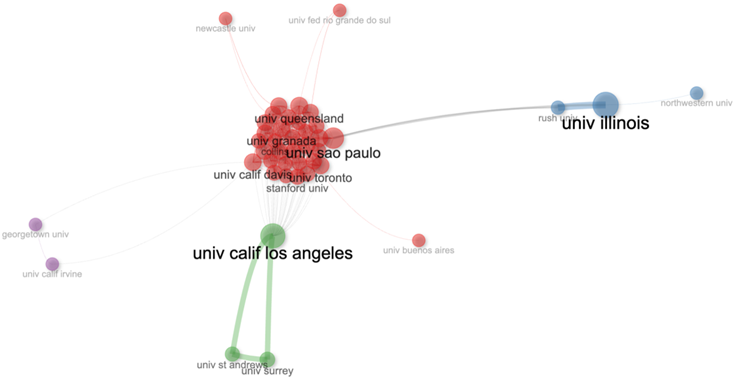
Figure 9 Institutional Collaboration Network
3.6.3.
Country Collaboration Network
Figure 10 illustrates the national cooperation network in the field of Latin dance research. The United States holds a central and dominant position, possessing the largest number of nodes and the strongest international cooperation links. Of particular note is the prominent link between the US and the UK, indicating a strong bilateral cooperation model between the two countries. In addition to this core link, the US has established connections with several other countries, while a dense international cluster has formed among countries such as Spain, Brazil, Italy, and Japan, reflecting active multinational participation in the field.
However, the network also reveals some peripheral countries with relatively weak cooperation, including Israel, Uruguay, Turkey, Slovakia, Venezuela, Slovenia, Croatia, Serbia, and Estonia. These countries are connected to the network only through a few links and do not appear to play a core bridging role.
In summary, this national cooperation network indicates that Latin dance research has developed an international dimension, but global cooperation remains concentrated in a few leading countries, with many other countries relegated to the periphery.
Figure
10
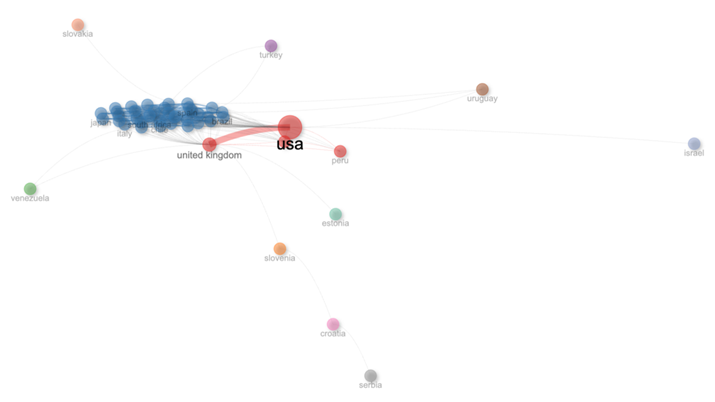
Figure 10 Country Collaboration Network
3.7. Keyword Co-occurrence and
Research Hotspots
Table 4 lists the most frequently used keywords in Latin dance research. Among all keywords, "movement" appeared 31 times, ranking first, followed by "performance" (21 times) and "physical activity" (20 times), indicating that this field primarily focuses on movement participation, physical function, and performance-related outcomes. Additionally, "music" and "program" appeared 18 times each, suggesting that Latin dance research emphasizes not only the movement practice itself but also its musical context and application in structured intervention programs.
Several health-related keywords also appeared frequently, including "adults" (13 times), "balance" (12 times), "intervention" (11 times), "health" (10 times), "fitness" (9 times), "older adults" (8 times), and "quality of life" (8 times). These results indicate that a significant portion of the literature focuses on the application of Latin dance in promoting health, improving function, and in aging populations. Meanwhile, the appearance of keywords such as "children," "adolescents," and "women" suggests that this field also encompasses different age and gender groups, although these keywords appeared less frequently than those related to adults and health.This keyword pattern is consistent with recent evidence showing that Latin dance research has increasingly focused on physical activity, balance, quality of life, and health-related intervention outcomes Liu et al. (2023), Marquez et al. (2022), Aguiñaga et al. (2022).
In summary, the keyword distribution indicates that Latin dance research has gradually evolved from a purely artistic or cultural subject into an interdisciplinary field centered on movement, performance, and health interventions, with a particular focus on physical activity, balance, health, and quality of life.
Table 4
|
Table 4 Most Frequent Keywords |
|
|
Words |
Occurrences |
|
exercise |
31 |
|
performance |
21 |
|
physical-activity |
20 |
|
music |
18 |
|
program |
18 |
|
adults |
13 |
|
balance |
12 |
|
intervention |
11 |
|
dance |
10 |
|
health |
10 |
|
fitness |
9 |
|
older-adults |
8 |
|
quality-of-life |
8 |
|
ballet |
7 |
|
children |
7 |
|
adolescents |
6 |
|
interventions |
6 |
|
validity |
6 |
|
women |
6 |
|
cognitive function |
5 |
3.8. Thematic Evolution and
Development Trends
Figure 11 illustrates the evolution of research topics in Latin dance over time, showing a gradual shift from early cultural-identity issues to issues related to athletic performance and health intervention. In the early stages, research focused primarily on identity and women, with identity emerging earliest and lasting longer, indicating that Latin dance was initially discussed within the framework of humanities and social sciences such as cultural identity and gender. Subsequently, topics such as dance, music, culture, students, adults, and children became increasingly active around 2011-2018, indicating that the research subjects and scenarios began to expand to education, music culture, and different population groups. In recent years, the research focus has clearly shifted towards exercise science and health promotion, with topics such as exercise, performance, program, physical activity, older adults, and ballet appearing frequently around 2018-2021. Among these, exercise had the largest bubble, indicating that it was the most core and frequently occurring topic during this period. Subsequently, topics such as health, interventions, randomized controlled trials, adolescents, risk, quality of life, and balance gained further traction and continued into 2023-2024, reflecting a growing focus in Latin dance research on its applied value in health interventions, risk management, balance improvement, and quality of life enhancement. This thematic shift is in line with recent reviews and intervention studies showing increasing attention to exercise, balance, physical activity, cognitive outcomes, and quality of life in Latin dance and related dance-based health research Liu et al. (2023), Wells and Yang (2021), Aguiñaga et al. (2022).
In summary, the evolution of research topics clearly demonstrates that Latin dance research has gradually developed from early discussions emphasizing cultural expression into an interdisciplinary research field that combines motor performance, health promotion, and evidence-based intervention.
Figure
11
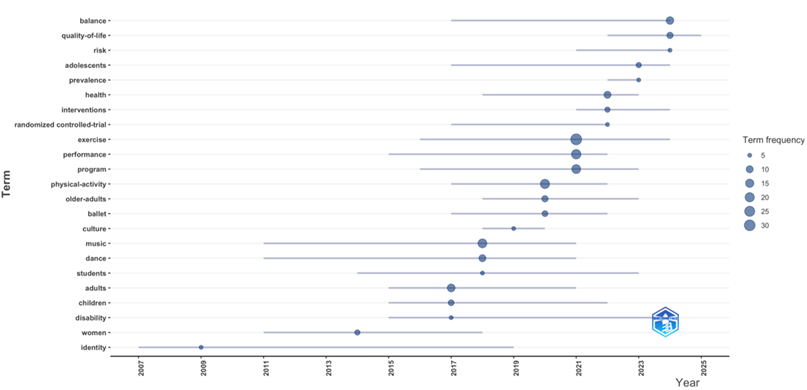
Figure 11 Trend Topics
4. Discussion
This study mapped the intellectual structure, collaboration patterns, and thematic evolution of Latin dance research from 1996 to 2025 using bibliometric methods. Overall, the field showed steady but moderate growth, rather than explosive expansion, with a clearer increase after 2020. More importantly, the results indicate that Latin dance research has gradually moved from an early emphasis on identity, culture, and representation toward a broader interdisciplinary agenda centered on exercise, physical activity, intervention, balance, quality of life, and healthy aging. At the same time, cultural terms such as music and dance remained visible, suggesting that the field has not simply abandoned its cultural foundations; instead, it has increasingly combined cultural meaning with health and performance applications. This pattern is consistent with previous evidence showing that Latin dance is now being studied not only as a cultural practice but also as a potentially valuable form of physical activity, rehabilitation, and public-health intervention Liu et al. (2023), Wells and Yang (2021).
4.1. From cultural interpretation
to health translation
One of the clearest findings of the present study is the thematic shift from early terms such as identity and women toward recent topics such as exercise, program, physical activity, interventions, balance, and quality of life. This transition should not be interpreted as a simple disciplinary replacement, but rather as a process of health translation. In other words, Latin dance has increasingly been reframed as a culturally meaningful behavioral modality that can be adapted for measurable outcomes in mobility, cognition, psychosocial well-being, and functional health. The systematic review by Liu et al. (2023) supports this interpretation, concluding that Latin dance has potential benefits for both physical and mental health. Similarly, Wells and Yang (2021) showed that dance-based interventions are increasingly being investigated within rehabilitation contexts, especially in relation to functional outcomes and quality of life. Taken together, these findings help explain why your keyword structure is now dominated by health- and intervention-oriented terms, while still retaining music- and culture-related concepts in the background.
4.2. A dual-source structure
rather than a single disciplinary core
The source analysis also suggests that Latin dance research is supported by a dual-source structure. On the one hand, highly productive outlets such as Latin American Music Review indicate that the field continues to draw heavily from cultural, historical, and area-studies scholarship. On the other hand, the prominence of journals such as Journal of Aging and Physical Activity, Annals of Behavioral Medicine, Frontiers in Psychology, and Gait & Posture indicates a second, increasingly influential stream related to health sciences, movement science, and behavioral medicine. This duality is important because it means the field is not developing in a linear way from “culture” to “science”; rather, it is becoming a hybrid domain in which cultural meaning, embodiment, and health application coexist. A similar multidisciplinary pattern has been observed in the broader field of dance medicine and dance science, although that larger field appears to be growing more rapidly than the Latin dance literature identified here Brown-Appenzeller et al. (2025).
4.3. Why the BAILAMOS/BAILA line
became the field’s internal knowledge core
A particularly notable finding is that the most locally cited documents were dominated by the BAILAMOS/BAILA line of work led by Marquez and colleagues. This is theoretically meaningful. These studies did not merely test whether dance “works”; they established a translational pathway from program development and pilot testing to trial design, physical activity outcomes, and later cognitive outcomes in older Latinos Marquez et al. (2014), Marquez et al. (2015), 2022, Aguiñaga et al. (2022). In bibliometric terms, such work often becomes locally central because it provides the field with a reusable model: a clearly defined target population, a culturally tailored intervention, a behavioral mechanism, and measurable outcomes. Your local citation results strongly suggest that Latin dance research has found one of its most coherent scientific identities in this community-based health-intervention tradition, especially in relation to aging and Latino health equity.
This interpretation is further reinforced by the substantive findings of those intervention studies. Marquez et al. (2022) reported that organized Latin dance was effective for increasing self-reported physical activity among older Spanish-speaking Latinos, while Aguiñaga et al. (2022) found that an 8-month Latin dance program improved working memory and that this effect was mediated by physical activity. Earlier work by Aguiñaga and Marquez (2019) also suggested favorable changes in physical activity, sedentary behavior, and cardiorespiratory fitness indicators in older Latinos. These studies likely became highly central within the Latin dance dataset because they offered not only empirical evidence but also a strong example of how culturally resonant forms of movement can be integrated into public-health and healthy-aging frameworks.
4.4. National dominance, language
ecology, and database visibility
Your country and institutional networks show that the United States occupies the most central position, while English-speaking or English-dominant institutions remain highly visible. This pattern is partly a reflection of actual research capacity and collaboration infrastructure, but it should also be interpreted in relation to database ecology. Mongeon and Paul-Hus (2016) demonstrated that large citation databases such as Web of Science and Scopus do not represent all countries, languages, and fields evenly. Therefore, the strong dominance of the United States and other English-language research systems in your dataset should not be read only as a matter of scientific merit; it is also shaped by publication language, database coverage, and journal indexing practices. This is especially relevant in a field such as Latin dance, whose cultural origins are deeply tied to Latin America and the Caribbean. In that sense, your findings reveal a tension between cultural origin and bibliometric visibility: the field’s symbolic roots lie in Latin America, but much of its internationally indexed scientific consolidation has occurred within English-language academic systems.
4.5. Fragmented collaboration and
the absence of a highly integrated global network
Another key finding is that Latin dance research remains collaborative but fragmented. The average number of co-authors per paper was high, yet international co-authorship remained modest, and the author, institution, and country maps all showed a cluster-based rather than fully integrated structure. The largest and most coherent author cluster centered on Marquez DX, while several other clusters were relatively small and disconnected. This suggests that the field is currently organized around a limited number of stable research teams rather than a dense, globally connected collaboration network. Compared with the broader dance medicine and dance science field, which Brown-Appenzeller et al. (2025) also described as geographically concentrated but increasingly collaborative, Latin dance research appears to be at an earlier stage of network consolidation. Future progress may therefore depend less on simply increasing publication counts and more on building stronger bridges between currently separate clusters, populations, and disciplinary traditions.
4.6. Research hotspots: function,
aging, and intervention now lead the field
The keyword structure and trend-topic analysis indicate that the current field is strongly oriented toward functional and applied outcomes. High-frequency terms such as exercise, performance, physical activity, balance, intervention, older adults, and quality of life suggest that Latin dance is being increasingly positioned as an intervention platform rather than merely a performance form. This is again consistent with the recent literature. Liu et al. (2023) synthesized evidence for benefits across physical and mental domains, Wells and Yang (2021) highlighted rehabilitation applications; and Aguiñaga et al. (2022) linked dance participation to working memory in older adults. At the same time, your trend-topic figure suggests that balance, risk, and quality of life have become particularly visible in the most recent period, which may indicate a growing move toward clinically relevant and function-oriented outcome frameworks.
However, the field should not become overly narrowed to generic health outcomes alone. Some recent studies suggest that a more mechanistic line of work is also emerging. Gao et al. (2023) found distinctive lower-limb biomechanical characteristics in Latin dancers during walking, suggesting that long-term dance practice may be associated with specific stability and loading adaptations. Hanks et al. (2024), by contrast, reported only limited gait-biomechanics differences and mixed psychological findings, reminding us that not all claimed benefits are uniform or automatic. Together, these studies suggest that the next phase of Latin dance research should move beyond broad “benefit” narratives and focus more carefully on mechanisms, dose, population specificity, and possible adverse or differential effects.
4.7. Practical and theoretical
implications
From a practical perspective, the present bibliometric profile suggests that Latin dance is most likely to generate sustained scientific and social value when it is treated as a culturally meaningful health behavior rather than as a generic exercise substitute. The successful intervention literature in older Latinos indicates that adherence may be strengthened precisely because Latin dance carries rhythm, familiarity, identity, enjoyment, and social connection alongside physical exertion Marquez et al. (2015), Marquez et al. (2022), Liu et al. (2023). Theoretically, this implies that Latin dance may be especially useful for bridging three levels of analysis: cultural motivation, movement mechanism, and health outcome. That three-level pathway may also explain why the field’s journals, keywords, and local citation core are distributed across both humanities-oriented and health-oriented domains rather than being concentrated in only one disciplinary tradition.
4.8. Limitations and future
directions
Several limitations should be acknowledged. First, this study relied on the Web of Science Core Collection, which offers standardized metadata well suited to bibliometric mapping but may underrepresent some regional, non-English, or non-indexed scholarship Mongeon and Paul-Hus (2016). Second, bibliometric analysis is well suited to identifying productivity, influence, and thematic structure, but it does not by itself establish causal effectiveness or methodological quality; therefore, the observed shift toward health-oriented research should be interpreted as a shift in scholarly attention, not as definitive proof of clinical efficacy Donthu et al. (2021), Zupic and Čater (2015). Third, because Latin dance is a broad and culturally diffuse topic, wider search strategies can increase recall but also introduce peripheral records from adjacent fields, which means that global citation indicators should be interpreted more cautiously than local citation indicators. Future studies should therefore expand database coverage, strengthen multilingual retrieval, differentiate more clearly between social/competitive/clinical dance contexts, and promote cross-regional collaboration—especially between North America, Europe, and Latin America—to build a more balanced and methodologically mature knowledge system.
4.9. Conclusion of the discussion
In summary, Latin dance research from 1996 to 2025 appears to have evolved from a relatively dispersed cultural topic into a more structured interdisciplinary field with growing relevance for physical activity promotion, healthy aging, rehabilitation, and psychosocial well-being. Yet this development remains uneven: growth has been moderate, collaboration is still fragmented, and the field’s internationally visible knowledge base is concentrated in a limited number of countries, institutions, and author clusters. The strongest internal scholarly core currently lies in culturally tailored intervention research, especially the BAILAMOS/BAILA line, while recent thematic trends suggest continued movement toward balance, quality of life, risk reduction, and intervention science. The next stage of development will likely depend on whether the field can connect its cultural roots more effectively with rigorous multicenter designs, multilingual dissemination, and stronger cross-disciplinary collaboration.
5. Conclusion
This study provides a bibliometric overview of Latin dance research published between 1996 and 2025 and reveals the main characteristics of its intellectual structure, collaboration patterns, and thematic evolution. Overall, Latin dance research has developed from a relatively scattered and culturally oriented topic into a more structured interdisciplinary field with increasing relevance to exercise science, health promotion, rehabilitation, psychology, and aging research. Although the field has shown continuous growth over time, its overall expansion remains moderate, and its collaboration network is still characterized by a limited number of core authors, institutions, and countries.
The findings further indicate a clear thematic shift from early concerns with identity, women, music, and culture toward recent emphases on exercise, physical activity, intervention, balance, quality of life, and health-related outcomes. At the same time, cultural and artistic dimensions have remained visible, suggesting that Latin dance research is best understood not as a simple transition from the humanities to health science, but as an interdisciplinary domain in which cultural meaning, embodied movement, and health application increasingly intersect. The local citation structure also highlights the important role of culturally tailored intervention studies, especially those related to physical activity promotion and healthy aging, in shaping the internal knowledge base of the field.
In conclusion, Latin dance research over the past three decades has demonstrated a progressive movement from cultural representation to health translation, while retaining its artistic and social foundations. This developmental trajectory highlights the unique value of Latin dance as both a cultural practice and a potential tool for public health and functional well-being. Future research should further strengthen cross-national collaboration, multilingual dissemination, and rigorous intervention design in order to build a more balanced, inclusive, and methodologically mature knowledge system for Latin dance research.
CONFLICT OF INTERESTS
The authors declare that there are no known competing financial interests or personal relationships that could have appeared to influence the work reported in this paper.
ACKNOWLEDGMENTS
None.
REFERENCES
Aguiñaga, S., Kaushal, N., Balbim, G. M., Wilson, R. S., Wilbur, J. E., Hughes, S., Buchner, D. M., Berbaum, M., McAuley, E., Vásquez, P. M., Marques, I. G., Wang, T., and Marquez, D. X. (2022). Latin Dance and Working Memory: The Mediating Effects of Physical Activity Among Middle-Aged and Older Latinos. Frontiers in Aging Neuroscience, 14, 755154. https://doi.org/10.3389/fnagi.2022.755154
Aguiñaga, S., and Marquez, D. X. (2017). Feasibility of a Latin Dance Program for Older Latinos with Mild Cognitive Impairment. American Journal of Alzheimer’s Disease and Other Dementias, 32(8), 479–488. https://doi.org/10.1177/1533317517719500
Aguiñaga, S., and Marquez, D. X. (2019). Impact of Latin Dance on Physical Activity, Cardiorespiratory Fitness, and Sedentary Behavior Among Latinos Attending an Adult Day Center. Journal of Aging and Health, 31(3), 397–414. https://doi.org/10.1177/0898264317733206
Aria, M., and Cuccurullo, C. (2017). bibliometrix: An R-Tool for Comprehensive Science Mapping Analysis. Journal of Informetrics, 11(4), 959–975. https://doi.org/10.1016/j.joi.2017.08.007
Bosse, J. (2013). Salsa Dance as Cosmopolitan Formation: Cooperation, Conflict and Commerce in the Midwest United States. Ethnomusicology Forum, 22(2), 210–231. https://doi.org/10.1080/17411912.2013.809256
Brown-Appenzeller, D. D., Sheth, S. P., Coogan, S., Wyon, M. A., and Ambegaonkar, J. P. (2025). Bibliometric Analysis of the Thematic, Structural, and Social Aspects of Research in Dance Medicine and Dance Science from 2007 to 2024. Journal of Dance Medicine and Science. Advance Online Publication. https://doi.org/10.1177/1089313X251362365
Domene, P. A., and Morley, S. (2022). Stepping into Salsa Culture: An Experiential Account of Engaging with a University Non-Credit Dance Programme. Research in Dance Education, 23(1), 91–107. https://doi.org/10.1080/14647893.2021.1980527
Donthu, N., Kumar, S., Mukherjee, D., Pandey, N., and Lim, W. M. (2021). How to Conduct a Bibliometric Analysis: An Overview and Guidelines. Journal of Business Research, 133, 285–296. https://doi.org/10.1016/j.jbusres.2021.04.070
Gao, X., Xu, D., Li, F., Baker, J. S., Li, J., and Gu, Y. (2023). Biomechanical Analysis of Latin Dancers’ Lower Limb During Normal Walking. Bioengineering, 10(10), 1128. https://doi.org/10.3390/bioengineering10101128
Hanks, G., Standifird, T., and Andelin, B. (2024). Impact of Latin Ballroom Dance Training on Gait Biomechanics, Anxiety, and Depression. International Journal of Exercise Science, 17(1), 794–809. https://doi.org/10.70252/IUIF5559
Kılıç, M., and Nalbant, S. S. (2022). The Effect of Latin Dance on Dynamic Balance. Gait and Posture, 92, 264–270. https://doi.org/10.1016/j.gaitpost.2021.11.037
Liu, X., Soh, K. G., and Dev Omar Dev, R. (2023). Effect of Latin Dance on Physical and Mental Health: A Systematic Review. BMC Public Health, 23, 1332. https://doi.org/10.1186/s12889-023-16221-6
Liu, Y.-T., Lin, A.-C., Chen, S.-F., Shih, C.-J., Kuo, T.-Y., Wang, F.-C., Lee, P.-H., and Lee, A. P. (2022). Superior Gait Performance and Balance Ability in Latin Dancers. Frontiers in Medicine, 9, 834497. https://doi.org/10.3389/fmed.2022.834497
Lopez, O., Kaushal, N., Jaldin, M. A., and Marquez, D. X. (2024). Latin Dance Effects on Cardiorespiratory Fitness and Physical Function in Middle-Aged and Older Latino Adults. Journal of Aging and Physical Activity, 32(2), 163–171. https://doi.org/10.1123/japa.2022-0415
Marquez, D. X., Bustamante, E. E., Aguiñaga, S., and Hernandez, R. (2015). BAILAMOS: Development, Pilot Testing, and Future Directions of a Latin Dance Program for Older Latinos. Health Education and Behavior, 42(5), 604–610. https://doi.org/10.1177/1090198114543006
Marquez, D. X., Wilbur, J., Hughes, S. L., Berbaum, M. L., Wilson, R. S., Buchner, D. M., and McAuley, E. (2014). B.A.I.L.A.: A Latin Dance Randomized Controlled Trial for Older Spanish-Speaking Latinos: Rationale, Design, and Methods. Contemporary Clinical Trials, 38(2), 397–408. https://doi.org/10.1016/j.cct.2014.06.012
Marquez, D. X., Wilbur, J., Hughes, S., Wilson, R., Buchner, D. M., Berbaum, M. L., McAuley, E., Aguiñaga, S., Balbim, G. M., Vásquez, P. M., Marques, I. G., Wang, T., and Kaushal, N. (2022). BAILA: A Randomized Controlled Trial of Latin Dancing to Increase Physical Activity in Spanish-Speaking Older Latinos. Annals of Behavioral Medicine, 56(12), 1231–1243. https://doi.org/10.1093/abm/kaac009
Mongeon, P., and Paul-Hus, A. (2016). The Journal Coverage of Web of Science and Scopus: A Comparative analysis. Scientometrics, 106(1), 213–228. https://doi.org/10.1007/s11192-015-1765-5
Román-Velázquez, P. (1999). The Embodiment of Salsa: Musicians, Instruments and the Performance of a Latin Style and Identity. Popular Music, 18(1), 115–131. https://doi.org/10.1017/S0261143000008758
Skinner, J. (2007). The Salsa Class: A Complexity of Globalization, Cosmopolitans and Emotions. Identities: Global Studies in Culture and Power, 14(4), 485–506. https://doi.org/10.1080/10702890701578480
Wells, M., and Yang, F. (2021). Ballroom Dance as a form of Rehabilitation: A Systematic Review. Biomechanics, 1(3), 307–320. https://doi.org/10.3390/biomechanics1030026
Yang, F., Ripley-Gonzalez, J. W., Tang, J., and Gao, S. (2026). Dance Therapy in Rehabilitation: A Two-Decade Bibliometric Analysis (2000–2024). Humanities and Social Sciences Communications, 13, Article 8. https://doi.org/10.1057/s41599-025-06271-z
Zupic, I., and Čater, T. (2015). Bibliometric Methods in Management and Organization. Organizational Research Methods, 18(3), 429–472. https://doi.org/10.1177/1094428114562629
|
|
 This work is licensed under a: Creative Commons Attribution 4.0 International License
© ShodhKosh 2026. All Rights Reserved.