ShodhKosh: Journal of Visual and Performing ArtsISSN (Online): 2582-7472
|
|
Creative Interpretations of Health and Patent Policy A Visual Arts Perspective on Contemporary Public Health Regimes
Swati Mehra 1
 ,
Dr. Arun Sharma 2
,
Dr. Arun Sharma 2 ,
Gargi Pachauri 3
,
Gargi Pachauri 3 ,
Ishu Gupta 4
,
Ishu Gupta 4 ,
Dr. Surbhi Tiwari 5
,
Dr. Surbhi Tiwari 5 ,
Dr. Shilpika Pandey 6
,
Dr. Shilpika Pandey 6
1 Research
Scholar, Amity University, Madhya Pradesh, India
2 Associate
Professor, Amity University, Madhya Pradesh, India
3 Assistant
Professor, Amity University, Madhya Pradesh, India
4 Teaching
Associate, Amity Law School, Amity University, Gwalior, Madhya Pradesh, India
5 Assistant
Professor, Amity University, Madhya Pradesh, India
6 Assistant
Professor, GD Goenka University, Haryana, India
|
|
|
ABSTRACT |
|
|
Modern health
care systems exist under complicated regulatory conditions that are
characterized by intellectual property rules and pharmaceutical innovation
regulations. There is still a challenge to communicate these regulatory
structures to larger groups of the population because healthcare governance
is too specific and legal to be easily communicated. This paper discusses the
importance of artistic representations in helping people to learn about the
regimes of public health by giving meaning to the complex policy frameworks
via the creation of visual stories that can be easily understood by the
population. The comparative analysis based on the indicators of awareness
improvement and metrics of engagement show that the digital storytelling
campaigns reach the highest audience, whereas participatory format like
workshops and exhibitions leads to more in-depth audience interaction and
policy discussion. The research results indicate the coexistence of various
artistic methods of communication in increasing citizen participation in the
questions of healthcare governance. The visual art serves as a platform of
interpretation that exposes ethical dilemmas between incentives to innovate
drugs and the provision of medical technologies to everyone fairly. Turning
regulatory discussions into culturally relevant stories, art
based advocacy broadens the boundaries of what is communicated about
health and prompts the society to contemplate health care justice and
intellectual property policy. The paper adds to the existing
interdisciplinary research that links visual culture, policy communication
and governance of global health and validates how creative media can be
useful in promoting a more inclusive and participatory discourse on health
policy. |
|||
|
Received 09 December 2025 Accepted 16 January 2026 Published 28 March 2026 Corresponding Author Dr. Arun
Sharma, asharma4@gwa.amity.edu DOI 10.29121/shodhkosh.v7.i2s.2026.7258 Funding: This research
received no specific grant from any funding agency in the public, commercial,
or not-for-profit sectors. Copyright: © 2026 The
Author(s). This work is licensed under a Creative Commons
Attribution 4.0 International License. With the
license CC-BY, authors retain the copyright, allowing anyone to download,
reuse, re-print, modify, distribute, and/or copy their contribution. The work
must be properly attributed to its author.
|
|||
|
Keywords: Public Health Policy, Intellectual Property Rights,
Patent Policy, Visual Arts Advocacy, Health Communication, Pharmaceutical
Innovation, Healthcare Accessibility, Cultural Narratives |
|||


1. INTRODUCTION
Intellectual property policy and governance of public health have become the core issues of the modern world health systems. Pharmaceutical innovation, medical technologies, and access to health care are regulated to a great extent by patent systems that determine the creation, distribution, and availability of medicines. The aim of patenting policies is to stimulate innovation by providing temporary monopolies to innovators, but it tends to create conflicts between market incentives and the health needs of people Strojny and Przesmycka (2025). The controversies on vaccine equity, access to necessary drugs, and the control of pharmaceuticals at the global level demonstrate how patent systems may influence the health results in any society. It is still a major challenge to communicate the complexity of these policy structures to wider populations since legal and economic systems are usually very technical and non-accessible to non-specialist populations. Visual arts have become increasingly an influential instrument in making and understanding the policy debate. Practices in art offer the symbolic and emotional availability of abstract regulatory arrangements in the availability of visual stories Fudickar et al. (2022). Artists use painting, illustration, digital media, public murals, and conceptual art installations to deal with the issues of pharmaceutical monopolies, inequality in healthcare, and the distribution of vaccines worldwide. Not only do these artistic interpretations mirror the sentiment of the people but they also serve as a part of the development of policy by helping to stimulate thought and discussion of the governance of healthcare Guidolin et al. (2024).
Figure 1
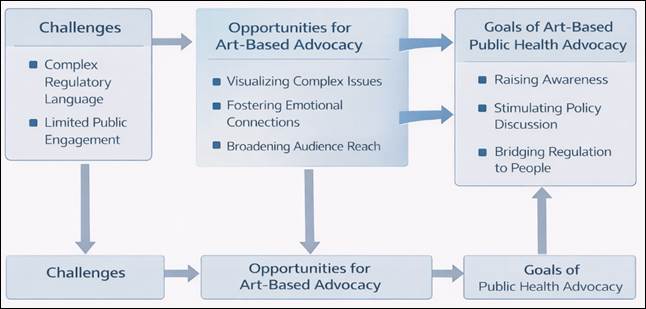
Figure 1 Visual
Communication Model for Health Policy Awareness.
Creative graphical representations have the potential of bringing out ethical issues that are inherent in patent systems, especially where lifesaving technologies are locked out of reach of the vulnerable groups as shown in Figure 1. The cross-over of visual arts, patent policy and communicating with the public health is thus a significant interdisciplinary study area. This is the way through which artistic expression examines complex legal structures in the cultural, ethical, and social dimensions Law et al. (2021). These interpretations have the potential to impact the awareness of the population, enhance activism, and overall healthcare justice debate. Cultural stories contained within visual works of art usually record the social consequences of the regulatory choices that would otherwise exist on either the legal or policy platforms. The research examines the ways in which the modern visual art uses and conveys the messages concerned with the health governance and patent policy Golchha et al. (2024). The paper tests the importance of creative media such as artistic representations and advocacy actions, in forming their role in appealing to the people with healthcare regulation. It will seek to establish a conceptual knowhow about how the artistic stories can interact with the policy discourse and how visual culture can be utilized to sell the popular know-how of health systems and intellectual property regimes.
2. Background and Related Work
The intricate institutional contexts of the policies of the public health incorporate the regulatory frameworks, scientific innovation and socio-economic factors. The intellectual property rights play a central role in development of such environments particularly in the pharmaceutical research and development of medical technologies Timonen and Timonen (2021). Through patent protection, the inventor is entitled to special rights especially commercialization of the inventions made by him or her within a given time. Despite the fact that these mechanisms are supposed to create an incentive to invest in research and development, they raise the arguments of fair access to healthcare technologies. Proprietary rights and humanitarian demands have been placed in the spotlight of most health catastrophes worldwide especially in such circumstances when the patented medicine does not reach such a low-income population of people Cardillo and Chatterjee (2025). The scholarly research has researched these tensions, in different disciplinary perspectives. Legal scholars examine intellectual property regimes and other international agreements such as the Agreement on Trade-Related Aspects of Intellectual Property Rights (TRIPS) covering the international patent standard. The experts of the field of public health study whether patent protection determines the price of drugs and their availability, and whether it leads to the improvement of the infrastructure of the healthcare sector Motari et al. (2021). Economists balance incentives of innovation and the result of such innovations on social welfare. In these scandals, communicational strategies play a critical role in dictating the overall understanding of regulation ruling and policy implications of medical care. The past use of visual arts has been as a type of political commentary and social critique. There are artistic movements of different epochs that addressed such a problem as labor rights, environmental concern, and social inequality. However, in contemporary conditions, the visual culture is constantly getting in touch with international health problems Urias and Ramani (2020). Artists and designers use imagery, symbolism and narrative systems to understand such problems as pandemics, medical ethics, and pharmaceutical access. The theme of the health crisis and healthcare systems has numerous instances of public murals, digital illustrations, and installations using multimedia.
3. Framework: Visual Arts in Health Policy Communication
Visual communication is an essential point of contact of the massive and complex institutional organization to the popular perception. The policy frameworks used in healthcare systems incorporate technical language, legislation and administrative procedures that in most instances may be difficult to understand by people who are not experts. Visual arts provide a certain number of symbolic and narrative processes, which can transform these complex forms into the forms that are available to culture. The use of aesthetic composition, symbolism, and imagery assist artists to provide statements related to the theme of innovation, inequality, regulation, and access to healthcare Clapham and Rubio (2002). The relationship between the three primary spheres is theorized in this study and they consist of the governance of public health, regulations of intellectual property, and the interpretation of visual culture. The institutional processes that govern the healthcare systems include pharmaceutical regulation, healthcare infrastructure, and disease prevention strategies and are referred to as the public health governance. Intellectual property regulation is the legal provisions that involves patent and proprietary rights in the medical technologies Shende et al. (2025). Visual cultural interpretation is a set of art practices which represent or denounce or reenact these control processes.
Figure 3
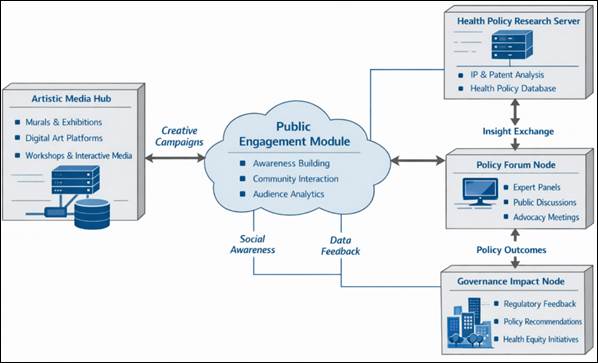
Figure 2 Art-Based
Public Health Advocacy Framework
The artistic works concerning health policy frequently depend on the visual metaphors in expressing complicated concepts. As an example, the imagery of barriers, chains, or locked containers can be used to represent limited access to the necessary medicines in patent monopolies. On the contrary, the unrestricted hands or shared signs can be a sign of joint innovation and equal healthcare allocation. Such visual metaphors would turn abstract legal systems into stories that have an emotional appeal and can be easily deciphered by audiences Aziz et al. (2022). It is also identified in the framework that the media platforms play a role in broadcasting the visual explanation of the policy debates as shown in Figure 2. The digital technologies provide an opportunity to spread the artistic content quickly via the social networks, online exhibitions and by the means of multimedia storytelling. Consequently, graphic stories may alter the general opinion, initiate advocacy campaigns, and determine the policy debate in the larger societal settings Butt et al. (2024). In this context, the artistic representation is both a reflective, as well as a transformative process. Art mirrors the current social realities, representing the outcomes of healthcare policies, and also changes the discourse of people, bringing in new viewpoints and moral aspects. By artistic interpretation, artists help to build the common knowledge about health management system and social effects of intellectual property control.
4. Proposed Methodology
The qualitative visual interpretation technique used in this study has incorporated the interdisciplinary policy interpretation as well as qualitative visual analysis. The aim is to analyze the way the visual works reflect the themes, which are related to the patent policy and governance of the public health. Instead of dwelling on the aesthetic attributes of art, the analysis will put more emphasis on the symbolic stories that are encoded in visual representations and how they relate to the current healthcare discussions. The research design includes the recognition and analysis of visual artworks, advocacy campaigns, and digital media projects that touch on the themes concerning healthcare access, pharmaceutical innovation and the regulation of intellectual property. The choice of these materials was based on open-air exhibits, internet-based art platforms, health communication efforts, and policy advocacy efforts.
Figure 3
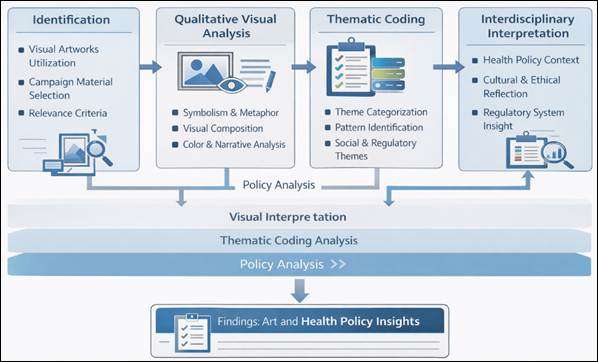
Figure 3 Research
Methodology Framework for Art-Based Public Health Advocacy Analysis
It was made by a qualitative visual study to make out the
symbolism of the chosen works of art. In order to identify the themes that were
related to the healthcare access, regulatory power, and inequality in the
society, the given analytical process examined the visual composition, imagery,
color symbolism and narrative form. Much attention
was also paid to the visual metaphorics according to
which the connection between drug innovation and access to healthcare is
explained. Another methodology framework that was used was thematic coding
which means that similar patterns of narratives in various art works could be
grouped together as seen in Figure 3. Such identified and analyzed themes were access barriers, pharmaceutical
monopolies, innovation ethics and global health inequality. This thematic
grouping facilitated the research in identifying trends in the manner in which
the artists understand the connection between patenting systems and the
findings of healthcare. The policy analysis and the visual interpretation
combination provides a general explanation as to how
artistic discourses intersect with regulatory discourse. Both cultural analysis
and policy perspectives will be used to address the paper on how artistic
representations can be applied in broader societal debates on matters regarding
healthcare governance and intellectual property rights.
5. Visual Representations of Patent Policy in Public Health Discourse
The aesthetic distortion of the patent policy is commonly preoccupied with issues of morality between encouraging innovation and ensuring equal access to healthcare services. The inequality in the global health systems can easily be represented in terms of visual representations particularly in situations where life-saving drugs cannot be accessed due to their high costs as a result of patent protection. Artists tend to communicate such tensions using symbolic imagery and are transforming the harsh economic and legal edifices into a graphic narrative. A large portion of the contemporary artworks identifies pharmaceutical companies and authorities as powerful forces that control the availability of medical technologies. The imagery most frequently employed to indicate the exclusiveness of the patented innovations are the locked medicine cabinets, closed containers in laboratories, or fences around the healthcare institutions as well. These descriptions indicate the perceived lack of balance between the humanitarianism of the necessity to have easy-to-access healthcare solutions and the profit-seeking pharmaceutical industries.
Table 1
|
Table 1 Visual Themes Representing Patent Policy in Public Health Discourse |
|||
|
Visual Representation |
Policy Theme |
Example Context |
Communication Purpose |
|
Locked medicine container imagery |
Patent monopolies |
Pharmaceutical patent protection
debates |
Highlight restricted drug access |
|
Broken chains / open capsule symbols |
Access to medicines |
Generic drug advocacy campaigns |
Promote equitable healthcare access |
|
Divided globe illustrations |
Global health inequality |
Vaccine distribution during pandemics |
Show disparity between nations |
|
Laboratory imagery with barriers |
Innovation vs affordability |
Drug development and pricing debates |
Illustrate regulatory constraints |
|
Collaborative healthcare symbols |
Open innovation models |
Global health partnerships |
Encourage shared research and licensing |
The visual storytelling around the theme of vaccine distribution during times of global health emergencies gives especially pronounced illustrations of how artistic communities have engaged with the problem of patent policy. In other artworks, the landscapes are divided depicting inequality between rich and poor nations in terms of receiving vaccination or basic medicines. By using symbolic contrasts in imagery and use of color composition, artists highlight the inequalities that exist in the global healthcare systems. These visual images show the way art can serve as a critique of a kind of policy. Ethical issues can be expressed through artistic stories which might not adequately be reflected in official policy making. Visual arts would help to increase the general publicity of healthcare governance frameworks by showing the human impacts of regulatory decisions.
6. Case Studies of Art-Based Public Health Advocacy
Advocacy campaigns founded on art have become more significant tools of informing broader groups of people about the issues of their health and policy debates. Creative interventions are a form of artistic use of policy messaging by combining artistic expression and artistic interventions allow complex health policy questions like access to drugs, distribution of vaccines, and intellectual property laws to be told in story form using visual imagery. To achieve a process of converting regulatory discourses into available cultural codes, artistic campaigns often make use of visual metaphors, symbolic imagery, and formats of participation. Artists and advocacy groups have been able to create new methods of contacting communities in order to discuss healthcare governance issues through exhibitions, murals, digital art projects, and through public workshops. Such efforts do not only increase awareness among the population but also encourage debate on the ethical obligations connected with the pharmaceutical innovation and global health equity. A comparative study of the various current art-based advocacy campaigns gives a reflection of how various artistic mediums create a contribution to the outcome of communication on the part of the population in terms of health. To communicate policy issues around the accessibility of healthcare, campaigns often use various aesthetic modes like public murals, digital drawings, gallery installations, etc. to convey their message. The success of such campaigns can be measured by such indicators as the number of people who attend the campaign and the quantifiable changes in the awareness of people. Table 2 highlights some campaigns that have incorporated the use of artistic strategies to discuss significant themes in healthcare policies.
Table 2
|
Table 2 Comparative Analysis of Art-Based Public Health Advocacy Campaigns |
||||
|
Campaign / Project |
Art Medium Used |
Target Health Issue |
Audience Reach (People) |
Awareness Increase (%) |
|
Global Vaccine Equity Murals |
Public Street Murals |
Vaccine Access Inequality |
45,000 |
38 |
|
Medicine for All Illustration Campaign |
Digital Illustration & Posters |
Drug Pricing & Patent Barriers |
32,500 |
41 |
|
Community Health Art Workshops |
Participatory Art Sessions |
Rural Healthcare Awareness |
8,200 |
29 |
|
Pandemic Visual Storytelling Series |
Digital Animation & social media |
Pandemic Preparedness |
61,000 |
46 |
|
Open Medicine Art Exhibition |
Gallery Installation Art |
Pharmaceutical Patent Ethics |
12,700 |
33 |
According to the information provided in Table 2, the artistic campaigns that employed highly visible formats of the general population, including murals and digital narratives, were more likely to reach a more significant number of citizens and lead to an increase in awareness. As an illustration, the audience reach and awareness increase of the pandemic visual storytelling series shared through digital media platforms were the highest, which underscores the capacity of digital art to convey the information about the importance of social distancing to the global audience in a short time. In the meantime, localized workshops show the possibility of participatory art practices to involve the local populations into discussing the issue of healthcare access and policy implications. This is in addition to the awareness level, which audience engagement can give more information on the effectiveness of art-based public health advocacy. The indicators of engagement, including visitor participation, spending time, and involvement in the discussion of policies, demonstrate the extent of audience engagement with healthcare issue artistic representations. Exhibitions and workshops, as campaigns that stimulate interactive engagement, may be used to provide a chance to discuss the issues between viewers, healthcare workers, and policy makers. Table 3 shows the engagement overall metrics with respect to the chosen advocacy efforts.
Table 3
|
Table 3 Audience Engagement Metrics for Art-Based Health Advocacy Campaigns |
||||
|
Campaign Name |
Exhibition / Platform Type |
Visitors / Views |
Average Interaction Time (minutes) |
Policy Discussion Participation (%) |
|
Vaccine Equity Art Initiative |
Outdoor Murals + social media |
52,300 |
6.5 |
28 |
|
Medicines Accessibility Exhibition |
Gallery Exhibition |
14,800 |
9.1 |
34 |
|
Digital Health Justice Campaign |
Instagram / Online Art |
87,500 |
4.8 |
22 |
|
Community Health Art Festival |
Public Cultural Event |
19,600 |
7.4 |
31 |
|
Patent Awareness Illustration Series |
Educational Workshops |
6,900 |
10.2 |
37 |
The engagement statistics show that educational workshops and gallery exhibitions make people spend more time in comparison with entirely online campaigns. The individuals attending the workshops can spend a greater amount of time interacting with artworks, discussing issues in healthcare, and considering policy implications. The best awareness illustration series in terms of average time of interaction and the greatest percentage of policy discussion participation as presented in Table 2 was the series of awareness illustration undertaken via educational workshops. These results indicate a higher order of thinking in terms of healthcare policy discussion using participatory art format. Examples of art-based advocating of public health thus reveal how visual culture can be used to mediate between technical and regulatory discourse and the popular perception. Creativity campaigns offer space in which intricate policy concerns regarding patent and pharmaceutical innovation, as well as healthcare affordability, can be filtered in terms of imaginative storylines. Such projects increase the range of the communicative practice of public health by merging aesthetic experience with policy education, which eventually leads to the wider societal debate about healthcare justice and global health governance.
7. Interpretation and Discussion
As the discussion of the artistic advocacy campaigns shows, visual culture stands out as one of the factors of forming the societal awareness and discourse on the healthcare policy and intellectual property regulation. Artistic projects can make multifaceted regulation discourses visible to audiences in forms of understandable narratives, which can be interpreted with the help of visual symbols and narratives. Artists make platforms that make people think about ethical concerns regarding pharmaceutical development, access to healthcare and patent regulation through murals, digital illustrations, participatory workshops and multimedia storytelling. Such innovative displays point to the effectiveness of cultural expression as a potential complement to conventional policy communication in terms of making regulatory arguments more apparent and emotionally appealing to the general population. The comparative awareness outcomes acquired on the basis of the reviewed campaigns give significant information about the efficiency of various forms of artistic communication strategies. Digital storytelling format and massive visual storytelling campaign formats have especially high effects on the population consciousness. The digital platforms will provide an opportunity to spread visual messages across the world in a short time and, in turn, increase the impact of advocacy measures. The relative improvement of awareness created by the chosen art-based campaigns is described in Figure 4.
Figure 4
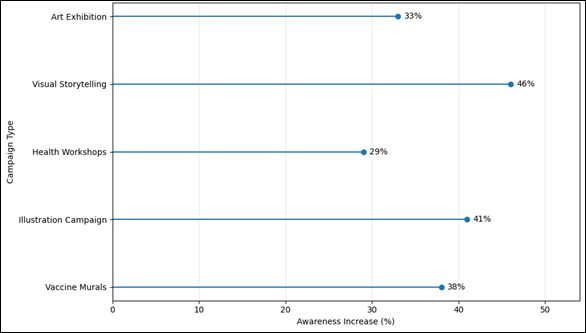
Figure 4 Awareness Improvement Across Art-Based Public Health Campaigns
The evidence presented in Figure 4 suggests that the visual narrating projects that focused on pandemic preparedness had the largest positive impact on the population awareness. There are also good performance illustration campaigns on drug pricing and patent barriers. Even though the public mural projects involve certain geographic areas, their effect on the awareness level remains significant because they are visible in urban areas. Participatory workshops also yield a little less awareness growth due to the fact they use smaller audiences but they are still significant to educate and engage the community at the community level. Analysis of audience reach also demonstrates the complementary likenesses of various platforms of artistic communication. The digital campaigns that are shared on the social media networks cover much wider audiences than physical exhibitions or workshops. Nevertheless, high reach does not always mean the increased engagement. Figure 5 shows the levels of audience reach comparison of various advocacy campaigns.
Figure 5

Figure 5 Audience Reach Comparison Across Art-Based Health Advocacy Campaigns
As has been illustrated by the visualization, the digital health justice campaigns had the highest amount of views as they are accessible on online platforms all over the world. Murals can also draw a lot of audience since they are incorporated into the outdoor space in locations of high human traffic. Galleries and cultural festivals will result in a medium audience, whereas education workshops usually include smaller and more concentrated audiences. It is possible that the results indicate that digital platforms are very successful in raising the first awareness, and localized artistic events can be more appropriate in terms of promoting the more in-depth interaction with the healthcare policy discourse. Another level of advocacy effectiveness is the degree to which the artistic initiatives provoke the discussion of the policy issues. The participatory metrics of engagement shows that interactive projects like workshops and displays assist in engaging the audience to communicate and question the healthcare formats of governance. Figure 3 gives the percentage of participants who took part in policy discussion after reading artistic advocacy campaigns.
Figure 6
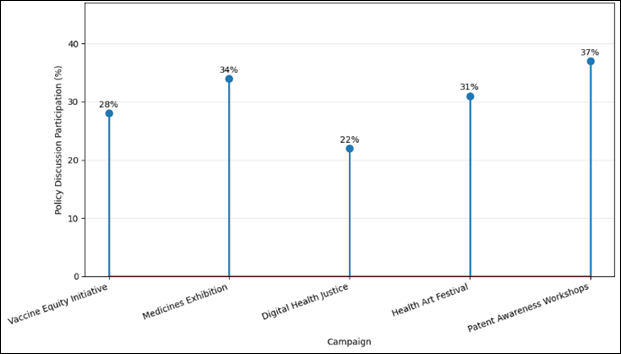
Figure 6 Policy Discussion Participation Across Campaign Formats
The trends of participation show that the set of educational workshops cause the largest number of policy discussion participation. The participants of a workshop may also engage in close contact with the artists, health specialists, or policy-makers, which will help to foster a community of mutual conversations and sharing of knowledge. The rates of discussion during gallery exhibitions are also very high due to the longer time of the visitors in contact with artworks and other materials of interpretation. Digital campaigns on the one hand are rather effective in reaching large audiences but produce relatively low levels of active policy discussion because of the passive nature of the online viewing experience. This combined discussion on the evaluation of the improvement of awareness, the reach to the audience, and the involvement with the policy as a complement, demonstrates the different artistic advocacy strategies in their complementary roles. The digital visual storytelling is a powerful tool to distribute the information about the public health problem quickly, whereas the participatory art forms lead to a better comprehension of the problem of healthcare governance. Such a combination can be used to increase the overall effectiveness of the public health communication efforts as it generates balance between mass awareness and engaging audience. Art-based advocacy is thus a nascent organizational model of communication that can fill the policy debate-public knowledge gap. The artistic projects promote societies to revisit ethical aspects of innovation, intellectual property protection and access to medical technologies fairly by converting healthcare governance systems into powerful visual stories. By bringing in creative communication strategies into the domain of public health advocacy, the latter can eventually result in more inclusive and knowledgeable policy discourses.
8. Conclusion
Creative visual arts offer a novel way of interpreting multifaceted relations between the governance of public health and intellectual property regulation. Representations of art form make technical policy frameworks available as cultural narratives, which can be comprehended by different people. Artistic projects, through symbolic imagery, visual metaphors and narrative story telling, shed light on ethical conflicts between pharmaceutical innovation, patent protection and fair access to healthcare technologies. Such visual representations are significant in terms of informing the population about inequalities in healthcare and prompting dialogue on the changes in the policies regarding the access to medicine. The case study analysis provided in this study illustrates that art-based public health advocacy campaigns would go a long way in increasing the level of public interest in the healthcare policy issues. Digital stories and illustration campaigns demonstrate great potential regarding the ability to appeal to numerous people and increase the level of awareness. Visual installations and public murals can be used at the community level to enhance health communication by changing the public space into an avenue of communication. Participatory forms of art like workshops and exhibitions enhance the levels of engagement further by creating a conversation between the audience, artists, and advocates of health policy. The combined analysis of the awareness increase, the audience engagement, and the participation in the discussion of the policy reveals the value of various forms of artistic communication being part of the complementary aspects of the advocacy success. Visual arts are therefore not just instruments of expression of a cultural practice but also policy interpretation and social reflection.
The future studies can investigate how modern technologies including digital art platforms, immersive media space, and artificial intelligence-driven visual stories can be even more applied to improve public health communication. The implementation of innovative communication approaches into the policy educational programs could help to make healthcare governance systems more transparent and participatory.
CONFLICT OF INTERESTS
None.
ACKNOWLEDGMENTS
None.
REFERENCES
Strojny, R., and Przesmycka, N. (2025). The Specifics and Forms of Art in Contemporary Healthcare Facilities—European Trends. Arts, 14(4), 93. https://doi.org/10.3390/arts14040093
Fudickar, A., Konetzka, D., Nielsen, S. M. L., and Hathorn, K. (2022). Evidence-Based Art in the Hospital. Wiener Medizinische Wochenschrift, 172, 234. https://doi.org/10.1007/s10354-021-00861-7
Guidolin, K., Jung, F., Hunter, S., Yan, H., Englesakis, M., Verderber, S., Chadi, S., and Quereshy, F. (2024). The Influence of Exposure to Nature on Inpatient Hospital Stays: A Scoping Review. HERD: Health Environments Research and Design Journal, 17, 360–375. https://doi.org/10.1177/19375867231221559
Law, M., Karulkar, N., and Broadbent, E. (2021). Evidence for the Effects of Viewing Visual Artworks on Stress Outcomes: A Scoping Review. BMJ Open, 11, e043549. https://doi.org/10.1136/bmjopen-2020-043549
Golchha, R., Khobragade, P., and Talekar, A. (2024). Design of an Efficient Model for Health Status Prediction Using LSTM, Transformer, and Bayesian Neural Networks. In Proceedings of the 2024 International Conference on Innovations and Challenges in Emerging Technologies (ICICET) (1–5). IEEE. https://doi.org/10.1109/ICICET59348.2024.10616353
Timonen, K., and Timonen, T. (2021). Art as Contextual Element in Improving Hospital Patients’ Well-Being: A Scoping Review. Journal of Applied Arts and Health, 12, 177–191. https://doi.org/10.1386/jaah_00067_1
Cardillo, E. R., and Chatterjee, A. (2025). Benefits of Nature Imagery and Visual Art in Healthcare Contexts: A View from Empirical Aesthetics. Buildings, 15(7), 1027. https://doi.org/10.3390/buildings15071027
Motari, M., Nikiema, J. B., Kasilo, O. M., Kniazkov, S., Loua, A., Sougou, A., and Tumusiime, P. (2021). The Role of Intellectual Property Rights on Access to Medicines in WHO African Region: 25 Years After TRIPS Agreement. BMC Public Health, 21, 490. https://doi.org/10.1186/s12889-021-10374-y
Urias, E., and Ramani, S. V. (2020). Access to Medicines After TRIPS: Is Compulsory Licensing an Effective Mechanism to Lower Drug Prices? A Review of the Existing Evidence. Journal of International Business Policy, 3, 367–384. https://doi.org/10.1057/s42214-020-00068-4
Clapham, A., and Rubio, M. G. (2002). The Obligations of States with Regard to Non-State Actors in the Context of the Right to Health. Health and Human Rights Working Paper Series, 3, 1–44.
Shende, R., Ghodmare, V., Bawankule, R., Bhute, P., and Gaikwad, T. (2025). Smart Detection for Healthy Heart. International Journal of Advances in Electronics and Computer Engineering, 14(1), 174–178. https://doi.org/10.65521/ijaece.v14i1.409
Aziz, Z., Naseer, H., and Altaf, A. (2022). Challenges in Access to New Therapeutic Agents: Marginalized Patients with Cancer in Pakistan and Need for New Guidelines. JCO Global Oncology, 8, e2100132. https://doi.org/10.1200/GO.21.00132
Butt, S., Shaukat, K., Alam, T. M., and Jan, T. (2024). Patents and Public Health: State Responsibility to Opt for a Balanced Approach. Societies, 14(8), 152. https://doi.org/10.3390/soc14080152
|
|
 This work is licensed under a: Creative Commons Attribution 4.0 International License
© ShodhKosh 2026. All Rights Reserved.