ShodhKosh: Journal of Visual and Performing ArtsISSN (Online): 2582-7472
|
|
BETWEEN NATURALISM AND THE MALE GAZE: A FEMINIST RE-READING OF WOMEN’S EMOTIONAL AGENCY IN BALU MAHENDRA’S FILMS FROM A GEN Z PERSPECTIVE
Priya Palanimurugan 1
 ,
A. R. Vimal Raj 2,
N. Nazini 3
,
A. R. Vimal Raj 2,
N. Nazini 3 ,
Subhiksha M. 4,
M. Nirmala 5
,
Subhiksha M. 4,
M. Nirmala 5 ,
P. Shanthi 6
,
P. Shanthi 6
1 Research
Scholar, Department of Visual Communication, Meenakshi Academy of Higher
Education and Research (Deemed to Be University), Chennai, India
2 Professor,
Department of Media Sciences, Saveetha Institute of Medical and Technical
Sciences (SIMATS), Chennai, India
3 Professor, Department of Media Sciences, Saveetha Institute of Medical
and Technical Sciences (SIMATS), Chennai, India
4 Assistant Professor, Department of Visual Communication, School of
Mass Communication, Vels Institute of Science Technology and Advanced Studies,
Chennai – 600117, India
5 Assistant Professor, Department of Visual Communication, School of
Mass Communication, Vels Institute of Science Technology and Advanced Studies,
Chennai – 600117, India
6 Assistant Professor, Department of Visual Communication, Meenakshi
Academy of Higher Education and Research (Deemed to Be University), Chennai,
India
|
|
|
ABSTRACT |
|
|
This paper offers a feminist rereading of women's emotional agency in Balu Mahendra's films by situating his cinematic practice between naturalistic realism and the theoretical framework of the male gaze proposed by Laura Mulvey. Famous for transforming Tamil cinema through restrained performances, location-based shooting and psychological nuances, Mahendra is often cited as a pioneer of visual naturalism. However, this study argues that realism does not automatically guarantee feminist representation. Instead, his films reveal a productive tension: while women are granted emotional depth and interiority, their subjectivity is often structured through male desire, narrative control, and visual alignment. Through close textual analysis of Moondram Pirai, Veedu and partner Leelavati, the paper examines how emotional labour, vulnerability, endurance and resilience function within a narrative and visual framework. In Moondram Crush, innocence and fragility are aestheticized, complicating the boundary between empathy and objectification. In Veedu, the everyday struggle brings out female perseverance as honourable resistance within the bureaucratic and patriarchal system. In Sathi Lilavati, marital conflict highlights the normalization of women's emotional sacrifice within comic reconciliation structures. Employing a Gen Z interpretive lens – shaped by digital feminism, consent discourse, and increased media literacy – this study re-evaluates previously celebratory readings of Mahendra's cinema. Contemporary audiences are more familiar with subtle visual power dynamics, questioning whether emotional intensity translates into structural autonomy. The concept of "emotional agency" is thus introduced as an important tool for assessing how women's emotions work simultaneously as mechanisms of narrative motivation and containment. By combining naturalism, feminist film theory and generational criticism, this paper contributes to developing conversations in Tamil cinema studies and global feminist media scholarship. It shows that Mahendra's work occupies an ambiguous space – neither entirely liberating nor entirely complex – inviting renewed critical engagement across generations. |
|||
|
Received 12 January 2026 Accepted 11 March
2026 Published 11 April 2026 Corresponding Author P.
Shanthi, Shanthiperinbam69@gmail.com
DOI 10.29121/shodhkosh.v7.i4s.2026.7201 Funding: This research
received no specific grant from any funding agency in the public, commercial,
or not-for-profit sectors. Copyright: © 2026 The
Author(s). This work is licensed under a Creative Commons
Attribution 4.0 International License. With the
license CC-BY, authors retain the copyright, allowing anyone to download,
reuse, re-print, modify, distribute, and/or copy their contribution. The work
must be properly attributed to its author.
|
|||
|
Keywords: Naturalism, Male Gaze, Emotional Agency, Tamil
Cinema, Feminist Film Theory, Gen Z Criticism |
|||



1. INTRODUCTION
Tamil cinema experienced a significant visual and narrative transformation during the 1970s and 1980s, particularly through the cinematic innovations of Balu Mahendra. At a time when mainstream Tamil films were dominated by melodrama, dramatic performances and formulaic storytelling, Mahendra introduced a style rooted in nuanced realism. His use of natural lighting, real locations, minimal background scores, and psychologically complex characters marked a departure from studio-bound excess. Unlike commercial directors who relied heavily on spectacle, Mahendra's films foregrounded silence, emotional nuances and everyday struggles. This aesthetic shift has often been described as a move towards cinematic naturalism – a style that attempted to depict life as it is lived, rather than as an exaggerated recreation. Naturalism is visible in Mahendra's cinema especially in films like Moondram Pirai, Veedu and Sathi Leelavati. These films focus on intimate human relationships, vulnerabilities and the emotional lives of ordinary individuals. Women, in particular, occupy a central narrative space in many of his works. They are not mere side characters or decorative presences; Rather, they often carry the emotional weight of the story. Mahendra's camera pans over women's faces, expressions and silences, creating an atmosphere of tenderness and psychological depth. As a result, many critics have celebrated him as a filmmaker who portrayed women with more empathy and sensitivity than most of his contemporaries. However, realism alone does not guarantee feminist representation. Feminist film theory, particularly following the groundbreaking work of Laura Mulvey, urges scholars to question how cinema constructs visual pleasure and narrative control. In his influential essay "Visual Pleasure and Narrative Cinema" (1975), Mulvey introduced the concept of the "male gaze", arguing that mainstream cinema often casts women as objects to be viewed, while men function as active agents of the narrative. According to Mulvey, cinematic techniques—camera angles, framing, editing, and narrative structure—often align the audience with the male perspective, even when the story appears sympathetic to female characters. This theoretical framework becomes particularly relevant when examining Mahendra's films. While his style appears naturalistic and compassionate, one must ask whether the visual language of his cinema still participates in subtle forms of objectification. For example, in Moondram Pirai, the female protagonist is portrayed as innocent and weak due to memory loss. The film invites the audience to deeply empathize with her fragility. Yet the story ultimately revolves around the emotional journey of the male protagonist. His suffering becomes central not primarily as his own experience, but as a catalyst for male emotional transformation. This raises an important critical tension: is the woman's emotional depth an expression of agency, or does it function as aesthetic content within a male-centered narrative? The idea of “emotional agency” becomes important in addressing this question. Emotional agency refers to a character's ability to feel, interpret, and act on emotions in a way that influences narrative outcomes. It moves beyond surface-level representation and asks whether female characters have decision-making power, autonomy, and structural influence within the story. For example, in Veedu, the female protagonist's struggle to build a home reflects resilience and perseverance within bureaucratic and patriarchal constraints. Here, his emotional stamina is transformed into active engagement with social systems. In contrast to stereotypical depictions of passive suffering, this narrative suggests a more grounded form of agency rooted in everyday existence. Yet questions remain even in such depictions. Does the narrative allow women to control their own destinies, or are they ultimately subsumed into traditional expectations of sacrifice, forgiveness, and endurance? In Sathi Lilavati, which deals with marital conflict and infidelity, the female character displays emotional intelligence and strength. However, the comic resolution reinforces reconciliation within patriarchal norms. Her emotional labour becomes the mechanism that restores family stability. From a contemporary feminist perspective, such resolutions may appear as subtle reinforcement of gender hierarchy rather than genuine liberation. This is where a generational lens becomes important. Today's Gen Z audiences, influenced by digital feminism, conversations about consent, and critical media literacy, engage with cinema differently than earlier audiences. They pay more attention to how power operates visually and narratively. What critics might previously have praised as sensitivity or realism can now be examined for hidden structures of control. The romanticization of female insecurity, once considered poetic, can now be understood as aesthetic suffering. The emphasis on forgiveness and emotional sacrifice may be questioned as increasing the unequal emotional burden on women. Therefore, the central question guiding this paper is: do Balu Mahendra's films provide women with genuine emotional agency, or do they aestheticize female suffering within a male narrative framework? This study argues that Mahendra's cinema exists in a productive tension between sympathetic realism and subtle patriarchal control. Her films undeniably provide psychological depth and dignity to women. They move beyond satirical and melodramatic stereotypes. However, narrative structures often remain associated with male emotional journeys or traditional social closures. Women feel deeply, suffer deeply, and express vulnerability with authenticity—but their emotional intensity does not always translate into structural autonomy. By situating Mahendra's cinema between naturalism and the male gaze, this paper aims to complicate both celebratory and dismissive readings. It does not attempt to label her work as entirely feminist or entirely anti-patriarchal. Instead, it recognizes the dilemma that characterizes much of transitional cinema. Mahendra's films emerged at a historical moment when Tamil cinema was changing aesthetically but not entirely ideologically. Her portrayal of women reflects this transitional state – sympathetic yet constrained, intimate yet mediated through male-centric storytelling. In examining these tensions, this study contributes to the broader discussion in feminist film theory and South Indian cinema studies. It proposes "emotional agency" as a conceptual tool for understanding how women's emotions function simultaneously as sources of narrative power and mechanisms of containment. Through this lens, Mahendra's films become valuable not only as artistic achievements but also as cultural texts that reveal the complexities of gender representation during a period of cinematic change.
2. Literature review
This section reviews existing scholarship on three key areas relevant to this study: naturalism in Tamil cinema, the theory of the male gaze, and the representation of women in Tamil cinema. Together, these aspects of research help to situate Balu Mahendra's films within broader aesthetic and feminist debates.
2.1. Naturalism in Tamil cinema
Naturalism in cinema refers to a style that attempts to depict life in a realistic, everyday manner. It emphasizes simple settings, minimal artificial lighting, subtle performances, and emotionally based storytelling. In Tamil cinema, especially before the late 1970s, films were predominantly dramatic. They relied heavily on dramatic dialogue, elaborate sets, exaggerated performances, and strong melodramatic elements. Scholars of Indian cinema say that there was a significant shift towards realism in the 1970s and 1980s, influenced by global art cinema and parallel film movements in India. In Tamil cinema, Balu Mahendra is often credited with introducing a distinctive visual naturalism. His films used real locations rather than studio sets, soft and diffused lighting, long silences, and emotionally restrained acting. In films like Veedu, everyday struggles – such as the bureaucratic difficulty of building a house – become the central narrative concern. Rather than heroic spectacle, the film focuses on middle-class anxiety, patience and quiet endurance. Critics have praised Mahendra's ability to portray inner emotional states through visual composition. The camera often lingers on faces, pauses and unspoken tensions. This style creates intimacy and psychological realism. However, film scholars caution that realism itself is not automatically progressive. A naturalistic style may appear sympathetic and humane, but it may still work within traditional gender hierarchies. Realism can soften objectification without eliminating it. Therefore, while Mahendra's rejection of dramatic excess represents an aesthetic innovation, scholars argue that we should examine how this realism affects women. Does it give them autonomy, or does it present their suffering in aesthetically pleasing ways? The literature suggests that naturalism changes the tone of representation, but not necessarily the power structures behind it.
2.2. Male gaze theory
The concept of the male gaze originates from the work of Laura Mulvey, particularly her influential essay "Visual Pleasure and Narrative Cinema" (1975). Mulvey argues that mainstream cinema is structured around masculine viewing positions. Women are often displayed as objects to be viewed, while men are positioned as active agents who move the story forward. According to Mulvey, the camera often conforms to male desire, encouraging the audience to adopt a similar viewpoint.
The male gaze works on several levels:
· Camera framing (long lingering shots on female body)
· Narrative structure (female characters supporting male emotional journeys)
· Visible alignment (audience identification with the male protagonist)
Importantly, Mulvey's theory is not limited to commercial cinema. Even art films or realistic films may inadvertently reproduce similar structures. A film can portray women sympathetically, yet present them primarily as emotional catalysts for male development.
This theory becomes particularly useful in the context of Tamil cinema. Romantic and melodramatic narratives often revolve around male suffering, ambition, or liberation, with women acting as emotional support or moral anchors. Even when female characters are central to the plot, their emotional experiences may still be structured around male alter egos.
When examining Mahendra's films, scholars have begun to ask whether his sensitive portrayal of women escapes the male gaze or reduces it to a softened form. For example, in Moondram Pirai, the camera treats the female protagonist tenderly, yet her vulnerability becomes the center of the male character's emotional arc. This suggests that aesthetic sensitivity does not necessarily destroy visual power structures. Thus, male gaze theory provides an important lens to question how emotional intimacy can co-exist with subtle objectification.
2.3. Women in Tamil cinema
The representation of women in Tamil cinema has historically followed some major patterns. Traditional depictions often cast women in three major roles:
· sacrificial wife or girlfriend
· foster mother
· romantic ideal
Many films from the 1950s to the 1980s portrayed women as morally pure, emotionally patient, and willing to endure hardships for the sake of family stability. Their value was often measured by their capacity for sacrifice. Even when female characters were strong, their strength was usually expressed through endurance rather than rebellion. Scholars have observed that mainstream Tamil cinema has rarely allowed women independent narrative goals outside of romance or family. Their emotional labor – caring, forgiving, supporting – was normalized as a natural feminine virtue. Structural autonomy, such as career ambition or social freedom, was limited or considered secondary. In this historical context, Balu Mahendra appears to complicate the traditional portrayal. His female characters are more psychologically detailed and emotionally layered. The hero's struggle in Veedu is not romantic but economic and bureaucratic. In Sathi Lilavati, marital conflict elicits vulnerability and negotiation rather than silent endurance. These portrayals go beyond one-dimensional stereotypes. However, scholars also argue that Mahendra does not escape traditional customs completely. Their women often carry the emotional burden of relationships. Their resilience sometimes reinforces the expectation that women should fix broken systems rather than change them. Emotional depth doesn't always translate into structural strength. Therefore, the literature on women in Tamil cinema reveals a complex picture: Mahendra's films represent progress in terms of realism and psychological nuance, yet they are situated within broader patriarchal narrative traditions.
3. Theoretical Framework
This study brings together four interconnected theoretical concepts – naturalism, the male gaze, emotional agency and a Gen Z feminist lens – to create a multidimensional approach to analysing the representation of women in Balu Mahendra's films. Rather than relying on a single theory, this framework allows for a balanced examination of aesthetics, visual politics, emotional depth, and generational interpretation.
3.1. Naturalism – focus on lived experience
Naturalism in cinema refers to a style that emphasizes realism, ordinary life, and psychological authenticity. It rejects exaggerated drama, artificial sets and dramatic performances. Instead, it focuses on everyday struggles, subtle emotions, and believable human interactions. In the context of Tamil cinema, Mahendra's work marked a shift towards such realism, particularly through location shooting, natural lighting, minimal background music and restrained acting. In this study, naturalism is understood not simply as a visual style but as a narrative commitment to lived experience. Women in Mahendra's films are often depicted in domestic spaces, workplaces, and intimate relationships that feel grounded and relatable. Their emotional reactions – fear, hope, despair, tenderness – are portrayed with sensitivity and detail. This approach appears to give them interiority, meaning that their inner lives are taken seriously. However, naturalism does not automatically guarantee equality. Realistic depictions of suffering may still normalize that suffering. Therefore, this framework considers naturalism as an aesthetic device that can either empower or subtly contain female characters. The key question is whether realism leads to greater autonomy or makes traditional gender roles more normative.
3.2. The male gaze – visual power structures
The concept of male gaze, developed by Laura Mulvey, is the second pillar of this framework. According to Mulvey, cinema often positions women as objects of visual pleasure while subjecting audiences to the male gaze. This alignment occurs through camera angles, narrative focus, editing choices, and character development.
Mail Gaze works in three main ways:
· The camera's gaze (how women are portrayed visually)
· The characters' gaze (how the male characters view the women)
· The audience's gaze (how viewers are guided to interpret what they see)
Even artistic or sensitive looking films can reproduce these structures. A woman may be portrayed sympathetically, yet she still exists primarily to further a male character's emotional journey. Her vulnerability may become something to be admired, pitied, or aesthetically appreciated rather than politically scrutinized. When analysing Mahendra's films, this framework examines whether the camera allows women to exist as subjects of his stories or positions them as objects within male-centric narratives. It asks whether emotional intimacy disrupts the male gaze or simply softens it.
3.3. Emotional Agency – Women's Emotions as Decision-Making Power
The third component of this framework introduces the concept of emotional agency. Emotional agency refers to a character's ability to interpret, express, and act on emotions in a way that influences narrative outcomes. It moves beyond superficial representations and asks whether emotions serve as a source of power. In many traditional narratives, women are portrayed as emotionally expressive but structurally powerless. They feel deeply, suffer patiently, and forgive generously, yet their emotional labour does not change the larger system. In contrast, emotional agency suggests that emotions can shape decisions, challenge authority, and redirect the narrative. This study uses emotional agency as a central analytical tool. This evaluates whether Mahendra's films contain female characters:
· Make independent decisions based on their emotional understanding
· Influence the direction of the story
· Have autonomy beyond relational roles
By focusing on emotional agency, the study combines realism and feminist criticism. It acknowledges the psychological depth of female characters, while questioning whether that depth translates into meaningful power.
3.4. Gen Z Feminist Lens – Contemporary Reinterpretation
The final element of the framework is the Gen Z feminist lens. Generation Z audiences have grown up in an era of social media activism, online feminist discourse, and increased awareness of consent, mental health, and gender equality. Movements amplified through digital platforms have shaped how young audiences interpret films, especially older classics. This generational perspective increases media literacy. Gen Z audiences are more likely to question subtle forms of objectification, emotional manipulation, and narrative control. What earlier audiences viewed as poetic romance or noble sacrifice may now be seen as a problematic normalization of unequal emotional labour. Applying a Gen Z feminist lens cannot dismiss Mahendra's artistic contributions. Instead, it re-evaluates them within contemporary conversations about autonomy, consent, and structural equality. It asks whether emotional pain is romanticized, whether women are expected to forgive, and whether vulnerability is defined as empowerment or dependence. This lens highlights the evolving nature of feminist interpretation. Cinema does not stand still; its meaning varies from generation to generation. By incorporating this perspective, the study acknowledges that cultural texts must be revisited in light of new social awareness.
Table 1
|
Table 1 Theoretical Framework Application |
|||
|
Theory |
Key Concept |
Application in Mahendra’s Films |
Feminist Implication |
|
Naturalism |
Realistic portrayal of lived experience |
Use of natural lighting, real locations, subtle
acting |
Creates emotional depth but does not
automatically ensure agency |
|
Male Gaze Mulvey (1975) |
Women as objects of visual pleasure |
Female vulnerability framed through male
emotional perspective |
Emotional subjectivity may still be narratively
contained |
|
Emotional Agency |
Feelings as decision-making force |
Women’s emotions influence story direction
(especially in Veedu) |
Agency depends on whether emotions alter outcomes |
|
Gen Z Feminist Lens |
Critical media literacy & digital feminism |
Re-reading romantic suffering and reconciliation
tropes |
Demands structural autonomy beyond emotional
depth |
Table 2
|
Table 2 Comparative Analysis of Selected Films |
||||
|
Film |
Type of Female Representation |
Emotional Depth |
Narrative Control |
Level of Agency |
|
Mahendra (Director). (1982) |
Innocent, vulnerable, dependent |
High |
Limited (male-centered arc) |
Restricted |
|
Veedu (1988) |
Working-class, resilient, practical |
High |
Moderate to Strong |
Empowered |
|
Sathi Leelavathi (1995) |
Emotionally expressive wife |
Moderate to High |
Limited (reconciliation closure) |
Contained |
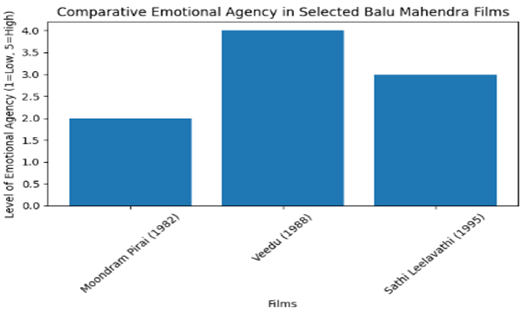
Table 3
|
Table 3 Emotional Agency Evaluation Model |
||
|
Dimension |
Indicators |
Present in Mahendra’s Films? |
|
Emotional Expression |
Character openly expresses feelings |
Yes (all three films) |
|
Decision-Making Power |
Emotions influence choices |
Strong in Veedu, weak in Moondram Pirai |
|
Structural Impact |
Alters social or relational structure |
Limited overall |
|
Narrative Outcome Freedom |
Character controls ending |
Rare |
Table 4
|
Table 4 Traditional vs. Mahendra vs. Gen Z Reading |
|||
|
Aspect |
Traditional Tamil Cinema |
Mahendra’s Cinema |
Gen Z Feminist Interpretation |
|
Female Role |
Sacrificial / Maternal |
Emotionally layered |
Questions emotional burden |
|
Romance |
Male-centered |
Sensitive but male-driven |
Critiques romanticized suffering |
|
Agency |
Endurance-based |
Psychological depth |
Demands structural autonomy |
|
Resolution |
Reconciliation |
Emotional closure |
Seeks accountability & equality |
Table 5
|
Table 5 Naturalism vs. Patriarchal Containment |
||
|
Element |
Naturalistic Feature |
Hidden Containment Risk |
|
Soft Lighting |
Humanizes female presence |
Aestheticizes vulnerability |
|
Close-ups |
Emphasizes emotional interiority |
Encourages voyeuristic gaze |
|
Silence |
Reflects realism |
May suppress assertive voice |
|
Tragic Endings |
Emotional realism |
Reinforces female suffering as poetic |
4. Analysis and Discussion
This section applies theoretical frameworks—naturalism, the male gaze, emotional agency, and a Gen Z feminist lens—to selected films of Balu Mahendra. The analysis explores how women's emotional lives are portrayed and whether those emotions translate into meaningful narrative power.
4.1. Emotional inner world in Moondram Pirai
Moondram Pirai is one of the most famous works of Mahendra. The film focuses on a young woman who loses her memory and falls into a child-like mental state. A school teacher rescues him and takes care of him, forming a deep emotional bond. The film is visually soft, intimate and slow-paced, which suits Mahendra's natural aesthetic. Superficially, the female protagonist is treated with tenderness and sympathy. The camera captures her vulnerability through close-ups, soft lighting and quiet emotional moments. His innocence appears to be at the center of the film's emotional impact. However, when examined through the lens of the male gaze (Mulvey, 1975), this portrayal becomes more complex. While he is framed sympathetically, the narrative ultimately focuses on the emotional transformation of the male protagonist. Her presence serves as a catalyst for his pain, longing, and tragic loss. His emotional interiority is visible, but his structural agency is limited. She doesn't move the narrative forward through conscious decision-making; Instead, her vulnerability creates emotional depth for the male character. From a Gen Z feminist perspective, this becomes problematic. Contemporary audiences, shaped by consent discourses and critiques of romantic dependency, may question the aestheticization of female fragility. Innocence becomes spectacle – beautiful, poignant and tragic – but still situated within male-centric liberation. Thus, Moondram Pirai reflects the tension between empathy and control. The film offers emotional realism, yet the female character's agency remains mediated by the desires of the male narrative.
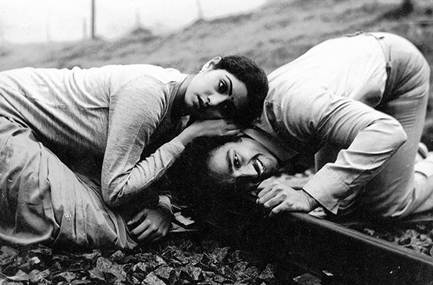
Moondram Pirai (1982) – IMDb
4.2. Resistance of the working class in Veedu
In contrast, Veedu presents a completely different portrayal of womanhood. The film attempts to create a simple home of a middle-class working woman amidst bureaucratic corruption, financial pressures and systemic inefficiencies. Unlike the romantic tragedy of Moondram Pirai, this narrative is based on everyday existence.
Here, naturalism becomes a means of dignity rather than ostentation. The protagonist's conflicts are not sensual or sentimental. The camera captures her frustration, exhaustion and determination without aesthetic exaggeration. Her emotional fortitude directly shapes the progression of the story. She negotiates with officials, manages finances and persists despite setbacks. Through the concept of emotional agency, Veedu stands out as one of Mahendra's most feminist works. The protagonist's emotions – anger, anxiety, hope – inform his decisions and actions. His inner world is not merely decorative; It is functional. Contrary to traditional depictions of sacrifice in Tamil cinema, his patience does not merely serve male emotional growth. Instead, it reflects a conflict with structural power. Scholars of Indian cinema such as Gopalan (2002) and Prasad (1998) have noted how realism can highlight systemic inequalities rather than romanticize them. In Veedu, realism underlines class conflict and bureaucratic oppression. The hero's resilience becomes resistance. From a Gen Z feminist perspective, the film more closely aligns with contemporary expectations of representation. Here emotional depth is linked to autonomy. Although she faces limitations, she remains an active participant in shaping her circumstances. Therefore, Veedu most clearly displays Mahendra's feminist potential.
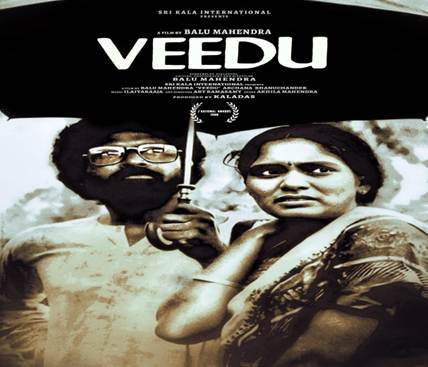
Veedu (1988) – IMDb
4.3. Comedy and content in Sathi Lilavati
Sathi Lilavati brings gender conflict to the fore through comedy. The film revolves around marital infidelity, insecurity and reconciliation. On the surface, it appears progressive in acknowledging female trauma and emotional complexity. The wife is not silent or submissive; She reacts, strategizes and copes with betrayal. However, the comedic tone dictates how the emotional pain is interpreted. While the narrative allows room for female frustration, it ultimately resolves the conflict through reconciliation. Forgiveness becomes the mechanism that restores family order. The emotional labour once again falls on the woman's shoulders. Applying the Male Gaze framework reveals how comedic narratives can also reinforce patriarchal stability. The woman's suffering becomes part of a comic cycle that culminates in marital restoration. His anger is acknowledged but controlled. The conclusion of the story depends on his ability to forgive. From a Gen Z feminist perspective, this raises serious questions. Why has women's forgiveness been made a moral resolution? Why is reconciliation more important than structural change or accountability? Contemporary audiences, shaped by discussions around emotional labour and gender expectations, may view such an ending as reinforcing unequal relational burdens. Thus, Sathi Lilavati shows how even progressive narratives can normalize control under the guise of humour.
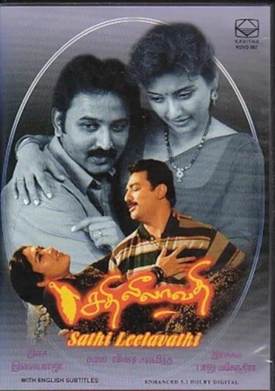
Sathi Leelavathi (1995) – IMDb
5. Feminist Rereading: Reclaiming Emotional Agency
A Gen Z feminist rereading of Mahendra's cinema does not negate his artistry. Instead, it revisits her films within a contemporary framework of digital activism, social media feminism, and awareness-raising about consent and equality.
Today's audiences tend to:
· Appreciate realism and psychological nuance
· Question on romanticization of women's suffering
· Critically examine emotional labor
· Demand structural autonomy rather than symbolic sensitivity
In earlier decades, Mahendra's portrayal of women was considered revolutionary because it went beyond theatrical stereotypes. His heroines seemed real. They were flawed, vulnerable, and emotionally expressive. However, Gen Z audiences drive the conversation. They ask whether emotional realism leads to embodied power. Reclaiming emotional agency means redefining how we measure representation. Emotional intensity alone is not enough. A character may cry, suffer, and sacrifice – but does she change the system that stops her? Does she control the outcome of her narrative?
· In Moondrum Crush, emotional depth doesn't prevent structural erosion.
· In Vidyu, emotional stamina shapes concrete progress.
· In Sathi Lilavati, emotional conversation restores traditional stability.
These differences demonstrate that emotional agency should be evaluated not only in terms of emotion, but also in terms of outcome independence. Agency includes the ability to influence the direction of the narrative and the social structure, not just to remain within them. This feminist rereading considers Mahendra's cinema as transitional rather than definitive. His films oscillate between sympathy and control. They open up space for emotional complexity but do not always dismantle patriarchal structures. Recognizing this dilemma allows for a balanced critique—one that respects aesthetic innovation while questioning narrative boundaries. This analysis suggests that emotional agency is not a fixed quality but a dynamic interaction between representation and power. Through a Gen Z feminist lens, Mahendra's films become sites of productive tension – revealing both the progress and unfinished work of gender representation in Tamil cinema.
6. Conclusion
Balu Mahendra's cinema exists in a productive tension between two paradigms: naturalistic empathy and patriarchal visual control. Her films undoubtedly transformed Tamil cinema through psychological realism, aesthetic subtlety and emotionally layered female characters. The women in his narratives are not flat stereotypes; They demonstrate resilience, emotional intelligence, and inner complexity. However, this study shows that emotional depth does not automatically translate into structural autonomy. Even within a naturalistic framework, female subjectivity is often mediated through a male-centric narrative arc. Sometimes, women's vulnerability is aestheticized, and their emotional labor supports reconciliation, liberation, or male development. Through the lens of the male gaze, as theorized by Laura Mulvey, it becomes clear that realism alone cannot dismantle underlying visual power structures. Re-reading Gen Z feminists brings new critical energy to these films. Contemporary audiences appreciate Mahendra's realism but question the romanticization of suffering and the normalization of emotional sacrifice. They demand not only emotional representation but also narrative freedom and structural agency. Thus, emotional agency in Mahendra's cinema emerges as a contested site – simultaneously empowered and restricted. By placing her work within an intergenerational feminist critique, this paper offers an original intervention that acknowledges both her artistic contributions and the limitations of transitional gender representation in Tamil cinema.
CONFLICT OF INTERESTS
None.
ACKNOWLEDGMENTS
None.
REFERENCES
Banet-Weiser, S. (2018). Empowered: Popular Feminism and Popular Misogyny. Duke University
Press.
Chakravarty, S. (1993). National Identity in Indian Popular Cinema, 1947–1987. University of
Texas Press.
Crenshaw, K. (1991). Mapping the Margins: Intersectionality, Identity politics, and
Violence Against Women of color. Stanford Law Review, 43(6), 1241–1299.
Doane, M. A. (1987). The Desire to Desire: The Woman’s Film of the 1940s. Indiana
University Press.
Dwyer, R. (2006). Filming the Gods: Religion and Indian Cinema. Routledge.
Gopalan, L. (2002). Cinema of Interruptions: Action Genres in Contemporary Indian Cinema.
British Film Institute.
Kaplan, E. A. (1983). Women and Film: Both Sides of the Camera. Routledge.
Mahendra, B. (Director). (1982). Moondram Pirai [Film]. India.
Mahendra, B. (Director). (1988). Veedu [Film]. India.
Mahendra, B. (Director). (1995). Sathi Leelavathi [Film]. India.
Mulvey, L. (1975). Visual pleasure and narrative cinema. Screen, 16(3), 6–18.
Mulvey, L. (1989). Visual and other pleasures. Palgrave Macmillan.
Nair, P. K. (1999). A History of Indian Cinema. National Book Trust.
Prasad, M. M. (1998). Ideology of the Hindi Film: A Historical Construction. Oxford
University Press.
Rajadhyaksha, A., and Willemen, P. (1999). Encyclopaedia of Indian Cinema (2nd ed.). British Film Institute.
|
|
 This work is licensed under a: Creative Commons Attribution 4.0 International License
© ShodhKosh 2026. All Rights Reserved.