ShodhKosh: Journal of Visual and Performing ArtsISSN (Online): 2582-7472
|
|
AI-Driven Human Resource Management: Enhancing Workforce Decisions through Machine Learning Integration
Nihar Ranjan Agasti 1 , Poonam Pachouri 1
 , Rajeev Kumar Indoria 2
 , Syed Shafique Uddin 3
 , Mohit Gangwar 4
1 Assistant
Professor, Department of Management Studies, Medicaps
University, Rau, Indore, Madya Pradesh, India
2 Assistant
Professor, Bhabha Engineering Research Institute, Bhabha University, Bhopal,
Madya Pradesh, India
3 Techno
Global University, Sironj, Vidisha, Madya Pradesh, India
4 Sri
Satya Sai University of Technology and Medical Sciences, Sehore,
Madya Pradesh, India
|
|
|
ABSTRACT |
|
|
The evolving
landscape of Human Resource Management (HRM) has seen a radical
transformation through the integration of Artificial Intelligence (AI) and
Machine Learning (ML) technologies. These advanced tools are not only
automating routine tasks but also reshaping decision-making processes, talent
management, performance evaluation, and strategic workforce planning. This
paper explores the influence of AI and ML in HRM, examining how their
integration enhances efficiency, accuracy, and employee experience. Through
data-driven insights, case studies, and current trends, this study
investigates the practical applications, challenges, and future potential of
AI in managing human capital. |
|||
|
Received 25 December 2025 Accepted 29 January 2026 Published 14 February 2026 Corresponding Author Mohit
Gangwar, mohitgangwar@gmail.com DOI 10.29121/shodhkosh.v7.i1.2026.7170 Funding: This research
received no specific grant from any funding agency in the public, commercial,
or not-for-profit sectors. Copyright: © 2026 The
Author(s). This work is licensed under a Creative Commons
Attribution 4.0 International License. With the
license CC-BY, authors retain the copyright, allowing anyone to download,
reuse, re-print, modify, distribute, and/or copy their contribution. The work
must be properly attributed to its author.
|
|||
|
Keywords: Artificial Intelligence in HR, Machine Learning in
Human Resources, AI-driven recruitment, Predictive HR analytics, Ethical AI
in Human Resource Management |
|||



1. INTRODUCTION
In the past decade, Human Resource Management (HRM) has undergone a digital transformation, propelled by the integration of Artificial Intelligence (AI) and Machine Learning (ML) technologies. Traditional HR functions—such as recruitment, employee engagement, performance management, and workforce planning—are being redefined by data-driven tools that offer predictive capabilities and enhanced decision-making. AI-driven HRM involves using algorithms to automate and optimize workforce processes, while ML allows systems to learn from data and improve over time without human intervention.
According to a report by Deloitte (2023), 41% of organizations have already adopted some form of AI in their HR practices, with projections suggesting this figure will rise to 70% by 2027. The ability of AI to process vast amounts of data, detect patterns, and make informed recommendations is helping HR professionals make more strategic decisions. From chatbots handling routine employee queries to ML algorithms screening resumes, the HR domain is experiencing an efficiency revolution.
This paper seeks to explore the impact and implementation of AI-driven HRM systems, focusing on how machine learning enhances key HR functions. By analyzing current trends, case studies, and empirical data, we aim to uncover the benefits, challenges, and future outlook of AI in the workforce domain.
2. The Evolution of HRM and the Role of AI
2.1. Traditional HR vs. AI-Integrated HR
Traditionally, HRM has been a people-centric function, relying heavily on human judgment and manual processing. Functions like talent acquisition, onboarding, employee engagement, and performance reviews involved time-consuming processes, with significant scope for bias and inconsistency. AI and ML offer the capability to overcome these limitations through automation and objective data analysis.
Table 1
|
Table 1 Comparison of
Traditional vs. AI-Driven HR Practices |
|
|
Traditional
HRM |
AI-Driven
HRM |
|
Manual
resume screening |
Automated
resume parsing using NLP |
|
Subjective
performance appraisals |
Data-driven
performance evaluation metrics |
|
Reactive
workforce planning |
Predictive
analytics for strategic workforce planning |
|
One-size-fits-all
training programs |
Personalized
learning paths based on behavior data |
2.2. The Rise of Machine Learning in HR
Machine Learning, a subset of AI, provides systems the ability to learn from data, recognize patterns, and make predictions. In HR, ML can be used in:
· Recruitment: Analyzing job descriptions, filtering candidates, and predicting job fit.
· Performance Management: Monitoring KPIs and forecasting future performance.
· Employee Retention: Predicting attrition risk based on engagement data.
· Learning and Development: Recommending training modules based on learning behavior.
Example: ML in Candidate Screening
Companies like HireVue and Pymetrics use ML algorithms to assess candidates' video interviews or psychometric games, evaluating attributes like empathy, decision-making, and leadership potential.
3. AI-Driven Recruitment and Talent Acquisition
One of the most widely adopted areas of AI in HRM is recruitment. AI tools streamline hiring by automating repetitive tasks and providing insights that help in better hiring decisions.
3.1. Resume Screening and Job Matching
Natural Language Processing (NLP) algorithms parse resumes and match keywords with job descriptions. Tools like Textio and Hiretual provide AI-powered platforms that can:
· Rank candidates based on skills, experience, and cultural fit.
· Reduce unconscious bias by anonymizing candidate data.
· Improve the quality of hire and reduce time-to-fill.
Table 2
|
Table 2 AI Tools for
Recruitment |
||
|
Tool |
Functionality |
Benefits |
|
HireVue |
AI-based
video interview analysis |
Enhances
candidate assessment |
|
Pymetrics |
Neuroscience
games + ML for talent matching |
Reduces
bias and improves fit |
|
Textio |
Augmented
writing for job descriptions |
Attracts
a more diverse talent pool |
|
Beamery |
Talent
CRM and ML for candidate nurturing |
Improves
passive candidate engagement |
3.2. Chatbots in Recruitment
AI chatbots like Olivia (Paradox) and XOR engage candidates 24/7, answering questions, scheduling interviews, and guiding applicants through the process.
Benefits:
· Enhances candidate experience
· Reduces recruiter workload
· Speeds up communication
A 2022 survey by SHRM reported that 67% of candidates preferred interacting with chatbots for initial queries during the application process.
3.3. Predictive Hiring
Predictive analytics evaluates a candidate’s likelihood of success by analyzing past hiring data, performance metrics, and behavioral patterns.
Use Case:
IBM uses predictive hiring tools to assess factors such as:
· Future job performance
· Tenure probability
· Culture alignment
This data-driven approach results in better hiring outcomes and reduces turnover.
4. Employee Engagement and Retention
Employee engagement is crucial for productivity and retention. AI tools now play a significant role in measuring and improving employee satisfaction.
4.1. Sentiment Analysis
AI platforms like Glint and Qualtrics use sentiment analysis on employee feedback, surveys, and communication platforms to gauge morale and engagement levels.
Metrics Tracked:
· Job satisfaction
· Team dynamics
· Burnout risk
· Manager effectiveness
"AI enables HR teams to shift from reactive to proactive engagement strategies."
— Harvard Business Review (2022)
4.2. Attrition Prediction Models
ML models are trained on historical data to predict employee turnover. Factors considered include:
· Work hours
· Absenteeism
· Manager relationship
· Training participation
· Promotion history
Graph 1
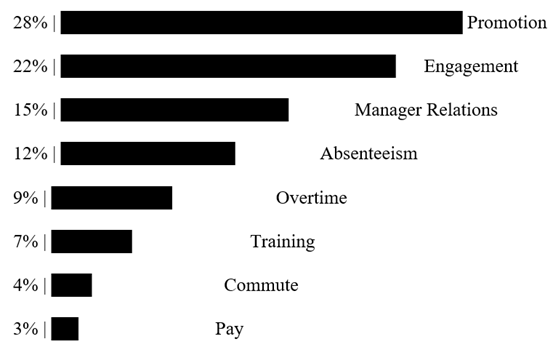
Graph 1 Attrition Risk Prediction Factors (Source: IBM Watson HR Analytics)
Organizations like Amazon and Deloitte use these models to proactively address retention by offering interventions (e.g., mentorship, training, job rotation).
5. Performance Management with AI
Traditional annual performance reviews are being replaced with real-time, AI-powered performance tracking systems.
5.1. Continuous Feedback Systems
Platforms such as Betterworks and 15Five use AI to analyze real-time feedback, goal progress, and peer reviews. These tools provide:
· Objective performance metrics
· Predictive insights into high-potential employees
· Recommendations for upskilling
5.2. Bias Mitigation in Reviews
AI can identify bias in performance appraisals by analyzing language used in feedback. It flags:
· Gendered language
· Overuse of subjective terms
· Unconscious bias in ratings
This ensures fair and equitable performance evaluation processes.
Table 3
|
Table 3 Impact of AI
on Performance Management |
||
|
Aspect |
Without
AI |
With
AI Integration |
|
Feedback
frequency |
Annual
or bi-annual reviews |
Continuous
and real-time feedback |
|
Bias
detection |
Low |
High
– detects linguistic and score biases |
|
Goal
alignment |
Manual
and inconsistent |
AI-based
OKRs alignment |
|
Skill
development |
Generic |
Personalized
training suggestions |
6. Learning and Development (L&D) through ML
Personalized learning has emerged as a crucial L&D trend, driven by ML-powered adaptive learning platforms.
6.1. Adaptive Learning Paths
Platforms like EdCast, Cornerstone, and LinkedIn Learning use ML to recommend content based on:
· Employee roles
· Past courses
· Peer activity
· Learning behavior
This leads to increased engagement and skill retention.
6.2. Skill Gap Analysis
AI tools identify gaps between current skills and future role requirements, enabling HR teams to design targeted training interventions.
Use Case:
Google’s internal AI-based learning platform tracks employee progression and recommends reskilling courses tailored to industry trends.
7. Challenges in AI-Driven HRM
Despite the benefits, integrating AI into HRM comes with significant challenges.
7.1. Data Privacy and Ethics
AI requires access to personal employee data, raising concerns around:
· Consent
· Data security
· Discrimination in algorithmic decision-making
“Algorithmic bias can perpetuate inequality if not carefully monitored.”
— IEEE (2023)
7.2. Transparency and Explainability
HR professionals may struggle to trust AI if they cannot understand how decisions are made. The “black box” nature of many ML models limits transparency.
7.3. Change Management
Adoption of AI in HR requires a cultural shift and reskilling of HR teams. Resistance to change, lack of technical expertise, and fear of job displacement are common hurdles.
8. Workforce Planning and Predictive Analytics
AI and ML are revolutionizing workforce planning by enabling HR departments to anticipate needs and allocate talent resources more strategically. Traditional HR practices often involved retrospective analysis, whereas AI enables real-time and predictive decision-making.
8.1. Predictive Modeling in Workforce Planning
AI-based workforce analytics platforms such as Visier, Tableau HR Analytics, and IBM Watson HR allow HR managers to:
· Forecast headcount requirements
· Identify succession planning gaps
· Predict workforce costs
· Anticipate market skill shortages
Figure 1
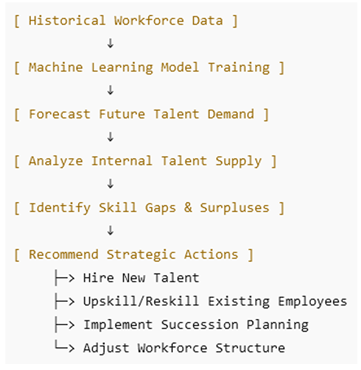
Figure 1 Predictive Workforce Planning Model
8.2. Scenario-Based Planning
AI tools can simulate various “what-if” scenarios to test the impact of organizational changes such as:
· Remote work implementation
· Mergers and acquisitions
· Economic downturns
· Automation initiatives
This helps HR leaders make data-backed decisions before committing to strategic shifts.
9. Case Studies of AI Integration in HRM
Let’s examine how large organizations are using AI and ML in their HR processes to enhance efficiency and make smarter decisions.
9.1. IBM: Watson in HR
IBM uses its Watson AI platform across multiple HR functions. Key use cases include:
· Attrition prediction: Watson predicts with 95% accuracy which employees are likely to leave within the next 6 months.
· Personalized career coaching: IBM’s YourLearning platform suggests personalized learning paths.
· Chatbots: AI-driven virtual assistants answer over 2 million HR-related queries annually.
“AI has helped IBM HR save over $300 million through smarter talent management.”
— IBM (2023)
9.2. Unilever: AI in Talent Acquisition
Unilever has fully integrated AI in its hiring process:
· Pymetrics games assess candidate soft skills.
· HireVue video interviews use facial and voice analysis.
· AI-driven assessments have reduced hiring time by 75%, while increasing diversity.
“The combination of neuroscience and AI has improved the quality of hire and democratized recruitment.”
— Leena Nair, Former CHRO, Unilever
9.3. Google: Learning & Development
Google uses internal AI tools to personalize employee learning. Key features include:
· AI-curated training modules
· Personalized content recommendations
· Intelligent career path guidance
Table 4
|
Table 4 Case Study
Summary of AI Use in HRM |
|||
|
Company |
AI
Tool(s) Used |
HR
Function Optimized |
Results
Achieved |
|
IBM |
Watson
HR, Chatbots |
Retention,
L&D, Automation |
$300M
saved, 95% attrition prediction accuracy |
|
Unilever |
HireVue, Pymetrics |
Recruitment |
75%
faster hiring, increased diversity |
|
Google |
Internal
AI tools |
Learning
& Development |
Personalized
L&D, higher engagement |
|
Amazon |
ML-based
workforce planning |
Strategic
Planning |
Demand
forecasting, talent mobility optimization |
10. AI Ethics in Human Resource Management
The integration of AI in HR comes with ethical dilemmas. HR decisions affect people's careers and lives; thus, using AI requires strong ethical frameworks.
10.1. Algorithmic Bias
AI systems trained on historical data can unintentionally reproduce societal and organizational biases. For example:
· Amazon had to scrap its AI recruiting tool in 2018 after it was found to downgrade resumes containing the word “women’s”.
Table 5
|
Table 5 Sources of
Bias in AI for HRM |
||
|
Bias
Type |
Example
in HR |
Mitigation
Strategy |
|
Historical bias |
Biased
hiring data |
Use
debiased datasets and diverse training samples |
|
Selection bias |
Incomplete
data from certain departments |
Ensure
representative data collection |
|
Labeling
bias |
Inconsistent
performance ratings |
Standardize
evaluation criteria |
|
Interaction bias |
User
inputs shaping AI response |
Continuous
monitoring and auditing |
10.2. Data Privacy and GDPR Compliance
HR data is highly sensitive. AI applications must comply with privacy regulations like GDPR and CCPA.
Best Practices:
· Obtain explicit consent for data usage
· Anonymize sensitive data
· Offer explainability in AI decisions
“Trust is the foundation of AI adoption in HR.”
— McKinsey and Company. (2023)
11. Human-AI Collaboration in HR
Rather than replacing HR professionals, AI acts as an augmentation tool. This collaboration between humans and machines is referred to as “Human-in-the-Loop” (HITL) design.
Benefits of HITL in HR:
· AI handles data-intensive tasks; humans focus on empathy and judgment.
· Human oversight ensures fairness and ethical compliance.
· HR can shift from transactional to strategic roles.
Table 6
|
Table 6 Human vs. AI
Strengths in HR Tasks |
||
|
HR
Function |
AI
Strength |
Human
Strength |
|
Resume Screening |
Speed,
Objectivity |
Contextual
understanding |
|
Performance Reviews |
Pattern
detection |
Emotional
nuance |
|
Learning Recommendations |
Personalization
at scale |
Mentorship
and guidance |
|
Conflict Resolution |
None
(AI not ideal here) |
Emotional
intelligence and empathy |
12. Future Trends in AI-Driven HRM
As AI continues to evolve, several trends are shaping the future of HR technology.
12.1. Explainable AI (XAI)
Emerging tools allow HR professionals to understand how an AI system arrived at a decision. This builds trust and ensures regulatory compliance.
12.2. Emotion AI
Emotion recognition through facial expression, voice tone, and text sentiment may become more common in assessing well-being and fit. However, it raises major privacy and consent concerns.
12.3. AI-Driven Organizational Design
AI can simulate various team structures and their impact on productivity, enabling leaders to restructure teams based on data insights.
12.4. Blockchain for HR
Blockchain can secure employee records and credentials. This complements AI by providing verified, tamper-proof data for training ML models.
13. Conclusion
The integration of AI and machine learning into HRM has transformed how organizations manage, develop, and retain talent. From predictive hiring to personalized learning and strategic workforce planning, AI enables faster, fairer, and more effective HR practices.
However, to fully leverage AI’s potential, organizations must also address ethical concerns such as bias, transparency, and data privacy. Future HR professionals will need to blend human empathy with digital literacy to lead in this new era.
Ultimately, AI is not replacing HR—it is enhancing it.
“The future of HR lies in intelligent collaboration between humans and machines.”
— World Economic Forum (2024)
CONFLICT OF INTERESTS
None.
ACKNOWLEDGMENTS
None.
REFERENCES
Bersin, J. (2024). The Rise of AI in HR: A Global Perspective. Josh Bersin Academy.
Deloitte. (2023). 2023 Human Capital Trends Report.
Deloitte. (2023). AI in HR: The Future of Work.
European Parliament. (2023). AI Act Proposal.
Harvard Business Review. (2022). AI and the Employee Experience. Harvard Business Review.
IBM. (2023). Global Human Capital Trends.
IEEE. (2023). Ethical Challenges in Algorithmic Decision-Making. IEEE.
McKinsey and Company. (2023). How AI Is Shaping the Future of Work.
McKinsey and Company. (2023). Trust in AI: The HR Perspective.
Microsoft. (2024). Viva Insights and Workforce Analytics.
SHRM. (2022). AI and the Future of Recruitment. SHRM.
SHRM. (2022). Artificial Intelligence in Recruitment Survey.
Textio. (2024). Language Bias Report.
Unilever. (2023). Digital Hiring at Scale.
Unilever. (2023). How AI Is Transforming Our Hiring Process.
World Economic
Forum. (2024). AI Ethics
in HRM. World Economic Forum.
World Economic Forum. (2024). Human-Machine Collaboration in the Workplace. World Economic Forum.
|
|
 This work is licensed under a: Creative Commons Attribution 4.0 International License
© ShodhKosh 2026. All Rights Reserved.